Central Yukon Territory, Canada – Scientists have identified a mummified porcupine specimen preserved in permafrost for approximately 3,000 years, offering fresh insights into ancient wildlife in the region. The find, recovered from the Klondike goldfields, represents the first known mummified remains of a North American porcupine from this area. Researchers extracted a complete mitochondrial genome from the sample, a feat that underscores the exceptional preservation qualities of Yukon permafrost deposits.
A Hidden Gem Emerges from the Ice
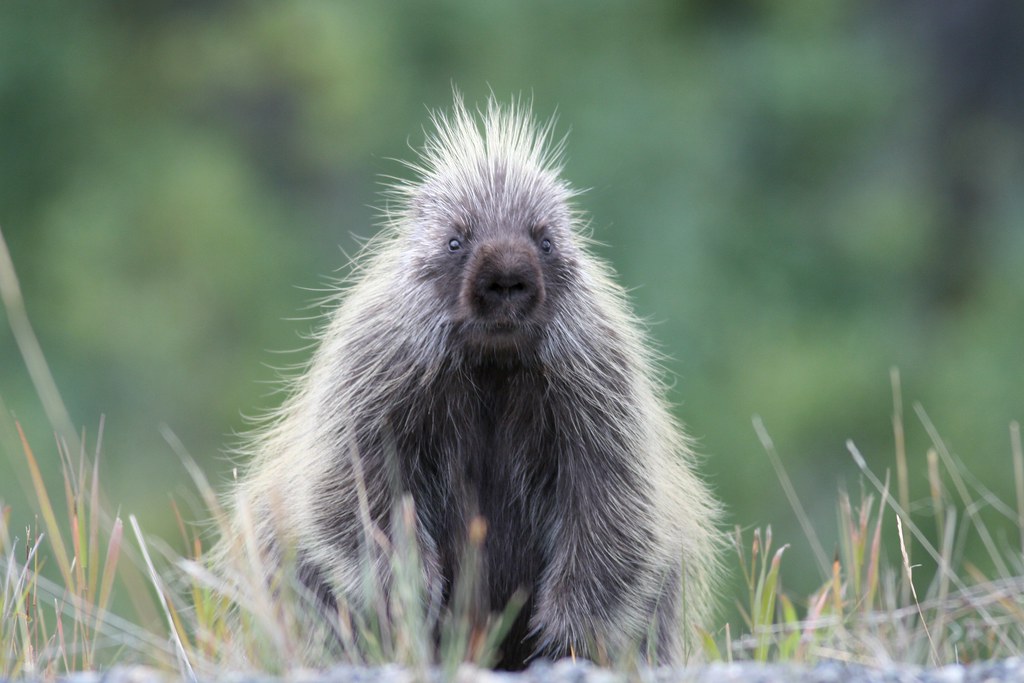
A Hidden Gem Emerges from the Ice (Image Credits: Flickr)
The specimen, cataloged as YG 77.11 in the Yukon Paleontology Program collection, surfaced in 1999 after a donation from the Homestake Gulch site at 63° 56’11” N, 139° 13’39” W. This mummified piece of dried skin, complete with flesh and coarse hairs measuring 30 cm by 20 cm, sat unidentified for years amid more famous Ice Age giants. Radiocarbon dating at the Keck facility confirmed its age through two replicates: 2,845 ± 25 years BP and 2,790 ± 25 years BP, calibrating to a range of 3,060–2,790 years BP.
What set this discovery apart lay in its taxonomy. Initial suspicions pointed to Pleistocene megafauna, the large mammals like mammoths and bison commonly unearthed in Yukon permafrost. Instead, genetic scrutiny revealed it as Erethizon dorsatum, the North American porcupine, known locally as “Ts’ey” in the Hän language of the Tr’ondëk Hwëch’in people whose Traditional Territory encompasses the site.
Genomic Feats from Fragmented Remains
Researchers employed ancient DNA protocols to extract genetic material, starting with the Dabney method optimized for degraded samples and a Qiagen kit for further attempts. Iterative mapping against 18 mitochondrial references pinpointed the species, while Kraken2 metagenomic classification validated the results against mammalian and microbial databases. The effort produced the first complete ancient mitochondrial genome for E. dorsatum, achieving 98% coverage at 32X average depth, with accession PV951521.
Analysis confirmed the specimen’s male sex through read ratios on sex chromosomes and autosomes. Phylogenetic trees built via Maximum Likelihood in IQ-TREE placed it firmly within the Erethizontidae family, revealing a 2.6% mitochondrial divergence that hinted at distinct population structures, such as a proposed Yukon-like clade separate from others. Authentication via AMBER software detected authentic post-mortem damage patterns, including short read lengths averaging 44.8 bp and low endogenous DNA content under 8%.
- First mummified ancient porcupine from North America identified genetically.
- Complete ancient mtDNA genome recovered, only the second full mitogenome for the species.
- High-quality reconstruction despite poor preservation (90-93% uniquely mapped reads).
- New genetic sexing approach viable for low-coverage porcupine data.
- Phylogenetic evidence of East-West phylogeographic division.
Rewriting Porcupine History in the North
No Pleistocene fossils of E. dorsatum had appeared in Yukon or Alaska records, aligning with theories of post-glacial dispersal. The species likely moved northward only after boreal forests took hold around 10,000 years ago, following the Last Glacial Maximum. This 3,000-year-old presence solidified that timeline, filling a gap in the fossil record dominated by larger herbivores.
The Holocene context marked a departure from the deep-freeze conditions favoring megafauna mummies. Permafrost here preserved the porcupine through rapid burial in organic-rich sediments during interglacial warmth, where acidic soils usually hasten decay. Such conditions opened doors to studying smaller fauna from warmer epochs.
Cultural Ties and Broader Preservation Lessons
For the Tr’ondëk Hwëch’in, porcupines held roles in food, medicine, and quillwork traditions. The discovery bridged scientific inquiry with Indigenous heritage in the Klondike region, long shaped by gold rushes and paleontological riches. Lead analysts from Stockholm’s Centre for Palaeogenetics collaborated with Yukon government paleontologists, including Grant Zazula, Elizabeth Hall, and Susan Hewitson.
The study highlighted permafrost’s untapped potential beyond Ice Age stars. While woolly mammoths dominate headlines, smaller Holocene mummies like this one demonstrated viability for genomic recovery from fragmented tissues. This could spur searches for overlooked interglacial remains across northern landscapes.
Key Takeaways
- Permafrost preserves Holocene small mammals, expanding beyond Pleistocene giants.
- Confirms porcupine colonization of Yukon post-Ice Age forests.
- Advances ancient DNA techniques for challenging samples.
This porcupine mummy not only rewrote a piece of regional ecology but also signaled new eras in permafrost paleogenomics. As climate change thaws these archives, such finds urge swift documentation. What stories might other forgotten fragments tell? Share your thoughts in the comments.