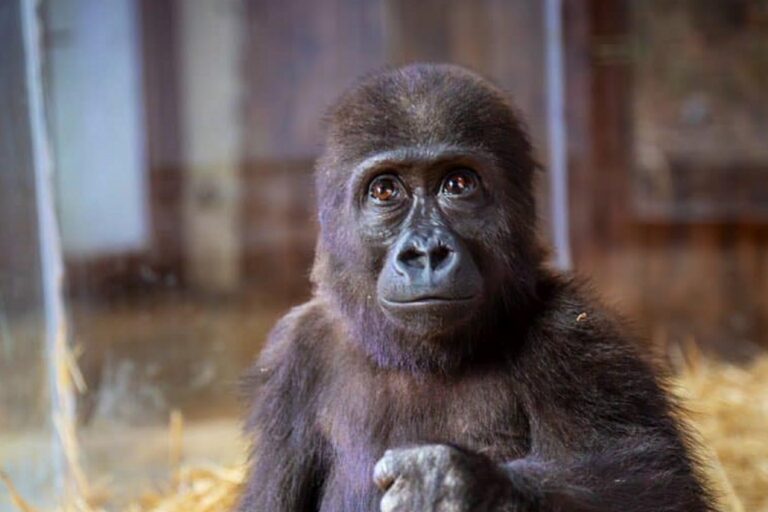
Istanbul – Turkish authorities seized a malnourished infant gorilla from smugglers at the city’s airport in late December 2024, only for the young primate to remain confined alone in a zoo more than a year later.
A Shocking Discovery in the Cargo Hold
A Shocking Discovery in the Cargo Hold (Image Credits: Imgs.mongabay.com)
Customs officers inspected a suspicious wooden crate during a routine check on a Turkish Airlines flight transiting from Nigeria to Bangkok. The container, falsely labeled as holding 50 rabbits, concealed a five-month-old male western lowland gorilla dressed in a soiled T-shirt.
The critically endangered primate appeared exhausted and frightened upon discovery. Officials transferred him immediately to protective custody under the Ministry of Agriculture and Forestry’s Nature Conservation and National Parks General Directorate.
Traffickers had attempted to move the gorilla without any required CITES permits, violating international rules that ban commercial trade in great apes. No arrests followed the interception, leaving the animal’s exact origins unclear.
Rehabilitation and a Name Chosen by the Public
At Polonezköy Zoo in Istanbul, caretakers provided round-the-clock care in a sterile environment. The infant, initially weighing about nine kilograms and struggling to eat, gradually regained strength.
By August 2025, he had grown to 80 centimeters tall and nearly 16 kilograms, displaying playful behaviors like chest-beating and swinging. A public online poll organized by the ministry named him Zeytin, meaning “olive” in Turkish.
Veterinarians monitored his health closely, fostering an emotional bond as staff ate alongside him to encourage feeding. Turkish Airlines even prepared to assist with potential repatriation flights.
DNA Test Upends Repatriation Hopes
Initial plans targeted Nigeria’s Drill Ranch, a PASA-accredited sanctuary housing other gorillas. Officials described negotiations as nearing completion in August 2025.
However, a DNA analysis by Ankara University’s Evolutionary Genetics Laboratory revealed Zeytin originated from Central African forests, such as Cameroon or Gabon, not Nigeria. CITES guidelines prohibited return to the export country under those circumstances.
In October 2025, authorities announced he would stay permanently in Turkey at the licensed Polonezköy facility, prioritizing lifelong welfare. No further public updates on his condition emerged after that decision.
Experts Warn of Lasting Harm from Solitude
Gorillas thrive in family groups, learning vital skills through social bonds. Zeytin’s isolation deprives him of peers, essential for psychological health.
“Türkiye does not have adequate facilities to meet the long-term physical, social and psychological needs of a gorilla,” stated Aslıhan Niksarlı of the Jane Goodall Institute’s Roots & Shoots Türkiye.
- No other gorillas exist in Turkish zoos for companionship.
- Captivity exposes him to human pathogens while eroding tolerance to wild ones.
- Reintroduction becomes impossible without early maternal and peer learning.
- Range-country sanctuaries offer better integration and release potential.
Jacqueline L. Sunderland-Groves of the IUCN great apes group emphasized returning trafficked apes to suitable African facilities. The case drew attention at a November 2025 CITES meeting, yet no repatriation commitment followed.
Wildlife trade experts like Iris Ho of PASA highlighted shrinking habitats complicating releases, but urged Turkey to reconsider for Zeytin’s sake.
Key Takeaways
- Zeytin’s seizure spotlighted ruthless great ape trafficking, where families are slaughtered for infants.
- DNA hurdles blocked Nigeria return, but Central African sanctuaries remain viable.
- Solitary zoo life risks irreversible developmental setbacks for this social species.
Zeytin’s story underscores the challenges of rescuing wildlife from illegal trade: swift intervention saves lives, but long-term placement demands international cooperation to honor these animals’ natural needs. What steps should countries take to better protect confiscated great apes? Share your thoughts in the comments.