The fossil record provides an extraordinary window into dinosaur life, revealing behaviors that went extinct millions of years ago. When paleontologists study dinosaur remains, they’re not just looking at bones – they’re uncovering stories about how these ancient creatures moved, fought, lived together, and survived in their prehistoric world.
Herding and Group Movement Revealed Through Trackways

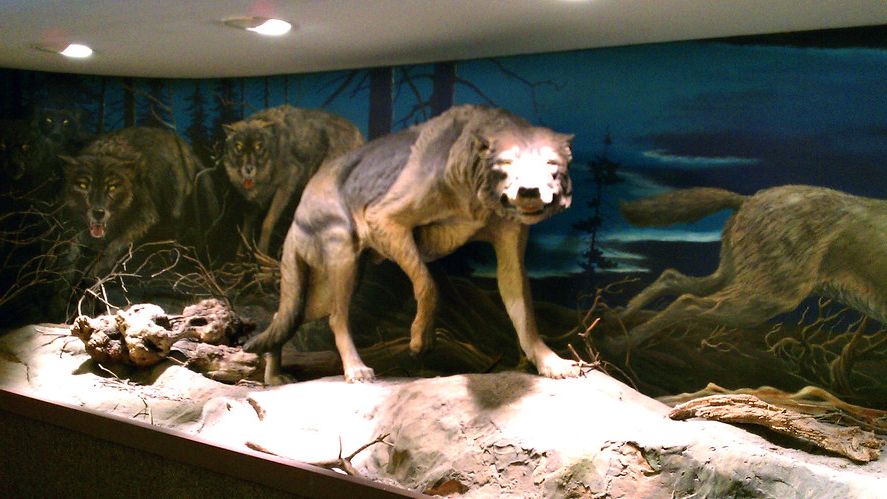
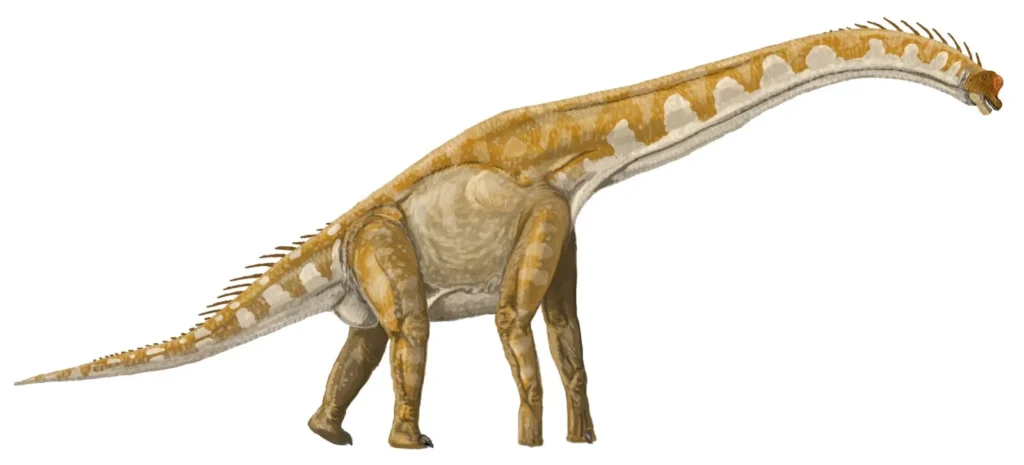
Think about those nature documentaries showing zebras thundering across the African plains in massive herds. Now imagine dinosaurs doing the same thing, but we have actual proof. Some dinosaur trackways record hundreds, perhaps even thousands, of animals, possibly indicating mass migrations. The existence of so many trackways suggests the presence of great populations of sauropods, prosauropods, ornithopods, and probably most other kinds of dinosaurs.
A good example of a dinosaur track site which has a reasonable interpretation at behavior is the Ardley Quarry in the UK. It not only shows a large group of animals walking the same direction (including possible prey and predators), but even different ages all together, similar to what is seen in large mammal herds today. Picture a prehistoric highway with young and old dinosaurs walking side by side, leaving their footprints in the mud.
Parental Care and Nesting Communities
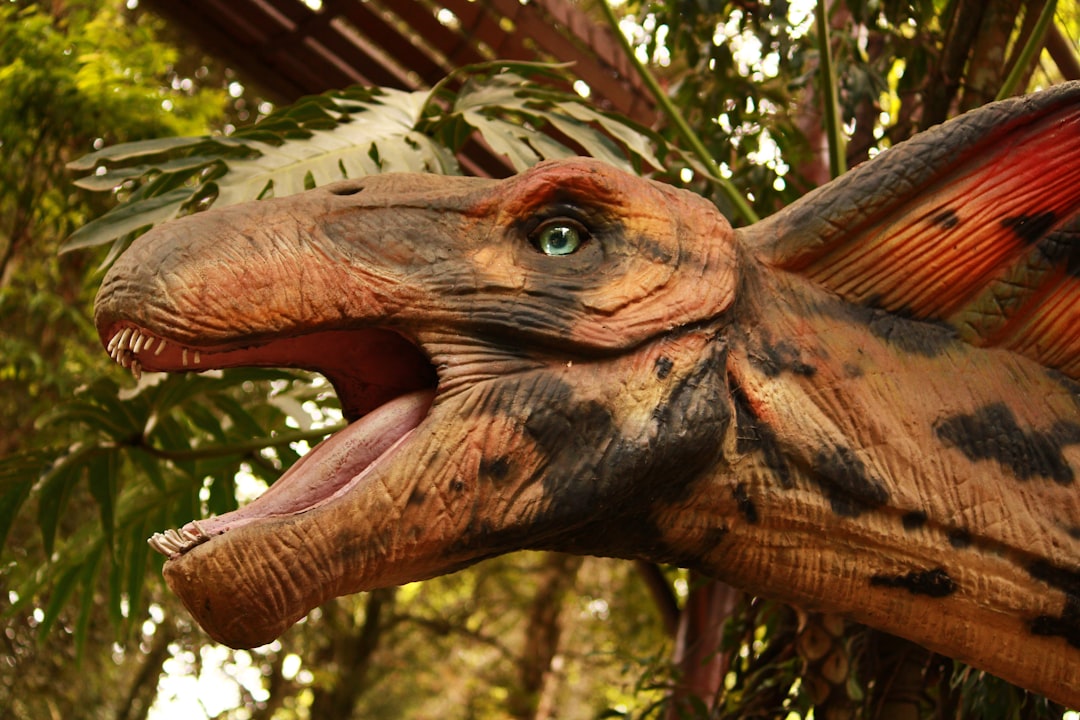
Jack Horner’s 1979 discovery of a Maiasaura (“good mother lizard”) nesting ground in Montana demonstrated that parental care continued long after birth among ornithopods. This discovery changed everything paleontologists thought they knew about dinosaur behavior. Unlike the cold, reptilian parents many had imagined, some dinosaurs were actually devoted caregivers.
Instead of finding just one dinosaur or one nest, an entire nesting ground was discovered, spaced closer together than the length of one adult, as some birds do today. The eggs were arranged in a spiral and placed on top of rotten vegetation to keep them warm (instead of using the parents’ warmth). These dinosaur neighborhoods suggest complex social structures that we’re only beginning to understand.
Territorial Fighting Through Healed Battle Wounds
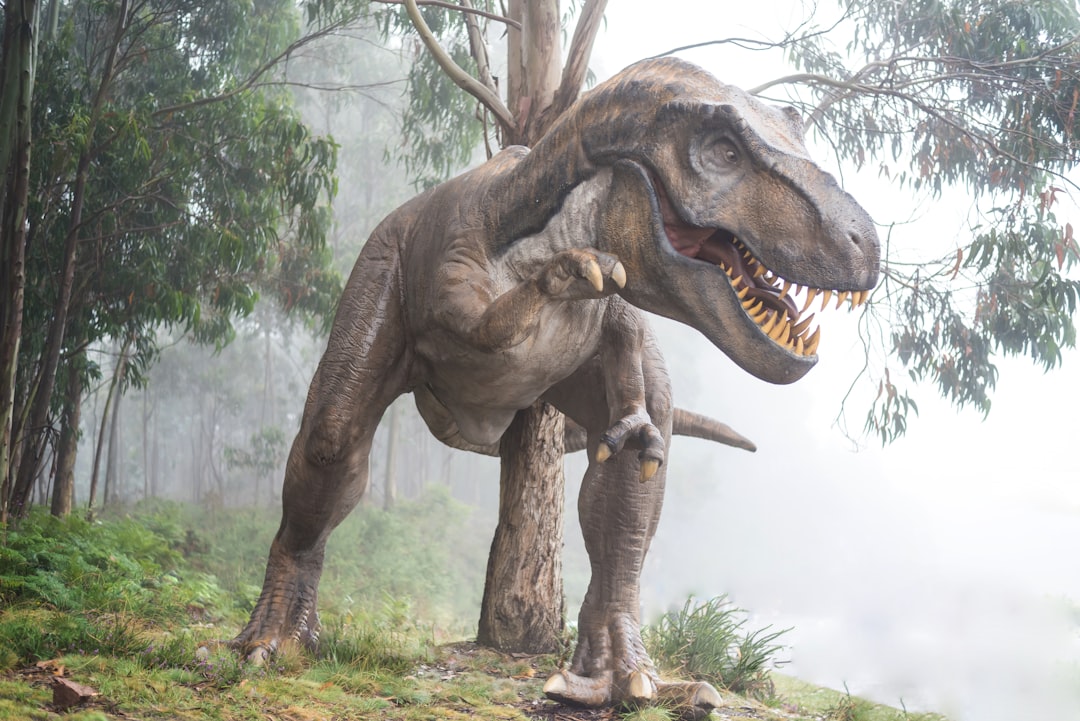
Dinosaur bones tell brutal stories of survival. Theropods show evidence of one of the most remarkable behaviors we see in dinosaurs: facial biting. Tanke and Currie (1998) described healed puncture and scrape wounds on the faces of the carnosaur Sinraptor and the tyrannosaurs Gorgosaurus and Daspletosaurus.
Instead, University of Wisconsin Oshkosh paleontologist Joseph Peterson and colleagues found, T. rex bit each other on the face. The skull of the teenage T. rex “Jane” shows four partially healed bite marks. These weren’t fatal attacks – they were more like prehistoric boxing matches, with dinosaurs establishing dominance through controlled aggression.
Hunting Strategies From Predator-Prey Interactions

DePalma and colleagues (2012) describe two hadrosaur tail vertebrae injured by a tyrannosaur bite. The vertebrae were swollen and fused with the tooth still embedded in the tail bones. Other healed injuries from tyrannosaurs include broken and healed vertebrae, as well as a Triceratops horn with many tooth punctures, and missing its tip.
These fossils paint a picture of prehistoric hunt scenes gone wrong. The fact that prey animals survived these attacks tells us that predatory dinosaurs weren’t always successful, and that herbivorous dinosaurs had impressive survival instincts and healing abilities.
Dietary Habits Through Coprolites and Tooth Marks

By examining coprolites, paleontologists are able to find information about the diet of the animal (if bones or other food remains are present), such as whether it was a herbivore or a carnivore, and the taphonomy of the coprolites, although the producer is rarely identified unambiguously, especially with more ancient examples. They serve a valuable purpose in paleontology because they provide direct evidence of the predation and diet of extinct organisms.
A famous 44-cm–long coprolite dropped by T. rex contains pulverized bones of ornithischian dinosaurs that had been corroded to some extent by stomach acids, but not entirely destroyed. This suggests a relatively rapid transit of food material through the gut. It’s like finding prehistoric bathroom evidence that reveals exactly what was on the menu millions of years ago.
Seasonal Migration Based on Tooth Wear Patterns

Sauropod tooth scratches reveal that some dinosaurs migrated seasonally, others ate a wide variety of plants, and climate strongly shaped their diets. Scientists can literally read the stories written on dinosaur teeth, discovering patterns that suggest massive seasonal movements across ancient landscapes.
These microscopic scratches on fossilized teeth work like nature’s own travel diary. Different patterns of wear indicate whether dinosaurs were eating tough, sandy vegetation from dry seasons or softer plants during wetter times, suggesting they moved between different environments throughout the year.
Stress and Injury Recovery from Bone Histology

In 2001, Bruce Rothschild and others published a study examining evidence for tendon avulsions and stress fractures in theropod dinosaurs and the implications for their behavior. Allosaurus was one of only two theropods found to show evidence of an avulsion injury, with the second being Tyrannosaurus. Rothschild and the other researchers observed that seventeen of the 281 toe bones referred to Allosaurus examined showed signs of stress fractures.
Using synchrotron imaging, we were able to detect astoundingly dilute traces of chemical signatures that reveal not only the difference between normal and healed bone, but also how the damaged bone healed. It seems dinosaurs evolved a splendid suite of defence mechanisms to help regulate the healing and repair of injuries. These creatures were tougher than we ever imagined, surviving injuries that would be fatal to most modern animals.
Flight-Assisted Running Through Trackway Analysis

Detailed in the Proceedings of the National Academy of Sciences, the Cretaceous trackway was made by a two-toed dinosaur like Microraptor. The spacing between the tracks indicates the dinosaur was moving at high speed, but it seemed to be moving even faster than expected if the dinosaur was just propelling itself with its legs alone.
The little raptor was likely flapping as it kicked with its feet, even though experts aren’t sure if the dinosaur was trying to take off, land, run up an incline or something else. Nevertheless, the tracks indicate that flapping wings could be as important to running as long, strong legs. This discovery shows that the line between running and flying was far more blurred in the dinosaur world than previously thought.
Brooding and Incubation Behaviors
A specimen of the oviraptorid Citipati osmolskae was discovered in a chicken-like brooding position in the 1990s, which may indicate that they had begun using an insulating layer of feathers to keep the eggs warm. Picture a feathered dinosaur sitting protectively over its nest, just like modern birds do today.
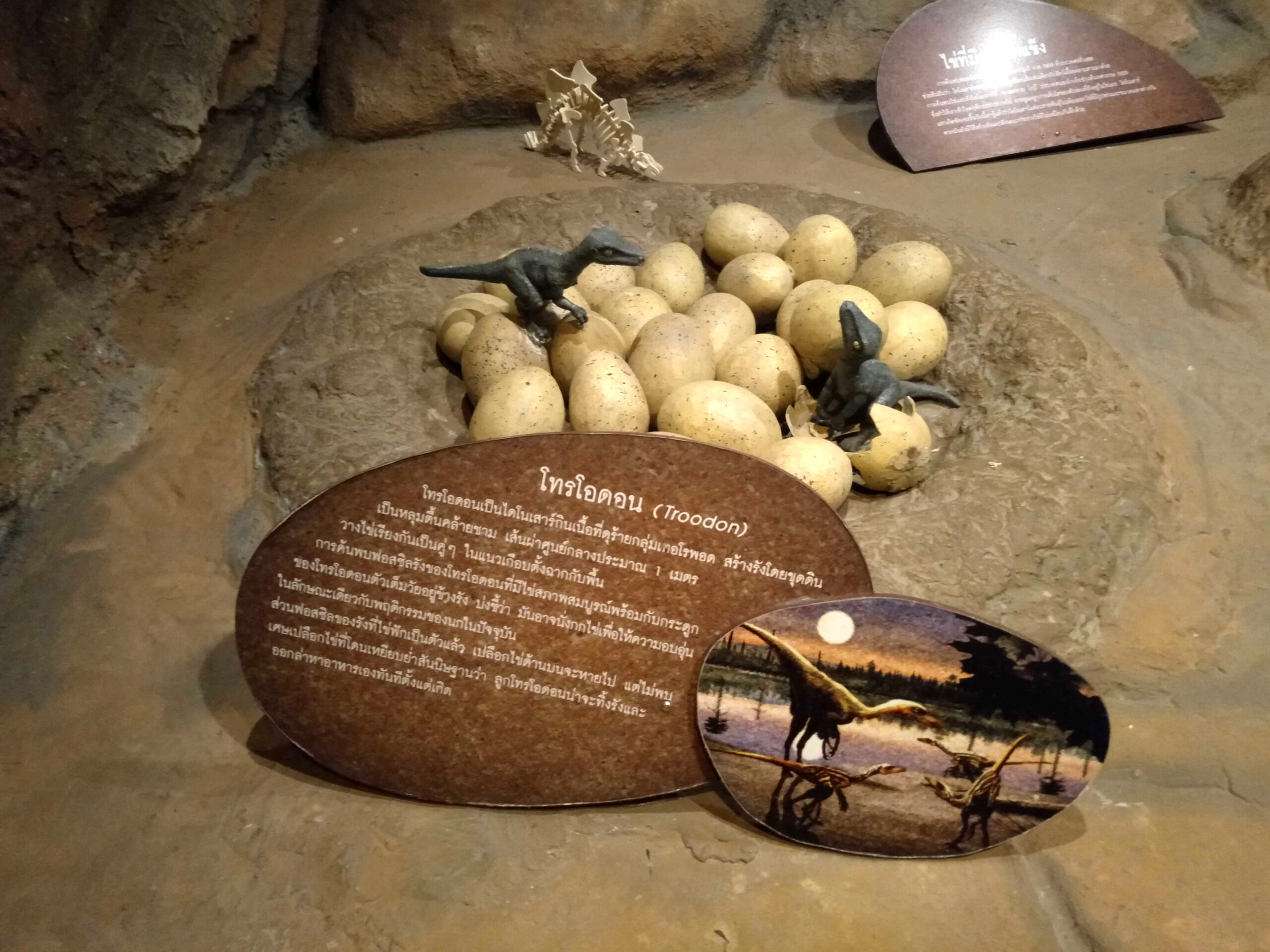
Some non-avialan dinosaurs, such as Troodon, exhibited iterative laying, where the adult might lay a pair of eggs every one or two days, and then ensured simultaneous hatching by delaying brooding until all eggs were laid. This sophisticated reproductive strategy shows dinosaurs had complex timing mechanisms for ensuring their babies all hatched together, maximizing their survival chances.
Social Communication and Display Behaviors

Although it is difficult to directly study dinosaur vocalizations, researchers have inferred their communication abilities based on anatomical features, such as the structure of the larynx and the presence of hollow bones that could have resonated sound. Dinosaurs likely used body language, including postures, gestures, and displays, to communicate with each other. Fossil evidence, such as preserved skeletons in specific postures, can provide clues about these behaviors.
Some dinosaurs may have used bright colors, feathers, or other visual cues to communicate with potential mates or rivals. Preserved pigments in fossilized feathers have provided evidence of this. The prehistoric world was likely a riot of color and sound, with dinosaurs showing off elaborate plumage and making complex vocalizations to attract mates and establish territories.
Conclusion
These fossil clues reveal dinosaurs as complex, social, and behaviorally sophisticated animals that lived rich lives millions of years ago. From the protective parent tenderly caring for eggs to the massive herds thundering across ancient plains, dinosaurs exhibited behaviors that would seem familiar to anyone watching wildlife documentaries today. Each broken bone, every trackway, and all those fossilized droppings tell us that dinosaurs weren’t just mindless monsters – they were living, breathing animals with intricate social lives, survival strategies, and behavioral adaptations that helped them dominate Earth for over 160 million years.
What fascinates you more – the thought of dinosaur parents raising their young or the idea of massive prehistoric migrations?