Most people can name a T. rex or a woolly mammoth without missing a beat. Pop culture has done a thorough job making sure those creatures live on in our collective imagination. Yet Earth’s prehistoric past is so much stranger and richer than blockbuster movies suggest, full of animals so bizarre they barely seem real even when you’re staring at a fossil.
The ten creatures below span hundreds of millions of years and every corner of the ancient world. Some were fearsome predators. Others were gentle giants or walking evolutionary experiments. What they all share is a near-total absence from mainstream conversation – which makes them all the more worth knowing.
1. Hallucigenia: The Creature That Baffled Science for Decades
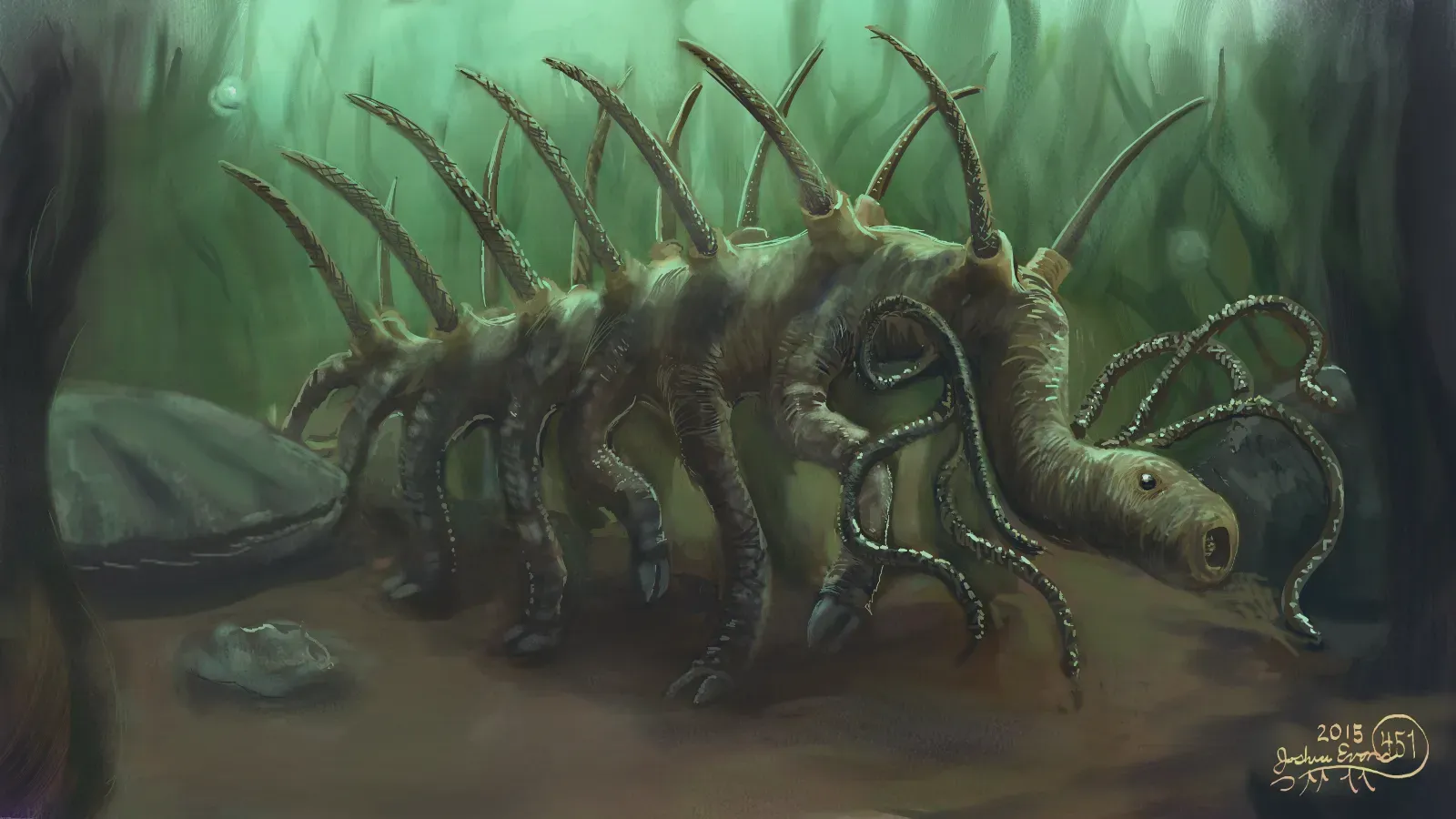
Hallucigenia is a bizarre and mysterious creature from the Cambrian period, approximately 508 million years ago, known for its strange appearance – it puzzled scientists for decades and became a symbol of the Cambrian Explosion, a time of rapid evolutionary experimentation. When you first see a reconstruction of it, you genuinely wonder whether someone made a mistake. The name itself was inspired by its dreamlike, almost hallucinatory appearance.
The generic name reflects the type species’ unusual appearance and eccentric history of study; when it was erected as a genus, the animal was reconstructed upside down and back to front. It took scientists years of additional fossil work to figure out which end was the head. Researchers eventually showed that the fearsome spikes on Hallucigenia’s back were wrongly confused for legs, and were in fact a defense mechanism against the growing number of Cambrian predators.
2. Anomalocaris: The Ocean’s First Apex Predator
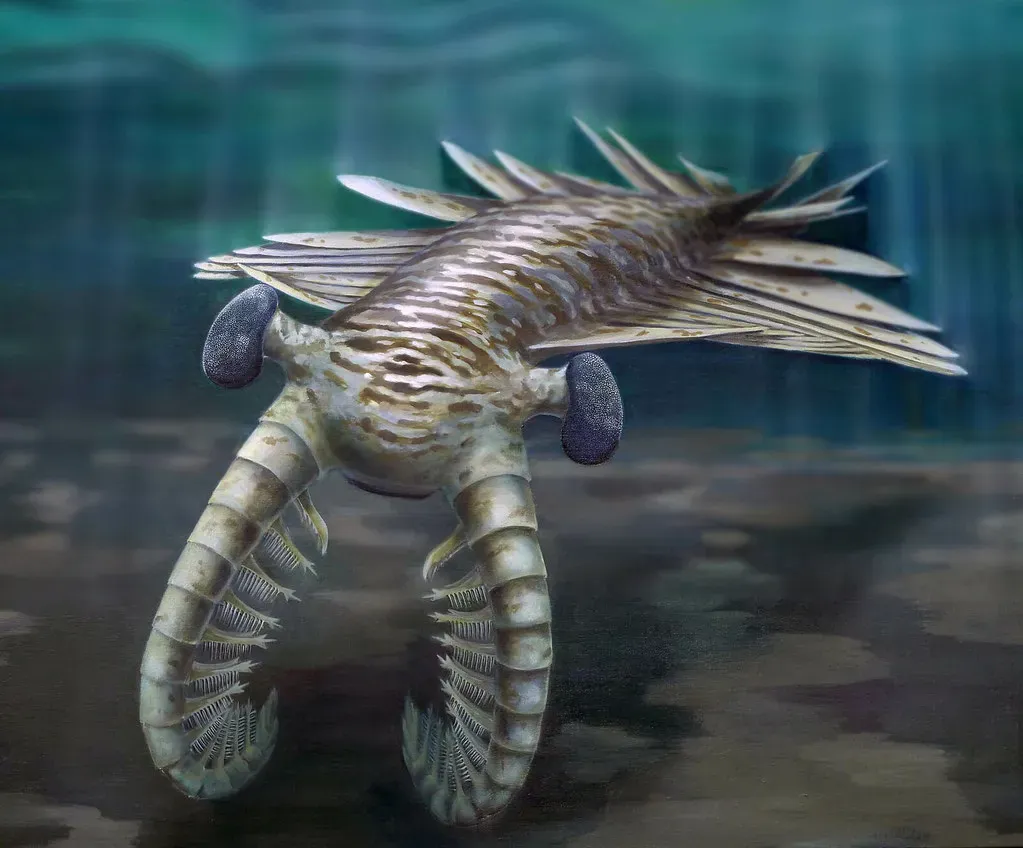
This bizarre-looking animal was Anomalocaris, or “unusual shrimp,” and is widely regarded as the world’s first apex predator – the killer whale of its day. Anomalocaris was the largest hunter of the Cambrian period, measuring up to a metre in length from its grasping, frontal appendages to the tips of its tail fans. In a world where most marine animals were tiny, this thing was a leviathan.
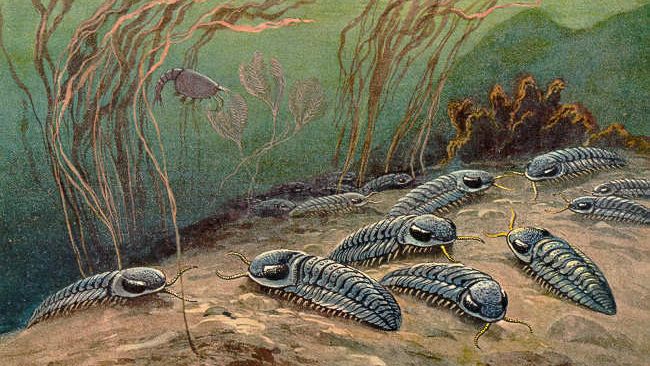
The appendages are thought to have been used to catch and crush prey. For a long time, hard-shelled marine arthropods known as trilobites were assumed to have been Anomalocaris’s favourite snack, but new research has suggested that this predator was more of a weakling, incapable of cracking tough trilobite armour. That revision was a reminder that even the fiercest prehistoric hunters don’t always match their fearsome reputations on closer inspection.
3. Dunkleosteus: The Armored Fish With a Jaw Like a Machine
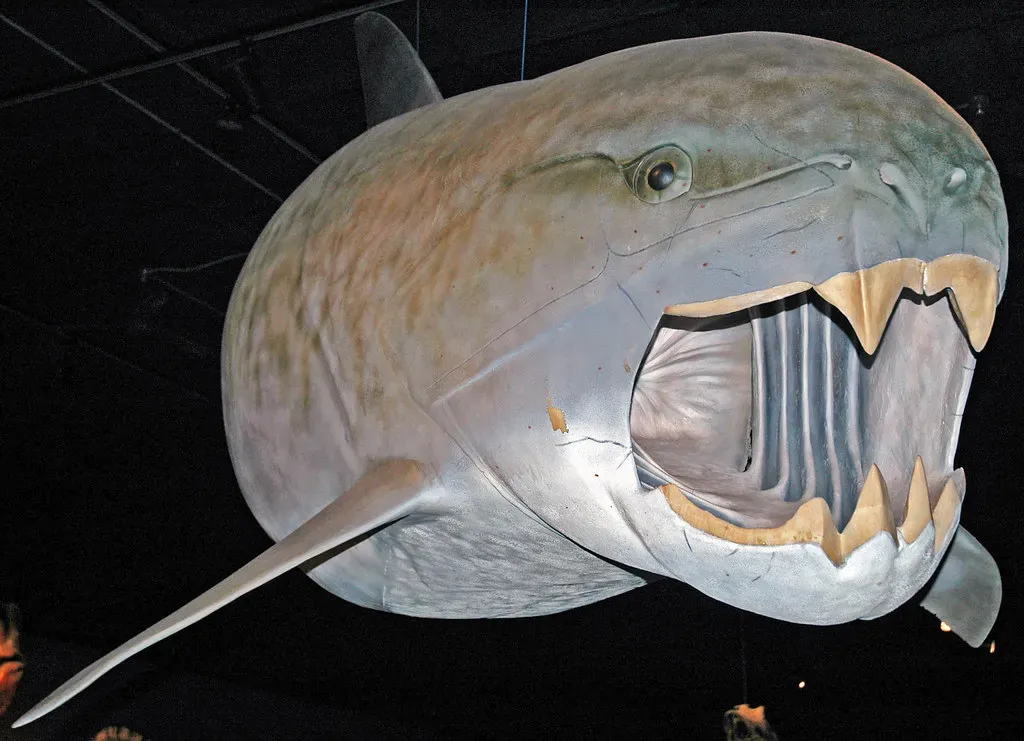
Long before the reign of dinosaurs, during the late Devonian period approximately 370 to 360 million years ago, a fearsome fish known as Dunkleosteus ruled the ancient seas. Measuring between 26 and 32 feet in length, this streamlined, shark-like predator sported an armored head and a surprisingly “toothless” face. In place of traditional teeth, Dunkleosteus wielded two long bony blades that functioned like self-sharpening shears.
Size was not the only strength of this giant fish. Dunkleosteus had a unique linkage system that connected the skull and jaw muscles in a way that made it possible to open and close its jaws quickly. This way, the jaw produced a massive bite force enough to rip prey apart. Fossils found alongside Dunkleosteus remains often include regurgitated fish bones, suggesting it wasn’t always able to digest everything it consumed in its relentless feeding.
4. Opabinia: The Five-Eyed Wonder of the Cambrian Seas
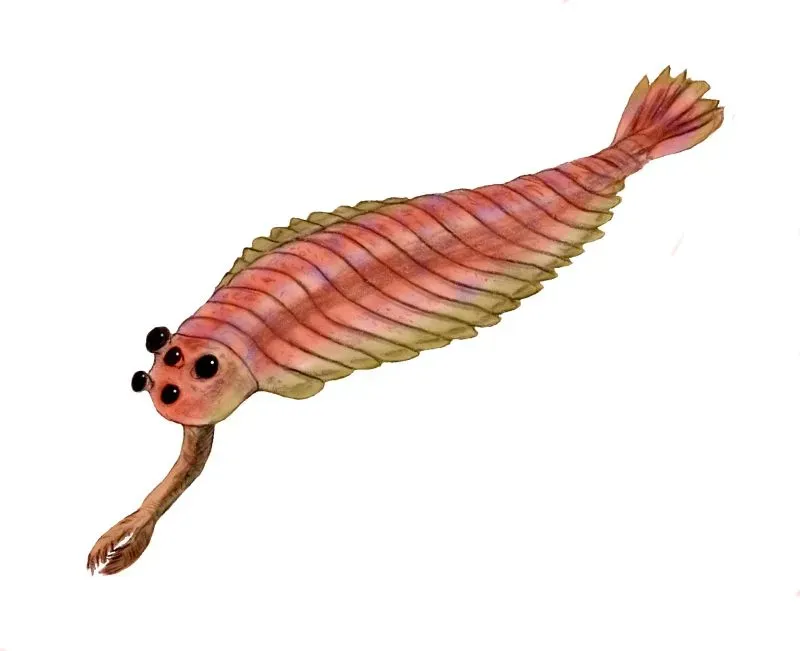
When the bizarre-looking Opabinia was first identified in the Burgess Shale, it was seen as evidence for the sudden evolution of multicellular life during the Cambrian period. The five stalked eyes, backward-facing mouth, and prominent proboscis of Opabinia do have the appearance of having been assembled in haste. When the creature was first formally presented to paleontologists at a scientific conference, the audience reportedly burst out laughing – not from disrespect, but from sheer disbelief.
Only a few inches long with five eyes to navigate its seafloor home, Opabinia looks like it could have been a mad scientist’s invention. Though not a fierce predator, Opabinia was an odd-looking prehistoric creature sporting a unique, vacuum hose-like attachment at its mouth which it used to bring food back to its mouth. Beyond its five eyes, it also had 30 flippers. Its exact placement in the animal family tree is still debated, but it’s widely accepted as an early relative of the arthropods.
5. Titanoboa: The Largest Snake That Ever Existed
![5. Titanoboa: The Largest Snake That Ever Existed (own work uploaded by artist here:[1] Larger version from:[2], CC BY 3.0)](https://nvmwebsites-budwg5g9avh3epea.z03.azurefd.net/dinoworld/20fd5d82e2208dd894eab1d52bda8815.webp)
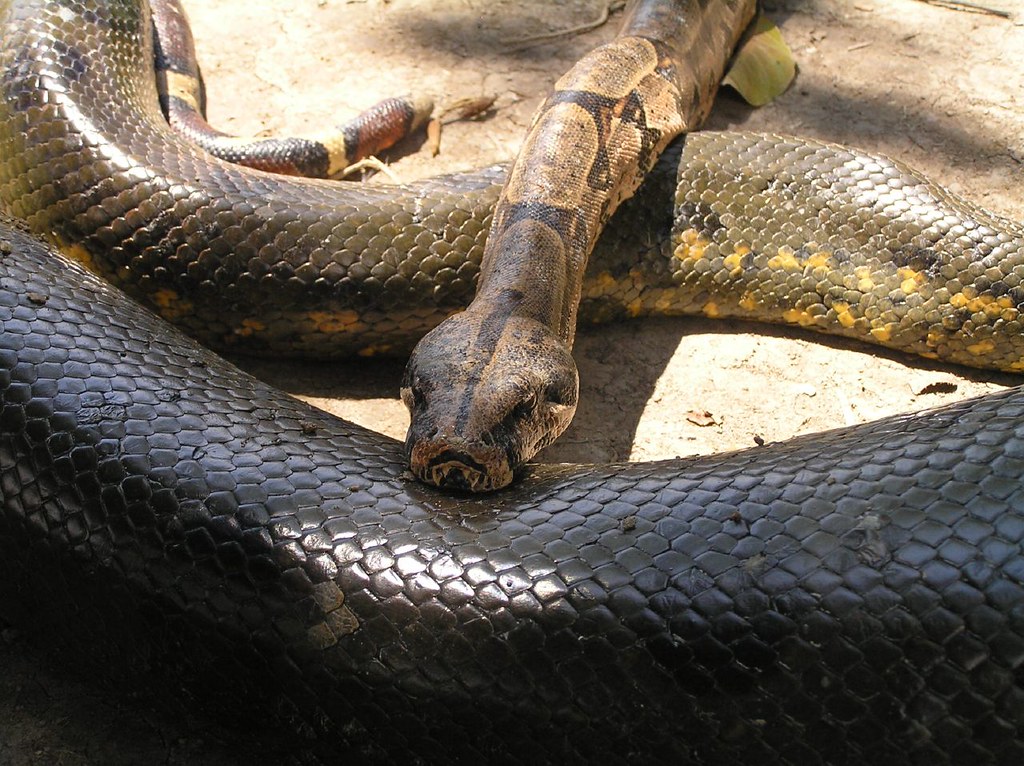
Titanoboa is an extinct snake that lived during the Paleocene Epoch and is considered the largest known member of the suborder Serpentes. Titanoboa is known from several fossils dated to 58 to 60 million years ago. From extrapolations of body size made from excavated vertebrae, paleontologists have estimated that the average adult Titanoboa was roughly 13 metres long and weighed about 1,135 kg.
The snake’s enormous size is thought to be closely tied to the climate of the Paleocene. Snakes, similar to other cold-blooded animals, have metabolic rates that are influenced by the temperature of the ambient environment. Titanoboa probably spent much of its time in the water. The sedimentary structure of the region’s rocks and the preservation of water-loving organisms such as crocodilians, turtles, and fishes indicate that the region was waterlogged. Basically, imagine a school bus that hunted crocodiles.
6. Helicoprion: The Shark With a Circular Saw for a Mouth
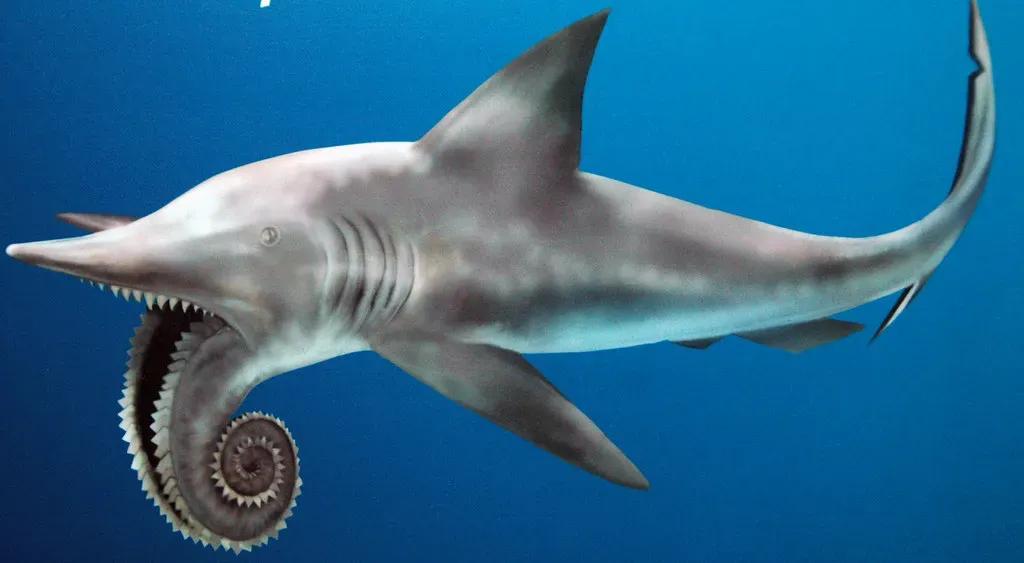
Swimming through the oceans of the Permian period approximately 290 to 270 million years ago, Helicoprion represents one of the most bizarre predatory fish in Earth’s history. This cartilaginous fish, related to modern sharks and rays, possessed perhaps the strangest dental arrangement ever evolved: a spiral-shaped whorl of teeth resembling a circular saw blade. For decades, scientists debated where exactly this tooth whorl was positioned, with recent research suggesting it was located in the lower jaw, with the teeth rotating upward and inward during feeding.
What makes Helicoprion particularly nightmarish is the mechanized, almost industrial nature of its feeding apparatus. As it opened its mouth to feed, new teeth would rotate upward from the back of the whorl, while older teeth would rotate inward, effectively creating a conveyor belt of slicing teeth. This mechanism would have allowed it to efficiently slice through soft-bodied prey like squid, pulling them deeper into its mouth with each bite. It’s genuinely unlike anything swimming in today’s oceans, or any ocean since.
7. Nothosaurus: The Sea Monster That Couldn’t Fully Commit to the Ocean
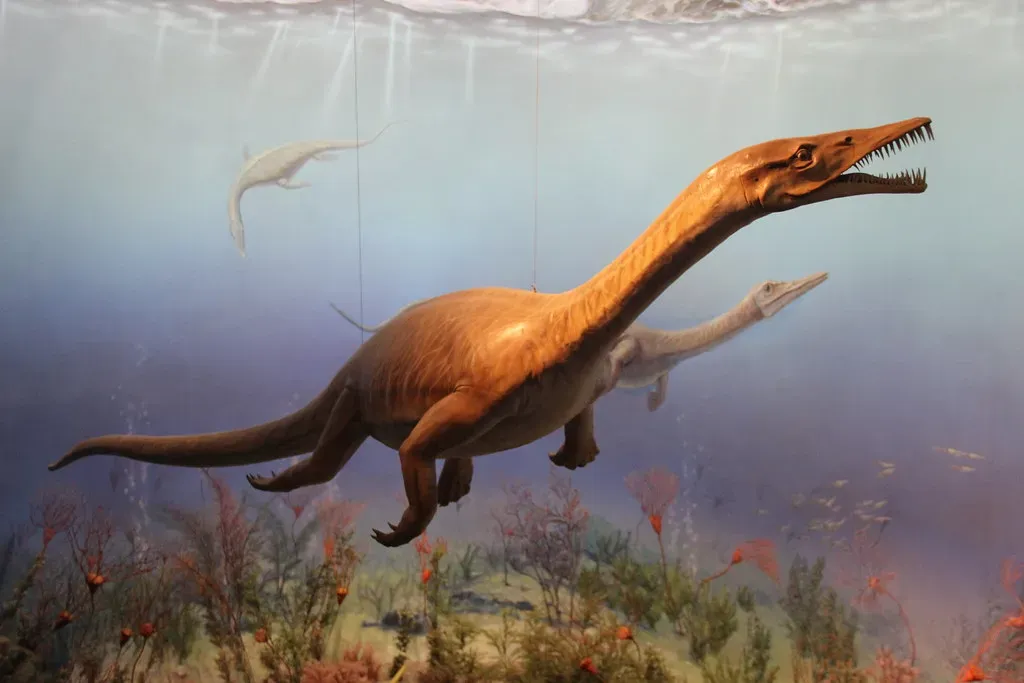
Nothosaurs were related to the plesiosaurs but did not always have the best physical capabilities for coping with marine life. These reptiles did not have gills, so they had to come up to the surface for fresh air. Their long necks, which would have easily been able to sneak into a school of fish, were a big asset when it came to catching prey. In that sense, they were a kind of evolutionary halfway house between true land reptiles and the fully aquatic giants that came later.
Nothosaurus itself lived in the mid-Triassic, and its name’s meaning is translated as “false lizard.” Scientists have considered two possibilities as to how the animals gave birth to their offspring: the eggs were laid on sandy shores like modern sea turtles, or a Nothosaurus would give live birth to its young at sea, just as some sharks do today. That reproductive mystery remains unresolved, which makes the creature feel all the more intriguing.
8. Megatherium: The Giant Ground Sloth That May Have Been a Predator
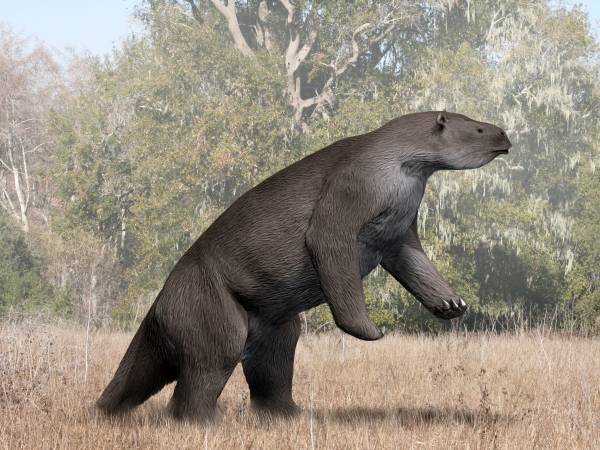
Megatherium was a pretty large mammal – actually a giant ground sloth related to modern sloths. An inhabitant of South America during the Quaternary period, an adult standing on its hind legs could reach a height of 20 feet. Picture the laziest, most docile animal you know, then scale it up to the size of an elephant. That’s roughly the mental image most people had of Megatherium for a long time.
Megatherium was previously regarded as a slow tree ripper, but recent studies show that its great claws might have been used for stabbing and killing. If this was the purpose of its claws, it would make the giant sloth the largest predator of the South American plains. Whether it was a hunter, an opportunistic scavenger, or a strict herbivore is still debated – but the possibility of a predatory sloth the size of a bus is hard to shake.
9. Estemmenosuchus: The Horned Beast That Predated the Dinosaurs
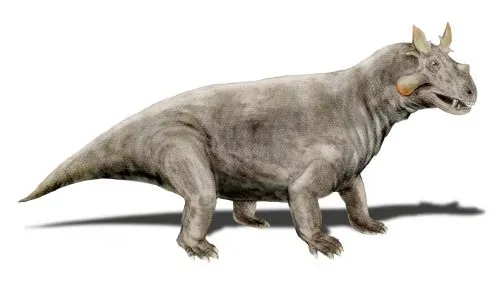
Estemmenosuchus means “crowned crocodile” in Greek, earning its name due to the fascinating horns that grow from the sides and tops of the head, almost like a moose. It lived during the Middle Permian period and, despite being referred to as a reptile, actually belonged to the therapsid family, which includes the ancestors of mammals. So in a strange twist, you share more ancestry with this horned, hippo-shaped creature than a Velociraptor ever did.
Translated from Greek to mean “crowned crocodile,” Estemmenosuchus is quite a strange-looking prehistoric creature. Though it looked like a hippo-rhino mix, this creature had distinctive knob-like horns on the sides of its head and, in some species, on the top and on the jawbone. Thankfully, it was primarily a herbivore. It roamed what is now Russia, grazing in the ancient landscapes of the Permian world tens of millions of years before the first dinosaur set foot on Earth.
10. Platybelodon: The Elephant With a Shovel for a Face
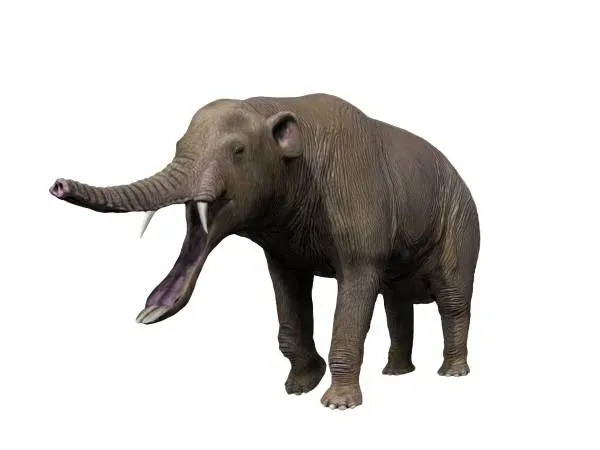
Platybelodon resembled a modern elephant with one notable exception: a lower jaw that looked like a shovel. This bizarro-elephant lived 5 to 15 million years ago and used the scooped jaw to troll the bottom of swamps for feeding material. The contrast between its otherwise familiar elephant-like silhouette and that flattened, spade-like jaw makes it one of the most visually striking creatures you’ll find in the entire fossil record.
Even the bottom teeth were flattened for precision digging. Along with the distorted mouth, Platybelodon had two side tusks that were used to cut trees and vegetation, making a kind of cranial Swiss-Army knife. Platybelodon was surely one of the most formidable and intimidating herbivores to have ever lived. Its existence is a useful reminder that evolution doesn’t always follow a tidy path, sometimes it produces something that works brilliantly for its time and then vanishes entirely, leaving only fossils and stunned paleontologists.
Conclusion: The Past Is Stranger Than We Think
Dinosaurs will always dominate popular culture – they’re spectacular and they deserve their fame. Yet the creatures above reveal something important: the full sweep of prehistoric life is far weirder, more varied, and more surprising than any single era or group of animals could capture.
From a thumb-sized creature that stumped scientists for decades to a snake longer than a bus, the fossil record keeps rewriting what we thought we knew. Each new discovery shifts the picture a little further. If anything, that’s the most compelling reason to keep paying attention to paleontology. The strangest chapters of Earth’s story are still being written by the scientists patiently chipping away at rock.