You probably know the celebrity dinosaurs by heart: Tyrannosaurus, Triceratops, maybe Velociraptor thanks to the movies. But North America’s prehistoric forests were crowded with many more creatures that almost never make it into documentaries, toys, or pop culture. When you start looking beyond the headliners, you discover a hidden cast of strange, fascinating dinosaurs that quietly shaped those ancient ecosystems.
In this article, you’ll walk through dense Jurassic and Cretaceous woodlands, meeting ten “forgotten” dinosaurs that once rustled through ferns, splashed through rivers, and browsed among conifers from what’s now Canada to Mexico. You will not get wild exaggerations or made‑up monsters – only what scientists can say with reasonable confidence today, told in a way that helps you actually picture these animals moving through the trees around you. As you go, try imagining how different your mental image of the dinosaur world becomes when these lesser‑known forest dwellers step out of the shadows.
1. Dryosaurus – The Nervous Sprinter of the Jurassic Undergrowth
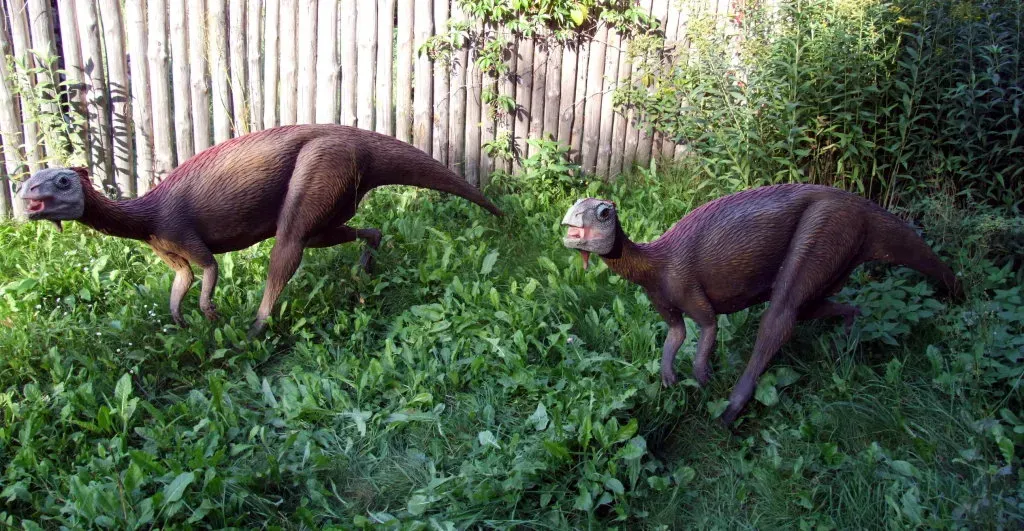
When you picture a Jurassic forest in western North America, you probably focus on giants like Allosaurus or Apatosaurus – but under their feet, a small plant‑eater named Dryosaurus was constantly on high alert. You encounter this dinosaur in your mind’s eye as a lean, lightly built runner, about the size of a large dog, weaving between tree trunks and low cycads. Its fossils from places like the Morrison Formation show a lightweight skeleton and long legs, which tell you that speed, not strength, was its survival strategy in crowded woodlands.
If you were dropped into that ancient forest, you’d likely hear Dryosaurus before you saw it: quick footfalls in leaf litter, maybe a sudden crash of foliage as it bolted from a snapping branch that sounded too much like a predator. You can imagine it feeding quietly on low plants at the forest edge, then freezing at the faintest shadow before exploding into a sprint. Instead of thinking of dinosaurs as slow, dragging reptiles, Dryosaurus pushes you to see an ecosystem full of nervous, reactive animals that lived and died by split‑second decisions.
2. Nothronychus – The Clawed Browser of Cretaceous Thickets
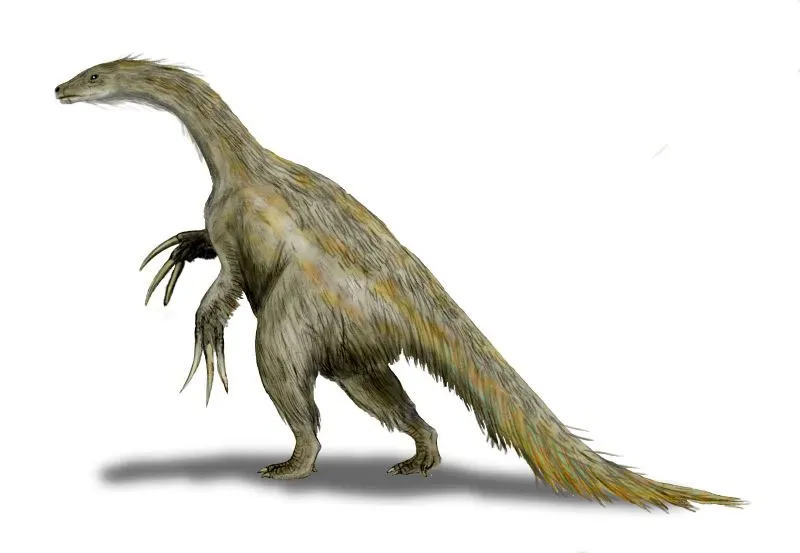
If you only saw the hands of Nothronychus, with their huge curved claws, you might assume you were dealing with a fearsome predator. But when you pull back and look at the whole animal, you find a pot‑bellied, long‑necked, feathered plant‑eater moving slowly through Late Cretaceous forests of what’s now the American Southwest. You place yourself a safe distance away and watch it rear slightly to hook branches down toward its beak with those intimidating claws, more like a prehistoric sloth than a classic dinosaur villain.
In your mental walk through these forests, Nothronychus forces you to question your first impressions. You learn that claws do not always equal carnivore and that evolution sometimes repurposes scary tools for peaceful jobs like pulling down leaves and twigs. The broad hips and large belly suggest a gut built to ferment tough vegetation, so you can imagine it spending most of its day slowly browsing in the shade, plucking mouthfuls of foliage while smaller, quicker dinosaurs darted nervously around its feet.
3. Troodon – The Keen‑Eyed Forest Night Stalker
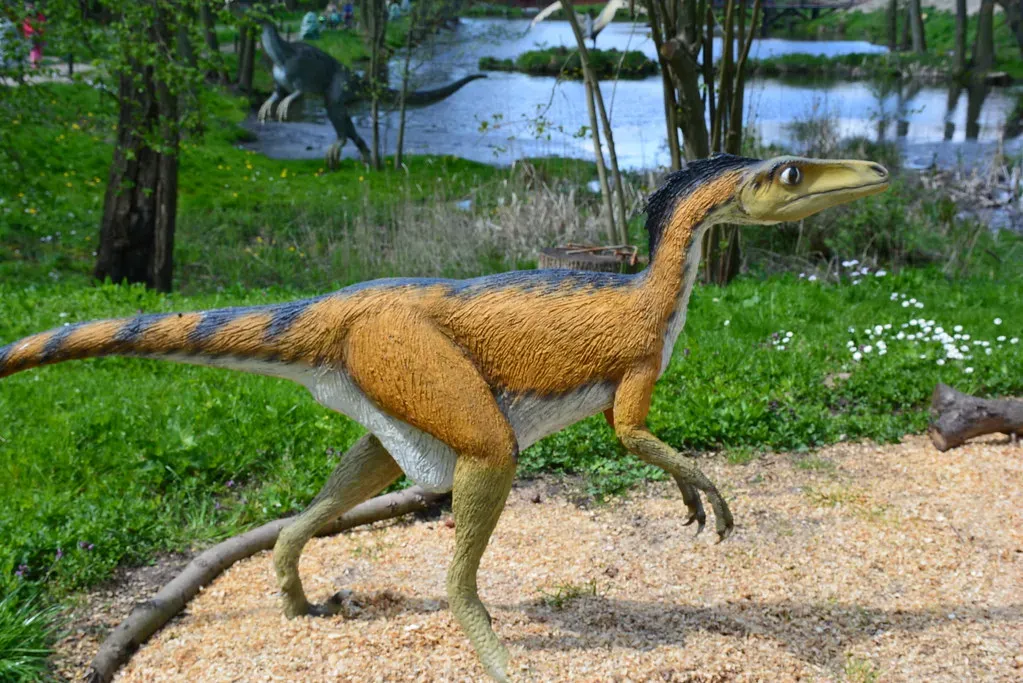
To really feel how alive an ancient forest was, you need to shift your imagination to nighttime – and that is where Troodon steps in. When you picture this small, long‑legged predator in the Late Cretaceous of North America, you notice its relatively large eyes and braincase compared with many other dinosaurs. You place yourself among the trees under a prehistoric moon, and you can almost sense Troodon’s alert gaze scanning the undergrowth for insects, small reptiles, and young dinosaurs that made the mistake of moving too loudly.
Some scientists think this animal had highly developed senses and flexible behavior, and that idea changes how you see the forest after dark. Instead of a quiet, empty place, you imagine a world of whispers and rustles where Troodon threads its way between ferns, using keen vision and quick reflexes to survive. Even if you never get perfect answers about exactly how smart it was, just knowing it had a proportionally larger brain nudges you to imagine more complex, curious behavior compared with the lumbering stereotypes you might associate with dinosaurs.
4. Chasmosaurus – The Quiet Shield‑Face Among the Trees
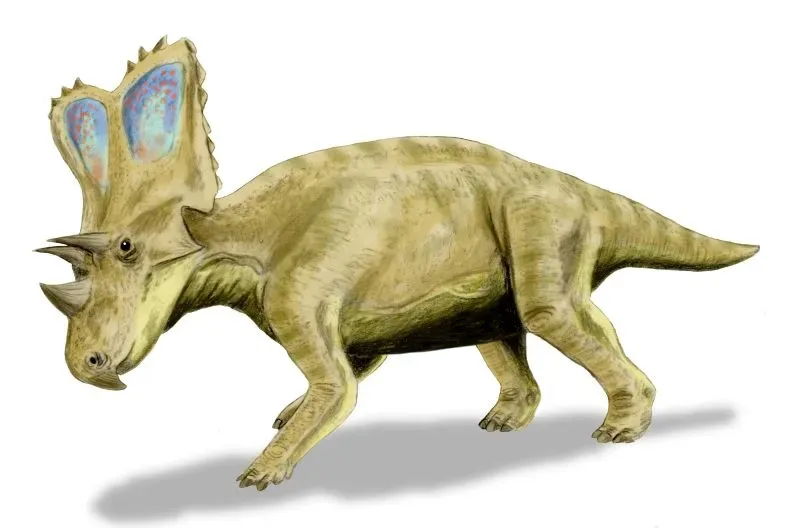
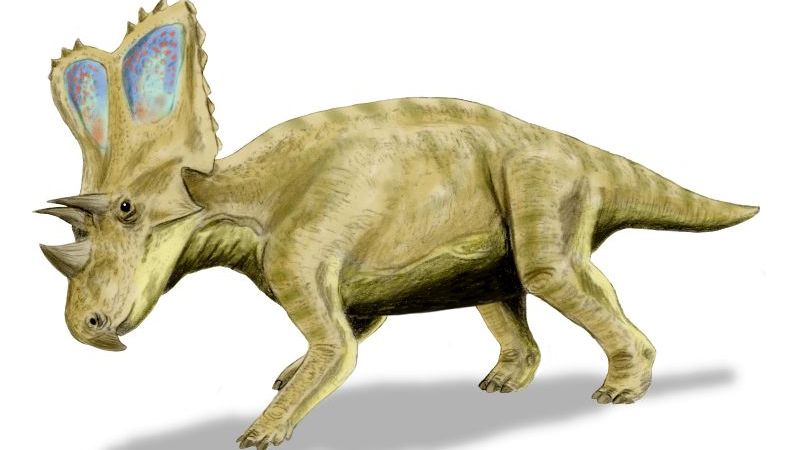
When people talk about horned dinosaurs from North America, Triceratops usually steals the spotlight, but in earlier Cretaceous forests you would have run into Chasmosaurus browsing calmly in groups. You picture these animals moving through floodplain woodlands of what is now western Canada, their long frills and modest brow horns framed by dappled light under conifers and broad‑leaved plants. Instead of dramatic battles, you imagine them focused on chewing through low shrubs and soft vegetation, using their beaks like efficient garden shears.
Being around a herd of Chasmosaurus in your mind gives you a sense of how social life in those forests might have felt. You see adults and juveniles sticking close together as they navigate between trees, their large frills possibly acting as visual signals to help individuals recognize one another in dense cover. Rather than seeing the frill only as armor or a weapon, you can imagine it catching flickers of color and pattern, letting members of the herd stay connected as they moved along the edges of rivers and through patches of forest light.
5. Lambeosaurus – The Crested Voice of Northern Forests
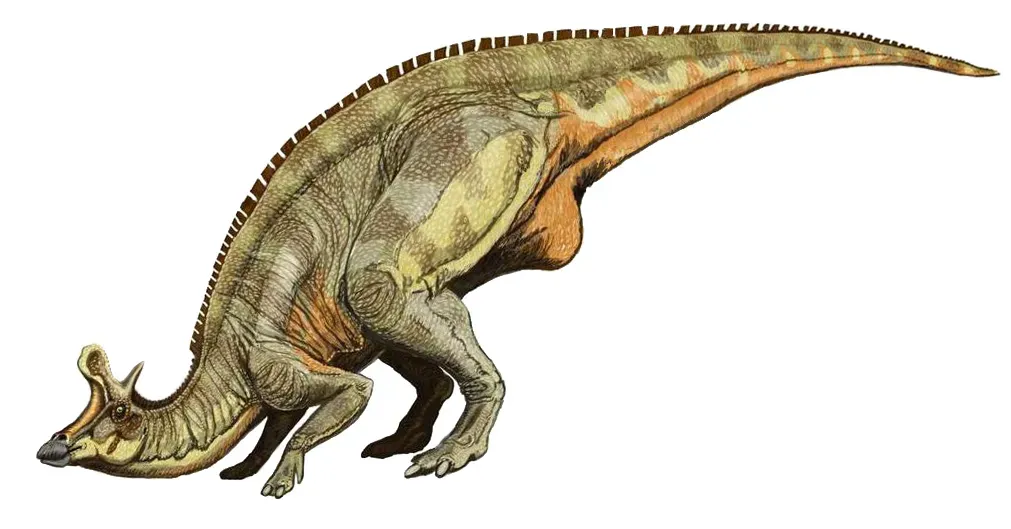
If you could suddenly hear the Late Cretaceous rather than just see it, Lambeosaurus would stand out instantly. This duck‑billed dinosaur carried a large, hollow crest on its head, and many researchers think it used that structure to produce or shape low, resonant calls that carried through the trees. You can put yourself on a misty ancient morning in what is now western Canada and imagine the sound of a herd of Lambeosaurus echoing across a forested floodplain, like distant horns rolling over the water.
Walking mentally alongside such a herd, you notice how their long tails and heavy bodies sway as they feed on leaves, twigs, and possibly needles from conifers. The forest around you feels alive not only with movement, but with communication – parents and young keeping track of each other with calls, especially when visibility is low among trunks and undergrowth. Even if scientists are still debating the exact details of those sounds, you can feel how that crest turns Lambeosaurus from a background herbivore into one of the defining “voices” of its ancient habitat.
6. Dromaeosaurus – The Compact Hunter of Woodland Edges
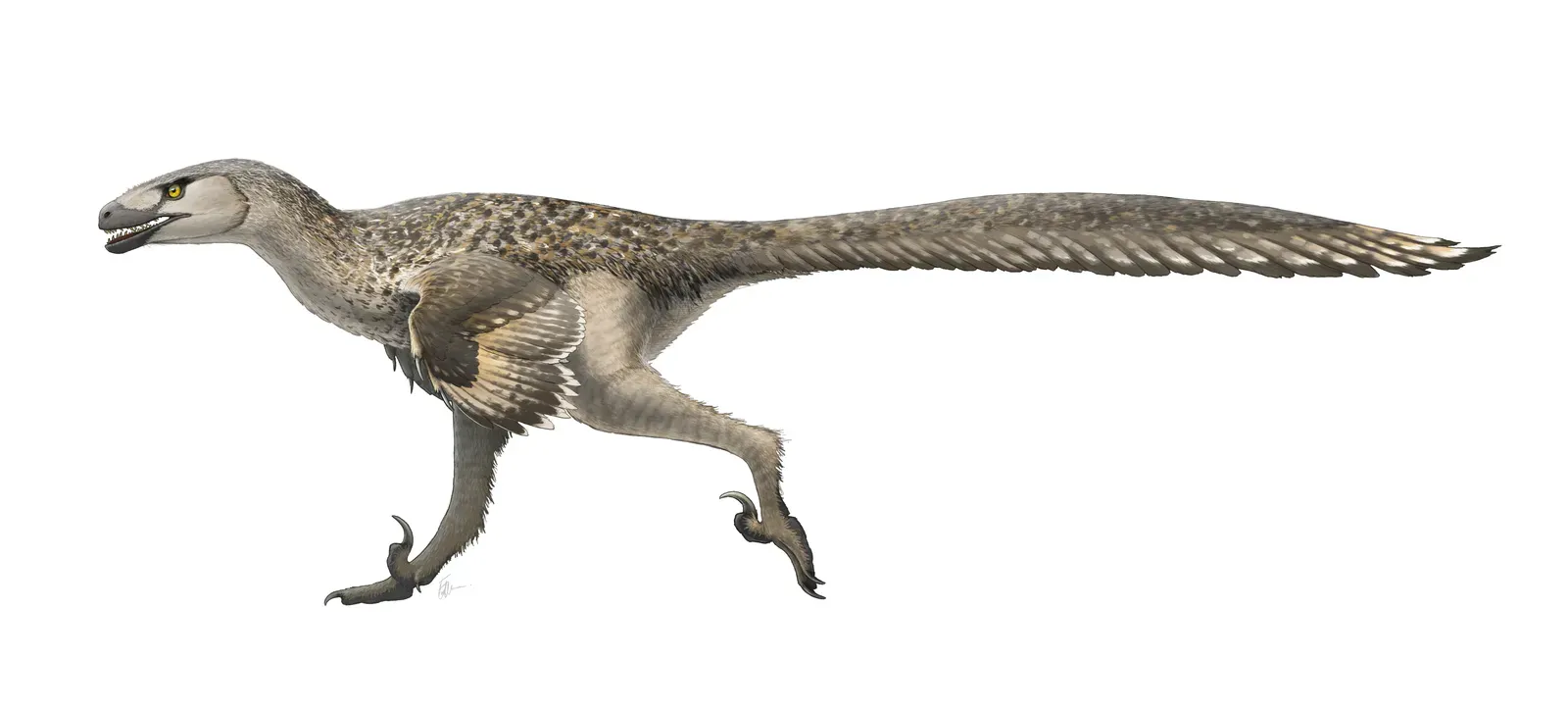
When most people think of sickle‑clawed predators, they jump straight to movie raptors, but Dromaeosaurus was a real animal stalking Late Cretaceous North America long before cinema. You see it as a relatively small, sturdy predator, feathers likely covering its body, moving along the edges of forests and riverbanks where undergrowth and open ground met. Its strong jaws and blade‑like teeth suggest that, unlike some lighter‑built relatives, it relied heavily on biting as well as claws when it brought down prey.
If you were quietly watching from behind a tree, you could imagine Dromaeosaurus weaving between roots and low branches, using cover to get close to small dinosaurs or other animals that strayed too far from the safety of the herd. The forest edge it patrols in your mind is full of opportunities: burrows, nests, and trails where prey comes to drink or feed. Instead of picturing predator dinosaurs only as solitary monsters in open plains, Dromaeosaurus nudges you to see them as part of a complex forest food web, adapting to every shadow and thicket.
7. Tenontosaurus – The Sturdy Workhorse of Early Cretaceous Woodlands
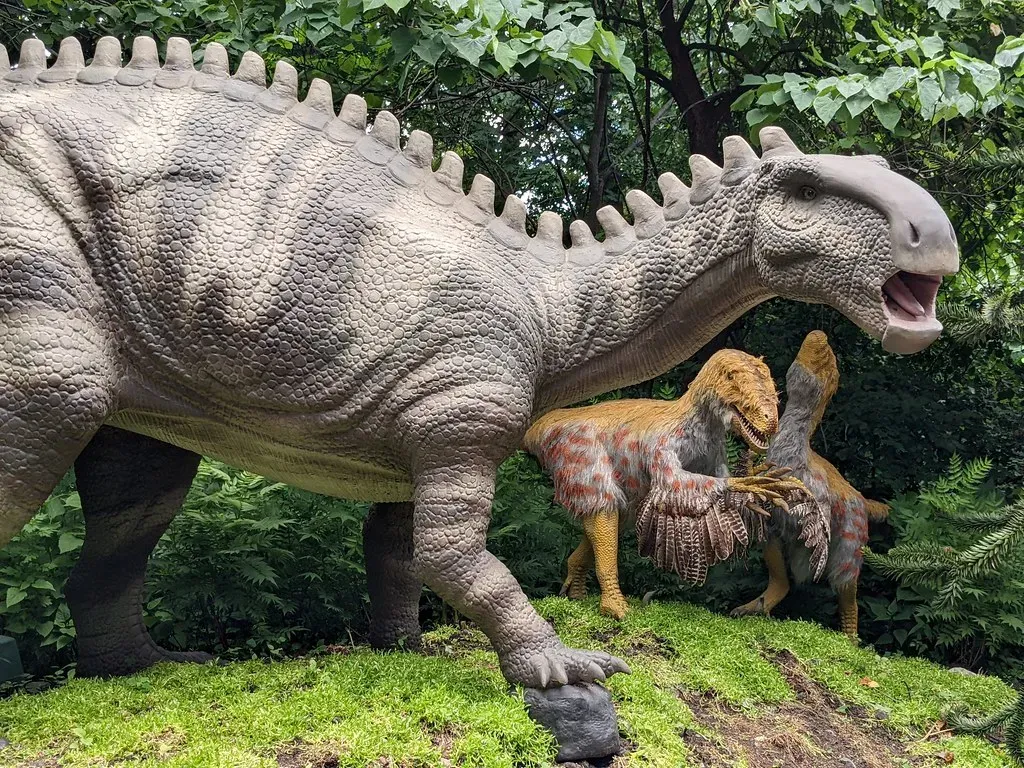
Tenontosaurus rarely turns up on posters, but if you could step into Early Cretaceous North America, you might see it more often than almost any other large plant‑eater in its communities. You imagine a robust, long‑tailed herbivore moving steadily through forested river valleys, cropping low plants and maybe venturing into more open patches to feed. It was not flashy, but its strong build and sheer abundance in some fossil sites tell you it was a reliable presence, like a common tree species that quietly shapes an entire landscape.
As you follow a mental group of Tenontosaurus along a forest trail, you start to appreciate how these “background” dinosaurs powered the ecosystem. Predators likely targeted them, and they probably influenced which plants flourished by how and where they fed. You can think of them a bit like the deer or antelope of their time: not glamorous, but essential, constantly moving through the undergrowth, leaving tracks and droppings that changed the soil and fed insects, fungi, and other small creatures you rarely picture when you think about dinosaurs.
8. Edmontonia – The Living Tank in the Forest Shade
![8. Edmontonia – The Living Tank in the Forest Shade (the image i did myself based on the images found here: [1], [2],[3] and [4], Public domain)](https://nvmwebsites-budwg5g9avh3epea.z03.azurefd.net/dinoworld/55b43eaaf78abac1f81cec8cbd17a0bb.webp)
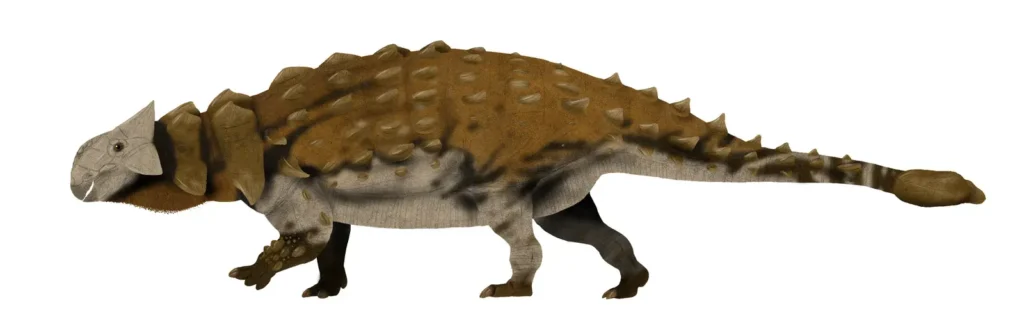
When you imagine walking through a Late Cretaceous forest in what is now western North America, it is easy to focus on big predators, but then you almost trip over Edmontonia, an armored plant‑eater built like a walking fortress. You picture it low to the ground and wide, encased in bony plates and spikes, moving slowly through dappled light as it searches for low plants and leaves within reach. It relied on heavy armor rather than speed, turning its body into a problem that even hungry tyrannosaurs would think twice about tackling.
From your vantage point, hidden behind a cluster of ancient shrubs, you watch Edmontonia pause to feed, the forest around it quiet except for the sound of chewing and occasional snapping branches. Its back and flanks look almost like part of the forest floor, a natural camouflage combined with serious defense. In your mental picture, this dinosaur reminds you that not every forest dweller was nimble or graceful – some survived by simply being too tough, too low, and too bristling with spikes to be worth the risk of attack.
9. Parksosaurus – The Leaf‑Nibbling Survivor at the Water’s Edge
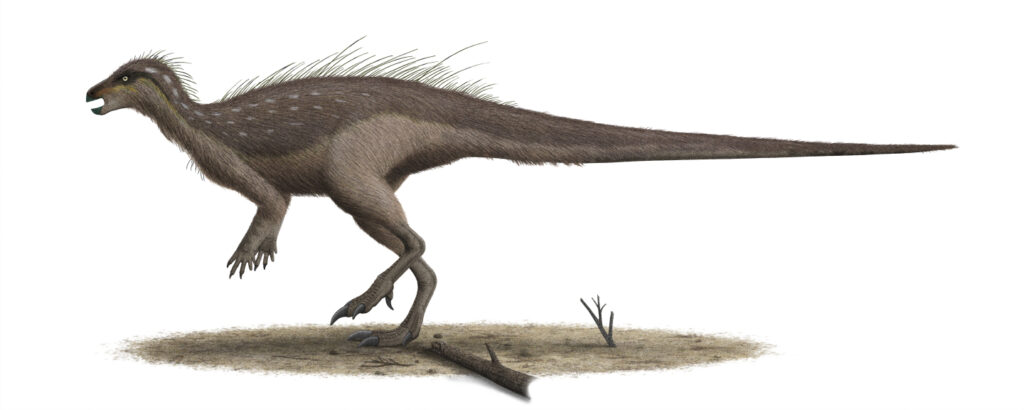
Parksosaurus is one of those dinosaurs you could easily walk past in a mural without noticing, but in real life it might have been darting right at your feet in Late Cretaceous wetlands and forests. You imagine a small, lightly built herbivore, probably no taller than your hip, picking its way along muddy shores and among dense vegetation. Its slender legs and compact body suggest it could move quickly when danger appeared, vanishing into thickets or zigzagging through tree roots.
If you place yourself at the edge of a prehistoric pond, you can picture Parksosaurus nibbling at low plants, always with one eye on the surrounding forest for any sign of movement. It represents the countless small herbivores that rarely get top billing but likely played enormous roles in shaping plant communities and feeding predators. Thinking about this animal helps you remember that ancient forests were not just dominated by giants; they were also full of small, alert creatures surviving by staying overlooked and ready to bolt.
10. Appalachiosaurus – The Eastern Hunter in Humid Coastal Forests
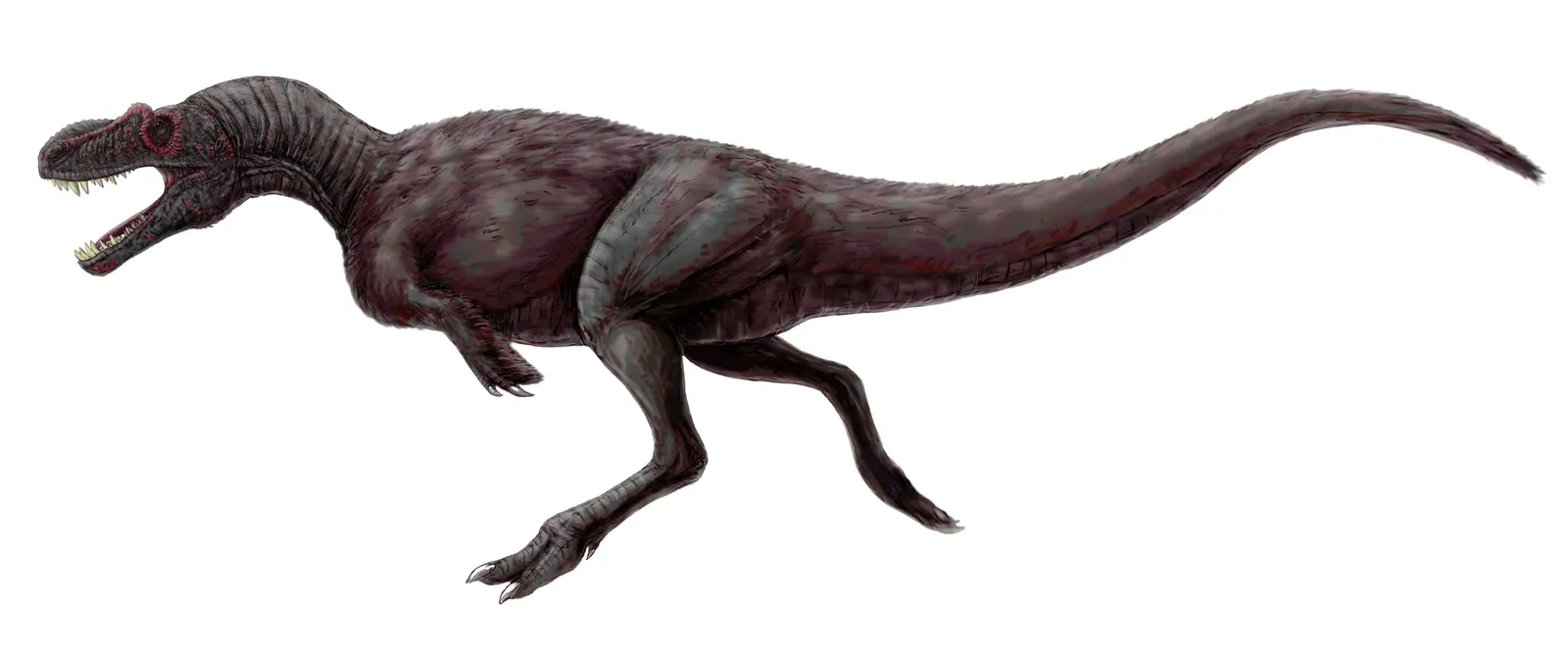
When you think of big meat‑eating dinosaurs in North America, your mind almost always jumps to the western badlands, but on the eastern side of the ancient continent, Appalachiosaurus was prowling through warm, forested coastal plains. You picture this tyrannosauroid moving along river channels and among humid woodlands that covered what is now the southeastern United States. It was not as massive as the later Tyrannosaurus, but you can still feel its presence as a top predator, its strong hind limbs carrying it between patches of trees and open ground.
Imagining yourself in those lush forests, you sense Appalachiosaurus as a reminder that dinosaur North America was divided into different regions with their own distinct communities. While western forests hosted one cast of characters, the eastern woodlands supported another, with this hunter near the top of the food chain. When you mentally watch it stepping between tree trunks and scanning for potential prey, you get a fuller, more regional picture of how varied North America’s ancient forests really were.
When you step back from these ten forgotten dinosaurs, you start to see North America’s prehistoric forests in a completely different way. Instead of a simple stage for a few famous giants, you now picture layered communities of nervous sprinters, armored browsers, crested callers, and clever hunters all threading their lives through conifers, ferns, and flowering plants. Every rustle of leaves in your imagination might be a Dryosaurus freezing in fear, a Parksosaurus darting for cover, or a Lambeosaurus calling its herd back together.
As you carry these mental images with you, you might notice that your sense of deep time feels more personal and real, almost like you’ve walked those ancient trails yourself. The next time you see a dinosaur exhibit or a movie, you can remind yourself that behind the stars of the show stood a crowd of lesser‑known creatures quietly shaping their forests just as modern animals shape ours. Which of these forgotten dinosaurs will now stick in your mind when you picture the shadows beneath those ancient trees?