The story of where you come from is stranger, older, and more dramatic than most people ever imagine. You are the living product of millions of years of survival, near-extinction, genetic mixing, and breathtaking evolutionary leaps. Your ancestors walked on two legs before they had big brains, interbred with other human species, and nearly vanished from the Earth entirely.
Honestly, the deeper scientists dig, the more surprising it gets. These are not dry textbook facts. These are the plot twists of an epic story, and you are the final chapter. So let’s dive in.
1. You Share a Common Ancestor With Chimpanzees From Just 6 to 9 Million Years Ago
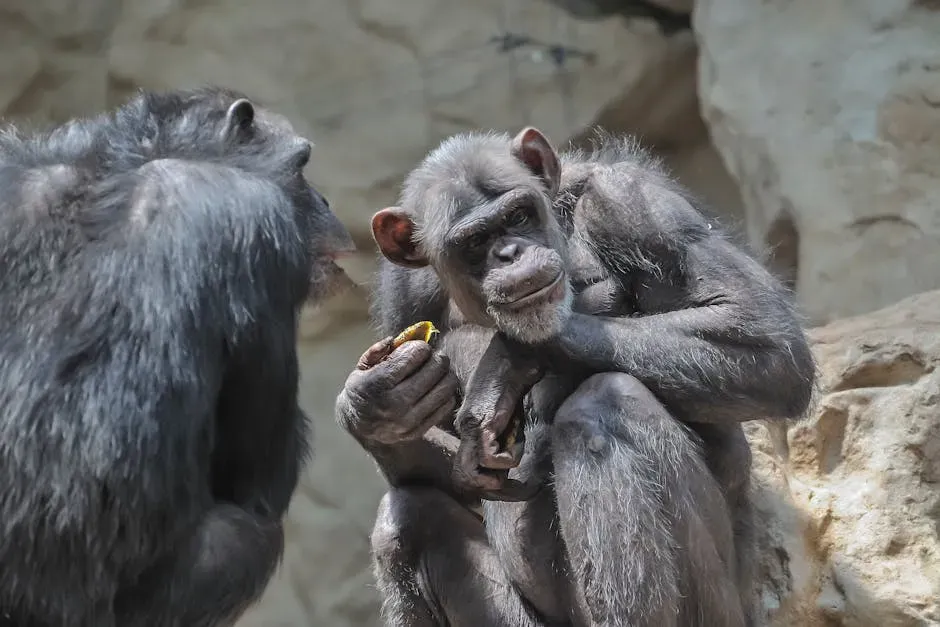
Here’s the thing about human origins that still blows people’s minds: you are not descended from a chimpanzee. You and the chimpanzee are more like distant cousins, both descended from something that came before both of you. Genetic evidence shows that the last common ancestor of all humans and modern chimpanzees is thought to have lived between six million and nine million years ago in Africa. That is an almost incomprehensibly ancient relationship.
A lack of fossil evidence means very little is known about what this ancient ancestor looked like, but it gave rise to a number of descendants, which may have included Sahelanthropus, Orrorin, and Ardipithecus. Think of that ancestor as a kind of evolutionary fork in the road, one path leading toward the apes we know today, the other leading, eventually, toward you. What a long road it turned out to be.
2. The Oldest Known Potential Human Ancestor Lived Over 6 Million Years Ago in Chad
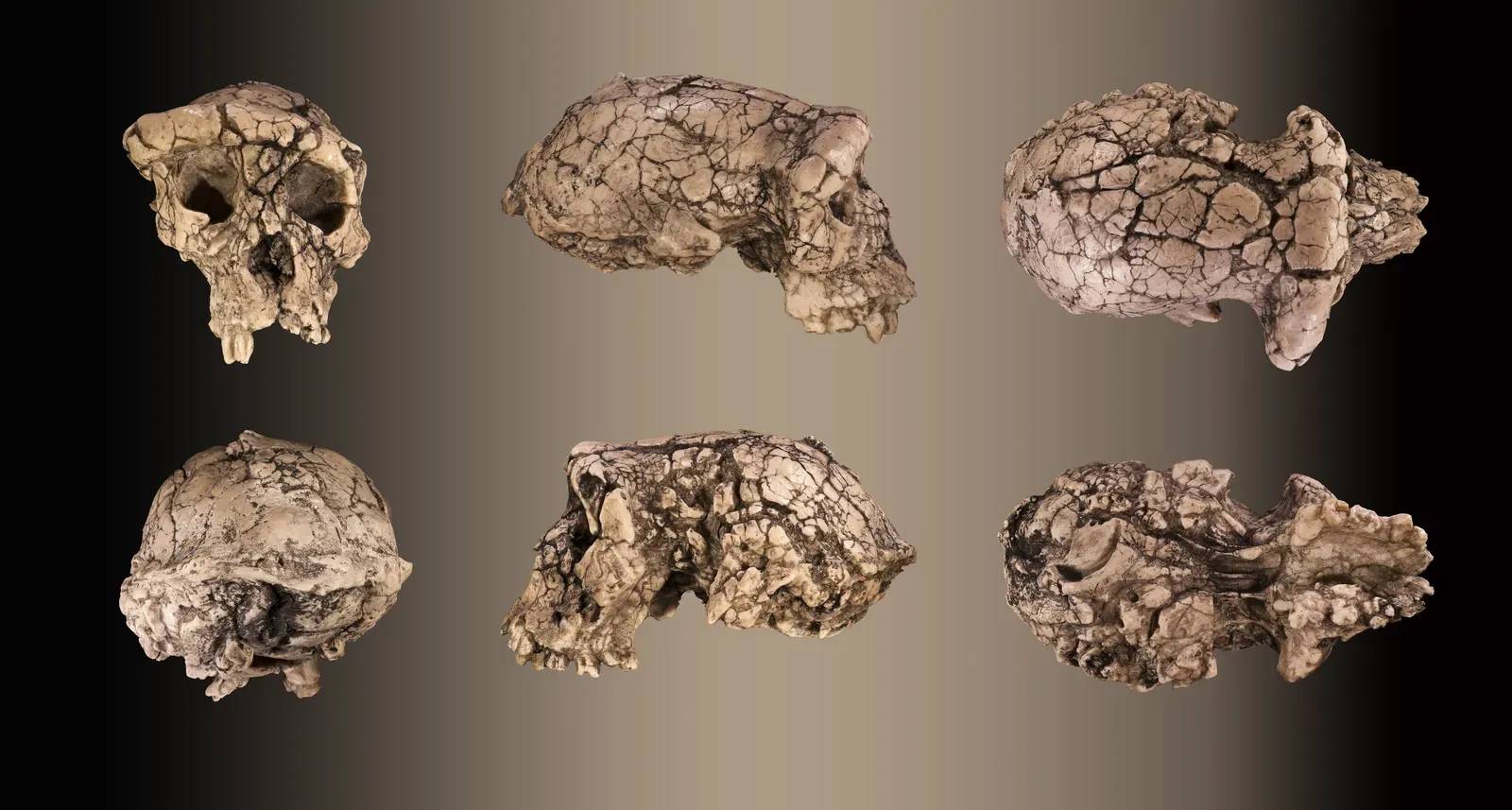
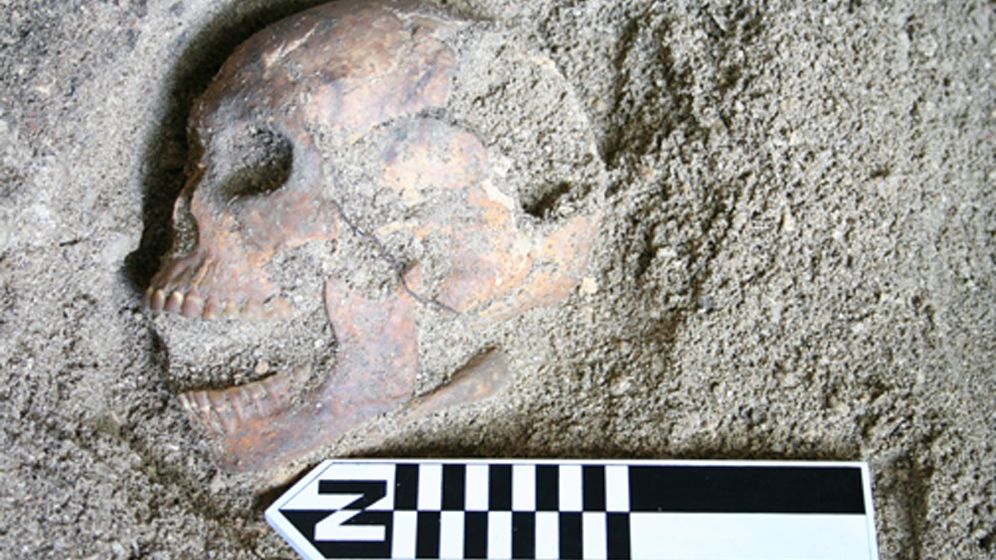
Picture someone stumbling across a rock in the Sahara and staring into the ancient eye sockets of what might be the oldest known ancestor of your lineage. That is essentially what happened. A Chadian student named Ahounta Djimdoumalbaye picked up a ball of rock on the floor of the Djurab Desert, and when he turned it over, he stared into the vacant eye sockets of an ape-like face, the skull of a primate that lived six million to seven million years ago on the shores of an ancient lake.
Paleontologist Michel Brunet introduced this fossil as the oldest known hominid, Sahelanthropus tchadensis, nicknamed Toumaï, which means “hope of life” in the Goran language. A new study published in early 2026 found strong anatomical evidence that Sahelanthropus tchadensis was indeed bipedal, suggesting this ancient creature could walk upright. The debate around this fossil has been fierce for decades, and it is still not completely settled.
3. Your Ancestors Walked Upright Before They Grew Big Brains
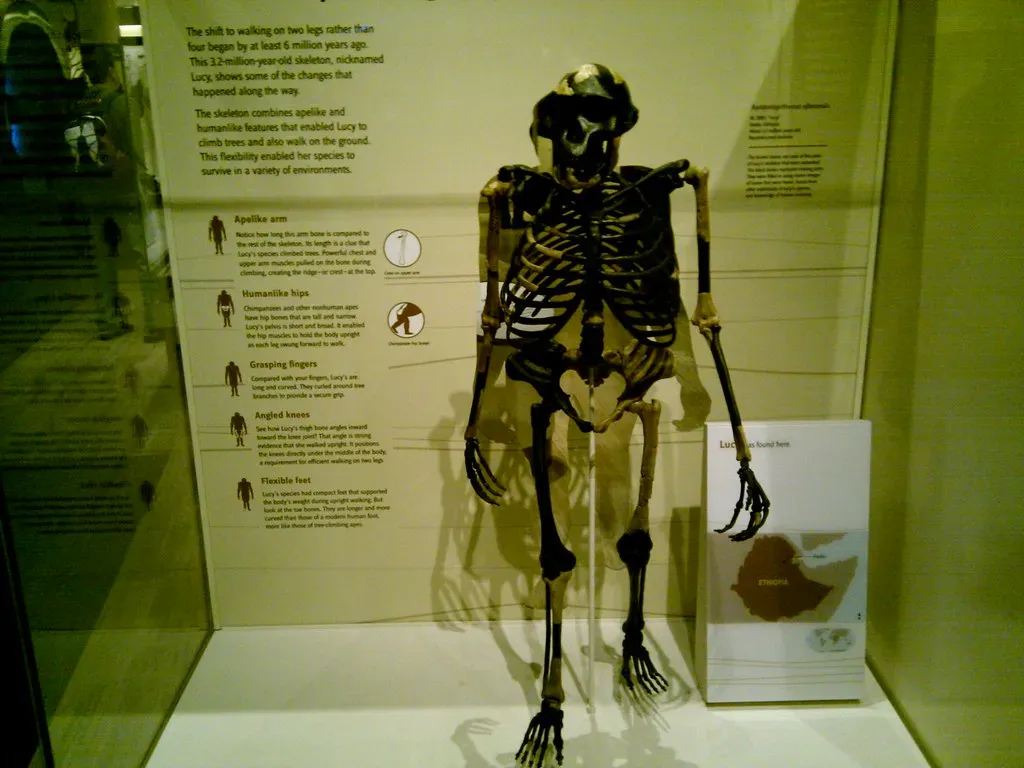
Most people assume intelligence came first, that our ancestors got smarter and then started walking upright. The fossil record tells a completely different story, and it is far more fascinating. Lucy’s skeleton presents a small skull akin to that of non-hominin apes, plus evidence of a walking-gait that was bipedal and upright, akin to that of humans, and this combination supports the view that bipedalism preceded increase in brain size. Walking came first. A bigger brain came later.
One of the earliest defining human traits, bipedalism, the ability to walk on two legs, evolved over 4 million years ago. Australopithecus afarensis discoveries in the 1970s, including Lucy and the Laetoli footprints, confirmed that our ancient relatives were bipedal, walking upright on two legs, before big brains evolved. It is a bit like learning to run before learning to read. The body adapted first, and the mind followed millions of years later.
4. “Lucy” Was Only About the Size of a Modern Child
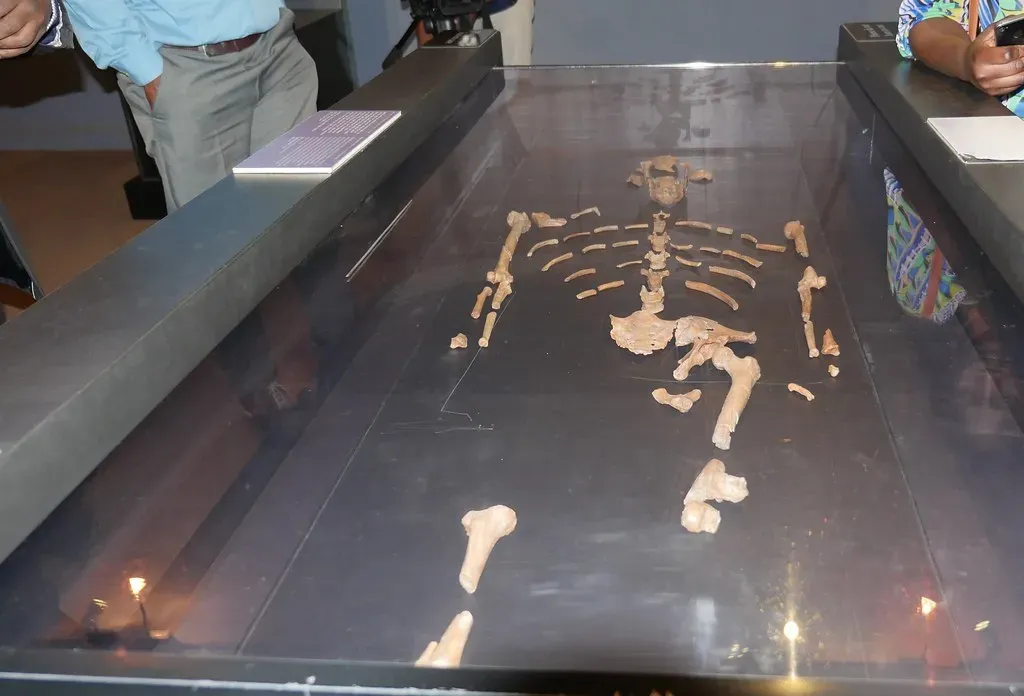
You have probably heard of Lucy. She is arguably the most famous fossil ever discovered, and her story is remarkable. Lucy was discovered in 1974 in Ethiopia, at Hadar, a site in the Awash Valley of the Afar Triangle, by Donald Johanson, and she is dated to about 3.2 million years ago. She is so famous she even has a nickname drawn from a Beatles song playing at the campfire the night she was found.
Lucy was only about 110 centimetres tall but was a fully grown adult when she died. She was bipedal, meaning she could walk on two legs, but she probably also spent a lot of time climbing trees in search of food or shelter. The species she belonged to, Australopithecus afarensis, survived for more than 900,000 years, which is over four times as long as our own species has been around. That puts our own 300,000 years of existence into a humbling perspective, does it not?
5. Multiple Human Species Coexisted on Earth at the Same Time
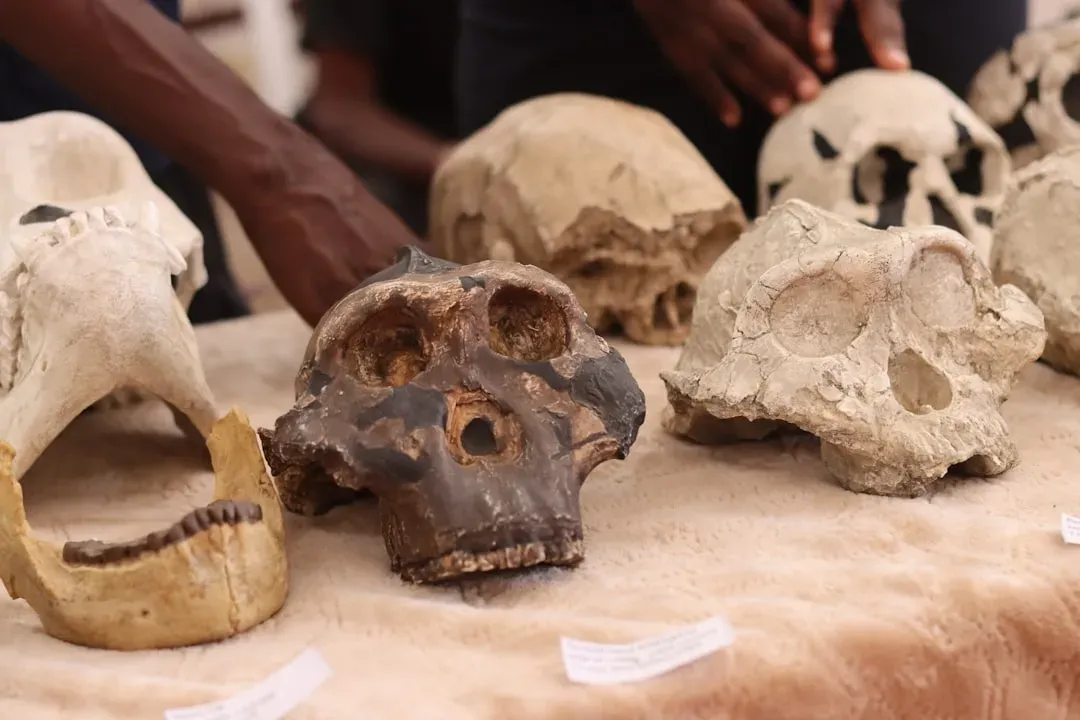
Here is something that almost sounds like science fiction but is absolutely backed by hard science. You were not the only kind of human on the planet for a very long time. Homo sapiens co-habited the Earth with other early human species at times, living in the same geographic area, and just 70,000 years ago, there were at least four human species on Earth: Homo erectus, Homo floresiensis, Homo neanderthalensis, and Homo sapiens. Four entirely different kinds of humans, all alive at once.
A team of international scientists discovered in 2025 that Australopithecus and the oldest specimens of Homo coexisted at the same place in Africa between 2.6 and 2.8 million years ago, and the team discovered a new species of Australopithecus that had never been found anywhere before. This suggests that nature tested multiple versions of “being human” before our lineage endured. Most of those experiments failed. Ours, somehow, did not.
6. Human Evolution Was Never a Straight Line
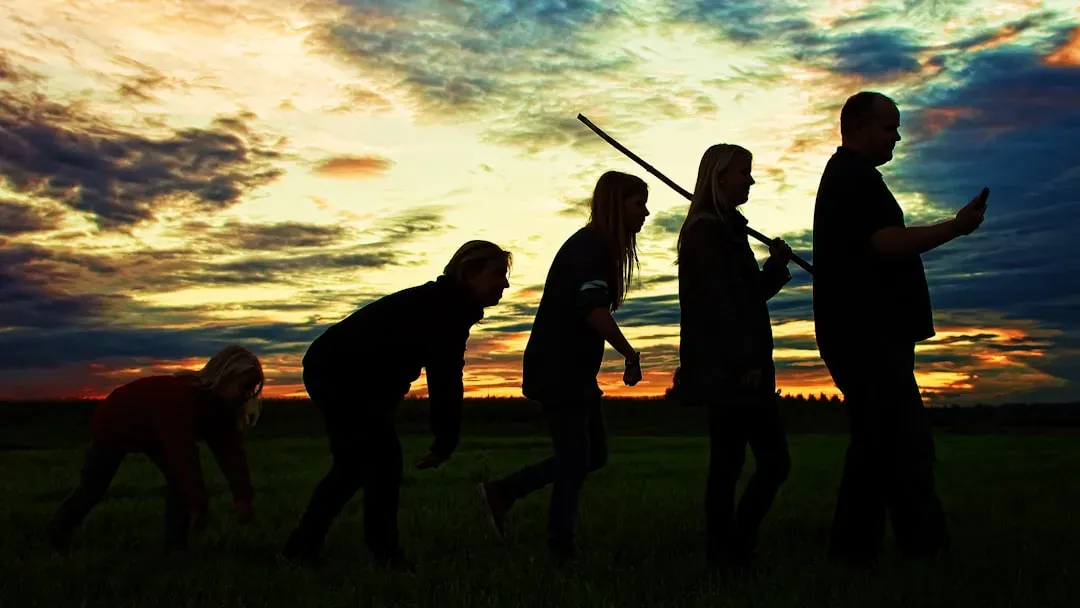
The classic image of evolution, that neat cartoon showing a bent ape slowly straightening up into a modern human, is wildly misleading. Scientists have known this for years, but recent discoveries make it even clearer. Instead of a straight march from ape-like ancestors to modern humans, researchers now see a tangled, branching tree with multiple species coexisting. The real picture looks more like a wild bush than a ladder.
One of our earliest-known ancestors, Sahelanthropus, began the slow transition from ape-like movement some six million years ago, but Homo sapiens would not show up for more than five million years. During that long interim, a variety of different human species lived, evolved, and died out, intermingling and sometimes interbreeding along the way. Most scientists currently recognize some 15 to 20 different species of early humans, but scientists do not all agree on how these species are related or which ones simply died out. Many early human species, certainly the majority of them, left no living descendants.
7. Your Ancestors Came Terrifyingly Close to Total Extinction
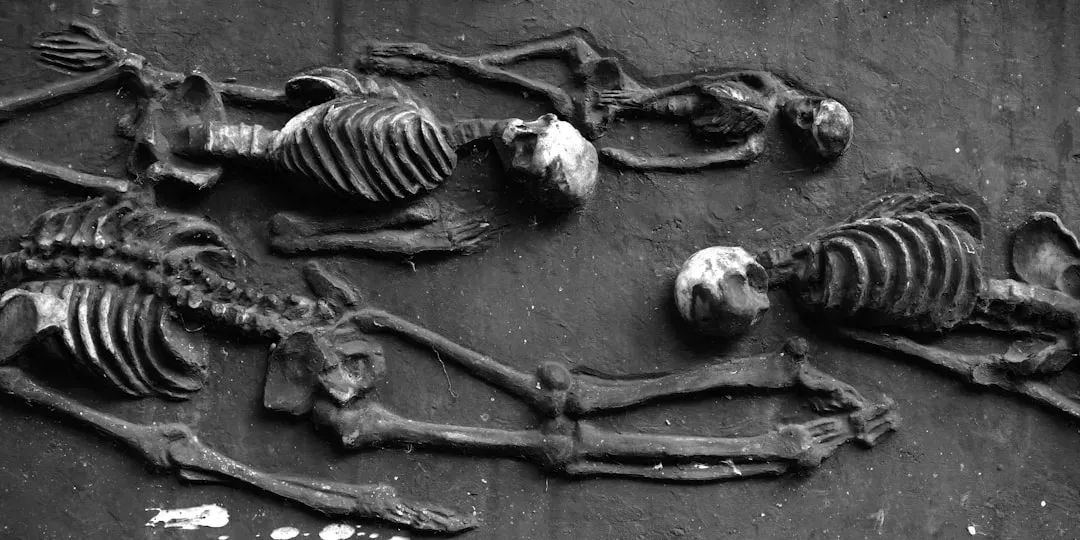
This is perhaps the most jaw-dropping fact in this entire list. Forget asteroid impacts and mass extinctions for a moment. Your own species almost ceased to exist before it had really gotten started. Research showed that human ancestors went through a severe population bottleneck with only about 1,280 breeding individuals between around 930,000 and 813,000 years ago. The bottleneck lasted for about 117,000 years and brought human ancestors close to extinction. Just 1,280 breeding individuals. Everyone alive on Earth today descended from that tiny, fragile group.
Reasons suggested for this dramatic downturn in human ancestral population are mostly climatic, with glaciation events around this time leading to changes in temperatures, severe droughts, and the loss of other species that were potentially used as food sources by ancestral humans. An estimated nearly two thirds of current genetic diversity may have been lost due to this bottleneck in the early to middle Pleistocene era, and the prolonged period of minimal breeding individuals threatened humanity as we know it today. The margin between our existence and total oblivion was razor thin.
8. Homo Erectus Was the Greatest Survivor in Human History
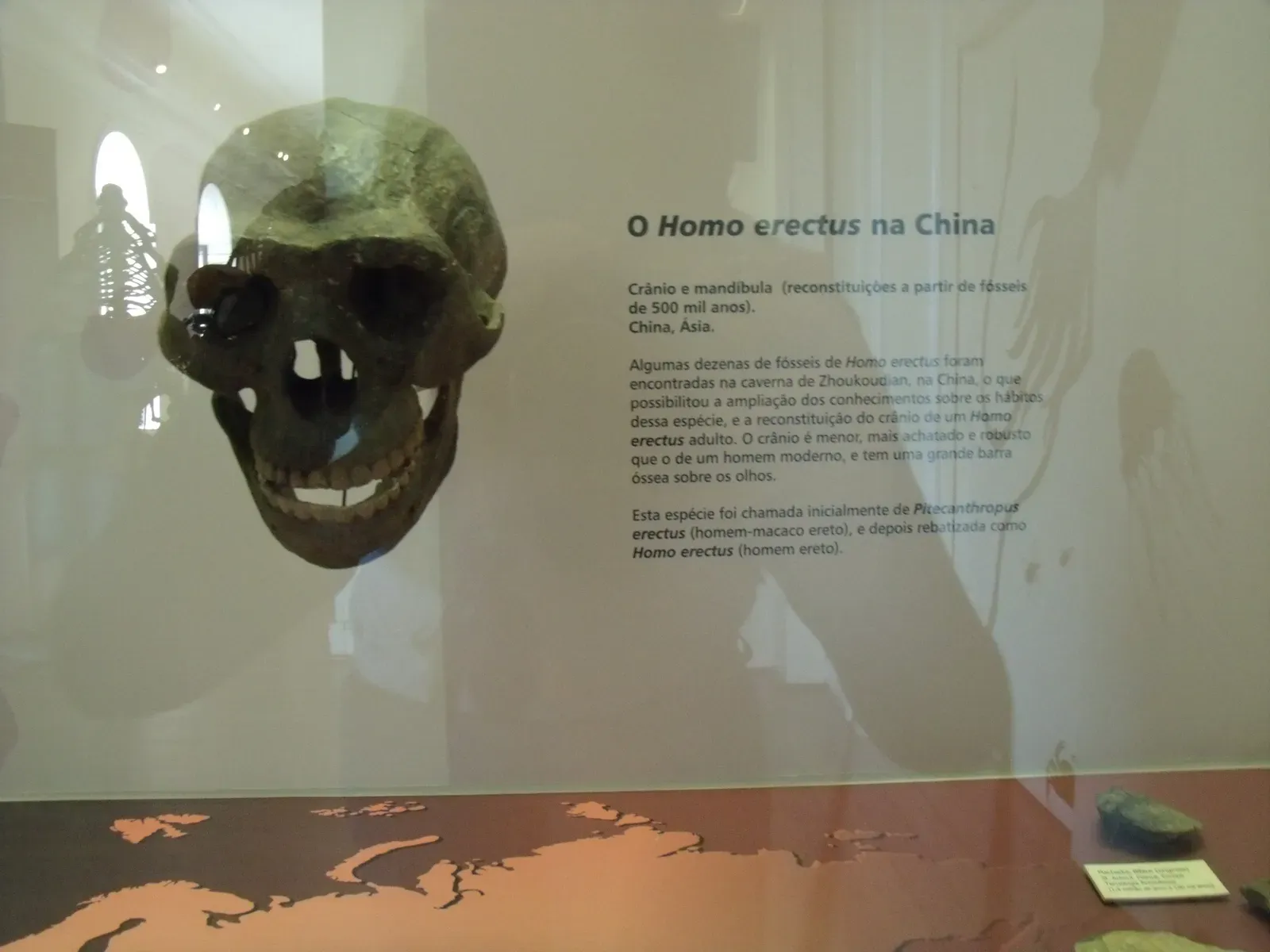
We tend to think of Homo sapiens as the ultimate success story of evolution. In terms of raw longevity, though, we are actually relative newcomers. One of our ancient relatives puts us to shame. Fossil evidence for Homo erectus stretches over more than 1.5 million years, making it by far the longest surviving of all our human relatives. To put that in context, we have been around for about 300,000 years. Homo erectus lasted five times as long.
Homo erectus was also the most geographically widespread species apart from Homo sapiens, and it appeared in Africa about two million years ago, evolving from either a late form of australopith or one of the more primitive forms of Homo, before spreading into many parts of Asia. The species spread into eastern Asia, including China, where it appears to have been present until at least 300,000 years ago, and in southeast Asia, Homo erectus was a long-term inhabitant of Java, with fossils there dating from about 1.6 million to at least 250,000 years ago. That is a species that truly mastered survival across continents and climates.
9. You Have Neanderthal DNA Inside You Right Now
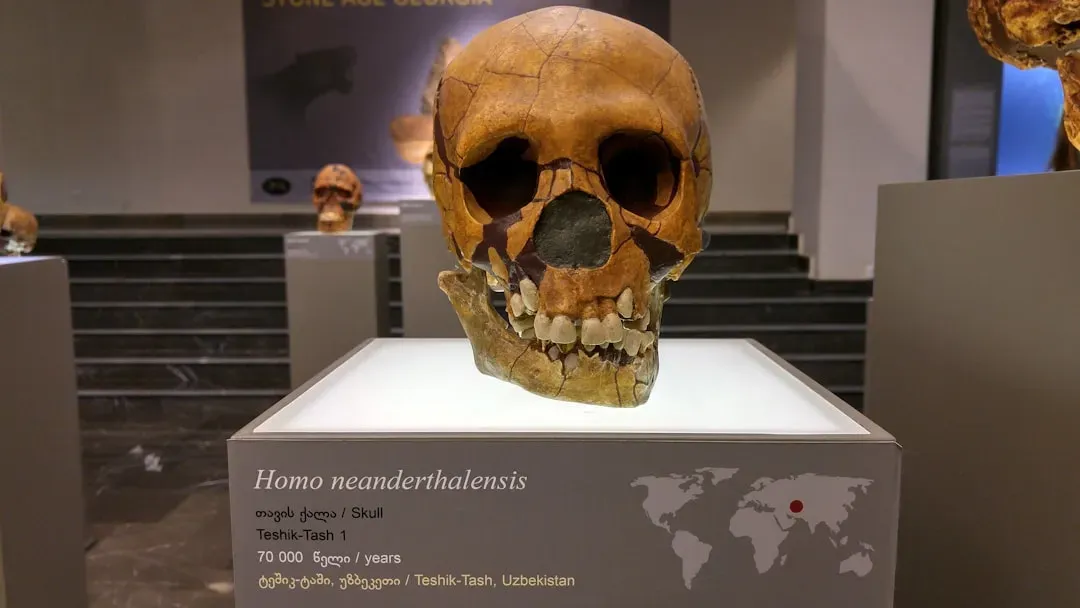
This is the fact that tends to make people stop and stare at their own hands. You are not purely Homo sapiens. Part of you, encoded in your actual genetic material, comes from a species that went extinct roughly 40,000 years ago. When Homo sapiens eventually left Africa, they encountered Neanderthals and Denisovans and started reproducing. Those two species are now extinct, but they live on in modern human DNA, which contains a significant amount of both. Most non-Africans carry between roughly one and four percent Neanderthal DNA, and many people with Southeast Asian and Pacific Island heritage carry up to around five percent Denisovan DNA.
Some Neanderthal gene variants, including variants of genes related to the immune system and skin pigmentation, were beneficial and increased in frequency throughout the human population. Breeding with Neanderthals allowed our ancestors to better cope with European winters, but also passed on diseases we suffer today. So the next time you fight off a winter cold, there is a small but real chance you have a Neanderthal to thank, or to blame, depending on how you look at it.
10. Ancient Cooking May Have Shaped the Human Brain Itself
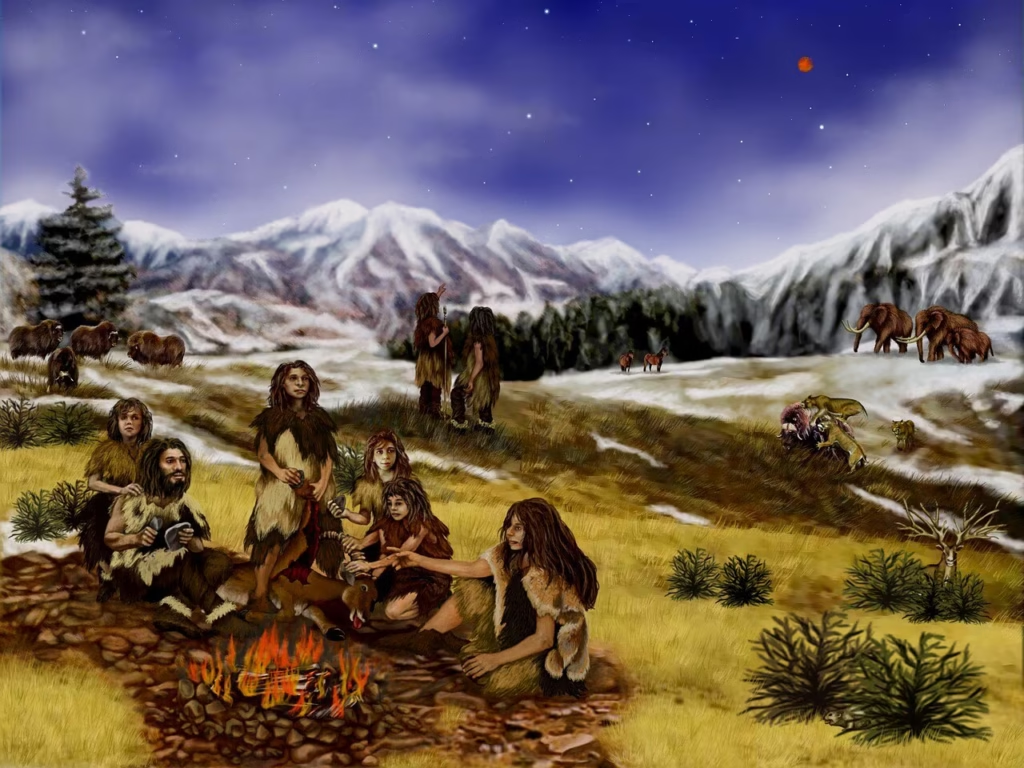
You might take for granted the ability to cook your food, but this seemingly simple act may have been one of the single most transformative events in the entire story of human evolution. It changed everything, from your gut to your skull. Control over fire provided a new tool with several uses including cooking, which led to a fundamental change in the early human diet. Cooking released nutrients, rid some plants of poisons, and made plant and animal foods easier to digest. The earliest hearths are at least 790,000 years old.
By about 1.8 million years ago, human ancestors ate a diet richer in meat, and by about 790,000 years ago, cooking food was possible. As a result, modern humans possess a shorter digestive tract that can process foods more easily. Eating meat and other foods that could be digested quickly not only led to a smaller digestive tract but also made more energy available for tall bodies and large brains. In other words, your capacity to read this article right now may ultimately trace back to an ancestor who discovered that cooked food tastes better than raw.
Conclusion: Your Story Is Still Being Written
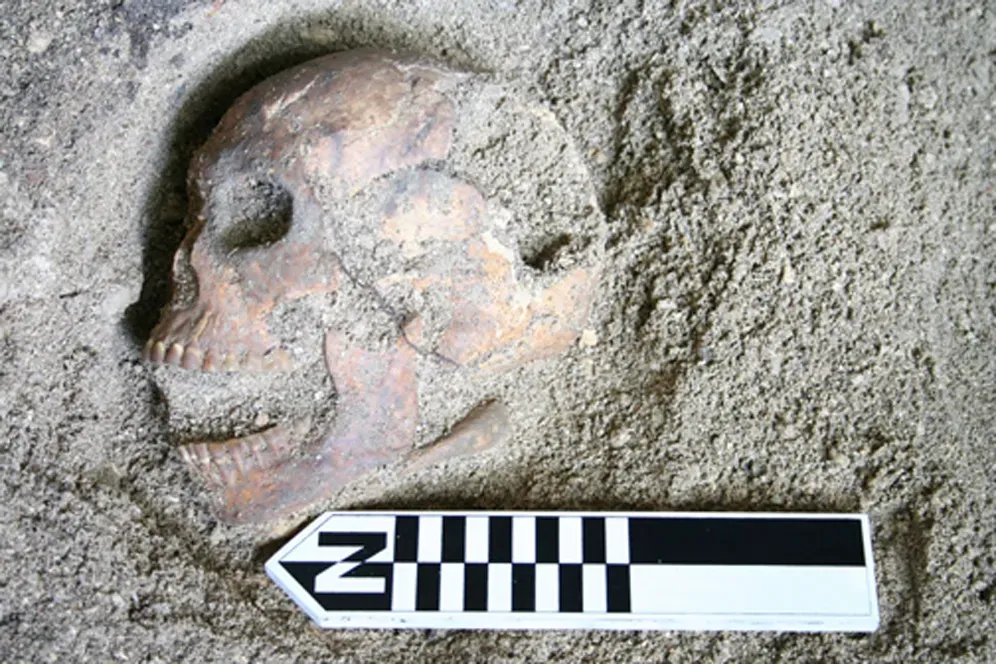
The story of your earliest ancestors is one of the most thrilling, humbling, and genuinely surprising scientific sagas ever uncovered. From a fragile group of fewer than 1,500 survivors nearly a million years ago, to a species that has now spread to every corner of the globe, the journey is nothing short of extraordinary. The more scientists dig, scan, and sequence, the more complex and fascinating the picture becomes.
Scientists now know of more than 20 hominin species that are part of our family tree, and at least half of these species are based on fossils unearthed in the last 30 years. New discoveries are reshaping everything we thought we knew, sometimes even turning long-held theories completely upside down. I think that is the most exciting part of all: the best chapters of this story may not have been found yet.
So the next time someone asks you where you come from, know that the answer stretches back millions of years through fire, ice, near-extinction, and the wildest family tree imaginable. Which of these ten facts surprised you the most? Tell us in the comments.