Mention the word “dinosaur” and most people picture a thunderous, scale-covered reptile charging through a prehistoric jungle. That image, as dramatic as it is, turns out to be pretty far off the mark. Over the past few decades, paleontology has been quietly rewriting one of the greatest stories in natural history, and the plot twist involves something you might see fluttering around your bird feeder every morning.
It turns out feathers were around long before birds ever took to the skies. In fact, the connection between feathers and flight is a lot more complicated, surprising, and honestly more fascinating, than most textbooks ever let on. If you’ve ever looked at a pigeon and thought it had nothing in common with a T. rex, you might want to rethink that. Let’s dive in.
1. Feathers Came Before Flight – Way Before
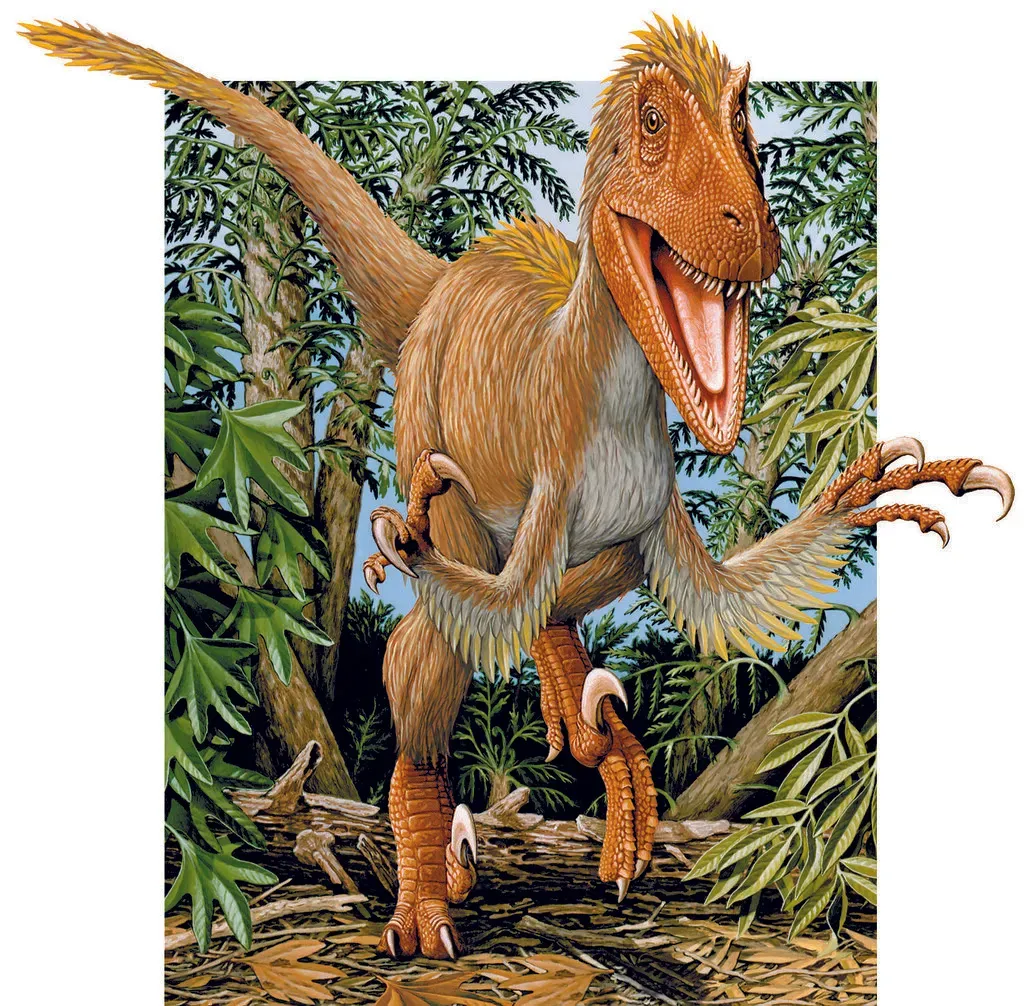
Here’s the thing that genuinely changed everything in paleontology: feathers didn’t evolve so dinosaurs could fly. Some feather-like structures are present as simple filamentous structures without any aerodynamic function, and these are widespread in more basal and flightless dinosaurs. This distribution supports the idea that feathers may have originated before the capacity for powered flight and were first employed for other purposes entirely.
Think about that for a moment. Nature essentially invented one of its most complex and elegant structures without flight in mind at all. Researchers have confirmed that feathers came before wings, meaning feathers did not originate as flight structures. Whatever drove the first proto-feathers to appear, it wasn’t getting airborne. That revelation alone reshapes how you think about evolution working step by step toward something useful.
2. The First Feathered Dinosaurs Were Discovered in the 1990s – and It Shocked the World
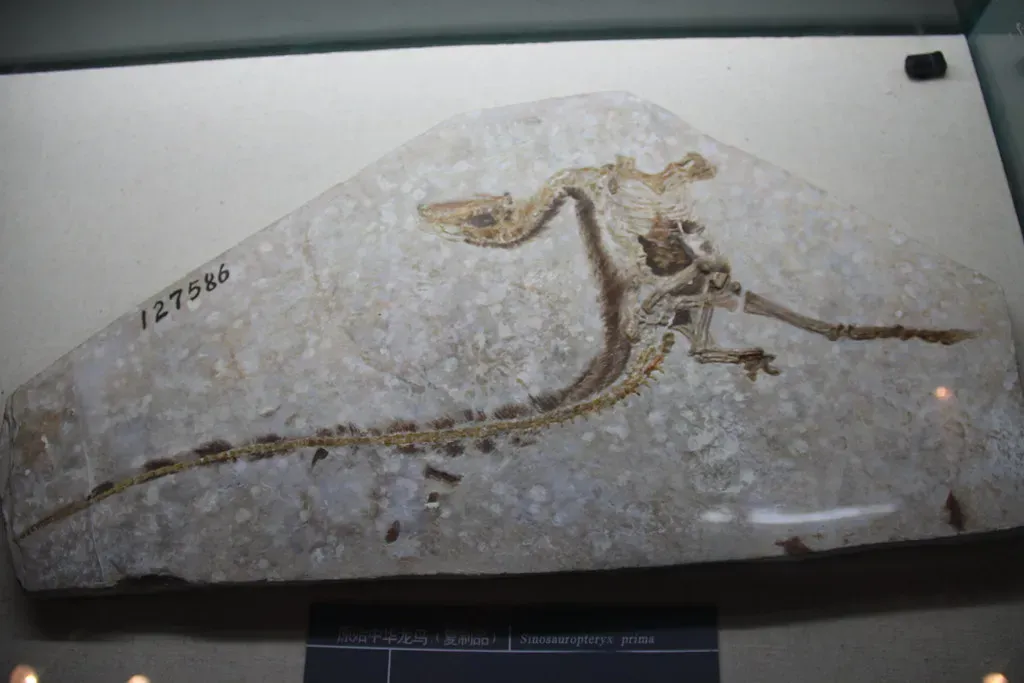
Feathers predate birds, having first belonged to extinct dinosaurs. Finding out exactly when feathers evolved, and which animals had them, could offer important new insights into the distant past. The first fossilized feathers were found in extinct dinosaurs in the 1990s, but almost 30 years later, many questions still remain about these distinctive features.
A series of spectacularly preserved fossil discoveries, primarily from the Early Cretaceous of China, revealed the presence of feathers and other feather-like structures in a variety of non-flying theropod dinosaurs, demonstrating conclusively that earlier models of bird evolution were wrong, as feathers clearly appeared prior to the origin of either birds or flight and must have had a deeper, dinosaurian ancestry. It’s hard to overstate just how dramatic this shift was. Scientists had spent over a century imagining scaly, cold-blooded behemoths, and suddenly the fossil record was handing them something altogether different.
3. Feathers May Predate the Dinosaurs Themselves
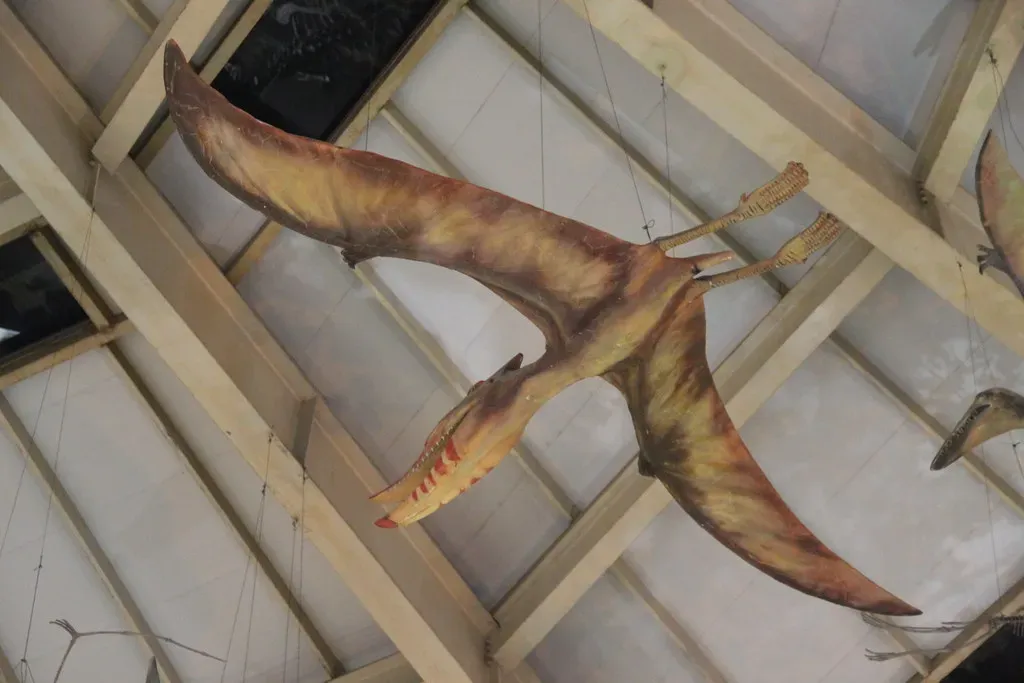
I know it sounds crazy, but feathers might actually be older than the dinosaurs. The pterosaurs, a closely related but separate group of archosaurs that also includes birds and crocodiles, also had feathers. A study of pterosaur fossils described the presence of branching feather-like structures in pterosaur fossils, and these feathers appeared in tufts, which suggests that the origin of feathers predated both the pterosaurs and the dinosaurs and occurred in a common ancestor some 250 million years old or older.
New evidence of branched feathers in pterosaurs suggests that feathers originated in the avemetatarsalian ancestor of pterosaurs and dinosaurs in the Early Triassic. That’s a staggeringly early date. It places feather-like structures right at the very dawn of the age of reptiles, suggesting evolution found this particular innovation so useful it kept recycling it across entirely different lineages. Whether these structures in pterosaurs are truly feathers in the strict sense is still debated, but the implications are enormous.
4. Not All Dinosaurs Were Fully Feathered – Some Had Both Feathers and Scales
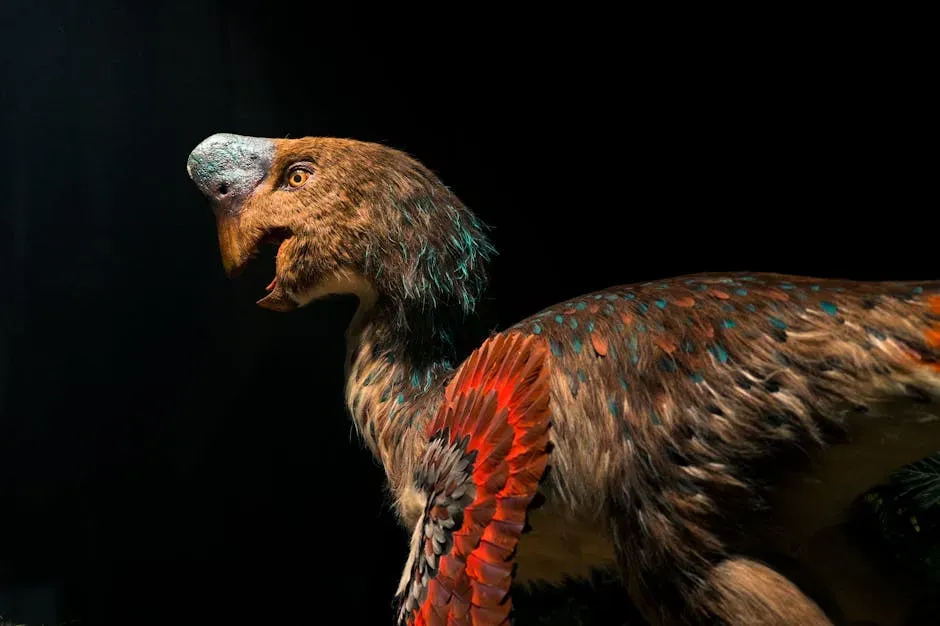
One of the coolest discoveries in recent years is that dinosaurs didn’t come in a simple “scaly” or “feathered” variety. Palaeontologists at University College Cork discovered that some feathered dinosaurs had scaly skin like reptiles today, shedding new light on the evolutionary transition from scales to feathers. The researchers studied a new specimen of Psittacosaurus from the early Cretaceous, and the study showed, for the first time, that Psittacosaurus had reptile-like skin in areas where it didn’t have feathers.
This discovery suggests that soft, bird-like skin initially developed only in feathered regions of the body, while the rest of the skin was still scaly, like in modern reptiles. This zoned development would have maintained essential skin functions, such as protection against abrasion, dehydration and parasites. The first dinosaur to experiment with feathers could therefore survive and pass down the genes for feathers to their offspring. It’s a beautifully practical explanation, like upgrading a house one room at a time rather than demolishing the whole thing overnight.
5. Scientists Can Now Reconstruct the Actual Colors of Dinosaur Feathers
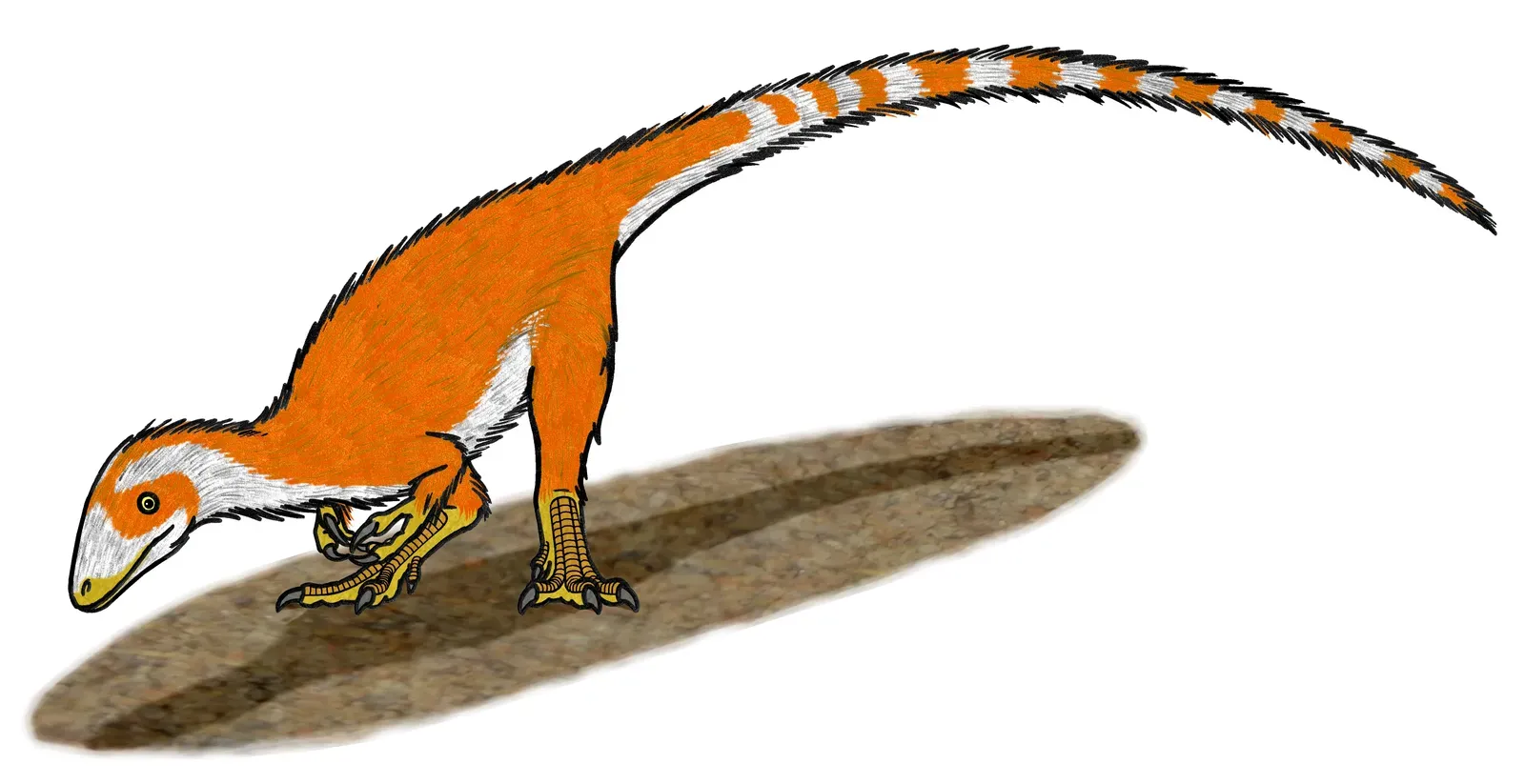
This one genuinely blew my mind when I first came across it. Melanosomes are colour-bearing organelles buried within the structure of feathers and hair in modern birds and mammals, giving black, grey, and rufous tones such as orange and brown. Because melanosomes are an integral part of the tough protein structure of the feather, they survive when a feather survives, even for hundreds of millions of years.
Research found that the theropod dinosaur Sinosauropteryx had simple bristles, precursors of feathers, in alternate orange and white rings down its tail, and that the early bird Confuciusornis had patches of white, black and orange-brown colouring. Statistical analysis has predicted that Microraptor was completely black with a glossy, weakly iridescent blue sheen. So these creatures weren’t just grey or brown blobs lumbering around. Some of them were genuinely stunning, like modern birds but far older and considerably more terrifying.
6. Early Feathers Were Probably for Display, Not Warmth
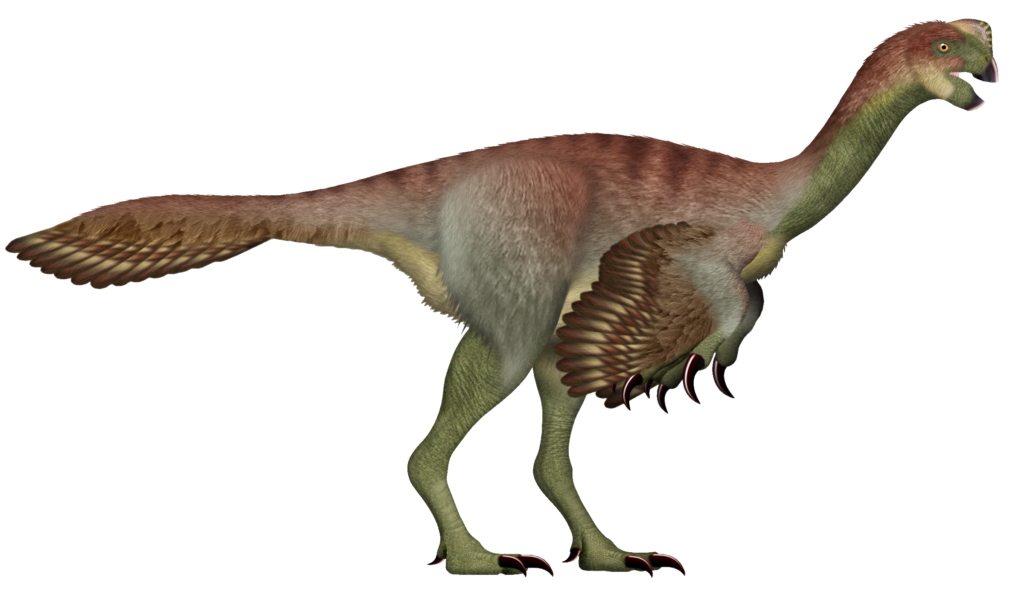
The conventional wisdom used to be that feathers existed to keep small dinosaurs warm. Honest enough reasoning. Hypotheses regarding the origin of feathers have focused on four main functions: flight, thermoregulation, display and tactile sensation. While these functions may not all have been related to the origin of feathers, all four are likely to have been important in driving increasing complexity at different stages of feather evolution. Focusing on the origin, flight can quickly be discarded as a driver. The simple filamentous feathers of early dinosaurs would have been aerodynamically useless.
There is an increasing body of evidence that supports the display hypothesis, which states that early feathers were colored and increased reproductive success. Coloration could have provided the original adaptation of feathers, implying that all later functions of feathers, such as thermoregulation and flight, were co-opted. This hypothesis has been supported by the discovery of pigmented feathers in multiple species. Think of feathers like a peacock’s tail, something that started as a way of saying “look at me” before evolution found more practical uses for the technology. Nature tends to work that way – form follows function, but display sometimes gets there first.
7. T. Rex Probably Had Feathers – But Only When It Was Young
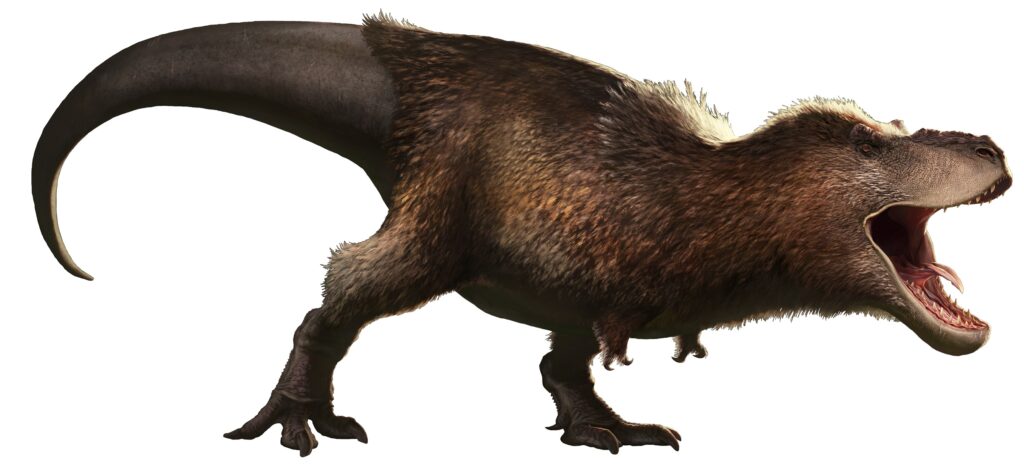
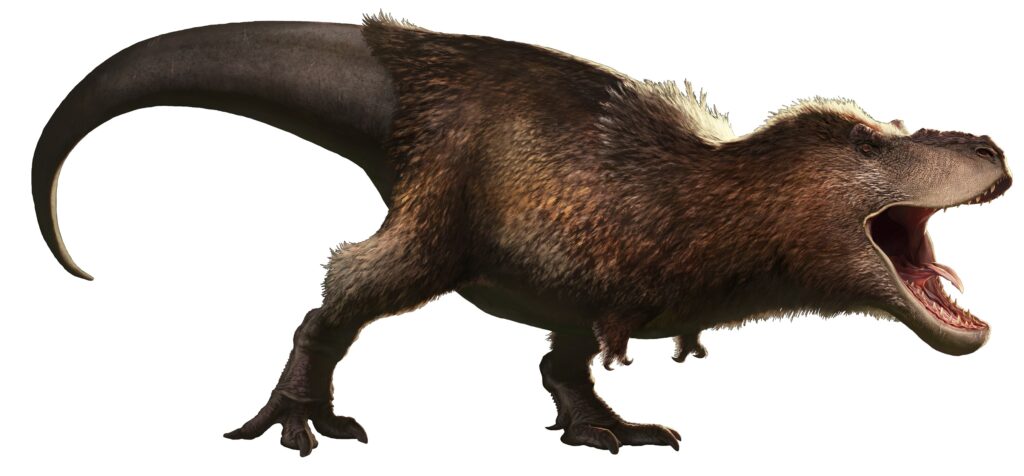
The mighty Tyrannosaurus rex, the undisputed king of nightmare fuel, may have started life covered in fluffy feathers. Preserved patches of skin in large, derived tyrannosauroids show scutes, while those in smaller, more primitive forms show feathers. This may indicate that the larger forms had complex skins, with both scutes and filaments, or that tyrannosauroids may be like rhinos and elephants, having filaments at birth and then losing them as they developed to maturity.
Some earlier tyrannosauroids like Yutyrannus huali were covered in feathers, though these species were significantly older and lived in colder climates. The immense size of T. rex may have made a full coat of feathers unnecessary, even detrimental, for thermoregulation. A large, feathered animal in a relatively warm climate would overheat easily. It’s a bit like how human babies are often covered in soft downy hair that disappears as they grow. The T. rex quite possibly started soft and fluffy before growing into its scaly, terrifying adult form. Nature really does have a sense of humor.
8. Feather Chemistry Changed to Make Flight Possible
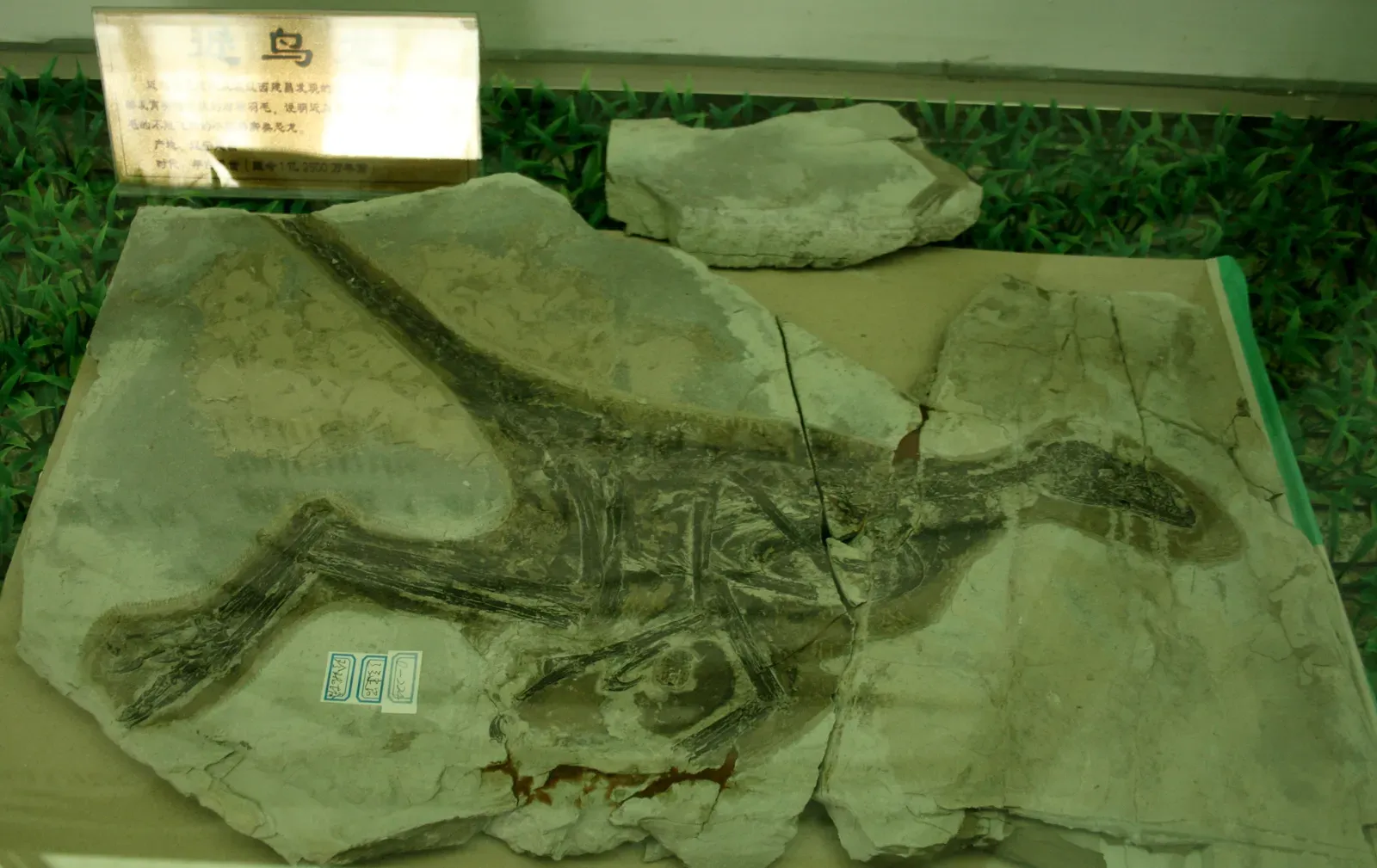
Uploaded by FunkMonk, CC BY-SA 2.0)
You might think a feather is a feather. But the molecular story is far more complicated and fascinating. During the dinosaur to bird transition, feathers of bird ancestors must have been molecularly modified to become biomechanically suitable for flight. Researchers have reported molecular moieties in fossil feathers that shed light on that transition.
Molecular and ultrastructural evidence shows that the pennaceous feathers of the Jurassic non-avian dinosaur Anchiornis were composed of both feather beta-keratins and alpha-keratins. This is significant, because mature feathers in extant birds are dominated by beta-keratins, particularly in the barbs and barbules forming the vane. Feathers were modified at both molecular and morphological levels to obtain the biomechanical properties for flight during the dinosaur to bird transition. Think of it as upgrading the material of a glider’s wings from cardboard to carbon fiber. The basic shape was already there, but the chemistry had to catch up before true sustained flight became possible.
9. Some Plant-Eating Dinosaurs Had Feathers Too
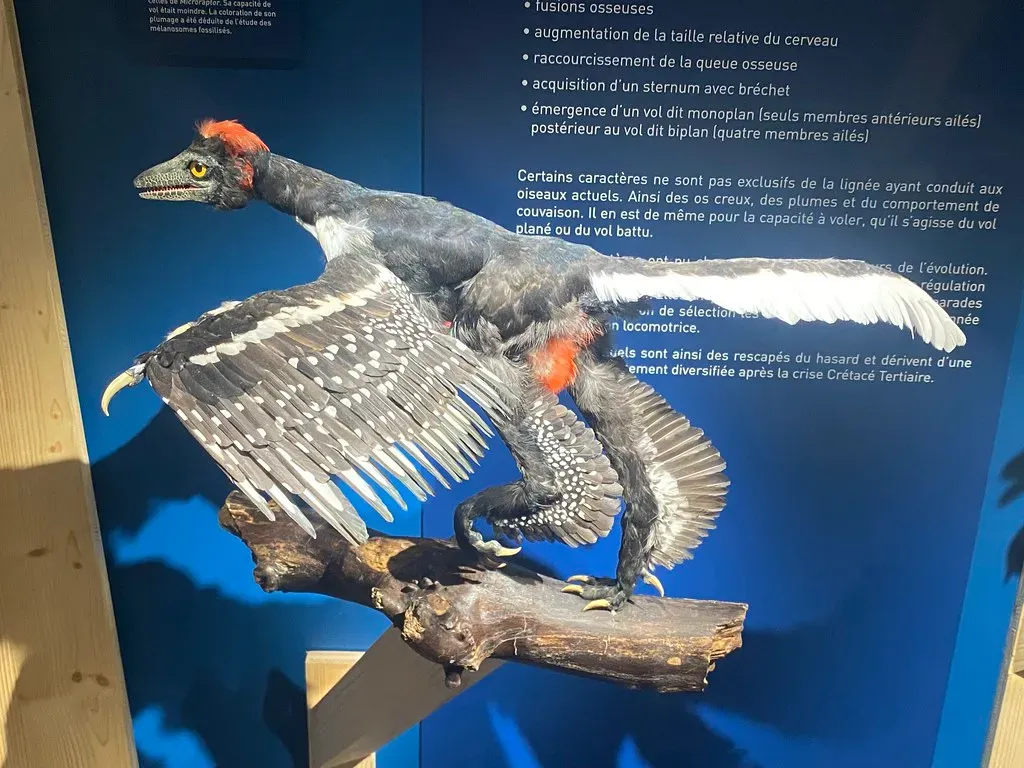
For a long time, scientists assumed feathers were a trait specific to the carnivorous dinosaurs most closely related to birds. Turns out that’s not the whole story. Although the vast majority of feather discoveries have been in coelurosaurian theropods, feather-like integument has also been discovered in at least three ornithischians, suggesting that feathers may have been present on the last common ancestor of the Ornithoscelida, a dinosaur group including both theropods and ornithischians.
The discovery that some plant-eating dinosaurs had feathers is considered the best proof yet that feathers weren’t something that evolved only in the meat-eating dinosaurs. It tells us that feathers must have arisen earlier in dinosaur evolution than most researchers previously thought, and maybe even the common ancestor of all dinosaurs had feathers. If that conclusion holds up with further fossil evidence, it would mean feathers were as fundamental to dinosaurs as fur was to early mammals. Not a specialist trait at all, but a deep ancestral inheritance.
10. A Molecular Pathway in Living Chickens Still Echoes Ancient Proto-Feather Development
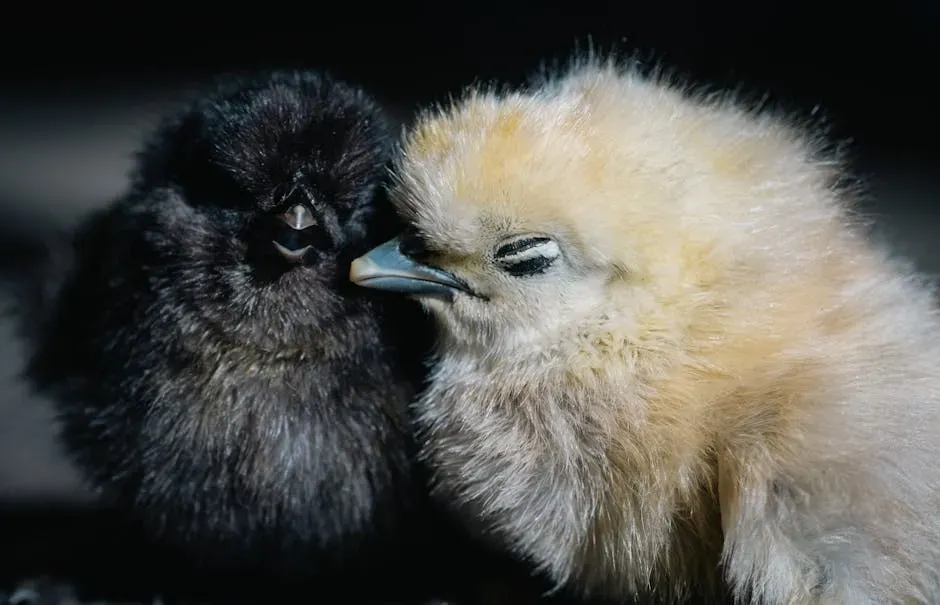
Here’s where things get almost poetically circular. The story of feather evolution isn’t just written in ancient rock. It’s written in the genes of the birds alive today, and scientists are reading it. Feathers, essential for thermoregulation, flight, and communication in birds, originate from simple appendages known as proto-feathers, which were present in certain dinosaurs. By studying embryonic development of the chicken, researchers from the University of Geneva have uncovered a key role of a molecular signalling pathway, the Shh pathway, in their formation. This research provides new insights into the morphogenetic mechanisms that led to feather diversification throughout evolution.
Some early feathers differed from modern feathers morphologically, ultrastructurally, biochemically and developmentally, revealing integumentary evolutionary pathways absent in modern taxa. These advances have changed conventional understanding of dinosaurs and impacted conceptions of both birds and feathers. In other words, every time a chick hatches and grows its first downy coat, it is, in the most literal biological sense, replaying a process that began over 200 million years ago. That might be the most mind-blowing fact of all.
Conclusion
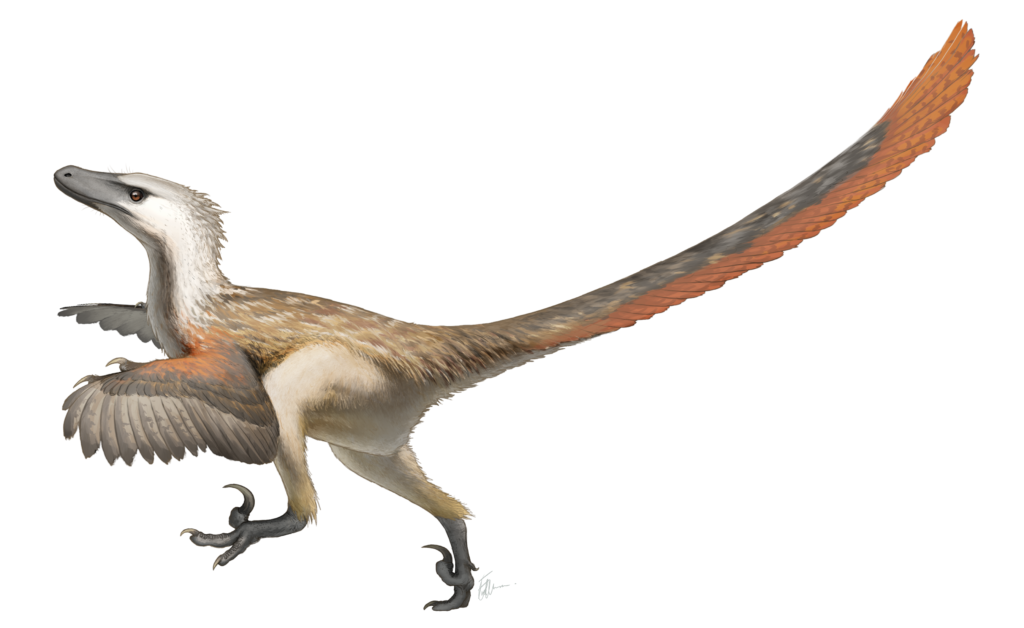
is one of the great unfinished detective stories in all of science. You started with a world that assumed dinosaurs were just big, scaly reptiles, and what scientists found instead was something far stranger and more beautiful: creatures that could be simultaneously ancient and familiar, terrifying and iridescent, scaly in one region and feathered in another. The line between “dinosaur” and “bird” has never been blurrier, or more fascinating.
What makes this story even more gripping is how much of it is still being written. There is still a lot of work to do until the origin of feathers can be fully pinned down. Paleontologists will continue to search the world for the fossils that can finally settle this decades-old debate. Every fossil site in China, Australia, or Siberia might be hiding the next piece of the puzzle. So next time you watch a bird hop across the pavement, remember: you’re looking at a living dinosaur, one still wearing the evolutionary experiment that started it all. What do you think changed your perception of dinosaurs the most? Drop your thoughts in the comments below.