If you could peel back the layers of time beneath your lawn or local park, you might be standing on what used to be a hunting ground, a seafloor, or even a dinosaur highway. It feels almost unreal, but the ground you walk on every day is stacked with the ghosts of ancient worlds. You do not have to travel to some distant, exotic location to find incredible fossils; in many cases, you are already living on top of them.
What makes this even wilder is that many of the most extraordinary prehistoric creatures were discovered in ordinary places: quarries, road cuts, creek beds, and construction sites behind neighborhoods. In other words, spots where someone like you just happened to be paying attention. As you read through these ten creatures, you may start seeing your backyard not as a boring patch of grass, but as the top layer of a vast, hidden museum.
1. Tyrannosaurus rex – The Apex Predator Under Suburban Streets
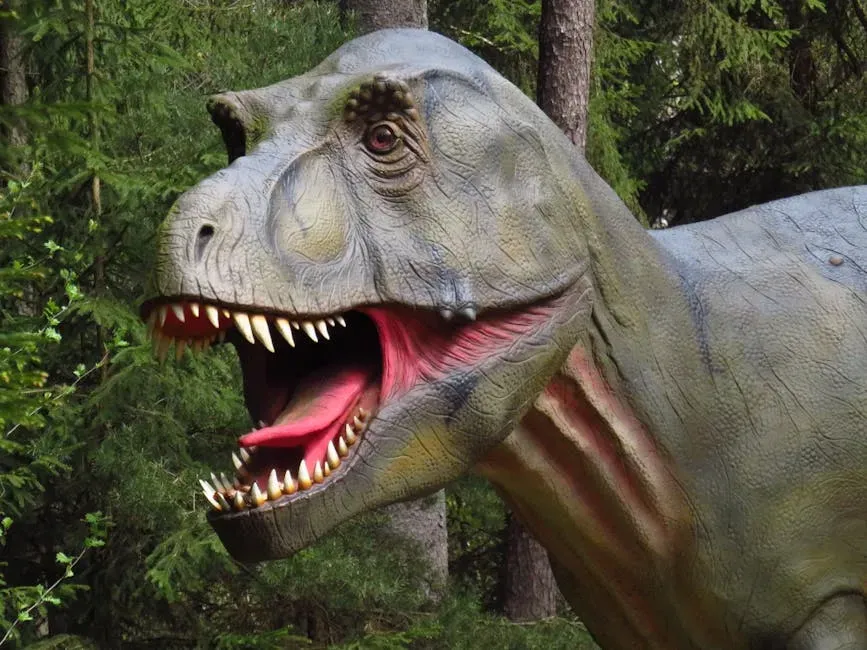
You probably picture Tyrannosaurus rex roaming rugged badlands in some far-off place, but if you live in parts of the western United States or Canada, you might actually be sitting right on top of its old stomping grounds. Long before there were cul-de-sacs and shopping centers, vast floodplains and forests stretched across what is now places like Montana, the Dakotas, Wyoming, and Alberta, and that is where this massive predator ruled. When you imagine walking your dog down the street, you can swap that image for a scene where a towering T. rex is stalking hadrosaurs along a muddy riverbank nearby.
You can think of your local layered rock as a book T. rex once wrote itself into, with each sediment layer recording a page from its world. If you live in those regions, the hill behind your house may be made of the same rock formations that have produced famous T. rex fossils. It is not that one was literally buried in your flower bed, but geologically, you share the same ground. When you realize this, any dusty road cut or exposed slope can suddenly feel like a place where the bones of this legendary hunter might still be sleeping just a few meters below your feet.
2. Triceratops – The Three-Horned Giant from the Neighborhood Prairie
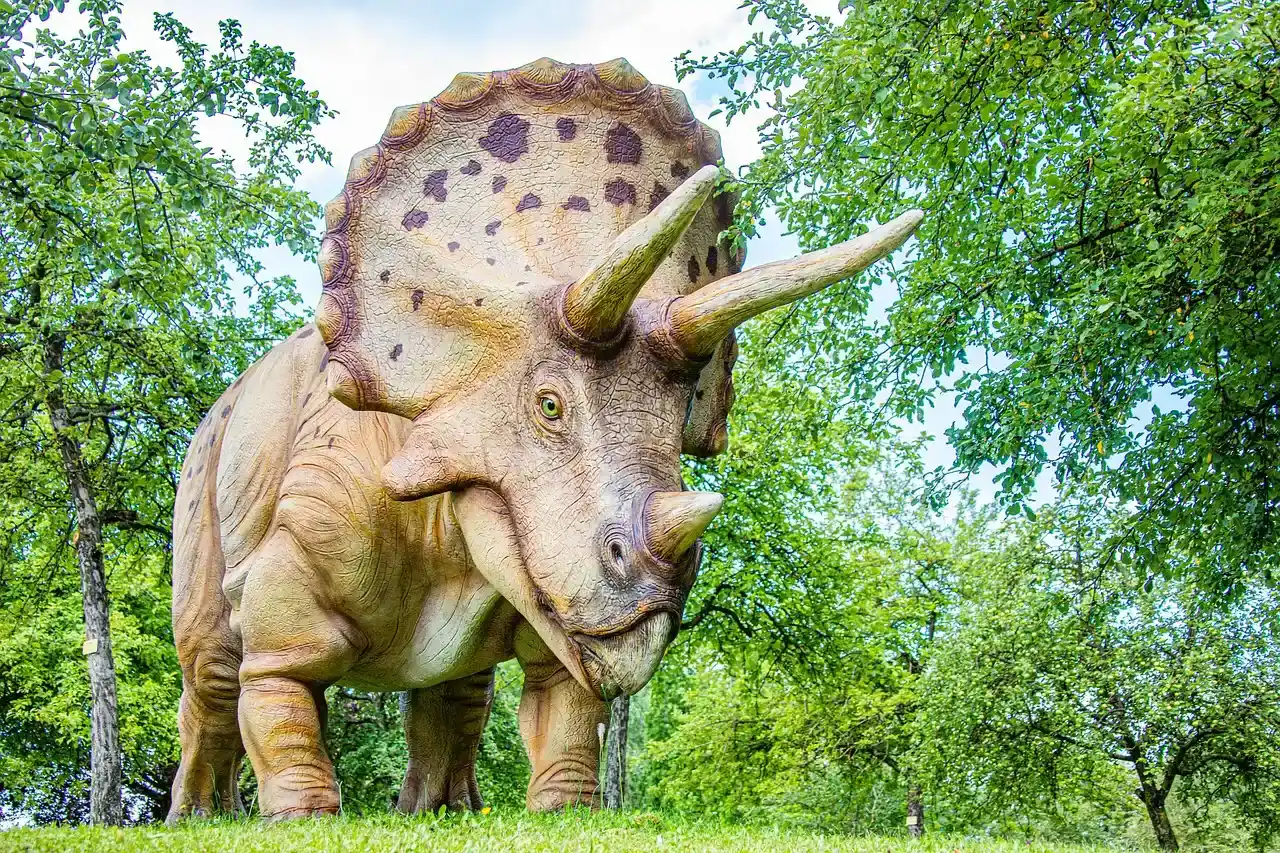
When you see pictures of Triceratops, it often looks like a creature from another universe, but if you live in the Great Plains of North America, you are actually on its former turf. The open fields, farmlands, and rolling prairies in states like South Dakota, Wyoming, and Colorado once held lush lowland environments where herds of Triceratops grazed. You can imagine yourself stepping out your back door and, instead of hearing traffic or lawnmowers, you would have heard the low rustling of massive herbivores moving through ferns and cycads.
What is striking is how ordinary some of the discovery sites look today. A place that now has grazing cattle or wheat fields once had Triceratops chewing on ancient plants. When you stand in a flat, windy field, you are in the same sort of space where this three-horned giant trundled along, head low, ready to defend itself from predators. Your landscape might feel empty now, but if you could hit rewind by sixty-six million years, your calm backyard view would suddenly turn into a scene from an intense wildlife documentary.
3. Woolly Mammoth – Frozen Giants Beneath Your Driveway
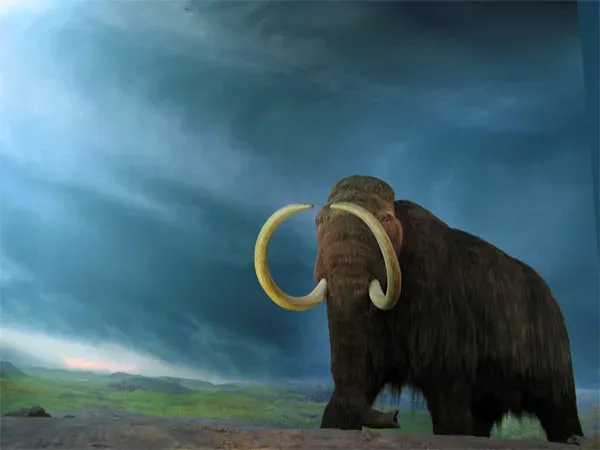
If you live in the northern United States, Canada, or much of Europe and northern Asia, you share your land with the memory of woolly mammoths. During the last Ice Age, your neighborhood could have been part of a cold, grassy steppe, stretching further than your eyes could see, where mammoth herds trudged past with curved tusks and shaggy coats. You might picture snowbanks along your street in winter; now imagine those same areas under a bleak, icy sky with mammoths leaving deep footprints in frozen ground that later turned into the soil under your home.
Construction workers and farmers still occasionally uncover mammoth bones while digging ponds, basements, or roads. That means someone like you, living a normal modern life, can accidentally stumble into the remains of a creature that once weighed as much as a truck. When you look at a pile of excavated dirt or a riverbank after a storm, you are not just seeing mud; you are looking into layers that once held mammoth tracks, dung, and the plants they fed on. It turns your quiet, everyday environment into a place connected directly to the deep chill of the Ice Age.
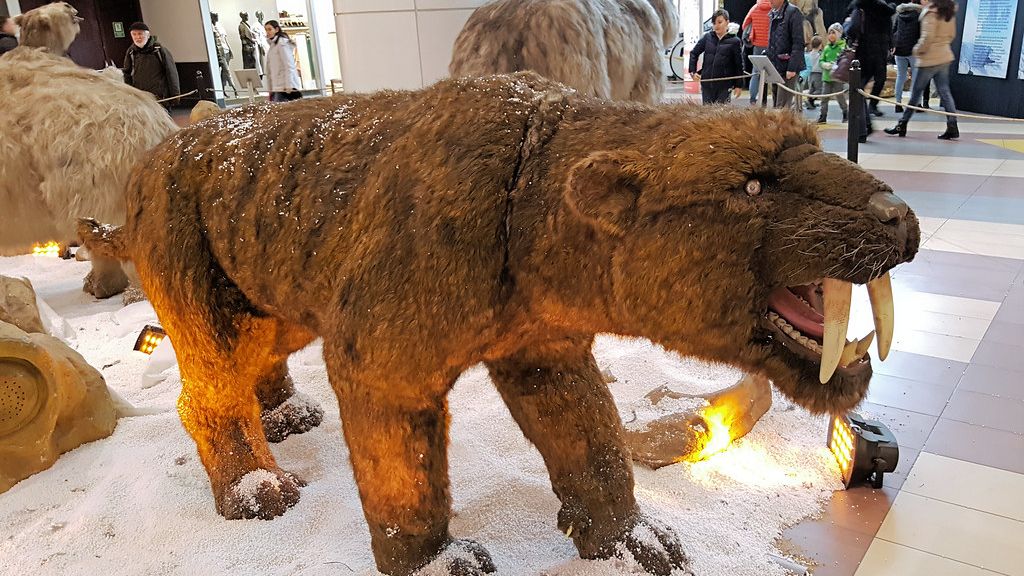
4. Smilodon (Saber-Toothed “Tiger”) – The Neighborhood Ambush Predator
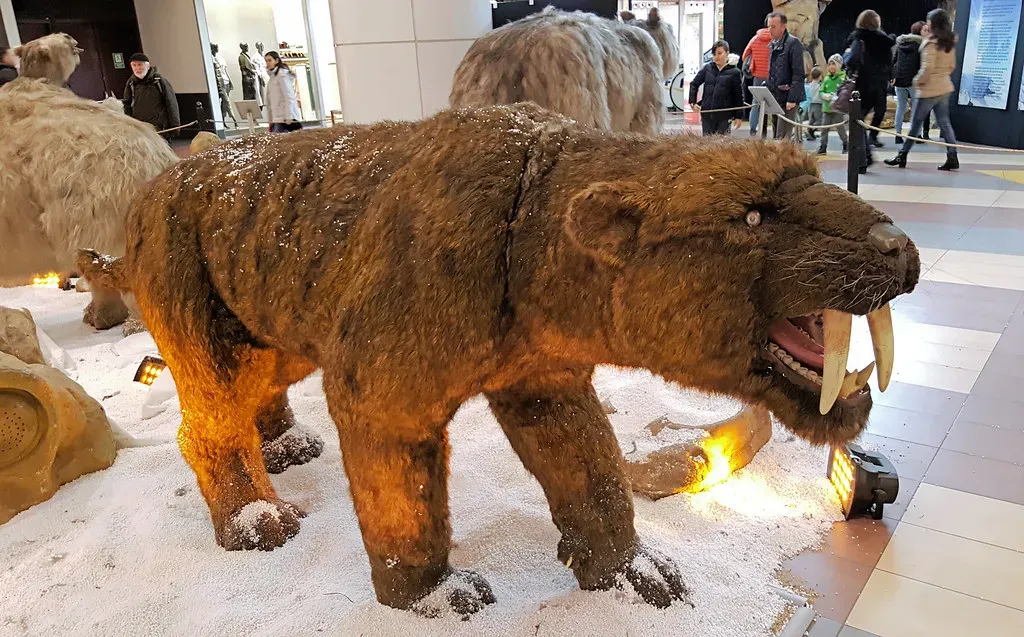
If you live in places like California or other parts of the Americas, you might not realize that your city streets overlap with the hunting grounds of saber-toothed cats. You can picture a Smilodon crouched in grasses not far from where parking lots or playgrounds now sit, waiting to spring onto giant ground sloths or bison-like animals. Instead of a fenced-in yard and trimmed hedges, your property might once have been part of a mosaic of woodlands and open clearings where this predator practiced brute-force ambushes.
Famous tar pit sites show you just how busy those ancient ecosystems were, but similar animals roamed across much larger areas than just those spots. If you live in a region that was relatively temperate during the Ice Age, your backyard could have been near a well-used game trail, a watering hole, or a resting area for Smilodon. When your cat stares out the window today, it is looking over land that long ago belonged to a much more heavily armed relative, turning your ordinary neighborhood into the stage of some extremely tense prehistoric chases.
5. Giant Ground Sloth – The Slow-Motion Bulldozer in Your Forest Lot
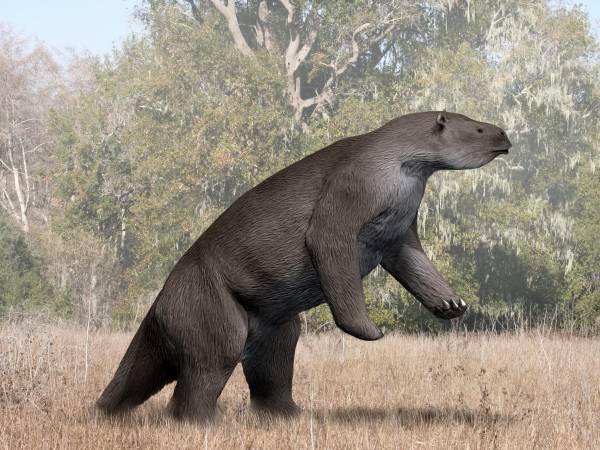
In many parts of North and South America, especially where you see forests, scrub, or open woodland, you are standing where giant ground sloths once shuffled along. These animals were nothing like the small tree-climbing sloths you know today; some of them stood as tall as a small house when they reared up. Imagine looking out at your line of trees and bushes and mentally replacing them with a lumbering giant, tearing at branches and knocking over small trunks like a living, slow-moving bulldozer.
People have found their fossils in caves, riverbanks, and dry sinkholes that do not look that special at first glance. If your area has older limestone caves or sediment-filled basins, you might have the same sort of geology that trapped these creatures and preserved their bones. When you walk a local hiking trail and see a large, bare patch of eroded earth, that spot could be cutting through the same ancient surfaces where ground sloths once left clawed footprints. Suddenly, the quiet woods behind your house feel like an echo of a time when being slow did not mean being small.
6. Mosasaurus – The Marine Monster Below Your Cornfield
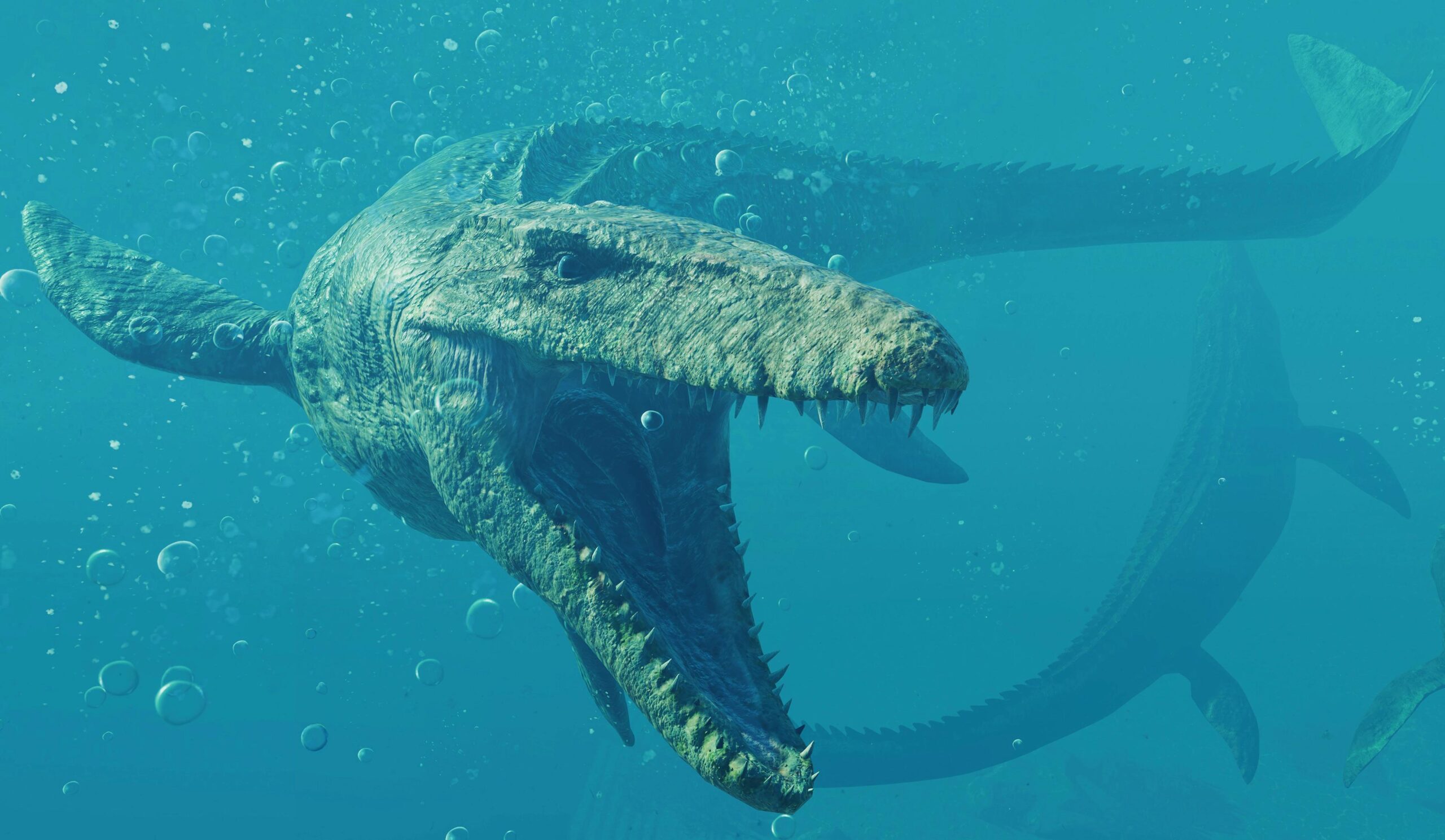
If you live in the middle of North America, especially in states that seem about as far from the ocean as you can get, you might be shocked to learn that your backyard once lay beneath a warm, shallow sea. In that ancient water, huge marine reptiles called mosasaurs prowled like gigantic underwater lizards. Picture standing in a field of corn or watching kids play soccer, then strip away the soil in your mind and replace it with blue water full of these predators cruising where the sidelines are now painted.
The chalky and limestone rocks exposed in quarries, road cuts, and hills in the central part of the continent are leftovers from that seafloor. When someone finds mosasaur bones there, they are basically pulling pieces of an ancient ocean predator out of what is now farm country or suburbia. So if you drive past a construction site and see pale, layered rock, you are looking at the very material that might hold jawbones or vertebrae from a creature that once snapped up fish and smaller reptiles right where you park your car today. It turns the idea of “landlocked” into something very temporary.
7. Pterosaurs – A Sky Full of Reptiles Above Your Street
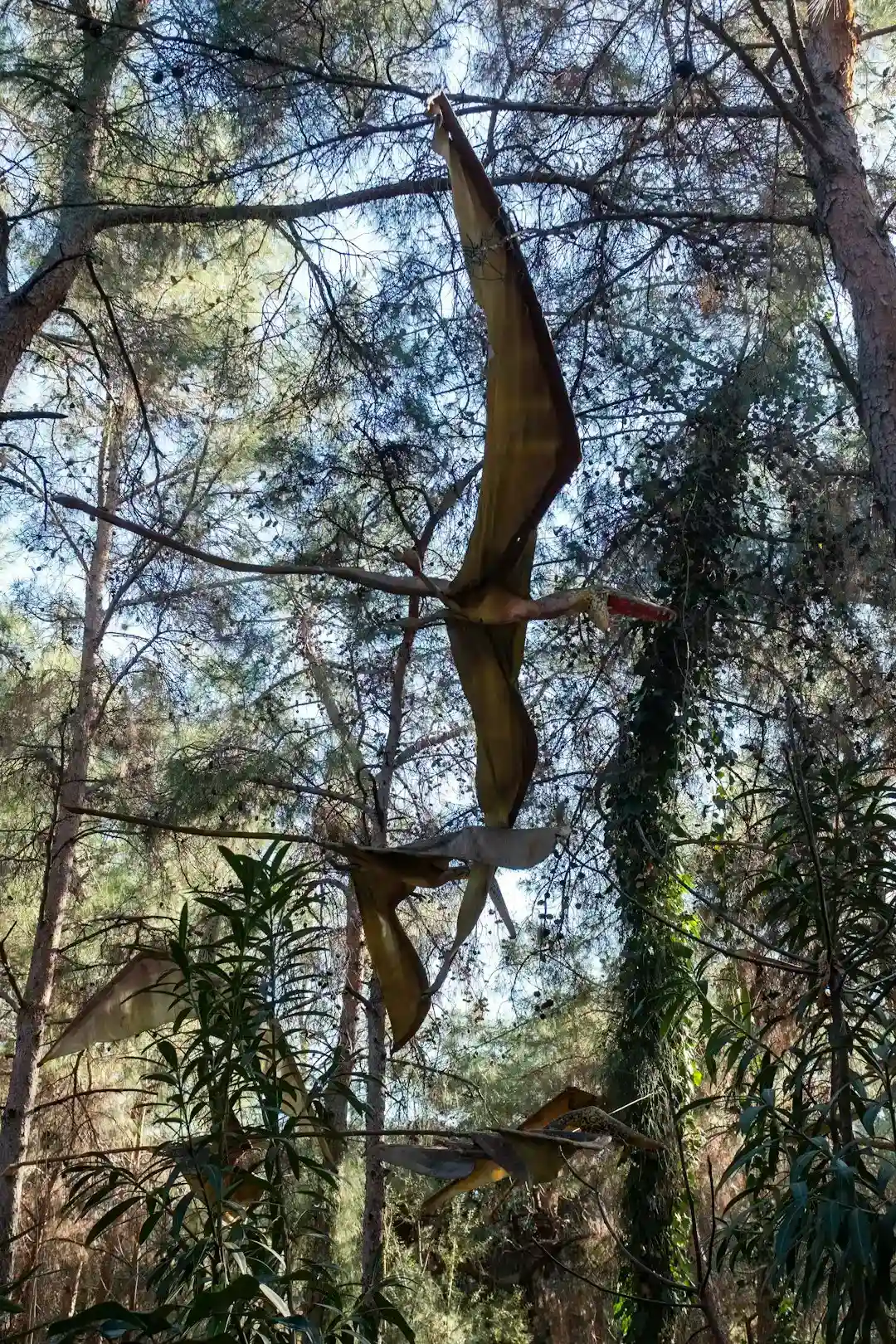
You might think of the skies above your neighborhood as the territory of birds, drones, and planes, but long before that, pterosaurs were the ones owning the airspace. If you live near old coastal plains, inland seas, or large river systems that existed in the age of dinosaurs, pterosaurs probably soared over your region, gliding with huge wingspans as they fished or hunted. Try swapping out your mental image of seagulls or hawks for bizarre reptiles with elongated heads and membranous wings snapping up prey above what would later become your roof.
Fossils of these animals often turn up in fine-grained rock deposited in calm water, such as ancient lagoons or quiet inland seas. If your area has those types of rocks exposed in cliffs or quarries, you may be walking over where pterosaurs crashed, drowned, or were buried in storms. Think about the last time you watched clouds drift overhead; now imagine a silent silhouette gliding past that is so large you instinctively duck. That is the sky your backyard used to have, a place where the phrase “watch your head” would have had an entirely different meaning.
8. Trilobites – Ancient Armor-Plated Bugs Under Your Garden
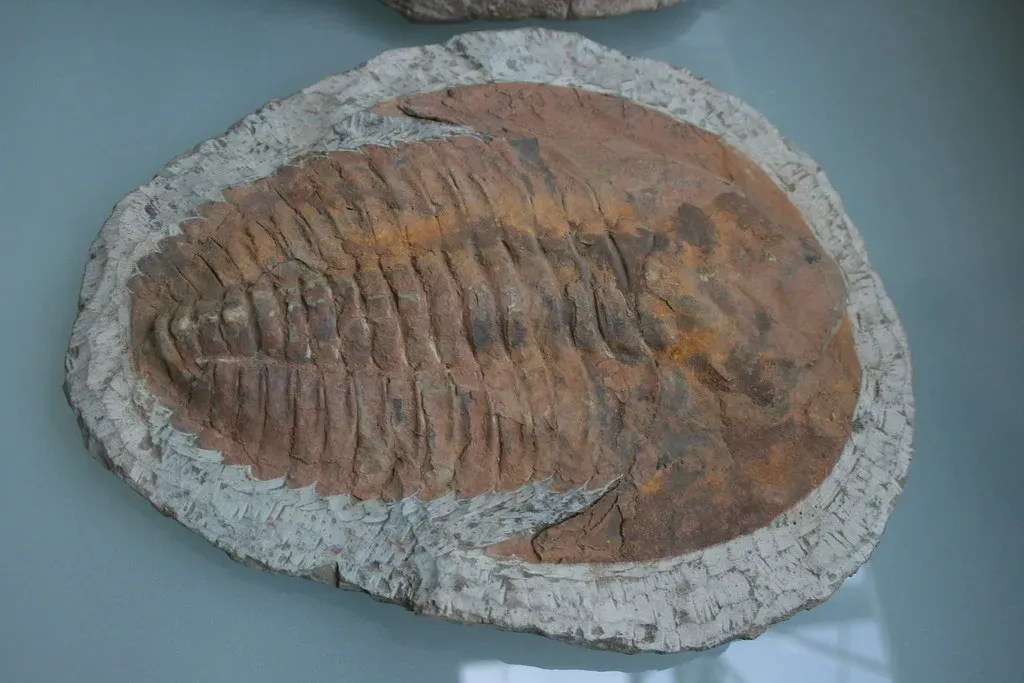
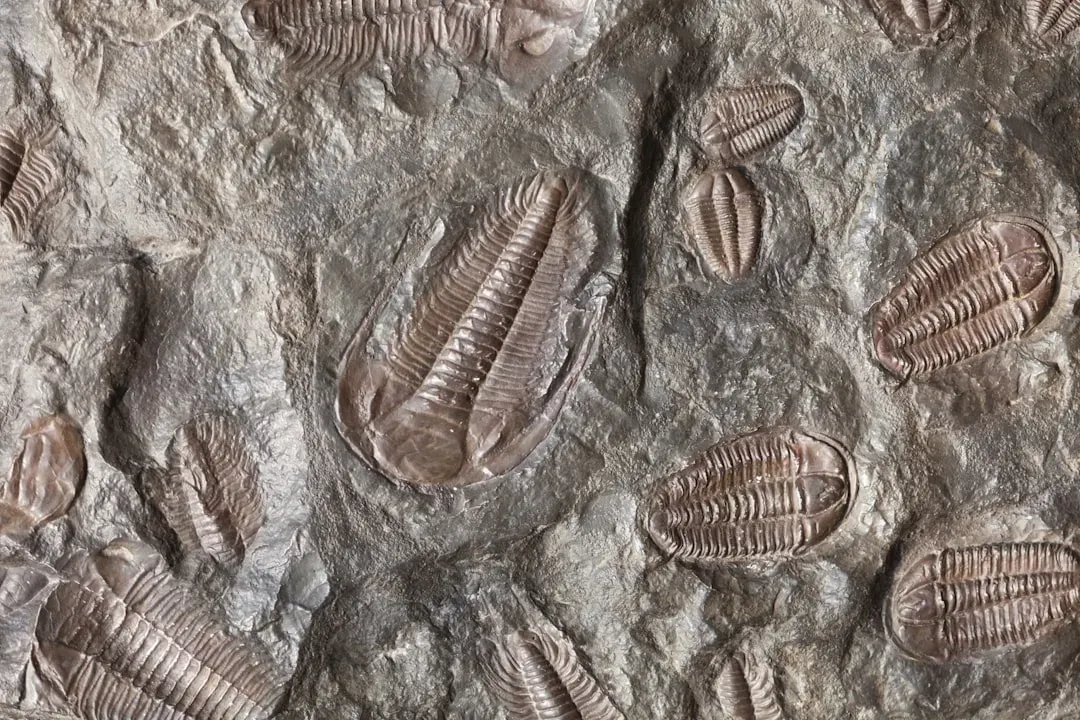
If your garden sits in a region with older Paleozoic rocks, especially in parts of North America, Europe, or Asia, you may be just a short distance above some of the most classic fossils of all: trilobites. These small, armored creatures crawled across seafloors hundreds of millions of years ago, long before dinosaurs or mammals ever appeared. When you kneel down to plant tomatoes or pull weeds, you are tending soil that is stacked on top of ancient seabeds where these animals scuttled around like strange, segmented versions of today’s pill bugs.
People often find trilobites in shale or limestone that splits easily along thin layers, especially in old quarries, road cuts, or rocky streambeds. If your home sits near that kind of rock, your entire neighborhood may be built on what used to be an ocean bottom teeming with marine life. It is a strange feeling when you realize that your lawn, your driveway, and your favorite walking trail all exist where saltwater once rolled, and trilobites filtered food from the mud. You are essentially gardening on the roof of a vanished sea.
9. Ichthyosaurs – Dolphin-Shaped Reptiles Beneath Your Hiking Trails
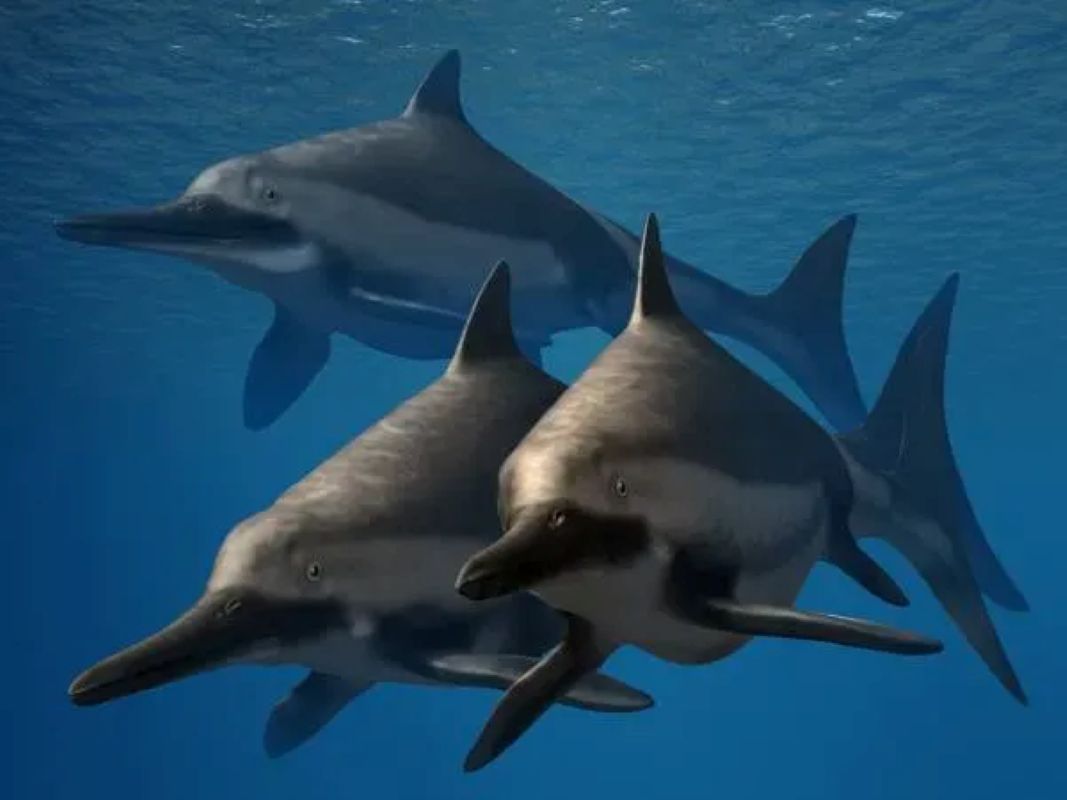
If you hike through areas with high, folded mountains or older marine rocks, especially in parts of western North America or Europe, you might be stepping over the former habitat of ichthyosaurs. These marine reptiles looked a bit like dolphins but belonged to an entirely different branch of life, powering through ancient oceans with big eyes adapted to murky depths. When you catch your breath at a mountain overlook today, the rocks under your boots might actually be compressed remnants of submarine slopes where ichthyosaurs once cruised in deep water.
Many ichthyosaur fossils turn up in what were once offshore marine environments, now lifted high by geological forces and exposed in cliffs and rocky hills. If your local trails cut through gray, layered rock full of fossil shells, you could be looking at the same sediments that once buried these reptiles. Imagine your favorite lookout spot as a point underwater, with schools of fish scattering while a sleek ichthyosaur darts past. The steep path you struggle up on a weekend might literally be climbing over what used to be the ocean highway beneath your ancient “backyard.”
10. Early Horses – Tiny Equines in Your Ancient Forest
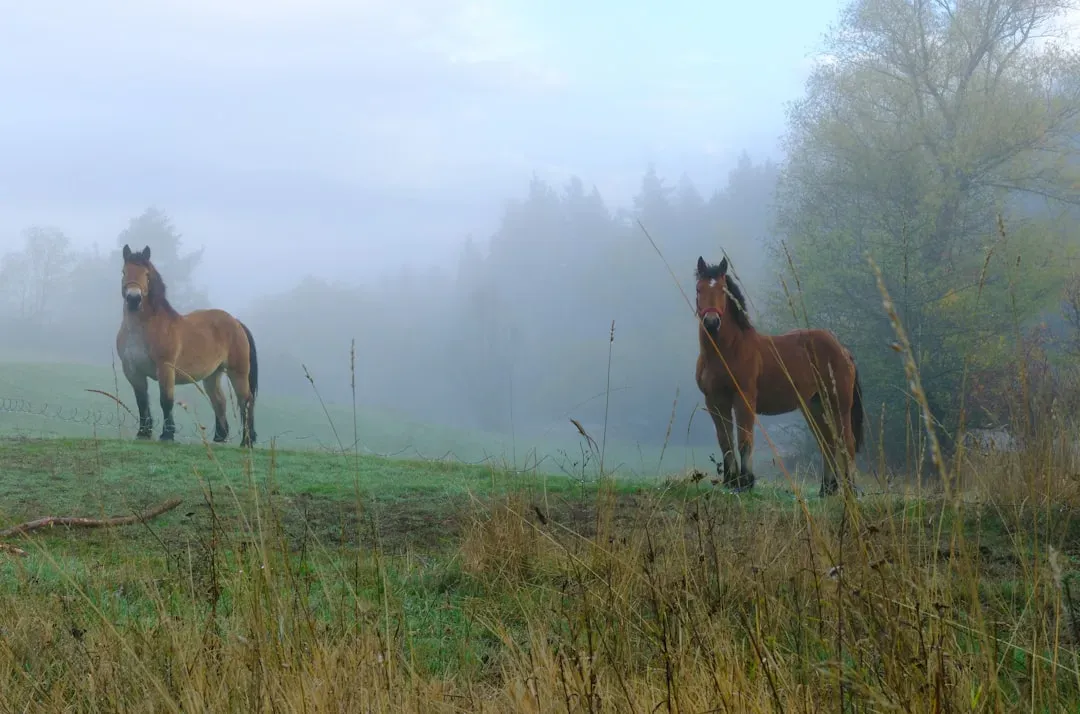
If you live in parts of North America, especially where there are river valleys and older sedimentary rocks from the early Cenozoic era, your backyard might have once hosted tiny, forest-dwelling horses. These early horses were much smaller than the ones you know today, with several toes and a build more suited for weaving between trees than galloping across open fields. When you look at a patch of woods or a riparian area near your home, imagine it as a humid, leafy world where these little horses picked their way through ferns and broad-leaved plants.
Fossils of early horses often show up in layers that were once floodplains, river channels, or swampy lowlands. If your area has those geology types, the same gentle slopes and riverbanks you stroll along could sit on top of sediments that entombed their bones. Visualize the creek you walk beside as a winding route where small herds paused to drink, always alert for ancient predators lurking nearby. Suddenly, your quiet jog along a greenway turns into a path through what once was a busy, buzzing forest corridor full of nervous, miniature horses.
Conclusion: Your Backyard Is a Time Machine in Disguise
Once you start thinking about your backyard this way, you realize you are not just living in a house or an apartment; you are camped out on the surface of a planet that has recycled itself through unimaginable ages. The same square of ground can be an ocean one era, a forest the next, and then a windblown steppe topped by ice before becoming someone’s lawn. When you picture T. rex on your street, mammoths in your empty lot, or trilobites under your vegetable beds, you are not indulging in fantasy; you are simply rewinding the tape of Earth’s history.
Next time you see a construction site, a road cut, or even just a muddy creek after heavy rain, you can treat it like a small window into everything that came before you. You might not pull a fossil out of your flower bed tomorrow, but knowing what lurks in the rock below your home changes how you see the place you live. It is not just a neighborhood; it is the latest skin on a world that has hosted monsters, giants, and entire vanished ecosystems. When you step outside and feel solid ground under your feet, do you still see dirt – or do you see the thin top layer of a very old, very crowded story?