
Ever feel like creativity is this elusive thing that only strikes certain lucky people? Like you’re just not wired for those brilliant aha moments? Here’s the thing. Science tells us a different story. Your brain has incredible creative potential waiting to be unlocked, and it’s not about being born a genius or having some rare gift.
What truly drives creativity isn’t magic. It’s psychology. There are specific mental triggers that flip switches in your brain, opening pathways to innovative thinking you didn’t know existed. Some of these triggers are surprisingly simple. Others might challenge what you thought you knew about how ideas emerge. Let’s be real, though. Understanding what fuels could change everything about how you approach problems, projects, and even your daily life.
So what are these triggers? Ready to discover what your mind is really capable of?
1. Embrace Diverse and Unusual Experiences

Your brain craves novelty, and research shows that diversifying experiences help break cognitive patterns, leading to more flexible and creative thinking. When you expose yourself to the unexpected, whether that’s traveling to a new place, learning a different language, or diving into a hobby completely unrelated to your work, you’re essentially rewiring your mental circuitry. Studies reveal that diversifying experiences enhance cognitive flexibility, making your mind more adaptable and open to unconventional solutions.
Think about it like this. If you’re an accountant who spends evenings painting, or a software developer who practices pottery on weekends, you’re giving your brain permission to make connections it wouldn’t otherwise make. Multicultural experiences, speaking multiple languages, or living abroad can significantly improve flexibility in thoughts and augment creative thinking. The key is stepping outside your comfort zone regularly. Your next breakthrough idea might come from the most unexpected place.
2. Cultivate a Positive Emotional State

Research supports that people in happy moods are better at coming up with unusual word associations, developing creative solutions, and generating numerous answers to divergent thinking tasks. Your emotional state isn’t just background noise. It’s a powerful driver of how creatively your mind operates. When you’re in a positive mood, your brain literally opens up new neural pathways that allow for more expansive thinking.
Honestly, this makes perfect sense when you consider how anxiety and stress narrow your focus. Sadness inhibits new ideas because people become more wary of making mistakes and exercise more restraint. So if you’re stuck on a problem, sometimes the best thing you can do is take a break, watch something funny, or spend time with people who lift your spirits. Let yourself feel good, and watch how the ideas start flowing.
3. Create Psychological Distance From Your Problems

Here’s a counterintuitive trigger. Sometimes getting closer to a problem makes you less creative about solving it. Changing your perspective and looking at the problem from another person’s point of view can boost originality, and research shows participants produced more original ideas when they believed their work would be used by someone else in the future. This concept of psychological distance allows your brain to see possibilities it misses when you’re too emotionally invested.
Try this technique the next time you’re wrestling with a challenge. Imagine you’re solving the problem for a friend, or picture yourself explaining it to someone five years from now. Studies found that placing some psychological distance between yourself and the problem can help break through creative blocks. That mental shift, subtle as it seems, gives your mind the freedom to explore solutions you’d otherwise dismiss as too risky or unconventional.
4. Allow Your Mind to Wander and Daydream

Daydreaming fosters problem-solving and creativity by allowing the brain to explore possibilities without constraint. We’re often told to stay focused, keep our eyes on the prize, buckle down. Yet some of your most creative moments happen when you’re not trying at all. The default mode network activates during passive pursuits like daydreaming while taking a stroll, emphasizing thought processes such as self-reflection, mind-wandering, and envisioning the future.
Research in Psychological Science reveals that allowing your mind to daydream and wander helps boost creativity, with high levels of daydreaming being especially helpful in tasks that don’t restrict weird ideas. So give yourself permission to zone out sometimes. Those moments when your mind drifts might actually be when it’s working hardest on creative connections beneath your conscious awareness. Walking without your phone, staring out a window, or simply letting your thoughts roam can unlock insights you’d never reach through forced concentration.
5. Surround Yourself With Stimulating Environments
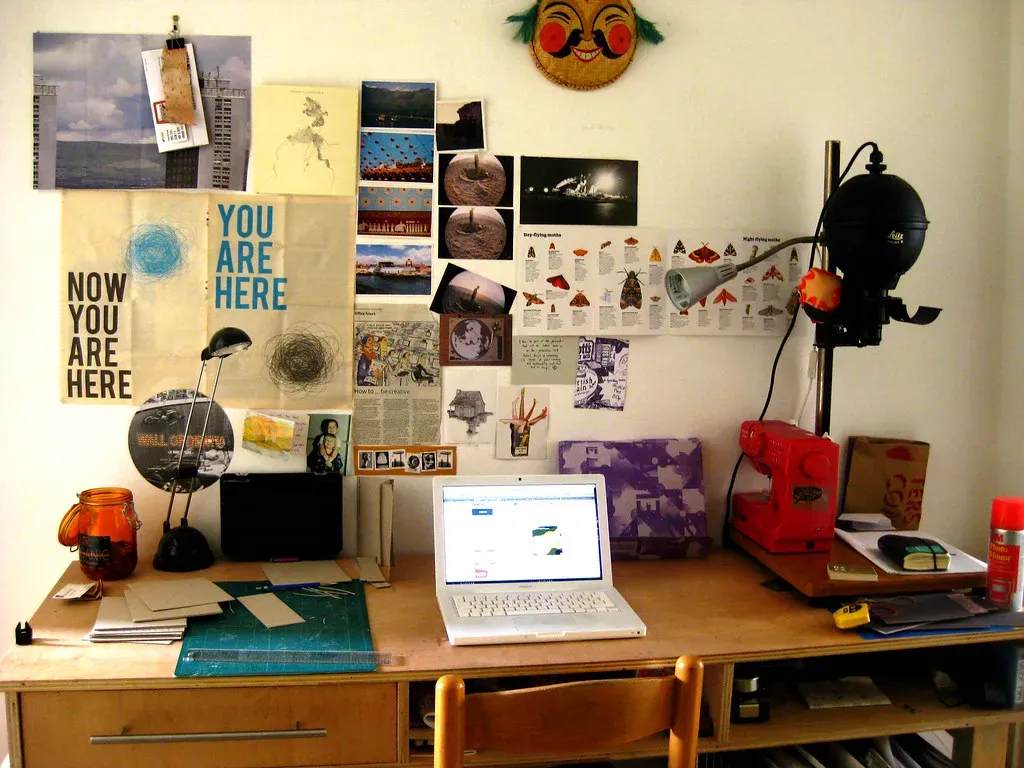
Positive psychologist Mihaly Csikszentmihalyi suggests that surroundings play a role in the creative process, and stimulating environments can facilitate creative thought. Your physical space matters more than you might realize. The objects you see, the colors on your walls, even the level of visual interest in your workspace all influence how creatively your brain functions.
Regular exposure to diverse and interesting friends and a work space filled with out-of-the-ordinary objects will help you develop more original ideas. I think this is why so many creative breakthroughs happen in coffee shops or while visiting museums. Your brain feeds on variety and novelty. Create a workspace that energizes you rather than deadens your senses. Add art, change things up periodically, and seek out environments that make you feel inspired rather than confined.
6. Practice Open Monitoring Meditation

Not all meditation is the same when it comes to creativity. Certain types of meditation are linked to increased creative thinking, particularly open monitoring meditation where individuals are receptive to any and all thoughts and sensations without focusing on any particular object, which can increase divergent thinking. This technique teaches your brain to observe without judgment, creating mental space where unexpected connections can form.
Unlike focused meditation where you concentrate on your breath or a mantra, open monitoring lets your awareness float freely. You’re essentially training your brain to notice more, judge less, and make surprising associations between ideas. Cognitive reappraisal can effectively reduce the damage of negative emotions to cognitive function, enhance cognitive flexibility and openness, and thereby indirectly promote creativity development. Even just ten minutes daily of this practice can shift how flexibly you think.
7. Walk Your Way to Creative Breakthroughs

Research found that people tend to be more creative when they walk as opposed to when they remain seated. There’s something almost magical about the simple act of putting one foot in front of the other. Walking activates your body in a rhythmic way that seems to free your mind, allowing ideas to bubble up naturally without force.
Studies have backed up that active minds are more creative than inactive ones, with anecdotal evidence showing that some of our best ideas come while walking. You don’t need anything fancy. A walk around your neighborhood, a stroll through a park, even pacing while you think can trigger creative insights. The combination of mild physical activity, changing scenery, and mental freedom creates perfect conditions for your brain to make those unexpected leaps.
8. Build Resilience Through Challenges

Extraordinary and unforeseen events, including difficult experiences, may disrupt traditional thought patterns and prompt individuals to perceive their experiences from a fresh, innovative perspective, potentially enhancing creativity by forming novel cognitive pathways. This might be hard to hear, but some of your most creative growth comes from struggle. When life throws you curveballs, your brain is forced to adapt, to find new solutions, to think in ways it never had to before.
Individuals with high psychological resilience tend to reconstruct challenging situations as manageable, opportunistic events, thereby enhancing resilience to stress and cognitive flexibility, and are better at quickly adjusting cognitive strategies when encountering challenging problems. The key isn’t seeking out trauma, obviously. It’s about reframing difficulties as opportunities for mental expansion. When you develop resilience, you’re essentially training your creative muscles to work under pressure.
9. Harness the Power of Curiosity

Curiosity serves as a critical psychological mechanism that stimulates creative thinking and sustained learning motivation, enhancing problem recognition and information processing while serving as a powerful internal driver for continued exploration. Children are naturally creative partly because they’re endlessly curious about everything. As adults, we often lose that questioning spirit, assuming we already know how things work.
High levels of curiosity can activate reward circuits in the brain, particularly the striatum, enhancing the intrinsic reward of learning. When you cultivate genuine curiosity about the world around you, asking why and what if more often, you’re essentially giving your brain permission to explore without predetermined answers. Try approaching familiar things with fresh eyes. Question assumptions. Wonder about possibilities. That childlike curiosity you might think you’ve lost? It’s still there, waiting to .
10. Impose Strategic Constraints on Your Thinking

This one sounds backwards at first. When trying to solve problems, people often build on existing ideas, which can lead to functional fixedness that makes creative solutions challenging, but placing some restrictions on your thinking can actually lead to more creative solutions. Total freedom can sometimes paralyze creativity because there are too many options. Giving yourself specific boundaries forces your brain to think more innovatively within those limits.
It’s like writing a poem with a strict rhyme scheme versus writing whatever you want. The structure doesn’t limit creativity. It channels it in more focused, often more original directions. Try setting deliberate constraints on your next project. Limit your color palette, reduce your word count, use only certain materials. You might be amazed at how much more creative you become when you can’t rely on your usual approaches.
Conclusion: Your Creative Potential Is Already There

Creativity isn’t some mystical quality that only a chosen few possess. It’s a psychological process you can learn to trigger and cultivate deliberately. By understanding these ten psychological mechanisms, you’re giving yourself the tools to unlock creative thinking whenever you need it. Whether it’s embracing new experiences, managing your emotional state, or simply taking more walks, each trigger offers a practical way to access the innovative thinking that’s always been inside you.
The most exciting part? These triggers work together, creating compound effects. The more you practice them, the more naturally creative your brain becomes. You’re not waiting for inspiration to strike anymore. You’re actively creating the conditions where genius-level thinking can emerge. So which trigger will you try first? What creative breakthrough is waiting just around the corner once you start intentionally fueling your innovative mind?