Ever wonder what it would be like to walk through an ancient world where dinosaurs wore shields like medieval knights? Picture massive creatures covered in bony plates, sporting tail spikes, and some even wielding club-like weapons at the ends of their tails. The thyreophorans weren’t your typical dinosaurs.
These remarkable creatures earned their name from the Greek term meaning “shield bearers,” and honestly, it’s a fitting title. This group of mostly plant-eating dinosaurs lived all over the world from the early Jurassic Period through the end of the Cretaceous Period, developing some of the most impressive defensive adaptations in prehistoric history. Their story is one of evolution, survival, and surprisingly diverse armor designs that protected them from the fierce predators of their time.
Scutellosaurus: The Tiny Pioneer of Armor
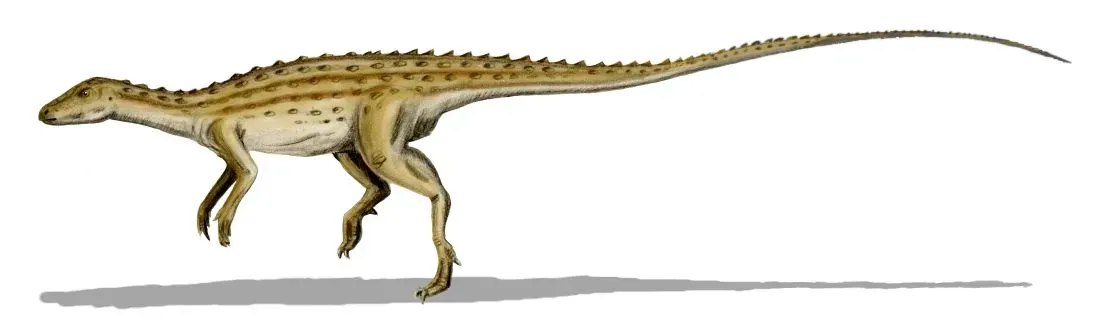
The earliest known thyreophoran with armor was Scutellosaurus, living during the early Jurassic Period in Arizona roughly 196 million years ago. Think of it as the prototype for all the heavily armored dinosaurs that came later. Unlike many later thyreophorans, Scutellosaurus was much smaller, growing only around four to five feet long and weighing merely 22 pounds, and it may have even walked on its hind legs.
This dinosaur had a very long and slender tail, possibly to help counterbalance the weight of its armored body, with several rows of small bony plates fixed in the skin on its back. Imagine a creature barely bigger than a medium dog, yet already experimenting with the defensive strategy that would define its entire family line. It’s like seeing the earliest draft of what would become a masterpiece of evolutionary engineering.
Scelidosaurus: Europe’s Basal Defender
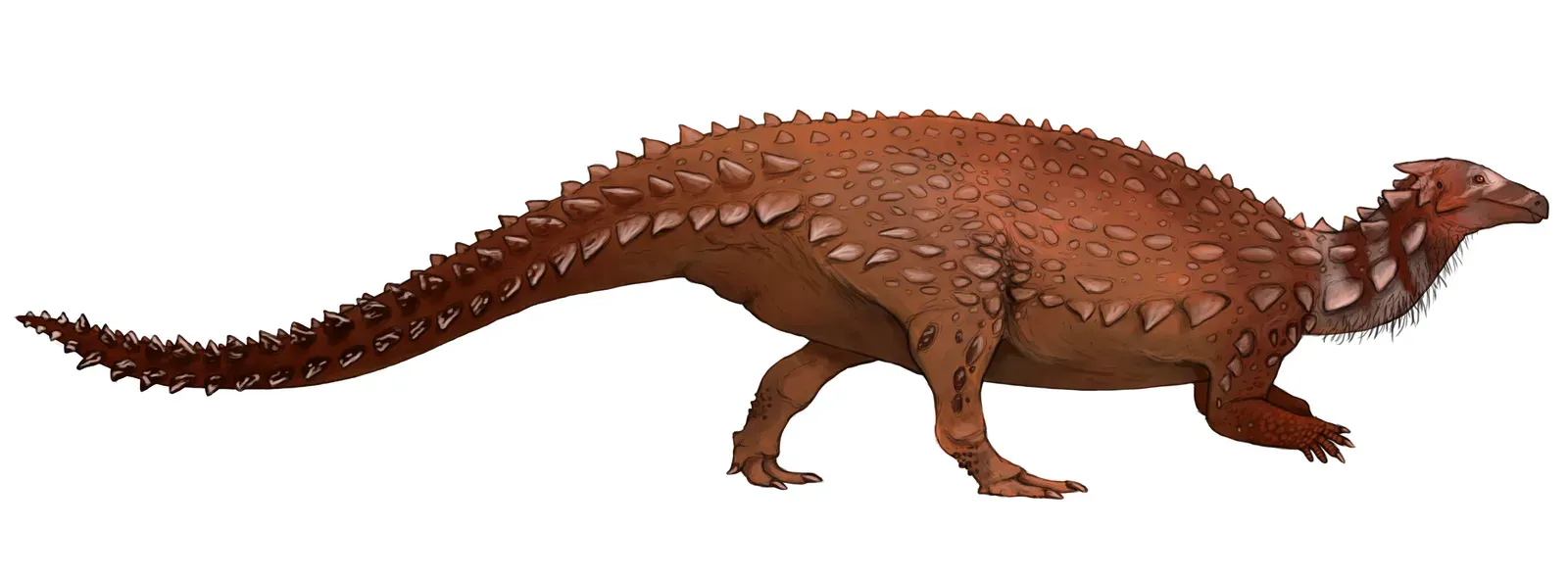
Found in western Europe just over 180 million years ago, Scelidosaurus was a smallish to medium-sized basal thyreophoran with armor that grew 13 feet long and stood just over three feet tall. This creature represents an important evolutionary step between the primitive Scutellosaurus and the more advanced armored dinosaurs that would follow.
What makes Scelidosaurus particularly interesting is its place in thyreophoran evolution. It had rows of bony plates along its back that were more developed than its earlier relatives. Living during the Early Jurassic period about 191 million years ago primarily in what is now England, it was a herbivore feeding on low-growing vegetation such as ferns and cycads. Its simple but effective armor design hints at the incredible diversity that was about to explode in this dinosaur group.
Emausaurus: Germany’s Early Jurassic Mystery
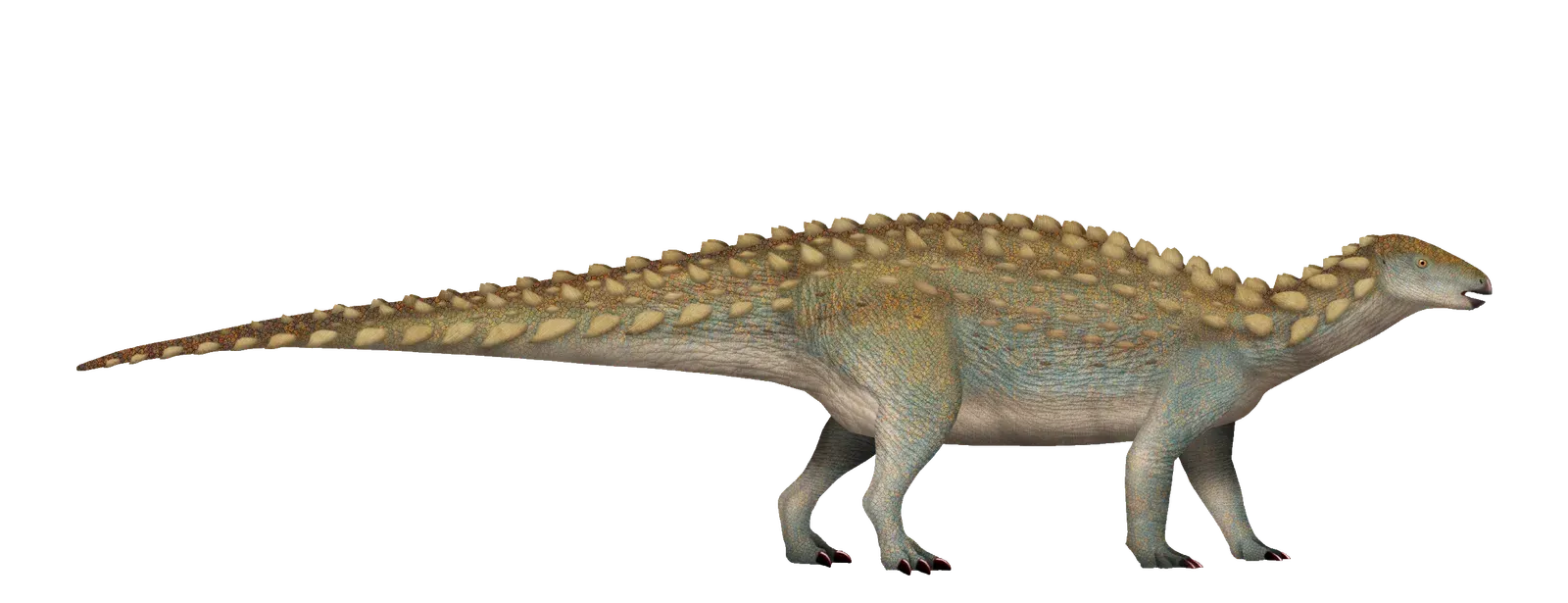
Emausaurus was an armored dinosaur that lived in Germany during the Early Jurassic Period, with its name actually being an acronym for “Ernst-Moritz-Arndt-Universität,” a university in Germany. Here’s where things get interesting. There are debates as to the size of Emausaurus, which could have been anywhere between seven to 13 feet long and 110 to 530 pounds.
The uncertainty surrounding its size tells us something important about paleontology: we’re constantly piecing together fragmentary evidence. Still, we know that Emausaurus possessed bony plates in its skin that helped defend against predators. It’s another piece in the puzzle showing how armored dinosaurs spread across the ancient world during the Jurassic.
Huayangosaurus: The Ancestral Stegosaur
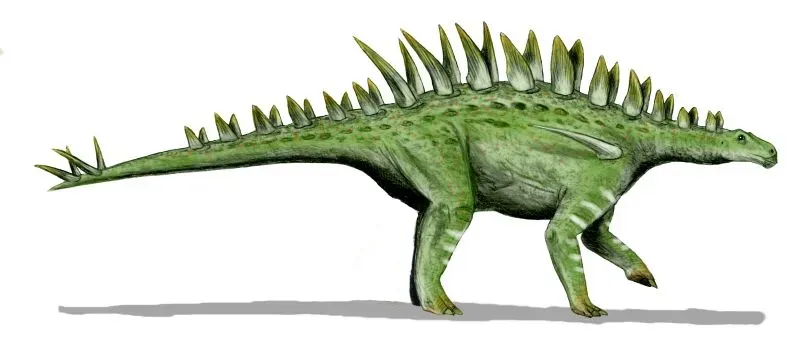
Huayangosaurus lived during the Middle Jurassic period approximately 174 to 163 million years ago in what is now China, notable for being one of the earliest known members of the stegosaur family, predating its larger relatives like Stegosaurus by about 20 million years. This dinosaur is fascinating because it shows us what stegosaurs looked like before they evolved into the iconic plated giants we know today.
Although considerably smaller than the more recent Stegosaurus, it still possessed characteristic spikes on its tail and rows of alternating triangular plates along its back, plus two pairs of long tail spines at the tip and a single sharp parascapular spine over each shoulder. Its discovery in China’s fossil-rich Sichuan Province provided crucial insights into how these spectacular dinosaurs evolved their distinctive defensive features.
Kentrosaurus: Africa’s Spiky Defender
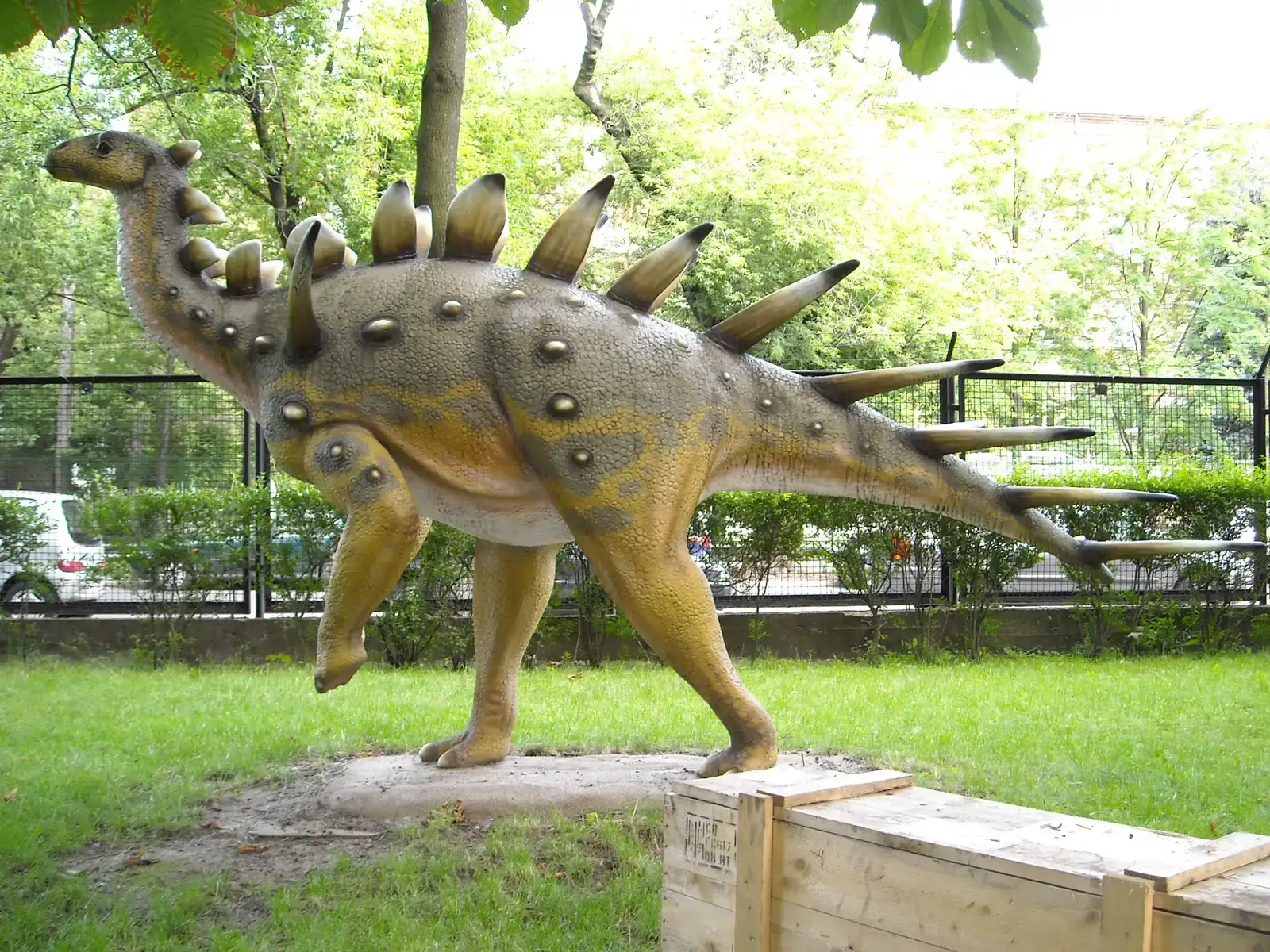
This stegosaurian dinosaur lived around 152 million years ago in Tanzania, growing around 15 feet long and weighing around one ton, with a double row of small plates covering its neck and down its back that merged into larger spikes when they reached the dinosaur’s hips, covering its hips and tail. Kentrosaurus took the stegosaur body plan and cranked up the defensive spikes to the maximum.
Here’s the thing: while Stegosaurus is more famous, Kentrosaurus might have been better armed. Its transformation from plates to spikes along its body created a walking pincushion that few predators would dare attack. The discovery of these fossils in East Africa also proved that stegosaurs had spread far beyond their apparent Asian origins, colonizing multiple continents during the Late Jurassic.
Stegosaurus: The Iconic Plated Giant
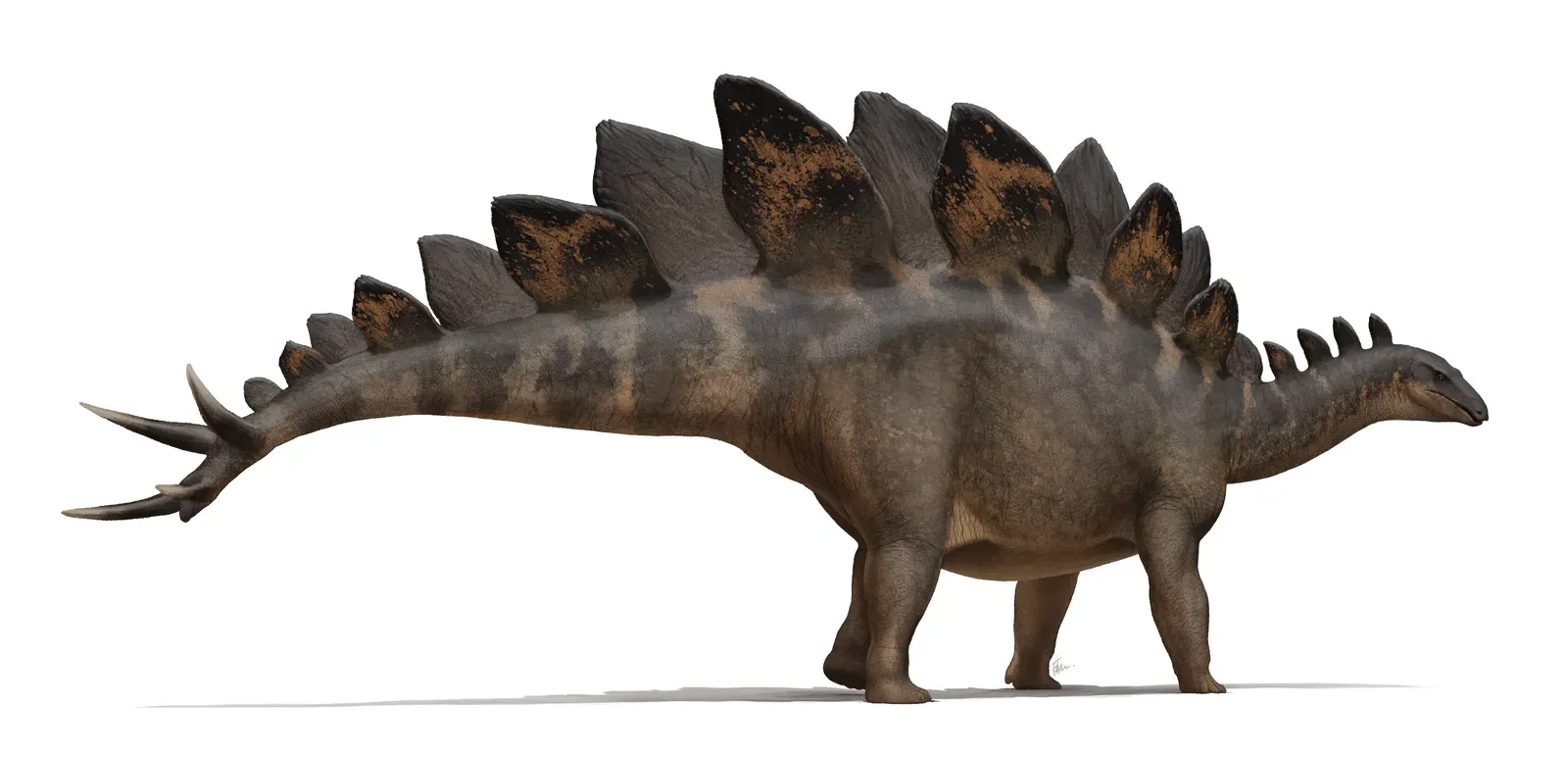
One of the most famous thyreophorans is the iconic Stegosaurus, whose name means “roofed lizard” because it was named back in the 19th century when paleontologists thought its plates laid flat and horizontal against its back, though today research suggests its large, triangular-shaped plates ran down its neck and back in alternating rows with pointy ends facing skyward before ending in its spiked tail.
Even though the stegosaurus was quite large, around 23 feet long and weighing 4.2 tons, it is famous for having a tiny brain. Still, don’t let that fool you into thinking it was defenseless. The spikes on the back of Stegosaurus’s tail were probably used to wound predators like Allosaurus who were attacking it, supported by a fossil of an Allosaurus that has visible damage from a Stegosaurus spike. That’s direct evidence of these dinosaurs engaging in combat and winning.
Gastonia: North America’s Spiky Tank
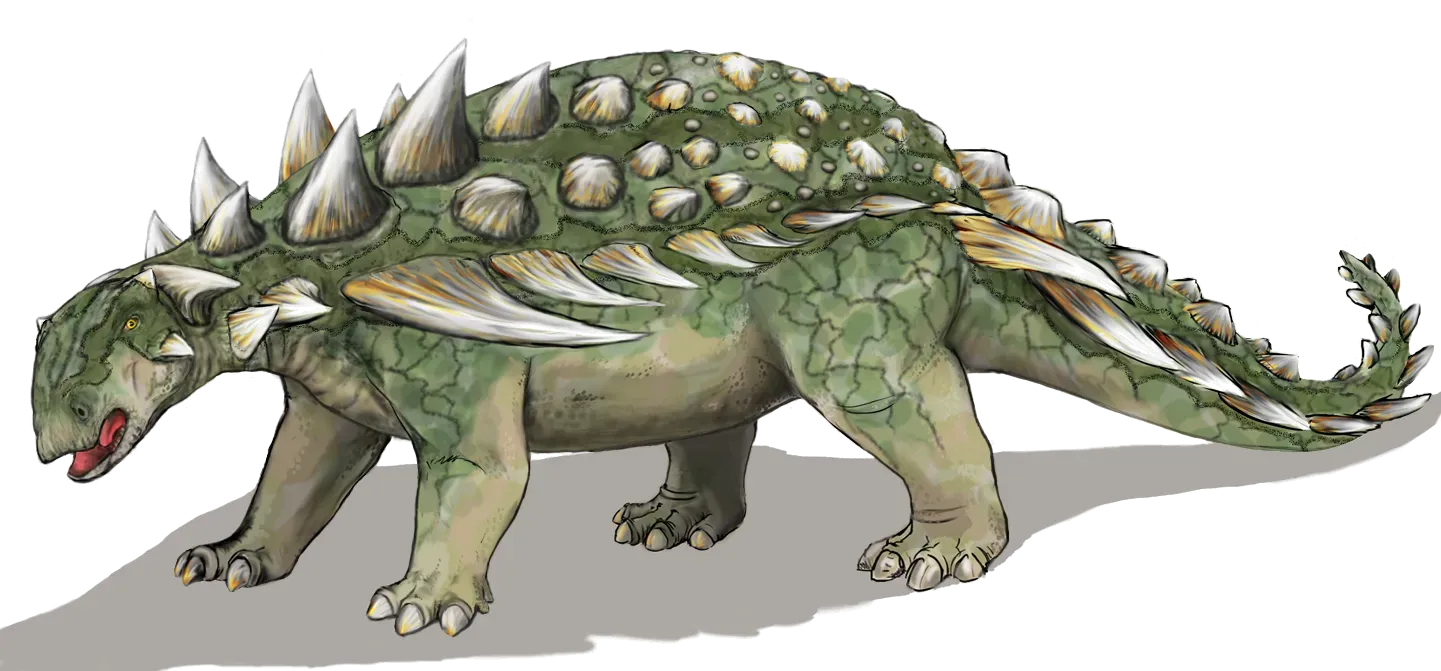
Gastonia was one seriously well-defended ankylosaur from Early Cretaceous North America. While not as famous as some of its relatives, this dinosaur packed impressive defensive weaponry. It possessed broad, flat armor plates across its back combined with fearsome shoulder spikes that projected outward, creating a formidable barrier against predators.
What sets Gastonia apart is the sheer density of its armor coverage. Every vulnerable area seemed protected by overlapping bony plates and strategically placed spikes. Living roughly between 130 to 125 million years ago, it represented the ankylosaur lineage at a time when these armored dinosaurs were diversifying rapidly across different continents and ecological niches.
Sauropelta: The Shield Lizard with Enormous Spikes
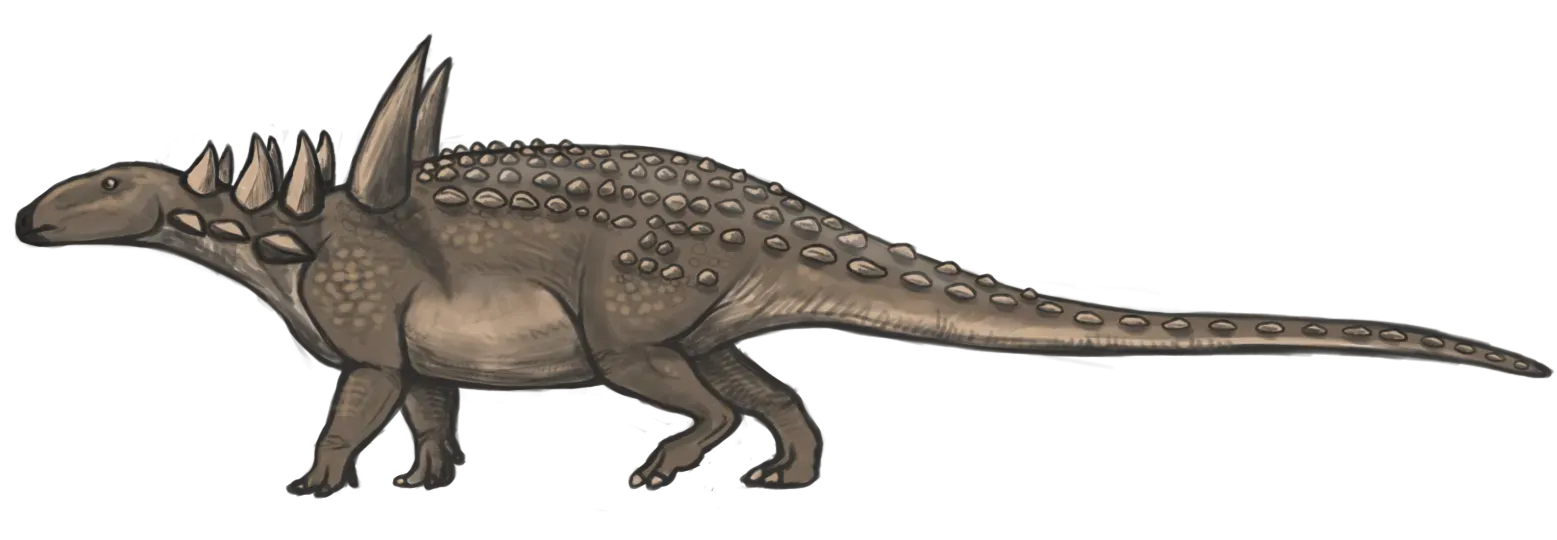
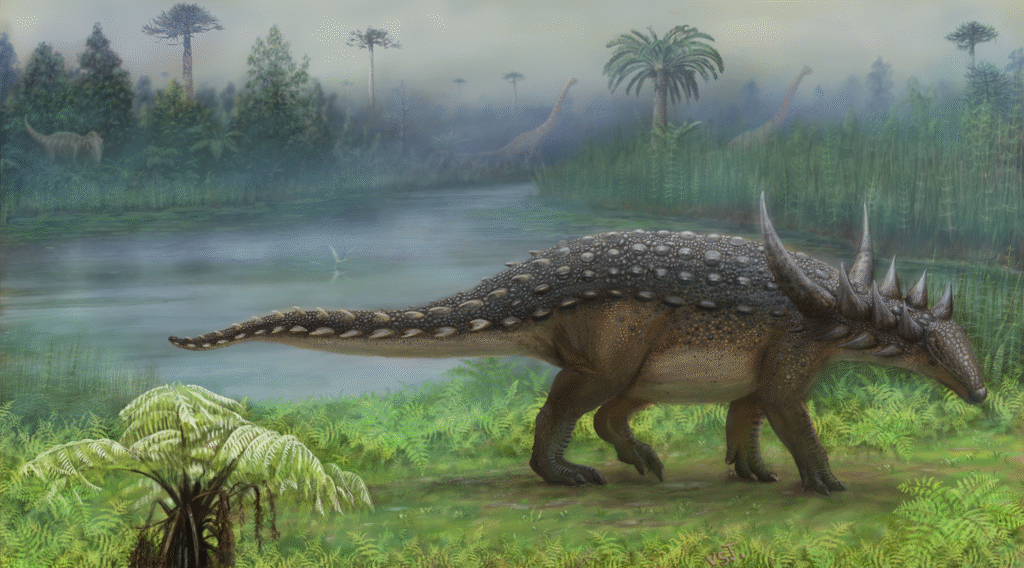
Sauropelta is a genus of nodosaurid dinosaur that existed in the Early Cretaceous Period of North America, being the earliest known genus of nodosaurine with most remains found in a section of the Cloverly Formation dated to 108.5 million years ago, measuring about 5.2 to 6 metres long. This dinosaur’s name literally translates to “lizard shield,” and boy did it earn that title.
Large, pointed spines lined the sides of the neck, increasing in size towards the shoulders, then decreasing in size again along the side of the body until they stopped just before the hips. Sauropelta had a distinctively long tail which made up about half its body length, and although its body was smaller than a modern black rhinoceros, it was about the same mass, weighing up to about 1.5 to 2 metric tons, with extra weight largely due to its extensive covering of bony armor.
Euoplocephalus: The Well-Armored Head
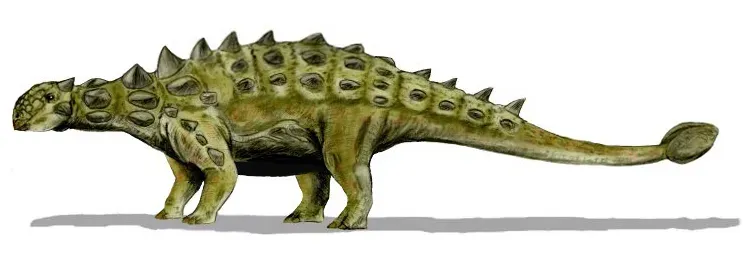
Euoplocephalus was an ankylosaurid dinosaur whose name means ‘well-armored head,’ derived from the Greek words ‘eu’ meaning true, ‘hoplo’ meaning armored, and ‘kephale’ meaning head. It reached 5.3 metres in length and 2 metric tons in body mass, with a low-slung and very flat, wide body standing on four sturdy legs, a short drooping snout with a horny beak to bite off plants, and like other ankylosaurids was largely covered by bony armor plates, among them rows of large high-ridged oval scutes.
Euoplocephalus differed from other ankylosaurs in having a bone that protected the eyelid. That’s right, even its eyelids had armor. The tail was its most distinctive feature, being long and ending in a club-like structure likely used as a defensive weapon. Living between roughly 76 and 75 million years ago in western North America, this dinosaur represents the pinnacle of ankylosaur evolution.
Ankylosaurus: The Ultimate Armored Tank
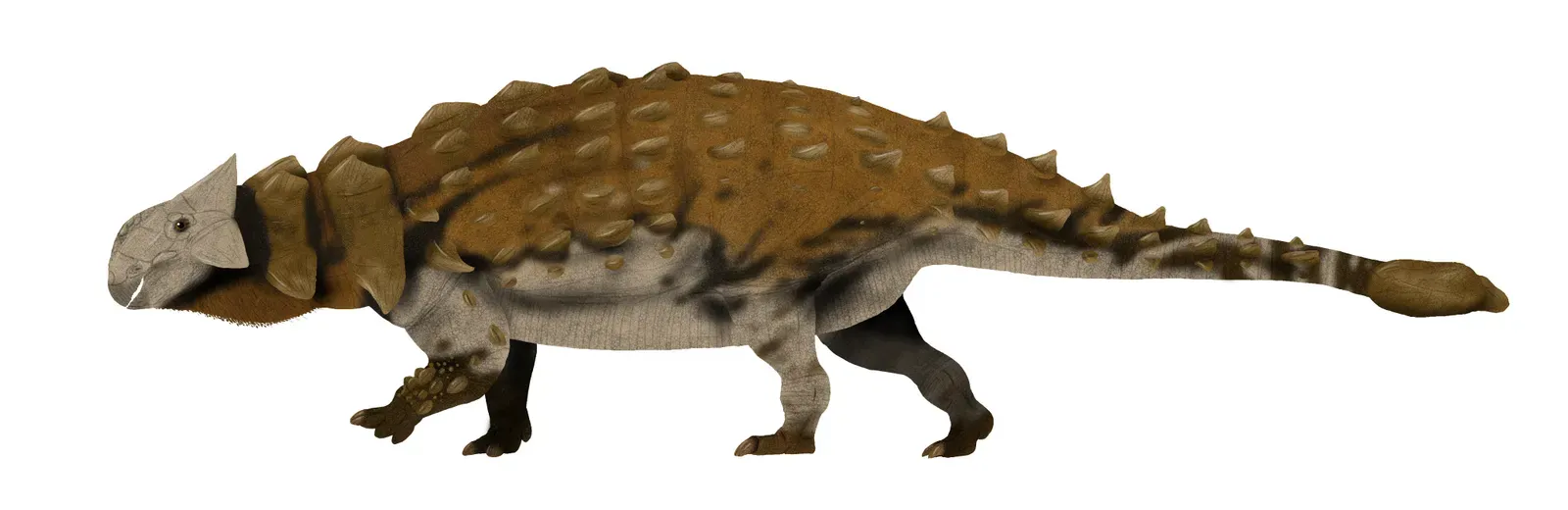
Ankylosaurus fossils have been found in geological formations dating to the very end of the Cretaceous Period about 68 to 66 million years ago in western North America, making it among the last of the non-avian dinosaurs, and it is estimated to have been between 6 and 8 metres long and to have weighed between 4.8 and 8 tonnes. This was the heavyweight champion of armored dinosaurs, the one that took everything thyreophorans had learned over millions of years and perfected it.
A prominent feature of Ankylosaurus was its armor, consisting of knobs and plates of bone known as osteoderms or scutes, embedded in the skin. Some members of Ankylosauria even had body armor on their eyelids. Its massive tail club could deliver devastating blows to attacking predators, potentially even breaking bones. Ankylosaurus lived alongside dinosaurs such as Tyrannosaurus, Triceratops, and Edmontosaurus, holding its own in one of the most competitive ecosystems in Earth’s history. What an incredible way to end the age of armored dinosaurs.
Conclusion
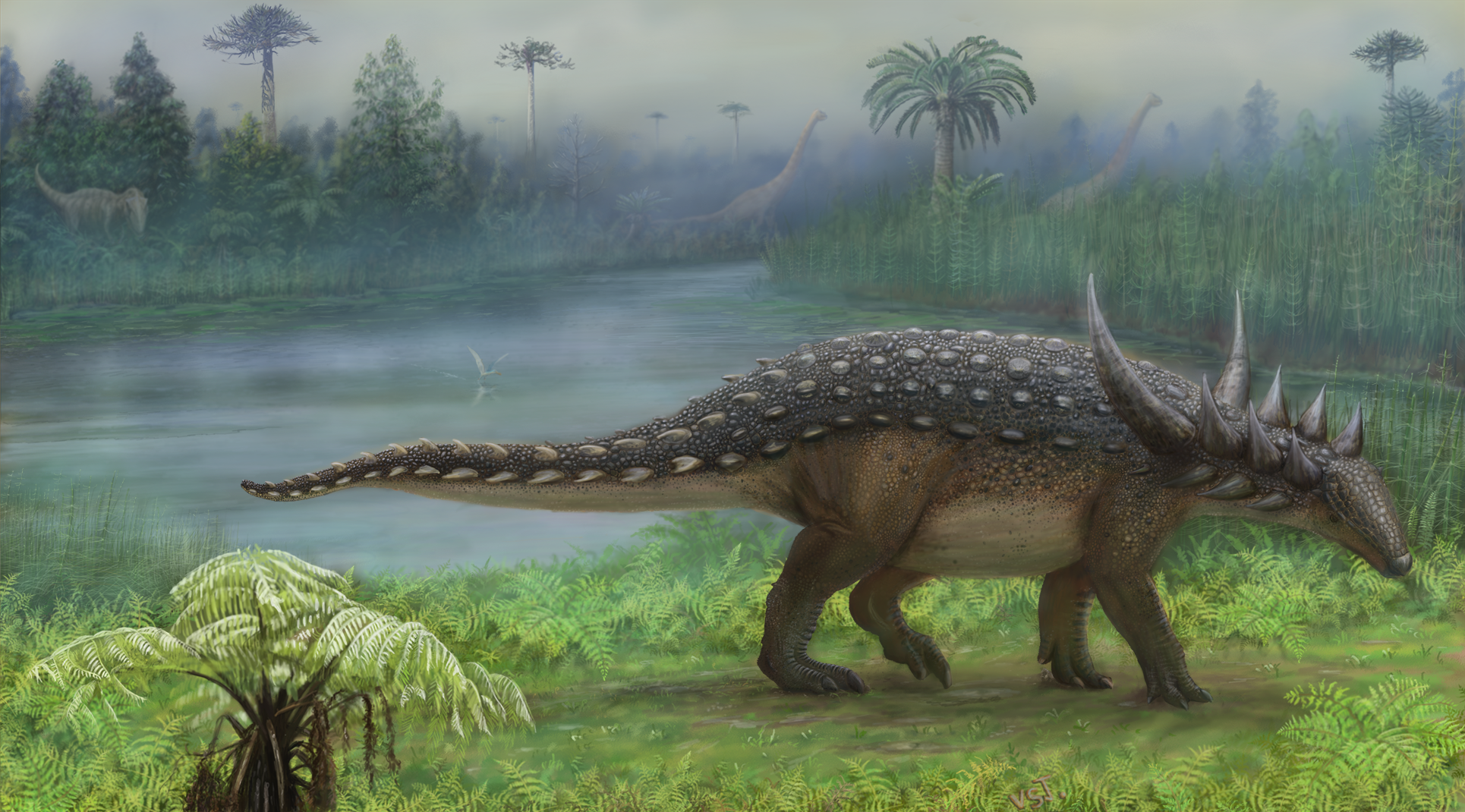
The thyreophorans represent one of evolution’s most spectacular experiments in defensive armor. From the modest bony plates of tiny Scutellosaurus to the fortress-like protection of massive Ankylosaurus, these shield-bearing dinosaurs proved that sometimes the best offense is an impenetrable defense. They dominated ecosystems across the globe for over 130 million years, outlasting countless predator species.
What makes their story even more remarkable is the sheer variety of defensive strategies they developed. Some relied on tall plates for display and protection, others bristled with sharp spikes, and still others swung devastating tail clubs. Each species found its own solution to the eternal problem of survival. Did you expect such diversity among armored dinosaurs? What’s your favorite thyreophoran, and why?