You probably grew up seeing dinosaurs and cavemen mashed together in the same cartoons, as if they all bumped into each other at the local waterhole. Real prehistoric life was stranger, more surprising, and far more complicated than that. The fossils below did more than just give scientists cool skeletons to display in glass cases; they forced people to rethink how life evolved, how ecosystems worked, and even what it means to be human. As you move through these discoveries, notice how often scientists had to admit they were wrong and redraw the big evolutionary picture. You’ll see animals that blur lines you thought were clear: fish that walk, dinosaurs that fly, and human relatives that behave in unsettlingly familiar ways. By the end, you may look at your own hands, your breath, or even your sense of being human a little differently.
1. Archaeopteryx: The Dino-Bird That Redrew the Line Between Dinosaurs and Birds
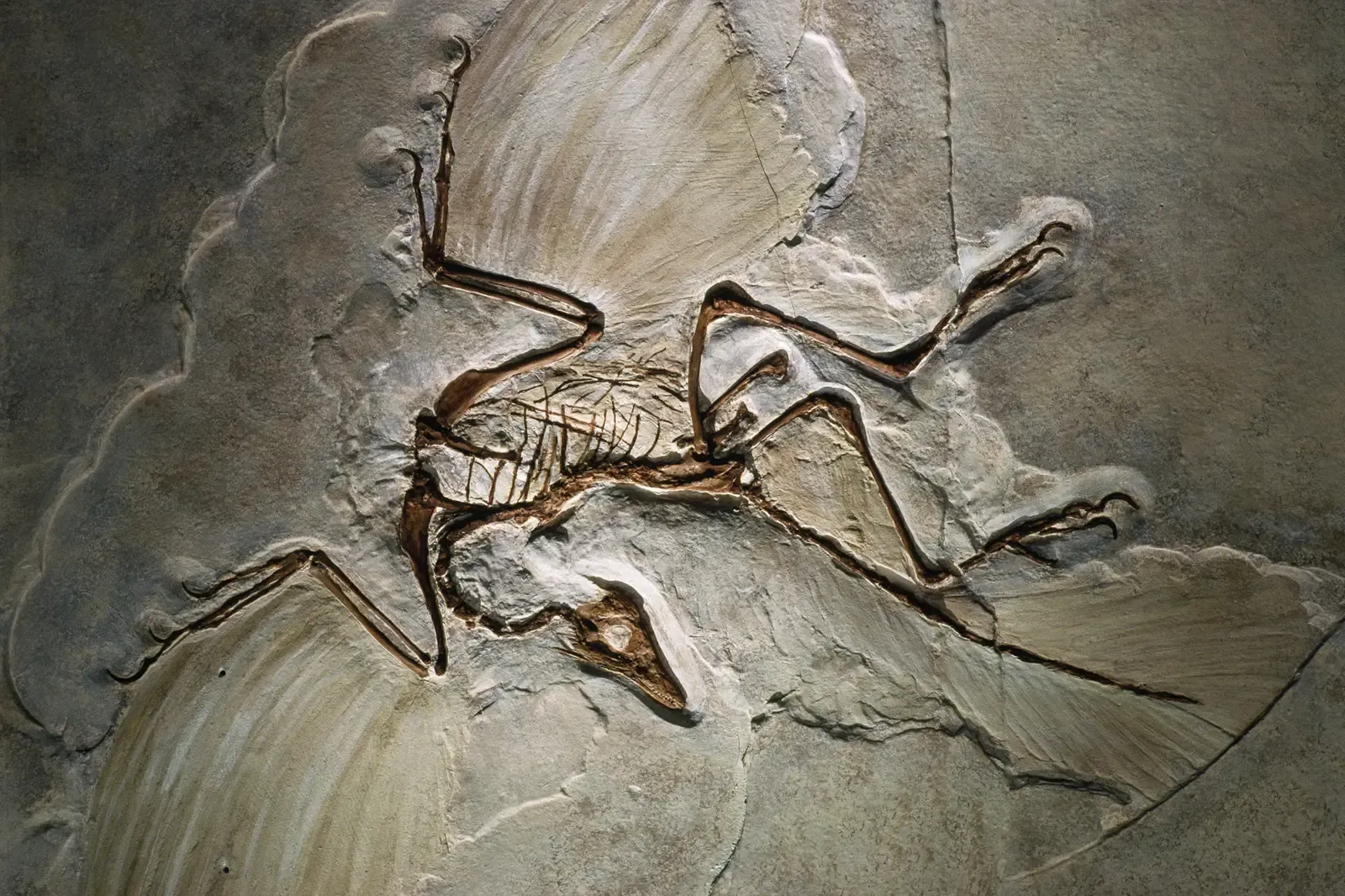
You’ve probably been told there’s a clean break between dinosaurs and birds, but Archaeopteryx makes that line vanish. When this fossil was first described in the 1860s from limestone quarries in Germany, it came with fully formed flight feathers… wrapped around what was clearly a small carnivorous dinosaur: teeth, claws on its wings, a long bony tail, and all. You’re looking at a single animal that carries both sides of the story in its bones, like someone wearing half a tuxedo and half a football uniform.
For you, Archaeopteryx shows that evolution is not about neat categories; it’s about transitions. Modern research keeps adding layers to the picture, revealing details in its skull and soft-tissue impressions that look strikingly birdlike, suggesting specialized feeding and possibly bursts of powered flight. At the same time, it sits firmly within the group of small theropod dinosaurs. When you hear that birds are living dinosaurs, Archaeopteryx is one of the key fossils that turned that from a wild idea into a solid conclusion.
2. Tiktaalik: The Fish With Wrists That Helped You Walk
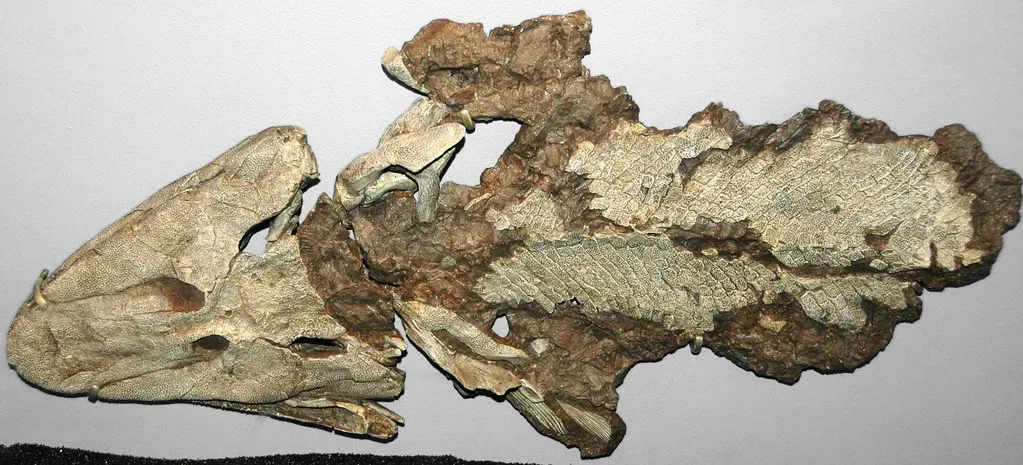
If you look at your wrist and flex your hand, you’re seeing the distant echo of a fish called Tiktaalik. Discovered in Arctic rock dating back roughly three hundred and eighty million years, this creature looked like a cross between a crocodile and a fish: scales and fins on the outside, but inside those fins were bones arranged a lot like a shoulder, elbow, and wrist. Tiktaalik could likely prop itself up in shallow water and maybe even haul itself onto muddy banks for short stints.
For you, Tiktaalik matters because it shows that the jump from water to land was not a sudden leap, but a gradual series of small engineering tweaks. Instead of picturing a fish magically turning into a salamander, you can imagine animals like Tiktaalik using stronger, jointed fins to push through weedy shallows where a bit of support and air-breathing gave them an edge. Your own limbs follow a pattern that was already starting to take shape in that fish, which makes it hard not to feel a weird kinship with a long-dead animal that swam where the Arctic now freezes.
3. The Burgess Shale: A Snapshot of Evolution’s Wildest Experiments
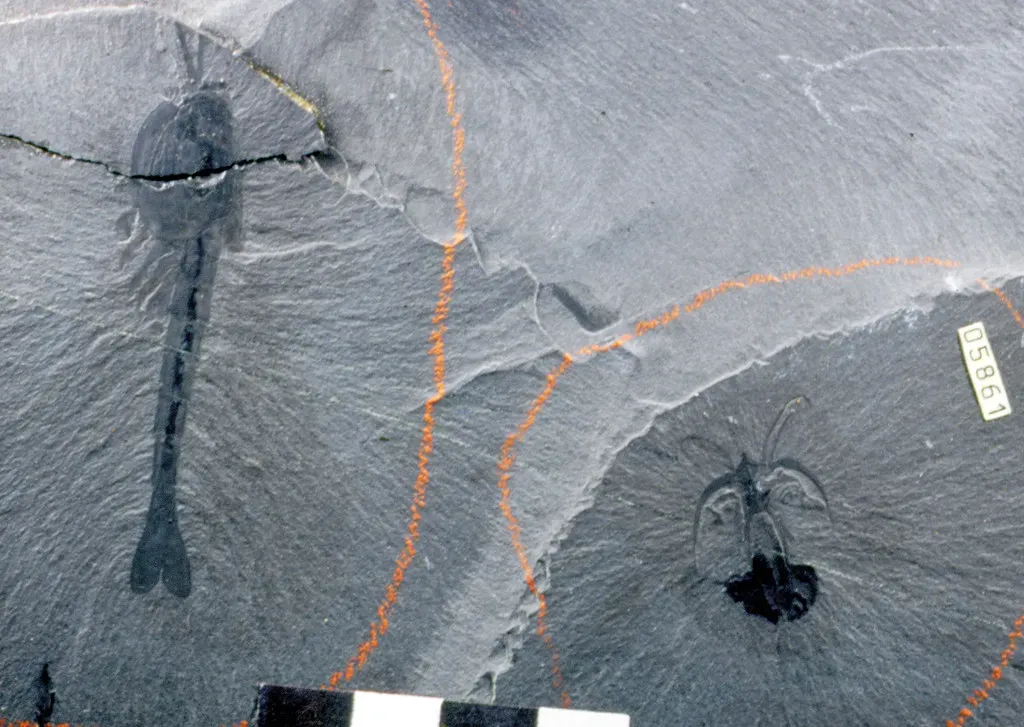
Most fossils you see in museums are sturdy things: bones, shells, teeth. The Burgess Shale in the Canadian Rockies stunned scientists by preserving soft-bodied creatures from more than five hundred million years ago, including animals so bizarre you’d assume they were designed for a science fiction movie. Here you meet tentacled predators, spiky crawlers, and odd, flattened forms with body plans that barely resemble anything alive today.
What this means for you is that early animal evolution was not a gentle ramp-up of familiar shapes; it was a chaotic explosion of experimentation. The Burgess Shale shows you ecosystems already buzzing with complexity soon after the so‑called Cambrian explosion, where many major animal groups first appear in the fossil record. Instead of evolution steadily climbing a ladder toward humans, you’re seeing a branching, tangled tree where most branches died out. It’s a humbling reminder that your own lineage is just one of many possible outcomes that could have taken over Earth – and most never did.
4. Lucy (Australopithecus afarensis): When Walking Upright Became a Habit
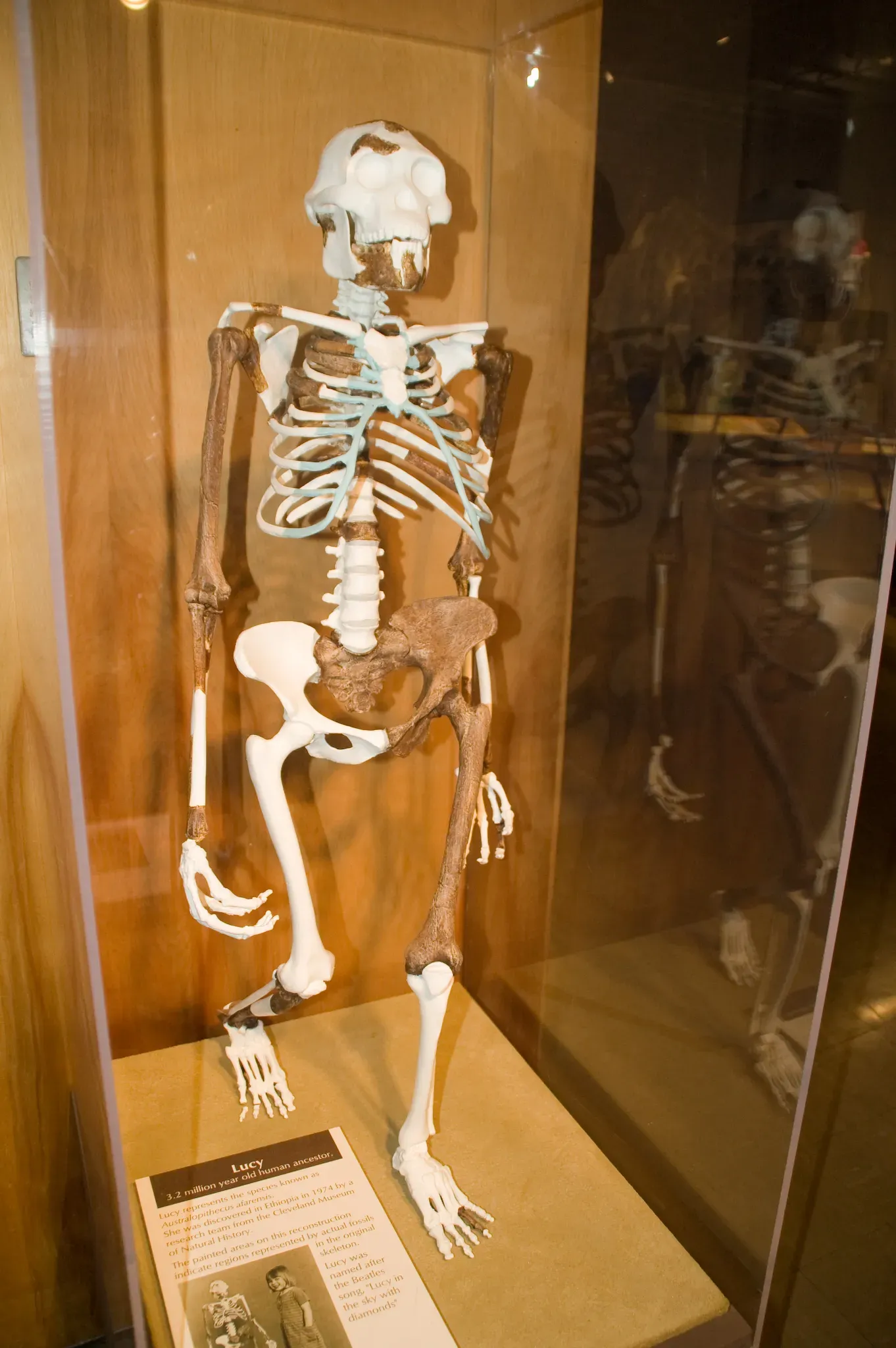
When you hear about early human fossils, Lucy is usually one of the first names that comes up. Found in Ethiopia in the 1970s and dating back a bit more than three million years, this small-bodied hominin had a brain closer in size to a chimp’s, but hip, leg, and knee bones that show she spent a lot of time walking upright. You’re looking at a creature that still climbed trees but had already committed to bipedalism as a key way of getting around.
For you, Lucy is important because she severs the simplistic link between big brains and walking on two legs. The fossil tells you that upright walking evolved first, long before the dramatic brain expansion that comes later in human evolution. That means your ability to stand, run, and free your hands for tools and gestures may have set the stage for everything else you associate with being human. Imagine your ancestors first stepping out onto the savanna, seeing farther over the grass, carrying food or infants in their arms – that’s the kind of shift Lucy embodies.
5. Homo naledi: A Small-Brained Hominin With Big Mysteries
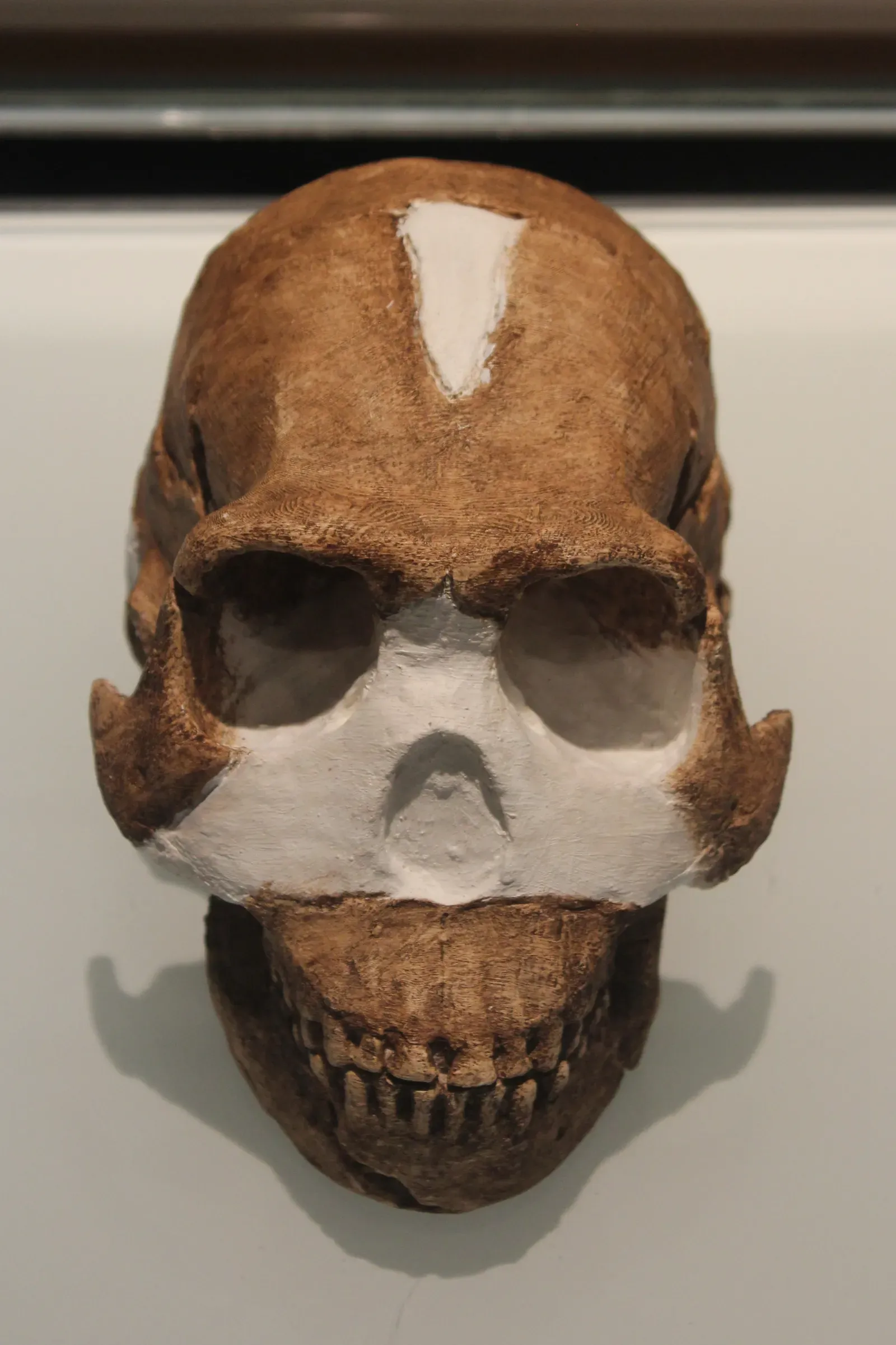
Homo naledi is the fossil that forces you to rethink what counts as “advanced” in human evolution. Discovered in a deep, hard‑to‑reach cave system in South Africa and dated to a few hundred thousand years ago, these remains show a puzzling mix: a small brain more like earlier hominins, but hands, feet, and legs with many traits resembling later members of our own genus. Even more unsettling, there are hints the bodies may have been deliberately placed in the cave, which raises questions about behavior you might have thought belonged only to larger‑brained humans.
For you, this discovery shows that human evolution wasn’t a simple, step‑by‑step climb toward bigger brains and “better” abilities. Instead, picture a bush with multiple human‑like species overlapping in time, some sharing features you consider modern while holding on to others that seem primitive. Homo naledi squeezes into that bushy picture and suggests that symbolic or ritual‑like behavior might not be tied neatly to brain size. When you consider your own assumptions about intelligence and culture, this fossil tells you to be cautious and stay curious.
6. The Laetoli Footprints: Frozen Footsteps From Deep Time
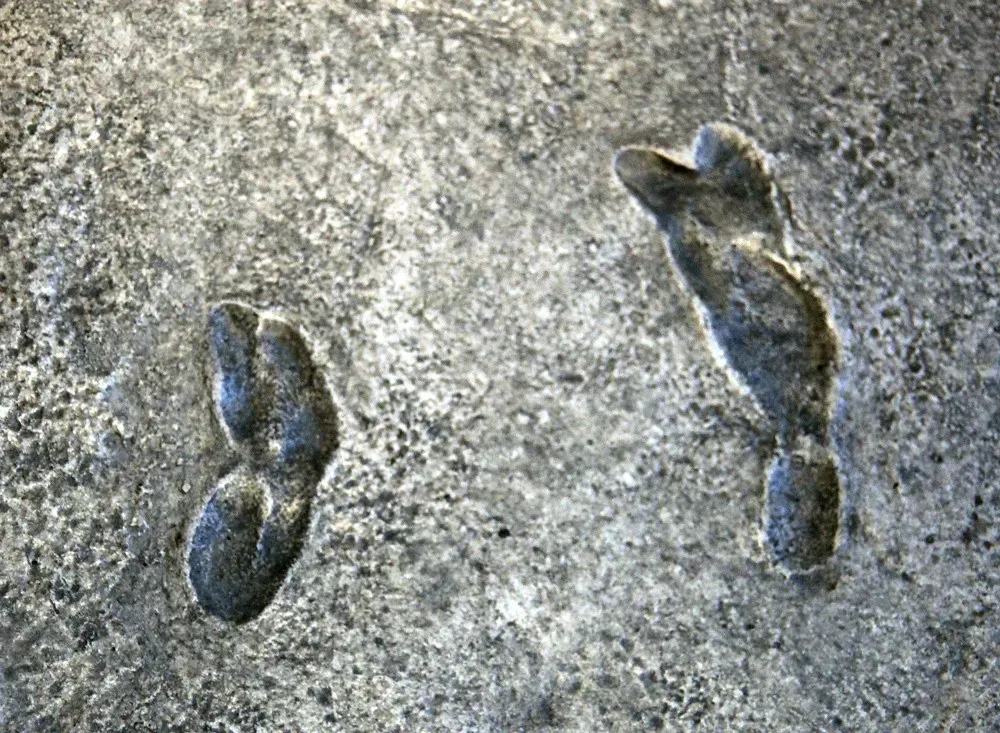
Sometimes the most powerful fossils aren’t bones at all but traces of a moment in someone’s life. At Laetoli in Tanzania, you can follow a set of roughly three and a half million‑year‑old footprints left in wet volcanic ash and later hardened into rock. The tracks show two, maybe three individuals walking upright with a gait that looks strikingly similar to yours. There’s no skeleton standing there, but the shape and spacing of those prints tell you these were bipedal hominins, almost certainly related to species like Lucy’s.
For you, the Laetoli footprints offer an emotional connection that measurements and skull diagrams can’t quite match. You can imagine a small group walking across fresh ash, maybe unaware that their casual stroll would be preserved for millions of years. The details – heel strikes, toe‑off, alignment – confirm that upright walking was already well‑developed at that time. It’s like catching a blurred photo of your ancestors mid‑step, proving that the story of human locomotion is older and more sophisticated than many people once assumed.
7. Sinosauropteryx and the Dinosaur Feather Revolution
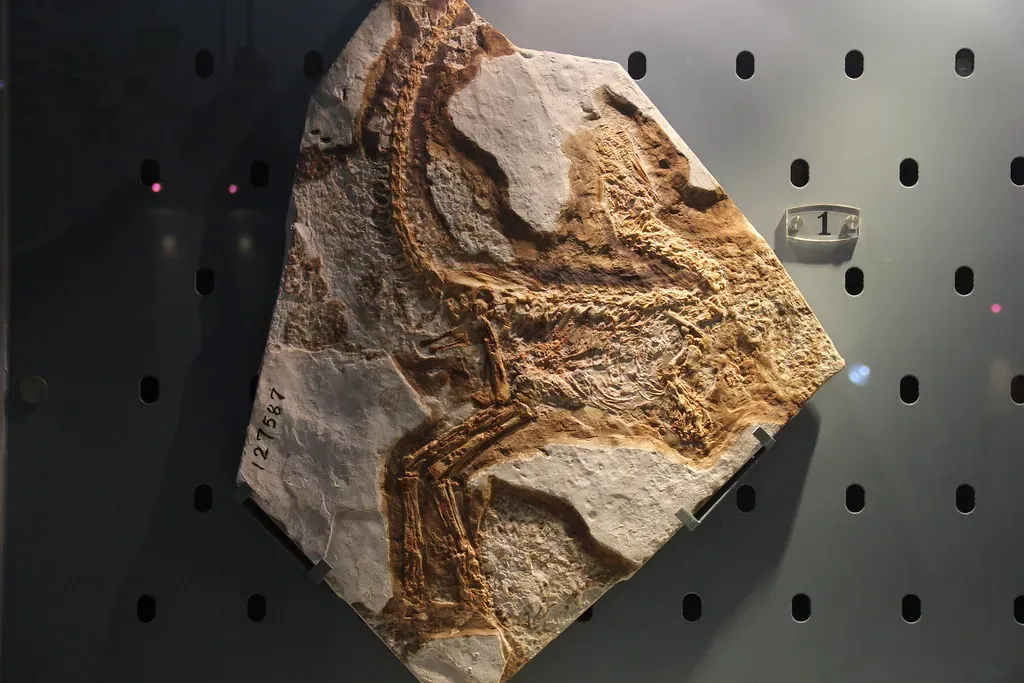
For a long time, you were probably told dinosaurs were giant, scaly reptiles. The discovery of Sinosauropteryx in China in the 1990s helped blow that idea apart. This small, carnivorous dinosaur was preserved with a halo of filamentous structures along its back and tail – early feathers. Later studies even suggested patterning that hinted at banded coloration, meaning you’re not just imagining a scaly lizard but a fuzzy, possibly striped little predator.
For you, Sinosauropteryx is a turning point: it shows that feathers didn’t appear suddenly in fully flying birds. Instead, they likely started as simple filaments used for insulation, display, or both, well before true flight evolved. Once you accept that, it becomes easier to see birds and non‑avian dinosaurs as part of a continuous spectrum rather than two separate worlds. The next time you watch a bird fluff its feathers or flash its colors, you can imagine the deep evolutionary roots of that behavior stretching all the way back to animals like this one.
8. The First Trilobites: Armored Pioneers of Complex Ecosystems
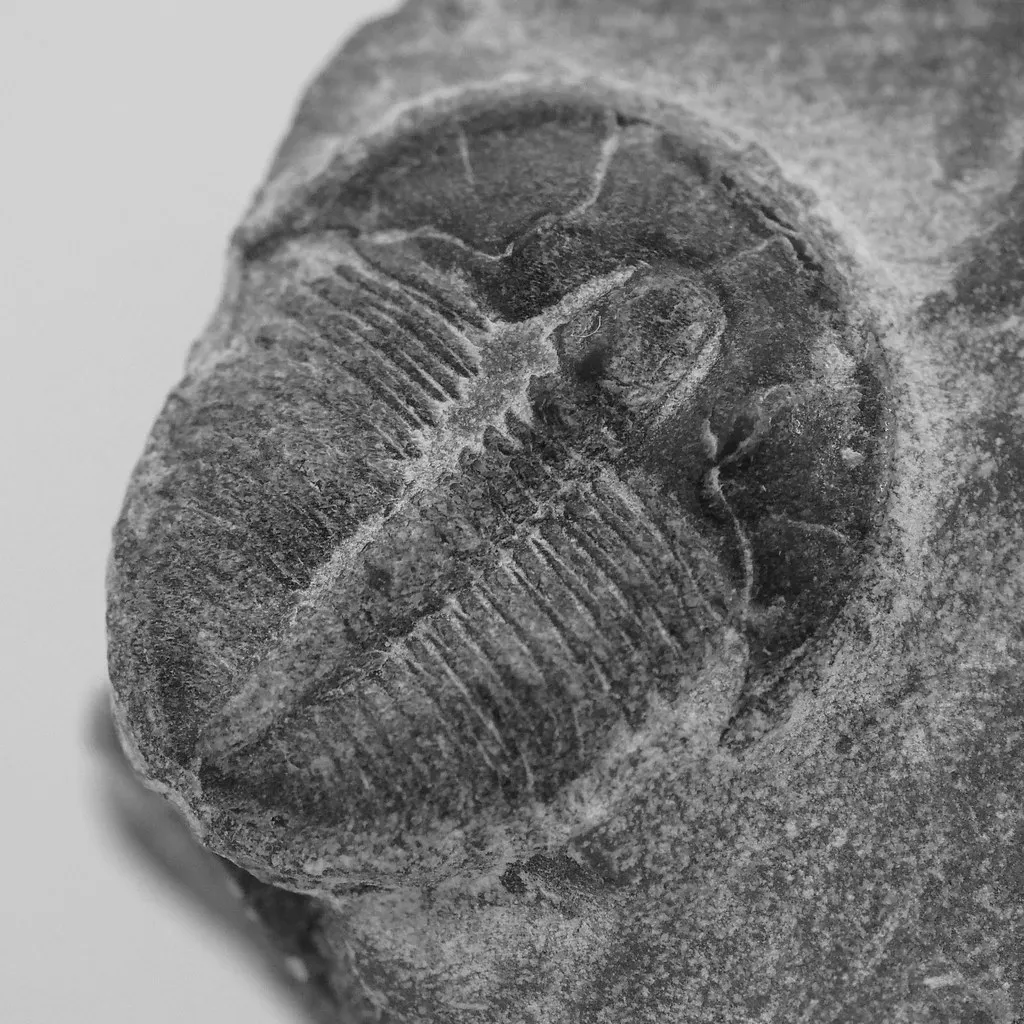
Trilobites might not look as dramatic as a dinosaur skeleton, but if you want to understand how early animal life organized itself, you need to spend time with them. These hard‑shelled arthropods show up early in the Paleozoic era and quickly diversify into a remarkable variety of shapes and lifestyles. Their mineralized exoskeletons fossilize beautifully, giving you layer upon layer of detailed records that track their rise, spread into different habitats, and eventual decline.
For you, trilobites are like timestamps in stone. Their rapid evolutionary changes and wide distribution help geologists and paleontologists date rock layers across continents. Beyond that, their complex eyes, varied body forms, and ecological roles tell you that sophisticated ecosystems – with predators, scavengers, and countless niches – were already in place very early in animal history. Instead of picturing ancient seas as simple and empty, you can imagine bustling communities where trilobites crawled, burrowed, and swam through landscapes every bit as dynamic as modern reefs.
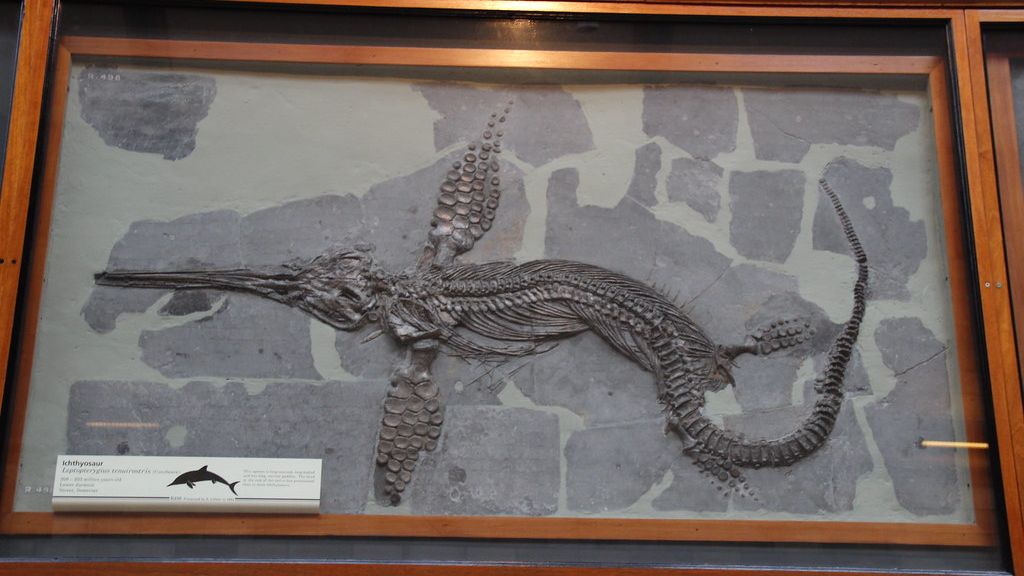
9. The First Ichthyosaur Skeletons: Reptiles That Became Dolphin-Like Swimmers
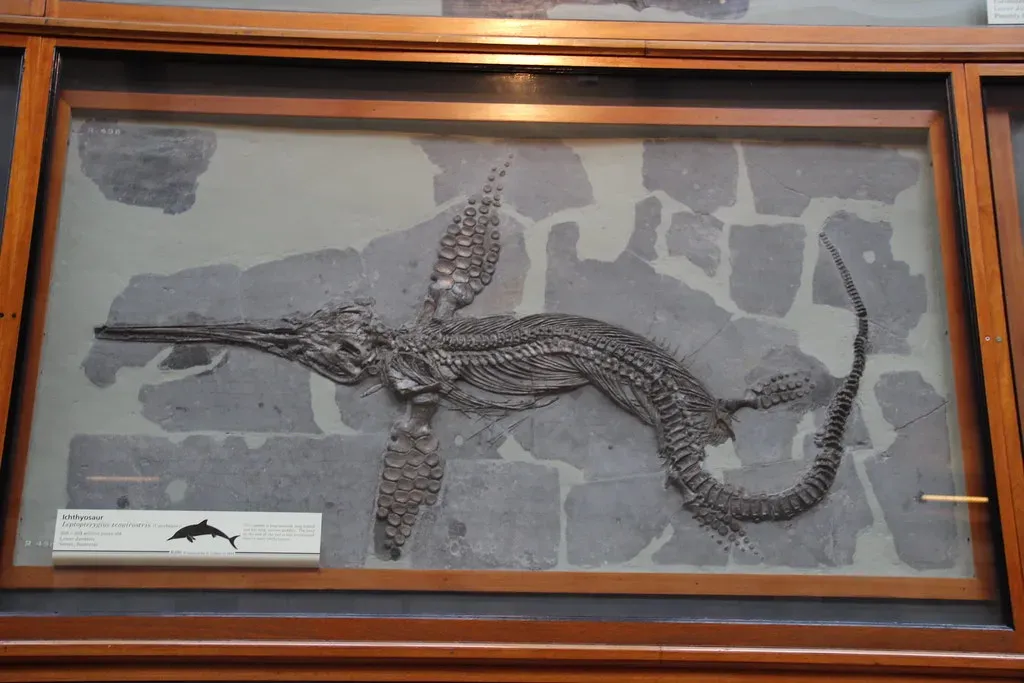
When early fossil hunters pulled long‑snouted, paddle‑limbed skeletons out of the rocks in Europe, they did not slot neatly into anyone’s mental filing cabinet. These were ichthyosaurs – marine reptiles that evolved bodies uncannily similar to modern dolphins and tuna, with streamlined shapes, powerful tails, and big eyes. You’re seeing a reptile lineage that shifted from land to sea and then reshaped itself to thrive in open water, showing you that evolution can solve similar problems in similar ways, even in totally unrelated groups.
For you, ichthyosaurs are one of the clearest, most dramatic examples of convergent evolution: different starting points, similar end designs. They tell you that hydrodynamics matters more than ancestry when you have to move fast through water, and natural selection will often push bodies toward the same aerodynamic compromises. These fossils also remind you that “reptile” does not mean “slow, lumbering, and clumsy.” Some ichthyosaurs were apex predators of their time, hunting in deep oceans, giving birth to live young, and ruling marine ecosystems with a sleek efficiency you can still appreciate today.
10. The Liaoning Fossil Beds: A Whole Ecosystem Caught in Fine Detail
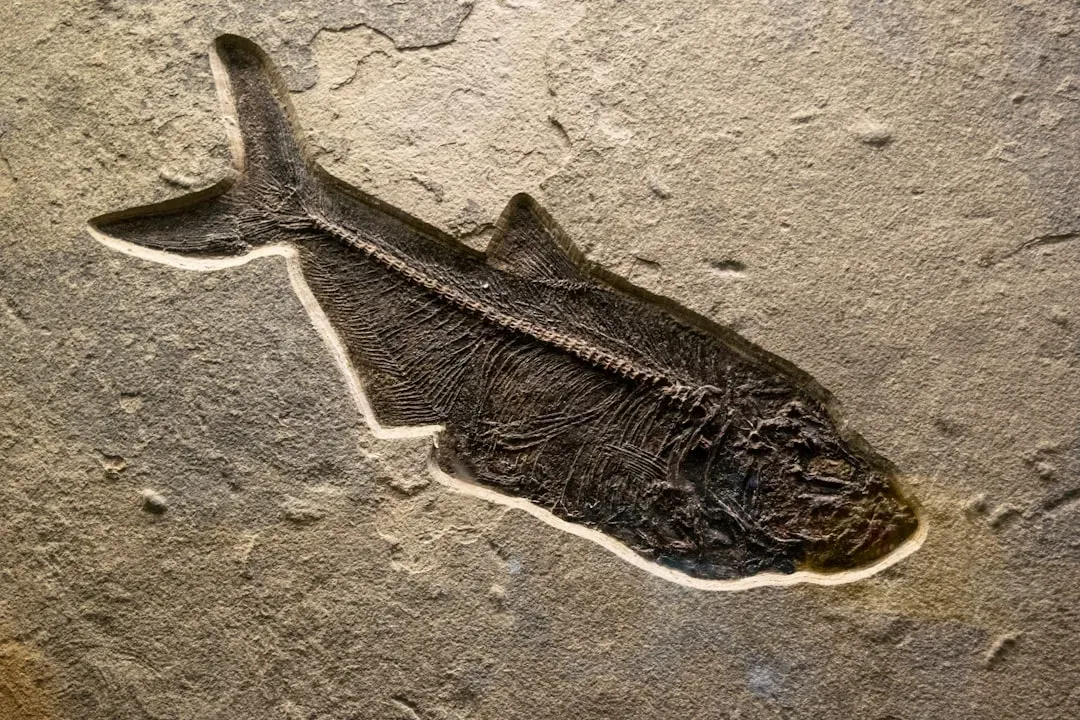
In northeastern China, a series of fossil deposits from the Early Cretaceous has given you something most paleontologists only dream about: an entire ecosystem preserved in astonishing detail. In these fine‑grained volcanic sediments, you find feathered dinosaurs, early birds, mammals, insects, plants, and even traces of soft tissues like skin and internal organs. It’s not just isolated skeletons; it’s an interconnected community frozen in time, from predators to pollinators.
For you, the Liaoning fossils fundamentally reshape how you picture the age of dinosaurs. Instead of a world of bare, scaly giants stomping across empty plains, you now see forests, lakes, and rich undergrowth filled with small, active creatures. Feathered, winged, and gliding forms blur into each other, showing multiple experiments in aerial life, not just a single path to birds. These deposits teach you that your mental image of prehistory should be messy, colorful, and crowded, much closer to a modern ecosystem than an empty, monster‑of‑the‑week stage.
11. Stromatolites: Layered Rocks That Trace Life’s Earliest Breath
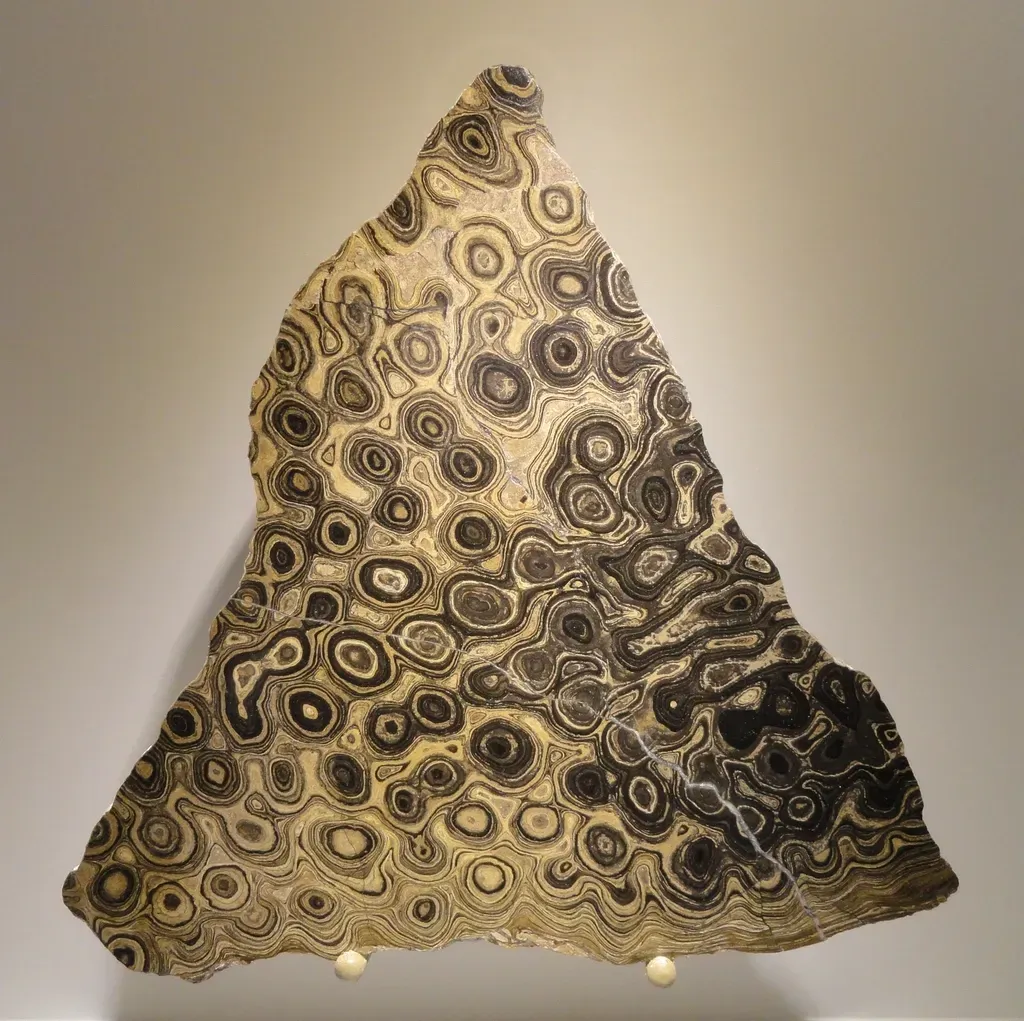
At first glance, stromatolites just look like lumpy layered rocks, the sort of thing you might walk past on a beach without a second glance. But when you learn that many ancient stromatolites were built by mats of microbes – often photosynthetic – you suddenly realize you’re staring at some of the earliest large‑scale evidence of life on Earth, stretching back billions of years. These structures form as sticky microbial communities trap and bind sediments, slowly building domes and columns over time.
For you, stromatolites matter because they help tell the story of how Earth’s atmosphere was transformed. Photosynthetic microbes likely contributed to the long, slow rise of oxygen, a change that paved the way for the complex animals and plants you take for granted. Without tiny organisms building up layered mounds in ancient shallow seas, you might not have breathable air today. The next time you think of fossils, it’s worth remembering that the most important ones are not always the most dramatic skeletons – they can be quiet, layered witnesses to planetary‑scale change.
Conclusion: Seeing Yourself in Stone
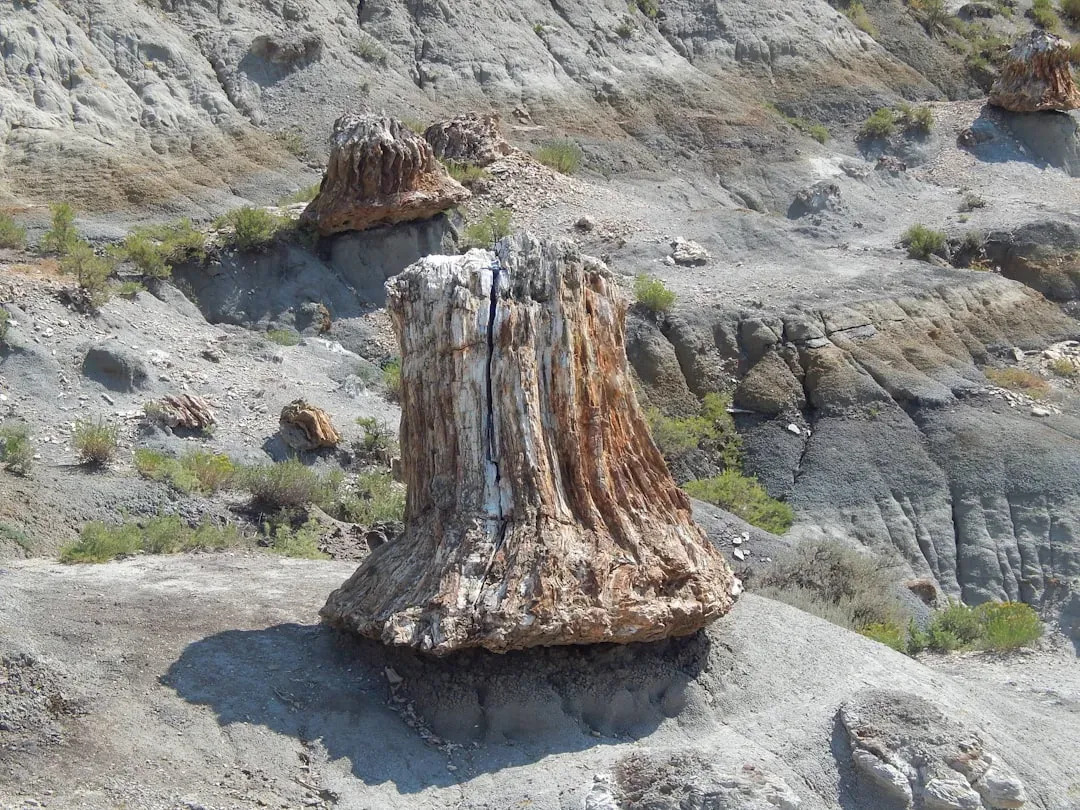
When you pull all these fossils together – feathered dinosaurs, fish with wrists, small‑brained hominins with puzzling behavior, and microbial mounds that helped oxygenate the planet – you start to see a pattern. Prehistoric life is not a straight line marching toward you; it’s a tangled, branching story full of experiments, dead ends, and unlikely survivors. You’re not standing at the top of a ladder, you’re perched on one thin twig of a huge, ancient tree.
If you let them, these fossils can change more than your trivia knowledge; they can reshape how you see your place in the world. Your bones echo designs tested in ancient seas, your breath depends on microbial revolutions, and your mind is just one late twist in a long hominin saga. The rocks are not just about the past – they’re a mirror held up to you in the present. Knowing that, how can you look at a fossil, a bird, or even your own hand the same way again?