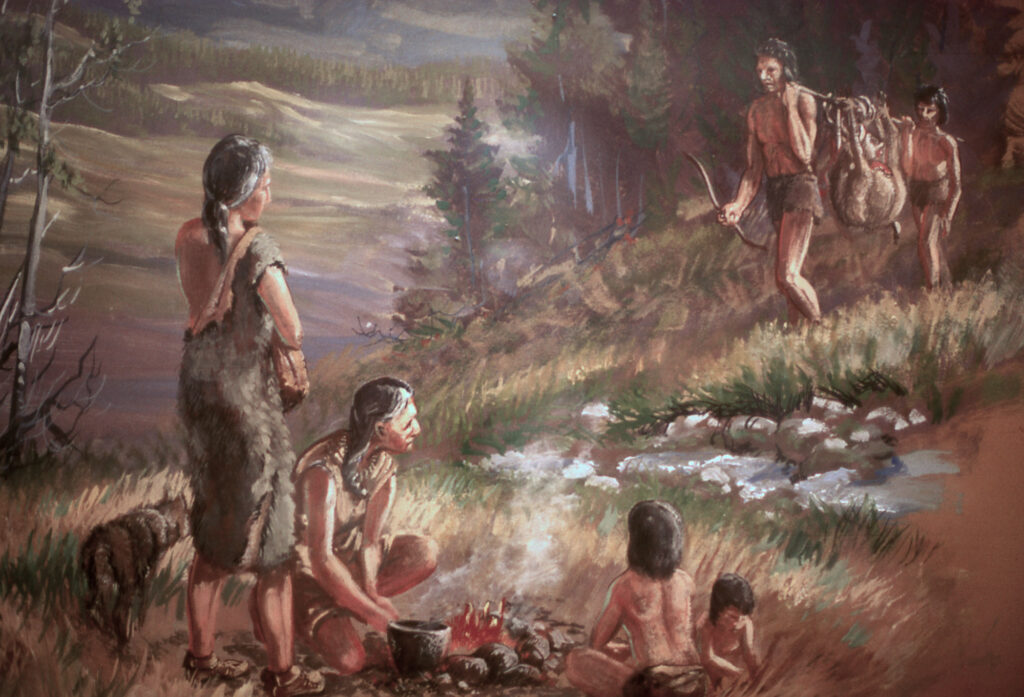
Picture a world where stepping outside your camp meant a possible face-to-face encounter with a woolly mammoth, a towering short-faced bear, or a saber-toothed cat snarling from the treeline. That was the daily reality for the earliest people who walked North America’s vast, ice-age landscape. These were not passive observers. They were resourceful, courageous, and extraordinarily skilled at surviving in one of the most dramatic ecological moments in Earth’s history.
Paleo-Indians lived alongside and hunted many now-extinct megafauna, with most large animals across the Americas becoming extinct towards the end of the Paleo-Indian period as part of the Late Pleistocene megafauna extinctions. The story of who these people were, how they lived, and what the animals around them looked like is one of the most compelling chapters in human prehistory. Let’s dive in.
1. The Clovis People: Mammoth Hunters of the Ice Age
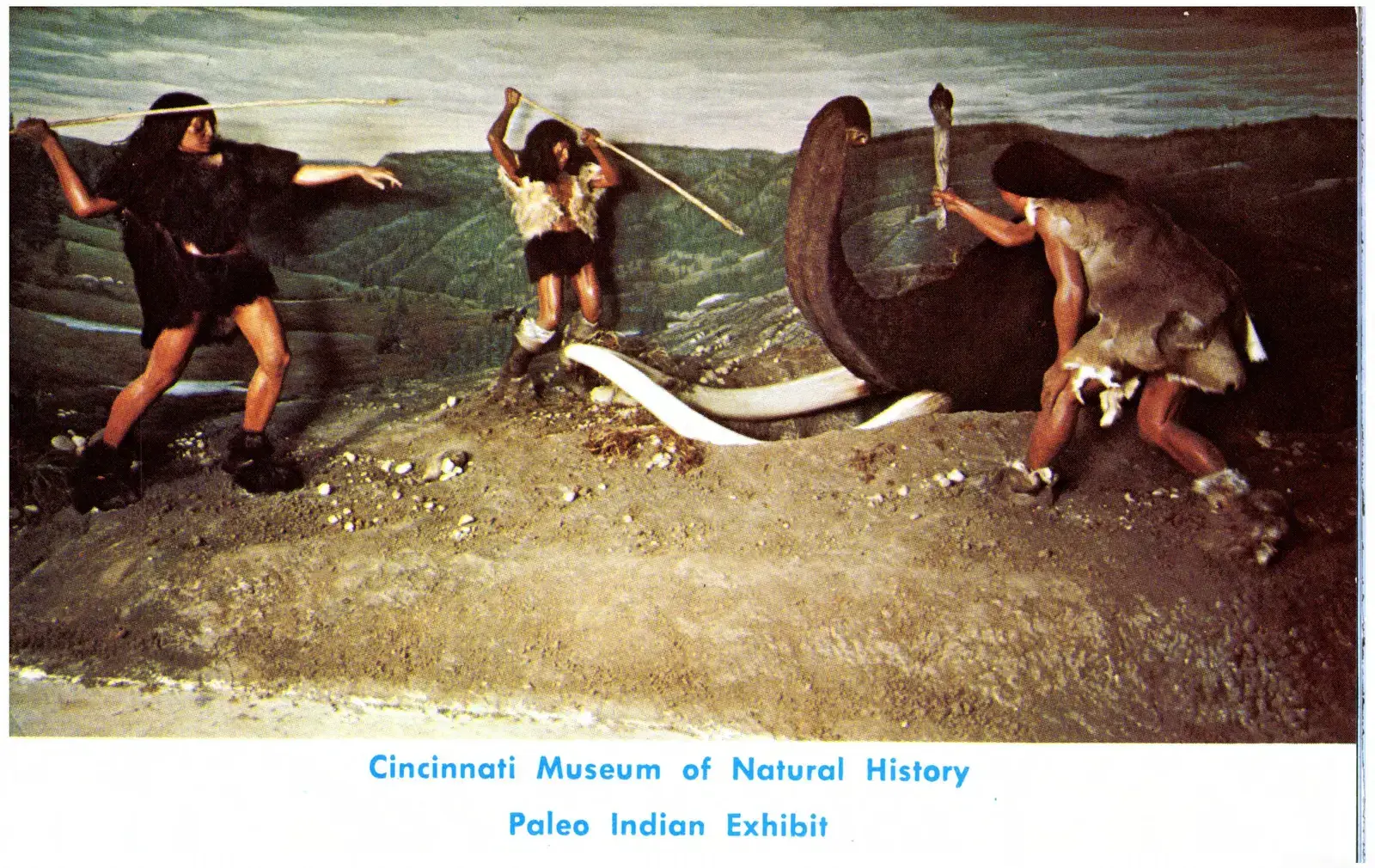
Record in source catalog
DPLA identifier: 261459b634270dcc3b4d0e7c8692018c
Columbus Metropolitan Library identifier: Cincinnati00258, No restrictions)
If you had to name one ancient culture that has captured the imagination of archaeologists more than any other, it would be the Clovis people. The Clovis culture is an archaeological culture from the Paleo-Indian period of North America, spanning around 13,050 to 12,750 years Before Present. Their iconic stone tools, found across an enormous geographic range, tell the story of a people on the move.
Clovis peoples had a particularly strong association with mammoths, and to a lesser extent with mastodon, gomphothere, bison, and horse; they also consumed smaller animals and plants. Honestly, the scale of their reliance on these giants is staggering. Researchers have uncovered the first direct evidence that the Clovis people, a prehistoric group who lived in North America around 13,000 years ago, primarily relied on mammoths and other large animals as their main food source. A study published in Science Advances used advanced isotopic analysis to reveal that these ancient humans relied heavily on mammoths and other large animals for sustenance.
The Clovis people likely travelled long distances following the mammoths’ migration routes, helping to explain how they “could spread throughout North America and into South America in just a few hundred years.” Think of the mammoth as a walking, breathing supply depot. Meat, fat, bone, hide – one animal could sustain a band for weeks.
2. The Folsom People: Precision Hunters of Giant Bison
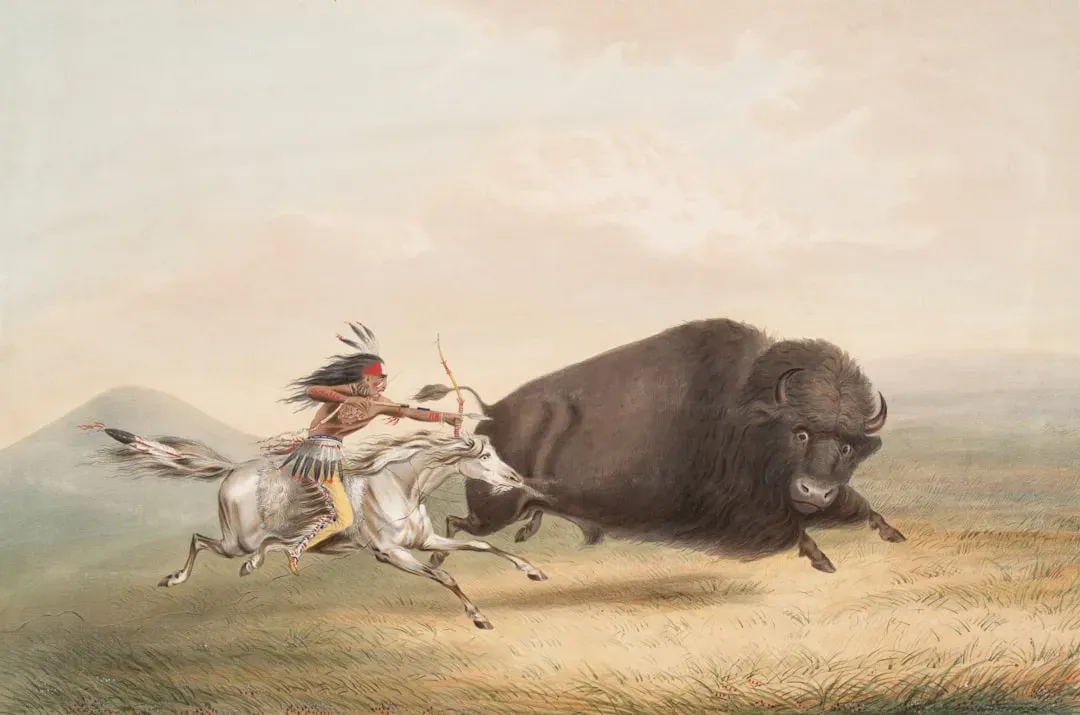
Following the Clovis era came a culture no less extraordinary. The Folsom people entered the scene with a different kind of mastery. The Folsom culture was a highly specialized group of Paleo-Indian hunter-gatherers who roamed the vast, ice-age grasslands of North America between approximately 12,800 and 12,000 years ago. Their signature stone projectile points were marvels of craftsmanship, smaller and more refined than Clovis points.
The Folsom people were, above all, specialized bison hunters. Their primary prey was Bison antiquus, a formidable animal standing up to eight feet tall at the shoulder and weighing over 2,000 pounds, significantly larger than modern bison. Folsom kill sites, found predominantly across the Great Plains and the Rocky Mountain foothills, reveal a sophisticated approach to hunting. These sites often contain the remains of dozens, sometimes hundreds, of bison, indicating large-scale communal hunts. Strategies likely included driving herds into natural traps such as arroyos, box canyons, or over cliffs.
Alongside Bison antiquus, the Folsom people shared their landscape with other now-extinct giants: mammoths, mastodons, camels, horses, and saber-toothed cats. The discovery of a painted bison skull at the Cooper site in Oklahoma, marked with a red ochre lightning-bolt symbol, hints at a rich ritual life connecting these people deeply to the animals they hunted. That’s not just survival – that’s reverence.
3. The Pre-Clovis Peoples: The Mysterious First Wave
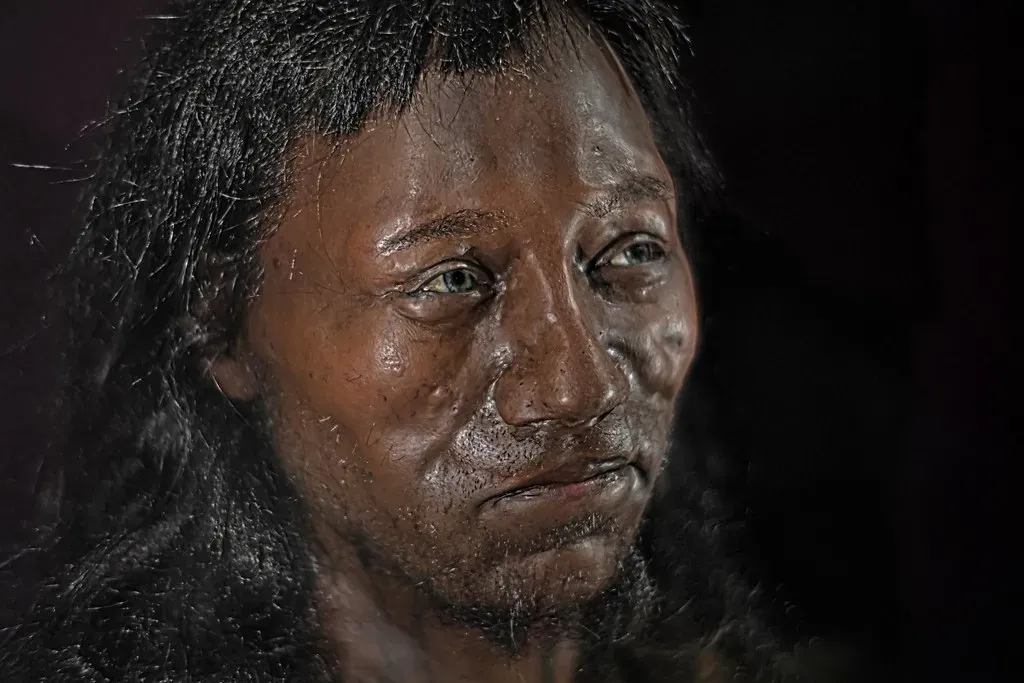
Here’s the thing: the Clovis people may not have been the first. The idea of pre-Clovis inhabitants is one of the most hotly debated topics in North American archaeology today. Scholars group Paleo-Indians into two distinct traditions: the Clovis, Folsom, and related cultures of the North American interior; and the pre-Clovis cultures, whose distribution is emerging through contemporary research. What we know about these earliest arrivals is tantalizing but incomplete.
All the Paleo-Indian groups lived in a relatively dynamic landscape that they shared with Pleistocene flora and fauna, most notably with megafauna such as mammoths, mastodons, giant bison, giant ground sloths, sabre-toothed cats, and short-faced bears. The most generally accepted theory is that Ancient Beringians moved when sea levels were significantly lowered due to the Quaternary glaciation, following herds of now-extinct Pleistocene megafauna along ice-free corridors. These populations expanded south of the Laurentide Ice Sheet and spread rapidly southward, occupying both North and South America no later than 14,000 years ago, and possibly before 20,000 years ago.
Imagine entire generations of people quietly threading through a frozen continent, leaving almost no trace. It’s a humbling thought. These shadowy pre-Clovis peoples walked a world teeming with megafauna that had never seen a human predator before.
4. The Goshen Complex: Transitional Hunters of the Northern Plains
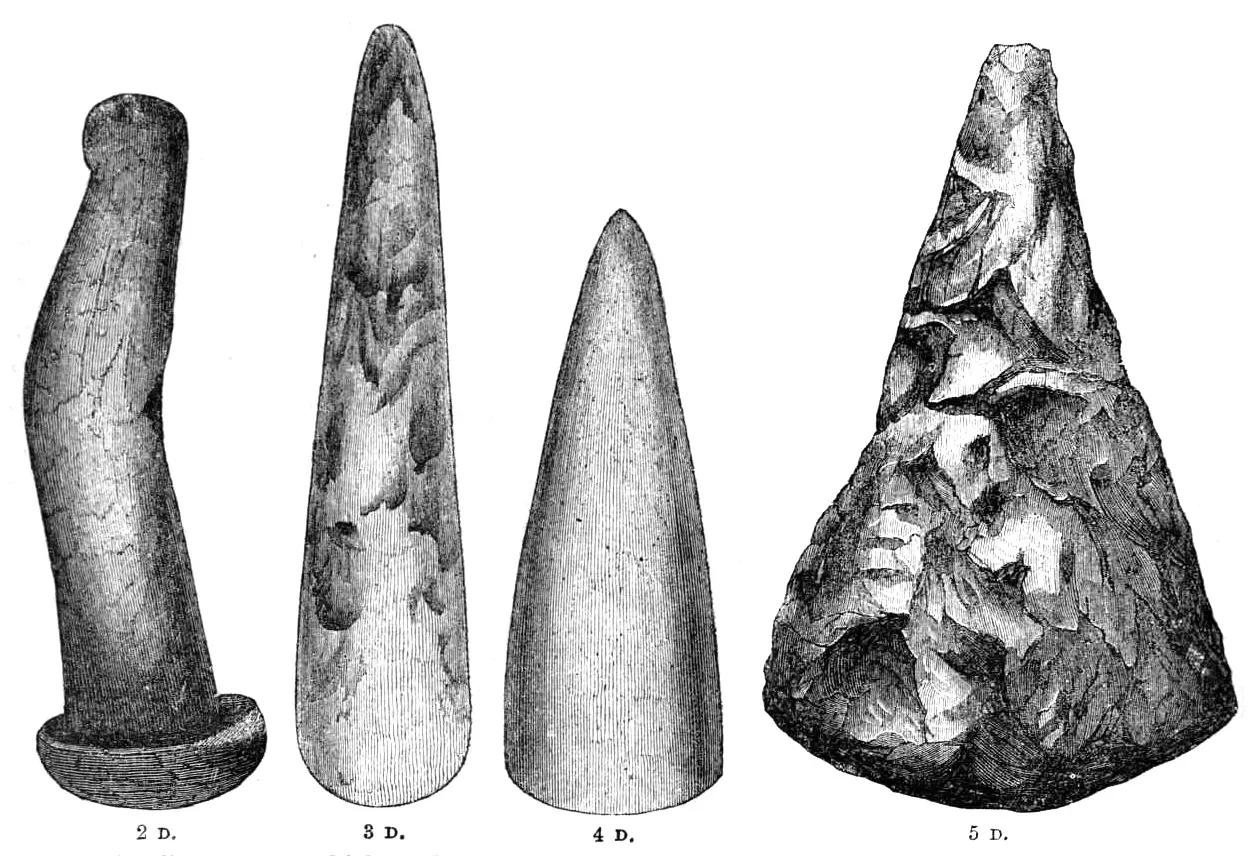
Sandwiched between the Clovis and Folsom traditions in both time and geography, the Goshen Complex is often overlooked – but it deserves your attention. Goshen was first recognized at the Hell Gap site in southeast Wyoming and better defined at the Mill Iron site in southeast Montana. It may have been contemporaneous with late Clovis and early Folsom and also may have been a direct precursor of the latter. This makes the Goshen people a crucial link in the chain of early North American cultures.
Seven cultural complexes – Clovis, Goshen, Folsom, Agate Basin, Hell Gap, Alberta, and Cody, from oldest to youngest – comprise the known Northern Plains Paleo-Indian cultural groups from approximately 11,200 years to 9,000 years before present. The Goshen people lived at a time when the megafauna were still present but already declining. They occupied a shifting, uncertain world and adapted accordingly. Their projectile point style was distinct, pointing to a cultural identity all their own.
5. The Agate Basin Complex: Bison Hunters With Tactical Brilliance
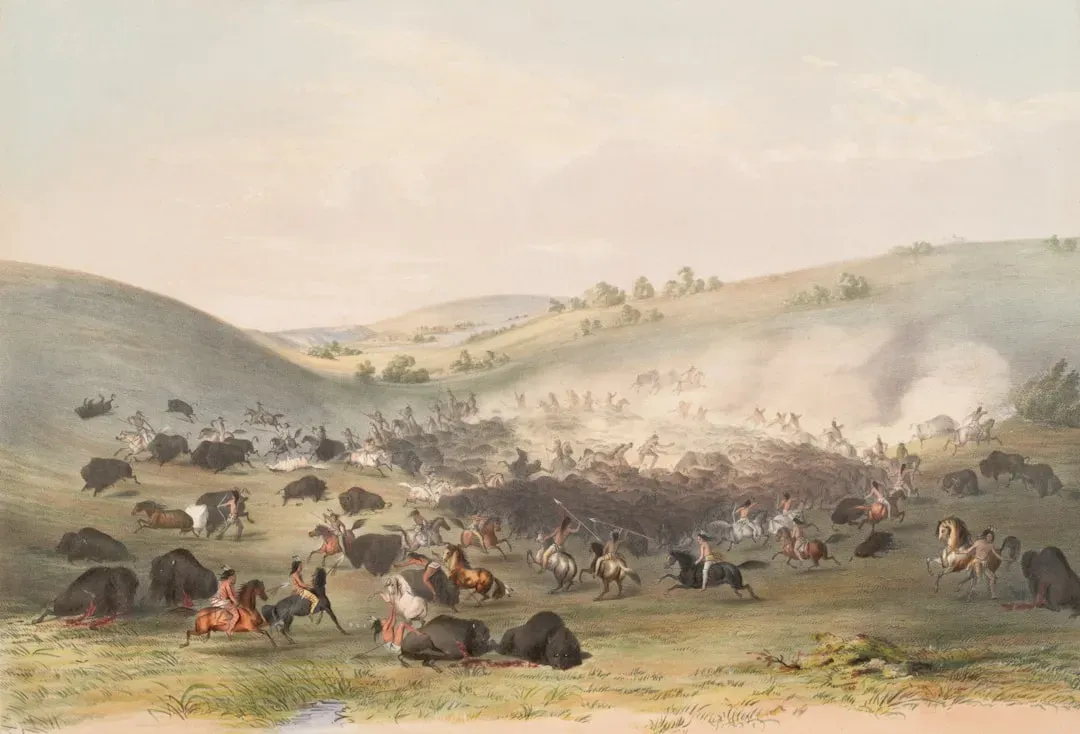
If you want to talk about tactical intelligence in hunting, the Agate Basin people deserve serious credit. Overlapping with Folsom is the Agate Basin complex, as defined by the bison kill site of this name in east central Wyoming. These hunters were deeply adapted to the challenges of taking down enormous prey on the open plains, and they got inventive about it.
Bison at the Agate Basin site were killed during the winter, and, from the configuration of the bonebed, it appears that the animals were cut into large units and frozen. The hunters then camped at the site and utilized most of the meat, but some was abandoned as the result of warm weather spoilage. Ritual activity is difficult to interpret from the archaeological record, but we do know from ethnographic studies that prehistoric hunters recognized a special relationship between themselves and the spirits of the animals. The underlying theme was that failure to pay proper respect to the animals caused the animal spirits to deny their availability to the human hunters. It’s hard not to find that profound.
6. The Plano Cultures: Engineers of the Megafauna Hunt
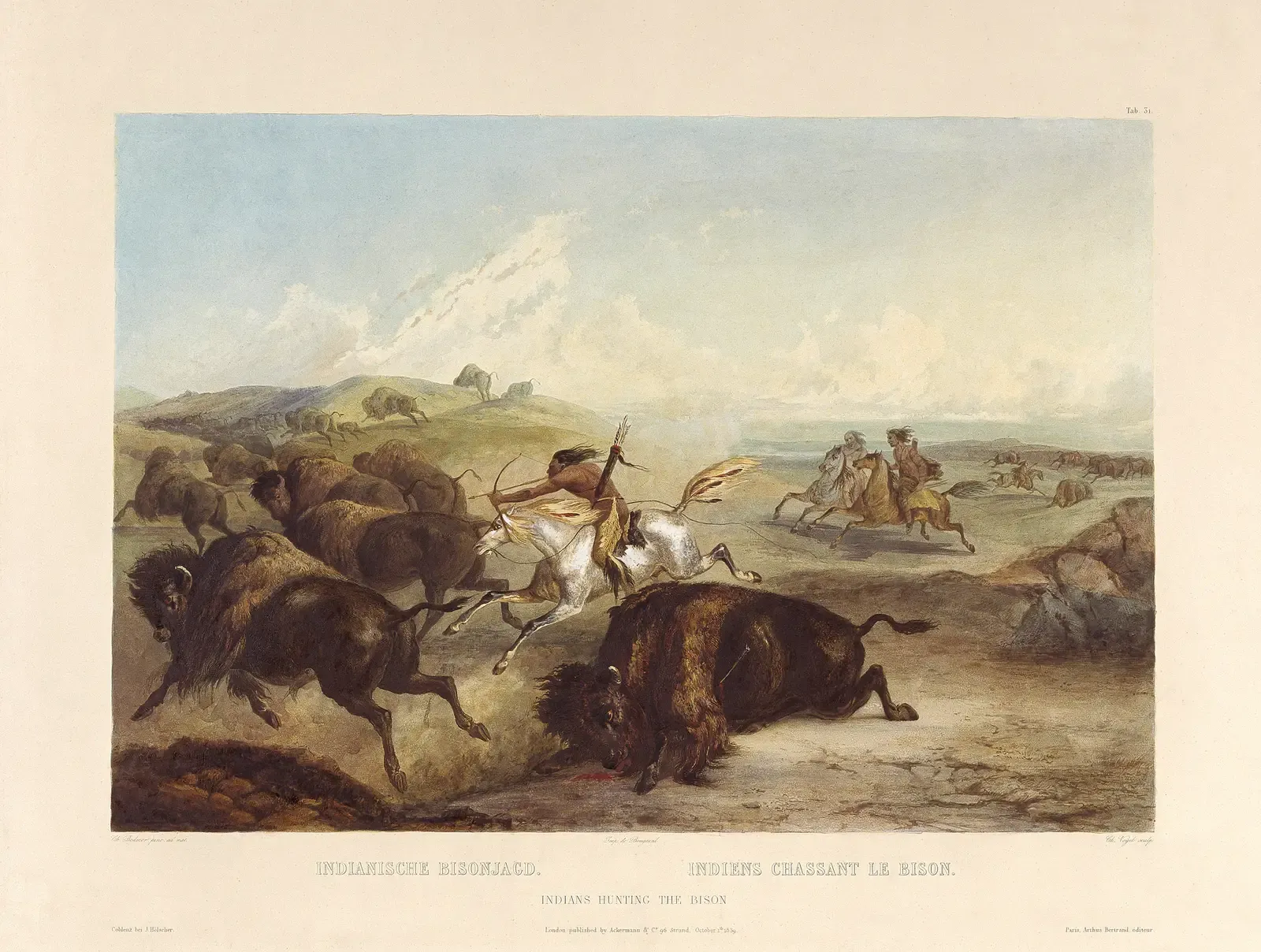
The Plano cultures represent a fascinating evolution in how early people dealt with the giant animals around them. The Plano cultures is a name given by archaeologists to a group of disparate hunter-gatherer communities that occupied the Great Plains area of North America during the Paleo-Indian or Archaic period. They are characterised by a range of unfluted projectile point tools collectively called Plano points and, like the Folsom people, generally hunted Bison antiquus, but made even greater use of techniques to force stampedes off of a cliff or into a constructed corral.
The Plano people developed organized hunting techniques, such as driving bison into natural traps, which highlights their adaptation to the emerging grassland ecosystems. Plano Culture is noted for its significant reliance on big-game hunting, particularly of bison and caribou, alongside the use of grinding tools that indicate a more varied diet including grains. To better manage their food supply, they preserved meat in berries and animal fat and stored it in containers made of hides. That is essentially early food science, and it’s remarkably clever.
7. The Lindenmeier People: Artists and Hunters of Colorado
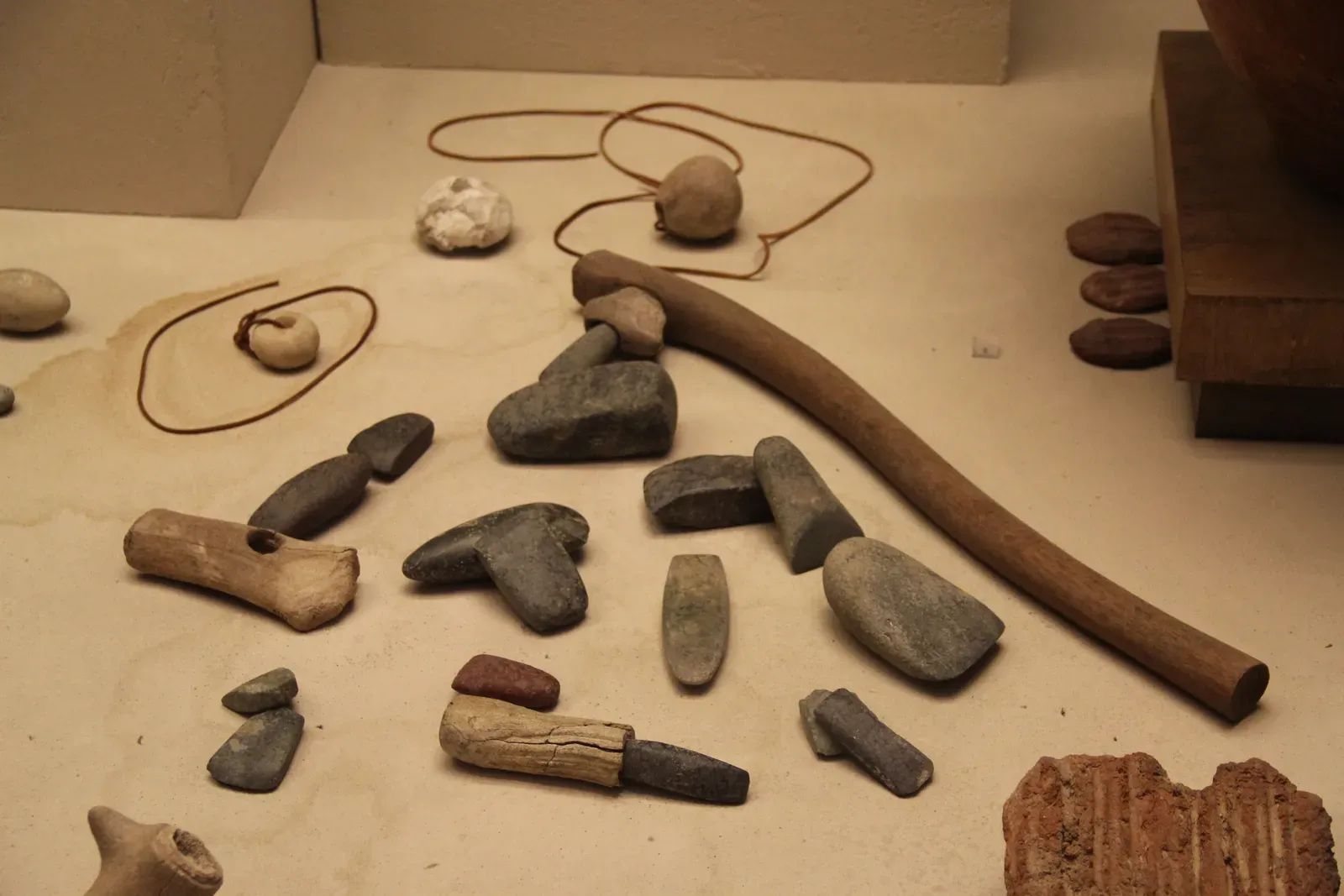
There is a site in northern Colorado that revealed something extraordinary about Paleo-Indian life – not just hunting, but culture. The volume and variety of artifacts indicate that the Lindenmeier site was a residential campsite, the oldest site of its kind found of the people of the Folsom tradition. While bison were the mainstay of the hunter’s diet, an ancient camel bone was found near a bison kill site. Camels in Colorado. Let that sink in.
The tools and artifacts at the Lindenmeier Site shed insight into the life of these Paleo-Indians: they created many types and shapes of tools, including spearheads and wedge-shaped scrapers, which were essentially identical to the tools of the north Paleo-Indians of central Alaska. Scored pieces of hematite were used to extract red ochre for rouge or red paint for their faces. Round discs of one to two inches in diameter were found with indented rims, designs and highly polished – the oldest form of Paleo-Indian artwork found in Colorado. These were not just hunters. They were artists, too.
8. The Cody Complex: Organized Slaughterers of the Plains
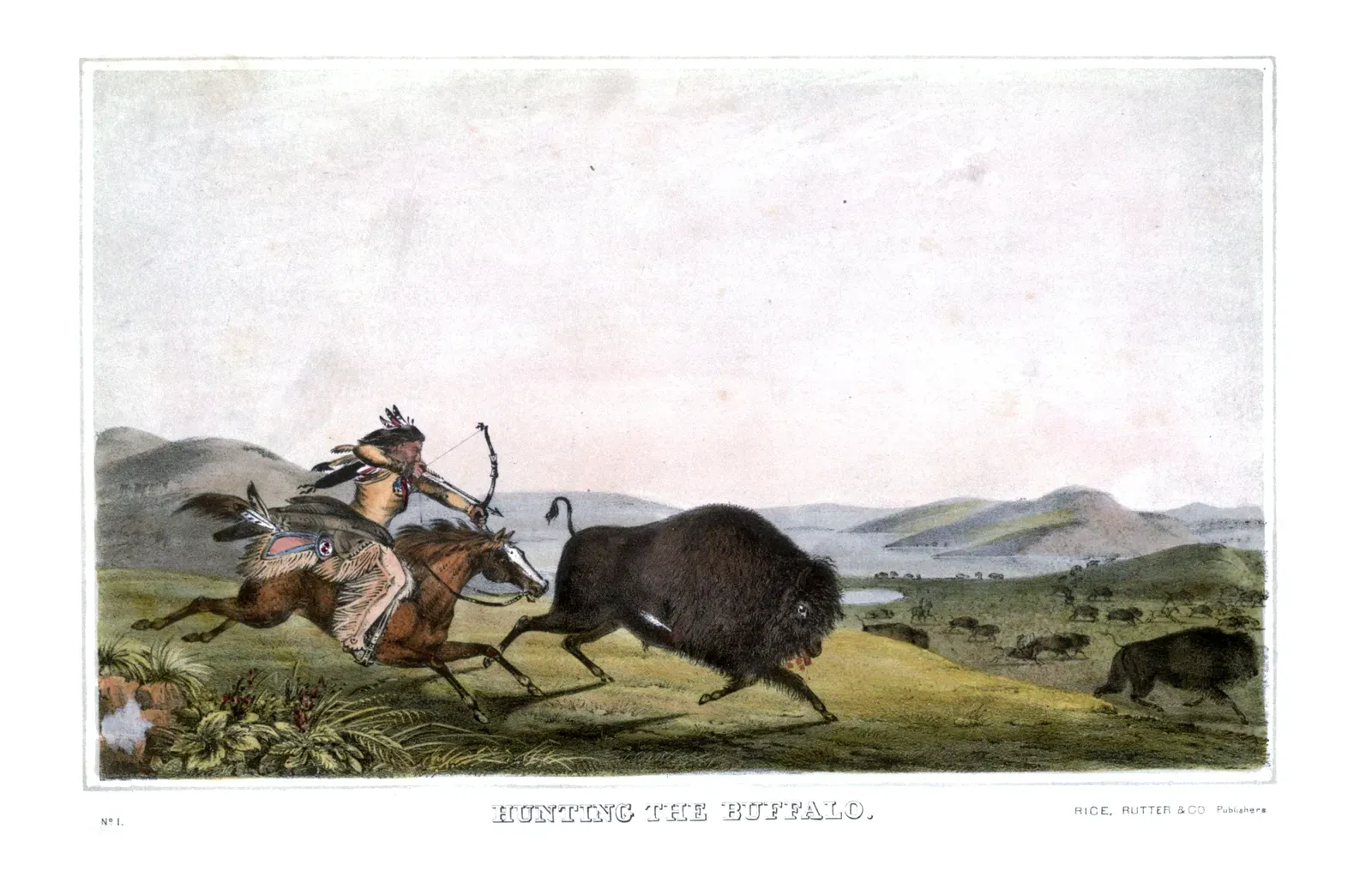
The Cody Complex is associated with some of the most dramatic megafauna kill sites ever discovered in North America. The Cody complex, named for the Horner site near Cody, Wyoming, includes the Olsen-Chubbuck Bison Kill Site and the Jurgens Site. The scale of these kills tells you something important about how organized and socially cohesive these groups were.
Large hunts, which provided abundant supplies of meat, may have required the cooperative efforts of several bands working together. At Olsen-Chubbuck, a site in eastern Colorado, almost two hundred bison were killed and slaughtered. Bones indicate systematic butchering and selective use of choice animal parts. The Horner site in northeastern Wyoming has evidence of two bison kills spaced approximately a thousand years apart. Bison may have been corralled with drive lines, and excavator George Frison suggests the practice of frozen caching of partially butchered carcasses. This is food management at an impressive scale.
9. The Hell Gap Culture: Survivors on the Edge of Extinction
There is something deeply compelling about a culture that existed right at the cusp of a mass extinction event. The Hell Gap people lived during a period of sweeping ecological change. Seven cultural complexes – including Hell Gap – comprise the known Northern Plains Paleo-Indian cultural groups from approximately 11,200 years to 9,000 years before present. They watched the world around them transform in ways that must have seemed utterly incomprehensible.
The timing and severity of the extinctions varied by region and are generally thought to have been driven by humans, climatic change, or a combination of both. The Bison antiquus, the most important prey animal for these hunters, became extinct about the same time that cultures like theirs evolved into cultures relying on greater dependence on smaller animals and plant foods. It’s a reminder that every food source that disappears forces an adaptation. The Hell Gap people had to adapt fast, or simply vanish from the record.
10. The Dalton Culture: Woodland Hunters at the Megafauna Crossroads
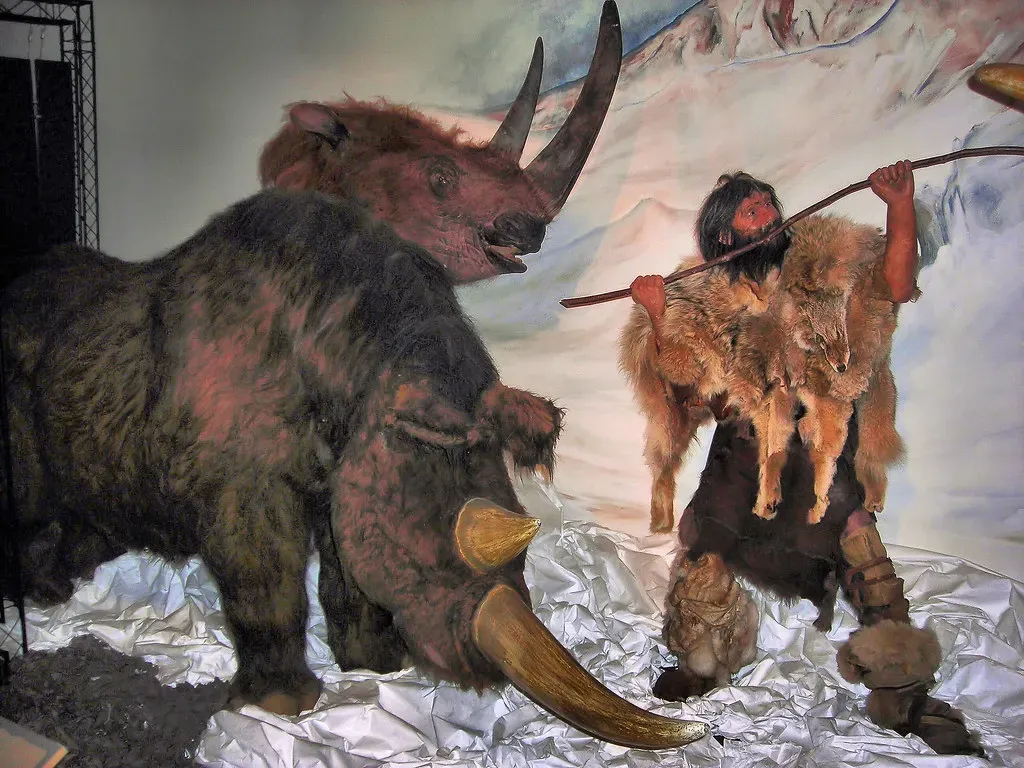
While the iconic Plains hunters dominate most of the megafauna narrative, the Dalton culture deserves equal recognition. Termed Dalton culture, these woodlands inhabitants lived in larger groups, had a more expansive hunting and collecting economy, and may also have had a somewhat more complex society. They occupied the eastern woodlands at a moment when megafauna were still present across the continent, and their broader subsistence strategy set them apart.
An archaeologist has explained how novel applications of forensic methods – namely, blood residue analyses – have yielded evidence that Paleoindians hunted mastodons, mammoths, and other megafauna in eastern North America 13,000 years ago. Results included the first direct evidence on ancient stone tools of the blood of extinct mammoth or mastodon and the extinct North American horse on Paleo-Indian artifacts in eastern North America. This evidence proves that these animals were present and that they were hunted or scavenged by early Paleo-Indians. So yes – even in the forested east, these creatures loomed large in human life.
11. The Ancient Beringians: The Original Megafauna Neighbors
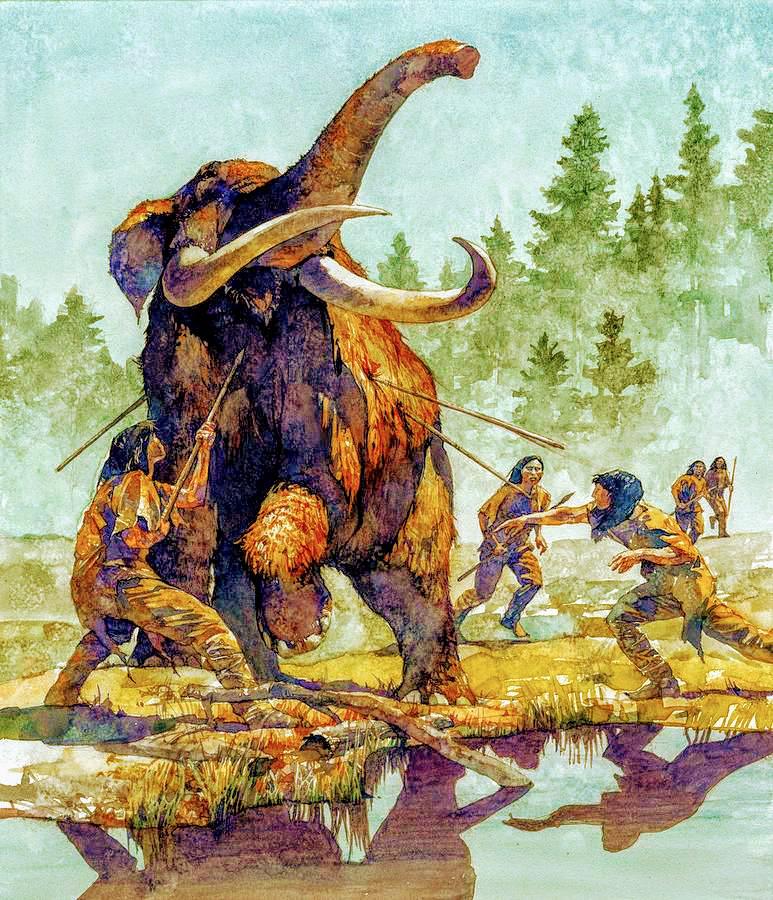
Before any of the named cultural traditions arose, there were the Ancient Beringians – the foundational human wave from which all other North American Paleo-Indian cultures descended. The people who moved into Beringia from Asia relied on hunting and gathering for subsistence and traveled in bands: small, mobile, kin-based groups of people who lived and foraged together. They crossed a land bridge flanked by mammoths and walked straight into a continent full of creatures that had never met a human before.
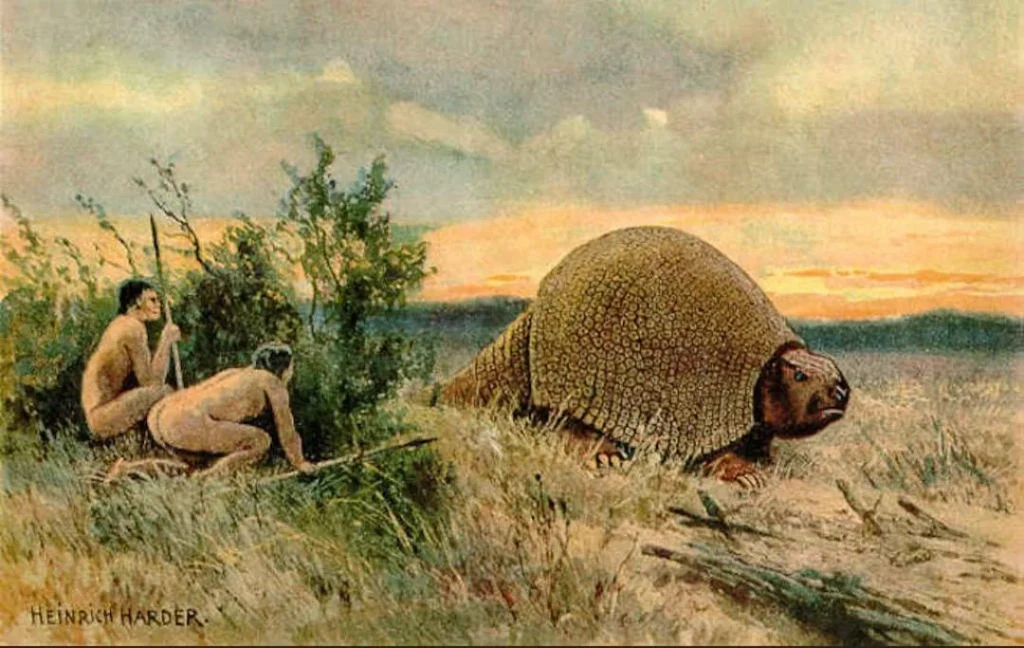
The Pleistocene megafauna must have impressed the humans who lived amongst them. In North America alone the big ones included mammoths, mastodons, dire wolves, saber-tooth cats, camels, glyptodons (armadillos the size of VW Bugs), short-faced bears, and other creatures that now sound like the stuff of science fiction. As George E. Lankford writes, the question of the retention of Pleistocene fauna in Native American folktales has been continually debated by scholars for two centuries. The “Great Beast,” giant elks, and giant bears populated stories from Canada to Florida and westward. These animals were so profound that their memory may have survived in oral tradition for thousands of years after their extinction. That is a legacy unlike almost any other in human history.
Conclusion: A World We Can Barely Imagine
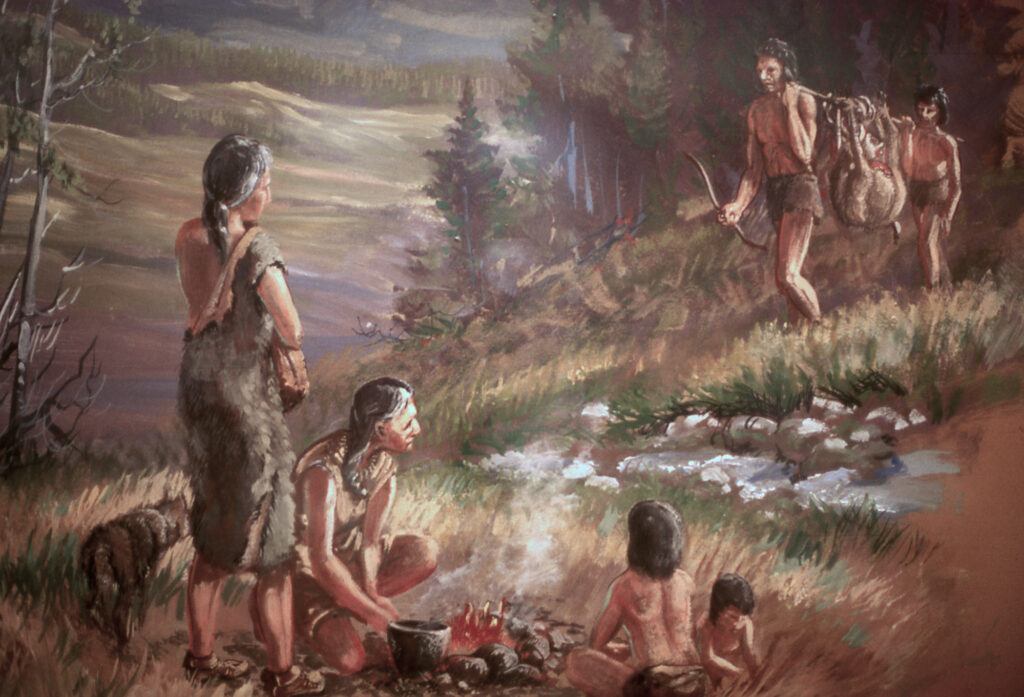
The eleven ancient peoples described here were not primitive survivors stumbling through a hostile world. They were intelligent, adaptive, spiritually rich communities who coexisted with some of the largest and most formidable animals to ever walk the earth. Their diets were often sustaining and rich in protein; clothing was made from a variety of animal hides that were also used for shelter construction. Every part of the megafauna they hunted was used, respected, and in many ways, revered.
During the Late Pleistocene, about 65% of all megafaunal species worldwide became extinct, rising to 72% in North America. The world these tribes knew was erased in what is, geologically speaking, the blink of an eye. Whether human hunting, climate change, or a combination of both caused this collapse remains one of the great open questions of science. What we do know is that these ancient peoples witnessed something no human will ever see again.
Their stories are written not in books, but in stone points, bison bones, and painted skulls buried in the earth. And honestly, that makes them all the more remarkable. What would you have done, waking up each morning in a world full of giants? Let us know your thoughts in the comments below.