

You’ve probably repeated at least three of these “facts” out loud at some point, maybe while narrating your own nature documentary in your head. Lemmings marching off cliffs. Bulls seeing red. Vikings clanking around in horned helmets. They sound like solid, hard-earned science – the kind of line a calm narrator delivers right before a dramatic string swell kicks in. Almost none of it is true, and researchers have known it for years.
Some of these myths were staged on purpose for a camera crew chasing a dramatic shot. Others survived because a single mistranslated study or a 19th-century opera costume got repeated so many times it hardened into “common knowledge.” A couple of them actually caused real damage once people believed them. Here are the 11 documentary staples that scientists quietly stopped repeating – and what they say happened instead.
#1 – The Lemming “Mass Suicide” That Was Staged for a Camera
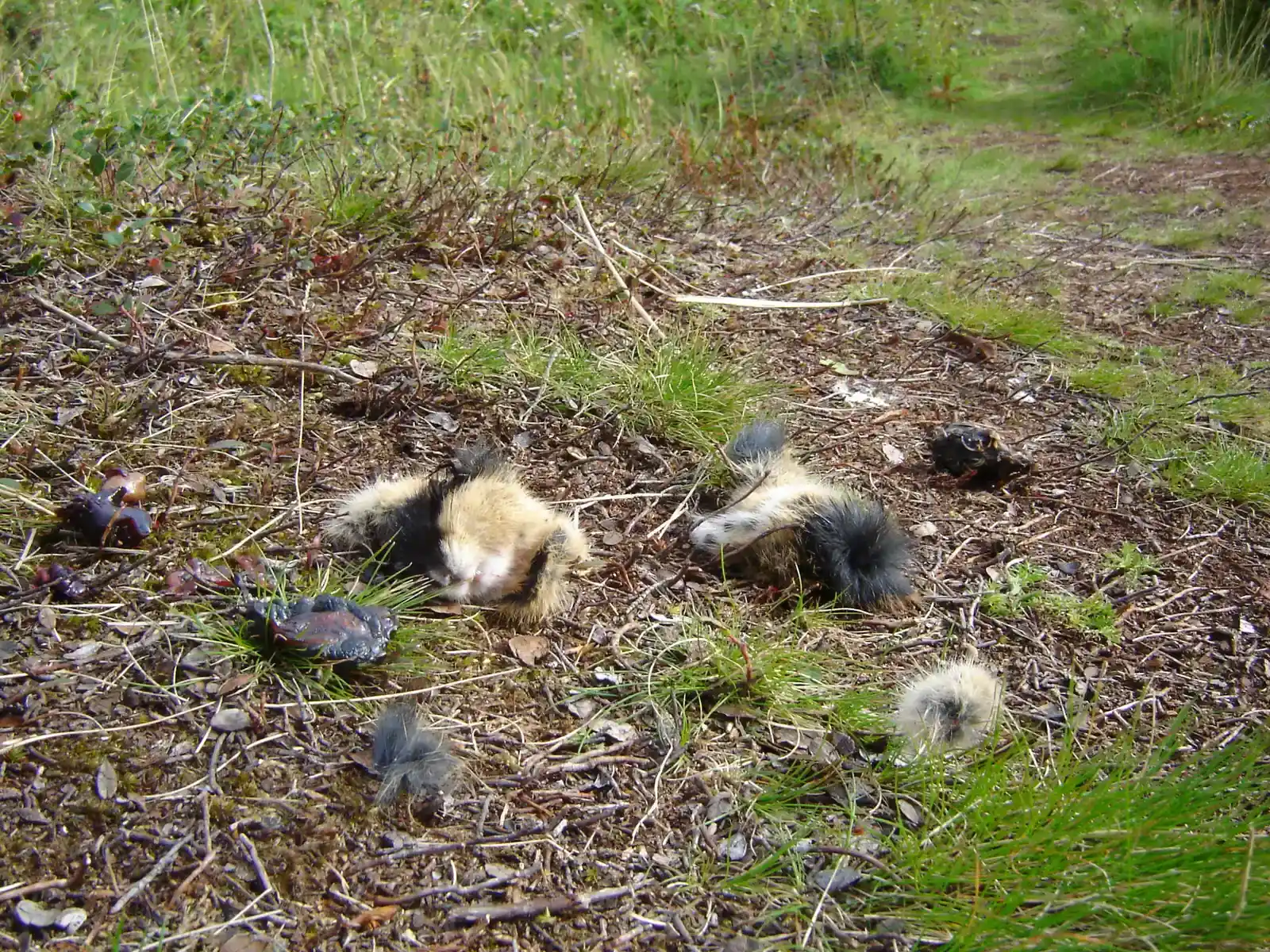
For generations, nature documentaries repeated the same eerie claim: lemmings periodically march to cliffs and hurl themselves into the sea in a mysterious act of collective suicide. It’s one of the most famous “facts” ever broadcast to a mass audience, and it’s completely fabricated.
The infamous scene comes from Disney’s 1958 Academy Award-winning film White Wilderness. It’s one of the most iconic “nature” moments ever put on film, and every second of it was staged. The crew wasn’t even shooting in lemming habitat – lemmings don’t even live in Alberta, Canada, where the film was made, so the production team purchased the animals from Inuit children in Manitoba.
To get the shot, filmmakers built a spinning, snow-covered turntable, jostled the lemmings until they lost their footing, then herded the disoriented animals off a cliff and into a river below. The editing did the rest, turning frightened animals into a myth about mass suicide that outlived the men who staged it.
Fast Facts
- Oscar winner: White Wilderness actually won the Academy Award for Best Documentary Feature in 1958.
- Wrong continent, wrong province: lemmings aren’t native to Alberta, so nothing in the scene was filmed anywhere near real lemming territory.
- Boom-and-bust biology: lemming populations really do spike and crash, but on multi-year cycles driven by food supply and predators, not group psychology.
- Staged, not observed: the animals were physically pushed onto a turntable and then off a riverbank for the cameras.
Here’s the part researchers now emphasize: lemmings can’t even conceptually intend suicide. Wildlife biologists explain the real story is far less dramatic – Disney likely confused dispersal with migration, embellishing a kernel of truth, since lemming populations fluctuate enormously based on predators, food, and climate. When food runs out, they disperse in huge numbers and sometimes drown crossing water, which is an accident, not an instinct.
#2 – Ostriches Don’t Actually Bury Their Heads in the Sand
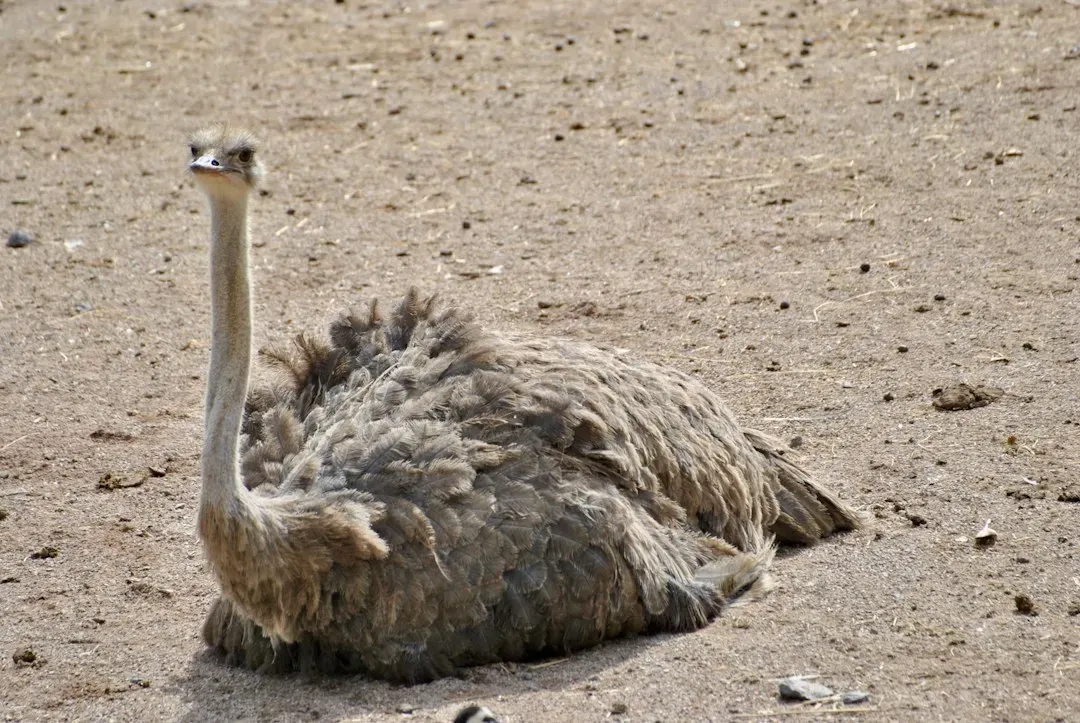
Every cartoon and half the wildlife documentaries made before 2010 repeated this one: when threatened, an ostrich sticks its head in the sand to “hide.” Zoologists have been trying to kill this myth for years, and it turns out the science was wrong from the very beginning – literally from ancient Rome.
Almost every source traces the myth to Pliny the Elder, the Roman naturalist whose Naturalis Historia is often credited with starting the legend. But his original account was distorted over centuries. Pliny actually described ostriches pushing their head and neck into a bush, never mentioning sand or describing it as an effective escape – later writers gradually swapped bushes for sand, turning a loose observation into a vivid story.
What ostriches actually do is far more practical:
- Flatten to the ground and extend their necks to blend into the terrain when they can’t outrun a predator.
- Run, since as the world’s biggest bird, they’re also the world’s fastest two-legged animal, capable of reaching speeds up to 70kph.
- Dig nests, not hiding spots – the “burying” image comes from ostriches digging shallow holes to lay their eggs, with both parents rotating the eggs several times a day.
The myth stuck around because it makes such a good metaphor for denial. Real ostriches, it turns out, are far too busy sprinting away to bother.
#3 – You Are Not Only Using 10% of Your Brain

This one shows up in everything from self-help documentaries to sci-fi thrillers, and neuroscientists have been correcting it for over a century with almost no success. It’s one of the most prevalent misconceptions among the public, and unnervingly, about half of primary and secondary teachers across different cultures still endorse the 10% myth.
The line most likely traces back to a misquote. It’s often incorrectly attributed to 19th-century psychologist William James, who proposed that most of our mental potential goes untapped – but he never specified a percentage. It got turbocharged decades later when the figure showed up in Dale Carnegie’s 1936 book How to Win Friends and Influence People, framed as something the author’s old college professor used to say.
Modern brain imaging tells a completely different story. Functional scans show we use virtually every part of the brain across different cognitive and physiological tasks, often within the same hour. The clearest proof is metabolic: despite making up only 2% of body weight, the brain consumes 20% of the body’s calories – an absurd energy cost for an organ that’s supposedly 90% idle.
We use virtually every part of the brain, and most of the brain is active almost all the time.
Barry Gordon, neurologist, Johns Hopkins School of Medicine
#4 – Vikings Never Wore Horned Helmets
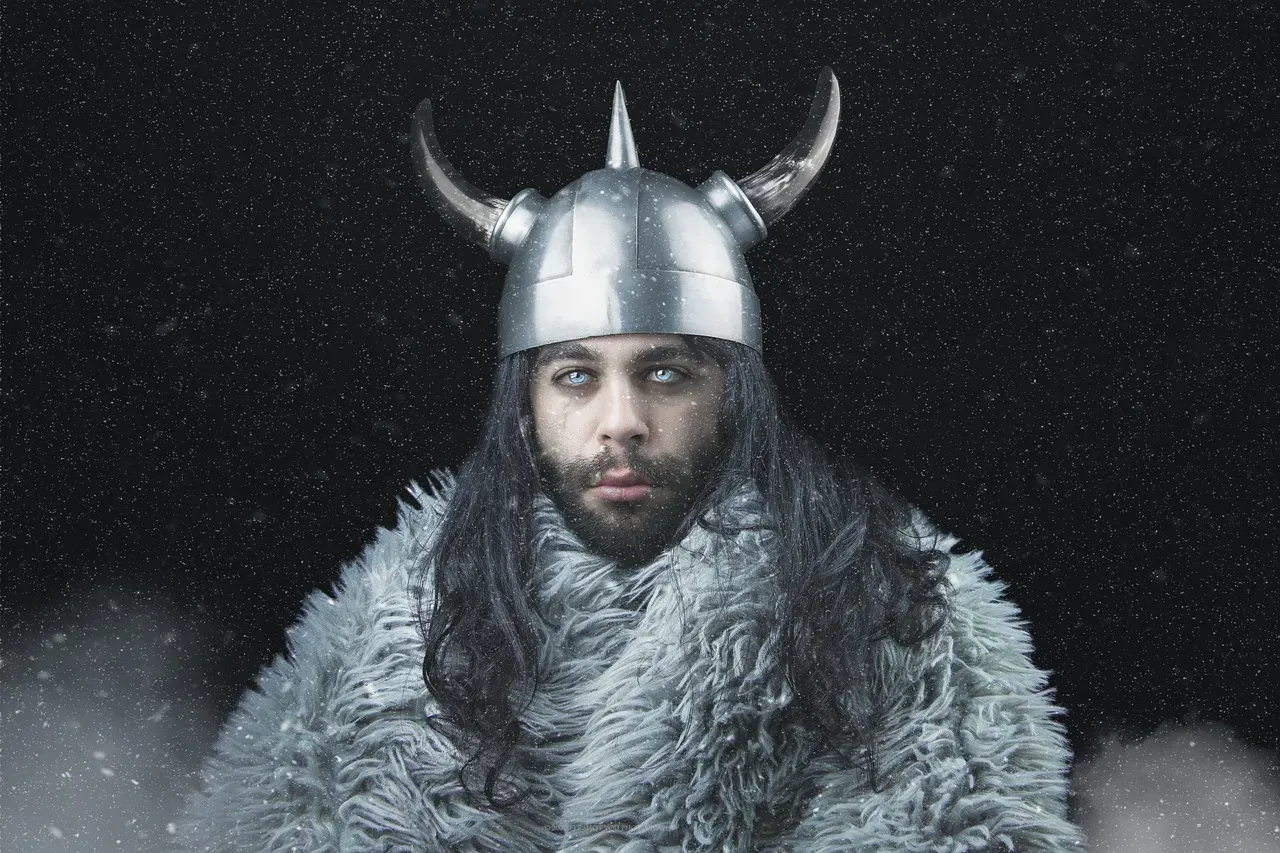
Nearly every history documentary, video game, and Halloween costume gets this wrong, and archaeologists have essentially given up trying to correct pop culture at this point. The reality is almost embarrassingly simple: no Viking-era helmet with horns has ever been found.
Only one near-complete Viking Age helmet has ever been discovered – the Gjermundbu helmet from Norway – and it has no horns. Medieval sources describe simple iron or leather headgear, with no archaeological evidence of horned helmets ever used in battle during the Viking Age.
So where did the image come from? Not history – theater. When Wagner staged his “Der Ring des Nibelungen” opera cycle in the 1870s, costume designer Carl Emil Doepler created horned helmets for the Viking characters, and an enduring stereotype was born on the spot. The design wasn’t even original Norse imagery – Doepler borrowed the horned look from depictions of Native American buffalo headdresses.
It spread fast after that. The Ring Cycle made its American debut at New York’s Metropolitan Opera in 1889, and the horned-helmet imagery quickly bled into 19th-century illustrated histories, children’s books, and consumer goods, until it became easier to believe than the boring iron caps Vikings actually wore.
#5 – The Great Wall of China Is Not Visible From Space

For decades, documentaries about human achievement loved dropping this one as a jaw-dropping closer: the Great Wall of China is the only man-made structure visible from space with the naked eye. It sounds too good to be true because it is.
Astronauts who have actually been to orbit have repeatedly said this isn’t the case. The wall is narrow – often less than 30 feet wide – and made of materials similar in color to the surrounding terrain, which makes it nearly impossible to distinguish from low Earth orbit without magnification. Multiple Chinese and NASA astronauts have gone on record saying they couldn’t spot it unaided, even though other large-scale infrastructure like highways, airports, and city lights is far easier to see because of contrast and reflectivity.
The myth likely persisted because it flattered national pride and made for a great “wow” moment in classroom textbooks and travel documentaries. Researchers who study naked-eye visibility from orbit point out that:
- Visibility depends far more on contrast against the background than on sheer length.
- Structures need to be wide and reflective, not just long, to register from hundreds of kilometers up.
- Photographs taken with zoom lenses from orbit are often mistaken for what the human eye alone could actually see.
The wall is an engineering marvel regardless – it just isn’t the space-visible landmark documentaries claimed for years.
#6 – Goldfish Do Not Have a Three-Second Memory

This one is a personal favorite of pet-store documentaries and sad-goldfish memes alike: goldfish supposedly forget everything within seconds, doomed to “rediscover” their tiny bowl over and over. Fish researchers have quietly moved on from this claim entirely.
Behavioral studies on goldfish and other fish species have repeatedly shown memory retention lasting weeks or even months, not seconds. Goldfish can be trained to recognize feeding schedules, respond to specific colors and sounds, and navigate mazes they’ve previously solved – behaviors that would be impossible with a three-second memory window. Fish farmers have long known that goldfish learn to associate certain triggers, like the sound of a tapping container, with feeding time.
At a Glance
- Trained to push a lever or nose a target to release food in lab experiments.
- Learn to associate a specific sound, like tapping on the tank, with feeding time within days.
- Recognize routines and respond differently to familiar versus unfamiliar handlers over time.
- Retain learned associations for months, not seconds, according to behavioral studies.
The myth likely persists because goldfish are commonly kept in small, unstimulating tanks, which makes their behavior look repetitive and confused rather than memory-impaired. The single most surprising fact: researchers have documented goldfish retaining learned associations for at least five months in controlled studies – proof that the “three-second memory” line was never based on real observation, just convenient assumption.
#7 – Sharks Do Get Cancer

This myth had real-world consequences. Documentaries in the 1990s promoted the idea that sharks are somehow immune to cancer because of their cartilage skeletons, a claim that fueled an entire shark cartilage supplement industry marketed as a cancer treatment.
Marine biologists and oncologists have since documented tumors in multiple shark species, including cancerous growths found in both wild and captive sharks studied by research institutions. The immune-to-cancer claim was never based on a comprehensive survey of shark health – it came from limited, cherry-picked data and a popular book that overstated the findings.
The consequences went beyond misinformation. The myth contributed directly to overfishing pressure on shark populations, as commercial harvesting for cartilage supplements expanded rapidly at the height of the claim’s popularity. Researchers now stress that:
- Sharks are not cancer-proof, though their overall tumor rates appear lower than some mammals.
- Cartilage supplements have shown no proven cancer-treatment benefit in clinical research.
- The myth likely slowed real shark conservation efforts by encouraging harvesting instead of protection.
It’s a rare case where a documentary myth didn’t just mislead audiences – it actively harmed the animal it was supposedly praising.
#8 – Bulls Don’t Charge Because of the Color Red
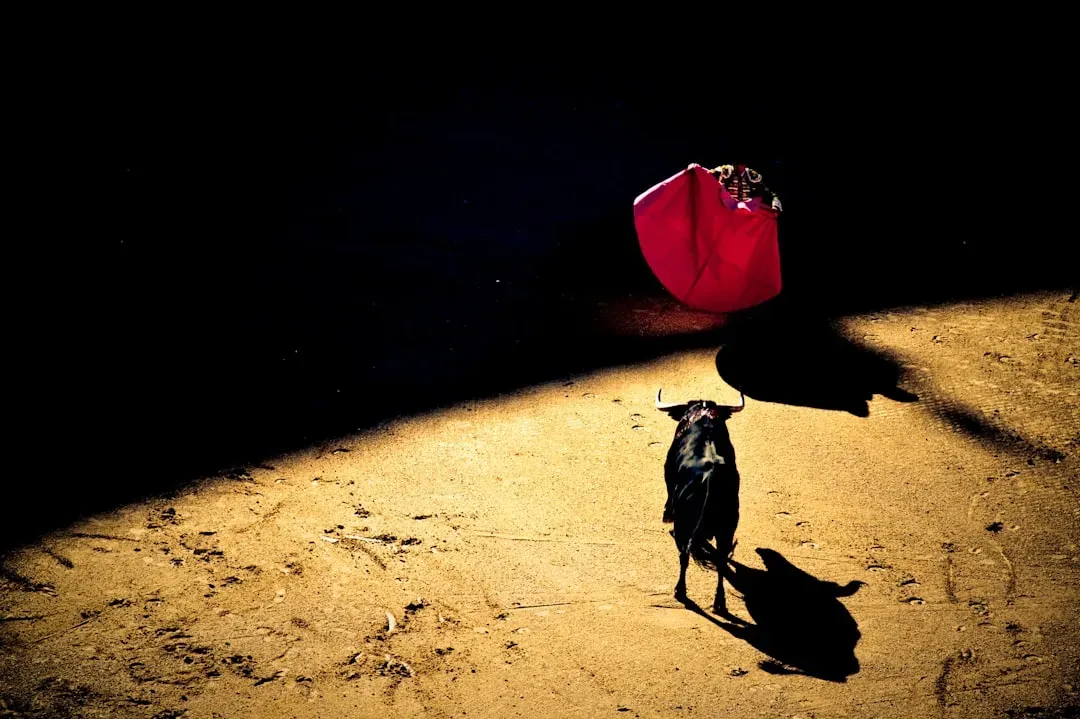
Bullfighting documentaries and cartoons alike repeat this one constantly: wave a red cape, and a bull will charge in a blind rage triggered by the color. Bovine vision researchers have known for years this isn’t how it works.
Cattle are red-green colorblind, meaning bulls physically cannot perceive the cape as “red” the way humans do. What actually provokes the charge is movement – the swishing, flapping motion of the cape, combined with the perceived threat of a person standing in front of them. Bullfighters could wave a blue, yellow, or black cape and get the same reaction, provided the motion and proximity trigger the animal’s defensive instinct.
The red color tradition in bullfighting exists for the audience, not the bull – it’s believed to mask bloodstains during a fight rather than serve any behavioral purpose. Studies on cattle vision show they respond identically to differently colored capes as long as the movement pattern stays the same, meaning the entire “seeing red” idiom is built on a myth about an animal that can’t even see the color in question.
#9 – “Left-Brained” and “Right-Brained” Personality Types Aren’t Real
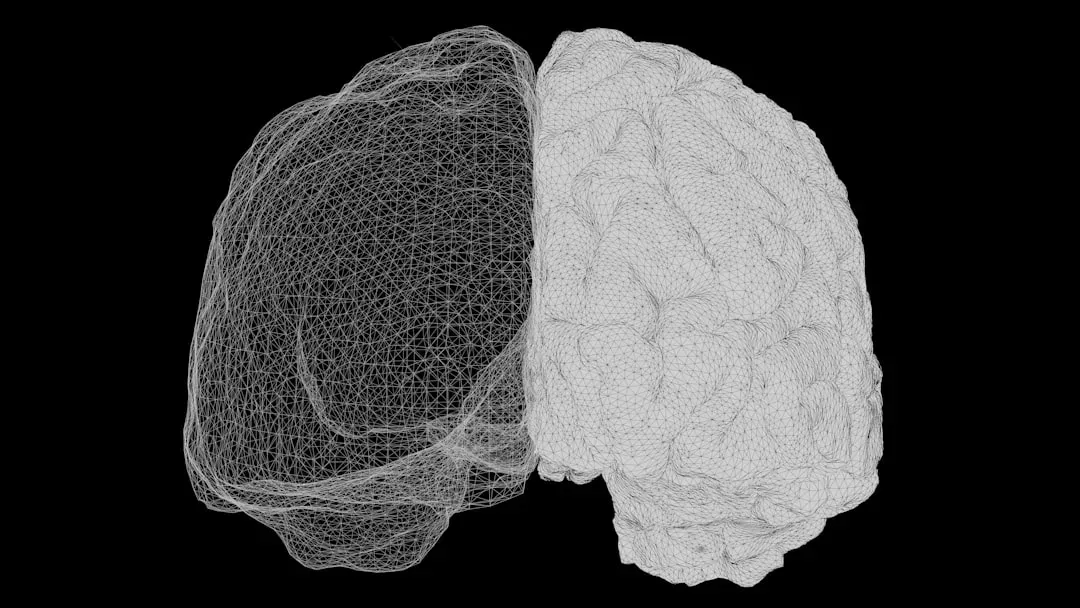
Educational documentaries loved sorting people into tidy boxes: creative, artistic people use their right brain, while logical, analytical people use their left. Neuroscientists have spent the last decade actively dismantling this framework, and large-scale brain imaging studies have found no evidence that people consistently rely more heavily on one hemisphere overall.
Brain scans do show that certain specific functions are somewhat lateralized – language processing tends to lean left, spatial processing tends to lean right – but this has nothing to do with personality type or overall thinking style. A person isn’t “more creative” because they favor one hemisphere; both sides of the brain work together constantly on nearly every task, from doing math to writing poetry.
Quick Compare
- Myth: Creative people are “right-brained.” Reality: creativity draws on networks spread across both hemispheres.
- Myth: Logical people are “left-brained.” Reality: language and math processing both involve regions on either side.
- Myth: One hemisphere quietly dominates a person’s overall thinking style. Reality: large imaging studies show no consistent dominance tied to personality.
- Myth: Online quizzes can reveal your “dominant side.” Reality: no validated brain-scan method confirms such a personality type.
Large neuroimaging studies analyzing thousands of brain scans have found virtually no correlation between hemisphere dominance and personality traits like creativity or logic. The myth persisted largely because it’s simple, marketable, and flattering – everyone likes being told they’re a “right-brain creative type.” Researchers now describe brain function as highly integrated, with both hemispheres constantly communicating rather than operating as separate personality engines.
#10 – The Tongue Map Is Completely Wrong

If you’ve ever seen a diagram of the tongue divided into zones – sweet at the tip, bitter at the back, sour and salty on the sides – you’ve seen a documentary staple that food scientists have thoroughly rejected. Every taste bud on the tongue can detect all five basic tastes, not just one assigned region.
The myth traces back to a mistranslated German research paper from the early 1900s, which was misinterpreted decades later and turned into the now-famous diagram. That diagram spread through science textbooks and cooking documentaries for most of the 20th century, despite never being supported by the original research it claimed to represent.
Modern taste research has confirmed that receptor cells capable of detecting sweet, sour, salty, bitter, and umami flavors are distributed across the entire tongue surface, with only minor sensitivity variations between regions – nothing close to the rigid zone map. Food scientists now emphasize that taste perception is a whole-tongue, even whole-mouth, experience, working alongside smell and texture to create flavor.
#11 – Dinosaurs Weren’t Slow, Dim-Witted, Cold-Blooded Lizards

This is the biggest documentary reversal of them all. For most of the 20th century, dinosaurs were portrayed as sluggish, tail-dragging, cold-blooded reptiles barely smarter than modern lizards. Paleontologists have completely rewritten this picture over the last three decades, and the change is staggering.
Fossil evidence discovered since the 1990s has revealed that many dinosaur species had feathers, not scales, including large predatory species once imagined as scaly monsters. Bone growth studies suggest many dinosaurs had metabolisms closer to warm-blooded birds and mammals than to cold-blooded reptiles, allowing for far more active, energetic lifestyles than earlier documentaries depicted.
Why It Stands Out
- Velociraptor was roughly turkey-sized, nothing like its towering, scaly movie portrayal.
- Bone growth rings show many species grew fast, more like modern birds than lizards.
- Birds are formally classified as surviving theropod dinosaurs, not just distant descendants.
- Feathers have now been confirmed across multiple dinosaur families, not just small species.
Perhaps the most fundamental shift: researchers now recognize that birds are technically living dinosaurs, descended directly from small feathered theropods. This isn’t a fringe theory – it’s the mainstream scientific consensus, supported by skeletal, feather, and genetic evidence. The tail-dragging, dim-witted image so many older documentaries loved has been replaced with dynamic, socially complex, often feathered animals that behaved nothing like the lumbering monsters of classic nature films.
The Bottom Line

The common thread running through all eleven of these claims is unsettling: documentaries didn’t just get small details wrong, they built entire cultural beliefs on staged footage, mistranslated research, and centuries-old misquotes that nobody bothered to fact-check on camera.
From faked lemming suicides to horned helmets invented for a German opera, the “facts” most of us grew up trusting were never facts at all. Researchers have moved on. Textbooks have, mostly, caught up. But the myths keep re-airing at 2 a.m. on cable, because a bull supposedly enraged by a red cape will always make better television than the boring truth that it’s colorblind.
That’s the real lesson buried under all eleven of these: authority and accuracy are not the same thing. A calm narrator, a dramatic soundtrack, and a confident tone can sell just about anything – including things that were quietly disproven before some of us were even born.