Our planet is ancient beyond imagination. We’re talking billions of years of churning rock, colliding continents, vanishing oceans, and explosive volcanic fury. Long before the first dinosaur ever set foot on this Earth, our planet was already hosting some of the most bizarre, jaw-dropping geological riddles ever recorded. These aren’t minor footnotes. These are deep, unsettling mysteries written in stone.
You might think geology is a settled science, a comfortable world of dated rock layers and predictable formations. Think again. Some of Earth’s most fundamental features remain stubbornly unexplained, defying the best tools modern science can throw at them. Buckle up, because these 11 pre-dinosaur geological anomalies will make you rethink everything you thought you knew about our ancient world. Let’s dive in.
1. The Great Unconformity: A Billion Years of Missing Time
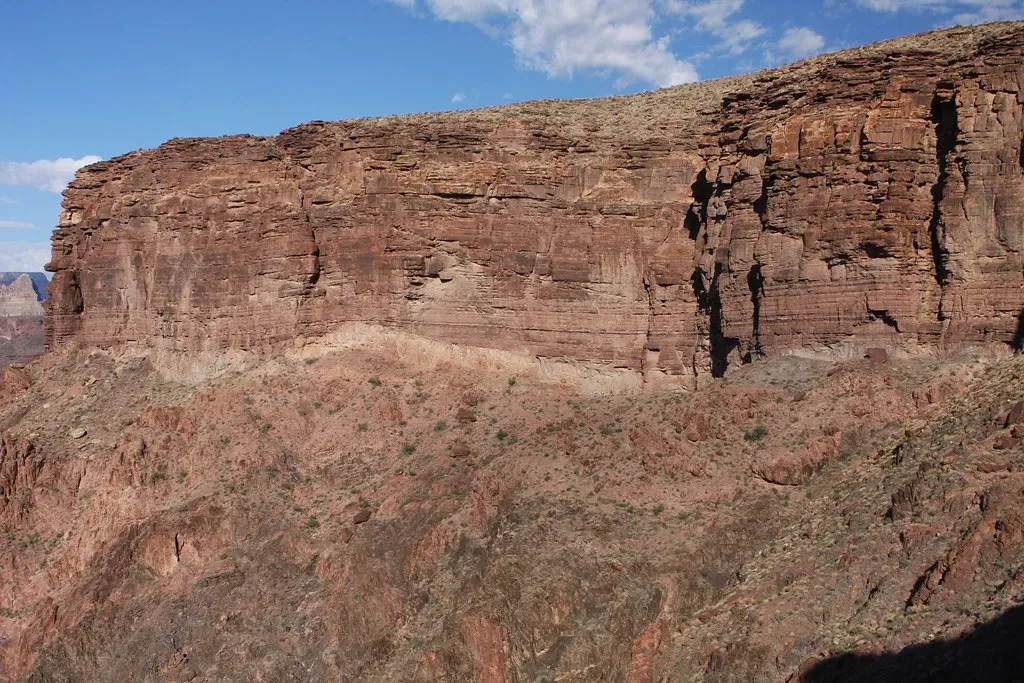
Imagine flipping through a history book and suddenly discovering that nearly a billion pages have been ripped out. That is essentially what you are looking at when you peer into the depths of the Grand Canyon. The Great Unconformity represents a massive gap in the geological record, where layers of rock dating from about 1.2 billion to 250 million years ago are completely missing from certain areas around the globe. What makes this so disorienting is the sheer scale of it.
This enormous chunk of lost time can be seen clearly in the stratigraphy of the Grand Canyon in Arizona, where geologists have noted that there is plenty of rock full of fossils from the Cambrian period around 540 million years ago, but the layer beneath it is basement rock formed roughly 1 billion years ago and empty of fossils. There might have been many events involved in creating this gap, with origins traceable back to about a billion years ago on the supercontinent Rodinia, a landmass three times as old as Pangea. It is, honestly, one of the most haunting puzzles in all of Earth science.
2. Snowball Earth: When the Entire Planet Froze Over
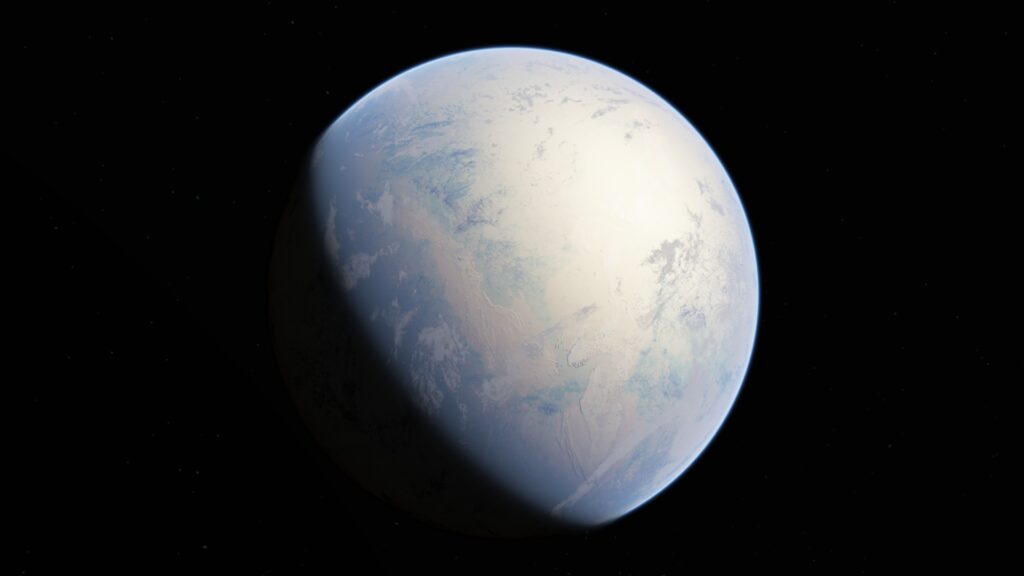
The Great Unconformity has been associated with the theory of “Snowball Earth,” which posits that the planet froze over entirely around 700 million years ago, with glaciation grinding away rock all over the world and creating the gap in geological time. The idea that our entire planet, every inch of ocean and every mountain range, was encased in a shell of ice is hard to fully grasp. It sounds like science fiction, but the geological evidence keeps pointing in that direction.
Many questions remain unanswered, though, including the multimillion-year gap between the end of Snowball Earth around 635 million years ago and the start of the Cambrian period. The Snowball Earth hypothesis itself is still debated, with researchers unable to agree on whether the freeze was truly global or whether some open-ocean pockets survived. You cannot look at this evidence and not feel a little uneasy about how much we still do not understand.
3. The Isua Greenstone Belt: Earth’s Oldest, Most Contested Rock Record
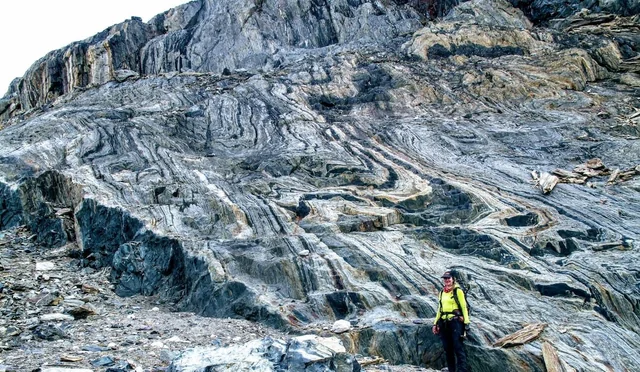
You want to travel back in time? Then you need to visit Greenland. The Isua Greenstone Belt represents one of Earth’s oldest preserved supracrustal sequences, with its formation dated to the Eoarchean between 3.7 and 3.8 billion years ago, an age range robustly established through uranium-lead geochronology on zircon grains. Think about that for a moment. These rocks were forming when our planet was barely an infant, long before complex life, long before dinosaurs, long before almost everything.
Among its extraordinary features, the belt contains what may be the world’s oldest contested stromatolites in dolomitic carbonates, conglomerates, pillow basalts demonstrating submarine eruption, slivers of upper mantle rocks, and evidence for the formation of earliest continental crust. While most rocks in the Isua Greenstone Belt are too metamorphically altered to preserve fossils, some geologists interpret certain structures as the result of deformation and alteration of the original rock rather than genuine biological remains. The debate rages on, and the answer matters enormously for understanding when life first appeared.
4. The Vredefort Dome: The Biggest Known Impact on Earth
![4. The Vredefort Dome: The Biggest Known Impact on Earth ([1], Public domain)](https://nvmwebsites-budwg5g9avh3epea.z03.azurefd.net/dinoworld/4d06591df7edd607c1e6e5d21de477a5.webp)
Here’s the thing about cosmic collisions. They make a mess that lasts for billions of years. As the heart of the largest confirmed hypervelocity impact structure on Earth, the Vredefort Dome provides a unique perspective into the only planetary process that has affected the surfaces of all rocky bodies in our Solar System, with its deep level of exhumation allowing an unprecedented view of the catastrophic processes accompanying impact into crustal rocks. This structure in South Africa is truly staggering in scale.
Estimates have placed the structure’s age at approximately 2.023 billion years, placing it in the Orosirian Period of the Paleoproterozoic Era. The asteroid that hit Vredefort is estimated to have been one of the largest ever to strike Earth since the Hadean Eon, with the bolide estimated as of 2022 to be between 20 and 25 kilometres in diameter, impacting with a vertical velocity of 15 to 25 kilometres per second. To put that in perspective, the force unleashed would have been almost incomprehensibly violent, reshaping the very crust of the early Earth in ways we are still trying to untangle.
5. Banded Iron Formations: The Mysterious Stripes That Changed Everything
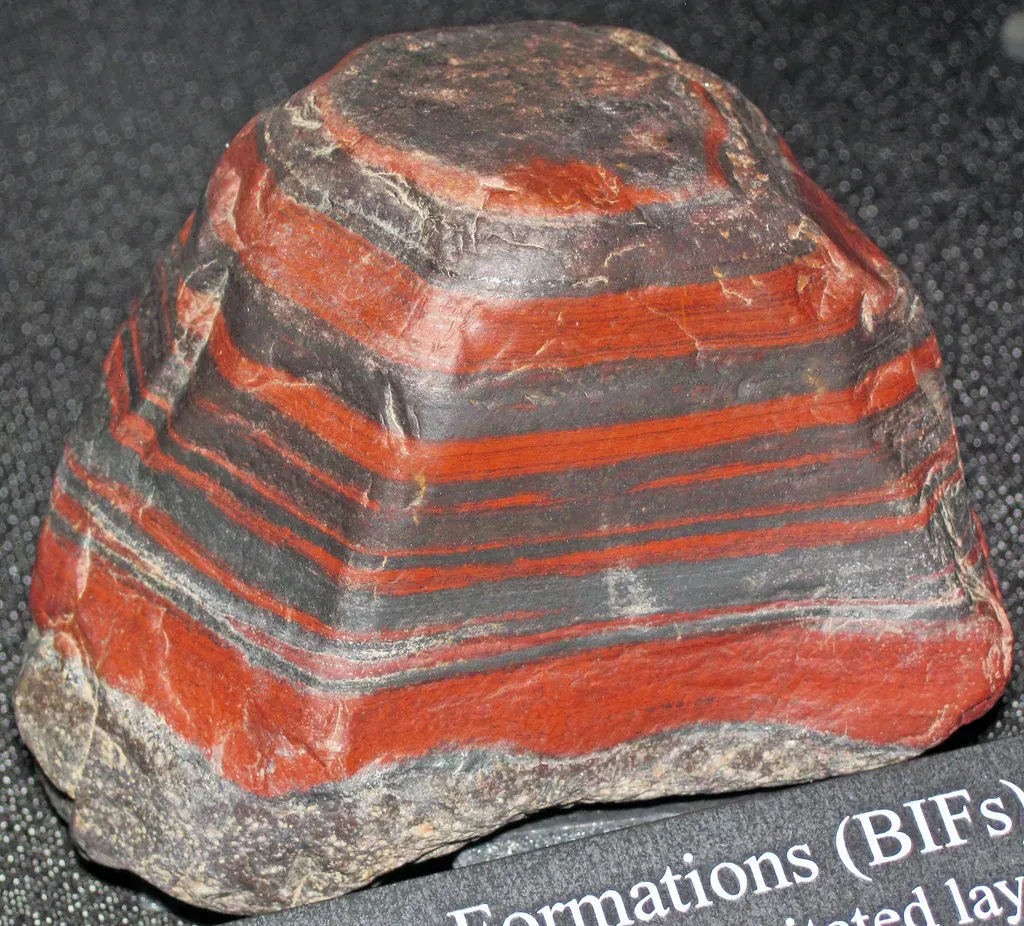
Banded Iron Formations are distinctive rock layers composed of alternating bands of iron-rich minerals and chert, dating back to the Precambrian era and associated with the rise of atmospheric oxygen. They look almost artistic, these alternating rusty and pale ribbons of rock, stretched across ancient sea floors. They tell a story of an early Earth suffocating in an oxygen-free atmosphere, slowly being transformed by microscopic life forms. I think they are among the most visually striking clues our planet has ever left behind.
Evidence for the Great Oxidation Event is recorded in changes in seafloor rocks called Banded Iron Formations, which document the moment cyanobacteria first began flooding the atmosphere with oxygen as a metabolic byproduct. These formations date back to the Precambrian era and are associated with the rise of atmospheric oxygen, though the exact processes that led to their formation are not fully understood. The timeline of their deposition reveals a planet in violent biological transformation, long before any animal with a backbone existed.
6. The Nastapoka Arc: Hudson Bay’s Perfectly Round Enigma
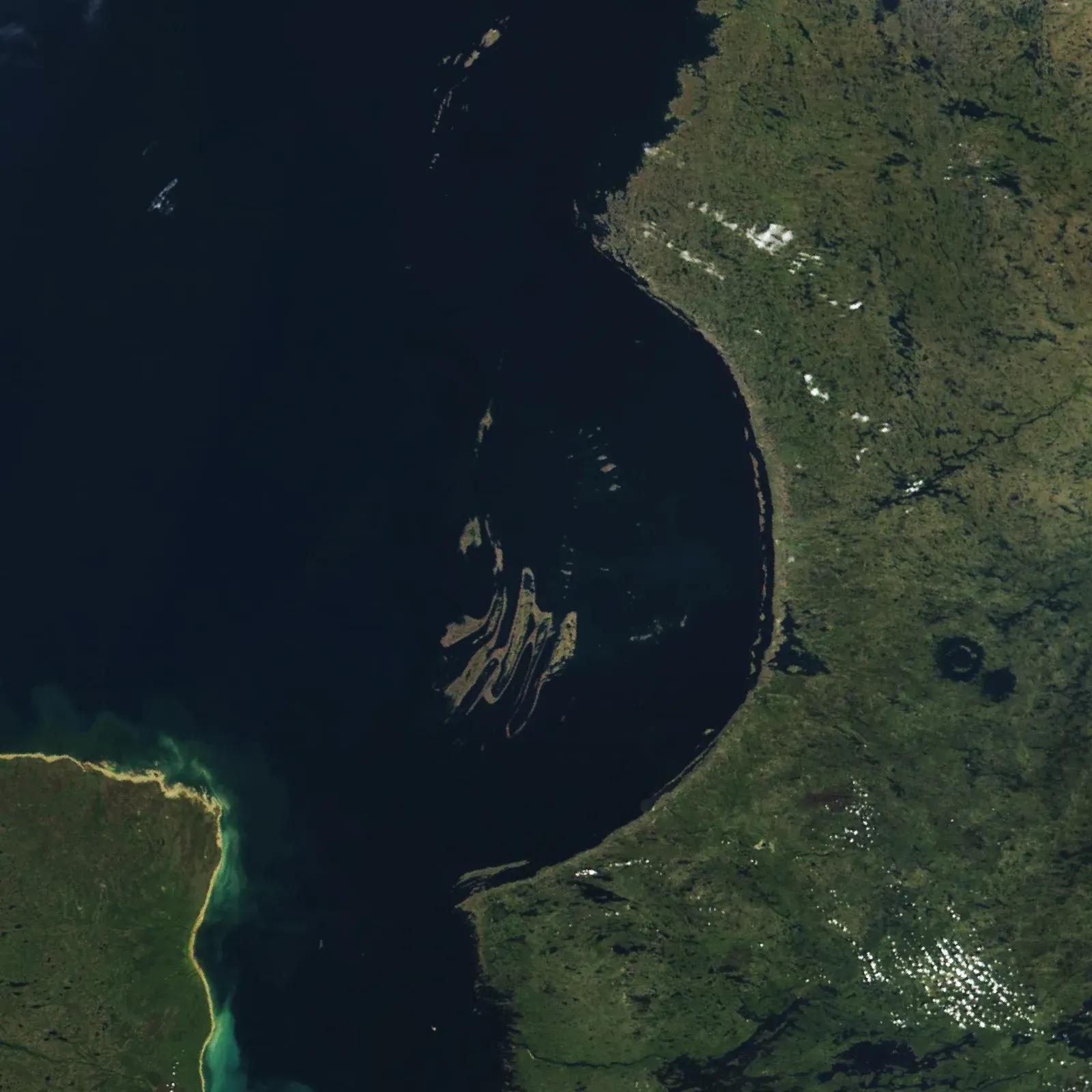
Perfectly round shapes in nature rarely happen by accident. In the southeast corner of Hudson Bay, Canada, lies a near-perfect arc known as the Hudson Bay Arc, first thought to be an impact crater from a meteorite, but without the usual confirming evidence such as shatter cones or unusual melted rocks found in the vicinity. Geologists have been scratching their heads over this one for decades. You can see it clearly from space, this grand sweeping curve that seems almost too deliberate to be natural.
The most commonly accepted theory for the arc, based on geological evidence collected in the 1970s and later, is that it is a boundary formed when one shelf of rock was pushed under another, but that does not explain how or why it is so perfectly round, leaving the Nastapoka Arc subject to ongoing study. It’s hard to say for sure, but there is something deeply unsettling about a geological feature that resists every clean explanation thrown at it. The Earth keeps its secrets well.
7. The Cambrian Explosion: Life’s Most Baffling Biological Detonation
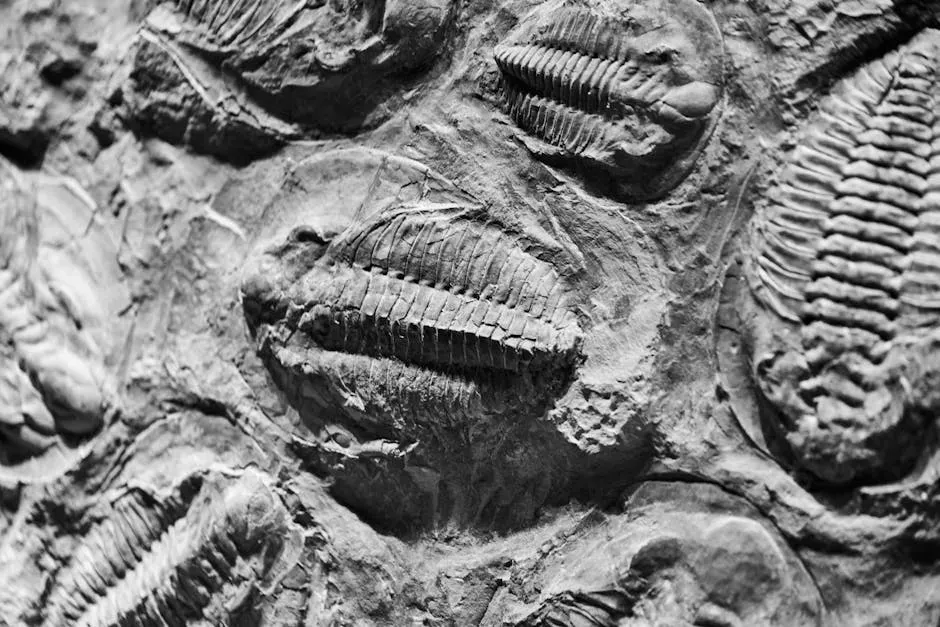
The Cambrian explosion is an interval of time beginning approximately 538.8 million years ago in the Cambrian period of the early Paleozoic, when a sudden radiation of complex life occurred and practically all major animal phyla started appearing in the fossil record, lasting for about 13 to 25 million years. In geological terms, that is the blink of an eye. Nothing remotely like it had ever happened before in Earth’s history, and the question of why it happened so suddenly, after billions of years of relative biological quiet, is still genuinely unresolved.
Before early Cambrian diversification, most organisms were relatively simple, composed of individual cells or small multicellular organisms occasionally organized into colonies, but as the rate of diversification accelerated, the variety of life became much more complex and began to resemble that of today. The Cambrian explosion is widely regarded as one of the fulcrum points in the history of life, yet its origins and causes remain deeply controversial. What triggered that switch? Was it oxygen, predation pressure, a collapse of the Snowball Earth ice, or something else entirely? We still do not know for certain.
8. The Ediacaran Biota: Strange Creatures That Vanished Without a Trace
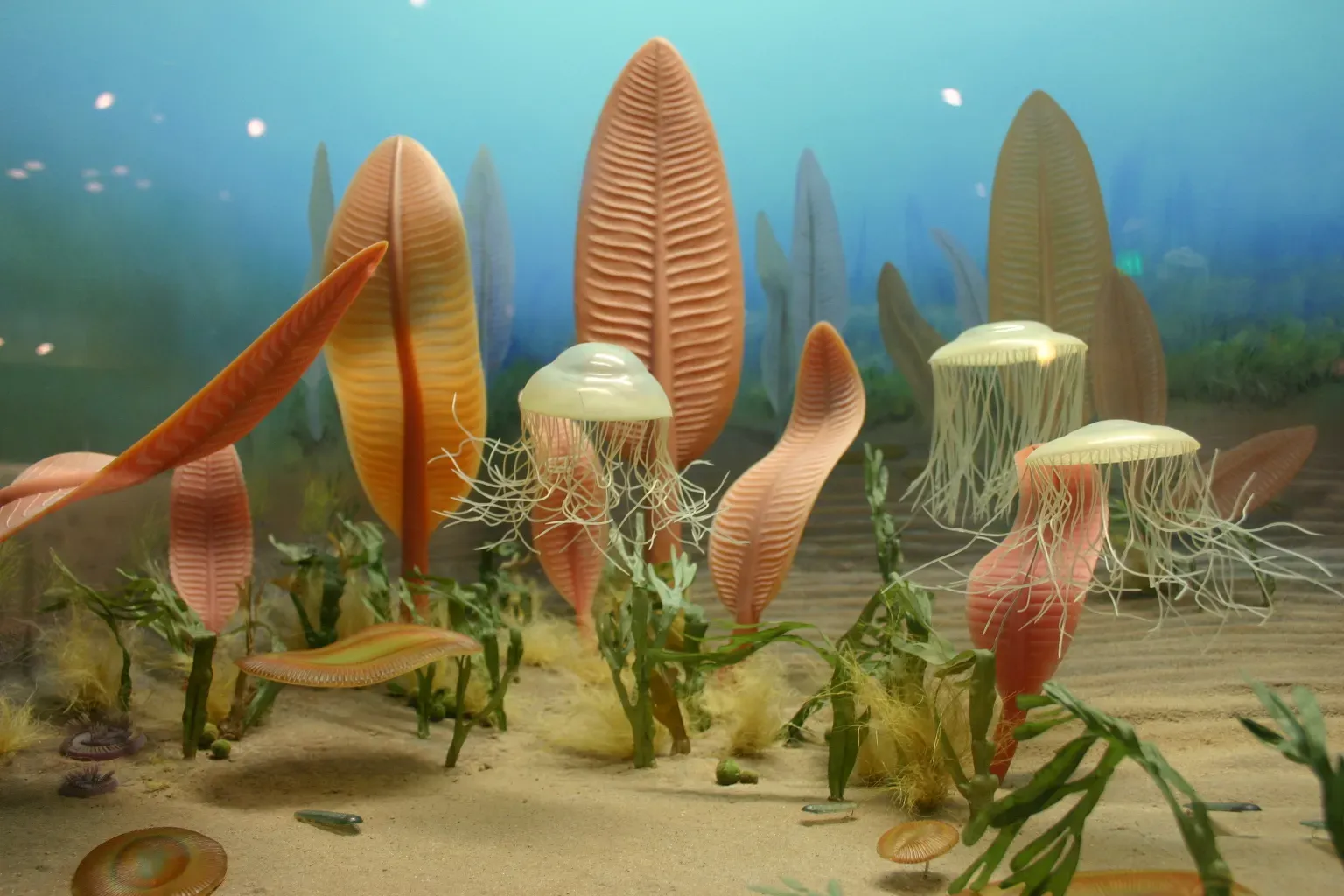
Uploaded by FunkMonk, CC BY-SA 2.0)
Let’s be real. Few things in geological history are as quietly haunting as the Ediacaran biota. The Ediacaran biota consists of all life forms present on Earth during the Ediacaran Period from roughly 635 to 538.8 million years ago, comprising enigmatic tubular and frond-shaped, mostly sessile organisms whose trace fossils have been found worldwide and represent the earliest known complex multicellular organisms. They were unlike anything before or since, soft-bodied and alien-looking, carpeting the sea floor like living quilts.
Known as the Ediacarans, these bizarre creatures bore little resemblance to modern life forms, grew on the seabed, and lacked any obvious heads, mouths, or digestive organs, with fossils of the largest known among them, Dickinsonia, resembling a ribbed doormat. What happened to the mysterious Ediacarans is not clear, as they could be the ancestors of later animals, or they may have been completely erased by extinction. They flourished for tens of millions of years and then, essentially, just vanished. That disappearance is still one of paleontology’s greatest cold cases.
9. Ancient Komatiite Lavas: Volcanic Rock That Should Not Exist
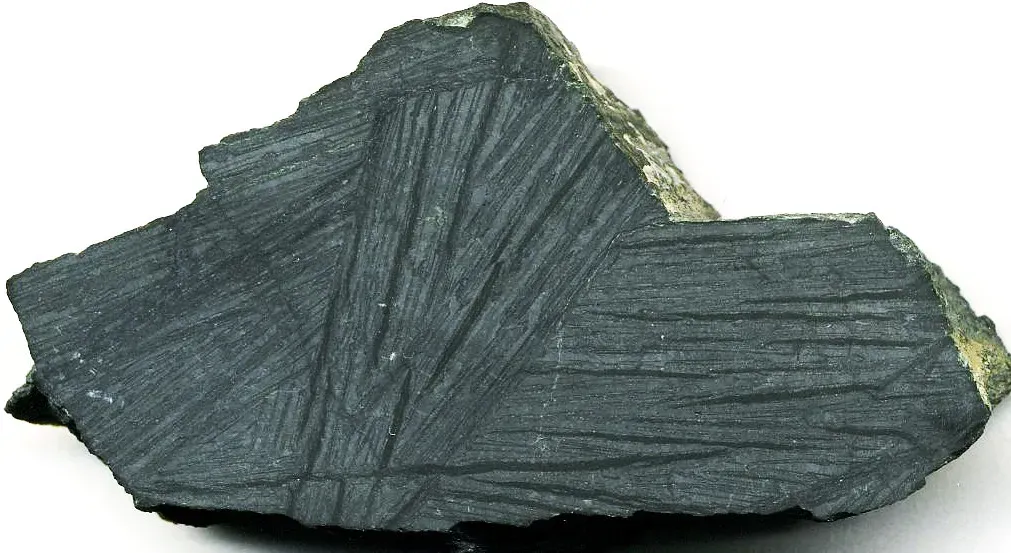
Some rocks are troubling simply because they tell you things about the early Earth that seem almost impossible. Komatiite, a magnesium-rich, high-temperature volcanic rock derived from very hot mantle, was extruded in abundance during the early Precambrian when the heat flow of the Earth was higher than it is today. To form komatiite, you need mantle temperatures that modern Earth simply cannot generate. It is like finding the melted remains of a furnace that science says should not have run that hot.
Blueschist, which contains the blue mineral glaucophane, forms in subduction zones under high pressures and low temperatures, and its rare occurrence in Precambrian rocks may indicate that temperatures in early subduction zones were too high for its formation. Together, komatiite and the rarity of ancient blueschist paint a picture of a young Earth operating under geological rules that simply no longer apply today. The planet has, in a very real sense, cooled down and calmed down since those primordial ages.
10. The Great Oxygenation Event: When Oxygen Became Both Gift and Poison
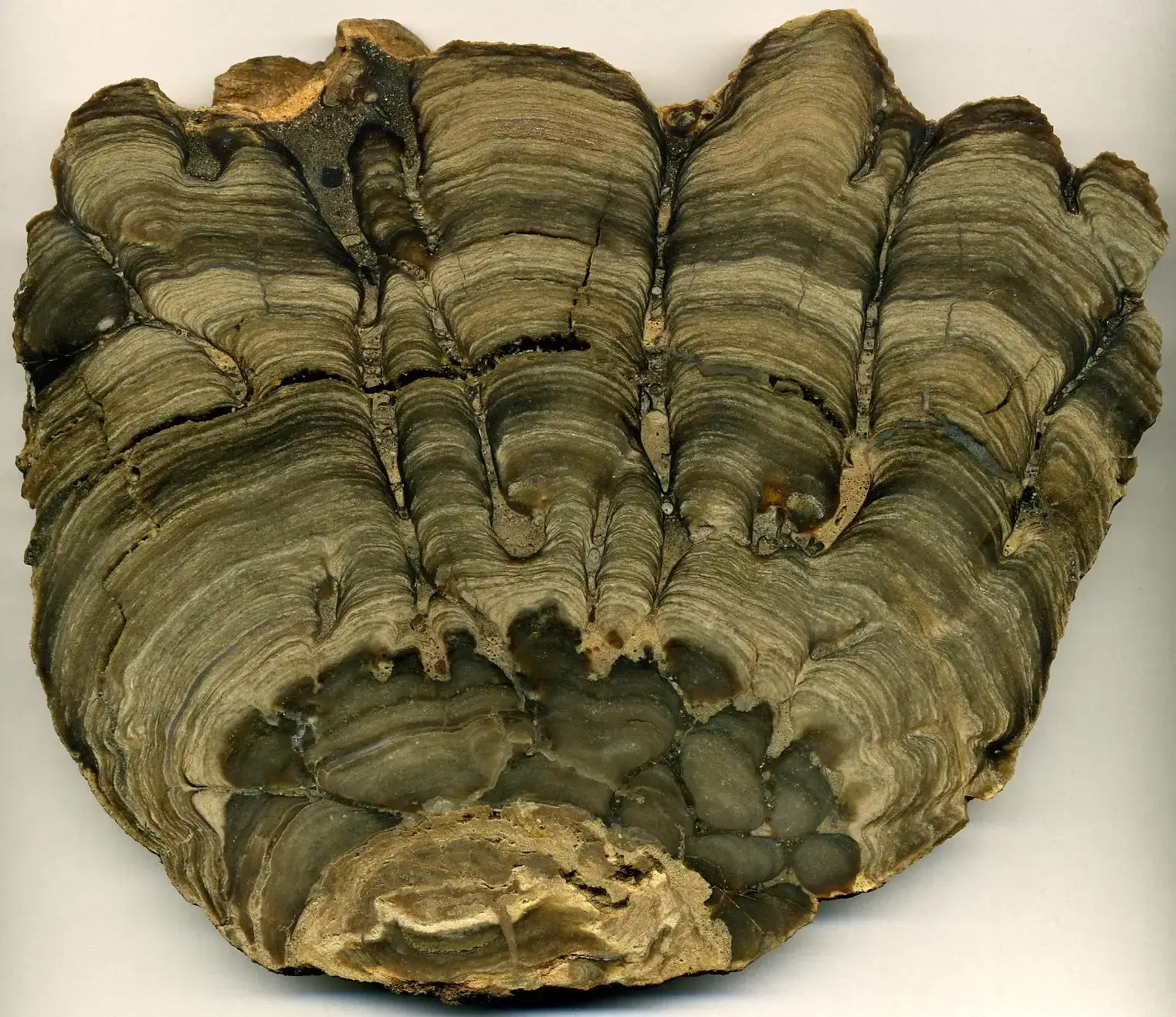
When cyanobacteria evolved at least 2.4 billion years ago, they became Earth’s first photosynthesizers, making food using water and the Sun’s energy and releasing oxygen as a result, catalyzing a sudden dramatic rise in oxygen that made the environment less hospitable for other microbes that could not tolerate it. Oxygen, the very thing that now sustains nearly all complex life, was once a deadly poison to the organisms that dominated Earth. This single biological event rewired our entire planet.
The earliest records of cells are microfossils of cyanobacteria from about 3.5 billion years ago, with recognizable stromatolite fossils found in Australia by 3.45 billion years ago, and since all modern cyanobacteria produce oxygen by photosynthesis it is widely thought that oxygen production must date back to at least this time. Mysteriously though, geological evidence indicates that oxygen did not rise above trace levels until over a billion years later at 2.3 billion years ago, with explanations suggesting the oxygen may have been consumed by early geological processes, but like much in the Precambrian, the true cause remains unknown. A billion-year lag between oxygen production and oxygen buildup. That is not a small mystery.
11. The Nuvvuagittuq Greenstone Belt: Earth’s Most Ancient Rocks and Their Unsettling Signals
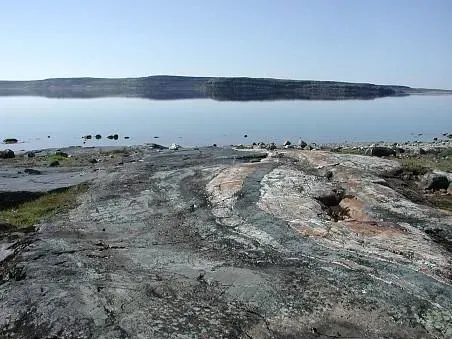
The oldest known rocks on Earth are the faux amphibolite volcanic deposits of the Nuvvuagittuq Greenstone Belt in Quebec, Canada, estimated to be 4.28 billion years old. That number is almost incomprehensible. When those rocks were forming, the Moon was freshly born from a catastrophic planetary collision, the crust was still cooling from its molten origin, and the notion of life was barely a chemical whisper. Yet tucked inside these ancient formations are signals that have left scientists deeply unsettled.
Comparisons with the Moon indicate that the Earth must have been subjected to an enormous number of meteorite impacts about 4 billion years ago, but there is no geologic evidence of such events. The absence of evidence for something that should have been catastrophically obvious is its own kind of anomaly. The Precambrian is the least-understood part of Earth history, yet it is arguably the most important, spanning almost nine-tenths of Earth’s history from the formation of the Earth to the dawn of the Cambrian Period, representing time so vast and long ago that it challenges all comprehension. The Nuvvuagittuq Belt sits at the very edge of what science can currently decode, and what it whispers back is still not fully understood.
Conclusion
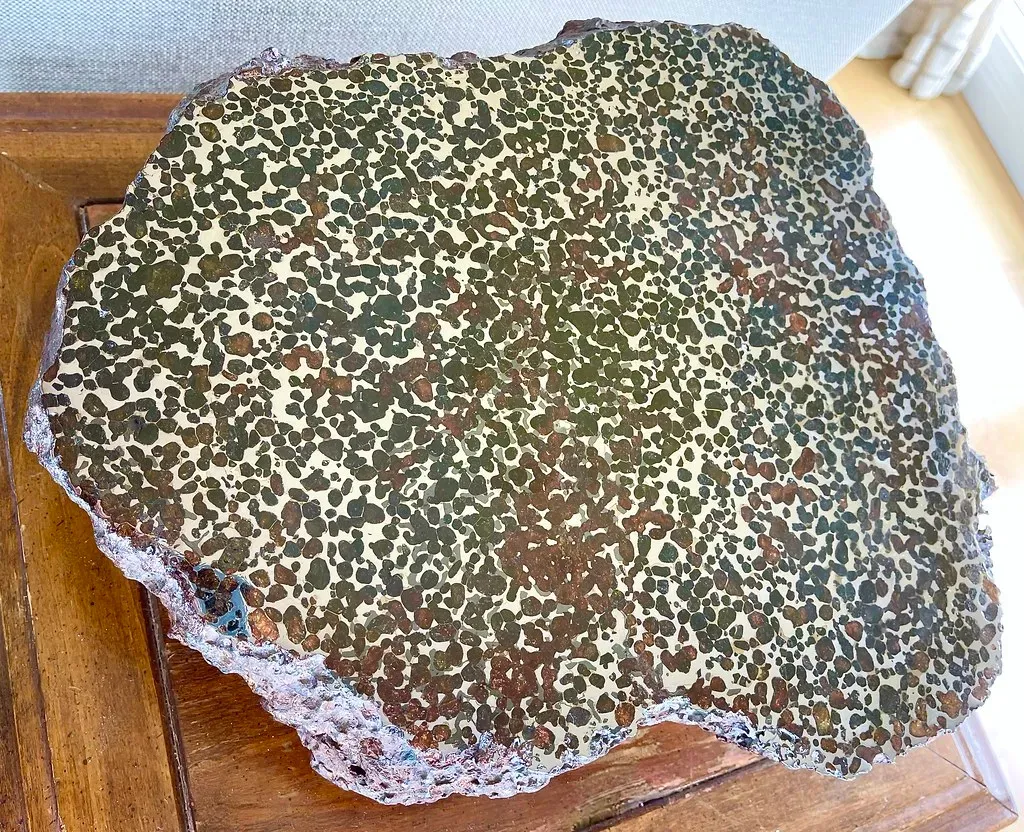
There is something quietly humbling about realizing that the ground beneath your feet holds mysteries that billions of dollars of scientific research and decades of brilliant minds have yet to crack. These eleven anomalies are not just geological curiosities. They are fundamental gaps in our understanding of how this planet formed, how life began, and how the conditions for everything we know came to be.
Every missing rock layer, every unexplained vanishing lifeform, every ancient impact scar tells you that Earth has a history far stranger and more violent than any textbook summary could contain. The pre-dinosaur world was not quiet. It was catastrophic, bizarre, and breathtakingly transformative in ways we are only beginning to appreciate.
The greatest geological mysteries are not solved puzzles left over from the past. They are open questions waiting for the next generation of scientists to answer. Which of these anomalies surprises you the most? Share your thoughts in the comments below.