
Most people treat “extinct” like a locked door – final, official, no way back through. But extinction is often more paperwork than physics. Governments and scientific bodies have officially written off animals that local hunters, fishers, and hikers kept insisting were still out there – only for camera traps, DNA tests, or a lucky trawler haul to prove those locals right.
Some of these “ghosts” have already been quietly restored to the record books. Others still exist only in blurry photos, muffled recordings, and stubborn testimony that refuses to die. Here’s what field biologists, archival records, and hard-to-ignore evidence actually say about 12 animals declared gone that just won’t stay dead.
#12 – Ivory-Billed Woodpecker: The Bird That Refuses To Be Extinct
![#12 - Ivory-Billed Woodpecker: The Bird That Refuses To Be Extinct (By Original photo by Arthur A. Allen, 1935 [1], watercolored by Jerry A. Payne, USDA-ARS, CC BY 3.0 us)](https://nvmwebsites-budwg5g9avh3epea.z03.azurefd.net/dinoworld/974a3d1908f792279b2cb4fcf04a64f6.webp)
This is the one bird that makes serious birders argue like sports fans replaying a bad call. For decades, the ivory-billed woodpecker has been the ultimate “extinct but maybe not” animal.
Officially, it vanished from the United States after logging wiped out most of its southern swamp habitat in the early 20th century. But starting in the 1960s, hunters, fishermen, and field biologists kept reporting huge woodpeckers with white trailing wing patches in remote Arkansas, Louisiana, and Florida swamps.
Fast Facts
- Nicknamed the “Lord God Bird” for its startling size and rarity
- One of the largest woodpeckers in the world, with a wingspan approaching 30 inches
- Historical range: dense old-growth swamp forests across the southeastern U.S.
- The U.S. Fish and Wildlife Service moved to formally declare it extinct in the 2020s
- Search teams have logged trail-cam footage, drone video, and acoustic recordings for well over a decade
In 2005, researchers announced video and audio evidence from Arkansas, and headlines exploded with the idea that the “Lord God Bird” might still be alive. The footage was grainy, and critics argued it just showed a pileated woodpecker – but others pointed to the size, flight pattern, and wing markings as a far better match for ivory-billed.
Since then, multiple teams have collected recordings of “double knock” drumming and calls that match historical ivory-billed sounds more closely than any other species alive today. Things got messier when the U.S. Fish and Wildlife Service moved to declare the bird officially extinct while new studies were still under peer review.
One 2020s analysis claimed trail-cam photos, drone footage, and audio pointed to a small remnant population hanging on in swampy bottomland forest, though skeptics pushed back hard on the interpretation. Believe the evidence or not, the ivory-billed is now the poster child for how messy “extinction” gets in dense, nearly unsurveyable habitat.
The next case is even stranger – because this “extinct” animal has a fan club that treats sightings almost like religious experiences.
#11 – Thylacine (Tasmanian Tiger): Dead Since 1936… Or Just Extremely Good At Hiding?
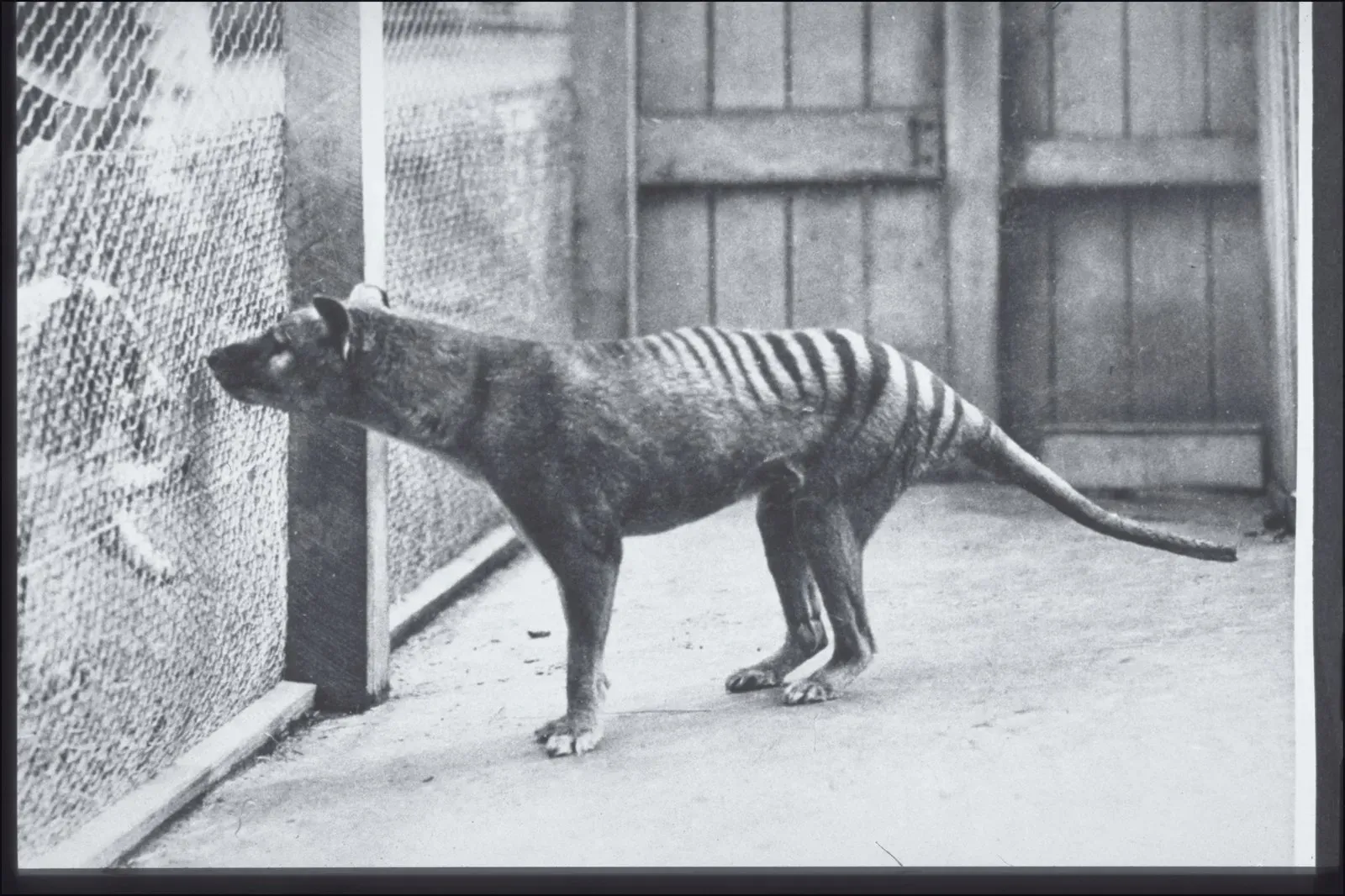
On paper, the thylacine is gone. In people’s minds, it never left.
The last confirmed Tasmanian tiger died in a Hobart zoo in 1936. Australia later listed the species as extinct, and most textbooks still repeat that date as the end of the line.
But locals in Tasmania never fully accepted that ending. Farmers, hikers, and drivers on lonely roads have reported striped, dog-like animals with stiff tails and odd, bounding gaits for nearly a century now.
Many sightings came from regions that were logged and then re-forested – exactly the kind of habitat where a shy predator might hang on at very low numbers. Scientists have actually cataloged these reports, and several formal reviews found hundreds of post-1936 sightings judged “plausible,” not just cryptid-forum noise.
Some accounts came from park rangers, experienced hunters, and biologists – people who know the difference between a fox, a dog, and something truly strange. Camera traps have occasionally produced tantalizing photos: blurred stripes, odd silhouettes, long stiff tails, though none has been universally accepted.
The thylacine is also a prime target for “de-extinction” efforts using ancient DNA, which only muddies public perception further. When people hear scientists are trying to bring it back, many assume it must still secretly exist somewhere, fueling more road trips and night vigils.
Officially, it’s extinct. Socially and culturally, it’s almost more alive than ever – and the next animal on this list is proof that “impossible” fossils sometimes just need the right fish market.
#10 – Coelacanth: The “Fossil Fish” That Walked Out Of Prehistory
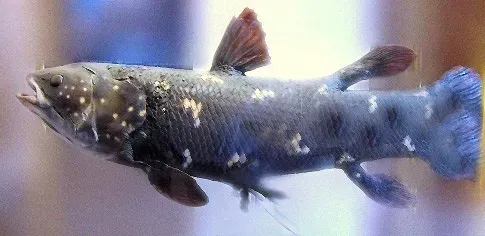
This one was so extinct that paleontologists literally used it as shorthand for “long gone.” Coelacanths were known only from fossils dated to around 66 million years ago, the classic textbook example of a lineage that vanished with the dinosaurs.
Then, in 1938, a South African trawler hauled up a strange, blue-gray fish with lobed fins that looked exactly like those fossil skeletons. A local museum curator recognized it instantly. An animal written off for tens of millions of years had just turned up in a fish market.
Worth Knowing
- First scientifically identified in 1938 near the mouth of South Africa’s Chalumna River
- Believed extinct for roughly 66 million years – the same span since the dinosaurs disappeared
- A second living population was found off Sulawesi, Indonesia, decades later
- Two living species are now recognized: one in East Africa, one in Indonesia
- They inhabit deep water along steep volcanic slopes, often several hundred meters down
For decades, scientists believed that lone specimen might be a one-off relic confined to a tiny patch of the Indian Ocean. But subsequent expeditions, deep-sea cameras, and interviews with local fishers revealed something more shocking: coelacanths were quietly living off steep volcanic slopes in deep water, and locals had seen them for years without knowing they were supposed to be extinct.
Today, two living species of coelacanth are recognized – one off East Africa and one around Indonesia. They’re not abundant, and they’re still vulnerable to bycatch and habitat change, but they are very much alive.
The whole saga exposed a brutal scientific bias: we treat fossil gaps as permanent truths, even when humans haven’t properly sampled the habitats where survivors might be clinging on. Every time a deep-sea trawler pulls up something weird now, biologists quietly hope it’s the next coelacanth.
#9 – Javan Elephant: Extinct In The Wild… Until Its DNA Turned Up Somewhere Else
Sometimes an animal comes back not through sightings, but through genetics.
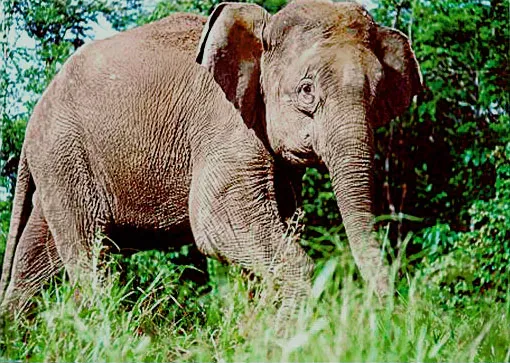
The Javan elephant, a smaller subspecies (or possibly species) of Asian elephant, was believed to have been exterminated from Java by the 1800s. Historical accounts describe distinctively small elephants with different proportions from mainland Asian populations, and colonial records describe widescale hunting, habitat clearing, and their complete disappearance from the island.
For over a century, zoologists simply assumed they were gone. Then came an unexpected twist: genetic studies on elephants in Borneo showed that some Bornean elephants carried genetic signatures that didn’t match mainland populations, suggesting a different origin story entirely.
A leading hypothesis is that humans once transported Javan elephants to Borneo centuries ago as gifts or working animals, where they established a small, semi-isolated population. Under this scenario, Java’s “extinct” elephant might live on in Borneo under a different name, its genetic fingerprint the only surviving clue.
Not all scientists agree – some argue Bornean elephants are native and simply under-sampled in the fossil record. But the controversy itself shows how dangerous clean extinction labels can be when we lack good data from centuries past.
Here, credible evidence doesn’t come as dramatic sightings but as statistical patterns in DNA that won’t quite line up with the official story. If the Javan elephant really survives in Borneo, it would be a rare case where humans accidentally saved an entire lineage just by moving it.
#8 – New Guinea Big-Eared Bat: Vanished For 120 Years, Then Caught On Camera
![#8 - New Guinea Big-Eared Bat: Vanished For 120 Years, Then Caught On Camera ([1], CC BY-SA 4.0)](https://nvmwebsites-budwg5g9avh3epea.z03.azurefd.net/dinoworld/da6c7ee4928e78c58f3958bb6ab446c6.webp)
Bats are masters of disappearing in plain sight.
The New Guinea big-eared bat was known only from a single specimen collected in the 1800s. After that: nothing. No roosts, no captured individuals, no clear photos.
With more than a century of silence, many experts assumed it was either misidentified or effectively extinct. The forests it supposedly inhabited were logged, fragmented, and largely overlooked by mammal surveys – on paper, it was the kind of species you’d expect to quietly vanish without anyone noticing.
But local people in parts of Papua New Guinea kept describing unusually large-eared bats, different from the common species they knew. Those stories were initially brushed off, until targeted surveys using mist nets and acoustic detectors finally picked up something odd: echolocation calls and silhouettes that didn’t match any known bat.
Eventually, researchers managed to net an individual and photograph it. Its huge ears and skull traits matched the old museum specimen – an animal missing for 120 years had just re-entered science with a single click of a camera.
Today, the New Guinea big-eared bat is treated as critically endangered, not extinct. Its story is a warning: how many small, nocturnal animals get written off just because nobody has gone back into the right valley with the right gear? In remote tropical regions, “no records” usually means “no one looked properly,” not “nothing survived.”
#7 – Cuban Solenodon: The Venomous “Fossil” Mammal That Wouldn’t Quit
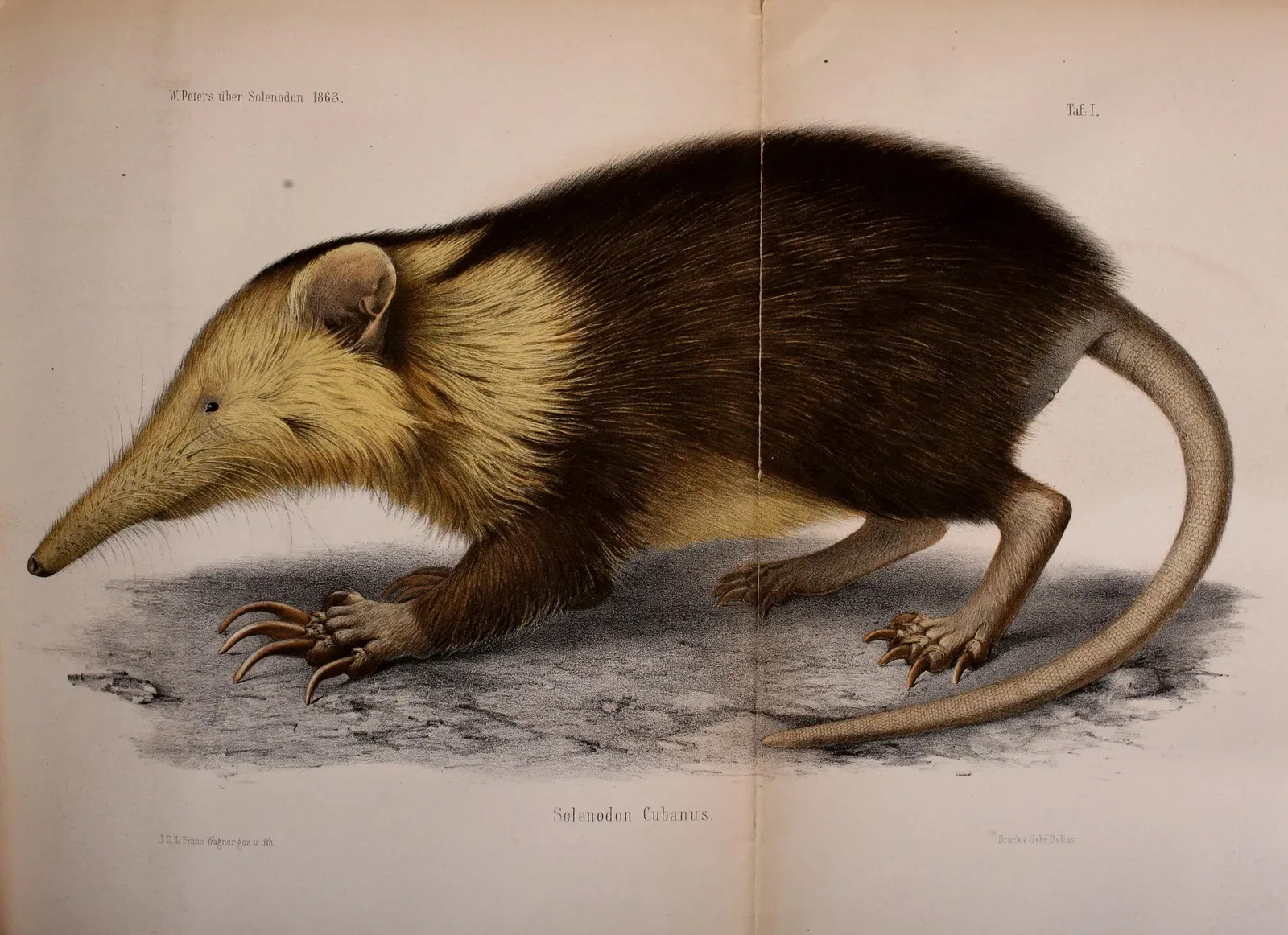
If a shrew and an anteater had a strange, venomous, prehistoric baby, you’d get a solenodon.
The Cuban solenodon is a long-snouted, nocturnal insect-eater that diverged from other mammals tens of millions of years ago. Biologists have called it a “living fossil,” and for a long time, they assumed it was simply gone.
Deforestation, plus cats, dogs, and mongooses brought in by humans, smashed native wildlife across Cuba. By the mid-1900s, the solenodon had essentially vanished from scientific view, and many experts quietly assumed extinction even when official lists hesitated to make it formal.
Locals in isolated mountain regions, however, still talked about odd, shuffling, long-nosed creatures they occasionally encountered at night. For decades those stories never translated into an actual specimen.
Then, starting in the 1970s and again in the early 2000s, small field teams rediscovered the species – first as a few frightened individuals caught by dogs, later through more systematic surveys. The animal scientists had mentally buried kept popping back up in traps and night walks.
Its survival forced an awkward reassessment: if such a weird, distinctive mammal could be written off in practice while still hanging on in the hills, how many less distinctive species might be sitting in the same limbo? Today it’s classified as endangered, with ongoing efforts to protect remaining habitat and control invasive predators – proof that “extinct in everything but name” is a very real category that can drag on for decades.
#6 – Lord Howe Island Stick Insect: A Giant Bug Saved By One Rock
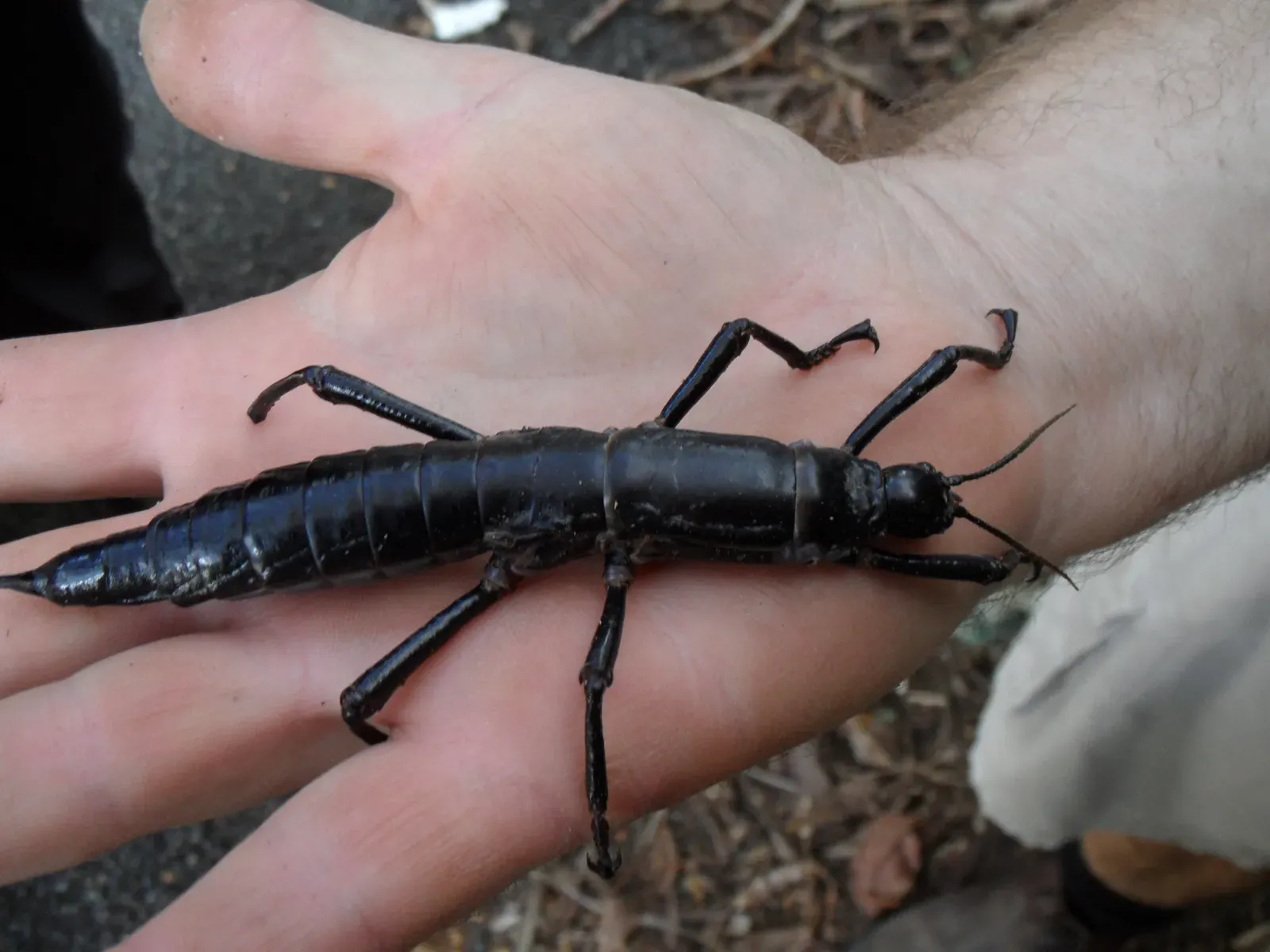
A surprising number of people know this story – and still don’t quite believe it.
The Lord Howe Island stick insect, sometimes called the “tree lobster,” was once common on Lord Howe Island in the Tasman Sea. In 1918, a shipwreck introduced black rats, which rapidly devoured the insects, and within a couple of decades the species was assumed extinct.
Multiple searches after the 1920s found nothing. For most of the 20th century, the official narrative was simple: rats in, stick insects out.
At A Glance
- 1918 – a shipwreck introduces black rats to Lord Howe Island
- 1920 – last sighting on the main island; the species is presumed gone
- 1964 – climbers on Ball’s Pyramid find freshly dead specimens, hinting something survived
- 2001 – scientists find a tiny living colony, just 24 individuals, clinging to a single shrub
- Today – captive-bred colonies exist at zoos, with reintroduction plans pending full rat removal
Then climbers visiting Ball’s Pyramid – a remote, needle-like volcanic stack rising out of the ocean near Lord Howe – noticed something bizarre: insect droppings under a single bush on one ledge. When scientists returned with climbing gear and night-vision lights, they discovered a tiny, nighttime colony of giant black stick insects clinging – literally – to life on a patch of vegetation the size of a small room.
Genetic tests later confirmed these were Lord Howe Island stick insects, thought dead for more than 80 years. Today, captive breeding programs have produced thousands of individuals, with plans to reintroduce them once rats are fully eradicated from Lord Howe.
It’s one of the cleanest “back from the dead” stories in this list: declared gone, rediscovered, now being rescued. But the timeline is still uncomfortable – nobody systematically checked that nearby rock for decades. We simply assumed the story was over.
#5 – Takahe: New Zealand’s “Extinct” Giant Swamp Hen That Walked Back In
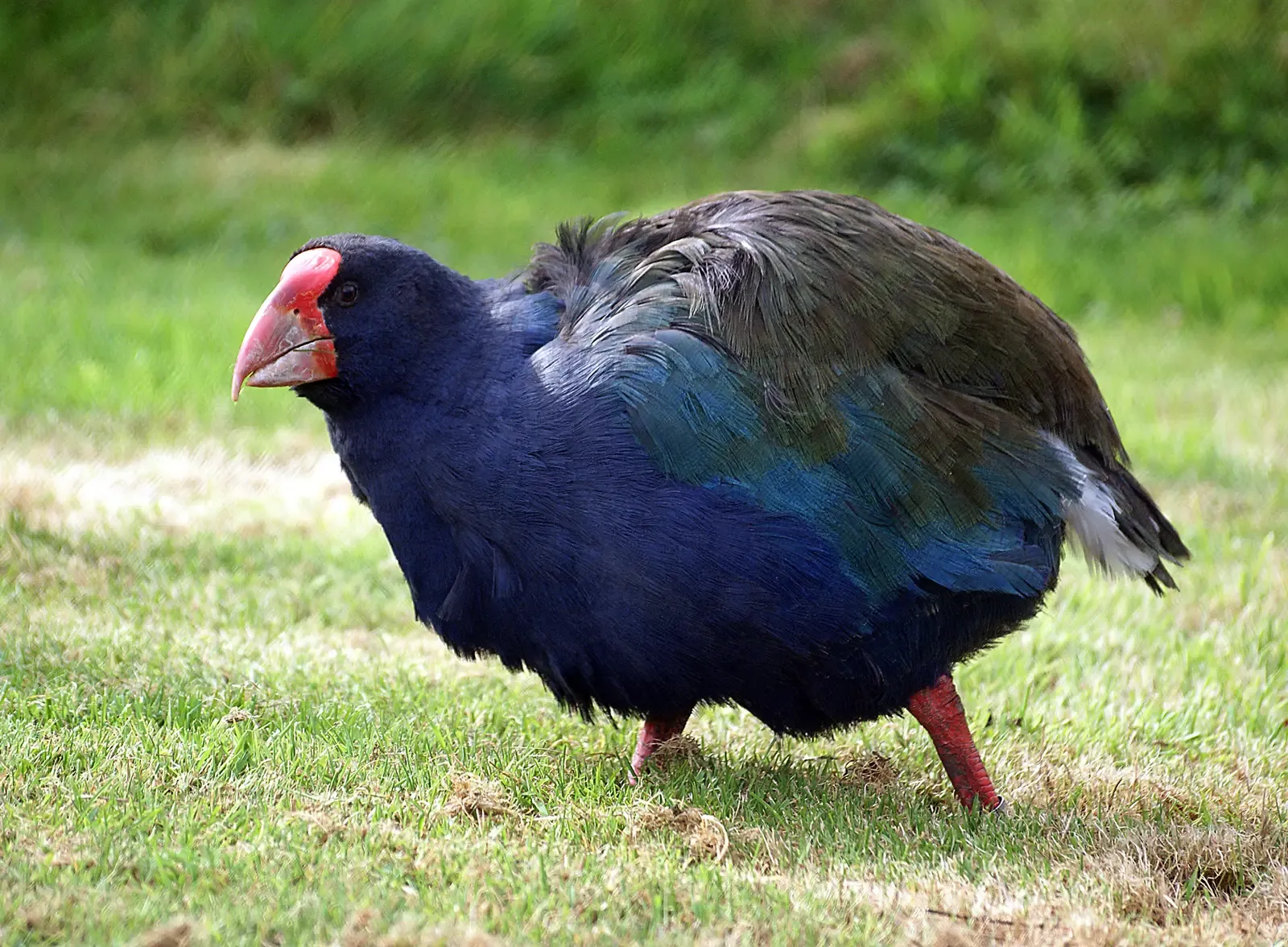
Ask New Zealanders and you’ll hear this one described as a national embarrassment that turned into a conservation win.
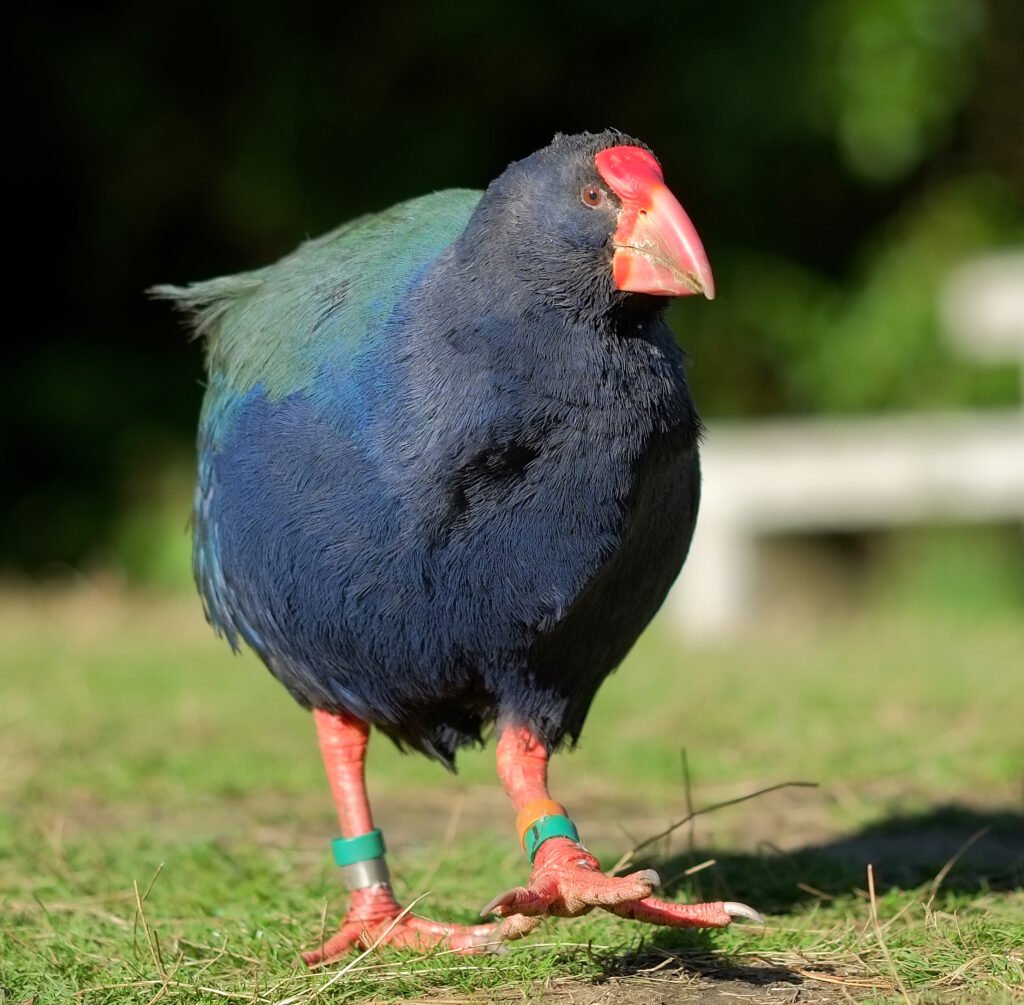
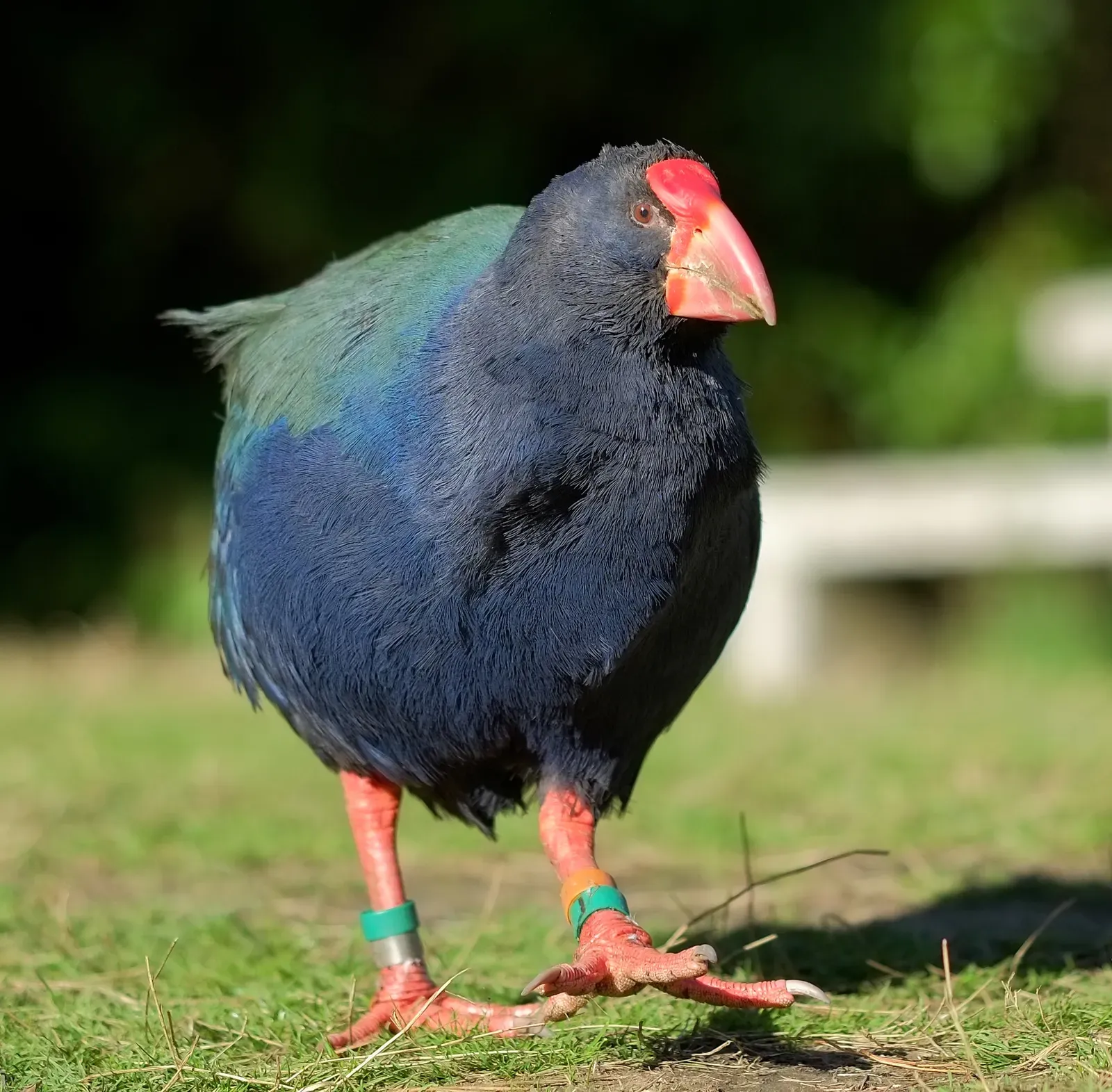
The South Island takahe – a large, flightless, deep-blue rail – was heavily hunted after Europeans colonized New Zealand. By the late 19th century, scientific expeditions failed to find any, and the species was formally declared extinct in 1898.
Yet Māori communities and some high-country farmers insisted they still saw large, heavy birds in remote alpine valleys, dismissed by many scientists as confusion with similar species. That confidence collapsed in 1948.
A team led by Dr. Geoffrey Orbell followed up on persistent local reports in the Murchison Mountains and walked straight into a small surviving population. The birds were unmistakable: huge, vividly colored, with thick red bills – an animal officially dead for 50 years was suddenly very much alive and staring back at the camera.
Since then, New Zealand has poured resources into takahe recovery, including predator control, captive breeding, and translocation to protected offshore islands and fenced sanctuaries. The bird is still endangered but no longer teetering on the edge.
What’s rarely talked about is how close we came to never knowing they’d survived at all. If Orbell hadn’t listened to local accounts and kept pushing into rugged, boggy valleys, the takahe might have died out unrecorded – and everyone would still swear that 1898 extinction date was accurate.
#4 – Night Parrot: From Birding Myth To Shock Confirmation
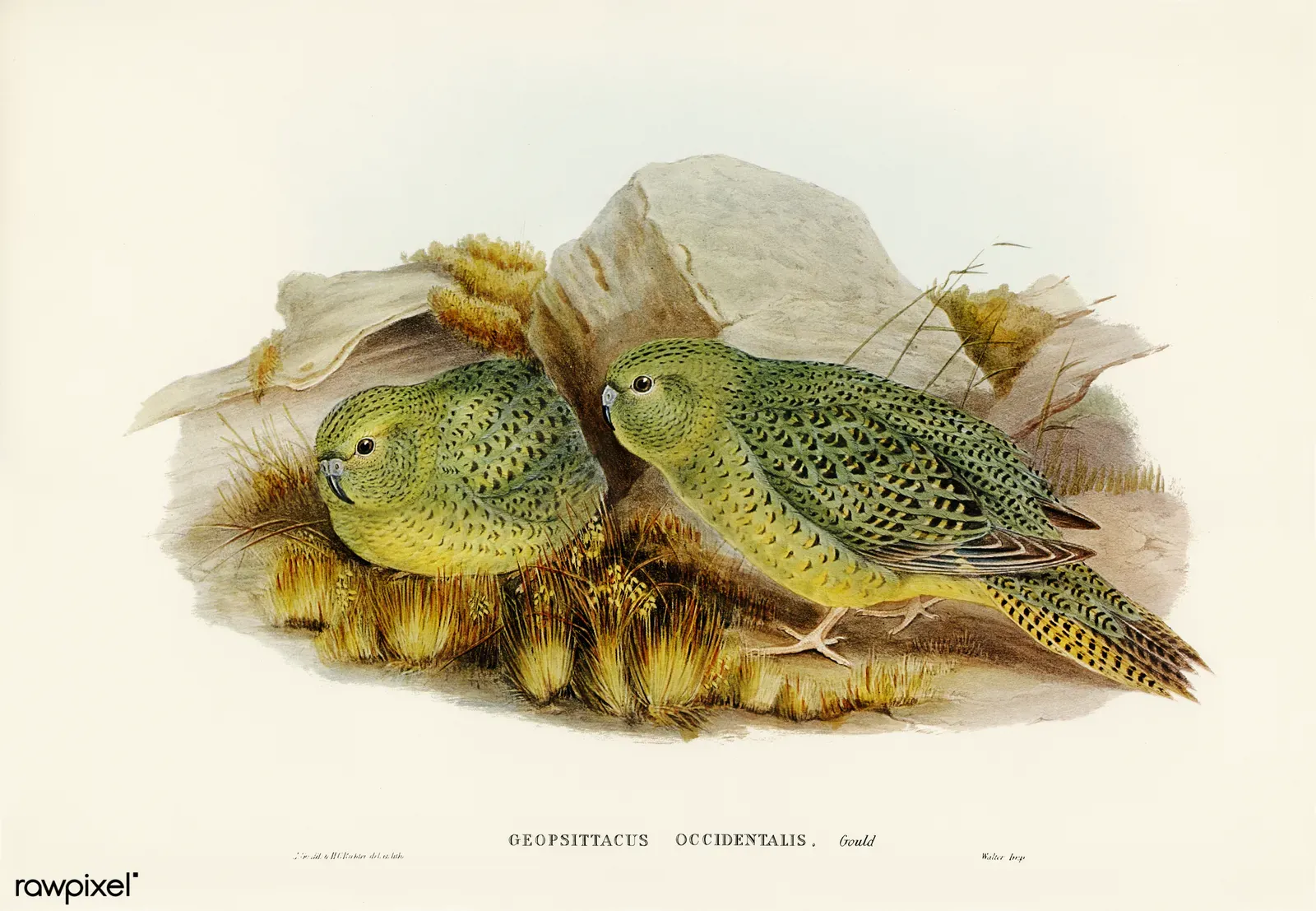
For years, the night parrot of Australia was essentially a ghost story with a Latin name and museum tags.
Described in the 19th century, this small, nocturnal parrot of arid Australia hadn’t been seen alive by scientists for over a century. Its habitat – spinifex grasslands and remote deserts – makes surveys brutally difficult, and as the decades ticked by without a live specimen, many ornithologists quietly filed it under “functionally extinct.”
Still, Aboriginal communities, station workers, and desert travelers sometimes reported small, fast-flying, greenish parrots erupting at night from low grass clumps, occasionally leaving behind distinctive feathers. Most of those reports never made it into formal literature.
Then in the 1990s and 2000s, a few dead specimens turned up – roadkill and cat kills – forcing scientists to admit the bird still existed somewhere. Rumors of calling birds and fleeting observations grew louder.
Finally, in the 2010s, targeted surveys using acoustic recorders and camera traps convincingly documented live night parrots at several sites, with photographs and recordings that held up to peer review. Controversies remain over some claims and exact locations, partly to protect the birds from disturbance, but the core fact is clear: a bird widely treated as effectively extinct persisted in scattered pockets across a vast, under-surveyed landscape.
The night parrot is a brutal reminder that absence of evidence is not evidence of absence – especially in environments almost nobody systematically walks at 2 a.m.
#3 – Pinta Island Tortoise Relatives: When “The Last One” Isn’t Actually The Last
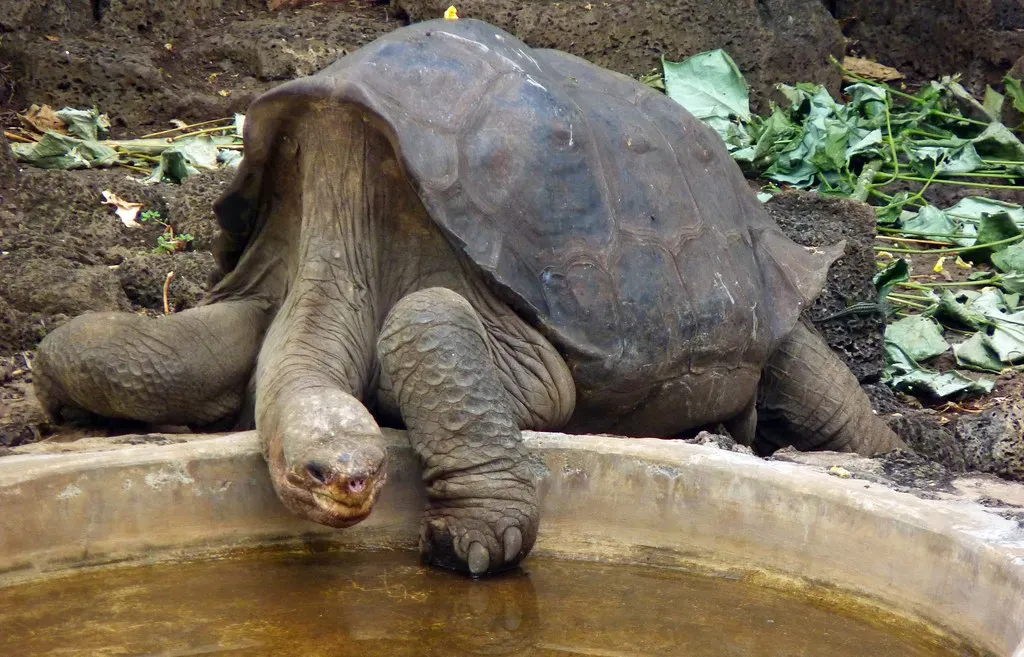
Everyone knows Lonesome George, supposedly the last Pinta Island tortoise, who died in 2012.
Galápagos giant tortoises were hammered by whalers, settlers, and introduced species. By the mid-20th century, several island populations were believed extinct, including the Pinta Island lineage.
Lonesome George was discovered in 1971 and became a symbol of irreversible loss. When he died without leaving offspring, media around the world treated it as the final, tragic closing of a chapter.
Then genetics complicated the obituary. Studies on tortoises from Isabela Island – particularly around Volcano Wolf – found individuals whose DNA contained significant ancestry from “extinct” lineages, including Pinta and Floreana.
The most plausible explanation is that sailors in the 1800s moved tortoises between islands as living food stores, mixing lineages together. That means George might not have been the last Pinta tortoise in a genetic sense – some of his relatives’ genes are probably still walking around the Galápagos inside hybrids.
Conservationists are now exploring selective breeding programs to concentrate those ancestral lineages, essentially rebuilding aspects of “extinct” tortoises over generations. Purists argue hybrids aren’t the real thing; others counter that genetics and ecological function matter more than a perfect pedigree. Either way, it’s another crack in the idea that extinction is always a clean, binary event.
#2 – Baiji River Dolphin: Officially Gone, Yet Fishermen Still Talk About It
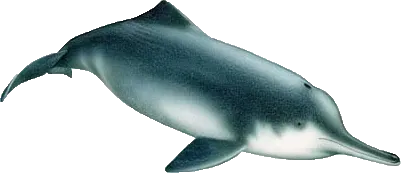
The Yangtze River dolphin, or baiji, is often cited as the first human-driven cetacean extinction.
Decades of dam building, ship traffic, pollution, and overfishing shredded the Yangtze ecosystem. Intensive surveys in the early 2000s failed to find a single baiji, and in 2007 the species was declared “functionally extinct.” Later assessments leaned toward full extinction.
Globally, conservationists held it up as a cautionary tale: even a large, charismatic mammal can disappear in a human-dominated river without much fanfare. Yet along the Yangtze, some fishermen, boat captains, and villagers still report seeing pale, long-snouted dolphins surfacing briefly in quieter stretches, especially in dawn and dusk light.
A few smartphone videos and photos have circulated, though none has convinced the scientific community. The tricky part is that the river still holds finless porpoises, which can be mistaken for baiji at a distance – though some eyewitnesses insist they know the difference, having grown up seeing both.
Most marine mammal experts are skeptical but not entirely closed to the possibility. In a river this long and heavily trafficked, a tiny remnant population would be incredibly hard to detect, especially if the animals learned to avoid boats altogether.
Still, the majority view is that the baiji is probably gone, and that clinging too hard to rumors can be dangerous if it delays the political urgency needed for river restoration. This is one of the harshest balancing acts in conservation: respect local reports without promising a miracle that may never come.
#1 – Caribbean Monk Seal: Officially Extinct, But The Ocean Doesn’t Always Care
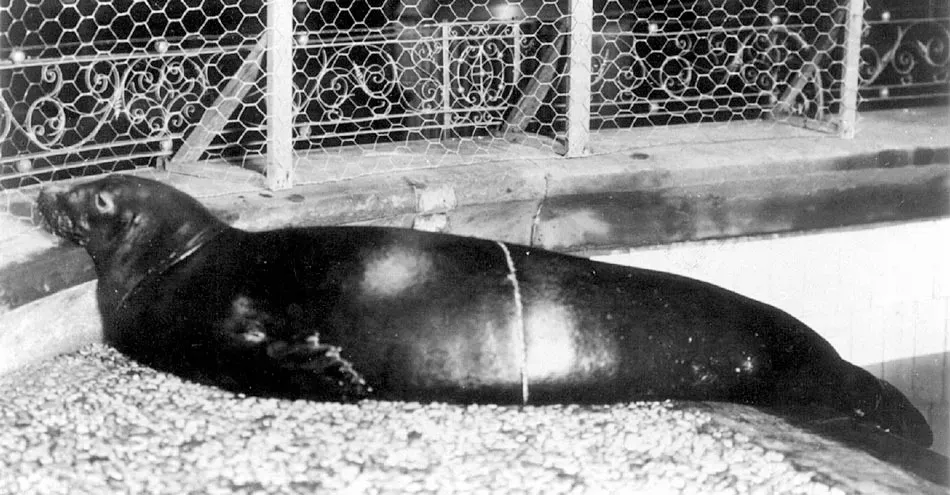
This is the one marine mammal where many field biologists admit, off the record, that they’re not entirely sure.
The Caribbean monk seal was declared extinct in 2008, after exhaustive surveys and decades without a confirmed sighting. Historically, it ranged widely through the Caribbean and Gulf of Mexico, breeding on remote sandbars and feeding in shallow coastal waters.
Heavy hunting for oil, combined with overfishing, wiped it out shockingly fast. The last verified record dates to the 1950s – that’s the clean, textbook version.
Fast Facts
- Last confirmed sighting: 1952, at Seranilla Bank between Jamaica and the Yucatán Peninsula
- Declared extinct by conservation bodies in the 1990s, then formally confirmed by NOAA in 2008
- The first seal species ever confirmed extinct specifically due to human causes
- Typical lifespan of 20 to 30 years, meaning a few individuals may have quietly survived into the 1960s or 1970s
- Modern-day “seal” sightings in the region are frequently wandering hooded or gray seals, not confirmed monk seals
Out at sea, the story is muddier. Fishermen, divers, and offshore workers have reported large, dark seals with distinctive head shapes and behavior in parts of the Gulf and Caribbean well after the supposed extinction date.
The problem is that vagrant hooded or gray seals from the North Atlantic sometimes wander south, confusing identification. But some accounts describe animals that don’t quite fit those species – animals that haul out on low, remote cays in groups, behaving more like the old Caribbean monk seal colonies described in early naturalist journals.
Unlike some cryptid-style claims, a few of these reports come with enough detail and genuine familiarity with marine life to raise eyebrows among scientists. Satellite coverage and systematic surveys of tiny islets and offshore platforms are still patchy, so it’s entirely possible the extinction call is correct – and equally possible that a micro-population persisted longer than anyone realized, and maybe still hangs on in some little-visited corner.
Until there’s a carcass, a clear photo, or DNA, we simply won’t know. That uncertainty is exactly what keeps this species alive in rumor, if not in the record books – and it says a lot about how casually we use the word “gone.”
The Bottom Line
The uncomfortable truth is that “extinct” isn’t always a scientific verdict – it’s often a best guess stamped with legal weight and emotional finality.
The ivory-billed woodpecker and baiji show how quickly agencies will close the file when evidence gets thin. The coelacanth, Lord Howe stick insect, takahe, and Cuban solenodon prove that animals we confidently bury can – and do – walk back into frame decades later.
Other cases, like the Javan elephant and the Pinta tortoise’s scattered genes, reveal how survival can hide in DNA long after we’ve declared a lineage finished.
Here’s the part most people don’t like hearing: sometimes locals, fishers, and hikers are closer to the truth than official lists, and sometimes they’re not. Pretending every rumor is proof is reckless. Pretending all of them are nonsense is worse.
My honest take? Extinction is real, and we’re driving it at a terrifying scale – but our timelines and our certainty are frequently wrong, usually because nobody bothered to look hard enough in the right swamp, valley, or reef. The real lesson from these “gone but not gone” animals isn’t hopeful optimism that everything comes back. It’s a warning that we are far more ignorant of the wild than we admit, especially in places that are hard to reach or politically inconvenient to protect.
So here’s the question worth sitting with: how many living species are we already treating like they’re gone, simply because we stopped looking?