
Most people assume paleontology is basically a finished science, that fossils get dug up, dated, and slotted neatly into the tree of life within a few years. That assumption is wrong. Some of the most famous fossils on Earth have sat in museum drawers for over half a century while scientists argued – sometimes furiously – about what they actually were. A few have been reclassified five or six times. Others are still unsolved today, despite CT scanners, electron microscopes, and DNA analysis.
Here’s what actually happened when scientists tried to figure them out – and why some of these arguments still haven’t ended.
#1 – The Tully Monster: A 300-Million-Year-Old Identity Crisis
No fossil embodies scientific whiplash quite like the Tully Monster.
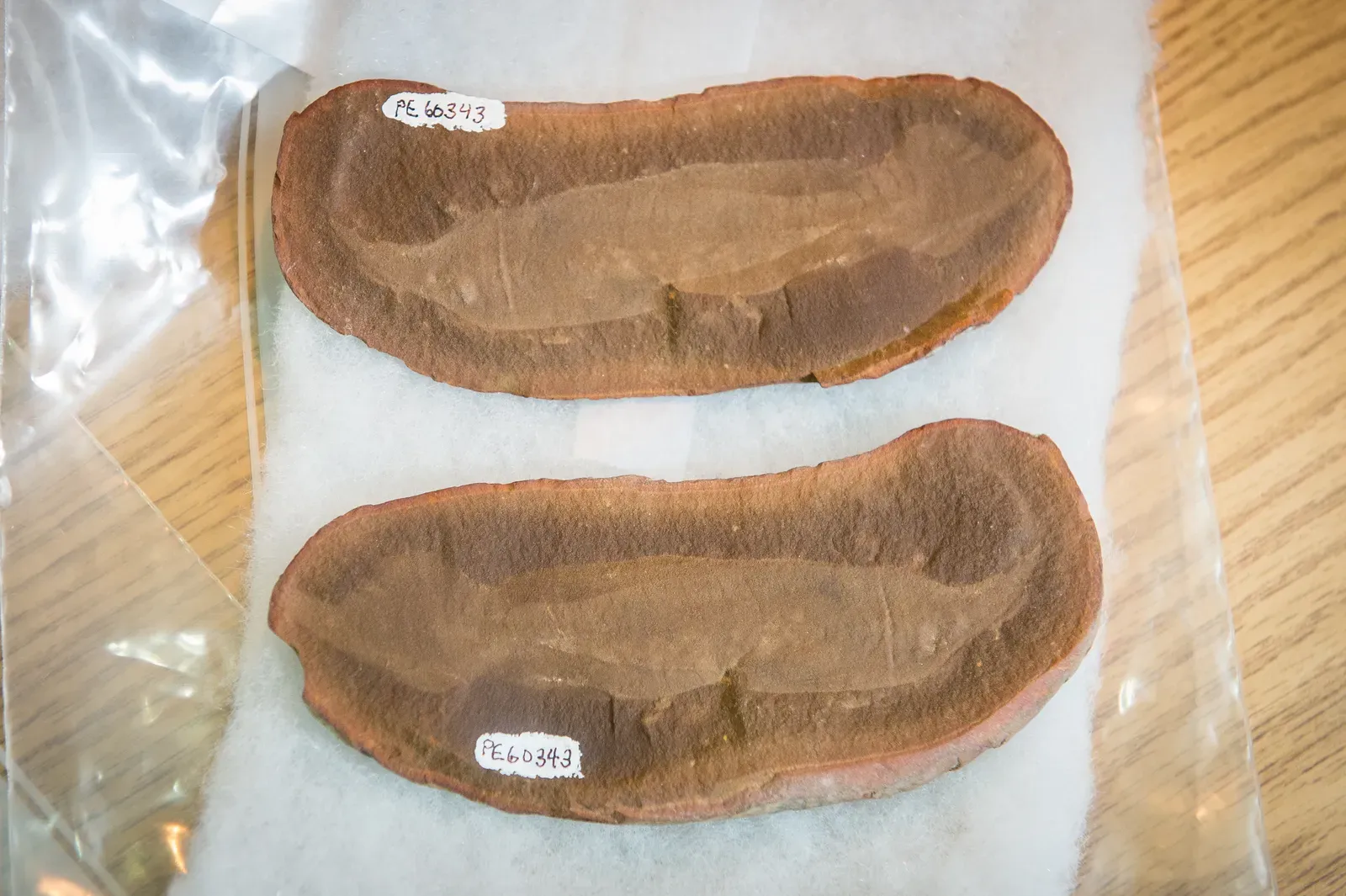
Discovered in 1958 by an amateur collector in Illinois, the zoological affinities of this soft-bodied animal known as the Tully monster have remained mysterious since its discovery. It’s a bizarre-looking animal, described as having a fish-like body featuring prominent eyes at each end of a horizontal bar, and jaws on the end of a long, jointed proboscis. Over the decades, scientists have compared it to nemertean and polychaete worms, molluscs, conodonts and even stem-group arthropods.
In 2016, two major studies seemed to finally settle it, concluding it was a vertebrate placed on the stem lineage to lampreys, resolving the nature of a soft-bodied fossil which had been debated for more than 50 years. Case closed, right? Not even close.
Other researchers immediately pushed back, arguing the supposed vertebrate features didn’t hold up under scrutiny. A 2023 Japanese study using 3D X-ray imaging found detailed characteristics that strongly suggest it was not a vertebrate after all, pointing to segmentation in its head region not known in any vertebrate lineage. The kicker? Even the “final answer” admits its exact classification and what type of invertebrate it was is still to be decided. But #2 makes this identity crisis look tame.
#2 – Hallucigenia: The Worm That Was Fossilized Upside Down and Backwards
For nearly two decades, paleontologists literally had this animal flipped completely wrong – in every possible direction.
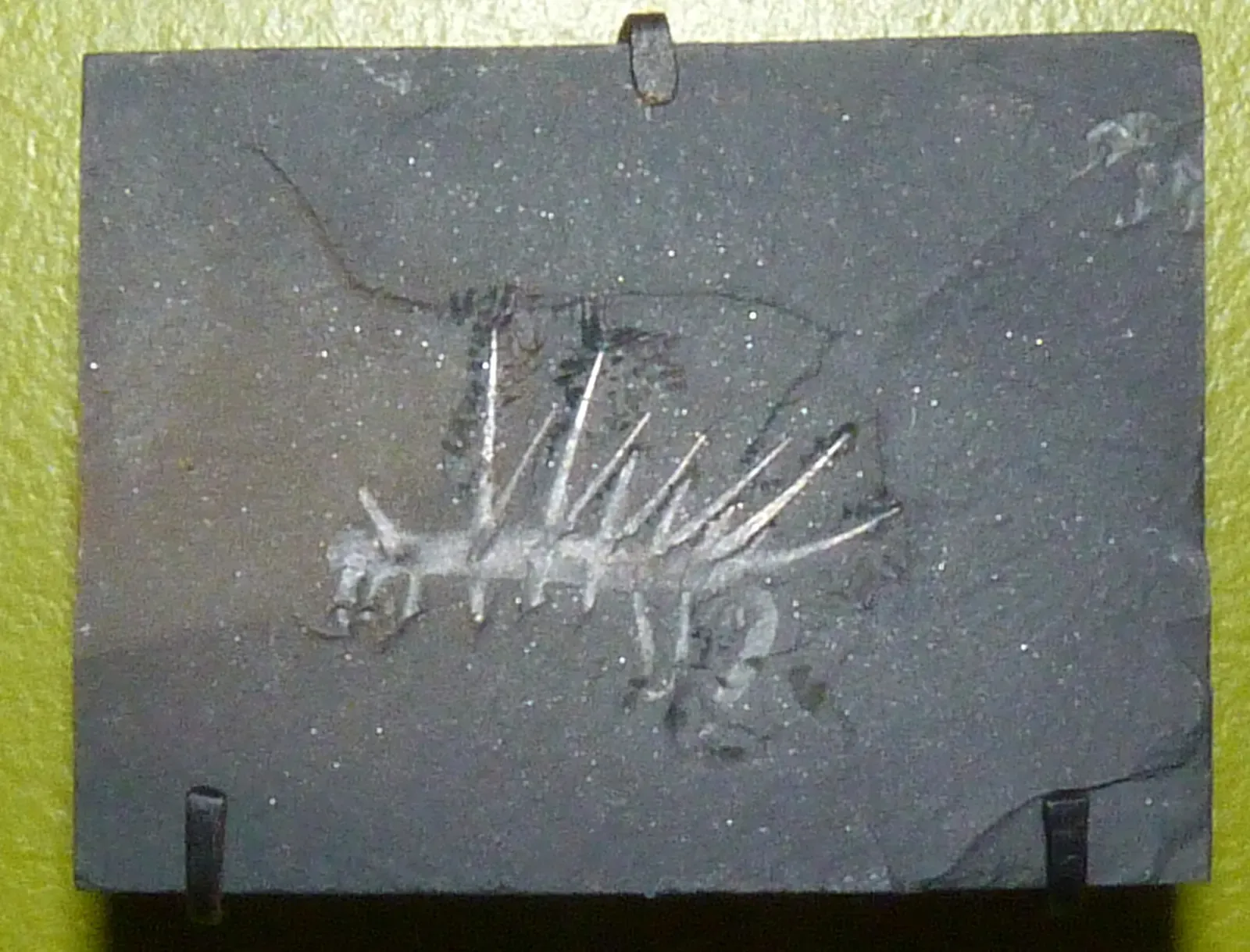
When researchers first discovered the fossil worm Hallucigenia in the 1970s, they were so perplexed they identified its head as its tail and its legs as its spines. It wasn’t corrected until 1992, when a researcher turned the reconstruction right-side up. Even then, the mystery wasn’t over – scientists still couldn’t agree which end was the front.
The real twist came from a strange blob visible on every specimen. Researchers originally thought this large balloon-like orb at one end was the head, but demonstrated it wasn’t part of the body at all – just a dark stain from decay fluids that oozed out during burial. The actual head had been hiding at the opposite end the entire time, buried in sediment.
It took a 2015 Nature study using electron microscopy to finally crack it. Researchers found eyes and were astonished when they also found teeth smiling back at them, revealing a ring of teeth that could help answer questions about the early development of moulting animals. Yet even that discovery is mild compared to what happened with #3.
#3 – Helicoprion: The Shark With a Buzzsaw for a Mouth
Imagine finding a fossilized weapon with absolutely no idea what body it belonged to.
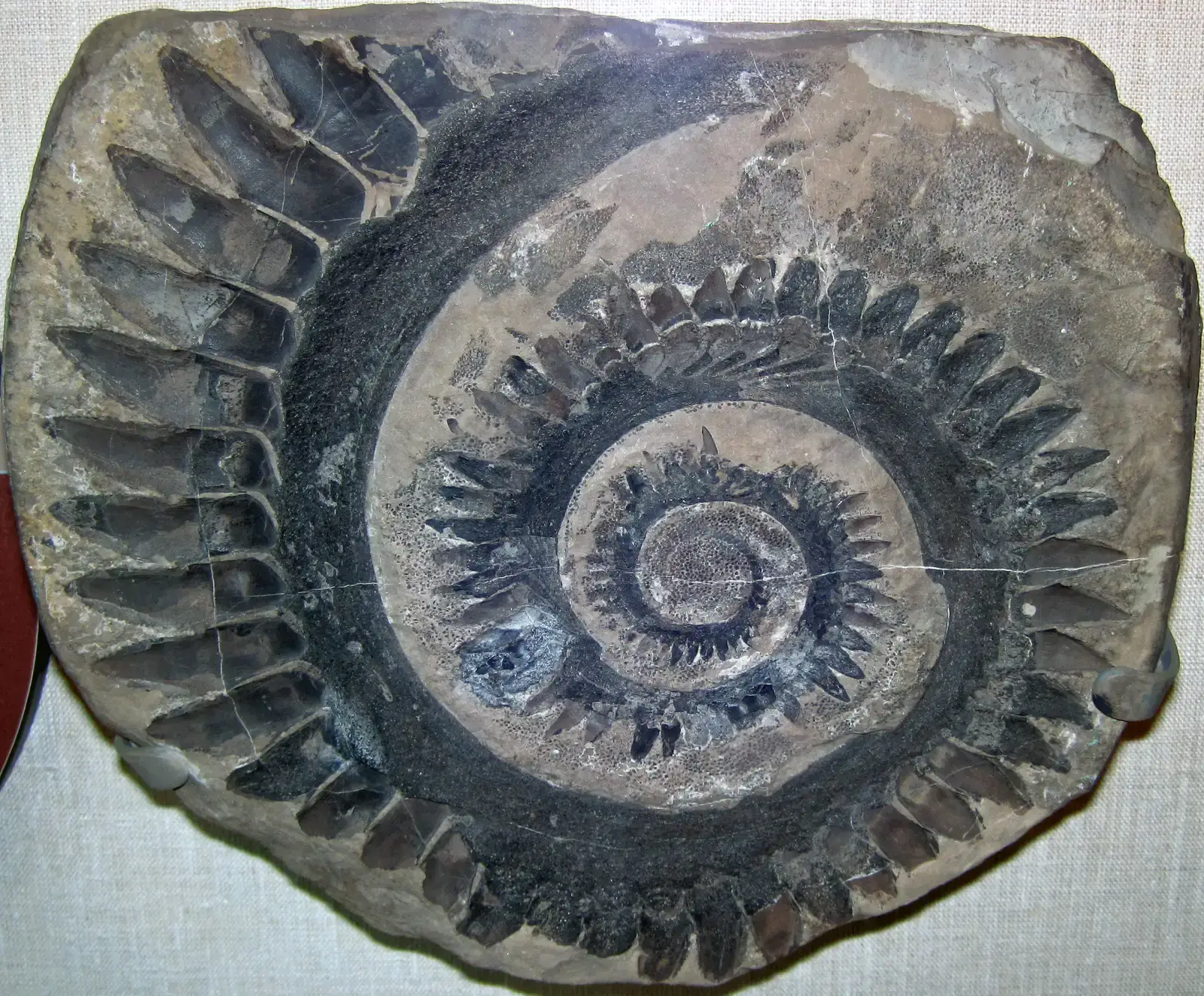
That’s exactly what happened with Helicoprion. Scientists have known since 1899 that this six-meter-long, shark-like creature had a whorl of fused teeth somewhere in its makeup, but the original discovery found this mysterious body part detached from the rest of the animal, with no good indication of its location. For over a century, artists and scientists proposed wildly different placements – on the tail, the dorsal fin, curling out of the snout, or dangling from an extendable tentacle-like lower jaw.
The debate raged for more than 110 years before CT scans settled it. In 2013, researchers finally proved the whorl fit in the back of the mouth, right next to the back joint of the jaw, refuting the idea it might have been located at the front. The whorl held every tooth the animal ever grew, since older teeth were pushed toward the center as new ones emerged.
Even stranger, later study revealed Helicoprion isn’t even a true shark – it’s closer to modern chimaeras within the group Holocephali. A century of shark reconstructions, essentially, were wrong from the start. Still, nothing rewired reconstructions quite like #4.
Fast Facts
- First described in 1899 from an isolated tooth whorl with no attached skeleton
- Estimated body length of roughly six meters (about 20 feet)
- Placement debate lasted more than 110 years before CT scans settled it
- 2013 imaging finally located the whorl deep in the back of the jaw
- Later reclassified as a relative of modern chimaeras, not a true shark
#4 – Deinocheirus: The Dinosaur Known Only By Its Terrifying Arms
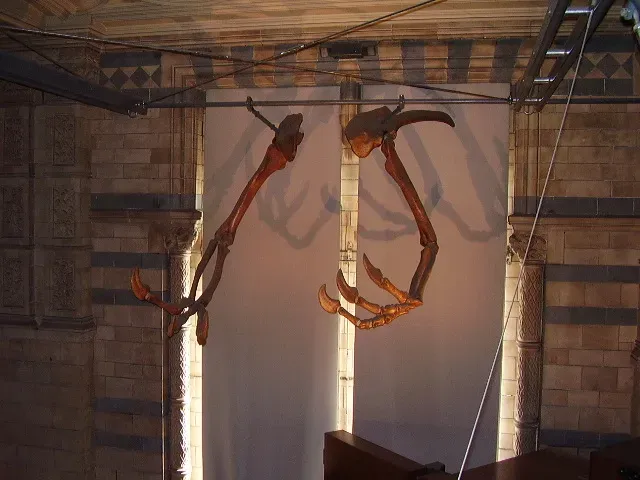
For nearly fifty years, this dinosaur existed in the scientific record as nothing but two horrifying eight-foot arms.
The original set of massive arms were discovered in 1965 in Mongolia, and at 2.4 meters long, they held the record for the longest forelimbs of any two-legged animal. Paleontologists had almost nothing else to work with – the rest of the skeleton was missing, save for a few uninformative fragments, despite repeated expeditions back to the site.
Speculation ran wild for decades. Was it a giant predator? A slow-moving herbivore? Whether the dinosaur was a carnivore, herbivore, or omnivore was completely unknown and open to speculation. It wasn’t until 2014 that two more complete skeletons – partially recovered from fossil poachers – finally solved the puzzle.
The reveal was stranger than anyone predicted. Deinocheirus turned out to be a chimera-like creature, with ornithomimid-like arms, tyrannosaurid-like legs, Spinosaurus-like vertebral spines, sauropod-like hips, and a hadrosaur-like duckbill and foot-hooves. It stood over 16 feet tall, had a toothless beak, a humped back, and likely waded through rivers eating fish and plants. As strange as that is, #5 raises a question with even bigger stakes.
#5 – Longisquama: The Reptile That Might Have Grown Feathers Before Birds Existed
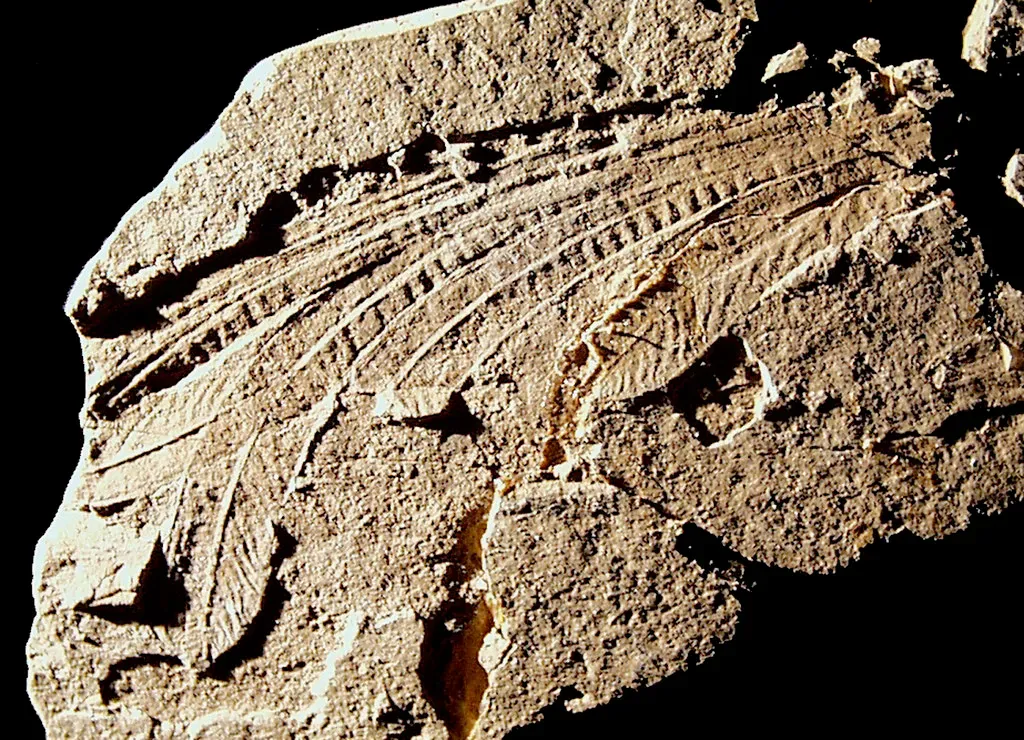
This one is still actively dividing scientists today, and there’s a good reason nobody can settle it.
Longisquama insignis lived roughly 240 million years ago in what’s now Kyrgyzstan, long before the first true dinosaurs appeared. It’s known from a single, poorly preserved slab showing a small reptile with a row of extraordinarily long, paired frond-like structures running down its back. The structures look startlingly feather-like, complete with what some researchers describe as a central shaft and branching filaments.
The controversy exploded because if those structures really are proto-feathers, it would mean feather-like integument evolved in reptiles tens of millions of years before birds – and possibly before dinosaurs existed at all. Other paleontologists insist the appendages are simply elongated, keeled scales that have nothing to do with feather evolution, pointing out that Longisquama isn’t closely related to the archosaur lineage that produced birds.
Making matters worse, the original fossil slab has reportedly been lost or is inaccessible for restudy, meaning researchers are stuck arguing over old photographs and casts instead of the physical specimen itself. Without fresh material, this argument may never be fully resolved – it simply doesn’t have enough evidence to close the case either way. Compared to what happened with #6, though, this argument is almost quiet.
#6 – Nectocaris: The Fossil That Rewrote Squid History Overnight
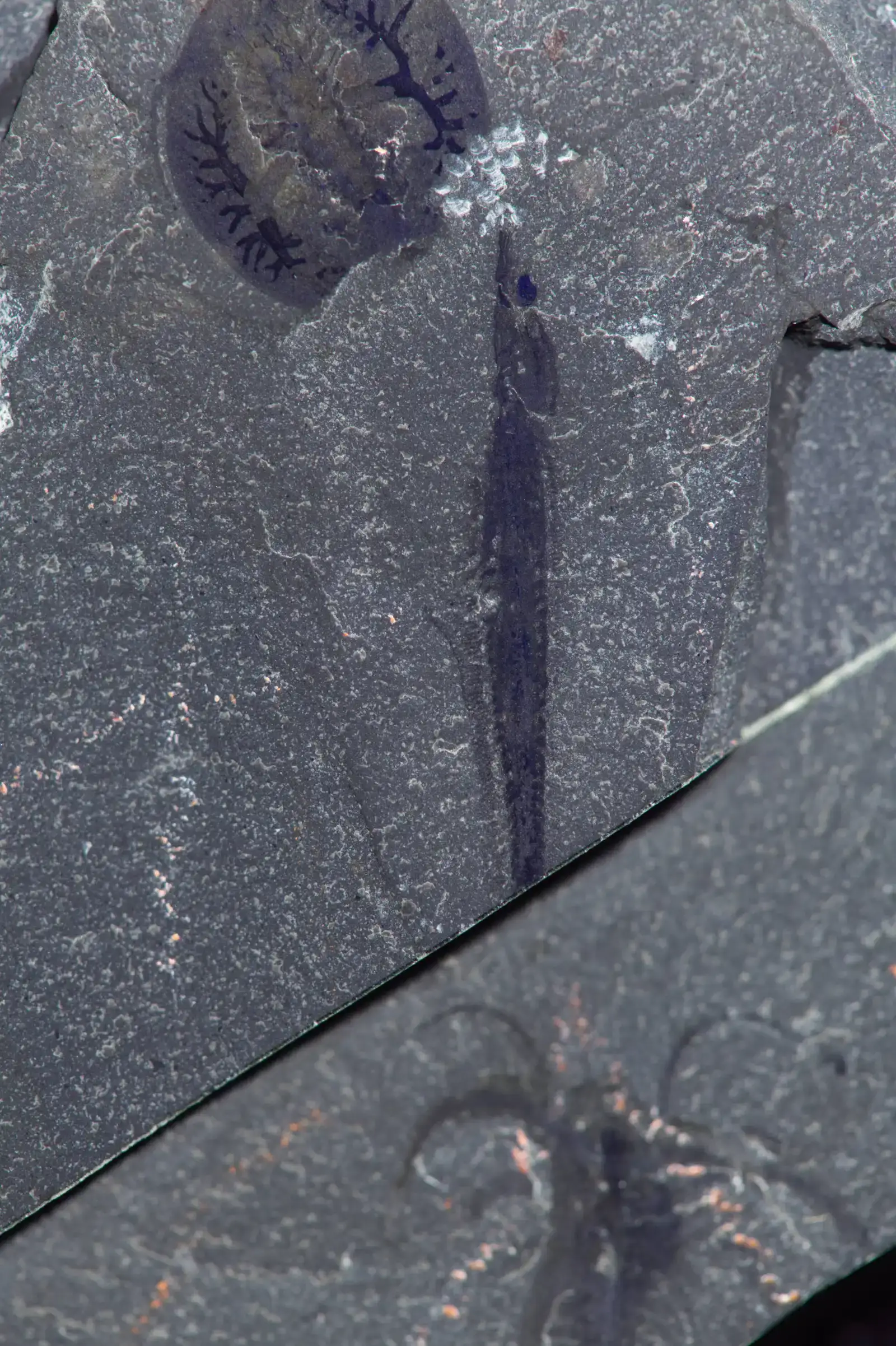
Sometimes a single reinterpretation can shove an entire animal group’s origin story back tens of millions of years.
When Nectocaris pteryx was first described in 1976 from a solitary Burgess Shale fossil, it was interpreted as an odd, shrimp-like arthropod with a strange fin-like tail. For over three decades it sat quietly in scientific literature as a minor curiosity, rarely mentioned outside specialist circles.
Then in 2010, a fresh batch of newly discovered specimens completely upended that story. Researchers realized Nectocaris actually had two long, forward-facing tentacles, a flexible funnel-like structure, and large camera-type eyes – anatomy that looks remarkably like a soft-bodied cephalopod, the group that includes modern squid and octopuses. The catch: it lacked a shell entirely, unlike every other early cephalopod relative known at the time.
If the interpretation holds, Nectocaris would push the origin of cephalopods back by tens of millions of years and suggest the group started out shell-less before some lineages evolved shells later. Critics remain unconvinced, arguing the anatomy is too ambiguous to confidently place it with cephalopods at all. Decades after its first description, this “shrimp” still refuses to reveal its true identity. It gets stranger. Just wait for #7.
#7 – Dickinsonia: Is It Even an Animal?
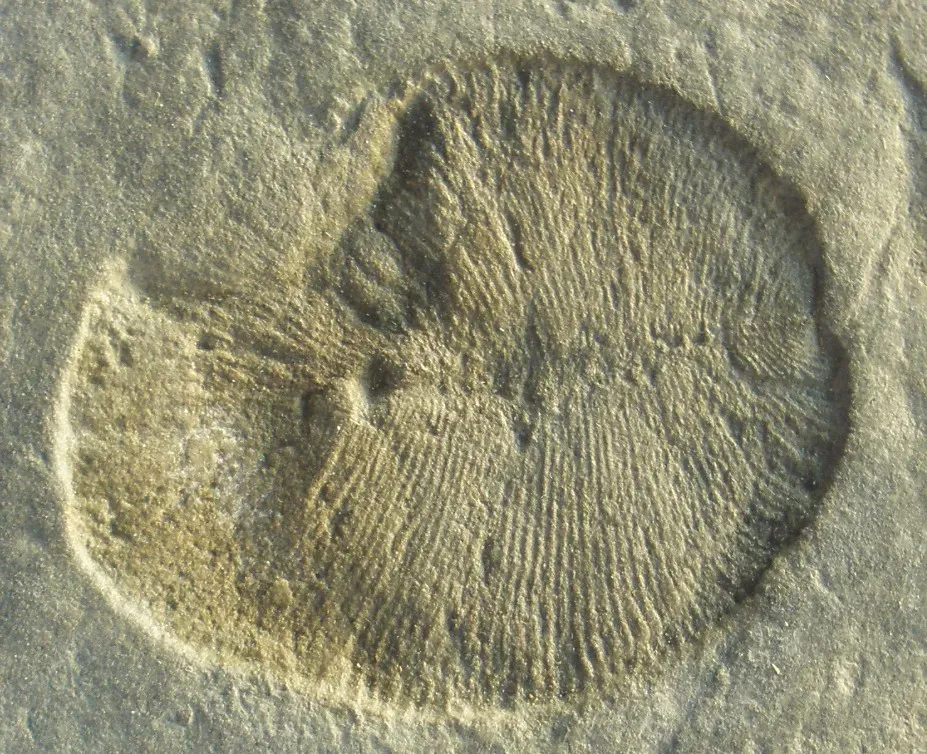
This one might be the single biggest identity crisis in the entire fossil record, because for decades scientists couldn’t even agree it belonged in the animal kingdom.
Dickinsonia is a flat, oval, ribbed organism that lived roughly 558 million years ago during the Ediacaran Period, before the famous Cambrian Explosion. It could grow over a meter long, yet it left behind no mouth, no gut, no limbs, and no obvious sensory organs in its fossilized impressions. That absence of familiar anatomy sparked one of paleontology’s longest-running debates.
Proposed identities over the decades have included a giant single-celled protist, a lichen or fungus, a completely extinct “failed kingdom” of life unrelated to anything alive today, and – the theory that eventually won out – a genuinely primitive animal. The breakthrough came from chemistry, not anatomy. In 2018, researchers extracted cholesterol molecules preserved within Dickinsonia fossils, a biomarker strongly associated with animal life rather than fungi or bacteria.
That discovery effectively confirmed Dickinsonia as one of the oldest confirmed animals on Earth, but it didn’t end the argument entirely. Scientists still debate exactly how it fed, how it moved, and where precisely it sits on the animal family tree – some still suspect it doesn’t belong to any group of animals alive today. That’s a strange twist – but #8 is even harder to explain.
Worth Knowing
- Lived roughly 558 million years ago, before the Cambrian Explosion
- Could grow over a meter long despite having no mouth, gut, or limbs
- Proposed identities ranged from a giant protist to a lichen to an entirely extinct kingdom
- 2018 discovery of preserved cholesterol molecules confirmed it as an animal
- Its feeding method and exact family-tree placement are still debated
#8 – Concavenator: The Dinosaur With Two Mysterious Humps
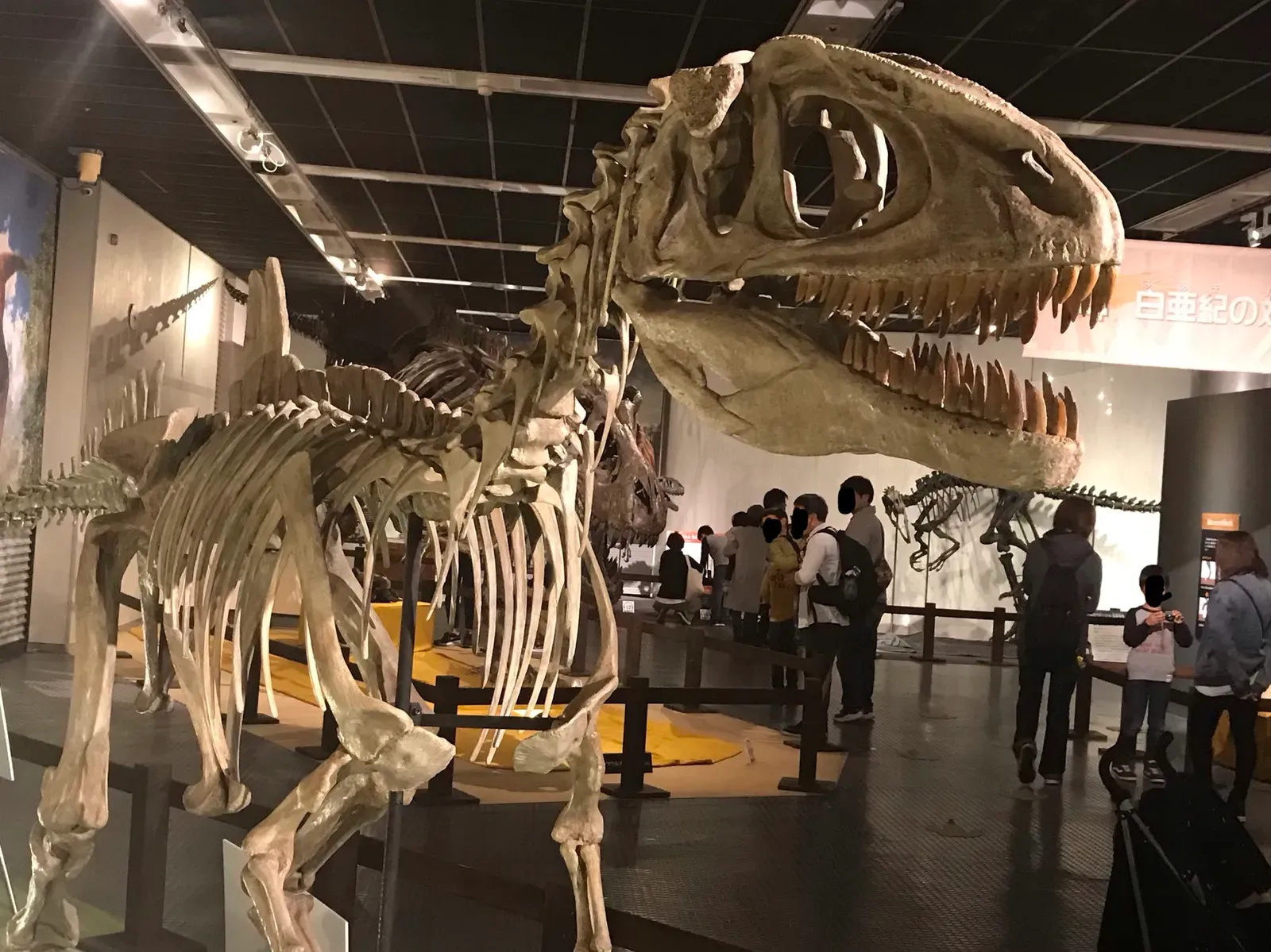
Even among dramatic dinosaur skeletons, this one stands out for a feature nobody can fully explain.
Concavenator corcovatus was a large predatory theropod that lived in what’s now Spain during the Early Cretaceous. Its skeleton reveals two tall, blade-like bony spines rising from vertebrae just before the hips, creating a strange double-humped silhouette unlike anything seen in closely related predators. Nothing about its skull or limbs explains why these structures exist.
Theories have piled up for years. Some researchers argue the humps supported a fatty hump, similar to a camel, used for energy storage during lean periods. Others suggest they anchored a display structure covered in skin or crest-like tissue, used purely for signaling to rivals or mates. A third camp proposes a role in thermoregulation, helping the animal shed excess body heat.
Adding fuel to the fire, some paleontologists identified small bumps along the dinosaur’s forearm that resemble “quill knobs” – the anchor points for feather-like structures in birds and some other theropods. Critics dispute this interpretation entirely, since Concavenator isn’t closely related to known feathered dinosaur lineages, making feathers on this animal a genuinely surprising claim if true. Neither the humps nor the arm bumps have a universally accepted explanation today. None of that compares to the wing nobody expected on #9.
#9 – Yi qi: The Dinosaur With Bat Wings
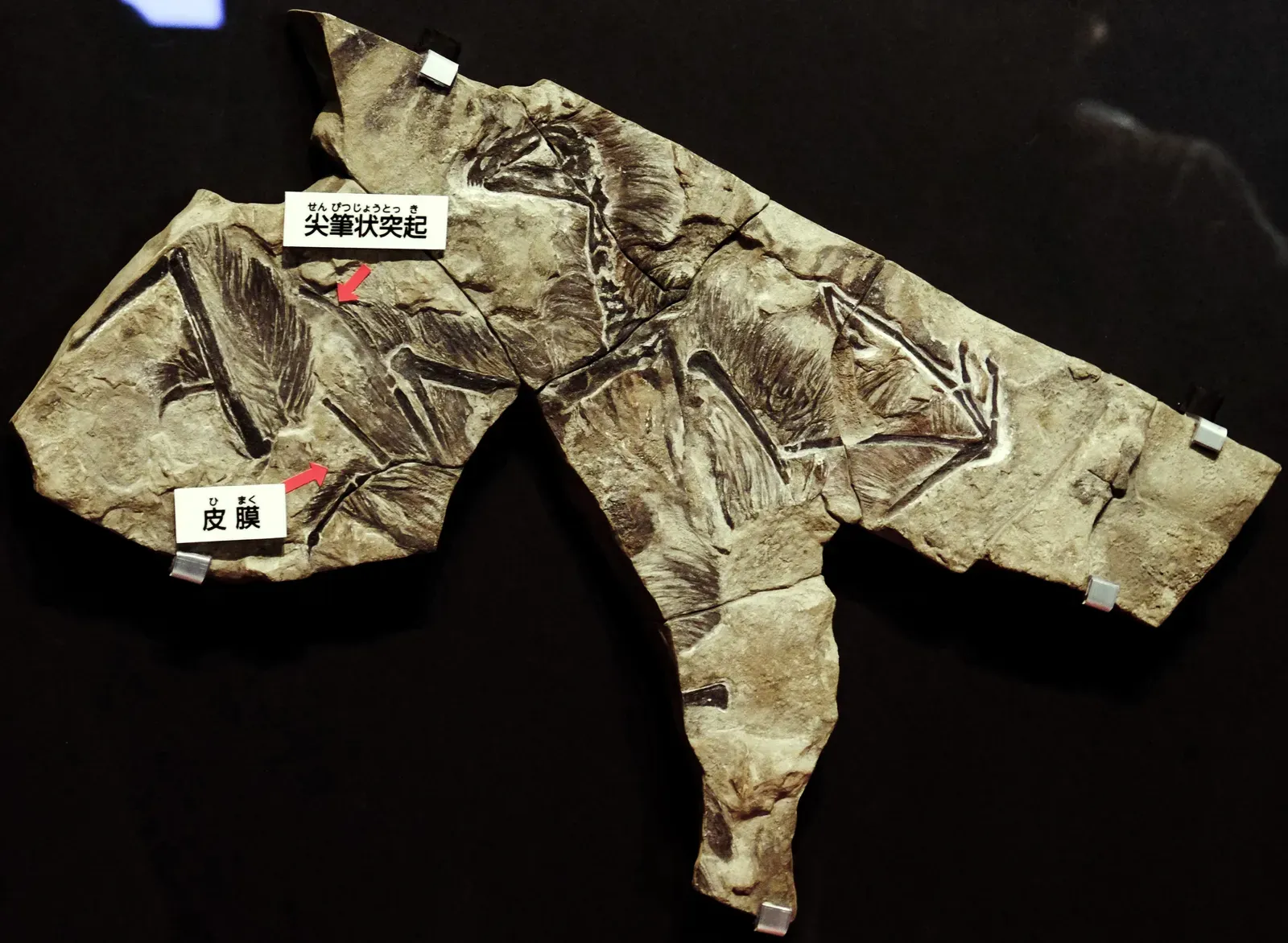
If you had to design the strangest possible wing for a dinosaur, you might accidentally invent Yi qi.
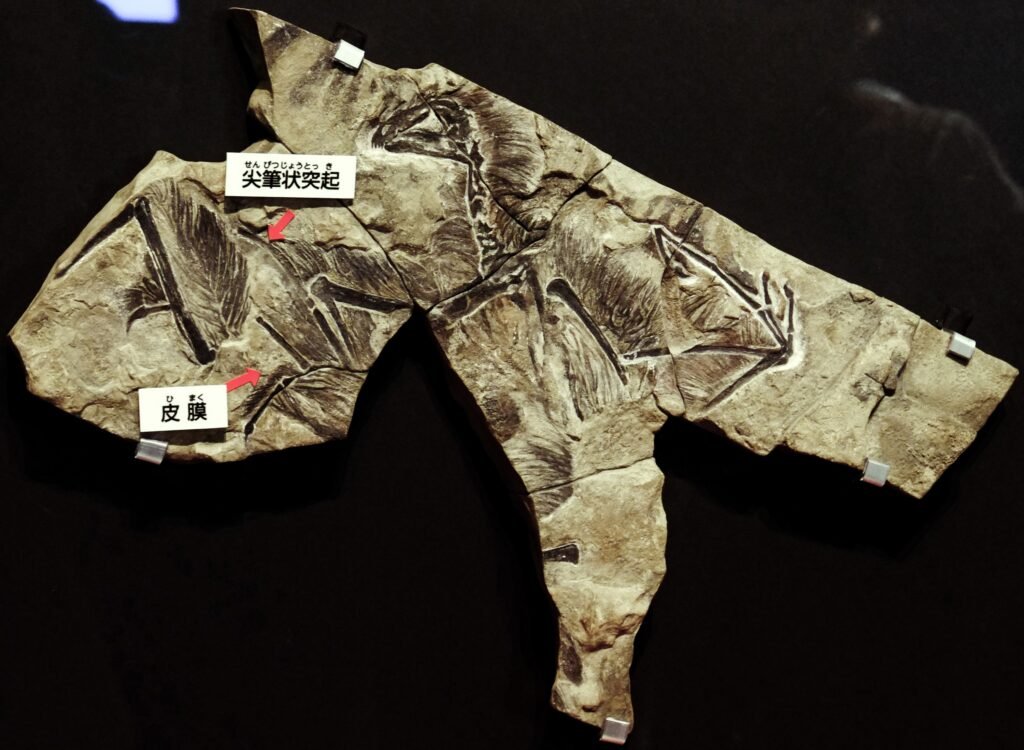
This small, crow-sized dinosaur lived in China roughly 160 million years ago and belongs to a bizarre little group called scansoriopterygids. Instead of feathered wings like other flying or gliding dinosaurs, Yi qi had membranous skin stretched across its arms, supported by a strange, rod-like wrist bone found in no other known dinosaur. That bone essentially acted like a bat’s extended finger, holding the membrane taut.
This wing design has no true parallel anywhere else in the dinosaur fossil record, which is exactly why it has confused researchers since its 2015 description. Nobody knows for certain whether Yi qi could achieve powered flight, could only glide short distances between trees, or barely got off the ground at all. Biomechanical models built from the single known specimen have produced conflicting conclusions.
The specimen itself is also incomplete and poorly preserved, meaning researchers are forced to reconstruct wing shape and flight capability from limited, ambiguous evidence. Until more specimens surface, Yi qi remains a genuine evolutionary dead end that briefly experimented with a wing design nature apparently abandoned. As odd as that sounds, #10 hides an even weirder secret – literally inside its body.
Quick Compare
- Powered flight: some biomechanical models suggest active wingbeats were possible
- Gliding only: other reconstructions favor short glides between trees
- Minimal flight: a few analyses suggest it barely left the ground at all
#10 – Typhloesus: The “Alien Goldfish” With Someone Else’s Teeth Inside It
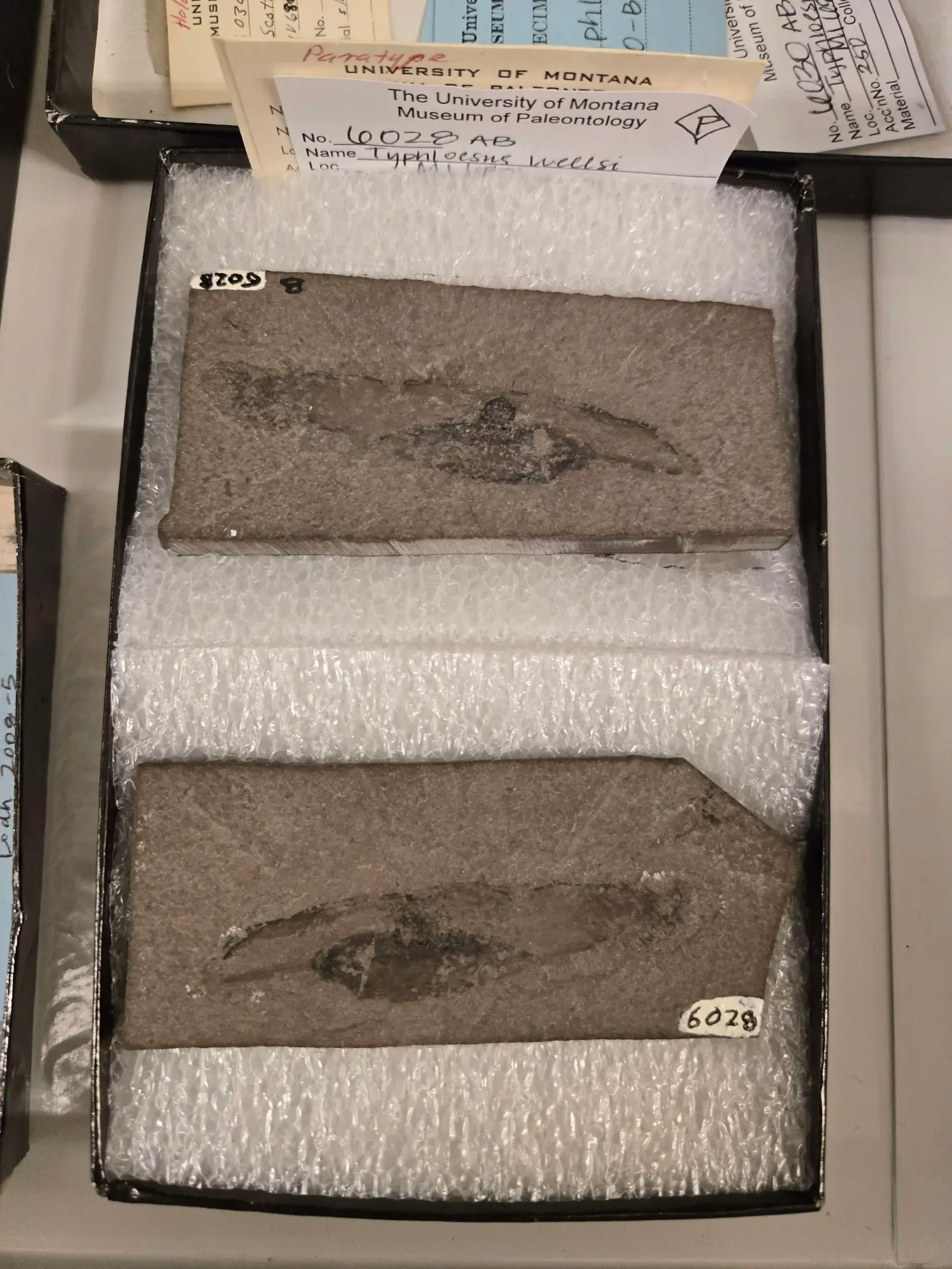
Nicknamed by researchers for its bizarre, otherworldly shape, this fossil hides one of paleontology’s strangest internal mysteries.
Typhloesus wellsi comes from the roughly 330-million-year-old Bear Gulch limestone deposit in Montana, a site famous for preserving soft-bodied animals in exceptional detail. The animal itself was torpedo-shaped, finned, and entirely soft-bodied, with no shell, no obvious limbs, and no clear relatives among any living animal group. That alone made it hard to classify.
The real head-scratcher lies inside its body. Fossils of Typhloesus consistently contain small, tooth-like structures called conodont elements – the same type of feeding apparatus used by an entirely separate group of ancient eel-like animals. For decades, nobody could agree whether these teeth belonged to Typhloesus itself or were simply its last meal, swallowed shortly before death.
If the conodont elements were its own mouthparts, Typhloesus would need to be reclassified into a completely different part of the tree of life than currently assumed. If they were prey, the fossil is simply an ordinary predator caught with dinner in its stomach. Without more specimens, researchers still can’t rule out either possibility, leaving this “alien goldfish” in permanent classification limbo. Even that mystery pales next to the identity puzzle waiting in #11.
#11 – Vetulicola: The Cambrian Creature With a Box for a Head
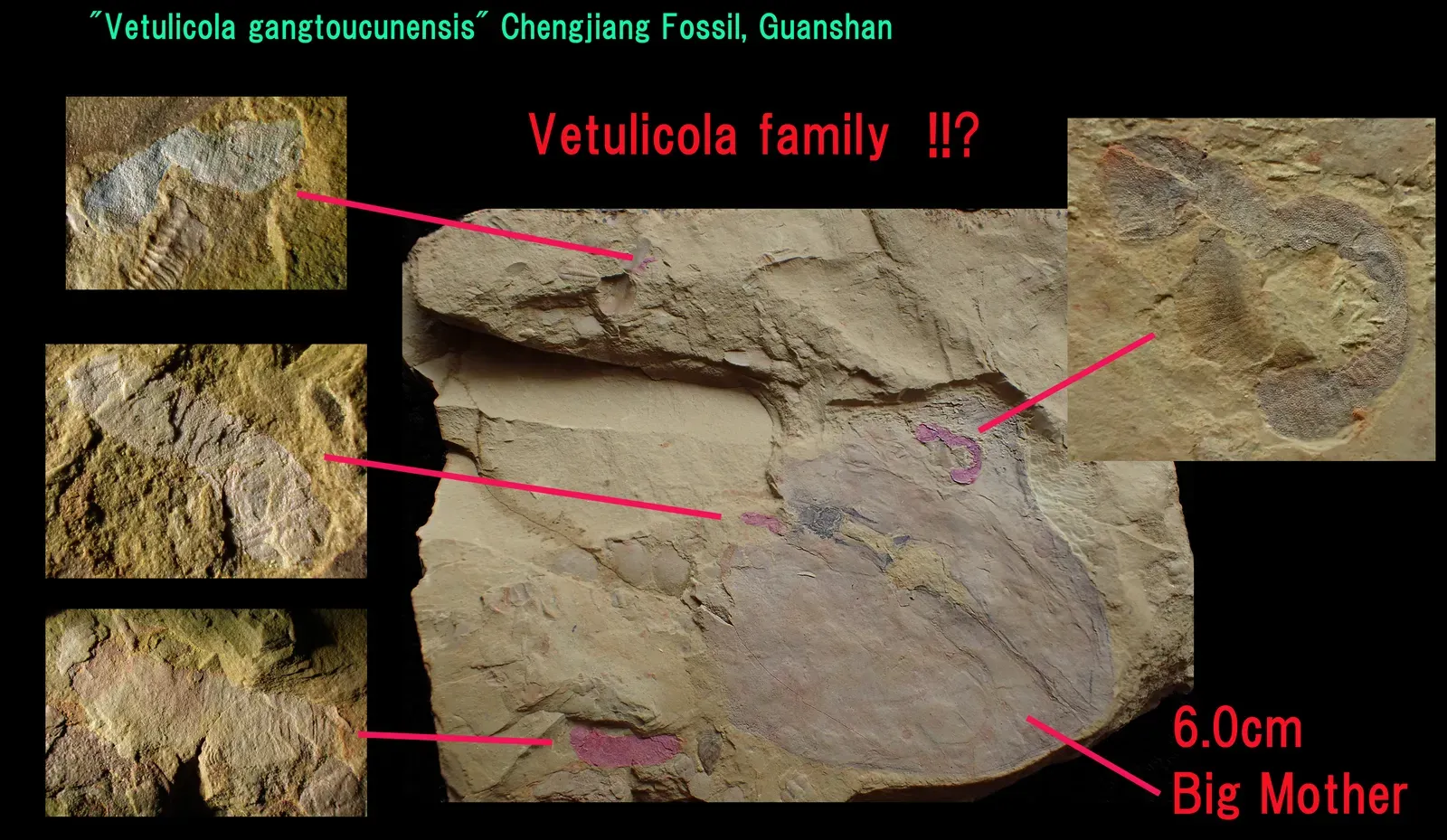
Few Cambrian fossils look quite as engineered as Vetulicola, and that unusual design has kept scientists arguing about its place in evolution for years.
Discovered in China’s Chengjiang fossil beds, Vetulicola had a rigid, box-shaped front half enclosed in what looks almost like an armored shell, attached to a flexible, segmented tail. Nothing about its body plan closely resembles typical arthropods, typical worms, or any other well-understood Cambrian group, which made it nearly impossible to slot into existing classification schemes when it was first described.
Two competing camps have formed. One argues Vetulicola is an early arthropod relative, pointing to its jointed, segmented appearance. The other insists it belongs closer to the deuterostome lineage – the broad evolutionary branch that eventually led to fish, amphibians, and humans – based on subtle features of its body openings and gill-like structures.
The stakes of this debate are unusually high, because placing Vetulicola correctly could reshape scientists’ understanding of when and how our own deep evolutionary lineage first branched off during the Cambrian Explosion. Until more transitional fossils turn up, Vetulicola remains stuck in taxonomic no-man’s-land. But nothing tops the case of mistaken identity in #12.
At a Glance
- Discovered in China’s Chengjiang fossil beds, a key Cambrian Explosion site
- Body split into a rigid, box-like front half and a flexible, segmented tail
- One hypothesis links it to early arthropods
- Another places it near deuterostomes, the lineage leading to fish and humans
- Correct classification could reshape timelines for our own evolutionary origins
#12 – Anomalocaris: The Predator Scientists Accidentally Split Into Three Different Animals
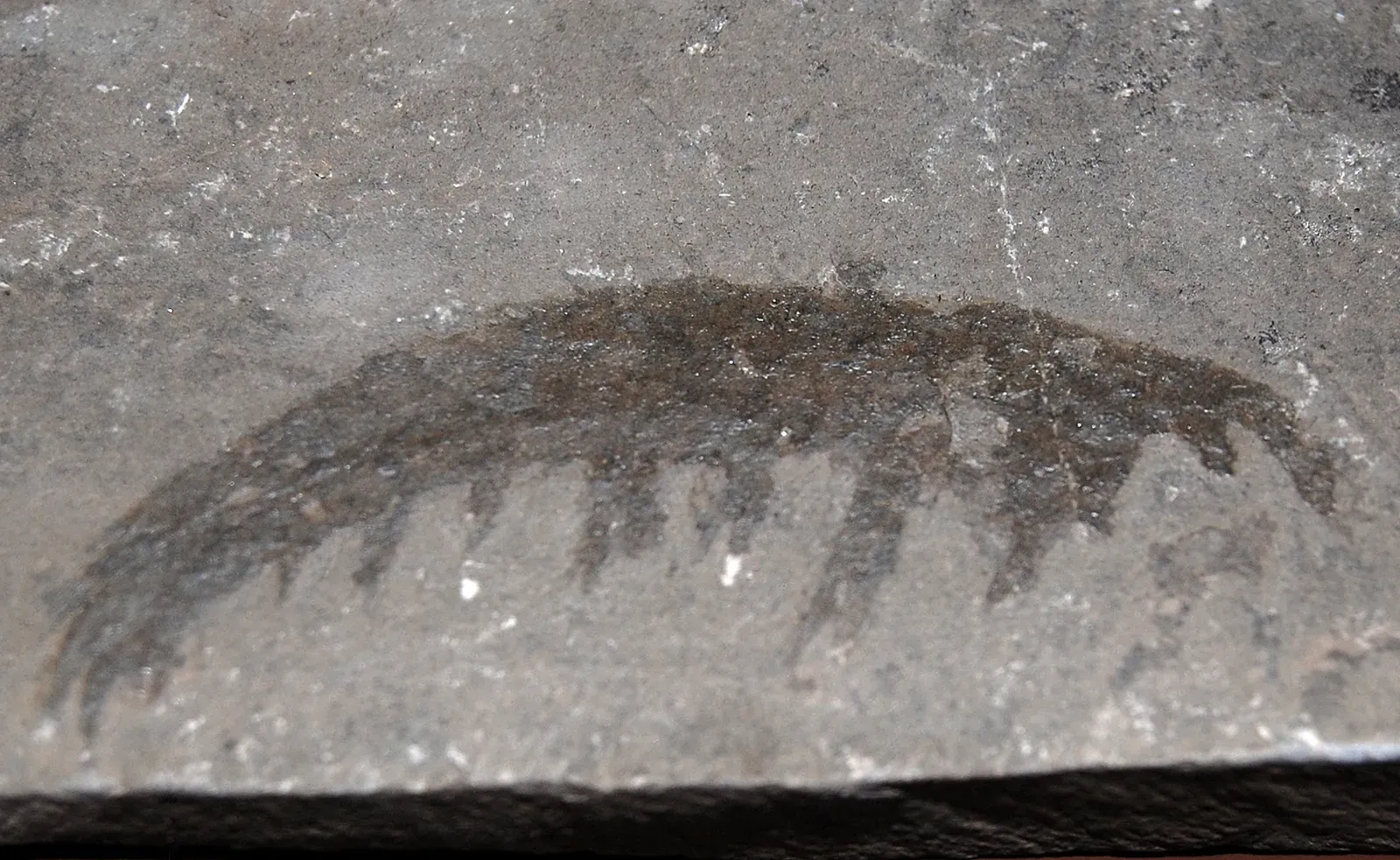
This is easily one of the most embarrassing – and fascinating – cases of mistaken identity in the entire history of paleontology.
When fragments of Anomalocaris first turned up in the late 1800s, scientists had no idea they were looking at pieces of the same creature. A curved, segmented grasping appendage was mistaken for the body of a shrimp-like crustacean, which is actually where the name “Anomalocaris” – meaning “abnormal shrimp” – comes from. Separately, its circular, plated mouth structure was described as a completely different animal: a type of jellyfish.
Nobody realized these fossils belonged together for nearly a century. Even the creature’s soft, finned body was independently classified as a type of sponge or sea cucumber by different researchers working with incomplete pieces. It wasn’t until the 1980s, when paleontologists reexamining Burgess Shale material began finding specimens where the “shrimp” appendage, “jellyfish” mouth, and “sponge” body were all preserved together on one animal, that the truth finally clicked into place.
Anomalocaris was, in fact, one of the largest and most fearsome predators of the entire Cambrian seas – an apex hunter that had been unknowingly split into three unrelated fake species for generations. It’s now considered one of the best-documented cautionary tales in paleontology about how dangerous it can be to classify fossils from fragments alone.
The Bottom Line
These twelve fossils prove that paleontology isn’t a finished puzzle – it’s an ongoing argument, often lasting decades or even a full century. The Tully Monster and Vetulicola still don’t have settled classifications. Anomalocaris spent nearly 90 years accidentally split into three fake species. Deinocheirus waited 50 years just to get a body. Even Dickinsonia needed molecular chemistry, not anatomy, to prove it was an animal at all.
The honest truth is that fossils rarely hand over clean answers – they hand over fragments, and scientists spend lifetimes arguing over what those fragments actually mean. Which of these mysteries do you think will finally get solved next? Drop your prediction in the comments.