Most people think of Europe when they picture ancient cave art. You’ve probably heard of Lascaux in France or Altamira in Spain, those grand, breathtaking galleries painted by Ice Age hands. What you likely haven’t heard is that the United States has its own extraordinary underground world, full of prehistoric paintings, carved symbols, ancient tools, and human remains left behind by Indigenous peoples thousands of years ago. It turns out, America has been hiding its greatest archaeological secrets in plain sight, deep beneath the surface of the earth.
From the misty limestone passages of Tennessee and Kentucky to the sandstone hollows of California’s Santa Ynez Mountains, these caves aren’t just geological wonders. They are sacred libraries written in mud, charcoal, and red ochre. Some of these discoveries are so recent and so stunning that even archaeologists were caught off guard. Be surprised by what you are about to uncover.
1. Mud Glyph Cave, Tennessee: Where Modern Discovery Began
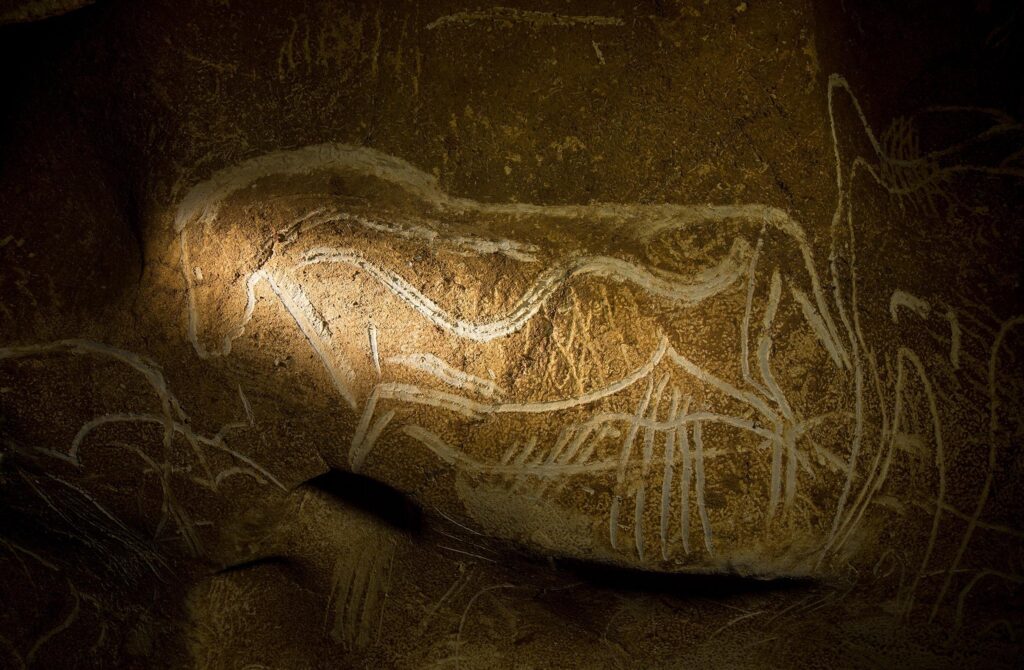
Here’s the thing about landmark moments in archaeology – they often happen by accident. On a cold winter’s day in 1980, a group of recreational cavers entered a narrow, wet stream passage south of Knoxville, Tennessee. They navigated a slippery mud slope, trudged through the stream, and eventually entered a high passage deep in the cave’s dark zone. On the walls around them, they began to see lines and figures traced into remnant mud banks. Nobody sent them there with a research grant. They just went in, out of pure curiosity.
The Tennessee cavers recognized something extraordinary and brought archaeologist Charles Faulkner to the cave. He initiated a research project there, naming the site Mud Glyph Cave. His archaeological work showed that the art was from the Mississippian culture, some 800 years old, and depicted imagery characteristic of ancient Native American religious beliefs. Many of those beliefs are still held by the descendants of Mississippian peoples, including the modern Cherokee, Chickasaw, Choctaw, Coushatta, Muscogee, Seminole, and Yuchi. The discovery didn’t just reveal old drawings. It revealed a living spiritual tradition.
2. Mammoth Cave, Kentucky: A Time Capsule Beneath the Earth
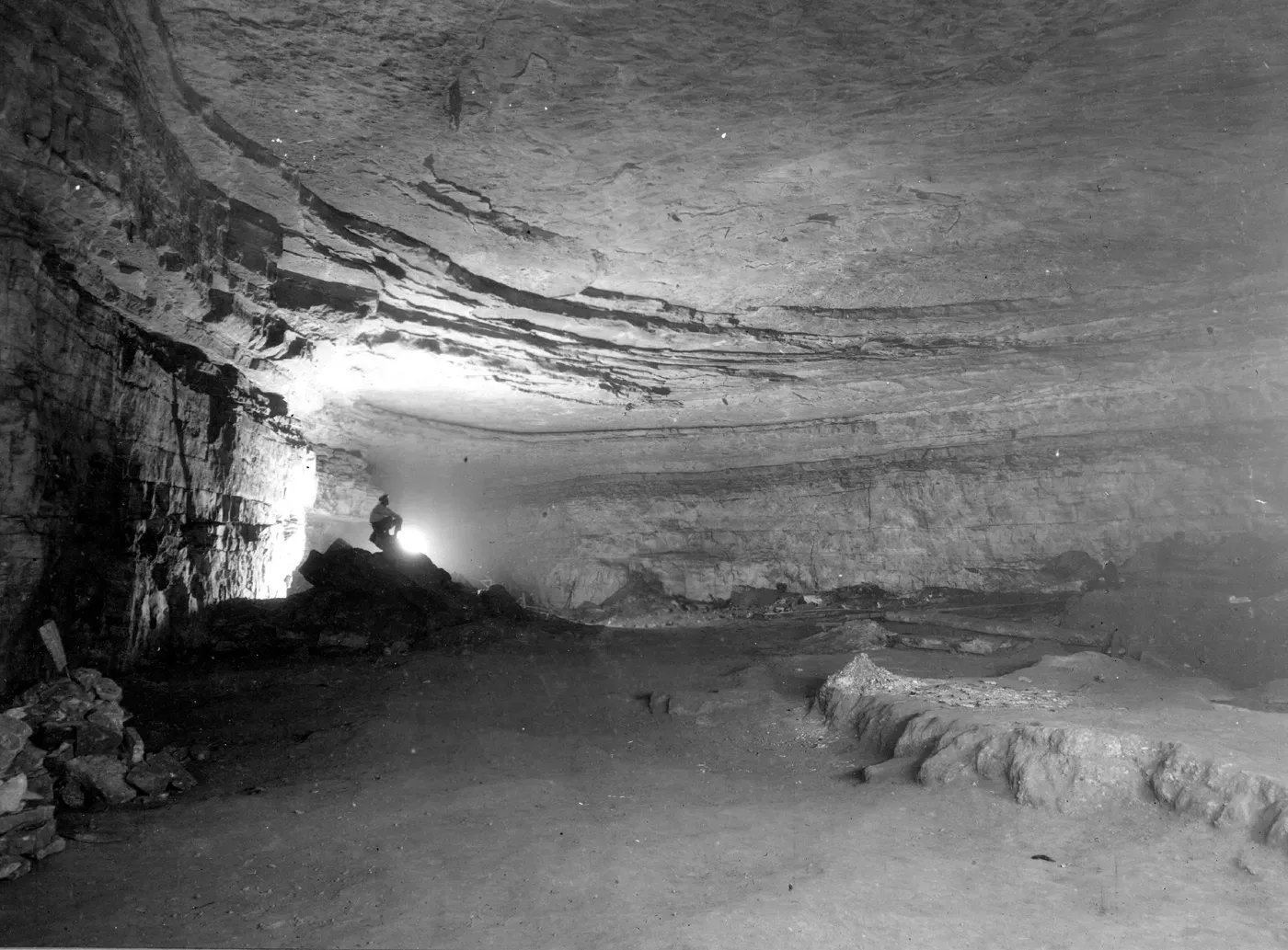
Mammoth Cave National Park is home to the most extensively explored cave system in the world, with over 412 miles of surveyed passageways. That’s not a cave. That’s a subterranean city. From roughly 5,000 years ago until nearly 2,000 years ago, Native Americans explored and mined the upper three levels of Mammoth Cave, covering over sixteen miles of the system in search of gypsum, selenite, mirabilite, epsomite, and other related minerals.
Thousands of artifacts, including torches, gourd bowls, mussel shells, cord, pottery, and woven cloth, as well as a handful of petroglyphs and pictographs and even bare footprints, have persisted through the millennia inside the cave. Think about that for a moment. Footprints. Someone’s actual bare feet pressed into the earth thousands of years ago, still there. Mammoth Cave most closely resembles a time capsule, where temperature and humidity don’t fluctuate much, slowing decomposition of anything left inside.
3. The 19th Unnamed Cave, Alabama: North America’s Largest Cave Art
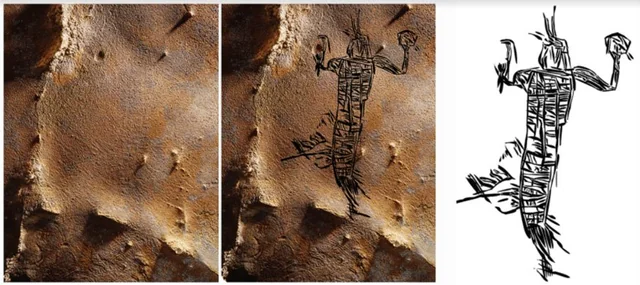
If there is one discovery that should have made international headlines but quietly slipped under most people’s radar, this is it. Deep in a damp cave in northern Alabama, archaeologists made a giant discovery. On a subterranean ceiling just half a meter high, researchers uncovered the largest cave art found in North America: intricate etchings of humanlike figures and a serpent, carved by Native Americans more than 1,000 years ago. The ceiling was so low that researchers had to lie on their backs to study it.
By creating 3D scans of the cave, researchers revealed previously unseen giant figures, including life-size drawings of humans in enigmatic regalia and an 11-foot-long diamondback rattlesnake. The exact location of the 19th Unnamed Cave, somewhere on private land in northern Alabama, is a closely guarded secret. What’s inside is too precious to risk destruction. Honestly, that secrecy feels right. Some things deserve protection above publicity.
4. Cumberland Plateau Caves, Tennessee: A 6,000-Year-Old Masterpiece
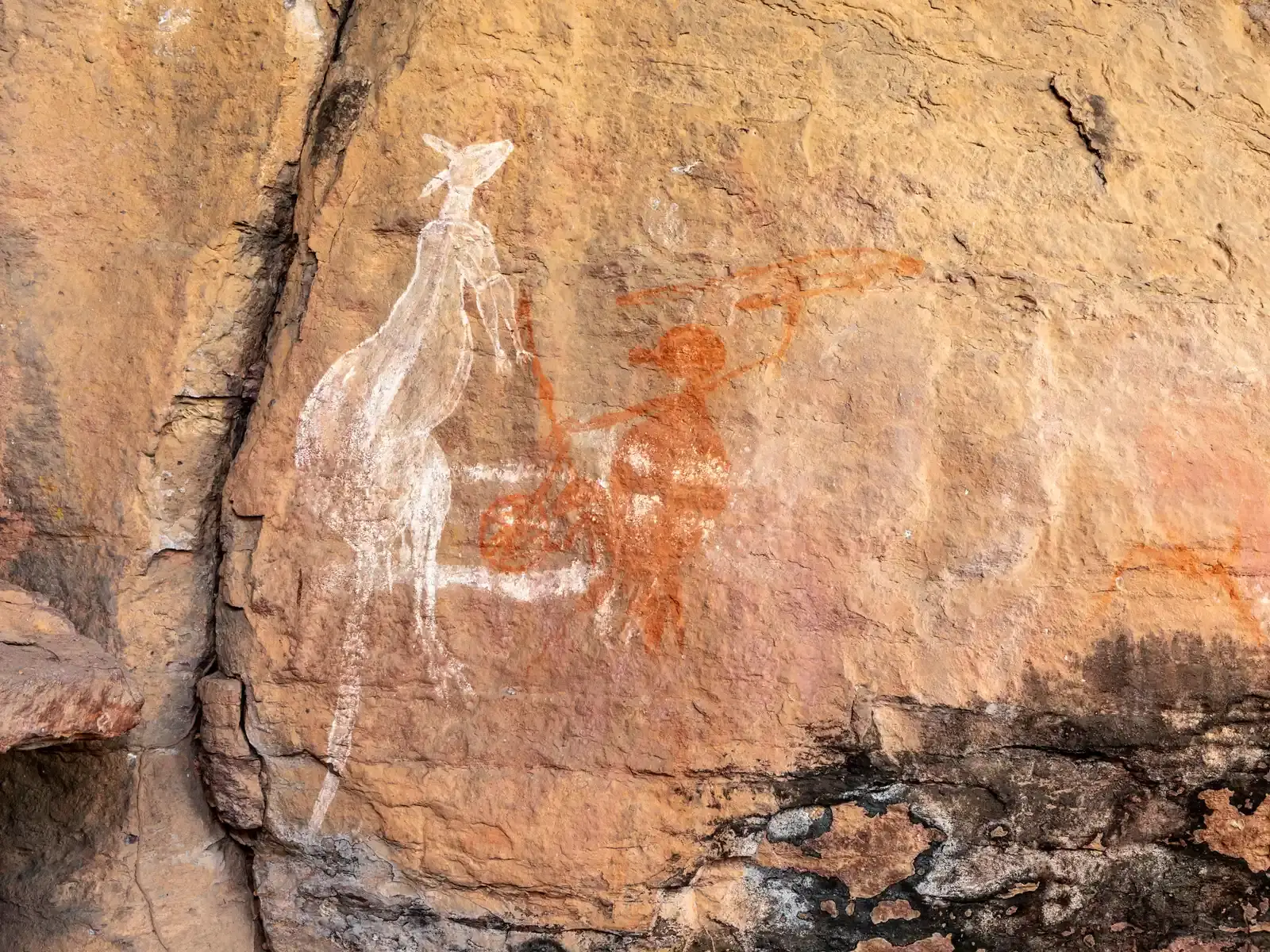
One cave discovered within the Cumberland Plateau, which cuts across Tennessee between Chattanooga and Nashville, was drawn 6,000 years ago, making it the oldest cave art found to date in North America. Let that sink in. When these images were painted, ancient Egypt was just getting started. The important work being carried out by Jan Simek and his team provides an engaging window into the practices of societies 6,000 years ago, with rock paintings appearing to depict hunting scenes and others of a more mythological or spiritual nature.
Some southeastern cave art is quite ancient. The oldest sites date to some 6,500 years ago, during the Archaic Period, spanning roughly 10,000 to 1,000 BC. Also along the passages inside these caves are artifacts of those who traveled before, including cane river torches, gourds used to pick things up, and basketry. You can almost picture those ancient people making their way through the dark, torchlight flickering, doing something that felt deeply important to them.
5. Dunbar Cave, Tennessee: Where 10,000 Years of History Accumulate
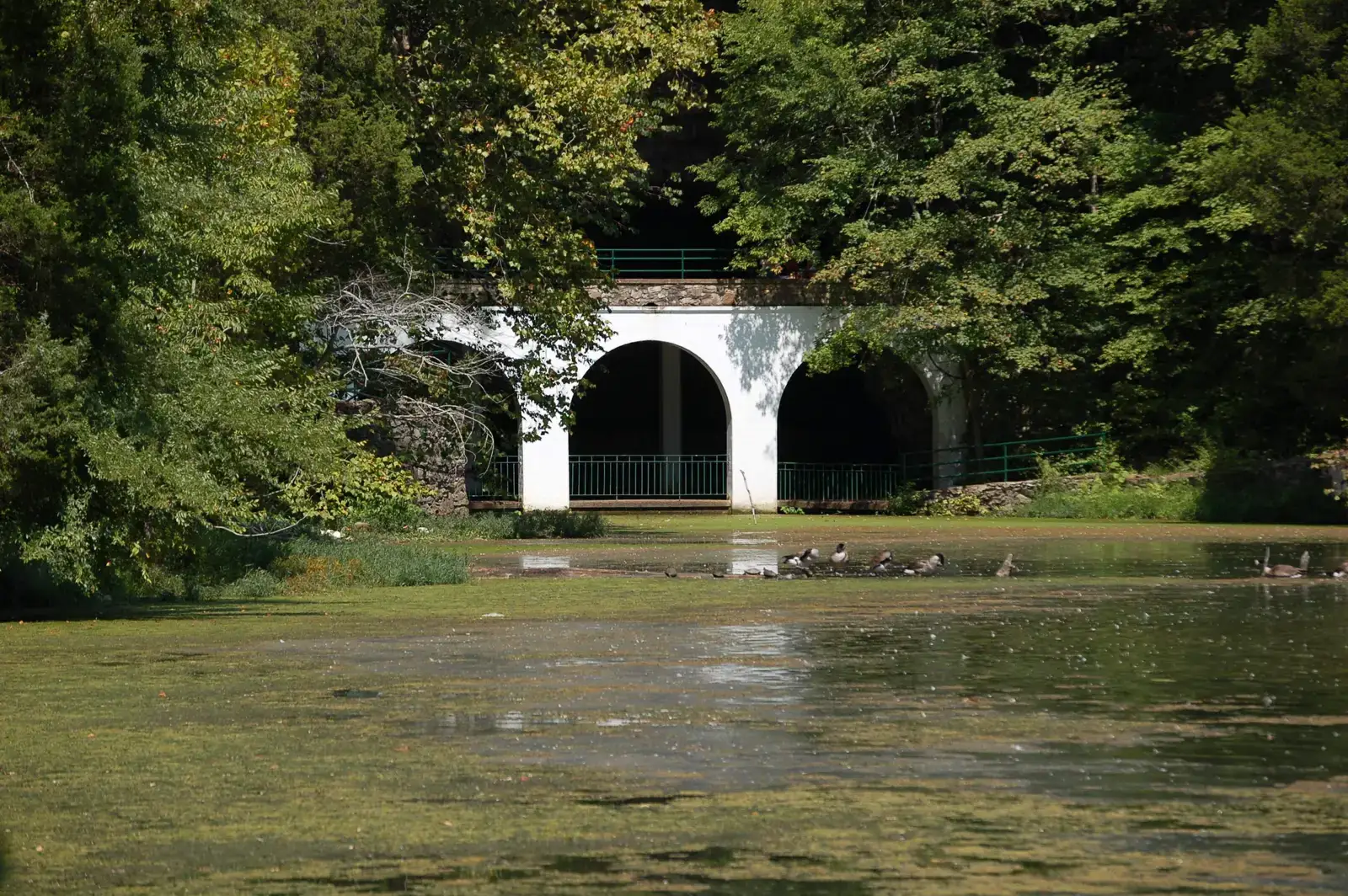
The eight-mile-long cave is located in Clarksville, Tennessee, and serves as the focal point of the 144-acre Dunbar Cave State Park. It sounds modest enough at first. A state park. A cave. A tour. Jan Simek has described it this way: it is the site where a very large archaeological accumulation had formed at the mouth of that cave, with evidence of human use going back 10,000 years. The site is also home to significant prehistoric Native American cave art.
Simek and his team uncovered hundreds of images of prehistoric Native American cave art there. Archaeological excavations have revealed history dating back at least 10,000 years. I think what is most powerful about Dunbar Cave is that you can actually visit it today on a guided tour, standing inside a space where humans have stood, prayed, and created for the better part of ten millennia. That is not a metaphor. That is a fact, and it is genuinely stunning.
6. The Chumash Painted Cave, California: Celestial Art in a Santa Barbara Mountain
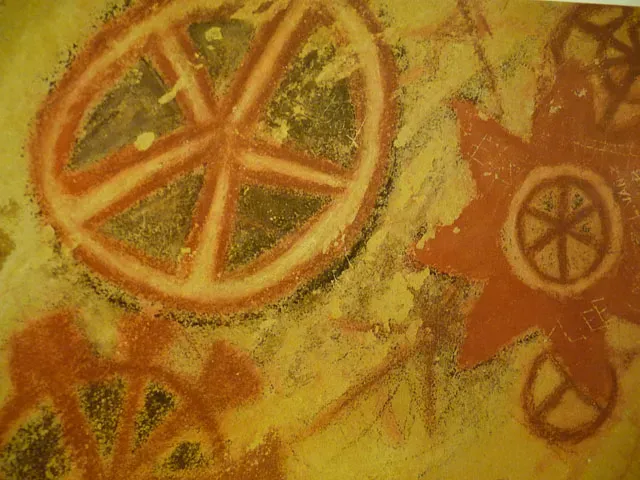
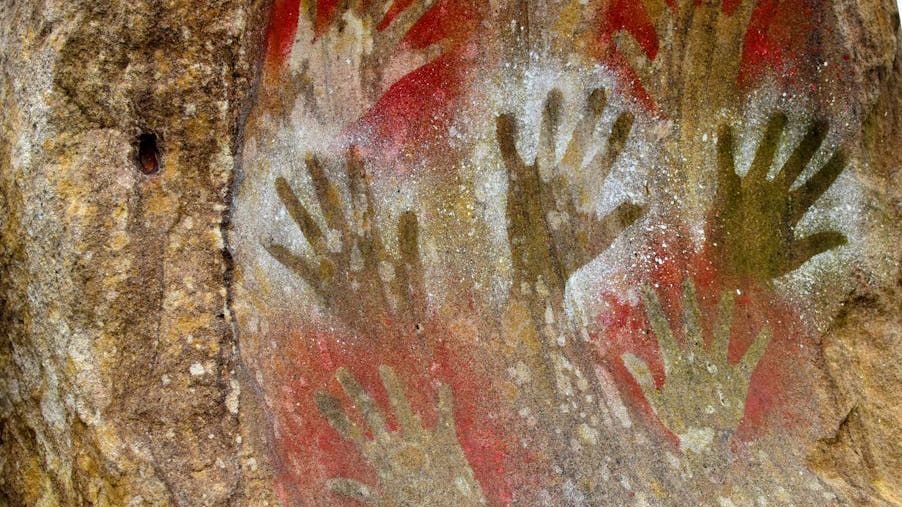
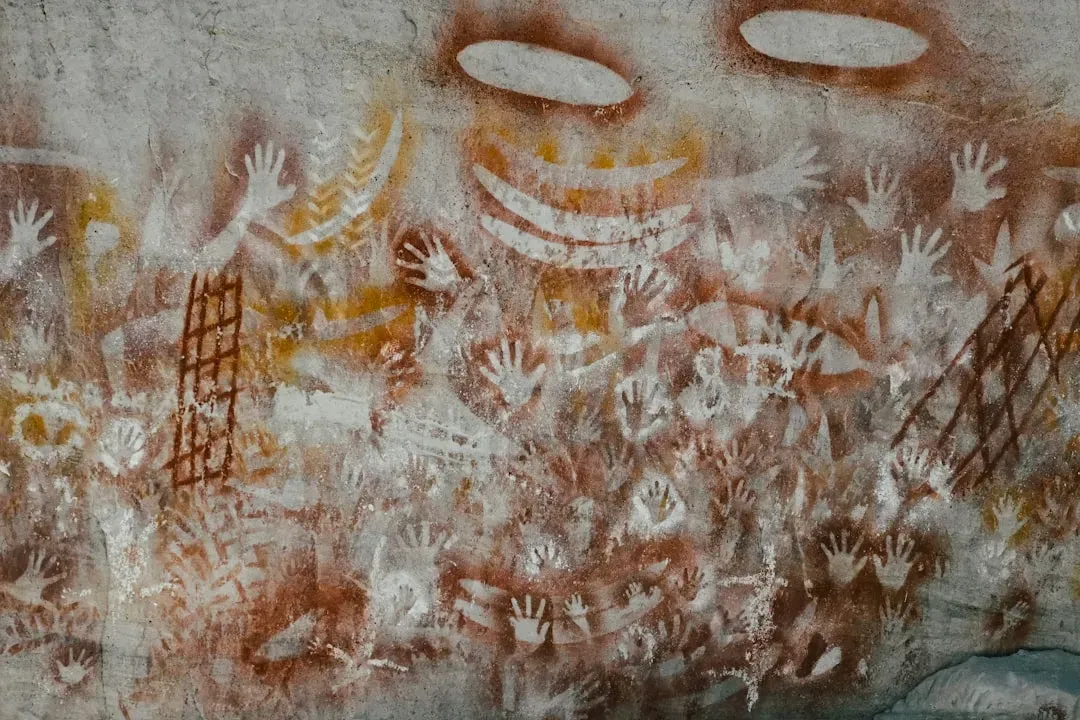
This small sandstone cave in present-day Santa Barbara contains some of the finest remaining rock art created by Chumash Native Americans and is an important touchstone of Chumash culture and heritage. You would never guess, winding through the mountainous roads above the coast, that tucked into the Santa Ynez hillside sits one of the most visually arresting painted caves in the entire country. Just inside the entrance are illustrations that include cross-hatching, geometric symbols, celestial bodies, and anthropomorphic and zoomorphic figures in hues of red ocher, black charcoal, and glistening white. The images date back to at least the 1600s, but researchers believe people performed rituals in the cave for thousands of years before that.
The paints used to create the images were made from charcoal or manganese for black, hematite for red, limonite for yellow, diatomaceous earth for white, and even serpentine for blue or green. These earth pigments were ground in small paint mortars and mixed with a binder such as plant sap or egg white, and applied to the surface with brushes made from yucca fibers or soap plant. The paintings may represent celestial beings such as the sun, moon, and stars, and were painted during ceremonies in order to maintain balance in the celestial world. That is an astonishing level of cosmological thinking expressed in brilliant color on a rocky wall.
7. The Dark Zone Network: 92 Cataloged Sites Across the Southeast
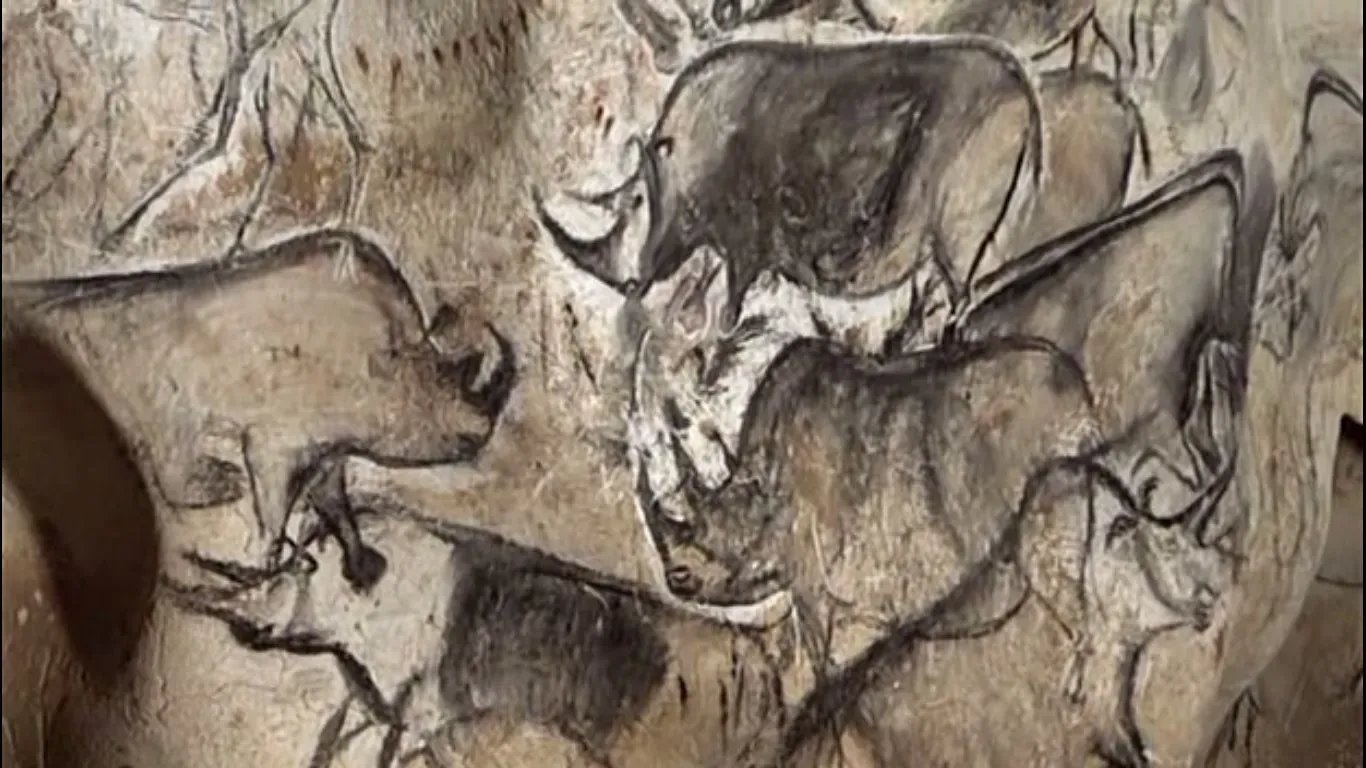
Here’s something that might blow your mind. Forty years ago, archaeologists essentially had no idea this underground art world existed. As Thomas Pluckhahn, an archaeologist at the University of South Florida, has said: forty years ago, no one would have thought the southeast had much cave art. The change in that understanding has been extraordinary. Archaeologists have now cataloged 92 dark-zone cave art sites in Tennessee, Alabama, Georgia, Kentucky, Virginia, and West Virginia, with additional sites also known in Arkansas, Missouri, and Wisconsin.
As surveys continue, researchers uncover more dark cave sites every year, with four new caves found in the first half of 2021 alone. With each new discovery, the tradition is beginning to approach the richness and diversity of the Paleolithic art of Europe, where 350 sites are currently known. That comparison to European cave art is not casual praise. It signals that America’s underground art tradition is genuinely world-class. That archaeologists were unaware of the dark-zone cave art of the American Southeast even 40 years ago demonstrates the kinds of new discoveries that can still be made even in regions that have been explored for centuries.
8. Cherokee Syllabary Inscriptions in Alabama and Tennessee Caves
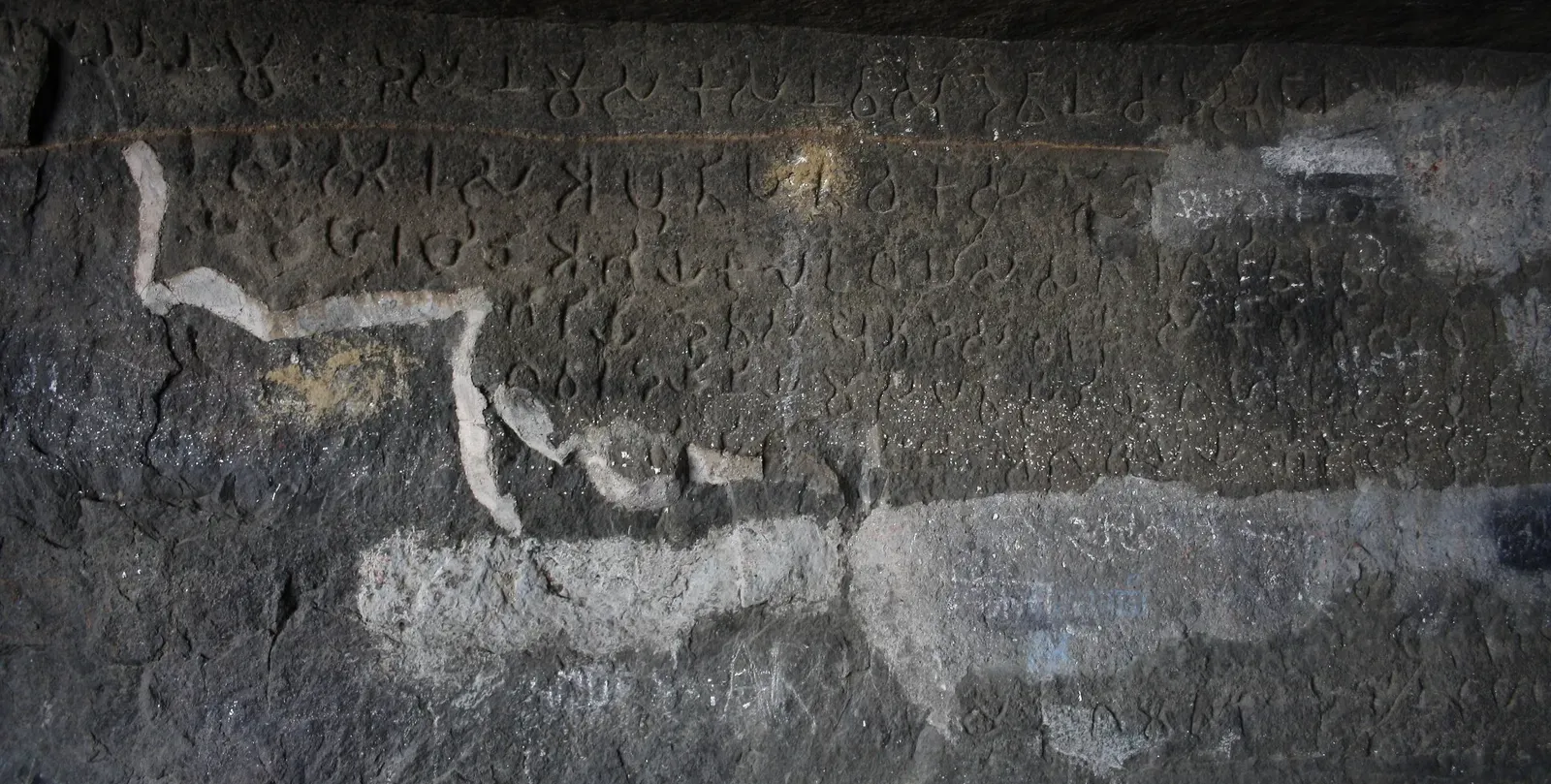
You might not expect this, but some caves contain not just ancient pictures but actual written language, inscribed on rock walls in the 1800s. In several caves in Alabama and Tennessee, mid-19th-century inscriptions were written on cave walls in Cherokee syllabary. This writing system was invented by the Cherokee scholar Sequoyah between 1800 and 1824 and was quickly adopted as the tribe’s primary means of written expression. Now imagine discovering not just prehistoric symbols but readable words inside a dark cave.
Cherokee archaeologists, historians, and language experts have joined forces with nonnative archaeologists to document and translate these cave writings. As it turns out, they refer to various important religious ceremonies and spiritual concepts that emphasize the sacred nature of caves, their isolation, and their connection to powerful spirits. The religious ideas reflected are similar to those represented by graphic images in earlier precontact time periods. The artists worked from ancient times all the way through to the historic period just before the Trail of Tears saw the forced removal of Indigenous people east of the Mississippi River in the 1830s.
9. The Three Forms of Southeastern Cave Art: Mud, Stone, and Paint
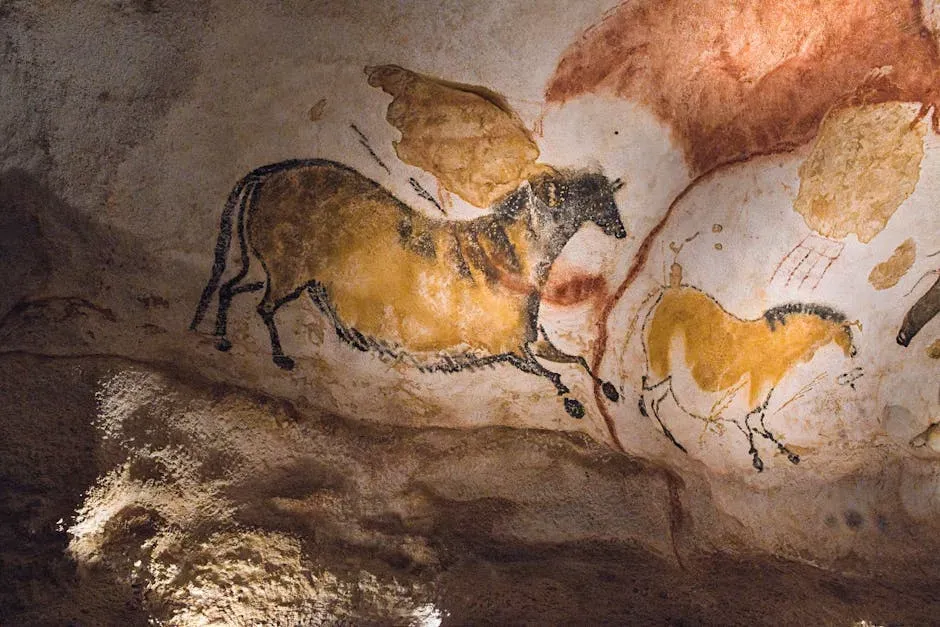
Not all cave art looks the same, and the variety found in US caves is remarkable. There are three forms of Southeastern cave art. Mud glyphs are drawings traced into pliable mud surfaces preserved in caves, like those from Mud Glyph Cave. Petroglyphs are drawings incised directly into the limestone of the cave walls. Pictographs are paintings, usually made with charcoal-based pigments, placed onto the cave walls. Sometimes more than one technique is found in the same cave, and none of the methods seems to appear earlier or later in time than the others.
The Mississippian Period, spanning roughly AD 1000 to 1500, is the last precontact phase in the Southeast before Europeans arrived, and this was when much of the dark-zone cave art was produced. Subject matter is clearly religious and includes spirit people and animals that do not exist in the natural world. There is also strong evidence that Mississippian art caves were compositions, with images organized through cave passages in systematic ways to suggest stories or narratives. Think of it less like a gallery and more like a book written on walls, with chapters spread through the darkness.
10. Petroglyph Point at Lava Beds National Monument, California
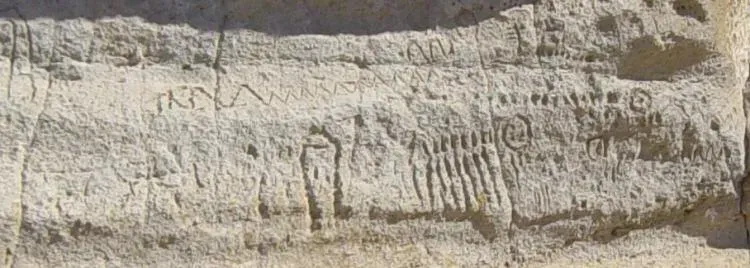
Found in Lava Beds National Monument, Petroglyph Point boasts one of the largest collections of Native American rock art in California. The carvings on the volcanic tuff date back thousands of years, showcasing the artistry of the Modoc people. This site stands out partly because of its raw geological drama. Lava beds, ancient volcanic rock, and some of the most haunting Indigenous carvings in the American West. It’s the kind of place that makes you feel very small in the best possible way.
Although the US Southwest is famous for petroglyphs carved into canyons and cliff faces, much of the Southeast’s rock art is hidden underground in caves. California, however, represents a beautiful exception, where rock art frequently exists at the intersection of natural landscape and spiritual geography. Chumash rock art is a genre of paintings on caves, mountains, cliffs, or other living rock surfaces, created by the Chumash people of Southern California. Pictographs and petroglyphs are common through interior California, and the rock painting tradition thrived until the 19th century. Chumash rock art is considered to be some of the most elaborate and plentiful rock art tradition in the region.
11. The Ancient Miners of Mammoth Cave: Artifacts Left Behind
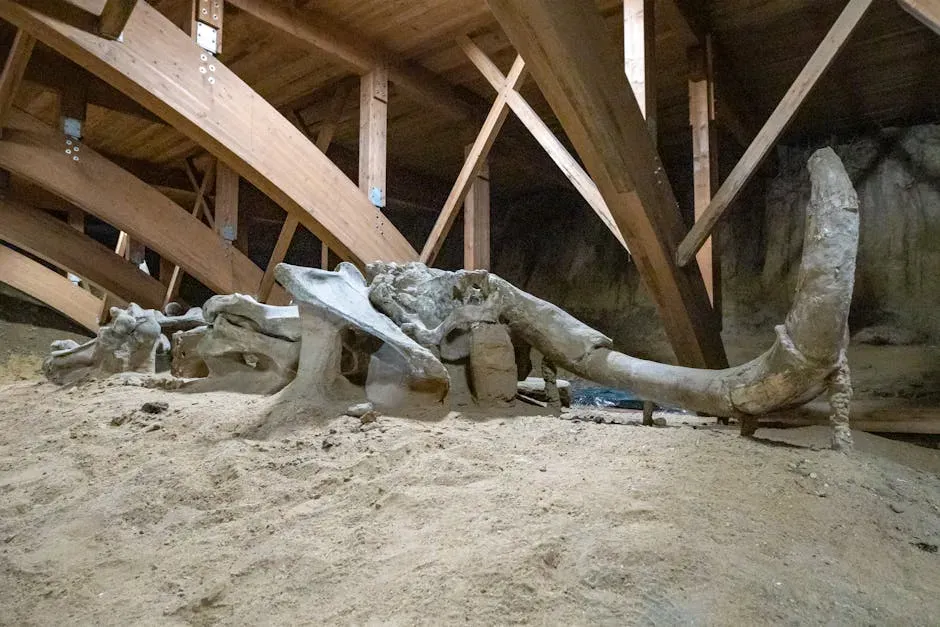
Native American explorers discovered over 19 miles of cave passageways within Mammoth Cave National Park. Pollen from a small sample of Mammoth Cave paleofeces suggested that late spring through early summer and late fall through winter were the primary times Native people visited the caves. Scientists literally analyzed ancient human waste to understand visitation patterns. That is both fascinating and weirdly relatable. Objects left behind during their explorations included textile slippers, river cane torches, cane baskets, wooden climbing poles, and gourd and squash containers. They also drew pictographs on cave walls using the charred tips of river cane torches. These pictographs consisted of cross-hatched, rectilinear, and spiral geometric designs.
For millennia, Native Americans mined within Mammoth Cave, employing mussel shells sourced from the nearby Green River to extract minerals such as gypsum and selenite from the cave walls. Over time, these ancient miners ventured deeper into the branching passages in search of fresh supplies. Evidence in the form of chip marks on the walls, remnants of cane reed torches, and abandoned moccasins have provided valuable insights into the routes they traversed. It’s hard to say for sure what drove someone miles into total darkness with only a burning reed torch, but clearly the motivation was both practical and profound.
12. 3D Technology Unlocking Hidden Cave Art: A Modern Revolution
You might assume that by 2026, we’d have already found everything there is to find. But that assumption is gloriously wrong. To get a more complete picture of the art at the 19th Unnamed Cave, researcher Jan Simek revisited the cave with photographer Stephen Alvarez, founder of the nonprofit Ancient Art Archive. Alvarez wanted to use a new technique called 3D photogrammetry to create a realistic 3D model of the cave and see whether they could uncover additional images that had gone unobserved in the tight space.
Over a period of two months, the team took nearly 16,000 overlapping high-resolution images. They then stitched the photos together, using computer software to align the images in 3D space, after which researchers could manipulate the resulting model using virtual reality software. By creating these 3D scans of the cave, they revealed previously unseen giant figures, including life-size drawings of humans in enigmatic regalia and an 11-foot-long diamondback rattlesnake. That is not archaeology from a hundred years ago. That happened recently, in a cave that researchers already thought they knew well. The lesson could not be clearer: the past still has more to tell us, and it is waiting underground.
Conclusion: America’s Underground Story Is Still Being Written
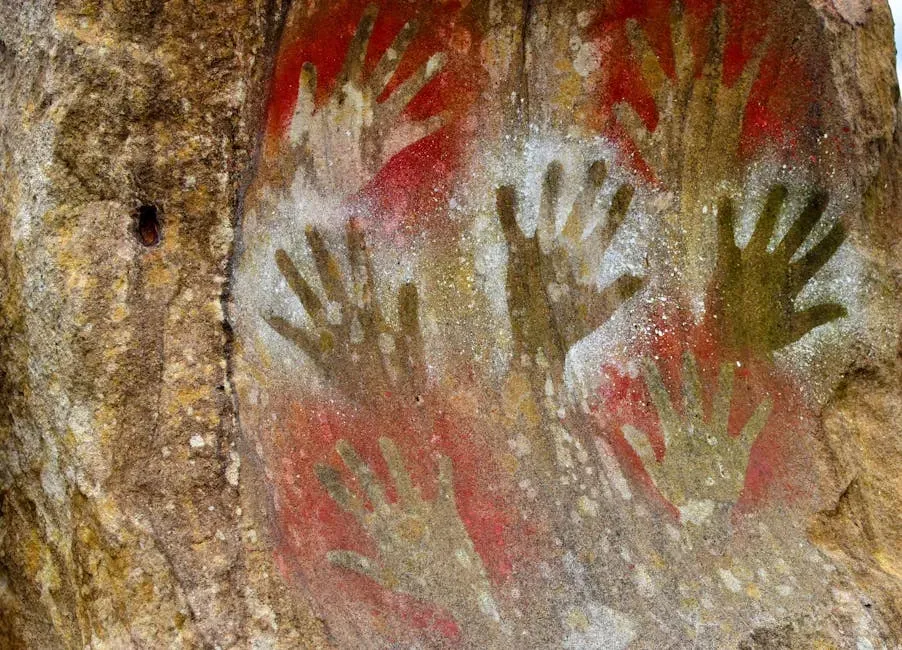
There is something deeply moving about the idea that beneath the highways, the suburbs, and the national parks of the United States, ancient hands reached into darkness and left something behind. Not by accident. With intention. With ceremony. With art.
What these 12 hidden gems reveal, collectively, is that America’s Indigenous heritage is not just preserved in museums. It lives on rock walls, in mud banks, in ochre-stained limestone, miles from the nearest entrance. Ancient cave art has long been one of the most compelling of all artifacts from the human past, fascinating both to scientists and to the public at large. Its visual expressions resonate across the ages, as if the ancients speak to us from deep in time.
Every year brings new discoveries, new technologies, and new collaborations between archaeologists and Indigenous descendants working together to understand what these sacred spaces truly mean. The caves are not empty. They never were. The question is simply whether we take the time to listen. What would you do if you stumbled into one of these caves tomorrow?