

Medicine likes to think of itself as self-correcting. Here’s the uncomfortable truth: some of the most confidently taught “facts” in medical schools stayed on the books for 50, 80, even 100 years after they were already proven false. Doctors weren’t lying to you. They were repeating what their professors repeated, who repeated what their professors said before that – a chain of authority nobody thought to interrupt.
Entire treatment protocols, textbook diagrams, and bedside habits were built on assumptions nobody bothered to re-test. From bloodletting kings and presidents to brain cells doctors swore could never regenerate, the history of medicine is littered with dogmas that outlived their evidence by generations. Here’s what actually happened in twelve of the biggest cases – and why it took so painfully long for anyone to admit the mistake.
#1 – Stomach Ulcers Were “Caused by Stress,” Not Bacteria

For most of the 20th century, walking into a doctor’s office with a burning stomach got you a lecture on relaxation, not medication. The reigning theory held that peptic ulcers came from excess stomach acid, triggered by stress, spicy food, or a high-pressure lifestyle.
Doctors prescribed bland diets, milk, and calmer living. Nobody bothered hunting for a pathogen, because nobody believed bacteria could survive the stomach’s acid bath in the first place.
Then, in 1982, two Australian researchers upended everything doctors thought they knew. Pathologist Robin Warren had spotted small curved bacteria colonizing the lower stomach in roughly half of the biopsies he examined.
He noticed something else too: inflammation always showed up in the gastric tissue right next to where the bacteria lived. Together with Barry Marshall, he proposed a radical idea – a bacterium, not stress, was the real culprit behind most ulcers.
The medical establishment scoffed. So Marshall did something almost unheard of in modern research. On a Tuesday morning in July 1984, he had his lab technician scrape the contents of two petri dishes swarming with bacteria into a beaker of beef broth – then drank it like a shot.
He developed gastritis within days, proving his own hypothesis on himself before anyone else would take it seriously.
Fast Facts
- 1982: Warren and Marshall identify H. pylori bacteria in stomach biopsies
- 1984: Marshall drinks the bacteria himself and develops gastritis within days
- 1994: NIH formally accepts the bacterial theory of ulcers
- 2005: Marshall and Warren awarded the Nobel Prize, 21 years after the self-experiment
It took until 1994 – twelve years after the discovery – for the NIH to officially accept the bacterial theory. Marshall and Warren didn’t receive the Nobel Prize until 2005, awarded for showing that H. pylori, not stress, was primarily responsible for peptic ulcer disease.
Millions of patients had spent decades suffering through bland diets and milk therapy for what was, the whole time, a curable bacterial infection – one a short course of antibiotics could wipe out in weeks.
#2 – The Tongue Map Was Never Real Science

Generations of students copied the same tidy diagram into their biology notebooks: sweet at the tip, sour on the sides, bitter at the back, salty somewhere in between. It looked scientific. It was almost entirely invented.
The whole myth traces back to one mistranslated, 120-year-old paper. German scientist David Hänig set out in 1901 to measure taste perception thresholds around the edges of the tongue, dripping salty, sweet, sour, and bitter solutions at different points.
He found that the tip and edges of the tongue – packed with taste buds – showed some variation in how much stimulus it took to register a taste. That’s it. That’s the entire dataset behind a diagram taught in classrooms for over a century.
Hänig never claimed exclusive taste zones existed – textbook artists invented that part. Later illustrators took his subtle threshold curves and turned them into bold, categorical zones, a visual map that badly exaggerated what the data actually showed.
The correction should have arrived decades earlier than it did. Chemosensory researchers began discrediting the map as early as the mid-20th century, and made a more decisive case in the 1970s, when experiments showed all basic tastes could be detected across the entire tongue.
Yet the diagram kept appearing in textbooks for another 30-plus years. The truth is almost anticlimactic: your whole tongue tastes everything, more or less equally.
#3 – Adults Were Told They Could Never Grow New Brain Cells

If you’re over 40, you were probably taught that the brain cells you’re born with are the only ones you’ll ever get. Lose them to age, alcohol, or injury, and they’re gone for good – no replacements, ever. This wasn’t a fringe theory. It was foundational neuroscience dogma for nearly a century.
In 1928, Santiago Ramón y Cajal – the father of modern neuroscience and a Nobel laureate – wrote a line that would calcify into dogma for the next seven decades. Cajal wasn’t sloppy; he was the most meticulous anatomist of his era, and his conclusion matched everything he could see under his microscope: adult brain tissue showed no sign of cell division.
In adult centers the nerve paths are something fixed, ended, immutable. Everything may die, nothing may be regenerated.
Santiago Ramón y Cajal
But evidence contradicting him existed for decades – and was ignored. Joseph Altman, at MIT, reported new neurons forming in the adult rat hippocampus as early as 1965, publishing in Science and The Journal of Comparative Neurology.
His papers were read. They were cited. And then they were, remarkably, set aside, because the dogma was too entrenched and the field simply couldn’t accept that adult mammalian brains might make new neurons.
The proof that finally couldn’t be dismissed came in 1998, three full decades after Altman’s original findings. Peter Eriksson and Fred Gage published a study in Nature Medicine examining postmortem brain tissue from cancer patients who’d received a marker revealing new neuron growth in their living hippocampi.
A theory of a “fixed, immutable” brain that held for nearly 70 years collapsed because of five patient brain samples. That single discovery reshaped how doctors treat depression, memory disorders, and recovery from brain injury today.
#4 – Doctors Refused to Wash Their Hands (And Ridiculed the Man Who Insisted)

Long before germ theory existed, one Hungarian obstetrician noticed something disturbing. Women delivering babies in wards staffed by doctors were dying of “childbed fever” at dramatically higher rates than women attended by midwives.
Ignaz Semmelweis worked out why in the 1840s. Doctors were performing autopsies, then delivering babies without washing their hands in between – carrying invisible “cadaverous particles” straight from corpse to patient.
His fix was radically simple: mandatory handwashing in a chlorinated lime solution. Mortality on his ward reportedly dropped by more than half almost overnight.
Instead of being celebrated, Semmelweis was mocked by the medical establishment. The idea that “gentleman doctors” carried disease on their own hands was, to them, insulting and implausible. He died in an asylum, beaten by guards, before germ theory ever proved him right.
It took Louis Pasteur and Joseph Lister, decades later, to establish germ theory and finally vindicate hand hygiene as essential medical practice. By then, an untold number of mothers had died of entirely preventable infections – because the medical establishment couldn’t stomach a truth that threatened its own self-image.
Even today, hospital compliance with basic handwashing protocols remains a persistent struggle, a faint echo of the resistance that started with laughing off one grieving, insistent doctor.
#5 – Bloodletting Was “Proven” Medicine for Over 2,000 Years
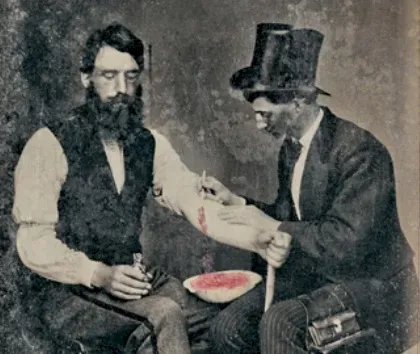
If a patient had a fever, an infection, a headache, or almost any ailment imaginable, doctors for centuries reached for the same tool: a blade or a jar of leeches to drain their blood. The theory, inherited from ancient Greek “humoral” medicine, held that illness came from an imbalance of four bodily fluids – and removing blood restored the balance.
This wasn’t quack folk medicine practiced on the fringes. It was mainstream, university-taught treatment, recommended by the era’s most respected physicians. Barber-surgeons openly advertised bloodletting services on their storefronts.
George Washington himself was bled repeatedly by his own doctors during his final illness in 1799 – likely hastening his death rather than curing him.
Worth Knowing
- Rooted in ancient Greek “four humors” theory, not tested evidence
- Practiced across Europe and America for roughly 2,000 years
- Recommended treatment for fevers, infections, headaches, and more
- Finally undercut in the 1830s by statistical comparisons of treated versus untreated patients
The practice persisted well into the 1800s, even as evidence mounted that bled patients fared no better, and often worse, than those left alone. It took rigorous statistical comparison of treated versus untreated patients, pioneered by physicians like Pierre Louis in the 1830s, to finally prove what should have been obvious.
Draining a sick person’s blood supply doesn’t cure disease – it weakens an already struggling body. Bloodletting’s 2,000-year dominance remains one of the starkest reminders that authority and tradition are never the same thing as evidence.
#6 – Lobotomies Were Considered a Nobel Prize-Worthy Breakthrough

Picture a psychiatric treatment so mainstream that its inventor won the Nobel Prize in Medicine for it. That’s exactly what happened with the prefrontal lobotomy – a procedure that severed connections in the brain’s frontal lobes to treat severe mental illness.
Introduced in the 1930s, the surgery was aggressively promoted as a miracle cure for schizophrenia, depression, and even unruly behavior. Neurologist Walter Freeman popularized a horrifying simplified version, the “ice pick lobotomy,” performed in ordinary doctors’ offices without sterile conditions, sometimes in a matter of minutes.
Tens of thousands of patients underwent the procedure across the U.S. and Europe through the 1940s and 1950s – many of them involuntarily.
The results were catastrophic: profound personality changes, emotional flatness, loss of higher reasoning, and in many cases, death. Yet the procedure carried the full institutional weight of the medical establishment, Nobel Prize included, for roughly two decades.
It took the arrival of antipsychotic medications in the 1950s to finally make the surgery’s brutality impossible to defend. Lobotomy remains one of the clearest examples of prestige and a Nobel medal masking a treatment we now recognize as barbaric malpractice.
#7 – “Hysteria” Was Taught as a Real, Diagnosable Disease

For roughly 2,500 years – including well into the 20th century – Western medicine taught that women could suffer from a specific, diagnosable disease called “hysteria,” believed to originate from a literally “wandering” uterus disrupting other organs. The ancient Greek theory survived, largely unchallenged, straight through the Victorian era and into early modern psychiatry textbooks.
Symptoms attributed to hysteria were almost comically broad: anxiety, irritability, fainting, insomnia, and even ambition or sexual desire outside socially approved boundaries. Doctors used the diagnosis to medicalize normal female emotion, and “treatments” ranged from forced bed rest and isolation to pelvic massage to, eventually, institutionalization.
Hysteria remained an official psychiatric diagnosis in medical classification systems until 1980, when the DSM-III finally removed it and replaced the catch-all label with more specific, evidence-based diagnoses. That means doctors were formally trained to diagnose “hysteria” for roughly a century after the theory had already lost any real anatomical basis.
Many medical historians now argue the diagnosis did lasting damage, teaching generations of doctors to dismiss women’s real physical symptoms as psychological overreaction – a bias some researchers say still shows up in pain treatment gaps today.
#8 – Left-Handedness Was Treated as a Medical Defect to Be Corrected

Doctors, teachers, and textbooks for generations treated left-handedness not as a harmless variation but as a disorder requiring correction. Medical literature into the early-to-mid 20th century linked left-handedness with everything from criminality to lower intelligence to moral deficiency – cultural bias dressed up as clinical observation.
The “treatment” was straightforward: force the child to switch. Physicians recommended, and schools enforced, retraining left-handed children to write and eat with their right hand, sometimes through physical restraint of the left hand or outright punishment for using it.
This wasn’t a fringe practice. It was standard guidance handed down by pediatricians and educators across multiple countries well into the 1960s and 1970s.
Research eventually showed that forced hand-switching caused genuine psychological harm – stuttering, anxiety, and learning difficulties in some children – while offering no benefit whatsoever. Handedness is now understood to be a normal neurological variation tied to brain lateralization, not a defect to be fixed.
It took the better part of a century for medicine to drop a bias with essentially no scientific grounding to begin with, and cultural stigma around left-handedness lingered in some places long after doctors quietly stopped endorsing the “cure.”
#9 – Doctors Insisted Masturbation Caused Insanity and Physical Decay

Few medical myths were pushed with more moral fervor than the 18th- and 19th-century belief that masturbation caused a laundry list of physical and mental diseases – blindness, insanity, weakness, epilepsy, even premature death. This wasn’t fringe superstition. It was taught in respected medical texts and championed by prominent physicians across Europe and America.
The theory, sometimes called “onanism” in medical literature, spawned an entire industry of “treatments,” including horrifying restraint devices designed to physically prevent the behavior. Bland diets were prescribed too – foods believed to suppress “unhealthy urges,” an idea that directly shaped the invention of foods like graham crackers and corn flakes as anti-stimulation health products.
The theory persisted in mainstream medical thinking for well over a century, gradually losing credibility only as psychology and sexology emerged as legitimate scientific fields in the early-to-mid 1900s. Even so, remnants of the moralized medical framing lingered in sex education curricula for decades after physicians had privately abandoned the disease theory – a reminder of how slowly medical culture unwinds an idea once it’s baked into institutional teaching.
#10 – Fat Cells Were Believed Fixed for Life After Childhood

For decades, one of the most confidently taught facts in obesity medicine was this: humans are born with, or develop early in childhood, a fixed number of fat cells that never increases again in adulthood. Under this model, adult weight gain was explained purely by existing fat cells swelling larger, never by the body manufacturing new ones.
This assumption shaped decades of clinical thinking around childhood obesity prevention, dieting strategy, and even surgical approaches to fat removal. If you couldn’t make new fat cells as an adult, the reasoning went, controlling cell count early in life was the critical window that mattered.
Quick Compare
- Old belief: Fat cell number is fixed after childhood
- New science: Fat cells die and are replaced throughout adulthood
- Old belief: Weight gain only makes existing cells swell
- New science: The body can generate entirely new fat cells later in life
A landmark 2008 study out of Sweden overturned the dogma completely, using carbon-14 dating techniques to show that adult fat cells die and get replaced at a measurable, ongoing rate throughout life. The body absolutely can, and does, generate new fat cells well into adulthood.
The correction reshaped how researchers think about weight regain after dieting, and why some liposuction results don’t hold – the body can simply build replacement fat cells elsewhere. It’s a striking case of a number that felt scientifically precise for years, right up until isotope-tracing technology finally caught up enough to test it directly.
#11 – Margarine and Trans Fats Were Marketed as the Heart-Healthy Choice

Starting in the mid-20th century, doctors and public health authorities urged Americans to swap butter for margarine, framing it as a straightforward, science-backed way to protect the heart. Margarine’s plant-based origin made it seem inherently superior to saturated animal fat, and medical guidance promoted the switch for decades.
The problem: most margarine at the time was loaded with partially hydrogenated oils, now known as artificial trans fats. This category of fat raises harmful LDL cholesterol while simultaneously lowering protective HDL cholesterol – a uniquely damaging combination that natural saturated fat doesn’t produce.
Physicians were, in effect, recommending a product arguably worse for cardiovascular health than the butter it replaced, based on incomplete lipid science.
It took until the 1990s and 2000s for large-scale epidemiological research to firmly establish trans fats as a major, independent driver of heart disease. That evidence eventually pushed the FDA to mandate labeling and, later, phase artificial trans fats out of the food supply almost entirely.
For roughly half a century, mainstream medical advice steered patients toward a product now recognized as one of the most harmful widely consumed fats in food history – one of nutrition science’s most humbling reversals.
#12 – Dietary Fat and Cholesterol Were Blamed as the Primary Cause of Heart Disease

Perhaps no medical dogma shaped more dinner plates than the mid-20th-century diet-heart hypothesis: the idea that eating fat and cholesterol directly and primarily causes heart disease. Popularized starting in the 1950s, this framework became the backbone of national dietary guidelines, hospital nutrition counseling, and medical school teaching for generations.
Patients with heart disease risk were told, unequivocally, to slash dietary fat and avoid cholesterol-rich foods like eggs and shellfish almost entirely. That advice inadvertently pushed many people toward processed, low-fat, high-refined-carbohydrate substitutes – foods that carried their own metabolic risks nobody fully understood at the time.
More recent, methodologically rigorous research has significantly complicated this once-simple picture. Dietary cholesterol has a far smaller effect on blood cholesterol for most people than previously taught, not all saturated fats behave identically, and sugar and refined carbohydrates play a bigger role in cardiovascular risk than the original hypothesis ever acknowledged.
At a Glance
- 1950s: Diet-heart hypothesis becomes mainstream medical guidance
- Standard advice: cut fat, avoid eggs and shellfish, minimize cholesterol
- 60-70 years: how long the advice held near-total institutional confidence
- Today: major guidelines have walked back blanket cholesterol restrictions
Major dietary guidelines eventually walked back blanket cholesterol restrictions – a striking admission for advice that had been delivered with near-total confidence in medical curricula for 60 to 70 years. It stands as one of the most consequential examples of a hypothesis hardening into institutional dogma faster than the evidence could ever support it.
The Bottom Line

Look at the pattern across all twelve cases: almost none of these errors came from malice. They came from confidence outrunning evidence – a compelling theory, a respected authority, or a convenient diagram getting cemented into textbooks before anyone circled back to double-check it.
Ulcers, hand hygiene, brain cells, fat cells, dietary fat – each one was taught with total institutional certainty for decades, sometimes a century, before a stubborn researcher, or a scientist willing to swallow a beaker of bacteria, finally forced the correction.
If medicine’s history teaches anything, it’s that “the science is settled” should always come with an asterisk – and that the loudest confidence in the room is sometimes just tradition wearing a lab coat. What other medical “fact” from your childhood do you think is overdue for a correction? Drop it in the comments.