Almost everyone grows up thinking they know what a dinosaur is: big, scaly, ancient, terrifying. Toy sets pair them together. Movies lump them into the same prehistoric world. And for decades, scientists let the confusion slide because the public was at least interested. But somewhere along the way, paleontology quietly redrew the lines – and entire creatures that generations of people grew up calling dinosaurs were reclassified out of the group entirely. Not because of new bones. Because of a far more fundamental reason that changes how we understand life on Earth.
The word “dinosaur” isn’t a casual label anymore. It refers to a strict biological clade – Dinosauria – defined by a very specific set of skeletal traits, most notably an open hip socket that allows a fully upright posture. If you don’t have it, you’re not in the club, no matter how ancient or terrifying you were. What follows are twelve creatures that got quietly reassigned – and a few of them will genuinely surprise you. Some lived tens of millions of years before the first real dinosaur ever walked. At least one outlasted them all.
#12 – Dimetrodon: The Permian Predator That Was Never Even Close
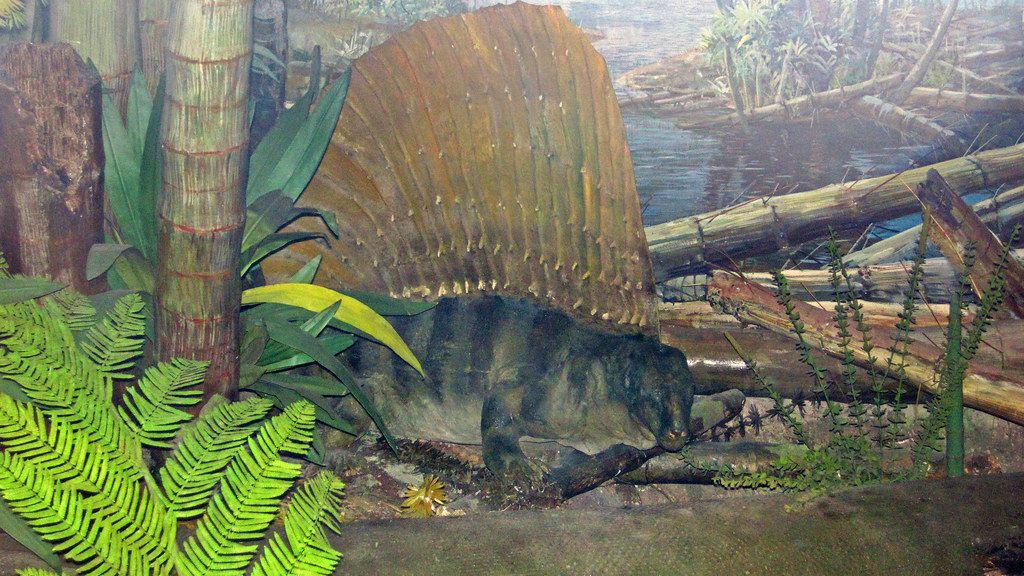
Dimetrodon is probably the most aggressively mislabeled creature in the history of plastic toy sets. With that dramatic sail-fin along its spine and a mouth full of serrated teeth, it looks like it belongs in a dinosaur diorama. But Dimetrodon went extinct roughly 40 million years before the first true dinosaur ever appeared – meaning that pairing it with a T. rex in a toy box is about as chronologically accurate as pairing a T. rex with a smartphone.
The real story is even stranger: Dimetrodon wasn’t a reptile on its way to becoming a dinosaur. It was a synapsid, sitting on the evolutionary branch that would eventually produce mammals – including us. Its skull fenestrae, sprawling limb posture, and hip structure all point away from Dinosauria and toward early mammal relatives. Paleontologists recognized this split decades ago through detailed phylogenetic work. The toys just never got the memo.
Fast Facts
- Lived approximately 295–272 million years ago — deep in the Permian, not the Mesozoic
- Classified as a synapsid: the same evolutionary lineage that produced all modern mammals
- Synapsids and reptiles diverged from a common ancestor over 324 million years ago
- Its single temporal fenestra (skull opening) is a defining mammal-lineage trait — dinosaurs have two
- The iconic dorsal sail could grow over 5 feet tall and likely aided in thermoregulation
#11 – Edaphosaurus: The Sail-Backed Herbivore That Belonged With Mammals Too
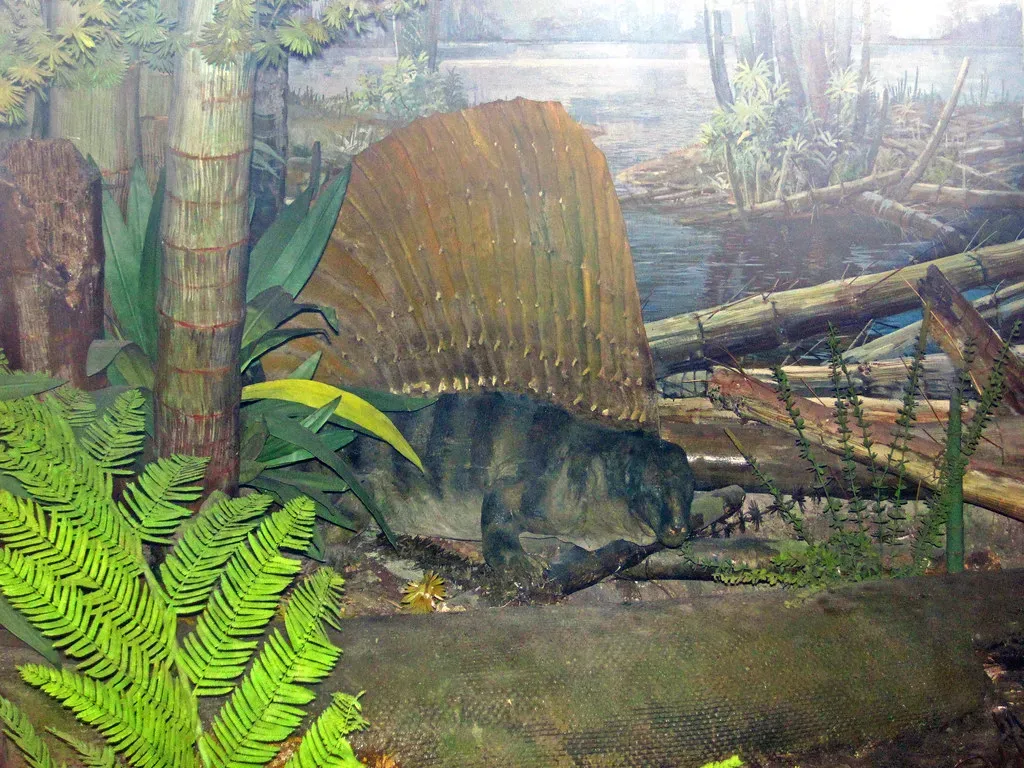
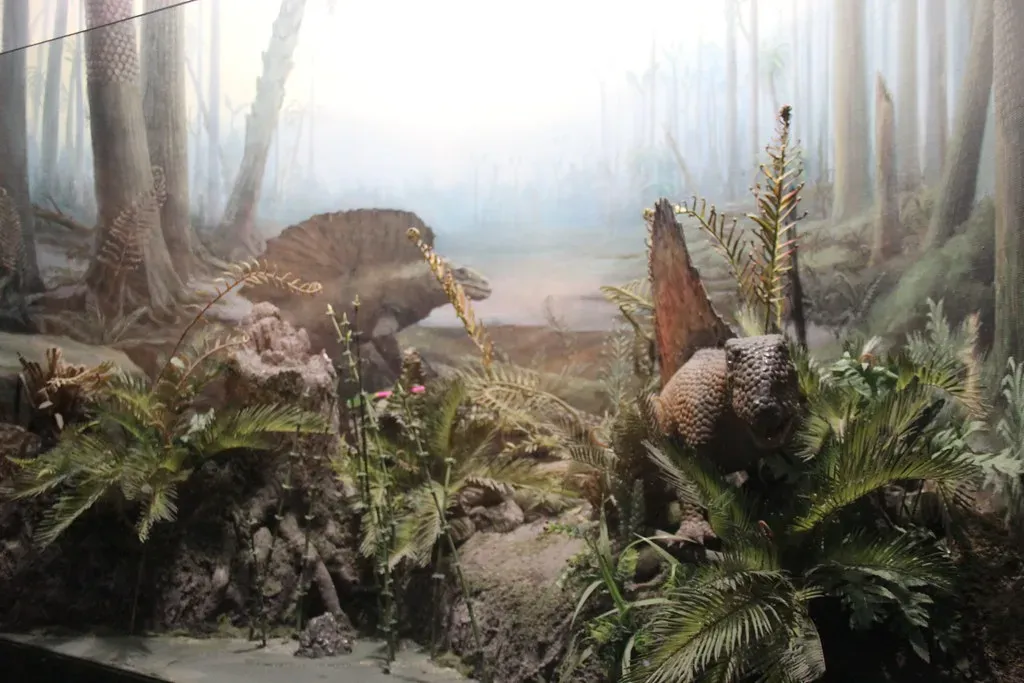
Edaphosaurus looked so much like Dimetrodon – same era, same dramatic dorsal sail, same Permian landscape – that it got swept up in the same misidentification for generations. But where Dimetrodon was a sharp-toothed predator, Edaphosaurus was more likely grinding through plants and possibly shellfish, its teeth bearing almost no resemblance to the carnivorous jaw designs most people associate with classic “dinosaur” depictions.
Like Dimetrodon, Edaphosaurus was a synapsid, firmly on the mammal side of the great reptile family split. Bone histology and phylogenetic analysis confirmed this long ago. The confusion persisted mostly because visual shorthand – big, reptile-looking, prehistoric – proved more powerful in public imagination than anatomical accuracy. Edaphosaurus didn’t fail to become a dinosaur. It was never remotely headed in that direction.
#10 – Pteranodon: It Flew, But It Was Never a Dinosaur
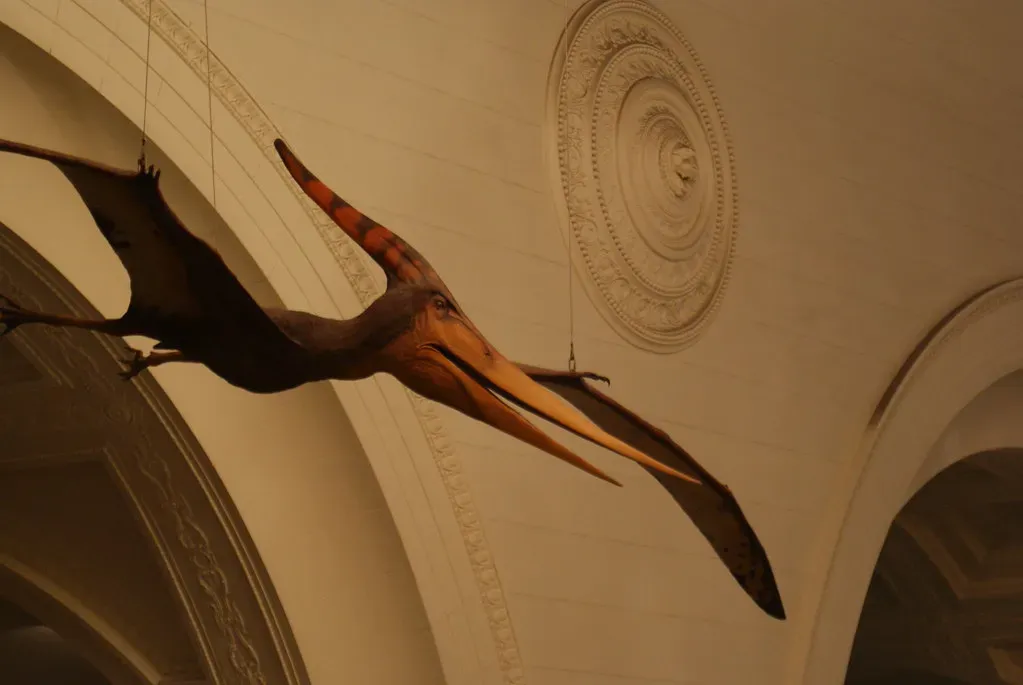
Pteranodon is arguably the most stubbornly mislabeled creature in all of pop-culture paleontology. It has appeared in nearly every dinosaur documentary, every museum gift shop, and every children’s book on the subject – usually with zero caveat. With a wingspan stretching up to 20 feet and that unmistakable bony head crest, it defines the visual language of prehistoric life. And it was not a dinosaur. Not even slightly.
Pterosaurs like Pteranodon evolved flight independently from a shared distant ancestor within the broader group Ornithodira, but they never developed the open acetabulum – the perforated hip socket – that defines every member of Dinosauria. CT scans of pterosaur fossils reveal inner-ear structures tuned for aerial agility in ways that differ structurally from dinosaur anatomy. Experts have maintained this distinction since the 19th century. The misnomer persists not because the science is unclear, but because “flying dinosaur” is a better movie line than “non-dinosaurian ornithodiran archosaur.”
At a Glance
- Lived approximately 86–84 million years ago during the Late Cretaceous
- Wingspan: up to 23 feet (7 meters) — among the largest of its genus
- More than 1,200 fossil specimens known — more than any other pterosaur
- Toothless beak adapted for snatching slippery fish from shallow Cretaceous seas
- Formally excluded from Dinosauria: all dinosaurs belong to Saurischia or Ornithischia — not Pterosauria
#9 – Quetzalcoatlus: Giraffe-Sized, Terrifying, and Technically Not a Dinosaur
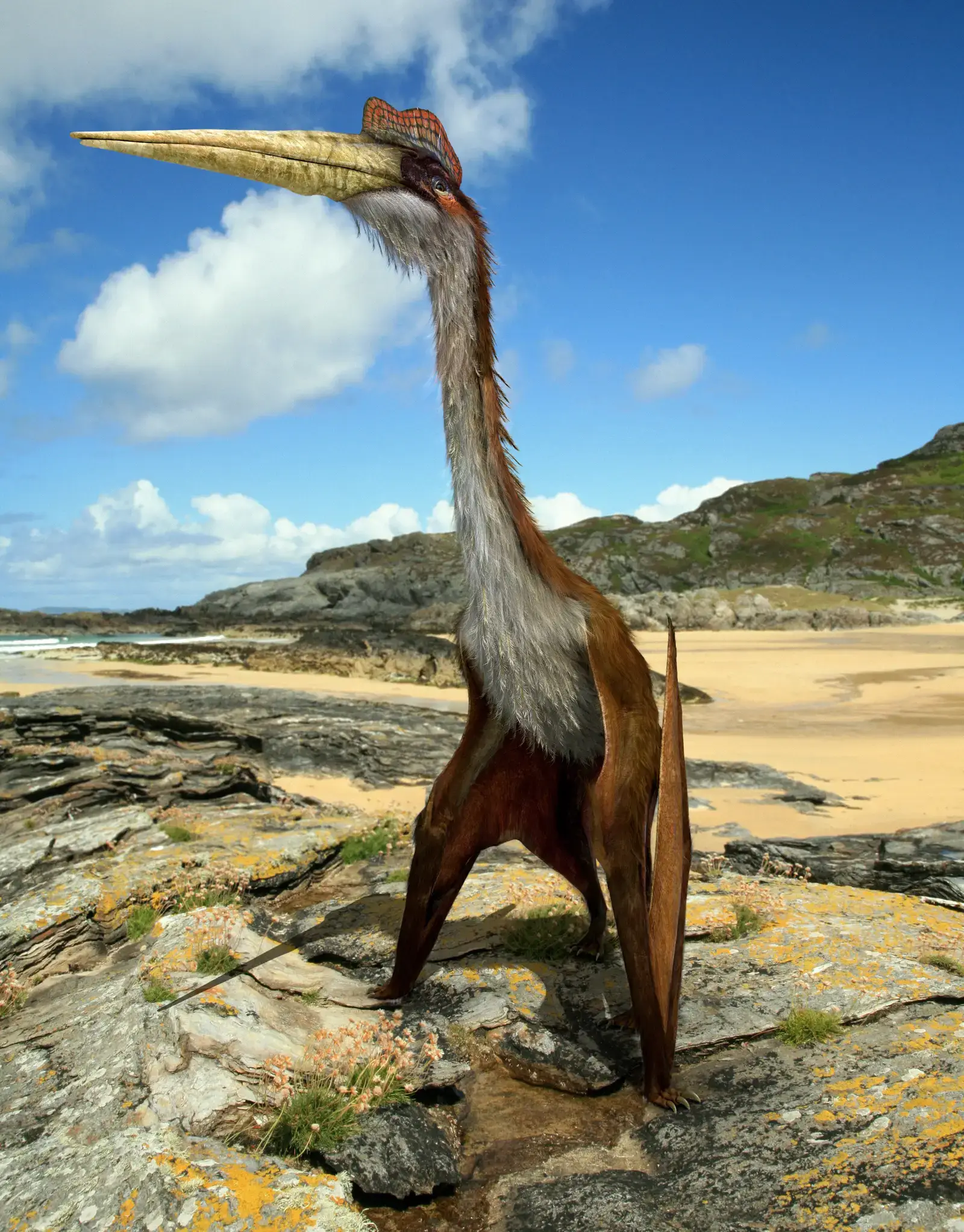
Quetzalcoatlus northropi stood roughly as tall as a modern giraffe when it walked on all fours, carried a wingspan estimated at up to 36 feet, and lived right up until the end-Cretaceous extinction event – side by side with actual dinosaurs. It is one of the most staggering animals that ever existed on this planet. It was also, like all pterosaurs, excluded from Dinosauria by its fundamental anatomy.
Recent biomechanical studies have painted a portrait of Quetzalcoatlus as an ambush predator that stalked terrestrial prey on the ground before launching itself airborne – which makes it even more cinematic than anything Hollywood has fully captured yet. But its neck vertebrae, limb proportions, and the absence of dinosaurian hip architecture place it clearly outside the clade. It represents the absolute ceiling of pterosaur evolution, not an extreme expression of dinosaur gigantism. The distinction matters because it tells us the Mesozoic sky and land were being exploited by entirely separate evolutionary experiments running in parallel.
Quick Compare: Quetzalcoatlus vs. a Modern Reference Point
- Wingspan: up to 33–36 feet — roughly the length of a school bus
- Standing height: approximately 16–18 feet tall on the ground — eye-level with a giraffe
- Head length: up to 10 feet long, including a bony crest
- Classification: Pterosaur (family Azhdarchidae) — not a dinosaur under any framework
- Coexisted with: T. rex and Triceratops — but belonged to a completely separate evolutionary line
#8 – Plesiosaurus: A Sea Creature That Could Never Have Been a Dinosaur
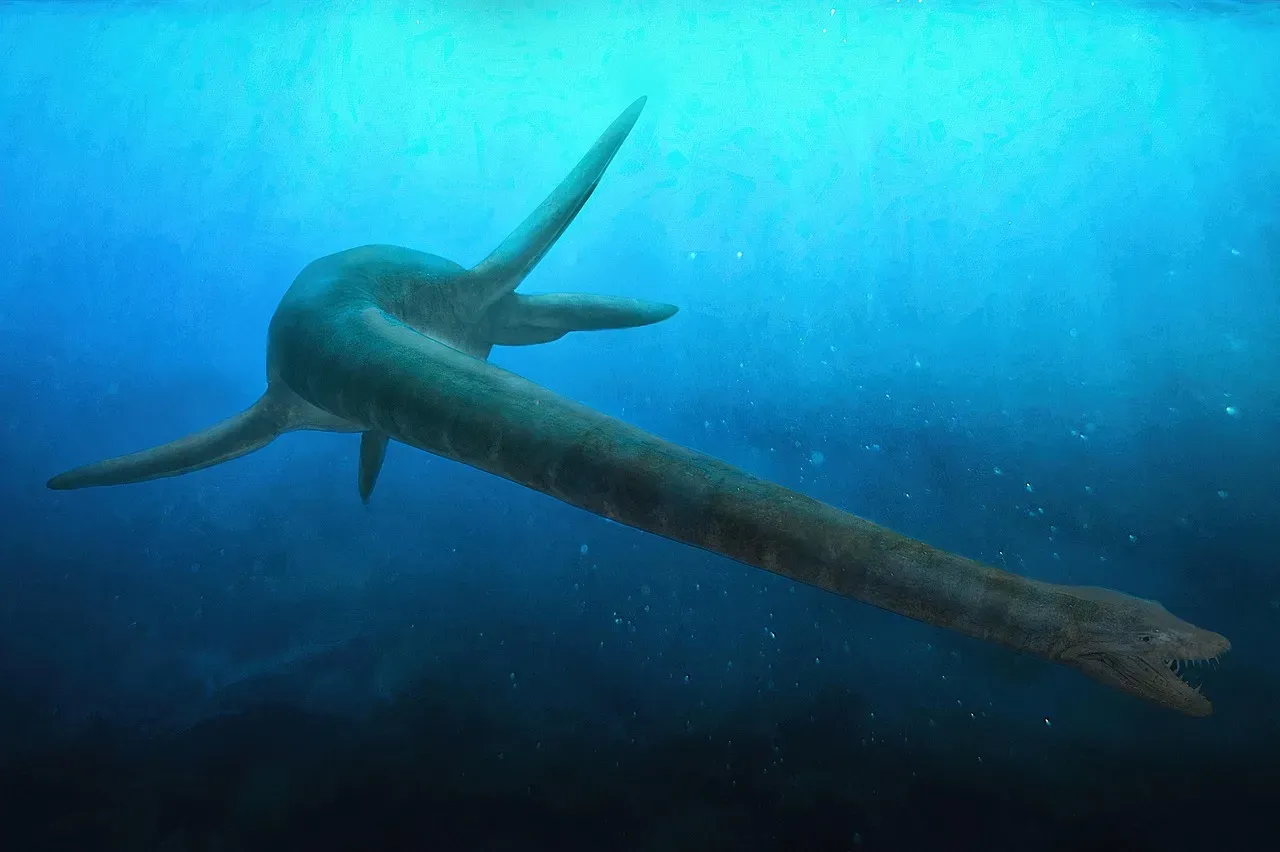
Plesiosaurus gliding through Jurassic seas on four broad flippers, neck arcing above the surface – it is one of the most iconic images in all of prehistoric imagery. It is also the creature most likely to be whispered about whenever someone spots a dark shape in a Scottish loch. Whatever Nessie is or isn’t, one thing is settled: Plesiosaurus was not a dinosaur, and never had any realistic prospect of being one.
Plesiosaurs descended from terrestrial reptile ancestors but represent their own distinct radiation of diapsid reptiles, adapted over millions of years for full aquatic life. Their limb posture, hip architecture, and skeletal layout show none of the defining features of Dinosauria. Fossil evidence even suggests they gave live birth at sea rather than laying eggs on land – a reproductive strategy that sets them further apart from most dinosaur biology. The reclassification happened gradually through comparative anatomy across the 19th and 20th centuries. It was never controversial among experts. It just never reached the gift shop.
#7 – Elasmosaurus: Famous for Being Reconstructed Backward, Famous for the Wrong Reasons
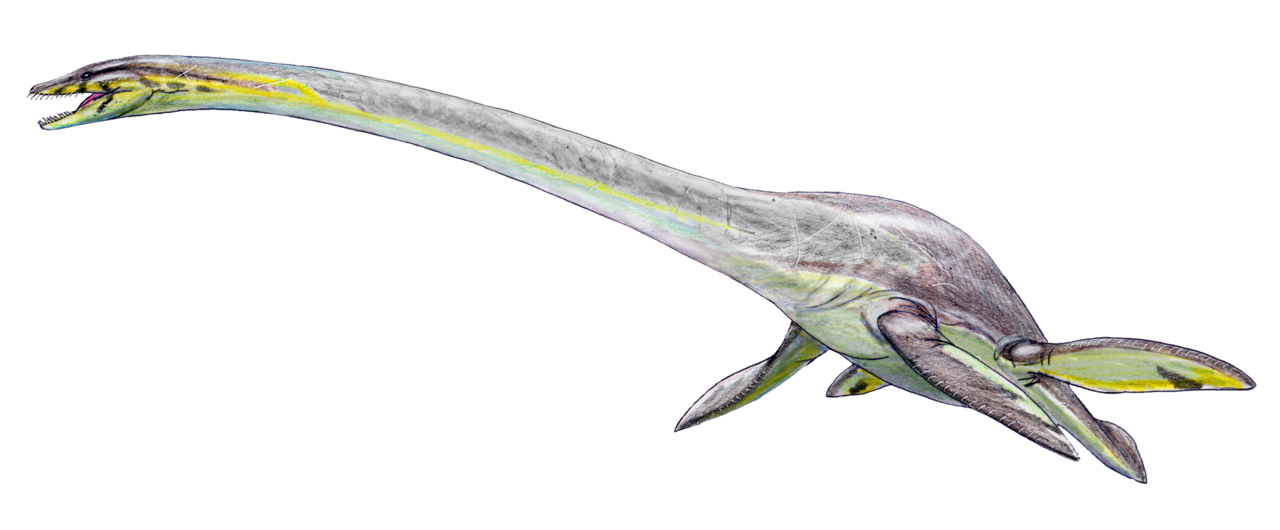
Elasmosaurus has an unusual claim to paleontological fame: when it was first reconstructed in 1868, the scientist leading the effort placed its skull on the wrong end, attaching it to what was actually the tail. The resulting creature had a short neck and an enormous “head-tail,” and the error triggered one of the most heated public scientific disputes of the 19th century. What got lost in that drama was a simpler fact: Elasmosaurus was never a dinosaur to begin with.
A plesiosaur with one of the longest necks ever documented – over half of its total body length in vertebrae – Elasmosaurus was built for aquatic ambush, threading its neck through schools of fish while its massive body remained nearly motionless in the water. None of its anatomy overlaps with Dinosauria. It shared the Late Cretaceous seas as a completely independent evolutionary story unfolding in parallel to the dinosaurs on land. The backward skull was eventually corrected. The mislabeling in popular culture has proven harder to fix.
#6 – Ichthyosaurus: Convergent Evolution’s Most Convincing Illusion
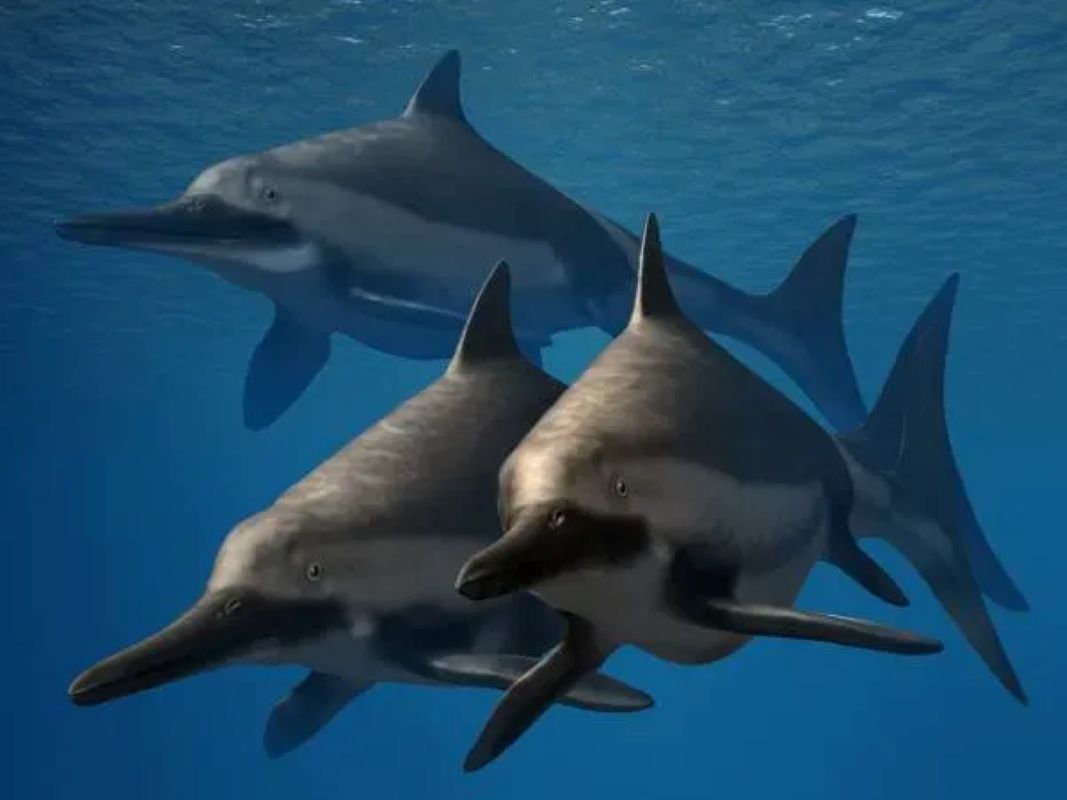
If you showed a silhouette of Ichthyosaurus to someone unfamiliar with paleontology, they would almost certainly say “dolphin” – and they wouldn’t be entirely wrong about the shape. The streamlined body, the crescent tail, the dorsal fin: Ichthyosaurus arrived at the same hydrodynamic solution as dolphins through a completely separate evolutionary path. That process is called convergent evolution, and it is one of nature’s most disorienting tricks, because it makes unrelated animals look like close relatives.
Ichthyosaurs trace their ancestry to land-dwelling reptiles that returned to the sea during the Triassic, and they show none of the hip or limb traits that define Dinosauria. What makes them particularly fascinating is their reproductive biology: ichthyosaur fossils have been found with embryos preserved inside the body cavity, confirming they gave live birth to young in open water. That’s a trait essentially unrelated to dinosaur reproduction. Taxonomists separated ichthyosaurs cleanly over a century ago, but their dolphin-like silhouette keeps pulling them back into the wrong conversation.
Worth Knowing
- Ichthyosaurs first appeared roughly 250 million years ago — among the earliest Triassic survivors after the Great Dying extinction
- Their dolphin-like body shape evolved completely independently of actual dolphins — a textbook example of convergent evolution
- Live birth confirmed by fossils preserving embryos mid-delivery inside the mother’s body cavity
- Entirely separate from Dinosauria: descended from land reptiles that returned to the sea, sharing no archosaurian ancestry
- Went extinct around 90 million years ago — roughly 25 million years before the end-Cretaceous event that wiped out the dinosaurs
#5 – Mosasaurus: A Giant Lizard Relative, Not a Dinosaur Offshoot
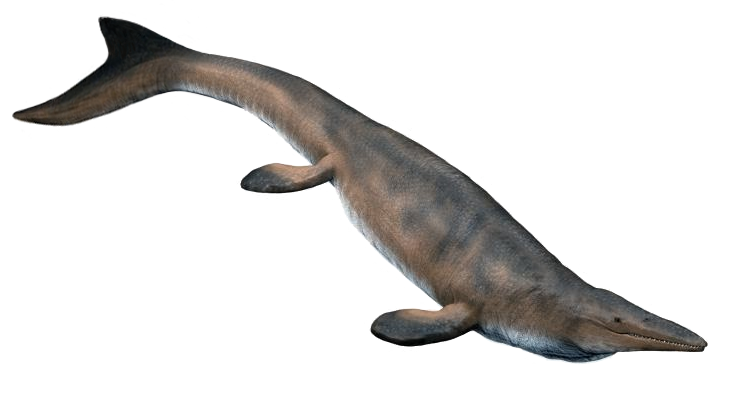
Mosasaurus has had a spectacular recent cultural moment thanks to a certain blockbuster franchise that showed it breaching the surface of a lagoon to swallow a great white shark whole. The scene is pure spectacle – and the creature itself, in reality, was spectacle enough. Mosasaurus grew to lengths possibly exceeding 50 feet and sat at the top of Late Cretaceous marine food chains. What it was not, in any scientific classification, was a dinosaur.
Mosasaurs descended from monitor-lizard-like ancestors within the squamate lineage – the same broad group that includes modern lizards and snakes. Their skull architecture, jaw mechanics, and limb modifications all reflect squamate ancestry, not archosaurian dinosaur ancestry. Recent phylogenetic work has only reinforced this separation. Mosasaurs represent a remarkable late-Cretaceous burst of squamate evolution into marine gigantism – a completely independent takeover of the seas happening at the same time dinosaurs ruled the land. Two separate evolutionary empires, running simultaneously, with almost no overlap.
The history of life on Earth is not a single story. It is many stories running at the same time, largely ignoring each other.
Stephen Jay Gould
#4 – Megalodon: Peak Shark, Not a Dinosaur, Not Even Close in Time
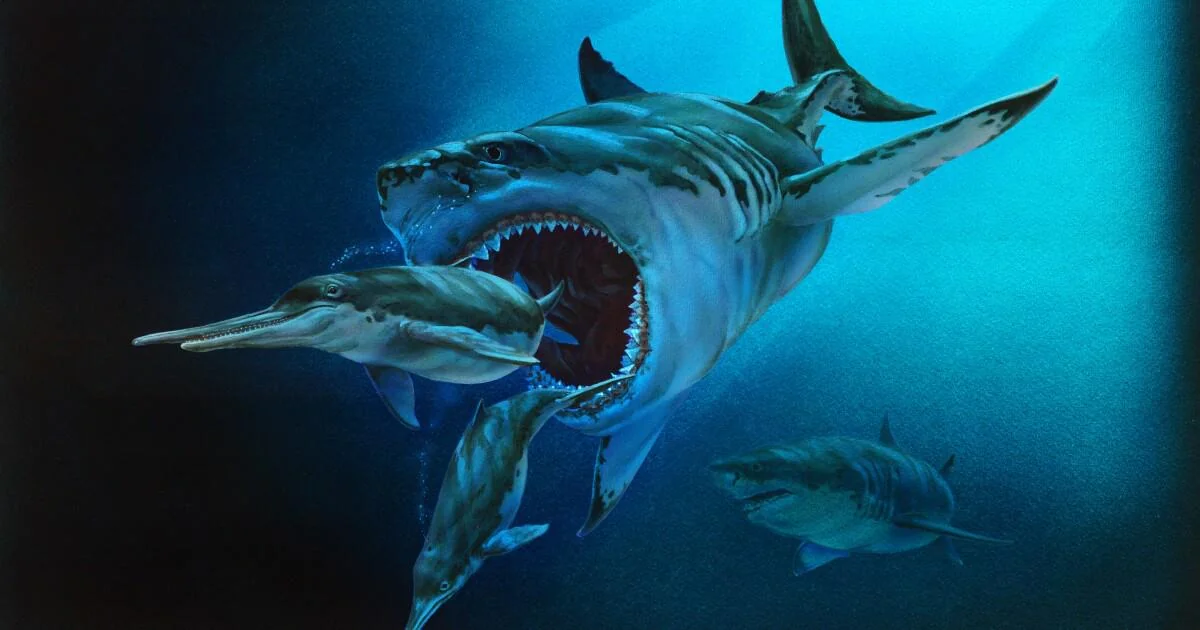
Megalodon gets pulled into dinosaur conversations almost entirely on the basis of size, which is exactly the kind of reasoning that modern taxonomy was designed to replace. Yes, Megalodon was enormous – current estimates suggest body lengths of 50 to 60 feet, with teeth the size of a human hand. It was one of the most powerful predators in the history of the oceans. It was also a shark, full stop, and it lived in the Cenozoic Era, millions of years after the non-avian dinosaurs had already vanished from the planet.
Sharks belong to the class Chondrichthyes – cartilaginous fish – placing them in an entirely different vertebrate lineage from reptiles or dinosaurs. Megalodon’s skeleton was made of cartilage rather than bone, which is why almost all fossil evidence comes down to teeth and a few vertebrae. There is no hip socket to examine because the animal shared no meaningful evolutionary proximity to Dinosauria. Paleontologists have never classified it as a dinosaur under any framework. It is the apex expression of shark evolution, which is a superlative impressive enough on its own terms without borrowing dinosaur mythology.
#3 – Basilosaurus: The “King Lizard” That Turned Out to Be a Whale
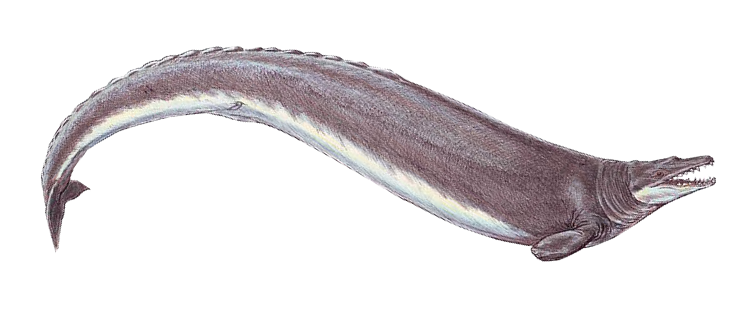
Basilosaurus has one of the most embarrassing names in the history of paleontology, and the scientists who assigned it knew it almost immediately. When fossilized vertebrae first surfaced in the American South in the early 1800s, they were so large and cylindrical that the describer assumed they came from a sea-going reptile and named it accordingly: “king lizard.” The name stuck even after more complete skeletons revealed tiny but unmistakable hind limbs, a mammalian skull structure, and every indicator of an early cetacean – a primitive whale.
Basilosaurus lived during the Eocene Epoch, roughly 34 to 40 million years ago – well after the end-Cretaceous extinction that took out the non-avian dinosaurs. Its reclassification from reptile to mammal in the 19th century was one of the first major public demonstrations of how incomplete fossil remains can generate confident but completely wrong conclusions. It also revealed something genuinely thrilling: that whales, those enormous fully aquatic mammals, were once sinuous, serpentine creatures with legs they no longer needed. The dinosaur label was wrong, but the real story was stranger and better.
Why It Stands Out
- Named “king lizard” in the 1840s — scientists realized the error almost immediately but the name was already official
- Body stretched up to 60 feet — serpentine and eel-like, unlike any modern whale
- Retained small but functional hind limbs — a visible evolutionary remnant of its land-walking ancestors
- Lived 34–40 million years ago — roughly 26 million years after the last non-avian dinosaurs went extinct
- Its reclassification helped establish the scientific concept of extinction as a provable, documented fact
#2 – Smilodon: It Hunted Alongside Humans, Not Dinosaurs
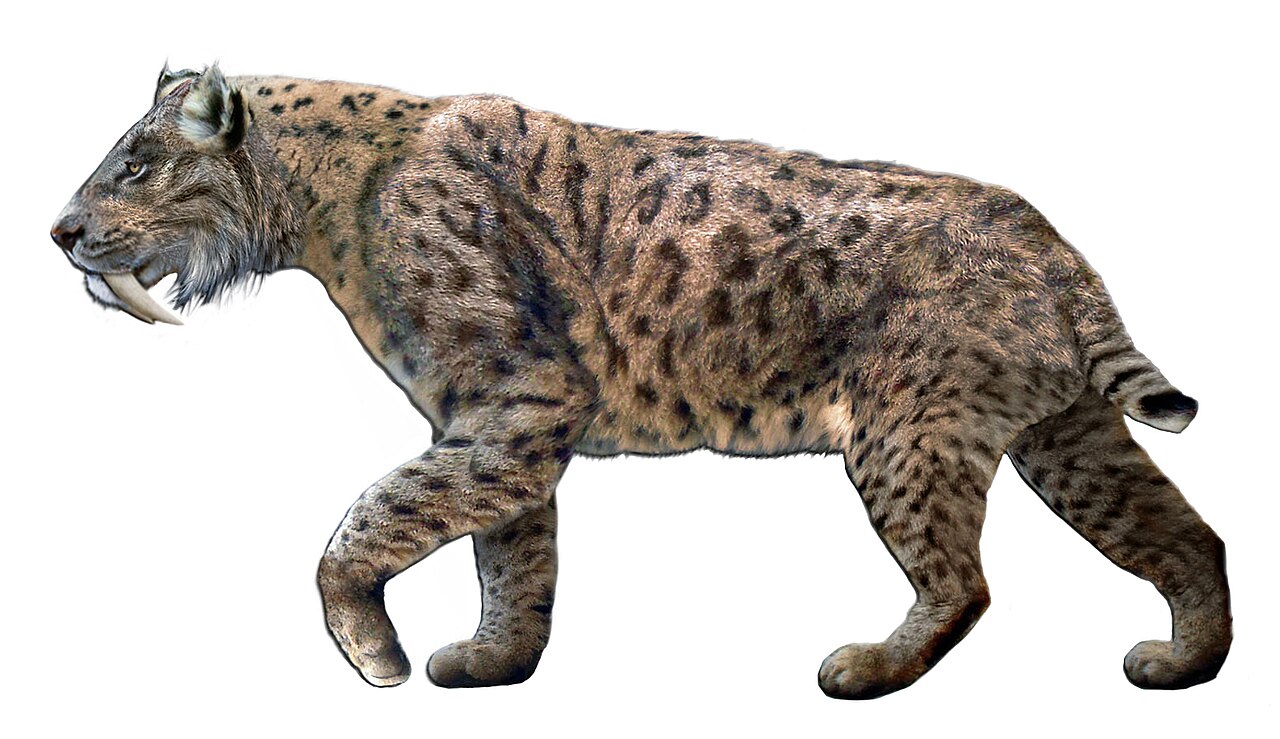
Smilodon – the saber-toothed cat – is one of those prehistoric creatures that seems almost too dramatic to be real. Those canines, extending up to 11 inches in some species, paired with shoulders built like a battering ram and a jaw that could open to nearly 120 degrees. It was a placental mammal, a member of the carnivoran order, and its ancestry traces through the same lineage as modern lions and tigers rather than anything close to a dinosaur. It occasionally appears in informal “prehistoric creatures” lists that blur the line, but among scientists the classification has never been in serious doubt.
What tends to genuinely shock people about Smilodon is the timeline. It went extinct approximately 10,000 years ago – a geological eyeblink. Early humans were already building permanent settlements, making cave art, and spreading across continents when the last Smilodon populations collapsed, likely a combination of climate shift and the loss of the megafauna prey they depended on. This animal didn’t share a world with T. rex. It shared a world with us. The gap between Smilodon and the last non-avian dinosaur is roughly 55 million years. They have almost nothing in common except that both can make a child’s eyes go wide.
#1 – The Woolly Mammoth: The Ultimate Mislabeled Creature, and the Most Recent One
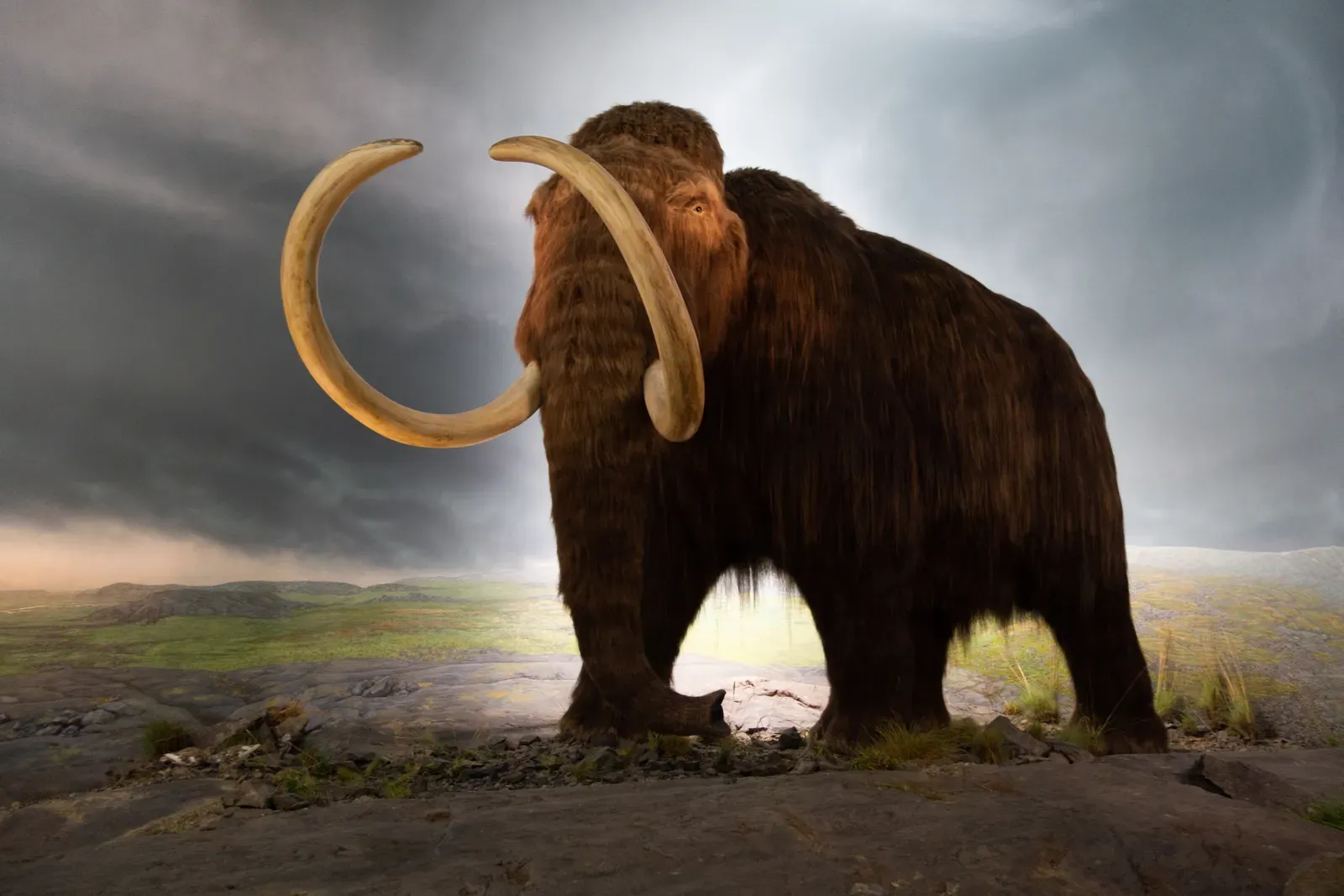
The woolly mammoth is the creature that collapses the popular definition of “prehistoric” most completely. It gets bundled into the same mental category as dinosaurs by casual usage – ancient, gone, enormous, tusked – and yet its story is not ancient by any meaningful measure. Woolly mammoths, as a species, were still alive when the pyramids at Giza were already a thousand years old. A dwarf population survived on Wrangel Island in the Arctic Ocean until roughly 4,000 years ago, when early Bronze Age civilizations were trading goods across the Mediterranean. The “prehistoric” label barely applies.
Woolly mammoths were proboscideans – the mammalian order that includes modern elephants – and their evolutionary lineage diverged from anything resembling a dinosaur hundreds of millions of years ago. Scientists have sequenced the woolly mammoth genome from frozen carcasses preserved in Siberian permafrost, confirming in molecular detail exactly where it sits in the mammal family tree. Some researchers are currently attempting to reintroduce mammoth-like traits into Asian elephant cell lines. That’s the real story here: not a misclassified dinosaur, but a mammal so recently lost that we might bring it back. That’s not prehistory. That’s a decision we might have to make.
At a Glance: How Recent Was the Woolly Mammoth?
- Last mainland populations vanished around 10,000 years ago — as the Ice Age ended
- A final island population on Wrangel Island, Siberia, survived until approximately 4,000 years ago
- The Great Pyramid of Giza was under construction while these last mammoths still lived
- A 2024 genomic study found their extinction was likely caused by a sudden random event — not genetic collapse
- Full genome has been sequenced from permafrost specimens — de-extinction research is actively underway
Why Getting This Right Actually Matters
The pattern running through all twelve of these creatures is the same: visual similarity and a shared sense of “ancient and scary” fooled generations of well-meaning people, including early scientists working with fragmentary remains and no phylogenetic framework to guide them. It wasn’t stupidity. It was the natural human tendency to group things by how they look rather than by where they actually came from. Cladistics – the method of classifying life by shared evolutionary ancestry rather than appearance – changed everything, and it did so quietly enough that the correction never fully reached popular culture.
Here’s the opinion worth stating plainly: the mislabeling matters more than most experts are willing to say out loud. When people conflate mosasaurs with dinosaurs, or assume the Permian and the Cretaceous were the same world, they lose the actual story – which is that Earth’s history contains multiple separate experiments in large-scale life, each rising and falling on its own terms, none of them inevitable, none of them connected the way the toy boxes suggest. Dimetrodon’s world and T. rex’s world were separated by more time than separates T. rex from us. That’s not a trivia correction. That’s a completely different way of understanding how life on this planet actually works – and how fragile and contingent every version of it has always been.