
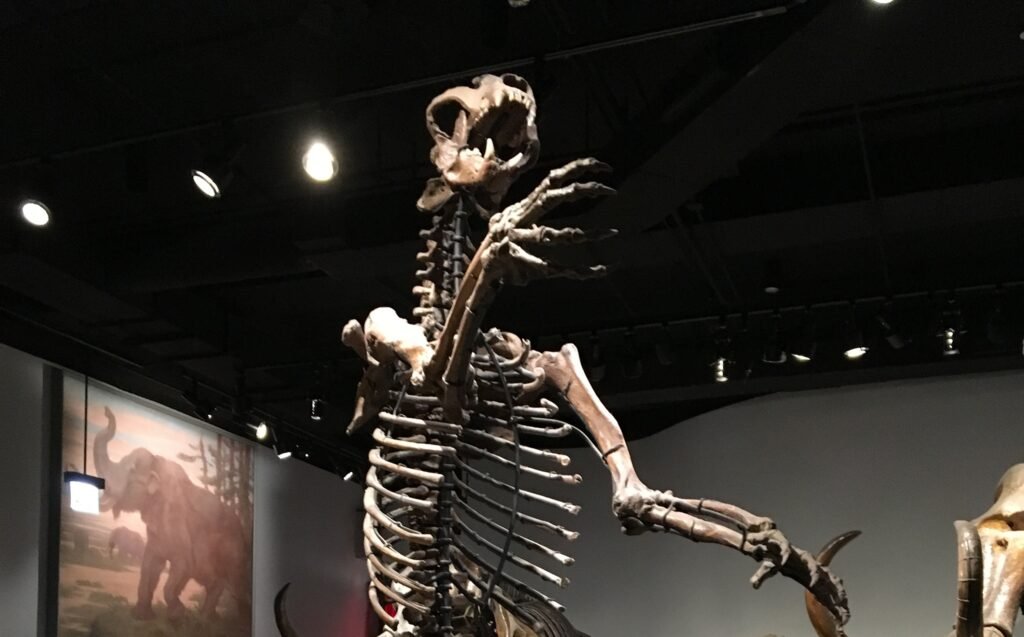
Most people picture the short-faced bear as basically a Terminator with fur: a 12-foot, meat-obsessed monster that could outrun a horse, crush bones like a hyena, and bully saber-tooth cats off their own kills. That image has dominated documentaries, museum dioramas, and every “deadliest prehistoric predator” listicle for decades.
But paleontologists who have spent the last fifteen years re-measuring bones, re-reading isotopes, and re-running the numbers say almost none of it holds up. Some of what they found isn’t just a minor correction – it flips the entire animal’s identity, and by the time you reach the last few entries, even its own name comes under fire.
#1 – It Could Outrun a Modern Racehorse
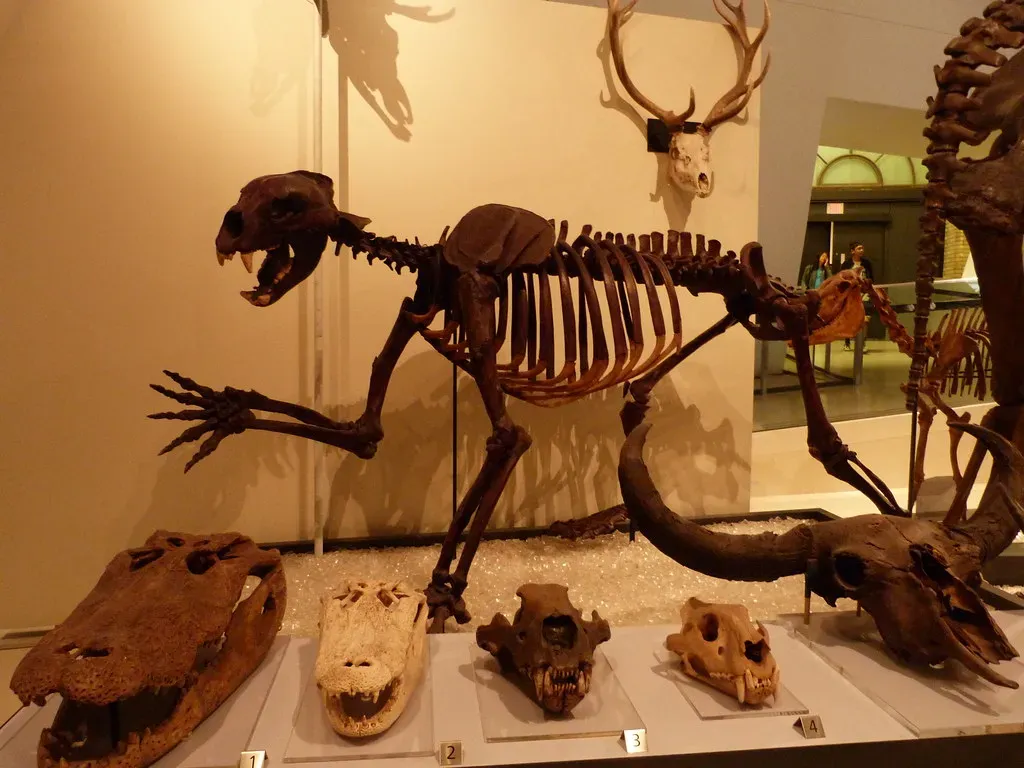
The claim that Arctodus simus was built like a cheetah in a bear suit has been quietly walking itself back. For decades, popular science treated its long limbs as proof of raw speed, with some estimates putting it well above 40 mph in a full sprint.
The problem is that when researchers actually compared its limb proportions to other bears its own size, the “sprinter” story fell apart. A landmark 2010 morphometric study found that Arctodus did not have particularly long legs for a bear of its size, and its limb proportions simply weren’t adapted for that kind of cursorial speed. In plain terms: it wasn’t secretly a track star. It was a big bear with big-bear legs, not a hypercarnivorous greyhound, and that single finding quietly rewrote almost every “fastest bear that ever lived” claim still floating around online.
Fast Facts
- Popular estimates once put its top speed above 40 mph in a full sprint.
- A 2010 morphometric study compared its limb bones against other bears of similar size.
- Verdict: its leg proportions were typical for a bear, not built for sustained sprinting.
- The “outrun a horse” myth came from sheer size, not a specialized running build.
#2 – It Was an Obligate, Long-Distance Scavenger
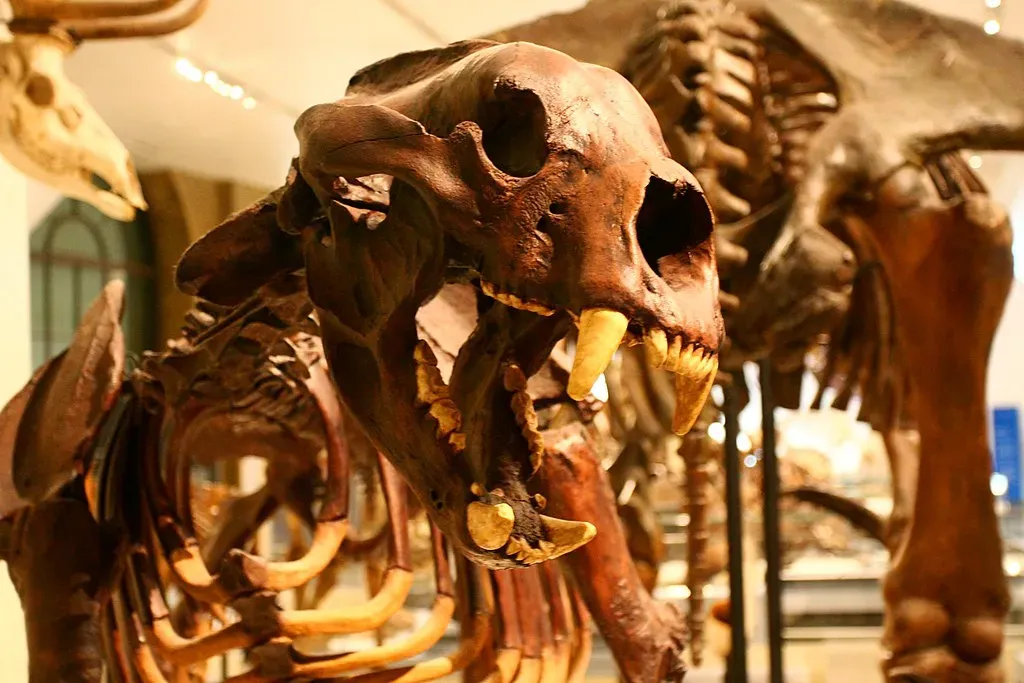
The “vulture on four legs” theory once had serious scientific backing. Researcher Matheus argued in 1995 that competition from other Ice Age predators pushed Arctodus into a very specific niche – one where killing wasn’t even necessary.
Under this model, the bear’s long limbs let it forage economically across a massive home range, and its sheer size acted as a built-in threat, letting it steal kills from smaller carnivores without ever having to fight for them. It’s a great story: a giant that didn’t need to hunt, just intimidate. The trouble is later ecomorphological work found no anatomical signature for this specialized scavenging lifestyle either, leaving this once-popular theory sitting in the same discard pile as the sprinter myth.
#3 – It Crushed Bones Like a Bone-Cracking Hyena
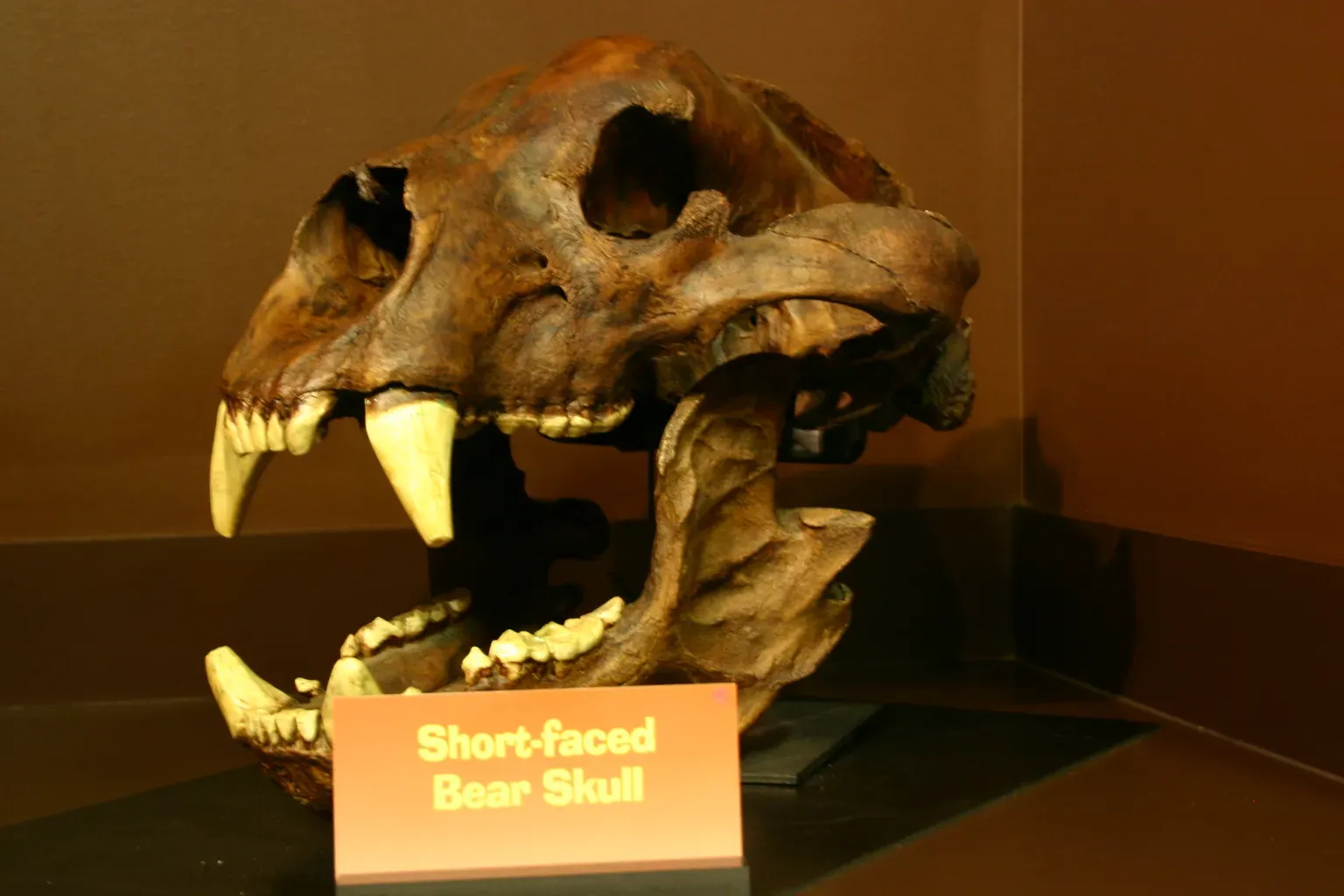
If it wasn’t a cursorial hunter, surely it was a hyena-style bone crusher, right? That was the next fallback theory, and it made intuitive sense given the bear’s raw size and jaw strength.
Researchers tested this directly using dental microwear texture analysis on real Arctodus teeth pulled from Rancho La Brea. The verdict was blunt: the wear patterns showed Arctodus simus was not a durophagous hyper-scavenger cracking open carcasses for marrow. Even more telling, its tooth wear looked most similar to its closest living relative, the spectacled bear – an animal that eats fruit, not skeletons. That means the “bone-crunching monster” image is scientifically dead, because its teeth simply don’t show the damage that comes from regularly gnawing through bone.
#4 – It Ate Almost Nothing But Meat
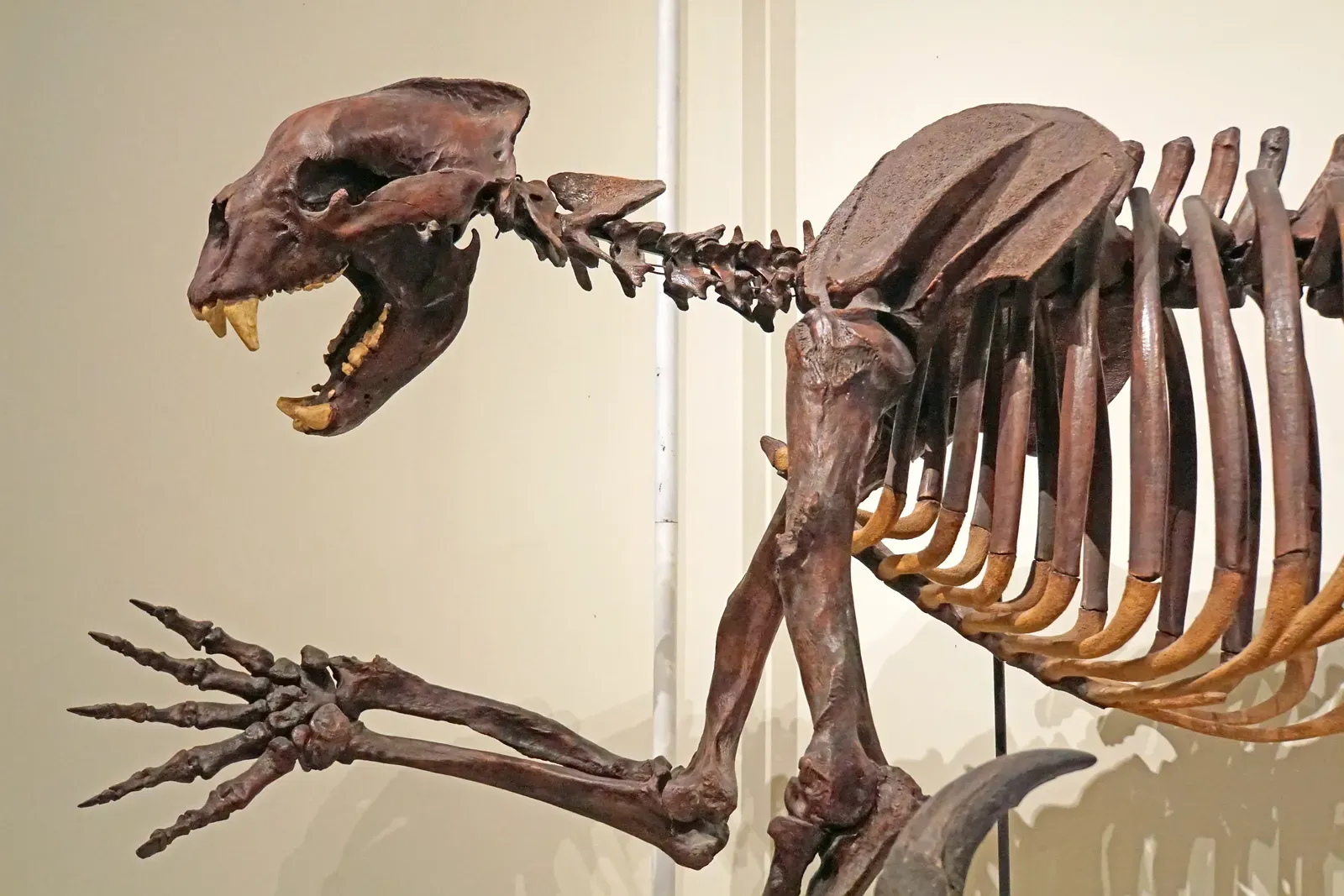
The hypercarnivore label stuck to this bear for good reason: its isotopes really do look carnivorous. Nitrogen and carbon signatures from fossil bone consistently point to heavy meat consumption, and that data is real – it’s the interpretation that was wrong.
“Heavy meat intake” and “meat exclusively” turned out to be two very different claims. A comprehensive re-evaluation found that while the isotope signature does show flesh-heavy eating relative to some grizzly bear populations, it doesn’t support the old picture of a fast-running super-predator. Instead, the animal that emerges is a colossal omnivore whose diet shifted with whatever was available, including C3 vegetation alongside deer, camelids, and tapir. It was a giant with a varied menu, not a single-minded meat machine.
#5 – Its Skeleton “Proved” It Hunted Like a Big Cat
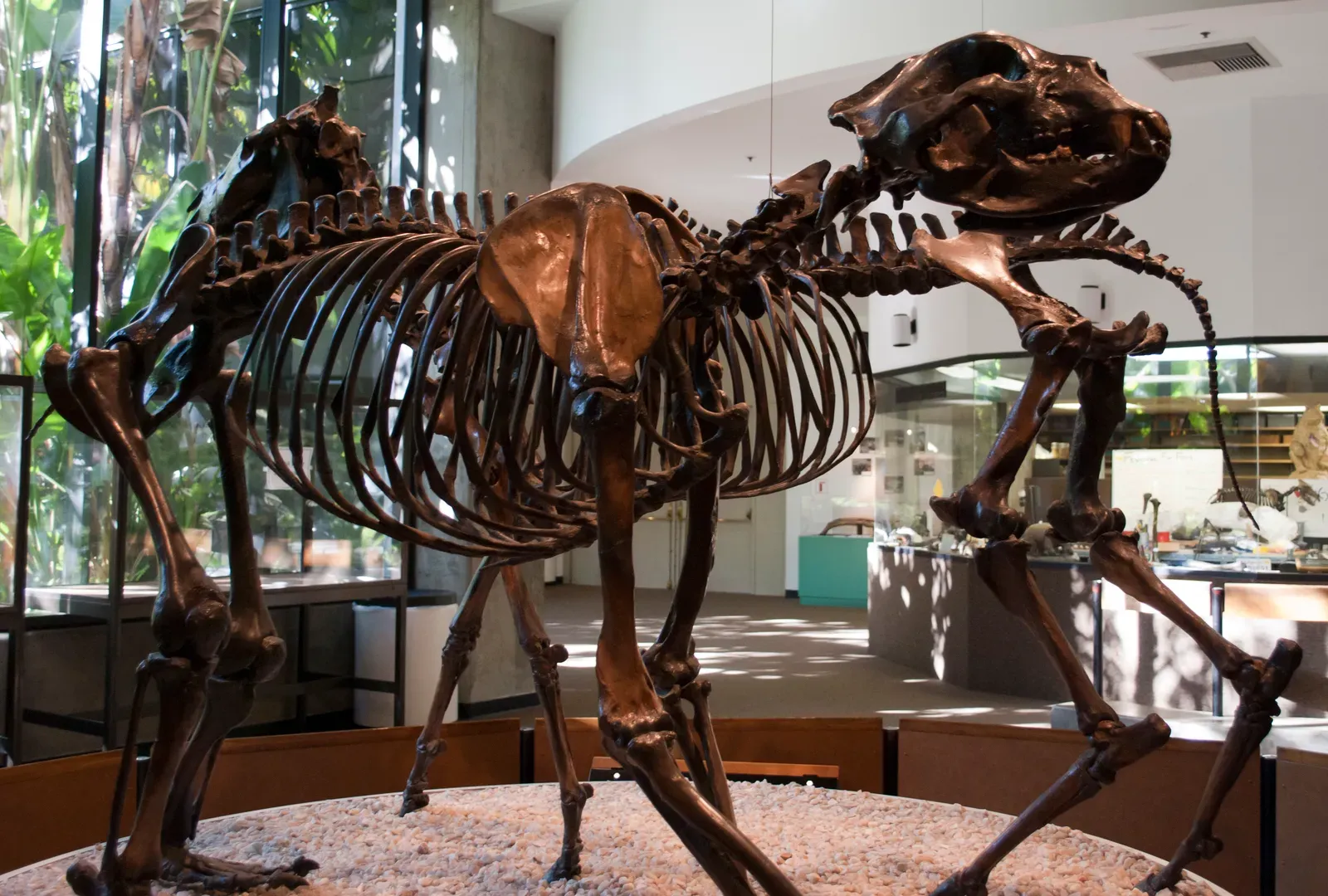
The original case for Arctodus as a superpredator leaned heavily on comparisons to cats, not bears. Paleontologist Björn Kurtén argued the skull and jaw looked almost feline – short muzzle, sharp carnassial-like teeth, a vaulted skull, and crushing jaw strength.
When a team ran full statistical comparisons across cats, hyenas, dogs, and bears, though, the felid resemblance evaporated. The analysis pointed in the exact opposite direction Kurtén predicted, lining Arctodus up with big omnivorous bears instead of convergent cat-mimics. The skull that once “proved” it hunted like a lion turned out to look far more like an oversized omnivore’s skull than a predator’s weapon.
#6 – Those Famous Long Legs Were Sprinting Machines
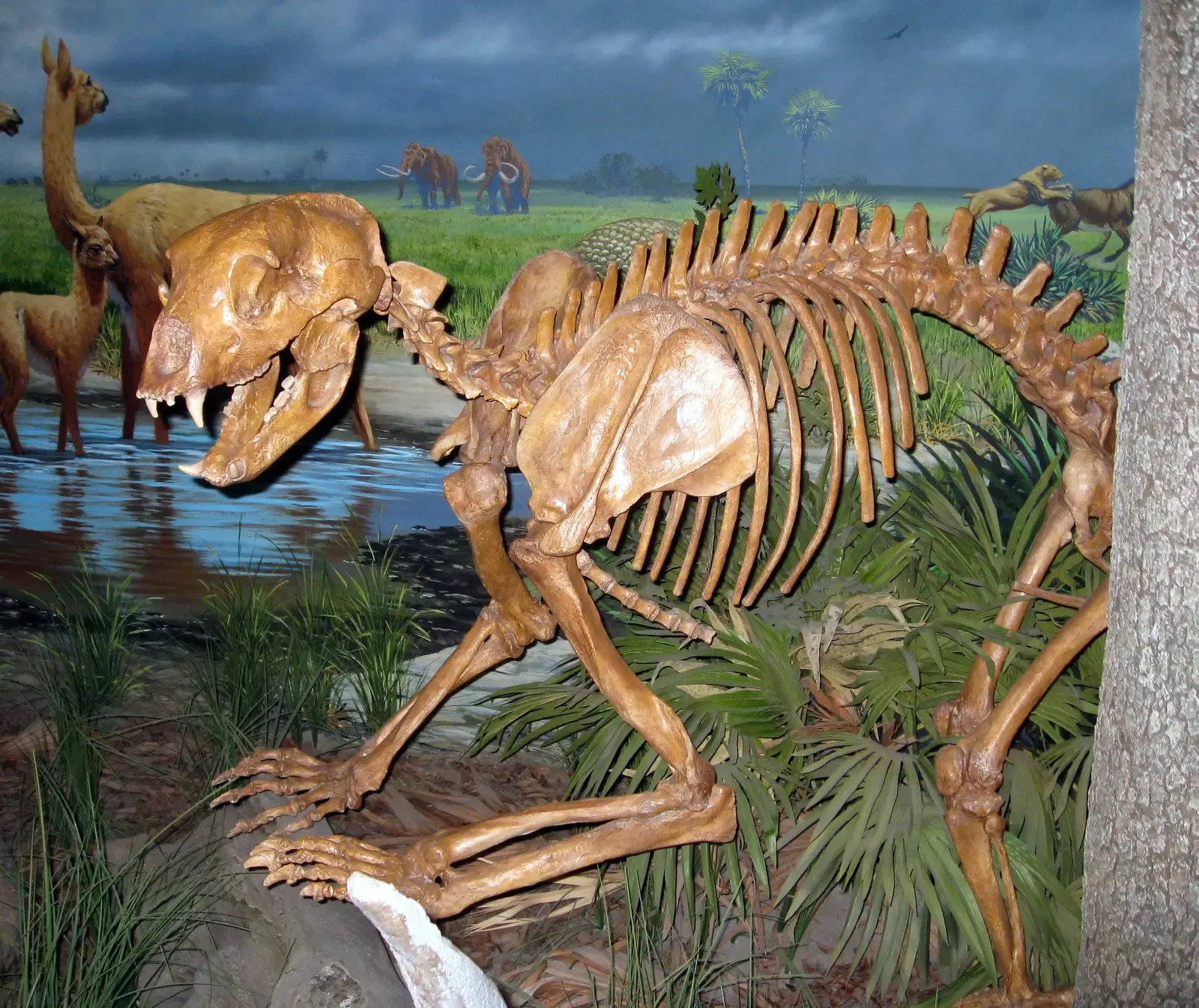
Every dramatic reconstruction shows Arctodus with impossibly long, gazelle-like legs built purely for the chase. It’s one of the most repeated “facts” about the species, plastered across documentaries and toy packaging alike.
Actual bone measurements tell a quieter story. The same 2010 analysis that debunked the sprinting hypothesis found that Arctodus wasn’t relatively long-legged at all once limb length was compared against femoral shaft width across living bears. Its legs simply weren’t proportionally longer than a grizzly’s for its body mass – they only looked long because the whole animal was enormous. A bigger bear naturally has bigger limbs, but that’s scale, not specialized adaptation, and this single correction quietly undoes half of every “built to run down prey” documentary claim still in circulation.
#7 – It Was Actually Two Separate Bear Subspecies
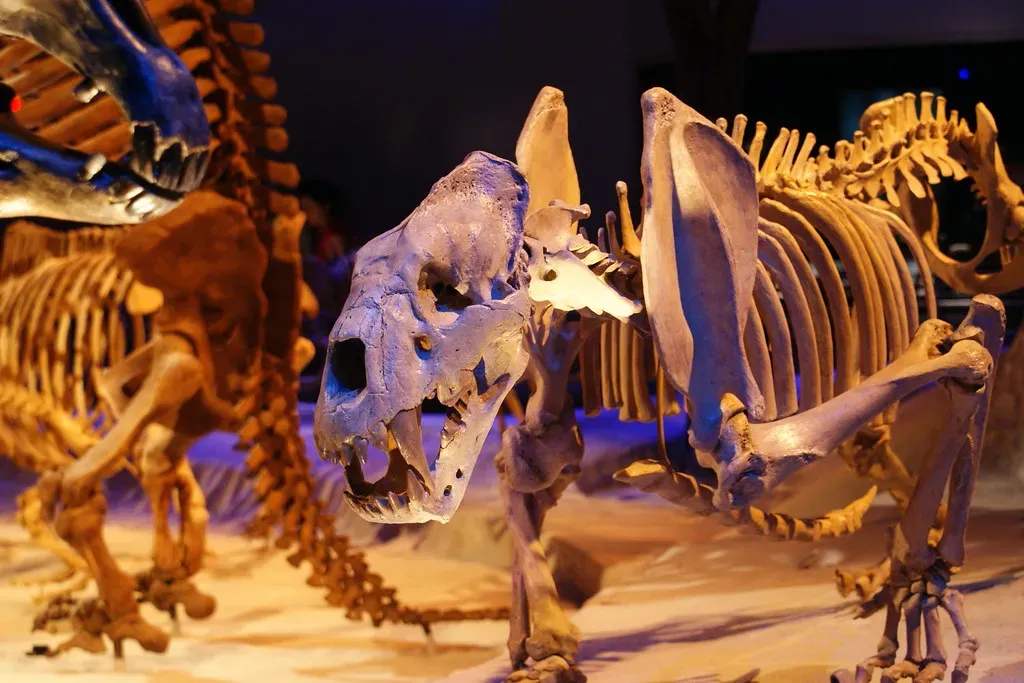
For decades, textbooks split the giant short-faced bear into a huge northern “yukonensis” and a smaller southern “simus.” It looked like a clean case of regional evolution producing two distinct forms across the continent.
A 2025 genetic study sequencing ancient mitochondrial DNA from 31 individuals across Alaska to New Mexico put that idea to the test directly – and it collapsed. Researchers found no genetic evidence separating the two proposed subspecies at all. Instead, the size gap lined up almost perfectly with sex: every large specimen that could be genetically sexed turned out to be male, and every small one turned out to be female. There was never a “giant race” and a “normal race” – there was just males and females.
At a Glance
- 2025 study: ancient mitochondrial DNA sequenced from 31 individuals.
- Sample range stretched from Alaska down to New Mexico.
- Result: zero genetic split between the “yukonensis” and “simus” subspecies.
- The real divide was sex-based – large males, smaller females, not two races.
#8 – It Muscled Saber-Tooths Off Their Kills Through Sheer Size
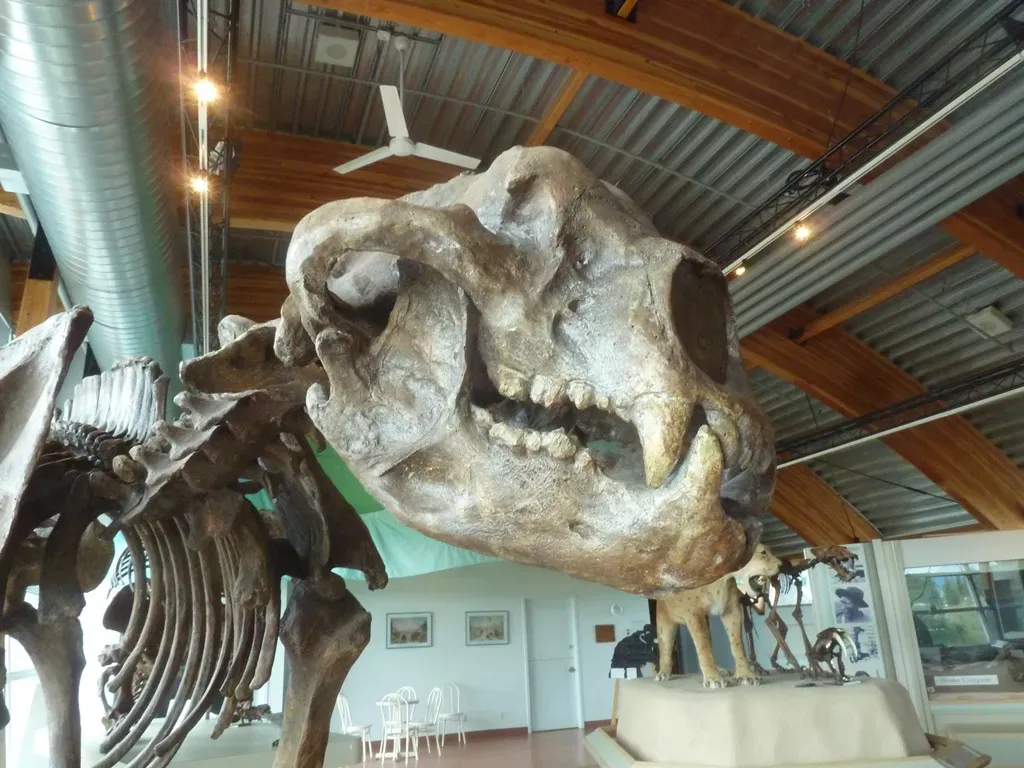
One of the most cinematic images of the Ice Age is Arctodus lumbering up to a mammoth carcass and bullying Homotherium off with pure intimidation. This “carcass kleptoparasite” idea got a serious scientific revival in 2008, built on isotope data from Beringia suggesting Arctodus displaced saber-tooth cats and other carnivores from kills.
It’s a genuinely dramatic scene, and it may well have happened locally. But subsequent craniodental and limb-proportion analyses across the whole species found no consistent anatomical signature for either specialized predation or specialized scavenging kleptoparasitism. That means the “bully at the buffet” story is, at best, a regional Beringian behavior rather than a species-wide rule – the dominant, universal bully narrative simply doesn’t hold up continent-wide.
#9 – It Never Set Foot in the Southeastern U.S.
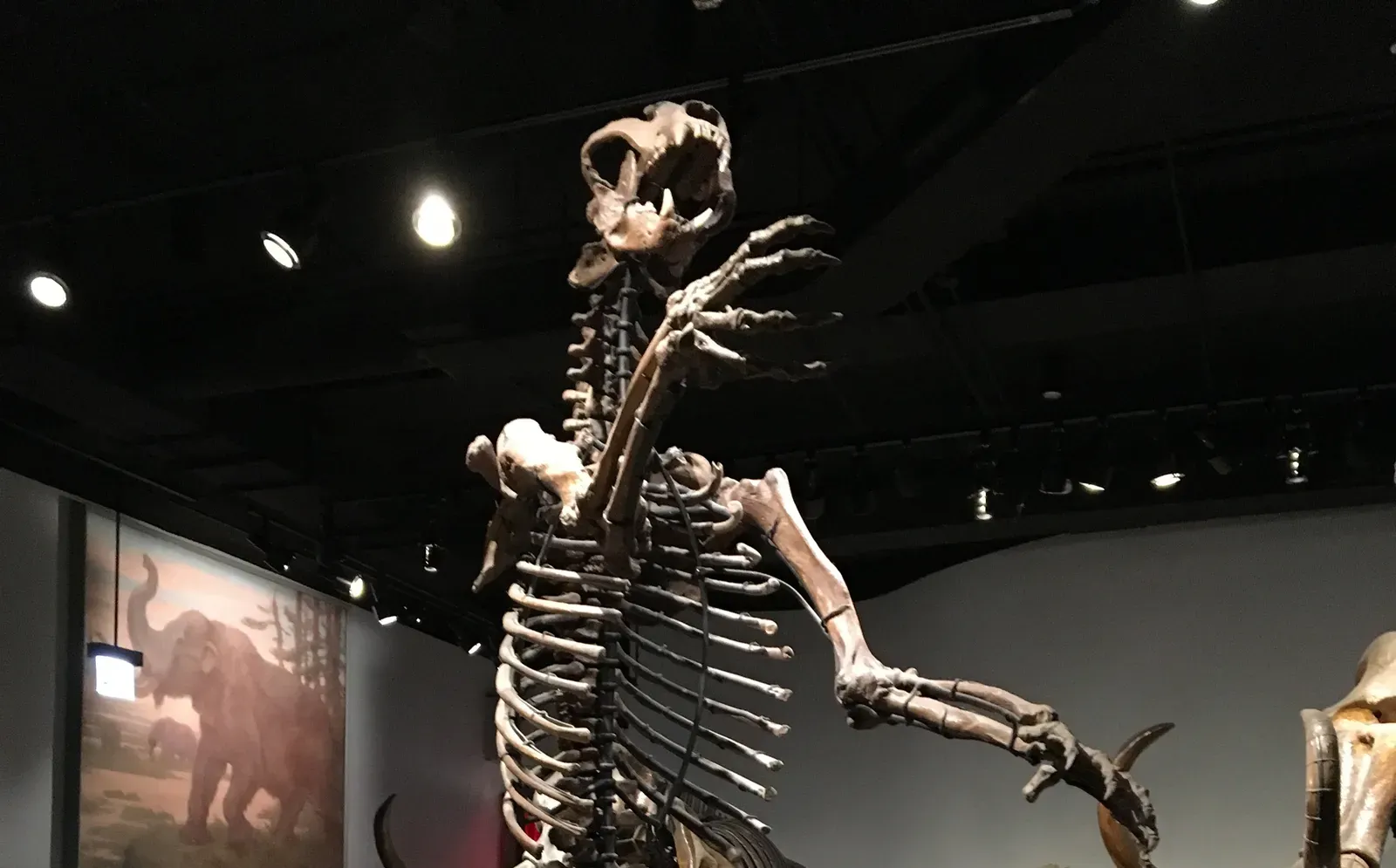
Standard range maps for decades kept Arctodus simus confined to the western half of North America, with the Southeast marked as off-limits. That boundary was treated as settled fact in classic references and repeated in textbook after textbook.
New fossil discoveries blew that boundary apart. A newer find greatly extended the known range of this animal during the last Ice Age and disproved the long-held assumption that the giant short-faced bear never ventured into the southeastern U.S. A species maps insisted stayed out west turns out to have wandered much farther east than anyone assumed – and that matters, because range data feeds directly into extinction and climate-adaptation theories. A bear that tolerated southeastern ecosystems was clearly more ecologically flexible than the “cold-adapted specialist” image suggested.
Worth Knowing
- Old maps kept the species boxed into the western half of North America.
- New fossil finds confirm it also ranged into the southeastern U.S.
- A wider range points to a more climate-flexible animal than “cold specialist” theories claimed.
- Range data directly feeds into how scientists model its eventual extinction.
#10 – It Really Was “Short-Faced”
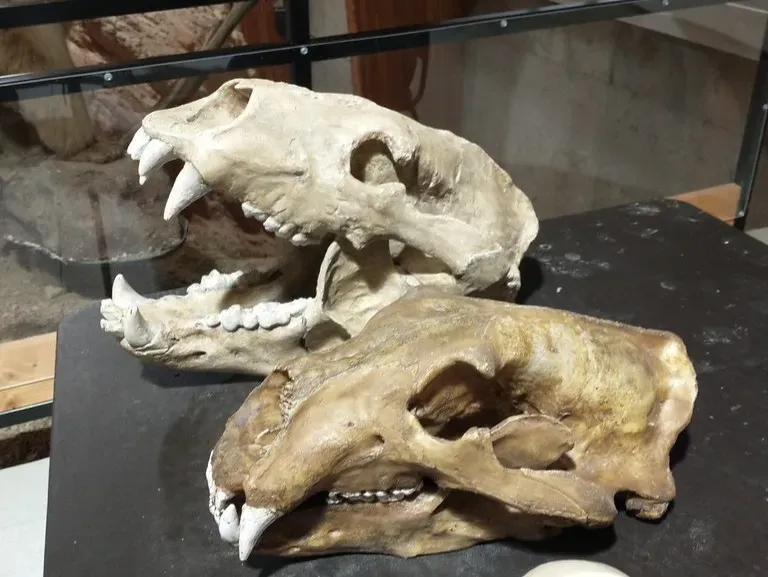
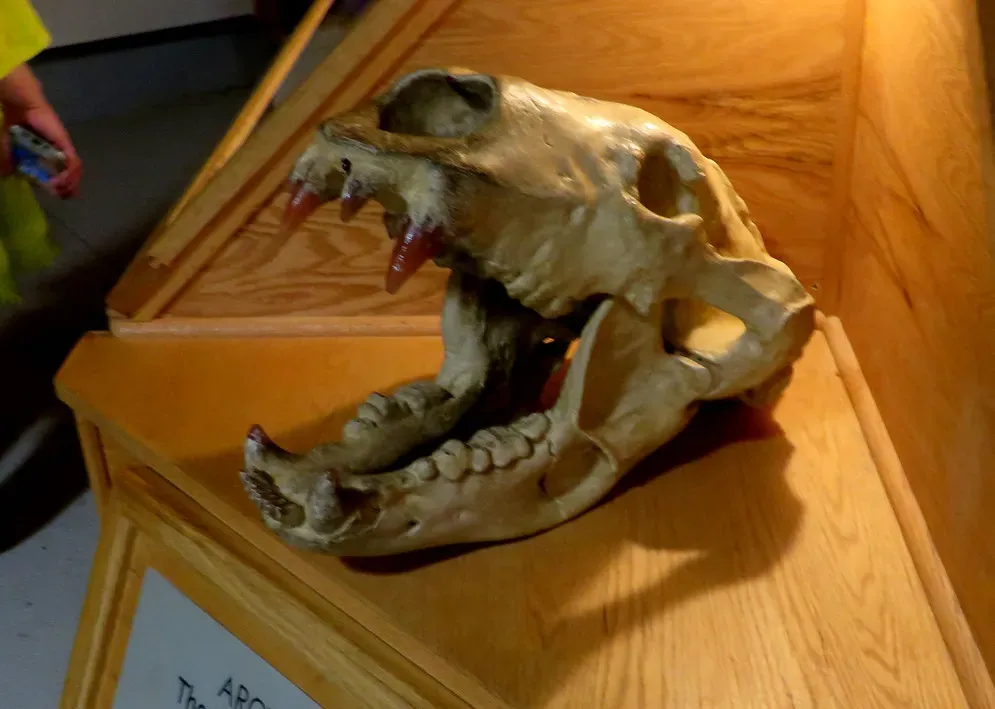
Even the animal’s own name has come under fire. “Short-faced bear” implies a skull shape dramatically different from every other bear – compressed, cat-like, built for a crushing bite.
But recent anatomical reassessment complicates even that. Once its skull proportions are properly scaled against its overall enormous size, the extreme “bulldog face” mostly disappears. What looked like a specialized, unique skull shape in isolation turns out to be much closer to typical bear proportions once body size is accounted for. The signature trait baked into its own common name may be an illusion of scale, not a true specialization – a strange thing for a “short-faced bear” to lose, but the data doesn’t care about branding.
#11 – It Was a Solitary Loner With No Family Structure
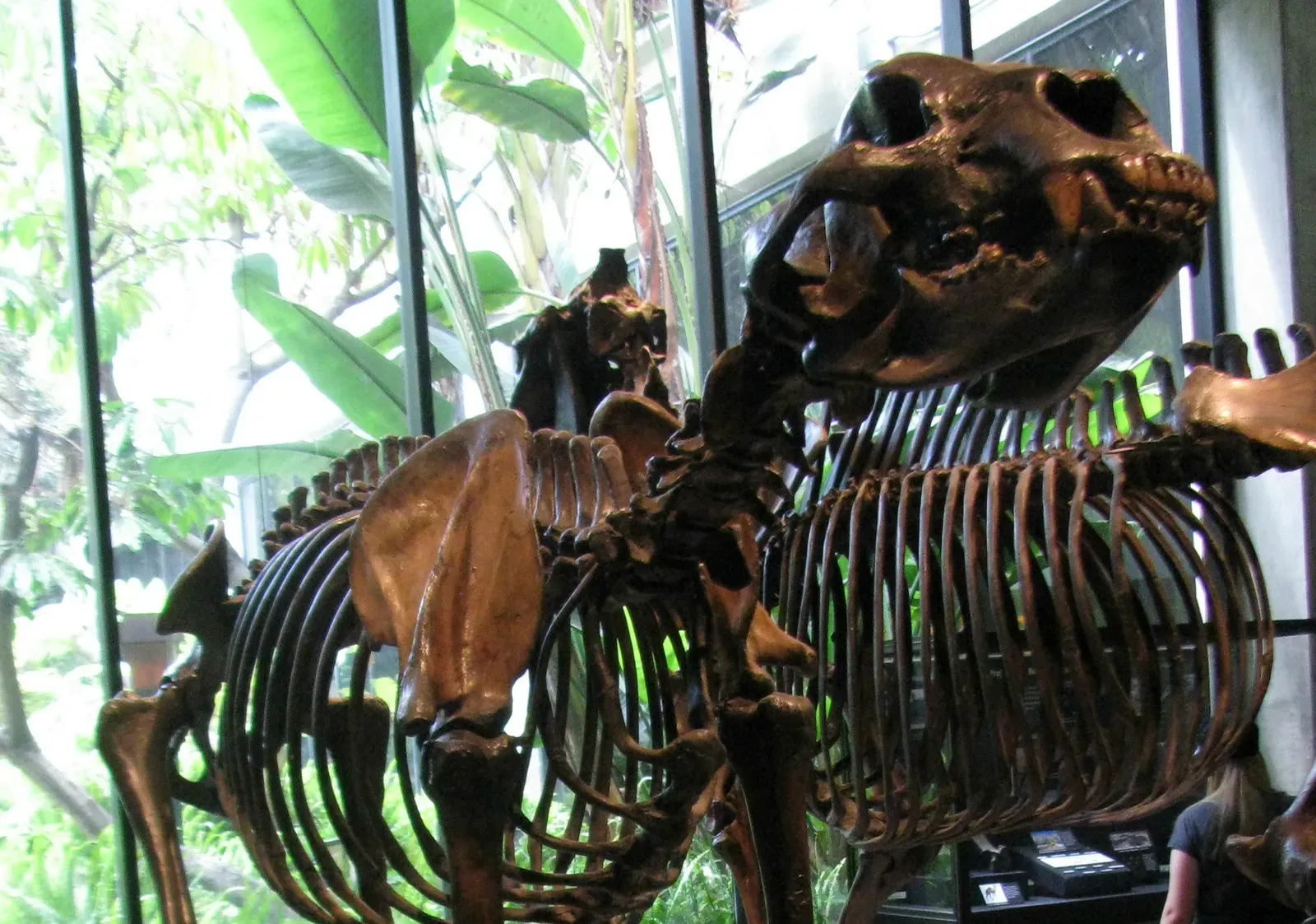
Popular reconstructions almost always show a single, hulking bear wandering alone – no dens, no cubs, no social pattern worth mentioning. Fossil rarity made this easy to assume by default for most of the 20th century.
A closer look at where specimens actually turn up tells a different story. A review of Arctodus records found that only small individuals have ever been recovered from cave deposits, which suggests females used these subterranean shelters specifically for denning. That’s a specific, sex-based behavioral pattern, not random solitary wandering. Females weren’t just smaller; they were using caves in a deliberate, reproductive way males apparently didn’t, which lines up with confirmed extreme sexual dimorphism – males sometimes twice the size of females, a gap steep enough to shape entirely different lifestyles between the sexes.
#12 – It Was the Undisputed Apex Predator of Ice Age North America

This is the myth that swallowed all the others, and it’s the one researchers have worked hardest to dismantle. For most of the 20th century, Arctodus simus was marketed as North America’s answer to the T-Rex: an unstoppable, purely carnivorous superpredator no other Ice Age animal could challenge.
The cumulative verdict from modern paleobiology is almost the opposite. After reviewing craniodental morphology, limb proportions, dental wear, and isotopes together, researchers concluded the evidence does not support Arctodus as a highly carnivorous predator or a dedicated scavenger – it points instead toward a big, flexible omnivore. The field’s own summary now puts it plainly: one theory said active predator, another said scavenger that bullied faster hunters off carcasses, and anatomy once suggested herbivore – and modern research shows traces of all three behaviors actually existed in this one species. The “apex predator” title wasn’t wrong because it was too dramatic – it was wrong because it was too narrow. The real animal was stranger and more adaptable than any single label could capture.
Quick Compare
- Old theory 1: Purely carnivorous, cursorial super-predator.
- Old theory 2: Specialized long-distance scavenger and kleptoparasite.
- Old theory 3: Anatomy-based case for strong herbivore leanings.
- Current verdict: A flexible omnivore showing traces of all three, tied to none.
The Bottom Line
Strip away the documentaries and what’s left is a massive, flexible omnivore – not a cursorial superpredator, not a bone-crushing scavenger, and not even reliably “short-faced.” The size gap that fueled the two-subspecies theory turned out to be simple sexual dimorphism, its legendary long legs weren’t disproportionate at all, and its own range map was too small.
If you ask us, the “apex predator” label was always more about marketing prehistoric monsters than reading the actual bones – and that’s a pattern paleontology keeps repeating with megafauna across the board. The real Arctodus simus was arguably more impressive precisely because it wasn’t a one-trick killer. Which myth surprised you most? Drop it in the comments.