
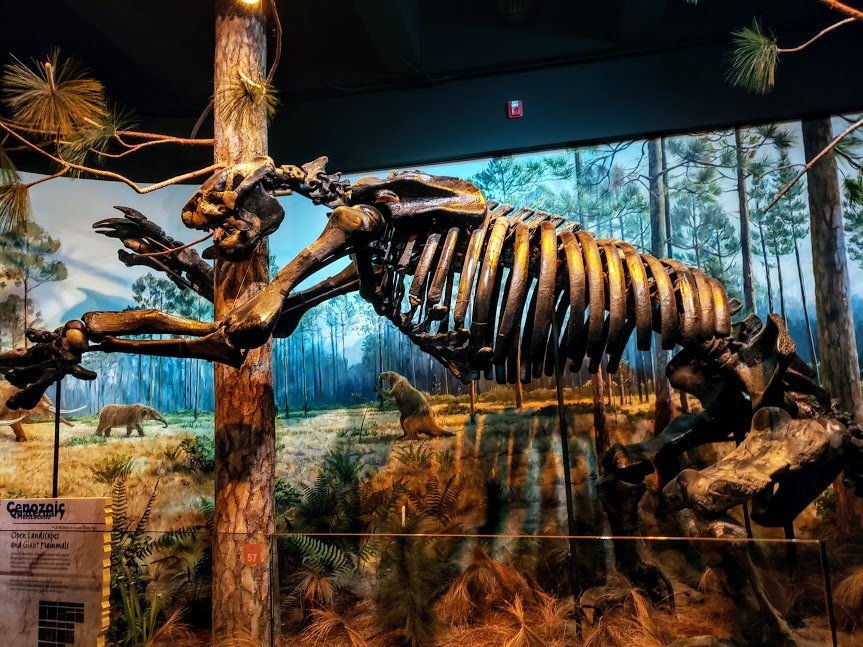
For over a century, giant ground sloths were the punching bag of paleontology. Early scientists cast them as bloodthirsty monsters, then flipped the script entirely and painted them as gentle, slow-moving salad-eaters who never hurt a soul. Museum dioramas locked in that second image for generations, and it stuck.
But new DNA sequencing, protein analysis, fossilized footprints, and 3D tooth-wear scans have spent the last two decades quietly demolishing that comfortable narrative, fact by fact. Some of these animals scavenged meat. Some dug their own caves. One species may have grazed underwater like a prehistoric manatee. Here are the 15 corrections researchers have made – and why the real story is stranger than anything the old textbooks dared print.
#1 – They Were Almost Mistaken for Giant Lions
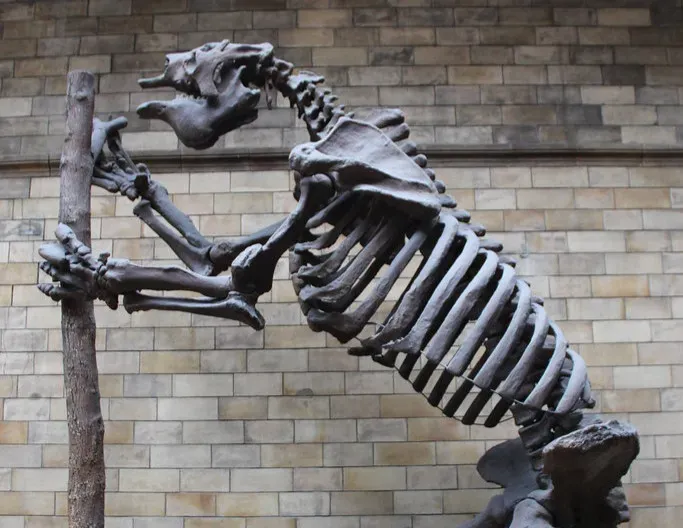
Thomas Jefferson, one of America’s founding naturalists, got this one spectacularly wrong. When he examined the first Megalonyx claws in the 1790s, his notes leaned toward classifying the creature as a fearsome carnivore, something capable of rearing up like a predator and swiping with those enormous claws.
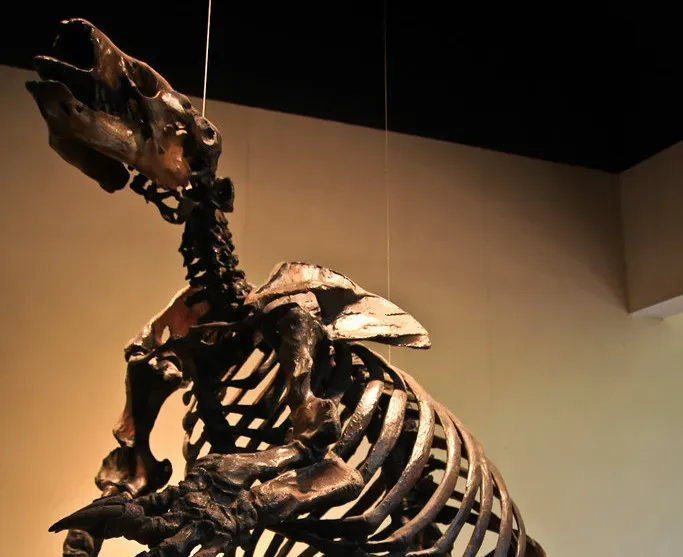
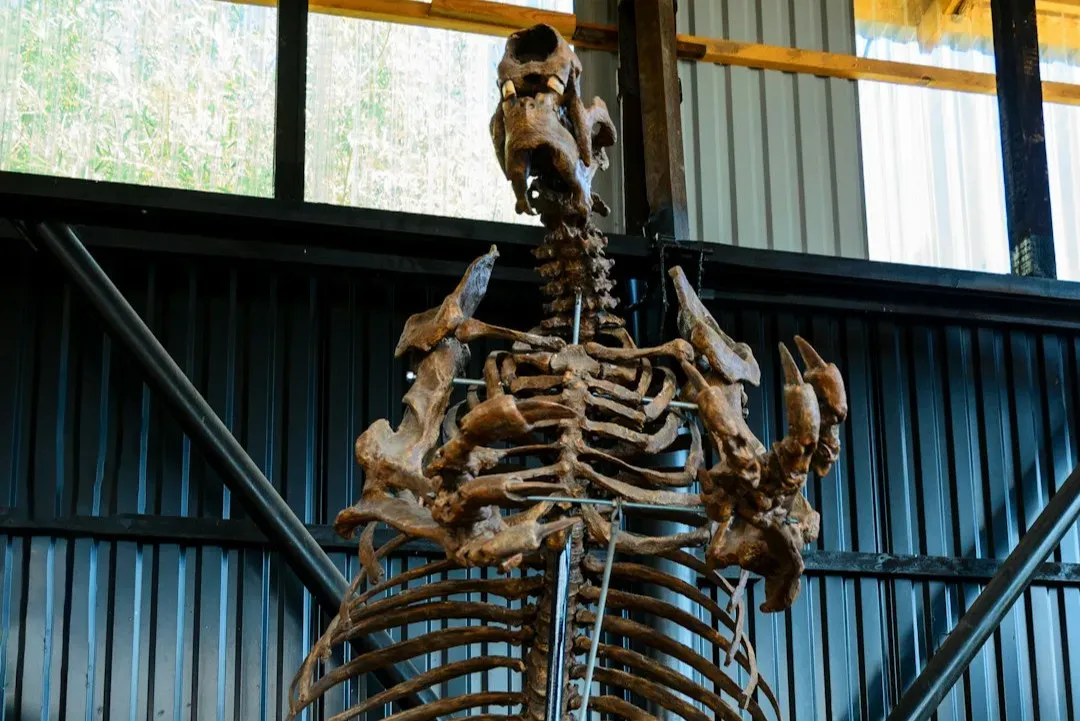
That mistake didn’t just vanish quietly – it may have literally shaped how the fossil skeleton was mounted for public display, with the tail set on the ground for structural support so the beast could rear up like a bear. The correction came from Georges Cuvier, the founding father of paleontology, who compared the specimen to Megatherium and showed it had simple, cylindrical herbivore teeth instead of dagger-like carnivore teeth. One dental observation flipped the giant ground sloth from monster to plant-eater almost overnight.
#2 – “Strict Herbivore” Was Never Actually True
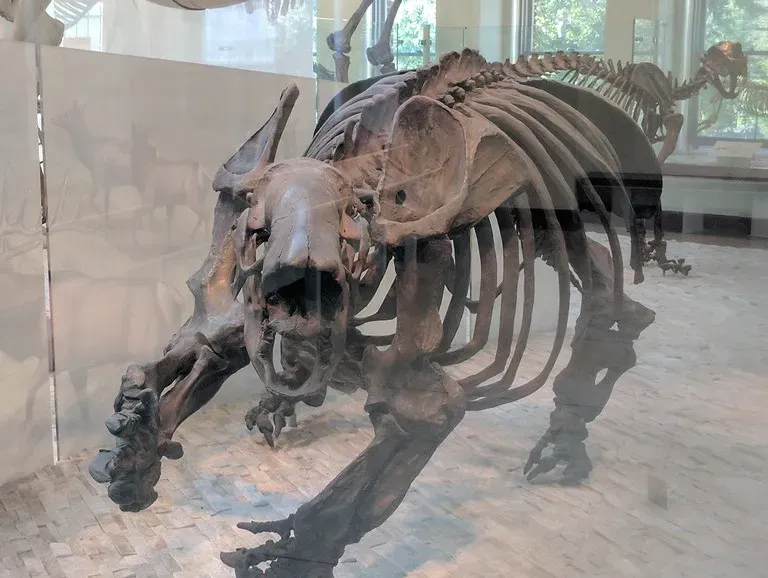
For two centuries after Cuvier’s correction, scientists swung hard the other way, assuming every ground sloth species was a committed vegetarian. Recent chemical analysis of fossil hair proved that assumption was only half right.
Darwin’s ground sloth – a beast that could stretch over 3 meters long and weigh close to 2,000 kilograms – may have been an opportunistic scavenger, according to nitrogen isotope analysis of its fossilized hair. The Shasta ground sloth’s diet turned out to be exclusively plant-based, but Darwin’s ground sloth was an omnivore. Turns out biology doesn’t like absolutes.
We now have strong evidence contradicting the long-standing presumption that all sloths were obligate herbivores.
Julia Tejada
#3 – The “Scavenger” Label Solved a 12,000-Year Mystery
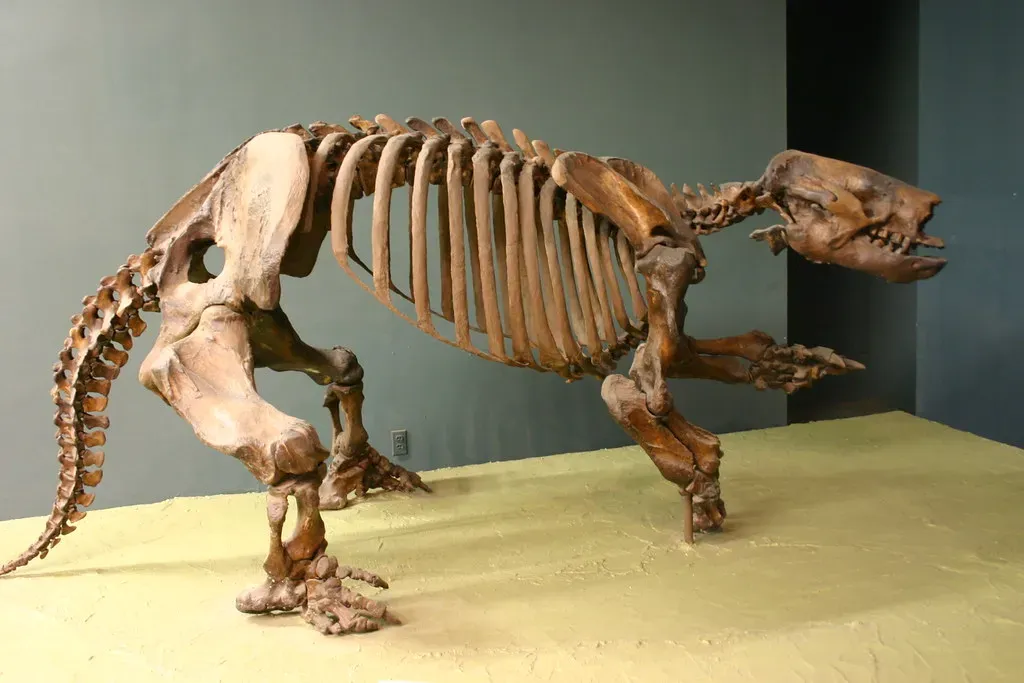
Once researchers accepted that Darwin’s ground sloth ate meat, a much bigger puzzle started making sense. South America was oddly missing large carnivorous mammals during this era, and this sloth may explain why.
By eating already-killed meat, Darwin’s ground sloth could have filled that vacant scavenger niche instead of true predators. Co-author Dr. John Flynn went further, publicly calling out the older methods used to reach the opposite conclusion: prior nitrogen-based techniques, he said, relied on “complex formulas that have many untested or weakly supported assumptions,” making many earlier conclusions about ancient diets “poorly supported at best, or clearly wrong and misleading at worst.” That’s a researcher publicly correcting the field’s own homework.
#4 – Their Diets Weren’t Even Consistent Between Species
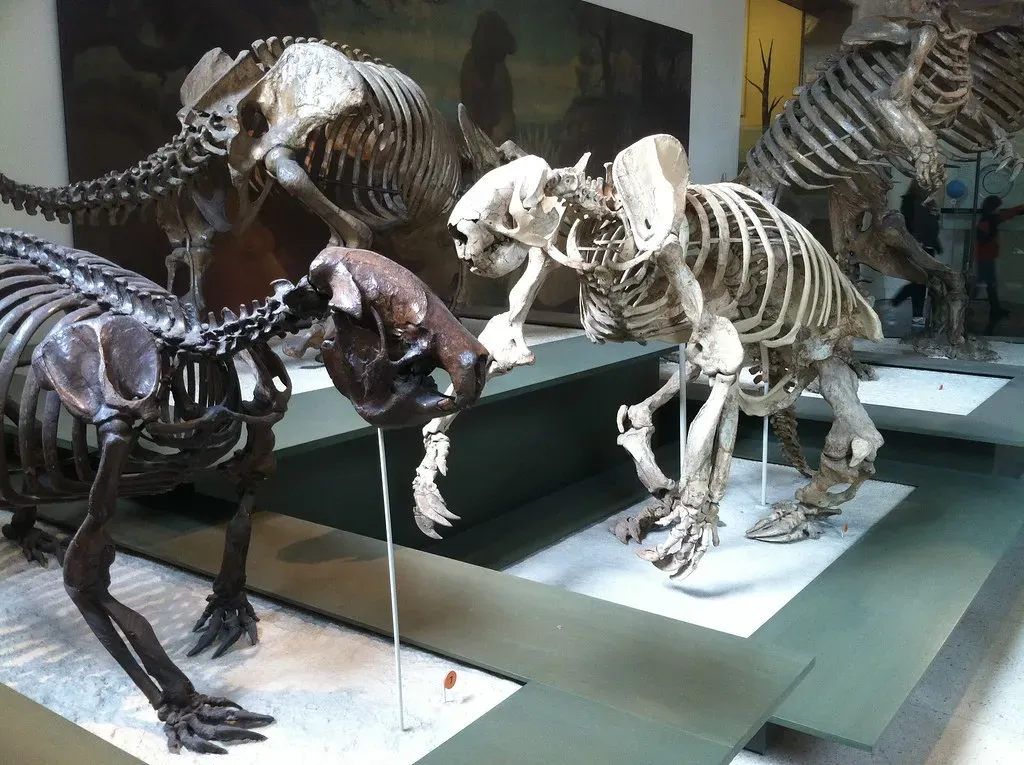
Most people assume “giant ground sloth” means one animal with one menu. The corrected picture looks more like a whole toolbox of different feeding strategies depending on species and geography.
A dental analysis comparing the Shasta ground sloth and Harlan’s giant ground sloth found the Shasta sloth stuck to leaves and woody browse, while Harlan’s sloth chewed through hard foods like tubers, roots, seeds, and fungi. That data wasn’t easy to get, since sloth teeth lack the enamel most mammal teeth rely on. “Sloth teeth do not have enamel like ours do, which makes them tricky to study,” researcher Larisa DeSantis explained. “But by focusing on the dentin layer, we can still see microwear textures and compare them to living sloths.” Two species, same family tree, completely different dinner plates.
Quick Compare
- Shasta ground sloth: leaves and woody browse only
- Harlan’s ground sloth: tubers, roots, seeds, and fungi
- Shared research hurdle: no tooth enamel, so scientists study the dentin layer instead
#5 – They Were Secretly Ecosystem Engineers
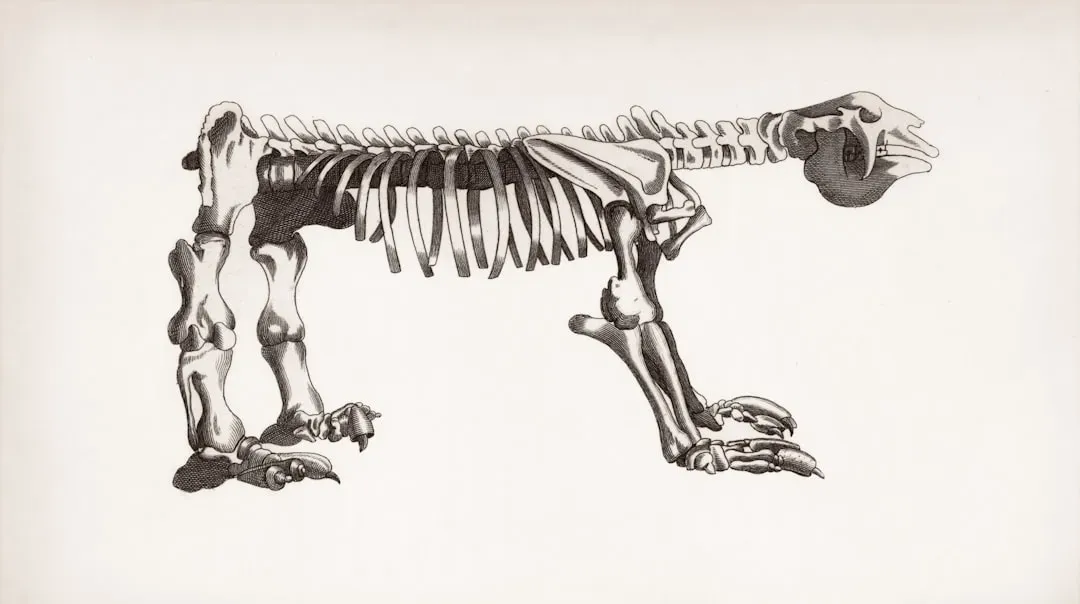
Here’s a controversial take: giant ground sloths may deserve more ecological credit than modern rewilding conversations give them. New research suggests they weren’t just eating plants – they were quietly rebuilding entire landscapes.
Harlan’s ground sloth’s diet, paired with its massive claws and shoulder bone shape, suggests it played a real role in dispersing plants and fungi and hauling seeds and spores across long distances. That’s not a passive grazer – that’s a walking, clawed gardening service for the Ice Age. Some paleoecologists now argue that when these animals vanished, they quietly broke plant-dispersal chains we’re still feeling the effects of today.
#6 – “Giant” Was Never a Fixed Size
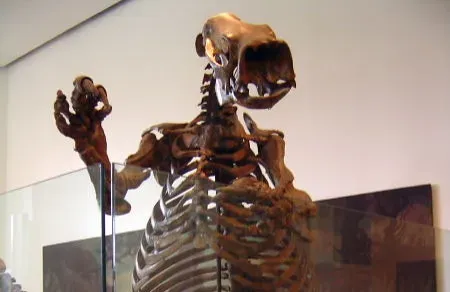
Most illustrations show one massive sloth silhouette frozen in time. The real evolutionary story is a rollercoaster of shrinking and growing across millions of years, not a steady climb toward giant size.
Researchers compared ancient DNA with more than 400 fossils pulled from 17 natural history museums to map out how and why sloths got so big. Body mass evolved along a “multi-peak” pattern, splitting into three broad ecological lanes – terrestrial, semi-arboreal, and arboreal. Sloths actually shrank during periods of global warming, likely because extra rainfall expanded forests and created more habitat for smaller, tree-friendly bodies. The giants in textbooks were just one phase in a much messier size history.
#7 – Their Ultimate Size Wasn’t About Genetics – It Was Real Estate
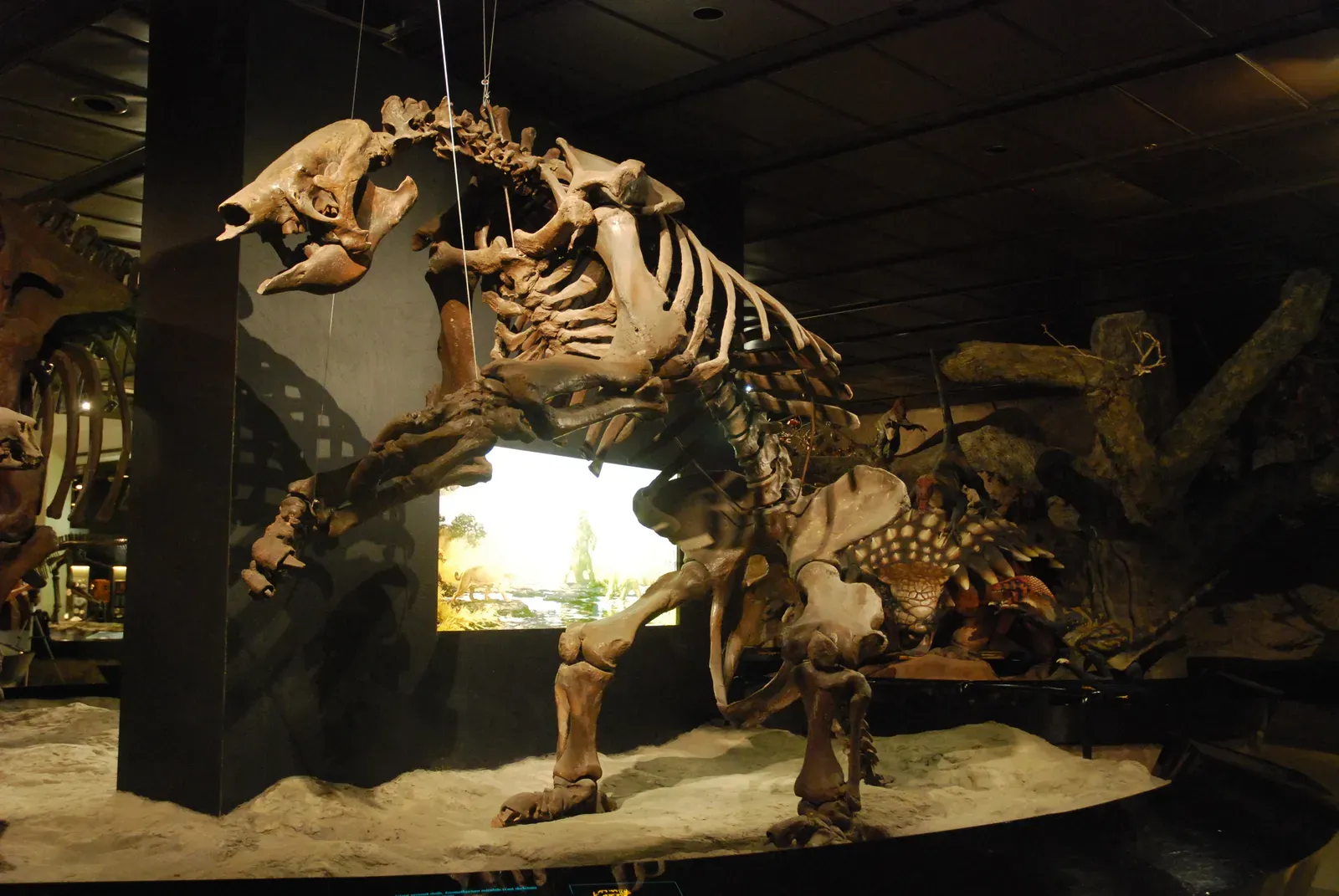
For decades, size differences between sloth species got chalked up to genetics or random evolutionary drift. The corrected explanation points somewhere much more mundane: real estate.
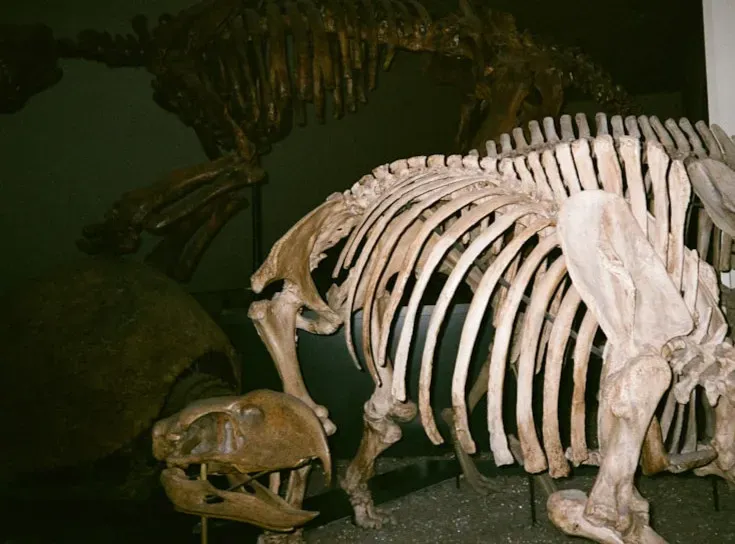
Size differences among sloths were shaped primarily by the types of habitats they lived in, and by extension, the climate swings those habitats went through. “They looked like grizzly bears but five times larger,” says Florida Museum’s Rachel Narducci, describing the scale gap. The true record-holders were staggering: the largest sloths, in the genus Megatherium, rivaled Asian bull elephants in size and weighed roughly 8,000 pounds. Their smaller cousins stayed compact simply because their environments never demanded otherwise.
Fast Facts
- Megatherium: roughly 8,000 pounds, on par with an Asian bull elephant
- Described as looking like a grizzly bear, but five times larger
- Size was driven by habitat and climate, not fixed genetics
#8 – Tree-Dwelling Was the Exception, Not the Rule
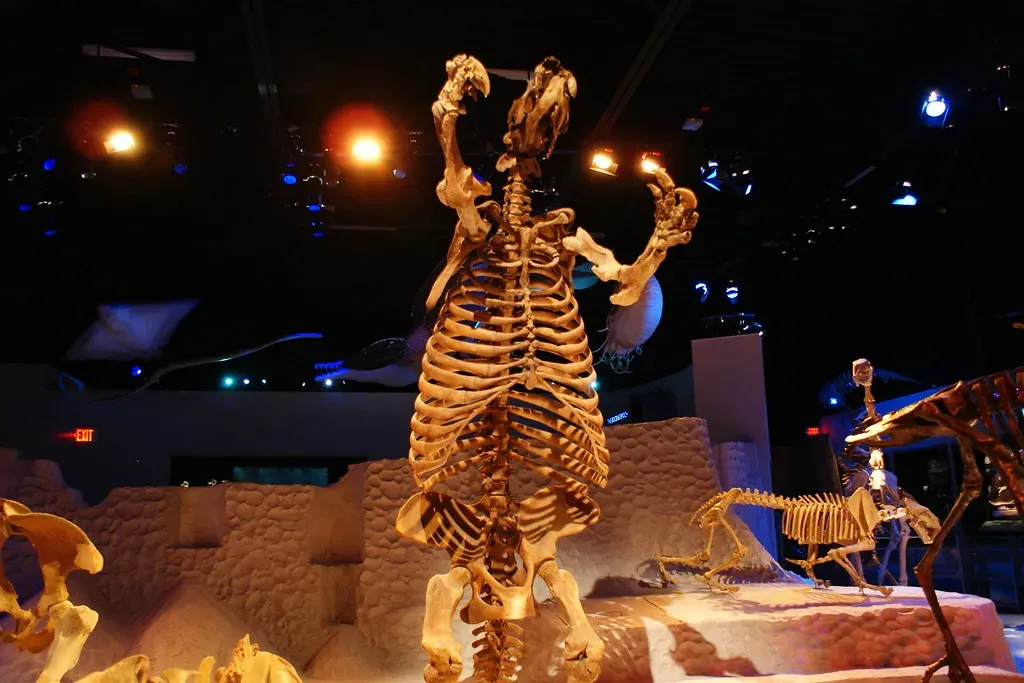
Pop culture pictures sloths hanging lazily from branches, but that image is almost backward when applied to the giant ground sloth’s family tree. Most of these animals never got anywhere near a canopy.
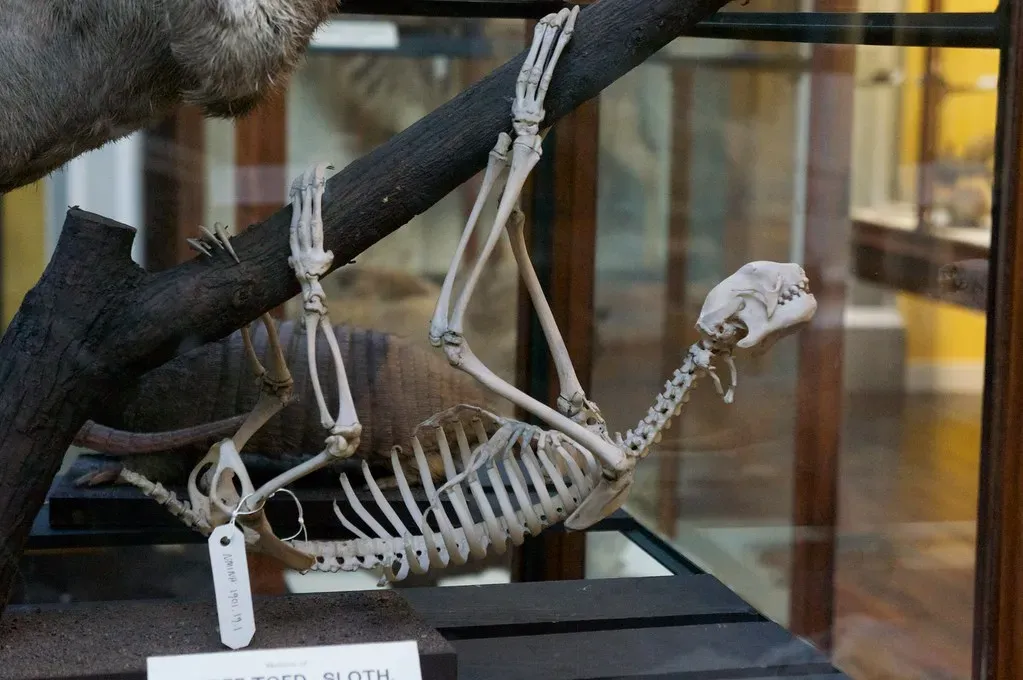
Most of these extinct sloths were simply too big to live in trees. What’s stranger is the direction they evolved from: the largest ground-dwellers, including Megatherium and Mylodon, likely descended from tree-adapted ancestors that eventually gave up climbing for good. That’s the opposite evolutionary direction most people assume when they picture “sloth evolution.” Paleontologists increasingly argue that the cute tree-sloth image badly misrepresents most of this family’s actual history.
#9 – Some Giant Sloths Were Semi-Aquatic
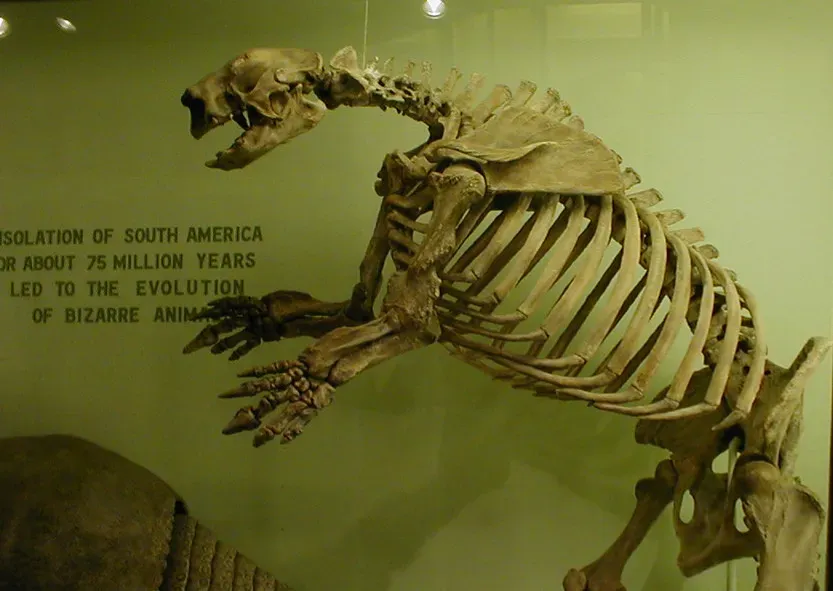
If there’s one correction that sounds fake but isn’t, it’s this: certain ground sloths didn’t just avoid trees – they took to the water and evolved features resembling modern marine mammals.
Rachel Narducci describes the adaptation directly: some sloths “developed adaptations similar to those of manatees,” including “dense ribs to help with buoyancy and longer snouts for eating seagrass.” That’s not a metaphor – that’s convergent evolution turning a giant ground mammal into something that grazed underwater vegetation. It forced researchers to rethink the whole spectrum of sloth lifestyles, because the family wasn’t just “tree” or “ground” – it included a coastal, aquatic-adjacent branch nobody expected.
Worth Knowing
- Dense ribs helped with buoyancy, much like a manatee
- Longer snouts were built for grazing on seagrass
- Convergent evolution: unrelated species independently developing the same survival traits
#10 – Their Waddle Wasn’t a Design Flaw
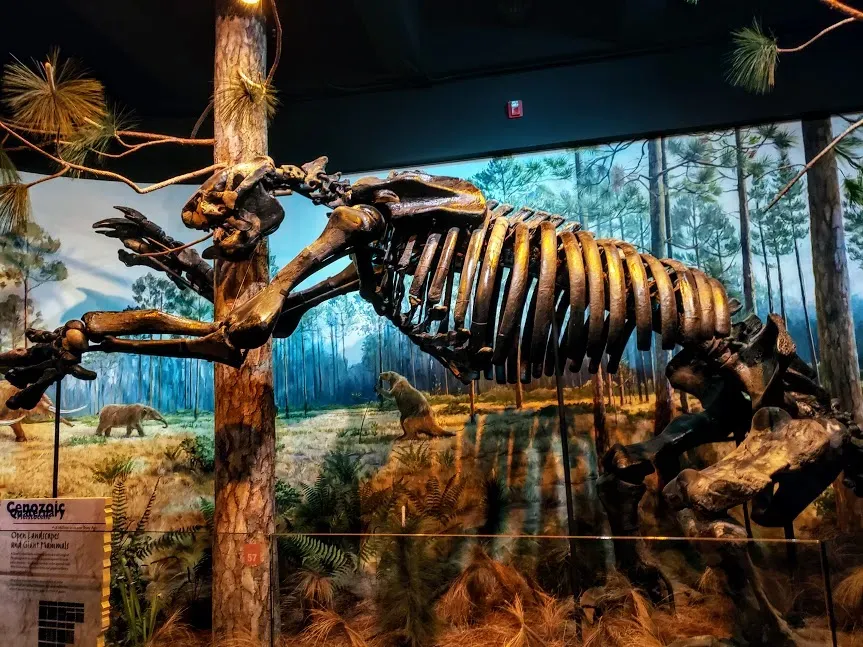
Old illustrations show ground sloths walking normally on all fours, flat-footed like a bear. Actual fossil foot structure tells a much clumsier, much stranger story.
Because of a special modification in the foot, these animals bore their weight on the heel bone and the outside edge of the foot, forcing a rolling, waddling gait. Fossil footprints back this up – their feet were built for power, not speed, and the length of their claws forced them onto the outer edges of their feet with every step. Picture a bear-sized animal rocking side to side with each stride. That’s the corrected image.
#11 – Those Claws Weren’t Just for Eating
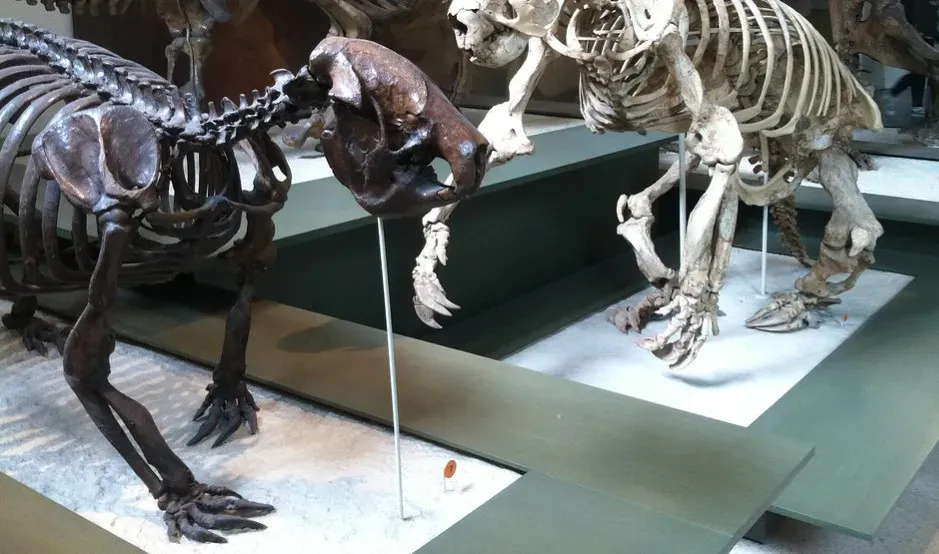
Giant ground sloth claws usually get explained away as feeding tools for stripping bark or digging up roots. New excavation evidence shows they had a much bigger architectural purpose.
Some of the larger sloths had claws among the biggest of any mammal, living or extinct, and they didn’t need to rely on pre-existing caves. They could carve their own shelters straight out of bare earth and rock. Many of those caves are still standing today, complete with claw-mark décor scratched into the interior walls. That reframes the giant ground sloth as an active excavator and shelter-builder, not just a grazer that ducked into whatever cave happened to be convenient.
#12 – The Extinction Timeline Wasn’t Uniform Across Regions
Most people assume every giant ground sloth vanished at once when the last Ice Age ended. The corrected timeline shows some populations hung on thousands of years longer than their mainland relatives.
Humans arrived in the Caribbean around the same time Egyptians were building the pyramids, and Caribbean tree sloths went extinct not long after – thousands of years after mainland North and South American ground sloths had already disappeared. Researchers have flagged that climate alone doesn’t explain this pattern, noting that “paleoclimatic changes do not explain the rapid extinction of ground sloths that started approximately 15,000 years ago.” Some experts now point to this regional gap as the strongest single piece of evidence that human arrival timing, not climate, triggered the extinction.
#13 – Footprints Proved Humans Actually Hunted Them
For years, the “humans killed the megafauna” theory ran on circumstantial evidence – bones near tools, timing overlaps, nothing definitive. Then researchers found something impossible to argue with: an actual chase scene fossilized in the ground.
In April 2017, researchers at White Sands uncovered more than 100 “ghost tracks,” footprints invisible except under exact moisture conditions. Human tracks turned up stepping directly inside the sloth prints, suggesting hunters stalked the animal print by print. Even more dramatic, large “flailing circles” captured the sloth rearing up on its hind legs and swinging its forelegs defensively to keep the hunters back, eventually dropping its knuckles and claws to the ground to steady itself as it lost balance. That’s not a theory anymore. That’s a preserved 10,000-year-old confrontation.
At a Glance
- Discovery: April 2017, at White Sands
- Over 100 “ghost tracks” found, visible only under precise moisture conditions
- Human prints step directly inside sloth tracks
- “Flailing circles” preserve the sloth’s defensive stand, estimated at 10,000 years old
#14 – Old Protein Data Had to Be Corrected, Too
It’s not just popular assumptions that needed fixing. The peer-reviewed record itself required a formal correction, and even cutting-edge molecular studies weren’t immune to mistakes.
A formal correction was issued for the paper “Collagen Sequence Analysis of the Extinct Giant Ground Sloths Lestodon and Megatherium,” originally published in PLoS ONE. The fix had nothing to do with the science being wrong – it was about transparency, adding missing funding disclosures including the grant name, principal investigator, and the institution holding the grant. It’s a quiet reminder that even groundbreaking sloth protein research goes through the same messy correction process as any other branch of science. Nothing about paleontology is ever really “finished.”
#15 – The Entire Family Tree Needed Rebuilding
The biggest correction on this list didn’t touch a single species. It rewired how scientists understand the relationships between every sloth that ever lived, going back tens of millions of years.
Researchers combined fossil shape data with DNA from living and extinct species to build a full sloth tree of life, tracing the lineage back more than 35 million years, then layered in decades of research on habitat, diet, and climbing versus walking habits. Dr. Narducci called it a genuinely unprecedented undertaking: “Including all of these factors and running them through evolutionary models with multiple different scenarios was a major undertaking that had not been done before.” Every fact about how giant ground sloths relate to today’s tree sloths, when they split apart, and why some stayed small while others grew elephant-sized now traces back to this one recalibrated family tree. It’s the correction that made every other correction on this list possible.
The Bottom Line
The giant ground sloth story has been rewritten more times than most people realize, and the corrected version beats the myth by a mile. These weren’t slow, gentle, tree-loving vegetarians – some scavenged meat, some dug their own caves, and at least one lineage took to the water like a prehistoric manatee. Even the extinction wasn’t a tidy climate story; fossilized footprints now show an actual predator-and-prey standoff between humans and sloths playing out in real time, 10,000 years ago.
Science doesn’t get embarrassed by being wrong. It gets excited about getting it right, and this family tree is proof. Which of these corrected facts hit you the hardest? Tell us in the comments.