
You think you know penguins: cute, tuxedoed little birds that waddle around in the snow and star in animated movies. But the reality is far stranger, tougher, and more impressive than most people realize. Penguins are running one of the boldest evolutionary experiments on the planet, and they behave in ways that almost nothing else on Earth even tries to copy.
From diving into freezing black water for hours at a time, to raising newborns in winds that could strip paint off metal, penguins live at the edge of what a warm-blooded animal should be able to survive. And somehow, they’ve turned that extreme lifestyle into a success story that has lasted millions of years.
Once you start looking closely, you discover a list of behaviors that are wildly unique, sometimes hilarious, sometimes brutal, and genuinely awe-inspiring. Here are 12 things penguins do that almost no other creature even attempts – and why they might be some of the most hardcore animals on the planet.
#1 Turning Their Own Feathers into a Built‑In Dry Suit
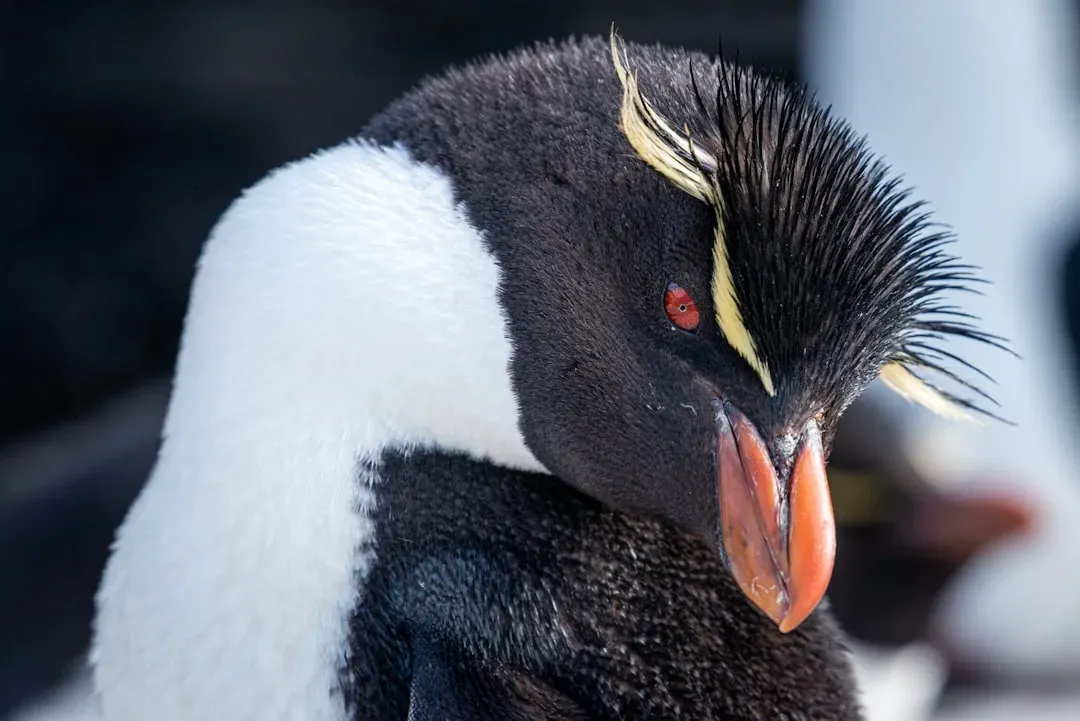
Imagine diving into water that is literally just above freezing, without a wetsuit, and staying there for hours. Any normal bird would die very quickly – but penguins do this routinely because they’ve turned their feathers into a kind of living dry suit. Instead of big flapping feathers like most birds, penguins have a dense coat of tiny, stiff feathers packed so tightly together that water has a hard time getting through.
These feathers overlap like roof tiles and lock together to trap a thick layer of air next to the skin. That layer works like insulation in a winter jacket, drastically slowing down heat loss into the icy water. Scientists have found that some penguin species can have more than double the feather density of many flying birds, and that extra coverage is a big part of why they can swim for so long in brutal conditions.
On top of that, penguins constantly groom, or “preen,” their feathers with oil from a special gland near the base of the tail. This oil repels water and helps keep that trapped air pocket stable. It’s like they spend a good part of their day re-waterproofing their own high-performance gear. No other group of birds has pushed feather technology this far toward being a body-hugging, pressure-resistant, hydrodynamic suit for life in the ocean.
#2 Diving Deep and Long on a Breath Like a Marine Mammal
![#2 Diving Deep and Long on a Breath Like a Marine Mammal (Flickr: [1], CC BY 2.0)](https://nvmwebsites-budwg5g9avh3epea.z03.azurefd.net/dinoworld/2f3708c6837fe469e8f3b3b8e1e55369.webp)
It feels almost unfair to compare a bird to a seal or a whale – but that is exactly the league some penguins play in. Emperor penguins, in particular, routinely dive hundreds of meters below the surface and can stay underwater for more than 20 minutes on a single breath. For a bird that weighs less than many dogs, that is absurdly extreme.
To pull this off, penguins have turned their entire body into an oxygen management system. Their blood stores a lot of oxygen, and their muscles are loaded with a dark pigment called myoglobin that hoards even more. When they dive, they can slow their heart rate dramatically and shunt blood away from less critical organs so that the brain and heart get priority. It’s a controlled partial shutdown, not unlike putting a phone in low‑power mode so the essentials last longer.
They also use physics to their advantage. On the way down, the air spaces in their bodies compress under pressure, reducing buoyancy and helping them sink with less effort. On the way up, that compressed air expands and helps lift them back toward the surface. The combination of physiological tricks, streamlined bodies, and clever use of pressure puts penguins in a niche where very few other birds – or even mammals – can compete.
- Some penguins can dive to depths comparable to tall city skyscrapers.
- They slow their heart rate and redirect blood flow to stretch each breath.
- Special proteins in their muscles help them store and safely use oxygen underwater.
#3 Breeding in a Place Where Winter Tries to Kill Everything
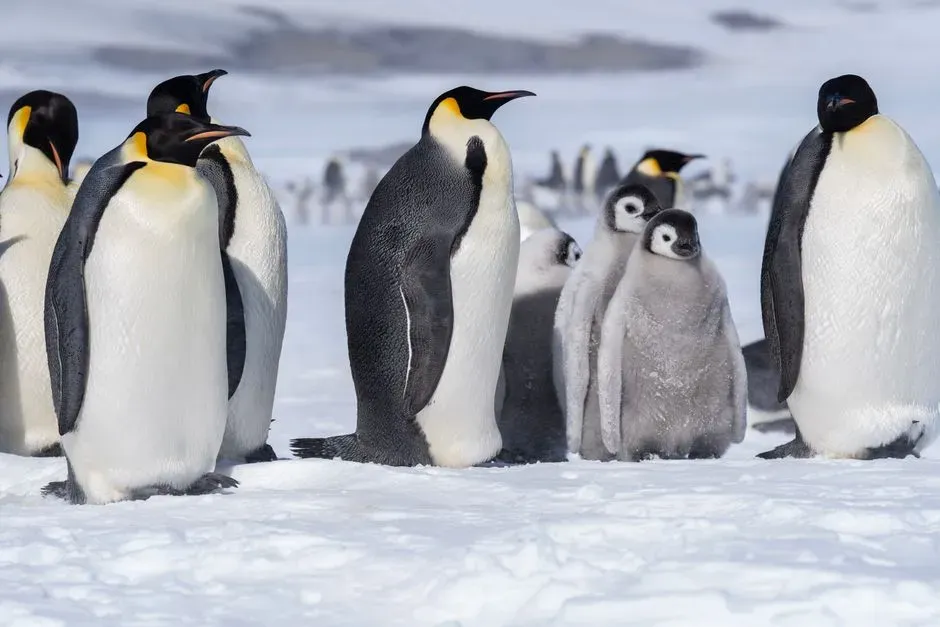
Most animals take the hint from winter and either migrate, hibernate, or at least tone down their breeding efforts when conditions get bad. Emperor penguins look at the coldest, darkest, most hostile time of the Antarctic year and decide it is the perfect moment to raise chicks. They lay eggs as autumn hits, then ride out months of polar night and savage blizzards while incubating.
Temperatures can plunge far below what you’d ever see on a home freezer, with winds fast enough to push a person off their feet. There is no vegetation, no shelter, and nothing resembling a comfortable place to rest. Yet thousands of emperors stand out on open sea ice, keeping a single egg alive on top of their feet. Every mistake here is fatal: if the egg touches the ice for too long, it can freeze.
Why do this at all? Timing. If the chick hatches toward the end of winter, it can spend the short Antarctic summer growing and practicing life at sea while food is more abundant and the weather is slightly less murderous. It is a gamble that almost no large, warm‑blooded animal is willing to take, but emperors have turned this schedule into a strategy that works often enough for the colony to persist.
#4 Forming Living Heat Shields Called Huddles
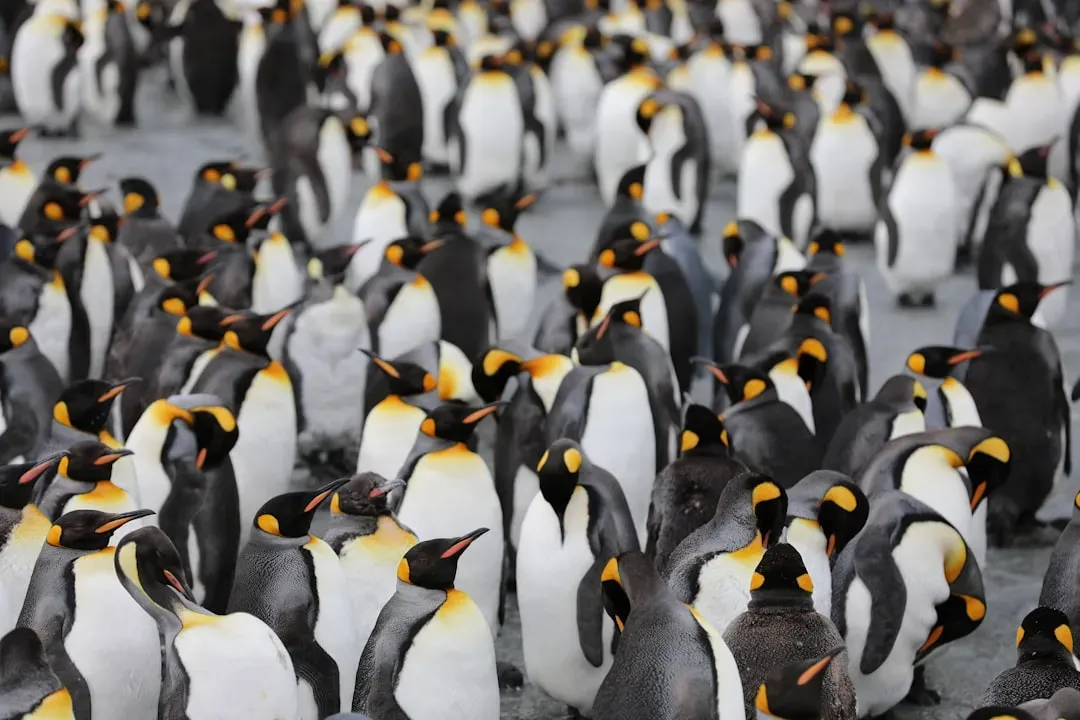
When people talk about “penguin huddles,” it sounds cute, like a big cuddle pile. The reality is far more intense and more like a slow‑moving living machine designed to beat thermodynamics. In the worst Antarctic storms, emperor penguins can pack so tightly together that they form a shifting, almost geometric mass, each bird pressed against its neighbors to reduce the amount of body surface exposed to the wind.
Inside these huddles, temperatures can rise dramatically above the outside air, and wind is almost completely blocked. Everyone on the outside, though, still takes a beating. So penguins rotate. Birds at the edge slowly push inward, and those in the warm interior move outward to take their turn on the front line. The whole group pulses and ripples like a single organism, equalizing the misery.
Researchers who tracked these movements with time‑lapse photography and GPS tags have found that the huddle behaves almost like a fluid: tiny shifts ripple across the group in waves, helping to keep the structure stable and allowing gradual rotation. It is a level of collective, coordinated survival behavior that goes beyond simple crowding and crosses into something genuinely unique among birds on ice.
- Huddles can keep internal temperatures far warmer than the surrounding air.
- Individuals take turns at the cold outer edge, cycling inward over time.
- The entire huddle behaves like a single flexible, self-adjusting structure.
#5 Using Poop as a High‑Pressure Engineering Solution
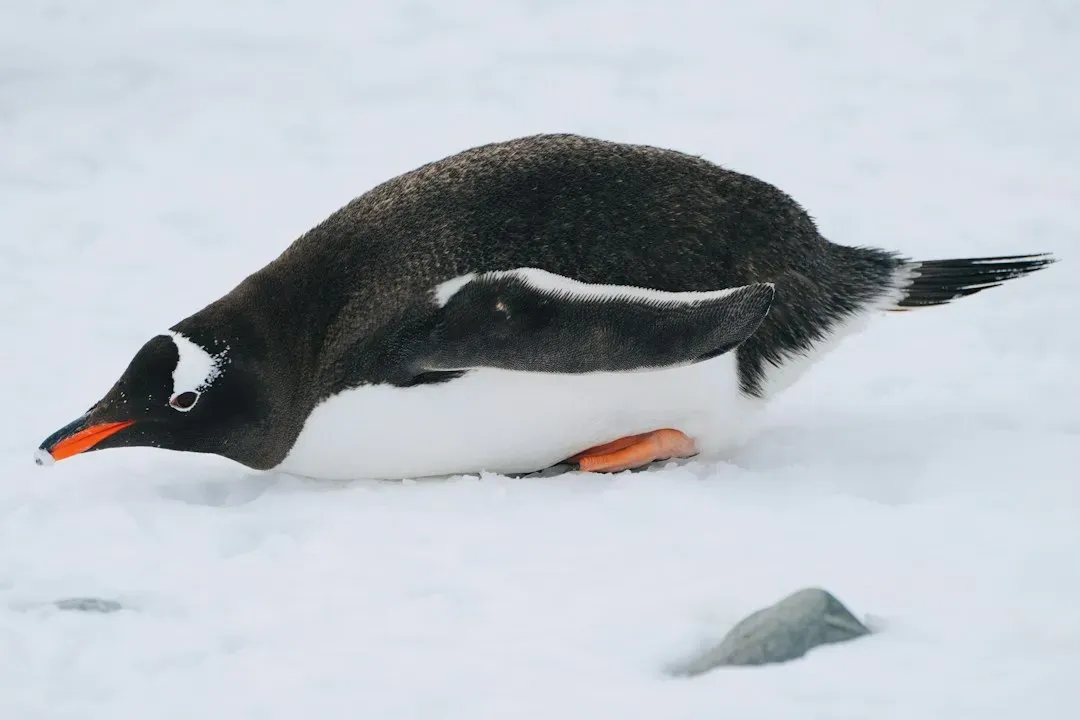
It is impossible to talk honestly about penguins without talking about poop. And in one very particular way, they do something no other animals quite match: they use built‑up pressure in their guts to fire feces away from their nests like tiny biological water cannons. It sounds like a joke, but scientists have literally measured the physics of penguin “poop jets.”
Nest hygiene is not a trivial issue when you spend weeks sitting in one spot incubating an egg or guarding a chick. If waste piled up right under the birds, it would attract parasites and bacteria, and foul the nest. So penguins back up slightly, point their rear ends outwards, and eject waste in an arc that can land a surprising distance away. That keeps the immediate area relatively clean without forcing the bird to walk off for bathroom breaks in dangerous weather.
Field biologists have been so baffled and amused by this that they calculated the pressure and distance involved, trying to understand how much muscular effort goes into each “shot.” Behind the humor is a serious point: in a hostile environment, even waste disposal becomes a survival problem, and penguins have come up with a mechanical solution that hardly any other bird species has needed to evolve.
#6 Raising Chicks on Their Feet Instead of in Nests
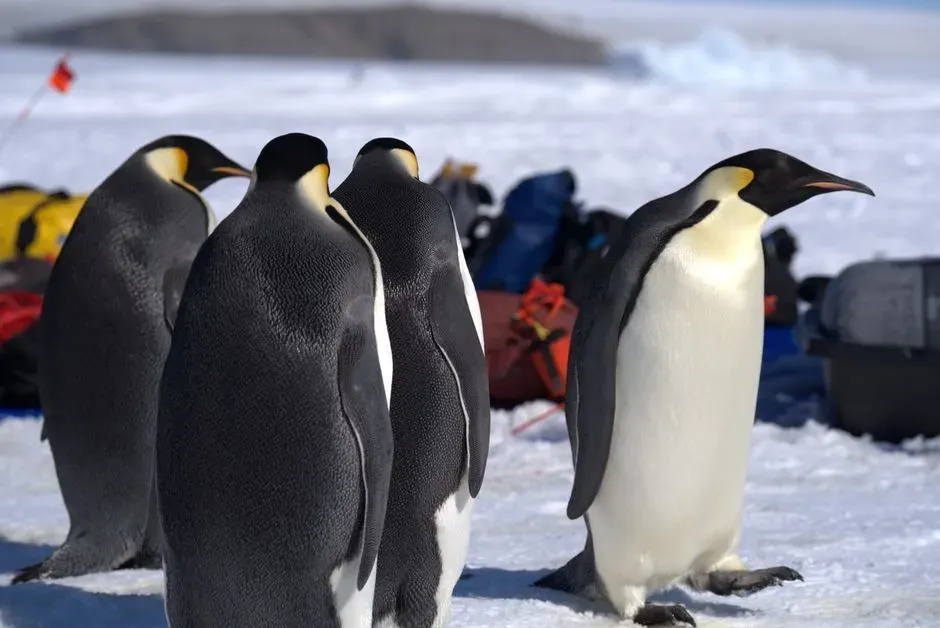
When you picture a nest, you probably imagine twigs, grass, or maybe a shallow scrape in the ground. Emperor penguins use none of that. Instead, they balance their eggs and small chicks on top of their own feet, covered with a fold of warm abdominal skin called a brood pouch. It looks a bit like a tiny oven mitt holding something precious off a frozen counter top.
This foot‑incubation solves one key problem: contact with ice. Eggs and small chicks lose heat very quickly through conduction, and bare ice is a ruthless heat sink. By resting the egg on their feet and covering it with their body, penguins essentially connect it directly to their own internal heating system while completely blocking the ice. The downside, of course, is that any stumble or misstep can expose the egg to lethal cold.
The level of care required is extreme. Adults have to shuffle rather than walk, and they cannot move quickly without risking disaster. Yet they do this for weeks on end, through darkness and storms. The whole strategy is so specialized that you rarely see anything like it in other birds, especially not on this scale or under these conditions.
#7 Launching from the Sea Like Torpedoes Using Trapped Bubbles
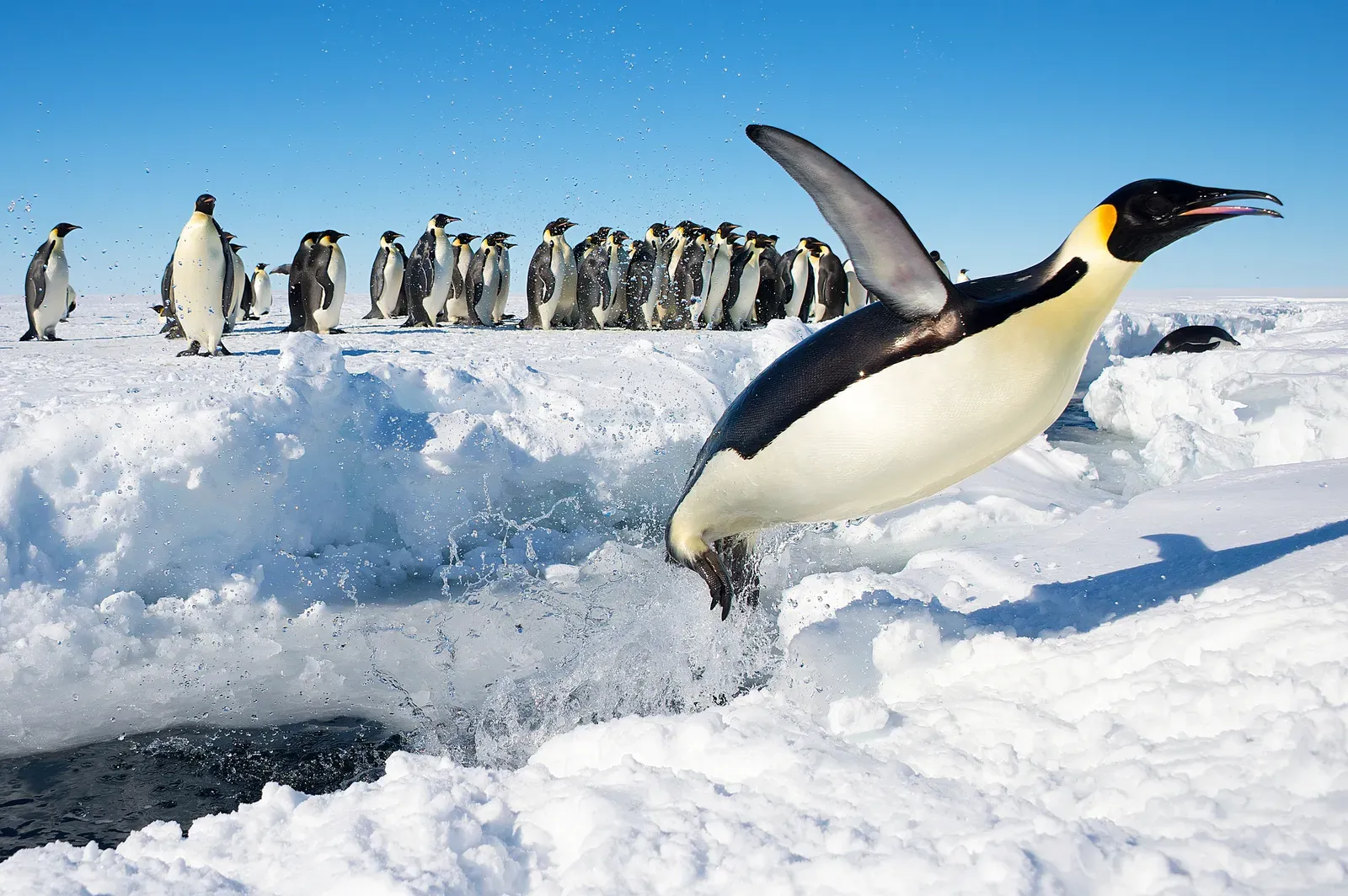
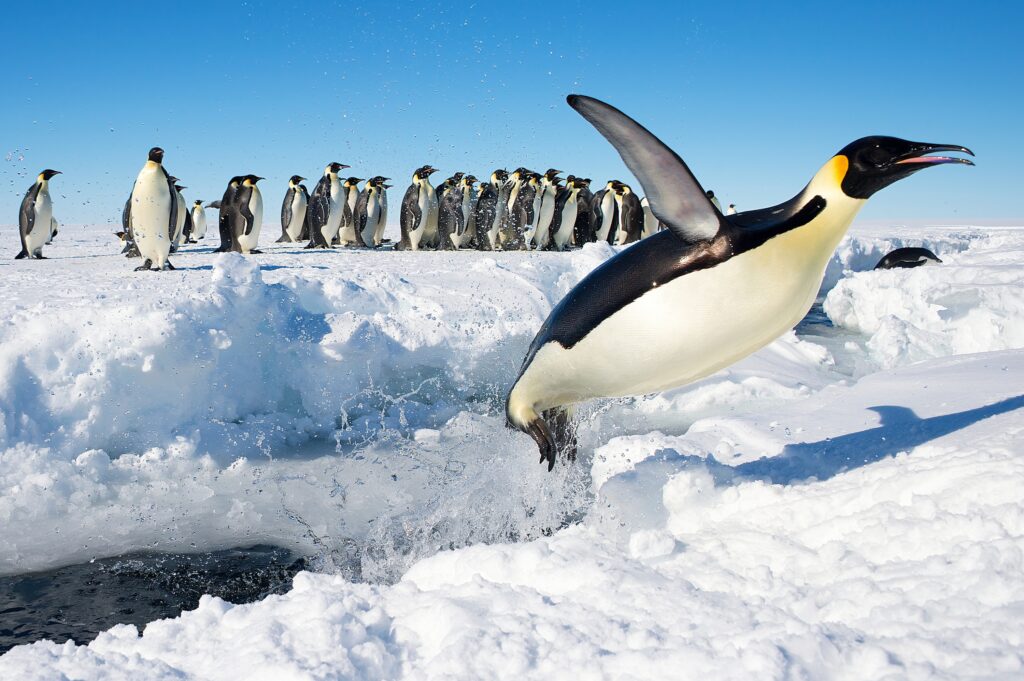
One of the most visually shocking things penguins do is rocket out of the water and onto ice with a smooth, explosive leap. It looks like they’re defying logic, but there’s clever physics at play. As they swim upward, many penguins release tiny bubbles from their feathers. Those bubbles reduce drag and may allow them to reach higher speeds than they could in water alone.
Think of it like putting your body on tiny ball bearings instead of dragging it through syrup. The layer of bubbles lets the penguin slip through the water more easily, and when it finally reaches the surface, its forward momentum converts into a powerful launch. This allows them to clear the lip of an ice edge or land safely above predators lurking near the surface.
Scientists have observed that penguins deliberately build up speed underwater and that the “bubble trail” is most intense just before they burst out. This behavior is not random splashing; it is a strategic move, honed by evolution to make exits from the ocean fast, efficient, and much harder to intercept. No other bird has perfected this submarine slingshot method in quite the same way.
- Penguins trap air in their feathers before diving.
- They release that air as bubbles to temporarily reduce drag when resurfacing.
- The result is a torpedo‑like burst that lets them clear steep ice edges.
#8 Turning Dense Crowds into Acoustic Chaos – and Still Finding One Chick
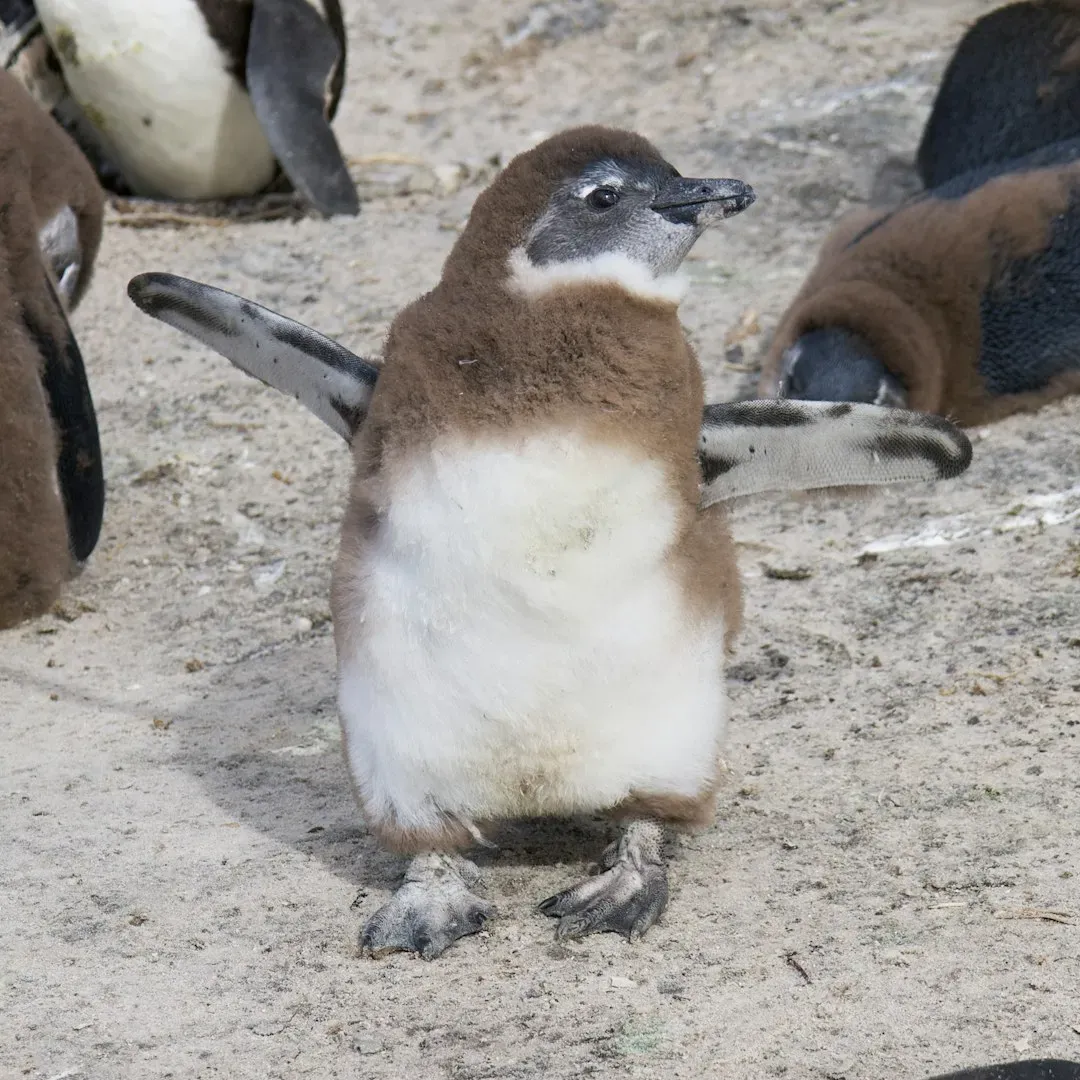
Here’s a scenario that seems impossible: thousands of nearly identical birds, many standing shoulder to shoulder, chicks screaming, wind howling – and somehow each parent still finds their own offspring. Human parents lose kids in a supermarket with maybe a hundred people around; penguins do this in what is basically a feathered city with no street signs.
They manage it with a brutally simple but effective system based almost entirely on sound. Each chick and adult has a unique vocal pattern, essentially a signature call. When a parent returns from the sea with a belly full of food, they call and listen, call and listen, moving through the chaos. Eventually, the matching call comes from the chick, and the pair zero in on each other.
Researchers who recorded these calls discovered that they contain complex modulations and rhythms that cut through background noise, even in screaming wind. To our ears, it’s just a wall of honks, but to penguins, it is more like a huge crowd where each voice carries its own acoustic fingerprint. Very few animals handle parenting in such dense, chaotic colonies with such heavy reliance on sound alone – and even fewer do it in conditions this harsh.
#9 Living as Flightless Birds That Outswim Almost Everything
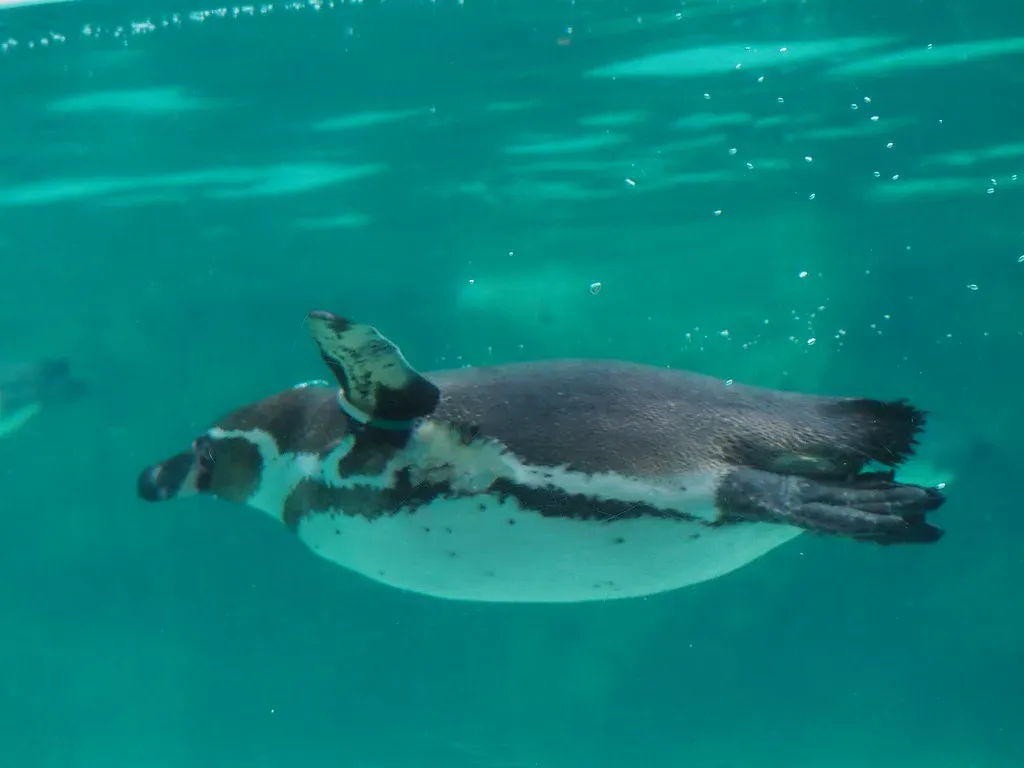
Most flightless birds pay a price for losing flight: they are often vulnerable to predators or stuck on isolated islands. Penguins did something much bolder. They effectively traded in their wings for turbocharged flippers, becoming birds that dominate an underwater world instead of the sky. This trade‑off has turned them into some of the most efficient swimming birds on Earth.
Their bones are denser than those of flying birds, which reduces buoyancy and lets them slice through water rather than bob on top like a cork. Their wing bones shortened and stiffened over evolutionary time, becoming rigid paddles that can beat rapidly for powerful strokes. Rather than gliding on air currents, they “fly” through water, using very similar wing motions but tuned for a medium nearly a thousand times denser than air.
On land, this comes across as clumsy waddling, and people love to laugh at their awkward steps. In the water, though, penguins are more like small underwater jets, capable of startling bursts of speed and tight turns. Almost no other bird has committed so fully to life in the ocean while still laying eggs and breeding on land, which is part of what makes penguins such weird evolutionary boundary‑walkers.
#10 Using Stones and Even Bones as Love Tokens and Building Materials
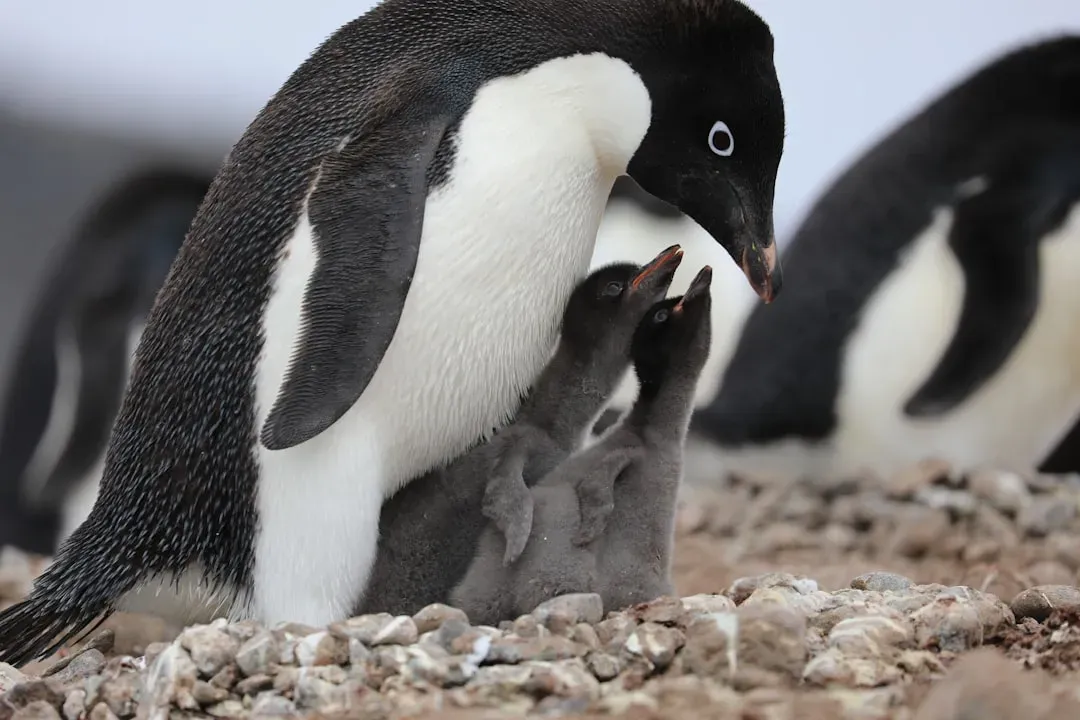
For many penguin species that do not live on solid ice, nesting means collecting stones. Lots and lots of stones. A good stone is both a building block and a kind of currency. Some penguins will carry pebbles long distances to pile around their nesting spot, lifting it above wet ground and helping with drainage. Others will quietly steal from neighbors when they get the chance, sparking hilarious, low‑key rock heists across the colony.
These stones can also play a role in courtship. A bird that brings high‑quality pebbles to a potential mate is not just being nice; it is demonstrating effort, resourcefulness, and maybe even a bit of style. A strong, well‑built stone nest hints that the parent might be competent and reliable. In a tightly packed breeding site, that kind of edge could make a difference.
In some locations where stones are rare, penguins have even been observed using unusual items – including bones – as nest material. It sounds grim, but in a harsh, resource‑limited environment, any solid object that lifts eggs out of mud or meltwater has value. Very few birds on Earth are this obsessed with a building material that doubles as social currency, and it gives penguin colonies a weird, bustling energy that feels part construction site, part dating show.
- Stones lift nests off wet or melting ground and help protect eggs.
- Bringing good pebbles can be part of courtship displays.
- Stealing stones is common and creates constant low‑level drama in colonies.
#11 Staying Cool in the Heat with Blood‑Cooled Feet and Clever Posture
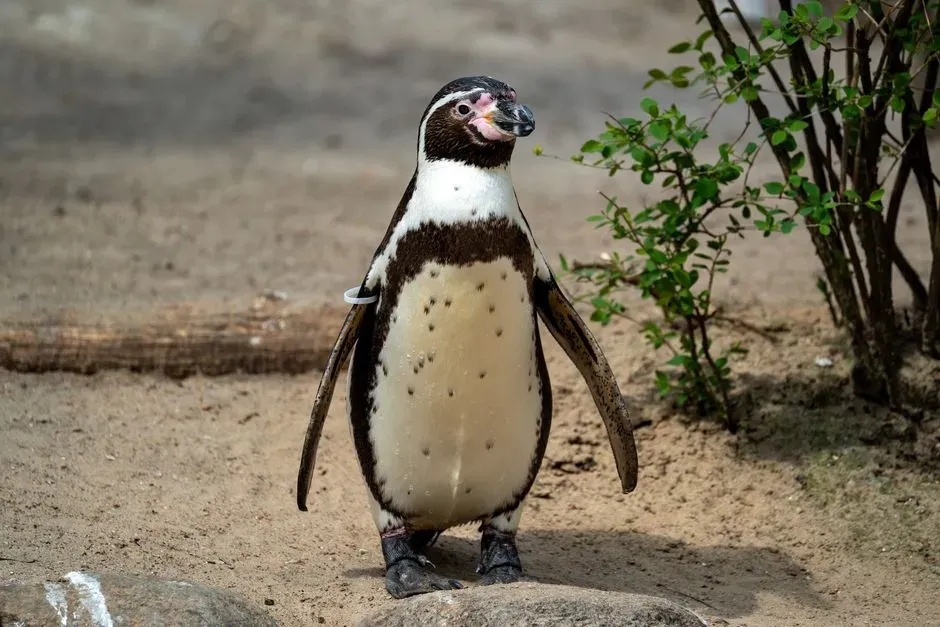
People picture penguins only in snow, but many species live in surprisingly mild or even warm environments – rocky coasts, temperate islands, and beaches that can get uncomfortably hot. Wearing a black‑and‑white “tuxedo” in the sun is not exactly practical, so penguins had to evolve clever cooling systems that would not make sense for most birds.
One of their main tricks is controlling blood flow to their extremities. By increasing blood flow to their flippers, feet, and bill, they can shed heat into the air more quickly, turning these parts into natural radiators. When it is cold, they do the opposite, restricting blood flow to keep heat in. It is an impressive fine‑tuned thermostat, especially for an animal that cannot just take its coat off.
Penguins also adopt postures that look odd until you understand the physics. They may lean forward and hold their flippers away from their sides to maximize the surface area exposed to breezes. Some species pant lightly to evaporate water from the mouth and throat. Balancing on their heels, lifting their toes, or standing in the shade of rocks and cliffs are all small acts that prevent overheating. Few other birds live with such a wild range of temperatures, from brutal cold to intense sun, while wearing a dense, waterproof suit year‑round.
#12 Becoming Global Symbols While Still Being Strangers to Most of Us
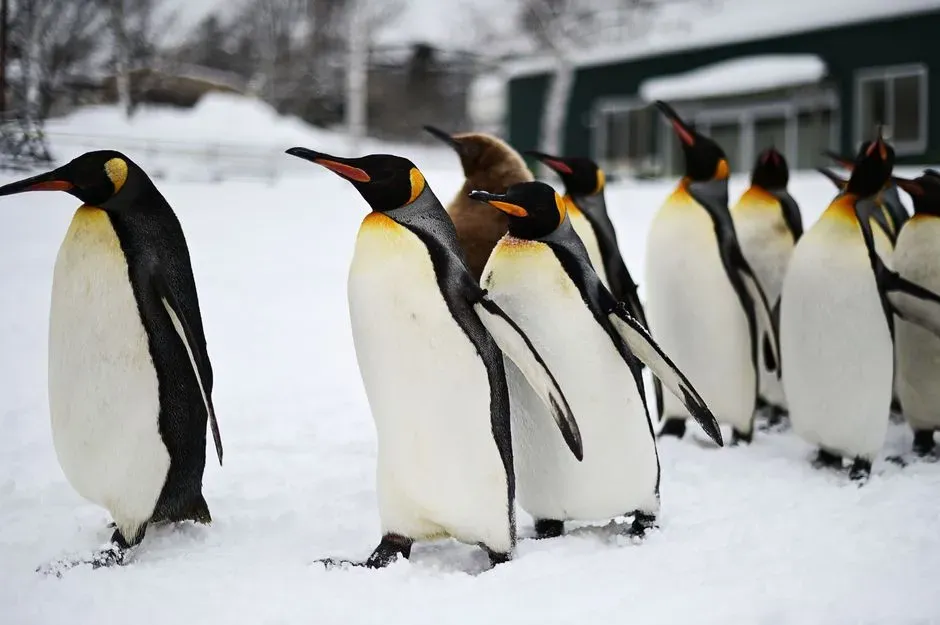
Here’s the strangest penguin trick of all: they have become one of the most recognizable animals on the planet, yet the real details of their lives are still a mystery to most people. They show up in movies, advertisements, toys, and memes as symbols of cuteness, clumsiness, or comedy. Meanwhile, the actual birds are out there diving in black water during Antarctic night, sparring with leopard seals, and raising chicks in blizzards.
I remember the first time I watched footage of a real Antarctic storm hitting a colony of emperor penguins. It completely rewired how I saw them. Those soft, rounded shapes in documentaries suddenly looked like armored tanks surviving in a place that would kill a human in minutes without serious gear. It felt a bit like realizing that the cheerful character from a children’s story is, in reality, a hardened polar explorer.
There is also something weirdly modern and relatable about penguins. They navigate crowded “cities,” juggle parenting under pressure, cope with a warming and changing environment, and rely on teamwork just to make it through the year. In a world where many species are shrinking back from human impacts, penguins have become ambassadors for remote, icy places most of us will never see firsthand. They are both distant and somehow emotionally close, which is a kind of behavioral role nothing else on Earth has quite filled in the same way.
Conclusion: The Toughest Little Contradictions on the Planet
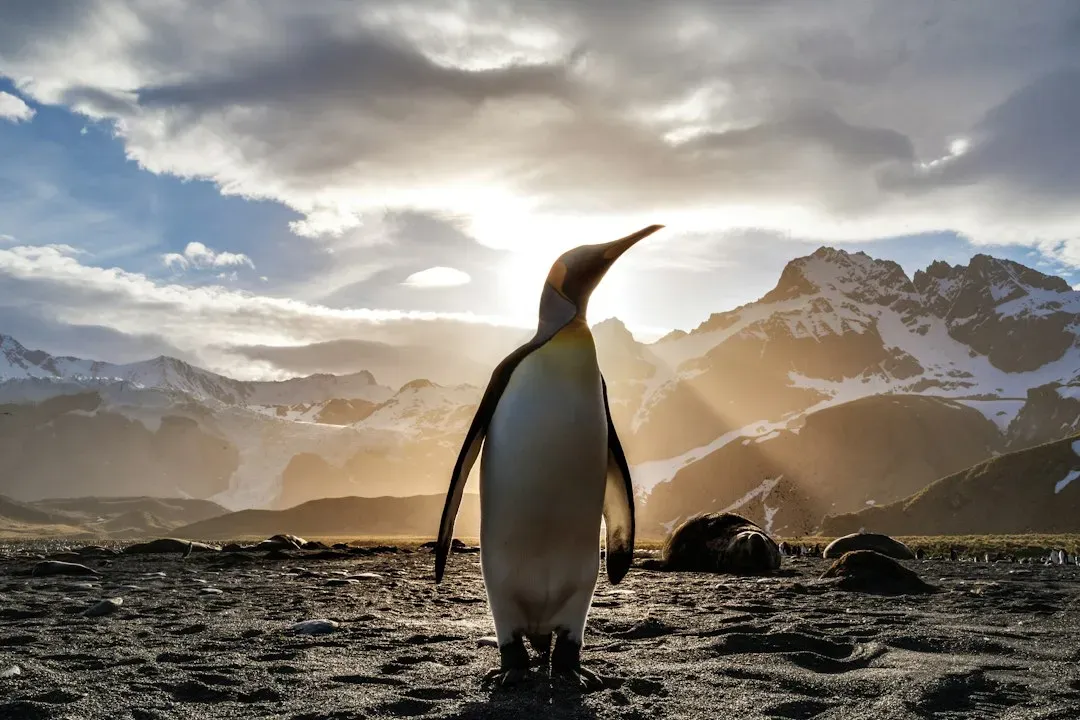
If you strip away the cartoons and plush toys, penguins are basically walking bundles of contradictions. They are birds that do not fly but outswim many fish. They look soft and awkward but endure storms and cold that would flatten most mammals. They live in giant noisy crowds yet maintain shockingly precise family bonds, finding a single chick in the chaos. And they solve problems – from waste management to heat control – with inventions that feel almost engineered rather than evolved.
In my view, we tend to underestimate them because they are funny to look at. It is easy to laugh at the waddle and miss the physics, the physiology, and the brutal logistics of surviving a year in their world. But the more you learn about what penguins actually do – how they dive, huddle, raise young on their feet, and turn bubbles and feathers into life‑support systems – the harder it is not to see them as some of the most hardcore animals on Earth.
We talk a lot about lions, sharks, and eagles as symbols of strength, but I think penguins deserve to stand right beside them, if not slightly in front. They have achieved something almost no other creatures have managed: turning some of the most unlivable environments on the planet into busy, noisy, thriving neighborhoods. Next time you see a cartoon penguin, it might be worth asking yourself: compared to the real thing, which one is actually the tougher animal?