
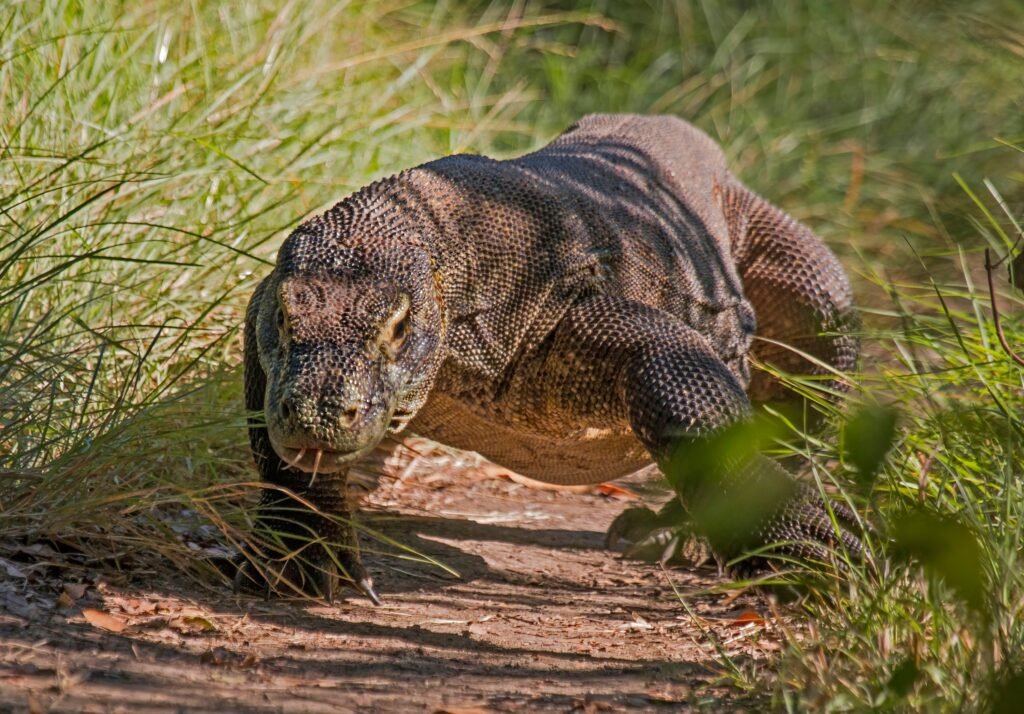
Most people assume scientists have had Komodo dragons figured out since the day Western explorers first laid eyes on them. They’re wrong. The truth is messier and far more interesting: it took researchers more than a hundred years, dozens of expeditions, and some seriously advanced lab equipment to actually understand how this apex predator kills, breeds, heals, and survives.
Along the way, textbooks got rewritten, a “scientific fact” was proven completely false, and a lizard casually broke the rules of vertebrate reproduction. What’s coming below isn’t just trivia – it’s a century-long detective story, and the ending genuinely surprised the scientists chasing it.
#1 – Science Didn’t Even Know They Existed Until 1910
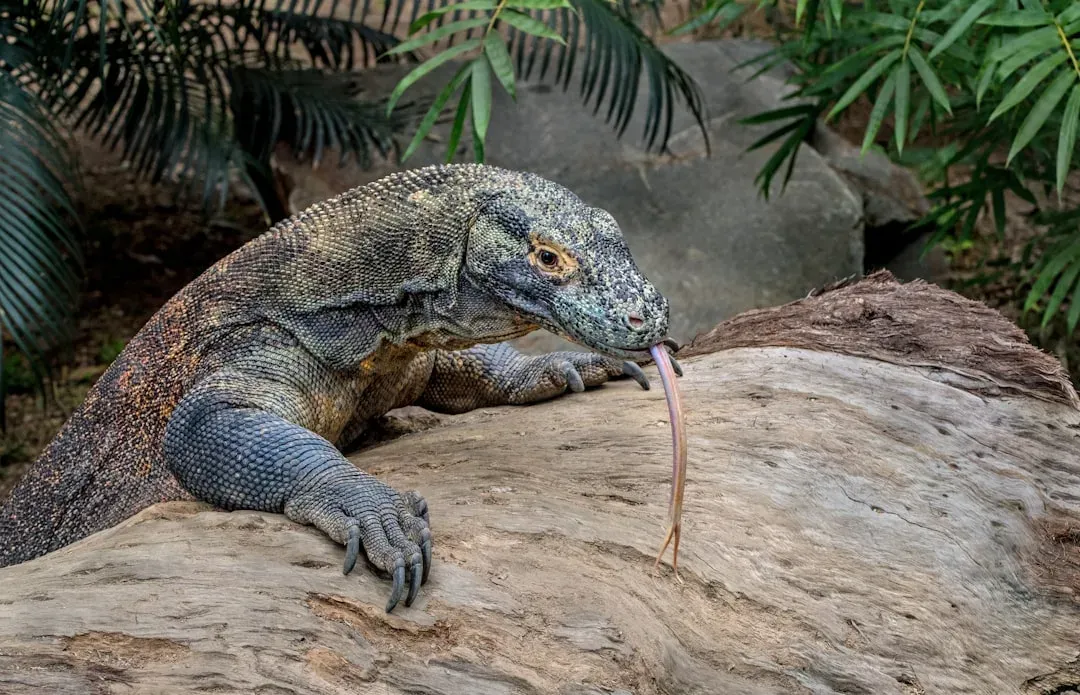
For most of human history, the Komodo dragon was a rumor, not a species.
Local fishermen and sailors in the Lesser Sunda Islands had told stories for generations about a giant “land crocodile” prowling a handful of remote Indonesian islands, but Western science had zero formal record of the animal. It wasn’t until a Dutch colonial official investigated these reports in the early 1910s that specimens finally made their way to a naturalist for proper description.
The world’s largest living lizard was hiding in plain sight for centuries, protected less by camouflage and more by pure geographic isolation.
Fast Facts
- Formally described by Western science in the early 1910s – astonishingly recent for such a large predator
- Scientific name: Varanus komodoensis, part of the monitor lizard family
- Native range limited to a handful of islands in Indonesia’s Lesser Sunda chain
- Holds the title of the world’s largest living lizard species
That late start matters. Every other apex predator on Earth – lions, tigers, crocodiles – had been studied by Western science for centuries by the time the Komodo dragon got its first formal write-up. Researchers were essentially starting from zero, which is part of why basic questions about its biology took generations to answer. We haven’t had this species “figured out” for a long time – we’re still catching up, and item #2 is proof of that.
#2 – They’re Not Trapped on Their Islands, They’re Swimming Between Them
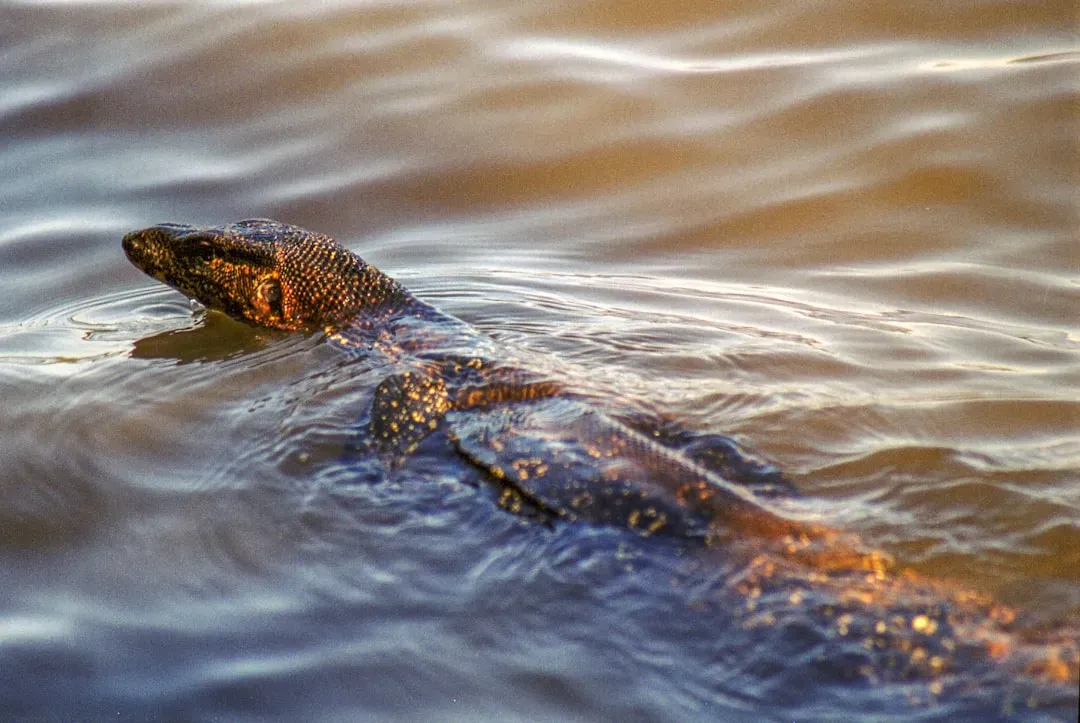
Most people picture Komodo dragons as permanently marooned on a few dots of land in Indonesia. Field biologists eventually discovered that’s not the full picture.
Komodo dragons are capable swimmers, and researchers have documented them crossing water channels between islands in the Lesser Sunda chain rather than staying locked to a single landmass their whole lives. This directly reshaped scientific thinking about how the species spread across the archipelago in the first place.
Instead of a single population slowly drifting apart on isolated islands, dragons may have been island-hopping and mixing gene pools for thousands of years.
This swimming ability also feeds directly into the virgin-birth story you’ll read about later on this list. A stranded female washing ashore on a new island doesn’t need a mate waiting for her to start a colony – she just needs herself. That single detail turned a strange reproductive quirk into a legitimate survival strategy, and it took decades of island-hopping observations to piece it together.
#3 – Baby Dragons Survive by Literally Running From Their Own Parents
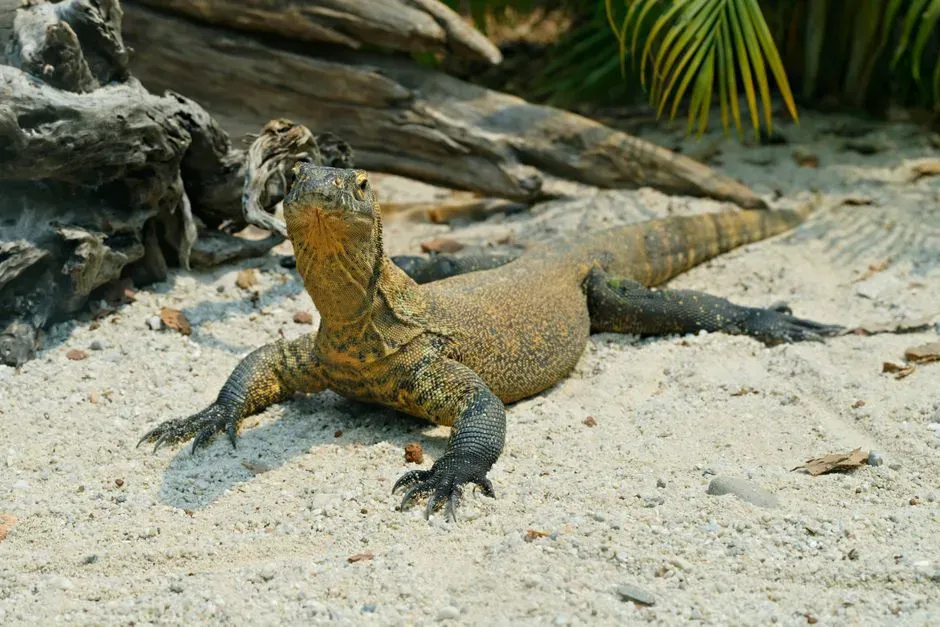
Here’s an uncomfortable truth zoologists eventually confirmed: adult Komodo dragons will eat their own young without hesitation.
Cannibalism isn’t a rare glitch in this species – it’s a normal part of the population’s ecology. Because of this constant threat, hatchlings spend their early years doing something adult dragons physically cannot do anymore: climbing trees. Juveniles are lightweight and agile enough to scramble into the canopy, where they hide, hunt insects, and avoid every hungry adult prowling the forest floor below.
Young dragons will even roll in fecal matter on the ground before climbing, using the smell to mask their scent from cannibalistic adults searching for a meal.
This behavior wasn’t widely appreciated until researchers spent extended time tracking juveniles rather than just the more visible, dramatic adults. It reframes the entire species. The “fearsome predator” narrative only tells half the story – for the first few years of their lives, these animals are prey, even to their own kind.
#4 – Their Sense of Smell Is So Advanced It Borders on a Sixth Sense
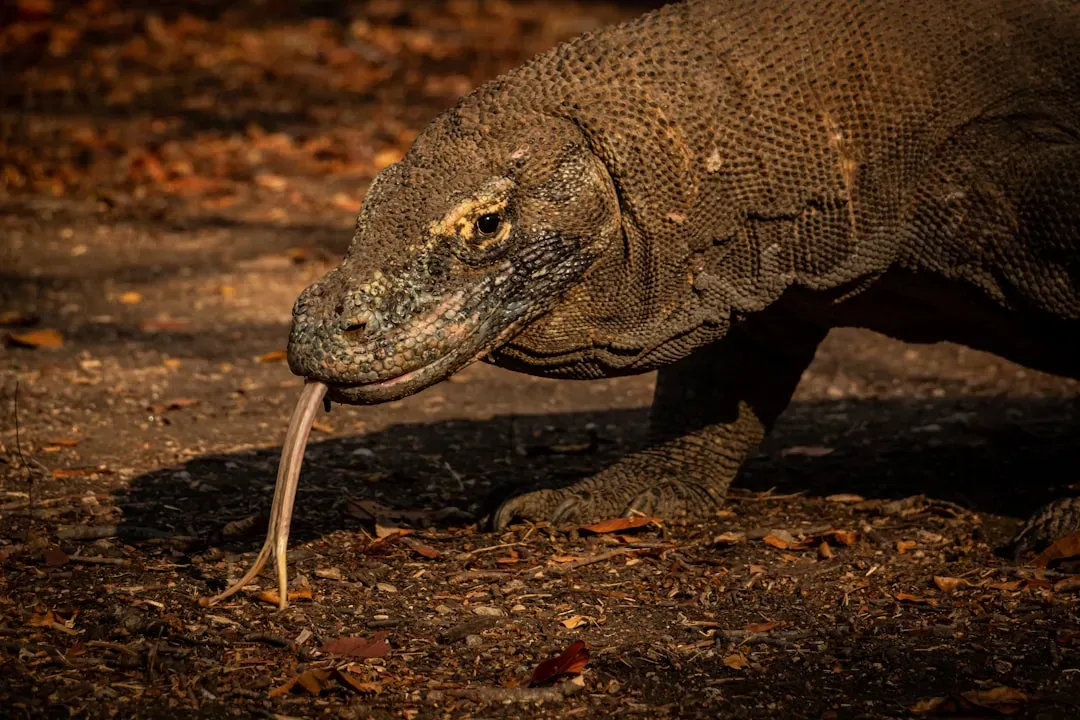
A Komodo dragon’s forked tongue isn’t just for show – it’s basically a chemical scanner.
By flicking its tongue in and out, the dragon collects airborne particles and delivers them to an organ in the roof of its mouth called the Jacobson’s organ, which processes scent information with startling precision. Researchers eventually confirmed that Komodo dragons can detect the scent of a dead or dying animal from remarkably long distances downwind, allowing them to travel toward a carcass long before it’s visible.
This means a dragon can locate a meal it never saw, heard, or actively hunted – it simply smelled its way there from across the landscape.
This single adaptation explains a behavior that puzzled early observers: dragons appearing at a kill site seemingly out of nowhere. It’s not magic, and it’s not luck. It’s one of the most sensitive chemical detection systems in the reptile world, and scientists needed modern anatomical study of the Jacobson’s organ to prove it wasn’t just folklore.
#5 – Their Bite Is Actually Weaker Than a Crocodile’s
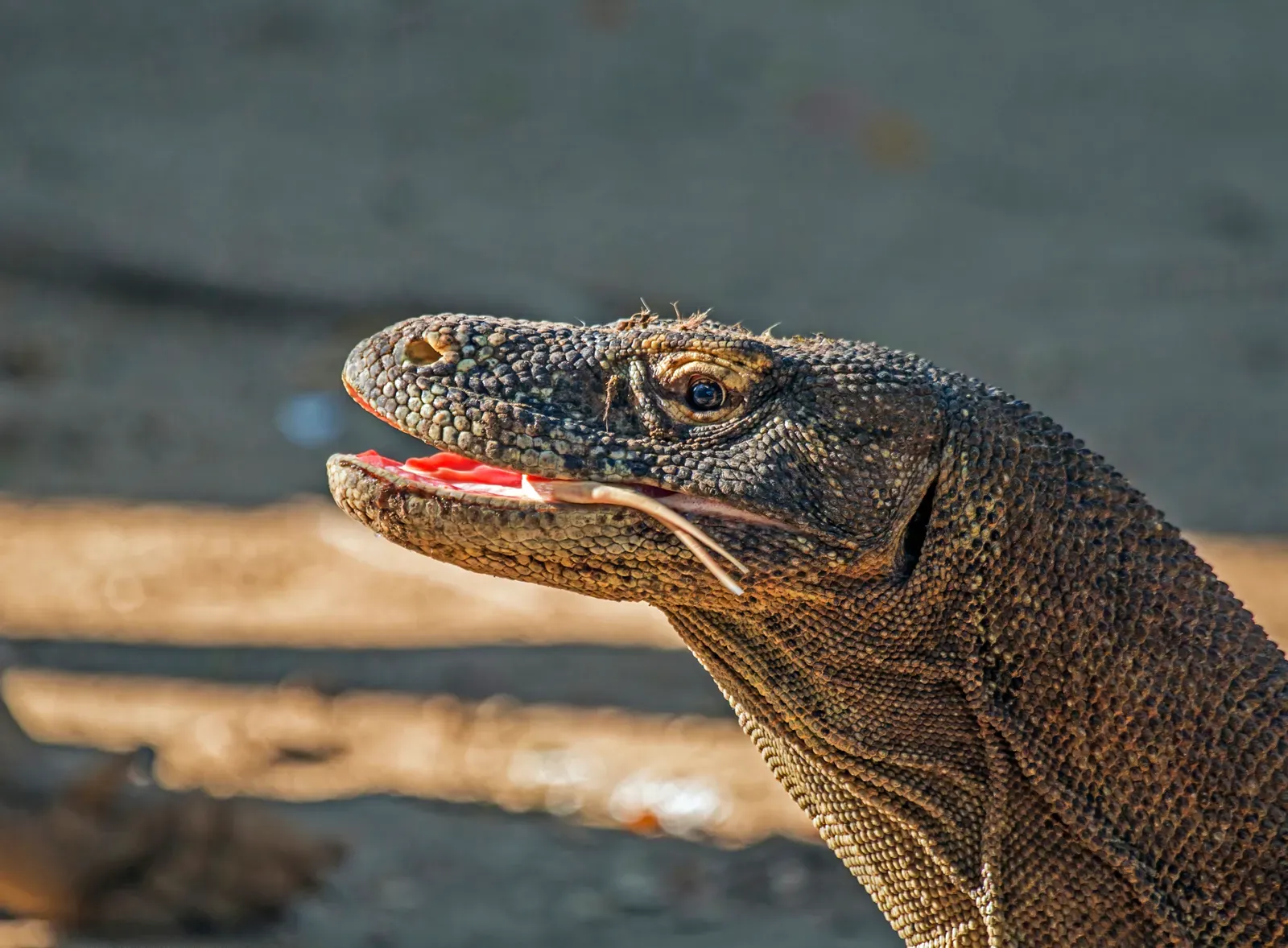
This one flips the popular image of the Komodo dragon on its head.
When researchers finally ran computer stress modeling on a Komodo dragon’s skull and compared it to a crocodile’s jaw, the results were surprising. The effectiveness of the Komodo dragon bite turned out to come from a combination of highly specialized serrated teeth and venom, not raw crushing force. The dragons were found to have much weaker bites than crocodiles, despite being far more feared as ambush killers.
Quick Compare
- Komodo dragon bite: comparatively weak crush force, but backed by serrated teeth and venom
- Crocodile bite: extreme crushing force, built for clamping and drowning prey
- Komodo killing style: slash, tear, and let venom finish the job over time
- Crocodile killing style: grip, hold, and drag prey underwater
So how does a lizard with a comparatively weak bite bring down a full-grown water buffalo?
The answer isn’t power – it’s precision. Instead of clamping down and holding on like a crocodile, the dragon slashes and tears with a mouth engineered for a completely different job. That discovery only made sense once scientists figured out what was hiding in those jaws, which leads straight into one of the biggest reversals in reptile science.
#6 – For Nearly a Century, Scientists Believed the Wrong Killing Mechanism Entirely
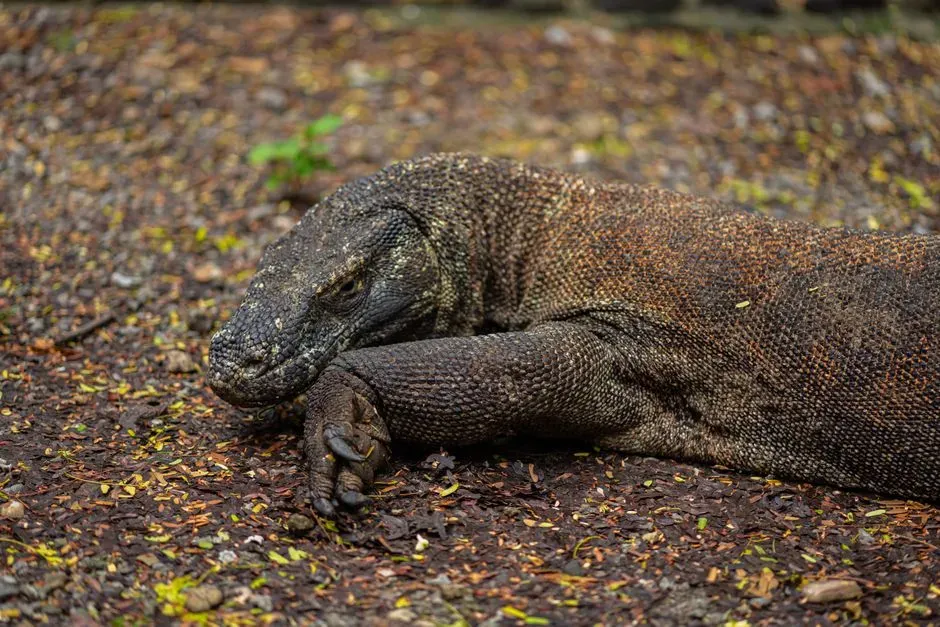
This is the myth that fooled experts for decades, and it’s a genuinely wild story of scientific misdirection.
The long-standing theory held that Komodo dragons killed through infection – that their saliva was packed with such toxic bacteria that even a survived bite would fester and kill prey days later through sepsis. It’s a compelling story, and it explained two puzzling field observations perfectly: large animals like water buffalo sometimes escaped an initial attack only to die days later, and Komodo dragons were observed calmly following wounded prey for hours without pursuing aggressively.
The problem? It was completely wrong.
This “bacterial saliva” theory became so widely repeated in documentaries and textbooks that it was treated as settled science for generations – until researchers with modern lab tools decided to actually test it directly. What they found rewrote the entire predation model for this species.
#7 – The Real Killing Mechanism Wasn’t Confirmed Until 2009
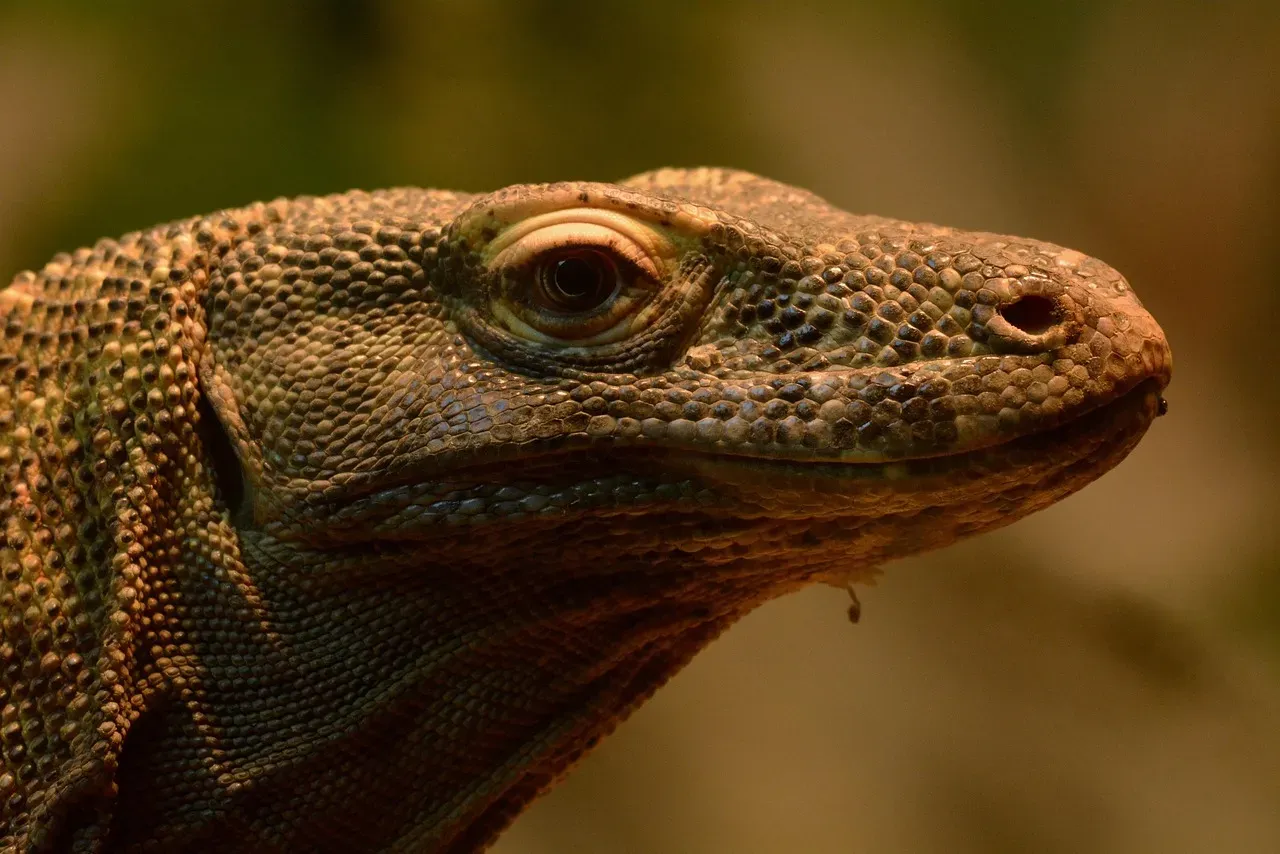
It took until the 21st century for scientists to finally prove what was actually happening inside a Komodo dragon’s mouth.
A team led by venom researcher Bryan Fry used MRI imaging, protein biochemistry, and functional testing on a Komodo dragon’s skull and glands to settle the debate once and for all. The researchers found that the lizards actually have the most complex venom-delivery system known in reptiles, producing toxic proteins that cause a drop in blood pressure and decreased clotting, delivered through specialized ducts that move venom from five separate small compartments to openings between serrated teeth.
Worth Knowing
- Venom is delivered through five separate glandular compartments, not a single sac
- Toxic proteins trigger a sharp drop in blood pressure in the victim
- Clotting ability is disrupted, making wounds bleed longer and more severely
- Effects build gradually – death often comes from shock and blood loss, not an instant strike
Once venom enters a wound, the effect is devastating rather than instant. Victims can go into shock and bleed to death as blood pressure crashes and clotting fails.
This finally explained why prey that seemed to escape a bite would later collapse: not infection, but a slow-acting venom cocktail working through the bloodstream. It took researchers combining MRI, protein biochemistry, and functional bioassays that had never before been applied systematically to this species to prove what generations of scientists had gotten backwards.
#8 – Dragons Are Somehow Immune to Their Own Bacteria-Soup Bites
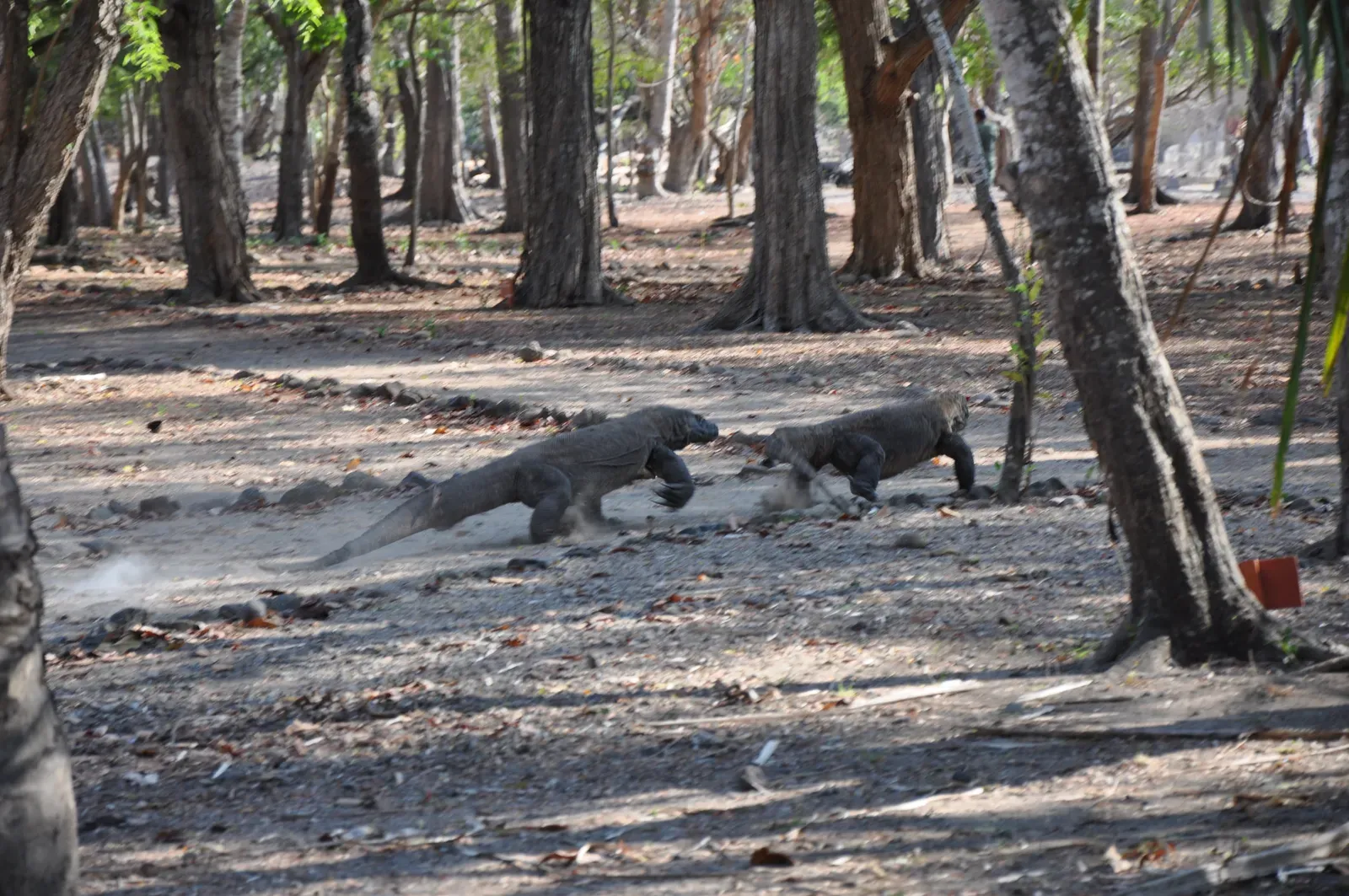
Even after the bacteria-as-weapon theory was debunked, one real question remained: dragons do fight and bite each other constantly, and their mouths genuinely do host dozens of bacterial species. So why don’t they die from infected wounds themselves?
Researchers eventually turned to the dragon’s own blood for the answer. Scientists at George Mason University detected 48 antimicrobial peptides in the blood plasma of Komodo dragons, and the discovery could lead to new drugs capable of fighting antibiotic-resistant bacteria in humans.
Almost all of these protective compounds came from an unexpected source – all but one was derived from histone proteins, which are known to have antimicrobial activity. When scientists tested a handful of these peptides directly against dangerous bacteria, seven of them showed measurable activity against Pseudomonas aeruginosa and Staphylococcus aureus.
That’s a built-in defense system so effective it’s now being studied for human medicine, and nobody knew it existed until researchers went looking specifically in dragon blood.
#9 – Their Teeth Are Literally Reinforced With Metal
This discovery is barely two years old, and it surprised paleontologists as much as zoologists.
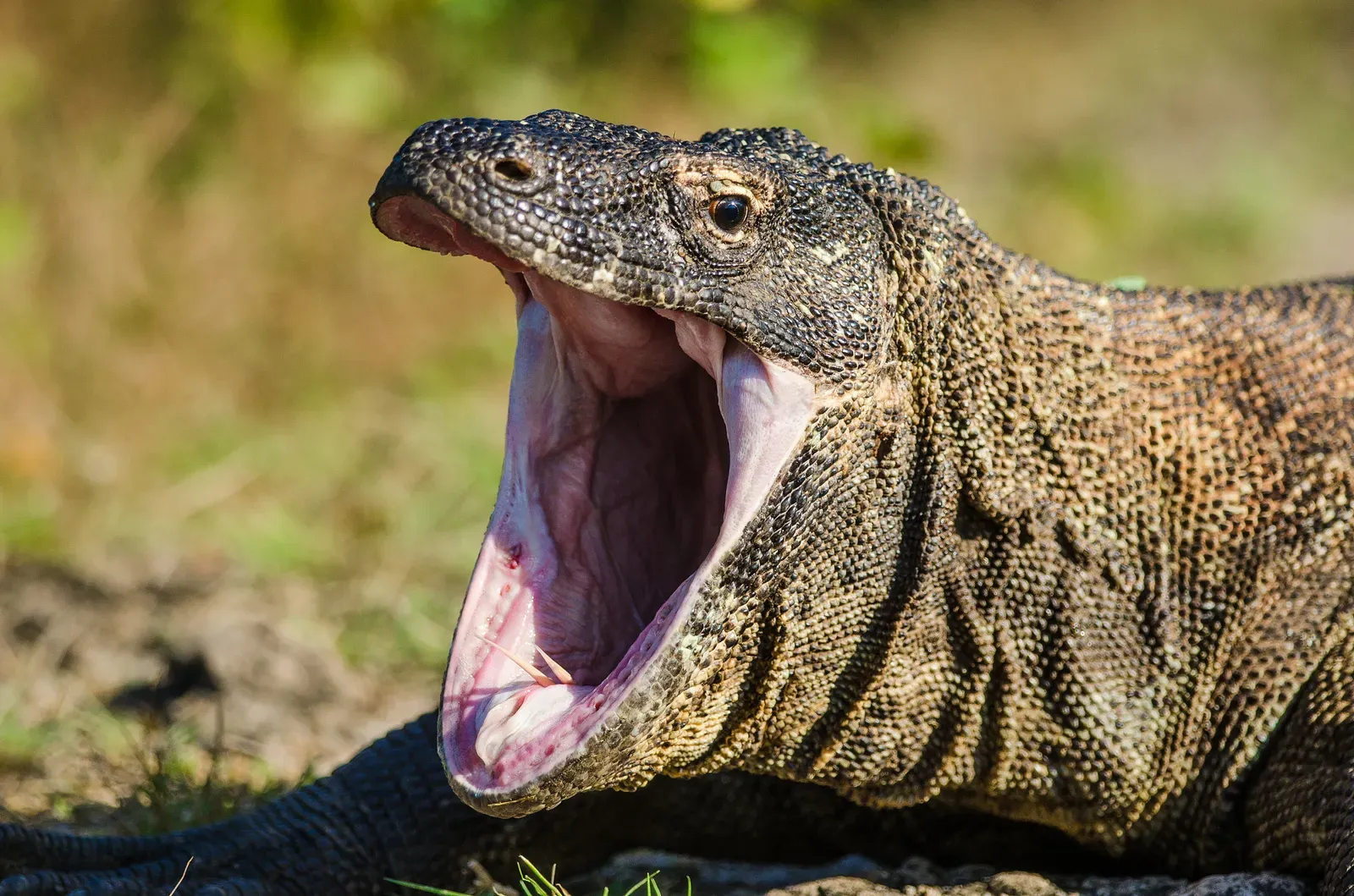
In 2024, researchers using advanced imaging discovered something no one had documented before in any carnivorous reptile: a coat of iron running along the razor-like teeth, helping the dragon kill and process its prey. The iron isn’t scattered randomly – it’s concentrated exactly where the teeth need it most.
The color alone gave it away. Komodo dragons concentrate the iron along the cutting edges and tips of their teeth, staining them orange, while crocodiles and other monitor lizards have so little iron it’s often invisible.
This coating keeps the serrated edges sharp and functional for tearing flesh, and researchers now believe similar coatings may explain how meat-eating dinosaurs kept their own teeth razor-sharp millions of years ago. A living lizard just handed paleontologists a clue about Tyrannosaurus rex.
#10 – Females Can Get Pregnant Without a Single Male Around
If there’s one discovery that made headlines around the world and genuinely shocked reptile biologists, it’s this one.
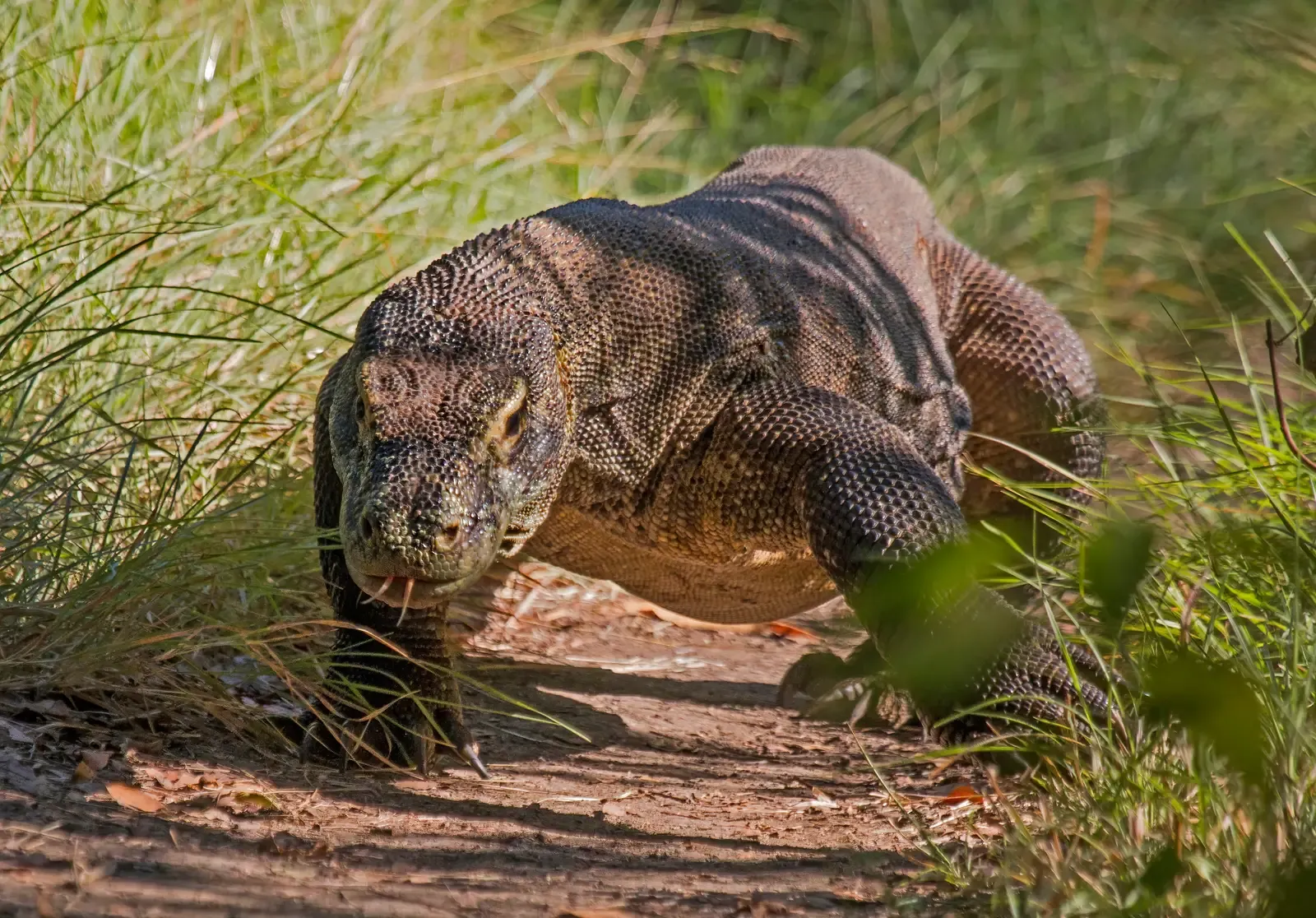
In 2006, two female Komodo dragons in separate English zoos – one named Flora – laid viable eggs despite never having been housed with a male. Genetic testing confirmed something extraordinary: all the genetic material in the eggs had come from Flora, meaning she was effectively both the mother and the father of the developing eggs. This process, called parthenogenesis, had never been documented in this species before.
The paternity test confirmed that all the genetic material in the eggs had come from Flora and that she was indeed both the mother and the father of the developing eggs.
Findings reported following genetic testing at the Zoological Society of London
Here’s the strange biological twist that makes it work. Komodo dragons have Z and W chromosomes rather than our Xs and Ys, and as a result, parthenogenetic offspring are always male – which means when a population dwindles, a lone female can theoretically kick-start numbers again by mating with her own sons. This isn’t a one-off fluke either. Genetic fingerprinting has since identified parthenogenetic offspring from a second isolated female, suggesting Komodo dragons can switch between asexual and sexual reproduction depending on whether a mate is available. This single finding transformed conservation strategy for the species overnight.
#11 – Their Massive Size Isn’t Random – It’s a Documented Evolutionary Rule
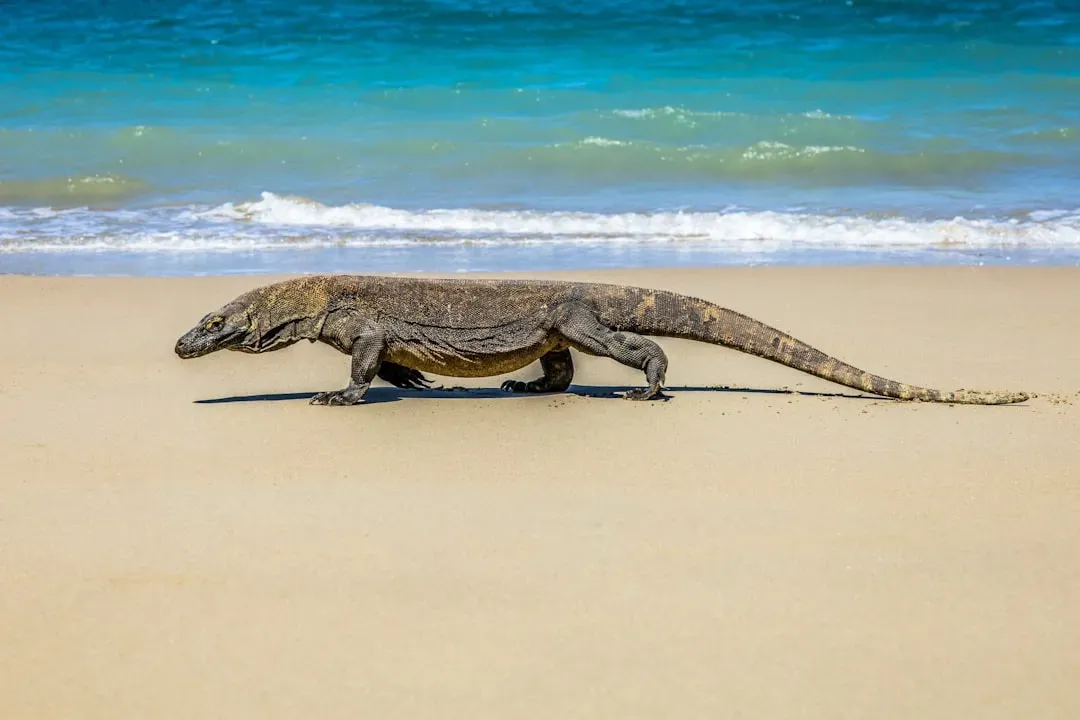
Why is this the only lizard on Earth that can grow to the size of a small crocodile? The answer took decades of comparative biology to nail down properly, and it isn’t a coincidence.
Komodo dragons are the textbook example of a real, documented pattern called island gigantism. On isolated islands with limited predators and competitors, certain species evolve to unusually large sizes because there’s no evolutionary pressure keeping them small, and large body size offers major advantages for hunting bigger prey and going longer between meals. The Lesser Sunda Islands, isolated for millions of years with limited large predators, became the perfect laboratory for this exact evolutionary experiment.
At a Glance
- Pattern name: island gigantism – isolation plus limited predators favors larger body size
- Location: the Lesser Sunda Islands, isolated for millions of years
- Extinct relative: Megalania, a giant monitor lizard from Australia, likely grew even larger
- Advantage of size: easier to take down big prey and survive longer between meals
Their closest evolutionary relative may have been even more terrifying.
The now-extinct Megalania, a giant monitor lizard from Australia, is believed to have grown significantly larger than any living Komodo dragon. Researchers studying Komodo venom glands specifically compared their findings to this extinct giant to understand how predatory venom delivery may have evolved across the monitor lizard family tree long before humans ever laid eyes on either species. Understanding one required studying the other – and that comparison only became possible once modern genetic and anatomical tools existed.
#12 – GPS Tracking Only Recently Proved They’re Not Simple Ambush Predators
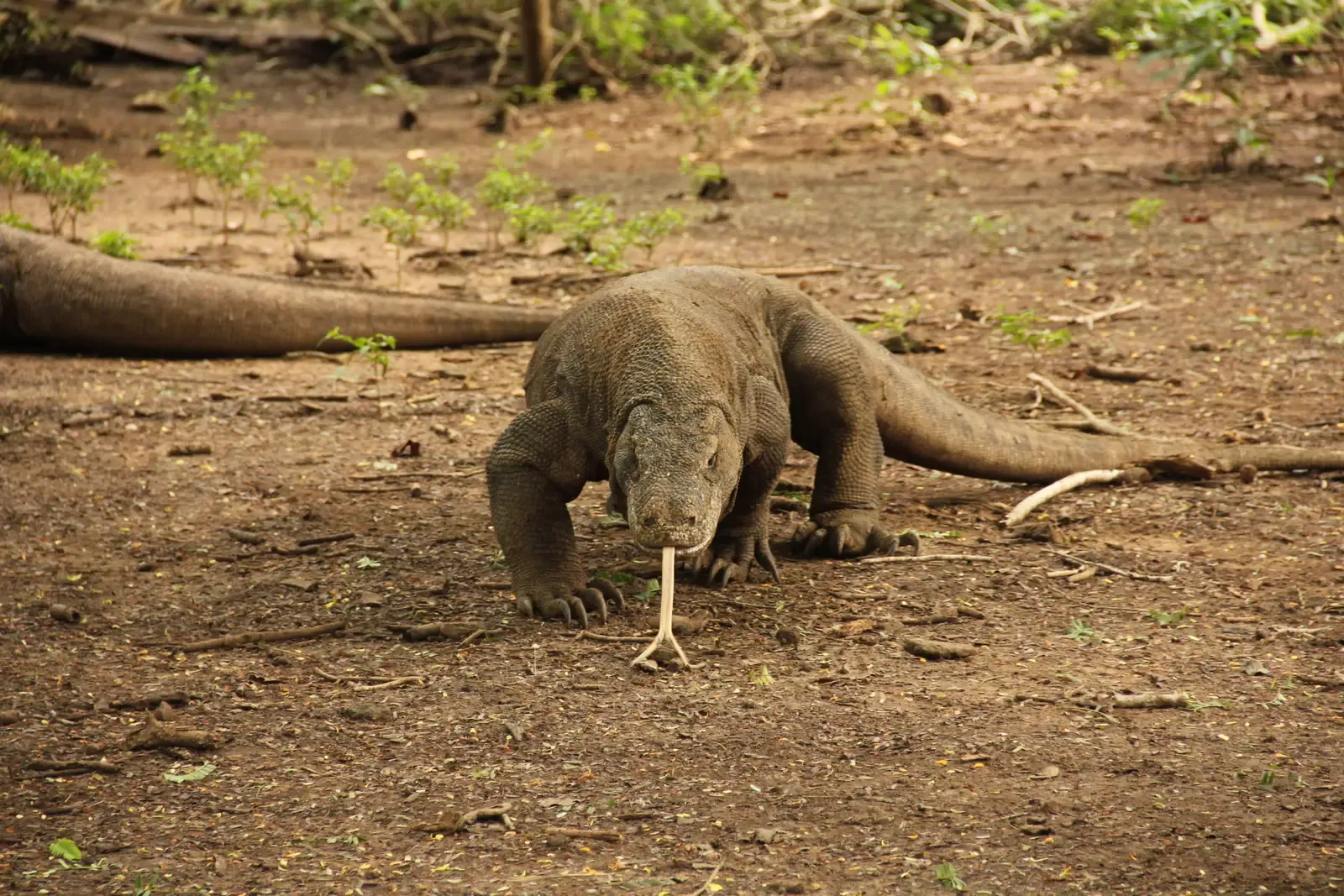
For most of the past century, the scientific consensus on Komodo dragon hunting behavior was simple: they’re lazy ambush predators that sit motionless for hours or days, waiting for prey to wander close enough to strike. That picture wasn’t entirely wrong – but it was incomplete, and it took satellite technology to prove it.
When researchers finally fitted wild dragons with GPS tracking devices and monitored their movements over extended periods, the data revealed something the old “sit and wait” model never accounted for. Individual dragons actively range across surprisingly large territories, adjusting their movement patterns seasonally and based on prey availability, rather than staying rooted to one ambush spot indefinitely.
Some individuals cover far more ground than the passive predator stereotype ever suggested, actively patrolling and investigating scent trails across their home range rather than simply waiting motionless for a meal to arrive.
This is arguably the most important shift in a century of Komodo dragon research, because it changes how conservationists design protected areas. A species that ranges widely needs connected, uninterrupted habitat corridors – not just a handful of isolated safe zones. It took modern tracking hardware, something unimaginable to the naturalists of 1910, to finally reveal the true scale of how this ancient predator actually moves through its world.
The Bottom Line
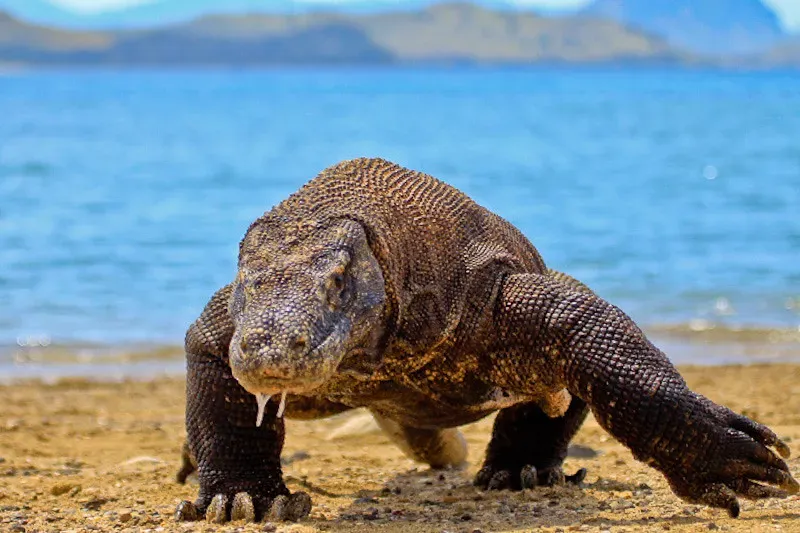
A hundred years of research turned nearly every assumption about the Komodo dragon inside out. The “toxic bacteria” theory that dominated textbooks for decades was flat-out wrong – it’s venom, delivered through one of the most complex glandular systems ever found in a reptile. Females don’t need males to reproduce. Their teeth are reinforced with metal like something out of engineering, not biology. And their much-feared bite is actually weaker than a crocodile’s, relying on slashing precision instead of raw crushing force.
If there’s one opinion worth stating plainly, it’s this: the “lazy monster waiting in the grass” reputation this animal has carried for a century is lazy science, not lazy lizard. Every discovery on this list proves the opposite – an animal built with more complexity, adaptability, and evolutionary cunning than we ever gave it credit for. Which of these findings genuinely surprised you the most? Drop it in the comments.