Most people assume our prehistoric ancestors just dumped their dead in a hole and moved on. That assumption is dead wrong.
For over 400,000 years, hominins – not just modern humans, but smaller-brained cousins we still don’t fully understand – were deliberately arranging bodies, painting them red, decorating them with thousands of hand-carved beads, and in some cases, defleshing and even eating them as part of elaborate rituals nobody has ever fully decoded. Archaeologists have excavated the graves. They’ve run the isotope tests, mapped the cut marks, and dated the pollen. And they still can’t agree on what any of it actually meant.
Here’s what the researchers who’ve spent entire careers on this actually say – starting with a species that supposedly wasn’t smart enough to grieve at all.
#13 – A Small-Brained Species Was Digging Graves Before Us
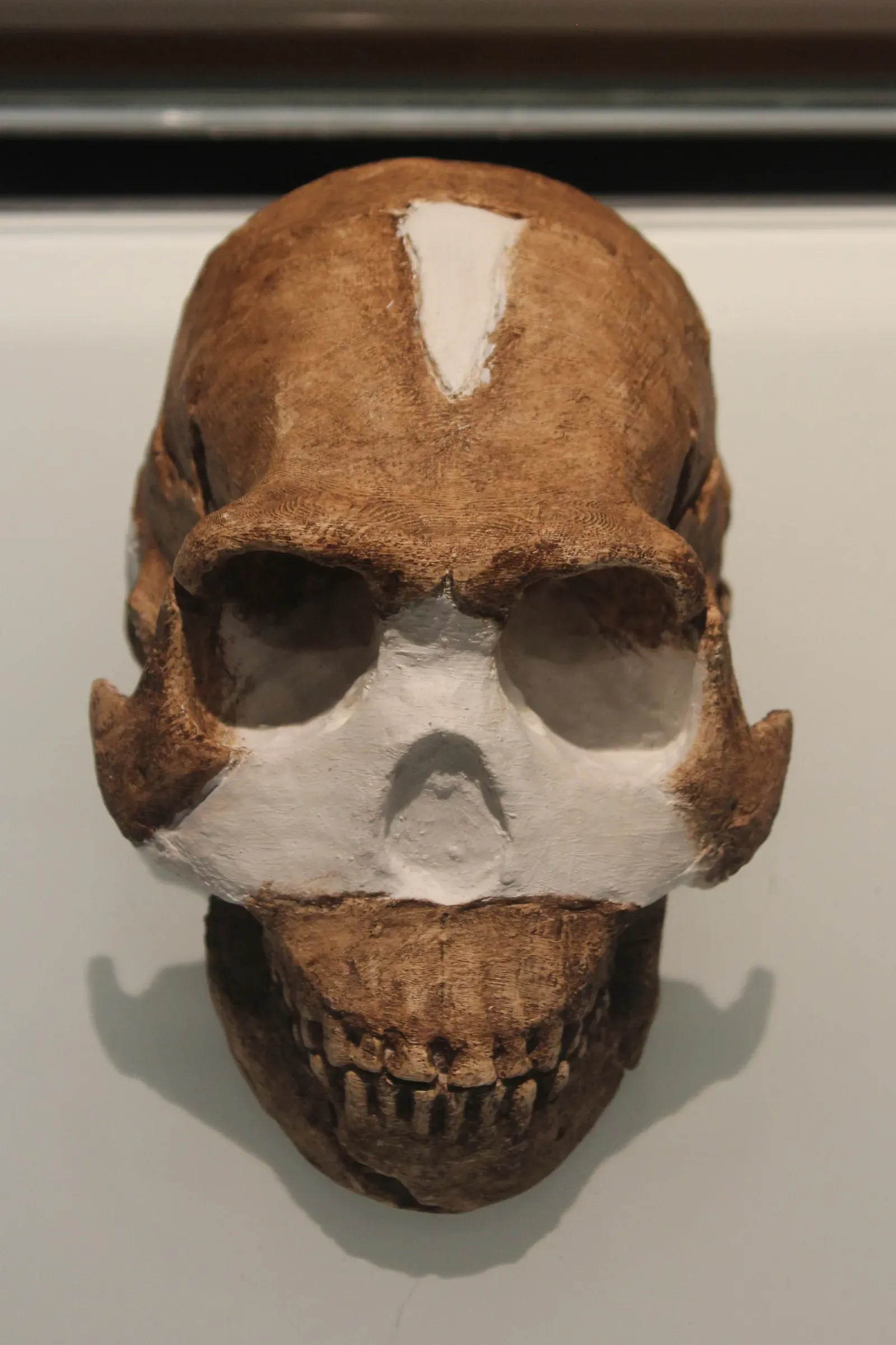
A hominin with a brain roughly a third the size of ours may have invented funerals.
A team led by paleoanthropologist Lee Berger uncovered burials in the Rising Star cave system in South Africa dating to at least 200,000 years ago, pushing back the oldest known burials by a whopping 100,000 years. The graves weren’t dug by Homo sapiens at all. They belong to a distant cousin with a much smaller brain: Homo naledi.
Excavations since 2018 have uncovered several oval-shaped graves containing the remains of at least five individuals, located around 100 feet underground, with a precise shape and clear, intentional body placement. That’s not an accident of geology. That’s a decision – and it means everything we thought we knew about who “invented” grief needs a rewrite. But that’s nothing compared to what turned up in a shaft in northern Spain almost 200,000 years earlier.
#12 – A 430,000-Year-Old Pit Full of Bodies Nobody Can Explain
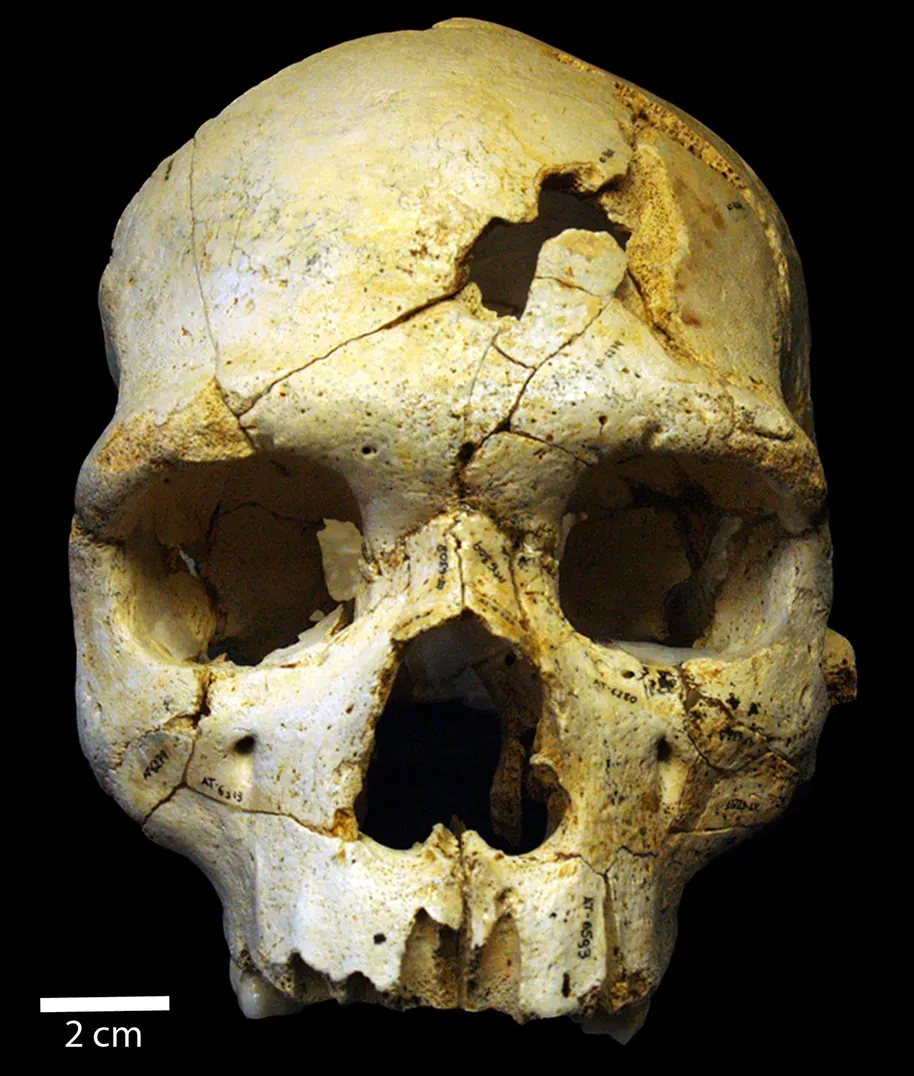
Deep in a Spanish cave system sits a vertical shaft packed with human remains that shouldn’t be there.
At Atapuerca in northern Spain, a deep shaft held an enormous concentration of ancient human remains dating to roughly 430,000 years ago. This is the famous “Sima de los Huesos” – the Pit of Bones – and it predates modern humans entirely. Nobody accidentally falls into a vertical shaft in the numbers found here. Somebody was carrying bodies to that spot on purpose, generation after generation.
The unsettling part is the “why.” There’s no settlement at the bottom of the pit, no natural reason for so many individuals to end up there. It’s essentially a mass grave built half a million years before anyone had language as we know it. None of that prepares you for the Neanderthal grave that turned into a decades-long argument over flowers.
#11 – The Neanderthal “Flower Burial” That Still Splits Archaeologists
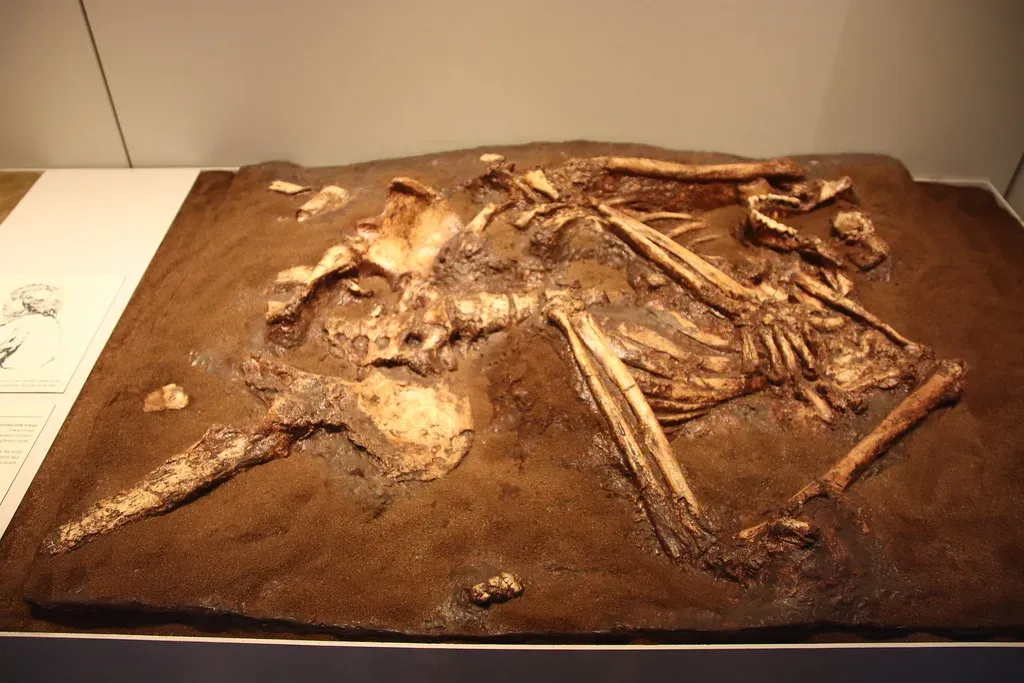
For decades, this single grave was used as proof that Neanderthals grieved just like us.
In the Zagros Mountains of Iraqi Kurdistan, Shanidar Cave gave us some of the most famous Neanderthal remains ever found. Pollen clusters around one skeleton were originally interpreted as evidence that mourners had placed flowers in the grave – a poetic, almost unbearably human gesture from a species long dismissed as brutish.
Except the science hasn’t held up cleanly. Rodent activity may explain some of the pollen, yet the broader case for careful treatment of the dead at Shanidar still holds. So the flowers might be a beautiful myth built on burrowing rodents – but the body positioning itself still suggests intentional care. Nobody can definitively separate the ritual from the rodents, and that ambiguity is exactly why this site keeps getting re-examined decade after decade. Even stranger: the same red stain shows up in burials on three separate continents.
#10 – Why Did Nearly Every Prehistoric Culture Paint Their Dead Red?
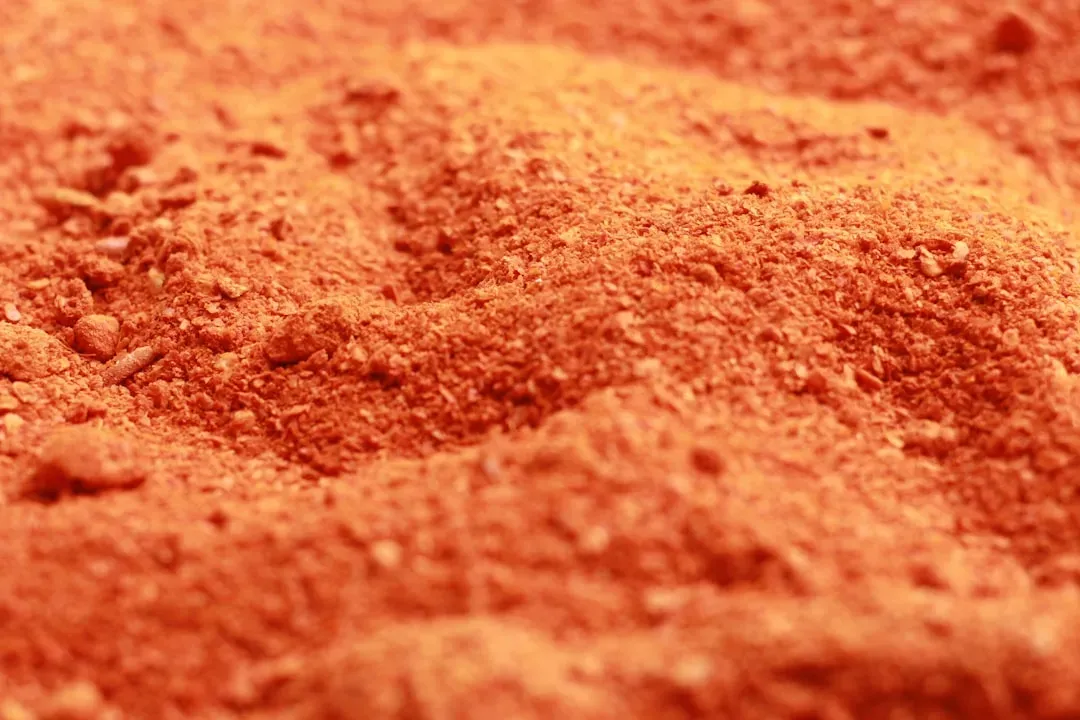
Red ochre shows up in burials separated by tens of thousands of years and thousands of miles, and nobody has a single agreed-upon reason why.
The dead were laid down with ochre, antlers, beads, or other objects that took real time and effort to place, across sites from Siberia to Wales to Italy. That’s a pattern spanning an entire continent’s worth of unrelated communities, all reaching for the same red pigment, for reasons they never wrote down.
At a Glance
- Red ochre burials span Siberia, Wales, and Italy – continents apart, with no contact between the groups
- Ochre is frequently paired with antlers, beads, or other hand-crafted grave goods
- Leading theory: the color symbolized blood and life-force, sometimes paired with coals representing a bonfire for the dead
- No prehistoric text, painting, or oral tradition survives to confirm what the color actually meant
One popular theory ties the pigment to blood and life-force symbolism – the idea that ochre symbolized the blood giving life, sometimes paired with coals meant to represent a warming bonfire for the deceased. It’s a compelling idea, but it’s still speculation dressed up as certainty. Nobody has found a single prehistoric text, painting, or oral tradition explaining what the color actually meant to the people using it. We’re reverse-engineering a belief system from a stain. And red pigment is almost gentle compared to what happened to some Ice Age skulls.
#9 – Ice Age Humans Were Turning Skulls Into Cups
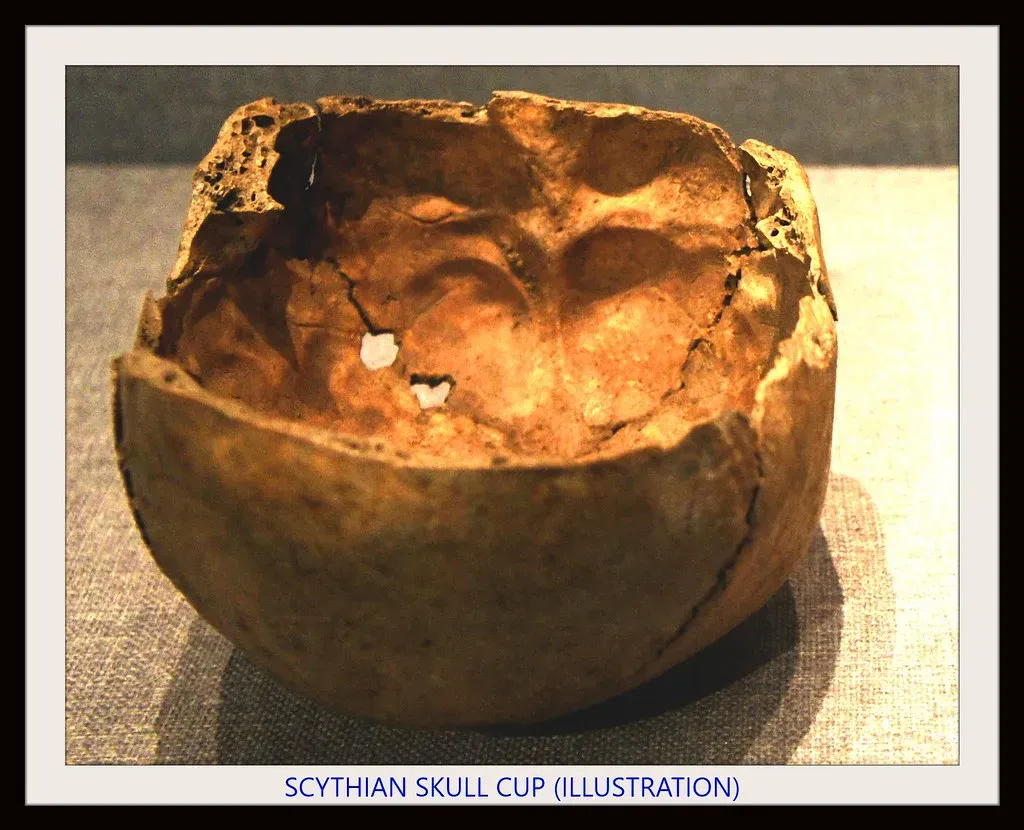
This one isn’t a myth, an exaggeration, or a horror movie plot. It’s published, peer-reviewed archaeology.
Detailed reanalysis of cranial remains from Gough’s Cave in England showed they had been carefully modified into skull-cups roughly 14,700 years ago. Researchers identified extensive evidence for defleshing, disarticulation, chewing, and the crushing of bone to extract marrow – human tooth marks on the postcranial bones provide incontrovertible evidence of cannibalism.
Here’s the twist that keeps this from being simple survival cannibalism: the skulls weren’t smashed carelessly for brains and marrow. The painstaking preparation suggests they were shaped for a special purpose, since it would have been far quicker to just smash the skull open. These people took the time to carve drinking vessels out of their dead during a period of active grief or ritual. Compared to what happened at sites where bodies were taken apart and never reassembled, a skull-cup almost looks tidy.
#8 – Bodies Deliberately Stripped to the Bone, Then Left in Pieces
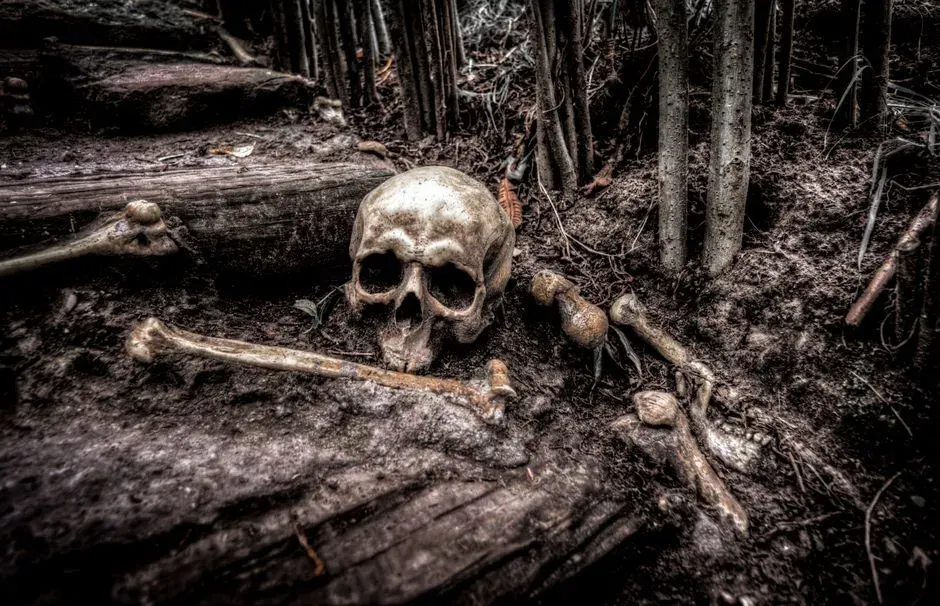
Sometimes the “burial” wasn’t a burial at all – it was a process, and archaeologists still argue over what that process meant.
Across multiple Ice Age sites, researchers have found human bones that were intentionally defleshed, disarticulated, and scattered among ordinary occupation debris rather than placed in a neat grave. At Fontbregoua, cannibalism remains the simplest and most plausible explanation; at Krapina and other sites, the evidence isn’t enough to prove either secondary burial or cannibalism. That’s scientists openly admitting they can’t tell the difference between a funeral rite and a meal.
Earlier interpretations of these cut-marked bones pointed to ritual disarticulation and excarnation, though in some cases the idea of actual consumption has since been dismissed. The line between “sacred funerary practice” and “dinner” is thinner in the archaeological record than most people would ever want to believe. Even that debate looks simple next to a burial ground where the same community treated its dead in wildly different ways.
#7 – One Cave, Wildly Different Burials, No Explanation for the Difference
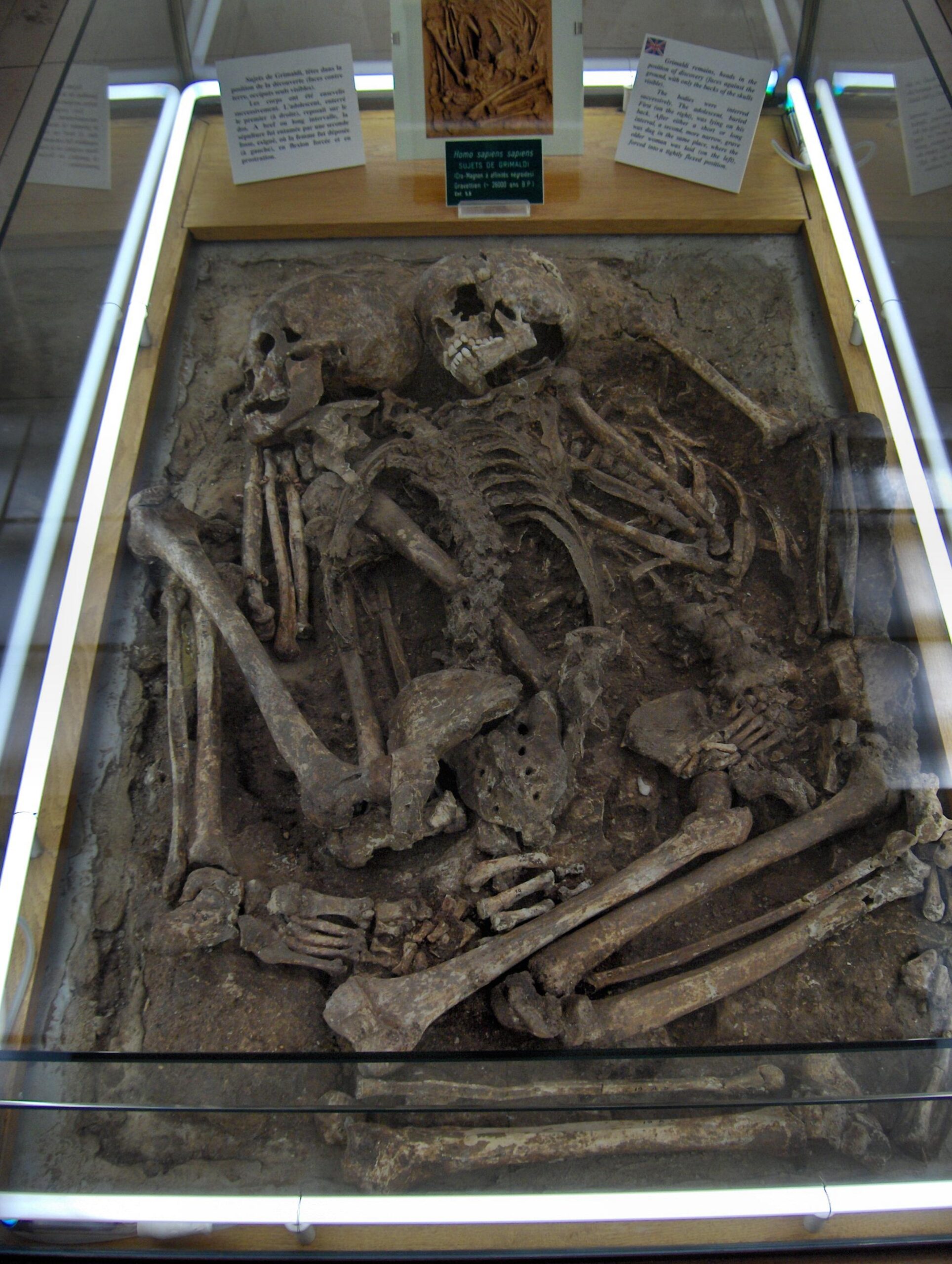
Imagine a single community that buried some members like royalty and others with almost nothing. That’s the Grimaldi caves.
Near the French border on the Ligurian coast, the Grimaldi caves produced several Upper Paleolithic burials with ornaments and ochre. Some individuals were interred with elaborate personal decoration; others in the same cave system got comparatively plain treatment. If status, age, or cause of death explained the gap, we’d expect a clear pattern. We don’t have one.
Quick Compare
- Elaborate burials: ornaments, red ochre, and clear personal decoration placed with the body
- Plain burials: same cave system, same time period, almost no grave goods at all
- What doesn’t explain it: age, apparent status, or cause of death show no consistent pattern
- What we do know: burial had become a repeated social practice, not an occasional exception
Even with older interpretations trimmed back, one thing is still clear: burial had become a repeated social practice, not an occasional exception. We know it mattered deeply to these people, but we can’t reconstruct the social rulebook that decided who got the beads and who didn’t. That inconsistency is nothing compared to a triple burial in Moravia that still splits researchers.
#6 – Three Bodies, One Grave, and No Agreement on Why
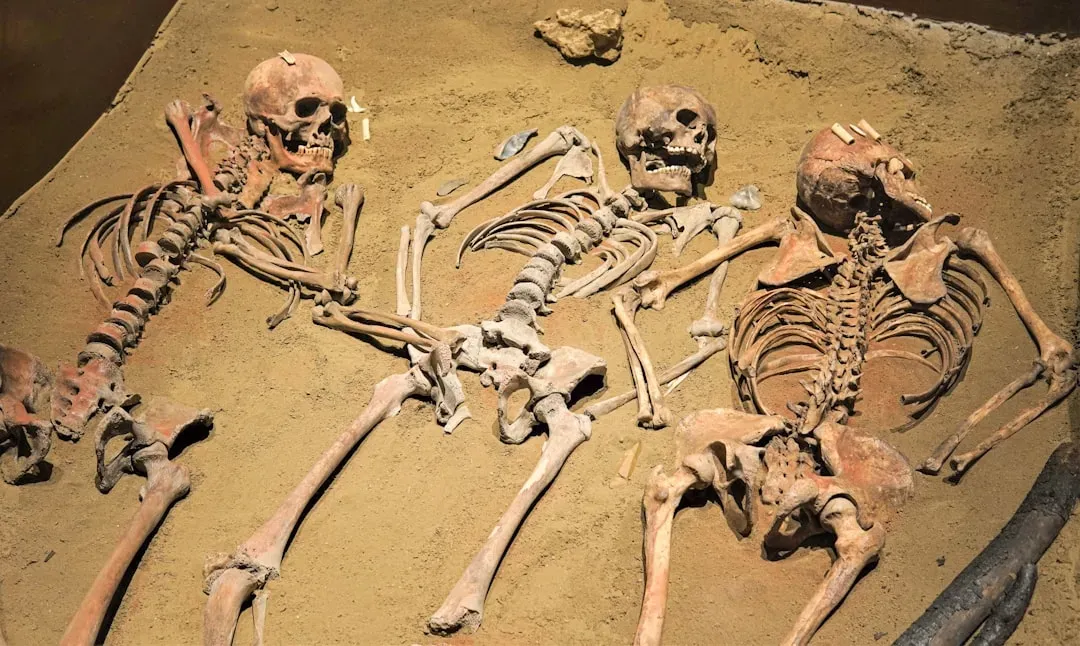
At a site famous for some of the earliest art in human history, archaeologists also found something stranger: three people, buried together, on purpose.
This Upper Paleolithic site in Moravia – Dolní Věstonice – is famous for art, settlement remains, and a triple burial arranged with real care. It isn’t a mass grave from a disaster. The positioning is deliberate, careful, almost staged.
The three bodies weren’t simply tossed together, and that careful composition leaves archaeologists still weighing kinship, grief, and ritual at the end of the Ice Age. Were they family? Victims of the same event? Members of a ritual role we don’t even have a name for? Nobody can say with confidence, and the “care” in the arrangement is exactly what makes the mystery worse, not better – a hasty burial is easy to explain; a tender one raises more questions than it answers. And a mysterious trio is nothing compared to the isolated skull found stacked above one of prehistory’s richest graves.
#5 – A Headless Body and a Lone Skull, Placed With Purpose
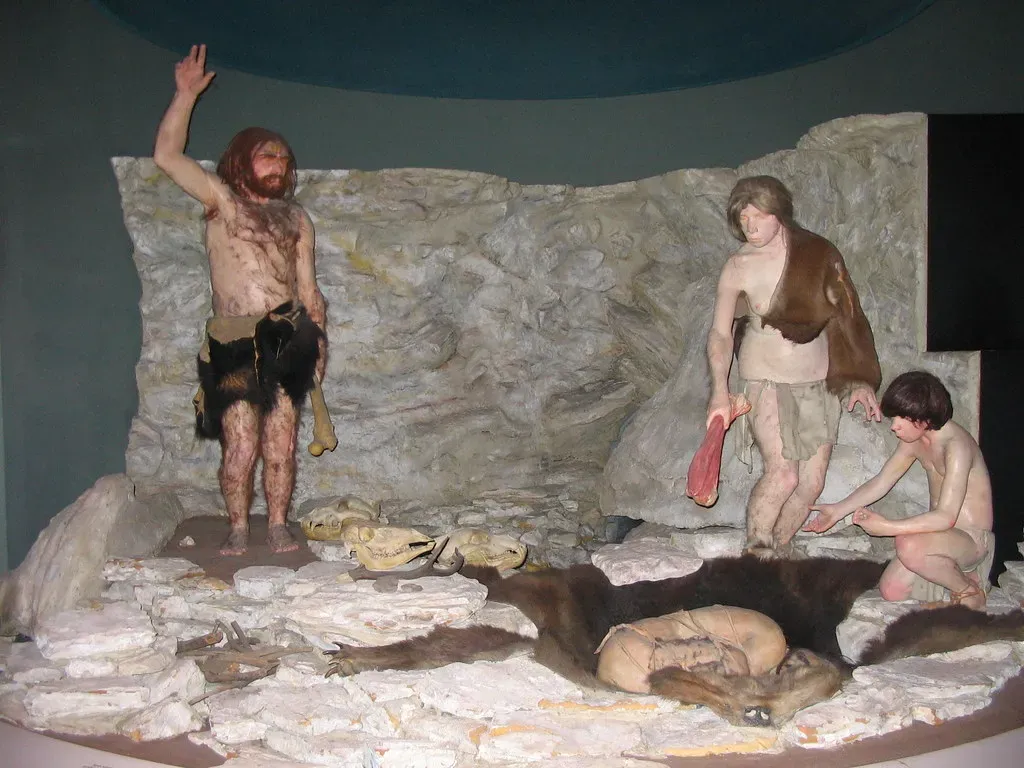
Sungir, Russia, gave the world one of the richest Ice Age burial sites ever found – and one of its strangest side mysteries barely gets mentioned.
At least five people were buried at Sungir, including a 60-year-old man, two adolescents, an unsexed headless adult, and a lone adult female skull. That headless body and detached skull weren’t placed in ordinary graves alongside the others. The poorly preserved female skull was set beside a stone slab in an area stained with red ochre, directly overlying the well-known male burial.
Think about that sequencing for a second: someone came back to an already-occupied grave and deliberately placed a skull directly on top of it, staining the spot with fresh ochre in the process. That’s not a burial. That’s a return visit – a second ritual layered on top of the first, possibly decades or centuries apart. Nobody has ever adequately explained why a community would revisit a grave just to add an isolated skull. That return visit is almost quiet compared to what was buried beside two Ice Age children a few feet away.
#4 – Children Buried With More Wealth Than Most Adults Ever See
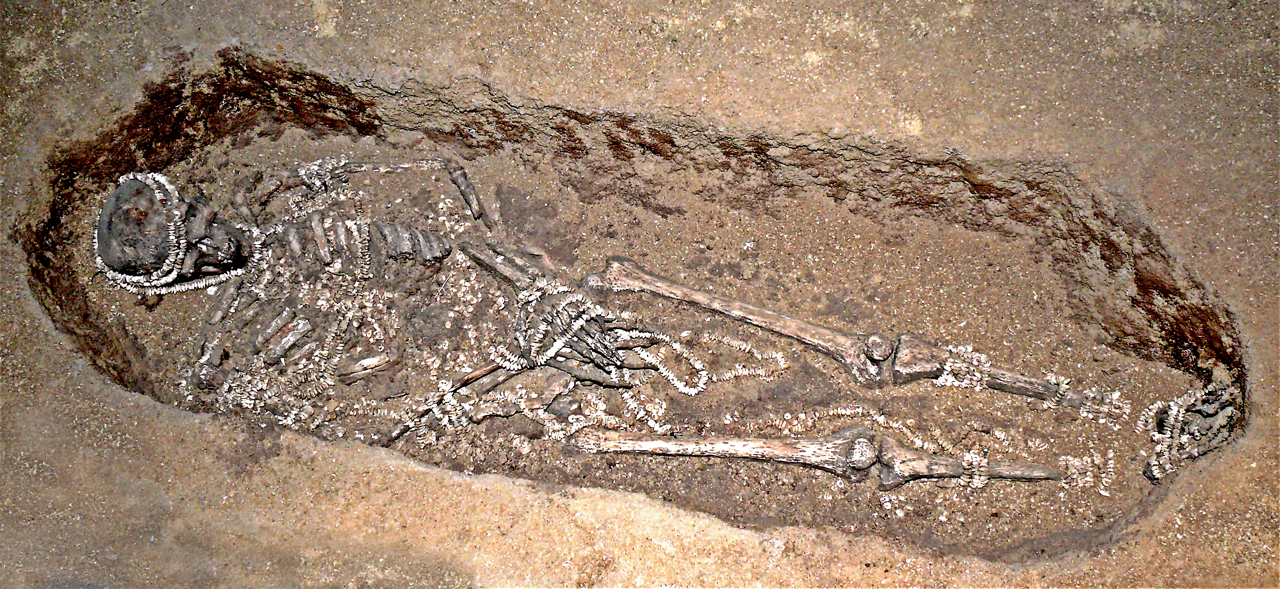
Two kids, laid head-to-head in a Russian permafrost pit some 30,000 years ago, were sent into the afterlife with more ornamentation than most adult chiefs in human history.
The double child burial from Sunghir is a spectacular Mid Upper Palaeolithic find: a boy and a girl, about 12-13 and 9-10 years old, buried at the same time, head to head, covered in red ochre and dressed in extraordinarily rich grave goods. We’re talking thousands of hand-carved ivory beads, spears, and ornaments – a labor investment that would have taken a skilled craftsperson months, if not years.
Fast Facts
- Ages at death: roughly 12-13 and 9-10 years old
- Buried simultaneously, head-to-head, both covered in red ochre
- Grave goods included thousands of hand-carved ivory beads plus spears and ornaments
- Researchers suspect possible physical disabilities or congenital conditions – yet the children appear treasured, not marginalized
Here’s the part that reads almost like a deliberate honor system: researchers have suggested these children may have had physical disabilities or congenital conditions, and rather than being marginalized, they appear to have been treasured. Was this compensation, veneration, or a sacrifice narrative we haven’t even considered? Nobody’s settled it. Compared to what happened next, individual graves start to look almost old-fashioned.
#3 – The Moment Prehistoric Burial Became a Community Project
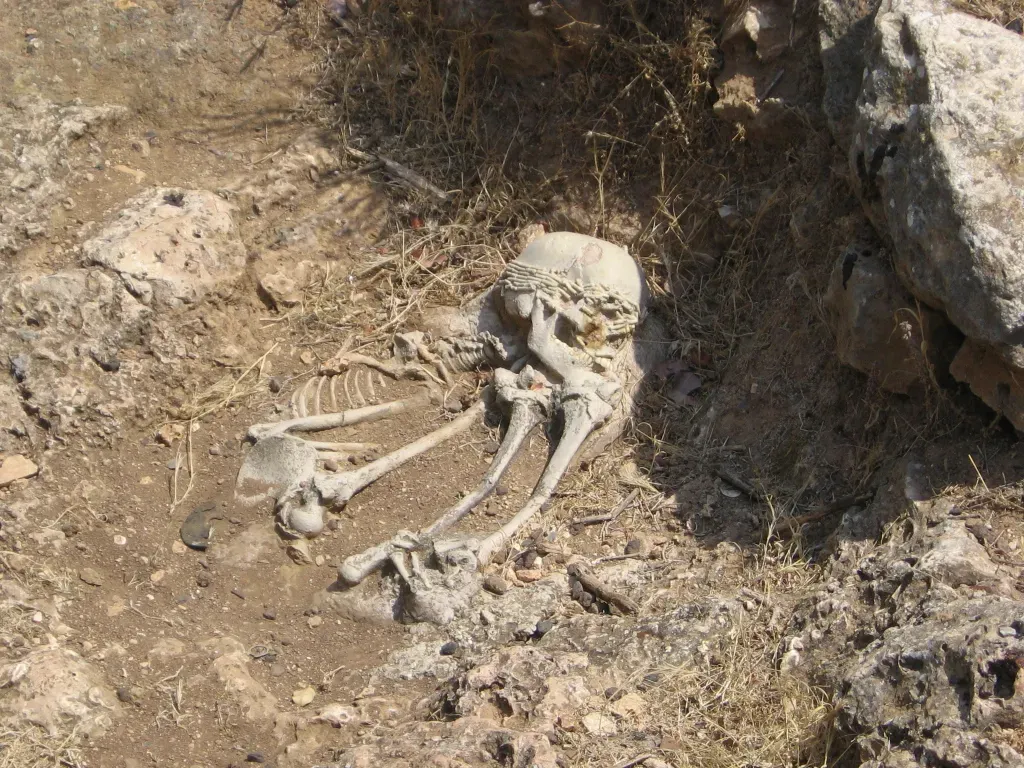
Somewhere around 15,000 years ago, burial stopped being a private, occasional act and became something communities did together, repeatedly, in the same spot.
Natufian communities in the Levant, roughly 15,000 to 11,500 years ago, buried their dead in ways that look more settled and communal than most earlier examples. This is a genuine turning point – burial grounds start to resemble what we’d recognize as cemeteries, tied to communities that were becoming less nomadic and more rooted to specific places.
That shift raises an uncomfortable question nobody can fully answer: did settled life create the need for shared burial grounds, or did the desire to keep returning to buried ancestors help push people toward settling down in the first place? The chicken-and-egg problem between agriculture, permanent settlement, and formalized cemeteries is still unresolved, and the Natufian record sits right at the center of that debate. None of that compares to a culture that mummified literally everyone, thousands of years before Egypt existed.
#2 – They Mummified Every Single Person, Including Unborn Babies
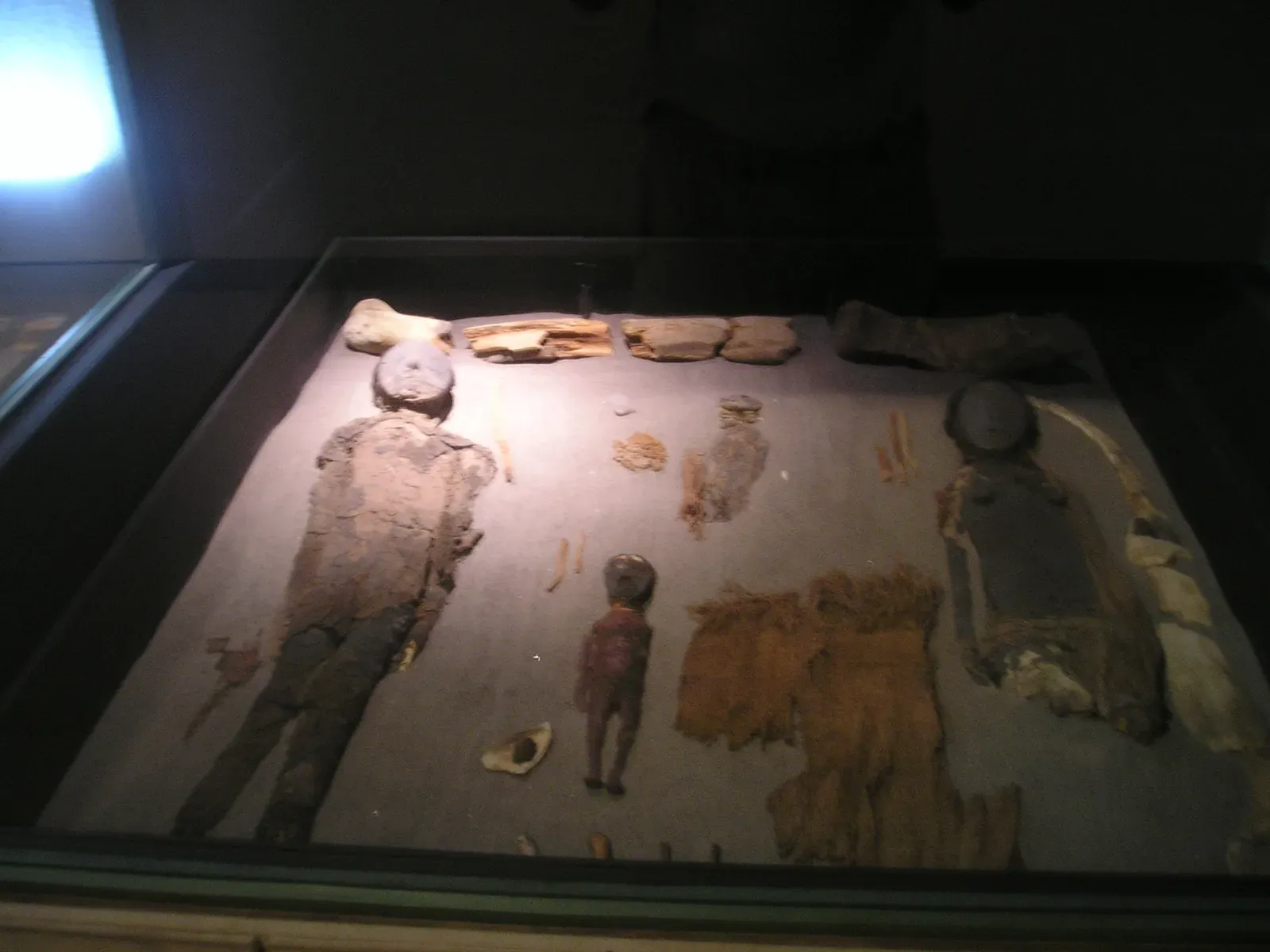
Forget pharaohs. The oldest deliberately mummified humans on Earth weren’t royalty – they were fishermen, children, and fetuses on a desert coastline in Chile.
The Chinchorro mummified everyone – infants, children, adults, the elderly, even fetuses – a democratic preservation practice in stark contrast to Egypt, where mummification was initially reserved for royalty alone. The process itself was extraordinarily labor-intensive: bodies were fully disassembled, defleshed, reinforced with sticks, and rebuilt around the original skeleton.
Worth Knowing
- Roughly 180 Chinchorro mummies have been discovered, all found outdoors near the beach
- The practice predates Egyptian mummification and applied to every social class equally
- Bodies were fully disassembled, defleshed, reinforced with sticks, and rebuilt around the skeleton
- No pyramids, temples, or structures were ever built to house the mummies
All of the roughly 180 discovered Chinchorro mummies were found outdoors, placed near the beach – the Chinchorro apparently built no pyramids or structures to house them, and left no other trace behind. A society that invested that much effort in preserving every member equally, yet built nothing else that survived, is a genuine anomaly. Why go to such extreme lengths for infants who never lived long enough to hold status, and then leave behind no temples, no monuments, nothing else at all? That question still doesn’t have a satisfying answer. But none of these mysteries compare to the single most decorated grave ever found from the Ice Age – because the man buried inside it may have been murdered.
#1 – The Most Lavish Ice Age Burial Ever Found Belonged to a Possible Murder Victim
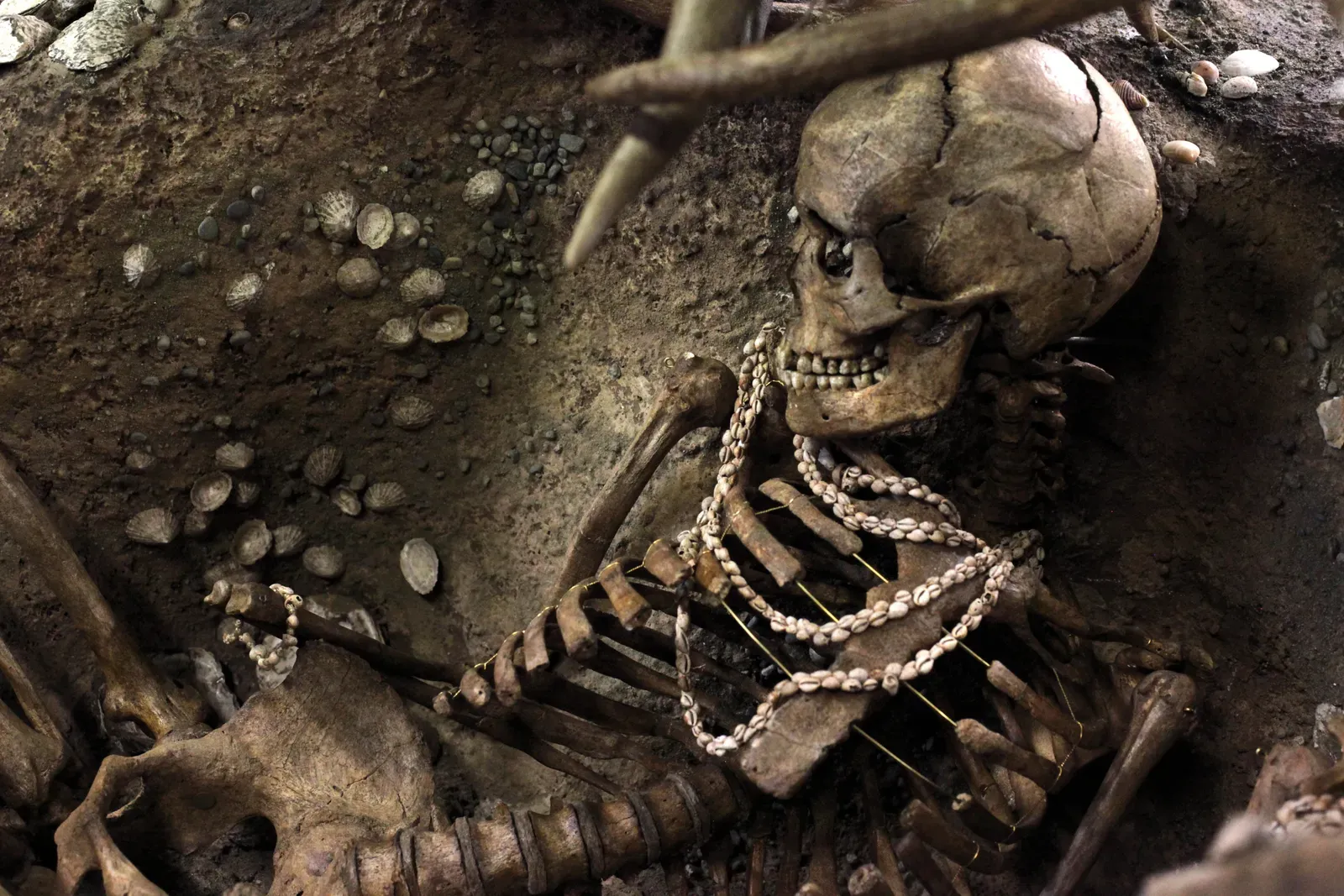
If you had to pick the single richest funeral of the Stone Age, it’s not close. It’s the main male burial at Sungir – and it comes with a twist nobody expected.
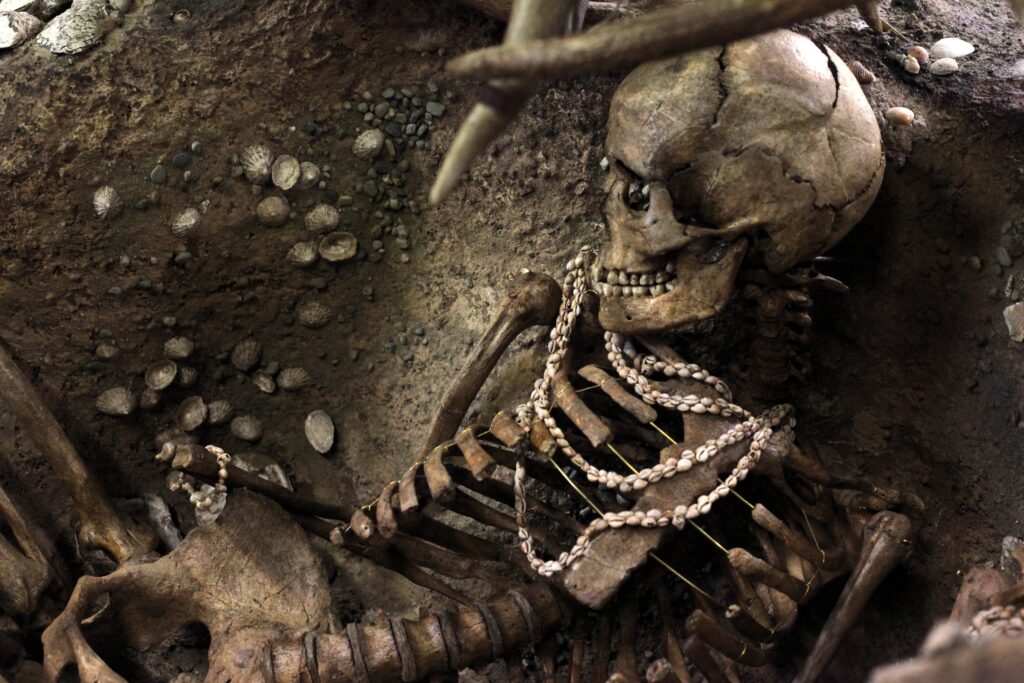
He was placed on his back, head and upper thorax extensively covered in ochre, with roughly 3,000 mammoth ivory beads scattered across the skeleton – intact strings still surviving around the skull. The man was 55 to 57 years old, probably the leader of the tribe, with a surprisingly powerful physique: at least 178 cm tall and wider in the shoulders than a modern man.
There seems to be little rhyme or reason to the variability in burial customs.
Researchers studying Upper Paleolithic mortuary practices
Here’s where it gets genuinely strange: bioarchaeological analysis suggests he may have died suddenly from a neck incision, a fact that only deepens the mystery of why he was honored with such an elaborate burial. A possible violent, sudden death – and the community’s response was to bury him with more wealth than almost any other Ice Age human ever recovered. Was it grief? Guilt? A funeral for a martyred leader, or a sacrifice dressed up as an honor? Every explanation is plausible. None of them are provable. And that’s exactly why this single grave remains the most argued-over burial in all of prehistoric archaeology.
The Bottom Line
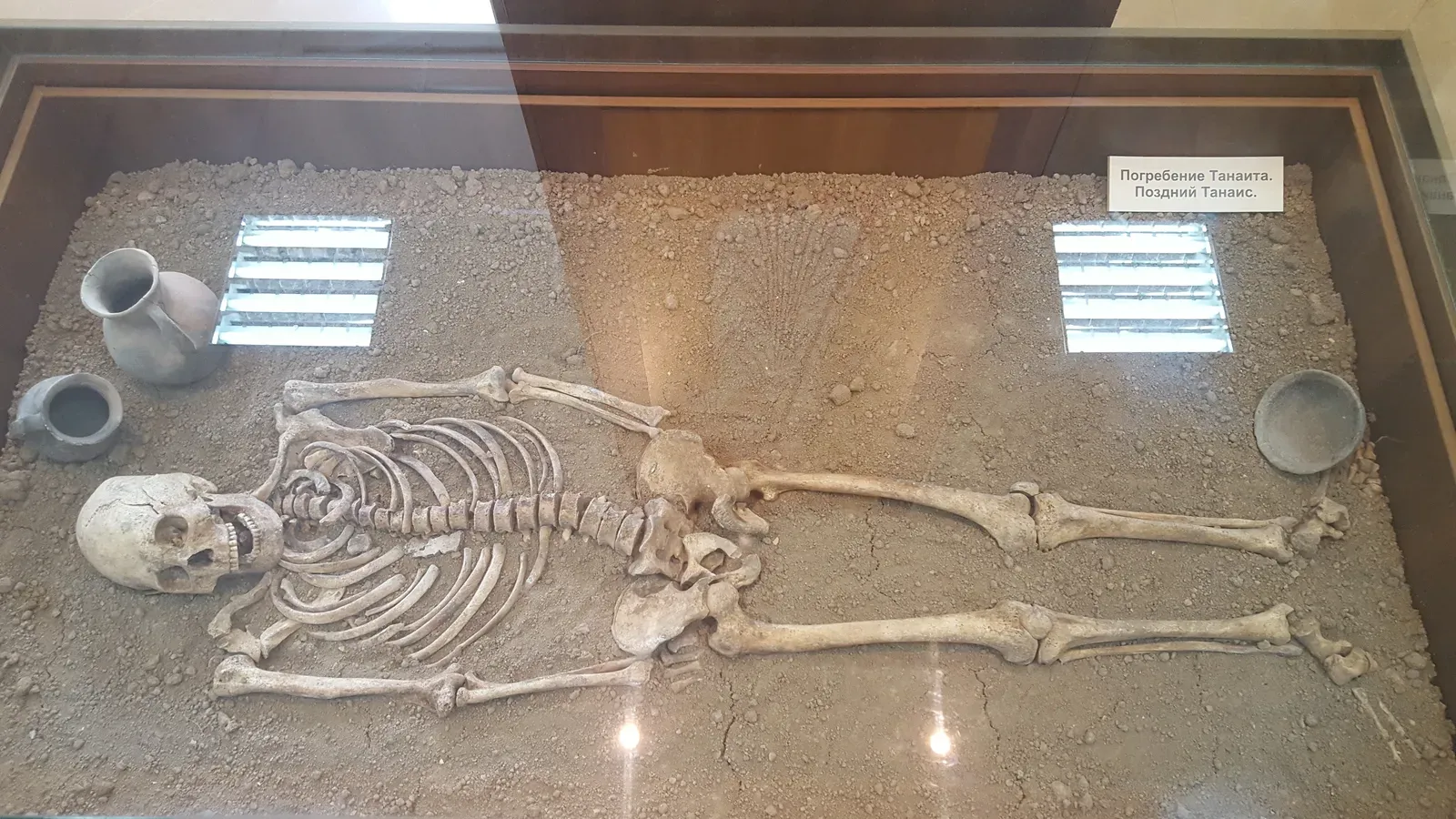
Here’s the uncomfortable truth: after a century of digging, dating, and debating, archaeologists still can’t agree on why prehistoric people buried their dead the way they did.
We’ve found skull-cups, murder victims buried like royalty, children showered in wealth, and mummies made from unborn babies – and every single one resists a tidy explanation. The honest answer is that we’re projecting modern ideas of grief, status, and religion onto minds we can never fully access.
That’s not a failure of archaeology. It’s a reminder that some questions about being human might never get a final answer. Which of these thirteen mysteries do you think we’ll actually solve first? Drop your theory in the comments.