
Most people assume that in the age of satellites and supercomputers, every sound humanity records eventually gets a tidy explanation. They’re wrong. Scattered across NOAA’s hydrophone archives, Cold War sonar logs, and Arctic seafloor sensors sit recordings that have baffled acousticians for decades – some for over thirty years and counting.
These aren’t grainy internet legends passed around in forum threads. They’re documented, timestamped, government-monitored anomalies that still show up in scientific databases labeled, in one form or another, “unresolved.” Here’s what oceanographers, Navy analysts, and hydroacoustic researchers actually say about the sounds the deep sea refuses to explain – starting with the one that doesn’t even come from the ocean floor.
#13 – Skyquakes: The Booms With No Storm
Coastal communities have reported an eerie phenomenon for two centuries: thunder-like booms rolling in from open water on perfectly clear, cloudless days. No storm front. No fireworks display. Just a deep, chest-rattling boom that sends people running to their windows.
Skyquakes have been heard for roughly 200 years, usually near bodies of water – the Ganges in India, the East Coast and inland Finger Lakes of the U.S., the North Sea, and coastlines in Australia, Japan, and Italy. Researchers have floated everything from meteor fragmentation to undersea gas releases to distant military testing, but no single mechanism accounts for all documented cases across such wildly different regions. What makes skyquakes so stubbornly unsolvable is their inconsistency – they don’t cluster around known fault lines or shipping lanes, and they almost never leave physical evidence behind.
#12 – The Hum: A Drone Only a Sliver of People Can Hear
Imagine hearing a low, relentless drone every single night, one that keeps you awake for years, while your neighbor swears the room is silent. That’s the reality for a small slice of the population caught in the grip of what researchers simply call “The Hum.”
Fast Facts
- Reported in scattered locations worldwide for roughly 60 years
- Only a small fraction of residents in affected areas can actually hear it
- Standard microphones often fail to register it at all
- Leading theories range from industrial machinery to seismic microtremors to oceanic resonance
This strange sound has been disturbing residents in scattered locations around the world for the last 60 years, and researchers still can’t agree on a definitive origin. Some theories point to industrial machinery, others to natural seismic microtremors traveling up from offshore fault activity, and a smaller camp suspects a form of low-frequency oceanic resonance bleeding into coastal towns. The maddening part is that standard microphones often can’t even register it, while the people who do hear it describe it as physically oppressive. Without a consistent signature, acousticians have never pinned it to one cause – biological, geological, or man-made.
#11 – The Deep-Ocean Hum: A Sound That Breathes With the Tide
Deep beneath the surface, the ocean itself seems to hum on a schedule – and that schedule is the eeriest part. Hydrophone networks have picked up a persistent, low-frequency murmur that swells specifically at dawn and dusk, a pattern far too precise to be random background noise.
Some researchers link it to synchronized biological choruses – fish and invertebrates vocalizing en masse during light transitions – while others aren’t convinced that fully explains its scale. It’s been informally described as tied to massive fish migrations, or, half-jokingly, as the planet’s own heartbeat, which tells you how far apart the leading theories really sit. No expedition has ever isolated a single confirmed source strong enough to explain the entire signal. The rhythm is consistent enough that scientists can predict when it will swell, yet its origin remains frustratingly out of reach.
#10 – The Quacker: The Cold War Sound That Terrified Submariners
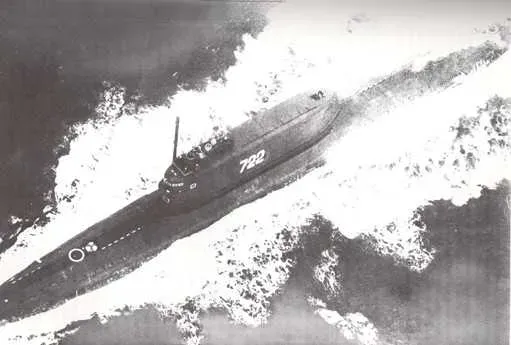
During the height of the Cold War, Soviet submarine crews reported hearing a bizarre, repetitive quacking noise bleeding through their own hulls – and it unsettled them enough to file classified reports up the chain of command.
Decades later, the sound is still filed as unresolved. Theories ranged wildly: an unknown marine animal, deliberate sonar countermeasures from a rival navy, or even early acoustic decoys designed to spook enemy crews. The fact that a military superpower couldn’t identify a sound coming through its own submarine hulls tells you how genuinely strange this one is. Some archives group it loosely with other whale-adjacent noises, but no biologist has ever matched it conclusively to a known species, and no declassified document confirms a mechanical origin either. It remains one of the few Cold War acoustic mysteries never officially closed.
#9 – The Bio-Duck: “Solved,” Yet Somehow Still Not
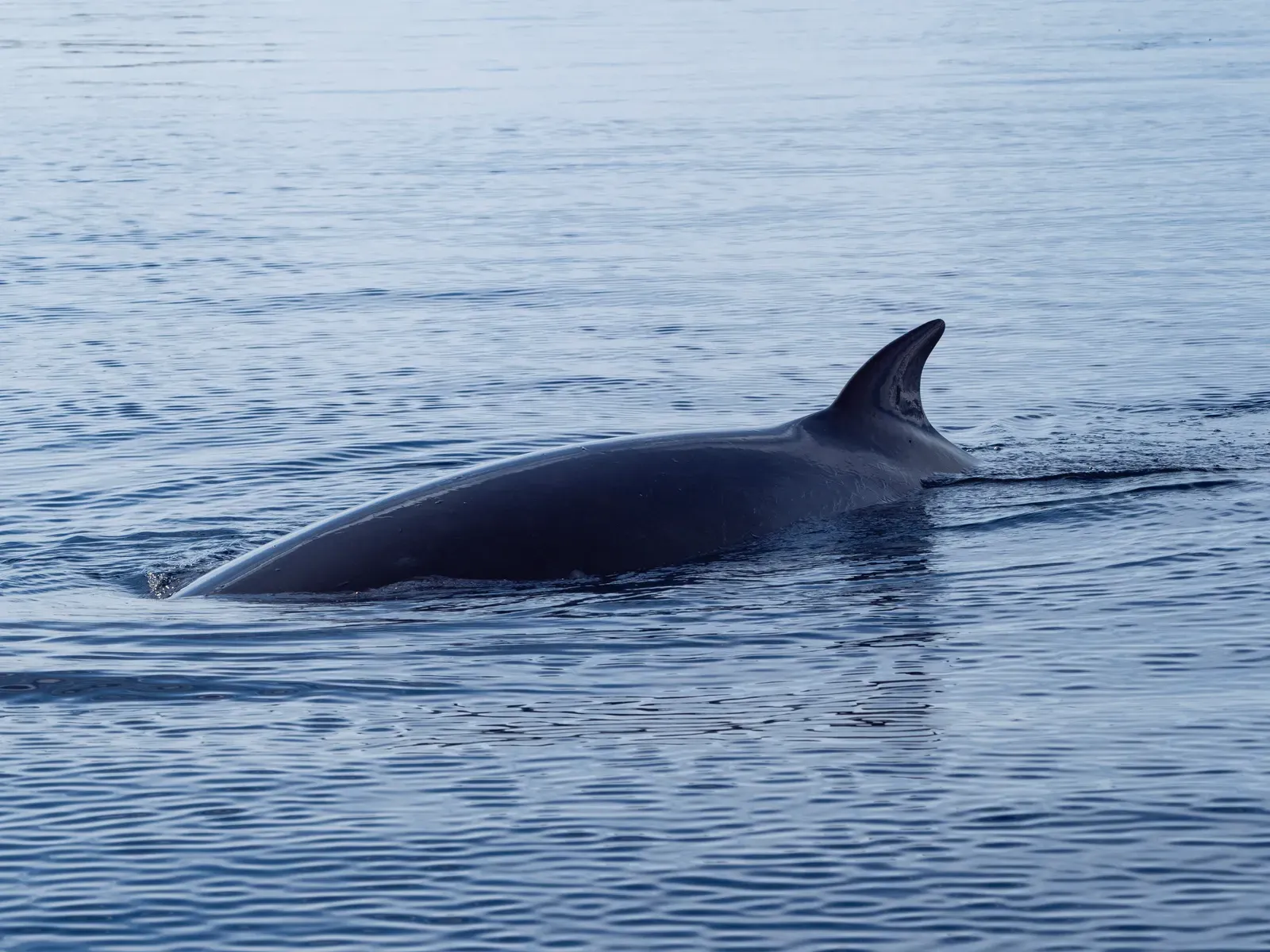
For over fifty years, submarine crews and researchers in the Southern Ocean heard a bizarre, rhythmic quacking sound nobody could trace to any animal, ship, or machine. It became something of a running joke among Antarctic researchers – until it wasn’t.
First reported by submarine crews in the 1960s, the “Bio-duck” was finally, loosely linked to minke whales in 2014 after researchers analyzed data from multi-sensor acoustic recording tags that captured intense bio-duck sounds alongside singular downsweeps attributed to Antarctic minke whales. Case closed, right? Not quite. Many researchers still argue that not every recorded bio-duck instance fits the minke-whale explanation, since the sound has turned up in locations and patterns that don’t match any tagged individual. That leaves open the uncomfortable possibility that another, unidentified source is still hiding in the depths, hiding in plain sight behind a tidy answer.
#8 – The 52-Hertz Whale: A Voice With No Matching Species
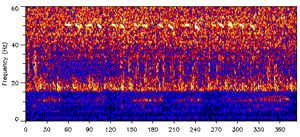
Since the 1980s, a single, haunting whale-like call has echoed through the North Pacific at a frequency far too high for any blue or fin whale to produce. Scientists nicknamed it the loneliest whale in the world, and the name stuck for a reason.
Worth Knowing
- Call frequency sits near 52 Hz, well above typical blue or fin whale vocalizations
- Tracked across the North Pacific since the 1980s
- Nicknamed “the loneliest whale in the world” for its unmatched call
- Never once visually confirmed despite decades of migratory tracking
The call, centered near 52 Hz, has been tracked for years without anyone definitively identifying the animal producing it. The best guess is an individual with unusual vocal characteristics – not a new species – but that “likely” is doing a lot of heavy lifting in a supposedly scientific explanation. Nobody has ever visually confirmed the specific whale making this call, and theories still range from a lone hybrid blue-fin whale to a normal whale with a rare vocal deformity. Whatever it is, it has never once been matched to a physical sighting despite decades of tracking its migratory pattern across the Pacific.
#7 – The Ping: Canada’s Arctic Seafloor Mystery
In the summer of 2016, hunters in Nunavut started reporting a sound so unsettling that it allegedly drove wildlife out of an entire migratory channel almost overnight.
For months, hunters dealt with a pinging sound coming from deep beneath the Arctic Ocean, audible through the hulls of their boats and most prevalent in a narrow passage called Fury and Hecla Strait. The Canadian military dispatched an aircraft equipped with acoustic sensors, and the results only deepened the mystery – a 1.5-hour acoustic search turned up no anomalies and no surface or subsurface contacts of any kind. Theories ranged from sonar mining surveys to environmental activism to echolocating submarines, yet none were ever confirmed. Some scientists later suggested shifting sea ice, but even that explanation was never verified.
#6 – The Train: A Sound That Rolls Through the Ross Sea
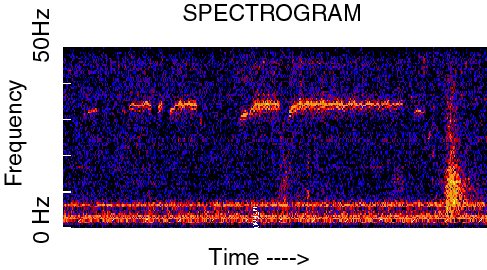
Recorded on March 4, 1997, in the frigid waters of the Ross Sea, “The Train” earned its nickname because it genuinely sounds like a locomotive rumbling across open ocean – a sound with absolutely no business being underwater.
The leading theory is an iceberg keel grinding along the seafloor, but that “likely” is the key word – nobody has ever directly observed an iceberg producing this exact acoustic signature. The leading explanation is inferred entirely from the sound’s characteristics, not from a confirmed physical event. NOAA’s own underwater sound catalog notes that the “Slow Down” and “Sea Train” recordings were similarly attributed to grounded icebergs, grouping this sound with a family of noises that all share the same problem: a plausible theory standing in for hard proof. Until someone catches an iceberg grinding the seafloor on camera mid-sound, the file stays technically open.
#5 – Slow Down: The Seven-Minute Groan Nobody Can Fully Pin Down
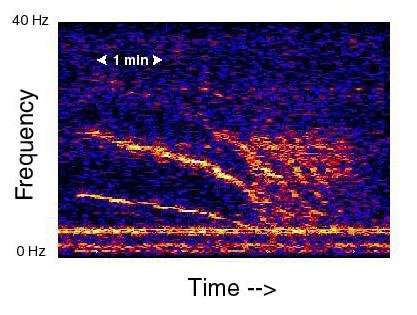
On May 19, 1997, hydrophones across the Pacific picked up a haunting, descending groan that lasted an unusually long time for an oceanic anomaly – long enough that researchers had time to genuinely wonder what they were listening to.
Quick Compare
- Slow Down (1997): ~7-minute descending groan, iceberg theory, has resurfaced periodically ever since
- The Train (1997): locomotive-like rumble tied to the same “grounded iceberg” family of NOAA recordings
- Julia (1999): ~15-second signal loud enough to hit an entire hydrophone array at once, also credited to iceberg grounding
Officially credited to an iceberg running aground, though some insist it could be a giant squid, the sound gradually decreases in frequency over roughly seven minutes, hence the name. Seven minutes is an extraordinarily long duration for a single acoustic event, and it’s part of why the squid theory refuses to die among some researchers, despite having zero physical evidence behind it. The sound has resurfaced periodically since its initial detection, which only deepens the confusion – if it really were a one-time iceberg grounding, why does a nearly identical signature keep reappearing years apart?
#4 – Julia: Loud Enough for an Entire Ocean to Hear
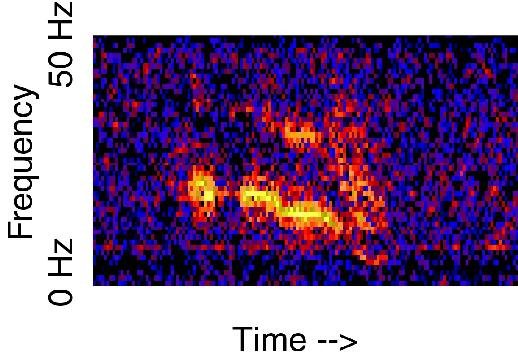
Julia might be the most theatrically named mystery sound on this list, and it earned every bit of the drama. Recorded on March 1, 1999, and lasting roughly 15 seconds, it was loud enough to be picked up by the entire Equatorial Pacific Ocean hydrophone array at once.
Fifteen seconds sounds short, but consider the scale: an entire ocean-wide hydrophone network picked up the same signal simultaneously, a level of acoustic reach almost unheard of for a single event. Icequakes – massive icebergs cracking off glaciers or scraping the ocean floor – can generate sounds of enormous amplitude that travel vast distances, and the scientific community has largely accepted iceberg grounding as Julia’s source. “Largely accepted” is not the same as proven, though, and no research vessel has ever located the specific iceberg responsible.
#3 – The Whistle: Heard Once, Explained Never
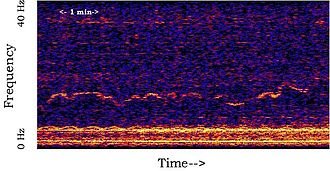
Unlike its noisier cousins, “The Whistle” was captured by exactly one instrument, one time, and has never been detected again in nearly three decades. No repeat performance. No second data point. Just one strange recording that scientists still can’t let go of.
Recorded on July 7, 1997, only a single hydrophone picked it up, and its location is unknown, which has made it nearly impossible to speculate on the source with any confidence. Locating an event’s origin normally requires at least three recording instruments – since the Whistle only hit the NW hydrophone, it could have traveled a great distance from a source volcano before detection. NOAA’s own acoustics team couldn’t rule out a volcanic origin, but they also couldn’t confirm one. A retired NOAA researcher went further, noting the sound’s origin was likely not man-made – no submarine, no bomb – and didn’t match familiar geological events like volcanoes or earthquakes either, which leaves almost nothing left on the table.
#2 – Upsweep: The 33-Year Ambulance Wail Nobody Has Silenced
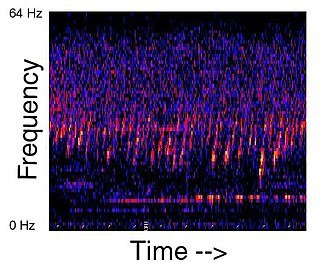
Since the very first day NOAA turned on its Pacific hydrophone network, one sound has never stopped playing – and nobody has ever explained why. It’s been humming away in the background of ocean science since before some of today’s researchers were born.
At a Glance
- First recorded when PMEL began SOSUS monitoring in August 1991
- Loud enough to be heard across the entire Pacific basin
- Peaks seasonally each spring and fall for reasons still unclear
- Traced roughly to inferred volcanic seismicity near 54°S, 140°W
- Still unconfirmed after more than three decades of monitoring
Upsweep consists of a long train of narrow-band, upsweeping sounds, each lasting several seconds, present since PMEL began recording SOSUS in August 1991. Its source level is high enough to be heard throughout the entire Pacific basin, it appears seasonally with peaks in spring and fall for unclear reasons, and it’s roughly located near inferred volcanic seismicity at 54°S, 140°W. A sound loud enough to cross an entire ocean basin, monitored continuously for more than three decades, and scientists still can’t name its source. Researchers describe it as sounding like an ambulance wail or an unearthly creature’s howl. Volcanic activity remains the best guess, but “best guess” is exactly what it’s stayed since 1991.
#1 – Bloop: The Sound That Started It All
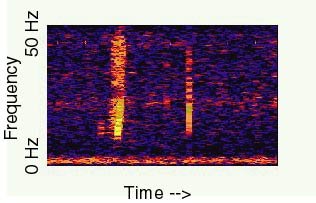
No unexplained ocean recording has generated more theories, more Cthulhu jokes, and more genuine scientific debate than Bloop. It’s the reason most people even know this genre of mystery exists.
Detected by NOAA in 1997 using its Equatorial Pacific Ocean autonomous hydrophone array, it was one of the loudest sounds ever recorded off the southern coast of South America, picked up by two hydrophones nearly 3,000 miles apart. Two sensors, thousands of miles apart, both caught the same sound – a scale of amplitude that briefly had marine biologists entertaining the idea of an undiscovered giant creature. NOAA eventually leaned toward icequakes, noting that the frequency and duration were consistent with large-scale iceberg cracking events. Yet even NOAA’s own researchers concede the precise origin still remains a topic of debate and fascination among researchers. Nearly thirty years later, it’s still the gold standard of ocean mysteries nobody has fully closed the book on.
The Bottom Line
Here’s the uncomfortable truth: humanity has mapped less than five percent of the ocean floor, and every sound on this list is a symptom of that gap. Icebergs get blamed for sounds nobody ever actually watched an iceberg make. A “solved” mystery like Bio-Duck still has loose threads that don’t fit the tidy explanation. Upsweep has been groaning across the Pacific for over three decades without a single confirmed cause.
We don’t think the ocean is hiding a monster – we think it’s hiding better instruments than we’ve built to listen with. Every “likely” and “probably” in this list is a scientist being honest about the limits of what hydrophones alone can prove. Until someone drops a camera on the exact spot at the exact second one of these sounds fires, the deep sea keeps the upper hand. Which one of these do you think deserves a real expedition before it’s forgotten? Drop your theory in the comments.