
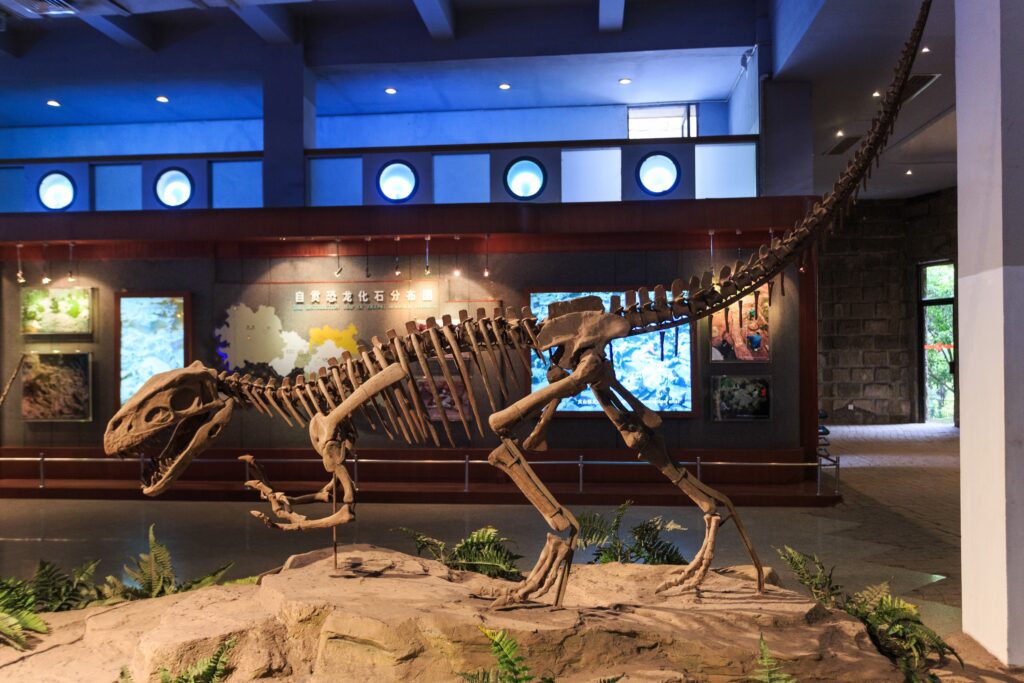
Most people assume dinosaur exhibits are frozen in time – bones don’t change, so why would the information posted next to them? That assumption is exactly backwards, and it’s a little embarrassing for the institutions involved. Entire signs, poses, and even skulls have been swapped out quietly over the decades, because admitting a 70-year-old mistake tends to draw more criticism than just fixing it without fanfare.
Paleontologists have known the real story for years. What follows is what the fossil record actually says once you strip away the outdated plaques still hanging in half the natural history museums you visited as a kid – starting with a pose almost every dinosaur diorama got wrong for a century.
#13 – The “Tripod” Tail-Dragging Pose Every Old Diorama Got Wrong
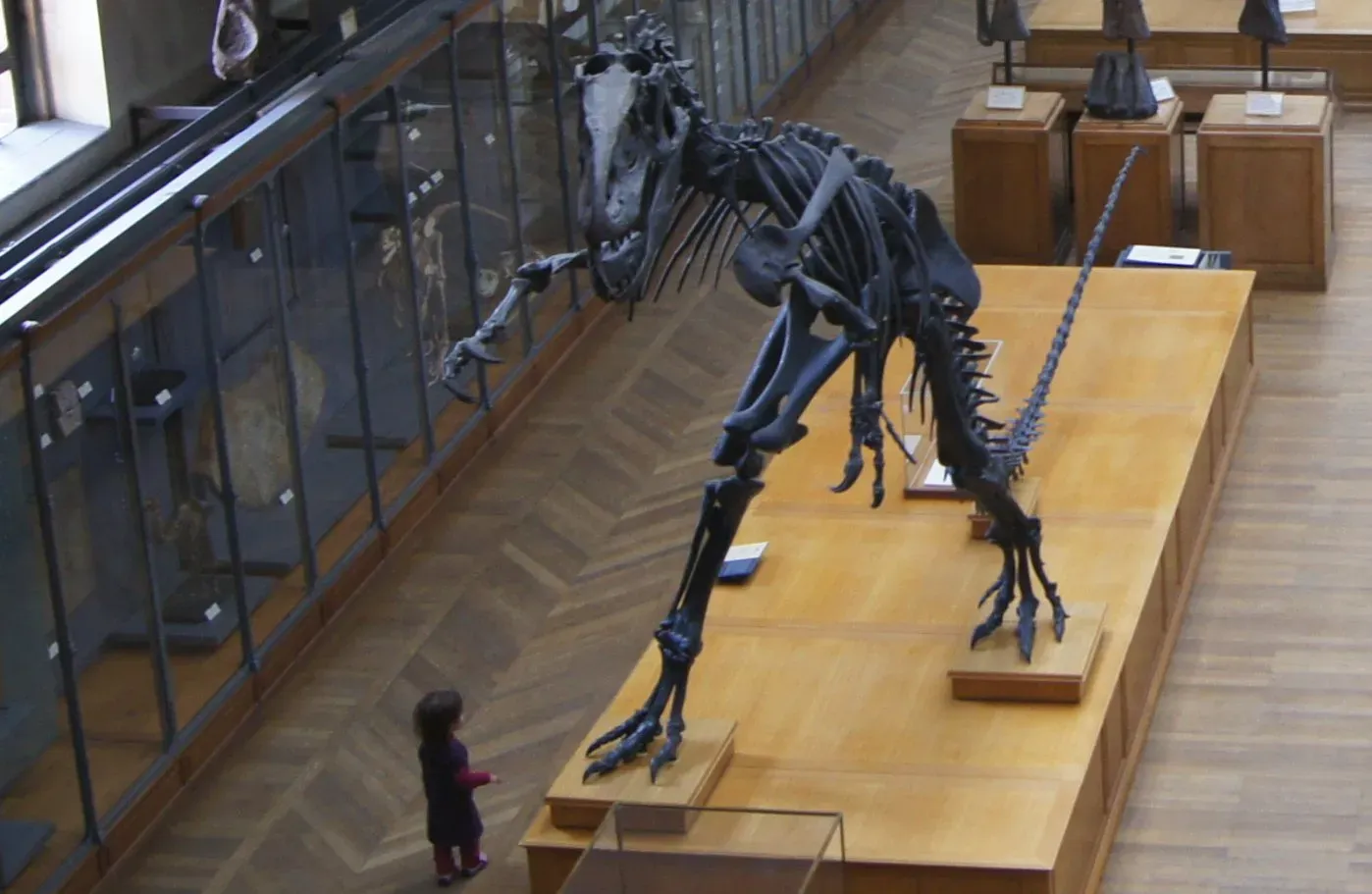
For nearly a century, museums mounted their sauropods and theropods standing upright like a kangaroo, tail scraping the ground for balance. It was dramatic, it looked stable, and almost nobody questioned it.
That pose was never based on evidence – it was based on an old assumption nobody bothered to test. The problem is simple: the footprint evidence doesn’t back it up. Researchers have catalogued thousands of dinosaur trackways and found almost no tail-drag marks among them, which biomechanical studies say makes sense – a heavy dragging tail would have been more hindrance than help. Some of the biggest museums in the world still haven’t fixed it. Most of the mounts at Yale’s Peabody Museum are still static tail-draggers, and several famous skeletons at the American Museum of Natural History remain out of date simply because re-posing a multi-ton fossil skeleton is dangerous and expensive. Plenty of “corrected” science is still standing on outdated legs.
#12 – Apatosaurus Wore Someone Else’s Head for 70+ Years
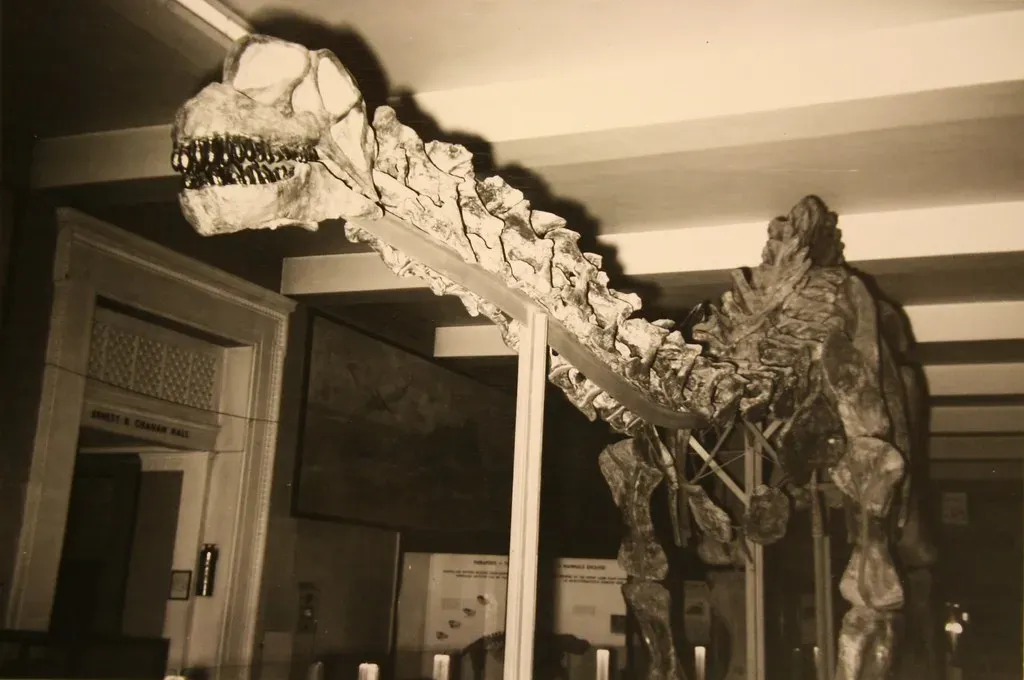
Picture walking into a world-famous museum and staring at a skeleton that’s been silently wearing the wrong skull for seven decades. Nobody tells you that at the gift shop.
That’s not an exaggeration. The Carnegie Museum in Pittsburgh topped its Apatosaurus skeleton with the wrong head back in 1932, and nobody rushed to correct it. The original discoverer never even found a skull attached to the body, so paleontologist O.C. Marsh grabbed a skull from a different site entirely – one now known to belong to Camarasaurus – and mounted it as if it belonged. Museums across the country copied the error because it simply looked convincing. The fix took decades of quiet internal debate before anyone made it public: two Carnegie researchers re-examined the evidence in the 1970s, traced the real skull to a Utah quarry find from 1910, and finally swapped it into place in 1979. That’s an entire generation of museum-goers who grew up staring at a fictional face.
Fast Facts
- Wrong skull mounted: 1932, Carnegie Museum, Pittsburgh
- Correct skull traced back to: a Utah quarry find from 1910
- Error publicly corrected: 1979, decades after researchers first spotted it
- Original source of the mistake: a skull actually belonging to Camarasaurus
#11 – “Brontosaurus” Was Declared Fake, Then Un-Fake
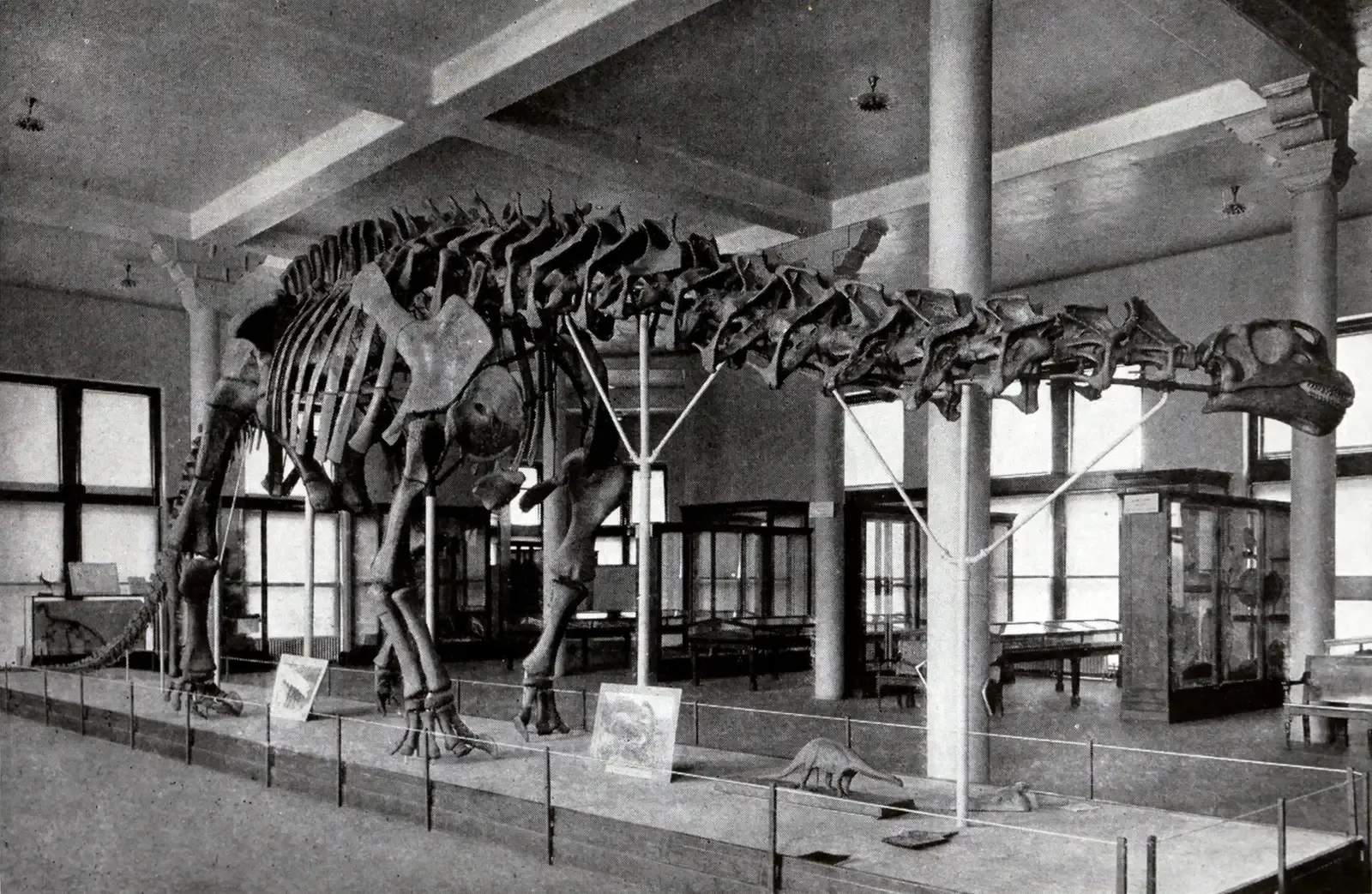
Here’s the part nobody explains at the gift shop: the dinosaur name you grew up loving was officially erased from science, then brought back from the dead.
For most of the 20th century, paleontologists treated “Brontosaurus” as a mistaken duplicate of Apatosaurus – the same animal, accidentally named twice. The fossils looked similar enough that scientists folded one into the other, museum labels quietly dropped the name, and textbooks stopped teaching it. It became a punchline about sloppy 19th-century science. Then a detailed 2015 skeletal analysis flipped the script: the neck structure and vertebrae turned out to be different enough that, after more than a century of exile, Brontosaurus is once again considered a scientifically valid genus. Most visitors have no idea the name went from real, to fake, to real again – three separate “final answers” in under 150 years.
#10 – The “All Dinosaurs Were Scaly Reptiles” Placard
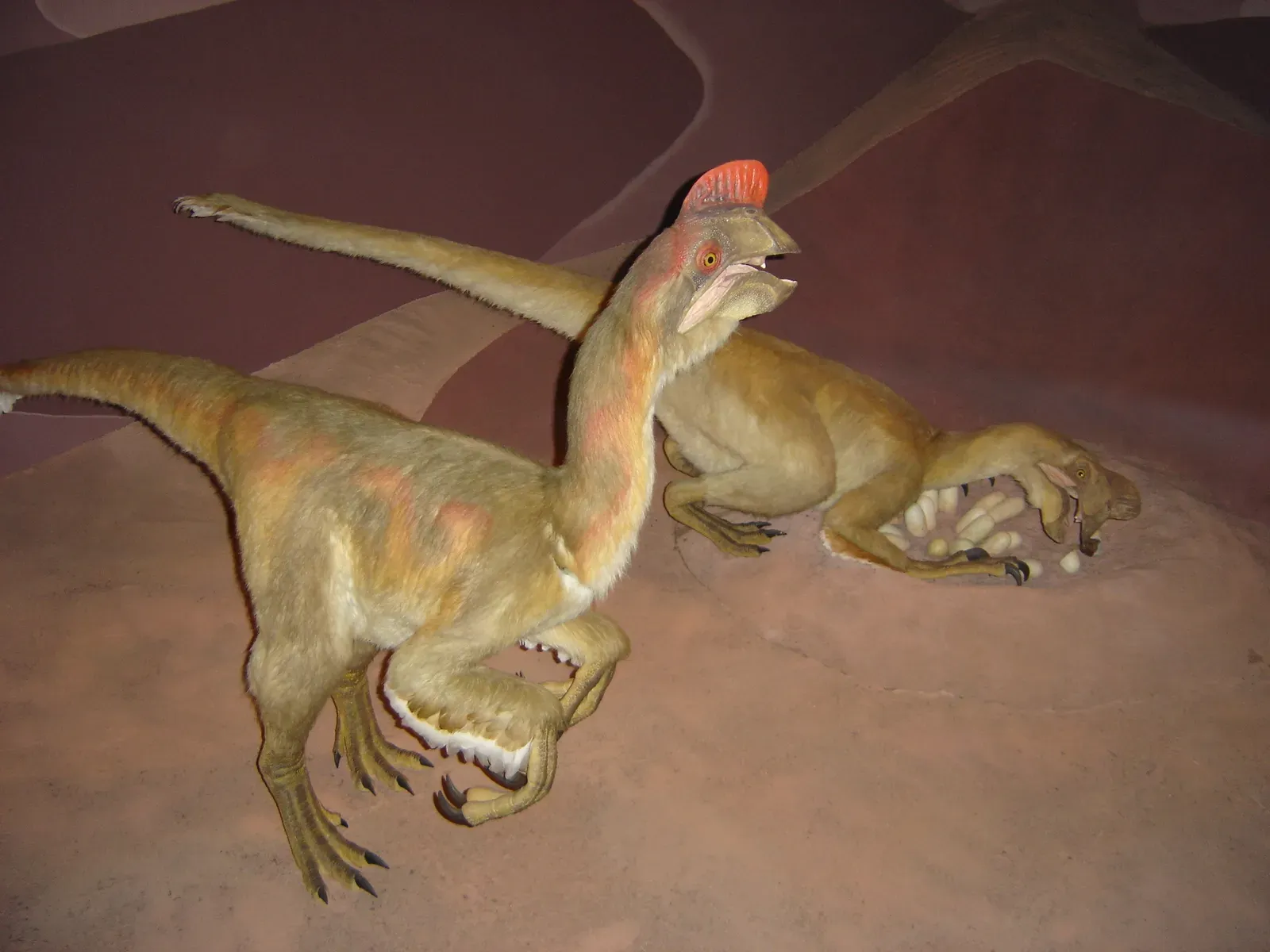
If you still picture dinosaurs as giant scaly lizards, you’re picturing a museum exhibit that’s decades out of date – and plenty of old dioramas never got the memo.
Fossil evidence from multiple continents now shows filament structures, essentially proto-feathers, on numerous theropod species and even some plant-eaters. This isn’t a fringe theory still being argued over coffee; it’s a mainstream correction the public simply hasn’t caught up with. “I think popular culture usually takes a long time to catch up to current scientific thinking,” one researcher explains. “Even when updated images do arrive, the outdated images still persist and spread alongside the newer ones.” That’s exactly what’s happening on museum walls right now – old scaly-skin murals are still hanging a few rooms away from feathered reconstructions that flatly contradict them.
#9 – Cold-Blooded and Sluggish? Not So Fast
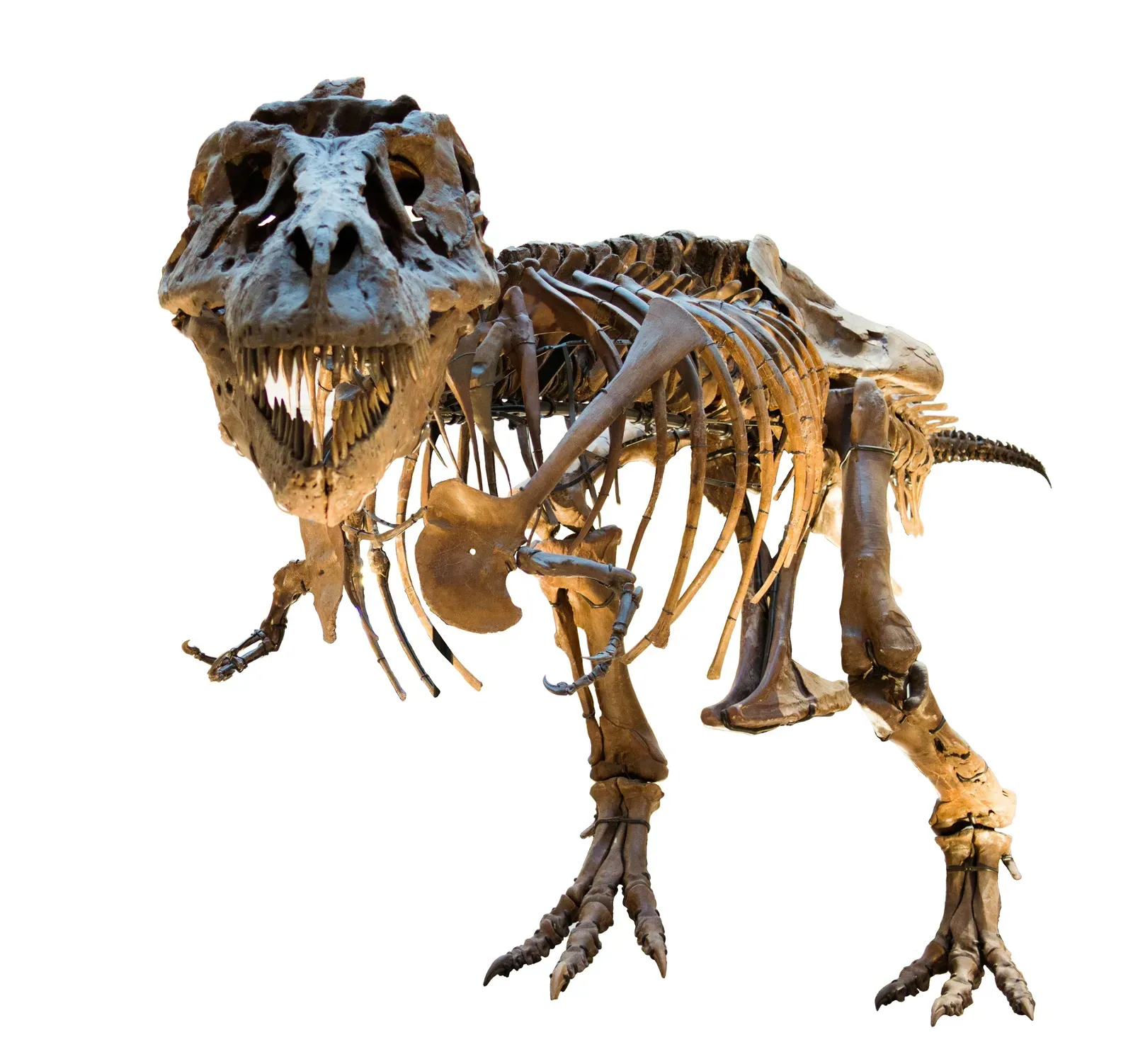
The “lumbering, slow-witted reptile” description on old museum cards is one of the most quietly abandoned ideas in the entire field.
For most of the 20th century, dinosaurs were treated as biologically similar to modern crocodiles – cold-blooded, sluggish, dependent on the sun for energy. It was a convenient framing because it required no complicated metabolic explanation. Then bone microstructure studies revealed growth patterns and blood vessel density more consistent with active, fast-growing animals than sluggish reptiles. Many researchers now argue for some form of elevated metabolism across much of the dinosaur family tree, especially in smaller feathered theropods. Some museums have quietly reworded “cold-blooded” into vaguer terms like “metabolically complex,” rather than pick a side in a debate that’s still evolving.
#8 – Stegosaurus’s Mythical “Second Brain”
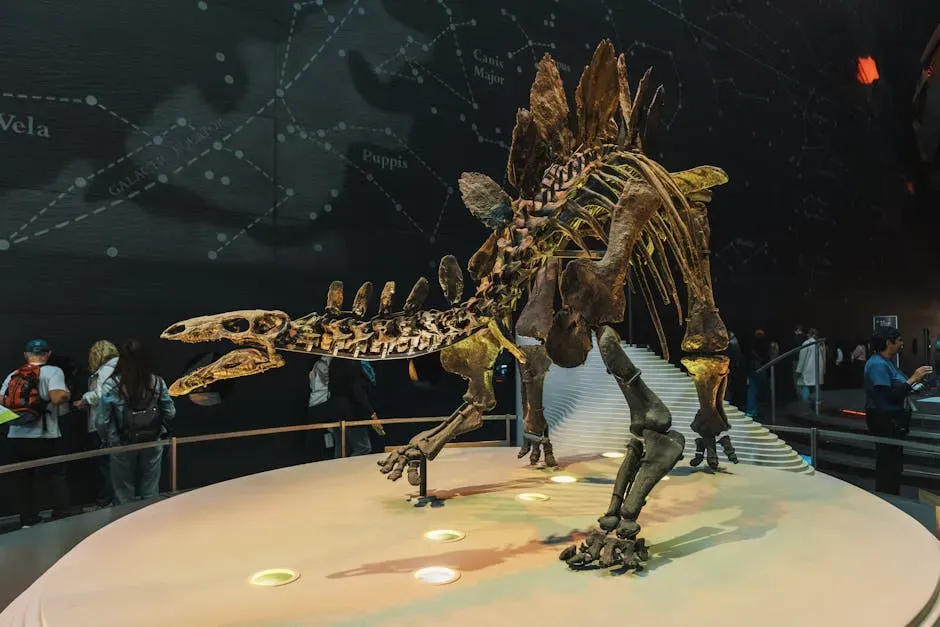
Generations of museum visitors were told Stegosaurus needed a second brain near its hips because its actual brain was too small to run its body. It’s a great story. It’s also almost certainly wrong.
The idea came from a cavity found in the hip region of Stegosaurus fossils, which 19th-century scientists assumed housed a secondary neural cluster to help coordinate the tail and rear legs. Modern anatomists now believe that cavity most likely held a glycogen body – a structure similar to what’s found in birds today, used for energy storage, not thinking. There’s no solid evidence Stegosaurus ever had a functional second brain at all – it was an educated guess repeated so often it hardened into “fact.” Most museums have simply removed the phrase from their signage, quietly retiring one of paleontology’s most famous myths without ever explaining why it disappeared.
At a Glance
- The hip cavity itself is real – it genuinely exists in Stegosaurus fossils
- 19th-century guess: a second brain to help control the tail and hind legs
- Modern explanation: likely a glycogen body, similar to structures found in birds
- Actual function: energy storage, not independent thought
#7 – Iguanodon’s Nose Spike That Was Actually a Thumb
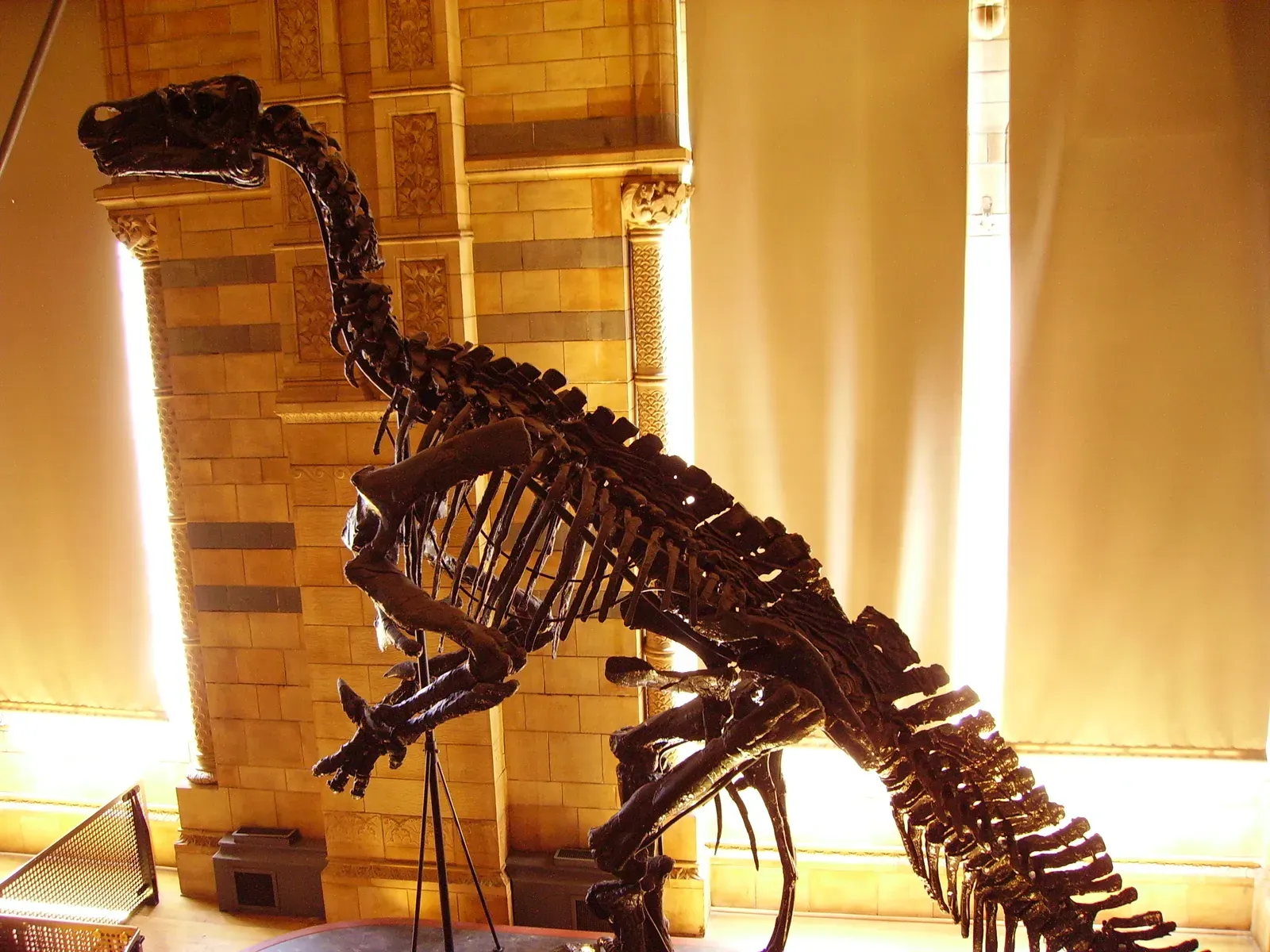
One of the earliest dinosaurs ever named was reconstructed with its most distinctive feature stuck on completely the wrong body part.
Early 19th-century reconstructions of Iguanodon placed a large conical spike directly on its nose, giving it a rhino-like look. It made for a dramatic sculpture, and it appeared in some of the very first life-sized dinosaur models ever built for the public. The problem: nobody had a complete skeleton yet, so the placement was pure guesswork. Later, more complete fossils revealed the truth – that “horn” was actually a thumb spike, likely used for defense or foraging, sitting at the end of the hand instead of the face. The correction took decades to filter down to public displays, and some of the original Victorian-era nose-horned sculptures still exist today, kept on purpose as “what we used to believe” rather than removed outright.
#6 – T. Rex the “Pure Scavenger” Theory
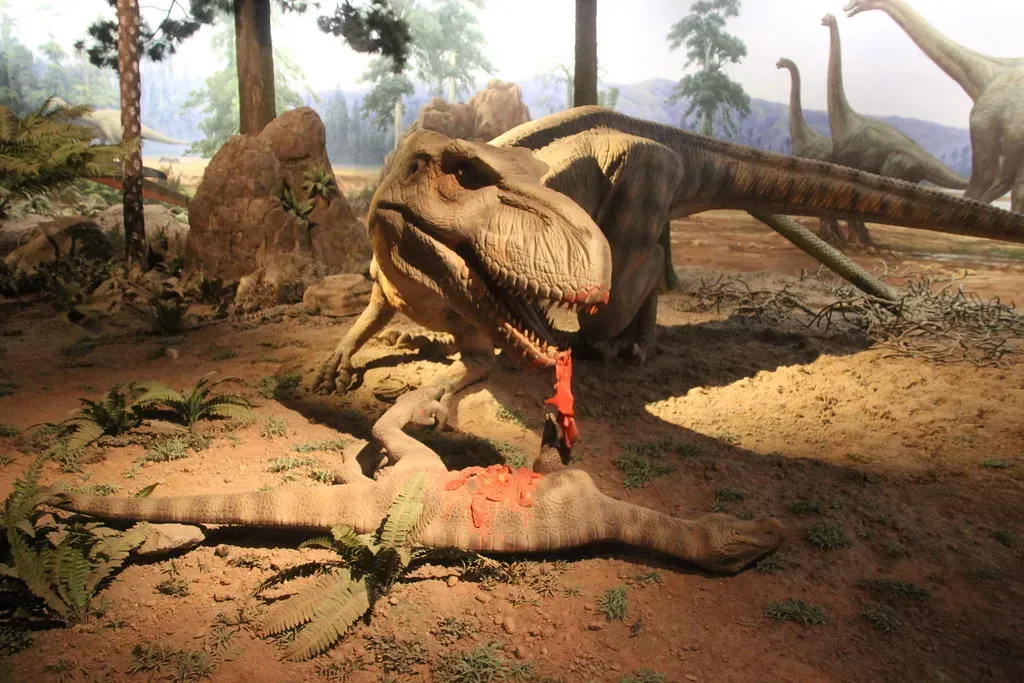
For a stretch of time, some scientists argued Tyrannosaurus rex wasn’t a hunter at all – just an oversized scavenger too clumsy to catch anything.
The theory gained traction because T. rex had proportionally tiny arms, a heavy build, and a skull shape some researchers linked to sniffing out carrion rather than chasing prey. It made headlines and briefly softened how museums described the animal’s lifestyle. That theory has since been walked back hard. Bite-mark evidence embedded in the healed bones of other dinosaurs shows active attacks, not just scavenging on carcasses, and biomechanical studies suggest T. rex had a functional running gait. Most serious researchers now treat “pure scavenger” as an overcorrection – the honest answer is that T. rex almost certainly did both, hunting when it could and scavenging when convenient, exactly like most modern predators.
Quick Compare
- Scavenger theory: pointed to tiny arms and a scent-focused skull to argue T. rex couldn’t run down prey
- Predator evidence: healed bite marks in other dinosaurs’ bones show active, survived attacks
- Biomechanics: studies suggest a functional running gait, not a clumsy shuffle
- Current consensus: T. rex hunted and scavenged, much like predators alive today
#5 – Pterodactyls Labeled as Dinosaurs

Ask a room full of adults to name a dinosaur, and someone will say “Pterodactyl.” That’s a museum labeling failure that’s been quietly corrected for years, but never fully stamped out.
Pterosaurs – the flying reptiles that include Pterodactylus and Pteranodon – are not dinosaurs. They belong to a separate reptile lineage that evolved flight independently, sharing a common ancestor with dinosaurs but branching off long before true dinosaurs existed. Older exhibits routinely displayed them in the same hall under the same broad “dinosaur” branding because the distinction felt too technical for casual visitors. Modern exhibit design has gotten stricter, physically separating pterosaur displays and adding signage that spells out the difference. The confusion was baked in for so long that plenty of gift shop toys and older textbooks still lump pterosaurs in with true dinosaurs, even though paleontologists have insisted on the distinction for well over a century.
#4 – The Triceratops-Torosaurus Mixup
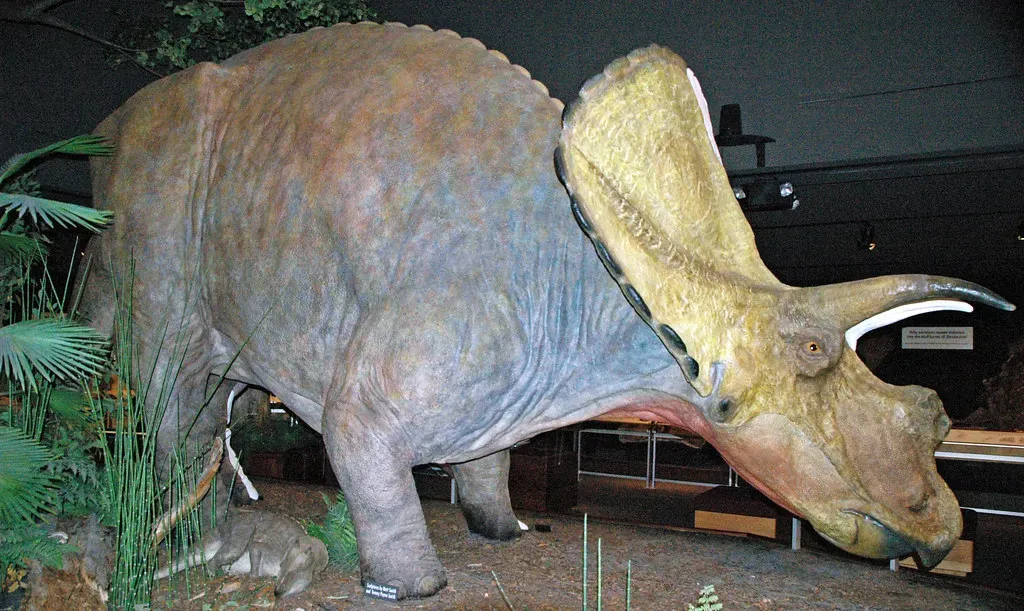
For years, two completely separate dinosaur genera sat in different museum halls, labeled as distinct species – until a controversial theory suggested they were actually the same animal at different life stages.
The idea, sometimes called the “Toromorph hypothesis,” proposed that Torosaurus skulls were simply mature adult versions of Triceratops, with the frill developing new holes and thinning as the animal aged. If true, it would mean one of two famous ceratopsian genera never should have existed as its own category. The debate split the paleontology community and still hasn’t been fully settled – some researchers point to differences that persist even accounting for age. This is exactly the kind of unresolved argument museums quietly avoid putting on placards, because admitting an open controversy is less satisfying to visitors than a clean, confident label. Many displays just keep both names and move on, letting the fight stay buried in academic journals instead of the exhibit floor.
#3 – Dinosaurs Were Never Actually Gray-Green
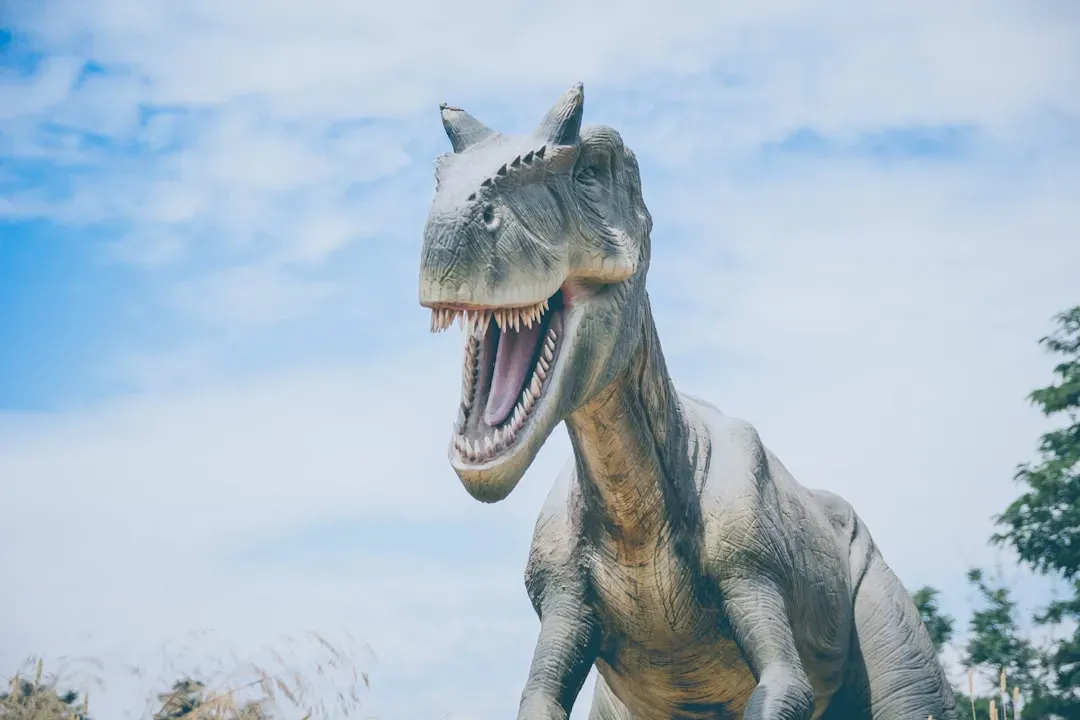
Every dusty mural of drab, monochrome gray-green dinosaurs wandering through a swamp was essentially a guess dressed up as fact.
For most of the 20th century, artists had zero direct evidence of dinosaur coloration, so they defaulted to the colors of modern reptiles – grays, olive greens, dull browns. It sounded reasonable enough that it got repeated across dioramas and textbooks until it hardened into accepted fact rather than an artistic placeholder. That changed once scientists began analyzing fossilized melanosomes, the microscopic pigment-producing structures preserved in exceptionally well-fossilized feathers and skin. These structures revealed real color patterns in certain species, including stripes and countershading far more vivid than the old murals ever suggested. Most classic dinosaur murals were never based on evidence at all – they were artistic convention mistaken for science, and many institutions have quietly retired them rather than admit how much was simply invented.
#2 – The Asteroid-Only Extinction Story
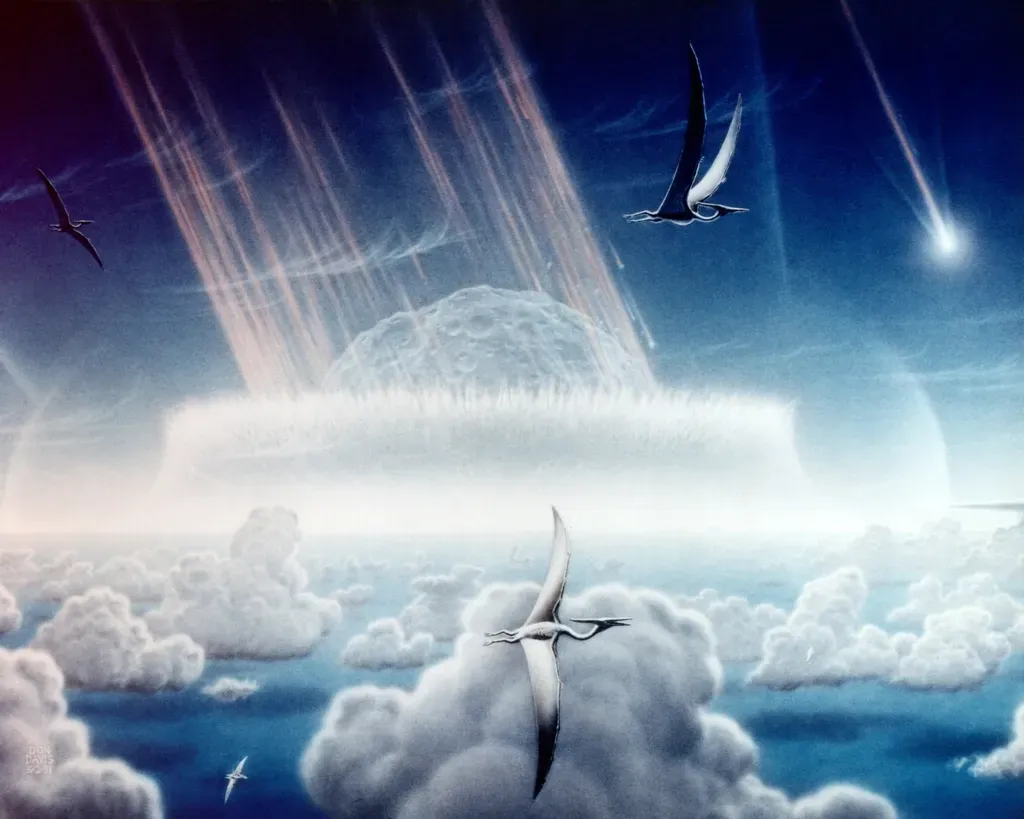
The tidy version everyone learned in school – a single asteroid hit Earth and wiped out the dinosaurs, end of story – is far more complicated than most exhibits let on.
There’s strong evidence for the impact itself. A mass extinction event 65 million years ago is almost certainly tied to a giant asteroid that slammed into Mexico’s Yucatan Peninsula, and it did spell the end for most dinosaur species. But treating that impact as the sole, isolated cause oversimplifies a much messier picture researchers have been piecing together for years. Massive volcanic activity in what’s now India, combined with long-term climate shifts already underway before impact, likely weakened ecosystems long before the asteroid ever hit. Most museums still present the asteroid as the whole story because it’s dramatic and fits on a single placard, quietly sidestepping the harder, multi-cause explanation the evidence actually supports.
Worth Knowing
- Primary trigger: an asteroid impact at Mexico’s Yucatan Peninsula roughly 65 million years ago
- Compounding factor: massive volcanic activity happening in what is now India around the same time
- Underlying stress: long-term climate shifts already in motion before the impact
- Museum shorthand: the single-asteroid version survives because it fits neatly on one placard
#1 – Birds Are Dinosaurs, Not Descendants

This is the fact museums struggle hardest to explain, because it breaks the entire “extinct monster” framing the whole industry is built on.
It’s not that birds evolved from dinosaurs in some distant, separate sense – birds are dinosaurs, technically and taxonomically, still living among us right now. The extinction event 65 million years ago didn’t wipe out every dinosaur lineage – it wiped out every non-avian one.
Today’s birds evolved from dinosaurs, which makes them every bit as much of a dinosaur as T. rex or Triceratops.
Steve Brusatte, paleontologist
That distinction rarely makes it onto exhibit signage in plain language, because it complicates the “dinosaurs went extinct” narrative museums have marketed for over a century. The uncomfortable truth is that dinosaurs never fully disappeared – you can watch one eating from a bird feeder right now. Most institutions mention it in passing, tucked into a corner display, rather than leading with what might be the single most important correction in the entire field.
The Bottom Line
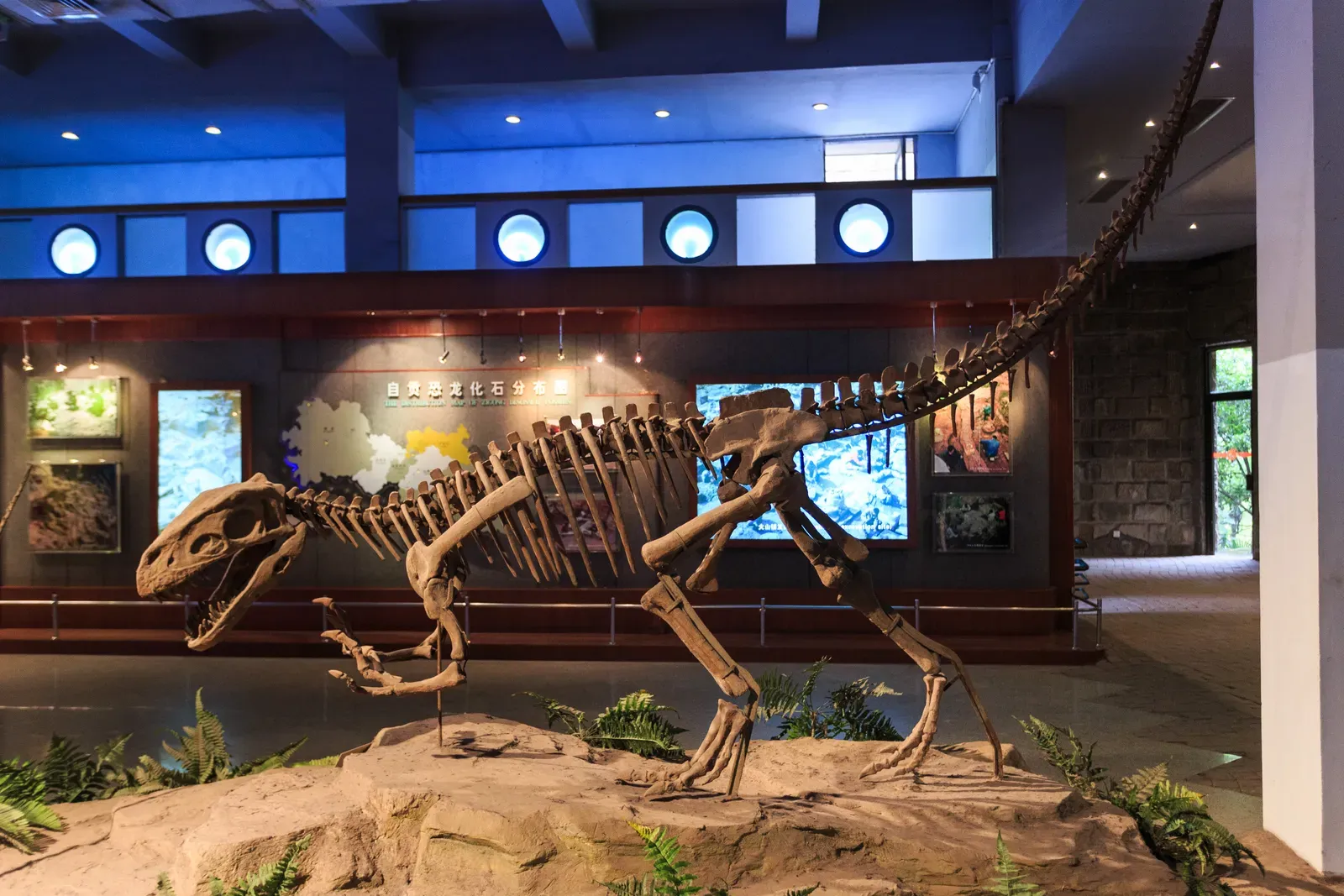
The real story here isn’t that museums lied – it’s that science moves faster than concrete and glass, and nobody wants to pay to fix a hundred-year-old skeleton mount. From a wrong skull sitting on a famous fossil for 70 years to a name that was declared fake and then quietly resurrected, the “settled facts” from your childhood field trip were often best guesses wearing a confident label.
The asteroid story, the gray-green skin, the scavenger-only T. rex – all oversimplified, and all still lingering in plenty of exhibit halls today. Frankly, if a museum hasn’t updated its dinosaur hall in the last decade, assume at least half the signage is wrong. Which one of these surprised you the most? Drop it in the comments.