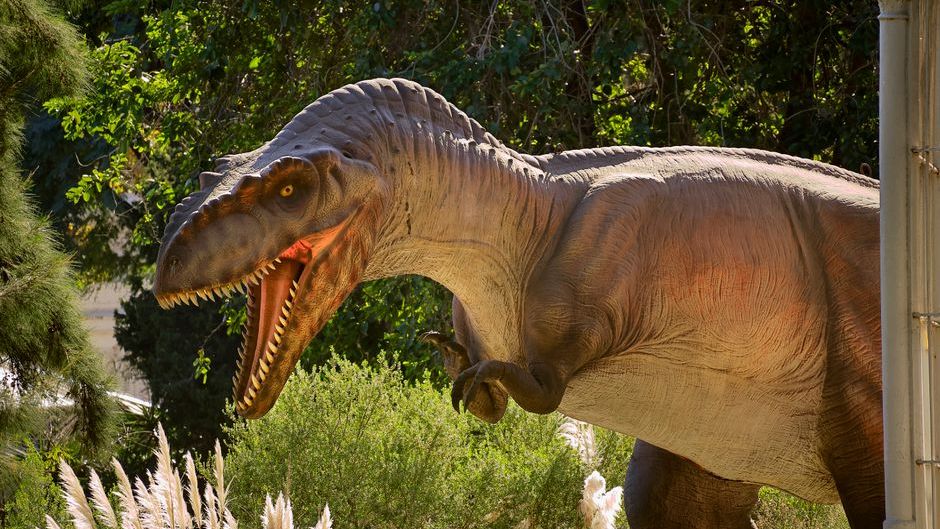
T. rex gets all the posters, all the movies, and all the credit – but paleontologists will quietly tell you it wasn’t even close to the most terrifying thing walking the Mesozoic. The fossil record is packed with predators that hunted smarter, hit harder in specific ways, and evolved weapons so specialized that a T. rex would have been genuinely outmatched in their environments. The famous tyrant lizard was basically a celebrity – overhyped, overexposed, and overshadowing a murderers’ row of creatures that deserve far more fear.
Some of what’s on this list will genuinely surprise you. We’re talking potential venom, confirmed cannibalism, pack ambush tactics, and hand claws the size of kitchen knives. The further you scroll, the stranger and more unsettling it gets – and the last few entries will make you rethink everything you thought you knew about prehistoric terror.
#13 – Maip macrothorax: The Patagonian Shadow
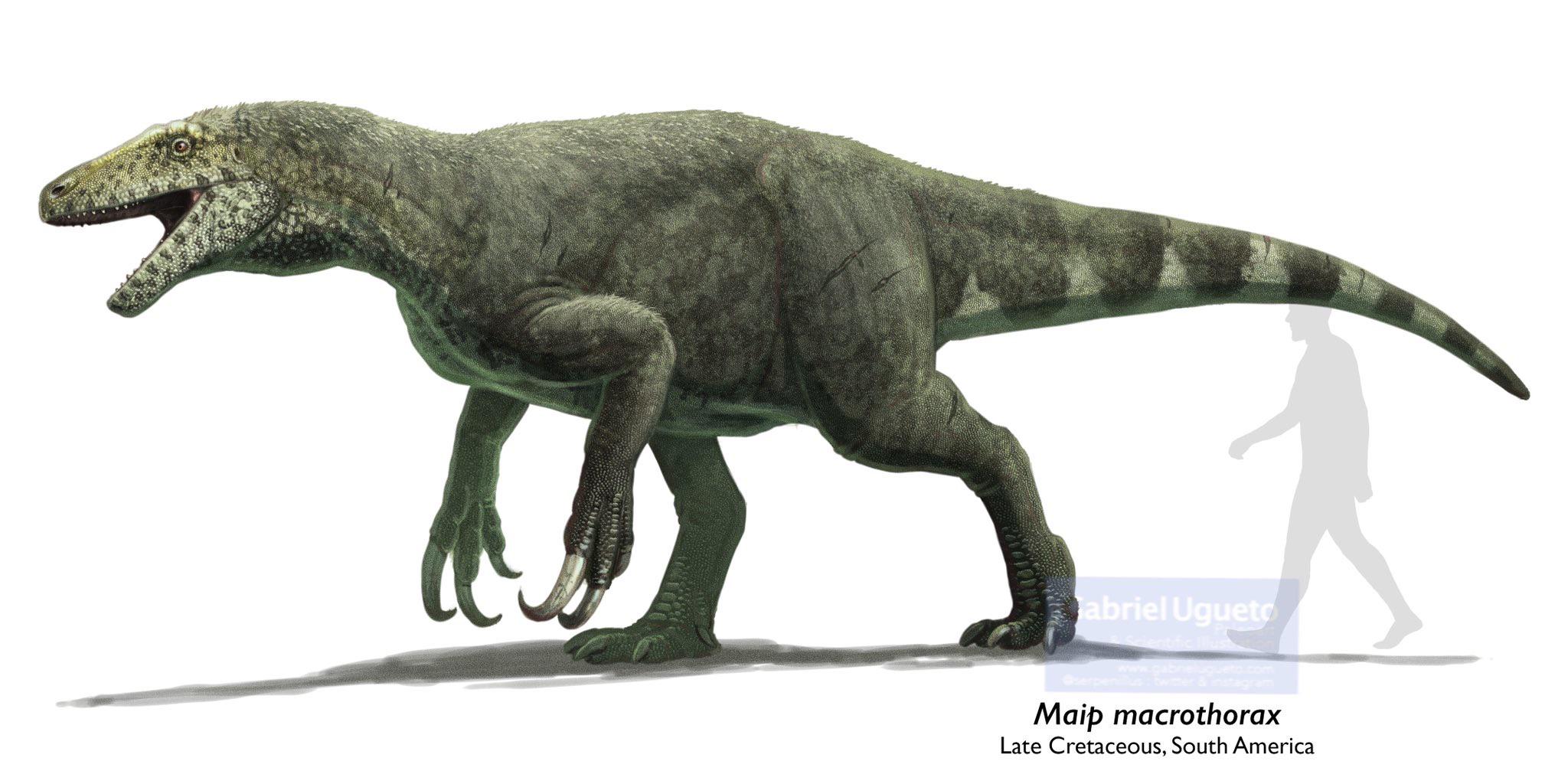
Most people assume that sheer size is what made a predator truly dangerous, but Maip macrothorax made the case that size paired with precision is a completely different kind of nightmare. This Late Cretaceous megaraptorid from southern South America rivaled smaller tyrannosaurs in length, but instead of a T. rex’s famous bone-crushing head, it came equipped with elongated arms tipped with sickle-like claws built for grappling, slashing, and disemboweling. It could engage prey at close range in ways the tyrant lizard simply couldn’t replicate with its stubby, vestigial forelimbs.
What makes Maip genuinely unsettling is the environment it dominated. Patagonia during the Late Cretaceous was a world where tyrannosaurs hadn’t yet pushed out the competition, and Maip appears to have filled that apex role with a hunting style built more around stealth and controlled violence than raw bulldozing force. Paleontologists who described the species noted that its robust chest – the “macrothorax” in its name literally means “large chest” – suggests powerful musculature for holding struggling prey. It didn’t just kill things. It held them while they died.
Fast Facts
- Length: 30–33 feet (9–10 meters) – the largest megaraptorid currently known
- Weight: Up to 5 tons – roughly twice the mass of a white rhinoceros
- Chest width: Estimated over 1.2 meters wide, giving it extraordinary grappling strength
- Age: Lived approximately 70 million years ago, in the final chapter of the Cretaceous
- Nickname: Named after an evil spirit from Tehuelche indigenous mythology meaning “shadow of death”
#12 – Concavenator corcovatus: The Humped Hunter With a Secret
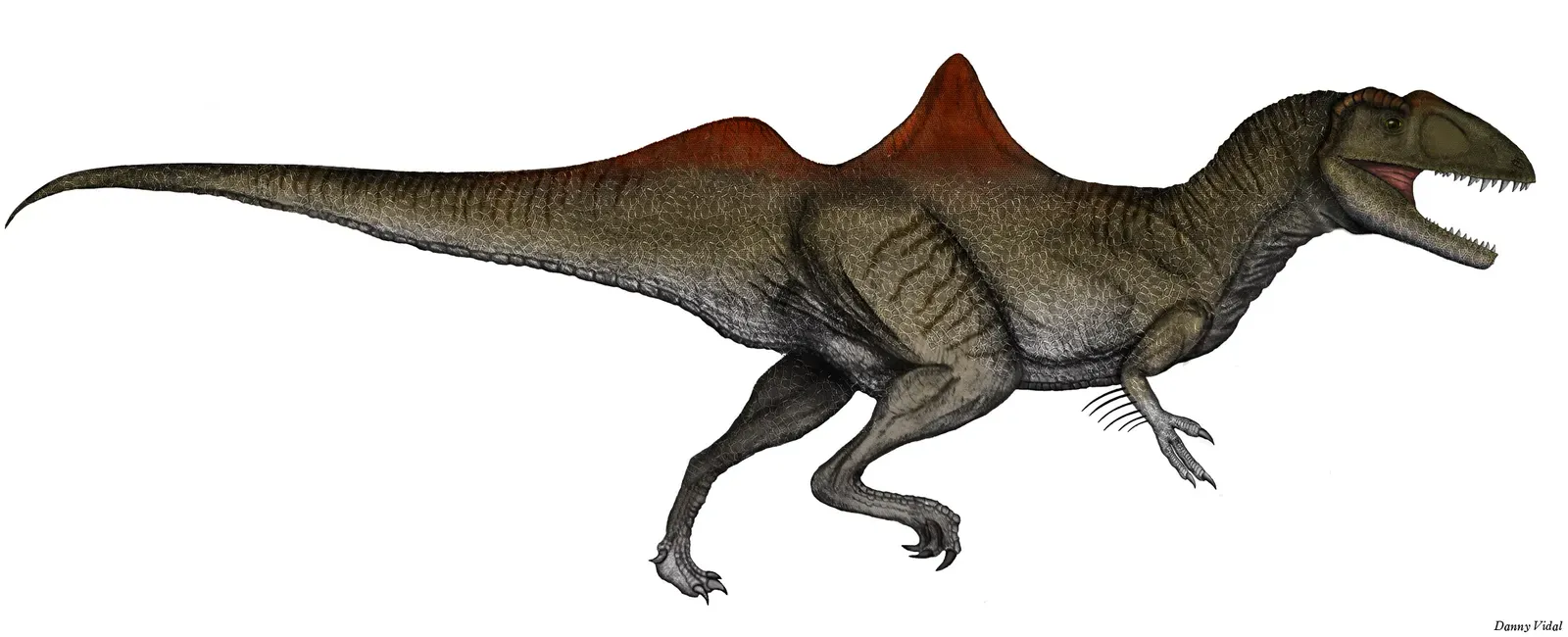
Concavenator corcovatus looked strange even by dinosaur standards – a 20-foot Cretaceous predator from what is now Spain, built like a fast-moving carnivore but sporting a bizarre sail-like hump of neural spines rising from its back. That hump alone would make it memorable, but the real discovery came from its arms. Small bumps along the forearm bones, called quill knobs, are the same structures that anchor feathers in modern birds. Concavenator may have had proto-feathers or display structures on its arms at a time when that combination – active predator, visual display apparatus – wasn’t supposed to exist in animals this large.
Researchers are still debating what the hump was actually for. Thermoregulation, fat storage, and species recognition have all been proposed, and none have been ruled out. What’s clear is that Concavenator was using tools T. rex never had – visual signaling, potential feather display, and an agility in coastal and wetland environments that the heavy northern tyrant couldn’t match. It hunted smaller dinosaurs and fish in Early Cretaceous Spain with a versatility that makes it look, in retrospect, startlingly modern. The hump may have even helped it attract mates or intimidate rivals, which means it was terrifying and dramatic about it.
#11 – Teratophoneus curriei: The Compact Bone-Crusher
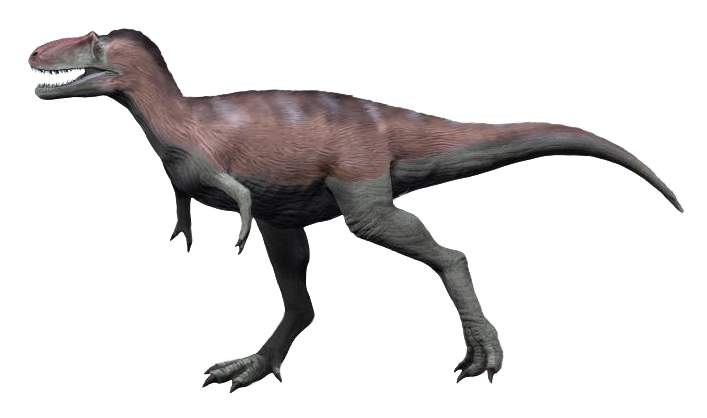
The name translates to “monstrous murderer” and the animal absolutely earned it, just not in the way most people picture a tyrannosaur earning anything. Teratophoneus curriei lived in Late Cretaceous Utah – an environment that was, at the time, effectively an island ecosystem cut off from the rest of North America by a shallow inland sea. That isolation drove rapid, specialized evolution, and what emerged was a mid-sized tyrannosaur around 20 feet long with a notably short, deep skull optimized for one thing: fast, crushing bites that could shatter bone before prey had time to react.
While T. rex used its massive jaws for sustained bone-crushing force, Teratophoneus appears to have been engineered for speed and efficiency in tighter ecological conditions. It shared its island-continent with other predators, which means it had to compete – and competing meant being better at quick kills rather than prolonged struggles. Researchers studying its jaw mechanics found that the skull geometry was almost purpose-built for confined spaces and rapid repeated strikes. Smaller than its famous relatives, yes. But the kind of smaller that wins a fight in a forest, not the kind you feel sorry for.
#10 – Latenivenatrix mcmasterae: The Night Intelligence
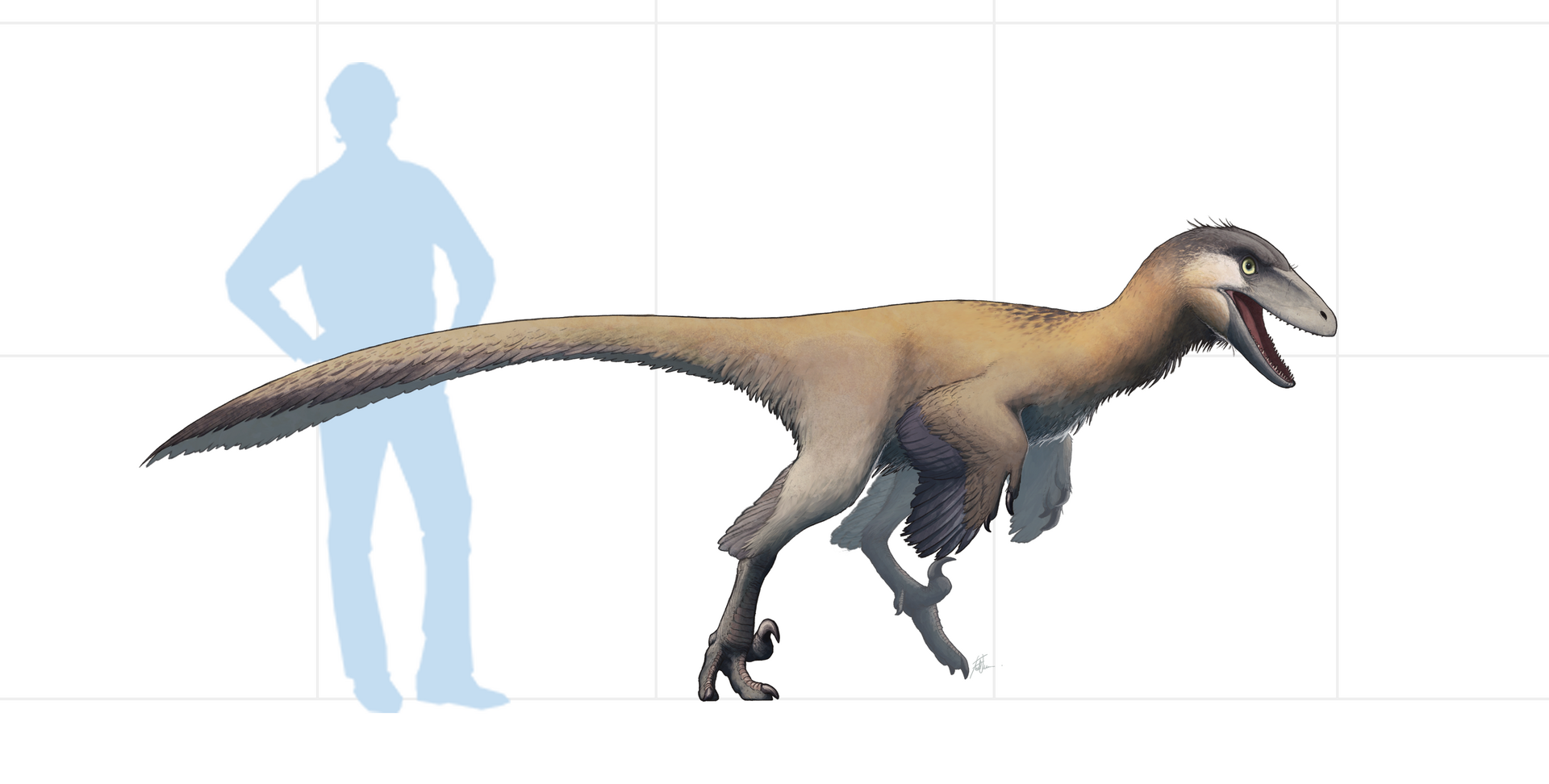
Almost everyone who thinks about dinosaur intelligence defaults to Velociraptor – largely thanks to movies that bear almost no resemblance to the actual animal. But Latenivenatrix mcmasterae, a troodontid discovered in Canada, was in a completely different cognitive league. It reached over 11 feet in length, making it one of the largest troodontids ever found, and it came equipped with the large, forward-facing eyes and expanded braincase that define the troodontid family. In plain terms: it was fast, it was big for its kind, and it was almost certainly smarter than anything it was hunting.
Troodontids had among the highest brain-to-body ratios of any non-avian dinosaurs, and Latenivenatrix appears to have used that advantage for nocturnal hunting – targeting small vertebrates, eggs, and mammals in forested Late Cretaceous environments where a T. rex would have been uselessly large and loud. There’s also fossil evidence suggesting troodontids operated in coordinated groups. The idea of multiple large-brained, night-vision-equipped predators working together in the dark, in terrain where you’d never see them coming, is genuinely more frightening than a single massive animal you can at least hear approaching.
Quick Compare: T. rex vs. Latenivenatrix
- T. rex: Massive, loud, detectable from a distance – you’d likely hear it first
- Latenivenatrix: Silent, small-footprint, large forward-facing eyes built for low-light hunting
- T. rex: Solitary apex predator relying on brute force and ambush
- Latenivenatrix: Likely coordinated group hunter with one of the highest brain-to-body ratios of any non-avian dinosaur
- Verdict: One you could run from. The other you’d never know was there.
#9 – Megaraptor namunhuaiquii: The Hooked Giant
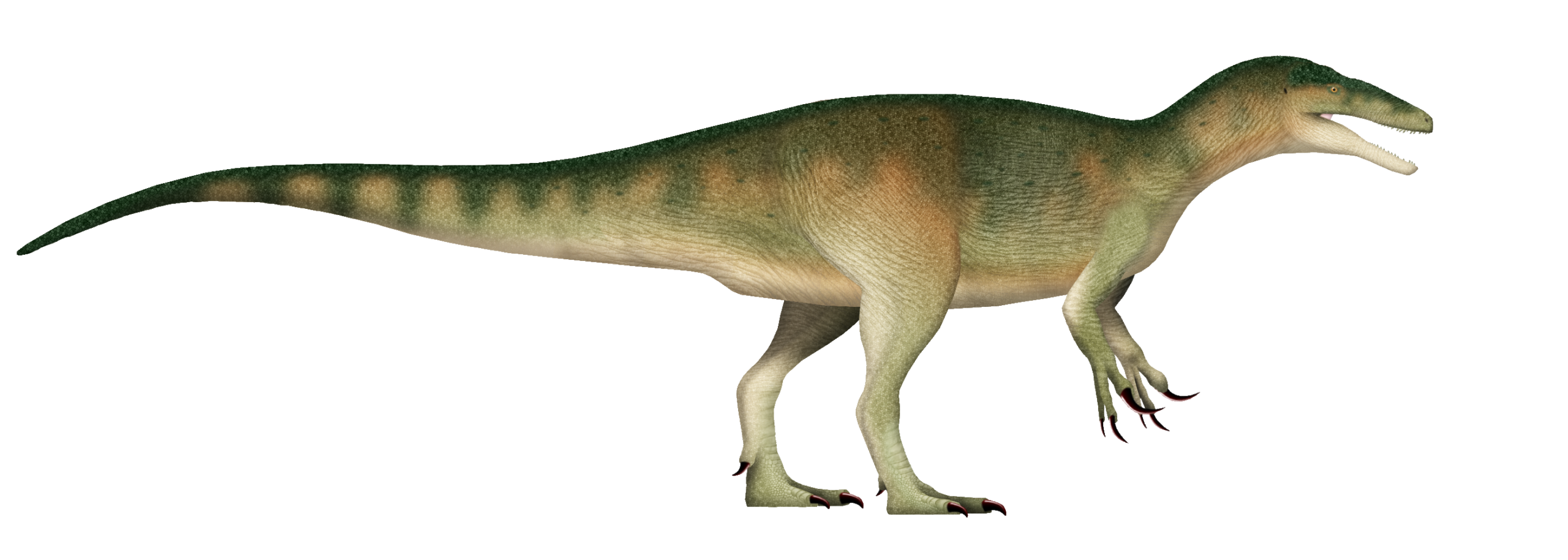
When Megaraptor was first discovered, paleontologists initially misidentified one of its enormous hand claws as a foot claw – and assumed they’d found a raptor the size of a car. The reality turned out to be even more interesting. Megaraptor namunhuaiquii was a 26-foot predator from Patagonia whose primary weapons weren’t its jaws but its arms, which were disproportionately long relative to its body and tipped with massive hooked claws designed to seize, hook, and tear living flesh with surgical efficiency.
This isn’t a subtle distinction. T. rex’s arms were functionally decorative compared to Megaraptor’s forelimbs, which appear to have been the animal’s main killing apparatus. The claws could hook into prey and hold it while the animal delivered bites to vulnerable areas – a killing method that’s more like a large eagle than the blunt-force trauma of a tyrannosaur. It dominated mid-Cretaceous Patagonian ecosystems before larger competitors moved in, and its discovery reshaped how paleontologists think about predator diversity in Gondwana. The south had its own arms race, and Megaraptor was winning.
#8 – Dakotaraptor steini: The Pack Ghost of the Hell Creek
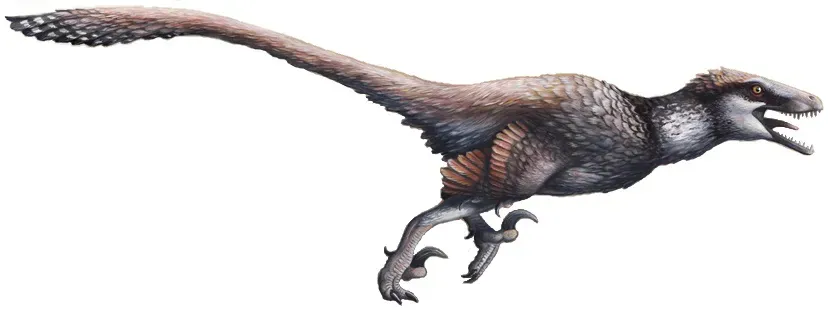
Velociraptor is a cultural icon, but the real animal was roughly the size of a turkey. Dakotaraptor steini was what Velociraptor would look like if it kept growing for another few million years and stopped caring what you thought about it. Discovered in the Hell Creek Formation – the same time and place as T. rex – this Late Cretaceous raptor reached up to nearly 20 feet in length and carried a sickle claw measuring 24 centimeters along its outer curve on each foot. It was fast, it was feathered, and fossil evidence strongly suggests it didn’t hunt alone.
Pack hunting in large raptors changes the entire threat calculation. A single T. rex attacking a hadrosaur is a confrontation with a known outcome. A coordinated group of nearly 20-foot raptors hitting the same animal from multiple angles, using speed and slashing claws to open wounds and avoid the dangerous tail and hooves, is an entirely different kind of violence. Dakotaraptor’s lightweight build meant it could sustain the kind of chase that would be beneath a T. rex’s dignity, and its arms – unlike the tyrant’s – were long enough to actually grip things. It lived in T. rex territory and apparently thrived there anyway.
At a Glance: Dakotaraptor steini
- Length: Up to ~20 feet – one of the largest dromaeosaurids ever found
- Sickle claw: 24 cm along the outer curve – proportionally larger than Deinonychus
- Feathers: Confirmed via 15 distinct quill knobs on the forearm bone – the largest known dinosaur with confirmed wings
- Territory: Hell Creek Formation, South Dakota – shared turf with T. rex itself
- Hunting style: Speed-based pursuit and coordinated group tactics, not brute-force ambush
#7 – Dryptosaurus aquilunguis: The Eastern Eagle-Claw
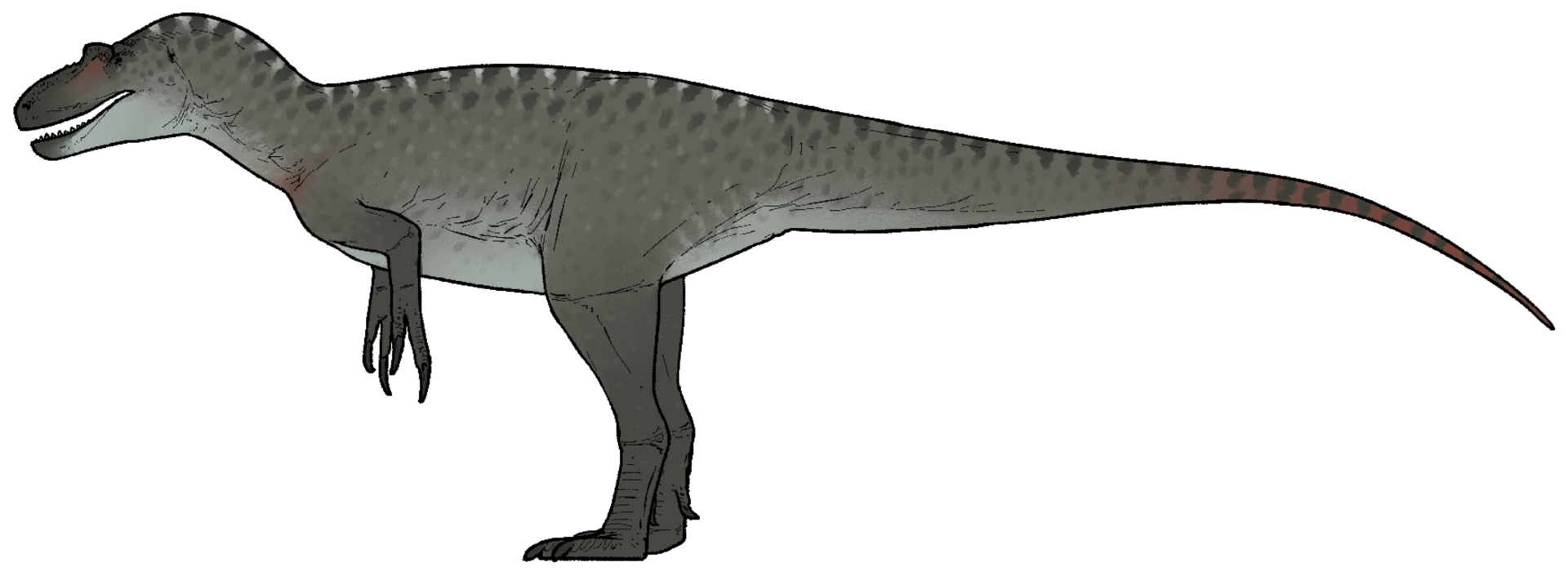
While the western half of Late Cretaceous North America was ruled by tyrannosaurs with comically small arms, the east was doing something more interesting. Dryptosaurus aquilunguis – whose name means “eagle-clawed tearing lizard” – was a roughly 25-foot predator from what is now New Jersey, and it belonged to an early tyrannosaur lineage that hadn’t yet lost the functional forelimbs later relatives would sacrifice. Its arms were robust and ended in large, curved claws that it could actually use to grab, pin, and manipulate prey before the killing bite.
The eastern North American fossil record from this period is frustratingly sparse, partly because sea levels were higher and much of that land is now underwater or buried under cities. But what fossils exist paint a picture of a predator that combined tyrannosaur power with a versatility that later, more specialized relatives traded away. Dryptosaurus could work in forested terrain where a T. rex would have struggled, using its claws in ways the western giant literally couldn’t. It’s one of the most important tyrannosaur relatives most people have never heard of, and the gap in its fossil record is one of paleontology’s genuine frustrations.
#6 – Sinornithosaurus millenii: The Venomous Feathered Ambusher
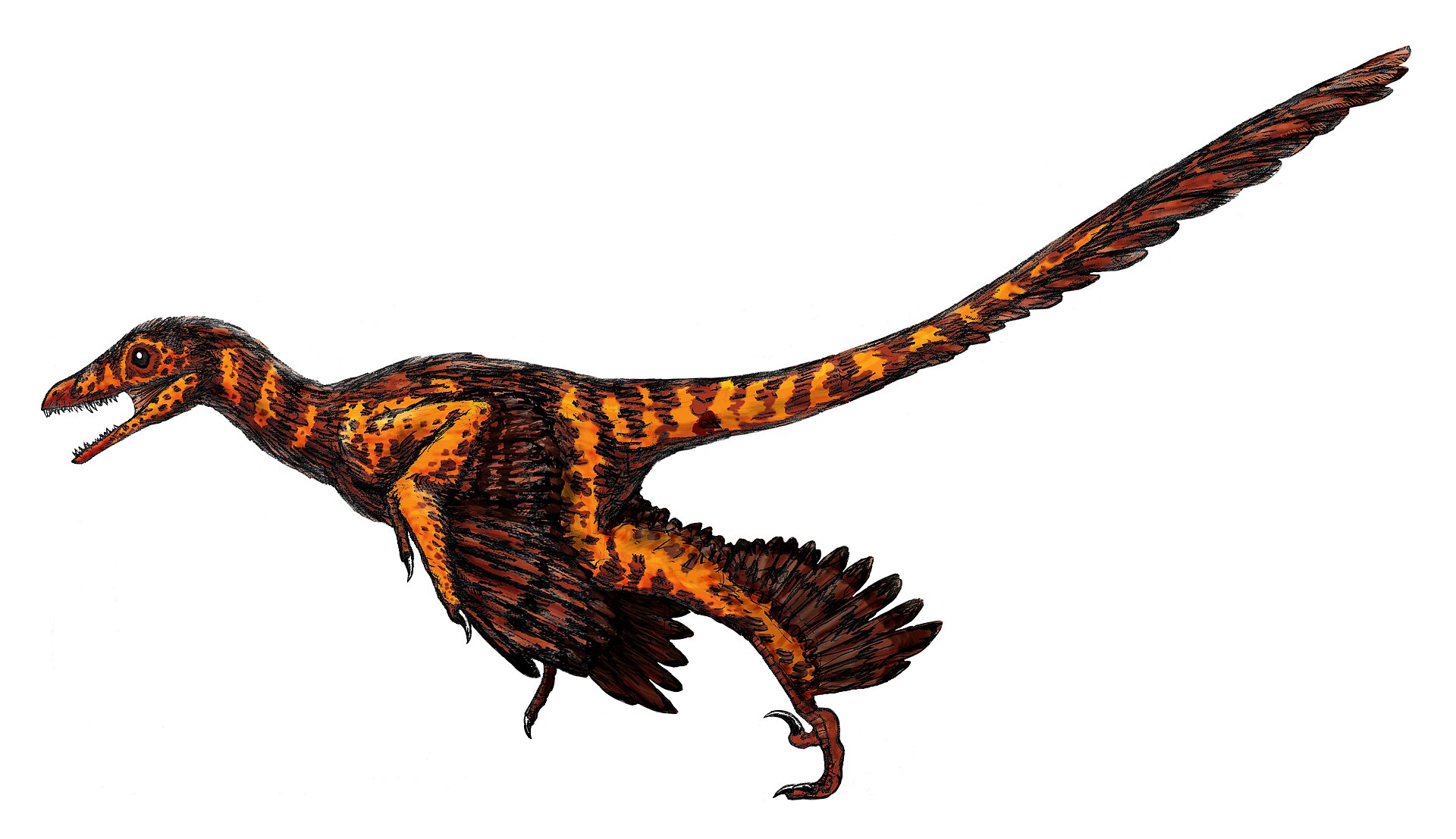
This one requires a caveat: the venom hypothesis for Sinornithosaurus millenii is debated, and not all paleontologists accept it. But the physical evidence is difficult to wave away entirely. This small feathered theropod from Early Cretaceous China measured under four feet long – harmless-sounding until you examine its teeth. The teeth are unusually long, fang-like, and deeply grooved in a way that functionally resembles the venom-delivery teeth of rear-fanged snakes. A pocket near the upper jaw has been interpreted by some researchers as a possible venom gland, though others argue it’s simply an artifact of the skull’s structure.
If the venom interpretation is correct, it fundamentally changes how we understand small feathered dinosaurs as predators. Sinornithosaurus wouldn’t have needed size, speed, or brute force if it could deliver a venomous bite and then simply wait. It lived in arboreal environments, likely hunting birds and small mammals from trees or low cover – the kind of ambush predator that relies on biochemical weapons rather than physical ones. Even if the venom debate never fully resolves, the fact that the question is scientifically serious is its own kind of terrifying. Something the size of a house cat may have been genuinely toxic.
Worth Knowing
- Its grooved, elongated fangs closely mirror the venom-delivery structure of rear-fanged snakes
- A distinct groove near the upper jaw has been interpreted as a possible venom gland – though the debate is ongoing
- Size: under 4 feet long – smaller than most dogs, yet potentially one of the most chemically dangerous predators of the Early Cretaceous
- Arboreal habitat meant victims would have had no warning before a bite from above
- Whether venomous or not, its ambush-first design made size completely irrelevant to how dangerous it was
#5 – Carnotaurus sastrei: The Horned Sprint Killer
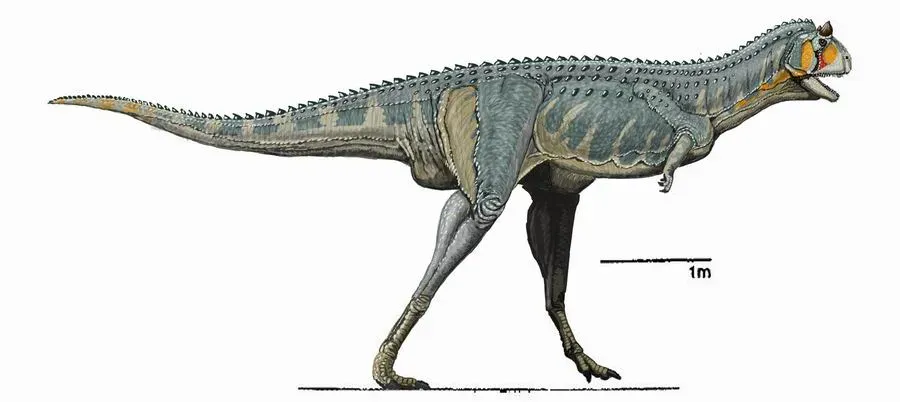
Carnotaurus sastrei looks like what would happen if a bull and a tyrannosaur had a child and that child also had an anger problem. The two thick, brow-mounted horns are the obvious headline, and they were almost certainly used in combat with other Carnotaurus – the skull shows evidence of impact stress consistent with head-butting or horn-clashing. But the horns were just one piece of a predator that was genuinely unusual in its entire design philosophy. The skull was short and deep, the jaw could open with unusual speed, and the arms were so small they made T. rex’s look functional by comparison.
What Carnotaurus gave up in arm function, it appears to have compensated for with speed. Biomechanical analysis of its tail musculature – which was exceptionally developed – suggests it may have been one of the fastest large theropods known, potentially capable of sustained pursuit that most apex predators of its size couldn’t manage. It inhabited the arid regions of Late Cretaceous Argentina, hunting fast-moving prey across open terrain. The combination of speed, rapid-strike jaw mechanics, and combat horns made it less of a power-lifter and more of a sprinter with weapons. In an open field, it would run down things that could outmaneuver a T. rex with ease.
Fast Facts: Carnotaurus sastrei
- Top speed: Estimated 30–35 mph (48–56 km/h) – widely considered the fastest large theropod known
- Secret weapon: Proportionally the largest M. caudofemoralis (tail propulsion muscle) of any theropod ever studied
- Horns: Research suggests they served primarily for species recognition, intraspecific combat, and intimidating rivals
- Skin: One of the only large dinosaurs with extensive fossilized skin impressions – scaly, not feathered
- Arms: So reduced they were essentially non-functional – the most vestigial forelimbs of any large theropod
#4 – Majungasaurus crenatissimus: The Cannibal King of Madagascar
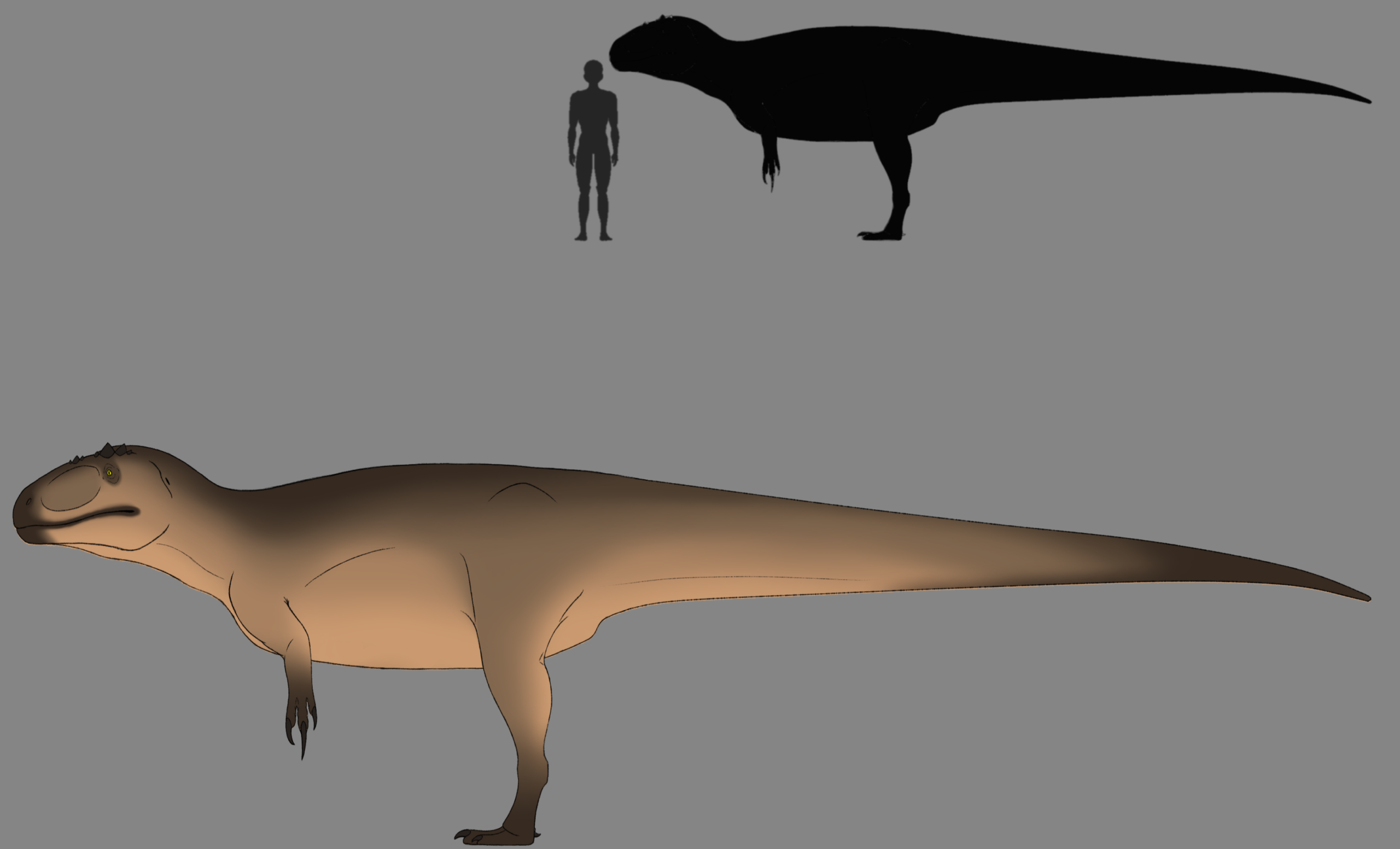
There’s something uniquely disturbing about a predator that eats its own kind – not as a rare, desperate last resort, but as a documented, seemingly routine behavior. Majungasaurus crenatissimus was a 20-foot abelisaurid that ruled Late Cretaceous Madagascar, and the fossil evidence for cannibalism isn’t ambiguous. Bones of other Majungasaurus bear distinctive bite marks that match Majungasaurus teeth exactly – the right size, spacing, and serration pattern. Since Majungasaurus was the only large predator on the island, no other animal could have made those marks. The conclusion was unavoidable.
Madagascar was a semi-arid island ecosystem prone to harsh drought cycles and limited prey, and Majungasaurus appears to have solved that problem the same way isolated island predators often do – by becoming willing to eat anything, including itself. Its thick skull and powerful neck musculature made it built for wrestling prey into submission, and the same traits that made it effective against large herbivores made intraspecies confrontations genuinely dangerous for the loser. It’s one thing to be the apex predator of your island. It’s another thing entirely to be so committed to survival that your own species is on the menu. The T. rex, by contrast, shows no confirmed evidence of cannibalism at all.
#3 – Thanatotheristes degrootorum: The Reaper of the North
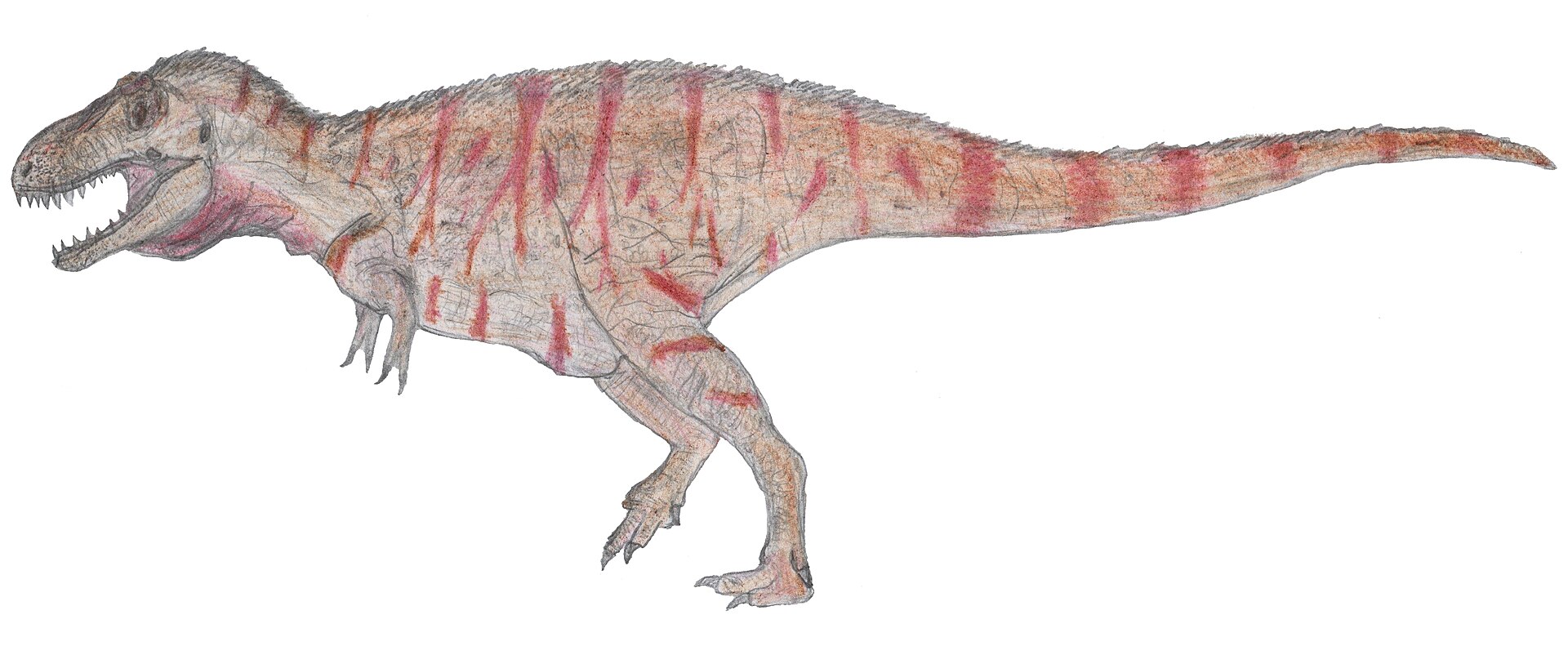
The name means “reaper of death” in Greek, which feels like a lot of pressure for any animal to live up to – but Thanatotheristes degrootorum makes a reasonable case. Discovered in Alberta and formally described in 2020, this tyrannosaur measured around 26 feet and lived roughly 79 million years ago, pushing back the timeline of large, dominant tyrannosaurs in North America by a significant margin. Before this find, the picture of giant tyrannosaurs ruling the continent was mostly a late-Cretaceous story. Thanatotheristes complicated that narrative considerably.
What sets it apart physically is a distinctive elongated snout compared to later tyrannosaurs like T. rex – a feature that appears on a separate tyrannosaur lineage and suggests the group was diversifying into different ecological roles earlier than previously understood. Ridges running along the upper jaw give it a face that’s subtly but unmistakably different from its famous descendants. Thanatotheristes was hunting ceratopsians and hadrosaurs in Alberta millions of years before T. rex existed, establishing tyrannosaur dominance as a longer, more complex story than a single famous species. The reaper title, in this case, isn’t hyperbole. It’s chronologically accurate.
#2 – Ulughbegsaurus uzbekistanensis: The Central Asian Giant That Shouldn’t Have Existed
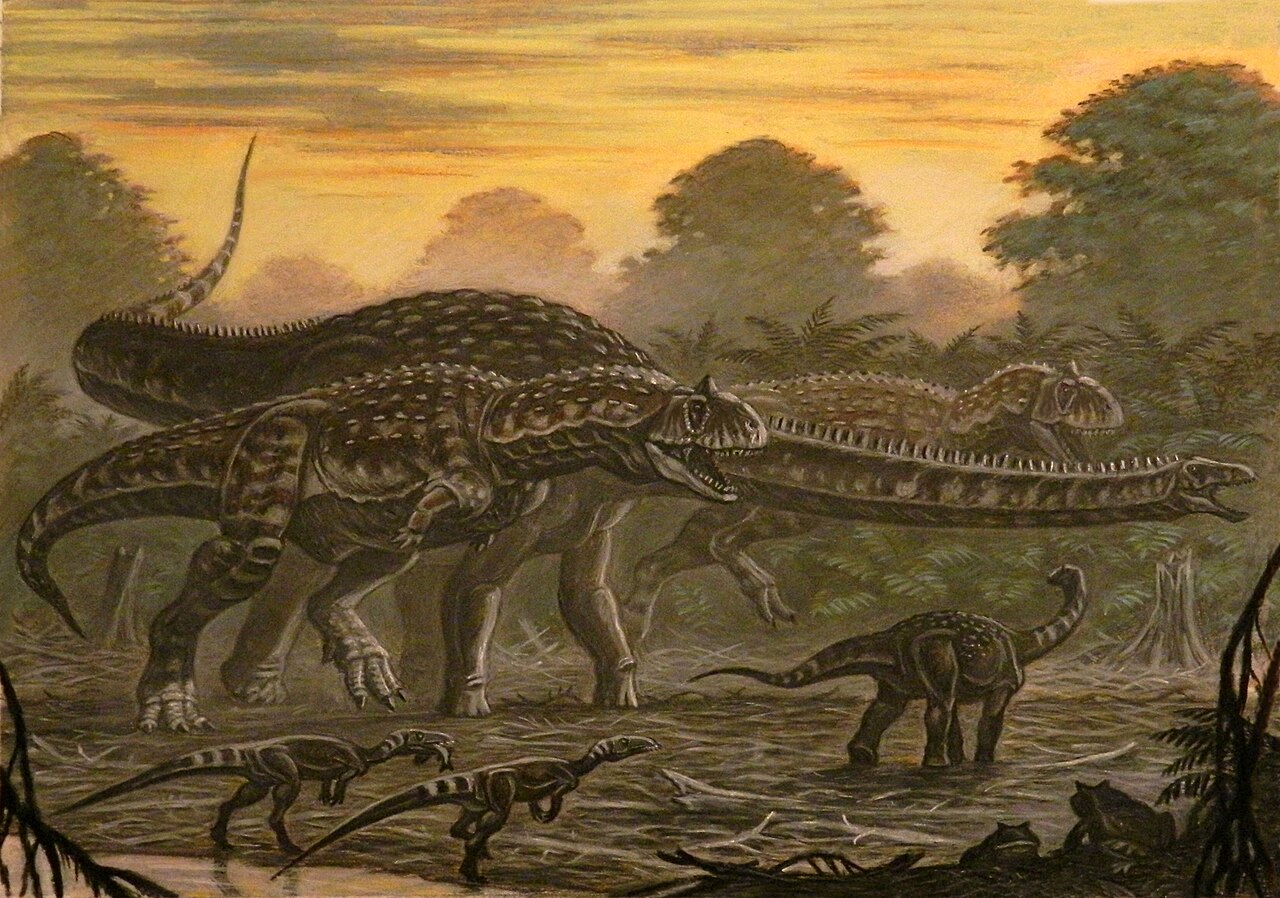
The conventional narrative about Asian predatory dinosaurs during the mid-to-late Cretaceous is that tyrannosaurs gradually took over from the older allosauroid lineages – giant serrated-toothed predators related to Allosaurus and Giganotosaurus. What Ulughbegsaurus uzbekistanensis proved is that the takeover wasn’t clean, and the allosauroids held on far longer than anyone suspected. This carcharodontosaurid from Uzbekistan reached over 26 feet and was alive at a time and place when it was supposed to have been replaced. Instead, it was still the apex predator of its Central Asian ecosystem, and the tyrannosaurs living alongside it were significantly smaller.
Carcharodontosaurids were, in many respects, more impressive killers than tyrannosaurs on a per-bite basis. Their teeth were blade-like and deeply serrated – designed for slicing through flesh rather than crushing bone – and their arms were functional weapons rather than vestigial afterthoughts. Ulughbegsaurus was hunting sauropods and large ornithopods in Central Asian floodplains while the local tyrannosaurs were still working their way up the size chart. The find rewrote the regional food web and raised an obvious question: what finally pushed it out? The answer appears to be the continued size escalation of tyrannosaurs that eventually outcompeted everything. But for millions of years, Ulughbegsaurus was the thing those tyrannosaurs were afraid of.
Why It Stands Out
- A carcharodontosaurid – the same family as the massive Giganotosaurus – surviving into an era when they “should” have been gone
- Blade-like, deeply serrated teeth built for slicing flesh, not crushing bone – a fundamentally different and arguably more efficient kill method
- The tyrannosaurs living alongside it in Central Asia were noticeably smaller, meaning it actively suppressed their growth for millions of years
- Its discovery in 2021 rewrote the known apex predator timeline for the entire Central Asian Cretaceous
- Functional forelimbs – a weapon class T. rex had already evolutionarily discarded
#1 – Australovenator wintonensis: Australia’s Perfect Killing Machine
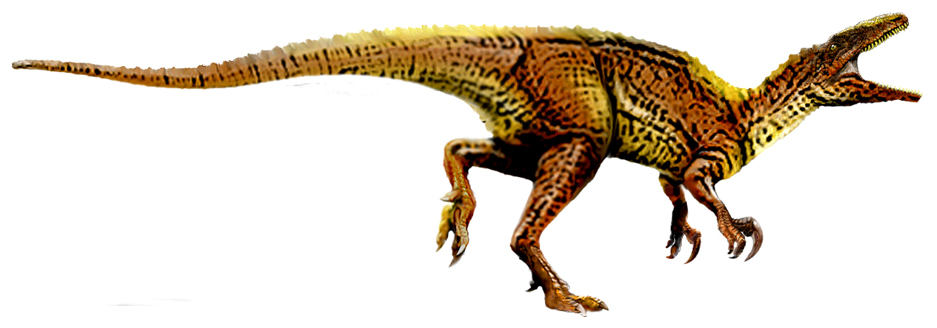
Australian dinosaurs are criminally underrepresented in popular culture, partly because the Australian fossil record is genuinely sparse and partly because most people unconsciously assume the interesting evolutionary stories happened in the northern continents. Australovenator wintonensis is the single best argument against that assumption. This megaraptorid from Early Cretaceous Australia combined the long, hook-clawed arms of its megaraptorid relatives with a body built for speed – long legs, lean frame, and a skeletal structure that earned it the nickname “the cheetah of its time” from the paleontologists who first described it.
It is currently the most complete Cretaceous meat-eating dinosaur skeleton found in Australia, which means Australovenator is actually one of the best-understood members of a group that includes the terrifying Maip and Megaraptor from this very list. Its hand claws were its primary weapons, deployed in a hunting style that looked nothing like T. rex’s lunge-and-bite approach – it would have chased prey down, hooked into it with those enormous curved claws, and used its speed and highly flexible forearms to stay on top of struggling animals until they couldn’t fight anymore. In its ecosystem, nothing could outrun it and nothing that it caught could shake it off. T. rex was a bone-crushing ambush predator. Australovenator was a sprinting, clawed pursuit machine. In Australia, it had no real competition – and you get the sense it knew it.
Australia is a place where evolution ran a separate experiment – and the results were just as dangerous as anywhere else on Earth.
John Long, paleontologist, on the significance of Australian fossil discoveries
The Verdict
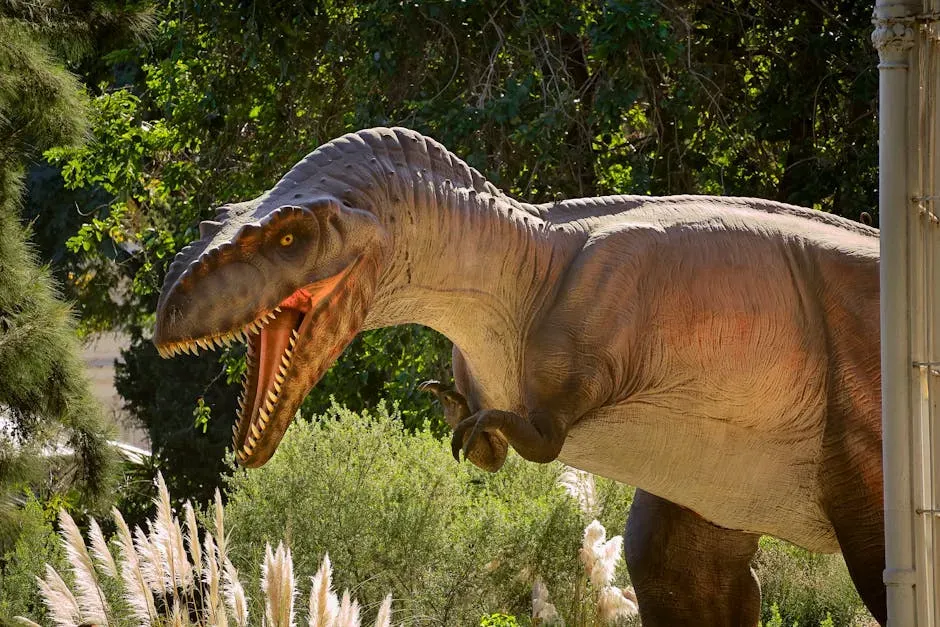
T. rex was undeniably impressive – massive, powerful, and built for a specific kind of ecological dominance that worked extraordinarily well in its time and place. But “most terrifying dinosaur” is not a title that belongs to a single animal from a single continent in a single geological moment. The 13 creatures on this list were venom-capable, pack-hunting, cannibal, sprint-killing, arm-clawed, night-intelligent, and bone-crushing in ways that filled every ecological nightmare niche the Mesozoic had available. T. rex was the one that ended up on the museum posters. That’s a marketing victory, not a paleontological one.
The more fossils come out of Patagonia, Central Asia, and Australia, the more obvious it becomes that we’ve been telling ourselves a simplified story about prehistoric danger. These animals didn’t get the movies or the cereal boxes, but in their own ecosystems, at their own moments in deep time, they were the thing everything else was running from. The tyrant lizard king wasn’t dethroned – it was never the only one wearing a crown.