Most natural history museums like to project an image of scientific infallibility – glass cases, official plaques, Latin names carved in stone. But behind that polished facade, curators have been swapping skulls, repositioning skeletons, and rewriting labels for over a century, almost always without a press release. Many of these “corrections” were only discovered decades later by paleontologists, journalists, or in one memorable case, a ten-year-old on a museum sleepover.
None of these fixes came with an apology plaque. Some took less than a year once new evidence surfaced. Others sat wrong for nearly a century, waiting on a sharp-eyed kid, a lucky CT scan, or a scientist finally brave enough to say the old mount looked ridiculous. Here’s what museum insiders and the paleontological record actually reveal about the mistakes hiding in plain sight.
#13 – The Stegosaurus Plates That Kept Getting Rearranged
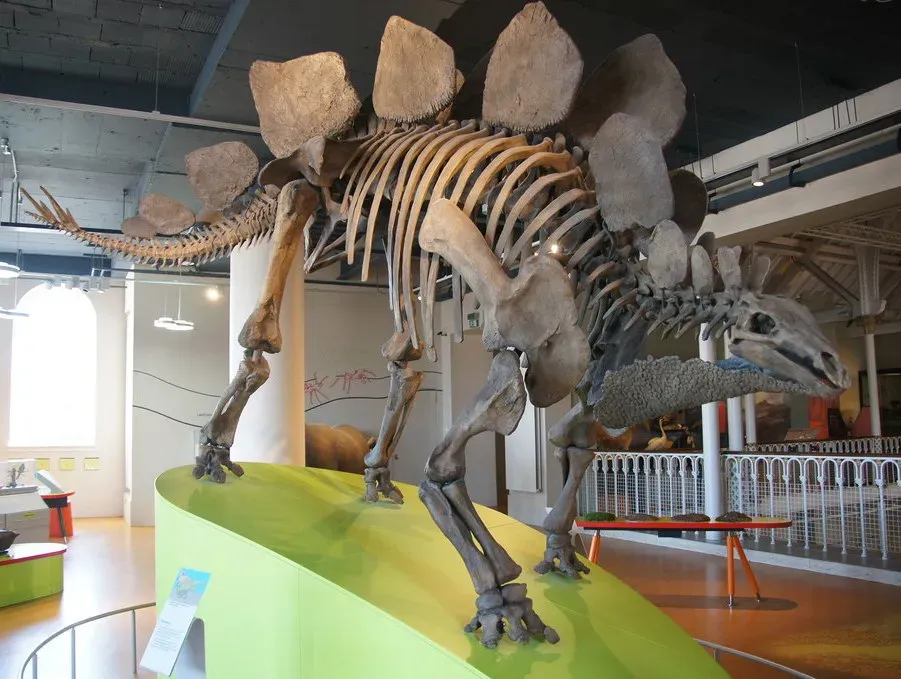
Stegosaurus has been reconstructed with at least three different plate configurations since it was first mounted, and almost nobody outside paleontology circles ever noticed the changes.
Early 20th-century mounts placed the bony plates flat against the animal’s back, overlapping like roof shingles, because early preparators assumed they functioned purely as armor plating. That armor theory eventually collapsed once researchers realized flat, overlapping plates would have offered almost no protection against a predator’s bite. Museums quietly re-set the plates upright and staggered in a double row, a configuration now believed to support display posturing and possible temperature regulation – and each shift happened during routine remounting, not through any public announcement.
Fast Facts
- Early mounts: flat, overlapping plates assumed to work like armor
- Revised mounts: upright, staggered double row for display or temperature regulation
- Change unfolded gradually across multiple museums, not one single announcement
What makes this correction interesting is that it happened gradually across multiple institutions rather than in one dramatic reveal. Visitors walking past a Stegosaurus skeleton in 1985 versus 2015 were essentially looking at two different scientific interpretations of the same fossil, and the placard rarely explained why.
#12 – The Woolly Mammoth That Lost Its Bald Spot
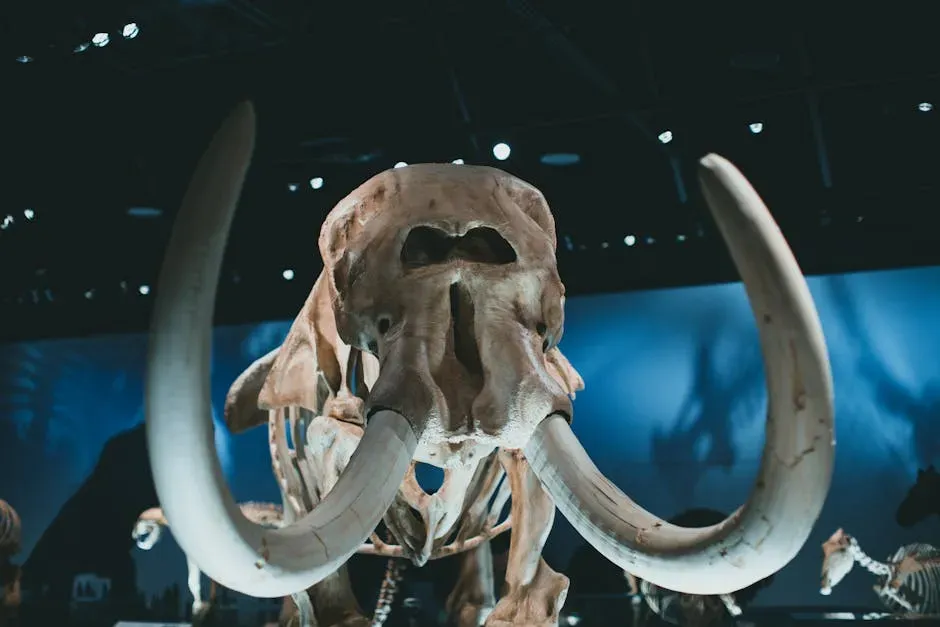
For decades, early mammoth reconstructions in museum halls looked suspiciously like elephants with a light dusting of fuzz, rather than the shaggy giants we now recognize.
Before frozen mammoth carcasses were pulled from Siberian permafrost in significant numbers, sculptors and taxidermists based their models largely on skeletal anatomy and educated guesswork about skin and hair. The result was a leaner, less hair-covered mammoth than reality, since artists conservatively estimated coat thickness rather than risk overstating it. As more preserved specimens surfaced with intact hide, hair, and even stomach contents, museums began correcting mounts to reflect the genuinely dense, shaggy coat mammoths actually carried through Ice Age winters.
This wasn’t a single dramatic swap – it was a slow migration toward accuracy as physical evidence accumulated. Older mammoth illustrations still circulate in textbooks today, creating a mismatch between what’s printed and what’s now displayed behind glass.
#11 – The Human Ancestor That Was Quietly Erased
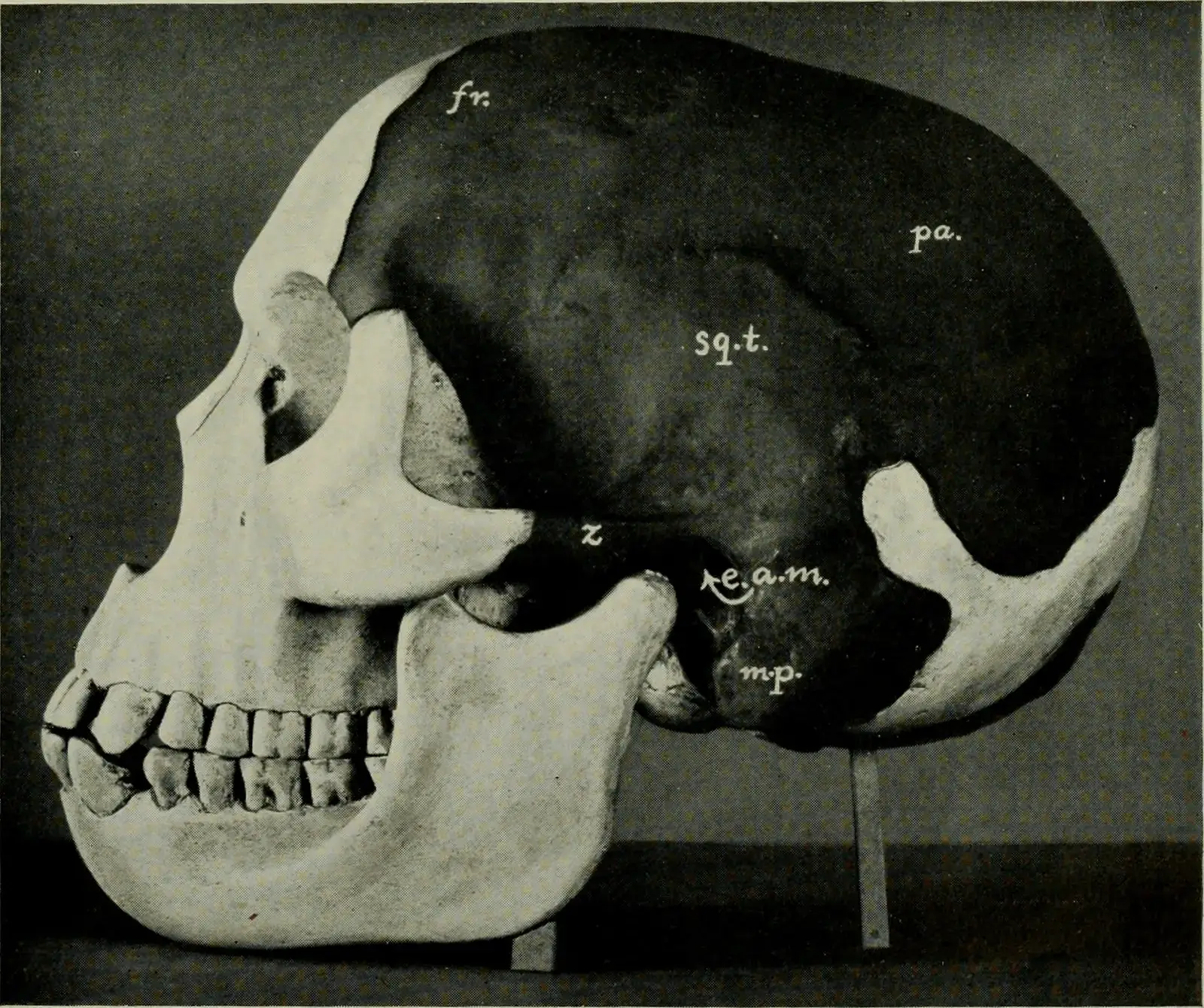
Piltdown Man sat in museum displays and textbooks as a genuine “missing link” between apes and humans for roughly four decades before being exposed as an elaborate fraud.
The specimen, presented in 1912, combined a human-like skull with an orangutan jaw that had been deliberately filed down and stained to appear ancient. Scientists eventually exposed the forgery through chemical dating techniques, revealing that the fossil was a deliberate hoax, not an evolutionary discovery. Once exposed, museums didn’t hold press conferences to announce the removal – display cases were simply reorganized, replicas quietly retired, and the specimen relegated to cautionary-tale status in academic papers rather than public galleries.
The Piltdown case remains one of the most cited examples of how confirmation bias can infect even careful scientific institutions. Many visitors who saw the original display in the mid-20th century never learned it had been fraudulent unless they happened to read specialized journals afterward.
#10 – Iguanodon’s Horn That Was Actually a Thumb
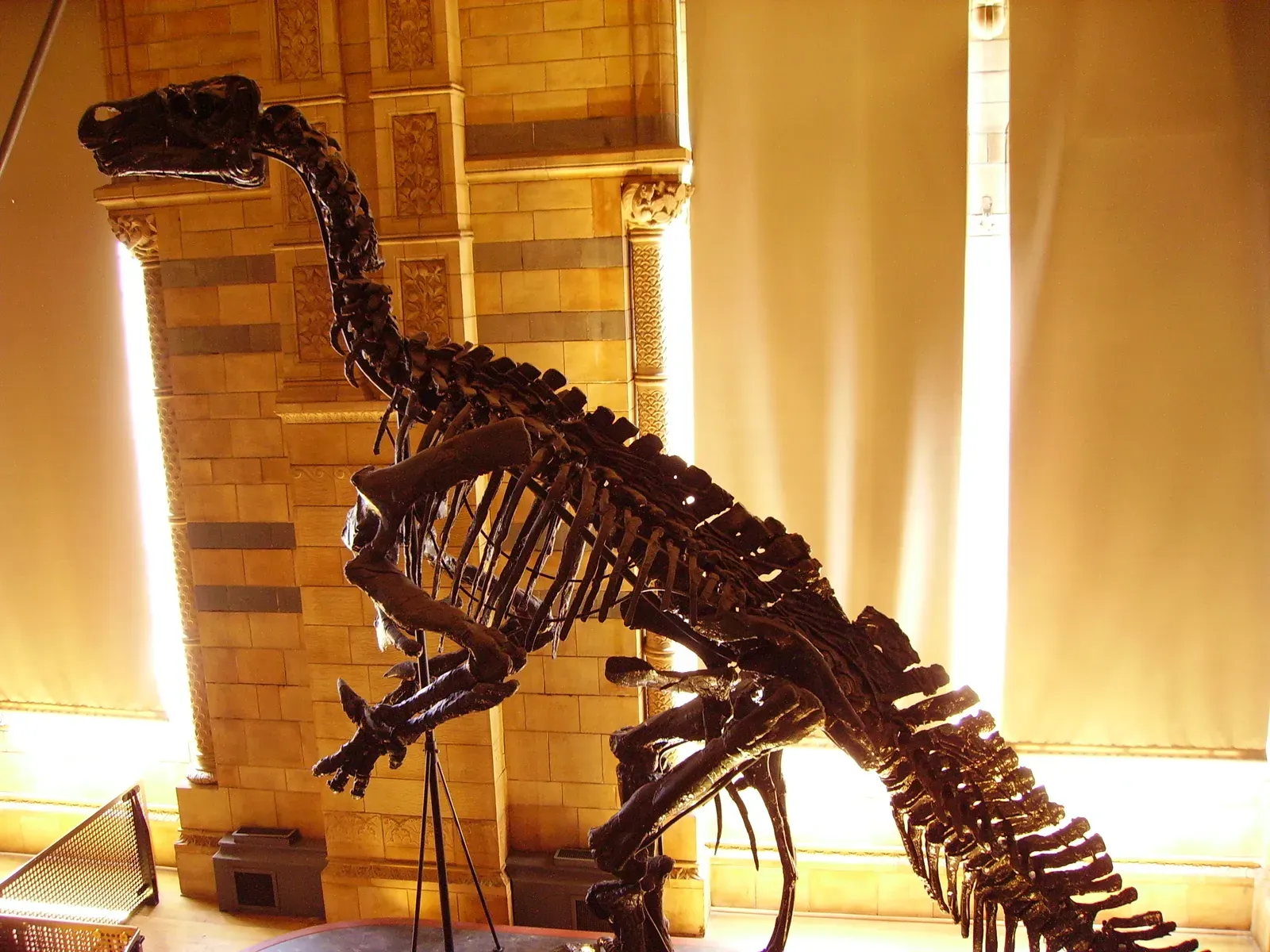
One of the earliest dinosaurs ever reconstructed for public display wore a spike on its nose for years before anyone realized it belonged somewhere else entirely.
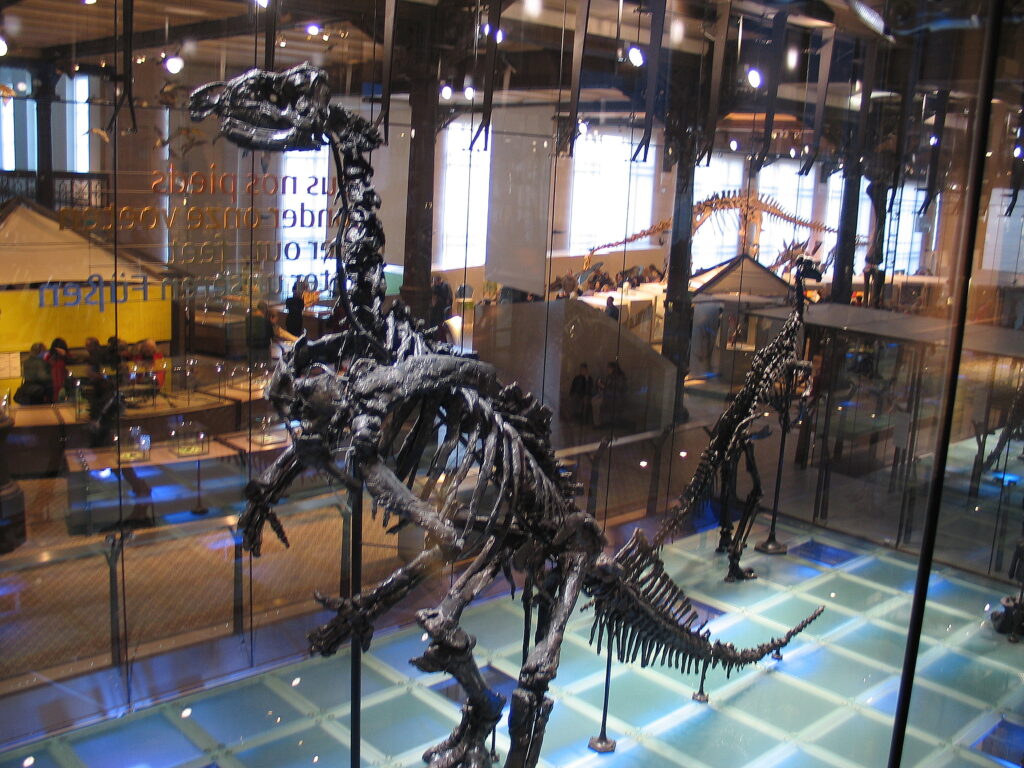
When naturalist Gideon Mantell first described Iguanodon in the 1820s, working from fragmentary remains, he placed a large conical bone on the animal’s snout like a rhinoceros horn. It wasn’t until more complete skeletons were unearthed decades later in a Belgian coal mine that scientists realized the “horn” was actually a thumb spike, positioned on the hand rather than the face. Museum models and murals across Europe had to be reworked once the true skeletal layout became clear, moving the spike from nose to hand.
This correction reshaped how an entire generation understood one of the first dinosaurs ever scientifically named. It’s a reminder that even foundational fossils in paleontology’s history were built on partial, sometimes badly misread evidence.
#9 – Iguanodon’s Kangaroo Problem
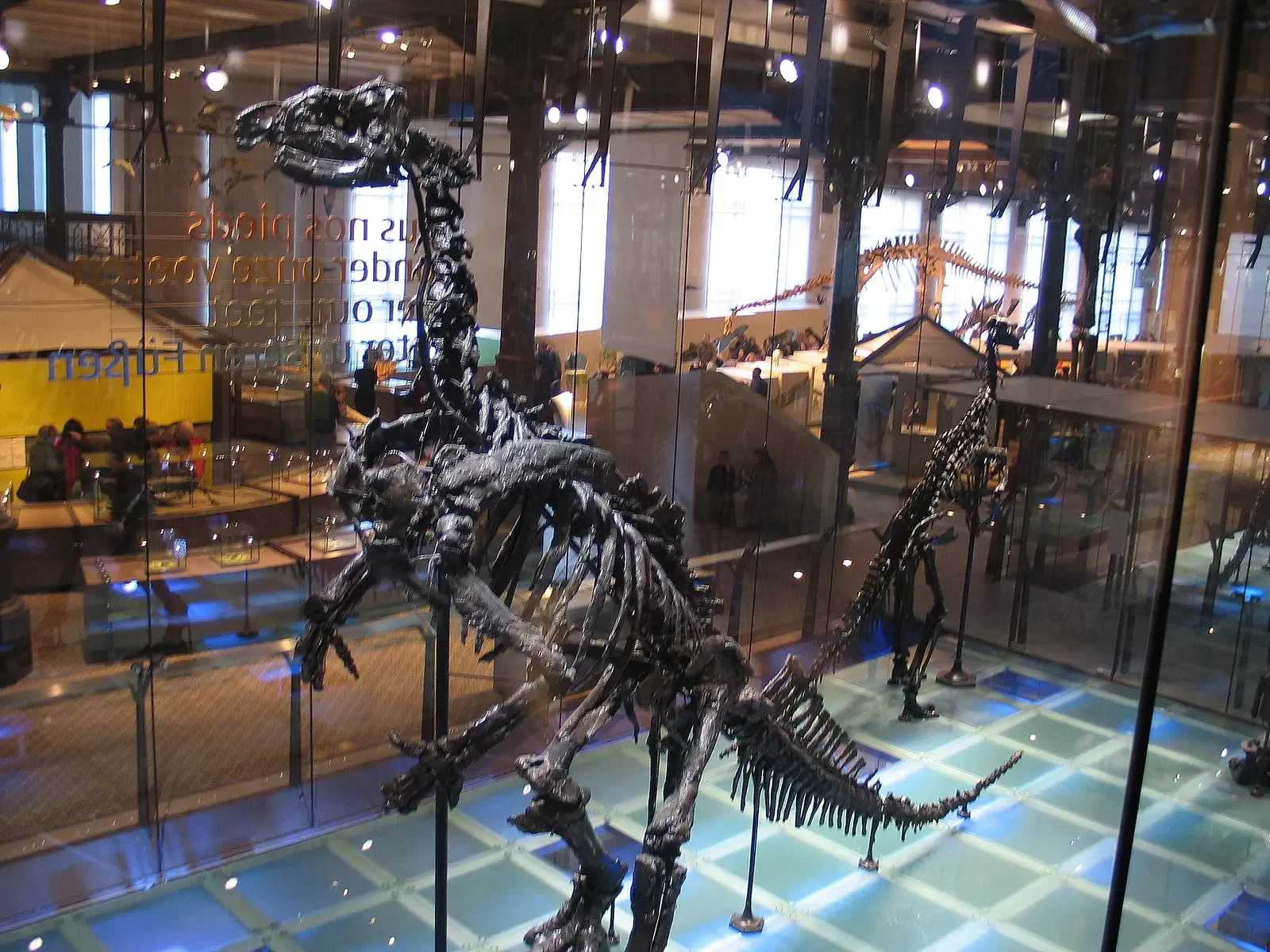
Before its thumb was fixed, Iguanodon had an even bigger posture problem: museums stood it upright on its hind legs like an oversized kangaroo.
Early reconstructions showed the dinosaur standing upright with its tail resting on the ground as a support, and this bipedal, tail-propped stance dominated museum displays and illustrated guides well into the 20th century, shaping how millions of visitors imagined dinosaur movement. The tripod pose was treated as settled science for generations, despite the biomechanical awkwardness of dragging a heavy tail as a permanent kickstand.
Later trackway evidence and skeletal analysis showed dinosaurs like Iguanodon actually moved with a more horizontal body and elevated tail, closer to how modern paleoartists depict them. Museums that once proudly displayed the kangaroo-style mount had to essentially re-engineer the skeleton’s stance from the ground up – it wasn’t a footnote correction, it required rebuilding the entire mounting armature.
#8 – The “Caveman” Who Was Actually Just Arthritic
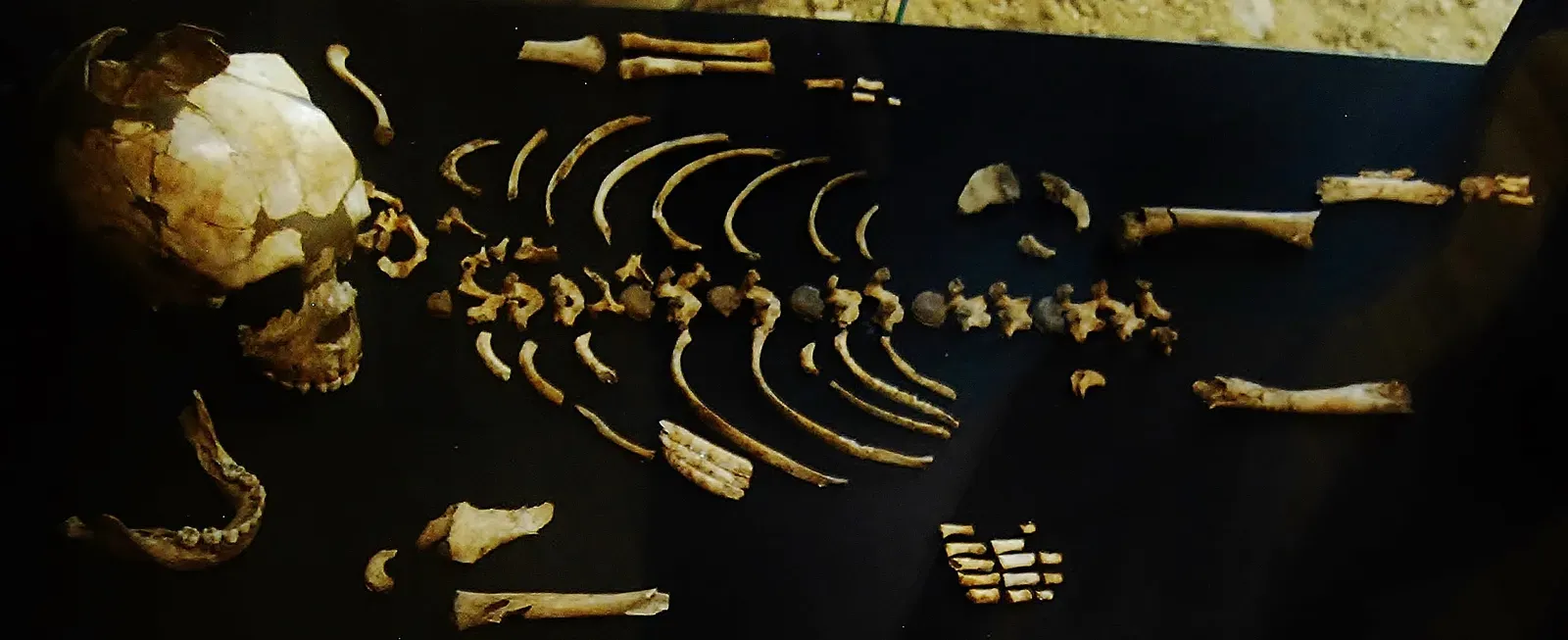
The single most famous image of a hunched, brutish Neanderthal was based almost entirely on one elderly, disease-riddled skeleton – and museums ran with it for half a century.
French paleontologist Marcellin Boule published his reconstruction in 1911, and it depicted the so-called Old Man of La Chapelle as permanently hunched, possibly unable to stand fully upright at all. That single reconstruction, based on a skeleton found at La Chapelle-aux-Saints, became the template for nearly every “caveman” diorama, waxwork, and illustration for generations. Scientists didn’t re-examine the remains until the 1950s, when they determined the hunched posture came from arthritis, not some inherent trait of the species.
Even after that correction became known among researchers, popular displays lagged for decades. More recent 3D reconstructions have gone further, showing a curved lumbar region and neck similar to modern humans, walking fully upright with a posture much like our own. Most people still picture Neanderthals as knuckle-dragging brutes – and honestly, that outdated image says more about early 20th-century bias than actual anatomy.
#7 – Half the Specimens in the Drawers May Be Wrong
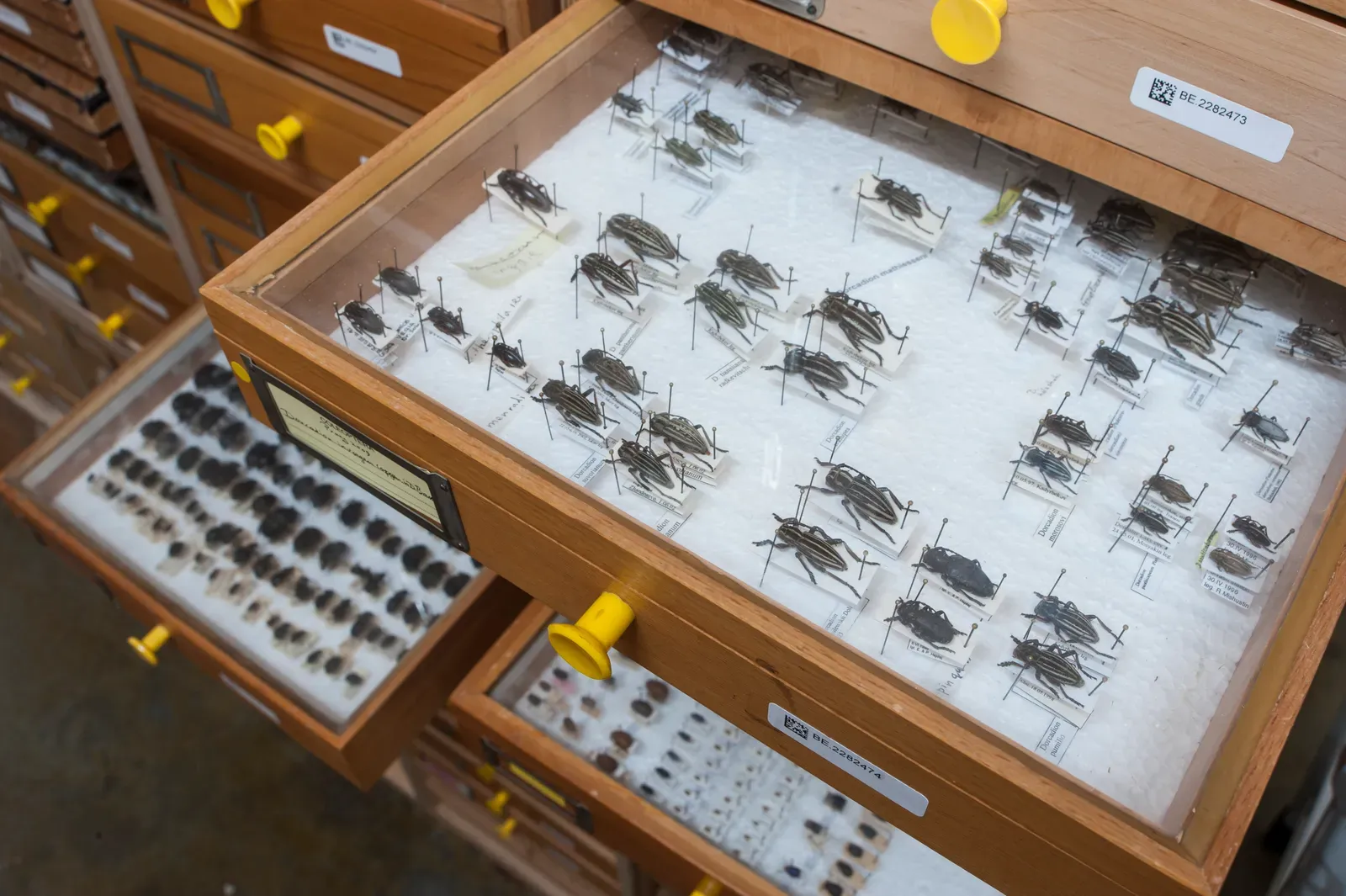
This one isn’t about a single dramatic swap – it’s about a systemic problem so widespread that scientists themselves sounded the alarm.
A study from researchers at Oxford University and the Royal Botanic Garden in Edinburgh found that as many as half of all natural history specimens in some of the world’s greatest institutions are probably wrongly labelled. The issue isn’t sloppiness so much as sheer volume: even accomplished naturalists can struggle to differentiate between similar plants and insects, and when hundreds or thousands of specimens arrive at once, it’s simply too time-consuming to research each one in exhaustive detail.
At a Glance
- Up to half of natural history specimens may carry incorrect labels, per Oxford and Royal Botanic Garden Edinburgh researchers
- 4,500 specimens of one plant genus were checked against a rigorous 2014 identification study
- At least 58% of those specimens were wrongly identified or given an outdated name
- Corrections mostly happen quietly, one relabeled drawer at a time
The scale of this problem is genuinely staggering once you consider how much downstream science depends on accurate labels. When researchers checked 4,500 specimens of one plant genus against a rigorous 2014 identification study, they found that at least 58 per cent had been wrongly identified or given an outdated name. These corrections rarely make headlines – they happen quietly in collection rooms, one relabeled drawer at a time.
#6 – The “Missing Link” That Was Two Fossils Glued Together
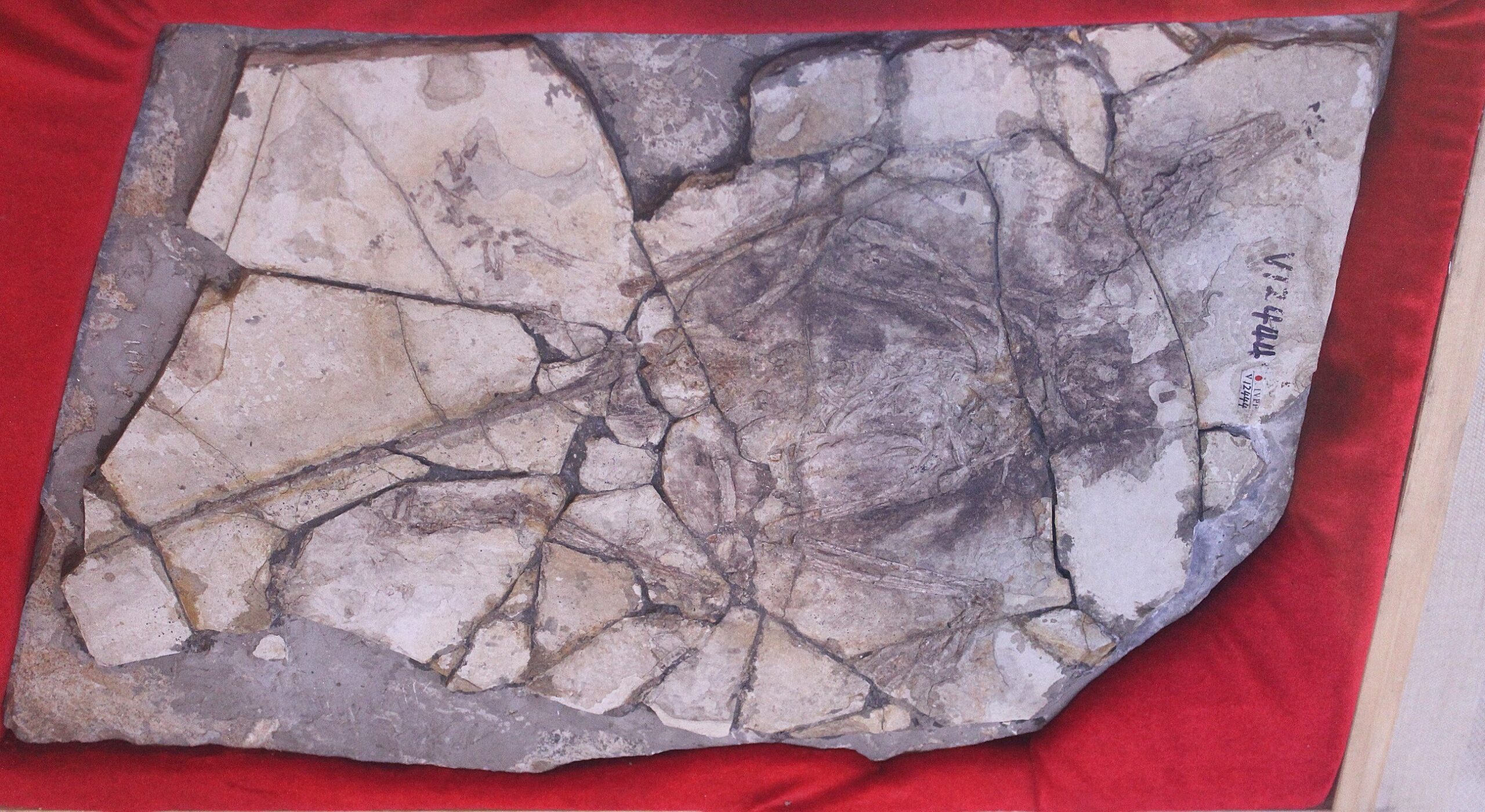
In 1999, a fossil hailed as proof that dinosaurs evolved into birds was unveiled with enormous fanfare, complete with a wingspan of media coverage – until paleontologists realized it had been physically assembled from two unrelated specimens.
The fossil, later nicknamed Archaeoraptor, combined the tail of a small dromaeosaur with the body of an early bird-like animal, apparently stitched together by fossil dealers looking to maximize its market value before scientific vetting caught the deception. The forgery slipped past initial review partly because the excitement around proving a dinosaur-bird evolutionary link outweighed normal scientific caution. Once CT scans and closer anatomical study revealed the mismatched anatomy, the claim was formally retracted.
Worth Knowing
- Unveiled in 1999 as supposed proof dinosaurs evolved into birds
- Combined a dromaeosaur tail with an early bird-like body
- Assembled by fossil dealers chasing market value, not scientists
- CT scans exposed the mismatch and the claim was formally retracted
The episode became a cautionary tale about rushing spectacular fossils into public view before independent verification. Fragments of the genuine specimens were eventually separated and correctly identified as two legitimate but unrelated finds – a stark reminder that commercial fossil markets and rigorous science don’t always mix well.
#5 – Pluto Quietly Disappeared Before Anyone Made It Official
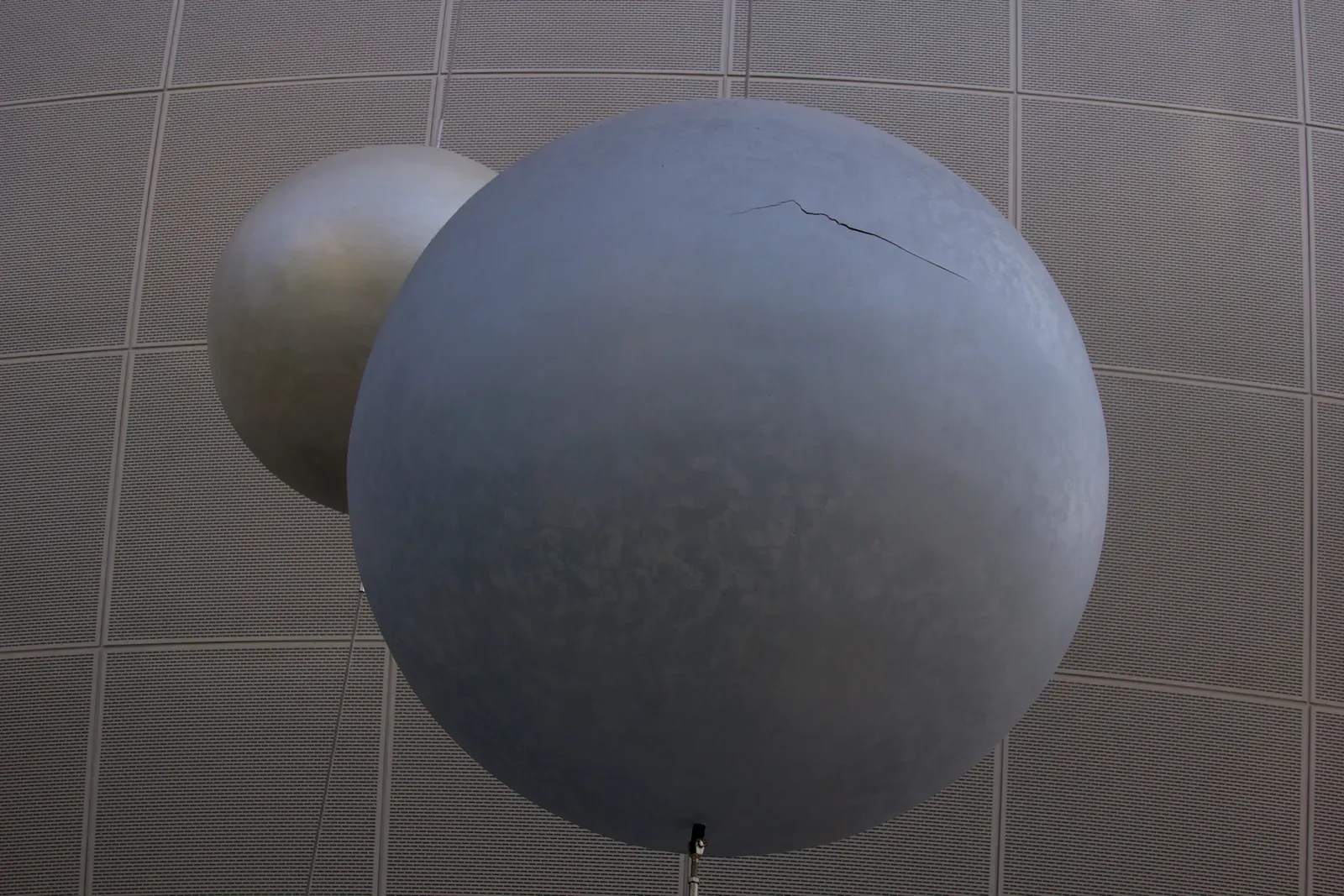
Long before the International Astronomical Union formally voted on Pluto’s planetary status in 2006, at least one major natural history institution had already made its own call.
New York’s Hayden Planetarium, part of the American Museum of Natural History, redesigned its solar system exhibit years earlier to group Pluto with icy Kuiper Belt objects rather than the eight traditional planets. No formal announcement accompanied this shift – visitors simply noticed the missing ninth planet and, in some cases, complained loudly before the broader scientific community caught up with an official reclassification. The museum effectively got ahead of a debate that would later spark international headlines and playground arguments for years afterward.
This is a case where a museum’s quiet internal correction actually preceded, rather than followed, the official scientific consensus. It’s also proof that “quietly corrected” doesn’t always mean cautious – sometimes it means a museum made a bold call before anyone gave them permission to.
#4 – A Ten-Year-Old Caught What Curators Missed for Years
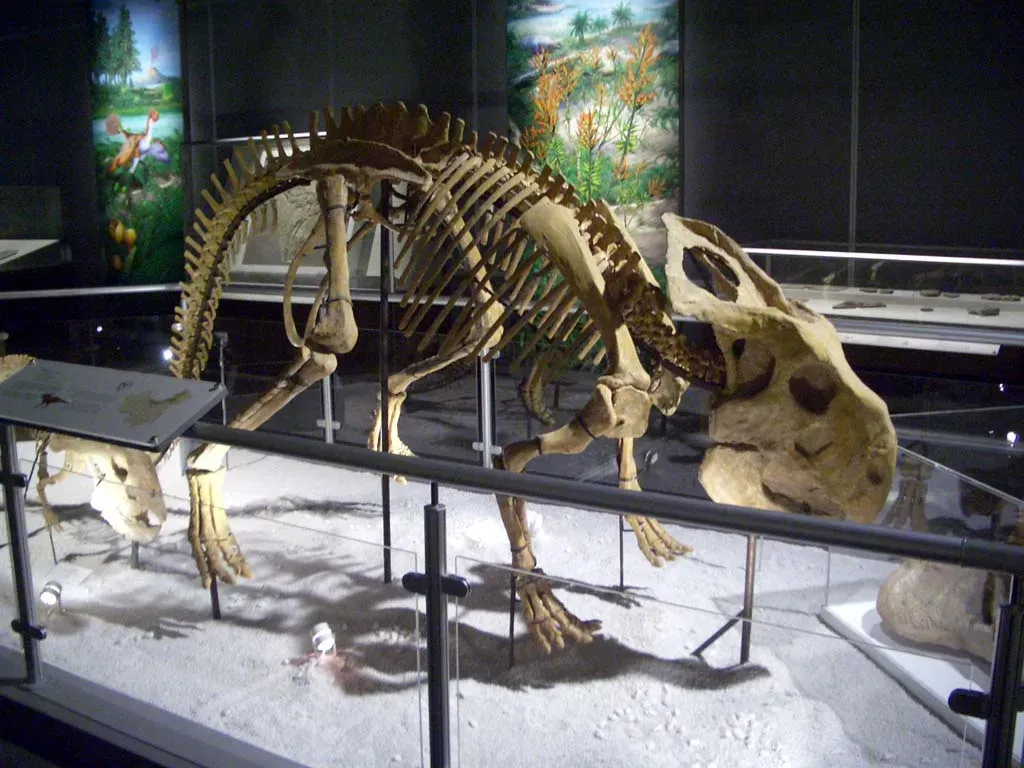
Sometimes the correction isn’t about decades-old science – it’s about a straightforward mix-up that sat uncorrected until a sharp-eyed visitor spoke up.
In 2017, a ten-year-old museum-goer named Edwards was reading a placard at London’s Natural History Museum that identified an image as an Oviraptor – a beaked, feathered predator. Something looked off. Edwards was sure the sketch actually showed a Protoceratops, a sheep-sized plant-eater with a completely different skull shape. His parents were skeptical that a world-famous institution could really get something this basic wrong, but they emailed the museum on his behalf anyway.
Weeks later, the family received a letter from the Natural History Museum confirming the boy’s hunch, and according to a statement issued by the museum, the exhibition had been “refurbished several times” and “an error [had] been made.” The mistake had apparently gone unnoticed through multiple renovations before a ten-year-old caught it – proof that refurbishments update paint and lighting far more often than they re-verify decades-old silhouettes.
#3 – The Dinosaur That Wore Someone Else’s Head for a Century
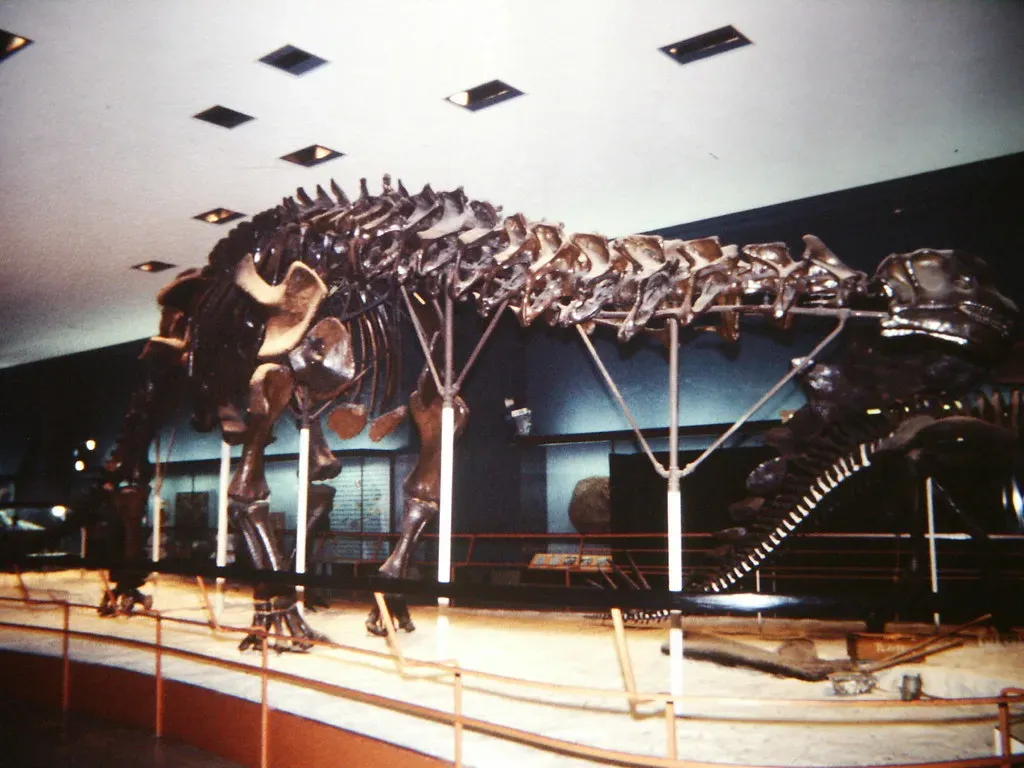
For nearly a hundred years, one of the most famous dinosaur skeletons in America was topped with a skull that didn’t belong to it – and almost nobody outside paleontology circles knew.
The mix-up actually began back in the 1880s, when paleontologist Othniel Charles Marsh described Apatosaurus without ever finding a skull actually attached to the body. Needing something to complete his 1883 reconstruction, Marsh borrowed the head of a Camarasaurus, a completely different sauropod, and the switch stuck. When the Carnegie Museum in Pittsburgh mounted its own Apatosaurus skeleton in 1932, it repeated the same mistake, and general scientific apathy plus a genuine shortage of well-preserved Apatosaurus skulls kept the wrong head bolted on for nearly fifty more years.
The fix, when it finally came, was a massive undertaking. During a major renovation, four neck vertebrae were added, the tail was extended and lifted off the ground to reflect the lack of evidence for a dragging tail in preserved sauropod tracks, and the Apatosaurus finally received a correct head to replace the borrowed Camarasaurus skull. A generation of museumgoers had unknowingly been looking at a Frankenstein dinosaur their entire lives.
#2 – The T. Rex That Finally Stood Up Straight
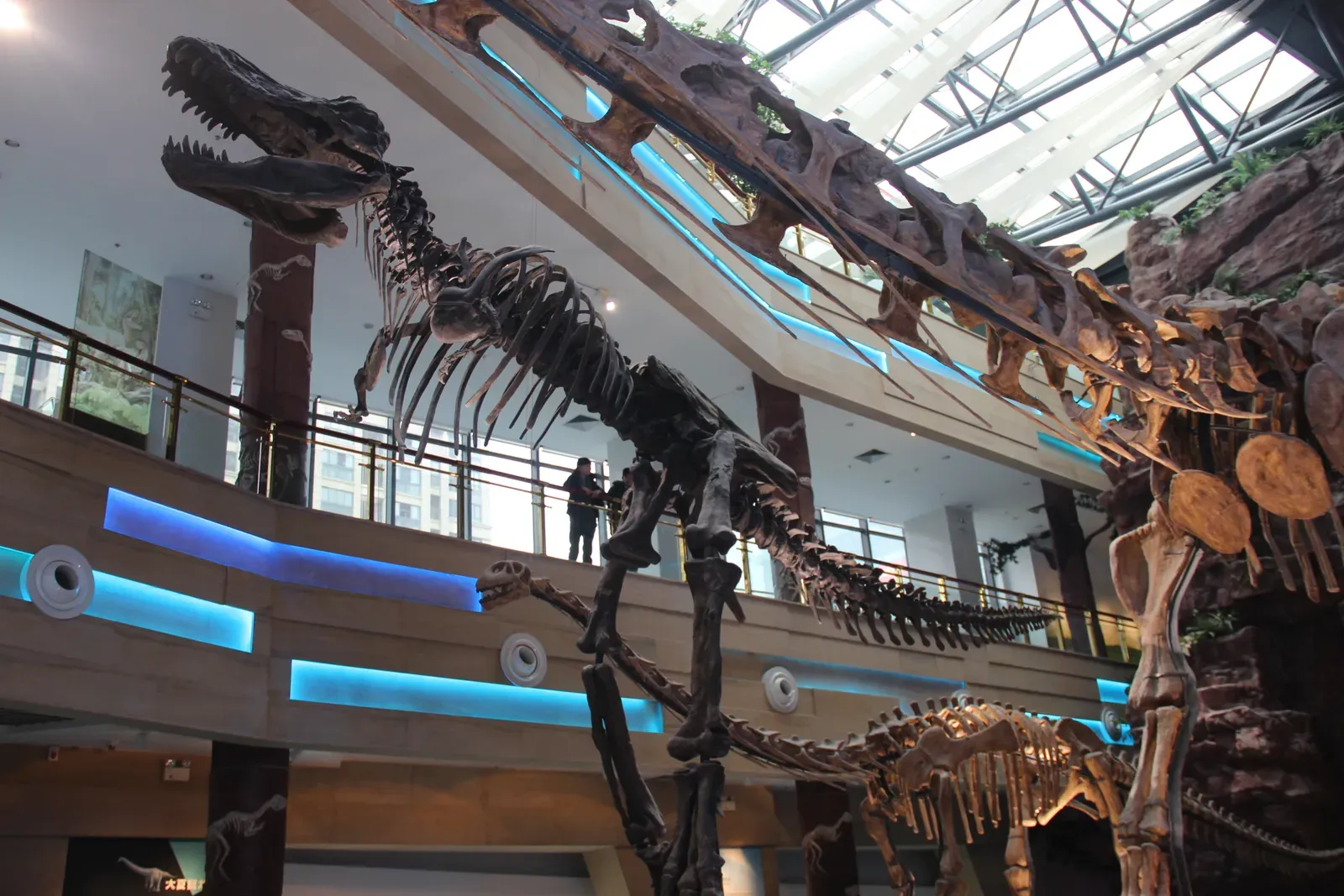
For nearly eight decades, the most famous predator in prehistory stood in museum halls in a posture that modern paleontologists now consider almost comically wrong.
Propped upright in the Cretaceous dinosaur hall at the American Museum of Natural History, the snarling tyrant dragged its tail along the ground in the same pose it had held since 1915 – even as paleontologists spent decades publicly arguing that T. rex was actually a fast, horizontally balanced hunter, not a slow-moving tripod. That original mount came from paleontologist Henry Fairfield Osborn, who unveiled a nearly complete Tyrannosaurus skeleton standing bolt upright on its tail like an oversized kangaroo, and museums worldwide copied the posture for generations.
Quick Compare
- 1915 mount: upright stance, tail dragging on the ground, kangaroo-style pose
- 1994 renovation: horizontal spine, tail lifted for balance
- Scientific consensus: flagged as wrong decades before museums acted
- Pop culture push: Jurassic Park helped popularize the corrected silhouette
The correction finally arrived decades later. By 1994, the AMNH renovated its dinosaur halls and gave its T. rex a proper spinal adjustment, tilting the body horizontal and lifting the tail for balance. Museums took literal decades to fix a pose scientists had already flagged as wrong, and pop culture had to essentially force the issue – it took Jurassic Park’s cinematic dinosaurs to popularize the corrected silhouette faster than any museum plaque ever could.
#1 – Brontosaurus Wasn’t Real, Then It Was Real Again
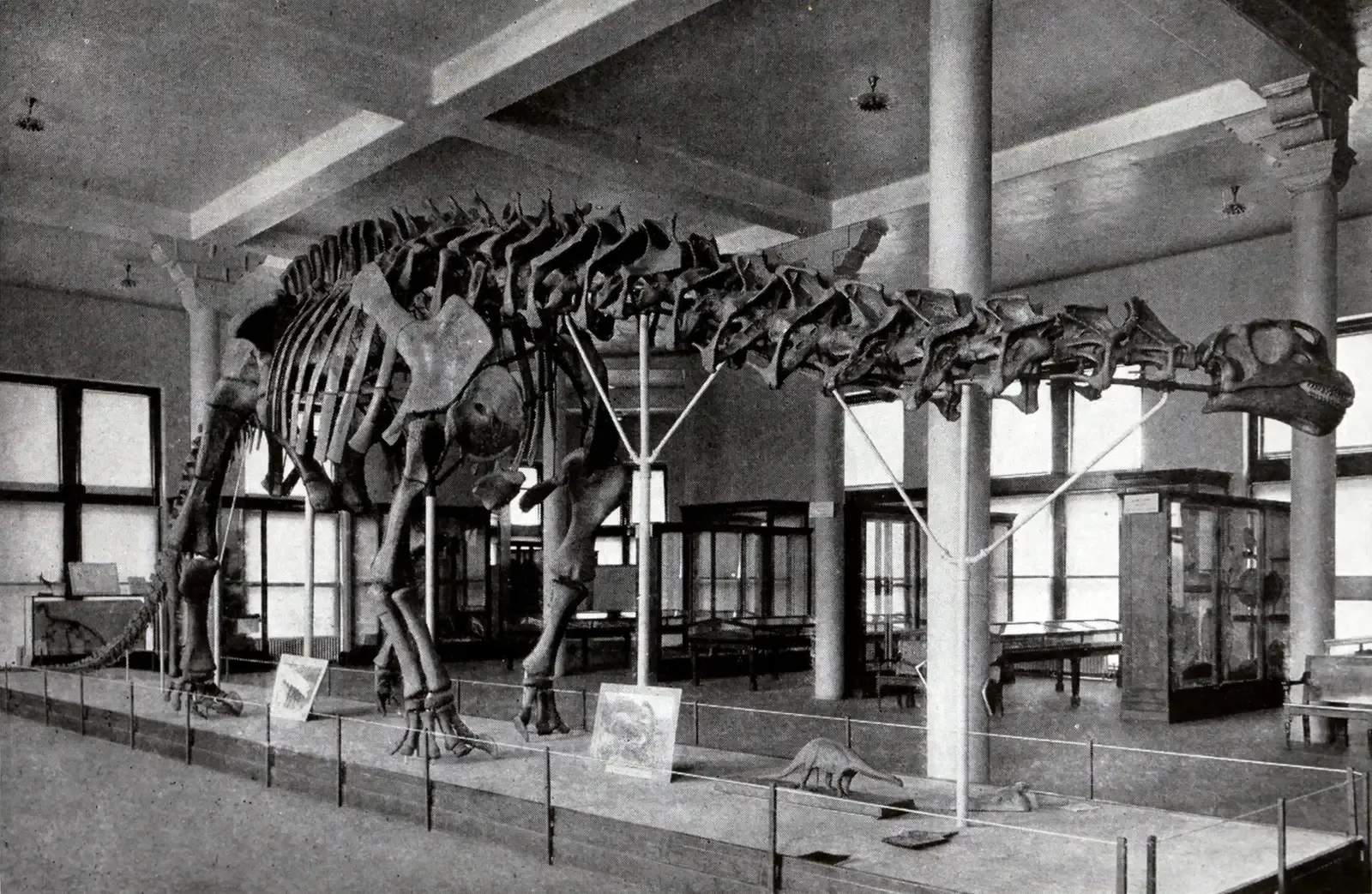
No correction on this list is stranger than the fate of the single most iconic dinosaur name in popular culture – a name that scientists quietly discarded, then decades later, quietly brought back.
The Brontosaurus skeleton described in the late 1800s turned out to be the same animal as the already-named Apatosaurus, meaning the “thunder lizard” name should never have stuck under naming-priority rules. Scientists already knew by 1903 that there was no such thing as a Brontosaurus. Yet museums, cereal boxes, and textbooks kept the name alive in public consciousness for over a century, largely because correcting decades of popular branding felt like a losing battle nobody wanted to fight loudly.
Then something almost nobody expected happened. A detailed 2015 anatomical study re-examined the skeletal differences between the two genera and concluded they were distinct enough after all, effectively resurrecting Brontosaurus as a valid scientific name. Museums that had spent generations quietly correcting their signage back to “Apatosaurus” suddenly faced the opposite dilemma. If there’s one takeaway from this entire list, it’s that “correction” in paleontology is never really final – it’s just the current best guess, and it always comes with an expiration date.
The Bottom Line
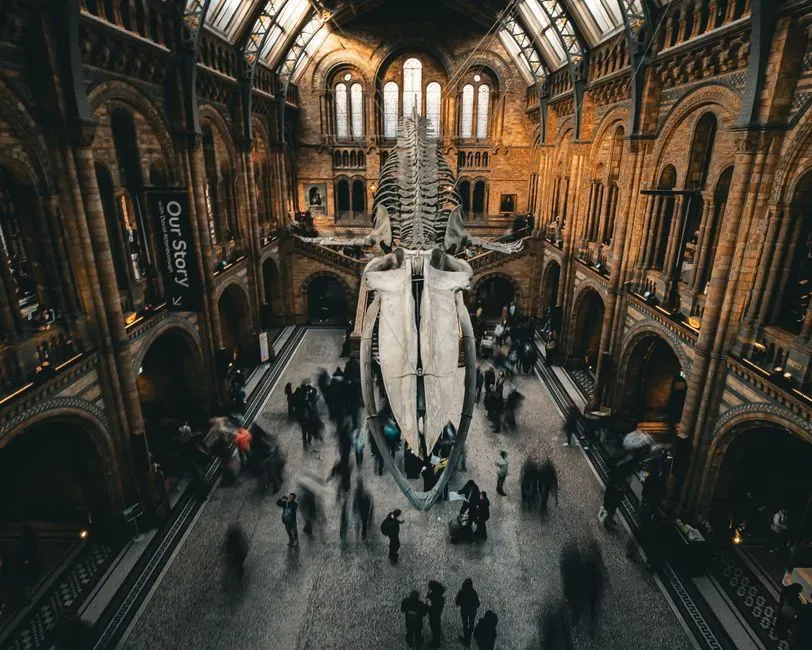
What these thirteen corrections reveal isn’t incompetence – it’s how science actually works, messy and iterative, even inside institutions built to project certainty. Museums rarely announce when they’re wrong, whether the mistake is a mislabeled dinosaur, a fraudulent fossil, or a skeleton wearing the wrong skull for a hundred years.
Frankly, that quiet-fix approach feels outdated in an era when audiences increasingly want transparency about how scientific consensus shifts. If a ten-year-old can spot an error museums missed through multiple renovations, it’s fair to ask what else is still sitting uncorrected behind the glass right now. What’s the biggest museum mistake you’ve ever noticed yourself? Drop it in the comments.