Imagine trying to start life on a planet that is basically a shooting gallery of high‑energy radiation, solar flares, and charged particles. That was early Earth: a young Sun blasting out far more intense radiation than it does today, and a fragile, forming atmosphere struggling to hang on. Yet somehow, tiny, simple life managed not just to appear, but to survive long enough to evolve into everything we see now. The big question has always been: how?
New research is sharpening an answer that has been hinted at for years: Earth’s magnetic field may have been one of the unsung heroes of this whole story. Acting like an invisible force shield, it likely helped protect the atmosphere and the planet’s surface from the worst of the Sun’s early outbursts. The evidence is still developing and far from perfect, but it is strong enough to paint a compelling picture: without a reasonably strong, early magnetic field, life’s odds would have been a lot worse.
The Young Sun Was Far More Dangerous Than You Think
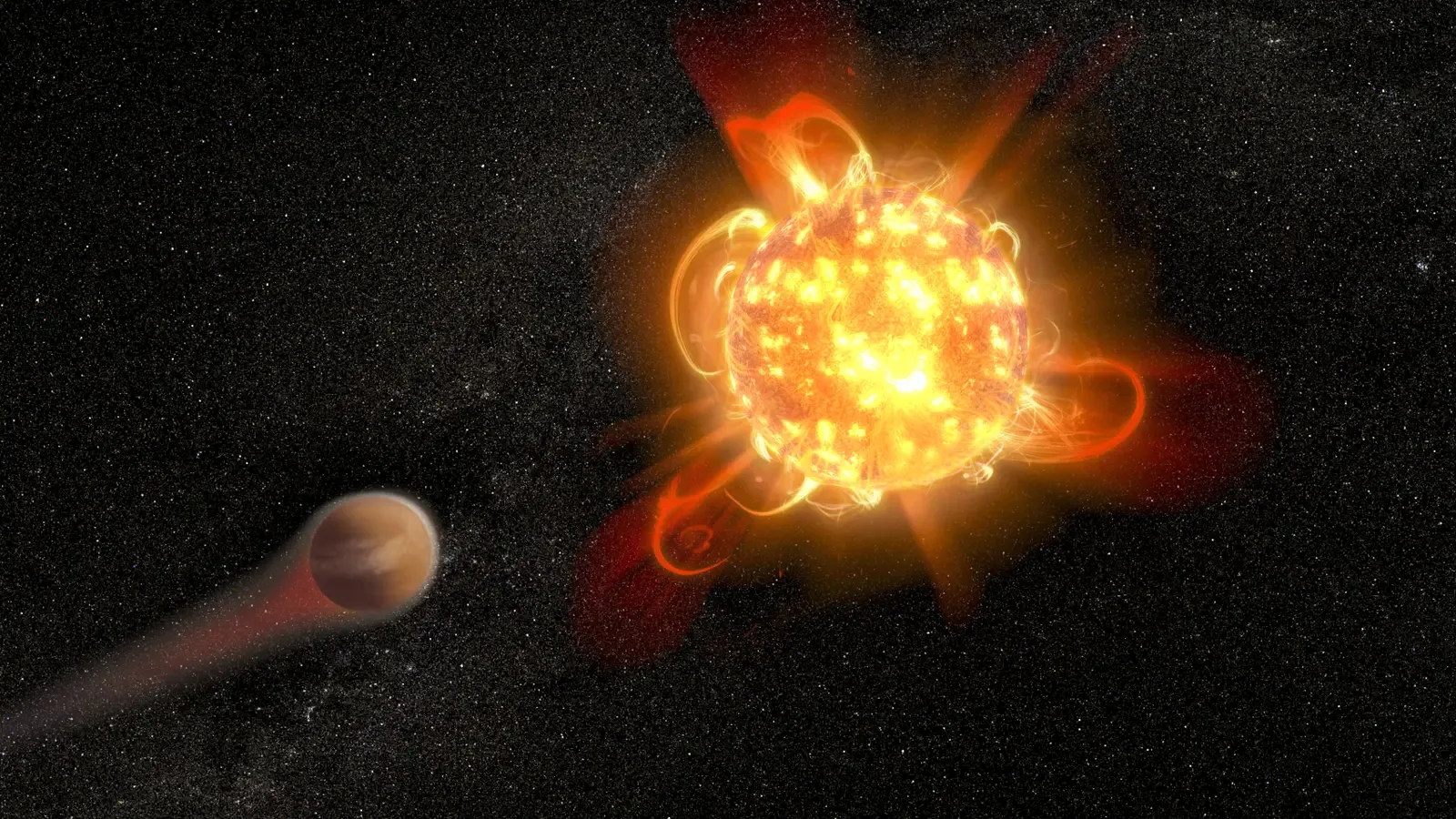
When people imagine the early Earth, they usually picture volcanoes and molten rock, but the more frightening threat was above: the young Sun. In its early stages, our star likely spun faster, flared more often, and hurled out powerful streams of charged particles that would put today’s solar storms to shame. That meant more ultraviolet and X‑ray radiation pouring onto the planet, plus frequent blasts of high‑energy particles capable of shredding molecules apart. For any fragile, newly forming biology, that is not just uncomfortable, it is lethal.
Without some form of shielding, this intense space weather could have stripped away much of Earth’s early atmosphere and bathed the surface in radiation levels that would destroy organic molecules as quickly as they formed. You can think of it like trying to build a sandcastle on a beach where giant waves crash every few seconds: you might be able to pile up some sand, but it would be wiped away again and again. The fact that Earth retained thick air and hosted liquid water fairly early suggests something was quietly pushing back against the Sun’s fury.
The Magnetic Field: An Invisible Force Shield With Real Consequences
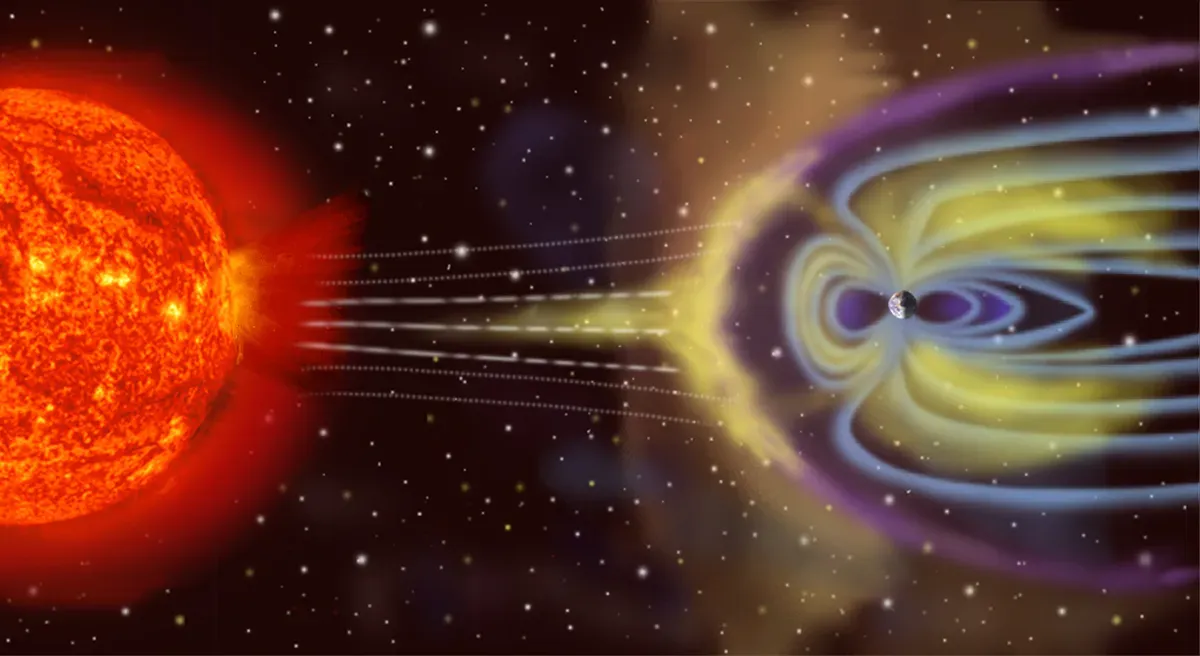
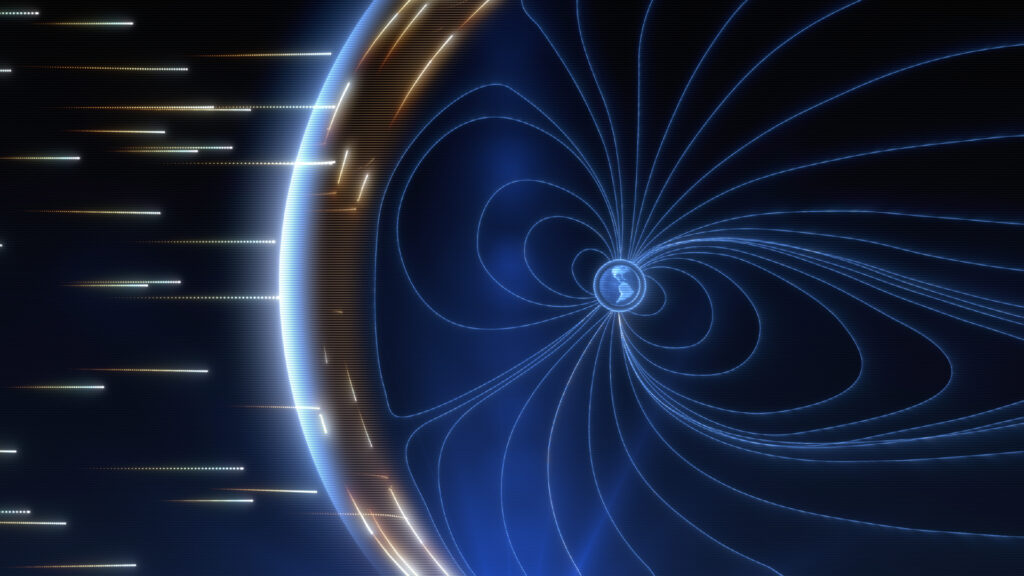
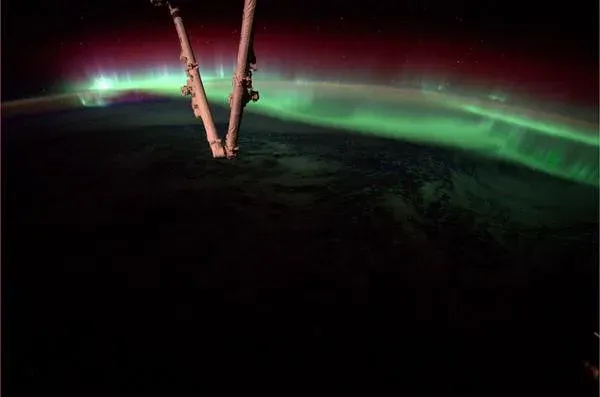
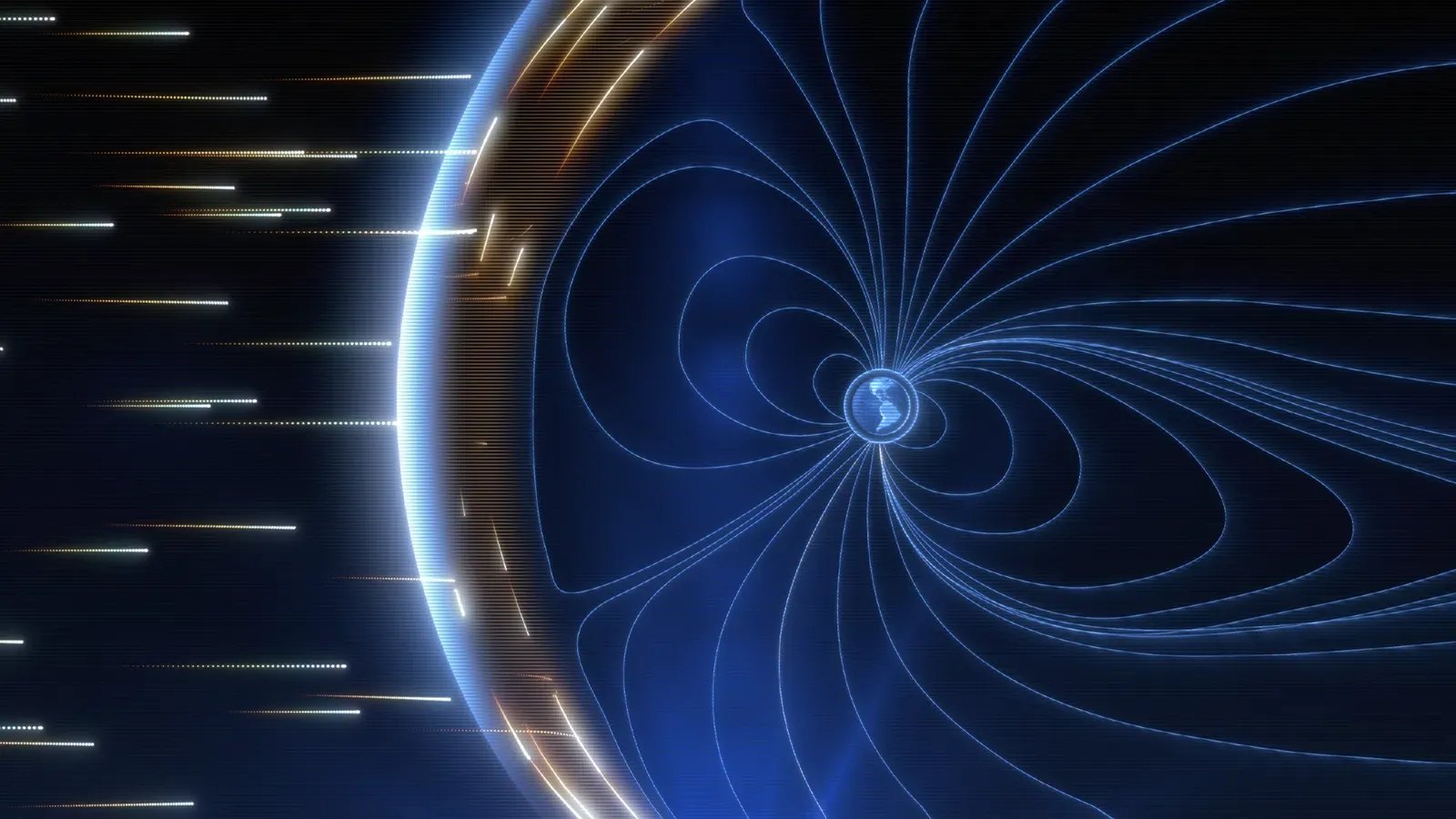
Earth’s magnetic field is easy to forget about because we cannot see it, but it constantly shapes the environment around our planet. Generated by the motion of molten iron in the outer core, it creates a protective bubble in space called the magnetosphere. Charged particles from the solar wind are guided along magnetic field lines, deflected away from the planet, or funneled toward the poles where they produce auroras instead of global damage. It is like having a flexible, invisible shield that directs most incoming fire away from the target.
For early Earth, this shield was not just a nice bonus; it may have been a deciding factor in whether the atmosphere stuck around at all. When the solar wind slams into an unprotected planet, it can gradually strip away light gases and erode the atmosphere over time. With a magnetic field, much of that solar wind is deflected before it can do serious harm. The field did not make Earth safe in the way we might like to imagine – radiation was still intense and conditions harsh – but it probably shifted the balance from “nearly impossible for life” to “barely survivable, but just enough.”
Clues Locked in Ancient Rocks: How We Know the Field Was There Early
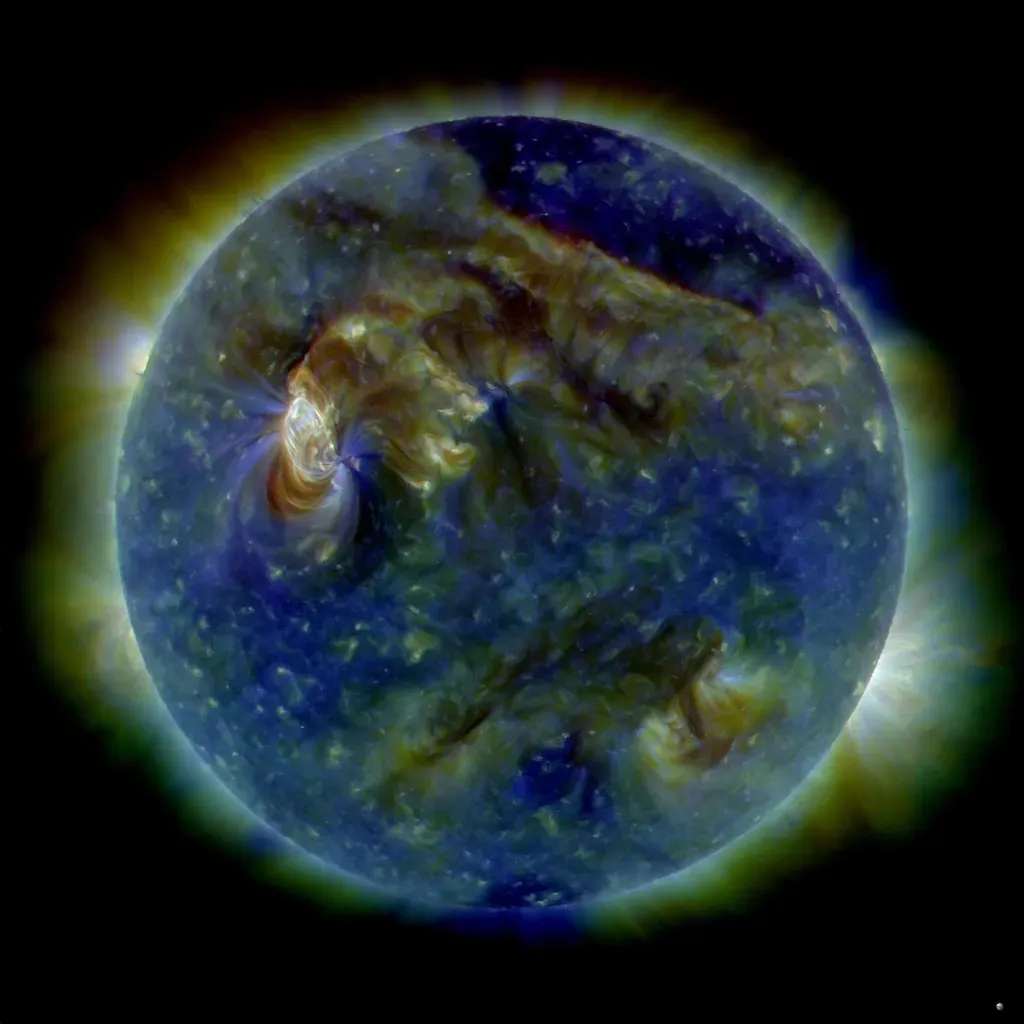
You might wonder how we can possibly know anything about Earth’s magnetic field billions of years ago. The answer comes from one of geology’s coolest tricks: certain minerals act like tiny tape recorders of the magnetic field present when they formed. As volcanic rocks cool or sediments turn into rock, magnetic grains inside them line up with the field and essentially freeze that direction in place. Billions of years later, scientists can measure those orientations and estimate how strong and organized the field was.
Several studies have examined ancient crystals and rocks more than three billion years old and found signs of a global magnetic field that was already reasonably strong. The details are still debated – different samples and methods sometimes give slightly different answers – but the broad picture is that Earth had a working dynamo in its core far earlier than some models once suggested. That shifts the narrative: instead of a long delay before a protective field appeared, it now looks like life emerged on a planet that was already magnetically guarded, at least to some degree.
Solar Radiation, DNA Damage, and Why Shielding Matters for Early Life
High‑energy solar radiation is bad news for complex molecules. It breaks chemical bonds, mutates DNA, and can sterilize surfaces. For the simplest early life – tiny microbes without sophisticated repair systems – constant exposure to intense ultraviolet and charged particles would have been like trying to write a book while someone keeps tearing out pages and splashing ink all over them. Some damage and mutation can drive evolution, but beyond a certain point it just wipes everything out. That is why any mechanism that reduces radiation at the surface can seriously change the odds.
Earth’s magnetic field does not block ultraviolet light the way the ozone layer does, but by protecting the atmosphere from being eroded, it indirectly helps keep that ozone and other shielding gases in place. It also diverts many charged particles that would otherwise slam into the upper atmosphere and generate additional harmful effects. In simple terms, the field helped preserve a thicker, more stable blanket of air, which then did its own part in filtering and scattering dangerous radiation. Together, this layered defense made shallow water, coastal areas, and maybe even some land environments at least marginally safer for early organisms.
Why Mars and Other Worlds Strengthen the Magnetic Field Hypothesis
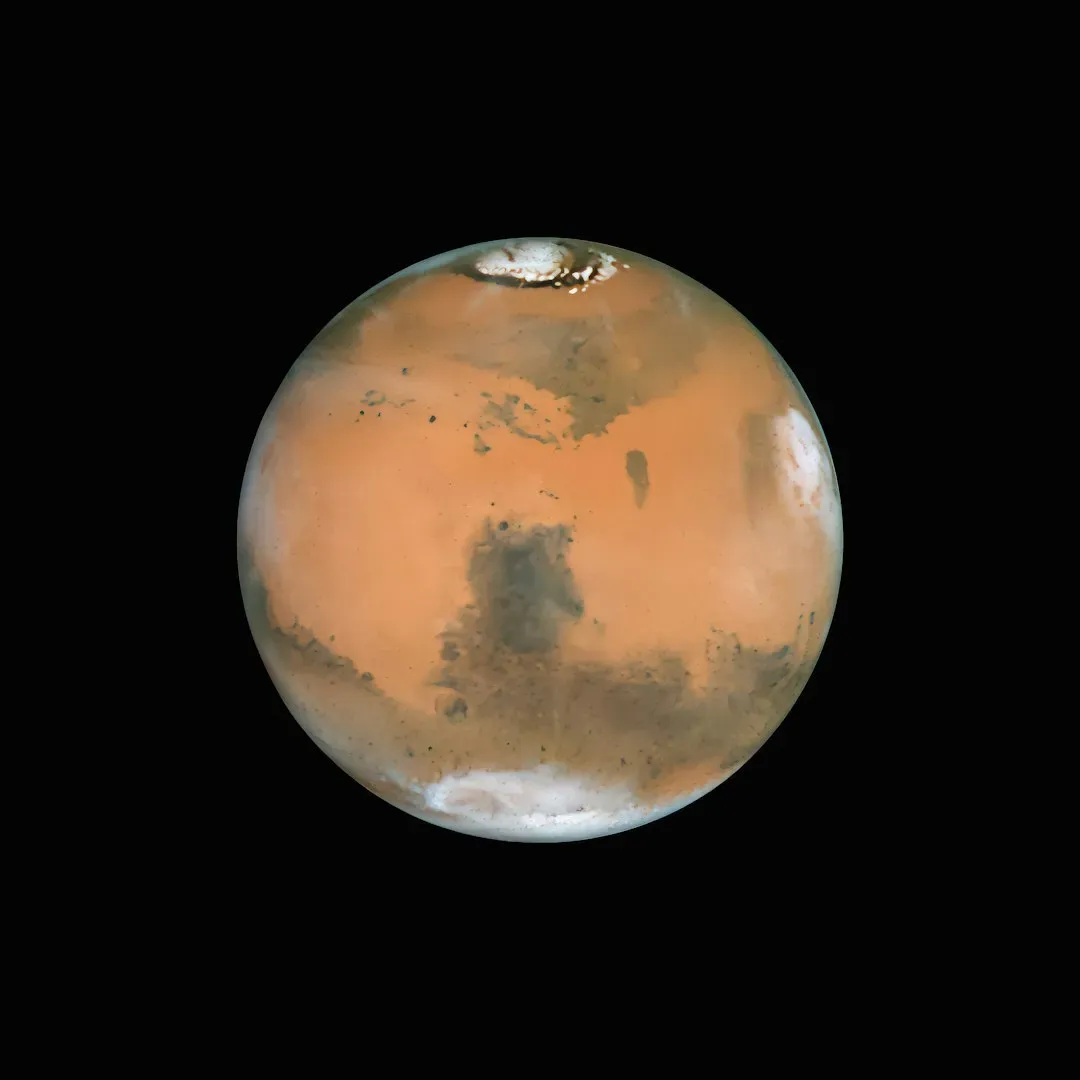
One of the most compelling arguments for the importance of Earth’s magnetic field comes from looking outward, especially at Mars. Mars likely had liquid water and a thicker atmosphere in its deep past, and there are signs it once had some form of magnetic field. But that global field seems to have faded relatively early, leaving only patchy remnants locked into its crust. Without a strong, active magnetosphere, the solar wind had a much easier time stripping away the Martian atmosphere over eons, turning a potentially habitable world into the cold, thin‑aired desert we see now.
This contrast does not prove that magnetic fields are the single deciding factor in habitability, but it makes it very hard to ignore their role. You can picture Earth and Mars starting a race with similar potential, but Earth gets to run with a shield and Mars slowly loses its armor. Over billions of years, that difference accumulates into dramatically different outcomes for air, water, and the likelihood of stable habitats. The comparison has pushed many scientists to take planetary magnetism much more seriously when thinking about where life might survive in the wider cosmos.
Personally, I find this Mars‑Earth comparison especially striking because it reframes the magnetic field from a background technical detail into a character in the story of life. It suggests that if you are scanning exoplanets for possible biology, asking whether they have a magnetic field is not some niche geophysics question; it is central to whether that world can keep its atmosphere and shield its surface long enough for life to take a foothold.
New Research: A Stronger Case, But Not a Closed Story
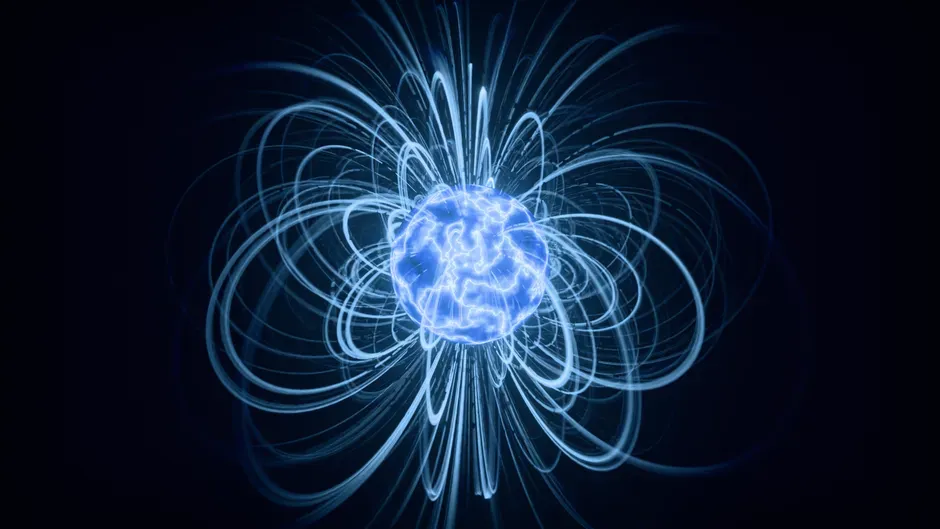
Recent studies are adding more nuance to this picture, refining the timing and strength of Earth’s early magnetic field and better modeling how it interacted with a more active young Sun. Some research points to the inner core forming earlier than previously assumed, which would have boosted and stabilized the dynamo in the outer core. Other work looks at how different levels of solar activity would have affected atmospheric escape rates with and without a magnetic field, reinforcing the idea that magnetism significantly reduced losses. The details can be technical, but the broad message keeps pointing in the same direction: Earth’s field mattered, and it likely mattered a lot.
That said, the story is nowhere near finished, and in my view it is important not to oversell the certainty. The rocks we rely on are extremely old and sometimes altered, the models still make assumptions about early conditions, and scientists actively debate specific values and timelines. What seems reasonable to say today is that the magnetic field probably played a crucial protective role alongside other factors like volcanic outgassing, atmospheric chemistry, and the presence of liquid water. It was one key layer in a stack of lucky breaks that let life survive in a very hostile early solar system.
Conclusion: A Planet Saved by an Unseen Shield
When you step back and look at the big picture, Earth starts to feel less like a passive stage where life just happened to show up, and more like a carefully balanced system that had to dodge a long list of cosmic bullets. The magnetic field is one of those quiet, invisible features that we rarely think about, yet it may have been absolutely central to giving early life a chance. Without it, our atmosphere could have been thinner, our surface more irradiated, and our oceans far less stable. In that alternate timeline, maybe the ingredients for life still existed, but they kept getting erased before they could organize into something durable.
My own opinion is that we should treat the magnetic field as one of the main characters in any serious story about life’s origins, not just a supporting detail for compass needles and auroras. It does not get all the credit – chemistry, geology, and pure luck all had their say – but it probably shifted the odds enough to be the difference between a barren rock and a living world. As we search the galaxy for other habitable planets, asking whether they have a strong, long‑lived magnetic field might become just as important as asking whether they have liquid water. If you had to bet on where life can survive the long, violent youth of a star, would you really put your money on a world without an invisible shield of its own?