
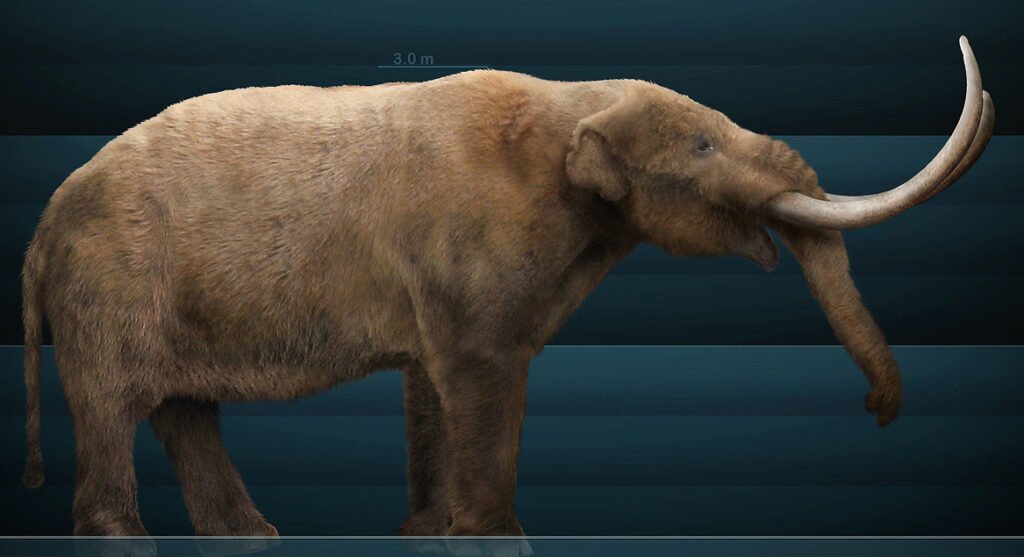
Most people picture the mastodon as a shaggy, oversized elephant that grunted through prehistoric forests, got speared into extinction by early humans, and left behind nothing but dusty museum bones. That version has been repeated in textbooks for generations. It’s also mostly wrong, and the real story is stranger, bloodier, and far more scientifically interesting than the one you learned in school.
New DNA sequencing, tusk chemistry, and fossil re-dating have quietly rewritten almost everything researchers thought they understood about this Ice Age giant, from what it ate to how it died to whether it’s still shaping ecosystems today. Some of these corrections overturn decades-old textbook diagrams. Others expose contamination errors that sat undetected in museum drawers for a century. Here’s what scientists actually say now.
#1 – Mastodons Weren’t Just Twig-Munching “Browsers”
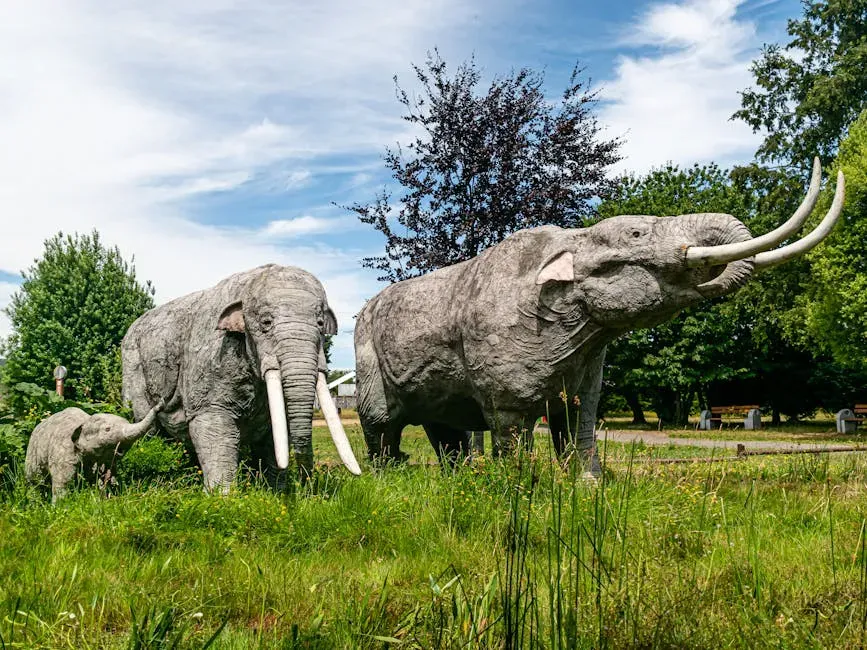
For decades, the textbook line was simple: mammoths grazed on grass, mastodons browsed on trees, end of story. Scientists built entire ecosystem models around this clean divide. Turns out reality was far messier.
Mammoths and mastodons have traditionally been treated as ecologically distinct species, with mastodons cast strictly as forest-dwelling browsers. But dental microwear studies found far more dietary flexibility in mastodons than their tooth shape ever suggested. Gut-content and phytolith analysis of preserved mastodon intestines even turned up grass residue mixed in with the woody browse – a diet no one expected from a supposed browsing specialist.
Those grass phytoliths point to mastodons grazing in cool, moist environments near water, not just chewing bark in dense forest. Scientists now openly admit the old grazer-versus-browser box was an oversimplification. Large-bodied animals in resource-limited environments simply ate whatever helped them survive – labels be damned.
Fast Facts
- Gut and phytolith analysis found grass mixed with woody browse in preserved mastodon intestines.
- Mastodons appear to have grazed near water in cool, moist habitats, not just dense forest.
- Dental microwear shows more dietary flexibility than tooth shape alone ever predicted.
- The classic “grazer vs. browser” divide between mammoths and mastodons is now considered oversimplified.
That flexible appetite turns out to be the least surprising thing researchers got wrong. The extinction story is where things get genuinely uncomfortable.
#2 – Human Hunters Alone Didn’t Wipe Them Out
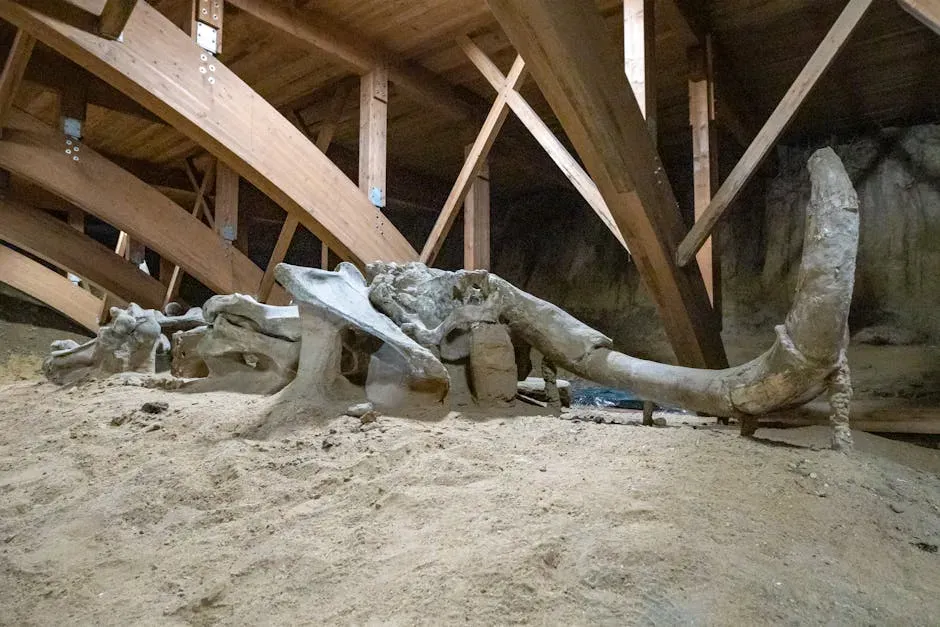
The “humans killed everything” narrative is one of the most repeated extinction stories in pop science. It’s simple, satisfying, and – according to researchers who actually study kill sites – increasingly incomplete.
Some researchers argue human hunting makes little sense as a primary extinction cause, since so few confirmed “kill sites” exist in the archaeological record. Others insist there’s plenty of evidence for ancient overhunting. That disagreement alone should tell you the “humans did it” story isn’t settled science – it’s a live, unresolved debate.
A separate regional analysis found something messier still: extinction patterns weren’t uniform across the continent. In what is now Alaska, megafauna disappeared before humans ever arrived, driven out by an intense cold period. In other regions, destabilizing habitats and shrinking food supplies made human predation more devastating once it did occur.
In some spots, mastodons and humans coexisted for up to 7,000 years before the animals eventually vanished – directly undercutting the idea of a swift, human-driven massacre. If people were involved, they were one pressure among several, not the single smoking gun.
That messiness gets even stranger once you realize mastodons may never have set foot where museums say they did.
#3 – Mastodons Weren’t Roaming the Frozen Arctic Steppe
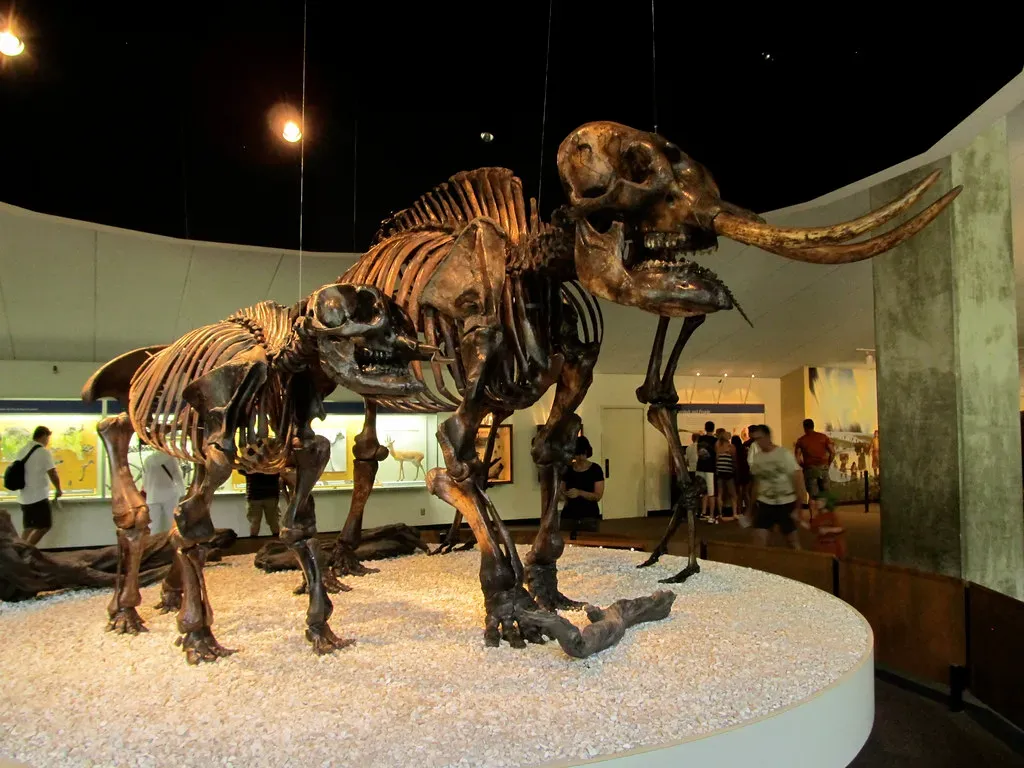
Museum displays love to show mastodons trudging across icy tundra alongside woolly mammoths. Turns out that image was built on a dating mistake, not on actual mastodon biology.
Mastodons lived in forests and wetlands, surviving on leafy browse, and researchers note they simply weren’t built for cold climates. Yet radiocarbon results kept placing mastodon fossils in the Arctic during the harshest glacial periods – a contradiction that puzzled scientists for years.
The culprit turned out to be sitting in museum drawers the whole time. Old preparation varnish and glues used to protect fossils had contaminated the samples, and when carbon dating suggested mastodons lived in an ice-covered, arid Arctic landscape roughly 20,000 years ago, researchers eventually traced the error back to curation contamination.
A full re-dating effort confirmed it: the earlier dates were simply wrong. Contamination from natural sources or museum handling had produced artificially young ages, meaning mastodons were never actually trudging across the frosty steppe at all.
Erase mastodons from the Arctic during the ice age, and an entire theory about who – or what – killed them off up north falls apart too.
#4 – Humans Weren’t Even Around When Northern Mastodons Vanished
If mastodons weren’t living in the Arctic during the glacial maximum, then the old theory that ancient hunters chased them out of the north collapses completely – and researchers have confirmed exactly that.
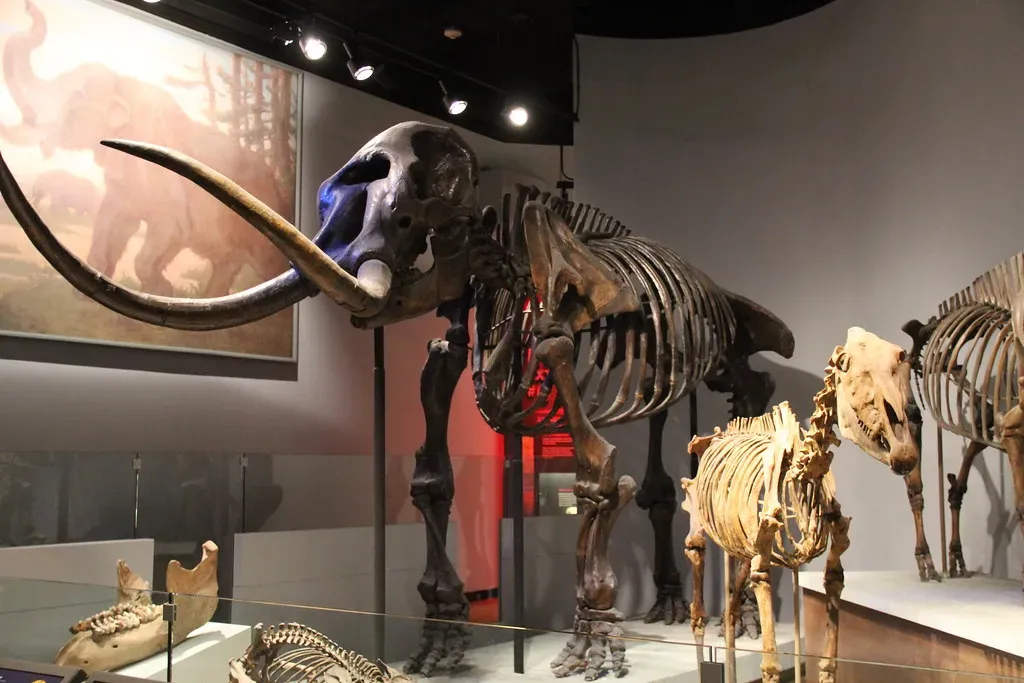
New research suggests humans could not have been involved in the local extinction of mastodons in the north roughly 75,000 years ago, since people hadn’t even crossed the Bering land bridge from Asia yet. That’s a stunning reversal: an entire regional extinction event happened tens of thousands of years before a single human hunter set foot nearby.
Researchers coined a phrase for the real culprit: “over-chill, not overkill.” New radiocarbon dates, combined with the total absence of American mastodon fossils in Eurasia, suggest these animals never actually inhabited eastern Beringia during the coldest glacial period.
Climate collapse, not spear tips, cleared the northern range first. It’s a quiet but massive correction to a story that’s been told the same way for generations.
The DNA evidence gets even weirder once you zoom out from one region to the entire species.
#5 – Mastodons Weren’t One Genetically Uniform Herd
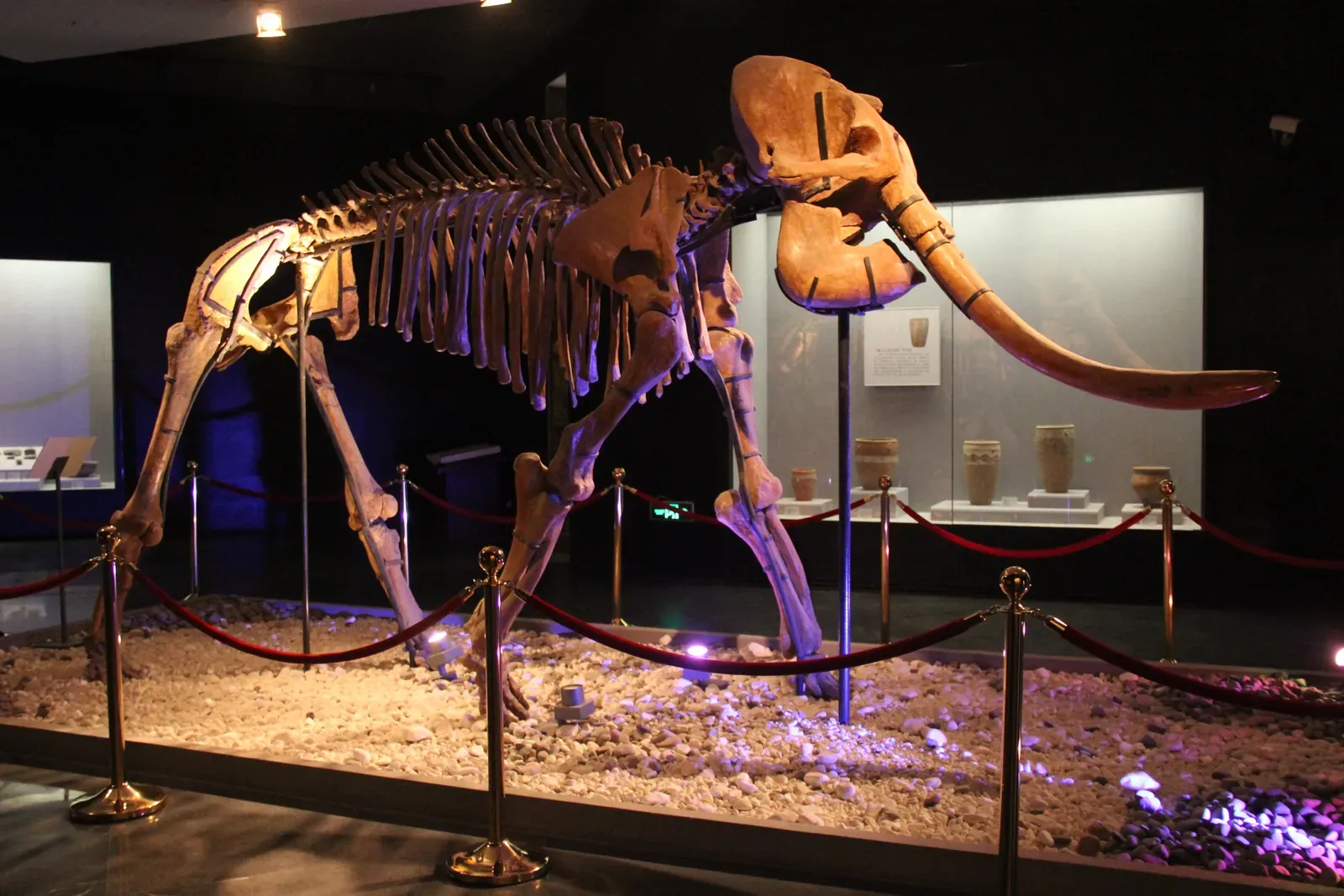
Scientists used to treat “the mastodon” as a single, relatively uniform population spread across North America. Ancient mitochondrial DNA has demolished that assumption entirely.
Researchers sequencing mitochondrial genomes from specimens across Nova Scotia, the eastern seaboard, Oregon, and Northern Ontario discovered the eastern populations were surprisingly diverse, arriving in distinct migratory waves at least three separate times. That’s not one species quietly holding its ground – that’s a dynamic population expanding and contracting in response to repeated climate swings, opening new territory as glaciers melted and retreating again when ice returned.
Even stranger, the DNA turned up a genetically distinct Mexican lineage nobody expected. Researchers pinpointed this mystery population as possibly a deeper branch of the Pacific mastodon – or possibly an entirely new, third mastodon species altogether. The single-population model is officially dead.
Worth Knowing
- Mitochondrial DNA was pulled from specimens as far apart as Nova Scotia, Oregon, and Northern Ontario.
- Eastern mastodon populations arrived in at least three distinct migratory waves.
- A previously unknown Mexican lineage may represent a deeper Pacific mastodon branch – or a third species entirely.
- Populations expanded and contracted repeatedly as glaciers advanced and retreated.
And if mastodons weren’t one uniform herd, they definitely weren’t the gentle giants the dioramas make them out to be.
#6 – Mastodons Weren’t Gentle, Docile Giants
Picture a mastodon and you probably imagine a slow, peaceful plant-eater. Tusk damage tells a much bloodier story.
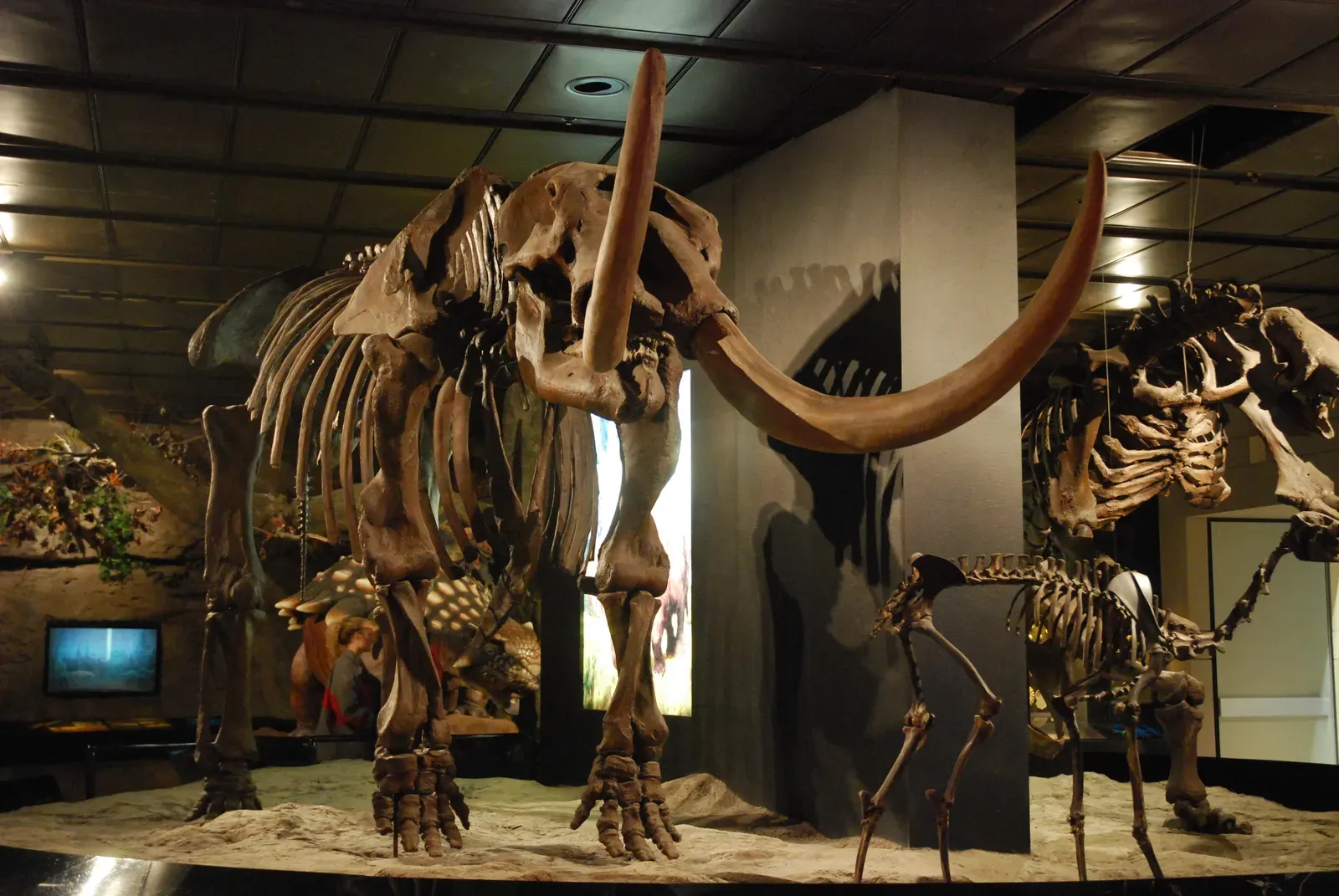
One paleontologist studying the fossils bluntly stated that American mastodons weren’t just docile herbivores whiling away their time in forests and meadows – they were very aggressive animals. The evidence sits right in the ivory.
Damage patterns on male tusks appeared like clockwork every single year of adulthood, always during the same narrow seasonal window. Tusk damage consistently shows up in ivory that formed between mid-spring and early summer once a mastodon reached the age of twenty, marked by regularly spaced pits along the underside of the curved tusks.
These weren’t accidental scrapes. Tusk tips were fractured so badly they likely couldn’t have been used again, skulls bore puncture wounds matching tusk shapes, and researchers concluded adult males sometimes fought each other to the death. Most nature documentaries still frame mastodons as peaceful browsers – arguably one of the biggest myths still circulating.
Mastodon violence is dramatic, but the next correction rewrites human history itself.
#7 – The “First Americans” Timeline May Be Off by 100,000 Years
This one is still hotly contested, but it’s too big to ignore. A single mastodon site in San Diego has forced scientists to question when humans actually arrived in the Americas.
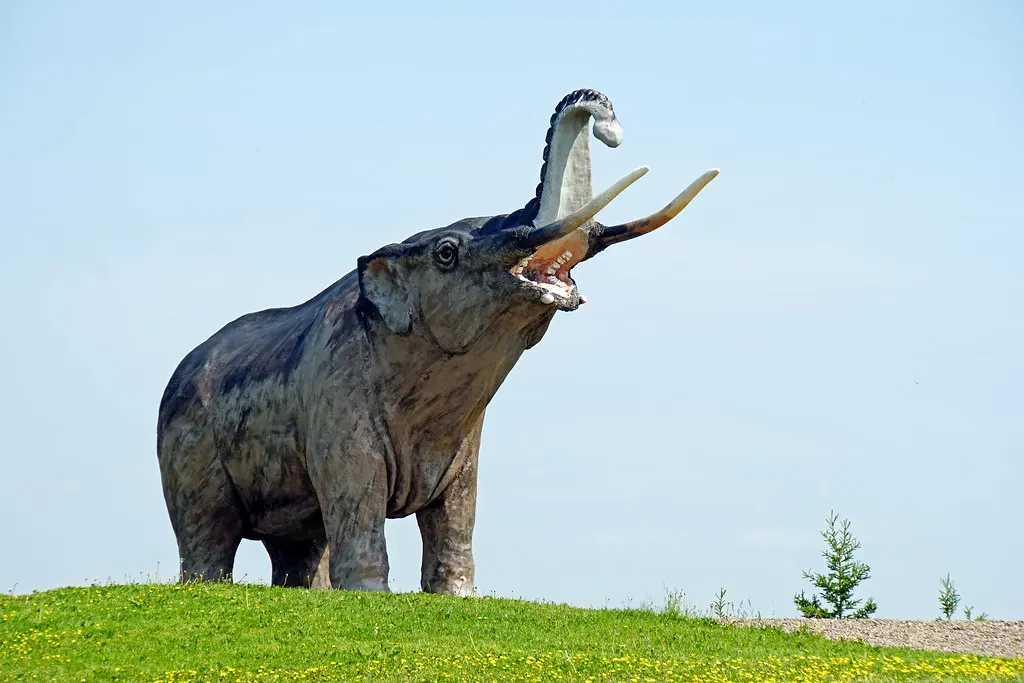
An Ice Age site in San Diego preserves 130,000-year-old mastodon bones and teeth that show signs of modification by early humans. If interpreted correctly, this evidence dramatically revises the timeline for when humans first reached the Americas – pushing the arrival date back by more than 100,000 years from what’s long been accepted.
Naturally, the paleontology world split down the middle. Some scientists find the hypothesis compelling and believe it shouldn’t be dismissed outright, while others have called it questionable science and outlined why they think the interpretation is flawed.
One of the study’s own authors defended the approach directly, arguing that scientists must follow the evidence even when it conflicts with what everyone previously assumed. Whether or not the site holds up under further scrutiny, it’s already forced a reckoning with the old “15,000 years ago” arrival date.
Mastodons weren’t just witnesses to human history – some of them, it turns out, were world travelers in their own right.
#8 – Mastodons Didn’t Stay Put in One Small Territory
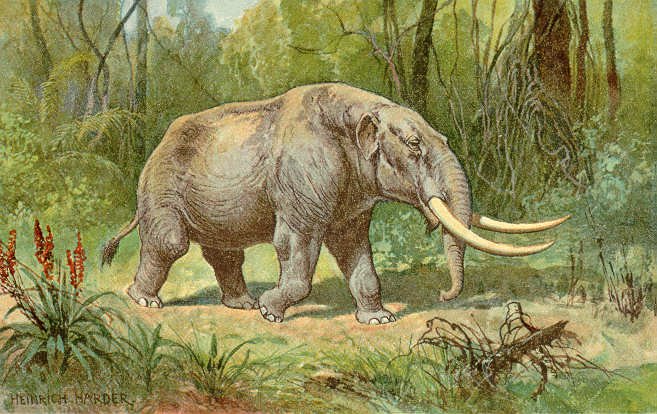
Older models assumed mastodons were homebodies, sticking to a modest patch of forest their whole lives. Chemical analysis of a single tusk blew that idea apart.
Researchers nicknamed him Fred – a 34-year-old male mastodon whose fossilized right tusk preserved a chemical diary of his entire life. By analyzing isotopes locked in the tusk, researchers determined he grew up in the Great Lakes area and later made annual trips to a mating ground in northeastern Indiana, dying there at age 34 after being stabbed in the face by another mastodon.
Fred wasn’t unique in his mobility – he was following a much bigger pattern. Broader research shows American mastodons traveled extreme distances in response to dramatic climate change and melting ice sheets, though the populations that pushed north ended up less genetically diverse and more vulnerable to extinction. So much for the stationary, low-mobility species scientists once imagined.
Migration wasn’t the only thing textbooks got wrong – even the animal’s identity has been misfiled before.
#9 – Mastodon Fossils Were Once Mistaken for Something Completely Different
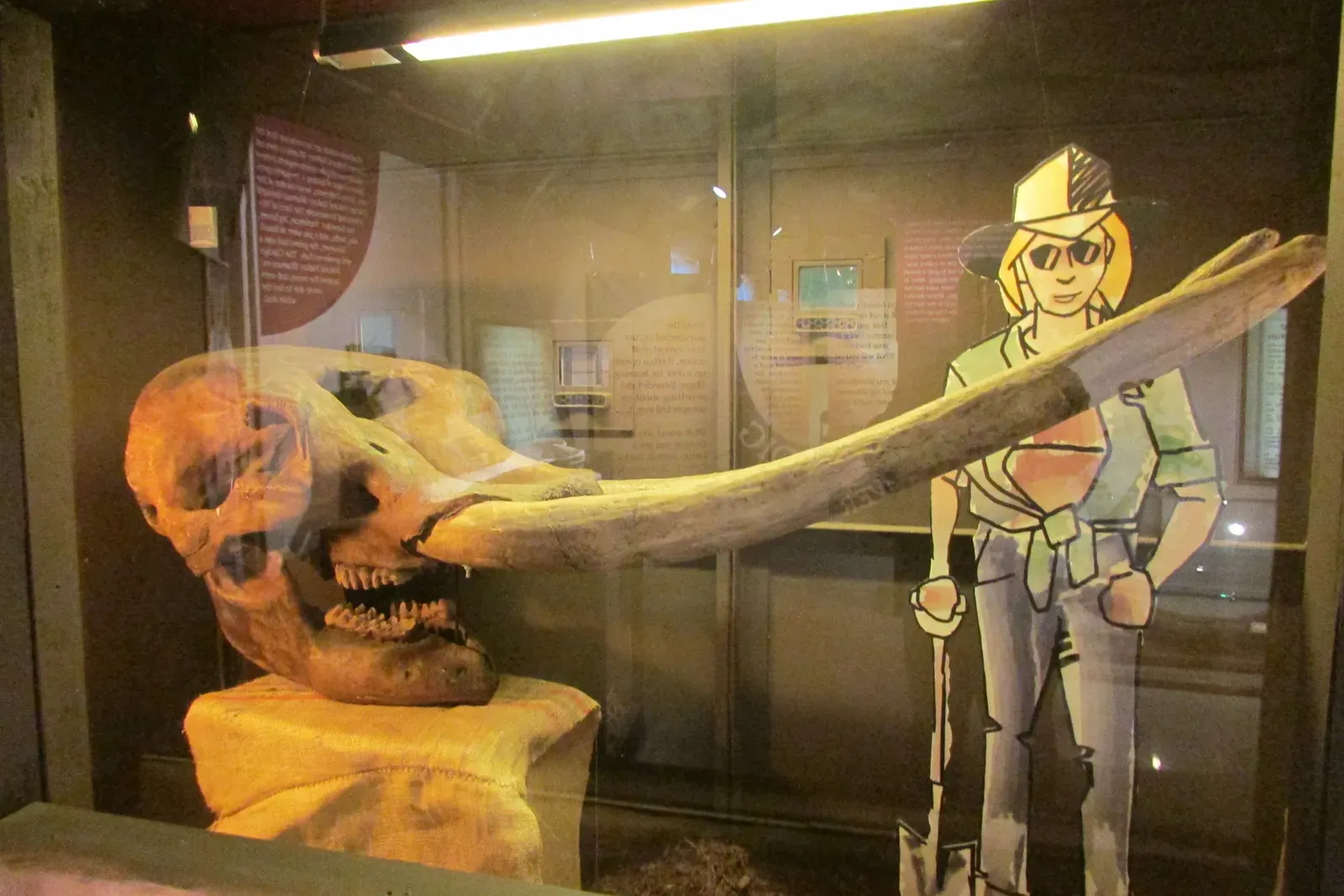
Here’s an ironic twist: paleontologists didn’t just get facts about mastodons wrong – they once misclassified an entirely different animal as one.
A camel-like Pliocene and Pleistocene animal first discovered in 1834 was originally identified as a mastodon, an ancestor of elephants. DNA and protein evidence later revealed it actually belonged among extinct South American hoofed mammals related to rhinos and horses. For nearly two centuries, this animal sat filed under the wrong family tree entirely, based purely on superficial skeletal resemblance.
This mix-up matters because it shows how easily early 19th-century classification methods could be fooled by convergent features. Without modern DNA and protein-sequencing tools, researchers had almost no way to catch the error – a humbling reminder that even confident-sounding “mastodon facts” from old scientific literature deserve a second look.
Speaking of mistaken identity, mastodons and mammoths get lumped together constantly – and that’s arguably the biggest mix-up of all.
#10 – Mastodons and Mammoths Weren’t Interchangeable “Same Animal” Cousins
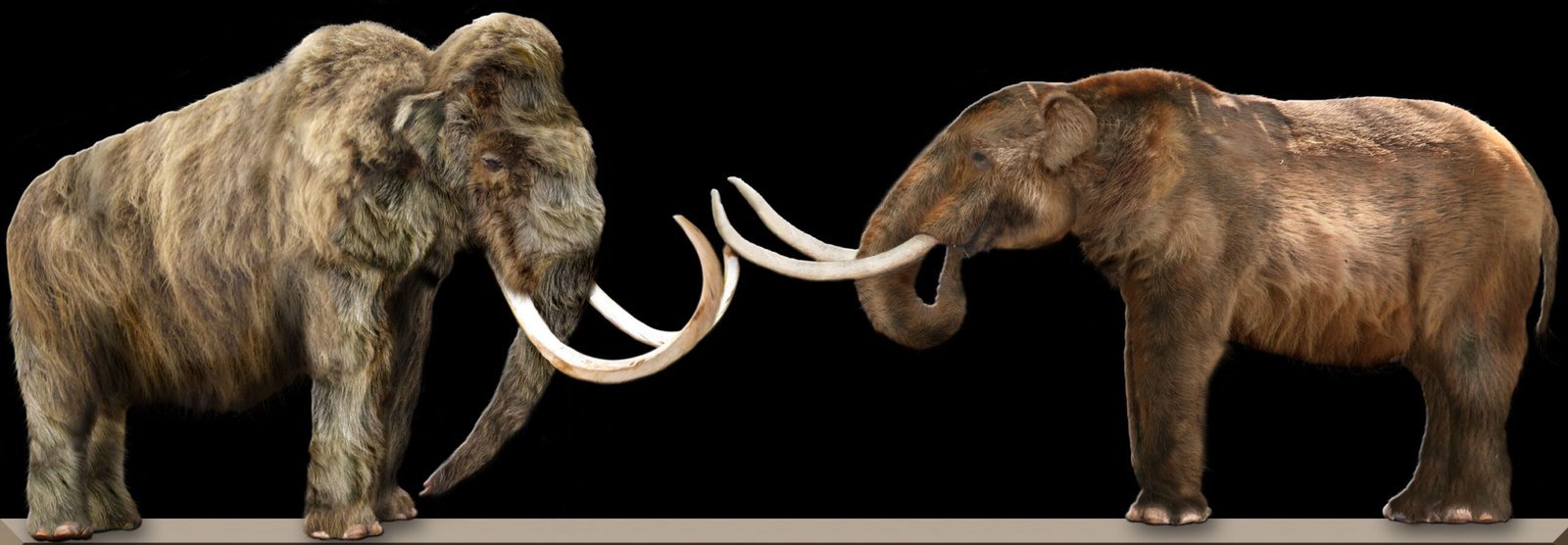
Casual conversation treats mammoths and mastodons like basically the same creature with different names. Geneticists studying their family tree say that gap is far bigger than people assume.
Mammoths and mastodons diverged more than 20 million years ago – for comparison, that’s roughly the same order of magnitude separating humans from gibbons. They aren’t close cousins who happened to look different; they’re distant relatives that evolved in parallel for tens of millions of years.
Diet reinforces just how different these animals really were, despite the superficial resemblance. Mammoths show high variation in their isotope signatures, consistent with grazing and mixed-feeding, while mastodons show low variation, consistent with a strict browsing lifestyle. Add in mastodons’ flatter, cone-shaped teeth versus mammoths’ ridged grinding molars, and the “same animal, different coat” myth falls apart fast.
Quick Compare
- Divergence: Split more than 20 million years ago – not close cousins.
- Diet: Mammoths were mixed grazers; mastodons were strict browsers.
- Teeth: Mammoths had ridged grinding molars; mastodons had flatter, cone-shaped teeth.
- Habitat: Mammoths favored open steppe; mastodons stuck to forests and wetlands.
If two causes of extinction sound too neat, that’s because the real story never fit into a tidy binary.
#11 – Extinction Wasn’t a Single, Simple Cause
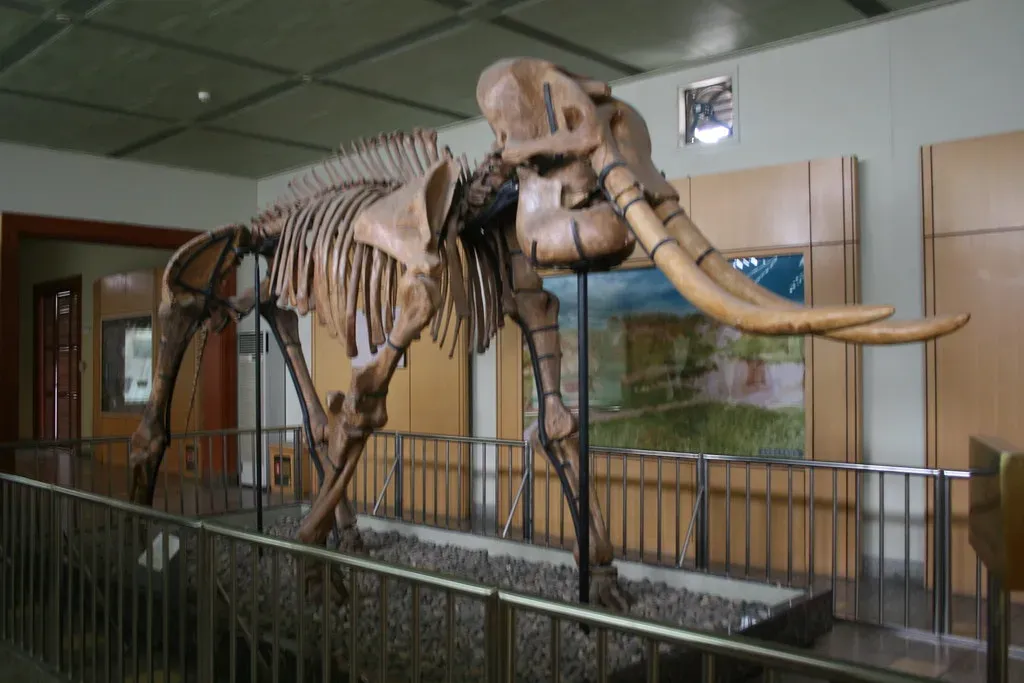
For years, the public debate boiled down to a binary: climate change OR human hunting, pick one. Researchers who actually model the population data say that framing was always too simplistic.
Dozens of large mammals, including mammoths and mastodons, disappeared in North America at the end of the Pleistocene, with climate change and “overkill” by human hunters cited as the most widely-argued causes. Newer regional studies complicate even that dual-cause model significantly.
Other scientists point to disease as a serious third factor that mainstream extinction debates largely ignored. Researchers who examined over a hundred mastodon skeletons found signs of infection far more often than expected – suggesting a pandemic-style illness may have compounded climate and hunting pressure simultaneously.
Specifically, researchers who studied 113 mastodons found that 52 percent showed signs of tuberculosis, leading them to theorize that a tuberculosis pandemic contributed to the species’ extinction. Extinction, it turns out, is rarely a one-phenomenon event.
As dramatic as disease and climate collapse sound, the next correction might be the strangest one on this entire list.
#12 – Extinct Mastodons Still Shape Ecosystems Today
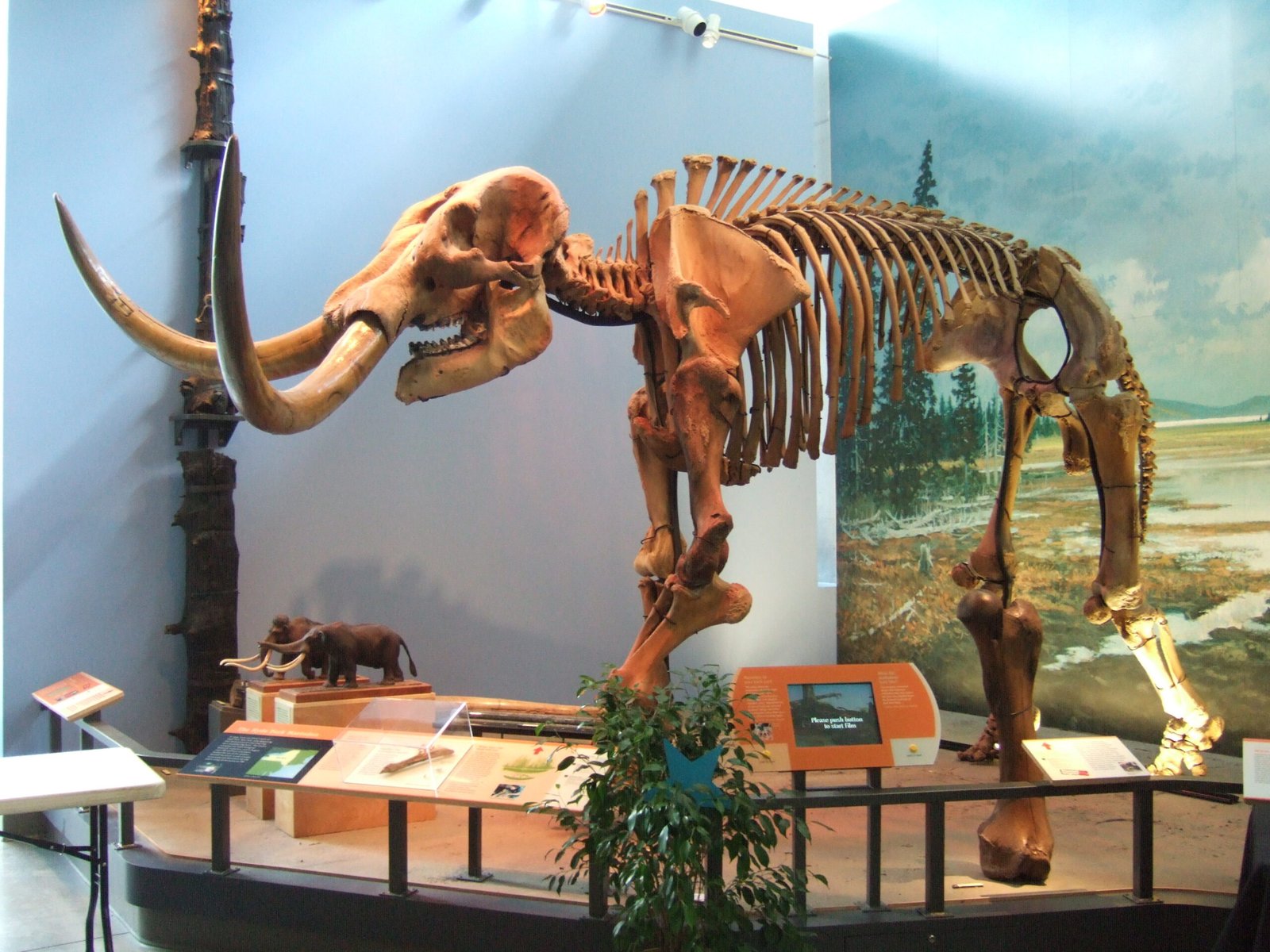
This might be the most counterintuitive correction on the list: an animal that’s been gone for 11,000 years is still measurably influencing which plants survive right now, in the present day.
The extinct mastodon continues to shape modern ecosystems in South America, because the large fruit plants that relied on mastodons for seed dispersal never stopped needing that ecological relationship. Researchers analyzing fossil dental chemistry confirmed mastodons were genuine frugivores, not just occasional fruit-nibblers. A 2025 fossil study went even further, finding actual preserved starch and plant tissue proving these animals regularly ate large tropical fruits.
The consequences for modern plants are measurable and troubling. Results indicate 40 percent of these fruit-bearing plant species are now endangered – a rate four times higher than in regions where monkeys and tapirs still perform the seed-dispersal role.
Once that ecological relationship between plants and animals gets severed, the consequences remain visible even thousands of years later.
Study co-author, on the mastodon-fruit extinction debt
That’s not ancient history. That’s an active, ongoing extinction debt.
Save the biggest identity crisis for last, because “the mastodon” was never really one animal to begin with.
#13 – Not All Mastodons Were the Same Species
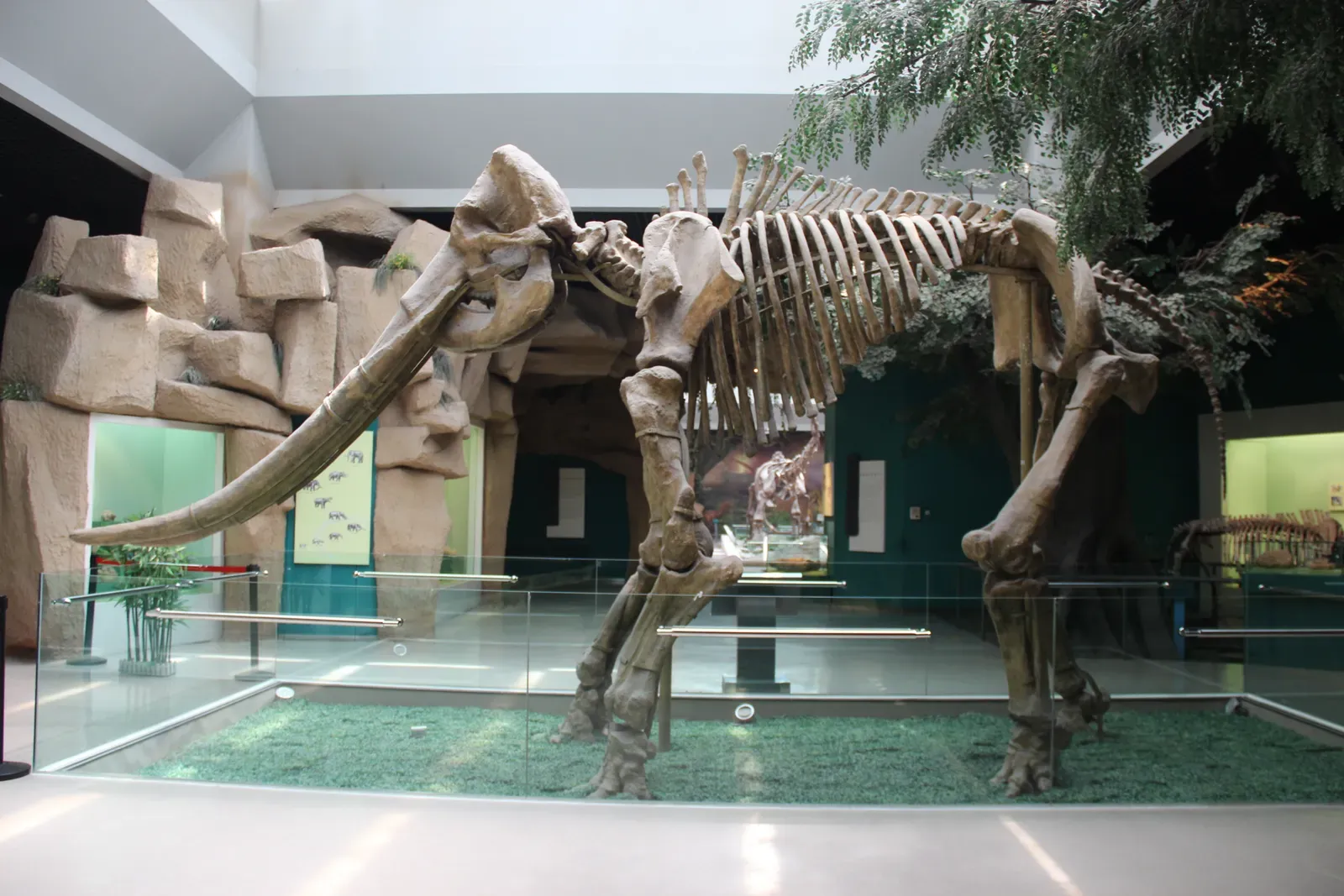
Save the biggest correction for last: the tidy idea of “the mastodon” as one singular species across two continents doesn’t hold up anymore, and this reshapes almost everything else on this list.
South American mastodons weren’t even the same species as their North American relatives. Notiomastodon platensis, the South American mastodon, functioned as a frugivore and essential seed spreader in ways distinct from the North American Mammut americanum discussed throughout most of this article. These were parallel lineages adapting to entirely different continents and food webs.
Layer on the genetic surprises from earlier, and the picture gets even more fractured. Beyond the known species split, researchers identified a possibly distinct Mexican lineage that could represent a deeper branch of the Pacific mastodon or an entirely new species, in an animal that ranged from present-day Alaska all the way south to Central Mexico. “The mastodon” was never one animal – it was a whole scattered family of regional specialists, each shaped by its own climate, forest, and food supply.
At a Glance
- Mammut americanum: North American species, forest and wetland browser.
- Notiomastodon platensis: South American species, frugivore and seed disperser.
- Possible Mexican lineage: Distinct genetic branch, potentially a third species.
- Range: Stretched from present-day Alaska to Central Mexico.
The Bottom Line
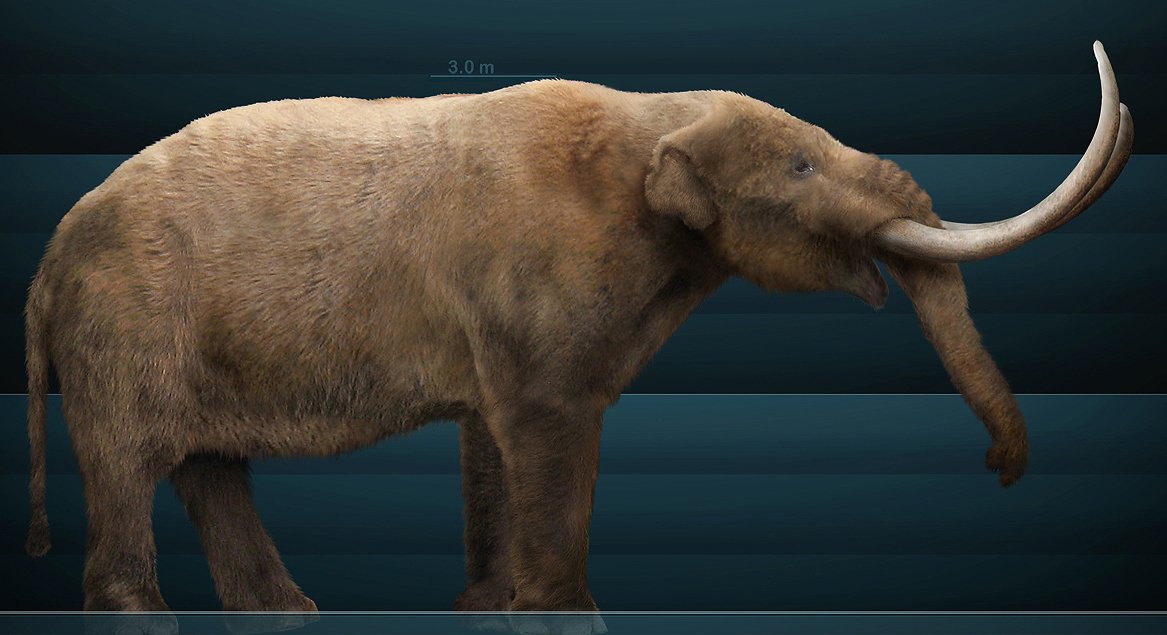
The evidence is clear: almost every “settled” mastodon fact from a decade ago has been quietly revised, complicated, or flat-out reversed by better tools – ancient DNA, tusk chemistry, and re-dated fossils. The biggest shock isn’t any single correction; it’s how many of these errors trace back to contaminated museum specimens and outdated assumptions rather than bad theories.
Personally, the tuberculosis-pandemic angle and the “over-chill, not overkill” finding deserve far more attention than they get. They’re more interesting, and honestly more scientifically compelling, than the tired human-versus-climate debate that’s dominated the conversation for decades.
Mastodons weren’t docile. They weren’t confined to the Arctic. They weren’t genetically uniform, and they apparently weren’t even always the same species. The mastodon we were taught about in school was a simplified cartoon – the real animal was wilder, weirder, and considerably harder to kill off than anyone ever gave it credit for.