
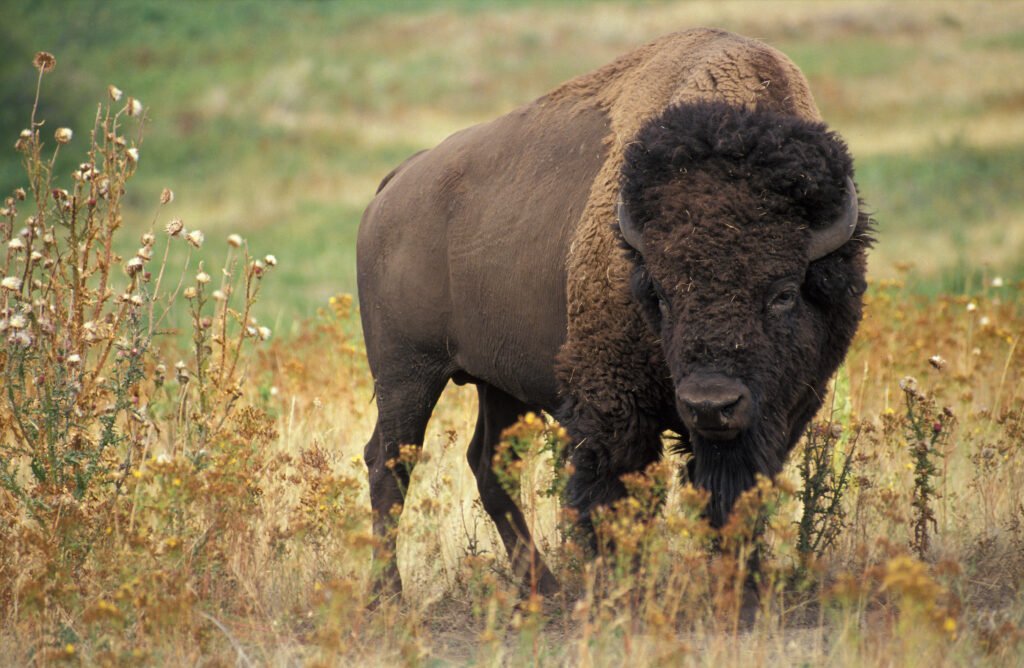
Picture an animal that outlived the woolly mammoth, dodged a deliberate military campaign to erase it, and clawed its way back from a population smaller than a high school graduating class – then ask yourself why the American bison’s story gets reduced to “almost extinct, then saved.” That’s the sanitized version they teach in grade school. The real one reads less like a conservation pamphlet and more like a thirteen-round fight against extinction itself.
This shaggy, tank-sized grazer watched mammoths, saber-toothed cats, and giant ground sloths vanish right next to it on the same plains. Then it got hunted down to a few hundred animals by rifles, railroads, and outright government strategy. What follows isn’t a feel-good highlight reel – it’s a blow-by-blow account of exactly how many separate extinction events this animal absorbed, and somehow walked away from.
#1 – The Ice Age Die-Off That Erased Almost Every Other Giant Mammal
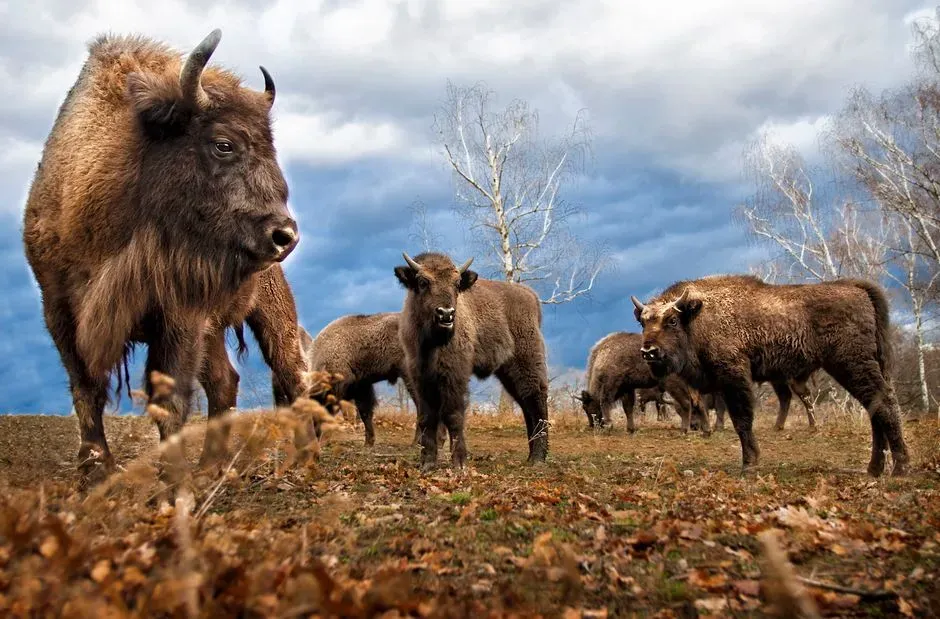
Roughly 11,000 to 10,000 years ago, North America lost its megafauna in one of the most brutal extinction events the continent has ever seen. Mammoths, giant armadillos, saber-toothed cats, and dire wolves all vanished during what scientists call the Pleistocene extinction. Bison numbers would later crash from an estimated 30 million to barely more than 1,000 by the late 1880s – but that crash came thousands of years after they’d already dodged extinction once before.
The same climate whiplash and overhunting that erased the mammoths should have taken bison with them. Instead, bison did something almost no other megafauna managed: they physically shrank. Bison got smaller to survive the exact catastrophe that erased animals many times their size. That’s not a footnote – it’s the whole story in miniature.
Fast Facts
- Event: the Pleistocene extinction, roughly 11,000-10,000 years ago
- Casualties: mammoths, giant armadillos, saber-toothed cats, and dire wolves
- Bison’s survival trick: shrinking in overall body size
- Tool residue evidence: bison, deer, bear, and rabbit blood found – no mammoth or mastodon
Researchers studying ancient blood residue on Paleoindian hunting tools found plenty of evidence of bison, deer, bear, and rabbit – but no trace of mammoth or mastodon. Bison were being hunted just as hard as the giants that disappeared. They simply refused to go down with them.
#2 – Surviving in Alaska While Woolly Mammoths Died Around Them
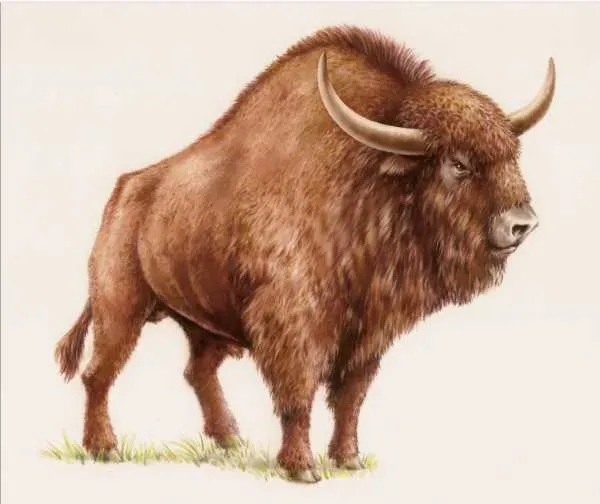
Most people picture bison as strictly Great Plains animals, but their ancestors were Arctic survivors first. Ancient DNA and fossil records show that steppe bison shared the frozen tundra of Beringia with woolly mammoths, cave lions, and woolly rhinos for tens of thousands of years. Only one of those groups made it out alive.
Scientists studying Alaska’s North Slope found that megafaunal species like mammoth, horse, and bison went through repeated boom-and-bust cycles as the ice age climate lurched back and forth. Only species capable of long-distance dispersal managed to persist through those swings. Bison happened to be one of them.
Bison didn’t just get lucky – they moved. When one region turned hostile, entire herds relocated across vast, unforgiving terrain instead of staying put and dying out like so many Arctic neighbors did. That restless instinct to keep walking rather than dig in became the survival trick this species would lean on again and again for the next several thousand years.
#3 – Thousands of Years of Intensive Human Hunting
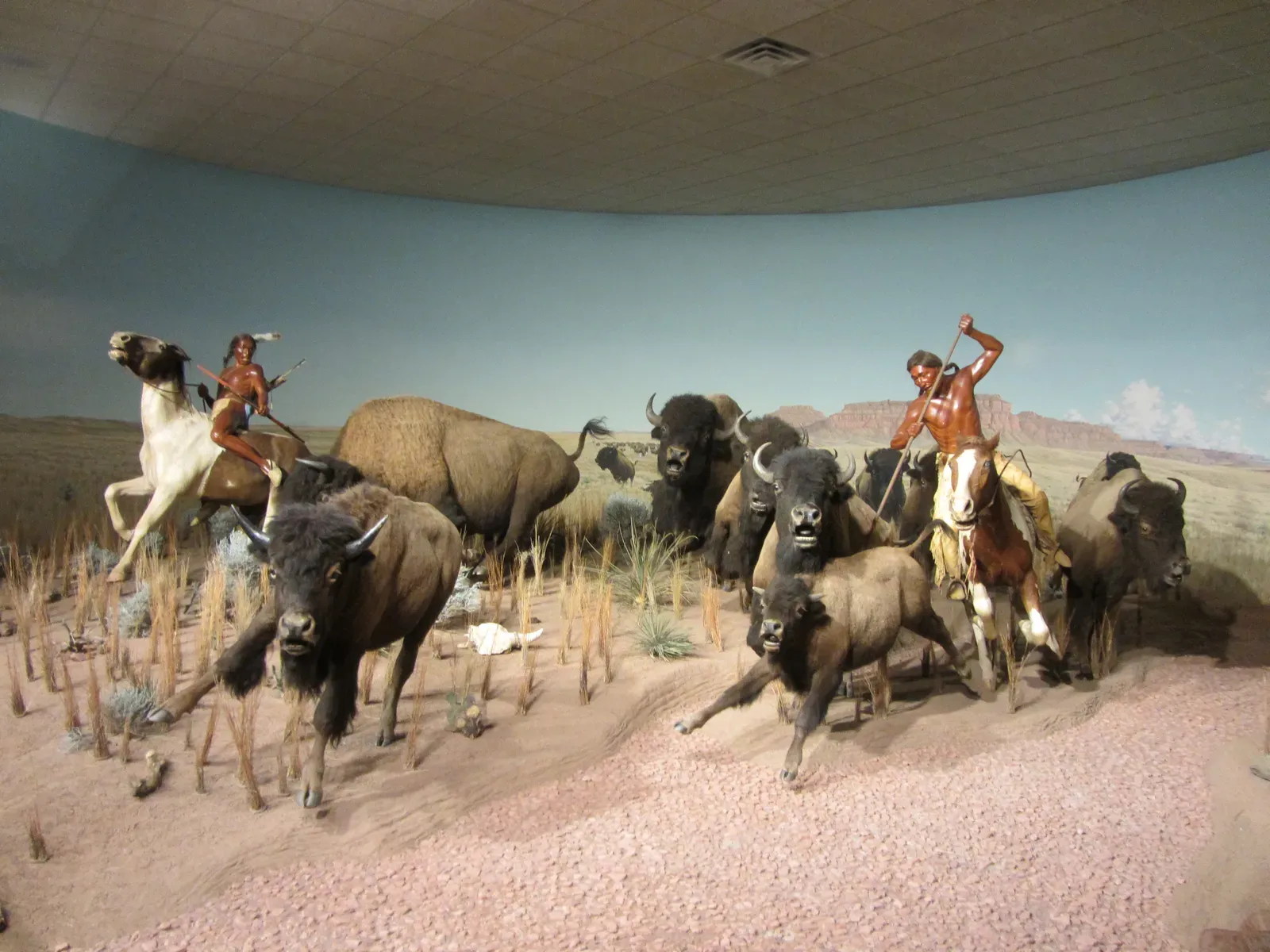
Long before European settlers ever set foot on the continent, bison were already a primary food source for Indigenous peoples across North America. Communities relied on them for meat, hides, tools, and shelter, hunting at scales that would have collapsed a more fragile species almost immediately.
Researchers studying Late Pleistocene archaeological sites note something striking: where there’s abundant evidence of large-mammal hunting, it’s almost always of species that survived into the present. Bison sit right at the center of that record. Despite constant predation pressure across millennia, they persisted – even as other heavily hunted species blinked out for good.
Here’s the part most people skip over: bison survived millennia of continuous, organized human hunting before a single railroad or rifle-toting settler ever showed up. Their edge was reproductive speed and mobility – herds could bounce back in years, not decades, as long as grasslands stayed connected and healthy. That resilience was about to be tested by weather brutal enough to kill almost anything else standing in an open field.
#4 – Blizzards and Sub-Zero Plains Winters
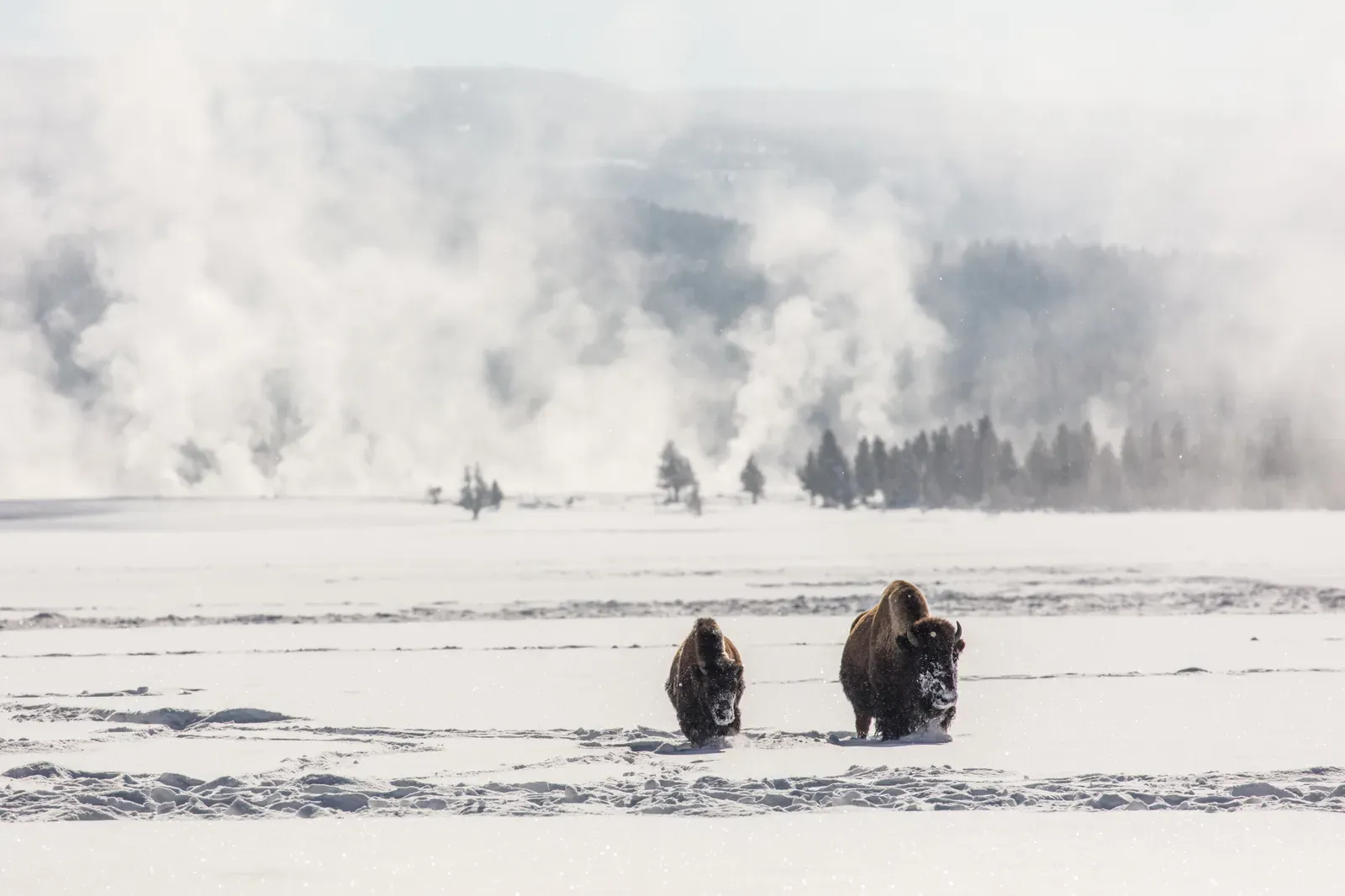
Anyone who’s stood on the open Great Plains in January understands why this one made the list. Wind chills routinely plunge below zero, snow moves sideways, and there’s no forest canopy for miles to break the assault. Most large mammals would seek shelter or die trying. Bison do neither.
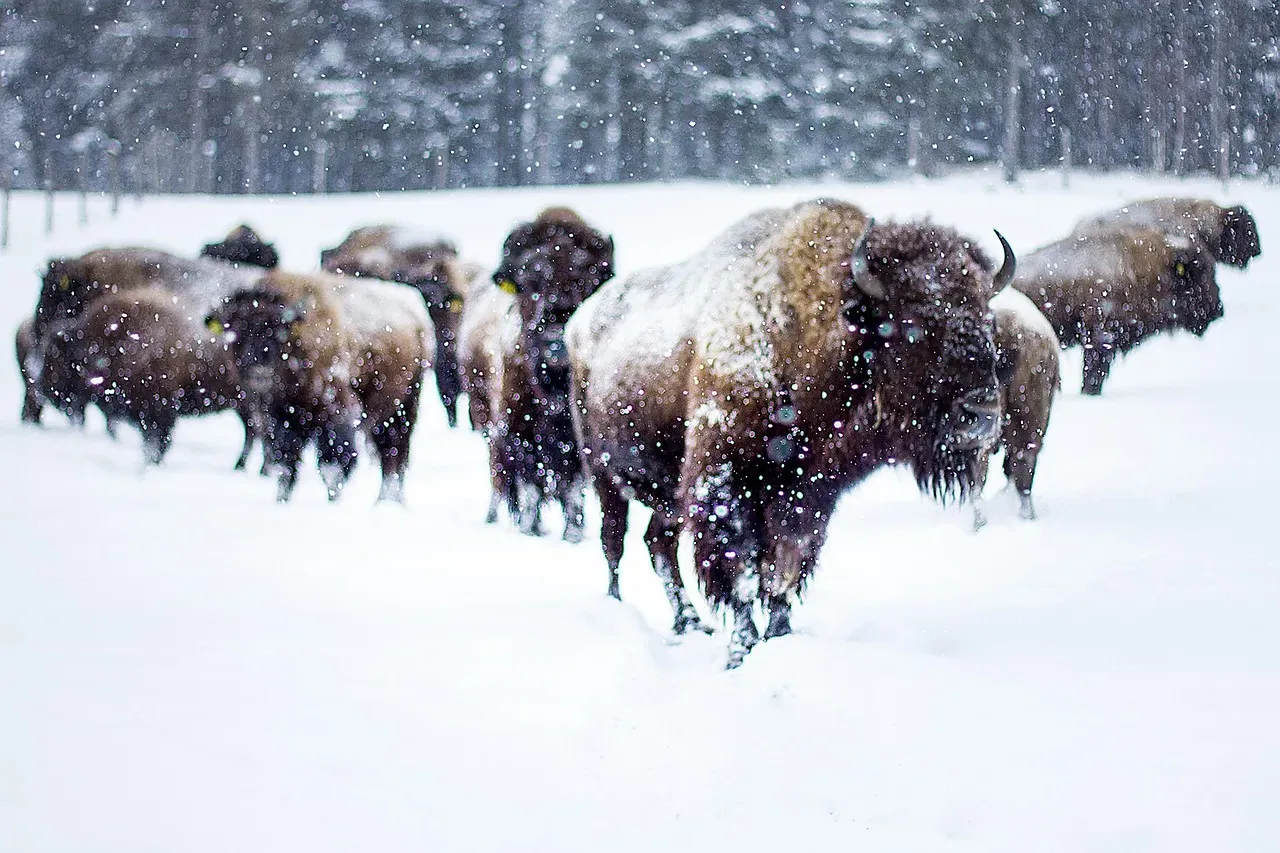
Their solution is almost comically stubborn: bison turn to face oncoming blizzards head-on instead of running from them. Their massive, muscular heads act like natural snowplows, swinging side to side to clear snow and reach buried grass underneath. Their shaggy coats – among the thickest of any North American land mammal – trap body heat so effectively that snow can sit unmelted on their backs for hours without them losing an ounce of warmth.
This isn’t a minor adaptation; it’s a full survival strategy built for a landscape offering zero cover. While elk and cattle drift downwind and huddle for warmth, bison plant themselves and endure. It’s a strange, almost defiant kind of toughness – the animal equivalent of walking straight into a storm because running feels like giving up.
#5 – Wolves, Grizzlies, and a Plains Ecosystem Built to Kill Them
![#5 - Wolves, Grizzlies, and a Plains Ecosystem Built to Kill Them (National Park Service [dead link]; available on the Wayback Machine.Used in Muro et al, 2011 -- this image is figure 1(d). The citation there suggests that it was not taken by the authors., Public domain)](https://nvmwebsites-budwg5g9avh3epea.z03.azurefd.net/dinoworld/508c12661796a44d72384efd345779cf.webp)
Before firearms ever entered the picture, bison faced an entire food chain engineered around bringing them down. Wolf packs coordinated hunts specifically targeting calves and weakened stragglers. Grizzly bears, when the opportunity arose, weren’t shy about finishing off an injured or isolated animal either.
What kept the species from becoming a permanent buffet line was sheer numbers and herd defense. Bison don’t scatter when threatened – they form tight defensive clusters, bulls stationed on the perimeter. A healthy adult bison weighing close to a ton, armed with curved horns and explosive short-range speed, is not an easy kill even for a coordinated wolf pack.
This predator-prey relationship wasn’t one-sided – it was closer to a stalemate. Wolves needed bison to survive, which meant they had every evolutionary incentive to avoid wiping out their own food source. That natural check kept herds strong and genetically fit for thousands of years, long before humans introduced pressures no amount of herd discipline could offset.
#6 – Wildfires and Drought Cycles That Reshaped the Grasslands
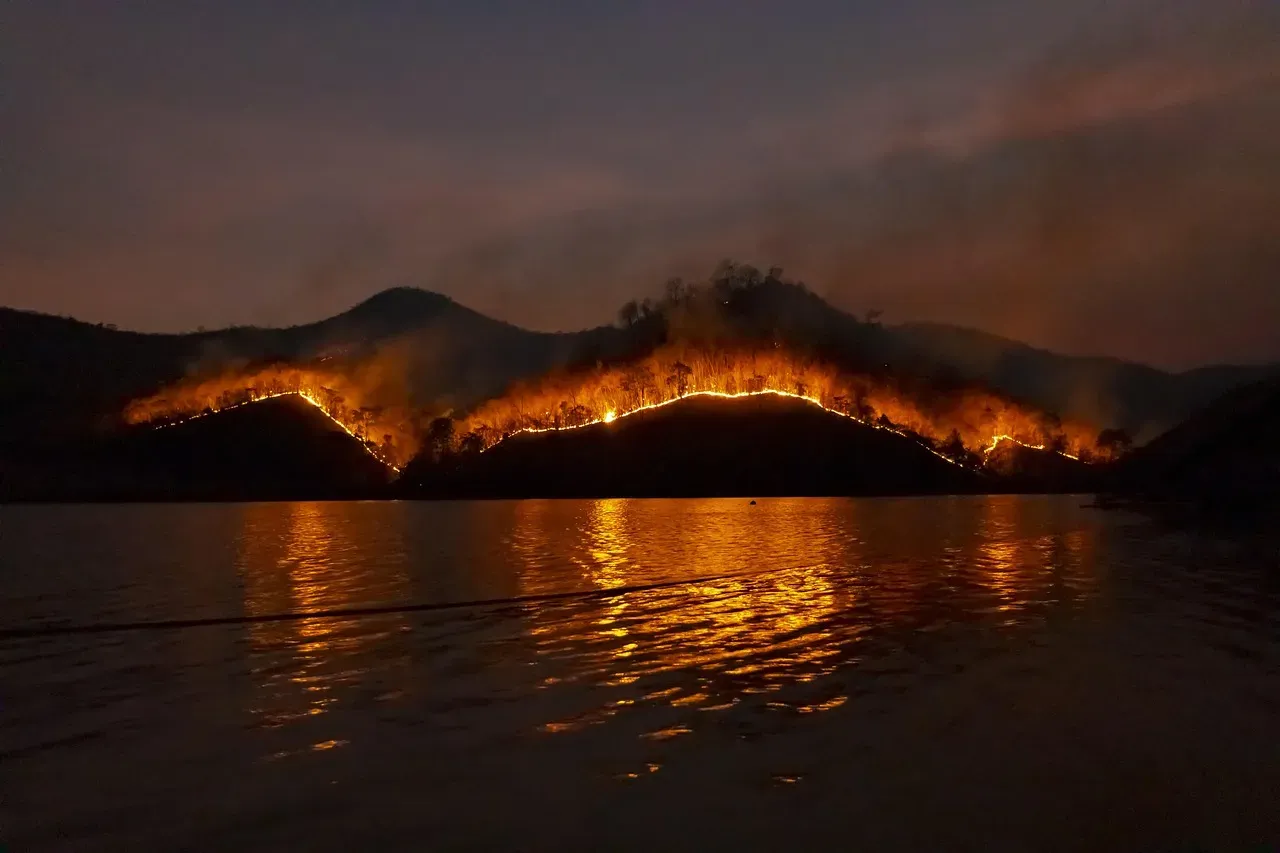
The Great Plains has never been a gentle place. Lightning-sparked prairie fires could sweep across thousands of acres in hours, and multi-year droughts periodically turned lush grassland into dust. Either extreme, sustained long enough, should have devastated a species entirely dependent on grass to survive.
Climate researchers note that bison populations genuinely fluctuated with these swings. In hot, dry stretches, the grasslands could only support around 20 million bison – meaning drought years actually shrank the population ceiling. Yet the species never collapsed outright; it simply contracted and rebounded as conditions eased.
Fire, ironically, became one of the bison’s best allies rather than an enemy. Burned prairie regenerates faster and produces more nutrient-dense new growth, and bison learned to follow burn scars straight to the freshest grazing. What should have been a repeated catastrophe instead became a recurring buffet – proof that this animal’s relationship with disaster has always been unusually flexible.
#7 – A “Little Ice Age” That Should Have Starved the Herds
Between roughly 1500 and 1850, North America went through a prolonged cooling stretch known as the Little Ice Age. Colder temperatures typically mean shorter growing seasons and less forage – a recipe for population collapse in any grass-dependent species.
Instead, the opposite happened. Historians studying this period found that cooler, wetter conditions actually produced bumper crops of grass year after year, triggering a genuine bison boom. The exact climate shift that should have squeezed the population instead fueled one of its biggest surges.
Worth Knowing
- Timeframe: roughly 1500 to 1850, a stretch known as the Little Ice Age
- Expected outcome: shorter growing seasons and less available forage
- Actual outcome: cooler, wetter weather produced heavier grass growth
- Result: a population surge instead of the predicted decline
This is where the bison’s story stops looking like luck and starts looking like biological stubbornness. A colder, harsher climate somehow became a growth spurt instead of a death sentence. It’s the kind of twist that still has wildlife historians debating how much of bison survival was adaptation versus pure environmental timing.
#8 – Railroads That Sliced Their Migration Routes in Half
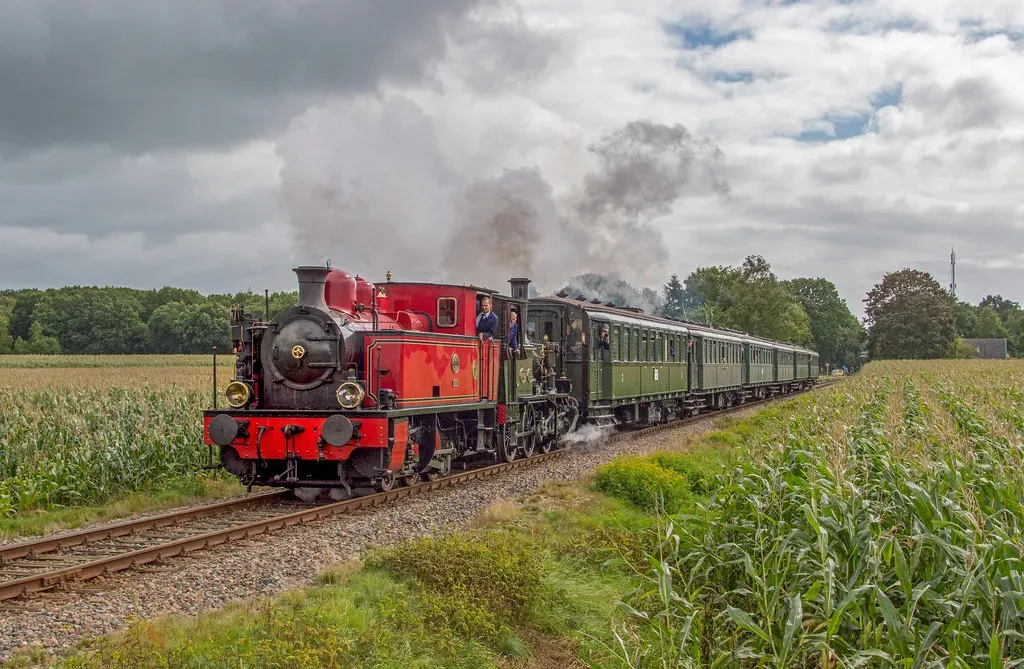
The mid-1800s brought a threat far more permanent than weather or predators: infrastructure. As railroads pushed westward, they didn’t just bring hunters – they physically split bison migration corridors into disconnected fragments. Herds that once roamed enormous seasonal ranges suddenly hit tracks, depots, and wagon trains cutting straight through ancestral routes.
Historical accounts describe how railroads and wagon trains, combined with disease outbreaks along the Platte River, divided the bison population and permanently segregated the Northern and Southern Herds. Once unified, the two herds became entirely separate genetic and ecological populations with no easy way to reconnect.
A species built around massive, interconnected herds was suddenly forced into isolated pockets, each one far more vulnerable to localized disaster than the whole ever was. It set the stage for a targeted campaign that would treat those trapped, trackable herds as sitting targets.
#9 – A Deliberate Military Campaign to Wipe Them Out
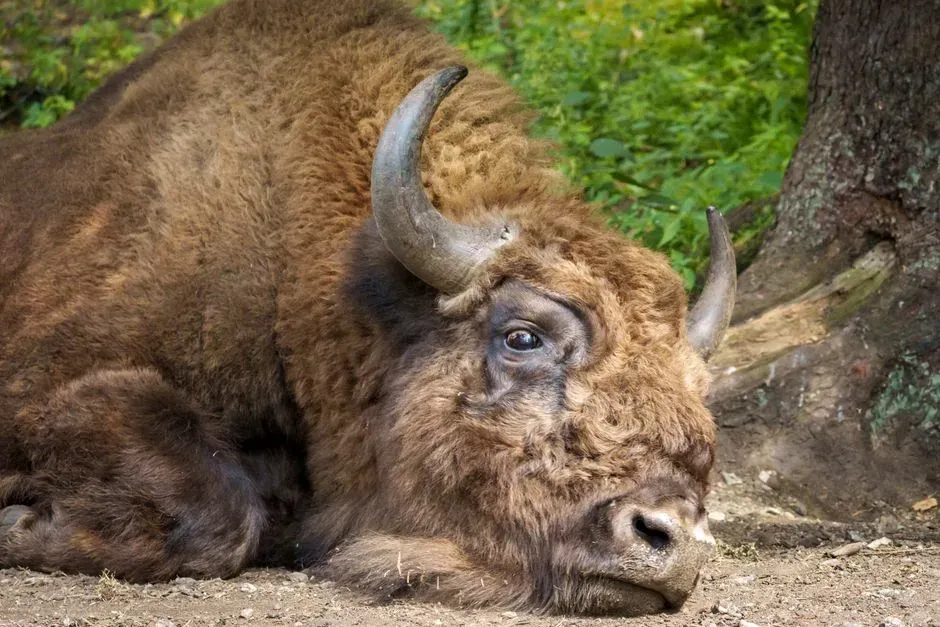
This is the entry that separates bison survival from every other wildlife decline story in American history. The 19th-century collapse wasn’t only driven by hide traders chasing profit – it was, in part, official government strategy. Historical accounts confirm that to settle the West, authorities needed to subdue Native American nations who relied on bison for meat and hides, so the U.S. Army launched a campaign to kill bison specifically to break that dependence.
This wasn’t incidental collateral damage. It was a calculated effort to eliminate a food and cultural resource as a tool of subjugation. The bison wasn’t just fighting hunters – it was fighting an extermination policy backed by military logistics. Few species in American history have faced an extinction threat that was, at least in part, an intentional byproduct of government strategy rather than pure economic greed.
Combined with commercial hunting already underway, this dual pressure – profit-driven slaughter layered on top of strategic military policy – created a perfect storm no other North American mammal has ever had to survive at the same time.
#10 – An Industrial-Scale Slaughter That Killed Millions in a Few Years
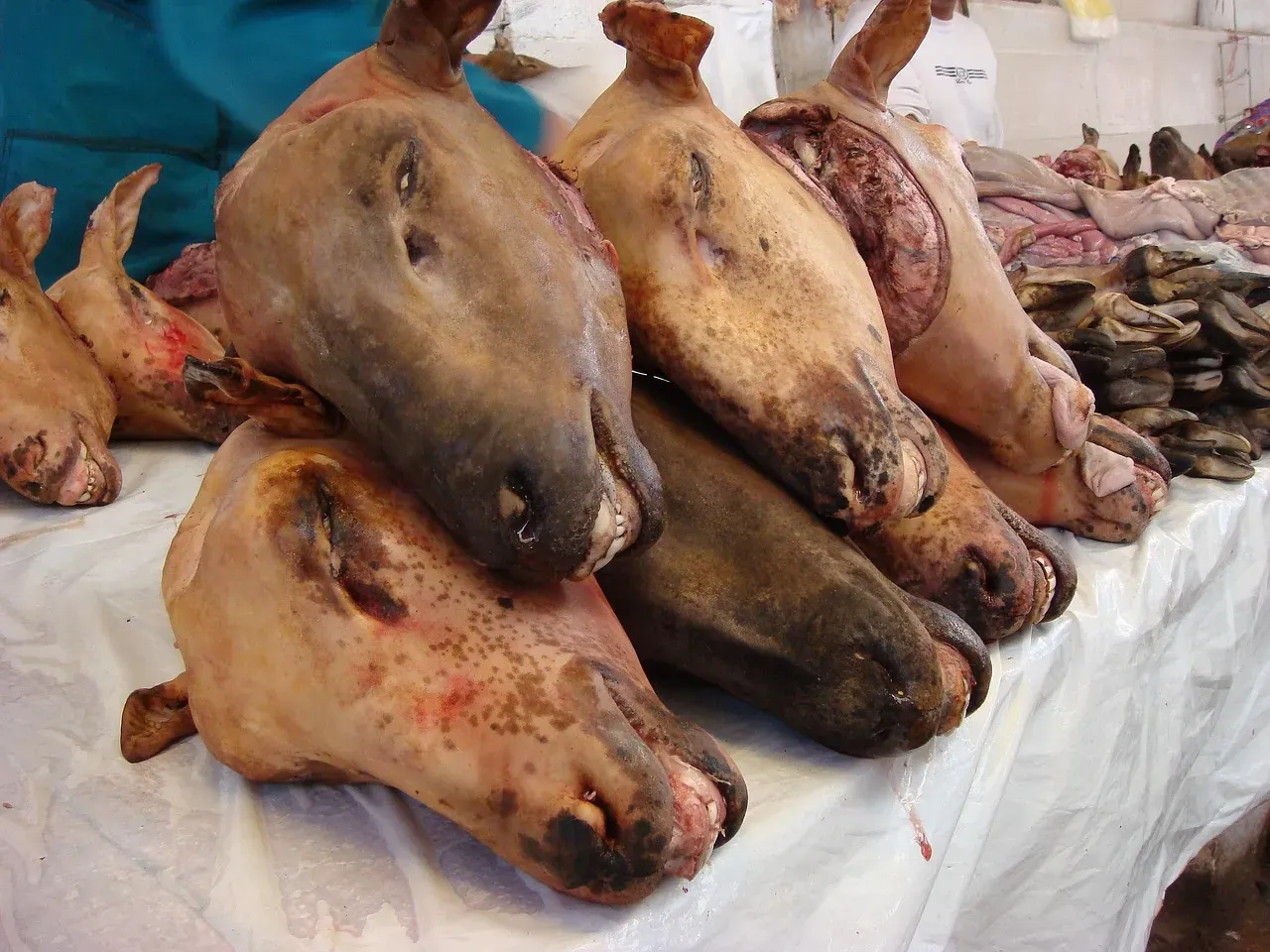
If the last entry was the motive, this is the body count. Commercial hide hunting in the 1870s reached numbers so extreme they’re hard to comprehend even by modern industrial standards. In 1870 alone, hunters killed an estimated 2 million bison on the southern plains. Between 1872 and 1874, roughly 5,000 bison died every single day – 5.4 million animals in just three years.
At a Glance
- 1870: an estimated 2 million bison killed on the southern plains alone
- 1872-1874: roughly 5,000 bison killed per day – 5.4 million in three years
- By century’s end: population down 99.9% in about thirty years
- Hides shipped east by the railcar load; meat frequently left to rot
Let that sink in: 5,000 animals killed every day, for three straight years, on one stretch of plains. Buffalo Bill Cody’s operations alone reportedly matched that daily kill rate. By the century’s end, the population had shrunk by 99.9% in the space of thirty years, hides shipped east by the railcar load while meat was frequently left to rot where it fell. The goal was never sustainable harvest – it was elimination.
No large mammal species in modern recorded history has absorbed that kind of concentrated killing rate and lived to tell about it. Most would have blinked out within a single hunting season at that pace. Bison had just enough numbers, and just enough remote pockets of habitat, to avoid complete annihilation – barely.
#11 – Crashing to Roughly 325 Animals in the Entire Country
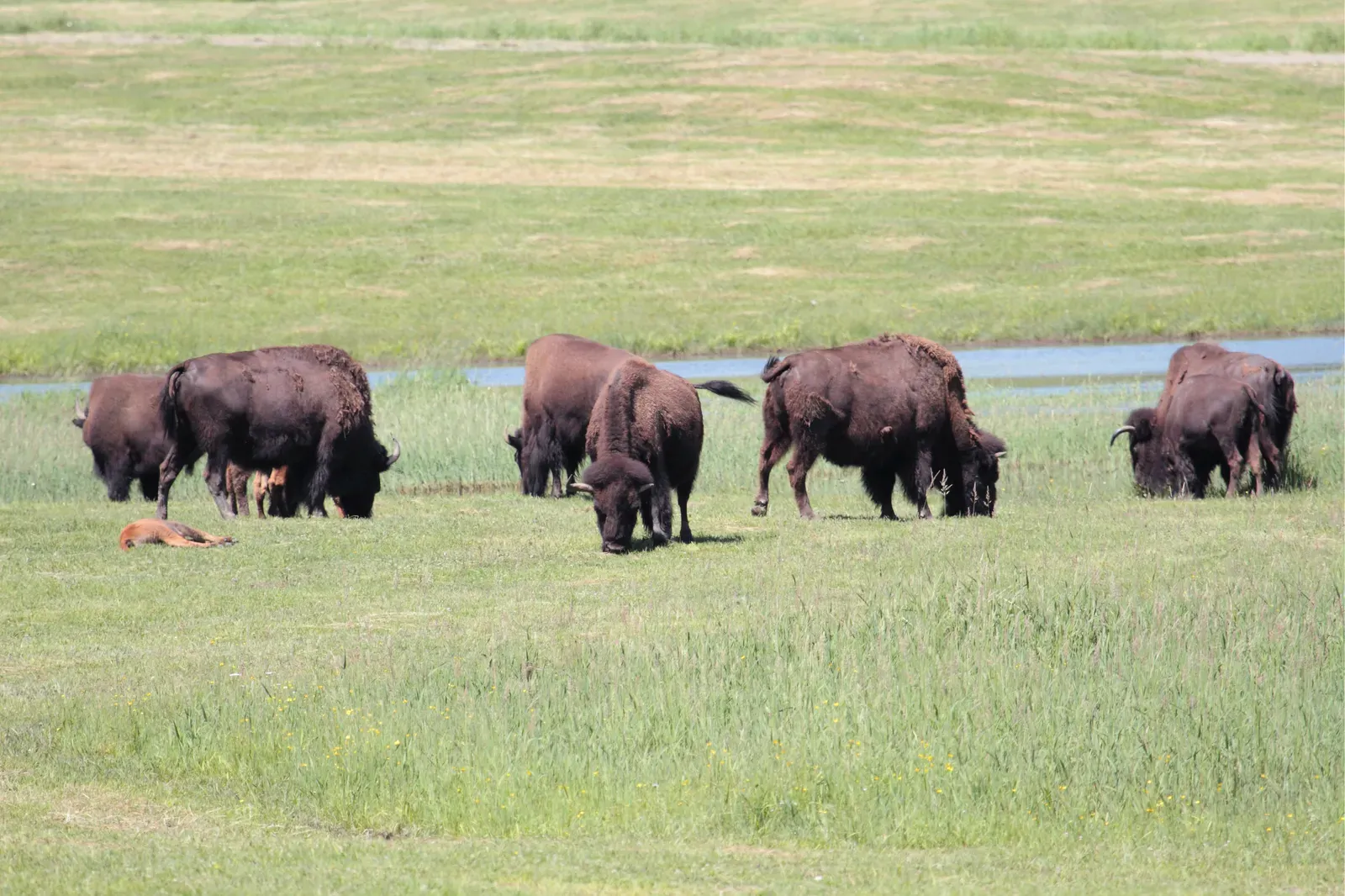
This is the number every conservation biologist points to when explaining how close extinction really came. By 1884, the American bison population hit its absolute floor: only 325 wild individuals remained across the entire United States, and Yellowstone National Park harbored just 24 of them.
To put that in perspective: a species that once numbered in the tens of millions had been reduced to a population smaller than most high school graduating classes. Some researchers place the true low point slightly differently – one analysis found 456 known animals as of January 1, 1889, believed to have descended from roughly 171 individuals. Either number describes the same terrifying reality: a genetic near-death experience.
Every bison alive today descended from a bottleneck of just a few hundred survivors. During that crash, genetic diversity narrowed so severely that the entire species is believed to trace back to approximately 541 founding individuals across all recovery herds combined. Most species facing that kind of numerical collapse simply don’t come back. This one did – though not without lasting consequences.
#12 – Cattle Diseases That Infiltrated the Species From the Inside
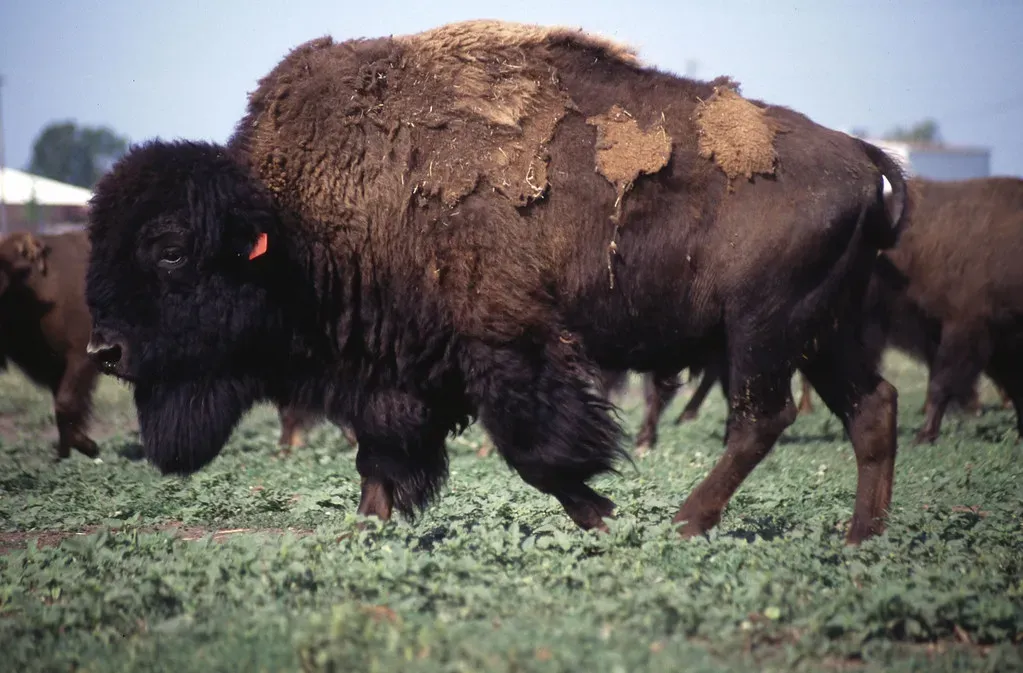
Here’s a threat most people have never heard of, and it’s arguably scarier than bullets because it’s still active today. When ranchers gathered surviving bison in the late 1800s to save the species, they often kept bison and cattle in close proximity. That proximity introduced bovine diseases bison had never evolved defenses against.
Brucellosis is the biggest offender. Bovine brucellosis has been documented in free-ranging bison since it was first reported in 1917 – and ironically, the disease was originally brought into North America via imported domestic livestock, not the other way around. A disease cattle gave to bison is still used today as justification for culling wild bison herds.
This is genuinely contested territory. Wildlife advocates argue the science doesn’t support the ongoing culls, pointing out there isn’t a single documented case of brucellosis transmission from wild bison to domestic cattle under natural conditions – not even in places like Grand Teton, where the two species have commingled for decades. Management policy hasn’t caught up to that evidence, and it’s still costing bison lives every winter.
#13 – A Genetic Identity Crisis That’s Still Unfolding Today
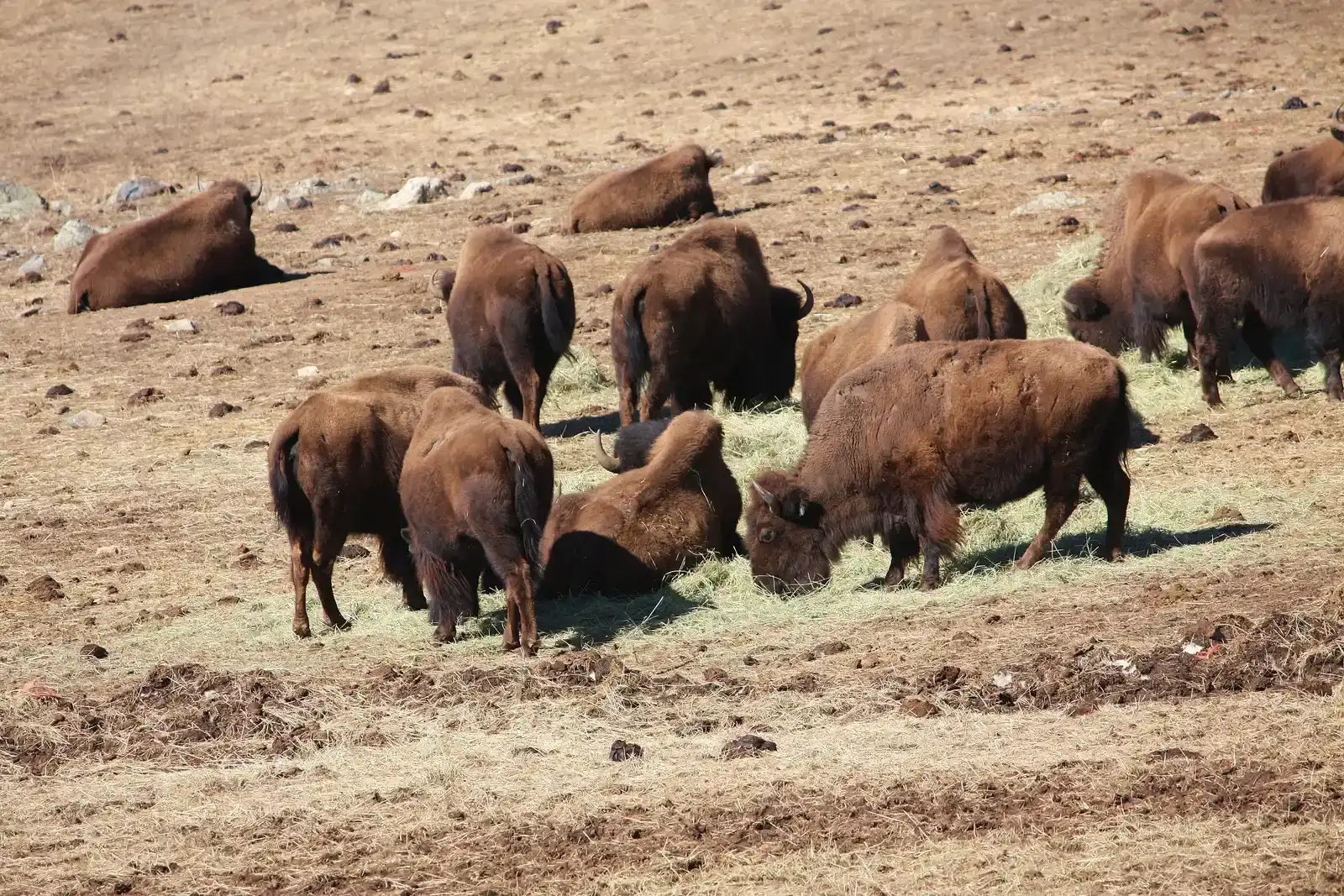
The final threat isn’t a single dramatic event – it’s a slow, quiet erosion that’s arguably more dangerous because it’s invisible. During the desperate ranching efforts of the late 1800s, hybridization between bison and domestic cattle was often deliberately encouraged to create hardier livestock.
The consequences are still surfacing. A comprehensive genomic study found that every herd examined – including Yellowstone, Wind Cave, and Elk Island National Parks, herds long believed to be completely free of hybridization – carries detectable cattle ancestry. Populations marketed for decades as “pure” genetic reservoirs turned out to carry cattle DNA all along.
Quick Compare
- Believed pure for decades: Yellowstone, Wind Cave, and Elk Island herds
- Genomic testing today: every herd examined carries detectable cattle DNA
- Truly cattle-DNA-free bison: fewer than 1.5% of the population, roughly 7,500 animals
There may no longer be a single 100% genetically pure wild American bison left on Earth. Fewer than 1.5% of all bison in North America – roughly 7,500 animals – show no detectable evidence of cattle interbreeding at all, according to conservation researchers. Combined with ongoing culling and brucellosis politics, today’s bison face a threat unlike any previous chapter: not annihilation from the outside, but dilution from within – one no blizzard, wolf, or wildfire ever could have caused.
The Bottom Line
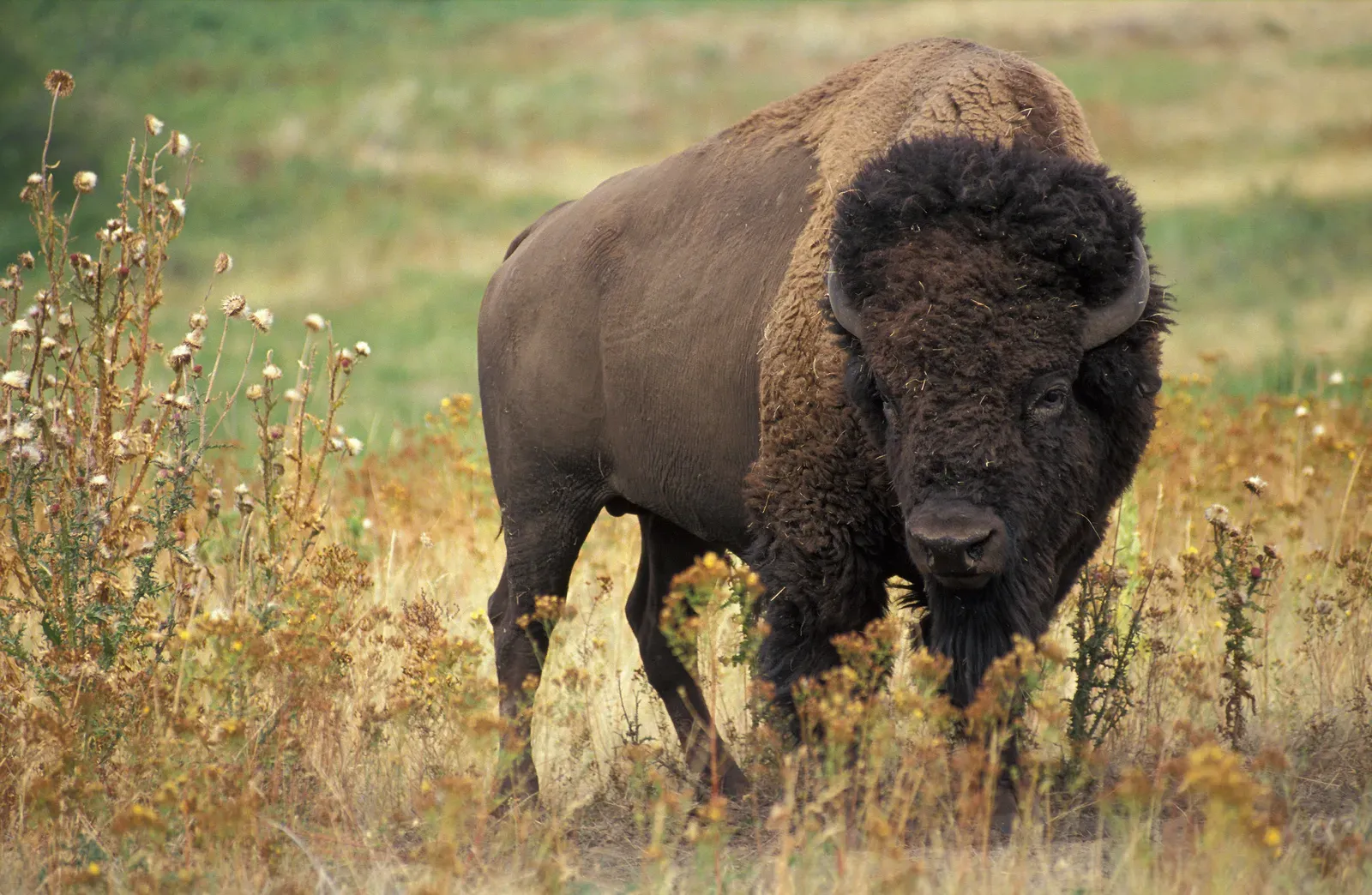
Add it all up, and the American bison’s survival record reads less like wildlife history and more like a thirteen-round title fight against extinction itself. This animal outlived Ice Age megafauna that dwarfed it, endured millennia of hunting, shrugged off blizzards and drought, and crawled back from roughly 325 individuals – only to now face an invisible enemy hiding in its own bloodline.
What’s genuinely unsettling isn’t the past. It’s that the genetic and disease fights aren’t over – they’re happening right now, in Yellowstone’s winter culls and in DNA labs uncovering hybrid ancestry nobody expected. If a species can survive mammoths going extinct around it, a military campaign built to erase it, and a 99.9% population crash, and still end up fighting for its genetic identity in 2024, maybe the real lesson isn’t how tough bison are. Maybe it’s that we’ve never actually stopped testing them. Did we miss a threat that deserves a spot on this list? Drop it in the comments – we’re curious what else this animal quietly survived.