Most people assume everything they learned about dinosaurs from childhood documentaries is settled science. It isn’t. A shocking number of the “facts” you grew up trusting – how dinosaurs moved, hunted, sounded, even the colors they wore – were never actually pulled from a fossil. They were educated guesses, and Hollywood turned those guesses into gospel.
Decades later, CT scans, isotope chemistry, and biomechanical modeling have quietly picked apart one dino “behavior” after another. Paleontologists aren’t just tweaking small details anymore – in some cases, they’re walking back entire scenes we thought were fact. Here are fourteen of the biggest reversals, counting down to the myth that fooled an entire generation of moviegoers.
#14 – Sauropods Held Their Necks in a Graceful Swan-Like Curve
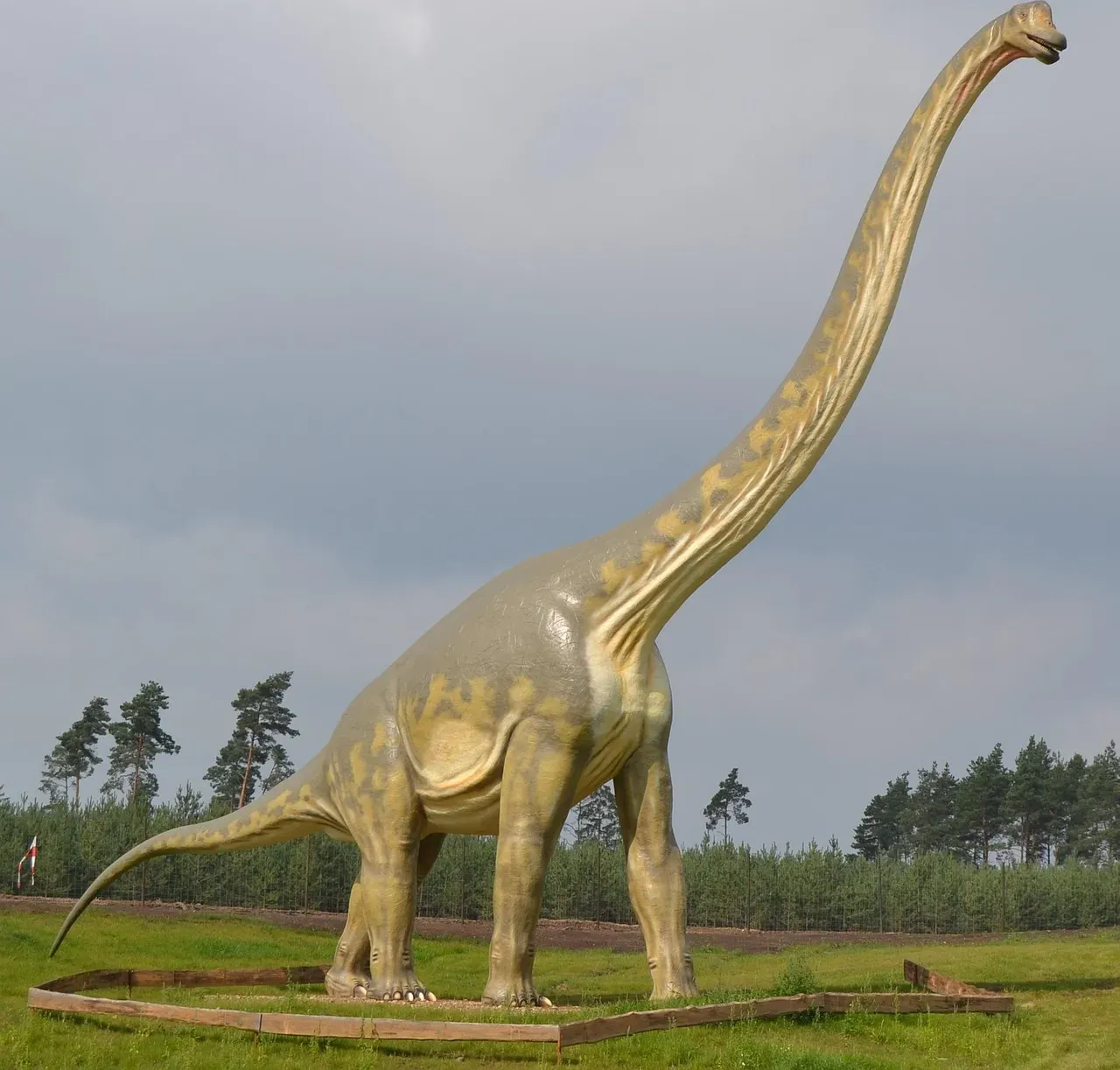
For decades, museum mounts and blockbuster documentaries showed long-necked giants like Diplodocus and Apatosaurus arching their necks into an elegant, swan-like S-curve, gazing loftily over the treetops. It’s a beautiful image. It’s also mostly invented.
That iconic pose turns out to be artistic license baked into the bones themselves – museum technicians have long restored neural spines on sauropod mounts specifically to create that graceful curve. Osteological analysis shows the actual cervico-dorsal vertebral column was essentially straight, nothing like the rising, curving necks seen in living animals such as horses or giraffes. Exactly how high sauropods carried their heads is still debated, but that elegant swan-neck silhouette was never one of the options on the table. Next up, #13 swings from grace to gore.
#13 – Ceratopsian Frills Existed Purely as Combat Weapons
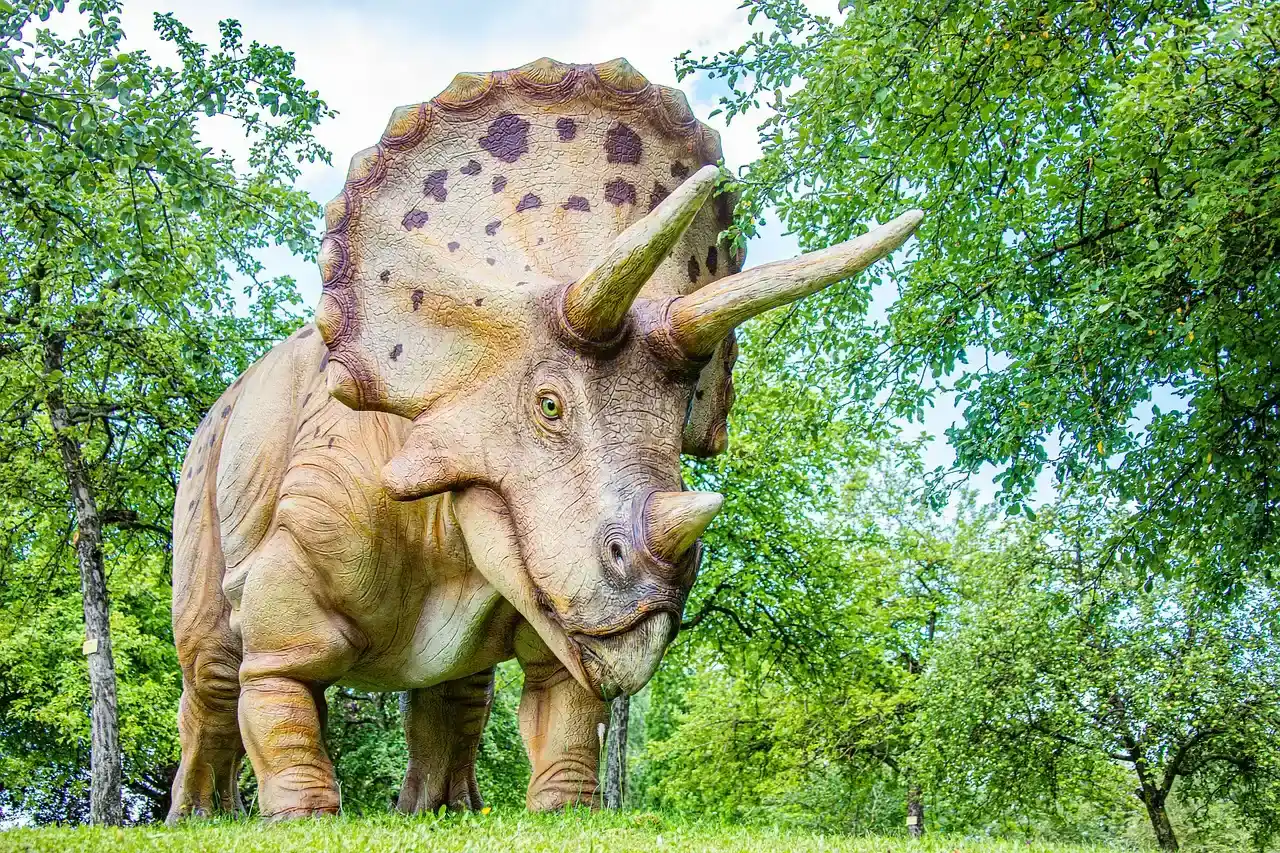
Ask most people why Triceratops had that massive bony frill, and they’ll tell you it was a shield built for battling Tyrannosaurus. That’s only half the story, at best.
Paleontologists studying skull pathology now argue the frill’s original job was social, not military – a tool for visual display and species recognition first, defense second. When researchers compared injury rates across horned dinosaur species, they found lower pathology rates in Centrosaurus, hinting at visual signaling rather than head-on combat as the frill’s primary role. Some individual Triceratops clearly did fight – skull scars prove that – but “pure weapon” was never the full picture. Compared to what’s coming for the color palette, the frill debate is downright tame.
#12 – Every Dinosaur Was a Drab, Grey-Green Reptile
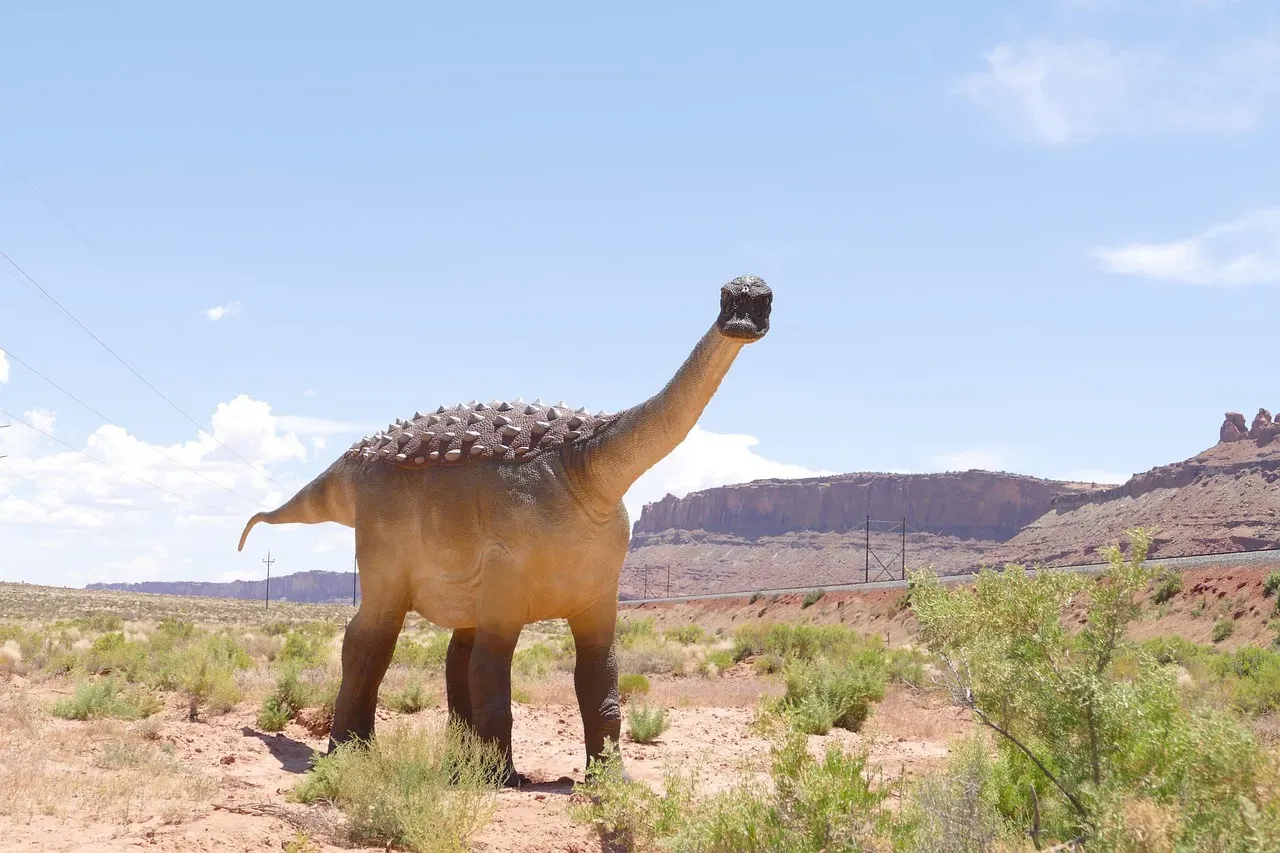
Every kid’s dinosaur toy box looked the same: olive greens, muddy browns, the occasional dull grey. That palette was never based on evidence – it was based on lizards and elephants.
For over a century, artists simply assumed dinosaurs looked like oversized, colorless crocodiles, because no one thought skin or feather color could survive fossilization. Then microscopic pigment sacs called melanosomes turned up preserved inside fossilized feathers, letting scientists reconstruct real color patterns – stripes, iridescent sheens, reddish crests – on several small feathered dinosaurs. The “drab lizard” look wasn’t grounded in fossil data at all; it was grounded in a lack of imagination, and many paleontologists now suspect the dinosaur world was far more vibrant and bird-like than any 90s museum diorama dared to suggest.
Fast Facts
- Melanosomes are microscopic pigment-bearing structures preserved in some fossilized feathers.
- Color reconstructions have been done for small feathered dinosaurs like Sinosauropteryx and Anchiornis.
- Identified patterns include reddish-brown stripes and iridescent, glossy sheens.
- No color evidence exists yet for most large dinosaurs, so their true hues remain unknown.
Grab your popcorn, because the next myth is even bigger than a paint job.
#11 – Every Big Predator Hunted in Coordinated Wolf Packs
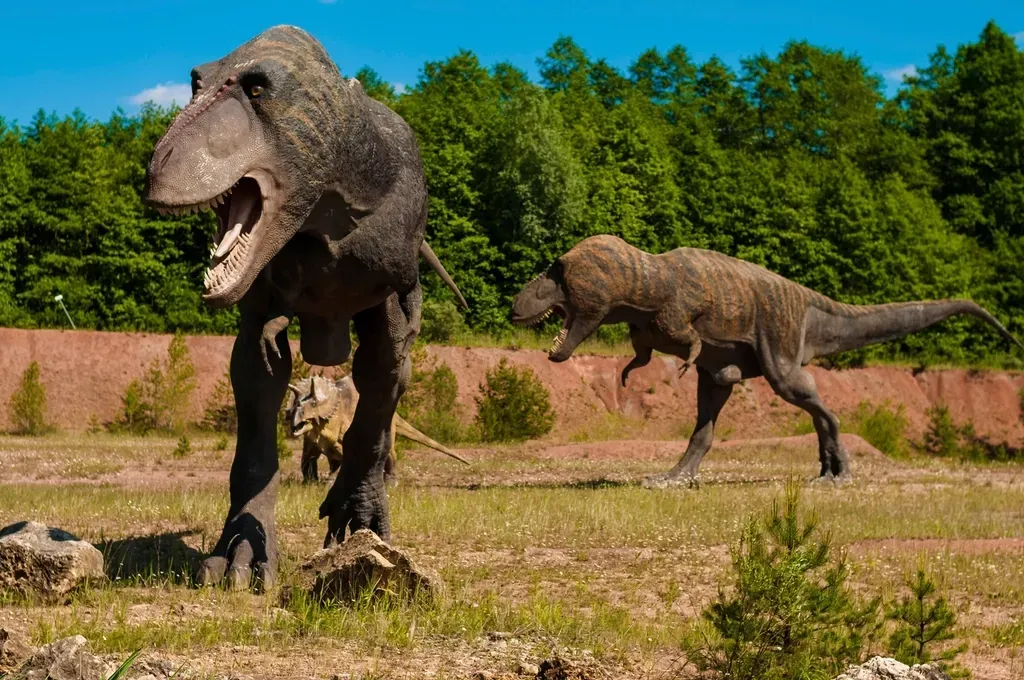
Once Velociraptor got the “pack hunter” reputation, scientists started slapping the same label on almost every large meat-eating dinosaur, from Allosaurus to the mighty Tyrannosaurus itself.
The trouble is, that leap was built on flimsy ground. Researchers note that theropods are often found buried near other members of their own species, which some interpreted as evidence of pack hunting. But mass death sites near a single carcass are just as easily explained by chaotic, competitive scavenging as by coordinated teamwork. The “pack of giant killers” trope may say more about our love of wolf-movie drama than about actual predator behavior. If wolf-pack raptors get you fired up, wait until you hear how T. rex actually ate.
#10 – T. Rex Was a Pure, Non-Stop Hunting Machine That Never Scavenged
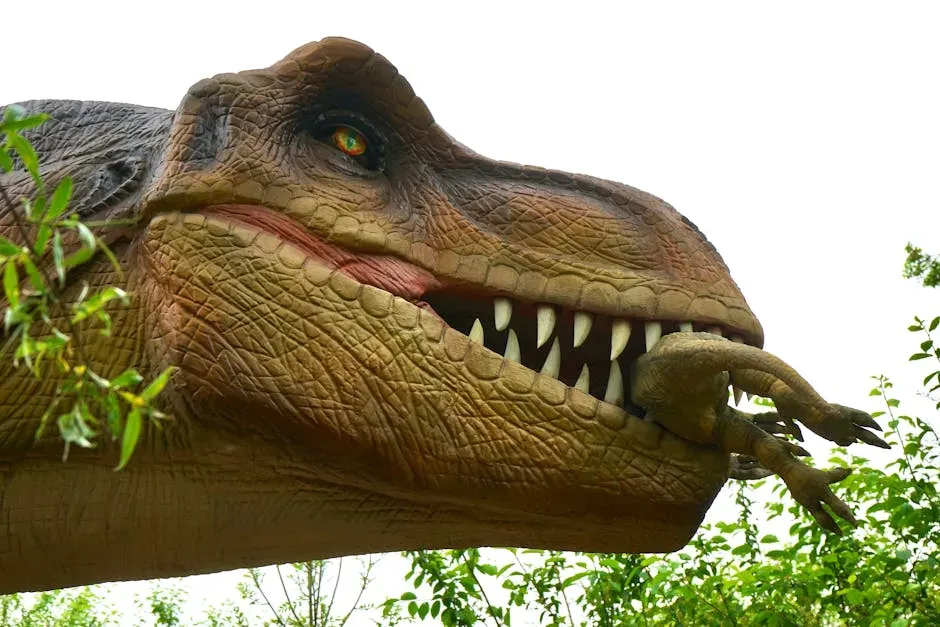
The flip side of the “apex predator” myth is just as shaky: the idea that the tyrant king only ever killed fresh, living prey and considered scavenging beneath it.
That framing ignores basic biology. Modern apex predators – lions, wolves, even eagles – scavenge constantly whenever an easy meal presents itself, and nothing in the fossil record suggests T. rex was different. What the evidence does support is that T. rex actively hunted live animals: healed bite marks and broken embedded teeth in the bones of plant-eaters prove some prey survived a first attack. The truth sits in the boring middle – T. rex almost certainly did both, which makes the strict “pure hunter” narrative just as flimsy as the “pure scavenger” theory some scientists floated decades ago. From feeding habits to breathing gear, the next myth gets even stranger.
#9 – Parasaurolophus Used Its Crest as an Underwater Snorkel
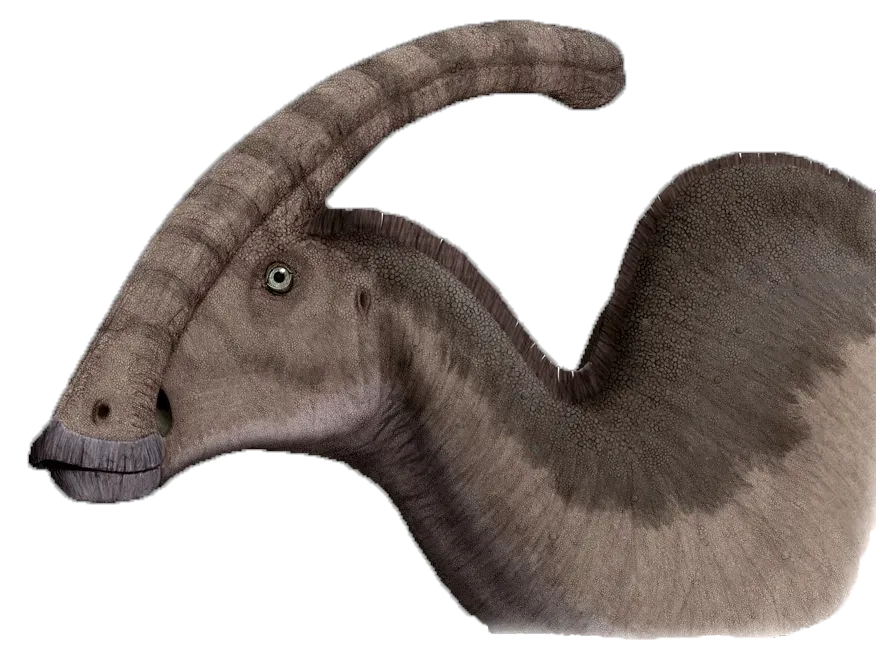
Picture a duck-billed dinosaur wading chest-deep in a swamp, breathing through a long tube-shaped crest poking above the water like a submarine periscope. It’s a fantastic image. It’s also completely wrong.
The snorkel idea was floated early in the 20th century by paleontologist Charles M. Sternberg, but anatomy simply doesn’t cooperate – no one has ever produced a workable explanation for how it would keep water out of the lungs. Worse, the crest has no external openings at all, so breathing through it underwater would have been physically impossible. CT scans instead revealed the hollow crest was a resonating chamber built for deep, foghorn-like calls carried across long distances – the swamp snorkel was never real, but the sound the animal actually made was arguably cooler. If the snorkel theory embarrassed paleontologists, wait until you see what Hollywood invented from scratch.
#8 – Dilophosaurus Flared a Frill and Spat Blinding Venom
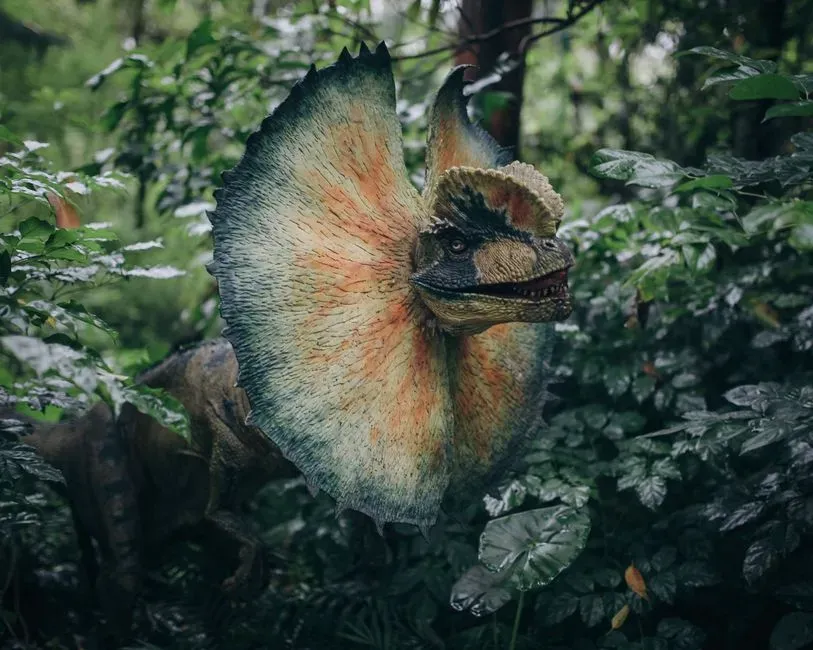
Thanks to one unforgettable movie scene, an entire generation believes Dilophosaurus could fan out a cobra-like neck frill and spit venom straight into a victim’s eyes.
None of that ever happened in the fossil record – because it was invented for the film. Natural History Museum experts confirm the venom-spitting, frill-necked image actually comes from a real living animal, the frill-necked lizard, which inspired the movie’s creature design rather than any Dilophosaurus fossil. No frill structure, venom gland, or venom-delivery groove has ever been found in a Dilophosaurus skull. The real animal was simply a mid-sized, crested predator – impressive on its own, but nowhere near as theatrical as its cinematic alter ego. The fiction doesn’t stop with movie monsters – it goes all the way down to blood temperature.
#7 – Dinosaurs Were Sluggish, Cold-Blooded Creatures
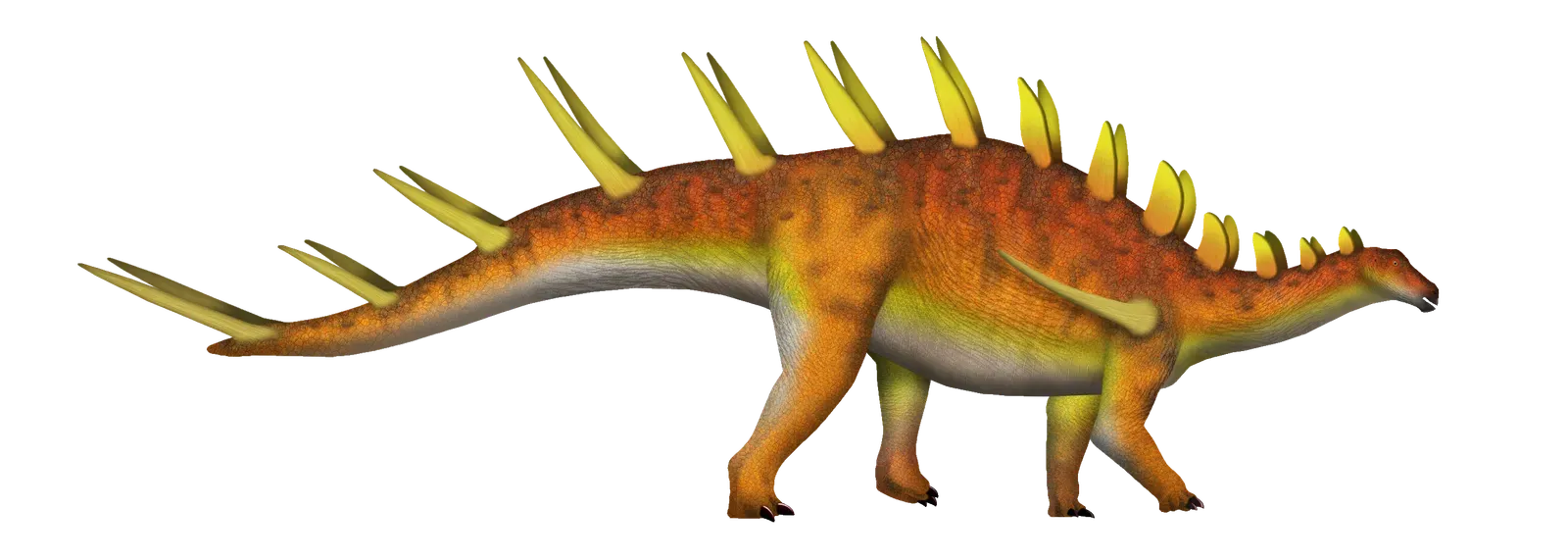
The old-school image of a dinosaur is basically a giant, slow-moving lizard dragging itself through the mud, because cold blood supposedly meant low energy and low ambition.
That picture has been quietly demolished over the past few decades. Growth-ring analysis of dinosaur bones shows many species grew at rates far closer to warm-blooded mammals and birds than to modern reptiles, some reaching massive adult sizes in a couple of decades rather than a lifetime. Several dinosaur lineages likely ran a “mesothermic” metabolism – faster than a crocodile, though maybe not quite hummingbird-fast. The sluggish, sun-basking dinosaur of old textbooks simply doesn’t match the active, fast-growing animal the bone microstructure describes.
Worth Knowing
- Bone growth rings work much like tree rings, recording roughly a year’s worth of growth.
- Some large dinosaurs reached full adult size in about 20 years.
- Mesothermic animals sit metabolically between cold-blooded reptiles and warm-blooded mammals.
- Modern crocodiles, by comparison, can take decades to reach full size.
Metabolism wasn’t the only 80s textbook myth about to sink.
#6 – Giant Sauropods Lived Semi-Submerged in Swamps
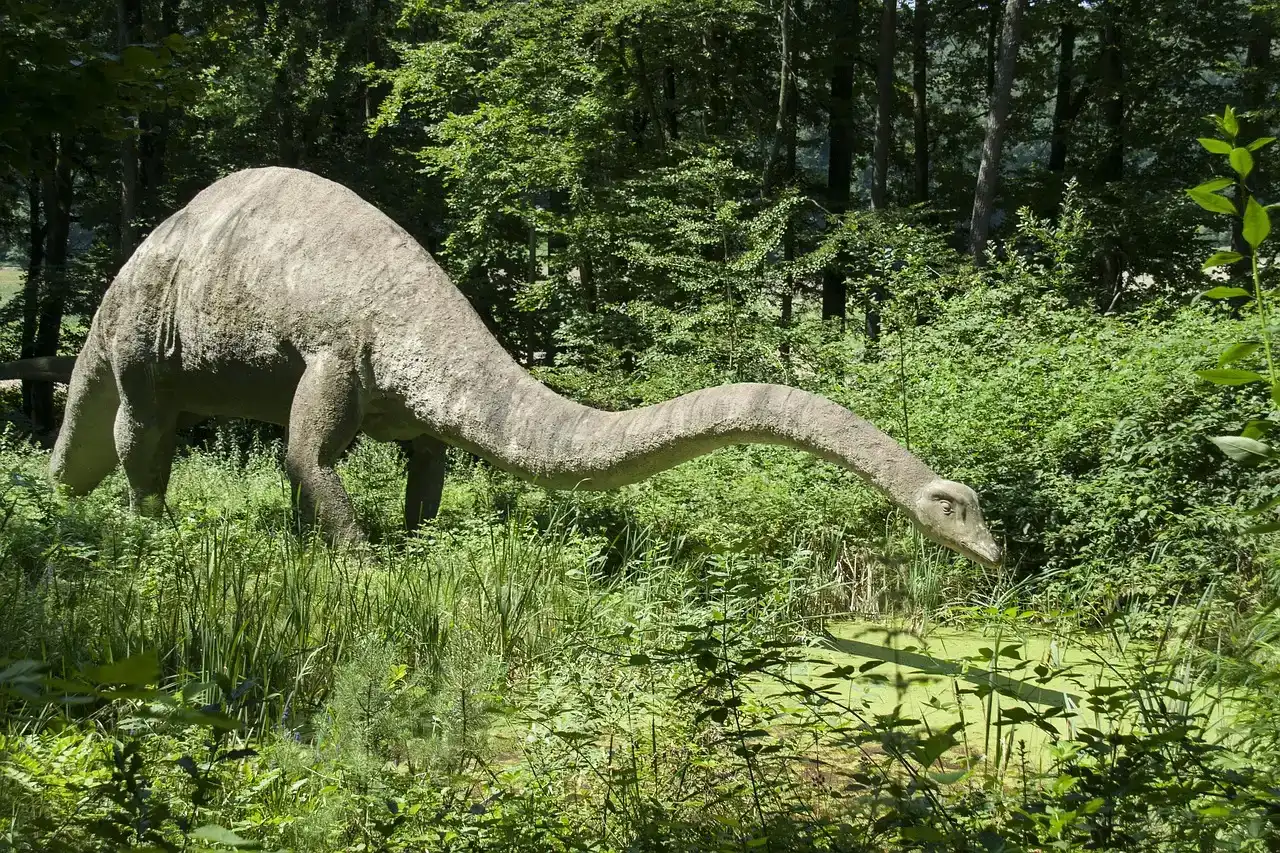
Ask any 1980s textbook why sauropods like Brontosaurus were drawn wading in lakes up to their bellies, and you’ll get the same answer every time: they were simply too heavy for dry land to support.
That assumption has been thoroughly demolished. Early paleontologists assumed massive dinosaurs needed water buoyancy just to hold themselves up, which is how the swamp-dweller image took hold. But fossilized footprint trackways tell a different story – even the largest sauropods walked confidently on dry land, supported by column-like legs and lightweight, air-filled bones built for exactly that job. The swamp-dweller image survived for decades simply because nobody bothered checking the footprints first.
Quick Compare
- Old theory: Sauropods needed water buoyancy to support their own weight.
- New evidence: Trackways show confident dry-land walking on column-like legs.
- Old theory: Heavy bones meant a swamp-bound lifestyle.
- New evidence: Air-filled bone structures actually lightened the skeleton.
From swamps to spikes, the next myth turns weaponry itself into a myth.
#5 – Stegosaurus Swung Its Tail Spikes Purely as a Weapon
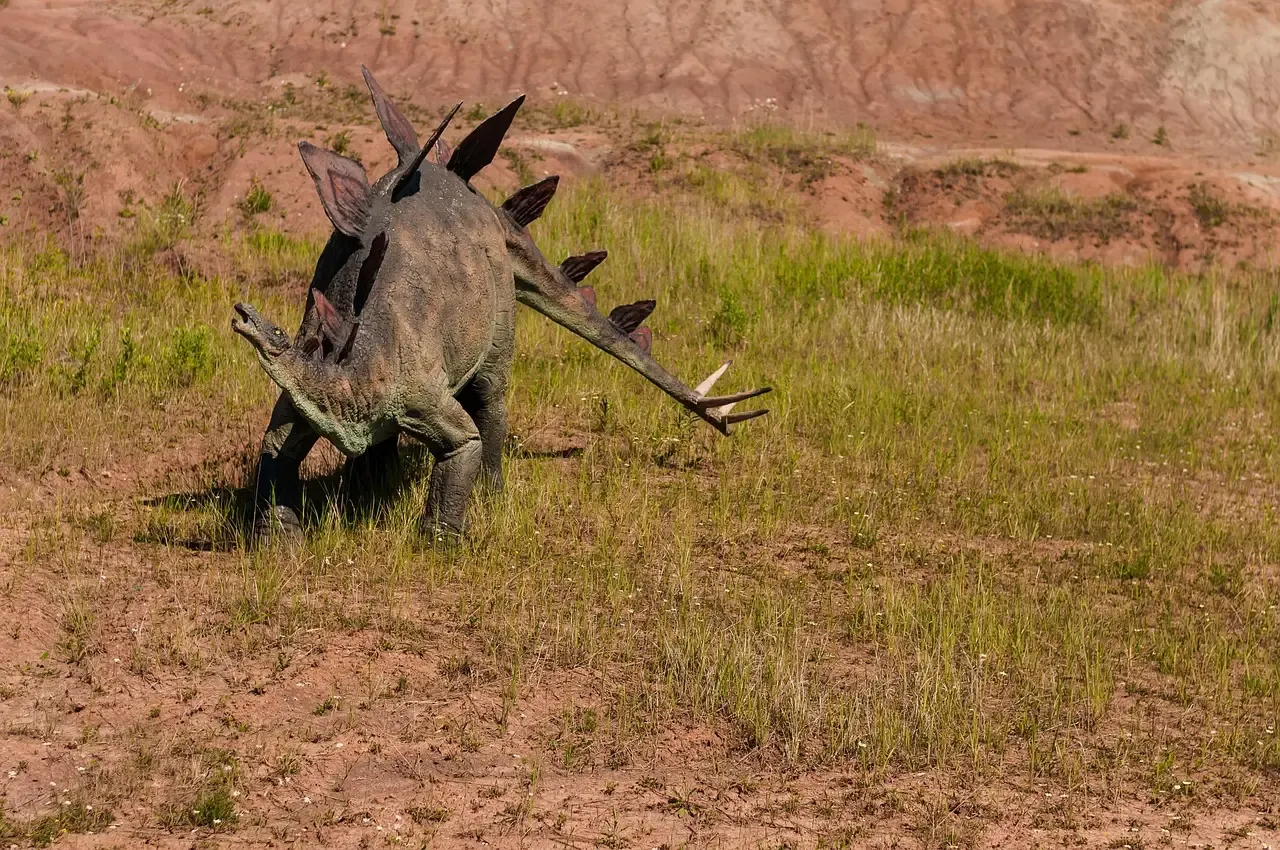
For decades, the spiked “thagomizer” tail of Stegosaurus was presented as a single-purpose weapon, evolved for one job only: bludgeoning attacking predators like Allosaurus.
That story is likely too simple. Biomechanical modeling shows the tail could deliver genuinely devastating swings, and healed puncture wounds on Allosaurus tail vertebrae confirm real combat happened at least occasionally. But many researchers now argue the spikes’ size, shape, and prominent placement alongside the animal’s back plates suggest a dual role – intimidation and mate attraction as much as active defense, not unlike how deer antlers exist for display long before they’re ever used in a real fight. Treating the thagomizer as a pure weapon ignores how much of animal anatomy is about being seen, not just striking. Tails aside, the biggest posture myth of all is still standing – for now.
#4 – T. Rex Dragged Its Tail and Stood in an Upright Tripod Pose
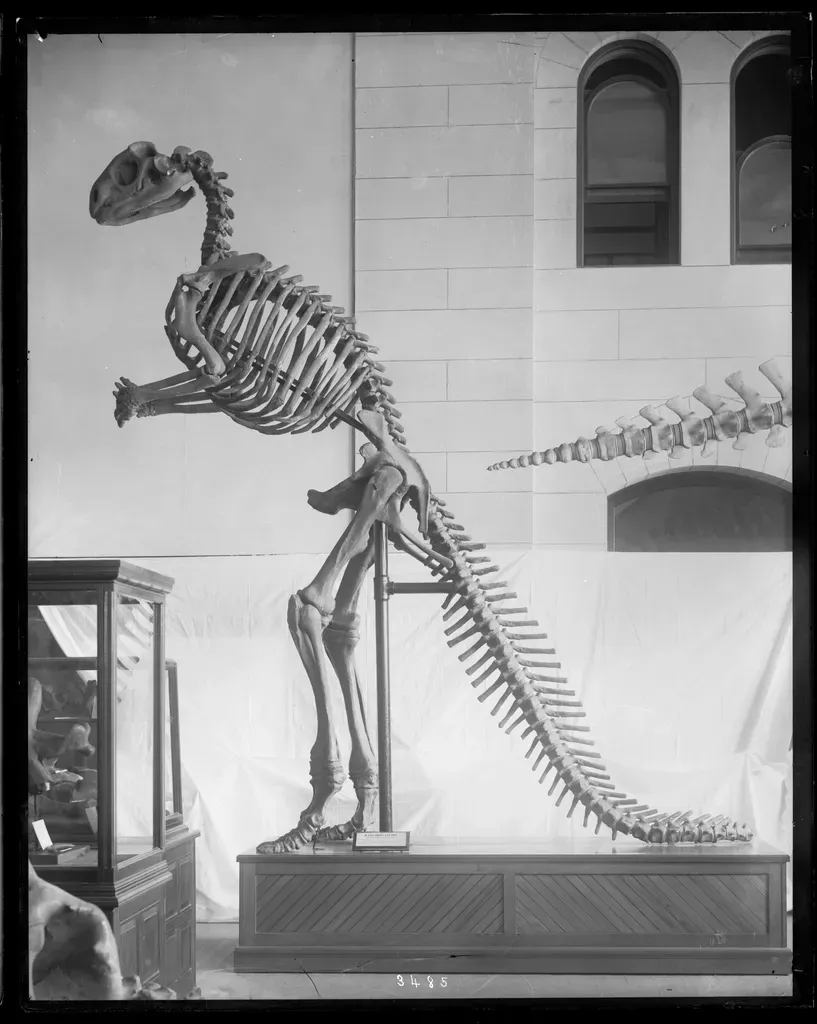
Close your eyes and picture a T. rex, and you probably see it standing nearly vertical, tail scraping the ground behind it like a giant lizard. Paleontologists have known that image is wrong since the 1960s.
Museums originally built T. rex skeleton mounts in that upright position, tails dragging on the ground – but researchers have long known the animal actually held its body horizontally, balanced like a giant teeter-totter over its hips. The physical proof is everywhere underfoot: paleontologists have catalogued thousands of dinosaur footprint tracks and almost no tail-drag marks among them. Even so, when a Cornell paleontologist once asked students to sketch a Tyrannosaurus, most still drew it standing upright – proof the outdated myth still beats the science in pop culture. Posture wasn’t the only thing science had to slow down.
#3 – T. Rex Could Sprint Like a Cheetah After Its Prey
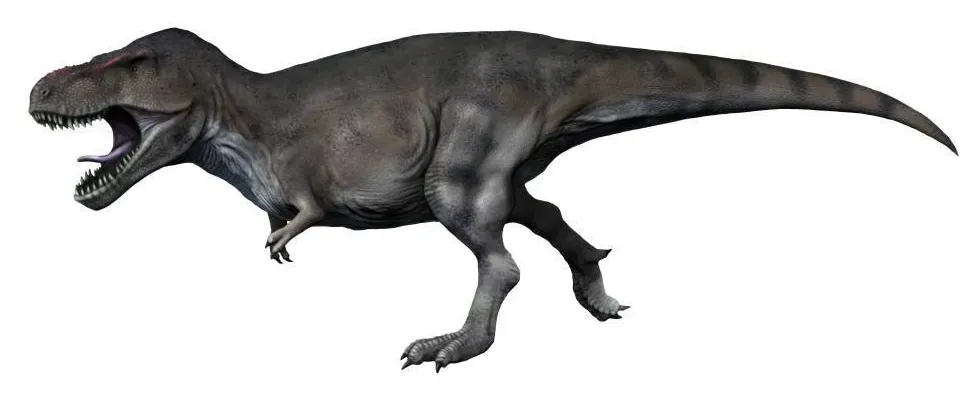
Movie chase scenes love showing T. rex sprinting at car-chasing speeds, jaws snapping just behind a jeep bumper. The real animal’s top speed was nowhere close to that.
Biomechanical stress modeling changed the conversation entirely. Researchers found that a true Tyrannosaurus probably couldn’t move much faster than a jogging human, based on the stress a full sprint would have put on its massive foot bones. At roughly five to eight tons, a high-speed gallop would have generated leg-bone stresses capable of causing catastrophic breaks with every stride – a risk evolution simply wouldn’t favor in an animal that size. This doesn’t make T. rex weak; it makes it an ambush predator, relying on stealth, bite force, and short bursts rather than marathon chases.
At a Glance
- Estimated T. rex weight: roughly five to eight tons.
- Estimated top speed: close to a human jogging pace, not a sprint.
- Key limiting factor: catastrophic leg-bone stress risk at higher speeds.
- Likely hunting style: short bursts and ambush, not long chases.
Speed wasn’t the only thing Hollywood exaggerated – volume was too.
#2 – Dinosaurs Let Out Hollywood-Style Open-Mouthed Roars
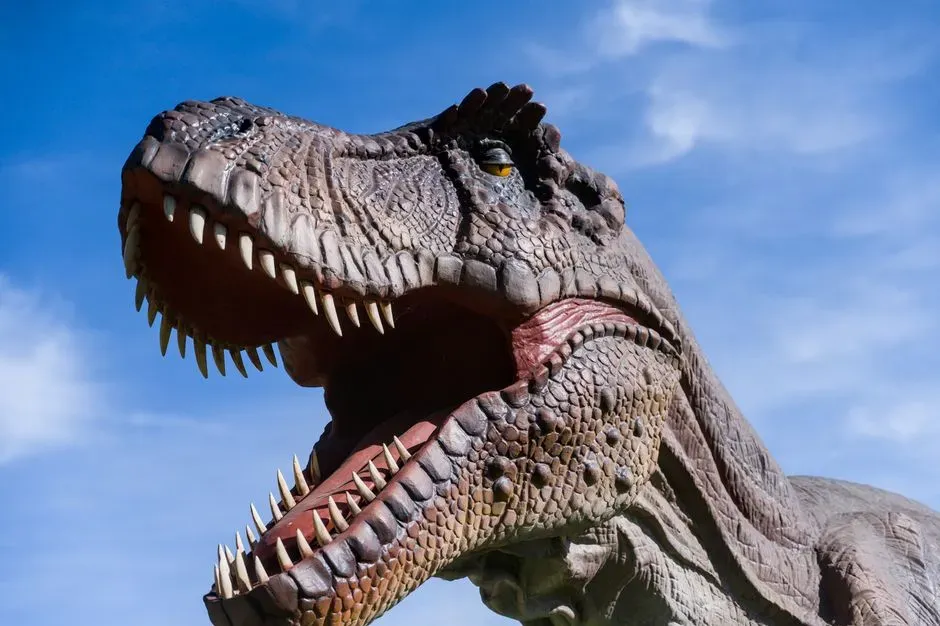
Every dinosaur movie ever made features the same beat: jaws thrown wide open, a deafening lion-like roar shaking the theater speakers. Paleontologists say that sound almost certainly never happened.
Looking at living relatives changes the whole soundscape. Birds and crocodiles – the closest living relatives of dinosaurs – suggest a different picture, with many paleontologists now believing dinosaurs relied on closed-mouth vocalization, producing low-frequency booming or cooing sounds similar to a cassowary’s rumble or a crocodile’s throat-swelling bellow. That means a real T. rex likely produced infrasound you’d feel in your chest more than hear with your ears, while smaller feathered dinosaurs may have hissed, chirped, or clicked like modern birds. The open-mouthed Hollywood roar is likely pure fiction – unsettling, considering how confident every trailer sounds. Save the loudest myth for last, though – the one that built an entire film franchise.
#1 – Velociraptors Hunted in Tight, Coordinated Wolf Packs
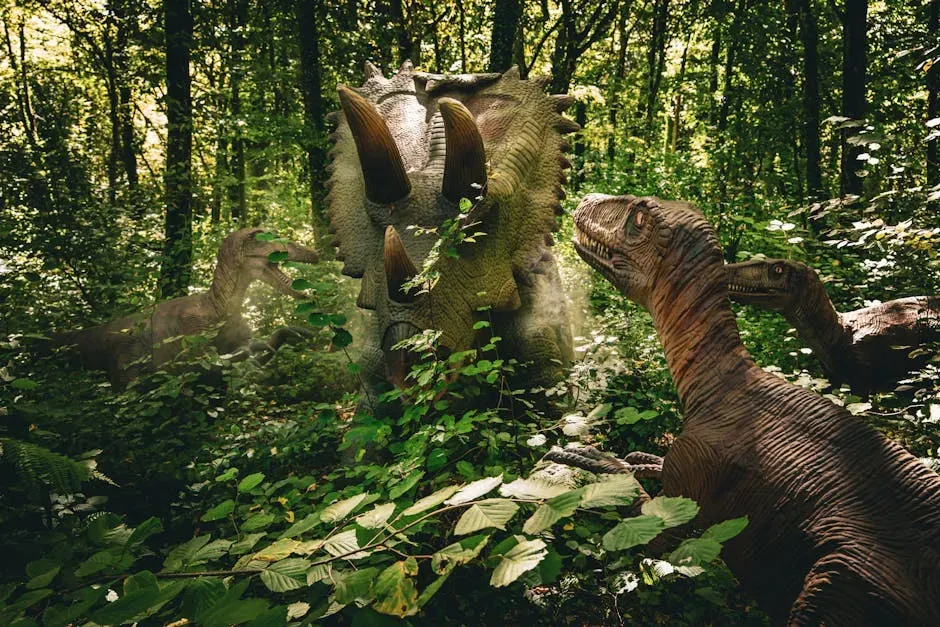
No dinosaur myth runs deeper than this one: intelligent, coordinated raptors surrounding prey like a wolf pack, silently signaling to each other before a synchronized ambush. It’s the single most influential dinosaur “fact” that was never actually proven.
The whole idea traces back to one interpretation that Hollywood ran with and never let go of – from Jurassic Park to Jurassic World, the loyal, wolf-pack raptor became the franchise’s signature creature. But a landmark tooth-chemistry study changed everything. A University of Wisconsin Oshkosh analysis of raptor teeth, published in the peer-reviewed journal Palaeogeography, Palaeoclimatology, Palaeoecology, found that Velociraptor and its relatives likely did not hunt in big, coordinated packs like dogs, and instead behaved more like Komodo dragons – individuals converging on the same prey, with little true cooperation involved.
“Raptorial dinosaurs often are shown as hunting in packs similar to wolves, but the evidence for this behavior, however, is not altogether convincing.”
Joseph Frederickson, University of Wisconsin Oshkosh
Decades of movie logic, undone by a handful of fossilized teeth.
The Bottom Line
Fourteen “facts,” fourteen collapses – and the pattern is impossible to ignore. From roaring T. rexes to venom-spitting Dilophosaurus to wolf-pack raptors, almost every iconic dinosaur behavior we grew up trusting turns out to be built on artistic guesswork rather than fossil proof.
The real story is arguably weirder and more interesting: closed-mouth infrasound instead of roars, jogging-speed tyrants instead of sprinters, solitary raptors instead of coordinated killers. If you ask me, paleontology keeps proving the same uncomfortable lesson – the loudest, most cinematic version of prehistory is almost always the least accurate one, and the quieter, stranger truth was sitting in the bones the whole time. Which of these myths surprised you the most – and which dinosaur “fact” do you flatly refuse to give up? Drop it in the comments.