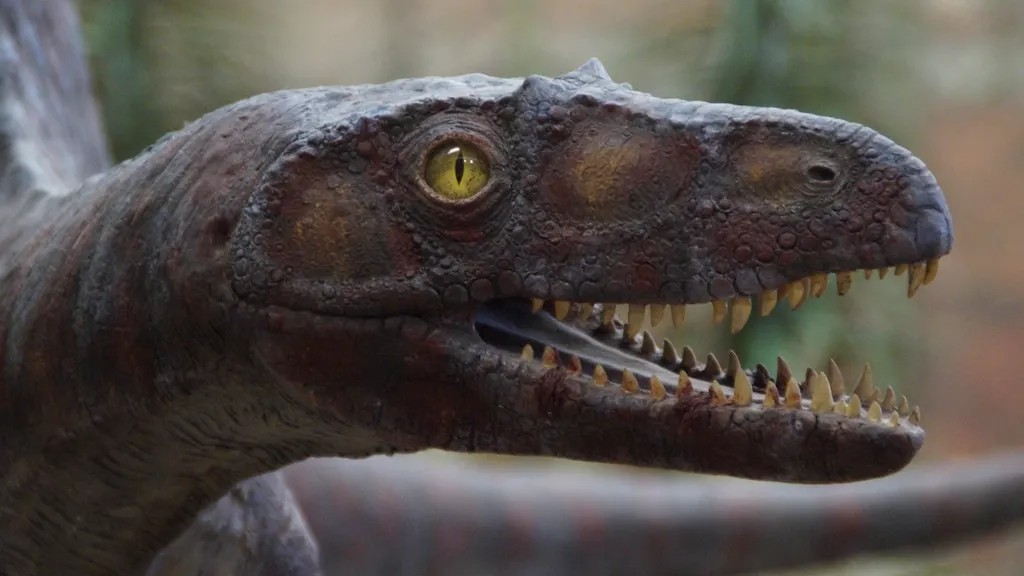
For most of the 20th century, science classrooms painted a very confident picture of dinosaurs: slow, scaly, cold-blooded brutes that ruled the Earth through sheer size before going out like a dimming light. Teachers taught it. Museums displayed it. Hollywood immortalized it. The problem? A significant chunk of that picture was wrong, and the scientists who built it have spent the last few decades quietly, sometimes reluctantly, admitting as much.
What’s genuinely remarkable isn’t just that they got things wrong. It’s how wrong, and how many things at once. From the texture of their skin to the temperature of their blood to the way they raised their young, the dinosaur you learned about in school looks less and less like the one researchers are reconstructing today. Some of the reversals below are uncomfortable. A few are jaw-dropping. And at least one will make you question every museum diorama you’ve ever trusted.
#14 – Dinosaurs Wore Feathers, Not Just Scales
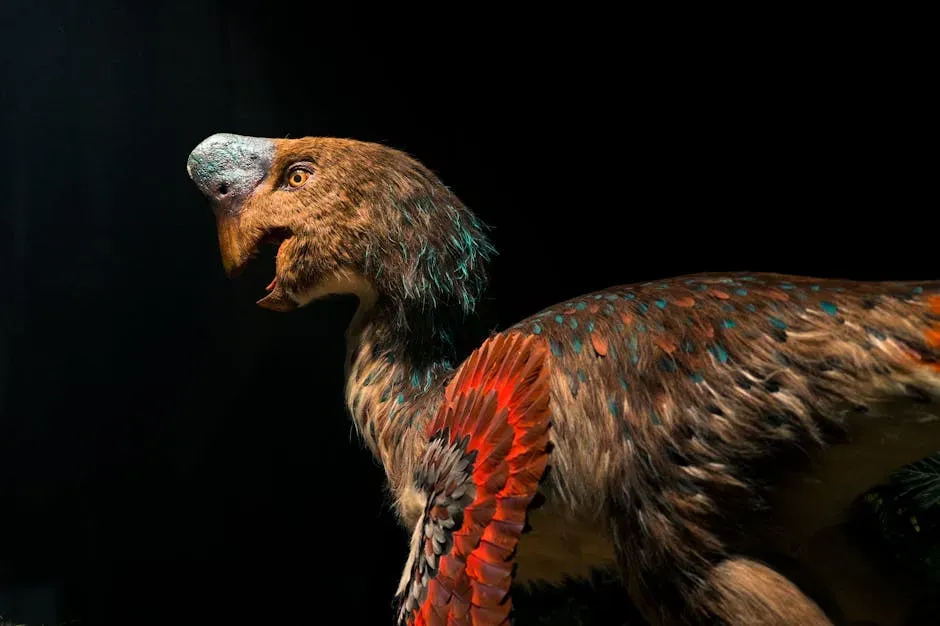
For decades, every classroom poster and natural history exhibit showed dinosaurs cloaked in tough, reptilian scales. It felt intuitive. They were ancient. They were massive. They looked like crocodiles. What nobody expected was that a flood of fossils coming out of northeastern China in the 1990s and 2000s would preserve something startling in exquisite detail: feathers, filaments, and fuzz plastered across theropod after theropod like nature’s own field notes.
Multiple meat-eating lineages now show evidence of pennaceous feathers and bristle-like proto-feathers, structures that almost certainly evolved for insulation and display long before any creature used them for flight. Even more unsettling for the old consensus, some early tyrannosauroids show signs of feathery coverings during their juvenile stages. Skin impressions confirm that scales persisted on certain body parts in larger species, but the idea of a universally scaly dinosaur world has been quietly retired. The real picture is far stranger, and far more bird-like, than anyone wanted to admit.
Fast Facts
- The key feathered dinosaur fossils came from the Early Cretaceous Jehol Biota deposits in Liaoning, northeastern China.
- Sinosauropteryx was unveiled to the world at the 1996 Society of Vertebrate Paleontology meeting – the first non-avian theropod confirmed with feather-like structures.
- Today, more than a dozen genera of dinosaurs have confirmed fossil feathers, all of them theropods.
- Feathers preserved in amber from 75–80 million years ago show structures used for insulation, not flight.
- Yutyrannus huali, a 23-foot tyrannosaur that lived 125 million years ago, is currently the largest known feathered dinosaur on record.
#13 – Many Dinosaurs Ran Hot, Not Cold-Blooded
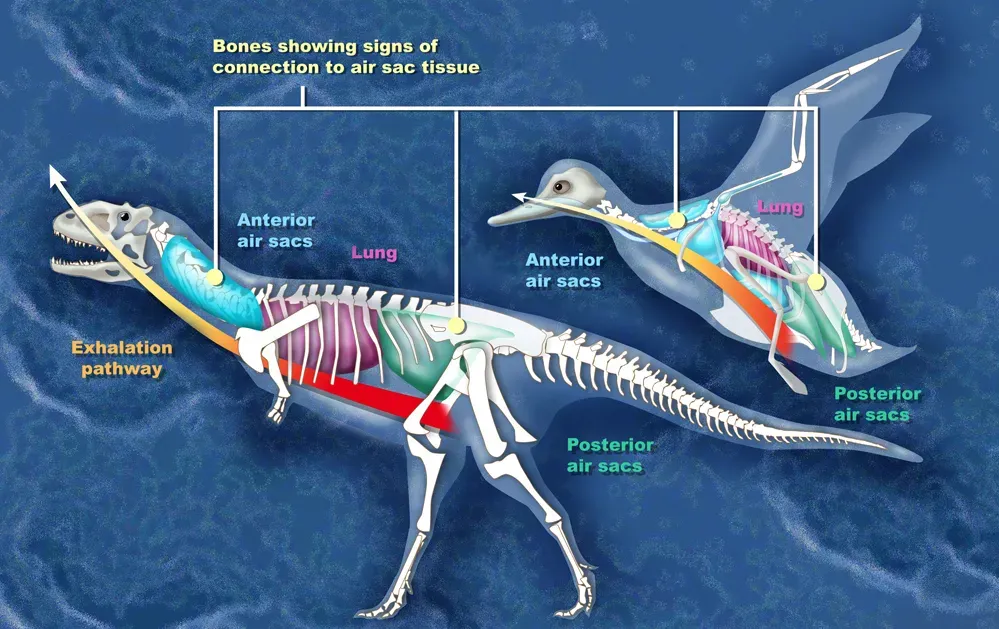
The cold-blooded dinosaur was practically gospel. They were reptiles, the logic went, so they must have been ectotherms, sluggish in the cold, dependent on the sun to get moving. It was a tidy narrative that collapsed under the weight of evidence nobody could keep ignoring. Microscopic analysis of bone cross-sections revealed rapid, sustained growth patterns that simply don’t show up in cold-blooded animals. The bone tissue looks far more like what you’d find in a mammal or a bird than in a lizard.
Oxygen isotope data added another layer, pointing toward body temperatures that stayed elevated regardless of the environment. The emerging picture isn’t that all dinosaurs were identical in their metabolism, but that the ancestral dinosaur lineage leaned toward warm-blooded physiology, and several branches pushed that capacity further. Some ornithischians may have dialed it back over time, but the default assumption of cold-blooded mediocrity has been overturned. What replaced it is a far more dynamic, energetic, and frankly more dangerous group of animals than textbooks ever portrayed.
#12 – Birds Are Not Related to Dinosaurs. Birds Are Dinosaurs.

Old school taxonomy kept birds in their own tidy box, a separate class called Aves, politely distinct from the terrible lizards. Even when scientists began acknowledging evolutionary links, the language stayed cautious: birds “descended from” dinosaurs, or were “related to” them. That framing turned out to be doing a lot of work to avoid a more unsettling conclusion that cladistic analysis eventually forced into the open.
Birds are not merely the descendants of dinosaurs. Under the most rigorous phylogenetic framework, they are theropod dinosaurs, sitting inside the same clade as Velociraptor and T. rex, connected by hollow bones, three-toed feet, wishbones, and a cascade of shared anatomical traits that accumulate the deeper you look. The transition from ground-dwelling feathered theropod to flying bird wasn’t a dramatic leap across a chasm. It was a series of small, incremental changes in animals that were already remarkably bird-like. Every pigeon you’ve ever shooed off a park bench is, technically speaking, a living dinosaur.
At a Glance: What Birds Share With Non-Avian Dinosaurs
- Hollow bones: Reduced weight for mobility – present in both theropods and modern birds.
- Wishbone (furcula): Found across theropod dinosaurs long before flight evolved.
- Three-toed feet: A defining feature of the theropod lineage that birds directly inherited.
- Brooding posture: Oviraptorosaurs are preserved sitting over nests with forelimbs folded – identical to modern bird behavior.
- Feathers: Now confirmed in multiple non-avian theropod groups, predating the origin of birds.
#11 – Tails Stayed Elevated and Never Once Dragged the Ground
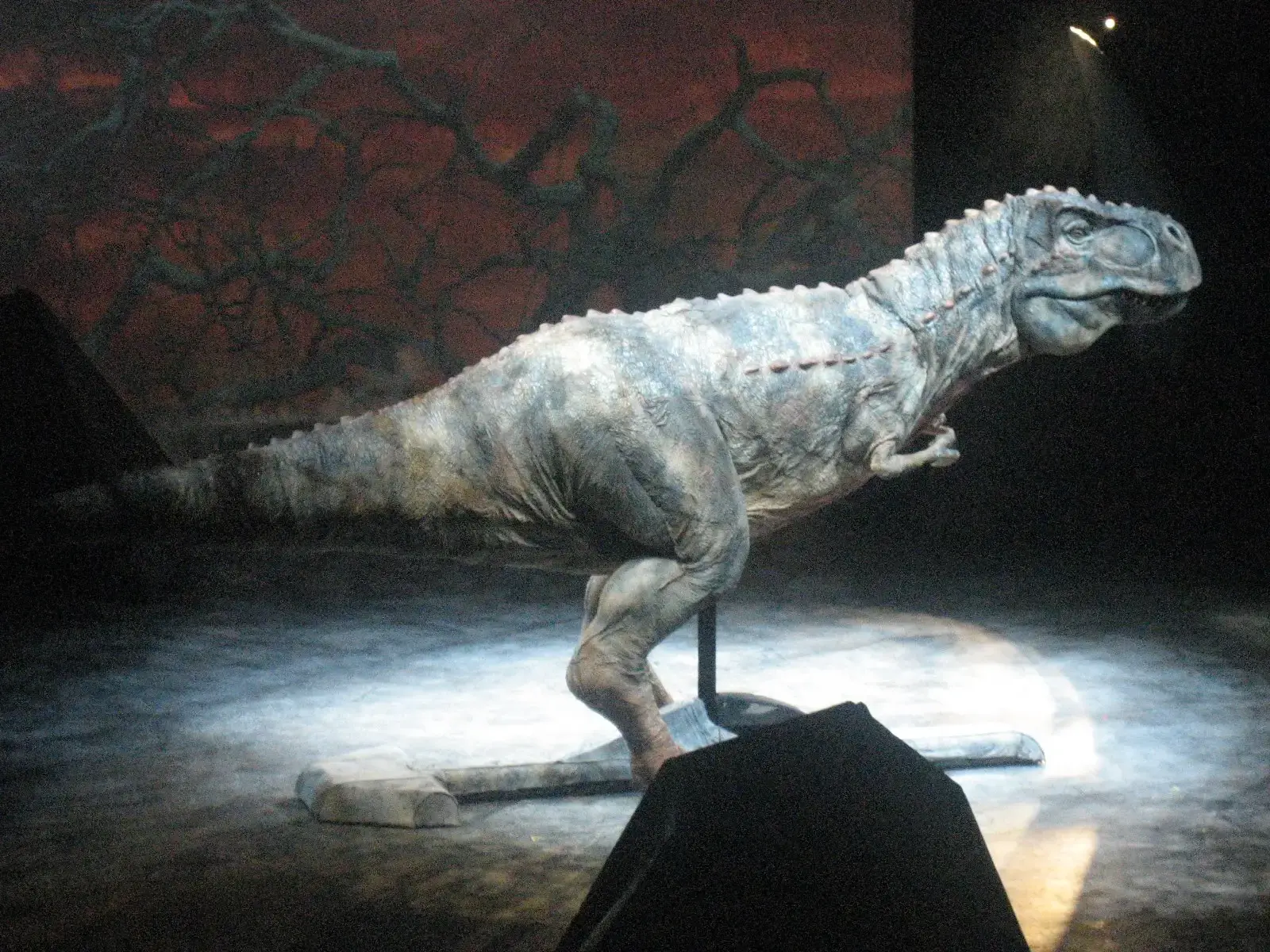
Walk through any natural history museum built before the 1970s and you’ll find the old posture on full display: sauropods and theropods with their tails slumped behind them like reluctant anchors, leaving a groove in whatever ground they crossed. It looked powerful in a lumbering sort of way. The only problem is that the fossil record itself kept failing to cooperate. Across thousands of preserved trackways from multiple continents, researchers found footprints but no tail drag marks. Not occasionally absent. Almost entirely absent.
Skeletal mechanics explained why. The tail didn’t trail uselessly behind; it functioned as a counterweight, held roughly horizontal to balance the body’s forward mass. This posture made locomotion significantly more efficient and matched what biomechanical models predicted for animals of their size and build. The image of a dinosaur dragging its tail through Mesozoic mud wasn’t just inaccurate. It implied a sluggishness and awkwardness that these animals almost certainly didn’t possess. Fixing the tail fixed the entire silhouette.
#10 – Some Dinosaurs Had Specific, Identifiable Colors
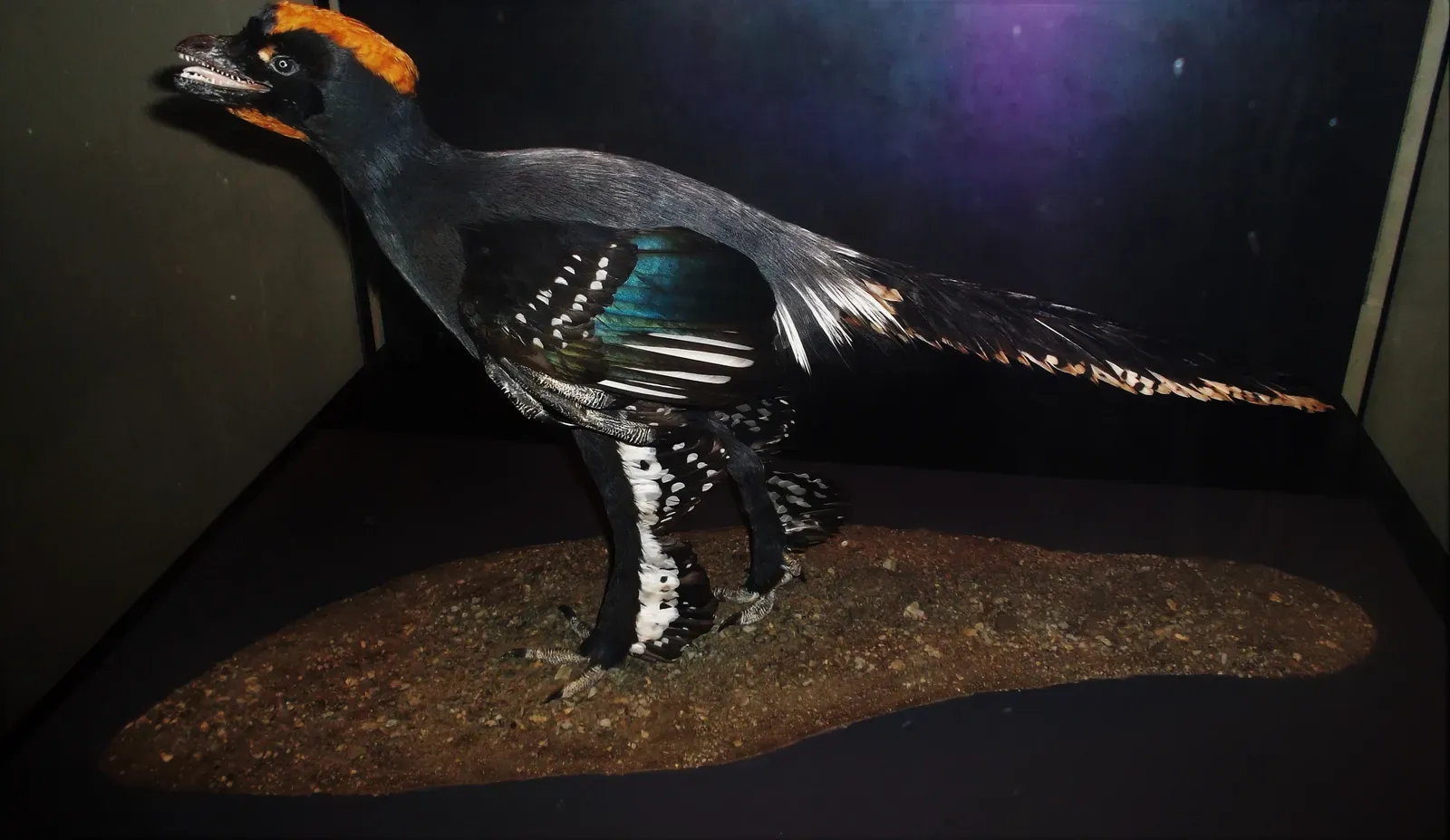
Color seemed permanently out of reach. Fossils preserve bones. Occasionally they preserve impressions of skin or feathers. But color? That felt like wishful thinking, the kind of detail that simply doesn’t survive 66 million years. Paleontologists largely accepted that limitation and moved on, filling restorations with whatever neutral earth tones seemed plausible. Then researchers figured out how to read melanosomes, the microscopic pigment-producing structures preserved inside fossilized feathers.
Sinosauropteryx, a small feathered theropod from China, turned out to carry a reddish-brown and white banded tail, visible in the chemistry of its preserved feathers. Anchiornis, another feathered dinosaur, showed a black-and-white speckled body with a rusty-red crest. These aren’t educated guesses. They are read directly from the fossil’s own pigment record. The implications ripple outward: if color served display or camouflage in these animals, they were engaged in visual social signaling far more sophisticated than the drab, indistinct creatures of old reconstructions ever suggested.
#9 – Spinosaurus Was a River Hunter, Not a Land Predator
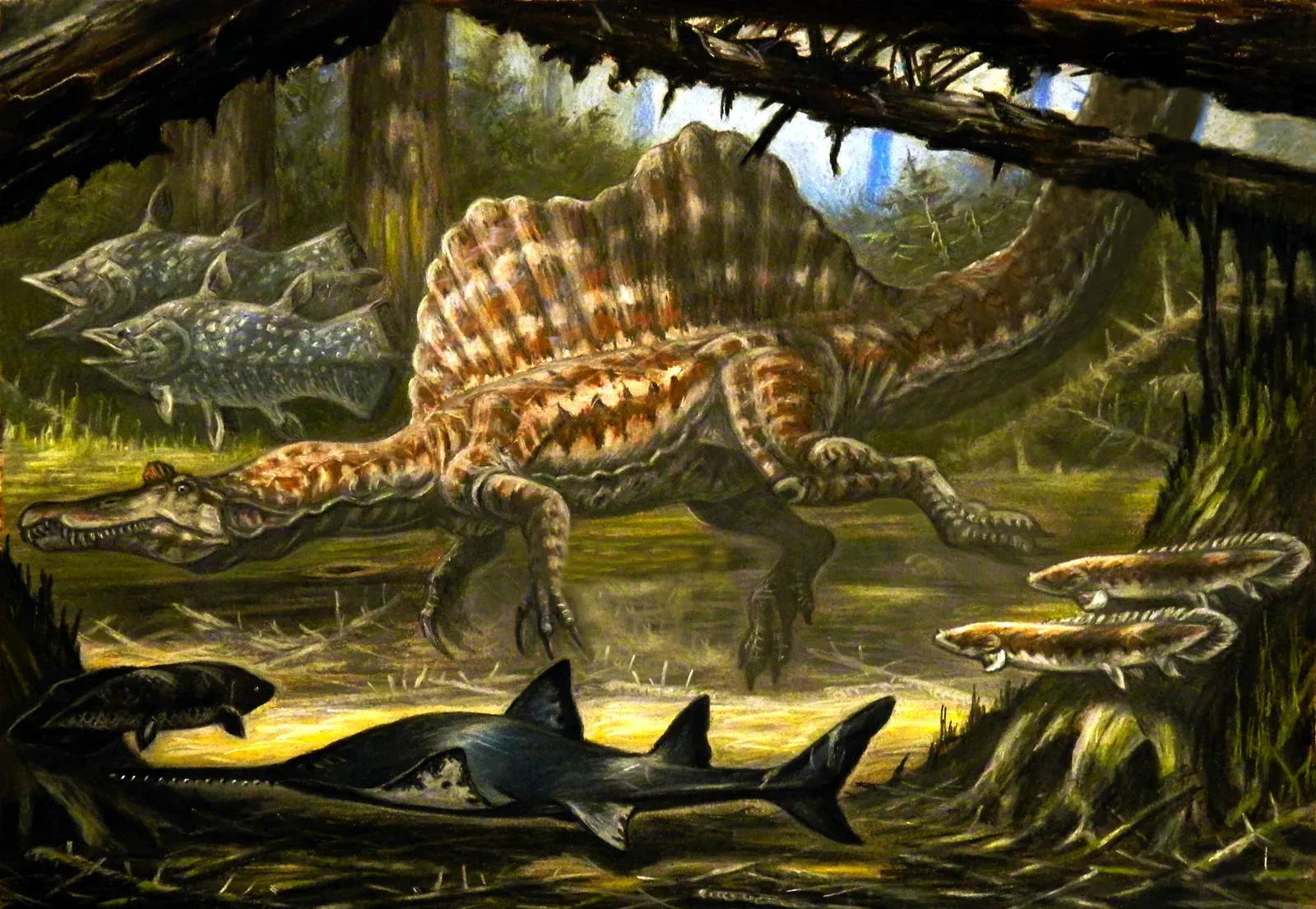
Spinosaurus had always been depicted as a land-based predator, unusual for its sail but otherwise playing the same role as other large theropods. Then Ibrahim and colleagues described new fossils in 2014, and the reconstruction that emerged looked less like a land-living theropod and more like something that had committed heavily to life in the water. Dense, compact bones reduced buoyancy. Nostrils positioned high on the skull allowed breathing while the snout stayed submerged. Short, powerful hind limbs suggested they weren’t built for efficient terrestrial pursuit.
The paddle-like tail described in a 2020 follow-up study added another piece: a laterally flattened tail optimized for propulsion through water, unlike the stiffened, counterweight tail of other large theropods. Spinosaurus likely spent significant time wading and swimming through river systems, hunting fish in a way no other large predator in its ecosystem did. It wasn’t just a dinosaur with a sail. It was, in meaningful ways, the largest semi-aquatic predator that ever lived on land, and the old image of it striding confidently across open ground has been essentially abandoned.
Quick Compare: Old Spinosaurus vs. New Spinosaurus
- Old model: Upright land predator with a decorative sail, hunting like other large theropods.
- New model: Semi-aquatic river hunter with dense bones, high-set nostrils, and a paddle-like tail built for swimming.
- Hind limbs: Previously reconstructed as long and powerful; now understood to be short and less suited to terrestrial pursuit.
- Diet: Previously assumed mixed large prey; now strongly associated with fish based on snout shape and habitat evidence.
- Status: Currently considered the largest semi-aquatic predator known to have existed on land.
#8 – Velociraptors Were Small, Fuzzy, and Nothing Like the Movies
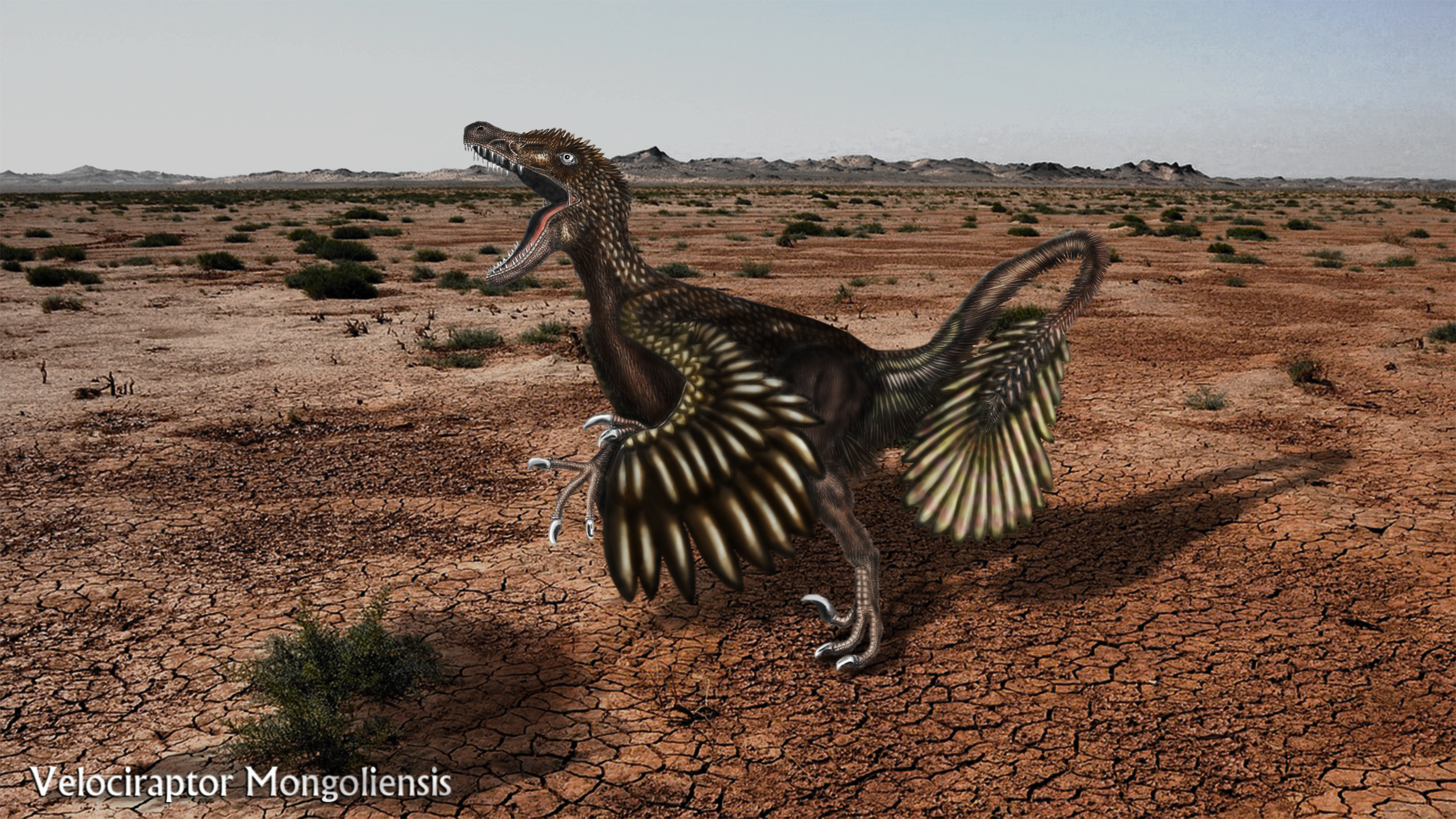
Jurassic Park built its entire tension engine around Velociraptors that stood roughly human height, hunted in coordinated packs, and could open doors. It was spectacular filmmaking. It was also a portrait of a real animal that bore almost no resemblance to actual specimens. Real Velociraptors stood about two feet tall at the hip and weighed somewhere in the range of 15 to 30 pounds. They were, in proportion and rough size, closer to a large turkey than to the sleek, man-sized predator that traumatized a generation of children.
Quill knobs preserved on a Velociraptor forearm bone confirm that these animals carried feathers, probably a full feathered coat rather than the smooth, leathery skin the films depicted. The famous sickle claw, while real, was likely used to pin and restrain prey rather than slash and disembowel, a subtler but no less lethal hunting strategy. The irony is that the real Velociraptor, properly feathered and correctly sized, might actually be more unsettling than the movie version, a surprisingly bird-like predator moving through the undergrowth with the focus and agility of a very serious hawk.
#7 – T. rex Probably Had Lips
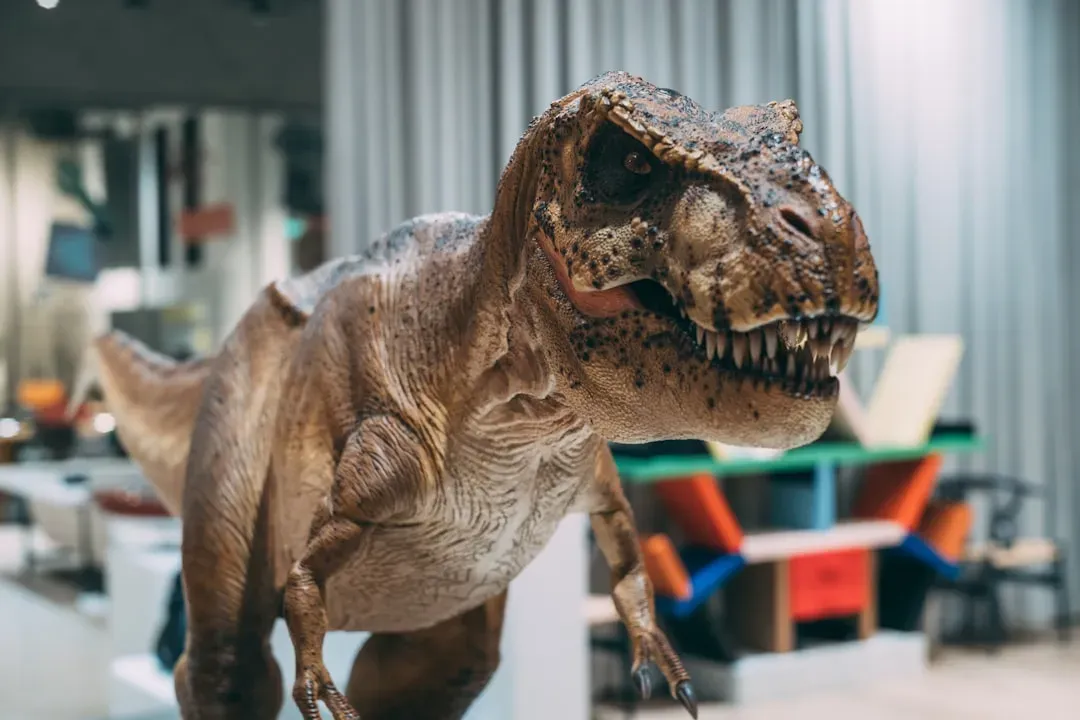
The exposed-tooth grin of T. rex became one of the most iconic images in science communication. Teeth jutting out from the jaw, visible even when the mouth was closed, conveyed menace in a way that lips simply couldn’t. It also appeared to be borrowed from crocodilians, which genuinely do have exposed teeth. The problem with that comparison: crocodilians are a relatively unusual case in the animal kingdom, and detailed examination of T. rex jaw structure and tooth wear tells a different story.
A significant 2023 study published in the journal Science argued that the tooth enamel on T. rex specimens is far too well-preserved for teeth that were constantly exposed to air and desiccation. Researchers found that T. rex had equal enamel thickness on both sides of the tooth – far more consistent with teeth that stay hydrated inside a closed mouth than with the uneven wear seen on exposed crocodile teeth. Comparisons with related animals and jaw bone texture further suggest thin, scaly lips covered and protected the dentition when the mouth was closed. It’s a small anatomical change with enormous visual consequences. The T. rex with lips looks less like a monster and more like a very large, very dangerous lizard. Scientists know this is going to take a long time to update in the public imagination, and they’re right.
“The teeth of these theropod dinosaurs did not experience wear and tear like a crocodile, and most likely had a lip-like covering.”
Thomas Cullen, paleontologist and assistant professor, Auburn University
#6 – T. rex Took Nearly 30 Years to Reach Full Size
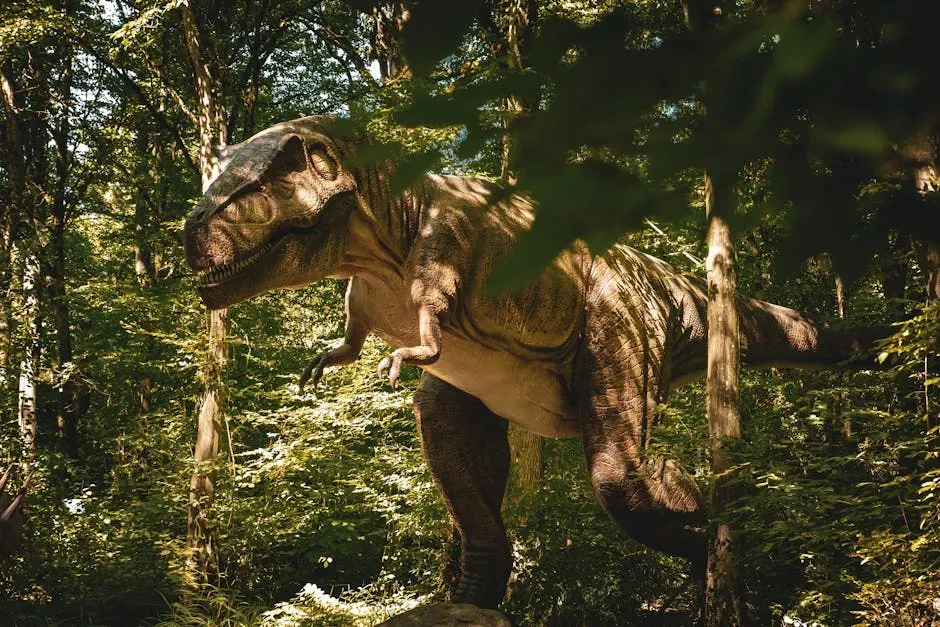
Early estimates of T. rex growth rates were based on limited samples and broad assumptions, and they produced a picture of an animal that reached maturity around 20 years of age. That figure got cited widely and planted itself in textbooks as settled fact. Then researchers began applying bone histology more rigorously, cutting cross-sections through multiple specimens of different sizes and reading the growth rings like a biological calendar.
The revised timeline pushed maturity closer to 28 to 30 years, a meaningful difference that changes how we understand the animal’s ecology and life history. T. rex wasn’t just slow-growing in absolute terms; it experienced a dramatic growth spurt during its teenage years, adding hundreds of pounds annually before leveling off into massive adulthood. This pattern has implications for everything from how many individuals were alive at any given time to how they competed for resources. The old number wasn’t a wild guess, but it was wrong, and the correction came quietly, buried in technical journals while the original estimate continued circulating in popular accounts.
#5 – Dinosaurs Weren’t Already Dying When the Asteroid Hit
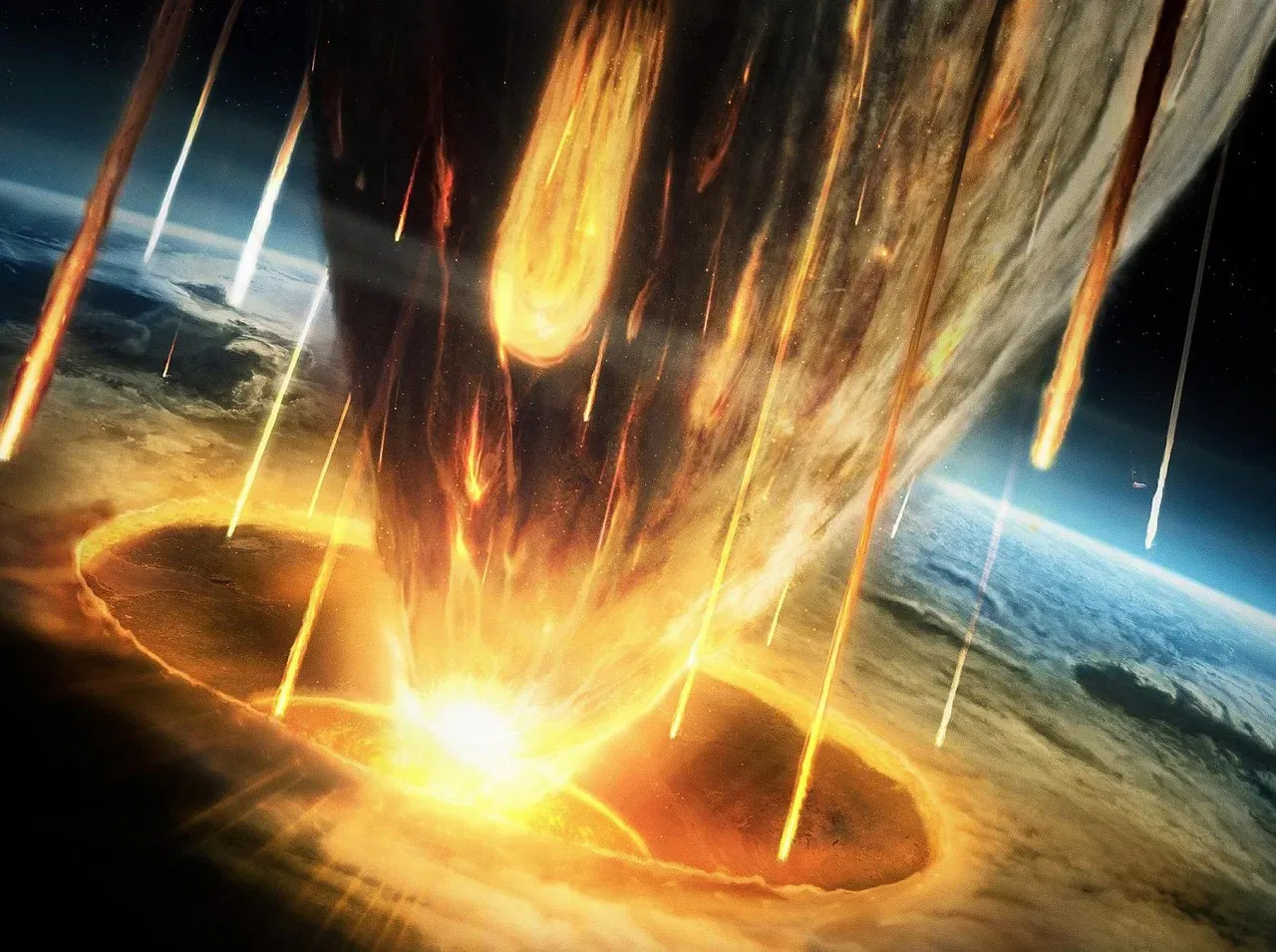
There’s a version of the extinction story that feels almost tragic in a poetic sense: dinosaurs were already on their way out, slowly fading, struggling to adapt, when the asteroid delivered the final blow to a world already in decline. It made the extinction feel inevitable rather than catastrophic. It also appeared in enough textbooks and documentaries to become near-conventional wisdom. The data has steadily eroded that narrative.
Diversity analyses of the latest Cretaceous fossil record show that multiple dinosaur lineages were stable or actively diversifying in the millions of years before the Chicxulub impact. Ceratopsids, hadrosaurs, and several theropod groups were doing reasonably well. The extinction looks, in the most current analyses, far more like a sudden catastrophic termination than a slow fade. The asteroid didn’t finish off a dynasty in decline. It ended one that, by all available evidence, had no intention of going anywhere. That’s a harder, starker story, and it happens to be the more accurate one.
Worth Knowing: The Chicxulub Impact by the Numbers
- The Chicxulub asteroid struck approximately 66 million years ago, leaving a crater roughly 93 miles (150 km) wide off the Yucatán Peninsula.
- Estimates suggest the impact released energy equivalent to billions of nuclear weapons, triggering global firestorms and a years-long impact winter.
- Non-avian dinosaurs had already survived on Earth for approximately 165 million years before the impact – roughly 75 times longer than modern humans have existed.
- Multiple dinosaur lineages were still actively diversifying in the final 10 million years before the strike, contradicting the “slow fade” narrative.
#4 – Some Dinosaurs Carried Stiff Quills Purely for Show
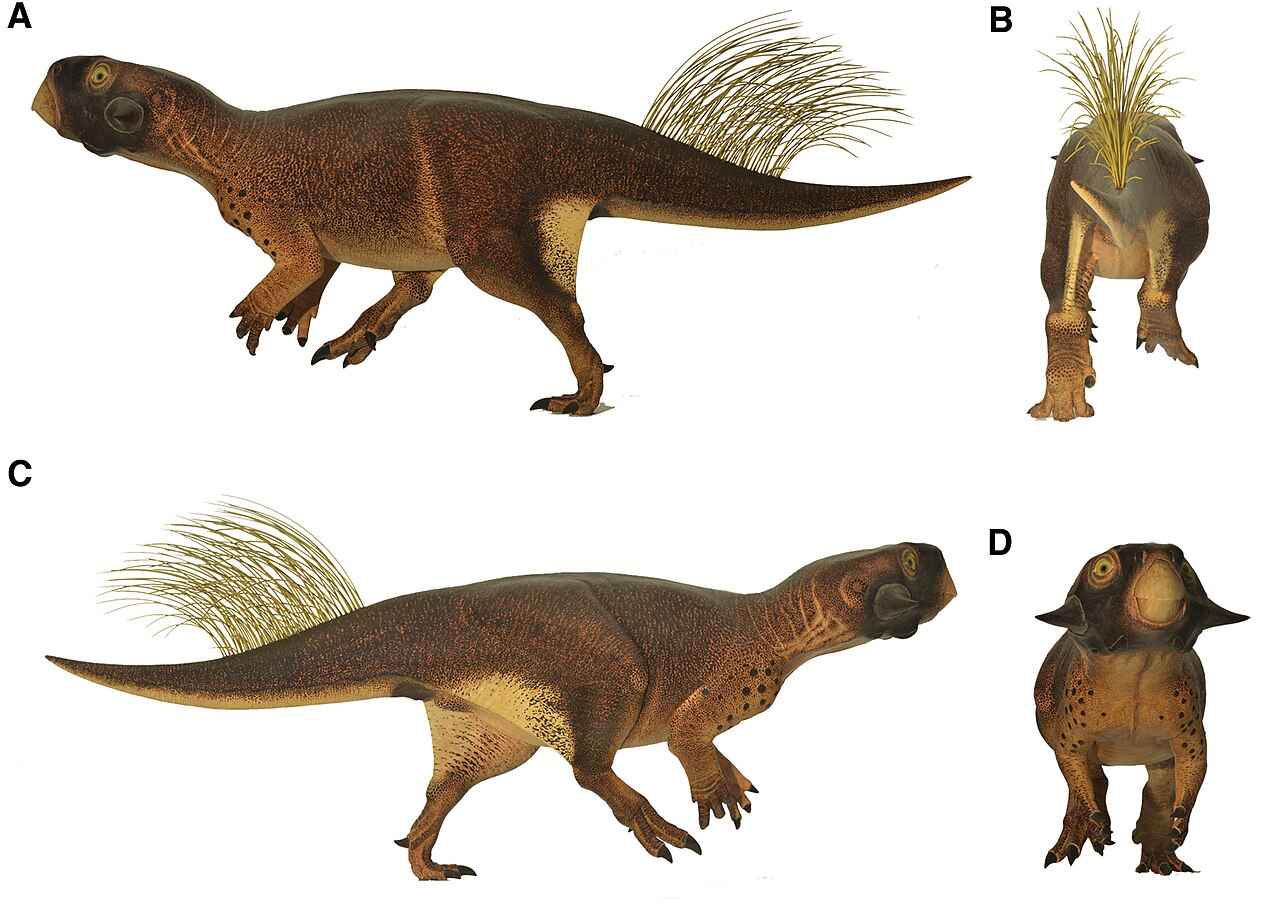
Feathers got the headlines, but the diversity of integumentary structures in dinosaurs goes well beyond simple plumage. Psittacosaurus, a small beaked dinosaur from the Early Cretaceous, preserves a striking set of long, stiff, bristle-like filaments projecting from the tail region. These structures don’t fit the profile of flight feathers or simple insulating fuzz. They look, and likely functioned, as display structures, something to be seen rather than felt.
This matters because it pushes visual communication in dinosaurs into groups that weren’t closely related to birds, suggesting display behavior using modified skin structures was widespread across the dinosaur family tree, not a quirk of a few highly derived lineages. Dinosaurs weren’t just physically imposing. Many of them were almost certainly putting on visible shows for members of their own species, through color, movement, and structure, in ways that look far more like the social signaling of modern birds than the blank, stimulus-response behavior old models tended to assume.
#3 – Their Legs Were Directly Under Their Bodies All Along
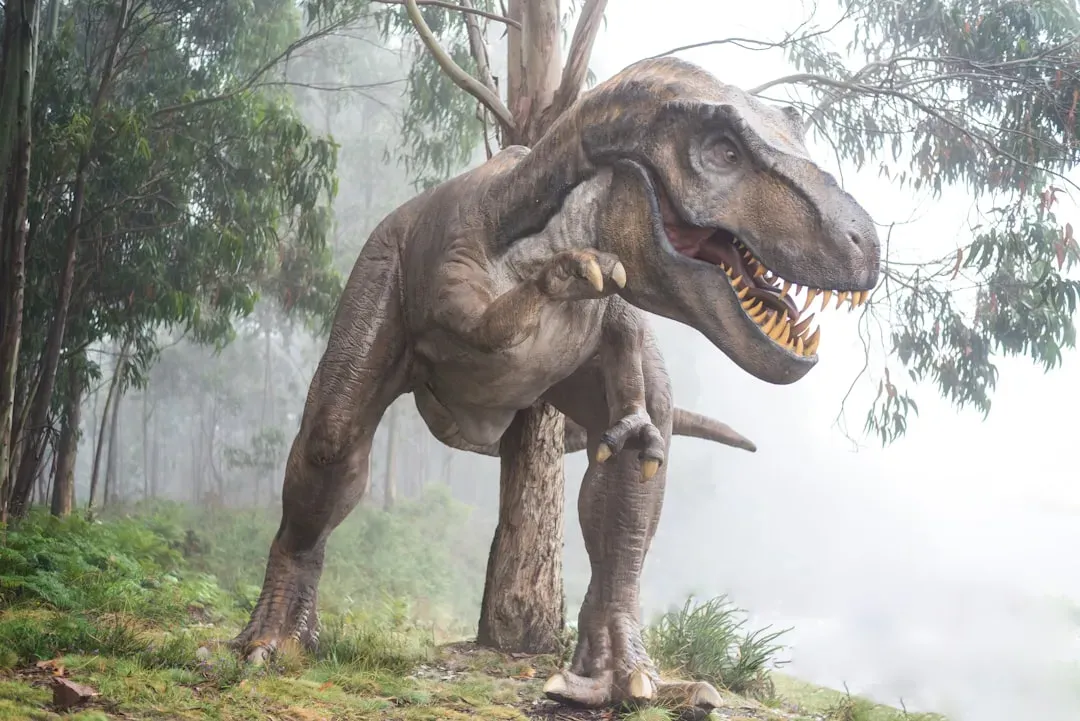
Early 20th-century museum mounts are almost painful to look at now. Limbs splayed outward, bellies nearly dragging, postures that suggest animals perpetually on the verge of collapse under their own weight. The visual logic came from crocodilians and lizards, the most familiar large reptiles, and it seemed reasonable at the time. It was not. Biomechanical analysis and careful re-examination of joint morphology revealed that dinosaurs across the board maintained an upright posture with limbs positioned directly beneath the torso, closer to a mammal or a bird than to any living reptile.
This wasn’t a marginal correction. It changed the entire mechanical picture of how these animals moved, breathed, and sustained activity. An upright posture allows for far more efficient locomotion, better lung capacity, and the ability to sustain movement over longer periods, all consistent with the warm-blooded, active animals the other evidence points toward. The sprawling dinosaur was never really supported by the fossils. It was supported by assumption, by the instinct to make a large ancient reptile look like the large reptiles we already knew. Stripping that assumption away changed the silhouette of every dinosaur ever painted.
#2 – Most Dinosaurs Were Surprisingly Small
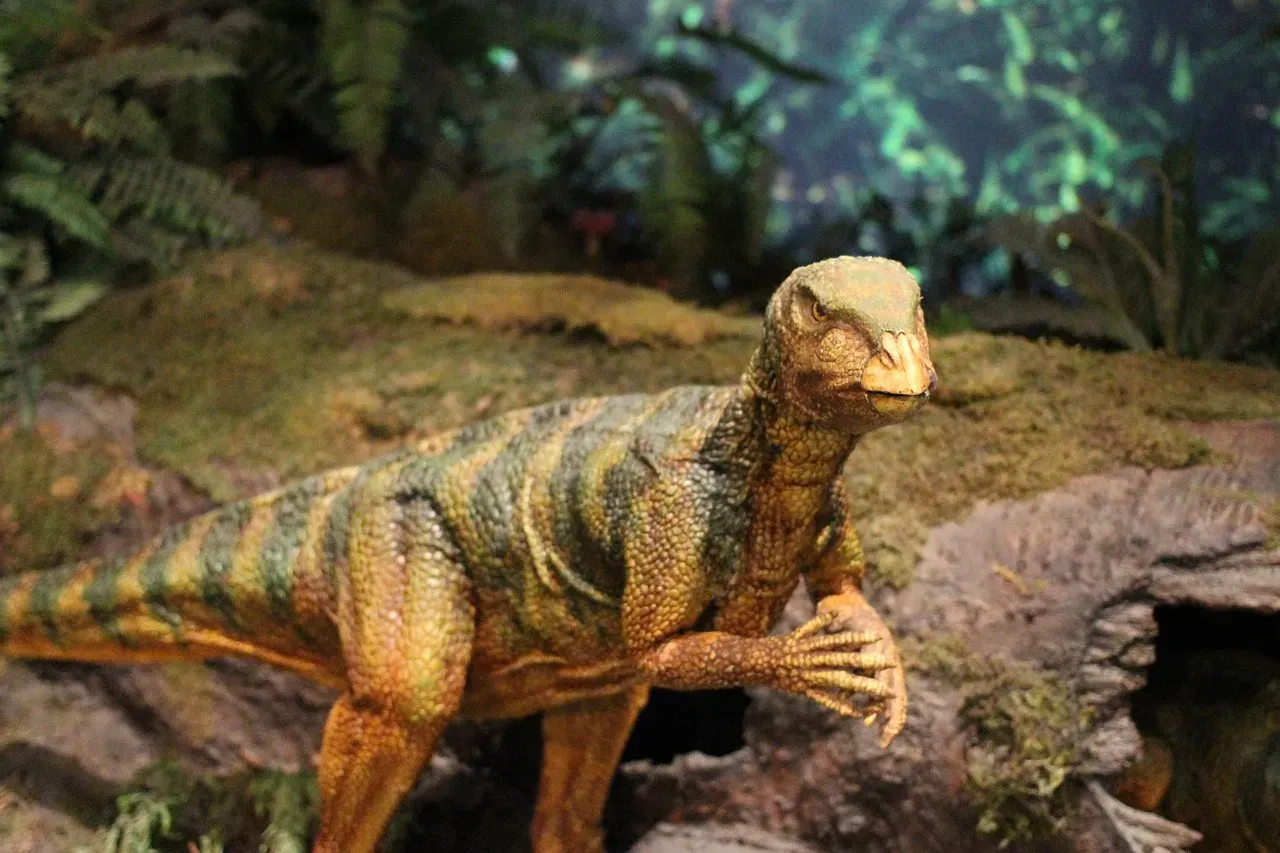
Sauropods loom over natural history museums for good reason: they are among the largest land animals that ever existed, and their scale is genuinely difficult to absorb standing next to a mounted skeleton. But they represent one dramatic extreme within a group that was, statistically speaking, dominated by much smaller animals. The popular image of dinosaurs as a parade of giants distorts the actual shape of their diversity in ways that matter for understanding how they lived.
The majority of known dinosaur species weighed under a ton. Many came in well under 100 kilograms. Small, agile, feathered theropods proliferated throughout the Mesozoic. Early dinosaur evolution was actually characterized by relatively modest body sizes, with gigantism evolving independently in multiple lineages later. The giants are the exception. They just happen to be the exception that fills museum atriums and sells tickets, which is a reasonable business decision but a misleading educational one. The real story of dinosaur diversity is a story crowded with creatures closer in size to a dog or a sheep than to anything that needed to lower its neck to drink from a lake.
Why It Stands Out: The True Scale of Dinosaur Diversity
- The majority of known dinosaur species weighed under 1 ton – many well under 100 kg.
- Small feathered theropods, not giants, dominated much of Mesozoic ecosystems in raw species count.
- Gigantism evolved independently in multiple separate lineages, meaning it was a recurring exception, not the rule.
- Early dinosaurs from the Triassic were generally modest in size; the age of true giants came later, in the Jurassic and Cretaceous.
- The smallest known adult dinosaur, Microraptor, weighed roughly 1 to 2 pounds – closer to a crow than a monster.
#1 – Some Dinosaurs Were Attentive, Involved Parents
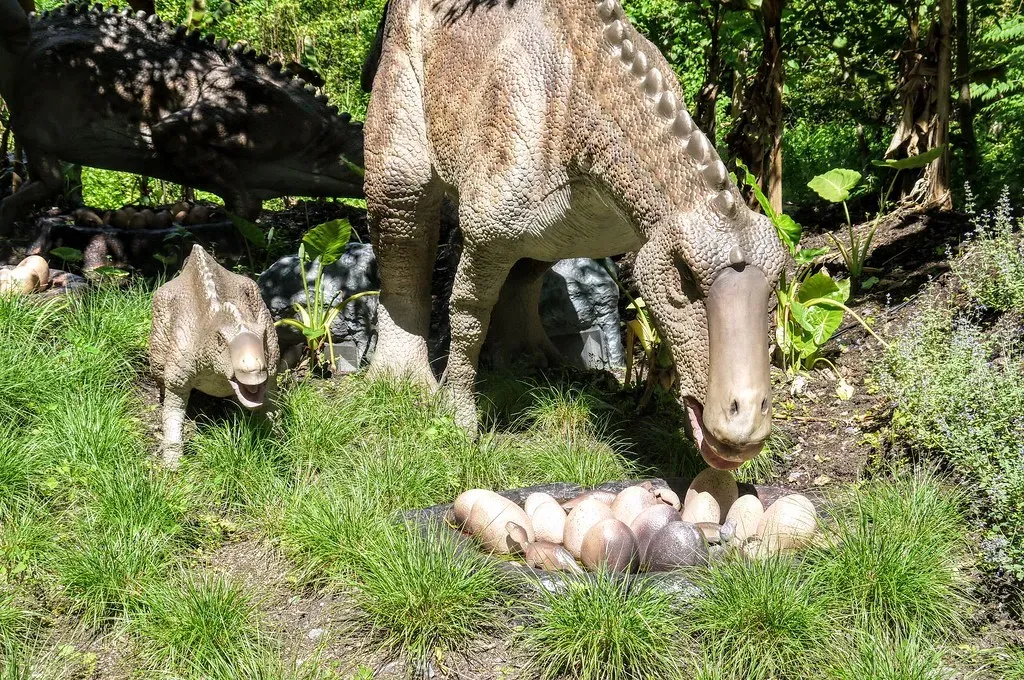
The image of a dinosaur as a solitary, instinct-driven egg-layer that deposited a clutch and immediately moved on fit the cold-blooded, small-brained reptile model perfectly. Why would a creature with limited intelligence and no warm-blooded energy surplus invest in offspring it would never recognize? That logic seemed airtight. Then Jack Horner’s team excavated a nesting colony in Montana in 1978 and found something that didn’t fit: nests with juveniles that had clearly stayed long after hatching, bones worn from use, eggshells trampled flat, food remains in the nest.
Maiasaura, the “good mother lizard,” became the flagship case, but the evidence for parental investment in dinosaurs has only expanded since. Oviraptorids are found brooding directly over their nests in the same posture modern birds use. Growth series from nesting sites show juveniles remaining in family groups past the point of basic independence. The nests themselves were spaced roughly 20 to 40 feet apart in organized colonies – a layout that mirrors the communal breeding strategies of modern social birds. The solitary, indifferent egg-layer was a projection of assumptions about reptiles, not a conclusion drawn from the fossils themselves. What the fossils actually show are animals capable of sustained parental behavior, arguably the most bird-like revelation of all, and the one that perhaps most fundamentally reframes what it meant to be a dinosaur.
What This Actually Means
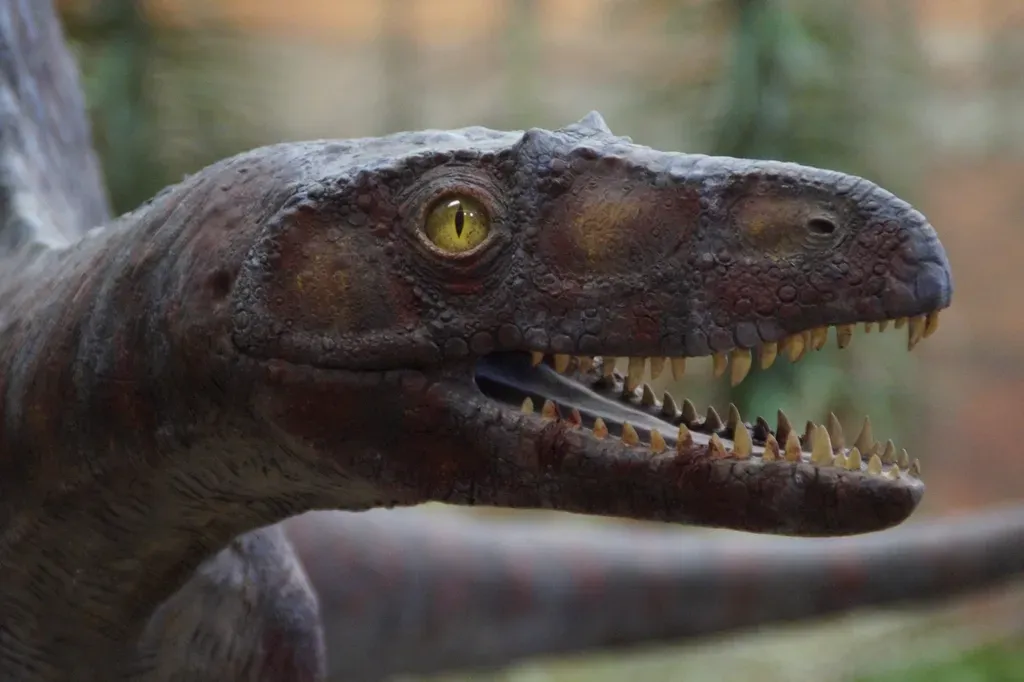
Here’s an opinion worth stating plainly: the repeated overturning of dinosaur science isn’t an embarrassment to paleontology. It’s the best advertisement for how science is supposed to work. Every one of these reversals came from researchers willing to follow evidence into uncomfortable territory, to say publicly that the textbook was wrong, that the museum mount was wrong, that the movie monster was wrong. That takes intellectual honesty that doesn’t get celebrated enough.
But it should also make us humble about what we confidently teach right now. The dinosaur science of 2025 is incomparably richer than it was in 1975 or even 1995, and yet there are almost certainly things we’re currently presenting as settled that a generation of future paleontologists will quietly revise. Soft tissue preservation is still in its infancy. Behavior leaves almost no fossil trace. Color, sound, smell, social structure, the inner lives of these animals remain mostly beyond reach. What we know is extraordinary. What we don’t know is larger still, and the history of this science suggests we should hold our certainties a little more loosely than we usually do.