You picture it like a movie scene. The tall grass parts, the music swells, and you get one dramatic second to decide whether to run or freeze. That’s not what would happen.
Real biology doesn’t wait for your reaction shot. Paleontologists have spent decades reconstructing exactly what a 40-foot, nine-ton predator would do to a human body standing within arm’s reach – using fossils, bite-force models, and comparisons to living animals. The sequence they’ve mapped out is faster, stranger, and far more physically violent than anything Hollywood has shown you. Here’s what would actually unfold, second by second.
#14 – The Ground Would Literally Shake Beneath Your Feet
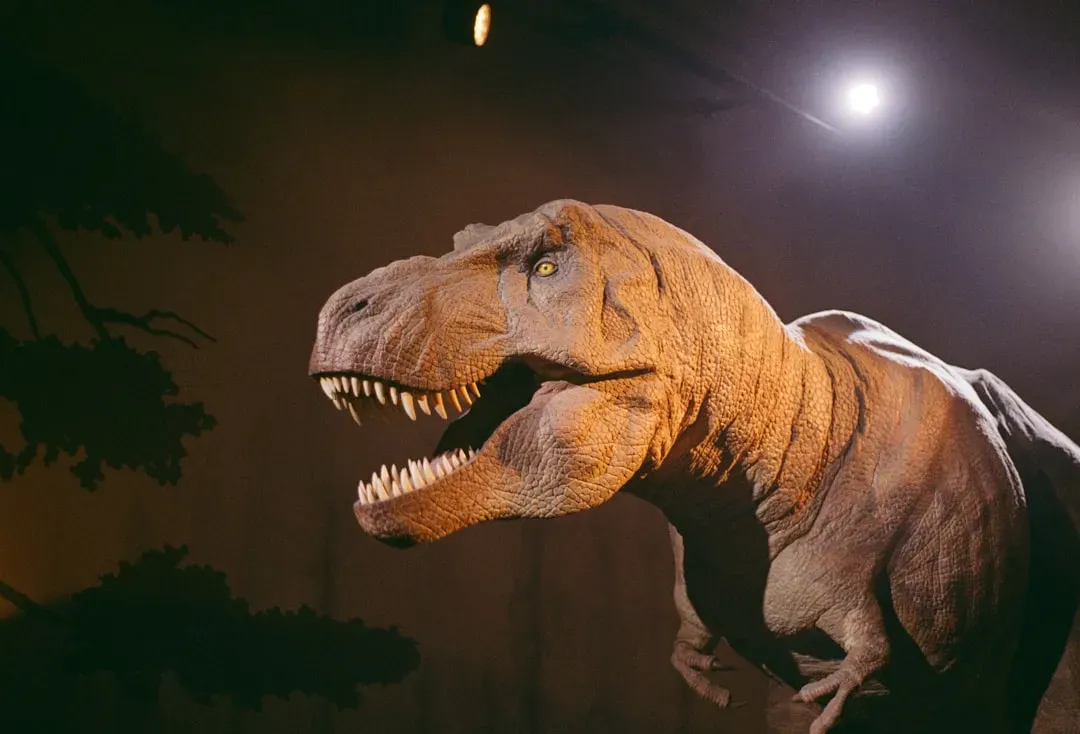
A full-grown T. rex weighed as much as nine tons and walked on two pillar-like legs built like tree trunks. Every footfall would send a jolt through the earth strong enough that nearby seismic equipment could pick it up. You wouldn’t see the animal first. You’d feel it in your chest.
Modern elephants already thump the ground hard enough to rattle nearby structures, and they’re a fraction of the size. Scale that effect up dramatically and you get tremors that could roll outward for dozens of yards, giving you an early, bone-deep warning that something enormous was closing in – long before your eyes ever confirmed it.
Fast Facts
- Fossil hunter Barnum Brown found the first partial T. rex skeleton in Wyoming in 1900, then a second one in Montana’s Hell Creek Formation in 1902.
- Henry Fairfield Osborn formally named the species Tyrannosaurus rex in 1905.
- More than 40 specimens have been recovered since, ranging from small fragments to nearly complete skeletons.
- An adult stood roughly as tall as a two-story house at the hips and weighed about as much as a loaded school bus.
#13 – Its Head Would Tower Far Above Your Line of Sight
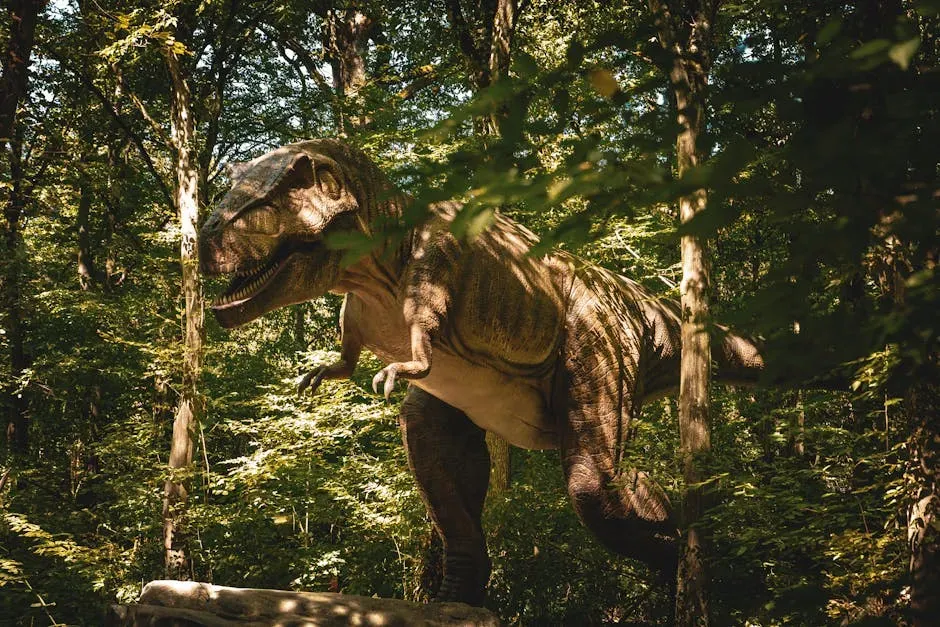
At the hips alone, T. rex stood roughly 12 to 13 feet tall. Its skull measured about five feet long and sat several feet higher still, meaning standing beside one wouldn’t put you eye-to-eye with anything. At best, you’d be staring into its lower jaw or chest.
Meanwhile, its forward-facing eyes sat high on that massive head, giving it a commanding, hawk-like field of view while you remained stuck in its lower peripheral zone – barely worth a glance. That vertical mismatch alone would trigger something primal: the instinctive human urge to crane your neck upward and instantly feel small.
#12 – The Smell Would Hit You Like a Physical Force
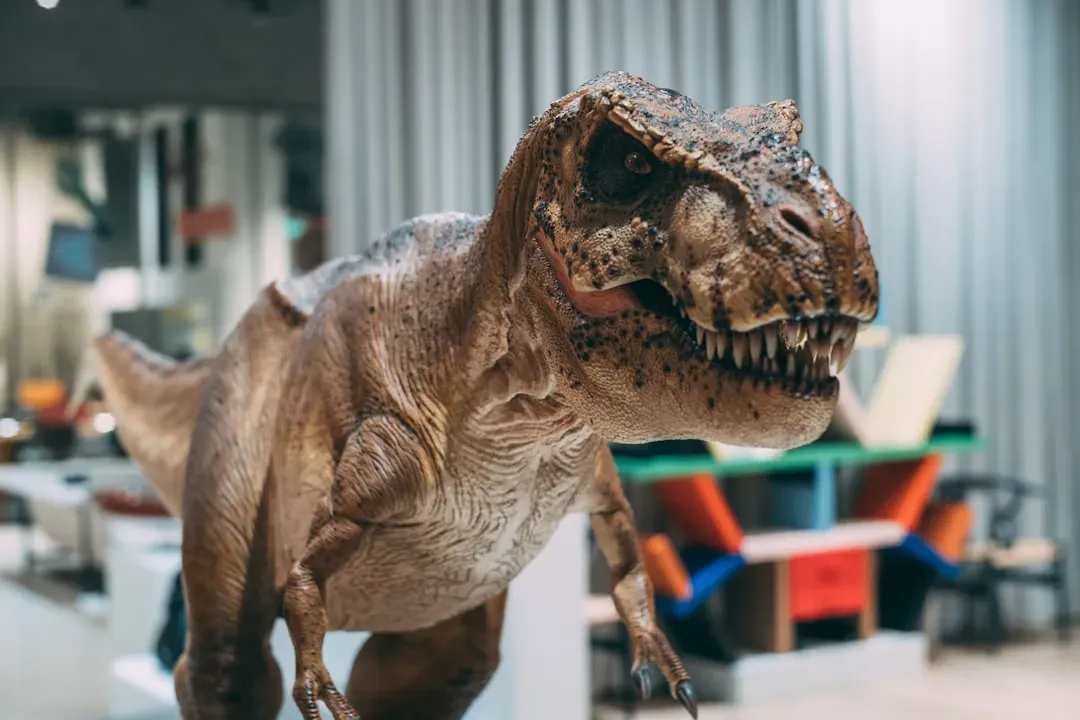
T. rex had one of the sharpest senses of smell of any dinosaur, with olfactory genes rivaling modern bloodhounds. Long before your eyes could focus on details, a heavy, musky wall of odor – decaying meat, reptile musk, damp earth – would already be rolling over you.
Scientists estimate its nose could detect scents from over a mile out, so standing right next to it wouldn’t just be smelling a big animal. It would be a full sensory flood: watering eyes, an involuntary gag reflex, and the unmistakable proteins and bacteria clinging to its skin from its last meal.
#11 – Binocular Vision Would Lock Onto You Instantly
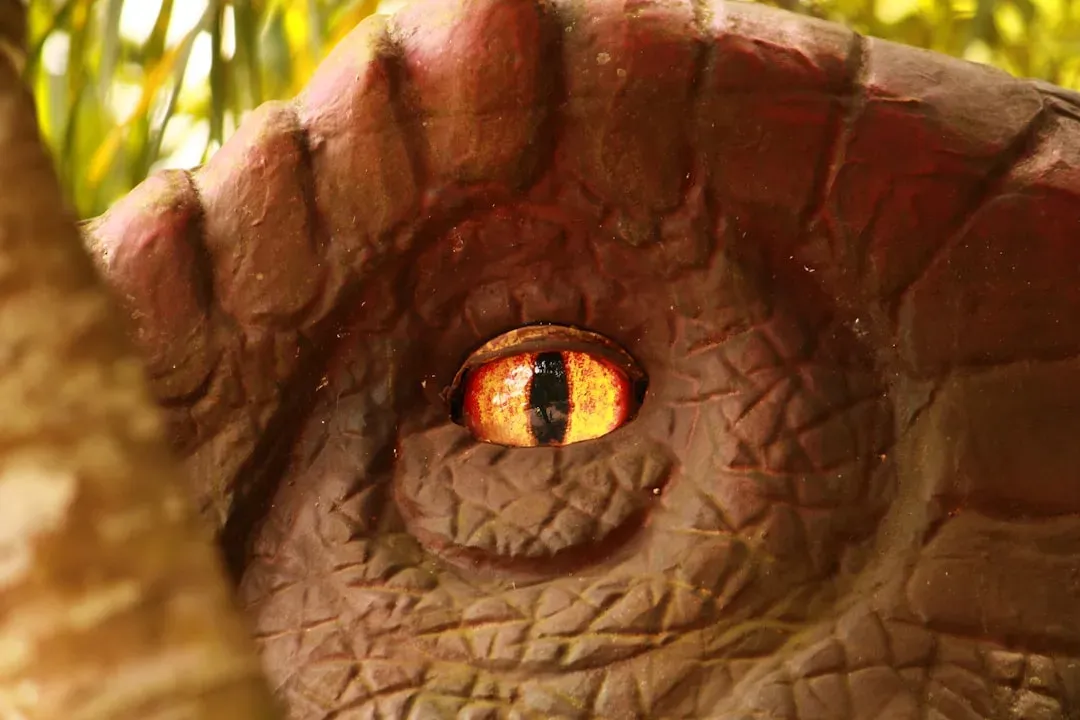
Its eyes were the size of oranges, wide-set, and built for depth perception that studies suggest rivaled or exceeded modern hawks. At close range, that gaze wouldn’t wander – it would fixate on your smallest movement with unnerving precision.
That stereoscopic vision made judging exact distance almost effortless for the animal, which is part of why many researchers argue its eyesight made it more dangerous up close than its size alone suggests. You’d feel the weight of that stare whether or not it moved another muscle.
#10 – Its Tiny Arms Were Still Strong Enough to Grab
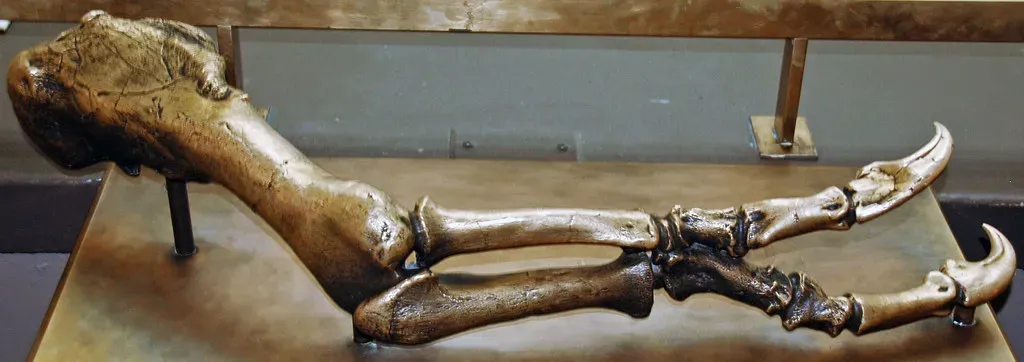
Everyone jokes about the short arms, but they weren’t weak. They were packed with dense muscle and tipped with two sharp claws each, built for gripping, not waving.
They couldn’t reach the mouth, sure, but that was never their job. Paleontologists believe they existed to pin down struggling prey during a kill. Standing beside the animal, you’d be well within range of a swipe that could hook clothing or skin with far more force than the punchline usually implies.
#9 – The Jaw Muscles Would Flex With Audible Power
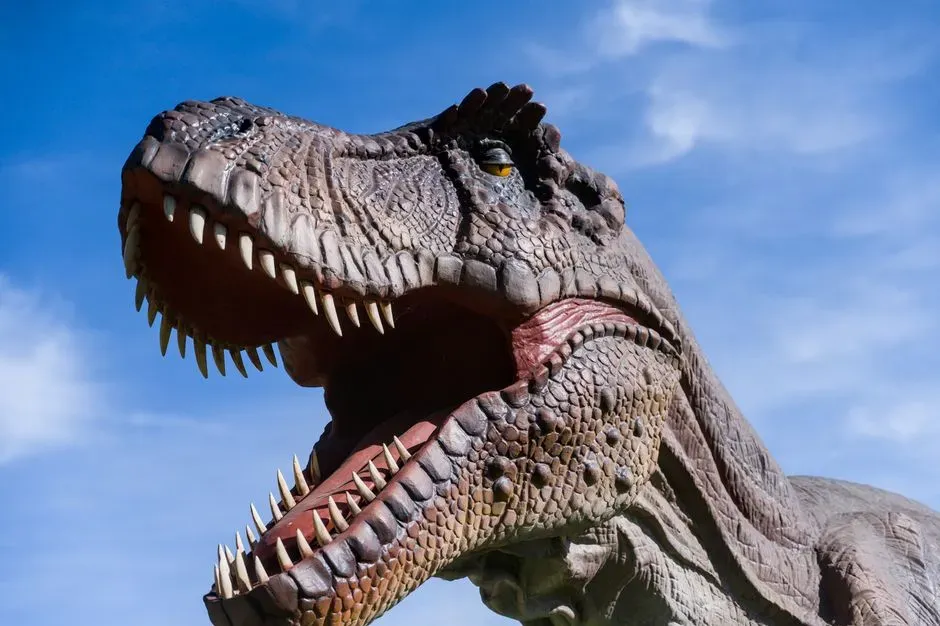
Bite-force estimates for an adult T. rex run from 35,000 up to over 57,000 newtons – several times stronger than any predator alive today. Standing next to that head, you wouldn’t just see the jaw. You’d hear the tension building in it.
The skull worked like a reinforced vice, channeling every ounce of force straight into the teeth. Even without a bite, the visible shifts in that muscle mass would be enough to make your legs want to move on their own.
Quick Compare: Bite Force in Newtons
| Animal | Bite Force |
|---|---|
| Human | 400 – 600 N |
| Lion | ~1,760 N |
| Alligator | ~4,500 N |
| Adult T. rex | 35,000 – 57,000 N |
#8 – Serrated Teeth Would Gleam Like Knives
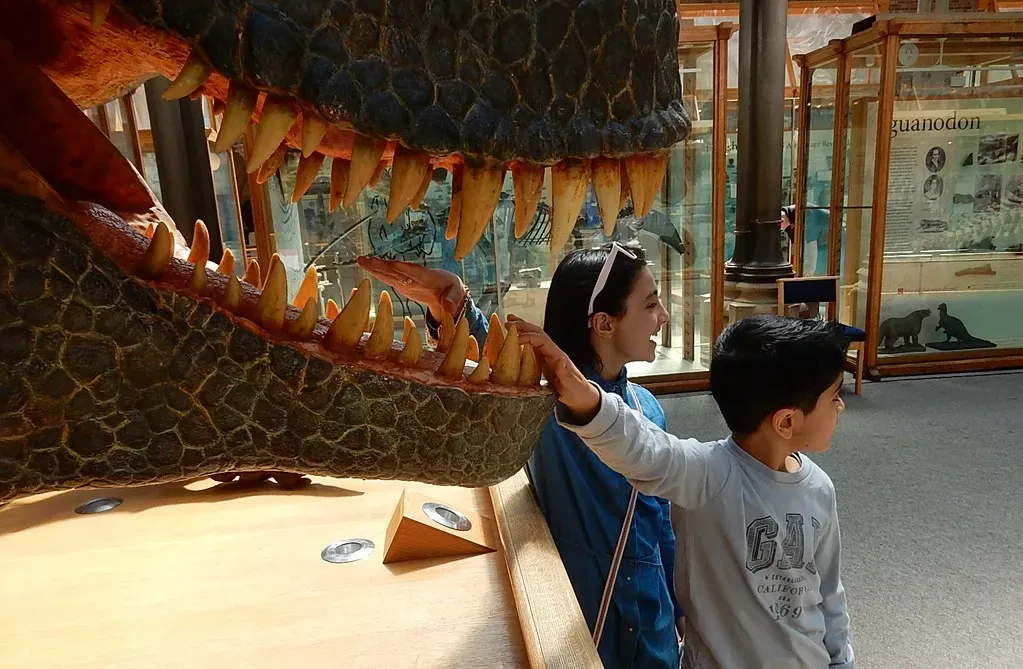
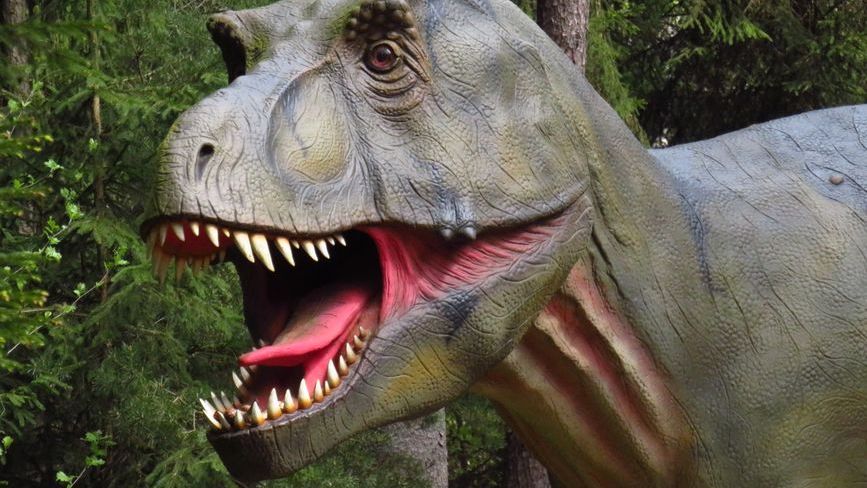
T. rex carried roughly 60 teeth, some reaching eight to twelve inches including the root, each edged like a steak knife built for slicing flesh rather than chewing it. Up close, you’d also spot the replacement teeth waiting behind the active ones – a mouth that never dulled.
One accidental brush against that jawline would be enough to open a deep laceration. The constant tooth turnover meant the animal was never working with a worn-out weapon; it was always armed fresh.
#7 – The Tail Would Sweep With Devastating Force
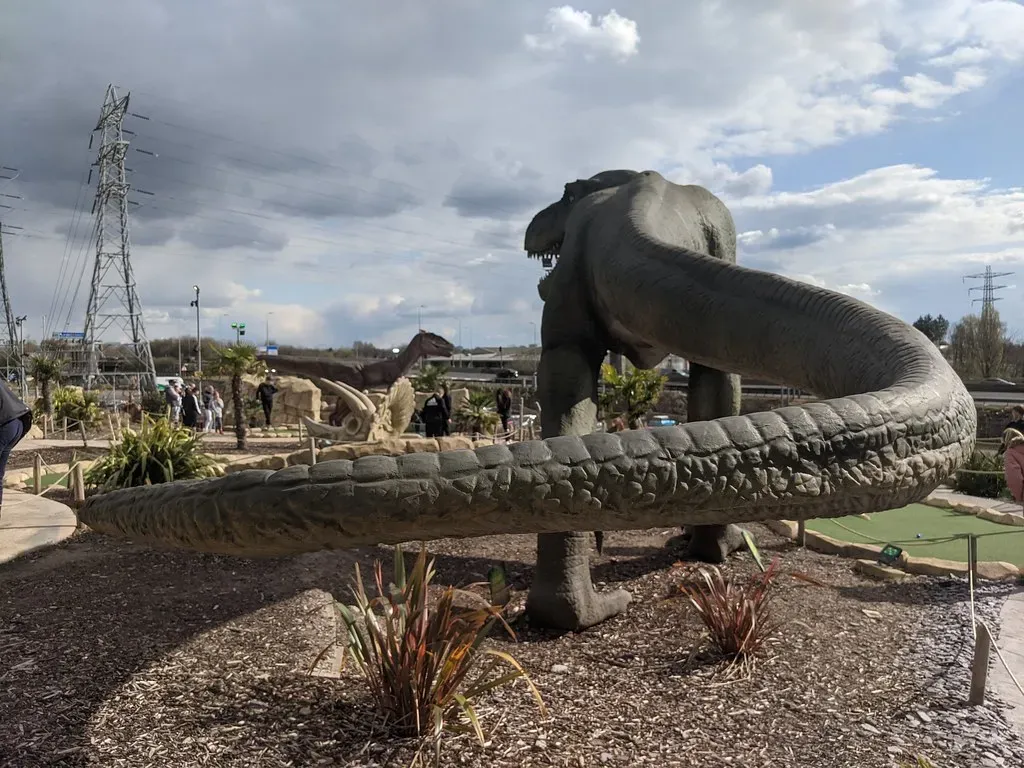
The long, heavy tail wasn’t just a counterweight for the front-loaded body – it was a stiff, muscular stabilizer that could lash sideways with real bone-breaking power. A simple, casual turn from the animal could sweep you off your feet without any hunting intent at all.
Fossil evidence and biomechanical modeling back this up: the tail behaved like an active weapon, not a passive drag. Standing beside the animal put you directly inside the arc of any sudden pivot, whether it noticed you or not.
Worth Knowing
- The tail made up close to half of the animal’s total body length, balancing the weight of the massive head and torso with every stride.
- Deep muscle attachments along the tail vertebrae also helped power locomotion, acting almost like a second engine for movement.
- Unlike some earlier theropods, tyrannosaur tails stiffened toward the tip, keeping strikes controlled rather than loose and floppy.
#6 – Its Breath Would Carry the Scent of Recent Kills
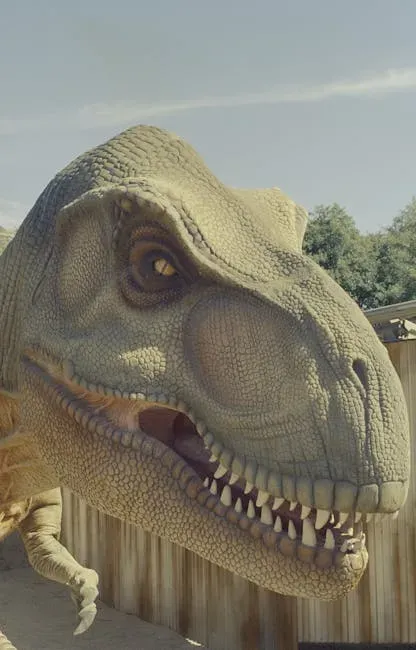
T. rex was both hunter and scavenger, which meant its mouth regularly held scraps from large, decaying meals. Every exhale would push out a concentrated stench of rotting tissue and stomach acid, stacking on top of the already overwhelming body odor.
Its sensory adaptations let it track carrion or live prey across long distances, and standing at close range meant standing directly inside that scent plume with nowhere to step back to. Sight, smell, and sound would be hitting you all at once.
#5 – Movement Would Be Surprisingly Deliberate
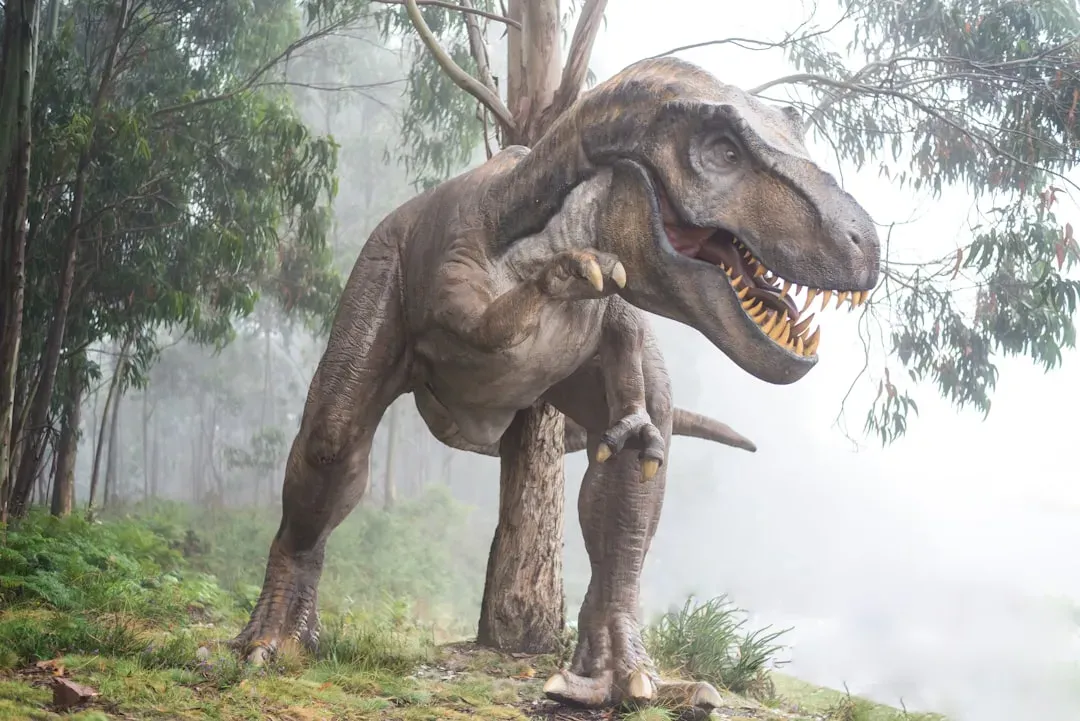
Despite the size, T. rex wasn’t a clumsy lumbering giant. Biomechanical research suggests its top speed was likely around 10 to 20 miles per hour, with each stride calculated rather than frantic.
The sheer mass demanded careful, precise foot placement to avoid injury with every step. That’s the part people don’t expect – up close, you wouldn’t be watching a rampaging monster. You’d be watching a controlled, efficient predator that moved with intention.
#4 – The Head Could Pivot With Startling Speed
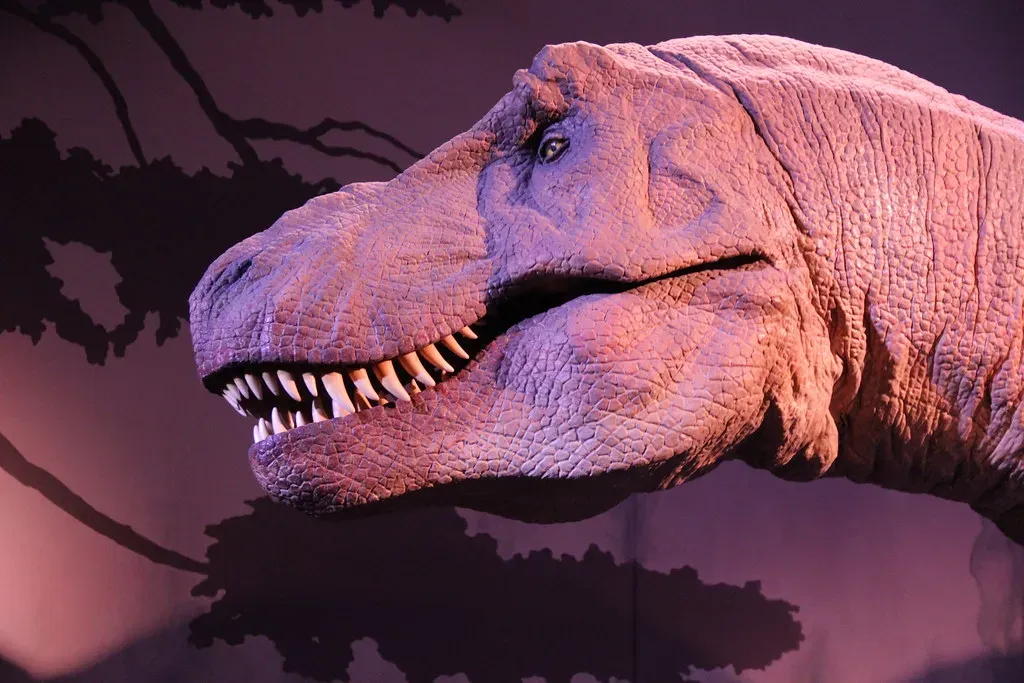
Its neck muscles allowed for surprisingly rapid head turns used to scan territory or strike at prey. At close range, that five-foot skull swinging toward you would feel less like an animal turning and more like a heavy door slamming shut.
Combined with its sharp vision, that speed meant any nearby motion would be tracked and oriented toward almost instantly. You wouldn’t get the reaction time you’re imagining.
#3 – Its Presence Would Trigger Primal Fear Responses
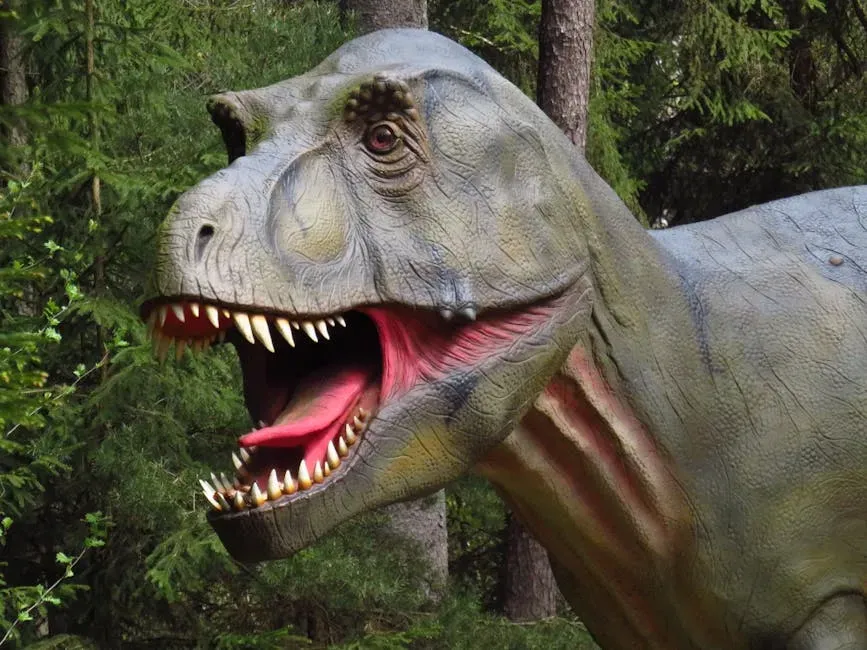
The combined assault of size, sound, and smell would flip a switch buried deep in human survival wiring. Heart rate spikes. Rational thought narrows to almost nothing. This isn’t weakness – it’s a documented response to standing near an apex predator.
Researchers still debate whether T. rex leaned more toward hunting or scavenging, but its physical toolkit clearly supported both. None of that academic nuance would matter to your nervous system in the moment. Standing beside one would erase the debate instantly.
#2 – One Bite Would End Any Resistance
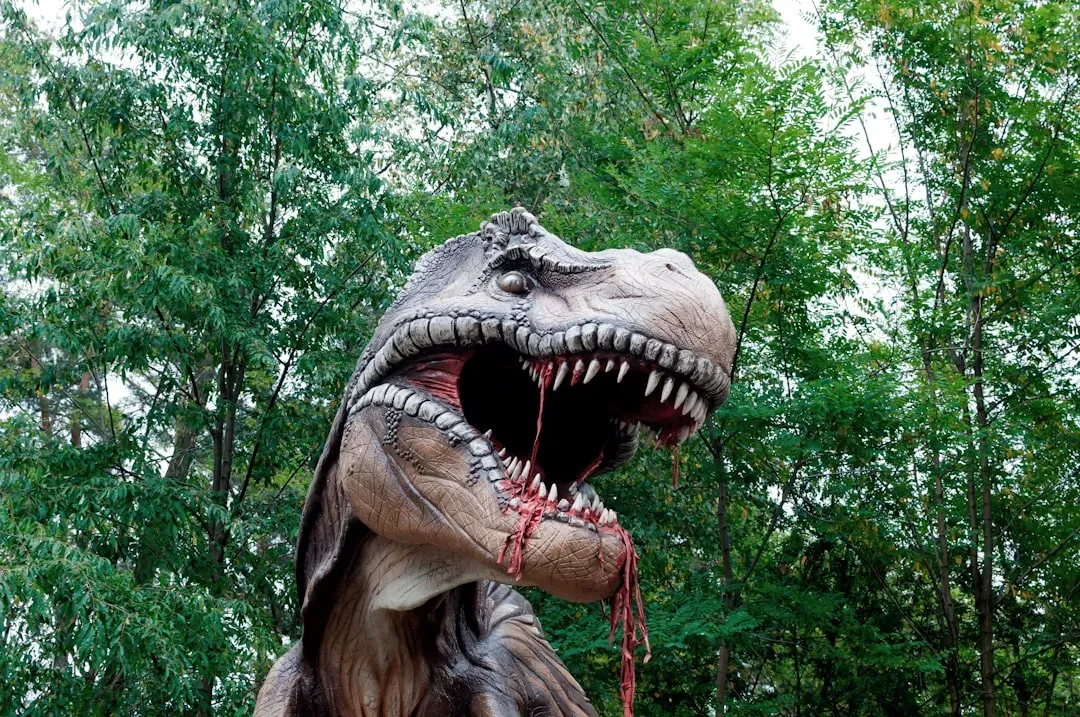
The bite force alone was strong enough to crush bone and sever limbs outright. Even a warning snap – not a full bite, just a reflexive one – would likely cause catastrophic injury.
At the tips of those teeth, the pressure ran into the thousands of pounds per square inch, which is part of why escape after a grab was nearly impossible. Paleontologists still argue over exact hunting strategy, but the raw mechanical reality of that jaw was never in question.
“…the weight of a medium sized elephant sitting on you.”
Dr. Karl Bates, University of Liverpool, describing T. rex’s maximum bite force
#1 – Survival Time Would Be Measured in Seconds
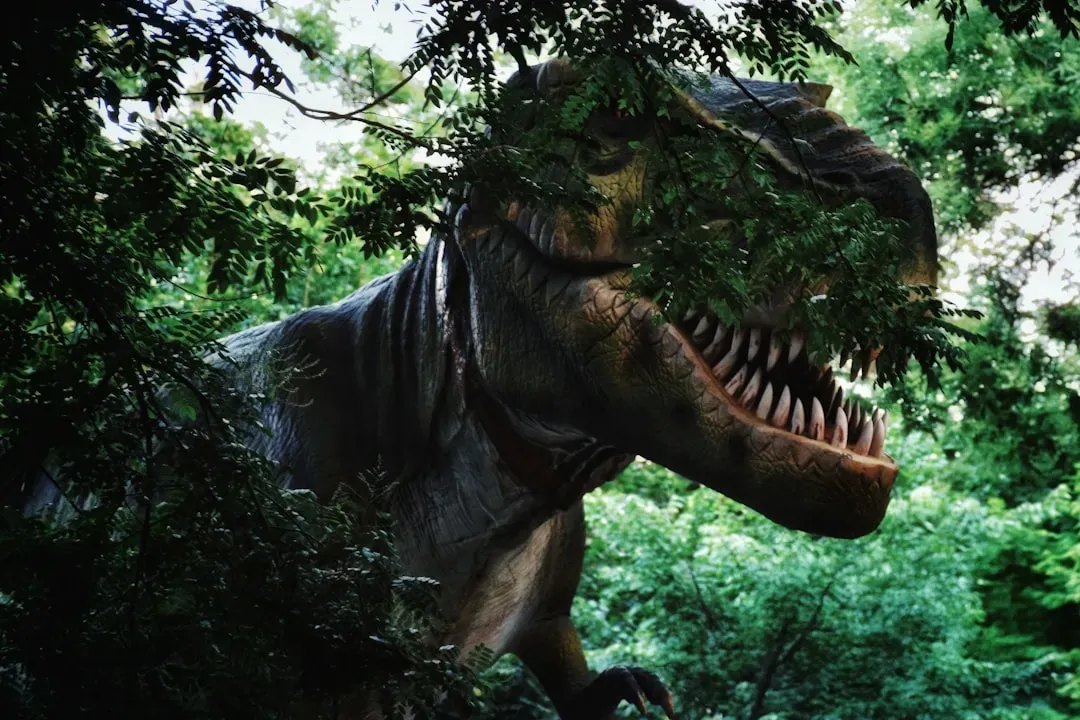
Every effect above wouldn’t happen one at a time – it would stack almost instantly. The tremor, the smell, the stare, the pivot of that massive skull, and finally the jaw. There was never a real window for escape or negotiation.
Fossil data and biomechanical modeling all point to the same conclusion: this was an animal engineered to dominate its environment completely, with nothing left to chance. A close encounter wouldn’t have ended in a standoff. It would have ended fast, and it would have ended decisively.
The Bottom Line
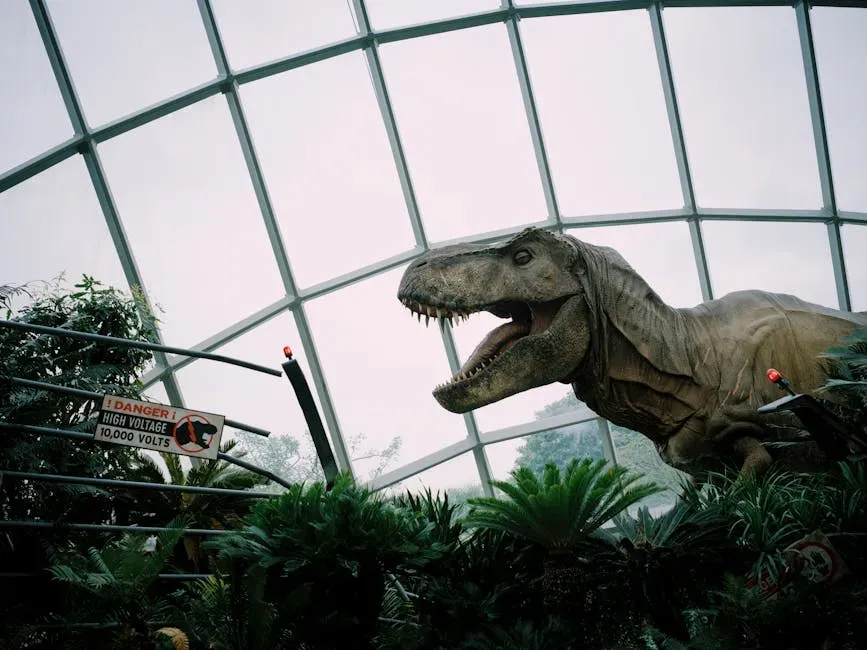
Here’s the part that should actually unsettle you: it’s not the teeth or the bite force that would get you first. It’s everything that happens before the bite – the ground shaking, the smell hitting before the sight does, the eyes locking on, the head swinging faster than you can process.
People love to argue about whether T. rex was a hunter or a scavenger, as if that distinction would have mattered one bit standing three feet from its jaw. It wouldn’t have. Scale alone settles that argument. Biology never asked permission, and it certainly wasn’t going to negotiate with you.