
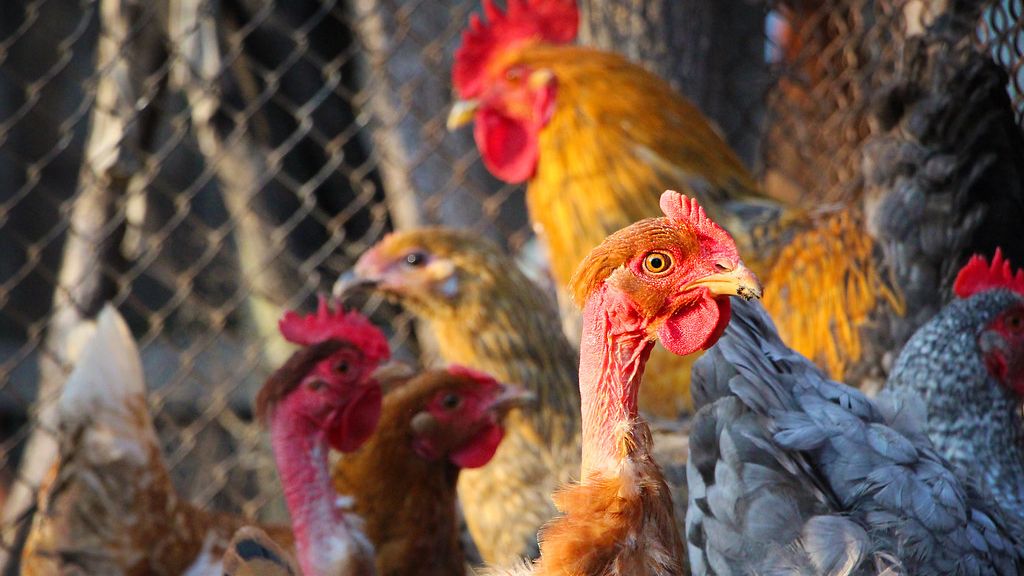
If you grew up thinking dinosaurs all vanished in some fiery apocalypse, you are missing the wildest plot twist in natural history. Dinosaurs did not simply die out; a whole branch of them kept going, adapted, shrank, sprouted feathers, and are now raiding your bird feeder. That robin yelling at you in the parking lot is part of the same broader family tree as Tyrannosaurus rex, and that is not just a poetic metaphor – it is a hard scientific reality.
When paleontologists say birds are dinosaurs, they mean it in the strict technical sense, not as a fun nickname. On the evolutionary family tree, birds sit deep inside the dinosaur group, not beside it. Once you see how much of the dinosaur blueprint lives on in birds – in their bones, lungs, brains, and even their behavior – it becomes almost impossible to look at a sparrow the same way again.
1. Birds Sit Inside the Dinosaur Family Tree, Not Next To It
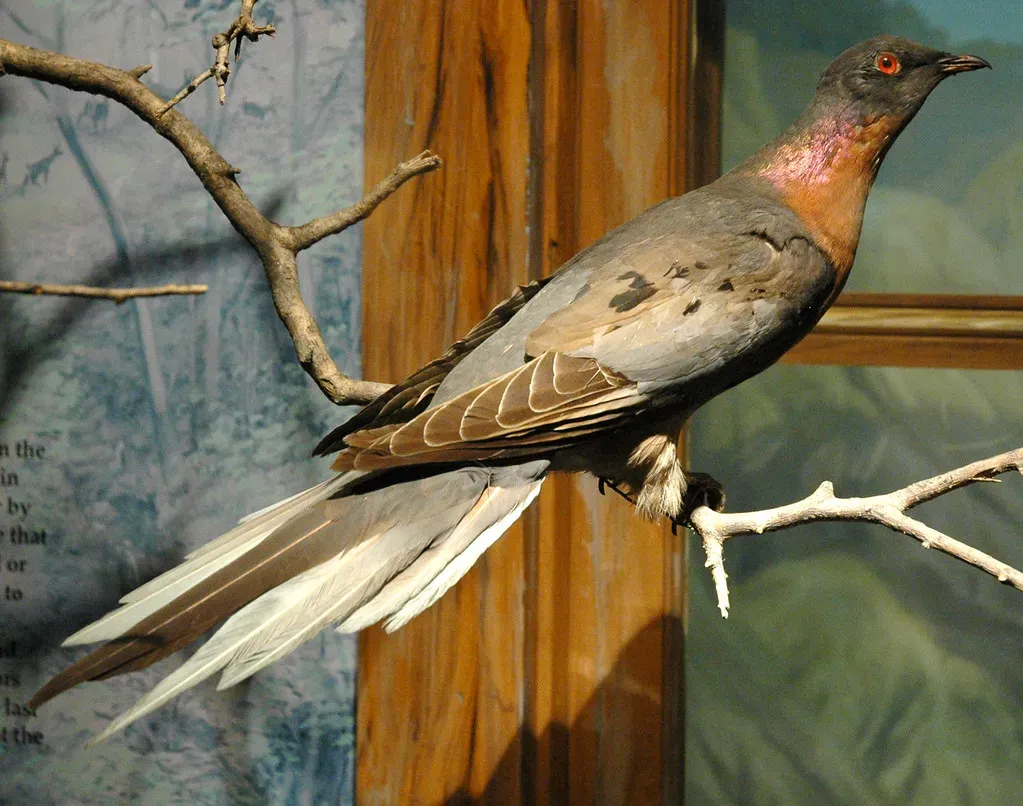
The most important point is also the least intuitive: evolution works like a branching tree, not a ladder. Dinosaurs are not some “earlier stage” that turned into birds and then stopped existing; instead, one branch of theropod dinosaurs survived and kept evolving while other branches died out. In formal scientific terms, birds are part of a group called theropods, which also includes famous non-bird dinosaurs like Velociraptor and T. rex, and that makes birds one surviving lineage of dinosaurs, not some separate new thing.
Think about it the way we talk about mammals. We do not say whales are “descended from mammals” as if they somehow stopped being mammals along the way; whales are mammals. In the exact same way, birds are not “ex-dinosaurs” or “dinosaur-like.” They are the only living dinosaurs, specifically avian dinosaurs, while the ones that went extinct are called non-avian dinosaurs. Once you accept that logic, the headline “birds are dinosaurs” stops sounding dramatic and starts sounding almost boringly precise.
2. Their Skeletons Are Basically Dinosaur Blueprints in Lightweight Form
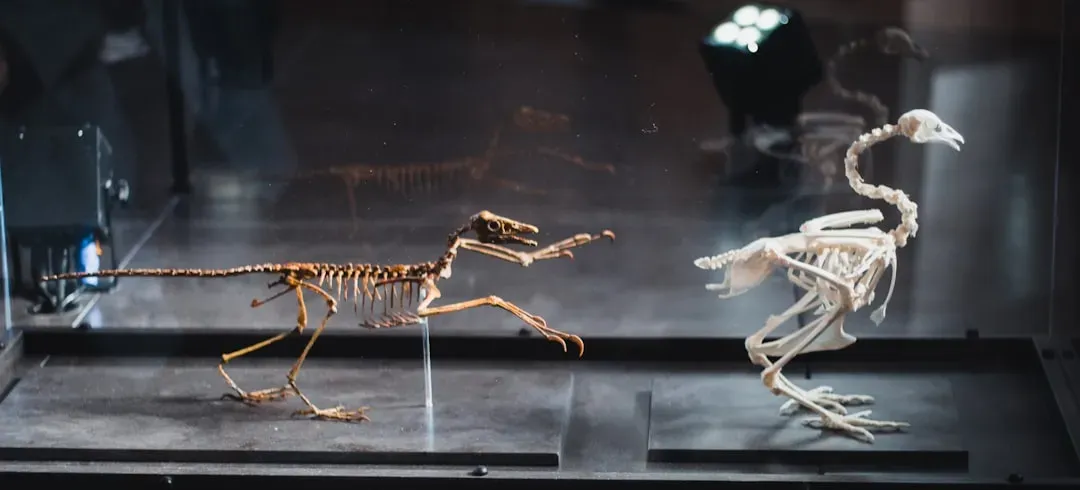
If you strip away the feathers in your imagination and just look at the skeleton of a bird, the dinosaur echo is almost unsettling. Both birds and their theropod dinosaur cousins share long, S-shaped necks, hollow bones, a similar arrangement of hip bones, and a characteristic three-toed foot. Many small theropod dinosaurs had arms and hands that look uncannily like the early stages of a wing, and when paleontologists lay out the fossils in sequence, the skeletal changes from non-avian theropods to early birds are gradual, not a big magical jump.
There is also the signature “wishbone,” or furcula, that many of us only notice at holiday dinners. That little V-shaped bone is not some modern bird invention; it shows up in many non-avian theropods as well. The stiffened tail in birds, the way the shoulder joint is oriented, the keeled breastbone that anchors powerful flight muscles – all of those have clear roots in theropod body plans. Birds are not vaguely inspired by dinosaur design; they are running the latest software patch on the same ancient hardware.
3. Feathers Did Not Start With Birds – Dinosaurs Had Them First
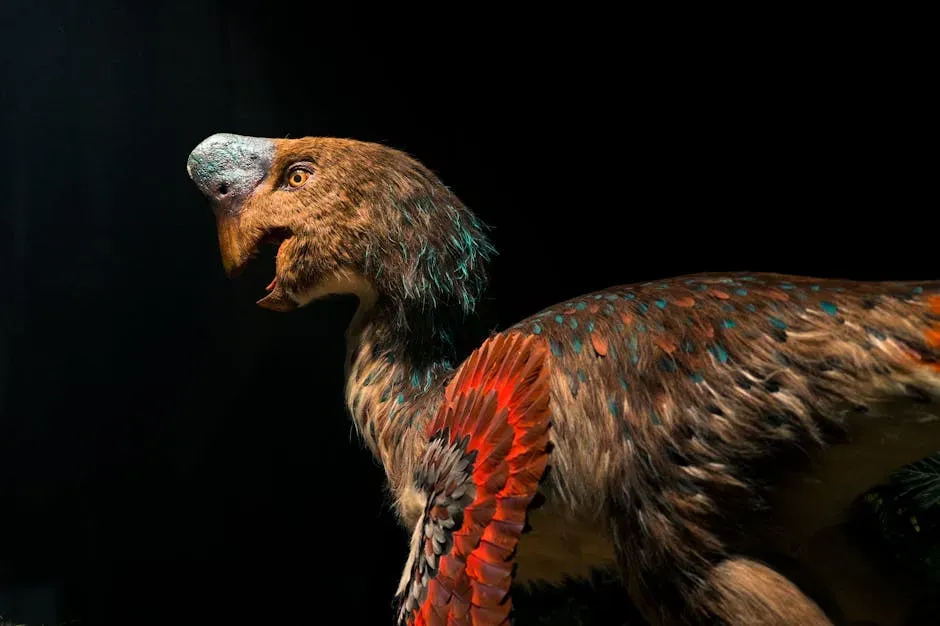
For a long time, people imagined dinosaurs as big scaly lizards and birds as the fluffy newcomers. That picture has been completely overturned as more and more fossils have been found with clear impressions of feathers, especially from sites in northeastern China. Many small theropods, including relatives of Velociraptor, preserved not just simple fuzz but complex feathers with vanes and barbs, sometimes even forming full wings on both arms and legs. Feathers, in other words, evolved within dinosaurs before anything we would confidently call a modern bird took off.
Even more surprising, some dinosaurs that were not particularly bird-like in shape still carried primitive feather-like filaments or fuzzy covering. That suggests feathers may have started for insulation, display, or camouflage, and only later got co-opted into flight in certain lineages. When you watch a crow fluff itself up against the cold or a peacock show off, you are seeing ancient dinosaur technology doing exactly what it was probably doing tens of millions of years ago: keeping bodies warm, signaling to mates, and helping individuals stand out or blend in.
4. Bird Brains, Senses, and Behavior Are Straight Out of the Dinosaur Playbook
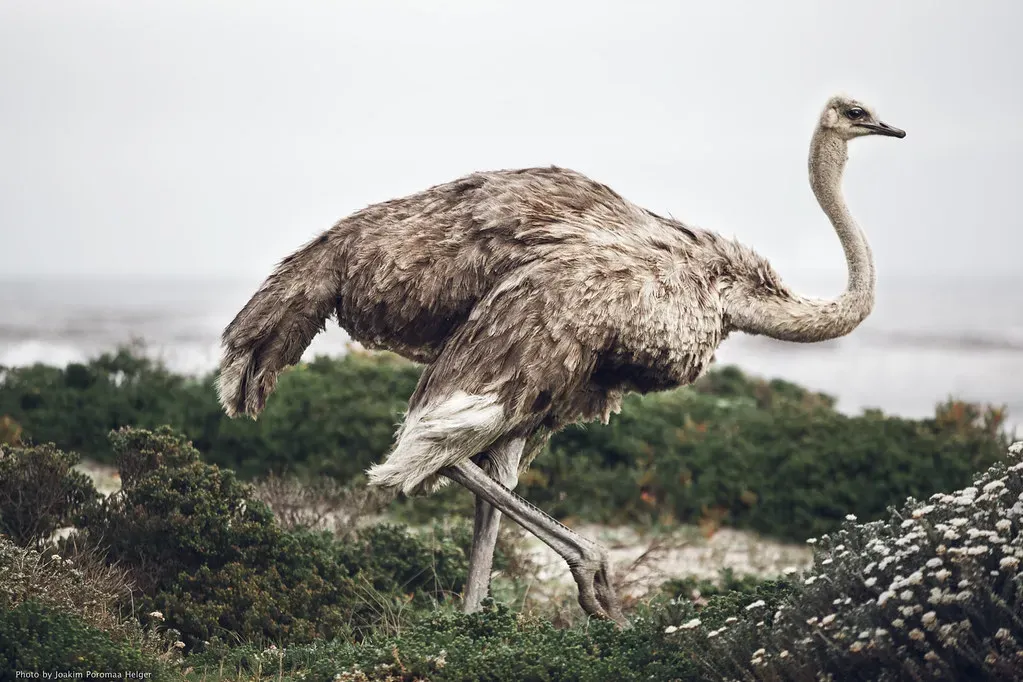
It is easy to joke about “bird-brained,” but that nickname is wildly outdated. Studies of fossil skulls and brain cavities, combined with living-bird neuroscience, show that many theropod dinosaurs already had fairly large, complex brains with keen vision and sharp hearing. Birds inherited and refined that sensory toolkit, which is why hawks can spot prey from stunning distances and owls can pinpoint a mouse in the dark based largely on sound. The neural wiring for fast reactions and coordinated movement is something dinosaurs likely relied on heavily, and birds have doubled down on it.
Behavior tells a similar story. Fossil nests show non-avian dinosaurs brooding their eggs in a ring, just like modern birds sit on their clutches today. There is evidence of parental care, of adults guarding nests and arranging eggs carefully, suggesting that complex social and reproductive behaviors evolved before modern birds appeared. When you see geese flying in a V formation, or a hen fiercely protecting her chicks, you are not just witnessing “bird behavior”; you are watching dinosaur family strategies that have been field‑tested for tens of millions of years.
5. Their Breathing and Metabolism Are Built for High-Performance Dinosaurs
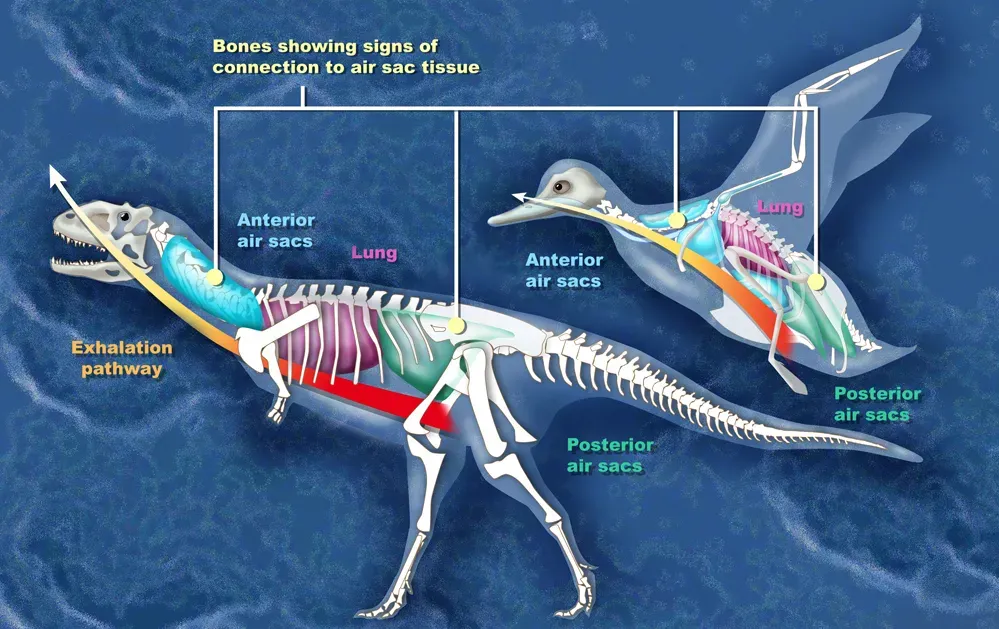
Birds have a breathing system that is radically different from that of mammals and most reptiles, and it is one of their most dinosaurian traits. Instead of simple in-and-out lungs, birds use a network of air sacs that keep oxygen-rich air flowing through their lungs almost continuously. This setup supports extremely high metabolic rates and fuels intense activities like long-distance flight. Fossil evidence of similar air-sac systems in many theropod dinosaurs suggests that this turbocharged breathing did not suddenly appear in birds; it was already present in their dinosaur ancestors.
That respiratory machinery pairs with an overall high-energy lifestyle that lines up with what we now think many dinosaurs were like. Bone structure, growth rates, and isotopic evidence point toward many theropods being warm-blooded or at least having elevated metabolisms, more like birds and mammals than like modern cold-blooded reptiles. So when a hummingbird’s heart races or a pigeon powers across a city sky, you are seeing the same general metabolic strategy that likely helped small predatory dinosaurs sprint, hunt, and stay active instead of just basking in the sun.
On a bigger scale, the very idea of who “survived” the end-Cretaceous catastrophe becomes more nuanced once we accept birds as dinosaurs. The asteroid impact wiped out the large, non-avian dinosaur lineages, but some smaller, more adaptable theropods – early birds – squeezed through the bottleneck. They diversified into nearly every environment on Earth afterwards, from open oceans to mountaintops and city gutters. In that sense, dinosaurs did not just limp across the finish line; they reinvented themselves and exploded into a huge variety of forms with beaks instead of snouts and wings instead of clawed hands.
Look at a penguin rocketing through cold water like a torpedo or a vulture circling on thermals, and you are seeing the same survival play: reuse the dinosaur body plan in wildly different ways. Today, birds are among the most widespread and ecologically important vertebrates on the planet. They pollinate plants, move seeds, control insect populations, scavenge carcasses, and even shape how forests regenerate. Calling them “remnant dinosaurs” undersells the story; they are the dominant dinosaurs of the present day, continuing a legacy that never actually broke.
6. Genetically and Conceptually, Drawing the Line Between “Bird” and “Dinosaur” Is Arbitrary
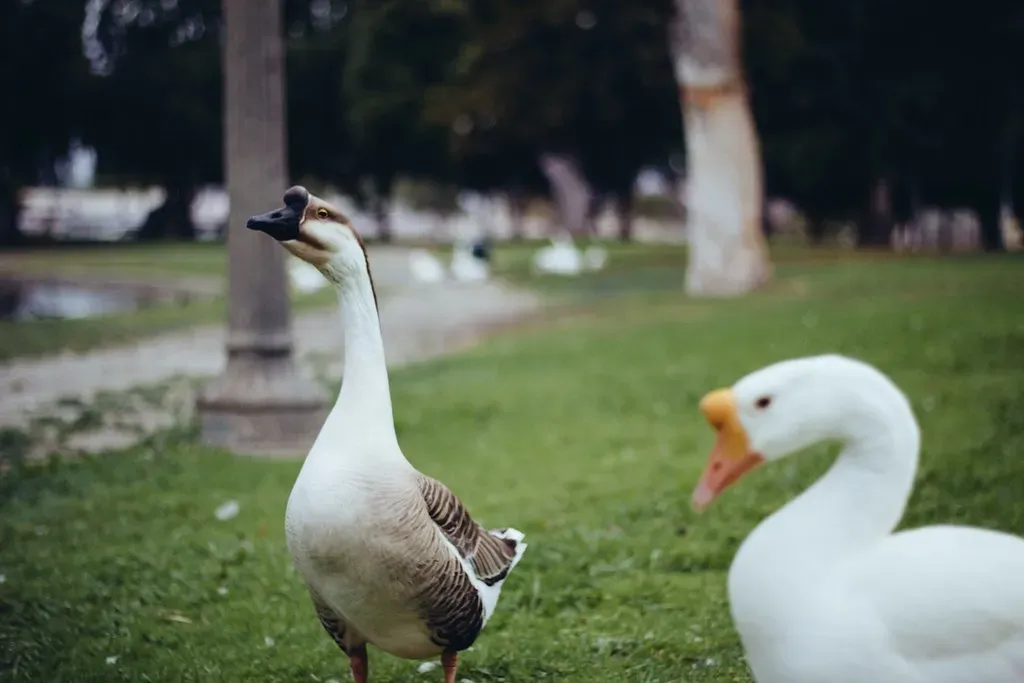
Scientists who study evolution often wrestle with a simple but slippery question: where do you draw the line between one group and another in a continuous lineage? With birds and dinosaurs, that line is particularly fuzzy. There is no single fossil where you can point and say that on Tuesday it was a dinosaur and on Wednesday it woke up as a bird. Instead, there is a slow blending of traits over millions of years, with some animals looking more like classic theropods, others more like modern birds, and many stuck in the gray zone in between.
Because of this continuity, the most honest move is to treat birds as one specialized subset of dinosaurs rather than trying to split them apart. Genetically, birds are more closely related to many extinct theropods than those theropods were to other dinosaur groups, which makes the “birds are dinosaurs” statement not just convenient but necessary if we want classifications to reflect real evolutionary relationships. Once you accept that, a sparrow hopping on a subway platform is not a gentle little side-branch of life – it is a tiny, surviving dinosaur navigating a concrete jungle instead of a Cretaceous forest.
Conclusion: Seeing the Dinosaurs All Around Us
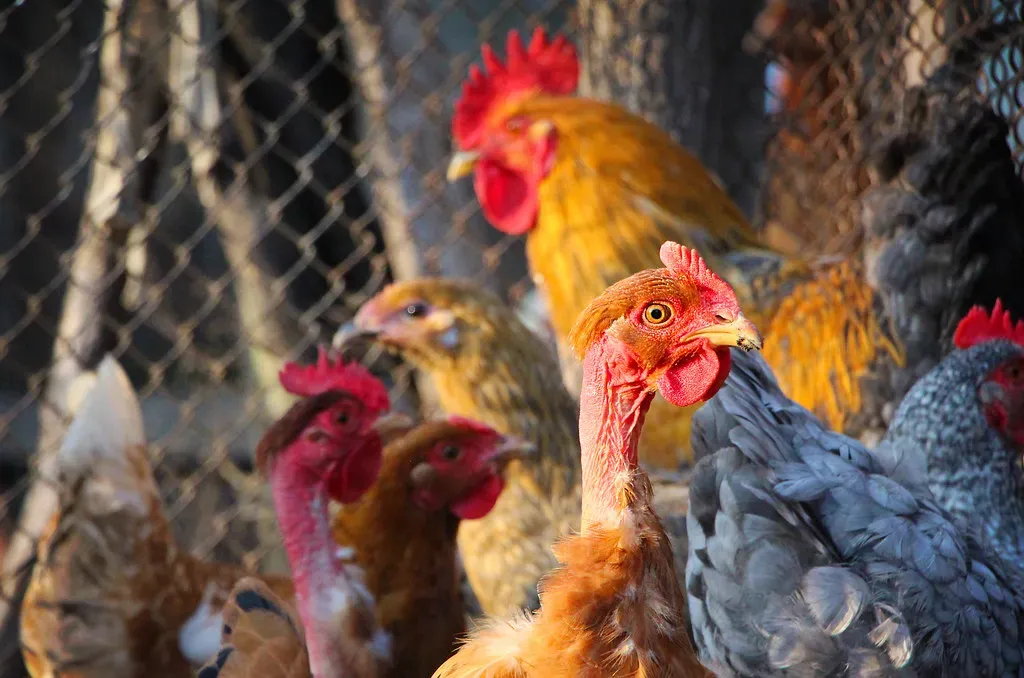
I still remember the first time this really clicked for me: I was watching a heron stalk along the edge of a pond, and for a split second it looked exactly like a tiny, blue-gray T. rex on stilts. The tilt of the head, the careful placement of each step, the sudden lightning-fast strike at a fish – it was impossible to unsee the dinosaur in that moment. Since then, every pigeon, chicken, crow, and hummingbird has felt a little more epic, like the world is still partly ruled by creatures from a lost age.
Calling birds dinosaurs is not just a fun fact; it changes how we think about extinction, survival, and our place in Earth’s story. Dinosaurs were not wiped from the planet in a clean, dramatic break – a whole branch of them adapted, endured, and now fills our skies, fields, and cities with sound and motion. You do not have to squint very hard to spot the ancient predator in a hawk’s glare or the careful parent in a robin tending its nest. The real question is simple and slightly unsettling: knowing that dinosaurs never truly left, will you ever look at the birds outside your window the same way again?