Most people assume every fossil ever pulled from the seafloor eventually gets a name, a spot on a family tree, and a tidy display case in some museum. That assumption is dead wrong. Buried in deep-sea sediment cores, ancient turbidite beds, and abyssal mud that hasn’t been disturbed in half a billion years, there’s a growing pile of fossils that have quietly humiliated the world’s top paleontologists.
Some of these specimens look like alien circuitry pressed into stone. Others look like nothing that has ever lived, walked, or swum on this planet. Scientists have thrown every tool they own at them – CT scans, biomarker chemistry, submersibles wired with cameras – and still walked away shrugging. Here are the 15 deep ocean fossils that have refused to give up their secrets, starting with one that fooled researchers for decades before chemistry finally blew its cover.
15. Beltanelliformis: The “Animal” That Turned Out to Be Bacteria in Disguise
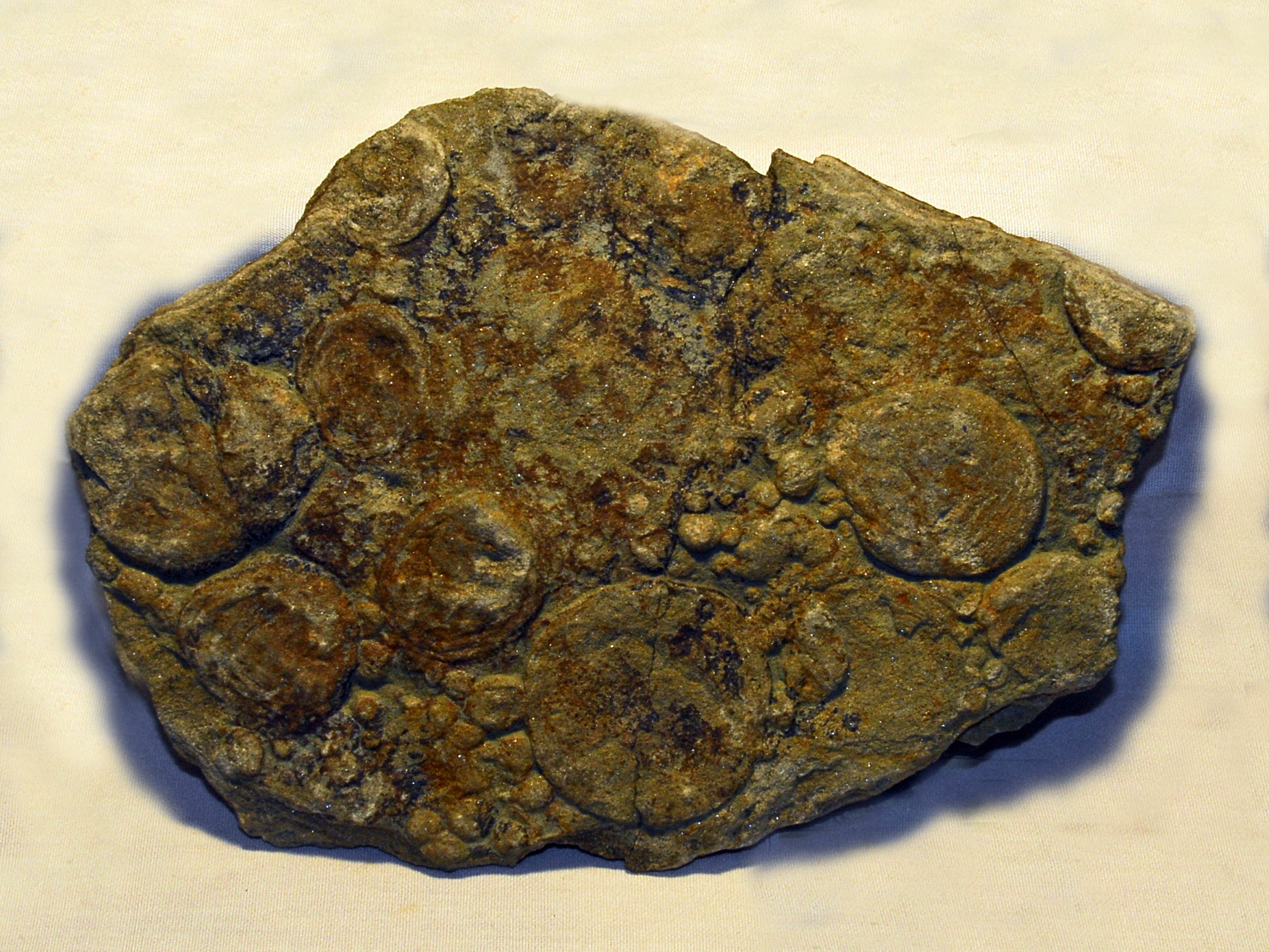
For decades, paleontologists filed Beltanelliformis brunsae under “probable animal” simply because nothing else explained its disc-shaped impressions in Ediacaran rock. It looked organized. It looked purposeful. It looked, frankly, like something with a body plan.
Then chemistry ruined the story. Molecular biomarker analysis found none of the telltale fat molecules associated with animals, and instead pointed toward something far less glamorous – biomarkers indicate Beltanelliformis was actually a cyanobacteria colony, not a multicellular creature at all. It’s a humbling case study in how badly shape alone can fool trained eyes, proof that classifying ocean fossils by appearance is basically a coin flip. But that’s nothing compared to what’s coming next.
14. Aspidella: The Disc Fossil Nobody Can Agree Belongs to Anyone
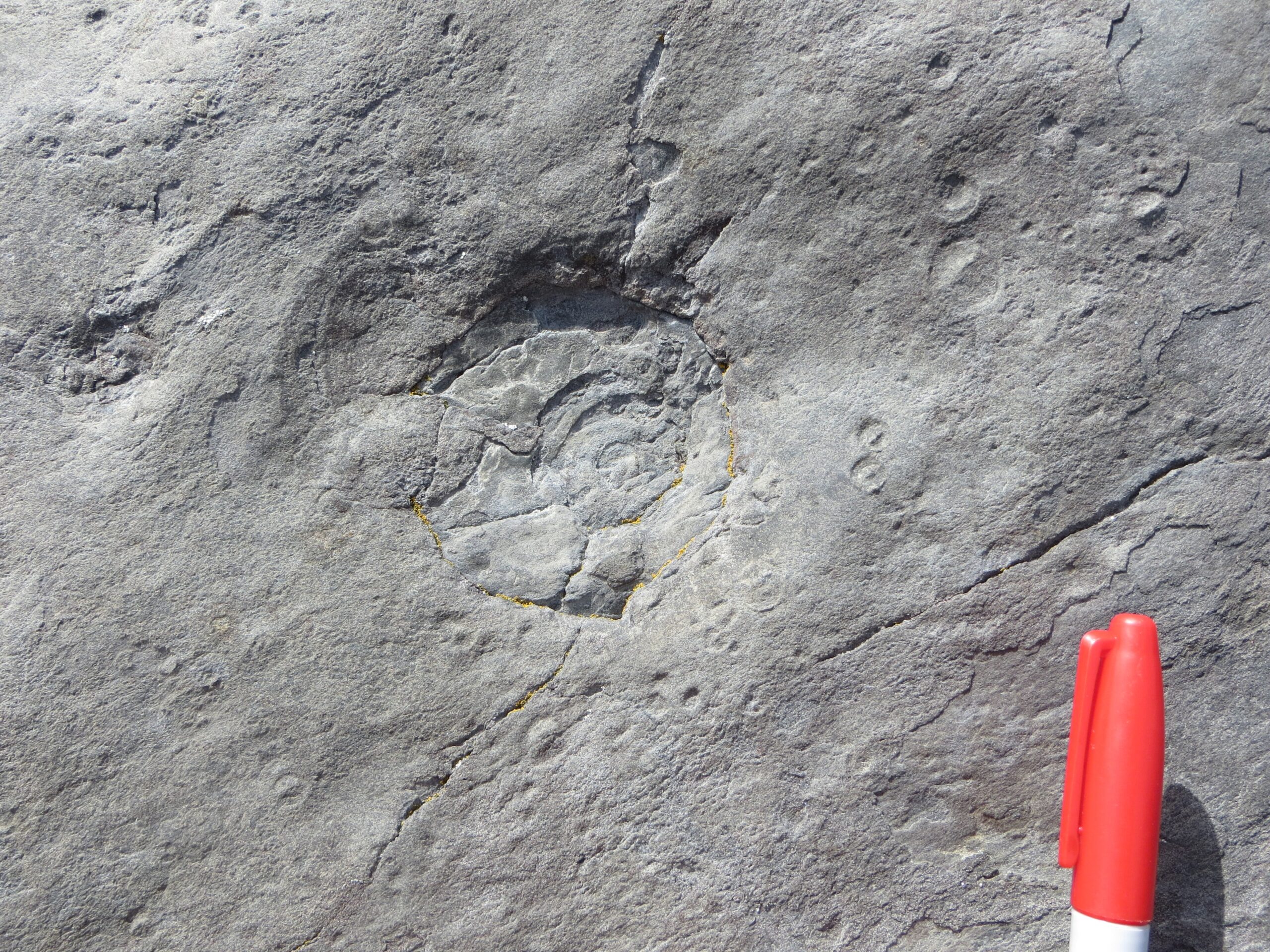
Aspidella terranovica shows up in Ediacaran rock as simple circular impressions, sometimes ringed with faint concentric lines, and researchers have argued about it for well over a century. Is it a holdfast that anchored a much larger soft-bodied organism to the seafloor? Is it a free-living jellyfish-like creature preserved flat? Or is it just a microbial mat reacting to sediment chemistry?
Nobody has definitively ruled out any of these options. Aspidella turns up at multiple Ediacaran sites worldwide, including deep-marine assemblages, which only complicates things further – a structure this common should be easier to pin down, not harder. Every new specimen seems to reopen the debate instead of closing it. Next up is a creature that looks like it swallowed an arrow whole.
Fast Facts
- First scientifically described in 1872, making it one of the earliest-named Ediacaran fossils on record.
- Found on multiple continents, including sites preserved in genuine deep-marine settings.
- At least three competing identities remain live: holdfast, free-living organism, or microbial mat.
- Over 150 years of study still hasn’t produced a consensus classification.
13. Amiskwia: The “Arrow Worm” That Isn’t Actually an Arrow Worm
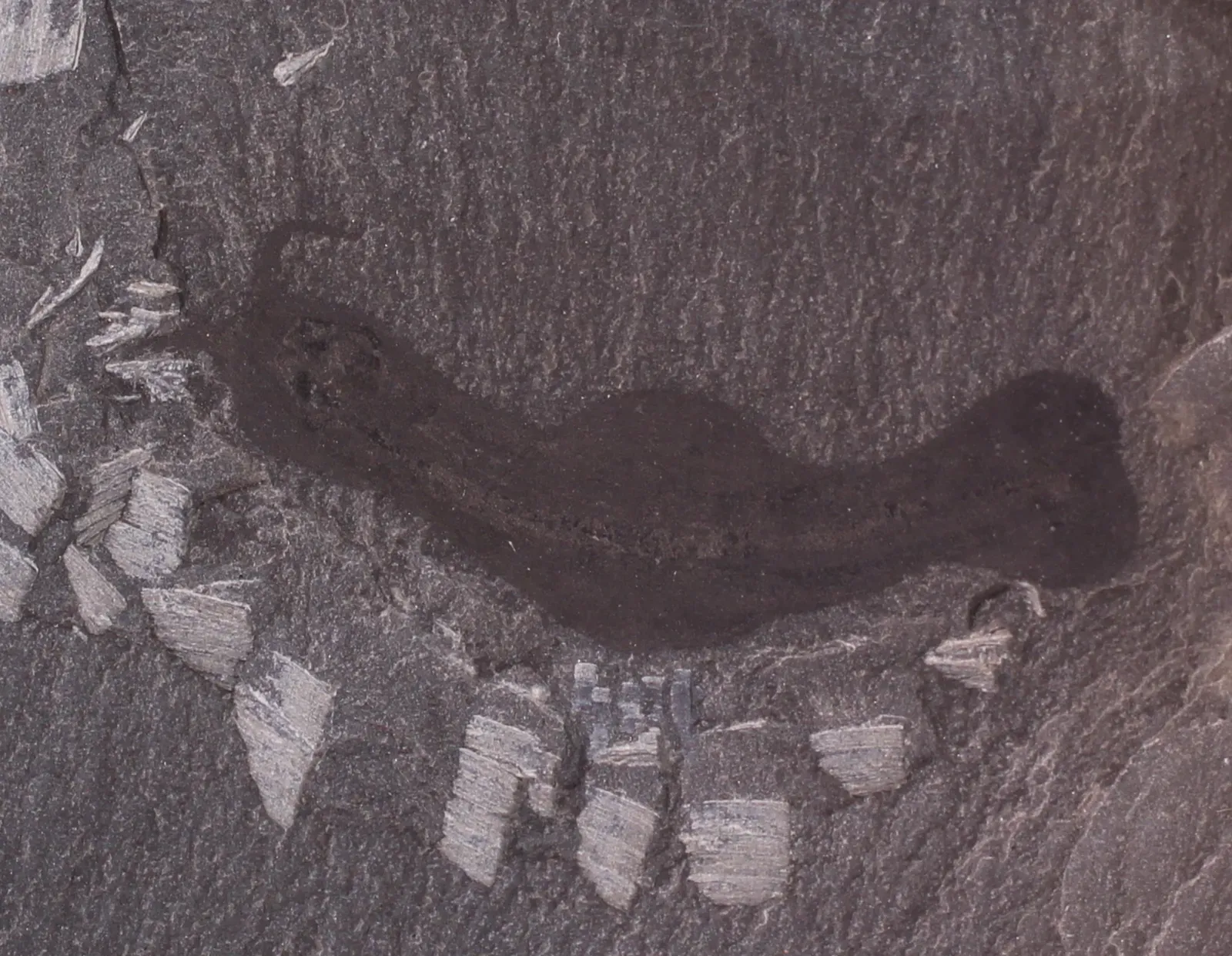
Amiskwia sagittiformis was pulled from the Burgess Shale looking like a tiny fin-tailed dart, and early researchers assumed it was a simple ancestor of modern arrow worms, or chaetognaths. Case closed, or so it seemed for decades.
It wasn’t closed. Amiskwia is now classified within the Spiralia and Gnathifera groups instead, a reclassification that essentially rewrites its entire evolutionary story. This tiny half-inch fossil has bounced between animal groups more times than almost any other Cambrian specimen, and it’s been found continents apart, in both the Burgess Shale of Canada and the Maotianshan Shales of China. Whatever it actually was, it got around – and that geographic spread only makes the identity crisis stranger.
12. Wiwaxia: The Armored Slug With No Clear Family
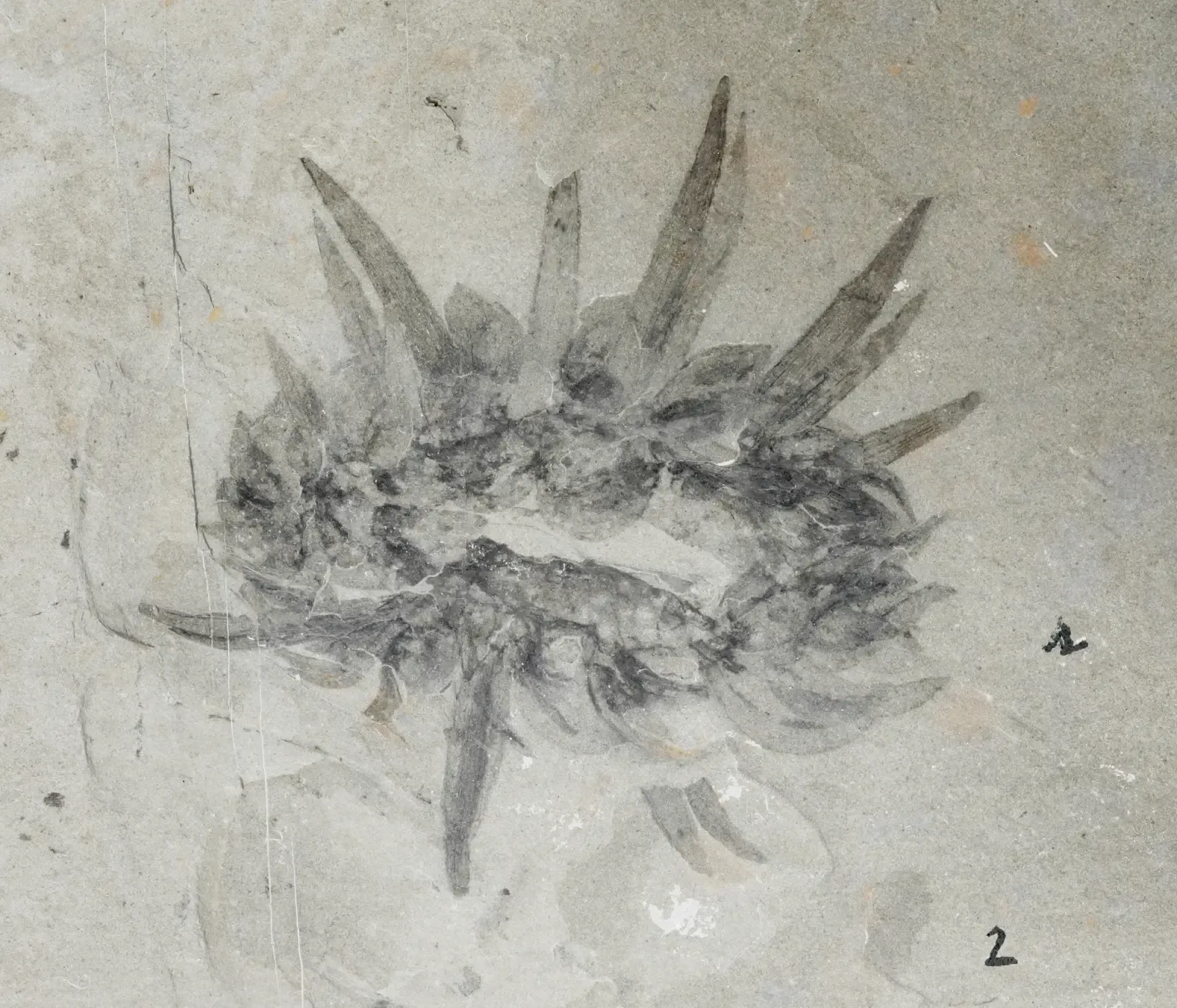
Wiwaxia is one of the Cambrian’s most photogenic oddities – a soft body armored in overlapping scales and rows of defensive spines, looking like something between a hedgehog and a sea slug. For years, textbooks confidently called it an early mollusk relative.
That confidence has eroded. Researchers have also proposed annelid worm affinities, pointing to similarities between its scale-like structures and bristle worm chaetae, and the debate has never fully resolved either way. Two completely different animal phyla remain plausible candidates for the exact same fossil, an unusually wide margin of error for a creature this beautifully preserved. Its scales fossilize gorgeously – beauty apparently doesn’t guarantee clarity.
11. Nectocaris: The Squid Ancestor Debate That Won’t Die
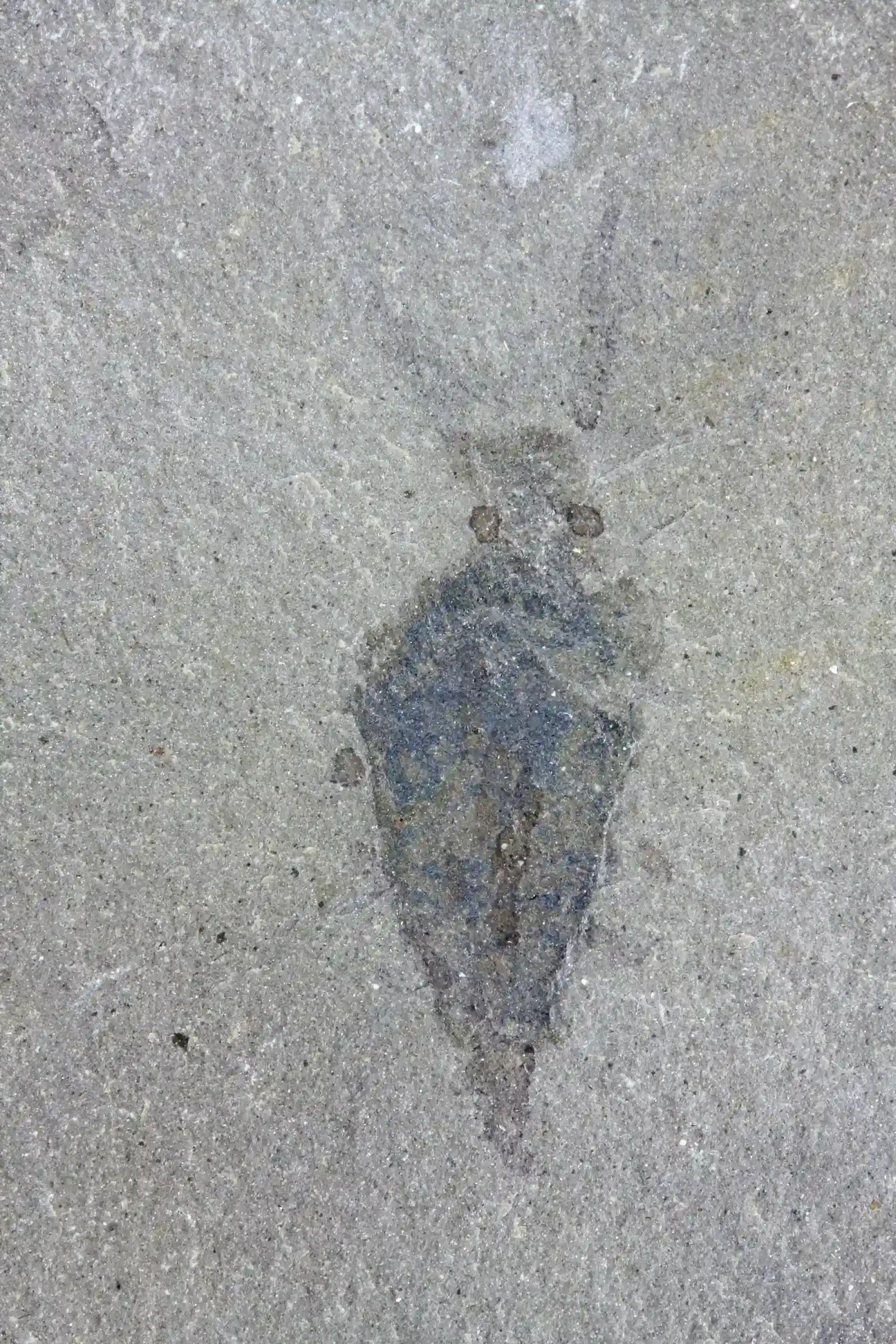
Nectocaris pteryx spent years as a punchline in paleontology circles, a fossil so poorly preserved that early interpretations couldn’t even agree on which end was the head. Then a batch of new specimens reignited interest, with some researchers arguing it represented an early stem-cephalopod – a shockingly early appearance for the squid and octopus lineage.
Other specialists pushed back hard, arguing the anatomical evidence for cephalopod-style tentacles and a funnel is far shakier than claimed. If Nectocaris really is a proto-squid, it would push cephalopod origins back tens of millions of years earlier than anyone expected. If it isn’t, it’s just another unclassifiable Cambrian oddball. Nobody’s backing down yet – but the next entry lived in genuinely crushing deep water.
10. Nesonektris: The Deep-Water Puzzle From Cambrian Australia
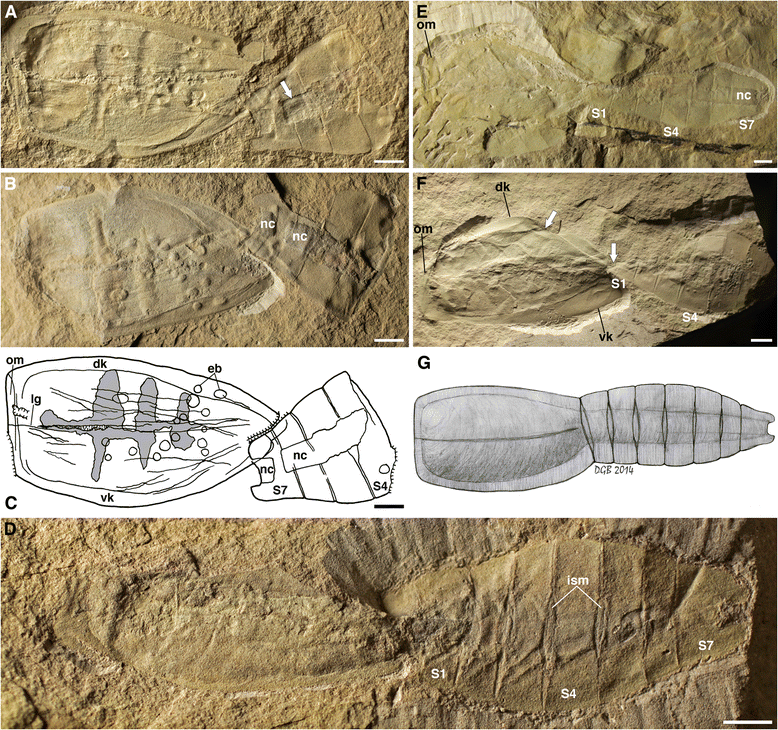
Most vetulicolians turn up in shallow, near-shore Cambrian deposits, which is part of why Nesonektris aldridgei raised eyebrows the moment it was described. Vetulicolians are an enigmatic phylum of extinct Cambrian marine invertebrates, particularly diverse in China’s Chengjiang Biota, but this specimen came from a genuinely deeper marine setting than researchers were used to.
What makes it fascinating is the internal structure preserved in its tail. It shows an axial, rod-like feature in the posterior body region that resembles a notochord in shape and preservation, hinting at a connection to the chordate lineage that eventually produced vertebrates. A notochord-like structure in an animal this ancient is a genuinely big deal – but even that evidence hasn’t settled anything, because the structure could just as easily be leftover gut tissue.
9. Vetulicola: The Body Plan That Broke Every Classification System
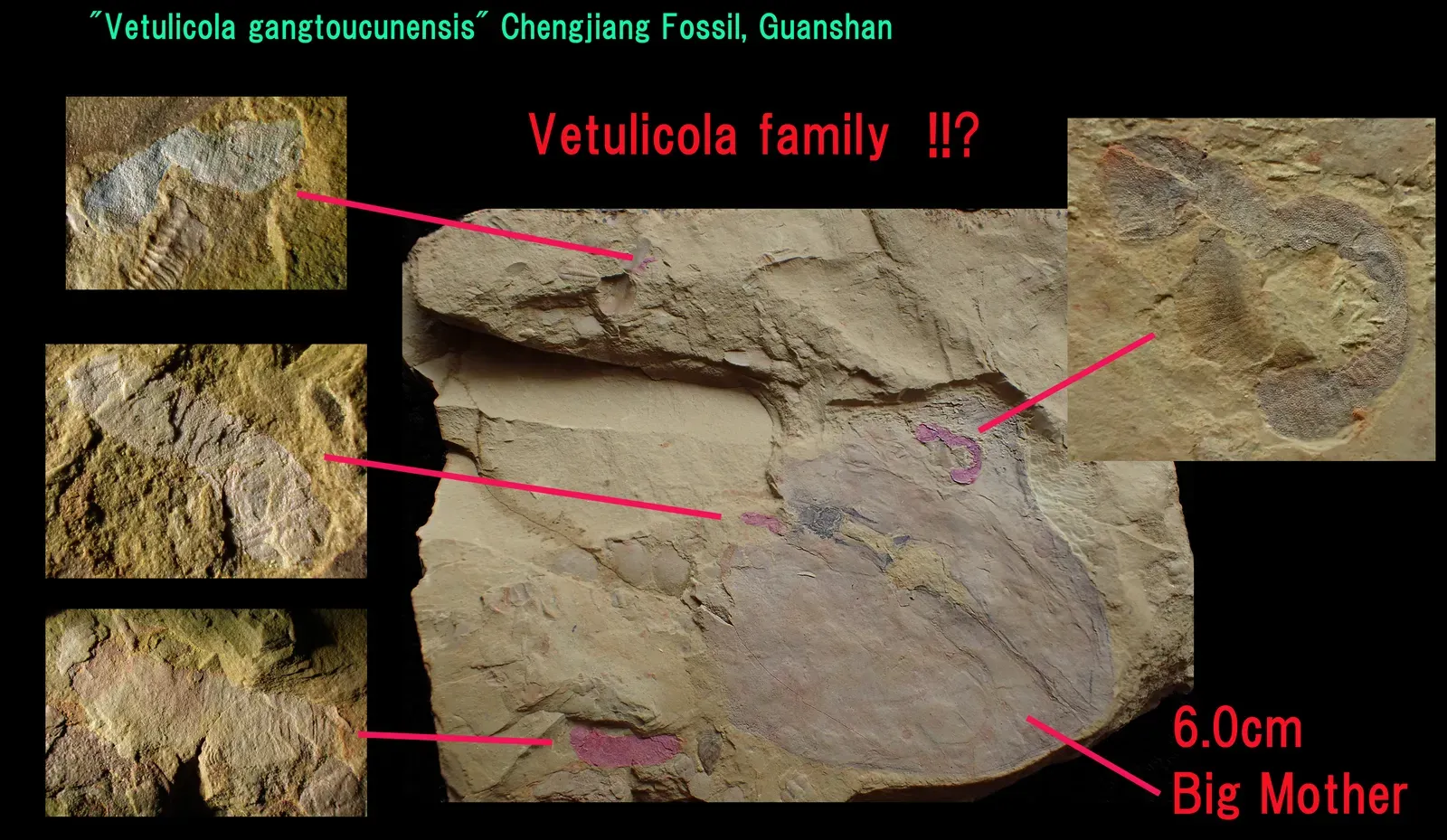
Vetulicola cuneata and its relatives have one of the strangest resumes in paleontology. They’ve been called arthropods, then chordates, then kinorhynchs, then handed their own entirely separate phylum when nothing else fit. Vetulicolians remain one of the most problematic and controversial Cambrian fossil groups in existence.
The core problem is their bizarre bipartite body – a large, box-like front section paired with a segmented rear section – that doesn’t cleanly match any living animal group’s blueprint. Mounting evidence suggests vetulicolians are deuterostomes, but their exact ties to crown-group phyla remain unresolved. An entire group of animals has been shuffled between three different major branches of the tree of life, and researchers still can’t agree where the shuffling should stop.
Quick Compare
- Arthropod hypothesis: based on the hardened, segmented rear body section.
- Chordate hypothesis: built around possible pharyngeal-style openings in the front section.
- Kinorhynch hypothesis: drawn from surface texture comparisons to mud dragons.
- Current standing: most researchers now lean deuterostome, but no exact phylum match has stuck.
8. Fractofusus: The Deep-Sea Organism With No Mouth, Gut, or Descendants
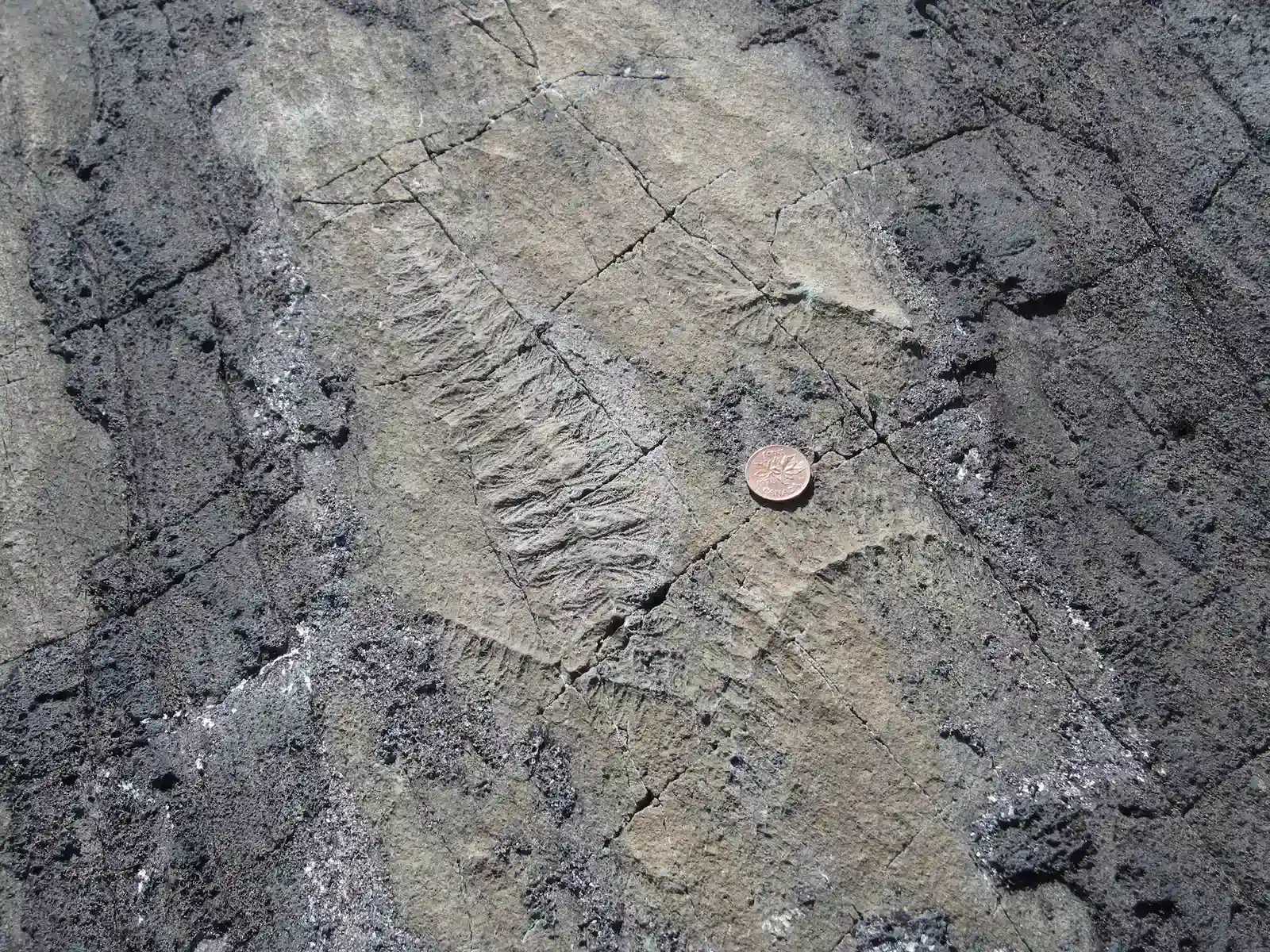
Fractofusus misrai lived roughly 565 million years ago on a seafloor buried well below any hint of sunlight, and it remains one of the most abundant fossils ever found at that depth. It flourished in the deep-marine settings of the Mistaken Point Formation in Newfoundland. Despite its abundance, scientists still can’t confidently say what group of life it belongs to.
The anatomy simply refuses to cooperate with classification. Like other rangeomorphs, Fractofusus belongs to a distinct Ediacaran group that probably lies entirely outside modern animal phyla, showing no sign of organs, muscles, digestive systems, or appendages. An organism with no mouth, no gut, and no muscles somehow dominated an entire deep-sea ecosystem for millions of years, then vanished without leaving a single clear descendant.
7. Charnia: The “Seaweed” That May Have Rewritten Animal Origins
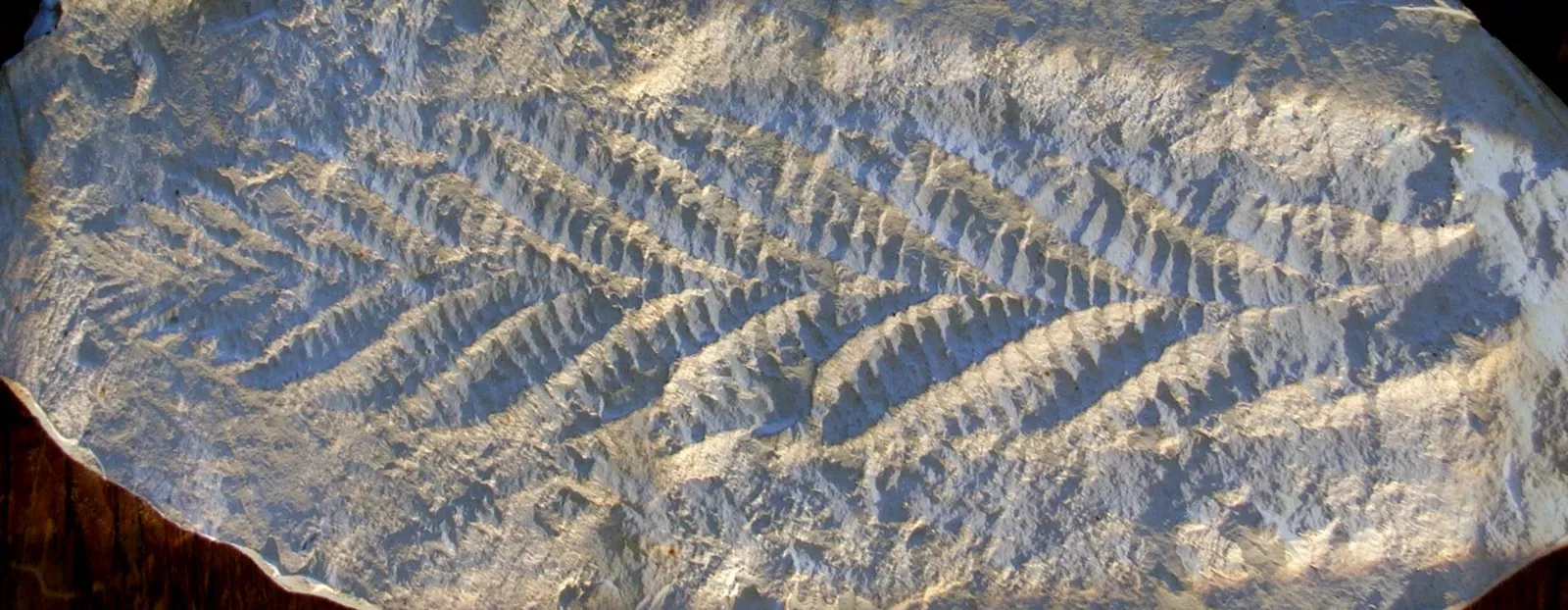
When Charnia masoni was first discovered in England, researchers assumed it was simply an ancient frond of algae – a reasonable guess, since it looks remarkably plant-like, with a stalk and a feather-branched, leaf-shaped body. That interpretation held for years before deeper analysis complicated everything.
Charnia belongs to the rangeomorphs, a group defined by a fractal body plan, with erect forms like Charnia featuring round holdfasts that anchored them to the seafloor. Scientists still can’t confirm whether it actively fed on particles in the water or simply absorbed dissolved nutrients through its skin, a wild gap in knowledge for something considered a candidate ancestor of animals. It lived in deep, current-swept waters far from any beach or shoreline.
6. Dickinsonia: The Fossil That Keeps Changing Kingdoms
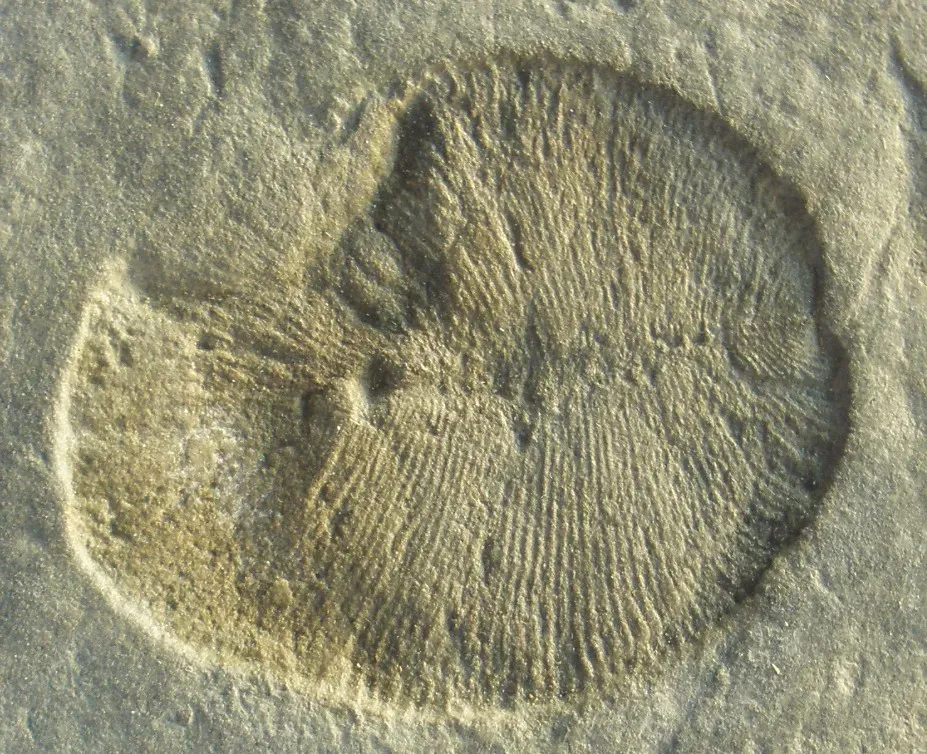
Dickinsonia costata looks like a ribbed, symmetrical oval pressed flat into ancient mud, and for most of the 20th century nobody could agree whether it was an animal, a fungus, a giant single-celled protist, or something science hadn’t even named yet. Its strange, non-repeating segmentation broke every comparison to living organisms.
A 2018 chemical breakthrough finally moved the needle. Biomarker studies found that Dickinsonia possessed cholesteroids, chemical signatures that strongly suggest it belongs to the animal kingdom after all. But even after being confirmed as an animal, researchers still can’t agree on how it moved, what it ate, or which living animal group it’s remotely related to – an unusually large asterisk for something technically “identified.” Some paleontologists still argue the cholesterol evidence oversells the case entirely.
5. The Mistaken Point Biota: An Entire Ecosystem Science Can’t Fully Classify
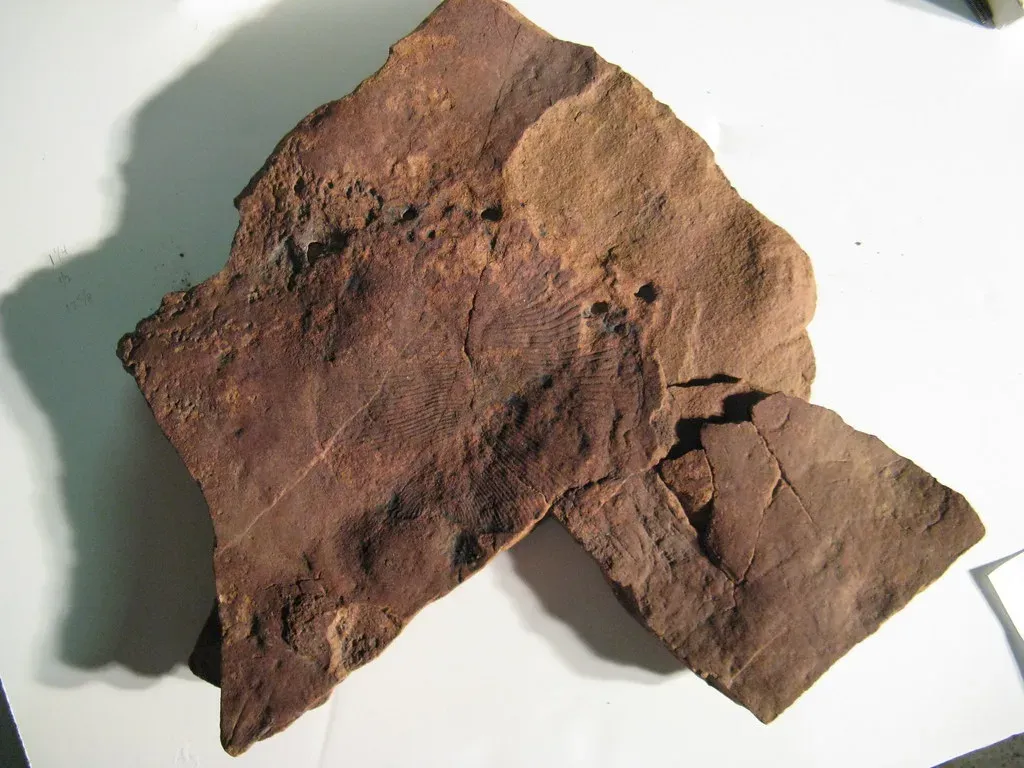
Along a remote strip of Newfoundland coastline sits one of the strangest fossil beds on Earth – a snapshot of life buried in volcanic ash on a seafloor that never once saw sunlight. Mistaken Point represents a deep-water slope and basin environment well below storm wave base and the photic zone, meaning these organisms couldn’t have relied on sunlight and must have gathered nutrients through filter-feeding or simple absorption.
The controversy runs deeper than individual species. One school of thought argues these organisms don’t fit any modern comparison at all, with some researchers suggesting “a fungal model appears to be the most applicable model for some of the Mistaken Point biota.” An entire fossil ecosystem has inspired its own proposed kingdom of life – originally called Vendozoa, later renamed Vendobionta – just because nothing else fits. It’s a controversial opinion, but plenty of specialists think mainstream paleontology forces Ediacaran fossils into “animal” boxes too eagerly.
Worth Knowing
- Preserved by volcanic ash falls, not sediment, which is why detail survives in such astonishing resolution.
- Sits in a deep-water slope and basin setting, entirely below the photic zone.
- No sunlight access rules out photosynthesis, leaving filter-feeding or absorption as the only realistic options.
- Has inspired two proposed kingdom names over the decades: Vendozoa, then Vendobionta.
4. Typhloesus: The “Alien Goldfish” With a Stolen Identity
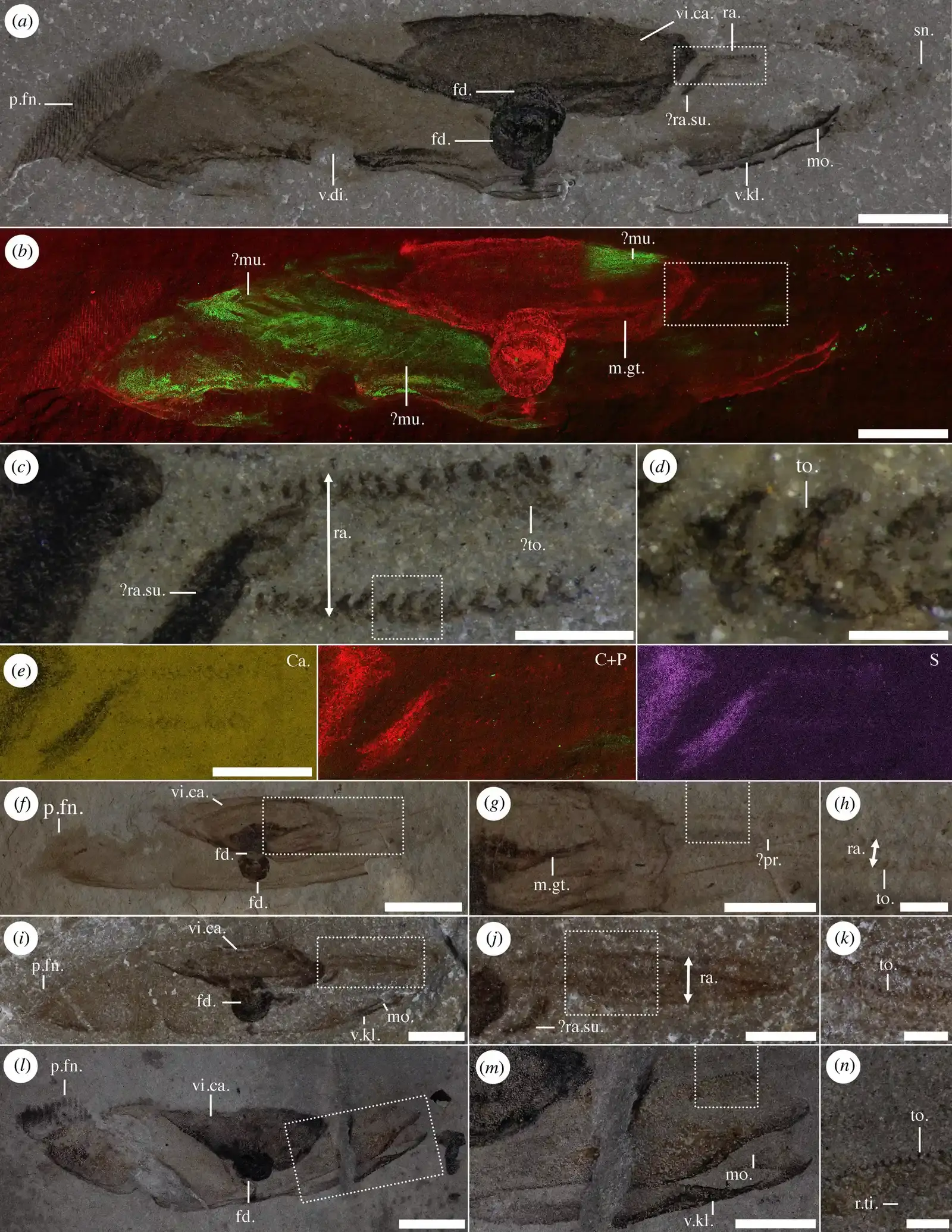
Typhloesus wellsi earned the nickname “alien goldfish” for its smooth, finned, vaguely fish-shaped body preserved in Montana’s Bear Gulch Limestone. For years it held an even stranger claim to fame: scientists believed it was the first body fossil ever found of a conodont, one of paleontology’s most notorious mystery animals.
That identification turned out to be based on a mistake. What looked like conodont anatomy was actually gut contents – something Typhloesus had eaten. It’s now thought to have possessed a radula, which would make it a mollusk, though radula-like structures have independently evolved in other animal groups too. Typhloesus essentially stole another animal’s identity for years simply because it had eaten one for lunch, and even its current mollusk classification comes with a giant asterisk.
3. Conodonts: The Microscopic Teeth That Fooled Science for a Century
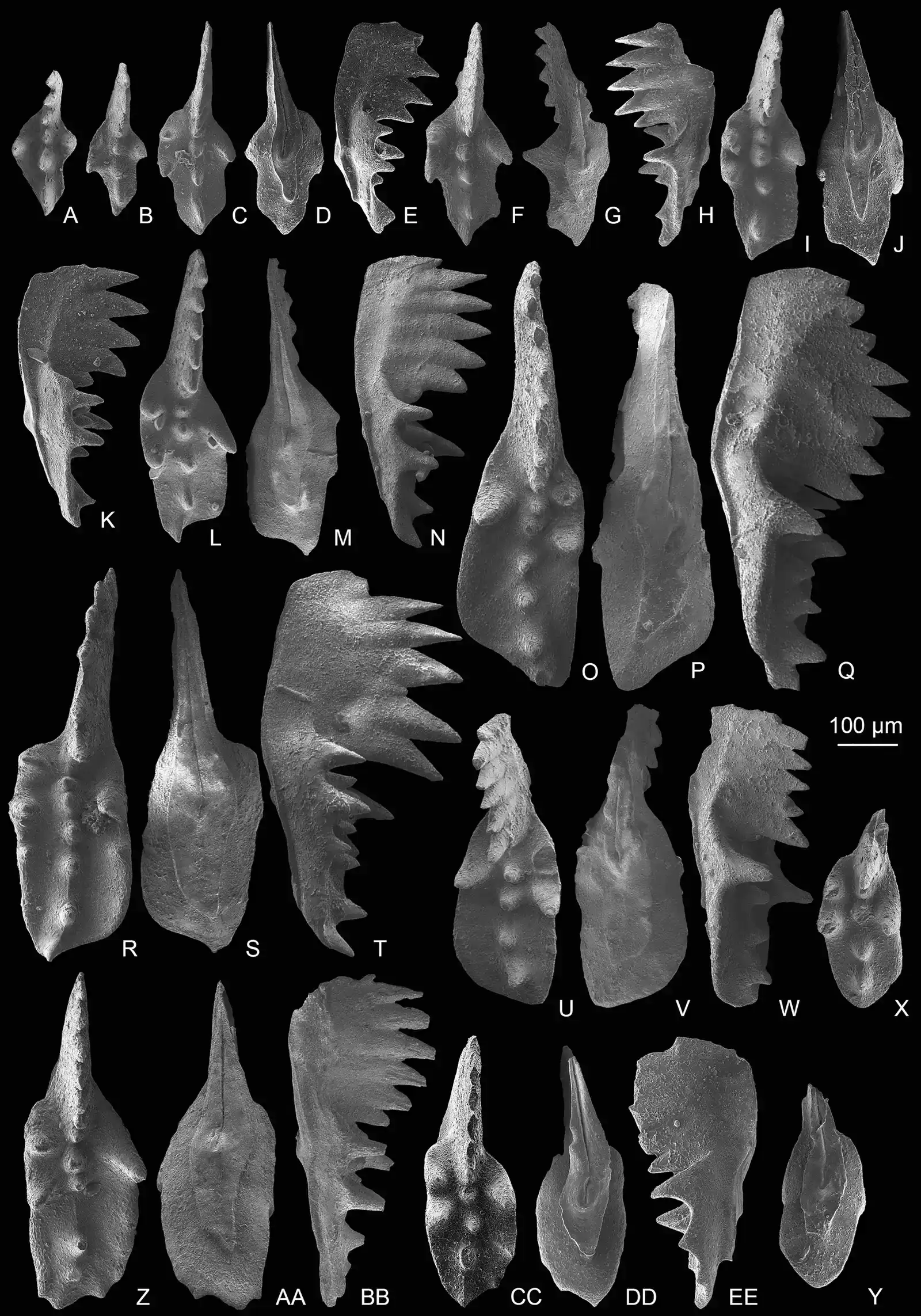
Long before Typhloesus confused anyone, tiny tooth-like fossils called conodont elements were already driving paleontologists to distraction. These microscopic, comb-like structures turn up by the thousands in marine rock going back hundreds of millions of years, yet for over a hundred years nobody had the faintest idea what animal they came from.
Guesses ranged from worm jaws to fish teeth to structures from entirely unknown phyla, with essentially every major animal group nominated at some point. It wasn’t until a soft-bodied, eel-like creature was finally found with the elements preserved inside an actual mouth that the mystery cracked open. An entire branch of paleontology existed for a century studying an animal’s teeth without ever seeing the animal, and plenty of details about their soft anatomy and deep-water lifestyle remain frustratingly incomplete even now.
2. The Tully Monster: Science’s Most Public Identity Crisis
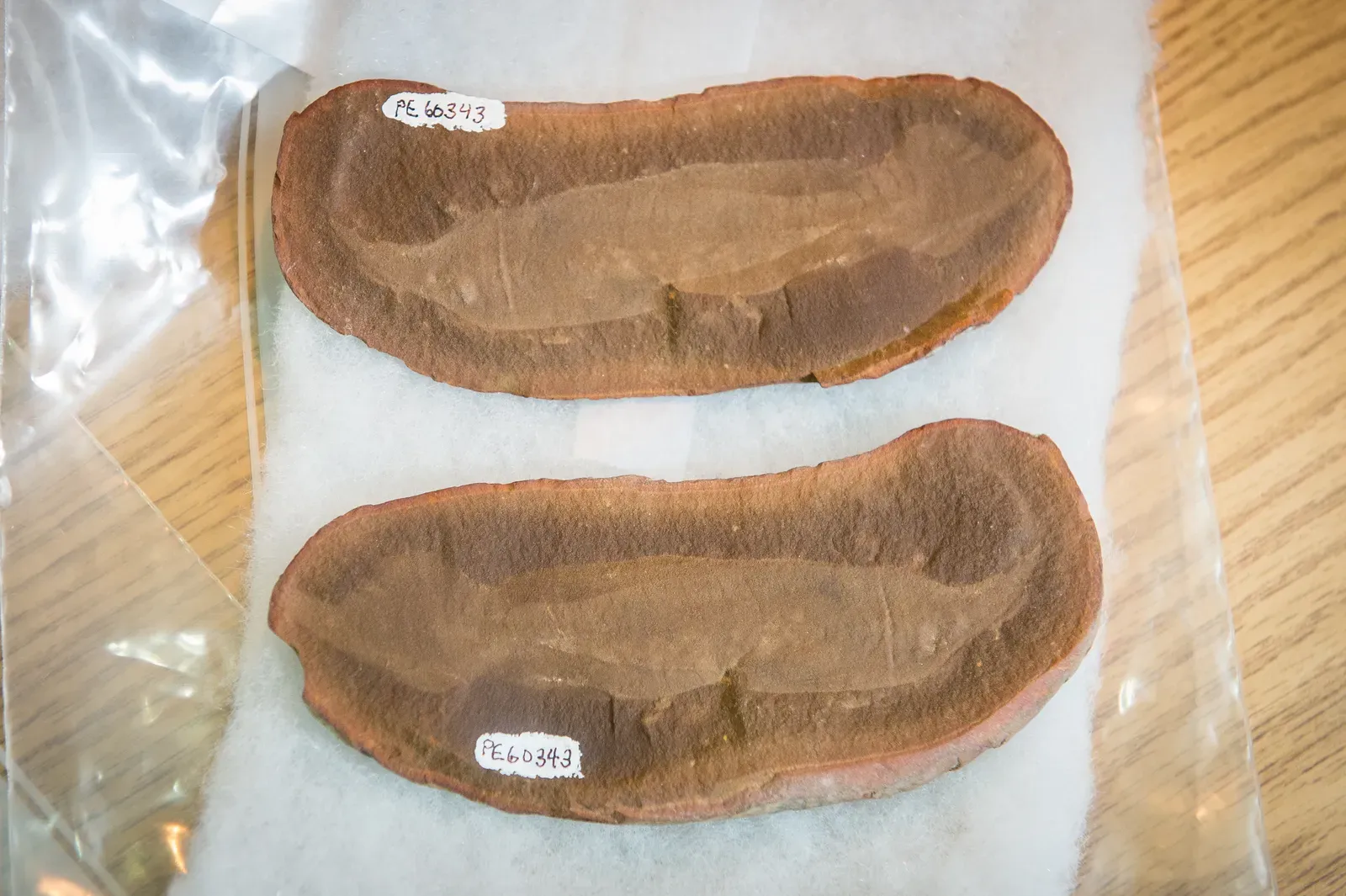
Tullimonstrum gregarium might be the single most argued-about fossil in modern paleontology, with the fighting playing out in major journals for years, not quiet decades of obscurity. Scientists have even been unable to agree on whether it’s a vertebrate or an invertebrate, a staggering statement for an animal science has studied since 1958.
In 2016, a high-profile study claimed victory, arguing a combination of characters placed Tullimonstrum on the stem lineage to lampreys. The celebration didn’t last. Other specialists tore the conclusion apart, pointing out that “you would expect at least a handful of the specimens to have preserved these structures” if the animal truly were a vertebrate. A fossil younger than most dinosaurs has out-baffled creatures three times its age, and it remains the official state fossil of Illinois despite nobody agreeing on what it actually is.
1. Paleodictyon: The Deep-Sea Mystery Happening Right Now
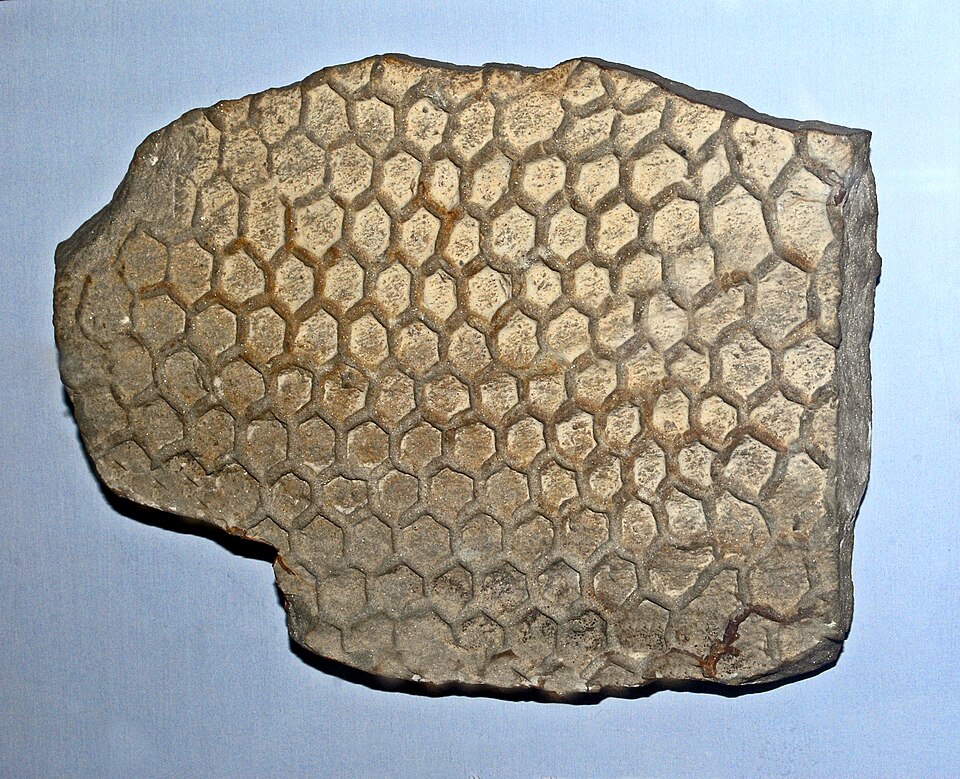
Every fossil on this list, no matter how strange, at least involves a body. Paleodictyon nodosum doesn’t even offer that. It’s a perfect, honeycomb-like hexagonal pattern pressed into deep-sea mud that has appeared in the fossil record for roughly 500 million years – and nobody has ever actually seen the creature that makes it.
Researchers first photographed a living version of the pattern along the lower east wall of the Mid-Atlantic Ridge’s rift valley, at depths between 3,200 and 3,600 meters, and decades of follow-up expeditions have gone nowhere since. Modern Paleodictyon patterns are confined to the deep sea, and despite speculation that hexactinellid sponges or xenophyophores might be responsible, researchers still regard the tracemaker as unknown. This isn’t an ancient mystery frozen in stone – it’s an active, unsolved case happening on the ocean floor at this very moment, and the actual architect has never once been caught in the act.
At a Glance
- Fossil record spans roughly 500 million years, among the longest-running trace fossil patterns known to science.
- Living pattern first documented on the Mid-Atlantic Ridge, at depths of 3,200 to 3,600 meters.
- Leading suspects include hexactinellid sponges and xenophyophores – neither confirmed.
- Status: the tracemaker remains officially unidentified, making this an ongoing mystery rather than a closed case.
The Bottom Line
Here’s the uncomfortable truth this list exposes: paleontology loves to project confidence, but the deep ocean keeps humbling it. Fossils like Paleodictyon prove some mysteries aren’t even ancient history – they’re unfolding right now, unresolved, on the modern seafloor. From bacteria masquerading as animals to entire ecosystems that might not fit any known kingdom of life, the honest state of the science is far messier than textbooks let on.
I’ll say it plainly: the constant reclassifications on this list aren’t a sign of progress, they’re a sign of how little confidence anyone should really have in some of paleontology’s tidiest-sounding conclusions. Dickinsonia got “solved” and still can’t tell us how it moved. Vetulicola got a phylum of its own out of sheer defeat. And something is still building perfect hexagons in the abyss without ever showing its face. If there’s a lesson buried in all this mud, it’s that the ocean floor isn’t done keeping secrets – and it may never be.