
Somewhere in Florida, a car in neutral rolls uphill. Somewhere in Antarctica, a waterfall bleeds red like it’s wounded. Somewhere in Turkmenistan, the ground has been on fire since 1971 and nobody has ever managed to put it out.
Most of these places aren’t magic, and a few of them aren’t even real anomalies at all – just very convincing tricks of terrain and light. But a handful are genuinely strange, backed by measurements scientists still argue over. The hard part is telling which is which, and by the end of this list, you’ll know exactly which sites are clever illusions and which ones are the real deal.
#25 – Spook Hill, Lake Wales, Florida
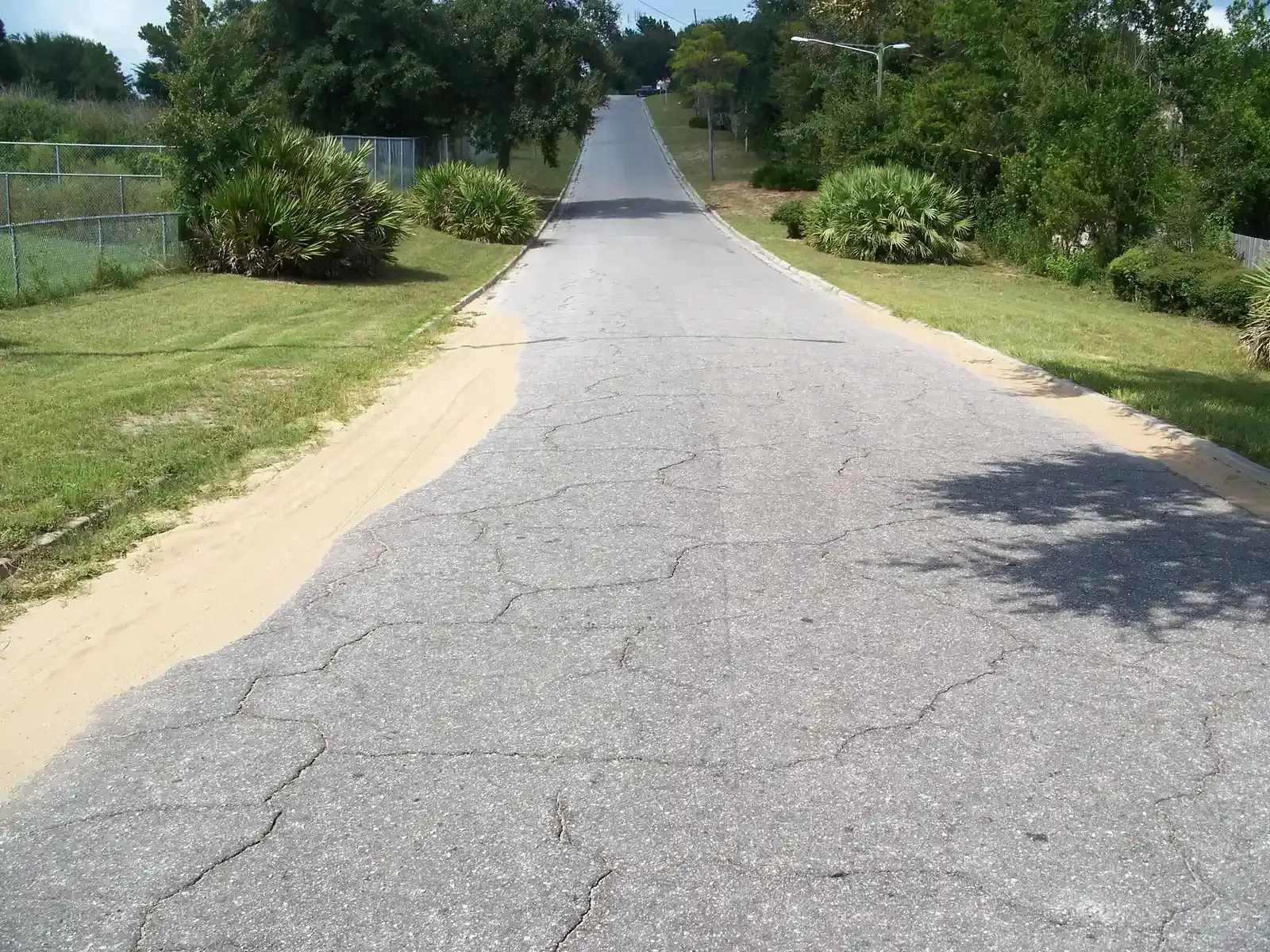
Put your car in neutral on this quiet Florida road and it will start rolling – uphill, against gravity, or so it looks. Locals have watched this happen for generations, and first-time visitors usually pull over twice just to convince themselves it’s real.
It isn’t gravity bending the rules here – it’s your brain. The surrounding landscape hides the true horizon, so your eyes misjudge which way is actually downhill. Levels and GPS readings confirm the road tilts the ordinary direction the whole time, but the illusion is stubborn enough that it still fools drivers who arrive already knowing the trick.
#24 – Magnetic Hill, Ladakh, India
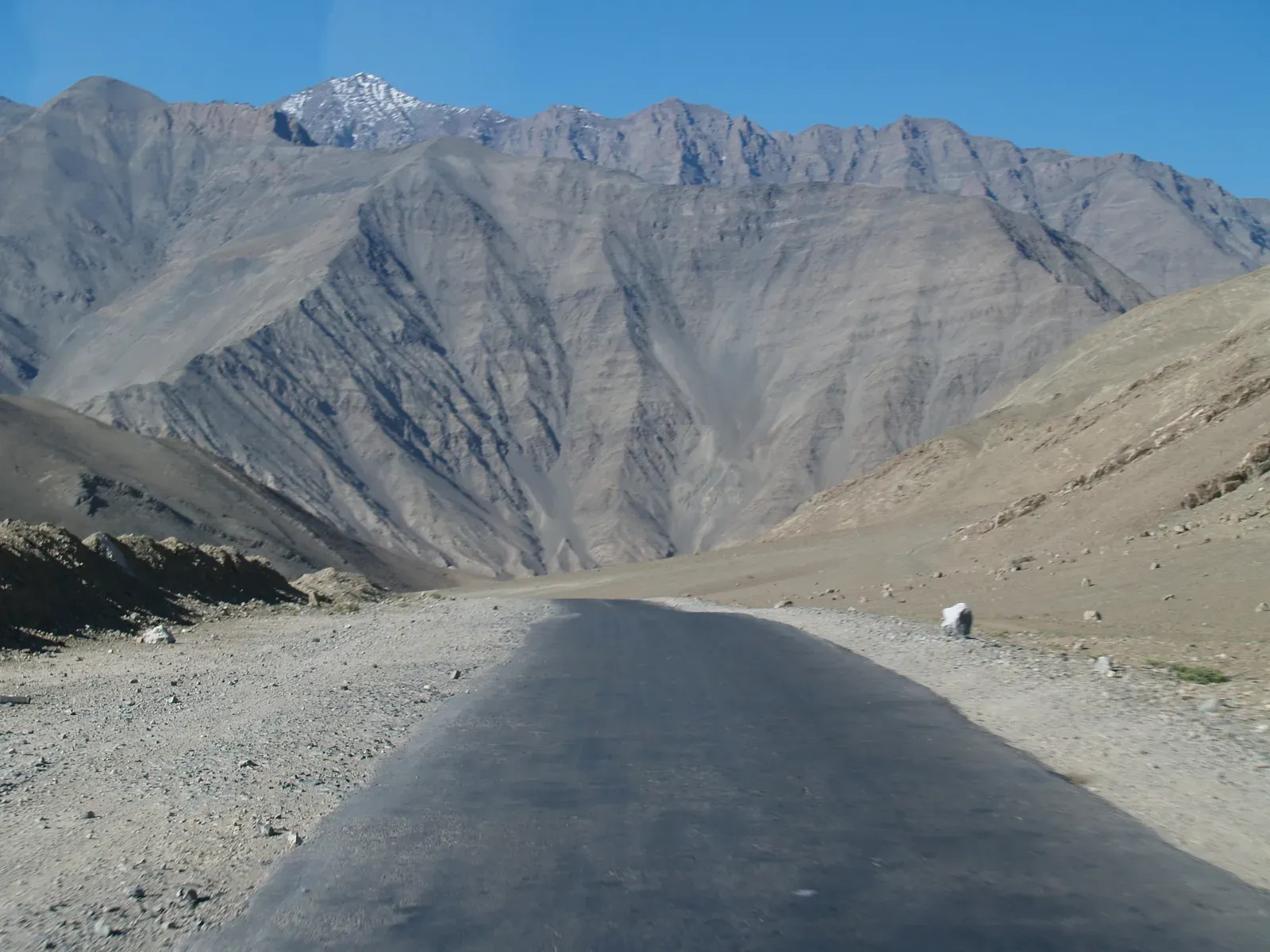
At over 10,000 feet in the Himalayas, cars and even bottled water appear to roll uphill against a visibly rising slope. Locals told stories about this stretch of road long before tourists ever showed up with cameras.
Survey teams have measured the actual incline, and it runs the opposite direction from what your eyes report. The steep mountains around the site scramble your sense of level ground, and the effect reportedly gets stronger at certain times of day as the light angle shifts across the barren terrain – altitude sickness doesn’t help travelers trust their own senses either.
#23 – Oregon Vortex, Gold Hill, Oregon
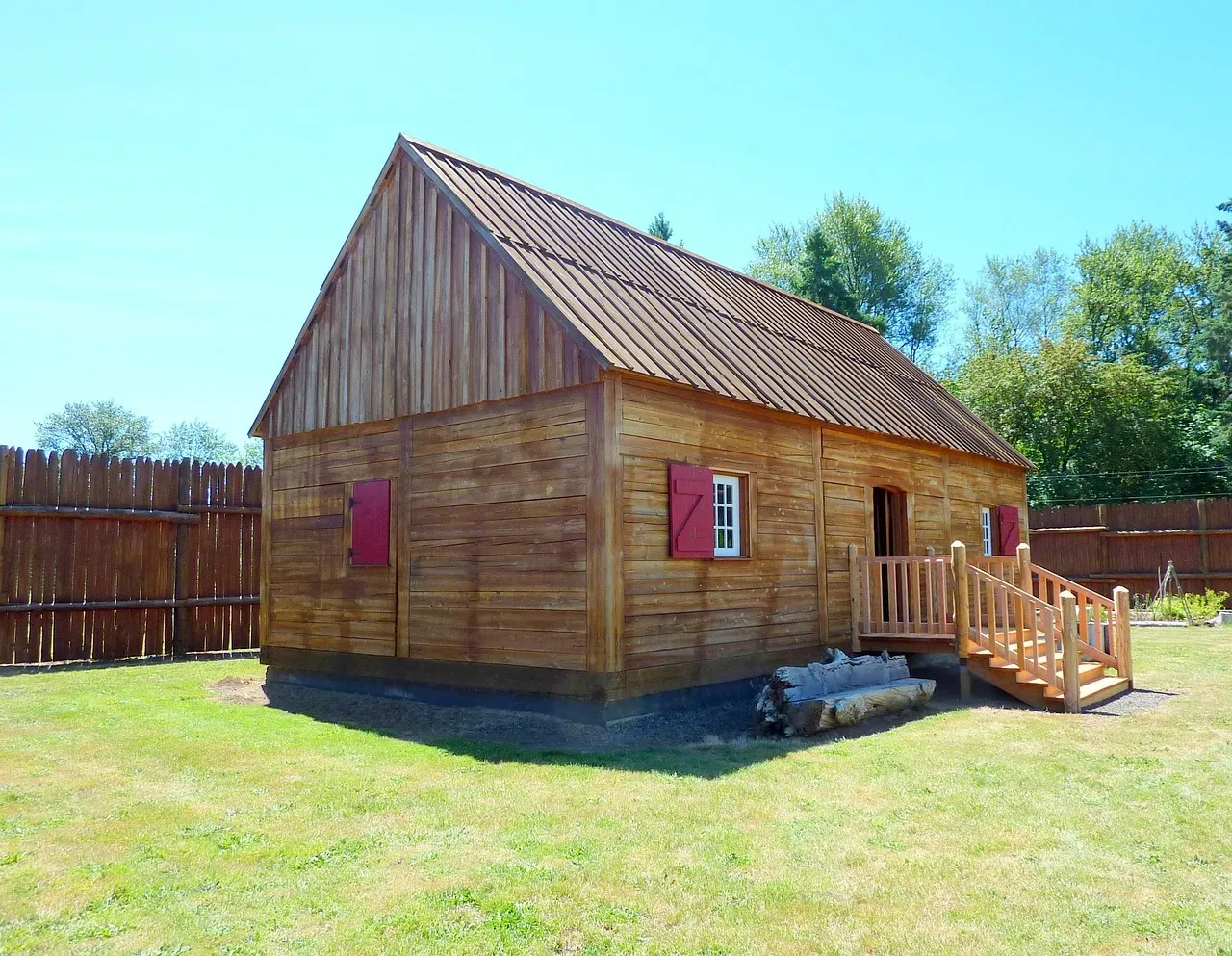
Step inside this tilted 1930s cabin and brooms stand up on their own while balls roll uphill across the floor. The place has been drawing curious visitors for nearly a century, and the showmanship hasn’t dimmed with age.
Despite the dramatic name, instruments have found nothing unusual here – no rogue magnetic field, no gravitational quirk. The whole effect comes from a building deliberately constructed at an angle, with slanted walls and floors that trick your depth perception. Even the old story about animals avoiding the site turns out to trace back to ordinary human foot traffic, not anything supernatural.
#22 – Mystery Spot, Santa Cruz, California
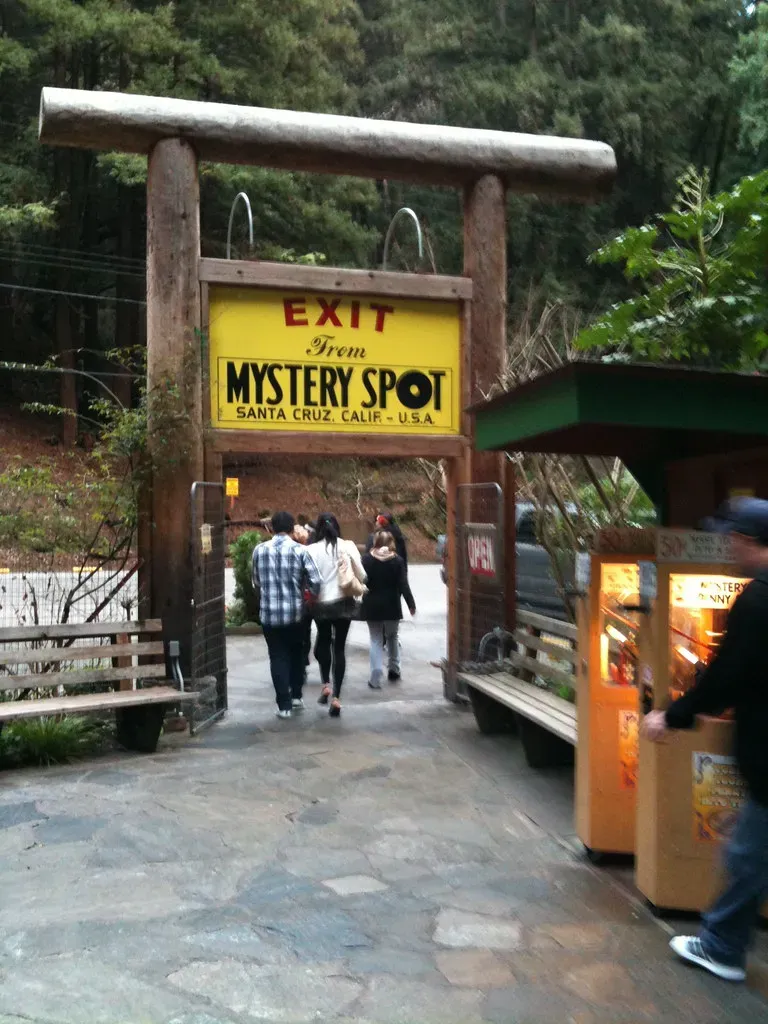
Inside a small wooden shack tucked into California redwoods, visitors lean at angles that shouldn’t be physically possible while balls roll uphill in defiance of gravity. It’s one of the most photographed roadside oddities in the country.
Precise surveys show gravity behaves completely normally throughout the structure. The trick is a tilted foundation combined with towering trees that hide the real horizon from view. What’s genuinely surprising is how well it works – even people who arrive knowing exactly how the illusion functions still feel their balance go sideways the moment they step inside.
#21 – Confusion Hill, Mendocino County, California
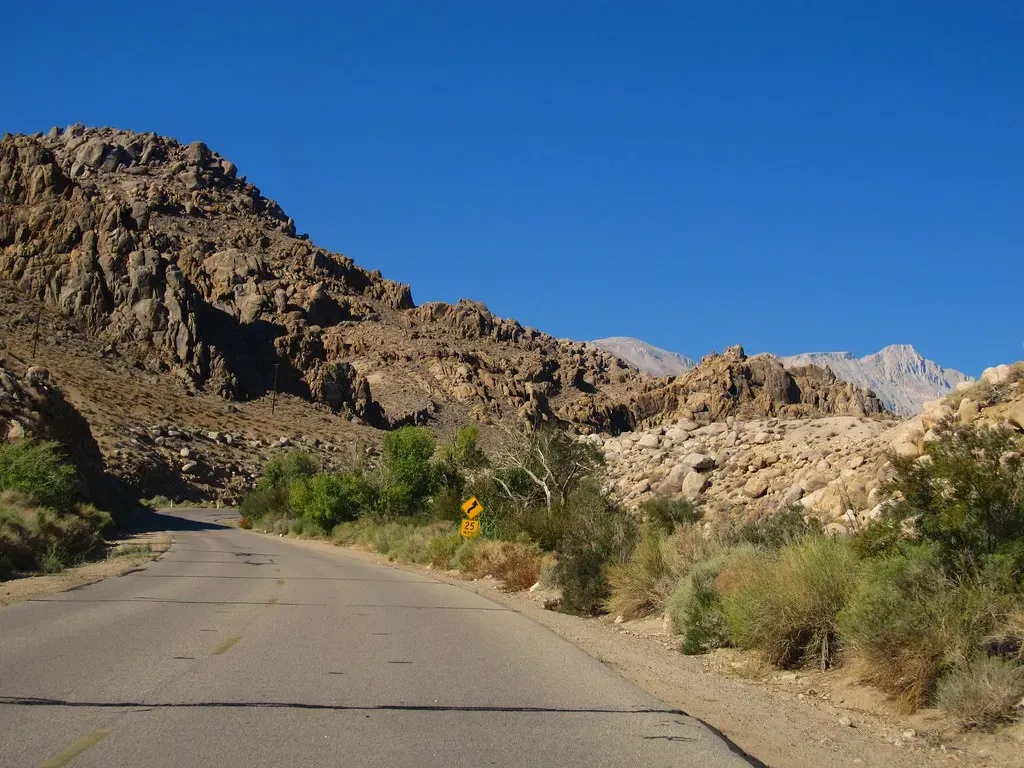
Another gravity hill hides among California’s redwood giants, and this one has been fooling road-trippers since the 1940s. Cars seem to defy the slope the instant they roll to a stop.
Road engineers have documented the true downhill grade here more than once, and it always confirms the same thing: there’s no physical anomaly, just visual misdirection from the surrounding trees. The site leans hard into its kitschy roadside-attraction charm, and honestly, that’s part of why it’s stayed popular for over eighty years.
#20 – Sailing Stones, Death Valley, California
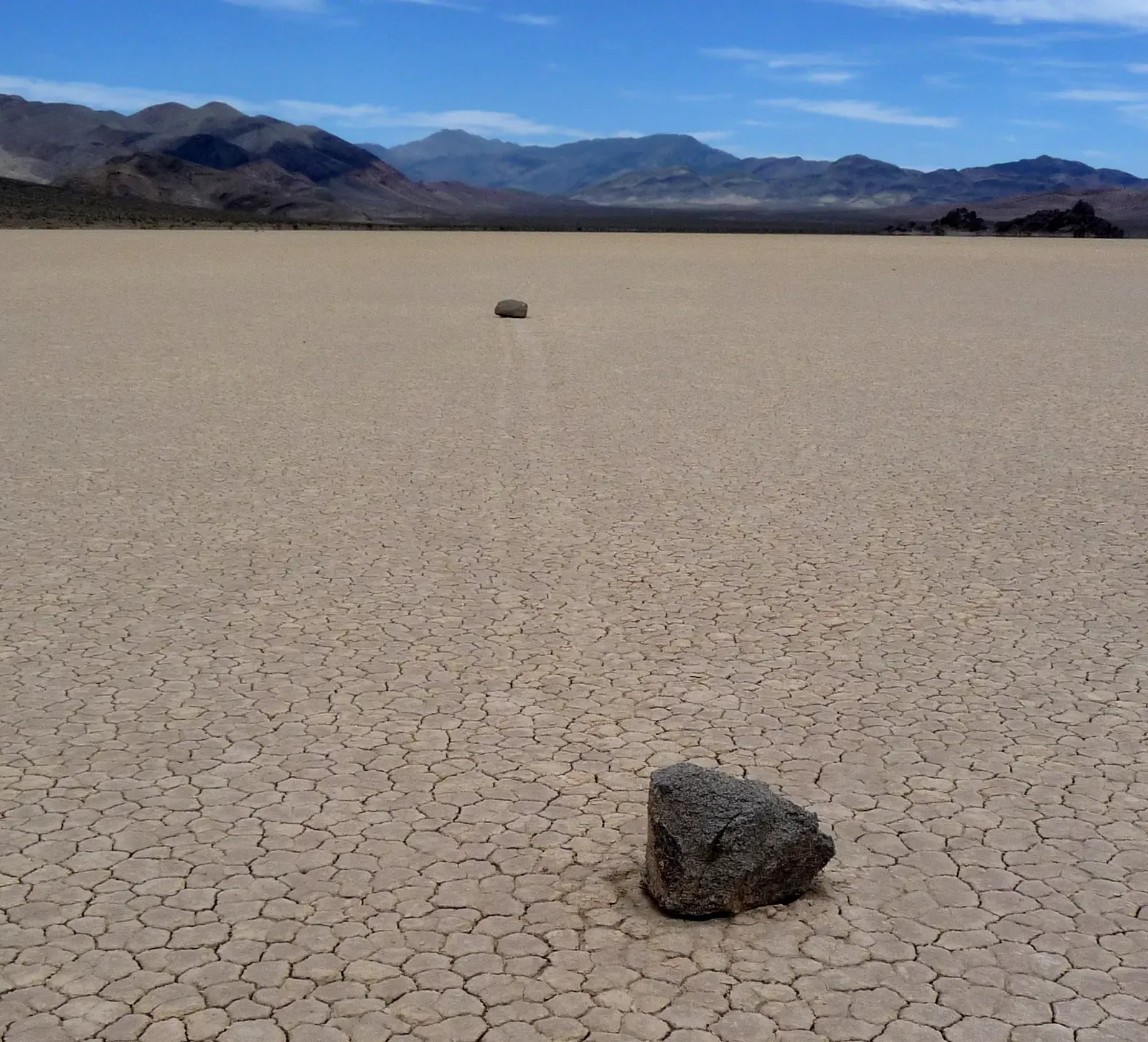
For decades, nobody could explain how boulders weighing hundreds of pounds dragged themselves across a bone-dry lake bed, leaving long tracks behind with no footprints, no tire marks, and no visible force pushing them.
The mystery finally cracked when researchers strapped GPS trackers to the rocks and set up time-lapse cameras. On rare winter nights, thin sheets of ice form across the lake bed, and wind does the rest – gently shoving the stones across the slick surface. The movement only happens a handful of times per decade under very specific temperature and wind conditions, which is exactly why it stayed unexplained for so long.
Fast Facts
- Boulders weighing hundreds of pounds leave long drag marks with zero footprints or tire tracks nearby.
- The mystery was only solved after researchers attached GPS trackers and rolled out time-lapse cameras.
- Movement requires a rare combo: a thin overnight ice sheet plus just the right wind.
- The rocks only actually slide a handful of times per decade, which explains the decades-long confusion.
#19 – Blood Falls, Antarctica
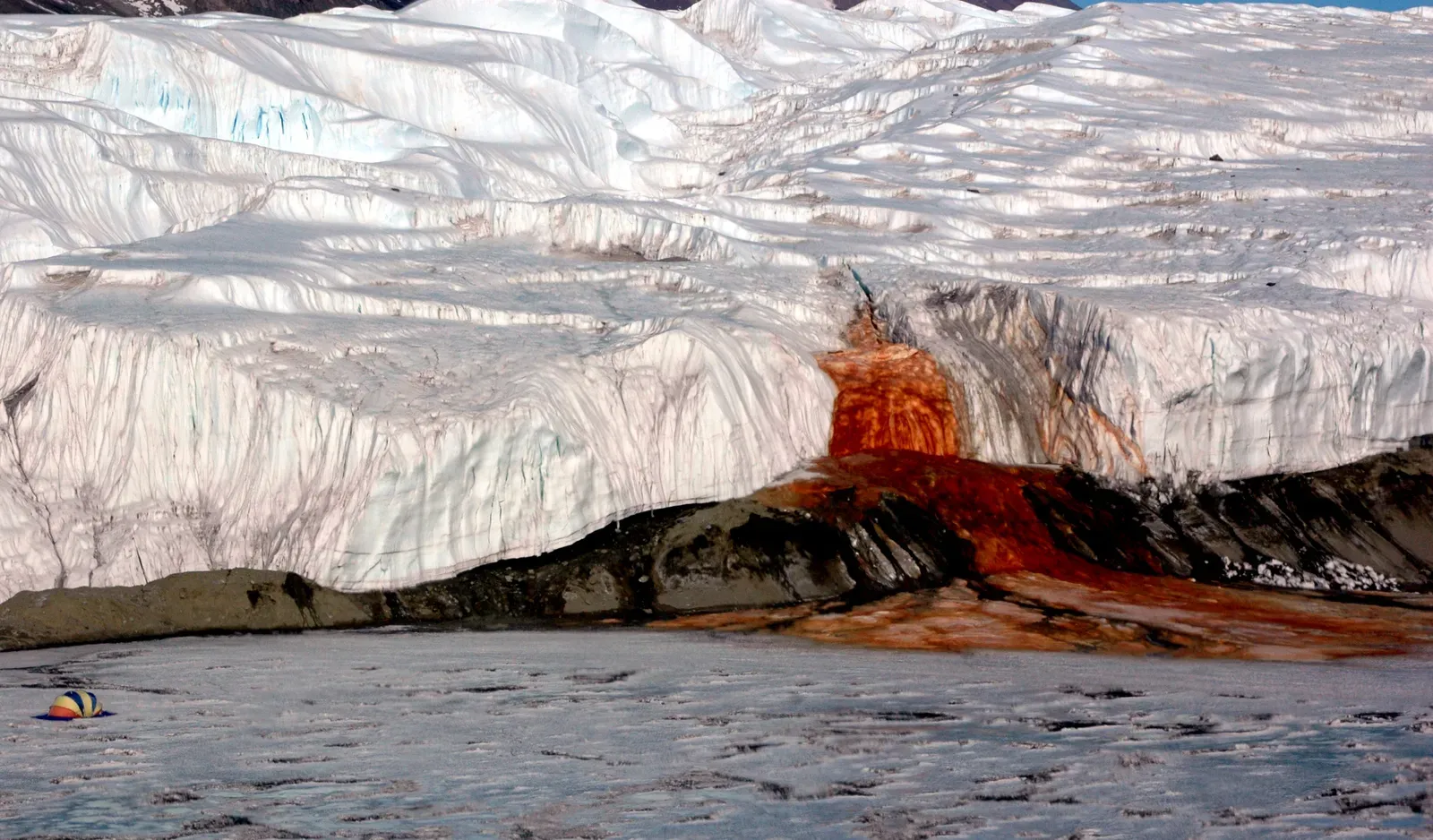
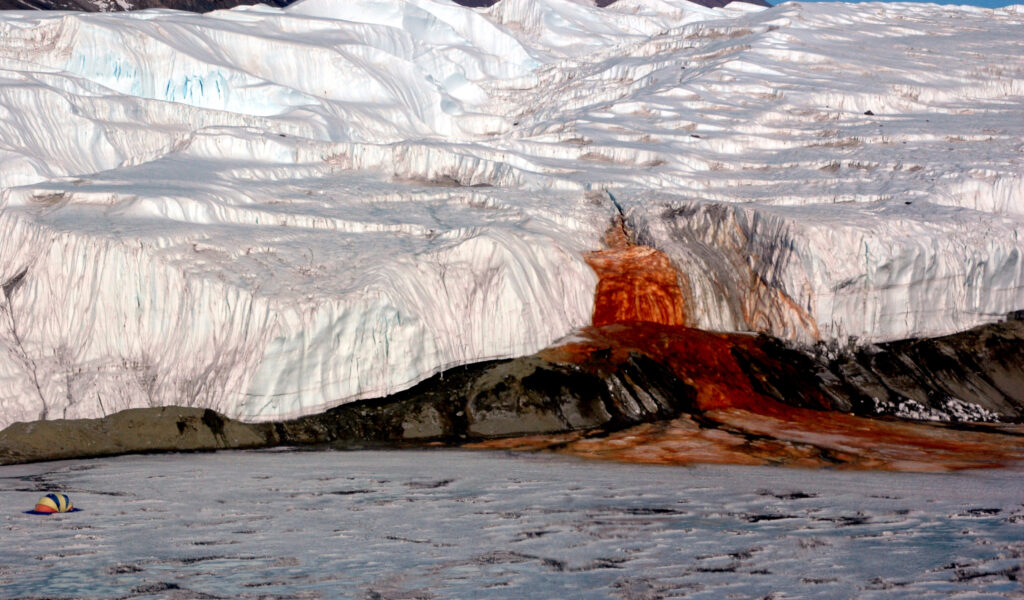
A waterfall the color of fresh blood pours out of Taylor Glacier in one of the most remote, hostile places on the planet. The first explorers who saw it assumed it was algae. They were wrong in a much stranger way.
The red comes from iron-rich saltwater that’s been trapped beneath the glacier for millions of years, cut off from sunlight and oxygen. When it finally reaches the surface and hits the air, the iron oxidizes – essentially rusting – and turns the water deep red. Even stranger, that ancient water supports its own isolated microbial ecosystem that’s survived in total darkness for eons, unlike anything found in any other waterfall on Earth.
#18 – Door to Hell, Turkmenistan
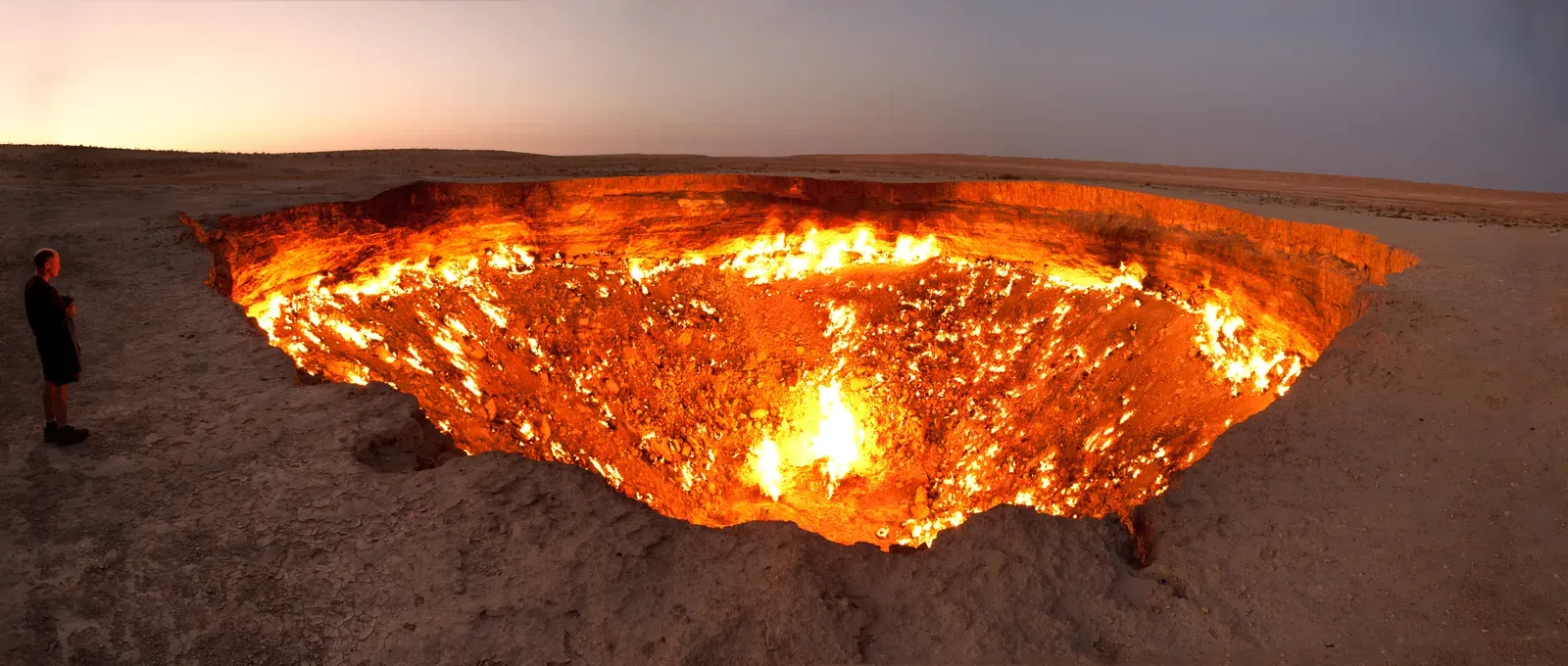
In the middle of the Karakum Desert, a crater more than 200 feet wide has been burning nonstop since 1971. Locals call it the Door to Hell, and from a distance at night, it genuinely looks like a portal to somewhere you don’t want to visit.
Soviet engineers reportedly lit the fire on purpose, hoping to burn off dangerous gas leaking from the ground – they expected it to go out in a few weeks. Instead, it’s still burning more than fifty years later with no sign the fuel source is running dry. What started as an emergency fix has become one of the world’s strangest permanent landmarks.
#17 – Lake Natron, Tanzania
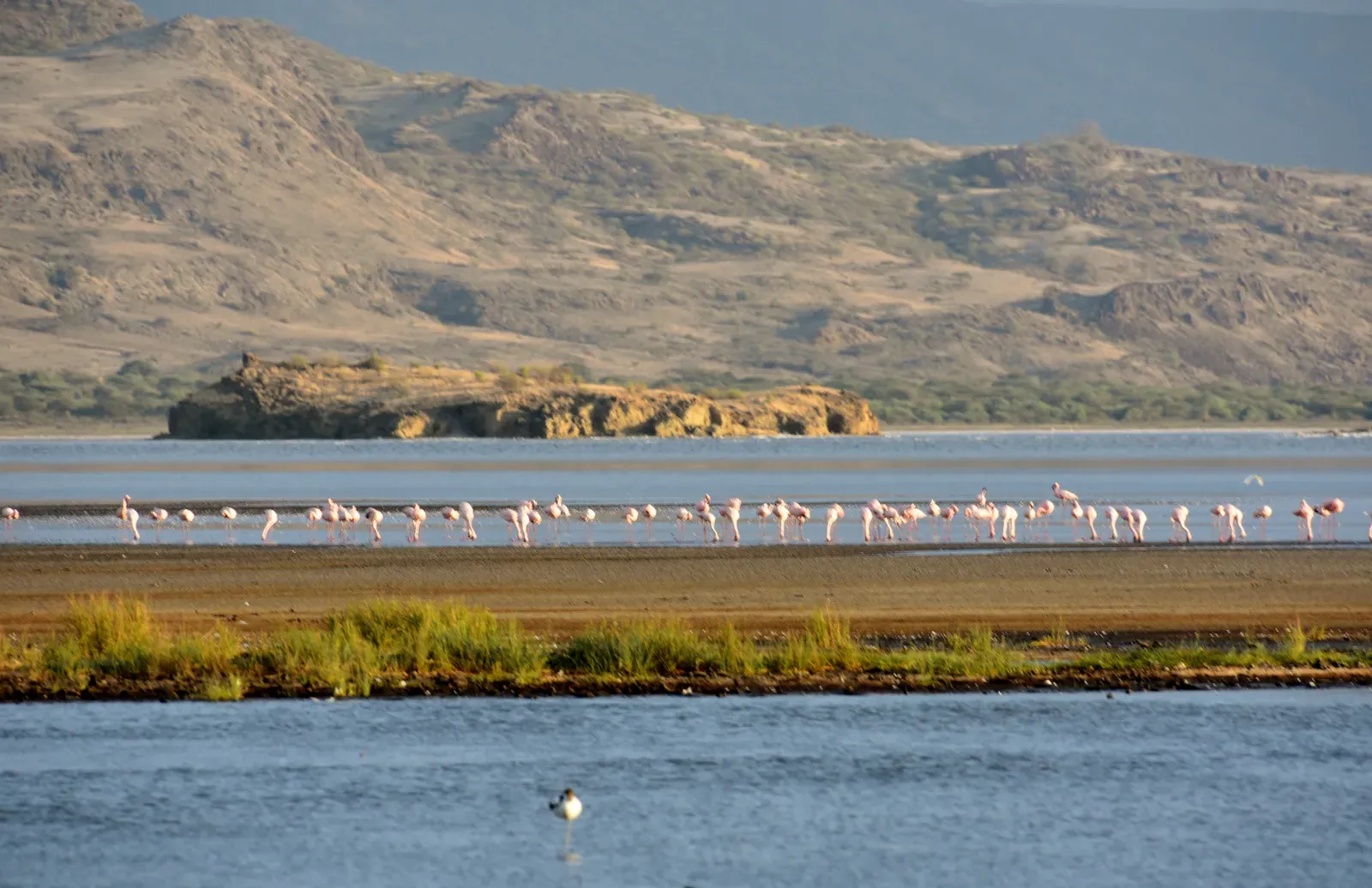
This lake’s water is so alkaline it can calcify the bodies of animals that die in it, essentially turning them into eerie natural statues. Photographs of mummified birds found along its shores have unsettled the internet more than once.
The pH here runs above 10.5, chemically similar to ammonia, and it’s the calcium carbonate in the water that hardens around anything that doesn’t survive contact with it. Yet somehow flamingos thrive on these same shores, breeding in some of the harshest water chemistry found anywhere on the planet.
#16 – Boiling River, Peru
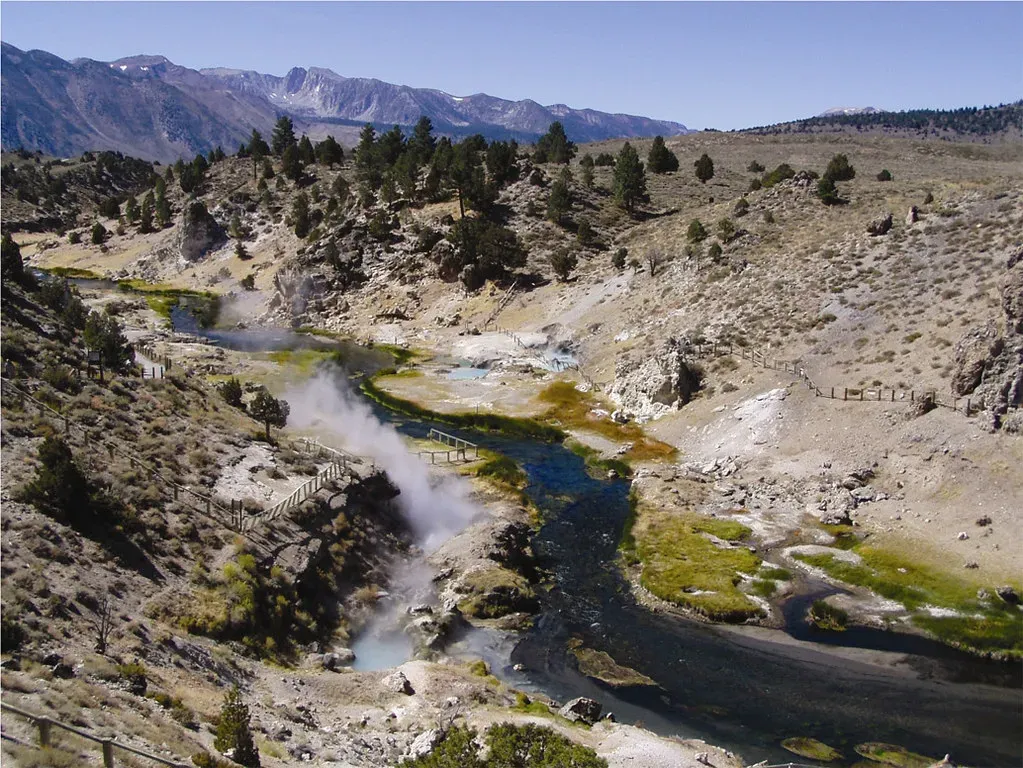
Deep in the Peruvian Amazon, a stretch of the Shanay-Timpishka river reaches temperatures close to boiling – hot enough that falling in can be fatal, and animals that stumble into it don’t survive.
Geothermal heat rising from deep underground keeps sections of the river at roughly 91°C year-round, with no nearby volcano to explain it. Indigenous communities described this river to outsiders long before any scientist bothered to measure it, and the consistency of the heat – steady, not seasonal – is what still puzzles researchers most.
#15 – Eternal Flame Falls, New York
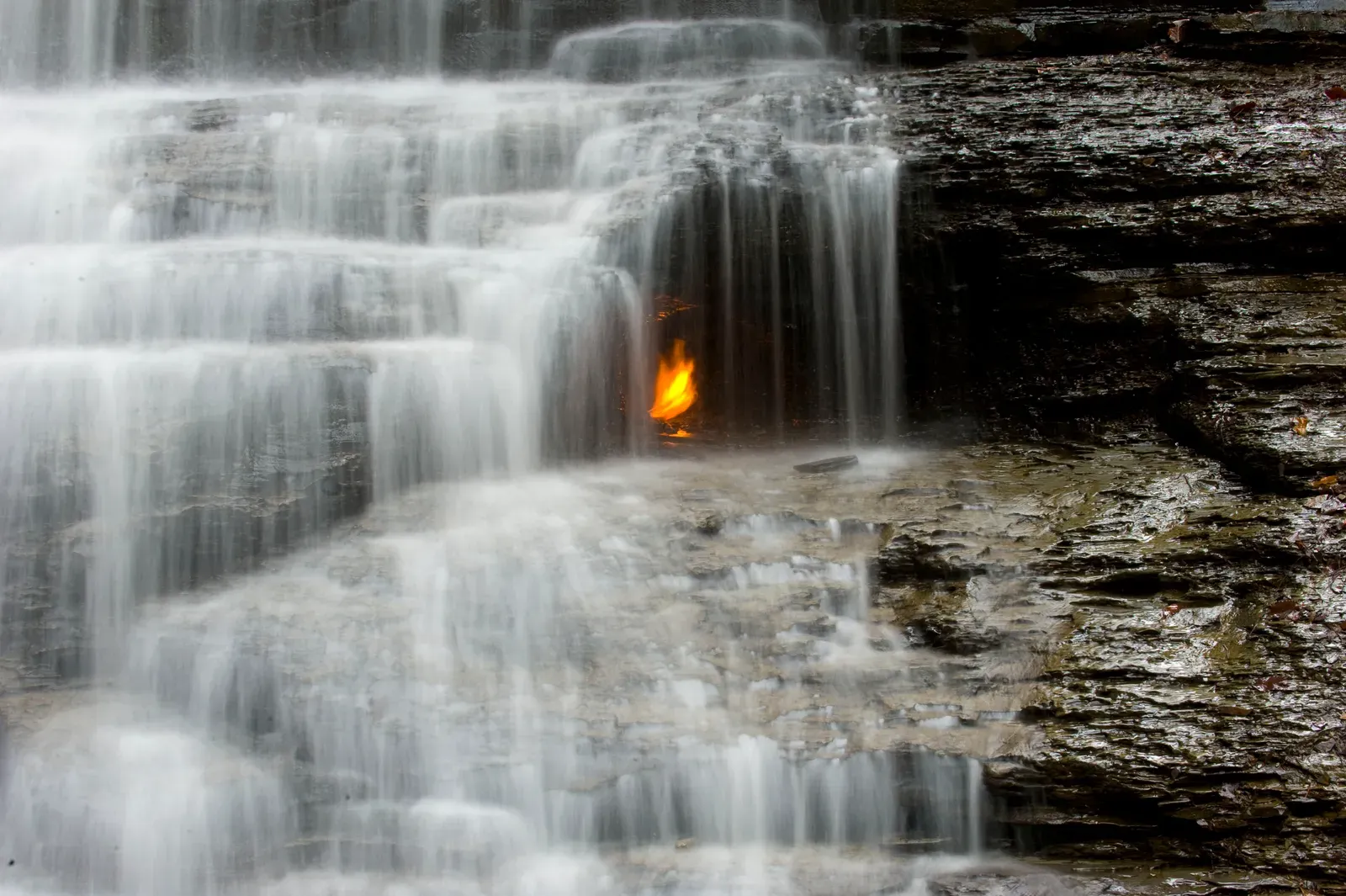
Behind a modest waterfall in a New York state park, a small flame flickers continuously, seemingly powered by nothing but the rock itself. It’s an odd, quiet kind of magic tucked into an otherwise ordinary hiking trail.
Natural gas seeps out of shale layers beneath the falls and ignites under the right conditions, sometimes needing a human hand with a lighter to restart it after heavy rain. What’s remarkable is how long it’s persisted – decades of flickering in a public park, making it one of the only reliably visible natural gas flames most people will ever see in person.
#14 – Underwater Waterfall, Mauritius
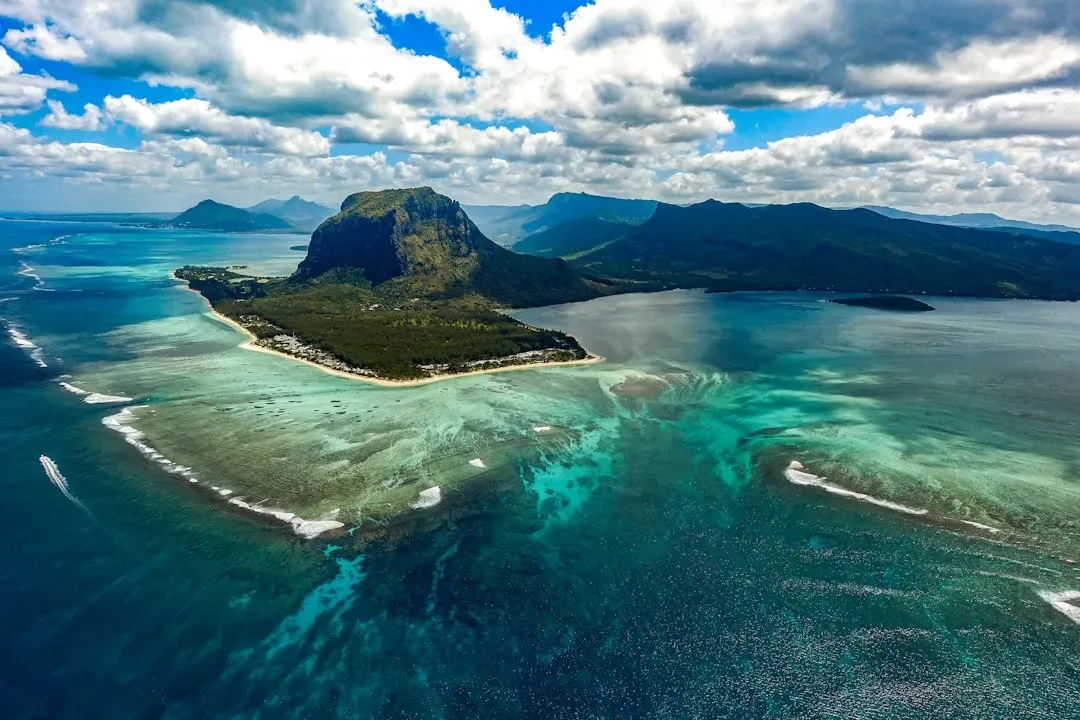
From the air off Le Morne Peninsula, it looks like the ocean floor drops away into an underwater waterfall – sand and current cascading off a submerged ledge into the deep blue beyond. The photos alone have convinced plenty of people it’s a real geological feature.
It isn’t a waterfall at all. Satellite imagery shows sand and silt drifting over an underwater shelf, and the illusion only holds up from very specific aerial angles – get close enough by boat and the effect disappears entirely. It’s one of the most photogenic optical tricks on this entire list.
#13 – Rainbow Mountain, Peru
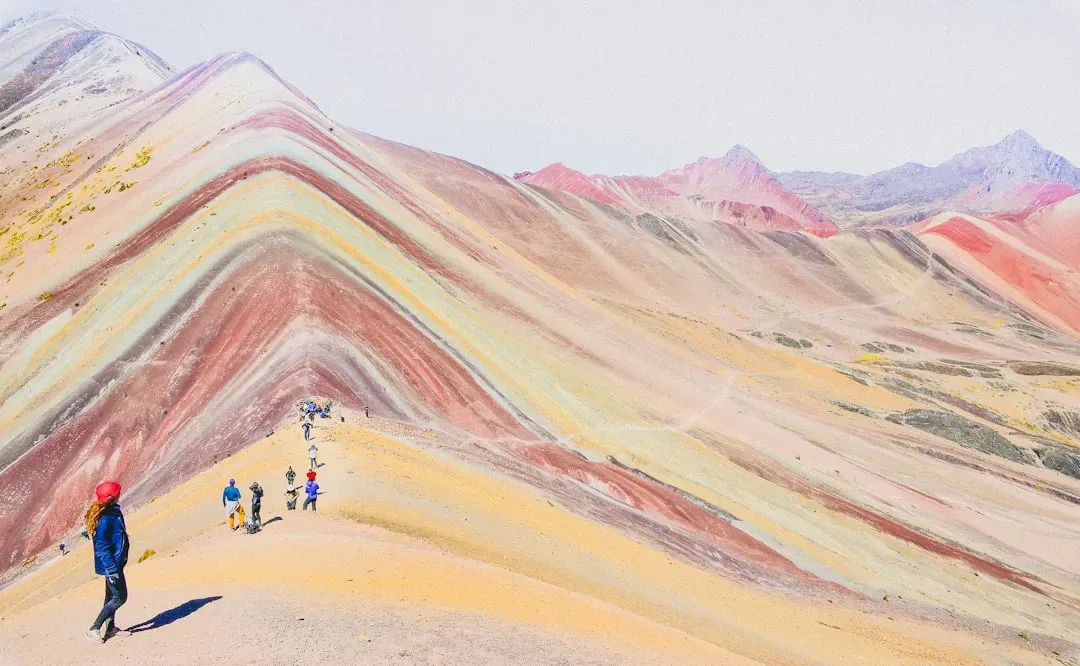
Vinicunca looks almost digitally edited, its slopes striped in red, gold, and turquoise like something out of a fantasy movie. Yet every color on this mountain is completely natural.
The stripes come from mineral deposits laid down in ancient lake beds millions of years ago, later exposed by erosion. What’s strange is that almost nobody knew about it until 2015 – heavy snow cover hid the colors for generations, and only as the climate has warmed has the mountain become visible and accessible year-round.
#12 – Pamukkale, Turkey
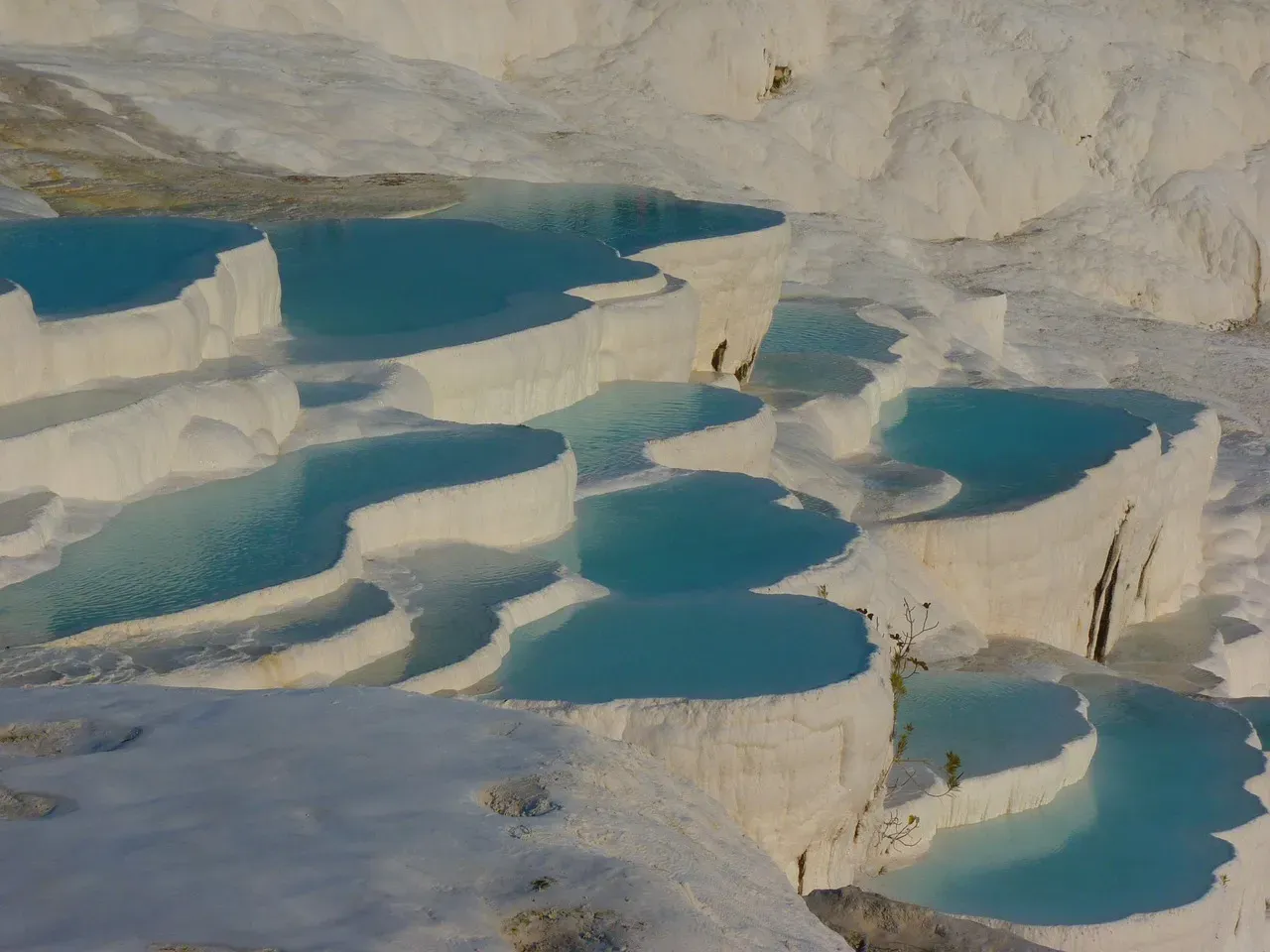
Bright white terraced pools cascade down a Turkish hillside like frozen waterfalls made of cotton, which is exactly what the name means in Turkish. Ancient Romans found it so remarkable they built an entire city, Hierapolis, right beside it.
Hot springs rich in calcium carbonate deposit mineral layers as the water cools and evaporates, slowly building the terraces one microscopic layer at a time. They’re still growing today, measurably, at a rate of millimeters per year – meaning the landscape tourists photograph now is subtly different from what the Romans once bathed in.
At a Glance
- The name literally translates to “cotton castle,” describing the terraces’ soft, frozen-waterfall look.
- Ancient Romans were so impressed they built the city of Hierapolis directly beside the springs.
- Calcium carbonate-rich hot springs deposit new mineral layers onto the terraces continuously.
- The terraces still grow measurably today, adding new layers millimeter by millimeter each year.
#11 – Giant’s Causeway, Northern Ireland
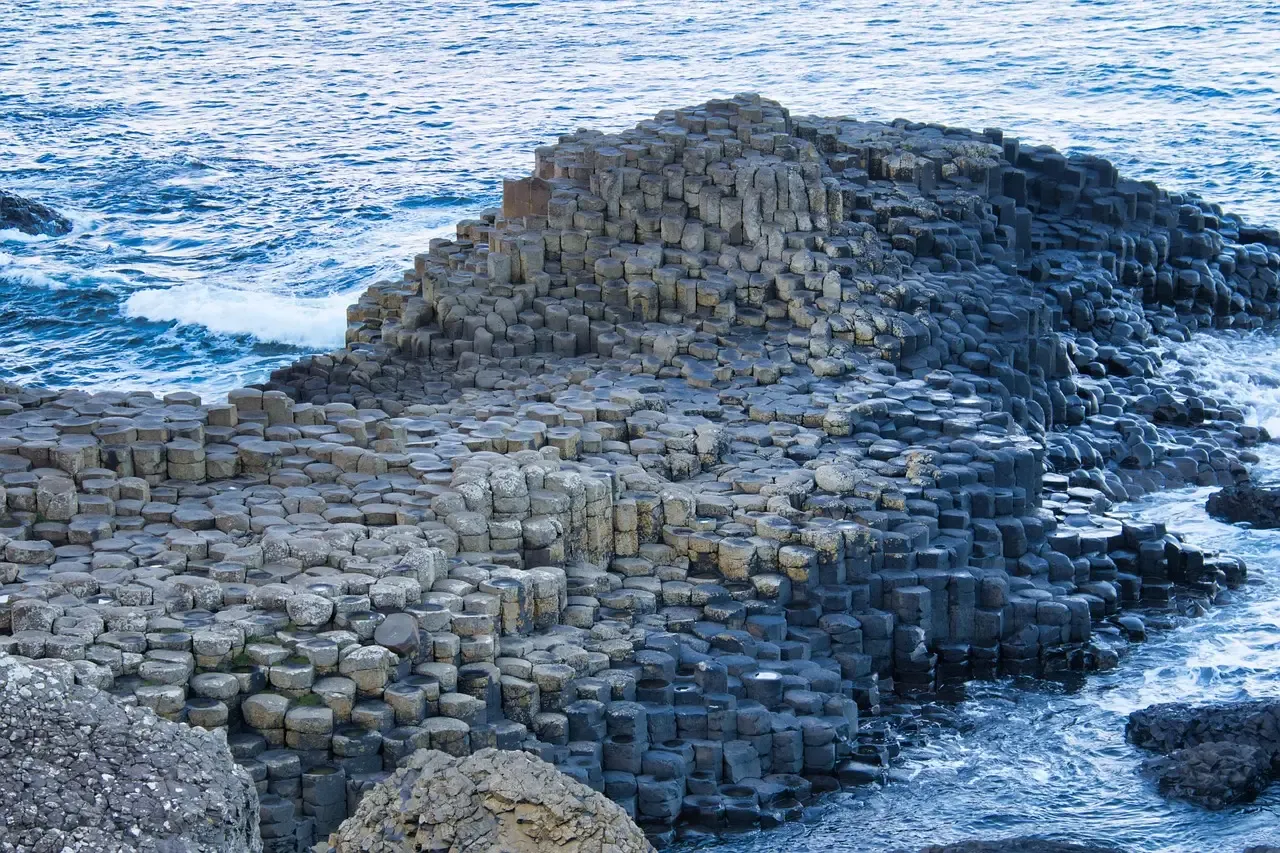
Tens of thousands of nearly perfect hexagonal basalt columns line the Northern Irish coast, so geometrically precise that ancient locals insisted giants must have built them by hand.
The real explanation is almost as satisfying: rapidly cooling lava cracked into these tight hexagonal shapes as it solidified, a process geologists have confirmed happens the same way at similar sites on other continents. No giants required – just physics, patience, and a few million years.
#10 – Magnetic Hill, Moncton, Canada
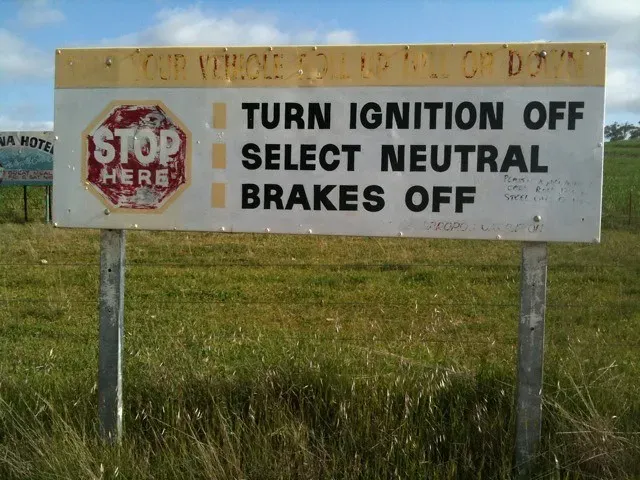
On a short stretch of road outside Moncton, cars in neutral appear to creep uphill on their own, a trick that’s pulled in curious tourists since the 1930s.
Surrounding hills distort the visual reference for level ground, and actual slope measurements confirm the road runs the opposite direction from what it appears to. Canada has several of these gravity hills scattered across different provinces, but Moncton’s version remains the most famous, largely thanks to decades of consistent word-of-mouth.
#9 – Mystery Hill, Blowing Rock, North Carolina
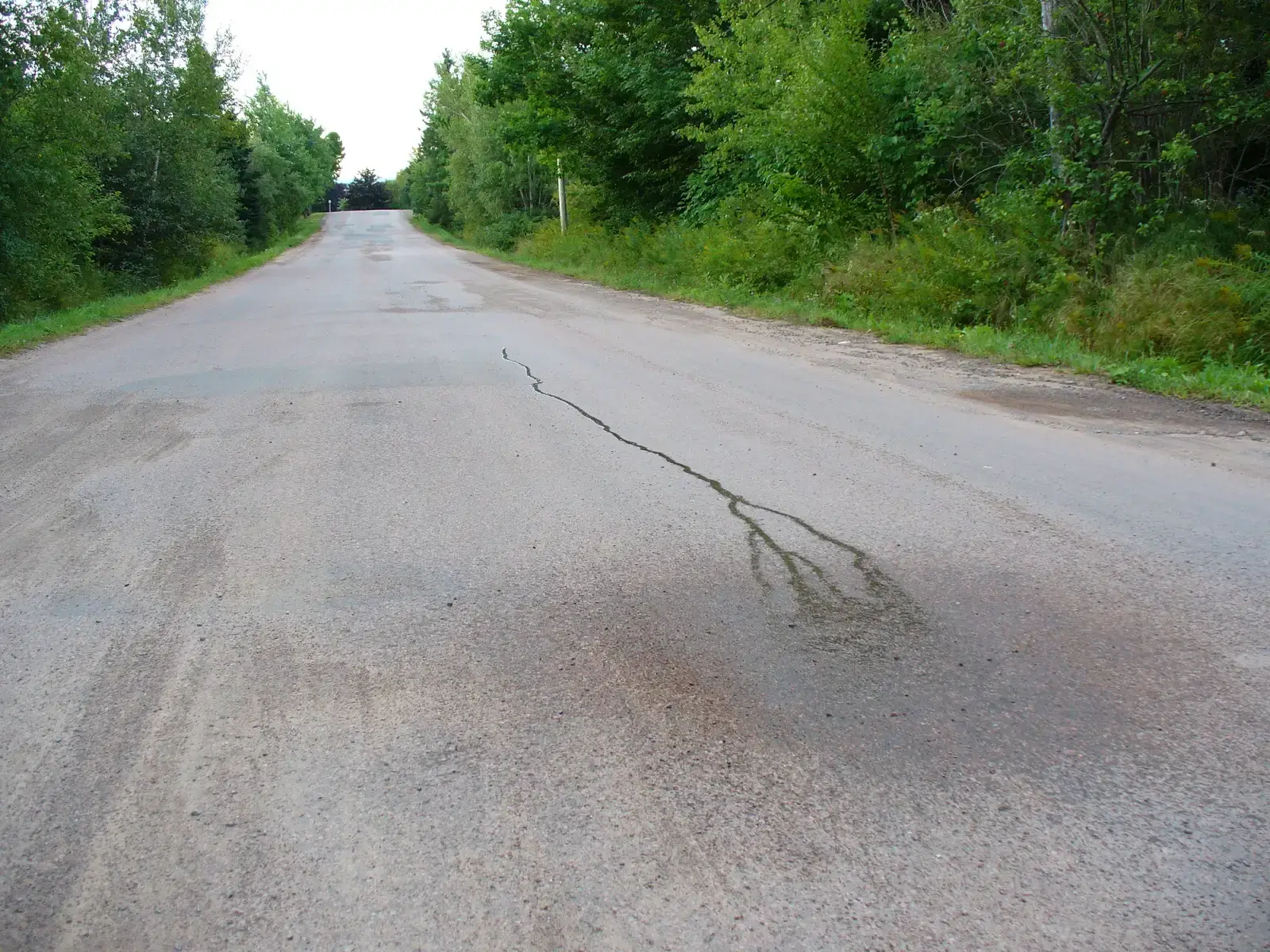
Another gravity hill hides in the North Carolina mountains, where cars appear to roll uphill under a canopy of trees that block any clear view of the horizon.
No magnetic anomaly has ever turned up here despite plenty of curious visitors bringing their own instruments. Oddly, the illusion works just as well after dark – headlights sweeping across the road at night create the same uphill effect, which surprises even locals who’ve driven the road a hundred times.
#8 – Gravity Hill, Pennsylvania
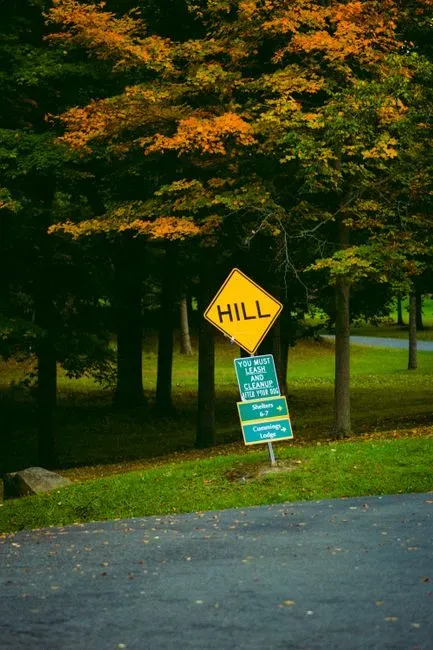
Near the small town of New Paris, a rural road produces the same eerie effect – cars coasting uphill with no engine engaged. Repeated surveys confirm it’s the standard optical illusion, nothing more.
What’s interesting isn’t the physics, though – it’s the folklore. Despite decades of confirmed measurements, plenty of local residents still swear something supernatural is at work. The site remains deliberately unmarked, a quiet local secret that mostly avoids the crowds drawn to its more famous cousins.
#7 – Magnetic Island, Australia
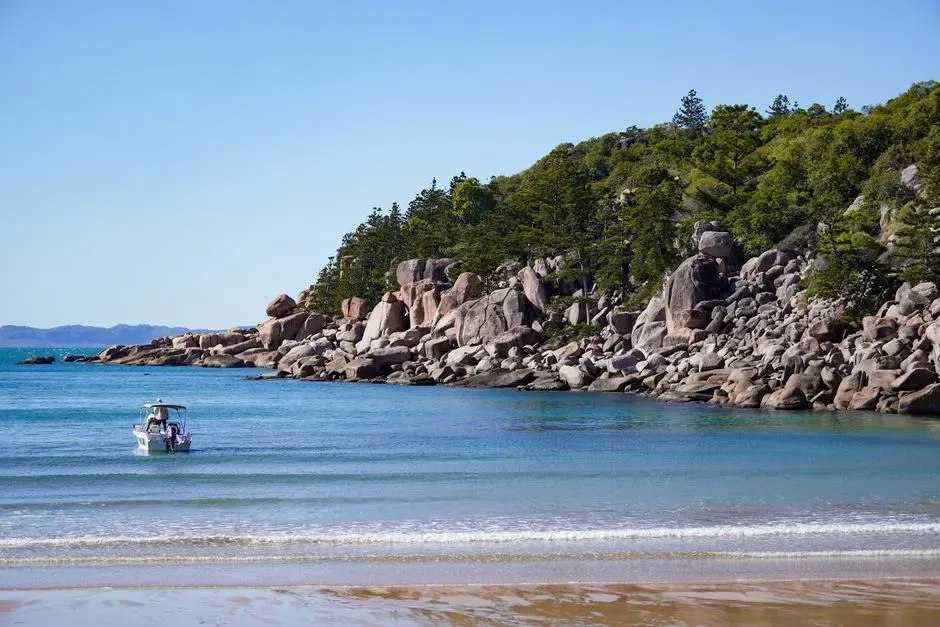
Off the coast of Queensland, compasses start spinning erratically the moment boats approach certain zones around this island, a phenomenon strong enough that it gave the island its name.
Iron-rich rocks buried in the local geology create genuine localized magnetic interference – this one’s real, not an illusion. The catch is that it only throws off old-fashioned handheld compasses; modern GPS systems sail right through unaffected, which tells you something about how localized and mild the effect actually is.
#6 – Crooked Forest, Poland
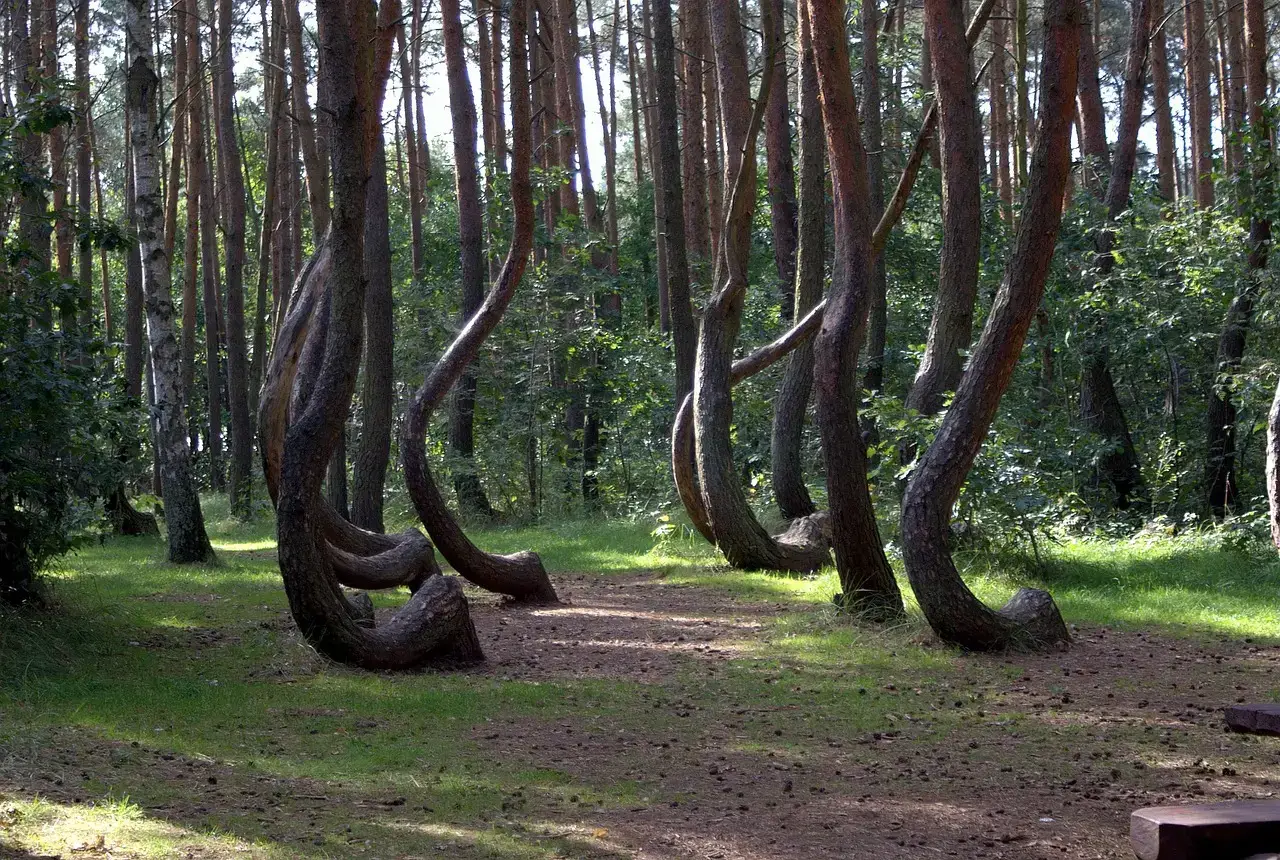
Hundreds of pine trees near the village of Gryfino grow with sharp, almost cartoonish curves near their base before straightening out and shooting skyward – a forest that looks like it was bent on purpose.
Nobody actually knows why. Theories range from heavy snowfall damage in the 1930s to deliberate human shaping for furniture-making, but after decades of study, there’s still no scientific consensus. That unresolved mystery is precisely why the forest keeps pulling in visitors who want to see it before someone finally figures it out.
Quick Compare
- Snow damage theory: heavy 1930s snowfall may have bent young saplings before they could grow straight.
- Human shaping theory: early foresters may have deliberately curved the trees to harvest bent furniture-grade wood.
- Verdict: after decades of study, scientists still haven’t reached a consensus on either explanation.
#5 – The Wave, Arizona
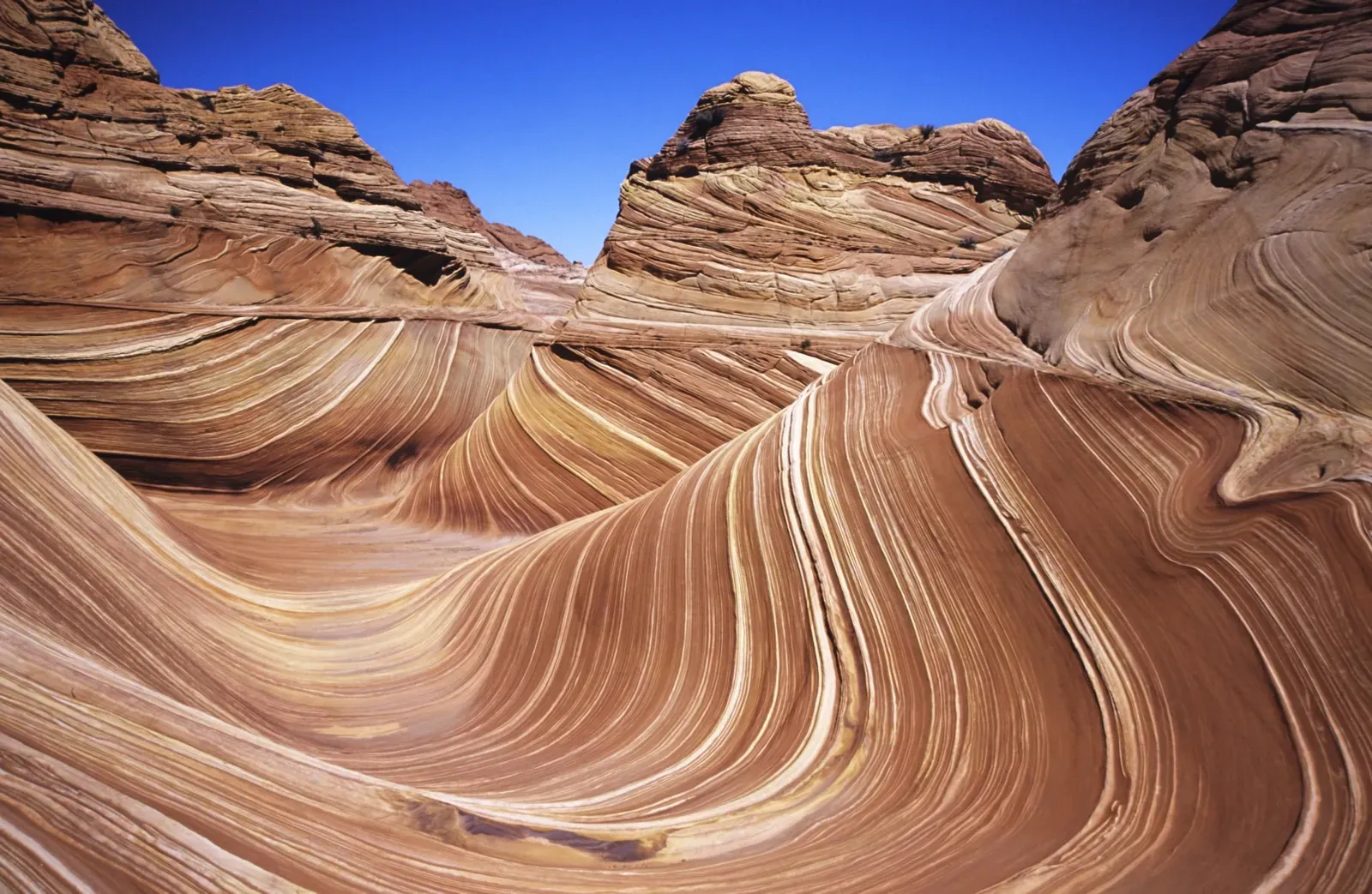
Sandstone ripples across the Arizona-Utah border in colors and curves so smooth it looks like the rock itself was once liquid, frozen mid-motion.
Millions of years of erosion carved these lines into ancient Navajo sandstone, and the formation is so fragile that access is now tightly rationed – only a small number of permits are issued each day. That scarcity has turned The Wave into one of the hardest natural wonders in America to actually see in person.
#4 – Fly Geyser, Nevada
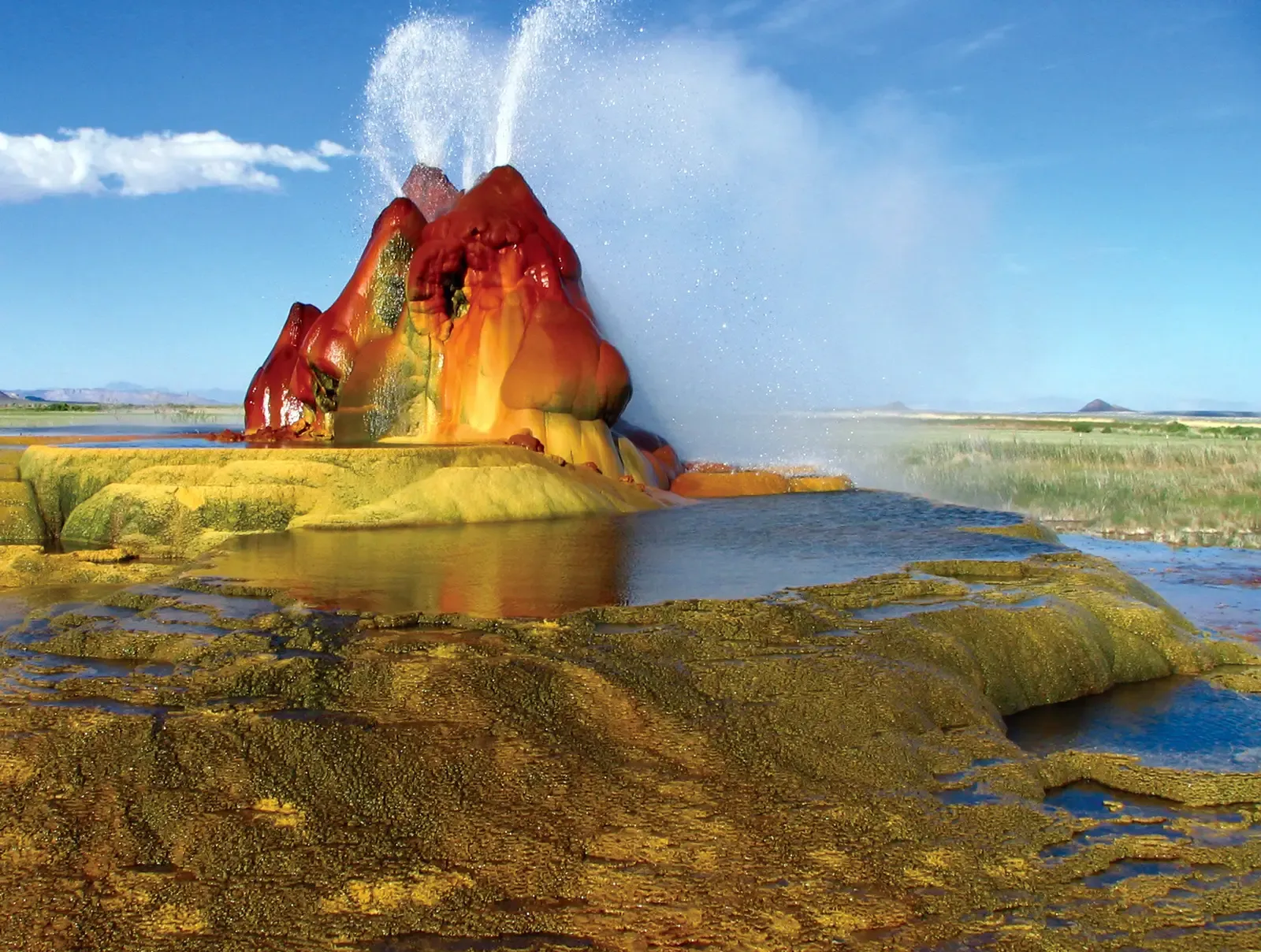
On private land in the Nevada desert sits a geyser dripping in psychedelic reds and greens, constantly spraying hot water into the air like something from another planet.
It’s not even a natural geyser – it exists because of a well accidentally drilled in 1916 that tapped into geothermal water and never stopped flowing. Those vivid colors come from thermophilic algae and mineral buildup thriving in the hot, wet conditions, meaning this entire landmark is technically a century-old human accident that turned beautiful.
#3 – The Great Blue Hole, Belize
![#3 - The Great Blue Hole, Belize (Source: [1], fetched September 2006. Caption on this USGS web page was, "Blue Hole: Aerial view of the 400-ft-deep oceanic blue hole (Lighthouse Reef Atoll Blue Hole) located east of Belize.", Public domain)](https://nvmwebsites-budwg5g9avh3epea.z03.azurefd.net/dinoworld/939ed169fcace89bff54b4517a80c6bf.webp)
From above, this near-perfect circle of deep blue water punched into the middle of a turquoise reef looks almost too geometric to be natural. It plunges more than 400 feet straight down.
The hole formed during the last Ice Age, when sea levels were far lower and the site was actually a limestone cave system. As the ice melted and seas rose, the cave flooded and its roof eventually collapsed, leaving behind ancient stalactites now sitting underwater – features divers still explore today, deep inside a formation that predates human civilization.
#2 – Socotra Island, Yemen
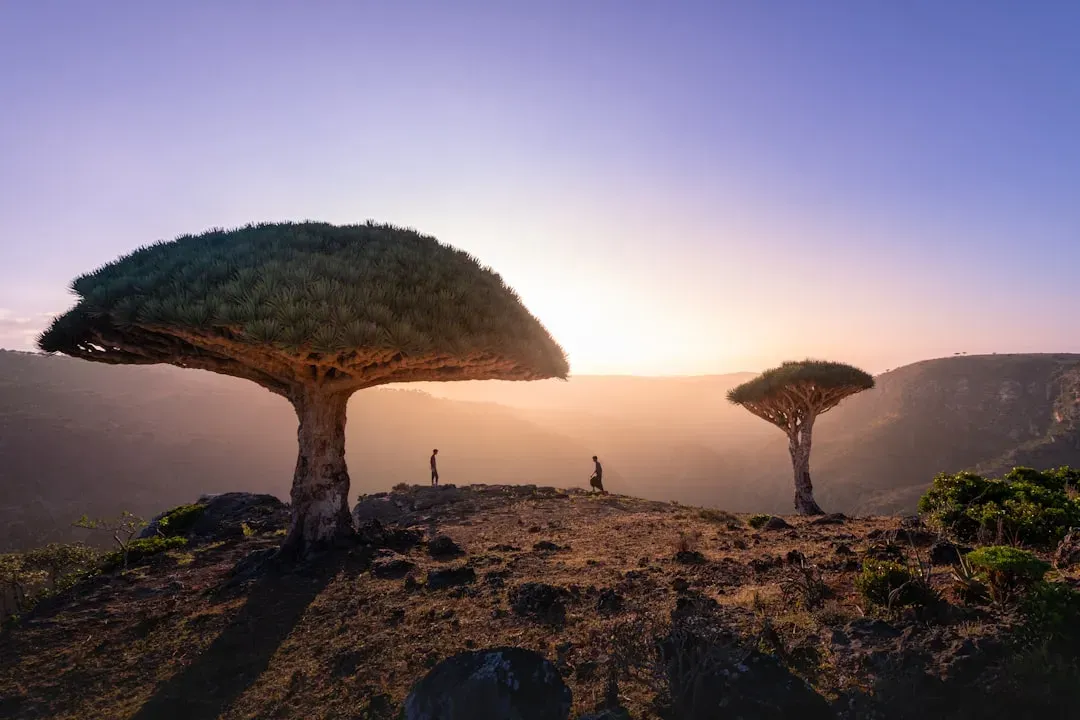
Socotra looks like concept art for an alien planet – gnarled, umbrella-shaped dragon’s blood trees rise across a landscape unlike anywhere else on Earth, giving the whole island a surreal, otherworldly feel.
Millions of years of isolation from the mainland let evolution run its own separate course here, producing plant life found nowhere else on the planet. More than a third of the island’s plant species are unique to Socotra alone, though ongoing political instability in Yemen has made recent scientific study difficult and dangerous.
#1 – The Bermuda Triangle’s Real Anomalies

The broader legend of ships and planes vanishing without a trace is mostly myth, built on decades of sensational reporting. But narrow the focus, and something genuinely odd remains: clustered reports of compass failures and unusual magnetic readings in specific parts of the region.
Modern analysis attributes most incidents to human error, rogue waves, and simply how much traffic passes through the area – once the numbers are normalized, there’s no statistically significant excess of disappearances compared to other busy ocean routes. The magnetic quirks are real and localized, but the myth of a supernatural danger zone is almost entirely a product of storytelling, not science.
Worth Knowing
- Popular myth: disappearances happen here at a rate far higher than anywhere else on Earth.
- Reality: once normalized against traffic volume, the numbers aren’t statistically unusual at all.
- Real anomaly: clustered reports of compass failure and odd magnetic readings do persist in parts of the region.
- Most incidents ultimately trace back to human error, weather, or simple heavy shipping traffic.
Here’s the part that surprised me most putting this list together: the places built entirely on illusion – the gravity hills, the vortex shacks, the roadside mystery spots – are the ones people trust the least and visit the most. Meanwhile, the genuinely strange sites, like a river that boils without a volcano or a waterfall that bleeds without dying, get treated almost as footnotes.
I think that’s backwards. An optical illusion is a fun ten minutes and a good photo. But water hot enough to kill you with no eruption in sight, or microbes that have survived sealed in darkness for a million years – that’s the stuff that should actually keep you up at night. Nature didn’t break any laws to make these places. It just found the strangest possible ways to follow them.