

Open a history textbook in Tokyo, flip through one in Paris, and then compare it to one used in Texas or New Delhi. You will quickly feel like you are reading about different planets, not the same world. Wars have different heroes, colonialism has different meanings, and even basic dates and numbers can shift. It is not an accident, and it is not just sloppy editing. It is how nations talk to themselves.
At first, this can feel a bit unsettling. If something as basic as school textbooks does not line up across borders, what can we actually be sure of? But the deeper you go, the more fascinating it becomes. Textbooks are not just about facts; they are about identity, memory, politics, and power. They show what a society wants its children to remember – and what it quietly hopes they will forget.
In this article, we will dive into the surprisingly complex world of national textbooks. We will look at why countries disagree, how those disagreements are shaped, and what it means for students trying to understand the world. Along the way, we will touch on psychology, politics, culture, and even a bit of neuroscience. Think of it as peeking into the “operating system” that runs inside each country’s collective mind.
#1 Textbooks Are Written For Citizens, Not For Historians
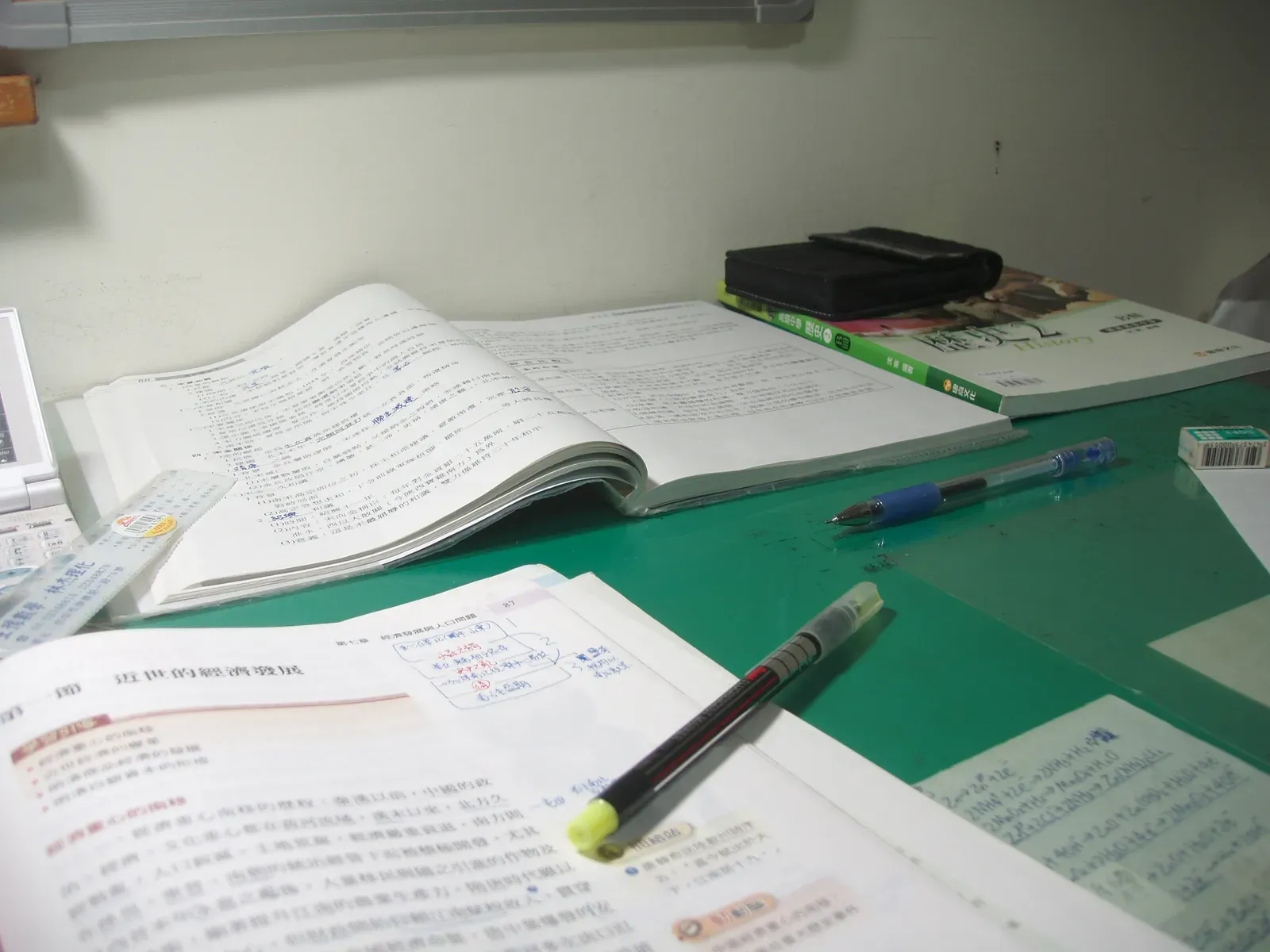
Here is the first big shocker: school textbooks are not primarily designed to satisfy historians; they are designed to shape citizens. Ministries of education, curriculum committees, and publishers may talk about accuracy, but their real audience is the society that will use those books to raise its children. That means textbooks have dual goals: to teach information and to transmit values.
In practice, this often means smoothing over controversies, simplifying complex events, and emphasizing stories that reinforce a shared national identity. Instead of dwelling on uncertainty, a textbook will typically present a clear, confident narrative. If you ever felt like school made the past sound much more straightforward than reality, that is not an accident. It is a design choice aimed at coherence, not perfect nuance.
Because each country has its own story about who “we” are, what “we” suffered, and what “we” achieved, the same events can be framed in completely different ways. A war might be described as a heroic liberation in one country and as a tragic invasion in another. Both versions may focus more on emotional meaning and less on a perfectly balanced account of all sides, especially at elementary and secondary levels.
- Textbooks must be understandable for teenagers, so they compress and simplify.
- They are shaped as much by politics and identity as by historical scholarship.
- Each country asks: what kind of citizen do we want to create with these pages?
#2 National Myths And The Need For A Flattering Story
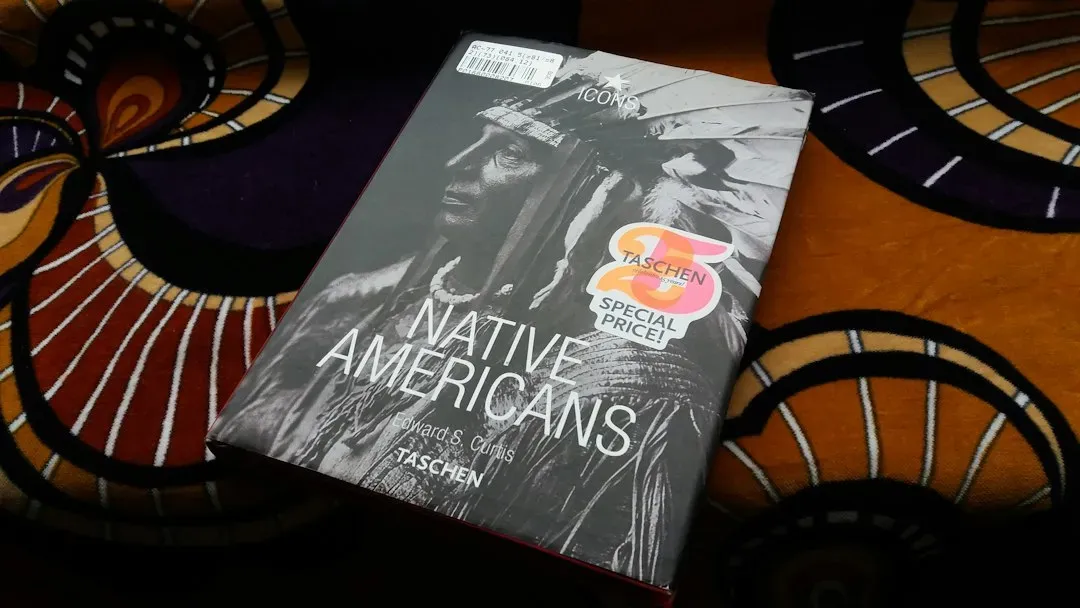
Every country, even the most self-critical ones, runs on some kind of national myth. Not myth in the sense of pure fiction, but myth as in a story of origin, struggle, and purpose. Textbooks are one of the main tools for telling that story. This is where disagreements explode: each nation wants its version to sound noble, understandable, and morally justified.
That is why one country’s victory can be another country’s catastrophe. A revolution that is celebrated domestically might be seen abroad as reckless chaos. A colonial empire can be portrayed at home as bringing development and roads, while people in the colonized regions remember forced labor, land theft, and cultural erasure. Both sides are describing parts of the truth, but textbooks usually highlight the parts that are emotionally useful to the home audience.
Humans are not neutral record-keepers; we are natural storytellers. Societies behave the same way, just on a larger scale. The messy bits that contradict the preferred identity – the massacres, the betrayals, the broken promises – are more likely to be downplayed, softened, or framed as “mistakes” rather than as central features of the national story. When you line up textbooks from multiple countries side by side, you are really comparing myths that protect different senses of pride.
#3 Selective Memory: What Gets Highlighted, What Gets Hidden
Textbooks disagree not only on interpretation but often on basic emphasis. Some events are given entire chapters in one country and a single sentence – or nothing at all – in another. This is textbook memory at work: the conscious choice of what a nation decides to remember officially, and what it does not prioritize for the next generation.
Take any major war. In one country’s textbook, the focus might be on military achievements, heroic resistance, and eventual victory. In another country, the same conflict might be discussed mostly through civilian casualties, loss of territory, or long-term trauma. Both accounts can be factually accurate but emotionally and morally distinct. Over time, these emphases accumulate into totally different senses of what happened and why it matters.
Silences are often the loudest disagreements. When an atrocity, a coup, or a discriminatory policy barely appears in a textbook, that absence itself tells a story. It sends a subtle message: this is not central to who we are, and you can grow up as an educated citizen without thinking about it too much. That is how entire generations can be vaguely aware of dark chapters but never really pushed to grapple with them deeply.
- Emphasis is a powerful tool: giving more space makes an event feel more important.
- Omission is not always denial; sometimes it is a quiet decision to move on.
- Students rarely see what has been left out, so they cannot challenge the gaps.
#4 Different Sources, Different Scholars, Different Politics
Disagreements also come from a far less emotional but still crucial factor: the sources and scholars that shape the curriculum. Different academic traditions rely on different archives, languages, and research priorities. A country that has translated and studied a particular set of documents will naturally lean on them, while another country may focus on completely different evidence.
On top of that, school curricula are not written by a neutral cloud of experts. They are negotiated by committees where academics, bureaucrats, teachers, and sometimes religious or political groups all have a say. The balance between these groups can tilt the final product. In one country, historians might have strong influence and push for more critical thinking. In another, political elites might tightly control how sensitive topics are worded, especially around recent conflicts or controversial leaders.
The political system matters a lot. Democracies with lively public debate still struggle with textbook battles, but there is generally more room for contesting narratives, independent publishing, and regional variation. In more authoritarian settings, the central government can impose a single, uniform line for the entire nation. That does not guarantee perfect consistency, but it does mean that disagreement with other countries’ textbooks is more likely to be deliberate, not just accidental.
#5 Language, Translation, And The Power Of Words
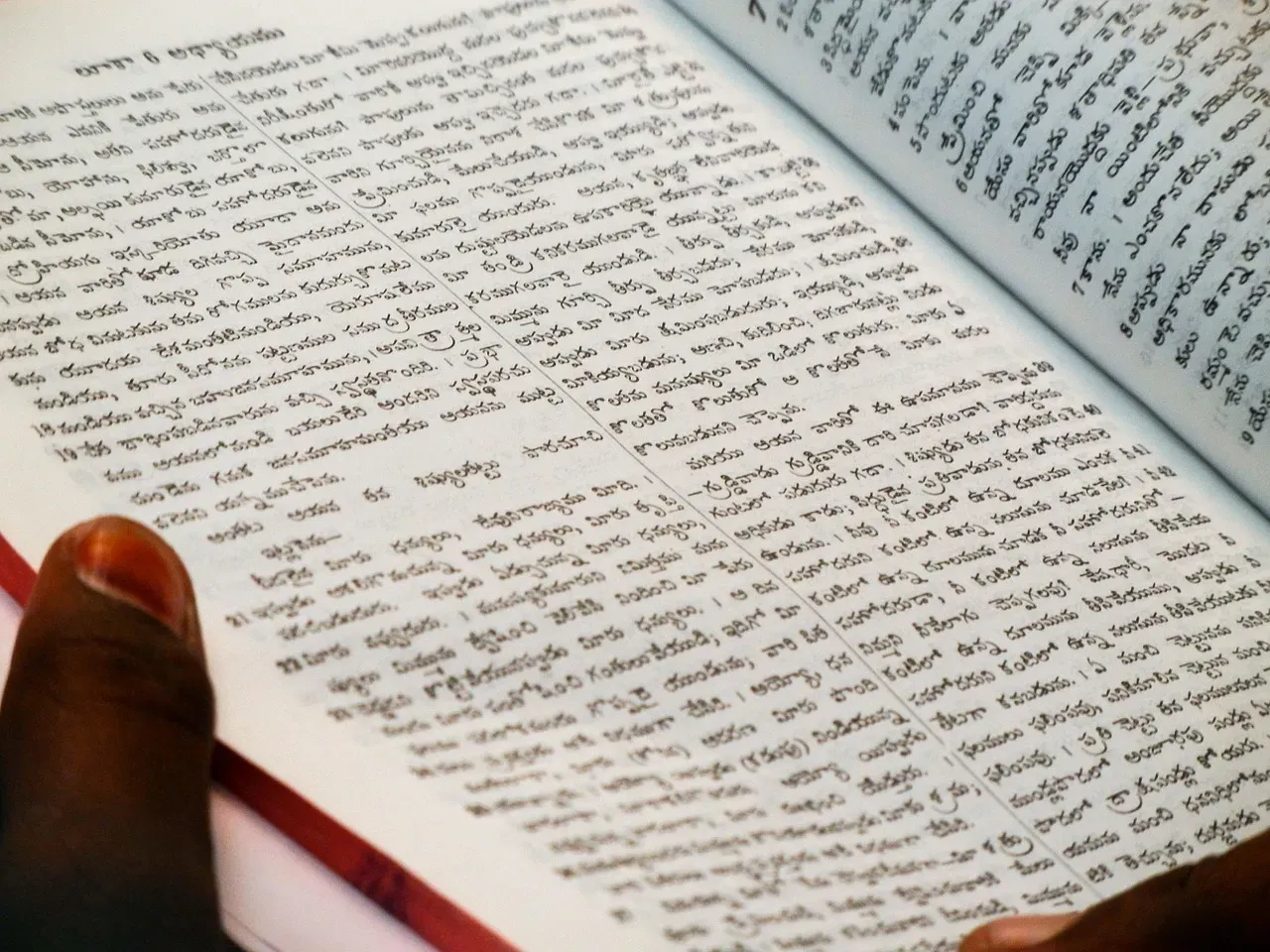
Even when two countries agree on the facts of what happened, the language used to describe those facts can create sharp disagreements. Is an event called a revolution, a riot, an uprising, or an insurrection? Is a political change described as a coup, a transition, or a restoration? Each choice quietly suggests who was legitimate and who was not. The words act like emotional labels stuck on top of the facts.
Translation complicates this even more. When historians or textbook writers rely on translations of foreign sources, subtle meanings can shift. A phrase that sounds neutral in one language might carry a strong emotional undertone in another. This is especially true for politically loaded terms like terrorism, liberation, occupation, or resistance. Over time, those differences in wording grow into differences in how students imagine entire periods of history.
I once compared two textbook passages about the same moment in a well-known conflict. One described a group as “fighters,” the other as “militants.” Same event, same timeline, completely different emotional flavor. That tiny linguistic choice nudged students toward seeing one side as either brave or dangerous. Multiply that by hundreds of pages, and you can see why language itself becomes a battlefield inside textbooks.
- Words like invasion, intervention, or assistance are value-laden, not neutral.
- Translations can accidentally soften or intensify how events feel to readers.
- Small changes in wording accumulate into big differences in national memory.
#6 Trauma, Victimhood, And The Psychology Of Collective Memory

Many of the fiercest textbook disagreements revolve around trauma: genocide, ethnic cleansing, occupation, slavery, systemic discrimination. Countries that have suffered deeply often build a strong narrative of victimhood into their history education. This is not just about politics; it is also about psychology. Remembering past suffering can create a sense of unity and a warning never to let it happen again.
At the same time, other countries involved in the same events may emphasize their own suffering and minimize their responsibility. A nation that once acted as a perpetrator or an enabler may prefer textbook narratives that focus on rebuilding, reconciliation, or shared progress, rather than dwelling on guilt. You end up with mirror-image histories: one side sees clear aggressors and victims; the other sees a tragic tangle where responsibility is blurred.
Psychologically, this makes sense. Individuals struggle to admit serious wrongdoing; nations do too. Acknowledging historical crimes can feel like attacking the dignity of living citizens who identify with that national story. So textbooks tend to protect the ego of the “we,” even when scholarship outside the school system has become more self-critical. That is why international panels and joint textbook projects, where historians from multiple sides work together, are so difficult but also so valuable.
#7 Science, Religion, And Cultural Worldviews

Disagreements between textbooks are not just about history and politics; they also show up in science, social studies, and health education. One obvious example is evolution. In some countries, evolutionary theory is presented as a central, unifying framework of modern biology. In others, it might be downplayed, placed alongside creationist views, or framed as “just one theory among many” to accommodate religious beliefs.
Sex education is another minefield. Textbooks in some countries include explicit discussion of contraception, consent, LGBTQ identities, and reproductive rights. In more conservative societies, those topics may be limited, moralized, or omitted entirely. The result is that two students, both technically “educated,” may leave school with radically different scientific literacy and social attitudes on basic human biology and relationships.
Even subjects like geography and environmental science are not immune. Climate change, for example, can be framed as an urgent human-made crisis, a natural cycle, or a distant concern that does not require major lifestyle changes. Here, the disagreements are partly about data, but also about economic interests, cultural values, and trust in scientific institutions. When textbooks incorporate local religious traditions or philosophical ideas, the gap between different countries’ perspectives can grow even wider.
- Science education is filtered through cultural and religious values.
- Health and sex education reflect local norms about morality and the body.
- Environmental issues reveal tensions between economic priorities and long-term risk.
#8 Who Pays And Who Profits: The Textbook Industry

It is easy to imagine textbooks as purely educational products, but they are also big business. In many countries, a small number of publishers dominate the market, often in close partnership with government agencies. When a national curriculum changes, millions of new books may be ordered. That means significant money, lobbying, and a strong incentive not to rock political boats too much.
Publishers often tailor content to what they believe ministries and school districts want to see, not necessarily to what would provoke the deepest thinking. If officials signal that certain interpretations are undesirable – or simply too controversial – publishers have every reason to shade the narrative accordingly. That economic pressure helps explain why even when new research emerges, textbooks can lag behind by many years.
Some countries try to counter this by allowing multiple competing textbooks that all align loosely with the same curriculum, giving teachers some choice. Others mandate a single approved text. The more centralized the system, the easier it is to enforce one “official” version of reality, and the harder it is for alternative perspectives to make their way into classrooms. Economic structure and political control end up reinforcing each other.
#9 Globalization, The Internet, And Students Who Compare Notes

There is a new twist in the story: students today are not limited to the textbooks in front of them. With the internet, it is easier than ever to see how other countries describe the same event. A teenager in one country can watch a documentary from another, read translated essays, or follow historians on social media. That cross-border access slowly undermines the idea that there is only one valid narrative.
This does not magically fix bias, of course. Online content can be just as skewed, nationalistic, or propagandistic as any old-school textbook. But it does mean that textbook disagreements are more visible and more openly discussed. When young people notice that their textbook barely mentions an event that is treated as major elsewhere, they start asking very uncomfortable but healthy questions about what else might be missing.
International tests, student exchange programs, and global news cycles also push countries to rethink how they present knowledge. When a generation realizes that the rest of the world sees their national heroes or enemies very differently, some double-take moments happen. It can be disorienting, but it also opens up a chance for more nuanced, multiperspective thinking. In that sense, textbook disagreements may slowly become less rigid over time, at least in open societies.
- Students can now compare narratives across borders in real time.
- Online media exposes gaps and biases that used to stay hidden.
- Global conversations pressure some systems to modernize their curricula.
#10 What We Should Do With All These Conflicting Textbooks

So what do we do with the fact that one country’s textbooks contradict another’s? My own view is that we should not aim for a single, perfectly unified global textbook. That sounds tidy but would probably end up erasing local experience and flattening legitimate differences in perspective. Instead, the goal should be multiperspective literacy: the skill of holding several narratives at once and asking how and why they differ.
That means teaching students explicitly that textbooks are curated, not sacred. It means encouraging them to ask questions like: Whose voice is loudest here? What might be missing? How would someone from another country or group describe this same event? When teachers dare to show excerpts from foreign textbooks or scholarly debates, it can be a revelation. Suddenly, history stops feeling like a closed story and starts looking like an ongoing conversation.
There is also a moral dimension we cannot dodge. Some disagreements are just differences in emphasis, but others involve outright denial of atrocities or distortion of vulnerable groups’ experiences. On those issues, neutrality is not a virtue. Textbooks that whitewash crimes or dehumanize others do real harm. Countries that face up honestly to their past – without wallowing in guilt but without hiding from it – tend to build more resilient, realistic identities in the long run.
In the end, the most honest position we can offer students is this: textbooks disagree because nations are still arguing about who they are and what their past means. That argument is messy, emotional, and sometimes ugly – but it is also a sign that societies are alive and still thinking. The real educational victory is not memorizing one official story; it is learning how to navigate many stories with empathy, skepticism, and courage. When you think about your own schooling, would you rather have been protected by a comforting myth, or trusted with the complexity of the truth?