

Ask most people how science works and they’ll describe a movie montage: a lab coat, a eureka moment, a press conference, maybe a Nobel Prize. That’s the myth. The reality is far quieter – and far weirder.
Most of the time, scientists don’t announce they were wrong. They just stop repeating the old claim, quietly rewrite a guideline, or bury a correction in a footnote nobody reads. There’s no press release that says “we misled you for twenty years.” The story just changes, one cautious sentence at a time.
We dug through 25 of the biggest examples – the brain myths, the diet dogmas, the personality tests, the medical about-faces – where the data flipped hard, but the public apology never came. Some of these you’ve probably repeated as fact. A few might make you genuinely angry. Here’s what actually happened behind the scenes.
#25 – The Left-Brain vs Right-Brain Personality Myth
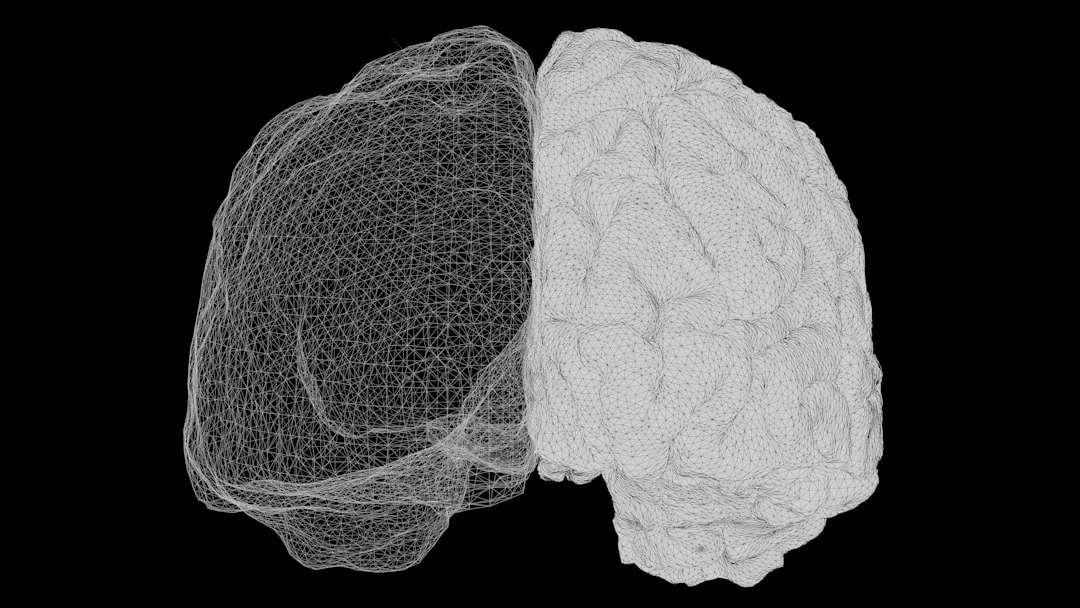
For decades, pop psychology insisted you were either “left-brained” (logical, orderly) or “right-brained” (creative, artistic). It fueled bestselling books, corporate seminars, and entire school programs built around discovering your dominant side. There was just one problem: brain scans never actually backed it up.
Yes, certain tasks lean slightly on one hemisphere over the other, but personality and creativity come from networks stretched across the entire brain, not a single lobe. Neuroscientists started saying this quietly in conferences and technical journals, but almost nobody wrote a blunt public retraction. Textbooks softened their language, the diagrams disappeared from newer editions, and the field just moved on – while brain-based coaching businesses kept cashing checks on an idea most experts had already abandoned.
Wait until you see what happened with #24.
#24 – “We Only Use 10% of Our Brains”

You’ve heard it from teachers, self-help gurus, and probably a movie trailer: you only use 10% of your brain, so imagine the untapped potential just sitting there. It’s one of the most repeated “facts” in pop culture. It’s also completely made up.
No serious neuroscientist ever had data to support that number, and modern scans show activity spread across the whole brain, even at rest. The myth likely grew from early researchers noting that not every neuron fires at once – a true but wildly misinterpreted detail. Instead of a loud correction, scientists mostly rolled their eyes and buried a one-line dismissal in dense reviews. No apology tour, no press conference – just decades of self-help slide decks quietly going unchallenged.
Number 23 is just as sneaky.
#23 – The “Blank Slate” View of Human Nature
By the mid-20th century, a lot of influential social scientists were convinced humans arrive as blank slates – that culture and upbringing explain nearly all behavior. It was a politically comforting idea: if everything is learned, we can engineer a better society through the right institutions.
Then behavior genetics and evolutionary psychology piled up evidence that genes matter enormously. Twins raised in completely different homes still showed striking similarities in personality and mental health risk. Instead of announcing “we overstated culture and understated biology,” many researchers simply stopped saying “blank slate” and rewrote their frameworks. Flip through a 1970s psychology textbook next to a 2000s edition and you’ll see the quiet pivot for yourself.
But #22 might be the one you actually lived through.
#22 – The Fat-Phobic 1980s: “All Fat Is Bad”

If you grew up in the 80s or 90s, fat was the villain. Food pyramids, diet books, and government guidelines all pointed at dietary fat as the reason people got heart disease and gained weight. Low-fat everything flooded grocery shelves, from yogurt to cookies stuffed with sugar to make up for the missing flavor.
The nuance – that fat types matter, and that sugar and refined carbs were doing plenty of damage too – got buried. When better research showed unsaturated fats could actually protect the heart, there was no dramatic reversal. Guidelines just shifted their wording, and new meta-analyses quietly replaced the old ones, while entire generations still flinch at avocados but pour sugary cereal without a second thought.
Here’s where it gets messier – #21.
#21 – Hormone Replacement Therapy: From Miracle to Minefield

In the 1990s, hormone replacement therapy was pitched to postmenopausal women almost like a longevity hack – not just symptom relief, but broad protection against heart disease. Doctors believed it, and they told their patients so, based on early observational studies that looked promising.
Then large randomized trials found increased risks for some women, including higher rates of certain cancers and cardiovascular issues depending on age and timing. The reversal happened fast inside medical circles, but it mostly stayed inside conference rooms and continuing-education lectures. Guidelines were quietly rewritten toward individualized decisions instead of broad prevention promises, leaving plenty of women wondering if they’d been sold something bigger than the evidence ever supported.
#20 might make you rethink every ulcer joke you’ve ever heard.
#20 – Ulcers: Blaming Stress While Ignoring Bacteria
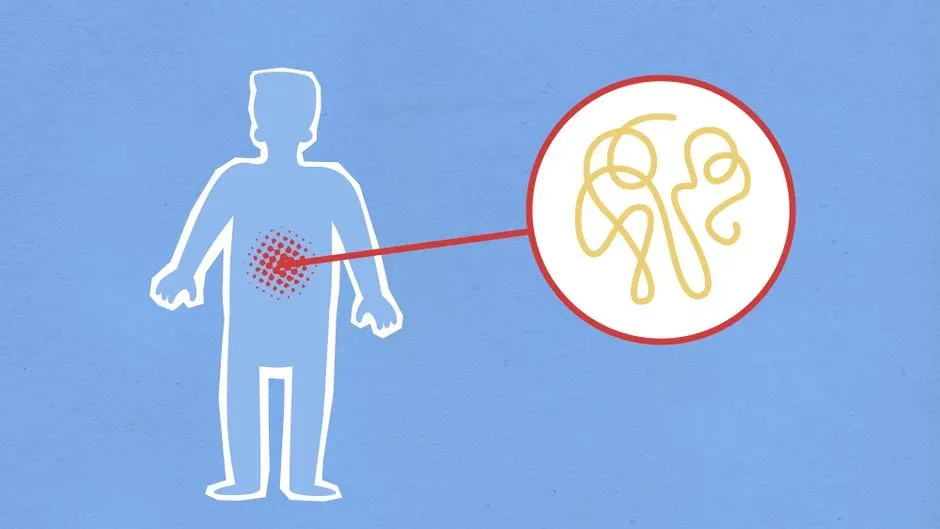
For decades, doctors blamed stomach ulcers on stress, spicy food, and excess acid – basically, on your lifestyle and your nerves. When two Australian researchers, Barry Marshall and Robin Warren, proposed in the 1980s that a bacterial infection was the actual culprit, the medical establishment laughed it off.
Marshall was so confident he drank a petri dish of H. pylori himself to prove it caused gastritis. Eventually the evidence became impossible to dismiss, and antibiotic treatment for ulcers became standard practice almost overnight. But ask older patients today, and most were never told plainly that doctors had blamed their personality for years when it was actually a bug.
Speaking of doctors quietly walking things back, wait for #19.
#19 – The Cholesterol Story: Dietary vs Blood Cholesterol

For years, eggs were treated like a heart attack in a shell. Standard advice lumped dietary cholesterol together with blood cholesterol, implying a simple chain reaction: eat cholesterol, raise cholesterol, clog arteries. It was an easy message to sell, and it conveniently avoided harder conversations about processed food.
Better research eventually showed that for most healthy people, dietary cholesterol has a fairly modest effect on blood cholesterol compared to saturated fat and overall diet. Major guidelines quietly downgraded their warnings, but the correction moved at a crawl. Old pamphlets stayed in clinic drawers, and plenty of people still eye a plate of eggs with suspicion decades after the science moved on.
Quick Compare
- Old guidance: Cap dietary cholesterol around a strict daily limit and treat eggs, shrimp, and organ meats as near-automatic risks.
- Updated guidance: A specific daily cholesterol cap was dropped from major dietary guidelines, with more attention paid to saturated fat and overall eating pattern.
- Why the shift: For most healthy people, the liver dials its own cholesterol production up or down depending on what’s eaten.
#18 is where the sugar industry’s fingerprints start to show.
#18 – “Sugar Just Means Empty Calories”

For a long time, sugar was framed as simply “empty calories” – not great, but basically interchangeable with any other source of energy. That framing conveniently ignored evidence that sugar, especially in liquid form, has very specific effects on insulin resistance, fatty liver, and appetite.
Part of why this correction stayed so quiet: historical records show parts of the sugar industry funded research that nudged blame toward dietary fat instead. As better studies revealed sugar’s central role in metabolic problems, nutrition scientists recalibrated their guidance without ever publicly confronting how industry money had shaped the earlier narrative. New guidelines now stress cutting added sugar – just not the part where the public got played.
This next one touches something even more sensitive: #17.
#17 – “Vaccines Don’t Need Ongoing Safety Monitoring”

Early vaccine programs were built in an era with far less real-time data. Once a vaccine cleared approval, ongoing safety monitoring was often treated as a formality rather than a serious second phase of science – a box to check, not a system to maintain.
As adverse-event databases and data science matured, it became obvious that rare side effects only show up at scale, over time. That realization forced a real cultural shift toward stronger, ongoing pharmacovigilance – but almost no one framed it publicly as “we underestimated how much long-term tracking matters.” The overall safety science hasn’t changed; what changed, quietly, was how seriously the system watches for problems after approval.
Fast Facts
- The U.S. Vaccine Adverse Event Reporting System was established in 1990 as a national early-warning system for possible safety problems.
- It’s a passive system – anyone can file a report – so raw counts need real epidemiological follow-up before they mean anything.
- Rare side effects can surface only after millions of real-world doses, something a trial of a few thousand people simply can’t catch.
#16 is a favorite among neuroscience nerds – for good reason.
#16 – The Overconfidence in Early fMRI “Brain Spot” Studies
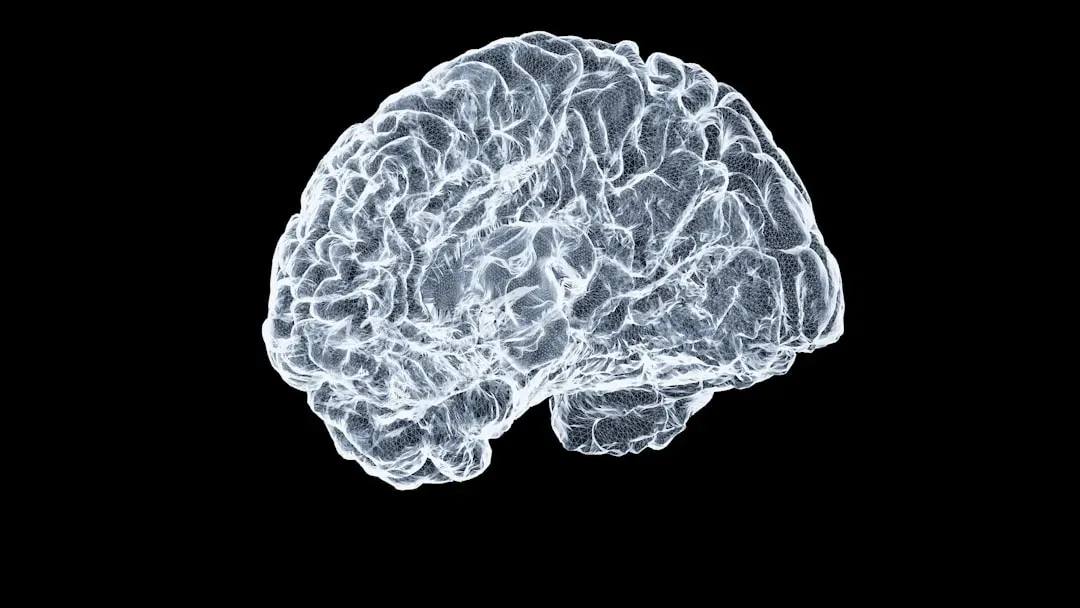
In the late 90s and early 2000s, colorful fMRI scans were everywhere, and headlines loved claiming scientists had “found the love center” or “located the political belief area” in the brain. Many of those early studies ran on tiny sample sizes and flexible statistics that made false positives far more likely than anyone admitted.
Statisticians eventually showed that some standard analysis techniques could produce “activation” even in random noise. The field quietly responded by demanding bigger samples and stricter thresholds. Nobody put out a press release saying those splashy brain-spot studies were probably nonsense – the correction happened almost entirely in methods sections while pop culture kept citing the old headlines.
Brace yourself for #15 – it’s a rough one.
#15 – The “Refrigerator Mother” Theory of Autism

Mid-20th-century psychiatry seriously entertained the idea that autism was caused by cold, emotionally distant mothers. The “refrigerator mother” theory placed the blame squarely on parents for their children’s neurological differences, based on essentially no solid evidence.
As genetics and neuroscience revealed strong biological roots for autism, the theory quietly died out in academic circles. But it didn’t die with the apology it deserved. Clinicians who had promoted it simply stopped repeating it, and families who had been guilt-tripped, sometimes into harmful “treatments,” never got a letter saying it wasn’t their fault.
#14 affects half the population, and almost nobody talks about it.
#14 – The Myth of the “Default” Male in Biomedical Research

For decades, biomedical research defaulted to male animals and male participants, treating female biology as “too complicated” because of hormonal cycles. The assumption was that whatever worked in men would simply generalize. It didn’t.
Evidence eventually piled up showing drug metabolism, pain perception, and disease risk can differ significantly by sex, sometimes with dangerous consequences for women prescribed doses calibrated on male bodies. Regulators eventually pushed for sex-balanced studies, but the field rarely said outright that it had systematically under-studied half the population and people got hurt because of it.
You’ve heard of #13 your whole life – just not the real story.
#13 – Saturated Fat: From Single Villain to Complex Context

Ask anyone over 50 what causes heart disease and “saturated fat” comes out instantly. For decades, public health messaging implied a straight line from butter to blocked arteries, backed by early studies that seemed to confirm it.
More nuanced research complicated that picture considerably. What you replace saturated fat with matters just as much as cutting it – swapping butter for refined carbs can make some risk markers worse, not better. Scientific reviews quietly shifted toward moderation over blanket bans, reshaping school lunches and grocery aisles without anyone clearly admitting the earlier message had been oversimplified for decades.
#12 is where the science flip-flopped so hard it gave everyone whiplash.
#12 – “Genes Are Destiny” (and Then “Environment Is Everything”)

For a while, science sold two opposing myths back to back. First came genetic determinism – the idea that high heritability numbers for IQ or disease meant your fate was basically sealed at birth. Then, as a backlash, came the idea that epigenetics and lifestyle could practically rewrite your DNA.
Reality landed somewhere messier in the middle. High heritability within a given environment doesn’t mean change is impossible, and epigenetic changes are real but nowhere near magic. Instead of loud corrections, researchers steadily reworded things – “genes load the gun, environment pulls the trigger” – while the public got whiplash as the story flipped twice.
#11 hits closer to home than you’d think.
#11 – Confidence in Early Climate Projections at Small Scales

On the big picture, climate scientists have been remarkably accurate: warming, sea-level rise, more extreme weather – the core physics held up. Where things got shakier was fine-grained, local-scale predictions decades into the future, the kind of glossy maps showing exactly how much rain your city would get in 2050.
As models improved, scientists increasingly emphasized ranges and probabilities instead of precise local forecasts. But almost no institution went back and said plainly that those specific regional maps were far more speculative than admitted. Critics still use those old overconfident graphics to attack the entire field, even though the fundamental science was right all along.
#10 might be the quietest scandal in all of science.
#10 – The Overuse of P-Values and “Statistical Significance”
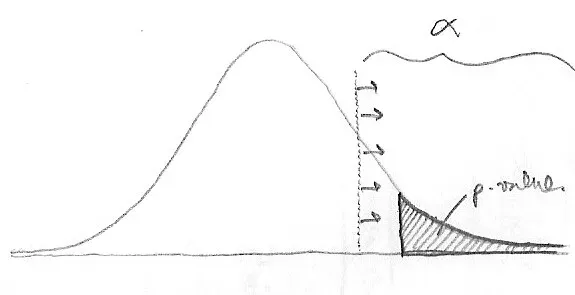
For decades, a p-value under 0.05 was treated almost like a stamp of scientific truth. Entire careers got built on stacking up “statistically significant” results, even when the actual effect sizes were tiny and the samples were embarrassingly small.
When replication crises hit psychology, biomedicine, and beyond, methodologists realized the problem was how relentlessly the p-value got abused. Journals quietly began demanding effect sizes and preregistration; some banned the word “significant” outright. Almost nobody stood up and said a huge chunk of published literature probably can’t be trusted at face value.
Worth Knowing
- A landmark 2015 project attempted to replicate 100 published psychology studies using the original materials and larger sample sizes.
- Only about 36% of those replications produced a statistically significant result the second time around.
- Replicated effect sizes came back roughly half as large as the original studies had reported.
- The fallout pushed major journals toward preregistration and mandatory reporting of effect sizes, not just p-values.
#9 will ruin your favorite TED talk.
#9 – Power Posing and Other Overhyped Behavioral Tricks

Remember when standing like a superhero for two minutes was sold as a scientifically proven way to boost testosterone, lower cortisol, and change your life? Power posing exploded across TED talks and corporate workshops on the strength of one flashy early study.
When other labs tried to replicate the hormonal effects, the results came back mixed at best, often null. Some of the original researchers quietly walked back the strongest physiological claims, reframing power posing as maybe just a confidence cue. Meanwhile, plenty of companies kept training employees on the original, overblown version.
#8 is the one everyone’s parents believed.
#8 – The Marshmallow Test and the Myth of Pure Willpower

The marshmallow test became one of psychology’s favorite morality tales: kids who could resist eating one marshmallow to earn two later supposedly grew up with better grades, better jobs, fewer problems. It became proof that early willpower training could shape a child’s entire future.
Later studies with bigger, more diverse samples found that once you control for family income and stability, the test’s predictive power mostly evaporates. Kids from resource-rich homes waited more easily not because they had more virtue, but because their world had taught them promises usually get kept.
#7 is probably sitting on your HR department’s shelf right now.
#7 – Personality Types: MBTI vs Evidence-Based Traits

The Myers-Briggs Type Indicator turned into a corporate religion, sorting employees into 16 personality types as if it were hard science. Managers built team-building exercises and hiring decisions around it for decades.
Meanwhile, psychometric research has long shown MBTI has shaky reliability and weak predictive power compared to trait-based models like the Big Five. Academic psychologists quietly abandoned it decades ago, but rarely told HR departments the tool they loved was basically a horoscope in a lab coat. MBTI kept thriving in the corporate world on branding and inertia alone.
Quick Compare
- MBTI: Sorts people into 16 fixed types using four either/or letter pairs, like Introvert vs Extrovert.
- Big Five: Scores openness, conscientiousness, extraversion, agreeableness, and neuroticism on a sliding scale instead of a box.
- Reliability: Retake the MBTI a few weeks later and a large share of people land in a different type; Big Five scores stay far more consistent over time.
- Where each lives today: The Big Five dominates peer-reviewed psychology research, while MBTI still thrives in corporate training decks.
#6 shaped how you were actually taught in school.
#6 – Learning Styles: Visual, Auditory, Kinesthetic… and Wrong

Teachers spent years sorting students into “visual,” “auditory,” or “kinesthetic” learners and tailoring lessons accordingly. Whole industries of educational products grew up around matching instruction to a supposed learning style.
When researchers rigorously tested the theory, they found almost no evidence that matching teaching style to preference improves outcomes. Teacher-training programs quietly dropped it, while public language softened to “learning styles are just preferences.” The real, less flashy truth: students benefit from varied, evidence-based teaching, not from being sorted into boxes that never held up.
#5 is one of psychology’s most famous stories – and one of its most broken.
#5 – The Stanford Prison Experiment and Situationism

The Stanford Prison Experiment is one of the most cited studies in all of psychology, used for decades to argue that ordinary people will turn cruel the moment they’re handed power. Textbooks and documentaries treated it as near-total proof that situations override individual ethics.
Later investigative work revealed heavy experimenter interference and coaching of participants that undercut the entire premise. Rather than a clear, collective retraction, many psychologists who had built lectures around it simply started citing it less, while newer textbooks quietly downplayed it without ever calling it unreliable outright.
#4 is the meal myth nobody wants to give up.
#4 – “Breakfast Is the Most Important Meal of the Day”

For years, breakfast was treated as sacred – skip it and you’d wreck your metabolism for the whole day. Observational studies linking breakfast eaters to better health markers hardened into an absolute rule.
Better-controlled trials later showed the picture is far more individual – some people do just fine, even better, skipping breakfast entirely. The old observational link mostly reflected lifestyle differences: healthier, more organized people happened to eat breakfast, which isn’t the same as breakfast causing their health. That public messaging, boosted for years by breakfast-food marketing, never really got walked back.
#3 could genuinely be a matter of life and death.
#3 – The “Male Default” Crash Test Dummy

For decades, car safety testing relied almost entirely on dummies modeled on an average male body. Women, shorter people, and pregnant individuals were treated as afterthoughts in a system meant to protect everyone equally.
As real-world crash data accumulated, it showed clear sex-based differences in injury patterns – women were significantly more likely to be seriously hurt in comparable crashes. Regulators eventually began developing more diverse dummy designs, but there was no loud public reckoning admitting cars had been optimized for one body type for generations.
#2 changed how millions of people understood their own minds.
#2 – The Overpromise of “Chemical Imbalance” Explanations for Depression

The idea that depression is simply caused by “low serotonin” became one of the most repeated explanations in modern medicine, dominating public understanding through the 1990s and 2000s. It was tidy, destigmatizing, and easy to put on a pharmaceutical brochure.
The actual science was always far messier – depression involves multiple neurotransmitters, brain circuits, and social conditions working together, not one dial stuck too low. Psychiatry textbooks quietly shifted toward “multi-factorial models,” but almost no major institution turned around and told past patients the simple chemical-imbalance story had been oversimplified marketing, not settled science.
And #1 isn’t even about one topic – it’s about all of them.
#1 – “Settled” Science as a Story, Not a Process

The biggest quiet admission on this entire list isn’t about one theory – it’s about how science presents itself to the public in the first place. For years, it’s been marketed as a steady, orderly march toward truth, each study another brick in a solid wall of knowledge.
The reality is closer to a messy marketplace of competing hypotheses, flawed methods, and gradual self-correction. Replication crises across psychology, medicine, and beyond have forced insiders to admit that a troubling share of published findings simply don’t hold up under a second look. Pre-registration, open data, and bigger studies are genuine attempts to fix this – but almost none of them come with the one sentence that would actually rebuild public trust.
The first principle is that you must not fool yourself – and you are the easiest person to fool.
Richard Feynman
Science is still the best tool humanity has for understanding reality – nothing else comes close. But a culture of quiet corrections and euphemistic “mixed evidence” language hides just how often it stumbles on the way there, and that gap between the lab and the headline is exactly what keeps public trust so fragile.
The Bottom Line

Look across these 25 cases and one pattern jumps out immediately: the science itself usually moved in the right direction. Researchers updated models, tightened methods, and quietly rewrote guidelines behind the scenes.
What almost never happened was the plain, out-loud sentence people actually deserved: “We were wrong, and here’s exactly how.” Instead, the public got left holding outdated brain myths, diet dogmas, personality tests, and feel-good stories about willpower – long after the experts had privately moved on.
Here’s the opinion part: that silence isn’t harmless. It’s not that scientists are sometimes wrong – everyone doing real work is wrong sometimes. The actual problem is a culture that treats correction as embarrassing instead of treating it as the whole point of the process. If a field wants to be trusted, hiding its best corrections in dense PDFs and footnotes isn’t caution – it’s cowardice dressed up as professionalism.
So which of these quiet corrections do you think deserves a real, out-loud apology – not just a rewritten guideline nobody reads?