Long before cities, highways, or even the faintest hint of human civilization, rivers ruled the world. Not gentle, meandering streams, but enormous, powerful waterways that shaped entire continents, fed entire ecosystems, and gave the most fearsome creatures that ever walked the Earth somewhere to drink, hunt, bathe, and die. These weren’t just bodies of water. They were the lifeblood of a world we can barely imagine.
The Mesozoic Era, spanning roughly 252 to 66 million years ago, was characterized by the dominance of dinosaurs, a hot greenhouse climate, and the tectonic breakup of the supercontinent Pangaea. Within this wild, unstable world, ancient rivers carved valleys, deposited sediment, and shaped the exact landscapes where dinosaurs thrived, clashed, nested, and ultimately perished. You’re about to discover five of those rivers – and trust me, the world they fed was unlike anything alive today. Let’s dive in.
The Rivers of the Morrison Basin: The Jurassic’s Greatest Floodplain
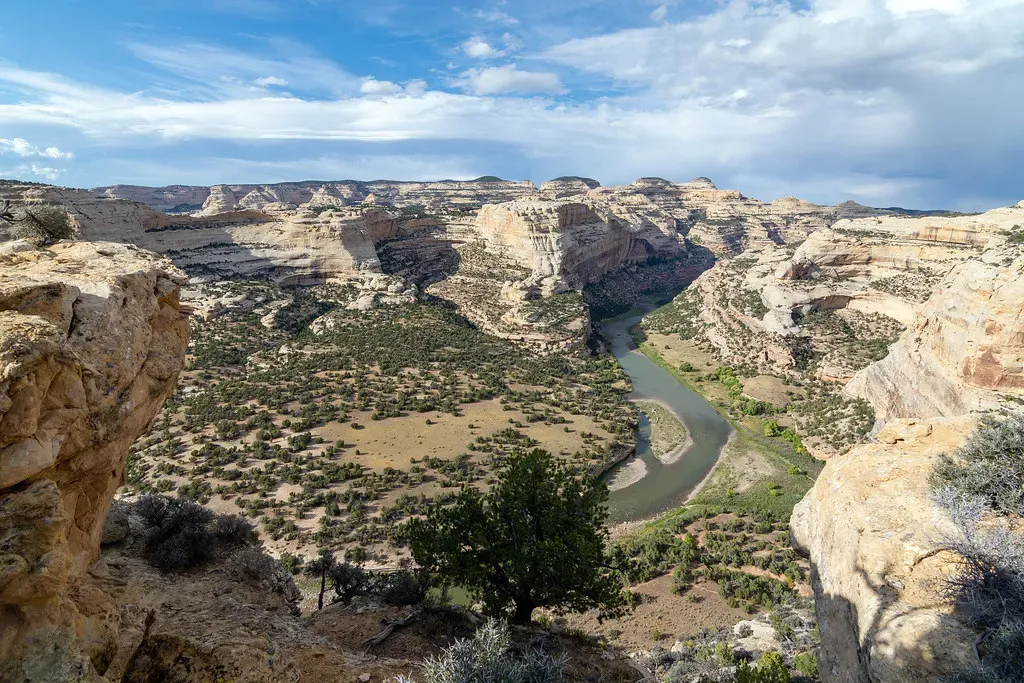
If you were to travel back roughly 150 million years to what is now the western United States, you wouldn’t recognize a single thing around you. There were no Rocky Mountains. No prairies. Just a vast, seasonally flooded lowland cut through by ancient rivers flowing eastward from highlands that no longer exist. The Morrison Formation is made up of sandstones and mudstones deposited by rivers and streams crossing an extensive plain, with rivers generally flowing from west to east, with headwaters in the highlands of present-day Nevada.
The Morrison Formation was deposited during the Late Jurassic, between approximately 157 and 150 million years ago, across rivers, floodplains, lakes, and other environments. These waterways didn’t just sustain life, they preserved it. Most of the fossils in the Morrison occur in the green siltstone beds and lower sandstones, relics of the rivers and floodplains of the Jurassic period. Think of these rivers as nature’s time capsules, burying giants beneath their sandbars for us to uncover millions of years later.
The dinosaurs were most likely riparian, living along these ancient rivers, and hundreds of dinosaur fossils have been discovered there, such as Allosaurus, Ceratosaurus, Torvosaurus, and Camptosaurus. The sheer variety of life supported by these waterways is staggering. Flowering plants had not yet evolved; instead, the land was covered by ferns, cycads, and horsetails, with freshwater mussels and snails thriving in the rivers and lakes, which were also populated by fishes, turtles, and crocodile relatives. Honestly, it sounds a little bit like the world’s most dangerous nature documentary.
The Ancient Kem Kem River System: Where Predators Ruled the Water
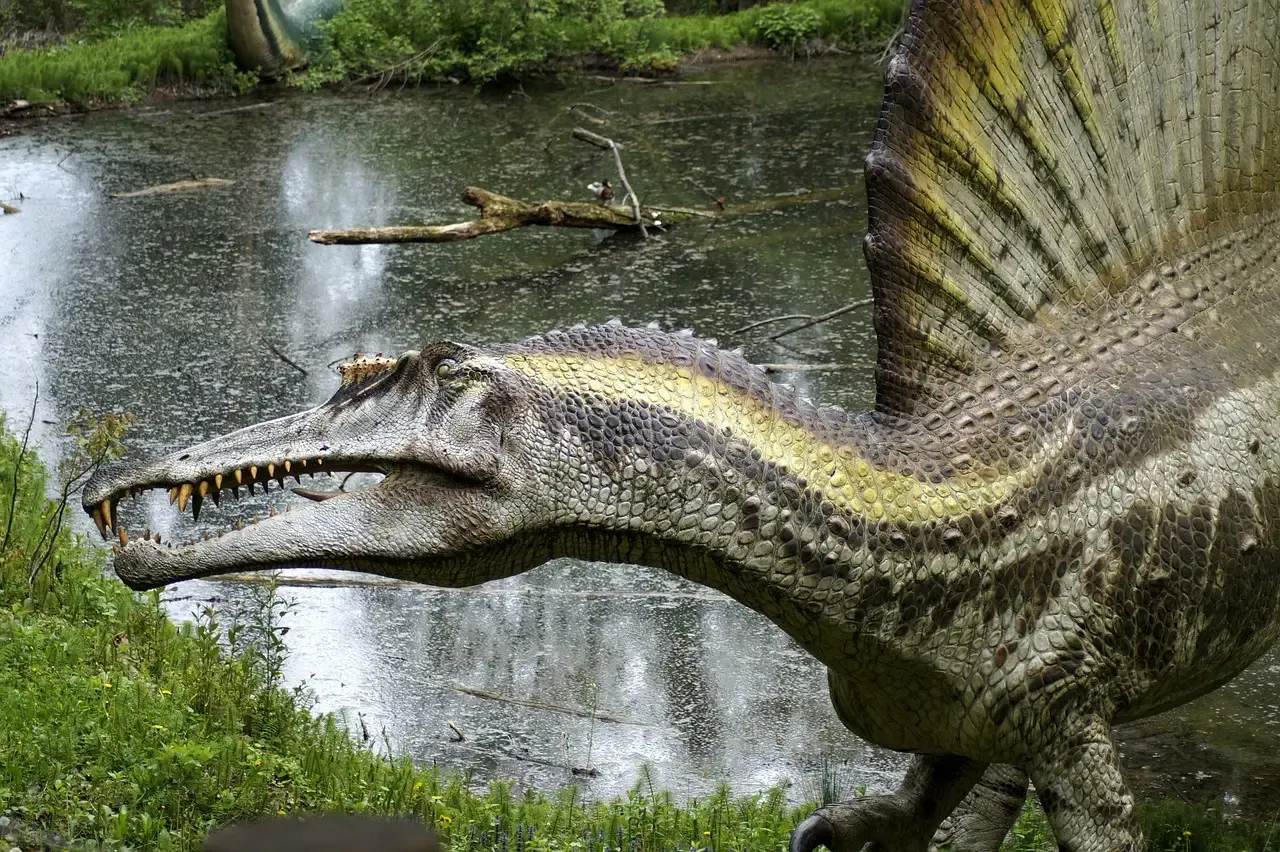
Here’s the thing about the Sahara Desert – it wasn’t always a desert. Around 95 to 100 million years ago, what is now southeastern Morocco and the broader North African region was home to one of the most extraordinary river systems on the planet. The rocks of the Kem Kem formation form a 150-mile-long escarpment containing rocks formed in an ancient river system that flowed 95 million to 100 million years ago. If you found yourself standing at that ancient riverbank, you would not want to stay long.
At that time, this region was not the arid desert seen today, but a vast, low-lying river system draining into the Tethys Sea, with broad rivers, seasonal floodplains, wetlands, and coastal lagoons dominating the landscape. The ecosystem this river supported was unlike anything known to science today. North Africa was a massive, lush system of river deltas, inletting from the diminishing Tethys Ocean and outletting into the slowly-expanding Atlantic, creating a wet and warm habitat that was a veritable hotbed of evolutionary activity. I think it’s safe to say no modern river comes close to matching its terrifying biodiversity.
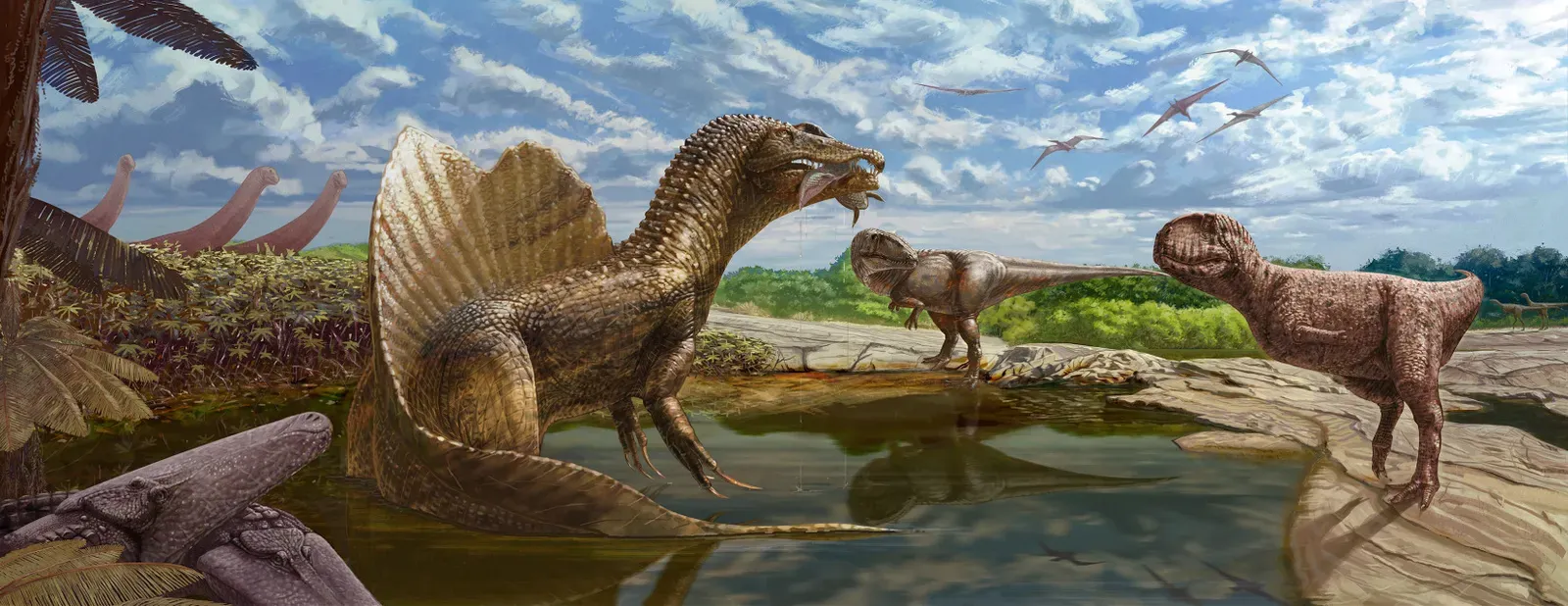
The Kem Kem vertebrate fauna is biased toward large-bodied carnivores including at least four large-bodied non-avian theropods – an abelisaurid, Spinosaurus, Carcharodontosaurus, and Deltadromeus – along with several large-bodied pterosaurs, and several large crocodyliforms, and no comparable modern terrestrial ecosystem exists with similar bias toward large-bodied carnivores. That last part deserves emphasis. Nowhere on Earth today does anything remotely similar exist. This ancient African river wasn’t just wild, it was catastrophically, spectacularly wild.
Spinosaurus and the Cretaceous African Waterways: Born to Swim
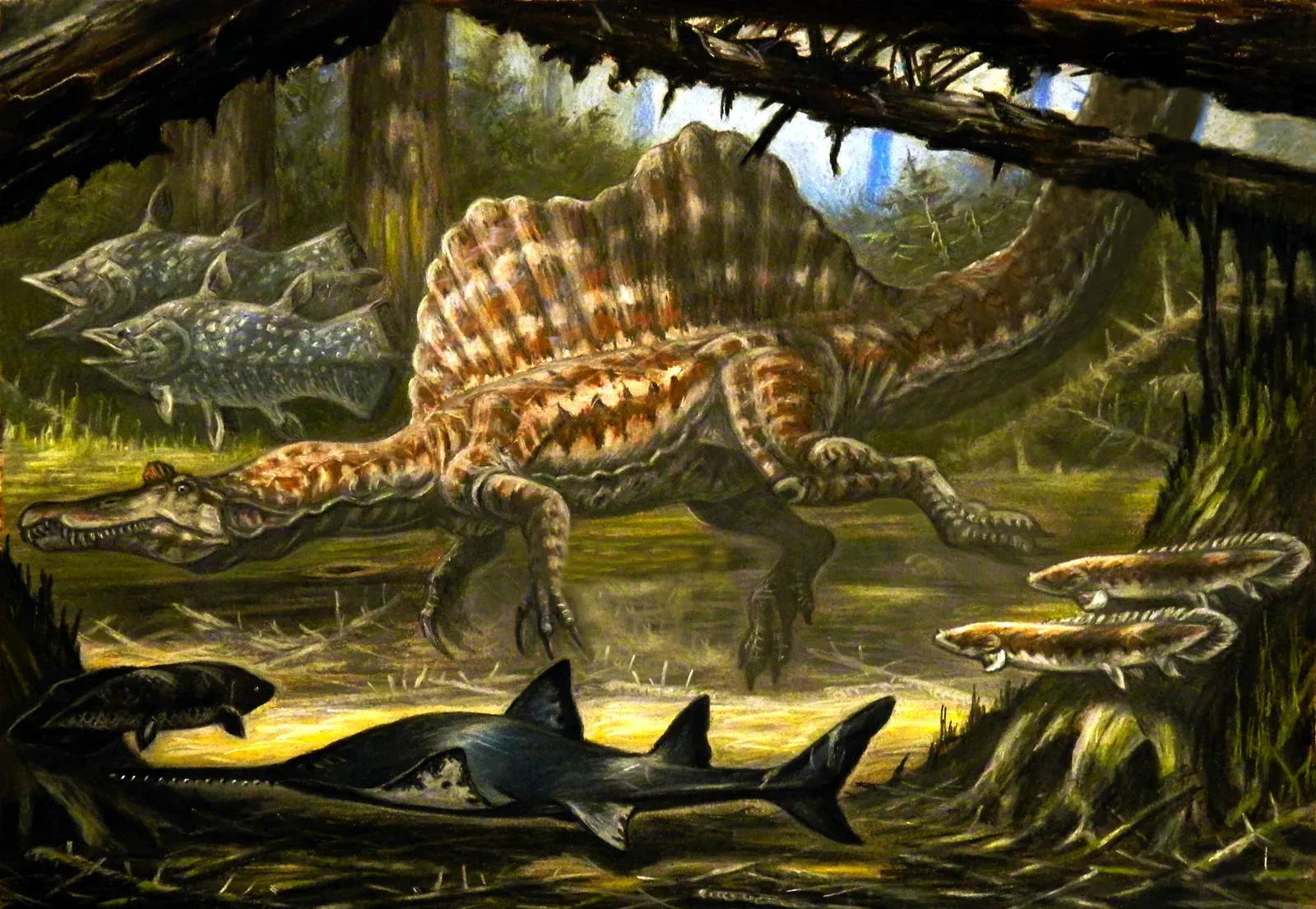
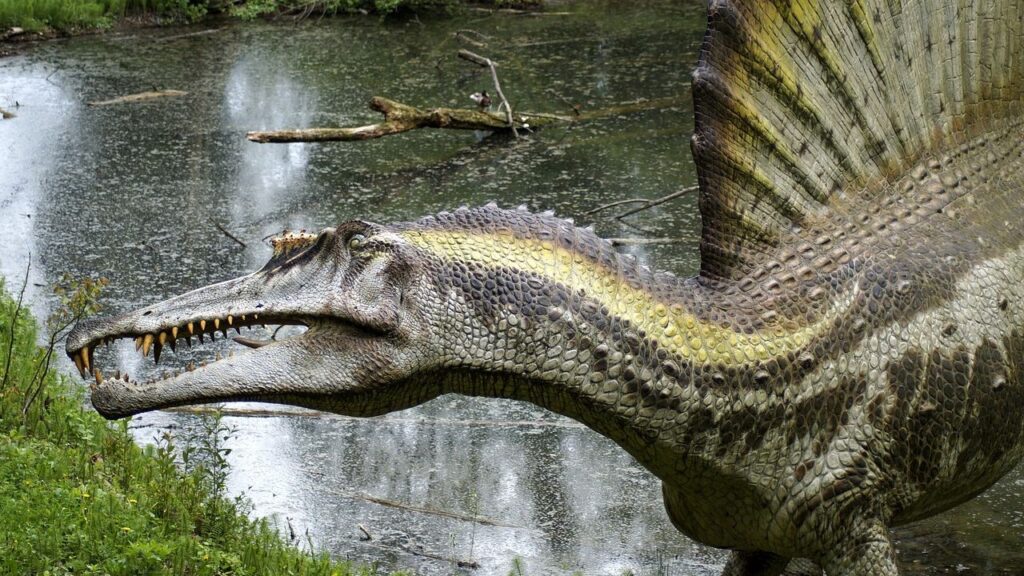
You probably think of dinosaurs as creatures of the land. Giant, thundering beasts stomping across open plains. Well, the Kem Kem river system had something to say about that. Spinosaurus lived in North Africa 95 million years ago during the Cretaceous Period and was the biggest predator to ever walk the planet, up to 15 meters (50 feet) long and weighing seven tons. More astonishingly, its entire body was shaped by the river, not the land.
Whether used for display, thermoregulation, species recognition, or some combination of functions, its sail ensured that Spinosaurus would have been an unmistakable presence along the waterways of Cretaceous Africa. The rivers themselves seem to have shaped this predator’s evolution over millions of years. Rather than evolving in direct competition with massive land predators such as Carcharodontosaurus, Spinosaurus likely avoided ecological overlap by exploiting a different niche altogether, with abundant fish and aquatic prey within Cretaceous river systems providing an opportunity for spinosaurids to specialize.
More than 95 million years ago, a mighty river system roared through what is now the Moroccan Sahara, providing a home to one of the most unusual river monsters known to science – the predatory dinosaur Spinosaurus, a 50-foot-long, seven-ton beast that stretched longer than an adult Tyrannosaurus rex and had an elongated snout similar to a crocodile’s. When you hold that image in your mind, a 50-foot river predator, longer than a city bus, cruising the currents of an ancient African waterway, it’s genuinely hard to believe this planet produced something so extreme.
The Western Interior Seaway Rivers: Where Giants Drank on the Edge of an Inland Ocean
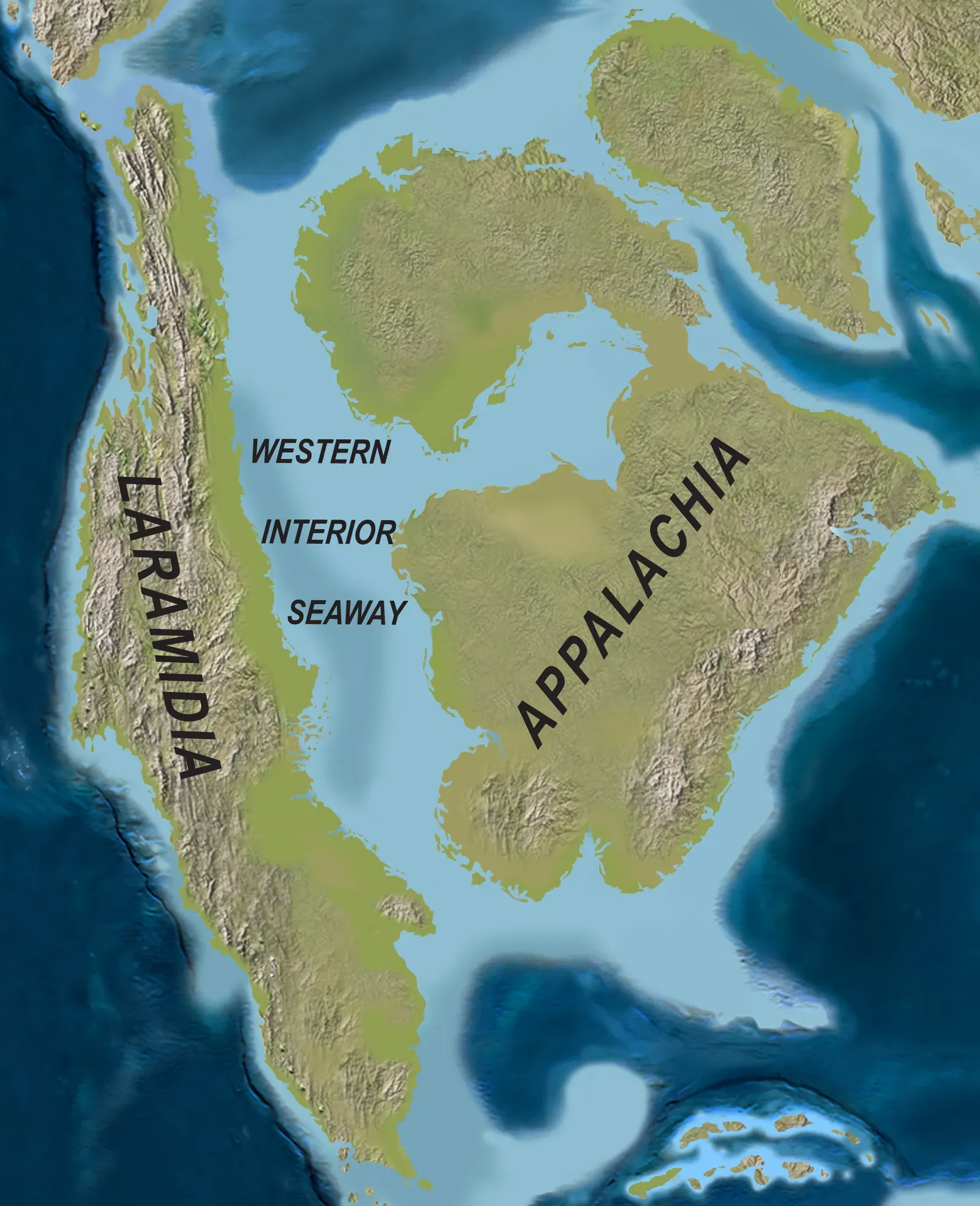
Imagine standing on the western shore of a vast inland sea that bisects an entire continent from north to south. That was the reality of North America during the Late Cretaceous, roughly 100 to 70 million years ago. From north to south across the continent, the Western Interior Seaway started forming, and this inland sea separated the elevated areas of Laramidia in the west and Appalachia in the east. Rivers poured into this sea from both sides, carving rich corridors of life through a world already teeming with giants.
Several parks today have records of dinosaurs that lived near the Western Interior Seaway, a continental sea that submerged much of North America from the Gulf Coast to the Canadian Arctic between approximately 100 and 70 million years ago. The rivers feeding this sea were not passive background features. They were active highways for dinosaur populations, carrying nutrients, transporting seeds, and creating the fertile floodplains that kept entire herds alive. In parts of North America, lake and river sediments rich in dinosaur fossils were deposited alongside marine sediments. The result is an extraordinary fossil record preserved in layers of ancient riverbed.
The dinosaurs of the last 10 million years of the Cretaceous in North America included tyrannosaurs such as Tyrannosaurus, diverse small theropods, ankylosaurs, bone-headed pachycephalosaurs, horned and frilled ceratopsians such as Triceratops, and duck-billed hadrosaurs. All of these iconic animals lived alongside and around those ancient rivers. It’s a wild thought: the same waterways that once reflected Triceratops now sit buried under the Great Plains of Kansas and Montana.
The Parana Basin Rivers of Gondwana: Dinosaur Tracks at the Edge of a Desert
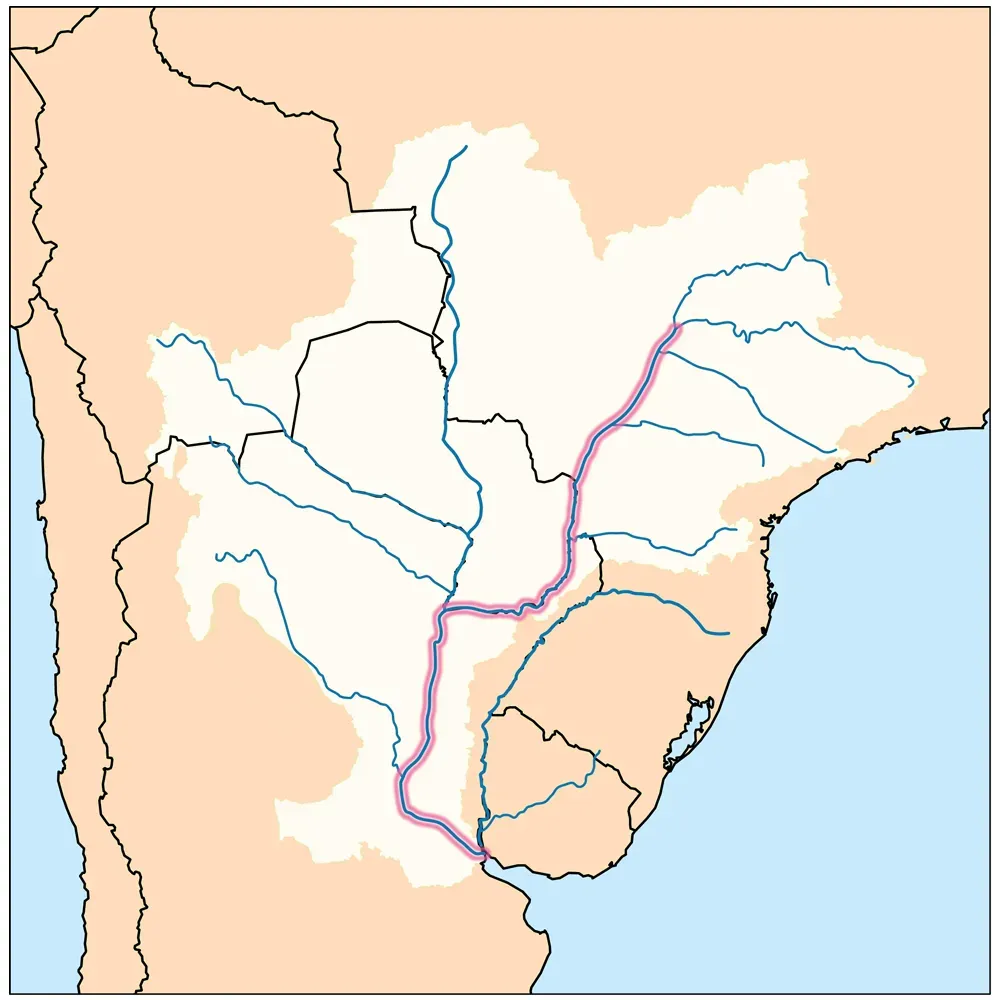
Not all ancient rivers ran through lush, tropical jungles. Some carved their way through semi-arid wastelands that were, in certain seasons, the only source of fresh water for hundreds of miles. The rivers of the ancient Parana Basin in what is now South America were precisely that kind of lifeline. Sedimentary facies from this region include floodplain and residual channel deposits from the basal section of the Botucatu Formation, dating to the Late Jurassic and Early Cretaceous. Think of these river channels as temporary oases – narrow bands of moisture cutting through an otherwise punishing landscape.
The ichnofossils found in the region include isolated tracks of Theropoda and Ornithopoda, and sedimentological interpretation suggests the existence of a river system just before the deposition of the typical Botucatu eolian sands. In other words, the rivers came first, and the dinosaurs followed. Where there was water, there was life, even in the driest corners of ancient Gondwana. By the beginning of the Jurassic, the supercontinent Pangaea had begun rifting into two landmasses – Laurasia to the north and Gondwana to the south – and the climate of the Jurassic was warmer than the present with no ice caps, while forests grew close to the poles with large arid expanses in the lower latitudes.
The dinosaur footprints found near ancient South American river channels are deeply moving, if you think about them the right way. You’re looking at the literal path a living creature took to reach water, pressed into mud that hardened over 100 million years. The Jurassic period was characterized by a warm, wet climate that gave rise to lush vegetation and abundant life, and many new dinosaurs emerged in great numbers. Those rivers, seasonal and fleeting as some of them were, made all of that possible.
Conclusion: Rivers as the Hidden Architects of the Dinosaur World
It’s easy to think of the dinosaur age as defined by the creatures themselves. The size. The teeth. The drama. But strip away the rivers, and you strip away almost everything. Much of the fossilized vegetation in the Morrison ecosystem was riparian, living along the river floodplains, and along the rivers there were fish, frogs, salamanders, lizards, crocodiles, turtles, pterosaurs, crayfish, clams, and mammaliforms. Rivers were not just settings. They were engines.
From the mighty westward-draining channels of the Morrison Basin to the predator-infested waterways of Cretaceous North Africa, ancient rivers shaped where dinosaurs lived, what they ate, and how they evolved. Earth’s climate during the Mesozoic Era was generally warm, and there was less difference in temperature between equatorial and polar latitudes than there is today. In that greenhouse world, rivers were the arteries of every ecosystem, connecting highland to lowland, predator to prey, life to extinction.
Every time you see a river today, you’re looking at a direct descendant of these ancient waterways. The physics is the same. The chemistry is the same. Only the passengers have changed. Which makes you wonder: what extraordinary things are the rivers of today quietly shaping for whatever comes millions of years from now? What do you think about it? Share your thoughts in the comments below.