Think sea monsters are just myths? Think again. Long before T. rex stomped across continents or pterosaurs took to the skies, Earth’s oceans were ruled by creatures so bizarre and terrifying they’d make today’s great white sharks look tame. We’re talking about a time when life was still figuring itself out, when the oceans teemed with armored nightmares and tentacled hunters that would’ve sent any modern swimmer scrambling for shore.
The thing is, most people assume dinosaurs were the original apex predators. They weren’t even close. Millions of years before the first dinosaur hatched, the oceans belonged to an utterly alien cast of characters. These weren’t your typical fish. Some had circular mouths lined with razor-sharp teeth. Others wielded claws the size of human arms or sported armor plating that could rival a medieval knight. Let’s dive into the deep past and meet five of the most fascinating sea monsters that dominated Earth’s primordial waters.
Anomalocaris: The Alien Predator With a Pineapple Mouth
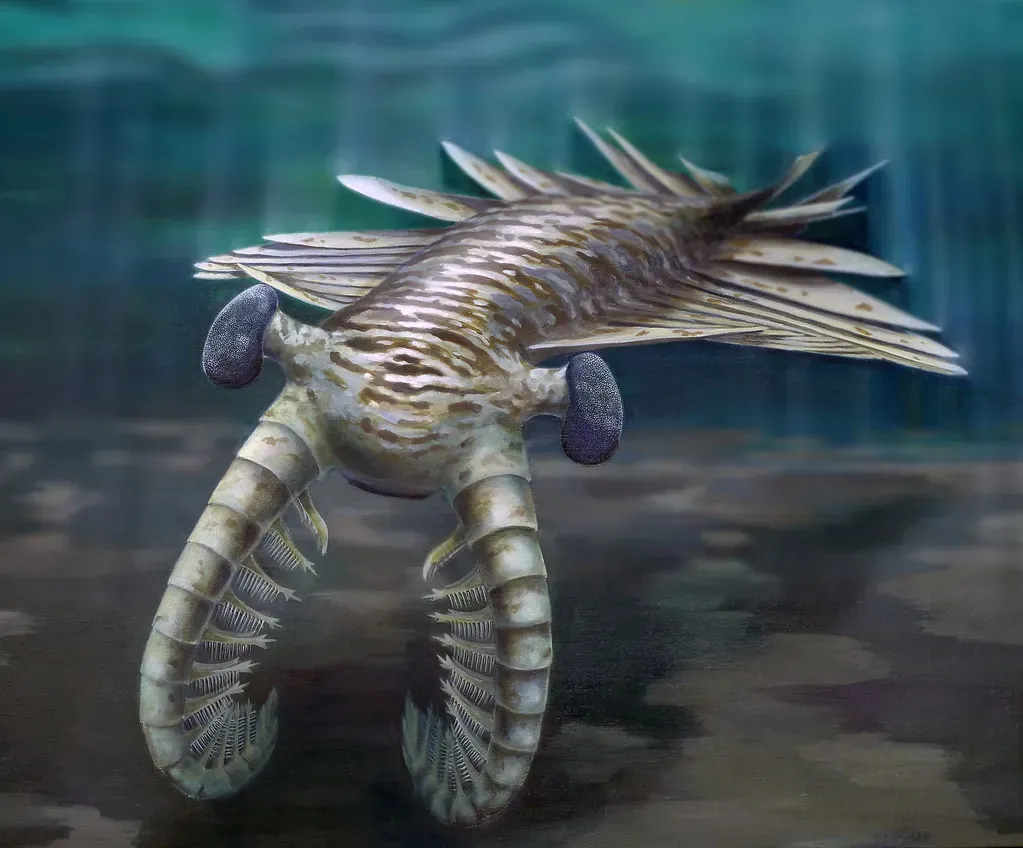
Picture the oceans roughly 530 million years ago, during the Cambrian Explosion, filled with creatures utterly alien to us today, when Anomalocaris was a major predator of those ancient seas. This thing was genuinely bizarre. Like other radiodonts, Anomalocaris had swimming flaps running along its body, large compound eyes, and a single pair of segmented frontal appendages used to grasp prey, and was estimated to reach around 34 to 38 centimeters long, making it one of the largest animals of the Cambrian.
What really sets Anomalocaris apart is its mouth. The creature had an unusually large disk-like mouth consisting of 32 overlapping plates that gave its head the appearance of a pineapple ring. For decades, scientists believed this predator crushed hard-shelled trilobites with ease. Recent research suggests otherwise. Despite its fearsome reputation in the Cambrian seas, new research shows that it probably had to forego hard-shelled prey for softer dinners. Instead of being a bone-crushing monster, Anomalocaris was likely a fast, agile hunter that darted after soft-bodied prey in well-lit waters. Still terrifying, just in a different way.
Cameroceras: The Straight-Shelled Giant of the Ordovician
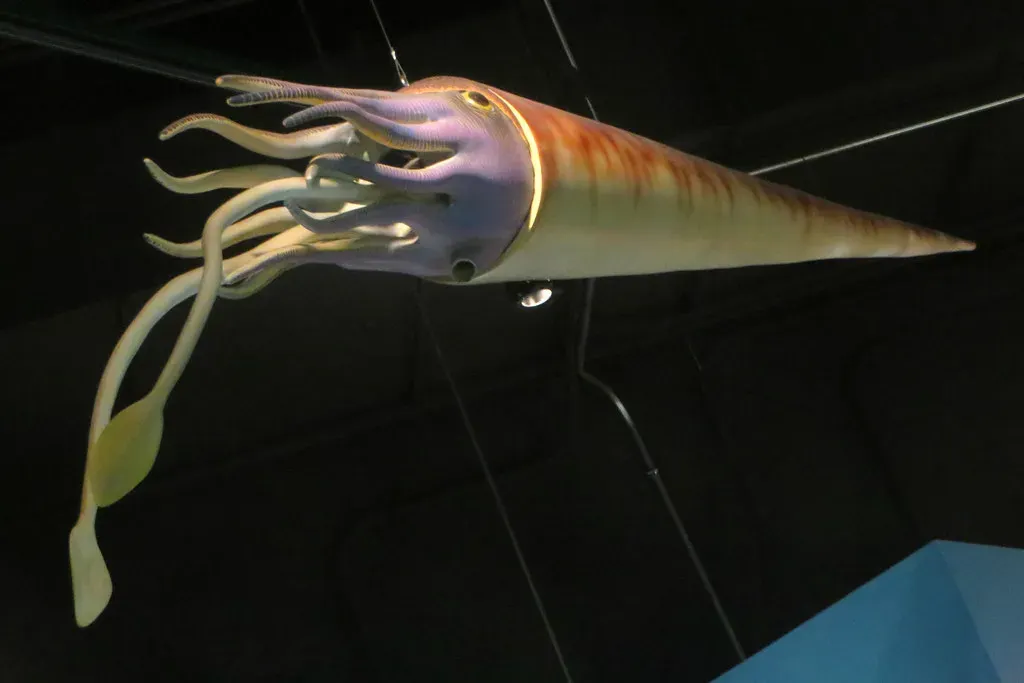
Cameroceras is an extinct genus of endocerid cephalopod which lived in equatorial oceans during the entire Ordovician period, and like other endocerids, it was an orthocone, meaning that its shell was fairly straight and pointed. Imagine a squid ancestor crammed into a massive, conical shell. That’s Cameroceras. Cameroceras exhibited a broad range of sizes, with some species like C. turrisoides from Sweden estimated to have a shell around 2 meters in length.
Here’s the thing about Cameroceras. From comparison with living cephalopods like the shelled nautilus, some inferences can be made: tentacles would have grown from the base of the head and been used to seize and manipulate prey, while a hard keratinous beak would have bitten into prey bodies and is assumed to have been strong enough to breach the prey’s exoskeleton or shell. This wasn’t some sluggish bottom dweller. It was an active predator, using gas-filled chambers in its shell to move through the water with deadly efficiency. When you picture the Ordovician seas, picture these pointy-shelled terrors cruising the depths like living javelins.
Dunkleosteus: The Armored Nightmare With Blade Jaws
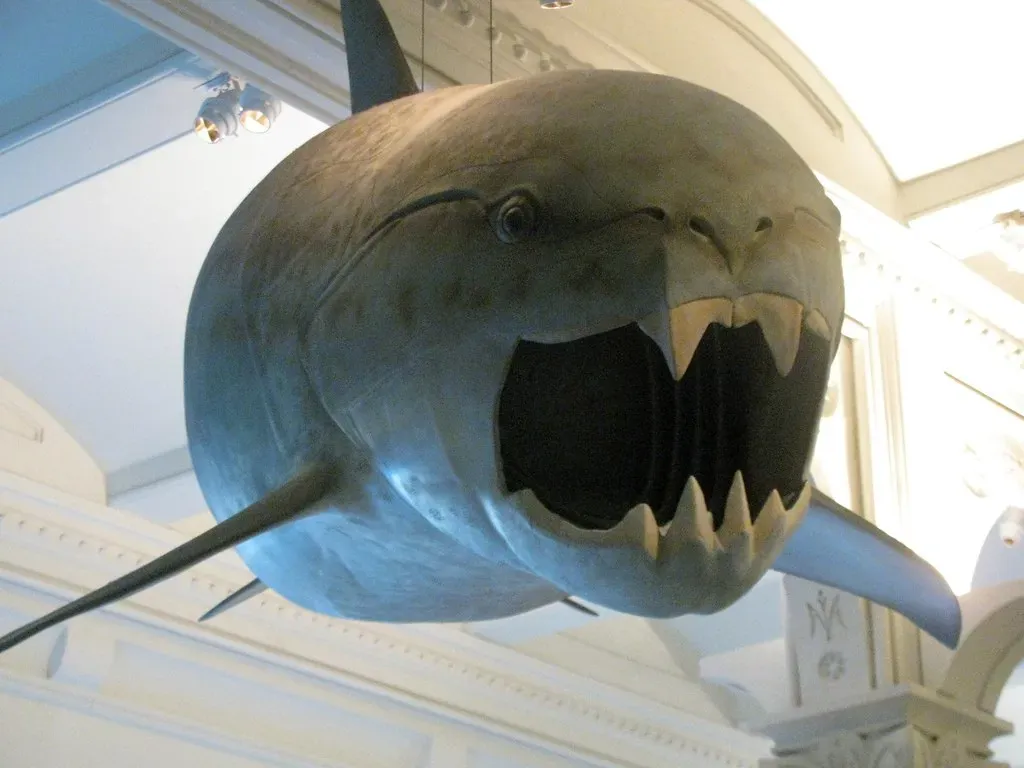
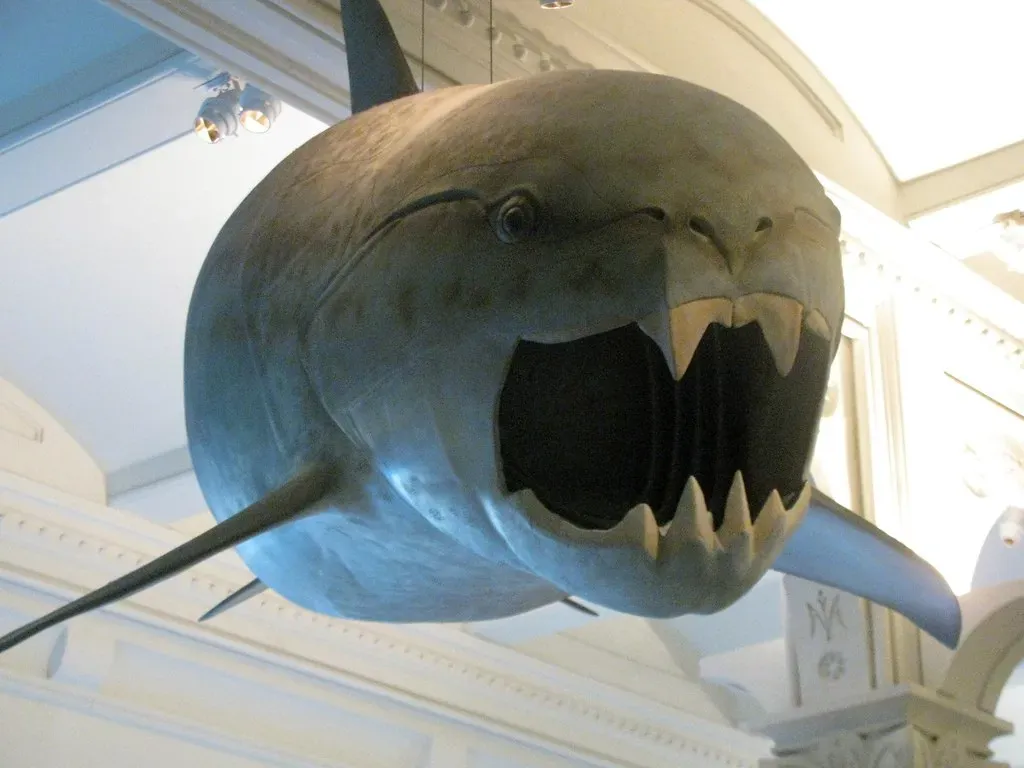
Let’s be real, Dunkleosteus is the stuff of nightmares. This extinct genus of large arthrodire fish existed during the Late Devonian period, about 382 to 358 million years ago, and was a pelagic fish inhabiting open waters, one of the first vertebrate apex predators of any ecosystem. What made it truly fearsome wasn’t teeth. It didn’t have any. Dunk was a fierce predator that required no teeth to hunt; instead, Dunkleosteus had blade-like jawbones that sharpened themselves when the fish opened and closed its mouth.
The size estimates vary wildly. The most extensive analyses produce length estimates of roughly 3.4 meters for typical adults of this species, with very rare and exceptional individuals potentially reaching lengths of 4.1 meters. That’s still massive for an armored fish. Dunkleosteus was covered in dermal bone forming armor plates across its skull and front half of its trunk, with armor often described as being over 2 to 3 inches thick across the nuchal plate, though across the rest of the body the armor was generally much thinner. Think of it as a swimming tank with self-sharpening bone guillotines for jaws. Honestly, I’m glad this thing went extinct.
Jaekelopterus: The Eight-Foot Sea Scorpion
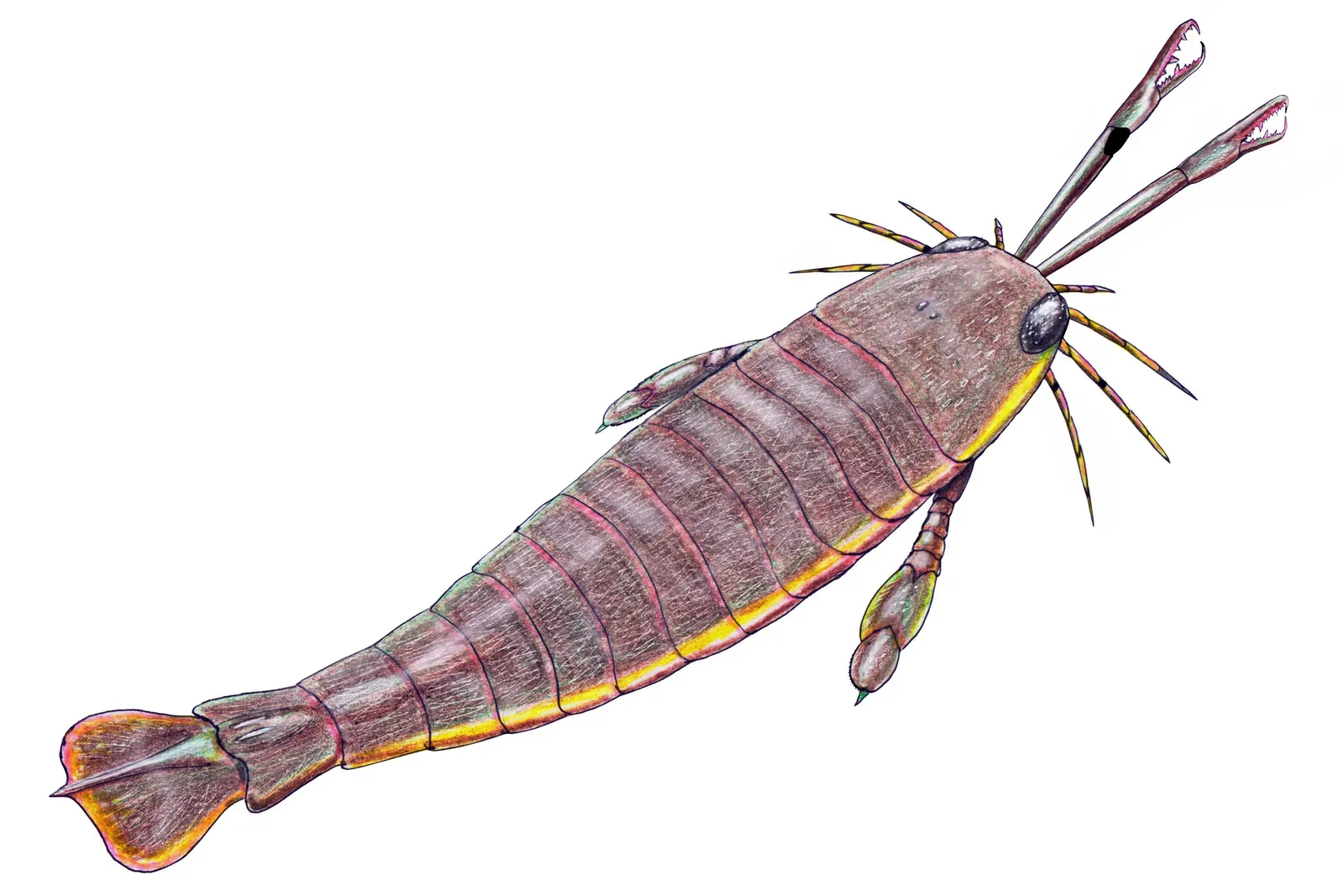
Now we’re getting into truly massive arthropod territory. The eurypterid order includes the largest known arthropods ever to have lived, with the largest, Jaekelopterus, reaching 2.5 meters in length. That’s over eight feet of segmented, clawed horror. This spiky marine monster is known from remains of a claw discovered by two scientists from the University of Bristol who published the find of Jaekelopterus rhenaniae in 2007, with the animal coming from the Early Devonian of 400 million years ago and probably living and hunted in freshwater systems rather than in the sea.
With their unique and formidable claws and binocular vision that provided depth perception, the pterygotids would attack and slice into prey such as primitive fish or the ancestors of squids. Picture something that looks like a scorpion bred with a lobster, then scaled up to human size. That’s Jaekelopterus. It was calculated that the massive animal was 2.5 meters in length not counting its chelicerae, and including these, it would be a meter longer, making it the largest and most powerful arthropod ever to have lived. Yeah, I wouldn’t want to meet that at the beach either.
Eurypterus: The Most Common Sea Scorpion
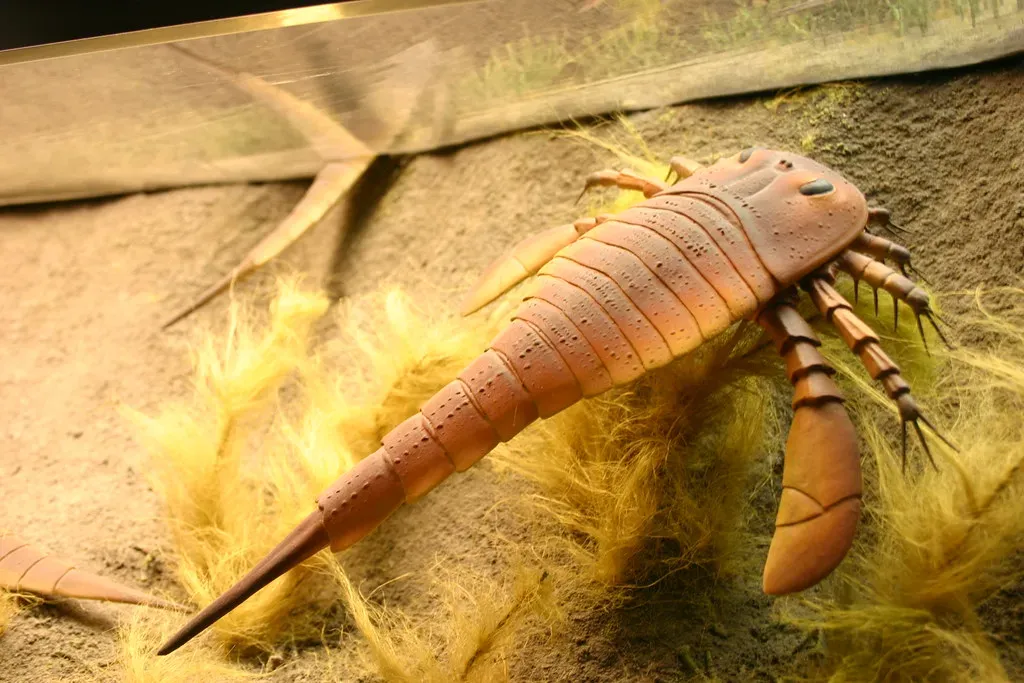
While Jaekelopterus holds the size record, Eurypterus is the sea scorpion you’d most likely encounter if you could time travel to the Silurian. Thought to have hunted mainly small and soft-bodied invertebrates like worms, species of the genus account for more than 90 percent of all known fossil eurypterid specimens. This creature was everywhere. Despite their vast number, Eurypterus are only known from a relatively short temporal range, first appearing around 432 million years ago and being extinct by the end of the Pridoli epoch, also restricted to the continent Euramerica.
The animal’s other limbs included a pair of long and strong paddle-shaped back legs for swimming, while the other legs were chiefly used to walk on shallow sea beds as it searched for carcasses and detritus on which to feed. Think of Eurypterus as the cleanup crew of ancient seas, though it could certainly hunt when needed. Although popularly called sea scorpions, only the earliest eurypterids were marine, with many later forms living in brackish or fresh water, and they were not true scorpions, though some studies suggest a dual respiratory system was present, which would have allowed for short periods of time in terrestrial environments. These things could possibly walk on land. Let that sink in.
Conclusion
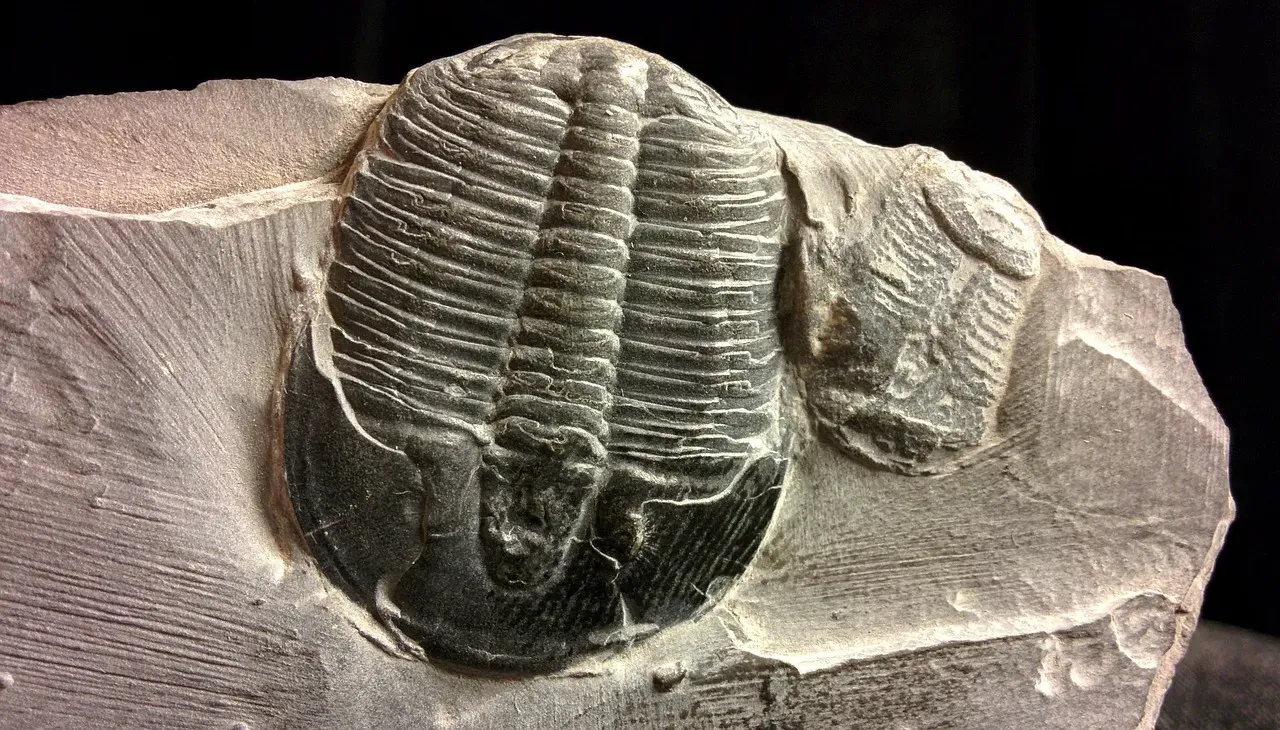
The oceans of the Paleozoic Era were nothing like the waters we know today. These ancient seas were alien worlds where armored fish wielded bone blades, giant nautiloids prowled with tentacles and beaks, and massive sea scorpions scuttled across the seafloor. What strikes me most is how utterly different these creatures were from anything alive today. We tend to think evolution moves in a straight line toward what we see now, but these ancient monsters remind us that life has experimented with forms we can barely imagine.
These five sea monsters ruled for millions upon millions of years, far longer than dinosaurs ever managed. They survived mass extinctions, adapted to changing oceans, and carved out ecological niches that have never quite been filled the same way since. Next time you wade into the ocean, remember that beneath those waves, creatures stranger than any science fiction movie once reigned supreme. What do you think about these ancient ocean rulers? Tell us in the comments.