Long before whales breached the surface or great white sharks prowled the depths, the ancient seas belonged to an entirely different dynasty. These were reptiles that traded their terrestrial existence for an aquatic realm filled with endless possibilities and terrifying dangers. Some grew larger than school buses, others perfected the art of live birth, and a few developed body plans so bizarre they still puzzle scientists.
You might think you know prehistoric marine reptiles from movies and museums, but the reality is far stranger than fiction. These creatures weren’t dinosaurs, though they lived alongside them. They were evolutionary experiments in their own right, testing out body shapes that nature would never quite replicate again. So let’s dive into the world of ancient oceanic predators, where the familiar rules of biology were constantly being rewritten.
Ichthyosaurs: The Dolphin Mimics of the Mesozoic
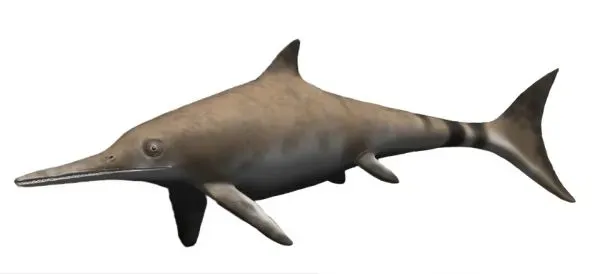
Ichthyosaurians were air-breathing, warm-blooded, and bore live young. Think about that for a second. Here was a reptile that had essentially reverse-engineered itself back into the ocean with a body plan so refined it looked almost identical to modern dolphins. The ichthyosaur had a protruding bill filled with teeth that allowed for quick jabs at fish. This wasn’t just convergent evolution at play, this was nature hitting the same elegant solution twice, separated by millions of years.
In 1994, Judy Massare concluded that ichthyosaurs had been the fastest marine reptiles, with their length-to-depth ratio between three and five, the optimal number to minimize water resistance or drag, and their smooth skin and streamlined bodies prevented excessive turbulence. These animals were built for speed in ways that would make a modern yacht designer jealous. Yet despite their perfect adaptation, ichthyosaurs experienced a pair of abrupt extinction events during the Cenomanian-Turonian boundary, probably related to environmental upheavals and climatic changes.
Plesiosaurs: The Four-Flippered Enigmas
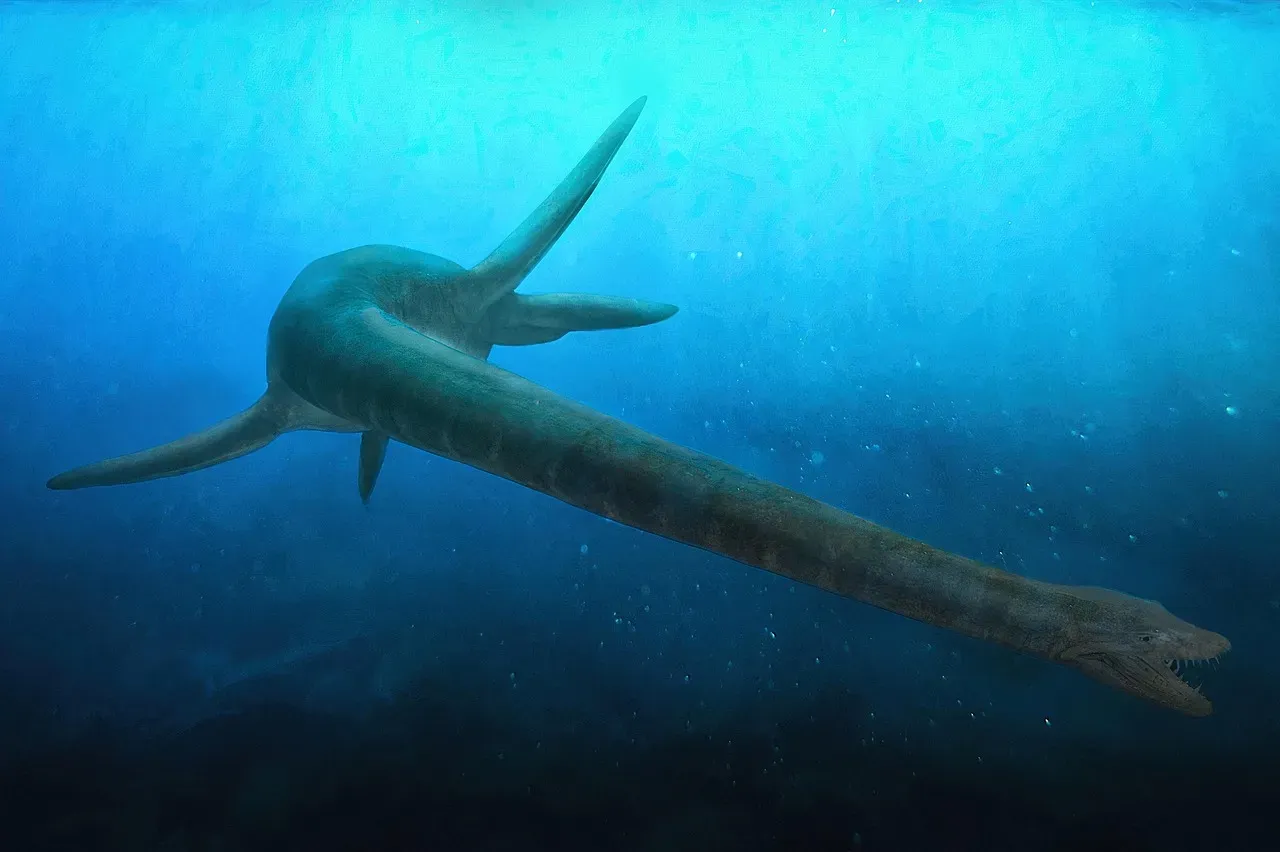
Here’s where things get really interesting. The plesiosaur swam with four paddle-like flippers, unlike anything that exists in today’s seas. Imagine a creature that moved through water by essentially flying with all four limbs simultaneously. Probably all four limbs were used to propel the animal through the water by up-and-down movements, while the tail was most likely only used for helping in directional control.
Plesiosaurians varied in adult length from between 1.5 meters to about 15 meters. The diversity within this group was staggering. Some species had necks so long they resembled underwater giraffes, while others were compact predators built for raw power. The plesiosaur body is described as an almond shape, consisting of a short tail, long flippers and flattened bodies. Perhaps most remarkably, scientists have found evidence that these creatures gave birth to live young rather than laying eggs, as seen in a fossil of the long-snouted, short-necked plesiosaur Polycotylus, which was found with the bones of an embryo inside.
Kronosaurus: The Titan with Crushing Jaws
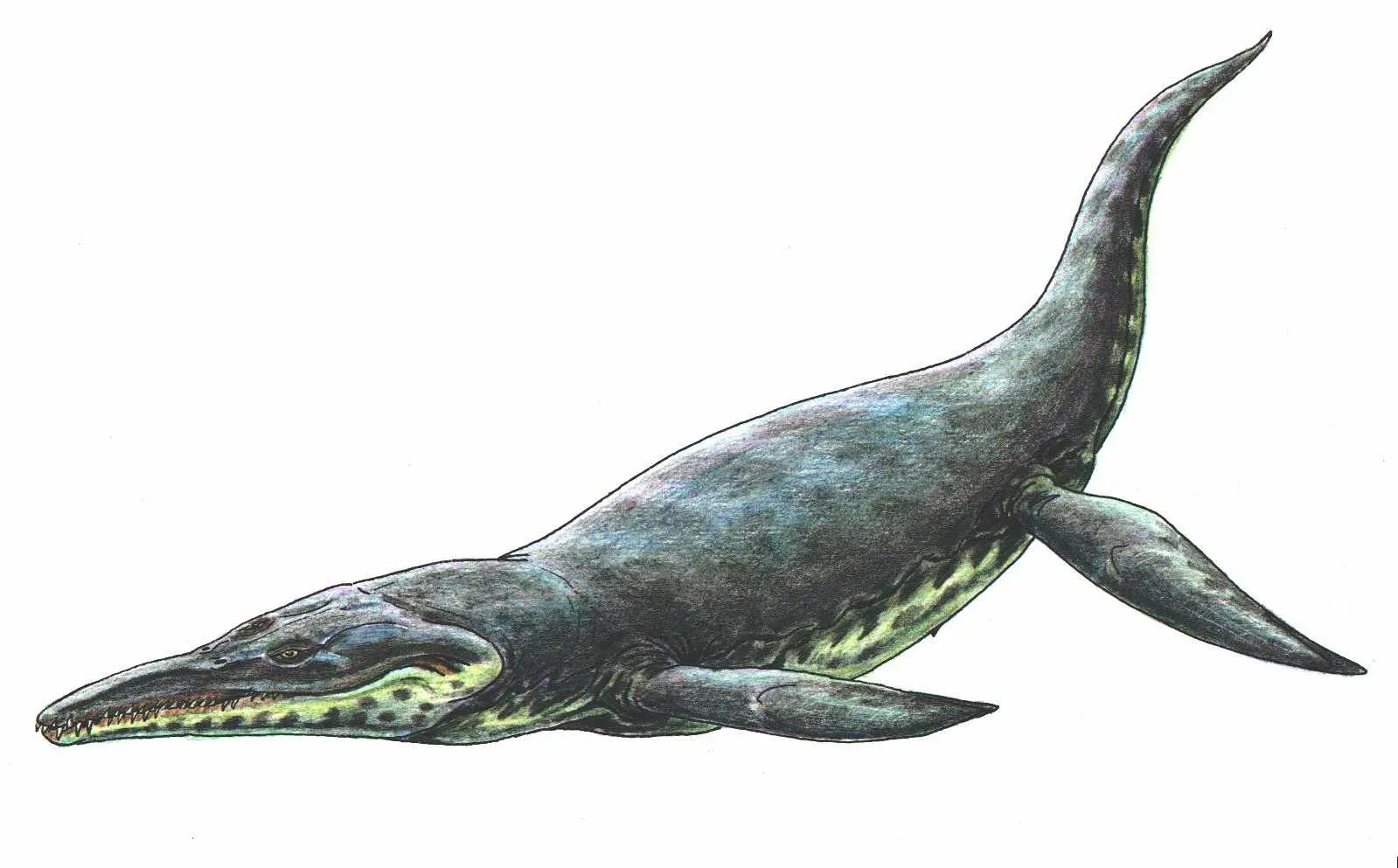
The genus name, meaning “lizard of Kronos,” refers to its large size and possible ferocity reminiscent of the Titan of the Greek mythology. This wasn’t hyperbole. The bite force of Kronosaurus is estimated to be between 16,000 to 23,000 newtons. To put that in perspective, that’s comparable to a Tyrannosaurus rex chomping down on its prey.
Kronosaurus reached lengths of more than 11 meters. Yet size wasn’t its only weapon. Fossil evidence shows that it preyed on sea turtles and other plesiosaurs, with estimates of its bite force suggesting the animal would have reached between 15,000 to 27,000 newtons. Honestly, it’s hard to imagine being a smaller marine reptile during the Early Cretaceous. The largest thalassophonean pliosaurs, such as Kronosaurus, are thought to have hunted by ambushing their prey from below, using their powerful jaws and incredibly sharp teeth to dismember prey, oftentimes in a single bite.
Mosasaurs: The Late Arrivals That Dominated Everything
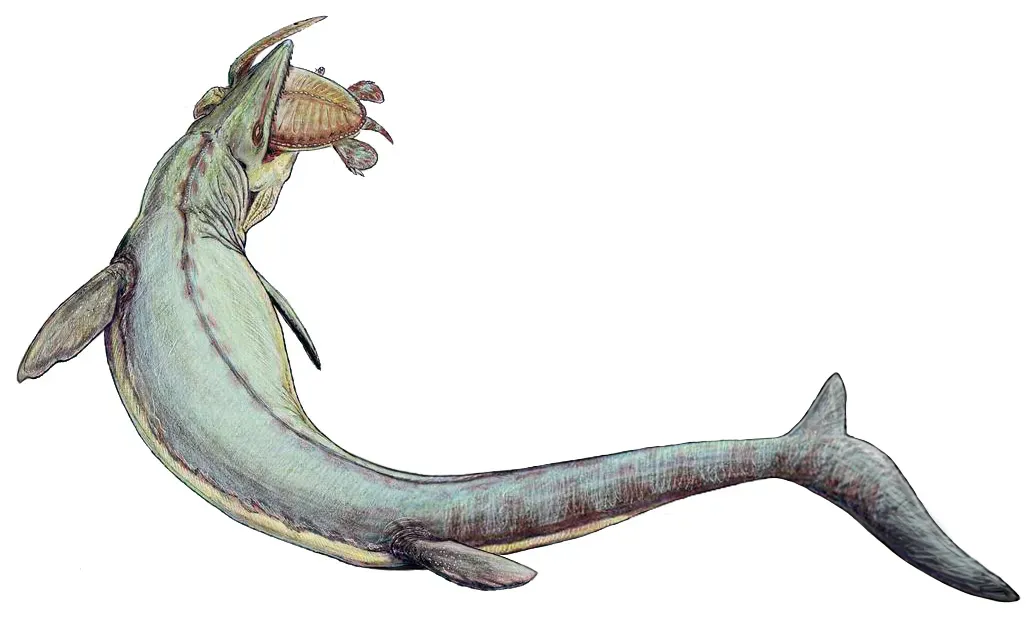
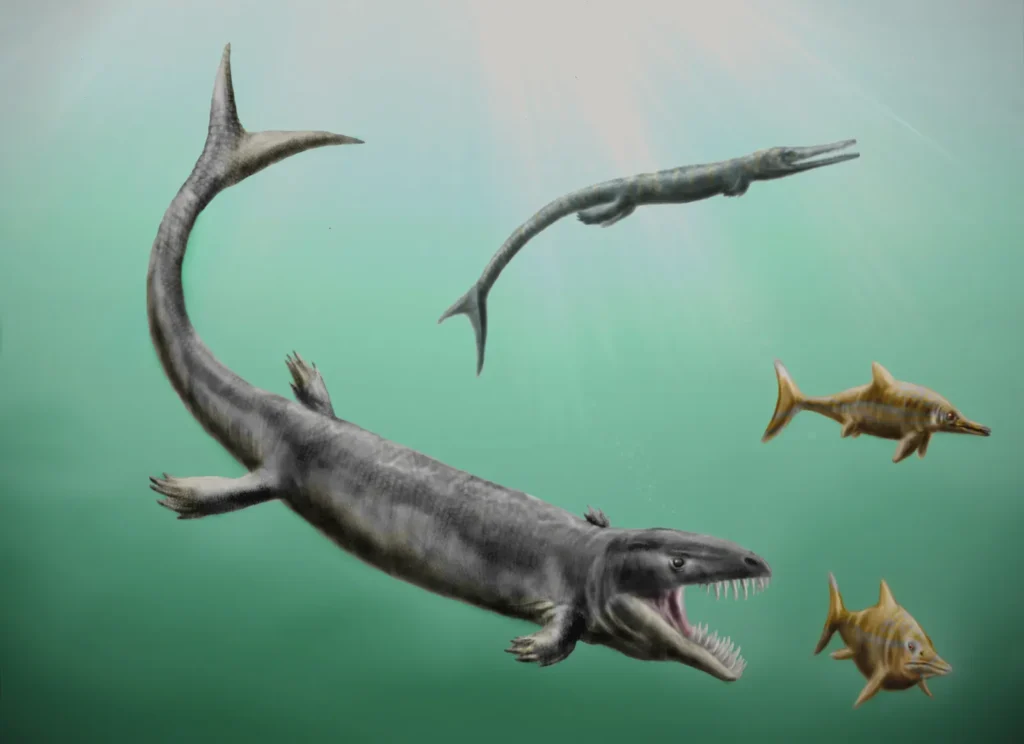
The mosasaurs were the last of the sea monsters to dive into the ocean, joining the plesiosaurs five million years after the extinction of the ichthyosaurs. They arrived fashionably late to the party but quickly became the guests everyone feared. Although it may seem like a no-brainer that this creature was an ancestor of today’s whales or sharks, in reality, it was a sea-dwelling lizard called a mosasaur.
Mosasaurs swam like crocodiles, swinging their long tails in a back and forth motion, and they had goanna-like bodies, pronounced snouts and forked tongues and were covered in a scaly skin. Let’s be real, these were essentially giant monitor lizards that decided the ocean looked more appealing than land. Their diet was unbiased covering anything from ammonites, fish, turtles, plesiosaurs, sea birds and even smaller mosasaurs. Nothing was safe. The largest, Mosasaurus hoffmannii, reaching lengths of up to 17 meters.
Nothosaurus: The Transitional Seal of the Triassic
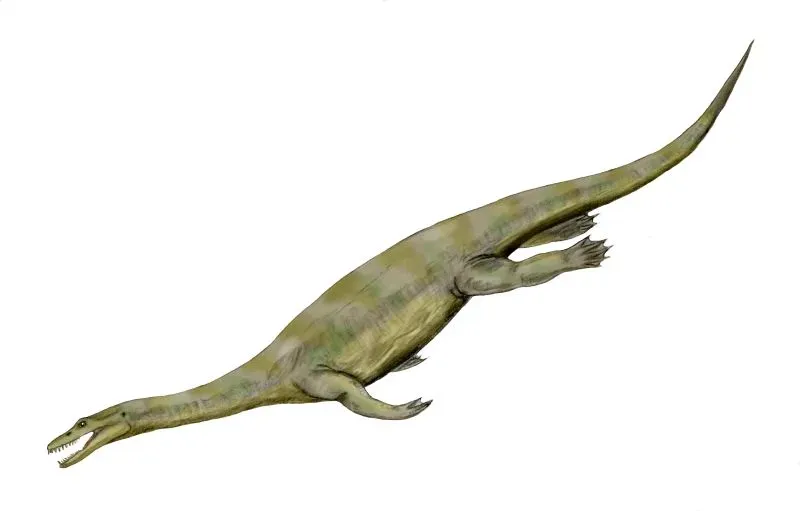
Nothosaurus was a semi-oceanic animal which most likely had a lifestyle similar to that of today’s seals. This was a reptile caught between two worlds, and that duality made it utterly fascinating. Unlike the other popular groups of marine reptiles that were fully aquatic, Nothosaurus lived a semi-oceanic lifestyle, and like modern seals, this reptile spent significant time on land but was well-adapted to life in the ocean.
It was about 4 meters, with long, webbed toes and possibly a fin on its tail, though some species such as N. zhangi and N. giganteus were larger, up to 5-7 meters. What makes Nothosaurus particularly important is its evolutionary role. Nothosaurs likely gave rise to plesiosaurs, marking a pivotal shift from coastal ambushers to open-ocean hunters. The jaws of Nothosaurus were filled with long thin teeth that pointed out of the mouth and intermeshed together when the jaws were closed, forming an effective prey trap for use in catching slippery prey like fish.
The Legacy of Ancient Ocean Rulers
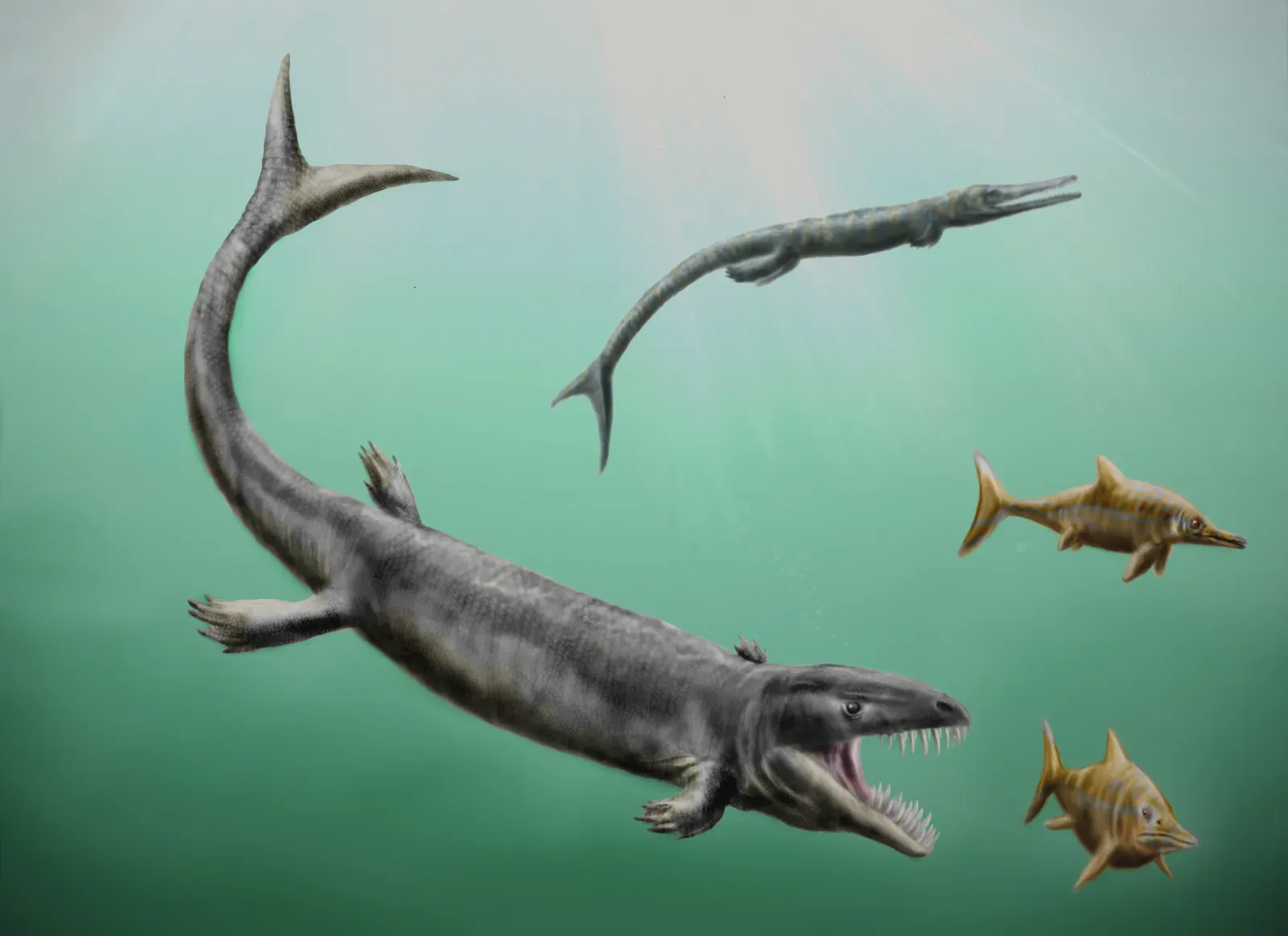
These five marine reptiles represent something profound about evolution’s creativity. Each found its own solution to the challenge of oceanic life, from the dolphin-like perfection of ichthyosaurs to the amphibious compromise of Nothosaurus. They dominated the seas for over 150 million years, far longer than mammals have ruled the oceans today.
What happened to them reminds us that even the most successful creatures can disappear. Climate changes, shifting sea levels, and the rise of new competitors eventually ended their reign. Still, their fossils continue to reveal secrets about ancient oceans and push our understanding of how life adapts to extreme environments.
Did you realize just how diverse and dominant these marine reptiles were? What do you think about it? Share your thoughts in the comments below.