America is far older than most people give it credit for. Long before European settlers arrived, extraordinary civilizations were already rising, trading, building, and thriving across this continent. You might think of ancient ruins and picture Egypt or Rome, but the truth is, some of the most breathtaking archaeological sites on the planet sit right here in the United States.
From cliff cities carved into canyon walls to enormous earthen pyramids rising above the Mississippi floodplain, these places don’t just hint at ancient tribal life – they shout it. They are windows into worlds that were sophisticated, spiritually rich, and deeply human. So if you’ve never considered just how far back the story of American civilization really goes, prepare to be surprised. Let’s dive in.
1. Cahokia Mounds, Illinois – America’s Forgotten Ancient Metropolis
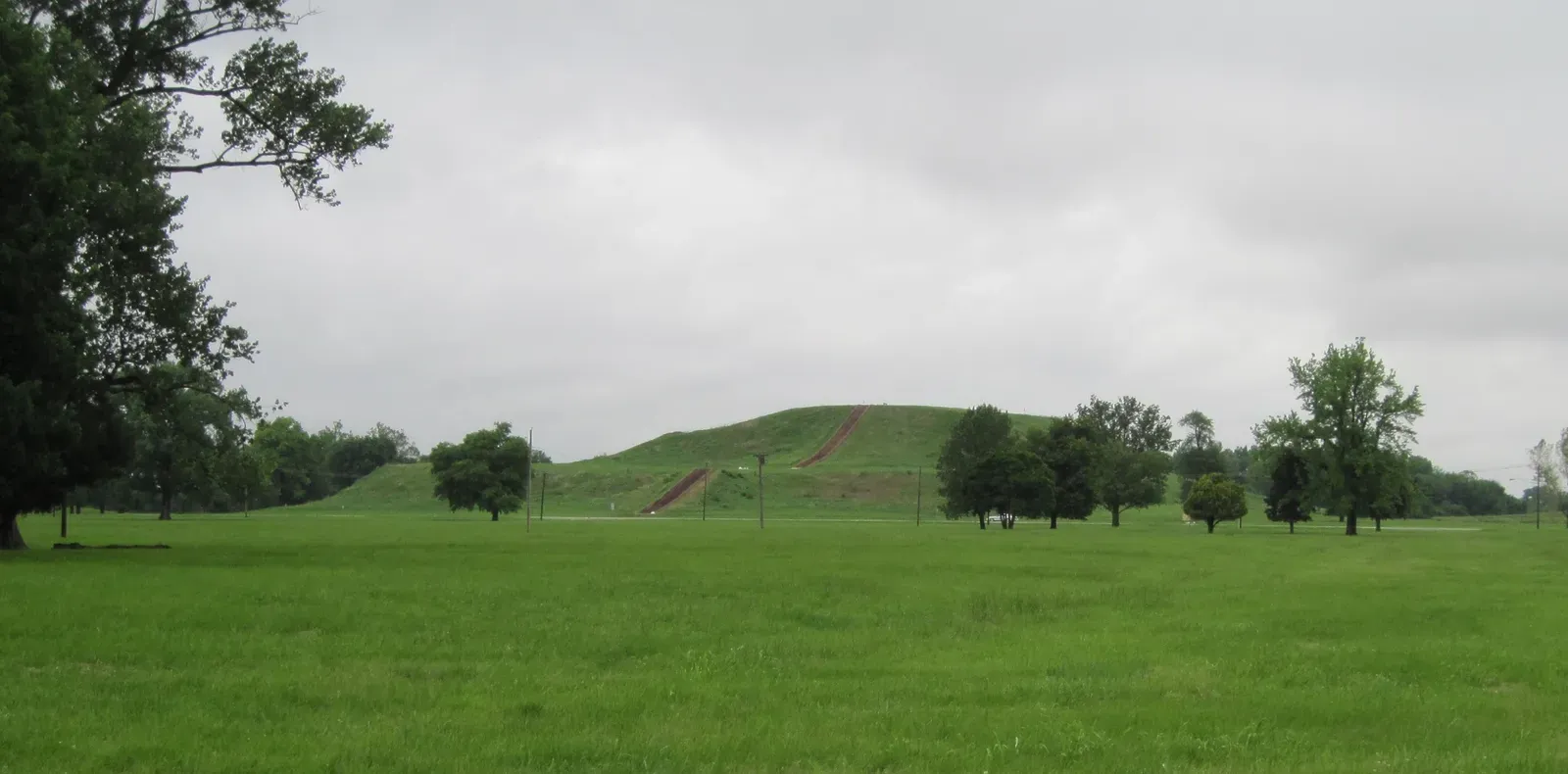
Here is something that genuinely stops people in their tracks: there was once a city right here in North America that was larger than London. At its apex around 1100 CE, Cahokia covered about six square miles, included about 120 earthworks in a wide range of sizes, shapes, and functions, and had a population of between 15,000 and 20,000 people. Honestly, that number alone should make you pause. This was a full-scale urban civilization thriving in what is now southern Illinois, long before any European ever set foot on American soil.
Cahokia was the largest and most influential urban settlement of the Mississippian culture, which developed advanced societies across much of what is now the Central and Southeastern United States, beginning around 1000 CE. Today, the Cahokia Mounds are considered to be the largest and most complex archaeological site north of the great pre-Columbian cities in Mexico. Among the largest features are an enormous central plaza encompassing nearly 40 acres and the pyramidal Monks Mound, the largest prehistoric earthen structure in the Western Hemisphere, which rises to 100 feet, covers more than 14 acres, and contains more than 25 million cubic feet of earth.
There was a wide plaza for merchants, a residential area for the common people and another for the upper class, a ball court, a playing field for the game known as Chunkey, fields of corn and other crops, a solar calendar of wooden poles, and the mounds which served as residences, sometimes graves, and for religious and political purposes. Think of it like a fully functioning ancient city, complete with social classes, ceremony, and commerce.
In one smaller ridge-top mound known as Mound 72, archaeologists found a chief laid on a bed of twenty thousand shell beads, surrounded by copper, mica, arrowheads, and the remains of several people sacrificed to serve him in the next life. The victims included 53 young women, as well as four men with their heads and hands removed. The mound revealed more than two hundred other ceremonial and sacrificial burials, mostly of young women, in mass graves. It is dark and arresting – a reminder that ancient societies were as complex and often as brutal as our own.
A gradual decline in the Cahokian population is thought to have begun sometime after 1200 AD, and two centuries later, the entire site had been abandoned. Though their fate remains unknown, theories include climate changes, war, disease, and drought. Archaeologists continue to be puzzled by the fact that there are no legends, records, nor mention of the once grand city in the lore of other local tribes. That strange silence makes Cahokia even more haunting to visit today.
2. Mesa Verde National Park, Colorado – Cities Built Into Cliff Faces
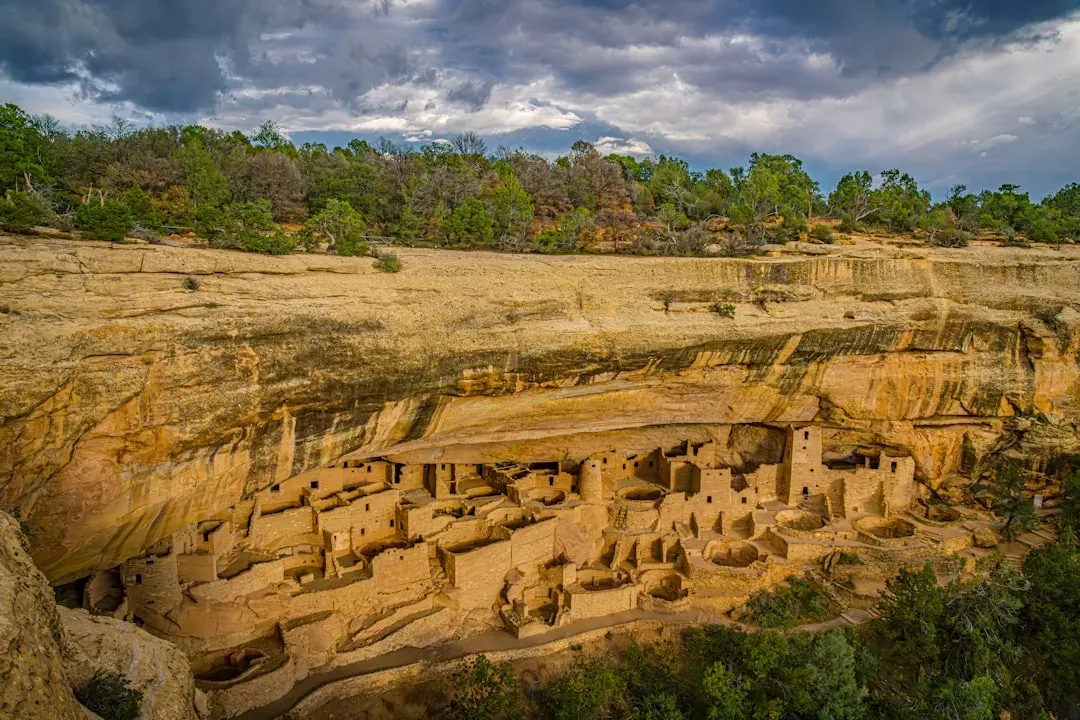
You would never expect to find entire cities tucked inside cliff walls, yet that is precisely what you encounter at Mesa Verde. Established by Congress and President Theodore Roosevelt in 1906, the park occupies more than 52,000 acres near the Four Corners region of the American Southwest. With more than 5,000 sites, including 600 cliff dwellings, it is the largest archaeological preserve in the United States. It is the kind of place that makes you question everything you thought you knew about prehistoric engineering.
Ancestral Puebloans grew squash, corn and beans on the mesa and lived in simpler pit houses as early as AD 600. They began building cliff houses in the 1200s – multistory structures of sandstone bricks and mortar, tucked into deep rock alcoves. With 150 rooms, Cliff Palace is the largest of Mesa Verde’s 600 existing cliff dwellings. The Ancestral Puebloans constructed these structures from hand-cut stone blocks and adobe mortar. Each cliff dwelling had two or more kivas – underground circular rooms used mainly for ceremonial purposes.
Women were the main corn grinders, doing so together in large communal grinding areas. Corn was ground using a hand-held metate, the mano being the grooved area created by repeated grinding. The fact that women did the grinding is evidenced by shoulder wear in skeletons. It is a small but striking detail – evidence of real daily life, preserved in the very bones of the people who lived there.
People hunted out the big game and deforested the mesa. In 1276 a 23-year drought began. The Ancestral Puebloans abandoned the site by 1300. Mesa Verde National Park was declared one of eight original World Heritage Sites by the United Nations in 1978. Even after centuries of abandonment, the sheer scale and beauty of what was left behind is nothing short of extraordinary.
3. Chaco Culture National Historical Park, New Mexico – The Ancient Pueblo Powerhouse
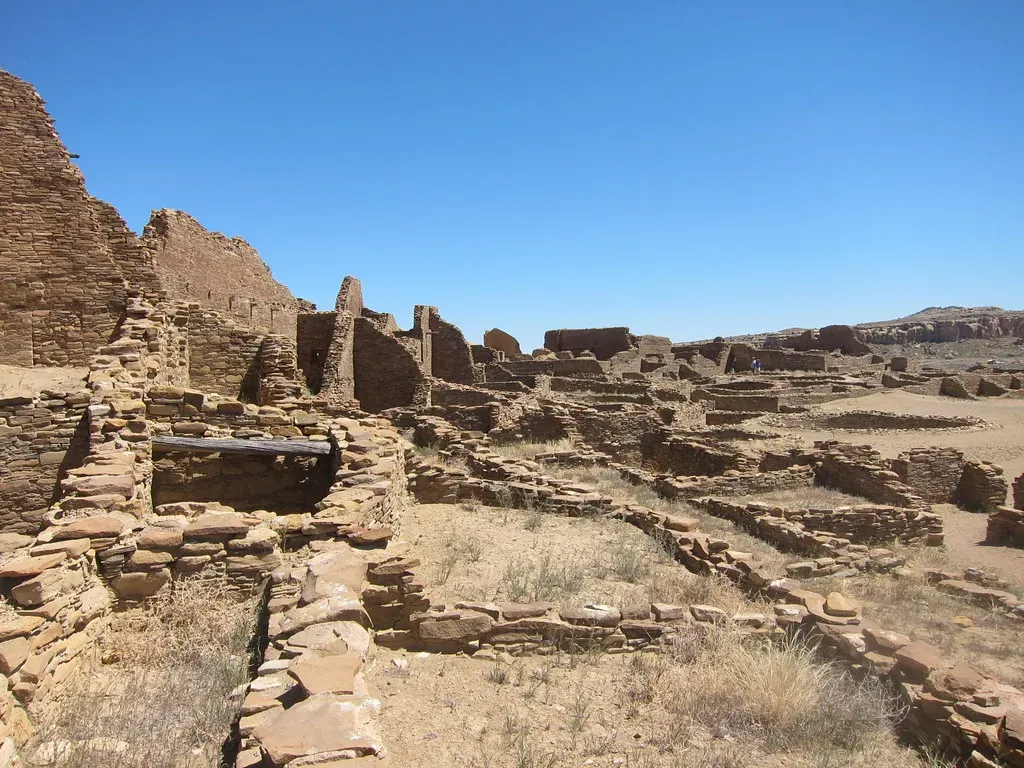
If Cahokia was America’s ancient city of the east, Chaco Canyon was its counterpart in the southwest – and it operated on a level of sophistication that still amazes researchers. Between AD 900 and 1150, Chaco Canyon was a major cultural center for the Ancestral Puebloans. Chacoans quarried sandstone blocks and hauled timber from great distances, assembling fifteen major complexes that remained the largest buildings ever built in North America until the 19th century. Let that sink in for a moment.
Covering almost two acres and comprising at least 650 rooms, Pueblo Bonito is the largest great house; in parts of the complex, the structure was four stories high. The builders’ use of core-and-veneer architecture and multi-story construction necessitated massive masonry walls up to three feet thick. In one storage room within Pueblo Bonito, pottery sherds had traces of cacao imported from Mesoamerica. These black-and-white cylindrical vessels were likely used for drinking cacao, similar to the brightly painted Maya vessels used for a similar purpose.
Astronomical observations clearly played an important role in Chaco life, and they likely had spiritual significance. Petroglyphs found in Chaco Canyon and the surrounding area reveal an interest in lunar and solar cycles, and many buildings are oriented to align with winter and summer solstices. It is hard not to feel awe standing in a place where people were tracking the cosmos with such precision, centuries before modern instruments existed.
By the 1300s, all the villages and pueblos in Chaco Canyon had been abandoned. As the ancient Indians left, their kivas were ceremonially burned and most of their possessions were left behind. Today, their descendants are members of 20 Indian tribes in New Mexico and Arizona, and many maintain connections to Chaco. These tribes include modern-day Pueblo Indians of New Mexico, the Hopi of Arizona, and the Navajo.
4. Poverty Point, Louisiana – The Trading Hub of the Ancient World
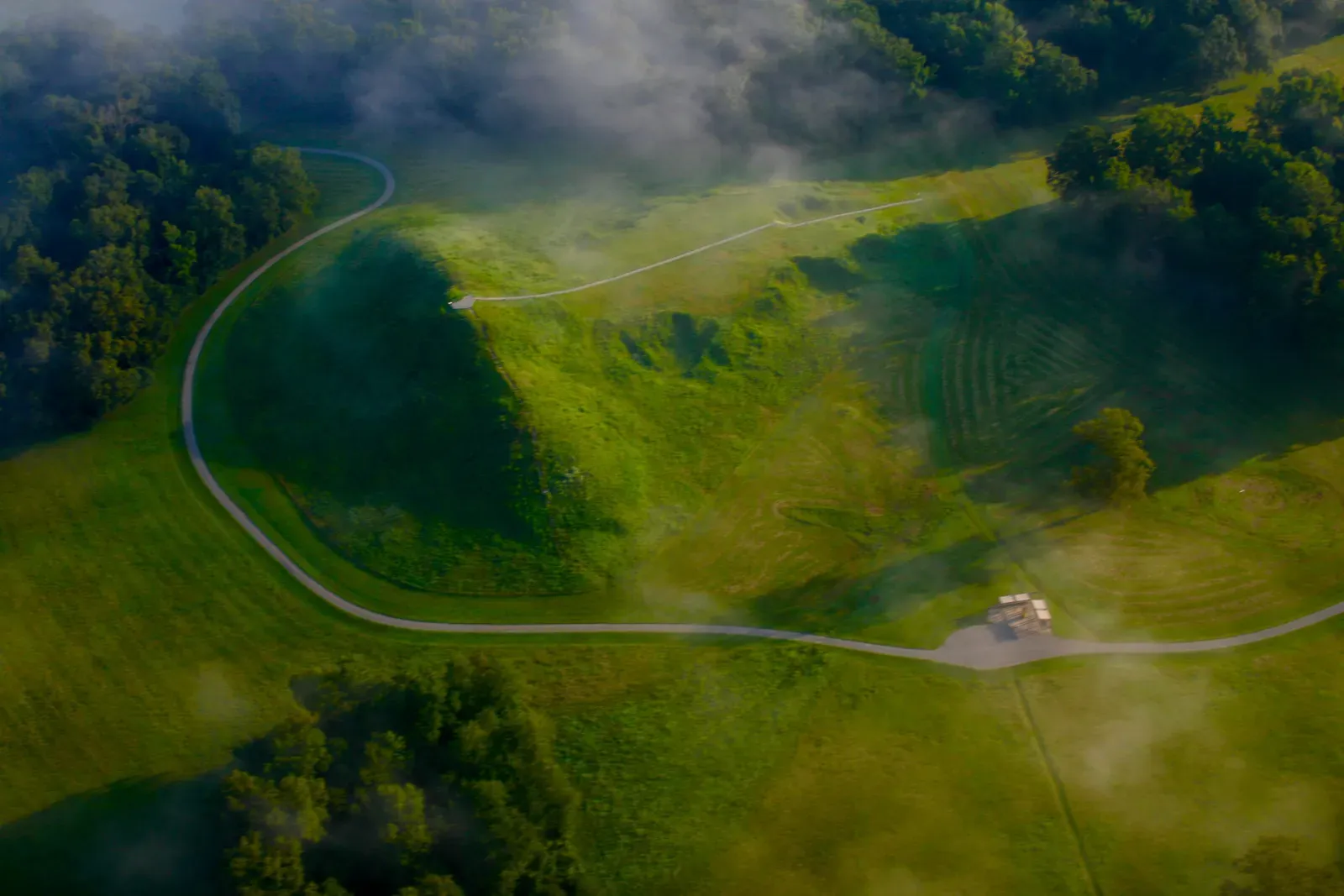
Here is one that genuinely surprises people: 3,400 years ago, in what is now rural northeastern Louisiana, a culture built something that should not have been possible for a society of hunter-gatherers. The Poverty Point site contains earthen ridges and mounds built by indigenous people between 1700 and 1100 BCE during the Late Archaic period in North America. Archaeologists have proposed a variety of possible functions for the site, including as a settlement, a trading center, and a ceremonial religious complex. The 402-acre property contains the largest and most complex Late Archaic earthwork occupation and ceremonial site yet found in North America.
It was at the heart of a huge trade network, the largest in North America at that time. The trade and site design are more unusual because the people did not grow crops or raise animals for food. No other hunting and gathering society made mounds at this scale anywhere else in the world. Think about that for a second. These were not farmers. They were hunter-gatherers who somehow organized massive public construction projects without any of the agricultural surplus we typically associate with complex civilizations.
Poverty Point was built in stages over many generations and the Poverty Point citizens engaged in long-distance trade which supplied them with materials like stone and copper unavailable locally. Artifacts such as stone projectile points and various copper artifacts were made with materials imported from areas such as the Tennessee River Valley and the Great Lakes region of modern-day New York. The inhabitants produced their goods on-site from the raw materials they received in trade.
Cooking balls were hand-formed from the local soil and used in earth ovens to help cook the food. In fact, archaeologists have found so many of these cooking balls that they are called Poverty Point Objects, or PPOs for short. Poverty Point is an extremely important archaeological site which is still being excavated. At the current time, only about one percent of the site has been scientifically excavated, and many questions about ancient life at the site remain unanswered. That one fact alone tells you this site has barely begun to reveal its secrets.
5. Hopewell Culture National Historical Park, Ohio – Mounds That Mapped the Sky
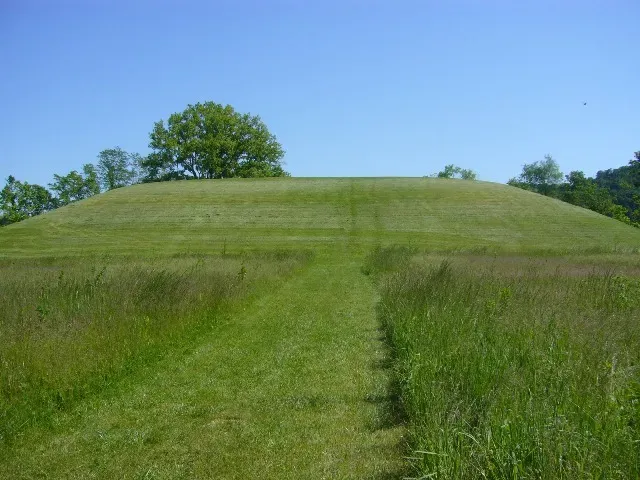
When you think of Ohio, ancient earthworks the size of city blocks probably do not come to mind first. They should. Two thousand years ago, Ross County in south-central Ohio may have been the most important cultural center in eastern North America, as evidenced by a series of ceremonial mounds built and used by the Hopewell culture. This park preserves many of these mounds at six separate sites. It is a place that rewrites your mental map of where ancient civilization actually happened.
Scientists believe the earthen landscapes were designed to align with the cyclical movements of the sun and moon, linking people with the order or rhythms of the cosmos. The mounds were used for ceremony, burial, and other sacred practices – some were constructed low, just three to four feet high, while others reached 100 feet or more. Most of these mounds were lost over the past 150 years due to farming and development.
The Hopewell culture likely stretched from the Atlantic coast to the Rocky Mountains, explaining the presence of materials such as obsidian, copper, marine shells, shark teeth and mica found at the earthworks. The mounds were first excavated in 1891. Their trade network was staggering in scale – almost like the Amazon delivery system of the ancient world, moving goods across a continent with no wheels or horses.
One of six locations park visitors can explore is Mound City Group, so named because of its 25 mounds encircled by a low earthen wall. It is the only fully restored Hopewell earthwork complex, with restorations based on the mound’s intact layers and extensive documentation and field research. Mounds were built using layers of clay, sand and gravel and would have taken decades or centuries to construct. Originally established as Mound City Group National Monument in 1923, the site was expanded and renamed Hopewell Culture National Historical Park in 1992.
Conclusion
It is easy to walk through life thinking that American history begins with the arrival of Europeans, but these five sites prove otherwise – loudly and unmistakably. You are looking at cities with tens of thousands of residents, trade routes that spanned an entire continent, and buildings aligned to the movements of the moon, all built centuries before Columbus was even born. These are not footnotes in history. They are the main story.
What is perhaps most moving is that the descendants of these cultures are still here today. The Hopi, the Pueblo peoples, the Muscogee, the modern tribes of the Ohio Valley – they carry forward the legacy of everything you have just read about. Visiting these sites is not just a history lesson. It is a chance to truly reckon with the depth and richness of human life on this continent. So the next time someone tells you that America is a young country, you know exactly what to say.
Which of these sites surprised you the most? Drop a comment and let us know – we’d love to hear your thoughts.