There is something deeply humbling about standing on a rock that was formed before complex life existed on this planet. You are, in those moments, touching time itself. The United States is one of the most geologically rich countries on Earth, a place where ancient forces have left visible fingerprints on the landscape, where the ground beneath your feet holds stories that stretch back billions of years.
These aren’t just pretty parks to photograph. These are places where Earth’s most profound chapters are literally written in stone, where you can read the rise and fall of ancient seas, the fury of supervolcanoes, and the slow grinding of time. If you’ve ever wondered what the planet looked like before humans, before dinosaurs, before anything recognizable, some of the answers are waiting for you right here in America. Let’s dive in.
The Grand Canyon, Arizona: A Two-Billion-Year Library in Stone
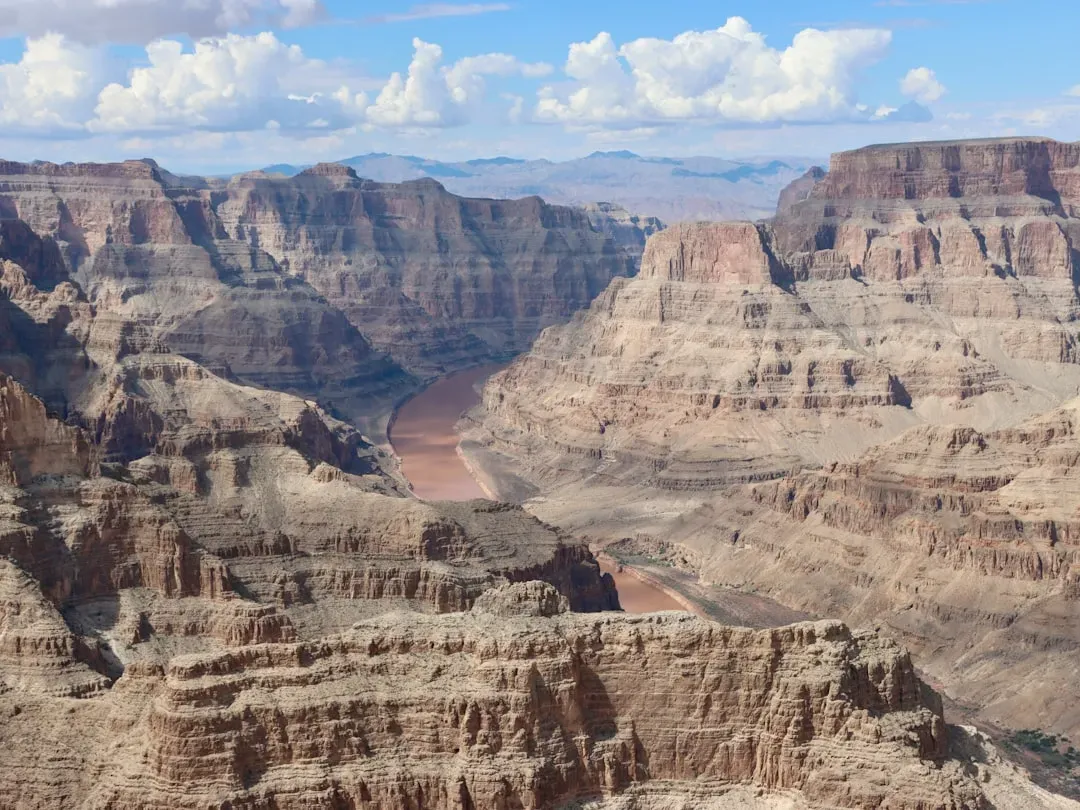
The Grand Canyon tells one of the world’s greatest geologic stories, and its distinctive features allow researchers to piece together the history of this unique location, one of America’s treasures and a UNESCO World Heritage Site. Honestly, no photograph truly captures what it feels like to stand at the rim and look down. You’re not just staring into a canyon. You’re staring into deep time.
The oldest rocks in the Grand Canyon, found at the bottom of the canyon, are primarily metamorphic with igneous intrusions. The name given to this ancient rock set is the Vishnu Basement Rocks, primarily schist with granite, and these rocks are about 1.7 billion years old, from an era early in Earth’s history known as the Proterozoic. Think about that. When those rocks first formed, not even simple multicellular life existed yet on Earth.
A mystery lies deep within the Grand Canyon: one billion years’ worth of rocks have disappeared. This is called the Great Unconformity, and it has baffled geologists for nearly a century and a half. According to researchers, a series of small faulting events occurred when Rodinia, the supercontinent that preceded the more famous Pangea, broke apart approximately 700 million years ago. The violent faulting likely tore up land around the canyon, causing rocks and sediment to wash away into the ocean. So when you look at the Grand Canyon, you are looking at a textbook with pages torn out. Even what remains is staggering.
The rock layers record ancient environments from millions of years ago. Nautiloids once roamed a shallow sea, catching prey with octopus-like tentacles. Seed ferns thrived in warm swamps and forests. Fish swam in an ocean. Early reptiles scurried across sand dunes. All of that life, and all of that world, now hardened into the canyon walls you can visit on a Tuesday afternoon.
Yellowstone National Park, Wyoming: A Supervolcano That Rewrote the Continent
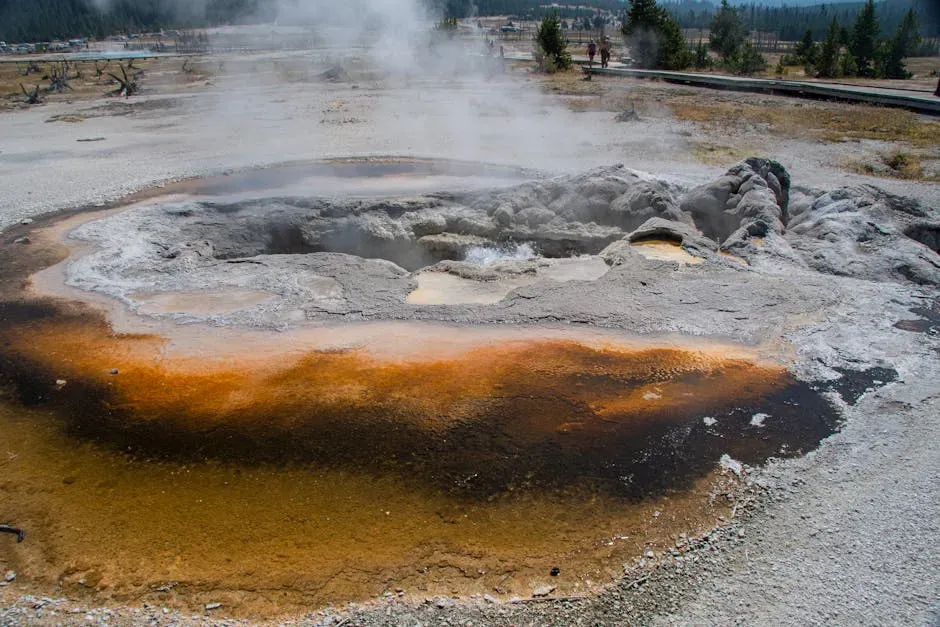
Here’s the thing most people miss when they visit Yellowstone. They see the geysers, snap a picture of Old Faithful, and move on. What they don’t fully register is that they’re standing on top of one of the most geologically violent systems on the planet. Yellowstone sits above a melting anomaly within the Earth, called a “hotspot,” powered by a plume of hot material that may extend as deep as the boundary between the planet’s mantle and core.
Had you been wandering around Yellowstone 2.1 million years ago, you would have witnessed one of history’s most extraordinary volcanic eruptions. When successive eruptions 1.2 million and 640,000 years ago emptied the contents of the magma chambers, the visible volcano “deflated” and the 34-by-45-mile Yellowstone Caldera was formed. That caldera, that enormous sunken bowl, is the ground you walk on today. It’s wild to comprehend.
The park contains over half of the world’s active geysers and an estimated 10,000 other thermal features, including hot springs, mudpots, and fumaroles. This concentration is unrivaled globally, making Yellowstone a living laboratory for hydrothermal processes. These aren’t just tourist attractions. Yellowstone’s geothermal features are among its most famous geological expressions. Beneath the surface, groundwater circulates through fractures in hot volcanic rock, becoming heated and chemically altered before rising back to the surface. This process creates geysers, hot springs, fumaroles, and mud pots. Over time, minerals dissolved in the hot water are deposited around these features, forming terraces, sinter deposits, and vividly colored microbial mats.
The Yellowstone hotspot, the source of heat that powers Yellowstone’s vast volcanic system, has long been thought to have initiated about 17 million years ago. A growing volume of evidence, however, suggests that it has been around much longer. Scientists now believe it dates back at least 50 million years. The more they look, the older and stranger this system turns out to be.
Carlsbad Caverns, New Mexico: An Underground Reef Born Before the Dinosaurs
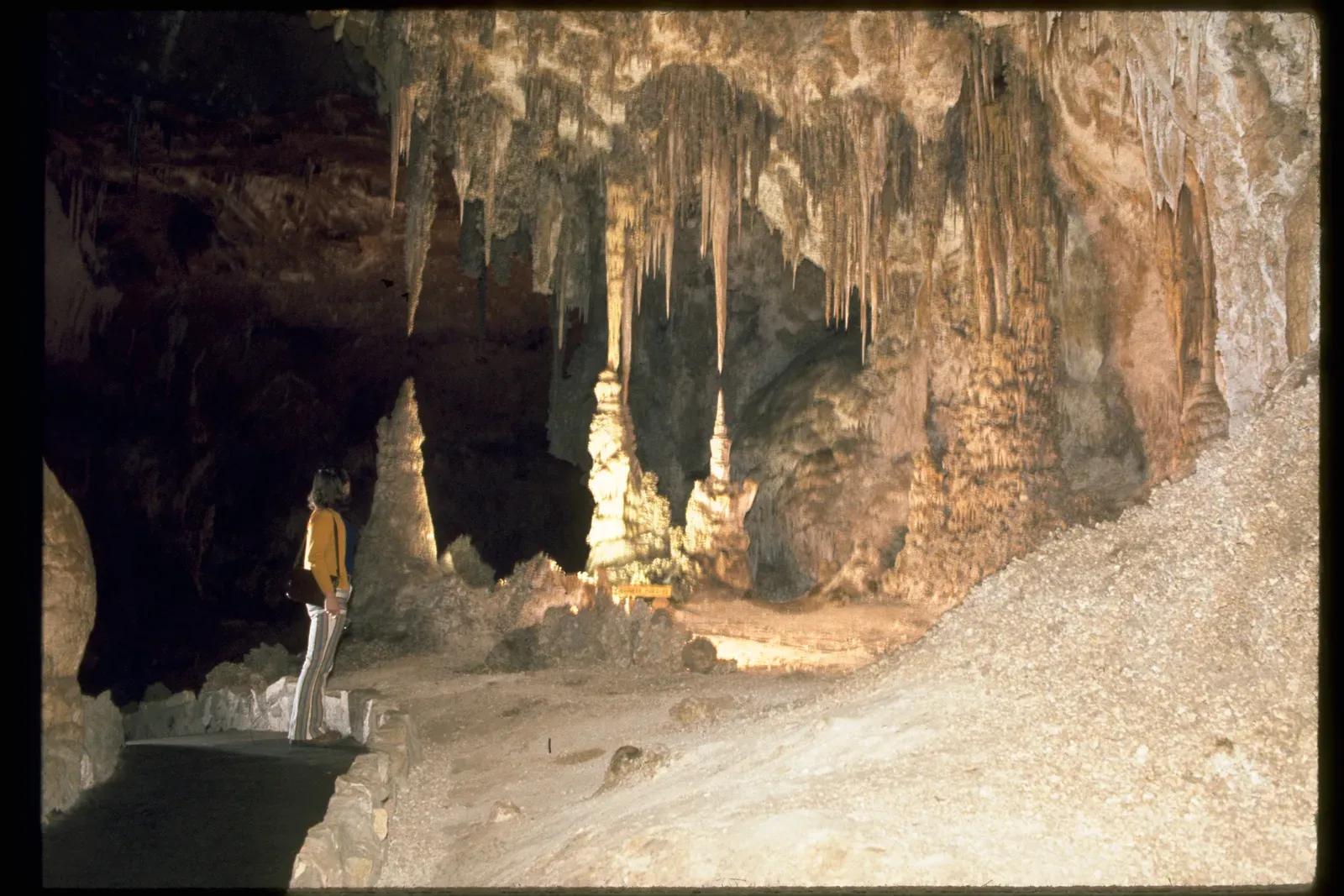
You probably don’t think of New Mexico as hiding ancient tropical ocean reefs. I know it sounds crazy, but that’s exactly what lies beneath the Chihuahuan Desert. Carlsbad Caverns are a collection of around 120 caves within the area of Carlsbad Caverns National Park in America’s Chihuahuan Desert. The caves occur within limestones and dolomites of the Guadalupian reef system that rimmed the Permian Delaware Basin, dating from roughly 259 to 277 million years ago.
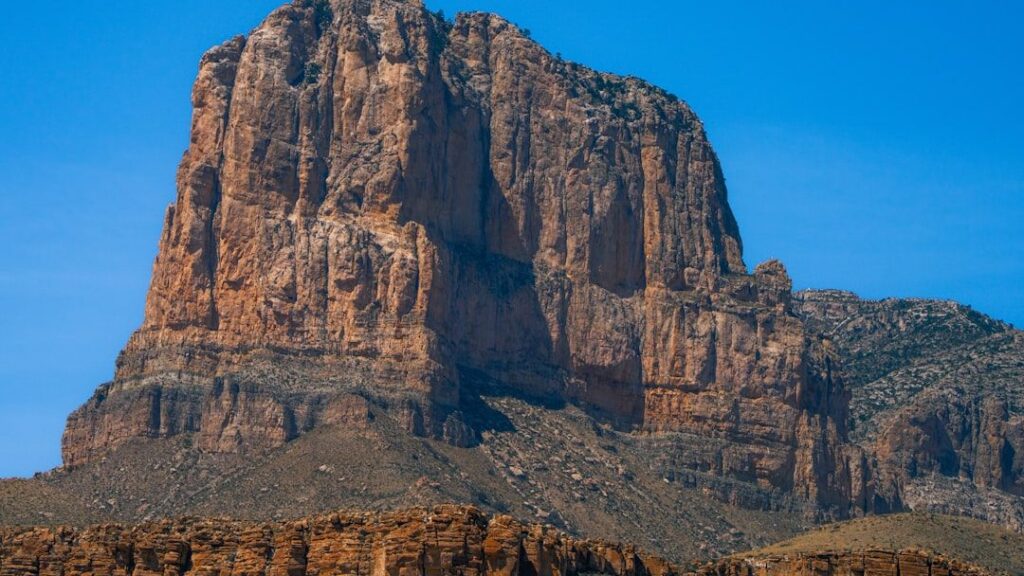
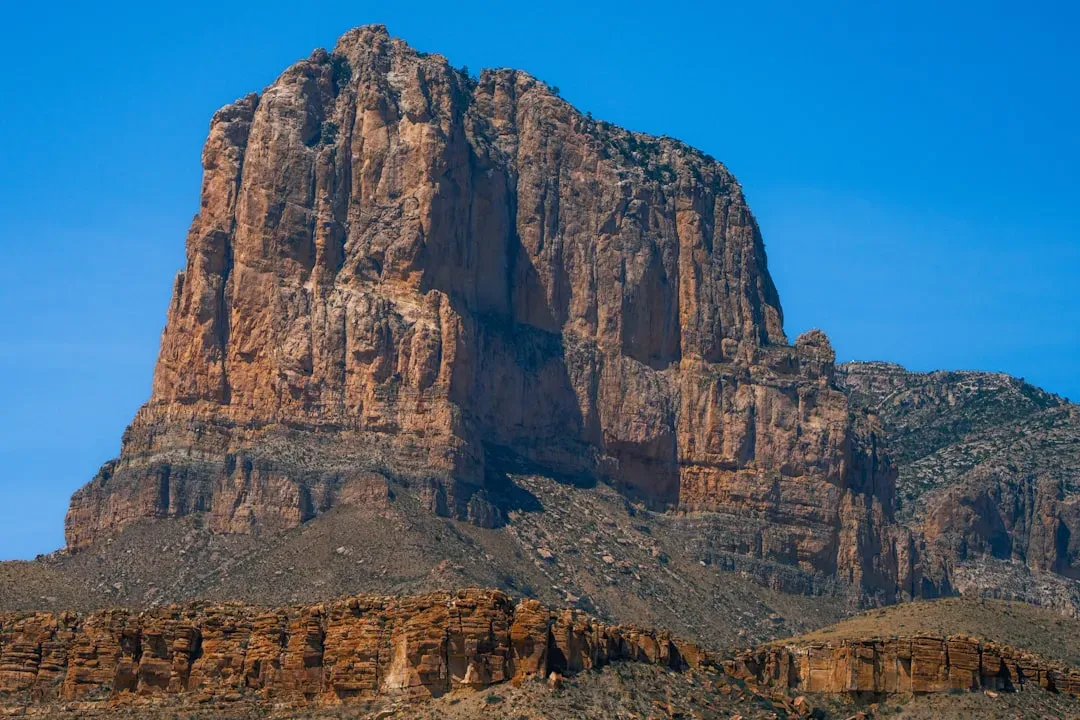
The reefs formed around a deep equatorial embayment on the hot, dry western edge of Pangea during the Permian Period, around 265 million years ago. The sheer cliff of El Capitan in nearby Guadalupe Mountains National Park exposes sponges, algae, and natural cement, which were the main constituents of the core of the 400-mile-long reef system that grew to more than 750 feet tall. This ancient reef once sat beneath a warm, shallow sea teeming with life, long before the age of dinosaurs had even begun.
These caverns formed four to six million years ago as hydrogen sulfide gas migrated upward from nearby petroleum deposits into the 265-million-year-old Permian reef limestones. The caves are uniquely ornamented with intricate calcium carbonate and calcium sulfate mineralization. That is a remarkably unusual origin. Most caves form through rainwater dissolving limestone from above. Carlsbad formed from the inside out, etched by acid rising from below. Lechuguilla Cave, contained within the same system, is the 7th longest cave in the world at over 138 miles in length and is the deepest limestone cave in the United States at 1,604 feet deep. It contains unique minerals and speleothems such as large gypsum “chandeliers” that hang from ceilings and are 20 feet in length, weighing hundreds of pounds.
The Badlands, South Dakota: An Alien Landscape Built on Ancient Bones
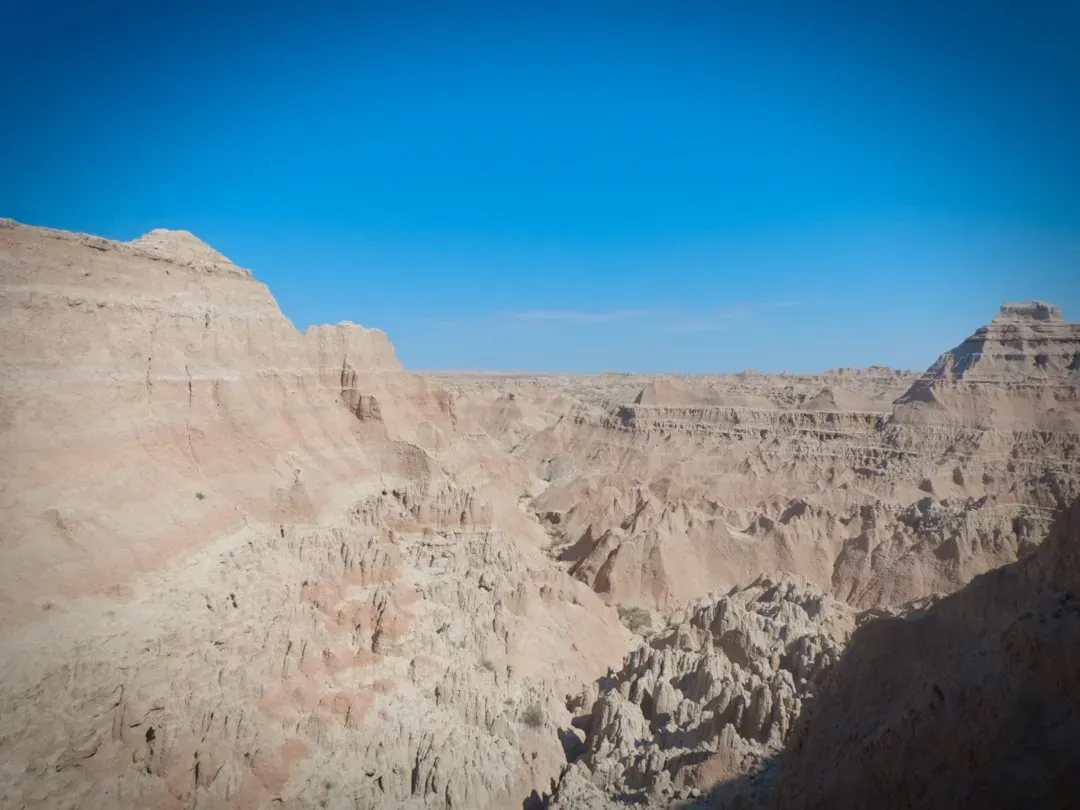
The Badlands contains some of the world’s most bizarre and alien-looking landscapes, with classic examples of badland topography. The poorly consolidated bedrock, consisting of loose sediment and volcanic ash, is quickly eroded by infrequent rainstorms. The resulting mud mounds, spires, and ridges resemble miniature mountain ranges. Standing in the Badlands at sunset, with those jagged spires glowing orange and red, feels less like being in South Dakota and more like being on another planet entirely.
Some strata are filled with the fossilized remains of very old plants and animals, testimony to the evolution of life on Earth. Others tell us stories about the growth and retreat of mountains, glaciers, oceans, and forests. Some even show us how the planet’s surface has shifted through time. The Badlands is one of the most vivid examples of this, a place where every layer of eroding rock is literally a chapter from a different world.
Serving as a natural library, stratotype study sites contain important characteristics that help geologists recognize rock layers and compare them to strata in other locations. This can tell us things like how far an ancient lake bed reached and what types of fish called the lake home. They can provide clues to how life adapted to our planet’s changing climate in the past. The Badlands sits on top of one of the richest fossil records in North America, preserving bones from mammals that roamed these plains tens of millions of years ago, creatures that belonged to a world utterly different from our own.
Crater Lake, Oregon: The Caldera That Holds the Memory of a Vanished Mountain
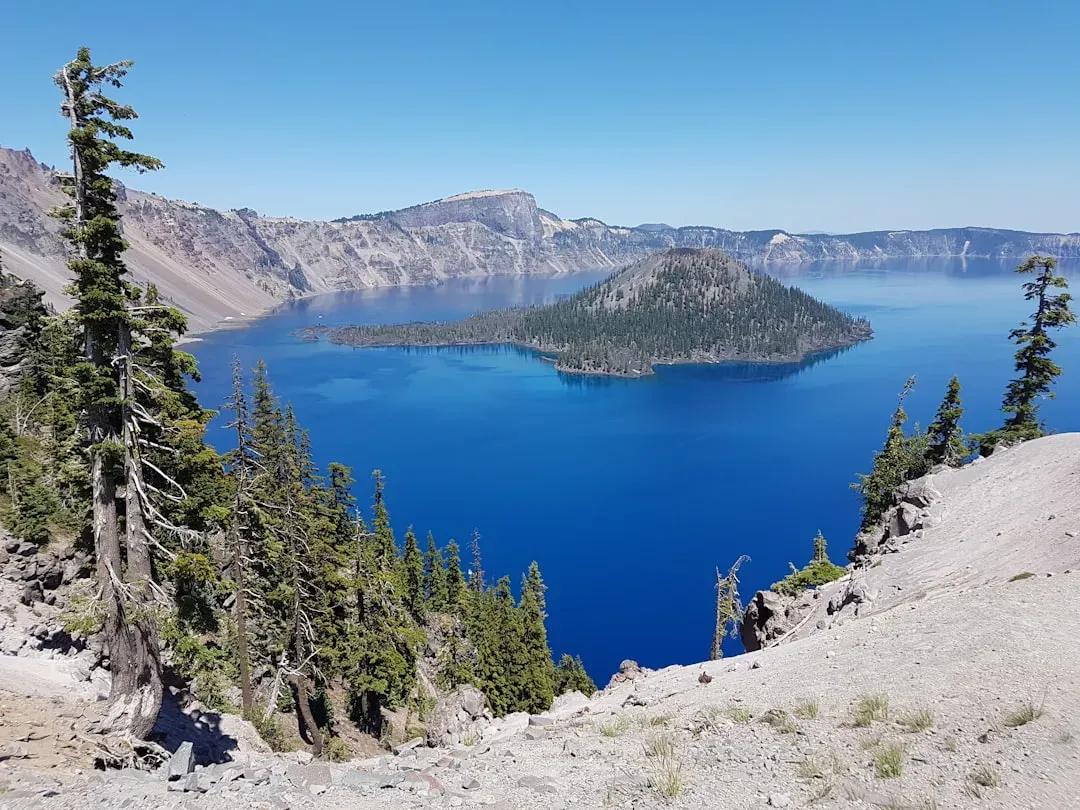
Crater Lake in Oregon is the deepest lake in the United States, formed around 7,700 years ago when Mount Mazama erupted and collapsed. Its pristine blue waters are fed solely by rain and snow, making it one of the clearest lakes in the world. That simplicity is deceptive. Behind that serene blue surface lies a story of catastrophic destruction on a scale that dwarfs anything in recorded human history.
Native American legends tell of the lake’s origin as a battle between the sky god and the mountain god, resulting in the mountain’s destruction. Visitors are drawn to its serenity and hiking trails, where they can see Wizard Island, a volcanic cone that rises from the lake’s surface. Wizard Island is essentially a volcano that has grown back up inside the caldera after the original eruption, a reminder that the geological forces here are very much still alive.
For the last 500 million years, dynamic forces have been staging geologic dramas from Sedona to Seattle. Here in the West, oceanic plates smashed into the continent with enough force to create the Rocky Mountains and the volcanic Cascade Range. Crater Lake sits directly within that volcanic Cascade Range, born from the same tectonic forces that continue to shape the Pacific Northwest. The eruption of Mount Mazama that created this lake was roughly 40 times more powerful than the famous 1980 eruption of Mount St. Helens. That is nearly impossible to imagine.
From ancient canyons carved by rivers to towering volcanic peaks and unique rock formations, these sites tell a story billions of years in the making. They serve as windows into Earth’s dynamic history, showcasing processes like erosion, volcanic activity, and plate tectonics. Crater Lake is perhaps the most dramatic window of all, a place where you can literally look down into the aftermath of a mountain’s death.
Conclusion: The Ground Beneath Your Feet Has a Story Worth Listening To
There’s a kind of perspective shift that happens when you genuinely sit with the timescales involved at these places. Hailed as one of the Seven Wonders of the World, the Grand Canyon exhibits the largest section of geologic time on Earth. Hiking to the bottom, one passes through a third of the planet’s age. That’s one canyon. Multiply that across all five of these wonders and you begin to understand that the United States is sitting on top of one of the most extraordinary geological archives ever assembled.
These sites aren’t just scientifically important. They’re emotionally resonant. As our planet undergoes unprecedented shifts in temperature, precipitation, and sea levels, geologists are instrumental in reconstructing past climate variations to better predict future trends. By studying geological archives such as ice cores, sediment layers, and fossilized remains, they provide valuable insights into Earth’s climatic history and its implications for the future of life on our planet. In other words, understanding these wonders isn’t just an exercise in curiosity. It may well be one of the most important things humanity does with its time.
The Earth has been here for roughly 4.5 billion years. We’ve been around for an eyeblink. These five geological wonders are proof that the planet has a long memory. The real question is whether we’re paying attention. What would it change for you, knowing the ground you stand on was once a seabed, a supervolcano, or an ocean reef? Tell us what you think in the comments below.