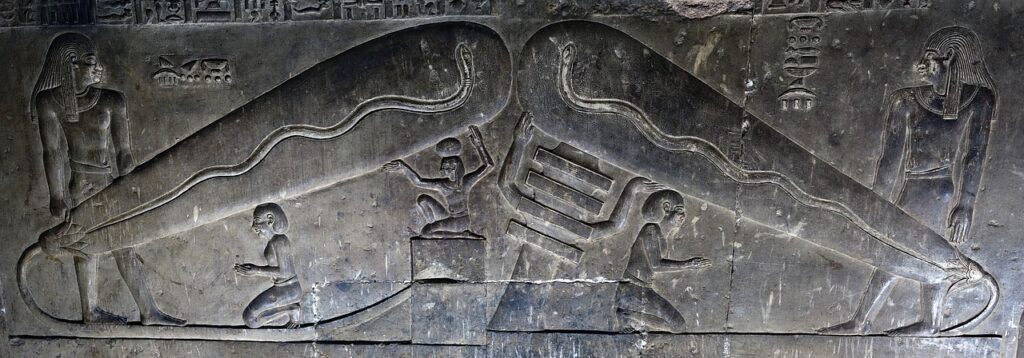
For a moment, imagine walking down into a cramped stone crypt beneath an Egyptian temple, your phone’s flashlight barely pushing back the darkness, and suddenly finding something on the wall that looks disturbingly like a giant glass tube wired to a power source. That jolt you feel in your stomach? That mix of awe and “wait… what?” is exactly what the crypts of the Temple of Hathor at Dendera do to people, even seasoned researchers. These carved scenes are not random doodles. They were chiseled into fine limestone blocks with care, precision, and elaborate religious context during one of the best-documented eras of ancient Egypt. And yet, more than a century after they were noted and photographed, some of these hieroglyphs still spark one of the most polarizing debates in archaeology: are we looking at symbolic religious art, or at something that resembles technology so modern our brains almost refuse to see anything else? Below are six of the most talked‑about motifs from Hathor’s temple crypts that some researchers, engineers, and alternative theorists insist look like machinery no one has convincingly identified. Whether you buy their arguments or roll your eyes, the images themselves are fascinating enough to make you rethink what you thought you knew about “simple” ancient stone carvings.
1. The “Dendera Light” Bulb-Shaped Relief
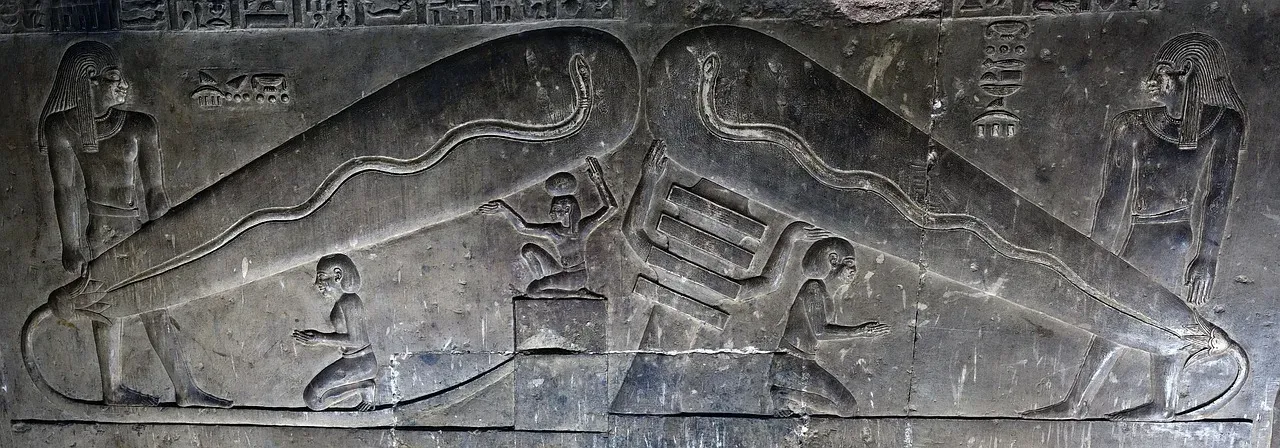
In a narrow underground chamber beneath the Temple of Hathor, one carved scene dominates the conversation: an elongated, bulb-shaped oval, resting on what looks uncannily like a base or pedestal, with a sinuous, snake-like form stretching inside it. From a modern perspective, it is almost impossible not to see a thick glass lamp with a filament and a cable trailing away from it, and this is exactly why the so‑called “Dendera Light” has become a staple of documentaries and conspiratorial YouTube channels. Some experimenters have even recreated Crookes-tube-style “lamps” inspired by the relief to show that a gas-filled glass tube and a high-voltage source can produce a similar glowing form. Mainstream Egyptology, however, offers a very different explanation: what we are seeing is the god Harsomtus, in serpent form, emerging from a lotus flower that rests on a barge, a poetic image of creation and the birth of light. The oval is not a glass bulb but a womb-like cosmic egg, the snake is divine life-force, and the “cable” is a stylized support or symbolic air element. Personally, I think it is precisely this double-vision – mythological symbol to one viewer, technical diagram to another – that makes the carving so haunting. When a single image can be read both as a sacred story and as a piece of wiring, it tells us more about how our own minds work than about secret Egyptian power grids.
2. The Djed-Pillar “Insulator” and Possible Power Column
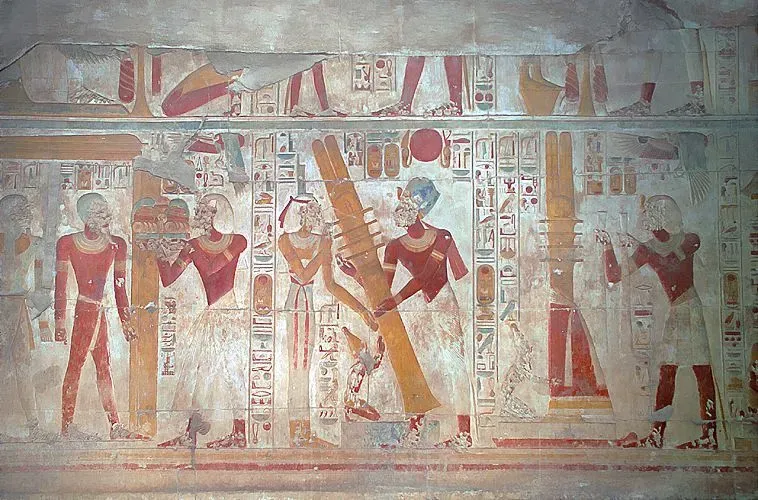
Right next to several of the bulb-like ovals stands another recurring motif: a tall, ribbed column with stacked horizontal bands, known to Egyptologists as the djed pillar. Traditionally, the djed symbol represents stability, endurance, and the backbone of the god Osiris, so its presence in a religious crypt dedicated to Hathor and linked deities makes perfect sense in a conventional reading. But if you show that same image to an electrical engineer without context, many will instantly say it looks like some sort of insulator or stepped column designed to handle high voltage. This resemblance has fueled a specific line of speculation: that the djed in these scenes is not just a mythic backbone but a stylized technological component somehow associated with the “bulb” motif. Proponents point to modern ceramic insulators on power lines and transformers, which share the same stacked-disc profile, arguing that the relief carvers must have been observing a real piece of equipment to model it so convincingly. Skeptics counter that the djed predates any such technology by many centuries and appears across Egypt in entirely non-technical contexts, from amulets to coffin art. My own view sits in between: the image is almost certainly symbolic in intention, but it is not crazy to admit that its form echoes later engineering solutions – humans tend to solve structural and electrical problems with similar shapes, and we are very good at retrofitting meaning onto familiar silhouettes.
3. The Lotus “Socket” and Serpent “Filament” Assembly
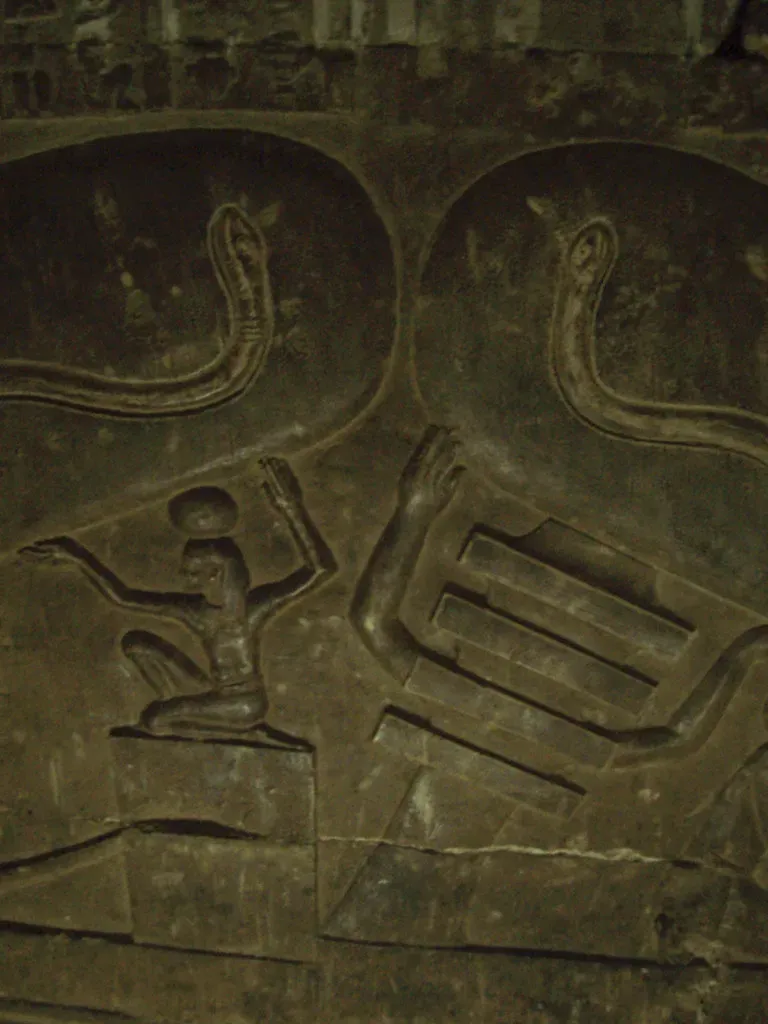
Look again at the famous reliefs, and you notice something easy to miss at first glance: the bulb-like ovals appear to grow out of a lotus plant, whose bulbous base sits on a pedestal or barge. From a purely symbolic Egyptian standpoint, this is textbook material. The lotus is a core emblem of regeneration, rebirth, and the daily rising of the sun, while the snake slithering out of it represents the god emerging from primordial chaos. It is essentially a visual poem about the first light of creation dawning from the dark waters, and inscriptions near these scenes explicitly mention divine emergence and cosmic cycles. The technological reinterpretation flips that reading inside out. In this view, the lotus is a socket or mount, the “barge” a stable platform, and the serpent inside the oval is a filament or plasma discharge pattern in a gas tube. Even the narrowing at the end of the oval, where the snake’s tail seems to connect to the base, is reimagined as a point where current enters the tube. I remember the first time I saw a high-quality photograph of this relief; without any labels, my brain screamed “light bulb” before it registered anything else. But the more you learn about Egyptian symbolic language, the more forced the electrical reading starts to feel. To me, the real lesson here is that our technological age rewires our pattern-recognition so powerfully that we start to see circuitry everywhere – even in a 2,000‑year‑old stone hymn to sunrise.
4. The “Cabling” Under the Bulb and Possible Conduit System
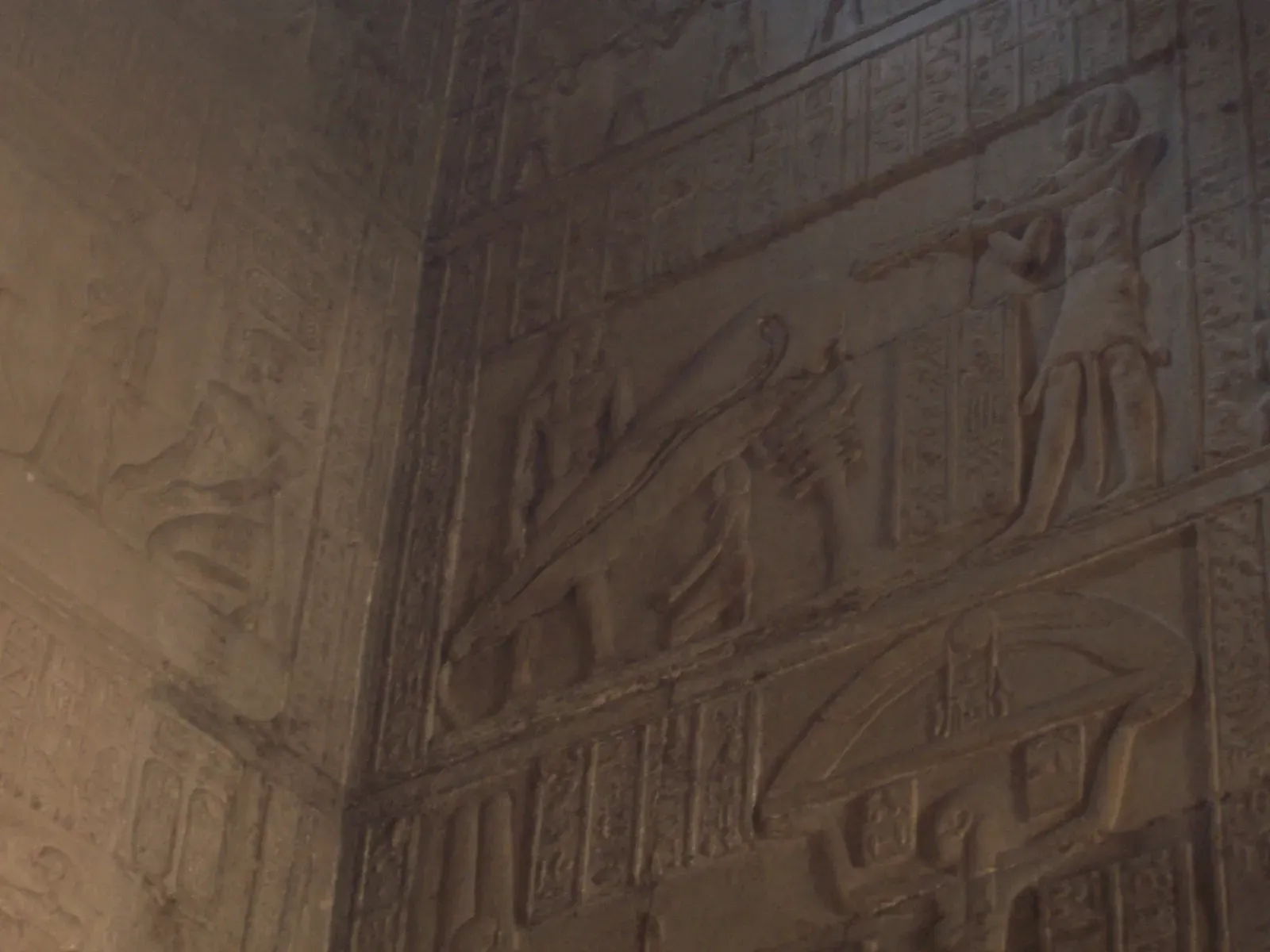
Beneath the elongated oval, another detail grabs the eyes of tech-minded visitors: a thick, elongated object that runs from the base of the “bulb” toward the djed pillar or toward the hands of another figure. To believers in the machinery interpretation, this is straightforward: a cable, a hose, or some sort of conduit transmitting power or energy. They point out that the curve and thickness of this element feel more like a flexible line than a purely decorative flourish, and some go so far as to sketch speculative circuit diagrams over the scene, with the “bulb” as a load and the djed as a kind of transformer or terminal. Archaeologists push back hard on that reading, arguing that what looks like a cable is simply a stylized representation of the hn-container or a mythological support element that appears again and again in Egyptian art, especially in scenes where a god or object is being “lifted” or “raised.” In other words, it is about symbolic support, not the delivery of current. I think this is one of those spots where both sides are partly trapped by their training: an engineer is trained to see flows and connections, an Egyptologist is trained to see ritual and text. If you drop both filters for a second, you end up with a much more honest admission: we do not have a complete, universally satisfying explanation for every single line in this composite image, and our brains happily fill the gap with whatever story we find most comfortable.
5. The Multi‑Bulb Panel and Repeated “Device” Motif
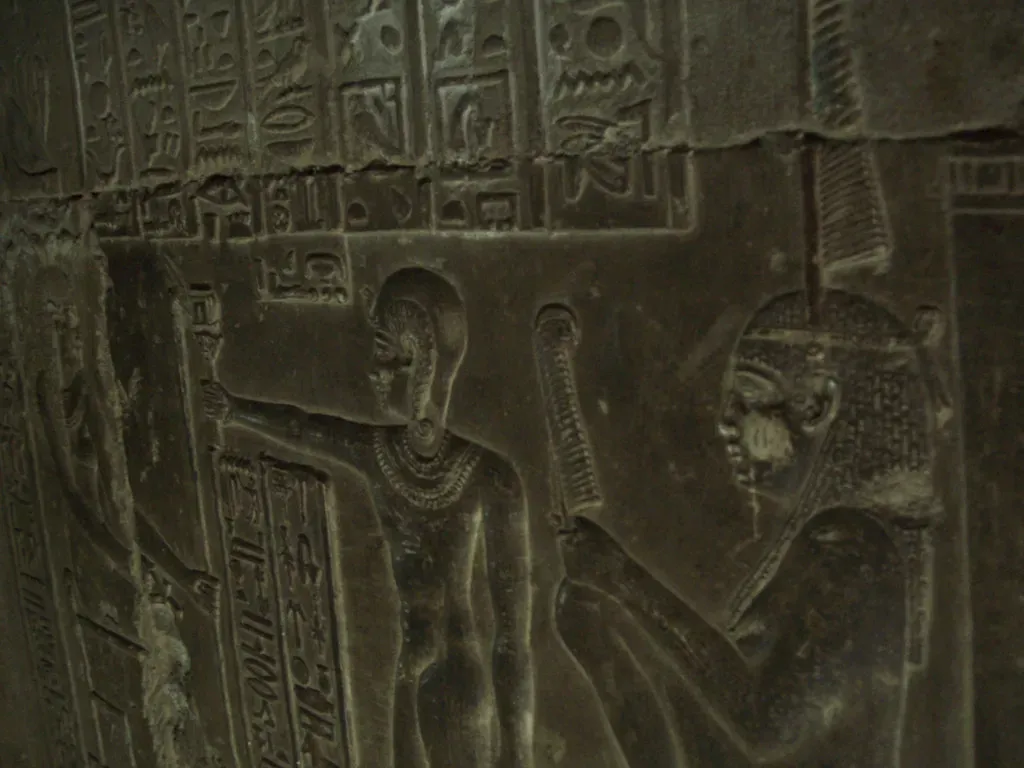
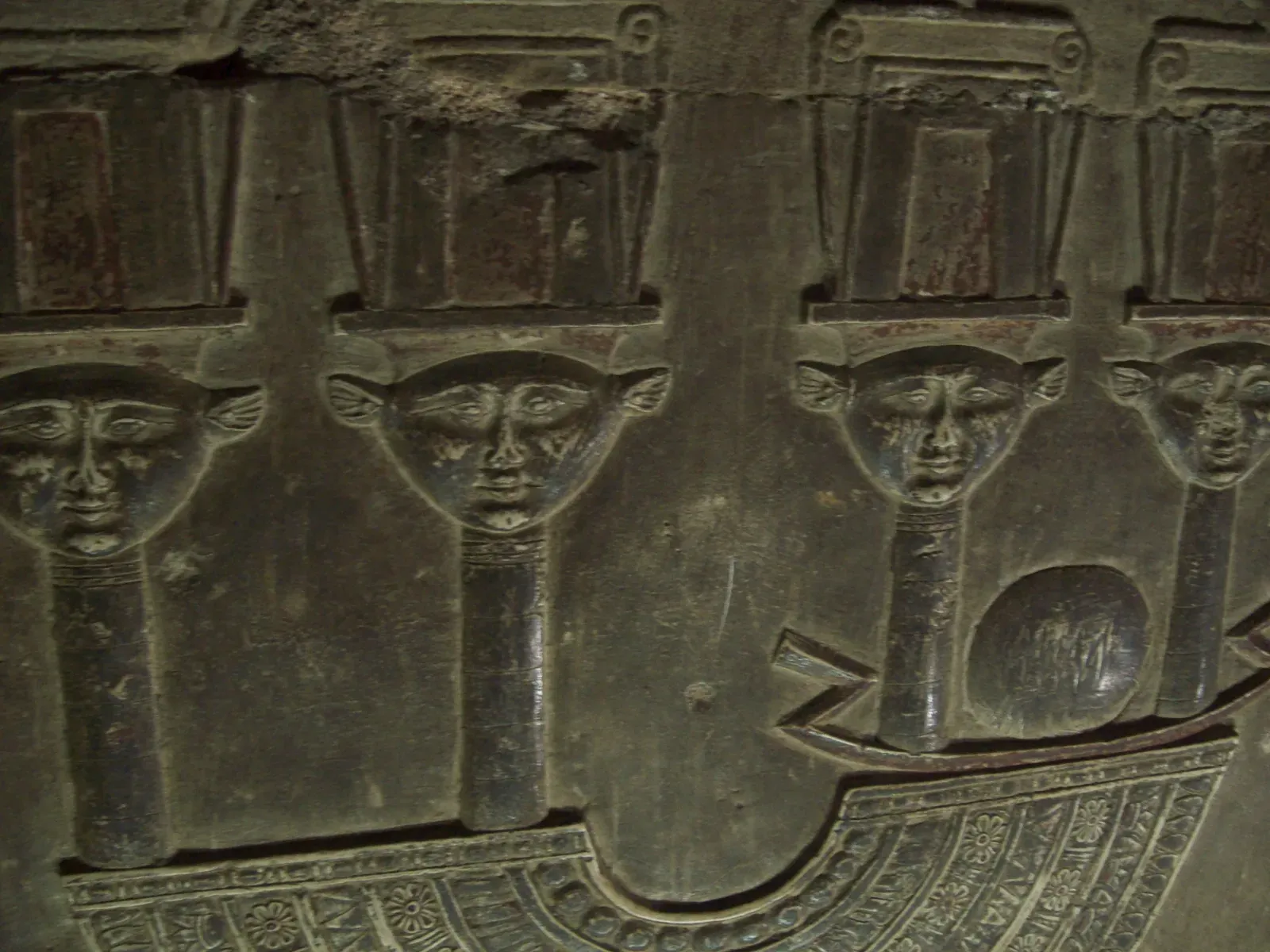
One of the most intriguing aspects of the Hathor crypt reliefs is that the “bulb” motif does not appear just once. In several panels, you see multiple elongated ovals lined up or repeated in sequence, sometimes in slightly different orientations or with different arrangements of supporting figures. To an alternative-technology enthusiast, this repetition feels like a technical diagram or a step-by-step schematic, as if the carvers were documenting variants of a device or different stages of some operation. It is not hard to imagine someone looking at three slightly different “bulbs” and thinking of experimental designs laid out on a lab whiteboard. Conventional scholarship, of course, interprets the repetition through a ritual lens: multiple manifestations of the same deity, multiple phases of the sun’s journey, or a litany of offerings and divine births clustered together for liturgical reasons. The fact that these crypts were used to house cult statues and ritual objects – now long vanished – strongly supports that religious reading. In my opinion, the very existence of this multi‑bulb panel undercuts the simplistic “secret technology” argument. If the ancient Egyptians really had a working electrical system, we would expect a lot more than a single, deeply buried relief series to record it. Yet, at the same time, that repetition is exactly what makes the scene so visually persuasive to modern eyes: when you see an unusual form replicated methodically, your brain instinctively reaches for the language of engineering, even if the original intent was entirely spiritual.
6. The Crypt Context and the “Hidden Machine Room” Feeling
Finally, there is the setting itself, which, in a way, acts like a seventh hieroglyph layered over the others: the crypt. To reach the reliefs, visitors must climb narrow passages, duck under low ceilings, and step into dim, enclosed chambers carved into the thickness of the temple walls. These spaces were restricted even in antiquity, likely accessible only to priests, and they were built to protect something precious – sacred statues, ritual regalia, and elaborate theological programs carved into the stone. When you stand there today, phone flashlight in hand, it is incredibly easy to feel like you have stumbled into an ancient machine room, especially when the walls show images that your modern brain reads as oversized glass tubes and chunky insulators. This “hidden workshop” vibe is, in my view, one of the strongest psychological drivers behind the “ancient machinery” narrative. When a mysterious image is tucked away in a hard-to-reach place, it automatically feels secretive and technical, even if it is simply a locked archive of religious symbolism. Egyptologists emphasize that the accompanying hieroglyphic texts describe divine processions, cosmic births, and the role of these crypts as repositories for god statues – not as power stations or laboratories. But I also get why people come back from Dendera buzzing about the energy of the place and talking about lost technology. The combination of secrecy, strangeness, and stone-carved precision is like catnip for the modern imagination, especially for those of us who grew up on science fiction and diagrams of devices we could not yet understand.
Conclusion: Symbolic Art, Proto‑Tech Dreams, or Both?
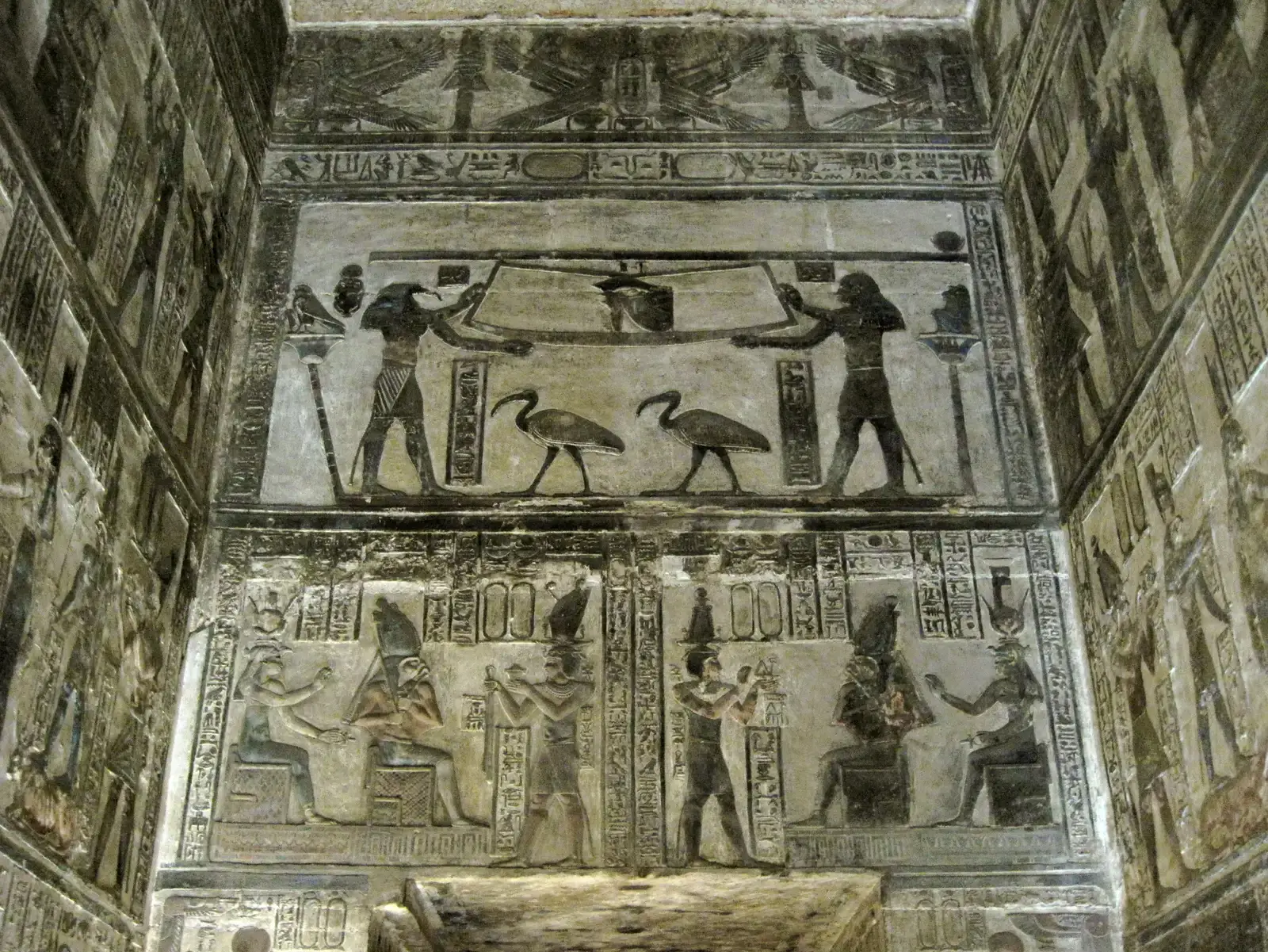
When you strip away the hype and the TV graphics, what remains on the walls of Hathor’s crypts are stone reliefs that mainstream scholars understand as mythological scenes and that a vocal minority insists look exactly like pieces of electrical machinery. The hard evidence overwhelmingly favors the symbolic interpretation: we have consistent Egyptian texts, centuries of religious art using the same lotus, snake, barge, and djed motifs, and absolutely no archaeological trace of wires, glass shards, power sources, or infrastructure that would match a genuine lighting system. From a scientific standpoint, claiming “ancient light bulbs” requires far more than a suggestive shape on a wall, and that bar simply has not been met. At the same time, I do not think the people who feel that technological jolt when they see these carvings are just being foolish. They are experiencing a very human collision between two ways of looking at the world: one that sees stories in everything, and one that sees systems and devices. Personally, I side with the Egyptologists on what the reliefs were meant to be, but I also think the machinery resemblance tells us something important about ourselves – about how our technological age reshapes our imagination so deeply that we project circuits and bulbs onto myths carved two millennia ago. Maybe the real mystery is not whether the ancient Egyptians had forgotten machines, but why our own minds are so eager to rediscover them in every shadowy corner of the past. If you were standing in that crypt, face to face with the “Dendera Light,” which story would your brain choose?