
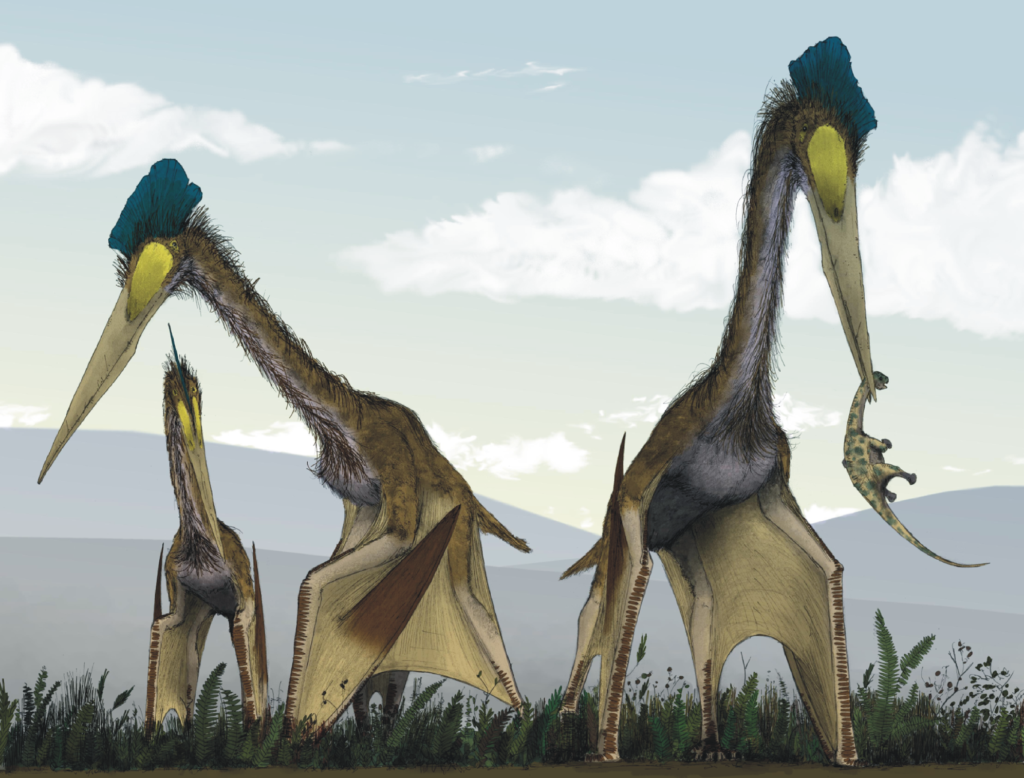
You think jumbo jets are impressive? Imagine standing on an open Cretaceous plain and watching a flying reptile with a wingspan rivaling a small airplane launch itself into the air. That is the scale you are dealing with when you look at Quetzalcoatlus, one of the largest flying animals that has ever existed on Earth. Even more wild, scientists pieced this creature together from mostly fragmentary bones, arguments, and decades of re-analysis. As you walk through these facts, you are not just learning about a giant pterosaur; you are watching how science wrestles with the limits of size, flight, and even imagination itself.
1. You Are Not Looking At A Jurassic Monster At All
You might picture Quetzalcoatlus soaring over herds of long-necked Jurassic dinosaurs, but you would actually be off by tens of millions of years. When you dig into the research, you find that Quetzalcoatlus lived in the Maastrichtian age of the Late Cretaceous, roughly between about sixty‑eight and sixty‑six million years ago, right before the mass extinction that wiped out non‑avian dinosaurs. In other words, if you dropped yourself into its world, you would be closer in time to the asteroid impact than to the age of classic Jurassic giants.
Instead of sharing the skies with early pterosaurs, Quetzalcoatlus dominated a very different ecosystem filled with iconic Late Cretaceous dinosaurs. You would be walking alongside tyrannosaur relatives, the colossal sauropod Alamosaurus, and horned dinosaurs in a landscape that looked more like a floodplain than a primeval jungle. This timing twist flips your mental image: you are not looking at a primitive experiment in flight, but at a highly evolved, last‑generation flying predator thriving just before everything changed forever.
2. Its 50‑Foot Wingspan Was Real, But Its Body Was Shockingly Light
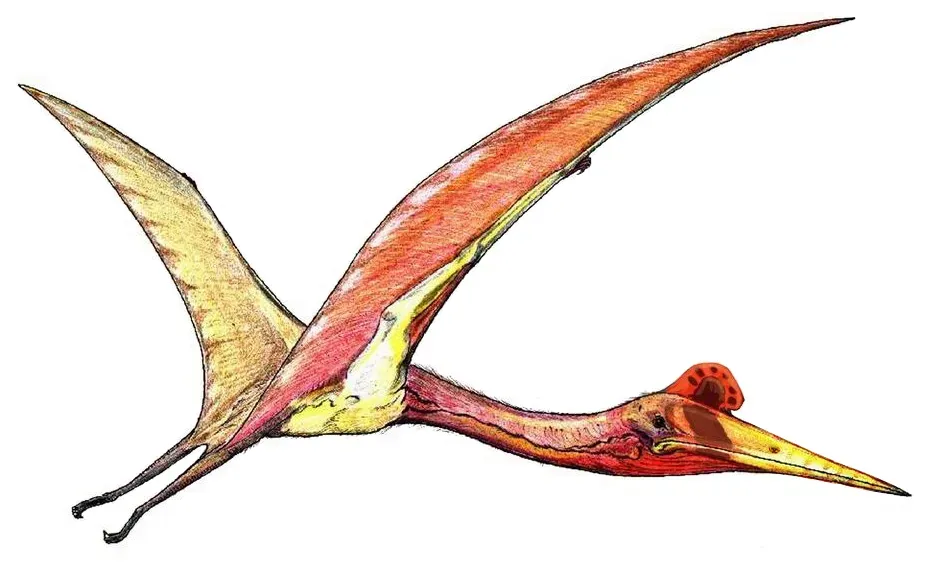
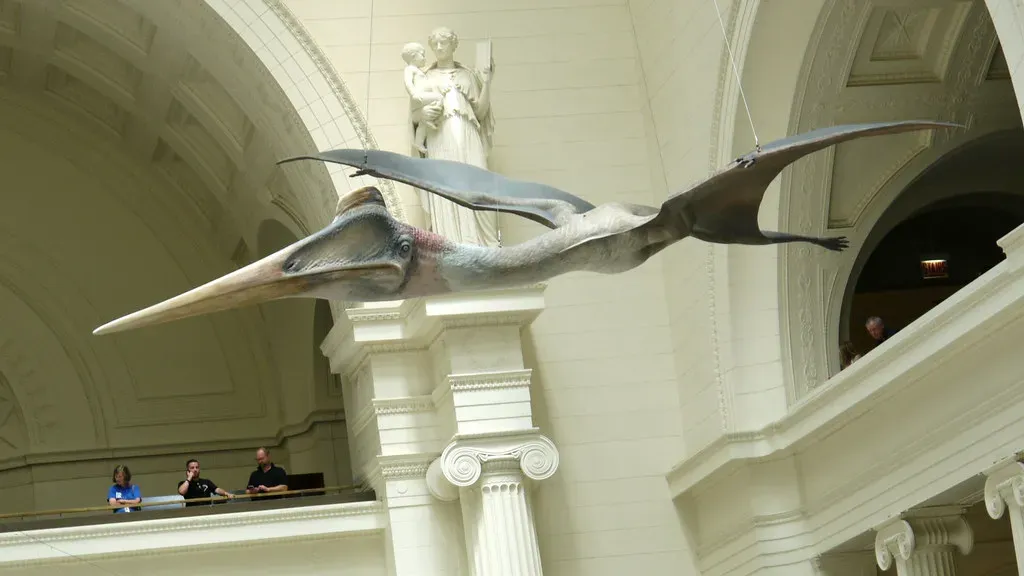
When you read that Quetzalcoatlus may have had a wingspan approaching roughly ten to eleven meters, or around thirty‑three to thirty‑six feet, you might assume you are basically looking at a living cargo plane. Early estimates even pushed that span close to fifty feet based on scaling from smaller relatives, which is why you often see the “fifty‑foot” figure still floating around. Yet when scientists modeled its skeleton and compared it with better known azhdarchid pterosaurs, they consistently found an animal that was huge across the wings, but far lighter than your intuition suggests.
If you could hold one of its limb bones in your hands, you would immediately notice how thin‑walled and hollow it is, more like a carbon‑fiber tube than a solid club. Modern mass estimates often fall somewhere in the range of roughly one and a half to two and a half hundred kilograms for the very largest individuals, putting them closer to a heavy person plus some luggage than to a small airplane. That mix of enormous span and relatively low mass is what allowed Quetzalcoatlus to push flight physics to the edge without snapping under its own weight, and it forces you to rethink what “big” really means in the sky.
3. It Was Built More Like A Giant Stork Than A Dragon
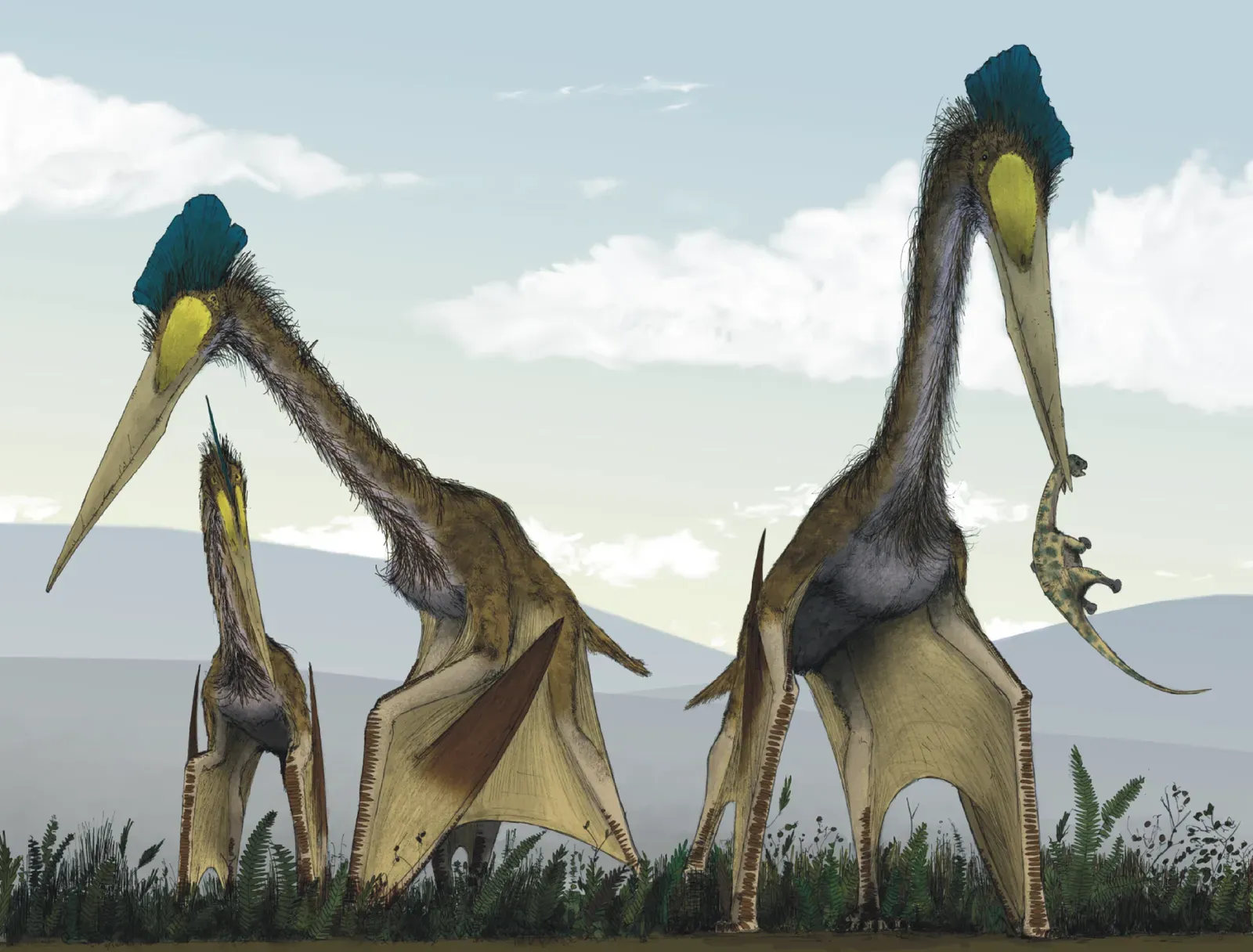
If you go in expecting Quetzalcoatlus to look like a dragon, you miss the stranger truth: its body plan is closer to a terrifying, ultra‑scaled‑up stork or marabou than to any fantasy beast. The head alone stretched several meters, ending in a long, toothless beak perfectly suited to grabbing relatively small prey. Its neck was elongated and fairly stiff, forming a kind of biological crane that let the animal reach down from a tall stance without needing a massive, heavy skull.
Now picture the rest of the animal from your own eye level. When Quetzalcoatlus stood on all fours, its shoulder height likely came close to that of a modern giraffe, and when it raised its head fully you would be looking up at something taller than most two‑story houses. The torso itself was surprisingly compact, almost modest compared with the huge wings and neck. That combination of a lightweight body, long limbs, and a tall stance screams efficient terrestrial movement as much as it does aerial prowess, which leads straight into the next mind‑bending fact.
4. You Would Have Met It More Often On The Ground Than In The Air
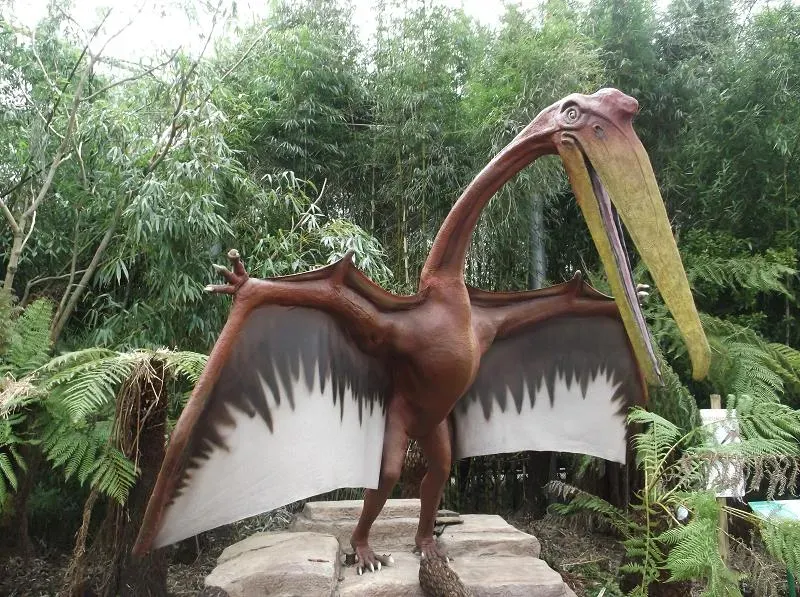
When you first see a model of Quetzalcoatlus in a museum, your brain wants to imagine it constantly circling above like some gigantic vulture. But if you stepped into its world for a day, you would probably encounter it far more often striding over open ground than flapping overhead. The structure of its limbs suggests it was an adept walker, with long, column‑like legs and a center of mass placed in a way that makes a grounded, quadrupedal posture seem natural and efficient.
Many researchers now interpret Quetzalcoatlus and other azhdarchid pterosaurs as primarily terrestrial foragers, patrolling floodplains, river margins, and open landscapes for small animals. In your mind’s eye, you can imagine it stalking like a monstrous stork, plucking up baby dinosaurs, small reptiles, and anything else it could swallow whole. Flight then becomes the way it commuted between feeding grounds or escaped threats, rather than the only place where it hunted. That shift from “airborne hunter” to “giant walking predator that can also fly” changes how you picture nearly every moment of its life.
5. Its Launch Technique Was More Pole Vault Than Bird Takeoff
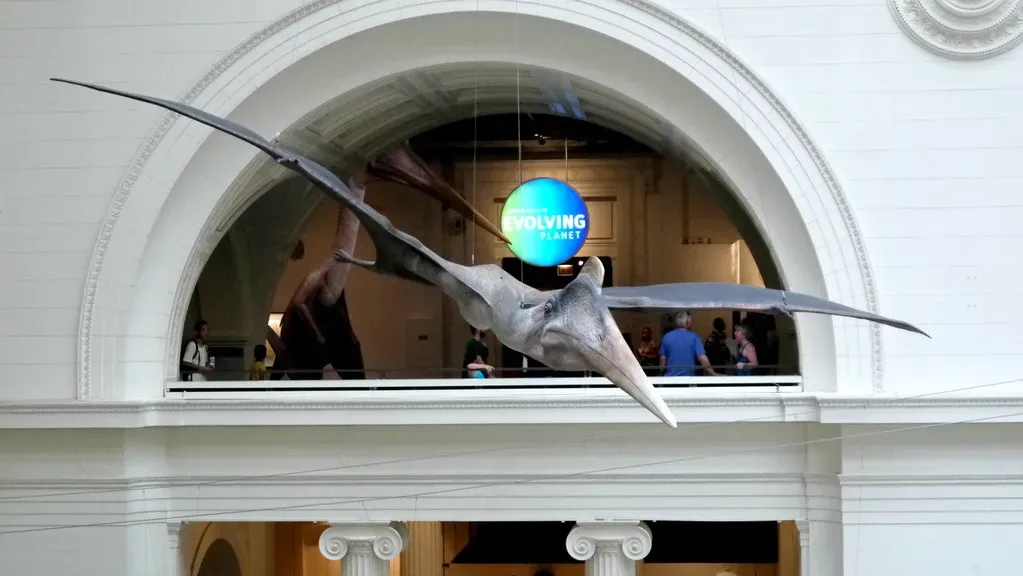
If you try to imagine Quetzalcoatlus taking off like a swan running across a lake, you quickly hit a physics wall: those hind legs are simply not powerful enough on their own for such a huge wingspan. Instead, when you look at the anatomy of its shoulders and forelimbs, you see something far more radical. The front limbs are insanely overbuilt, with massive muscle attachment sites and joints that suggest they were capable of explosive power, not just gentle flapping.
This has led to what might be the most mind‑bending image of all: you are looking at a quadruple‑launch system, where Quetzalcoatlus vaults into the air using its wings like pogo sticks. In this scenario, the animal crouches, then powerfully extends all four limbs, driving itself upward while snapping its wings open in mid‑leap. Once airborne, those long, narrow wings take over, turning the initial jump into soaring flight. When you see it this way, Quetzalcoatlus stops being an oversized bird and becomes something with its own unique, almost alien launch strategy that no living animal can truly match.
6. You Are Still Watching Scientists Argue About Its Lifestyle
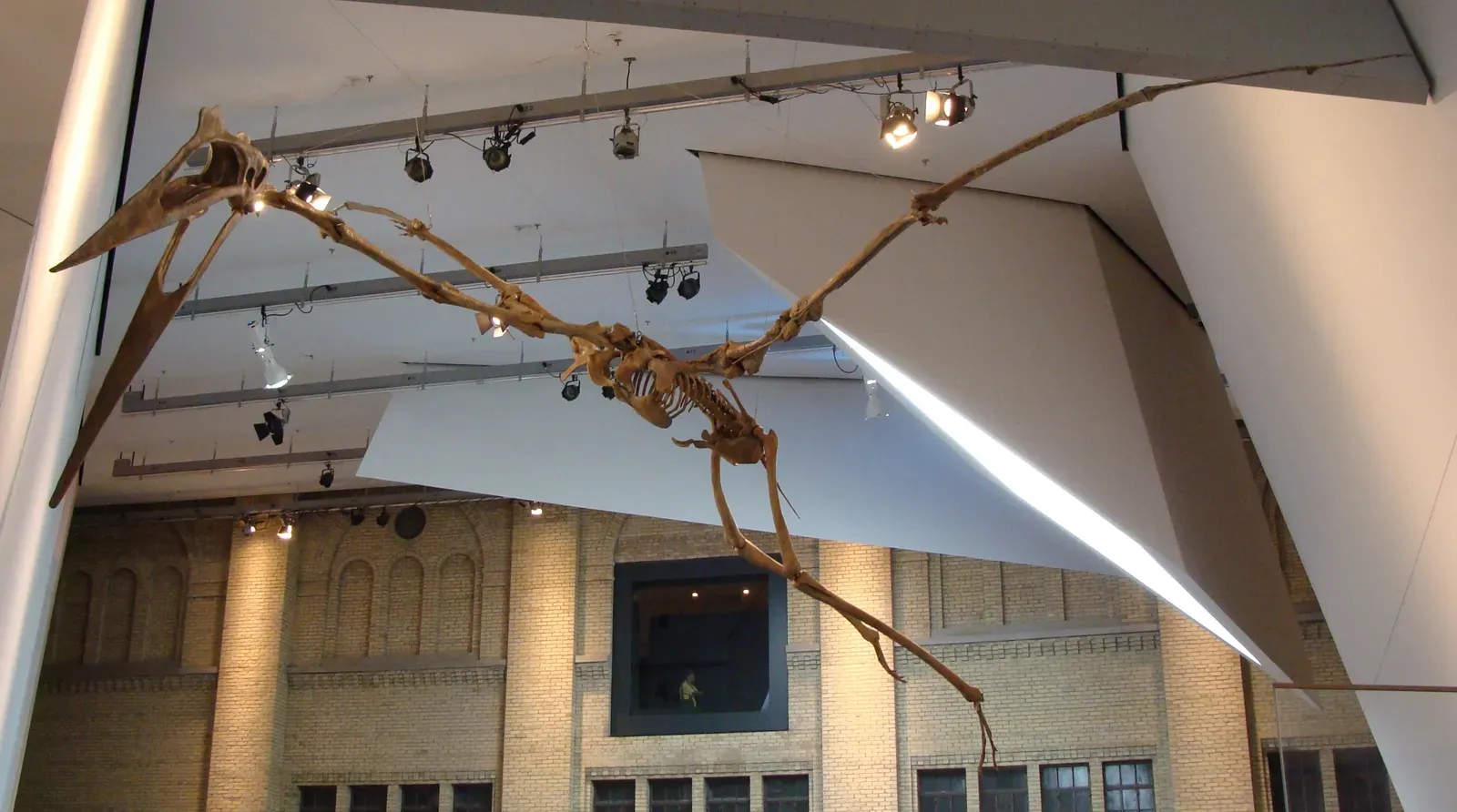
One of the most surprising things you discover when you dive into Quetzalcoatlus research is how many core questions are still up for debate. Because the fossils are fragmentary and come mostly from a few sites in Texas, scientists have to interpolate a lot from related pterosaurs, and that naturally fuels disagreement. Over the years, you can trace a wild arc of hypotheses: shoreline fish skimmer, carrion feeder, wader, aerial hunter, terrestrial stalker, and even near‑flightless ground animal have all been seriously proposed at different times.
Today, the balance of evidence leans toward a capable, long‑range flyer that spent much of its active time on land, hunting or scavenging in open habitats. Yet you are still catching this story mid‑conversation: new analyses of bones, new reconstructions of muscles, and new comparisons with other azhdarchids keep nudging the picture in subtle ways. That uncertainty is not a weakness; it is a reminder that with an animal this extreme, even tiny fossil fragments can rewrite your mental movie. When you follow Quetzalcoatlus, you are not just learning facts; you are watching science evolve in real time.
Conclusion: A Creature That Redefines Your Idea Of “Possible”
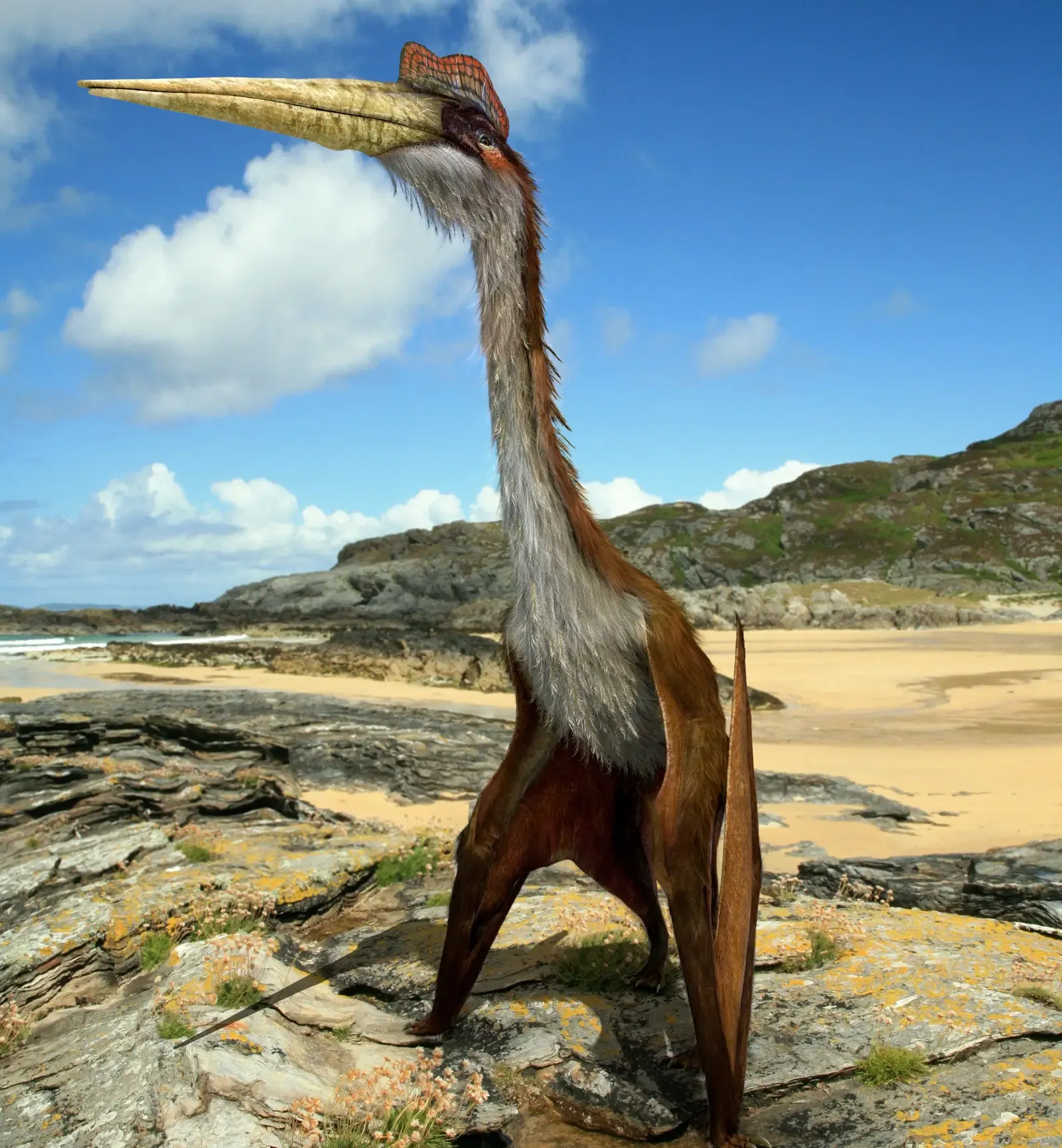
When you step back from all six of these facts, you realize Quetzalcoatlus does something few prehistoric animals manage to do: it forces you to redraw the line of what you think life can get away with. You are dealing with a giraffe‑tall, airplane‑wide, hollow‑boned predator that vaulted into the sky on all fours at the very end of the age of dinosaurs. It is not a myth or a movie monster; it is a real, evidence‑backed organism that stretched physics, anatomy, and ecology to their limits.
The next time you watch a large bird take off or see a glider circling silently overhead, you can mentally scale that scene up to a level that almost breaks your sense of scale, and know that something like that once actually happened above real, Cretaceous ground. You are not just picturing a single spectacular animal, but a whole group of giants that made our planet’s skies stranger and wilder than anything you see today. Now that you know what Quetzalcoatlus really was, does your old image of a “flying reptile” even come close anymore?