
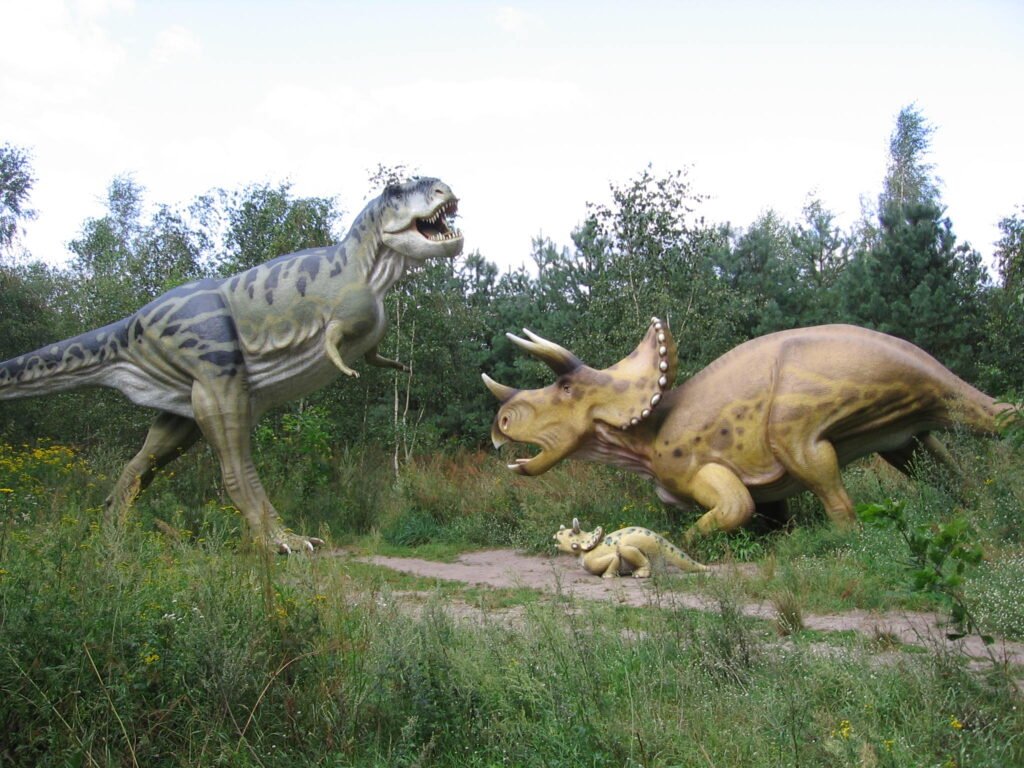
Imagine the most famous dinosaur on Earth – the towering, sharp‑toothed Tyrannosaurus rex – stepping into an ancient arena. Now imagine something even bigger, heavier, or deadlier walking out to face it. The idea alone feels slightly wrong, like watching your childhood superhero get challenged by a stranger you have never heard of. Yet the more paleontologists dig, the clearer it becomes: T. rex was terrifying, but it was not untouchable.
That little truth is what makes this topic so addictive. Who, or rather what, could realistically take down the so‑called king? Once you get past movie myths and look at bones, bite forces, and biomechanics, a handful of dinosaur heavyweights start to look like genuine contenders. Some were longer, some were stronger, some were just absurdly well‑armed. Let’s walk through the line‑up of dinosaurs that, in the right conditions, might actually beat a T. rex in a one‑on‑one showdown.
Spinosaurus: The Aquatic Giant That Outweighed T. Rex
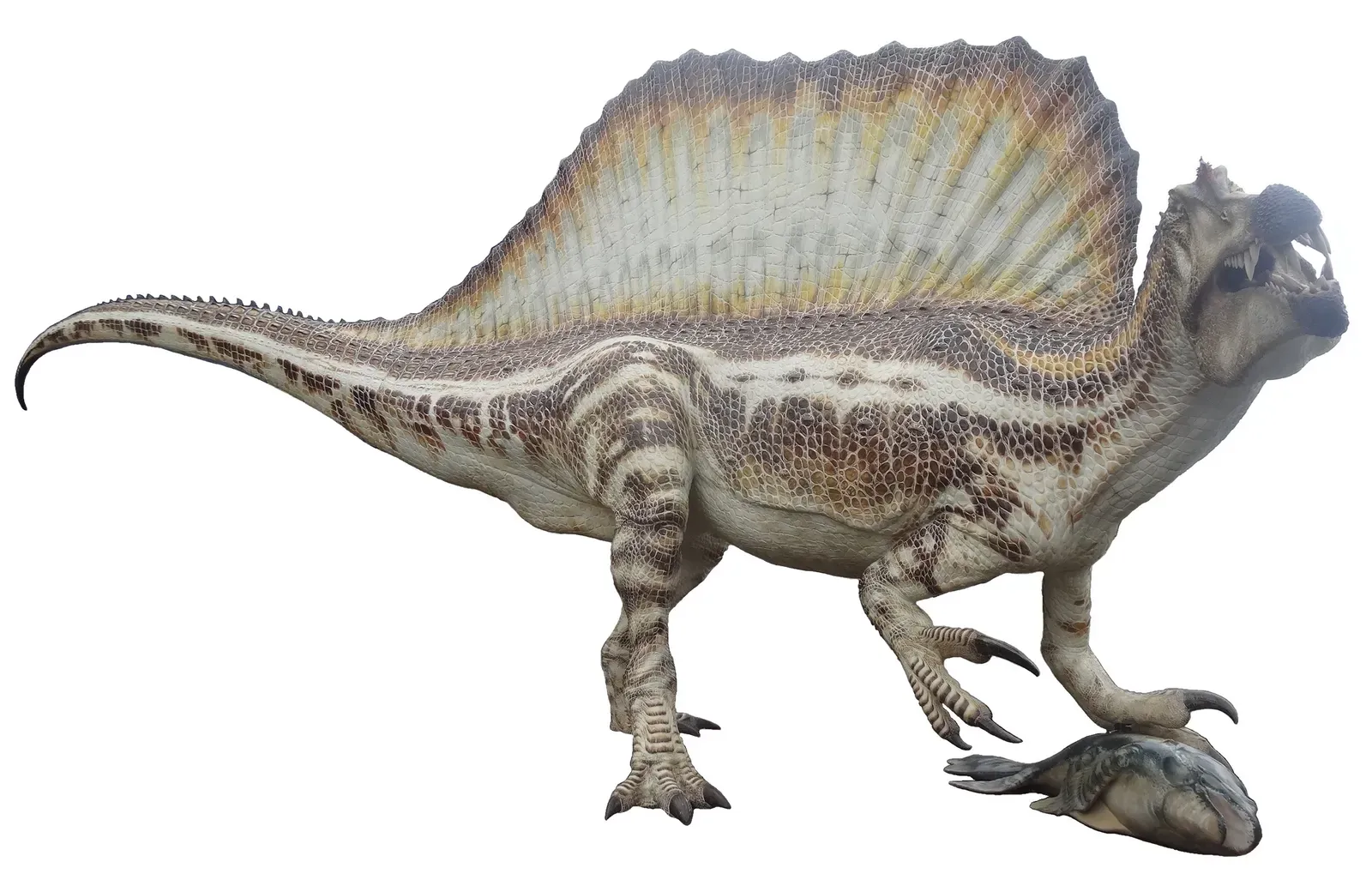
If any dinosaur feels built to dethrone T. rex, it is Spinosaurus. This predator was longer overall, with estimates placing it several meters longer than a large T. rex and likely heavier in many reconstructions. It had a crocodile‑like skull lined with conical teeth, ideal for gripping slippery prey. Add in those long, powerful arms tipped with huge claws and you suddenly have a very different style of apex hunter, less of a bulldozer and more of a semi‑aquatic ambush machine.
In a swampy or riverine environment, the odds start shifting away from T. rex and toward Spinosaurus. Think of it like pitting a lion against a giant crocodile in deep water: the lion is lethal, but it is fighting on the crocodile’s home turf. Spinosaurus likely spent a lot of time swimming and hunting fish, and its body seems adapted for that lifestyle. On land, it might have been clumsier than T. rex, but near water it could have used its size, reach, and knowing the terrain to drag a tyrannosaur into a brutal, drawn‑out fight it did not want.
Carcharodontosaurus: The “Shark‑Toothed” Meat Shredder
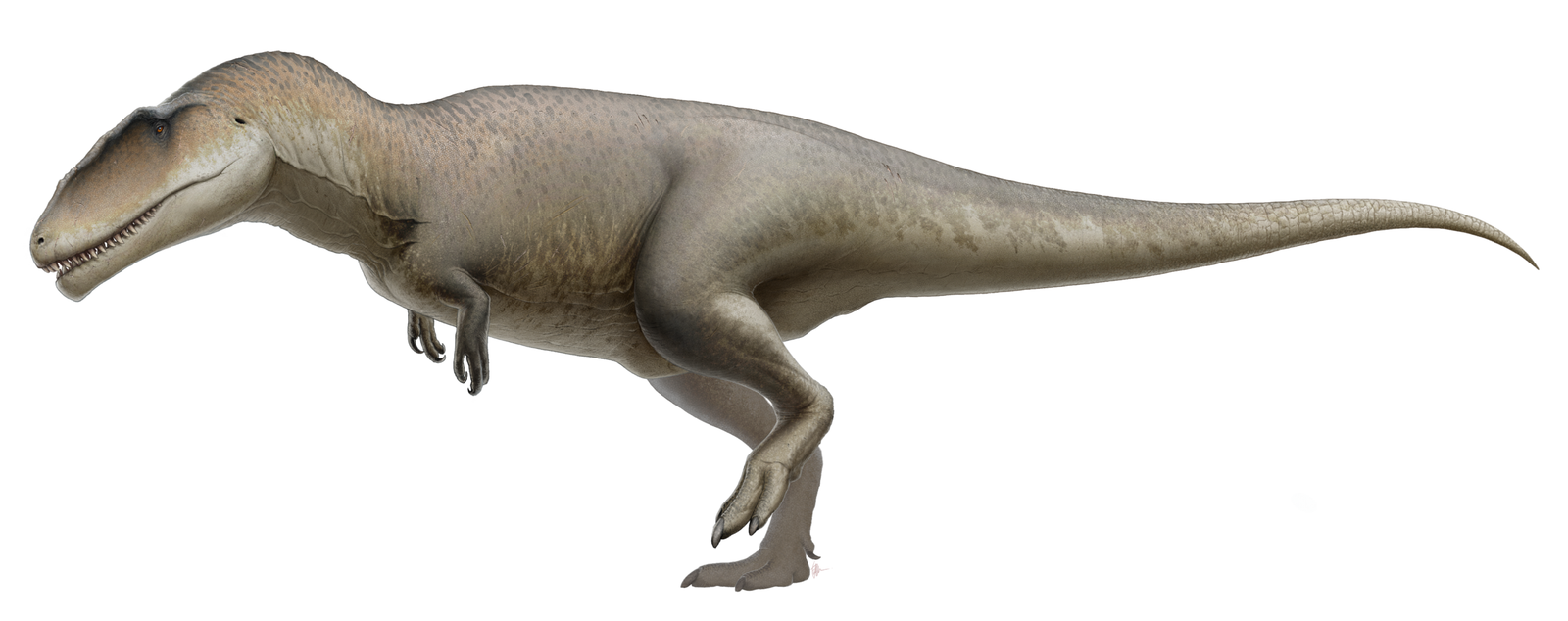
Carcharodontosaurus was a massive carnivore from what is now northern Africa, and its very name hints at its main weapon: serrated, blade‑like teeth similar to those of a great white shark. While T. rex had thick, bone‑crushing teeth ideal for smashing through armor and skeletons, Carcharodontosaurus leaned into slicing. Its skull was long and relatively low, built to deliver wide, slashing bites that could open huge wounds rather than just crush. In a duel, that difference in bite style matters a lot.
Imagine a fight where one combatant relies on singular, devastating crunches and the other on repeated, deep cuts that cause major blood loss. A large Carcharodontosaurus rivaled T. rex in length and mass, and with its cutting teeth and strong neck muscles, it could quickly inflict multiple slashing injuries. Over minutes rather than seconds, those wounds could be fatal, even to something as tough as T. rex. In open terrain where agility and repeated biting runs were possible, the shark‑toothed giant would not be an easy opponent for any tyrannosaur.
Giganotosaurus: The Long‑Bodied Titan Of The South
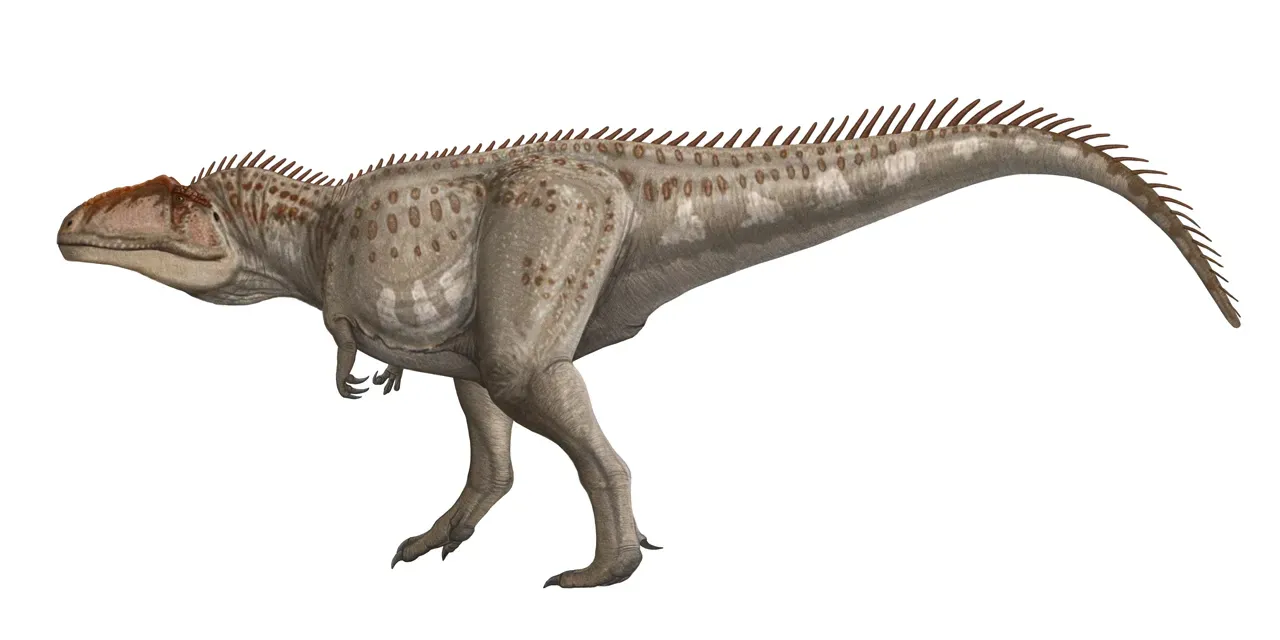
Giganotosaurus from South America often shows up in “biggest theropod” debates, and for good reason. Many estimates place it slightly longer and roughly similar in mass to a T. rex, with a large but more elongated skull and a somewhat lighter‑built body. Rather than being purely about raw bite force, Giganotosaurus may have relied on teamwork and hit‑and‑run tactics when hunting enormous sauropods, meaning it was built to deal with creatures much larger than a tyrannosaur.
In a straight fight, Giganotosaurus likely could not match the bone‑crushing bite strength of T. rex, but it might not need to. A longer body and long, powerful tail could mean better reach and the ability to circle and strike from angles that made it harder for T. rex to land a decisive bite. Think of it as a heavyweight fighter with slightly longer reach and a style focused on cutting and tiring an opponent rather than going for an instant knockout. Over time, that could add up to a serious advantage against even the most infamous carnivore from the north.
Mapusaurus: The Pack Hunter With Strength In Numbers
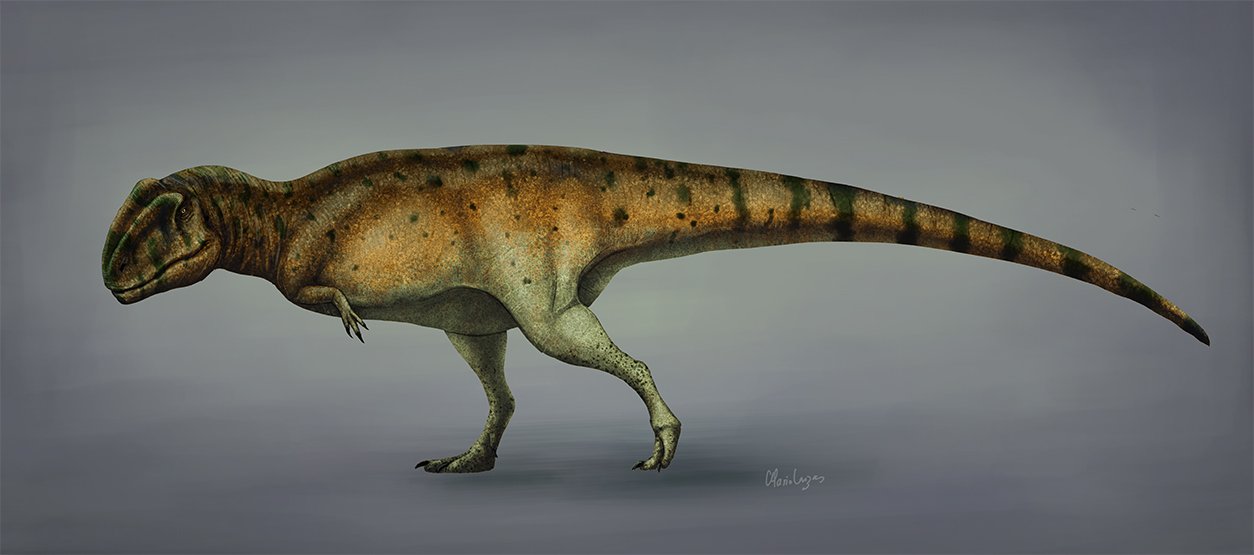
Mapusaurus, another giant from South America, is especially interesting because of where its fossils were found. Multiple individuals have been uncovered together, which many paleontologists interpret as evidence of some form of group behavior. If that reading is right, Mapusaurus might not have needed to beat a T. rex alone; it could have done it with backup. A solitary T. rex, no matter how strong, would be in trouble against several coordinated or at least loosely cooperative predators its own size.
Picture a group of lions taking on a single huge buffalo, but scale everything up into multi‑ton predators with massive jaws. Even if each Mapusaurus was only roughly in the same size range as T. rex, two or three attacking from different angles could overwhelm it. One could harass and distract while others moved in for crippling bites to the legs or flanks. While we cannot replay the exact behavior, the fossil pattern hints that T. rex, typically thought of as a mostly solitary hunter, would be at a disadvantage against a social super‑predator like Mapusaurus.
Therizinosaurus: The Nightmare Herbivore With Scythe Claws
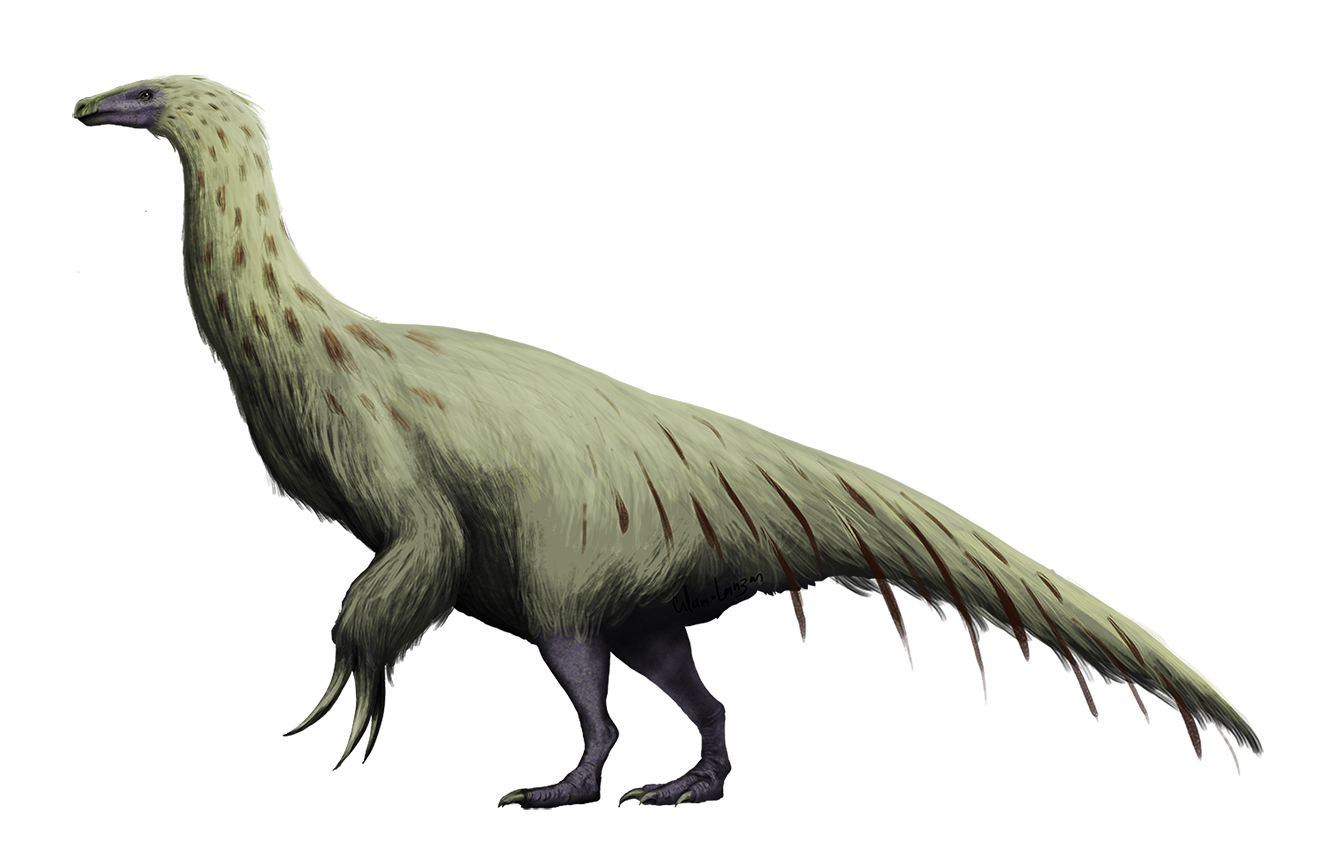
Therizinosaurus is the curveball on this list, because it was not a carnivore at all. This towering, feathered, pot‑bellied herbivore carried some of the most absurd weapons in dinosaur history: gigantic, sickle‑like claws that could reach the length of a grown human’s arm. While its head and jaws were not designed for killing large prey, those claws were serious business. They could have been used for foraging, but in a defensive fight, they would have turned Therizinosaurus into something like a multi‑ton, angry, walking bear crossed with a slashing machine.
Now imagine a T. rex charging at that. To get a killing bite, it would need to close distance, bringing its head and neck right into the danger zone of those claws. One or two powerful, well‑timed swipes could rip open muscle, sever tendons, or inflict deep wounds to the face and neck. In a way, T. rex would face the same problem modern predators have with porcupines or horned animals: the meal might simply not be worth the risk. Against a defensive, cornered Therizinosaurus, even the mighty tyrant might decide that retreat was the smarter play if it wanted to avoid being shredded.
Ankylosaurus: The Living Tank That Could Shatter Bone
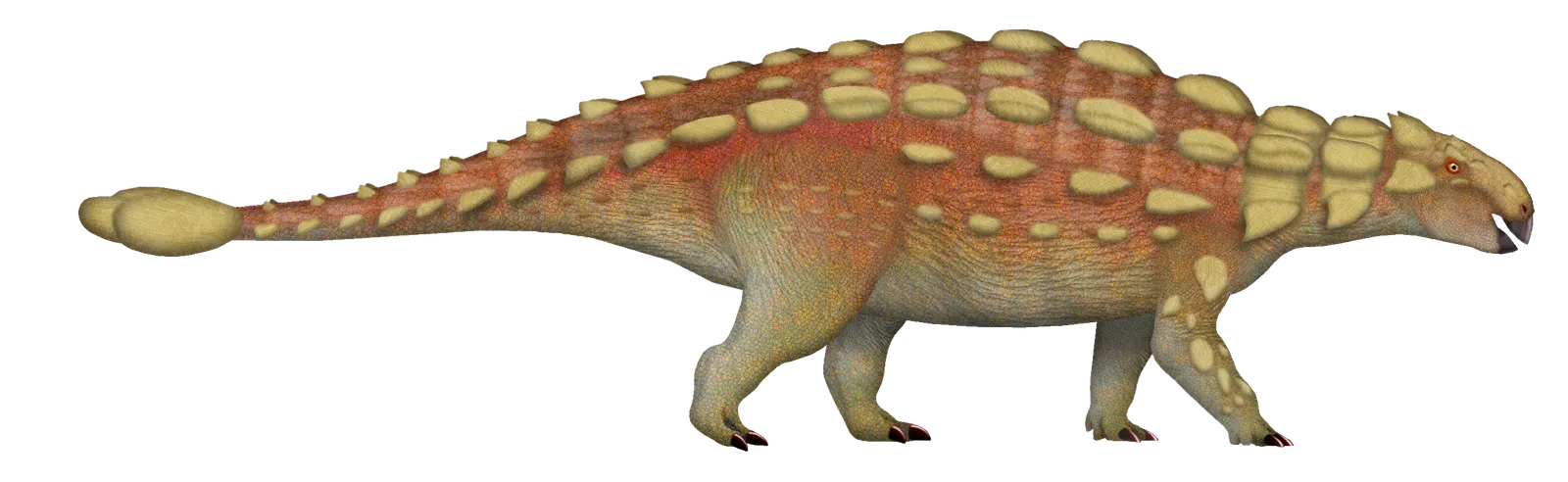
If you wanted to design a dinosaur specifically to give T. rex a hard time, Ankylosaurus would be close to perfect. Its entire body was wrapped in heavy armor plates and studs, with some of the thickest defensive coverings known in any dinosaur. Many vital areas were protected by bony shields, and its low profile made it hard to flip or expose the softer underside. To top it off, Ankylosaurus carried a massive club at the end of its tail, formed from fused bone and swung by powerful muscles, like a prehistoric wrecking ball.
In a confrontation, T. rex’s usual tactic of bone‑crushing bites becomes much less straightforward. Instead of sinking its teeth into soft tissue, it would be dealing with armor and a dangerously mobile tail club that could strike with force strong enough to break bones. There is a reasonable chance a well‑placed blow could snap a tyrannosaur’s leg or damage its ribs, turning the hunter into the hunted. I always picture this match‑up like a sports car trying to ram a reinforced military vehicle: if it misjudges the angle, the sleek attacker crumples first.
Triceratops: The Horned Rival Built To Meet T. Rex Head‑On
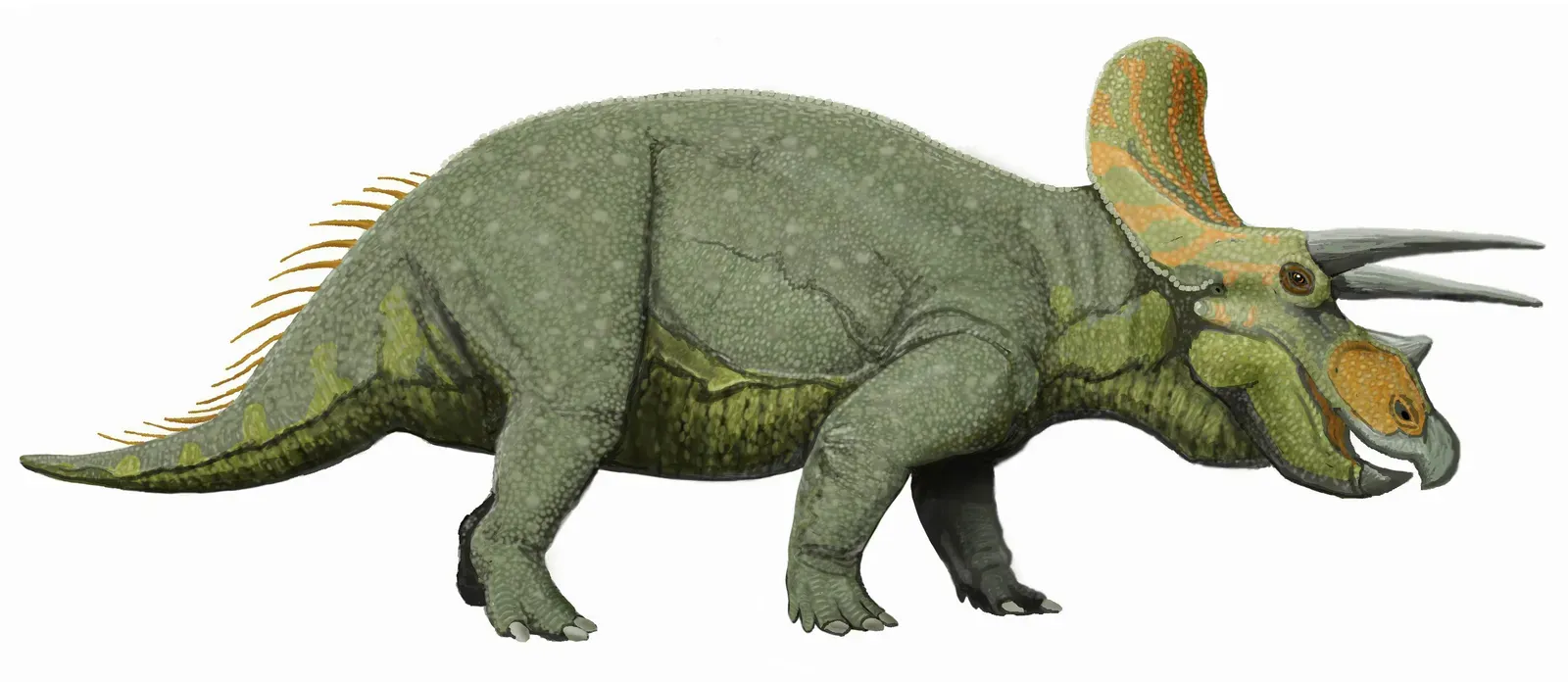
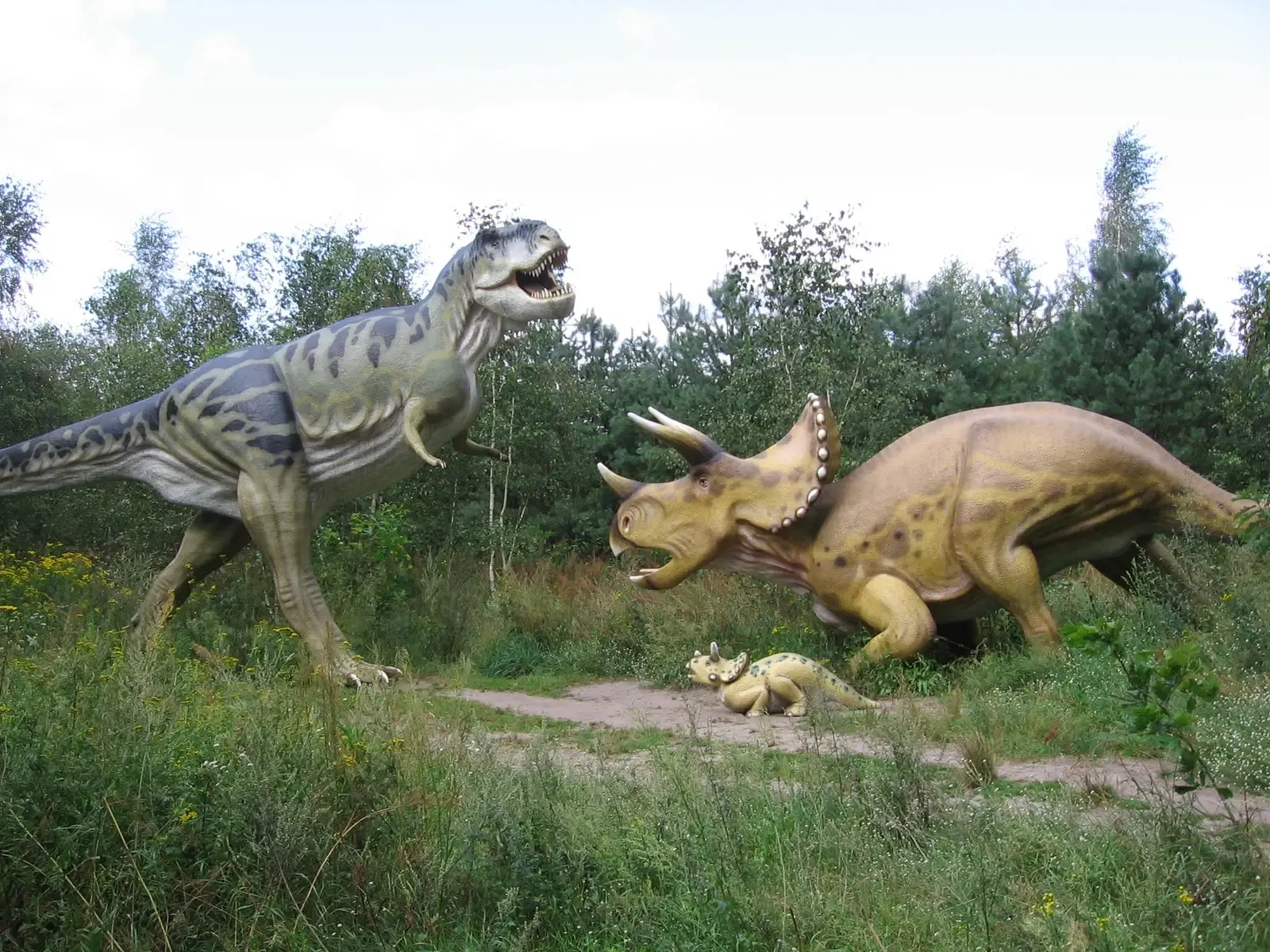
Unlike most of the dinosaurs on this list, Triceratops actually lived alongside T. rex, and the fossil record suggests they really did battle. Paleontologists have found Triceratops skulls with healed bite marks that match tyrannosaur teeth, meaning some victims survived initial attacks. That alone tells us these three‑horned herbivores were not pushovers. With a deep, strong skull, a solid neck frill, and two long brow horns plus a shorter nose horn, a charging Triceratops was more like a multi‑ton armored tank with spears attached to the front.
Face to face, the risk to T. rex was enormous. To land a lethal bite, it needed to get around or behind the frill, or attack from the side. But that meant exposing its chest and legs to the horns of an animal that could likely accelerate surprisingly fast over short distances. A single properly aimed horn thrust could gut the predator or puncture vital organs. I like to think of this pair as the ultimate ancient rivalry: the apex predator versus the horned titan it could not fully dominate. In any given clash, Triceratops absolutely had a realistic shot at winning and walking away.
Conclusion: The “King” Was Fearsome, Not Invincible
Tyrannosaurus rex deserves its fame. It had one of the most powerful bites of any land animal ever known, a robust skeleton, keen senses, and a body built to crush and kill. But when you line it up against Spinosaurus, Carcharodontosaurus, Giganotosaurus, Mapusaurus, Therizinosaurus, Ankylosaurus, and Triceratops, a pattern appears: power in nature is always relative. In certain habitats, at certain sizes, and under certain conditions, each of these dinosaurs could exploit weaknesses in T. rex’s build or tactics and come out on top. The so‑called king was part of a brutal, balanced food web, not a mythic monster that ruled all time and space.
Personally, I find that more exciting than any movie portrayal. Knowing that T. rex had rivals, equals, and even underdogs that could turn the tables makes the ancient world feel more real and less like a simple superhero story. It reminds us that evolution does not hand out permanent crowns; it runs endless experiments, and even the giants are just one twist of the story. When you picture these match‑ups, which contender do you think would have surprised the tyrant lizard the most?