Dinosaurs have captivated our imagination for generations. You probably grew up picturing them as enormous, lumbering beasts with walnut-sized brains, bellowing across barren landscapes with zero regard for anything but eating. Honestly, it’s a dramatic image. The reality, as paleontologists keep discovering, is so much stranger and more compelling than the movies ever dared to show.
Every few years, a fossil gets pulled from the ground somewhere on this planet, and suddenly, everything scientists thought they knew gets thrown into question. It’s not just the bones that surprise us. It’s what those bones reveal about how these creatures actually lived, hunted, raised their young, and competed for survival. Some of these revelations are deeply counterintuitive.
Get ready to be genuinely surprised. Here are six of the most unexpected fossil discoveries that fundamentally changed how we understand dinosaur behavior. Let’s dive in.
The Maiasaura Nest: Dinosaurs Were Devoted Parents
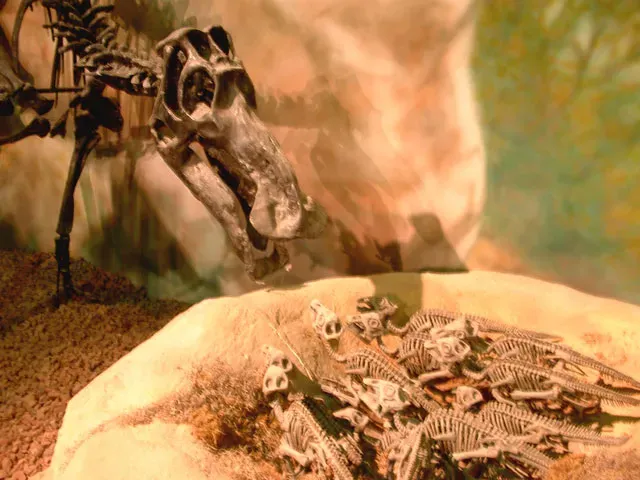
Here’s a truth that should stop you in your tracks. For most of the 20th century, you would have been taught in school that dinosaurs were essentially cold, reptilian machines. They laid their eggs and walked away without a second glance, the way modern sea turtles do. That assumption collapsed spectacularly in the late 1970s in Montana.
The first fossils of Maiasaura were discovered by paleontologists Jack Horner and Robert Makela in 1978 in the Two Medicine Formation. The discovery included colonies of fossilized nests containing many still-intact eggs and adult specimens, which led paleontologists to believe that newborn hatchlings stayed with the herd, and that their parents provided for them, at least for a while. This was a jaw-dropping reversal of conventional wisdom. Think of it like finding out that crocodiles secretly moonlight as helicopter parents.
Upon hatching, fossils of baby Maiasaura show that their legs were not fully developed and thus they were incapable of walking. Fossils also show that their teeth were partly worn, which means that the adults brought food to the nest. The hatchlings grew from a size of roughly 40 to 150 centimetres long in the span of their first year. You can almost picture the scene: a massive duck-billed dinosaur methodically ferrying plant material back to a nest of helpless, demanding little hatchlings. It’s surprisingly touching.
Maiasaura lived in herds and it raised its young in nesting colonies. The nests in the colonies were packed closely together, like those of modern seabirds, with the gap between the nests being around 7 metres, less than the length of the adult animal. The nests were made of earth and contained roughly 30 to 40 eggs laid in a circular or spiral pattern. The social complexity implied by this layout is staggering, and it completely rewrote the textbook on what dinosaur family life actually looked like.
The Dueling Dinosaurs: T. rex Had a Smaller, Separate Competitor All Along
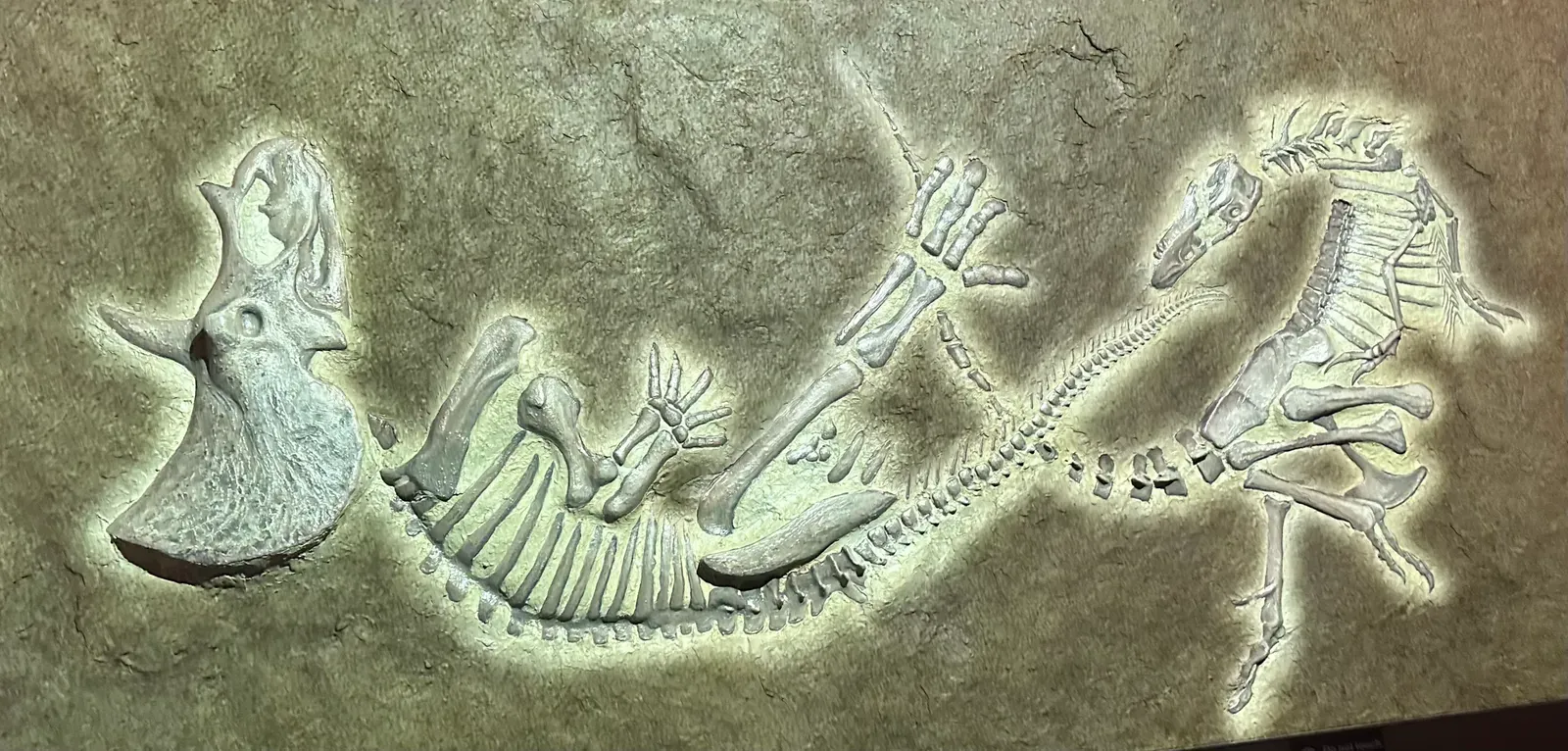
Imagine being completely certain about the identity of a creature, only to discover that what you thought was a teenager was actually a fully grown, separate species that lived right alongside the most famous predator of all time. That is essentially what happened with the legendary “Dueling Dinosaurs” fossil, unearthed in Montana, and the repercussions are still rattling through paleontology right now.
The fossil contains two dinosaurs locked in prehistoric combat: a Triceratops and a small-bodied tyrannosaur. That tyrannosaur is now confirmed to be a fully grown Nanotyrannus lancensis, not a teenage T. rex, as many scientists once believed. For decades, researchers had assumed those medium-sized tyrannosaur fossils were just juvenile T. rex specimens. The debate was arguably the biggest ongoing argument in the entire field.
Using growth rings, spinal fusion data and developmental anatomy, the research team demonstrated that the specimen was around 20 years old and physically mature when it died. Its skeletal features, including larger forelimbs, more teeth, fewer tail vertebrae, and distinct skull nerve arrangements, are features fixed early in development and biologically incompatible with T. rex. In other words, this was never going to grow into a T. rex. Ever. It was its own creature, living its own life, hunting in a world also dominated by the giant it superficially resembled.
This new evidence reveals that those studies were based on two entirely different animals, and that multiple tyrannosaur species inhabited the same ecosystems in the final million years before the asteroid impact. Nanotyrannus lived alongside T. rex and likely competed with young T. rex for space and prey. The predator landscape of the Late Cretaceous was far more complex and competitive than anyone previously imagined. Honestly, it changes everything about how you picture those final days of the non-avian dinosaurs.
Spinosaurus and the Paddle Tail: A Dinosaur That Conquered the Water
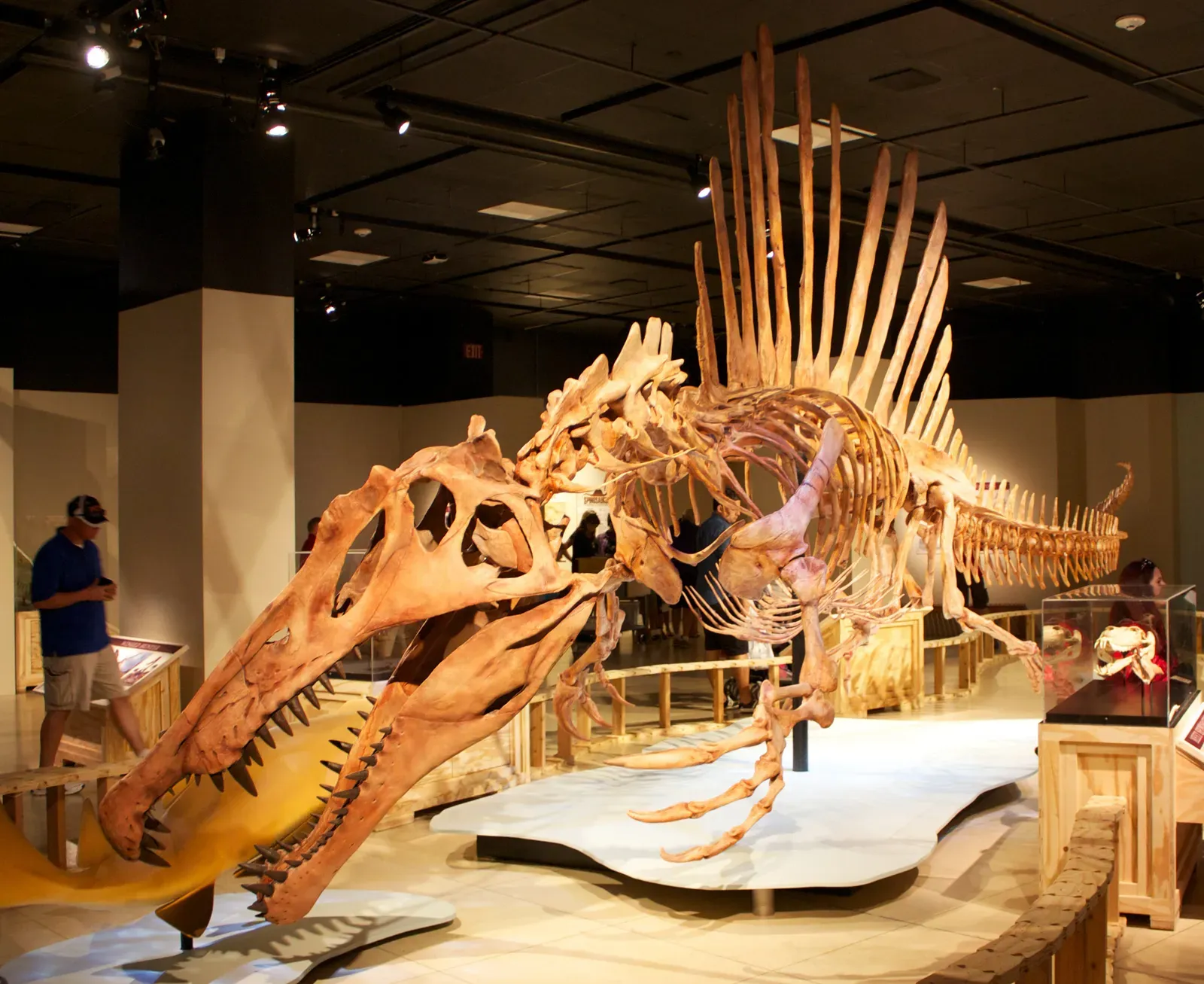
You have probably spent your whole life assuming that dinosaurs were land animals, full stop. Some were big, some were small, some had feathers. But they all lived on land, right? Then came the Spinosaurus tail fossil, and suddenly that assumption had a problem. A big, sail-backed, river-monster-shaped problem.
Spinosaurus aegyptiacus had a paddle-shaped tail that may have helped the predator slice through the water with the grace of a crocodile. The fossilized tail, unearthed from rocks roughly 95 million years old in Morocco, is the most complete Spinosaurus tail ever recovered. Its unusual shape suggests that this dinosaur may have been aquatic, contrary to prevailing wisdom that dinosaurs were solely land dwellers. Think about that for a moment. The largest known carnivorous dinosaur wasn’t just wading in rivers to snag fish. It may have been actively swimming after them.
Researchers revealed that its long, narrow tail was deepened by tall neural spines and elongated chevron bones, forming a flexible, paddle-like structure comparable to the tails of newts and crocodilians. Experiments showed this tail could generate significantly more thrust in water than the tails of land-dwelling theropods, suggesting Spinosaurus could swim effectively, akin to modern crocodilians. This led to the hypothesis that Spinosaurus had a lifestyle comparable to alligators, spending long periods in the water while hunting. It’s a genuinely radical idea that still sparks fierce debate.
To be fair, not everyone is fully convinced. Two stages are clarified in the evolution of Spinosaurus, which is best understood as a semiaquatic bipedal ambush piscivore that frequented the margins of coastal and inland waterways. Whether you call it fully aquatic or a dedicated shoreline predator, the behavioral implications are enormous. On that spectrum, Spinosaurus sits at the far extreme, more water-adapted than any other known non-avian dinosaur, even if it never fully abandoned the land. The controversy, far from being settled, continues to refine our understanding of how flexible and experimental dinosaur lifestyles could truly be.
Mussaurus and the Earliest Herd Behavior: Social Life Began Much Sooner Than Expected
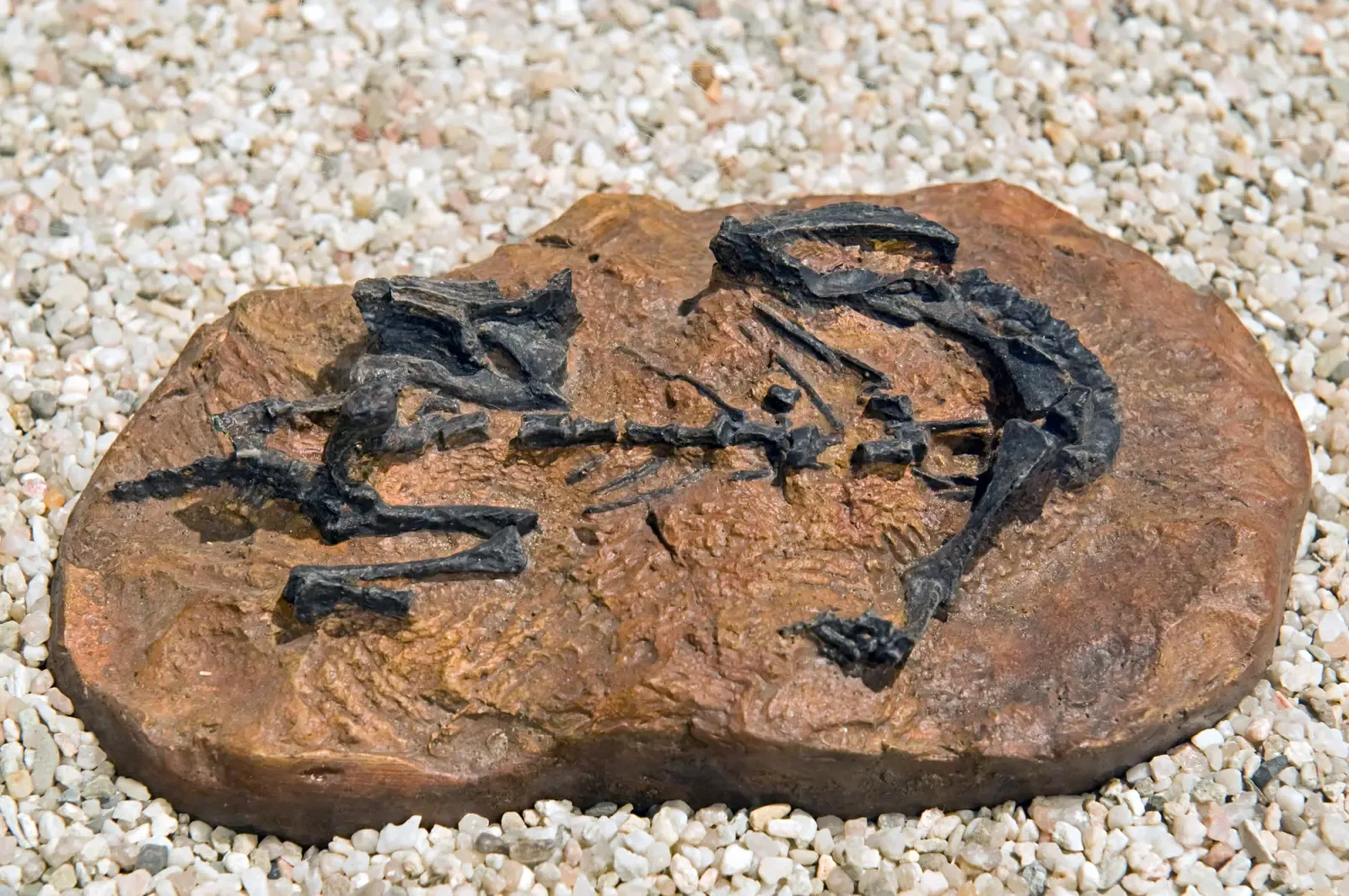
You might assume that complex social behavior in dinosaurs came late in their evolutionary story, emerging only in the large, sophisticated species of the Cretaceous. That assumption took a significant hit when researchers began carefully excavating a fossil bed in southern Patagonia and found something far more ancient and far more socially organized than anyone had predicted.
Researchers from MIT, Argentina, and South Africa detail their discovery of an exceptionally preserved group of early dinosaurs that shows signs of complex herd behavior as early as 193 million years ago, which is roughly 40 million years earlier than other records of dinosaur herding. Let that sink in for a second. Social herding, the kind of behavior you’d expect from a sophisticated, modern mammal, was already happening nearly 200 million years ago among dinosaurs that most people have never even heard of.
Since 2013, members of the team have excavated more than 100 dinosaur eggs and the partial skeletons of around 80 juvenile and adult dinosaurs from a rich fossil bed in southern Patagonia. Using X-ray tomography imaging, they were able to examine the eggs’ contents without breaking them apart, and discovered preserved embryos within, which they used to confirm that the fossils were all members of Mussaurus patagonicus, a plant-eating dinosaur that lived in the early Jurassic period. The use of medical imaging technology on 193-million-year-old eggs is, itself, a kind of miracle worth pausing on.
The team’s results represent the earliest evidence of social herding among dinosaurs. Living in herds may have given Mussaurus and other social sauropodomorphs an evolutionary advantage. These early dinosaurs originated in the late Triassic, shortly before an extinction event wiped out many other animals. For whatever reason, sauropodomorphs held on and eventually dominated the terrestrial ecosystem in the early Jurassic. Social behavior, it turns out, may have been a key reason why certain dinosaur lineages survived when others didn’t.
Spicomellus and Full-Body Armor: Defensive Behavior Evolved Far Earlier Than Thought
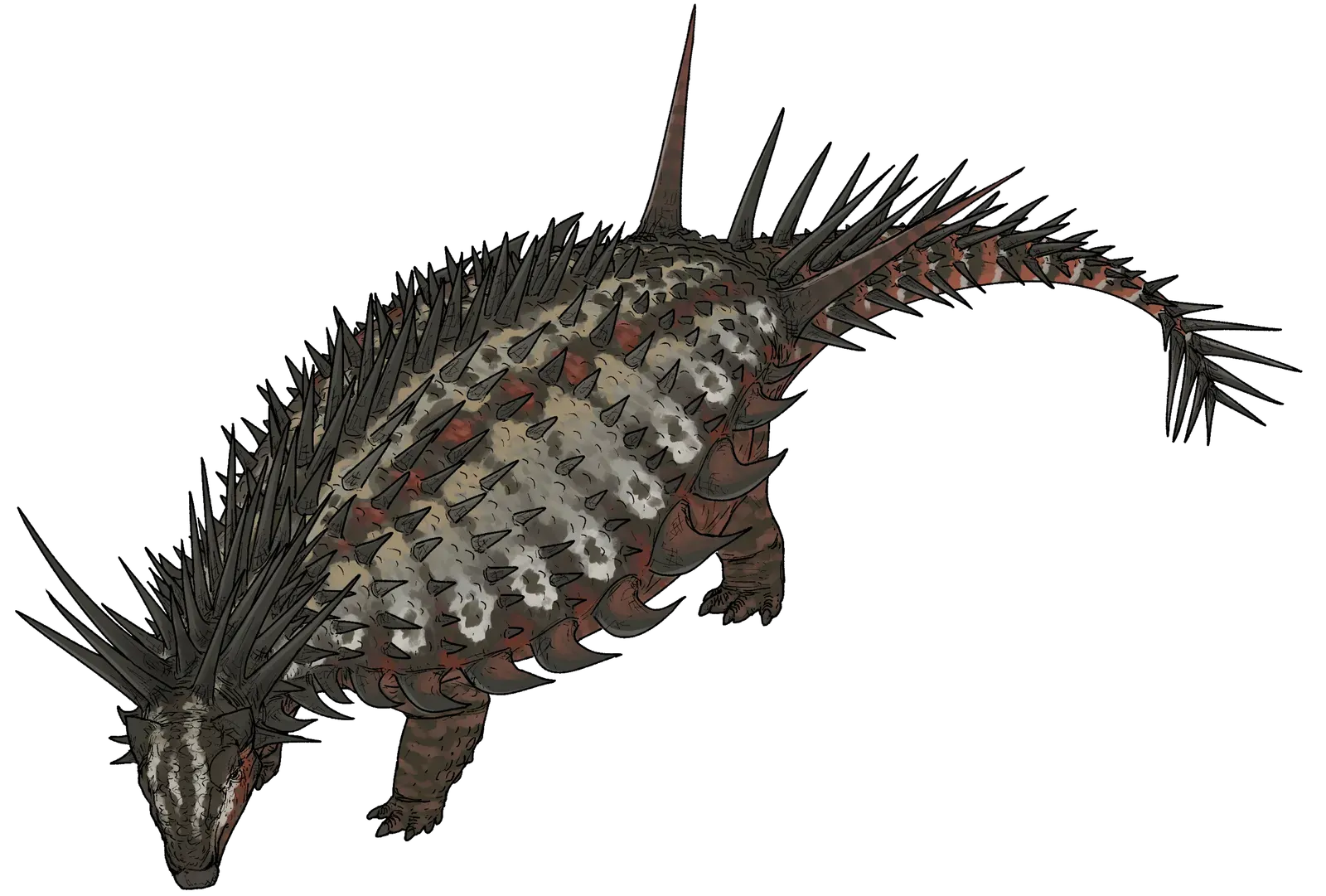
The ankylosaurs are the tank-like dinosaurs you know from documentaries, those armored, club-tailed heavyweights of the Cretaceous. It’s easy to assume all that elaborate armor evolved gradually, over a long stretch of time, culminating in the late-period species. Then a strange fossil from Morocco arrived on the scene, and it quietly dismantled that entire timeline.
While the bones of Spicomellus afer were already unlike any known animal, newly discovered fossils have revealed that its entire skeleton was covered in extraordinary bone spikes measuring up to a metre long. An incredible dinosaur from Morocco reveals that the extensive defences of the ankylosaurs evolved much earlier than first thought. You’re looking at an animal whose entire body was essentially weaponized for defense, and it was doing this in the Middle Jurassic, tens of millions of years before the ankylosaurs we typically think of were even on the scene.
As well as its spiked ribs, Spicomellus had huge spikes projecting out of its hips, a tail weapon, blade-like bones running down its sides and a bony collar ringed with spikes. The longest are believed to have been more than a metre long, sticking out from either side of its neck. What makes this all the more astounding is that, at 165 million years old, Spicomellus is the oldest known ankylosaur. This suggests that the defensive behavioral instincts and physical adaptations of armored dinosaurs were baked in right from the start, not something that developed slowly over millions of years of incremental evolution.
Another confusing aspect of the dinosaur is its tail. While the end of Spicomellus’ tail hasn’t been found, the bones that do survive suggest that it ended in a club or a similar weapon. This is unexpected because it has historically been thought that this sort of weaponry only evolved in later species. In a single discovery, researchers were forced to push back the origin of some of the most iconic dinosaur survival strategies by an enormous margin of time.
Haolong Dongi and the Hollow Spikes: Skin Behavior We Had Never Imagined
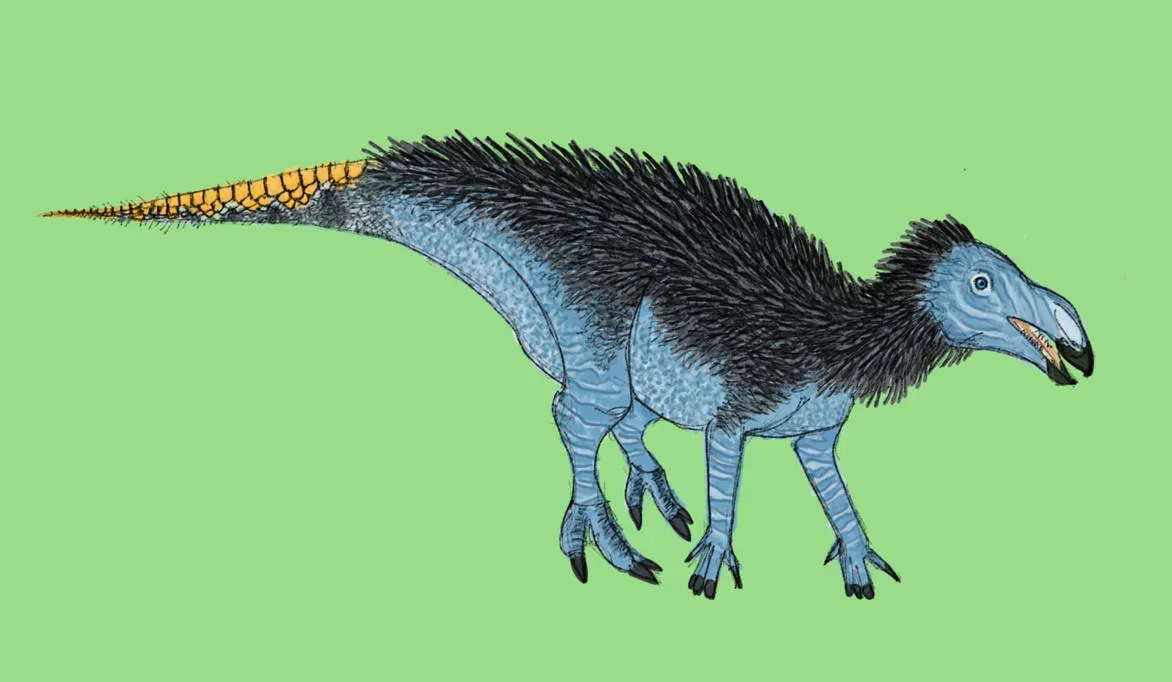
If you thought paleontology had already run out of genuine anatomical surprises, along comes a 125-million-year-old juvenile dinosaur from China with features so unexpected that the researchers who found it had to develop entirely new frameworks just to describe what they were looking at. This isn’t a subtle discovery. This is the kind of find that makes scientists stop and reconsider the entire diversity of dinosaur body coverings.
Scientists in China have uncovered an exceptionally preserved juvenile iguanodontian with fossilized skin so detailed that individual cells are still visible. Even more astonishing, the plant-eating dinosaur was covered in hollow, porcupine-like spikes. These were structures never before documented in any dinosaur. It’s a bit like discovering a new color. You thought you understood the palette, and then this thing shows up.
Using advanced imaging techniques such as X-ray scanning and high-resolution histological analysis, the team was able to study the fossil at the cellular level. They found that individual skin cells had been preserved for approximately 125 million years. This level of detail allowed scientists to reconstruct the structure of unusual hollow spikes embedded in the skin. The preservation here is almost incomprehensible. Cells from 125 million years ago, still identifiable under a microscope.
The findings, published in Nature Ecology & Evolution in early 2026, introduce an entirely new feature to the known diversity of dinosaur anatomy. This discovery not only adds a new species to the Iguanodontia group, but also reveals that dinosaur skin and body coverings were more varied and innovative than previously understood. Because the specimen is a juvenile, scientists cannot yet confirm whether adult individuals of the species retained the same structures as they matured. Further discoveries will be needed to answer that question. It’s hard to say for sure what function those hollow spikes served, whether defense, temperature regulation, or display, but they force you to accept that dinosaur bodies were experimenting with solutions we haven’t even begun to catalog.
Conclusion: The Ground Beneath Paleontology Keeps Shifting
What all six of these discoveries have in common is something genuinely important: they prove that the story of dinosaurs is nowhere near finished. Every time a new fossil emerges from a desert, a cliff face, or a Moroccan riverbed, there’s a real chance it will overturn something scientists have believed for decades. That’s not a weakness of the science. It’s exactly how good science is supposed to work.
Over the past decade, paleontology has entered a new era of rapid discovery and scientific transformation. Breakthrough fossils unearthed across Asia, South America, North America, and Europe have dramatically expanded our understanding of dinosaur evolution, biology, and behavior. These finds, remarkable for their preservation, size, or scientific implications, showcase how much remains to be uncovered about life in the Mesozoic.
Think about it this way: we went from “dinosaurs abandoned their eggs like indifferent reptiles” to “some of them organized communal nurseries” within a single generation of researchers. We went from “dinosaurs never touched the water” to debating just how deeply Spinosaurus dove into ancient North African rivers. The animals themselves haven’t changed, but our understanding of them is in constant, fascinating motion.
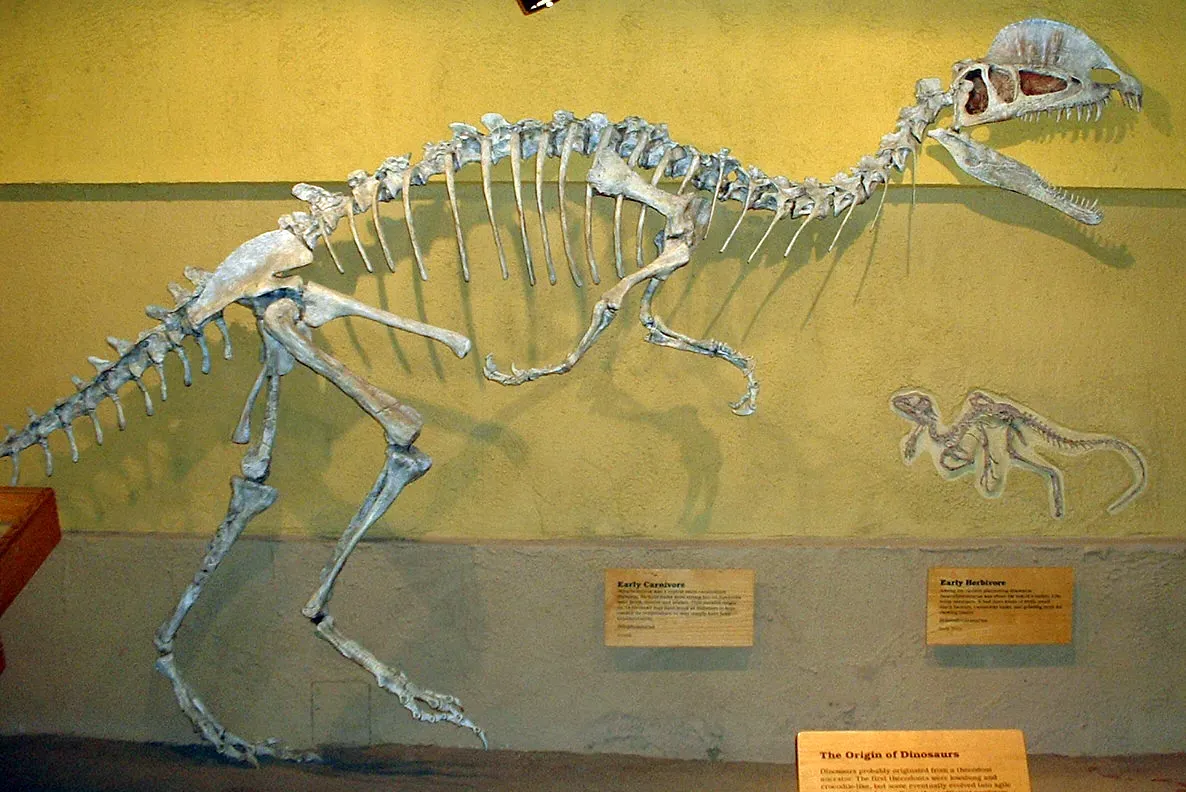
So the next time you watch a nature documentary, or stand in front of a museum skeleton, remember: that creature probably had a richer, stranger, more behaviorally complex life than anyone dared imagine even 20 years ago. What discovery do you think will flip our understanding next? Drop your thoughts in the comments.