There is something deeply unsettling about standing in front of a stone block the size of a small house and realizing that no one alive today can fully explain how it got there. You’d think by 2026, with all the satellite imaging, ground-penetrating radar, and AI-powered archaeology at our fingertips, we’d have cracked these codes. Yet the American continent continues to hold its oldest secrets with a firm, stony grip.
From the high Andes to the river valleys of Colombia to the Ohio plains, something extraordinary was happening in the ancient Americas. Megalithic structures have been found all over the continent, where different pre-Columbian cultures erected large stones to commemorate gods, represent religious symbols, or build sacred and mortuary spaces. The seven sites you’re about to encounter don’t just raise eyebrows. They raise fundamental questions about who we think we are as a species, and who may have come before. Let’s dive in.
1. Puma Punku, Bolivia – The H-Blocks That Defy Logic
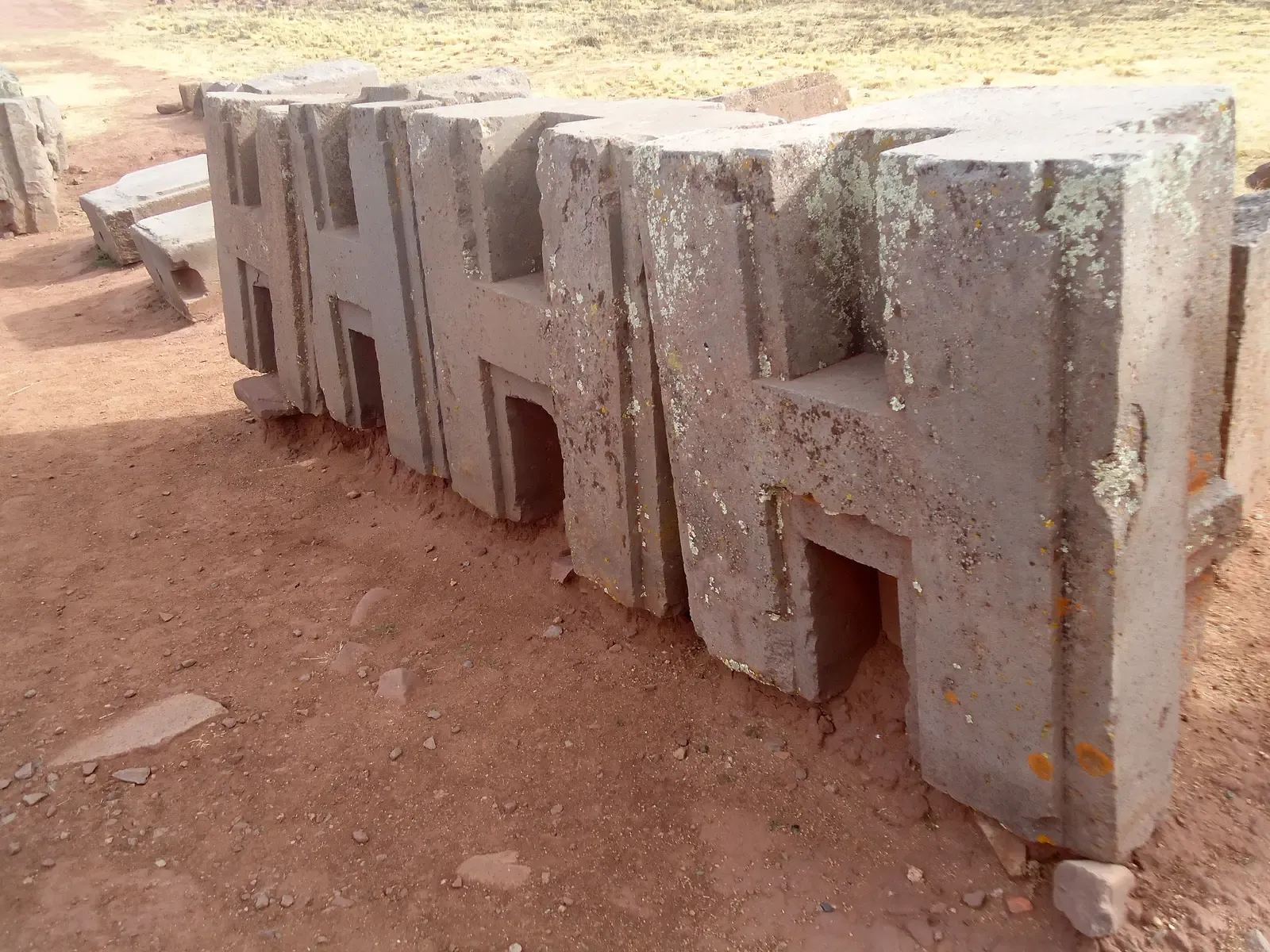
Honestly, if you had to choose one single site on Earth that makes you question everything you were ever taught about prehistoric human capability, Puma Punku would be a serious contender. Pumapunku, meaning “Gate of the Puma” in Aymara and Quechua, is a strategically aligned man-made terraced platform mound with a sunken court and monumental structure, near Tiwanaku in La Paz, Bolivia. That description sounds almost mundane until you actually see the stonework up close.
The numerous H-shaped blocks all match each other with extreme precision and fit into each other like Lego blocks. Think about that for a moment. These are not small decorative tiles. The largest of these blocks is 25.6 feet long, 17 feet wide, and 3.5 feet thick, and is estimated to weigh 131 metric tons. There’s still no clear consensus on how an ancient civilization moved stones that heavy across rugged terrain, and that alone should make you stop and think.
Much of the masonry is characterized by accurately cut rectilinear blocks of such uniformity that they could be interchanged for one another while maintaining a level surface and even joints. The blocks were so precisely cut as to suggest the possibility of prefabrication and mass production, technologies far in advance of the Tiwanaku’s Inca successors hundreds of years later. Let’s be real, that last line is extraordinary. These were not the Incas. These came before them, and even the Incas couldn’t replicate the craft.
2. Sacsayhuaman, Peru – Walls That Not Even a Knife Can Penetrate
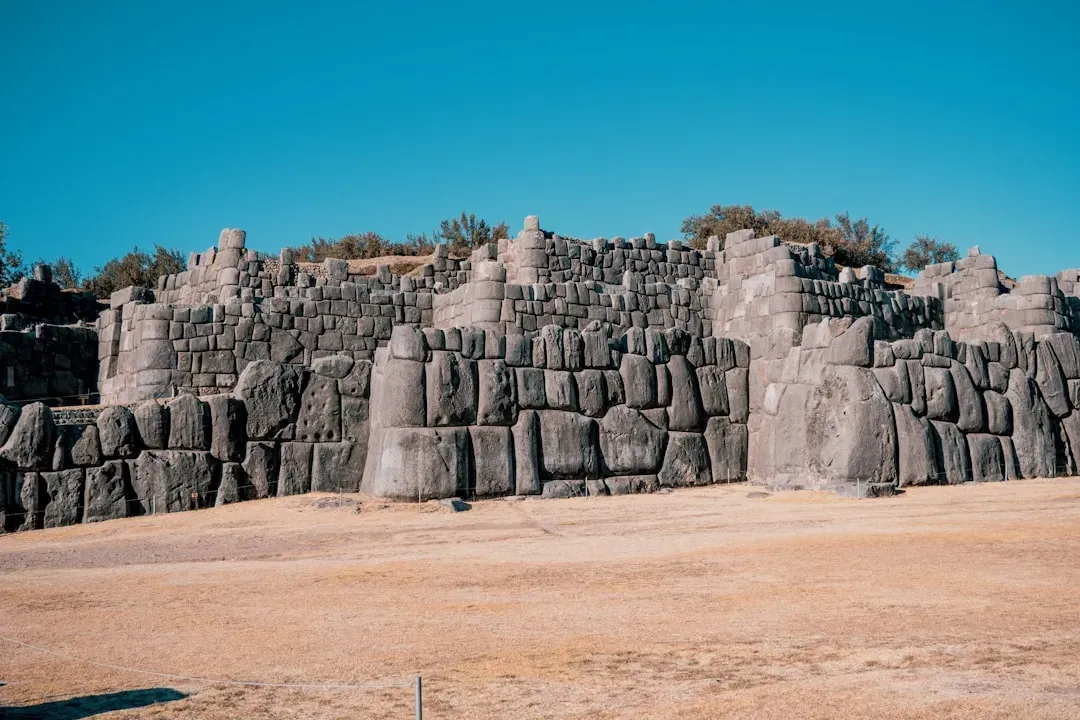
Just north of the old Inca capital of Cusco, high up in the Andean air at roughly 3,500 meters above sea level, sits one of the most bewildering megalithic complexes in the entire Western Hemisphere. The site is famed for its remarkable large dry stone walls with boulders carefully cut to fit together tightly without mortar. The stones used in the construction of the terraces at Sacsayhuaman, which weigh up to 200 tonnes, are among the largest used in any building in pre-Hispanic America. Two hundred tonnes. That is roughly the weight of 30 average African elephants stacked on top of each other.
The stones are so closely spaced that a single piece of paper will not fit between many of them. This precision, combined with the rounded corners of the blocks, the variety of their interlocking shapes, and the way the walls lean inward, have puzzled scientists for decades. The exact purpose of Sacsayhuaman is still debated among scholars. While it is widely believed to have served as a ceremonial and military site, the specifics of its functions remain elusive. Some researchers argue that it may have been a religious center, while others suggest it played a crucial role in the defense of Cusco during conflicts. The mystery isn’t just the construction. It’s everything.
3. The San Agustín Archaeological Park, Colombia – A Necropolis of Stone Gods
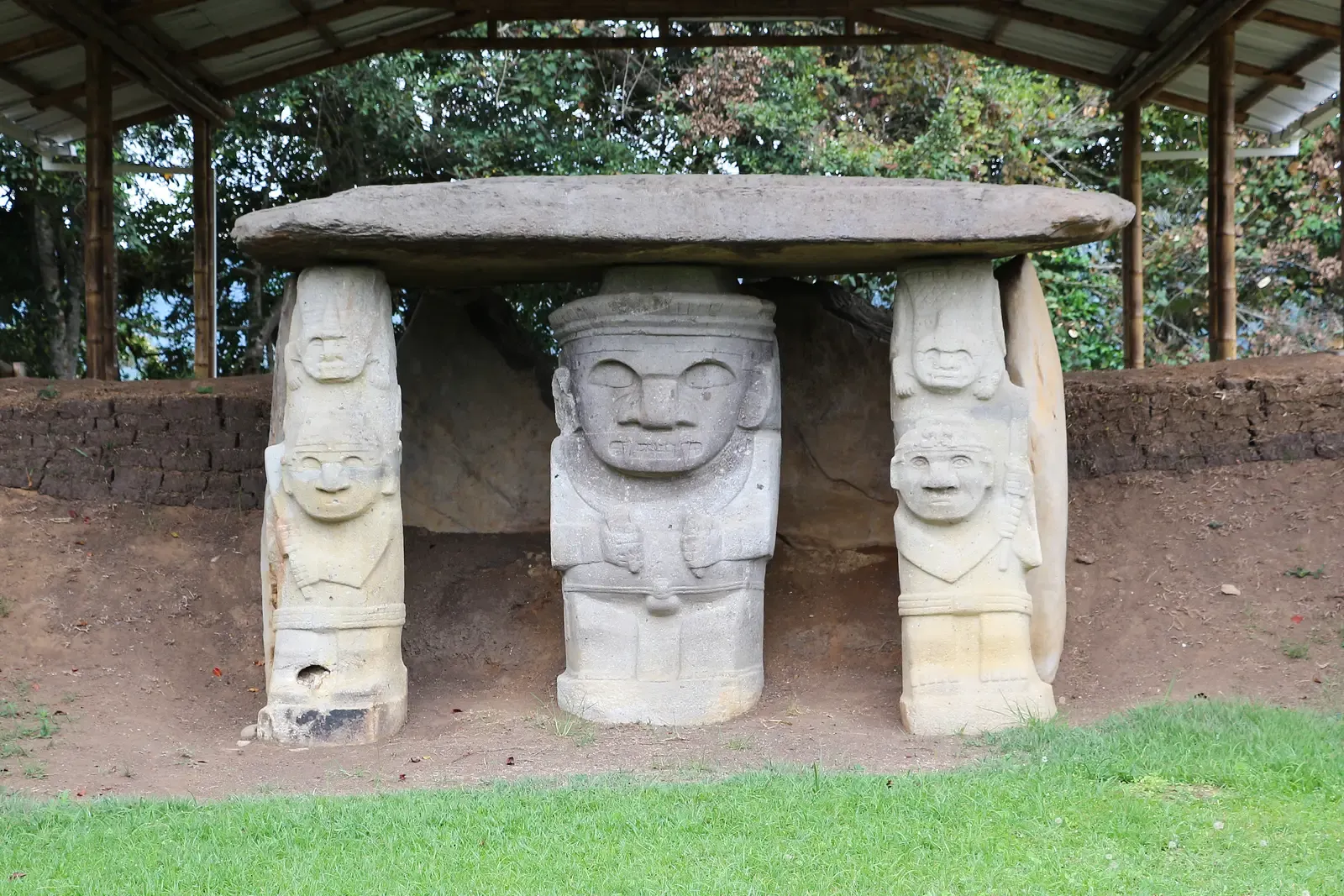
Here is a site that, I think, doesn’t get nearly enough attention in popular discussions about ancient mysteries. Hidden in the misty mountains of southern Colombia, San Agustín is home to something staggering. The largest collection of religious monuments and megalithic sculptures in South America can be found at the San Agustín Archaeological Park, located in the municipalities of San Agustín and Isnos, in the department of Huila, Colombia. You’re talking about over 500 statues carved by people whose very name we do not know.
Archaeologists have found some 600 of these volcanic rock statues buried in a string of mounds near the town of San Agustín. Once unearthed, these mysterious artworks, carved between the first and eighth centuries A.D., can stand as tall as 14 feet. Most astonishingly, intricate megalithic statues were placed within and nearby many of the tombs and combine highly stylized human and animal characteristics to evoke the presence of surreal, almost hallucinatory beings. The civilization that made these simply vanished, leaving only these statues to speak for it.
4. Cahokia, Illinois – The Forgotten Metropolis Hiding in Plain Sight
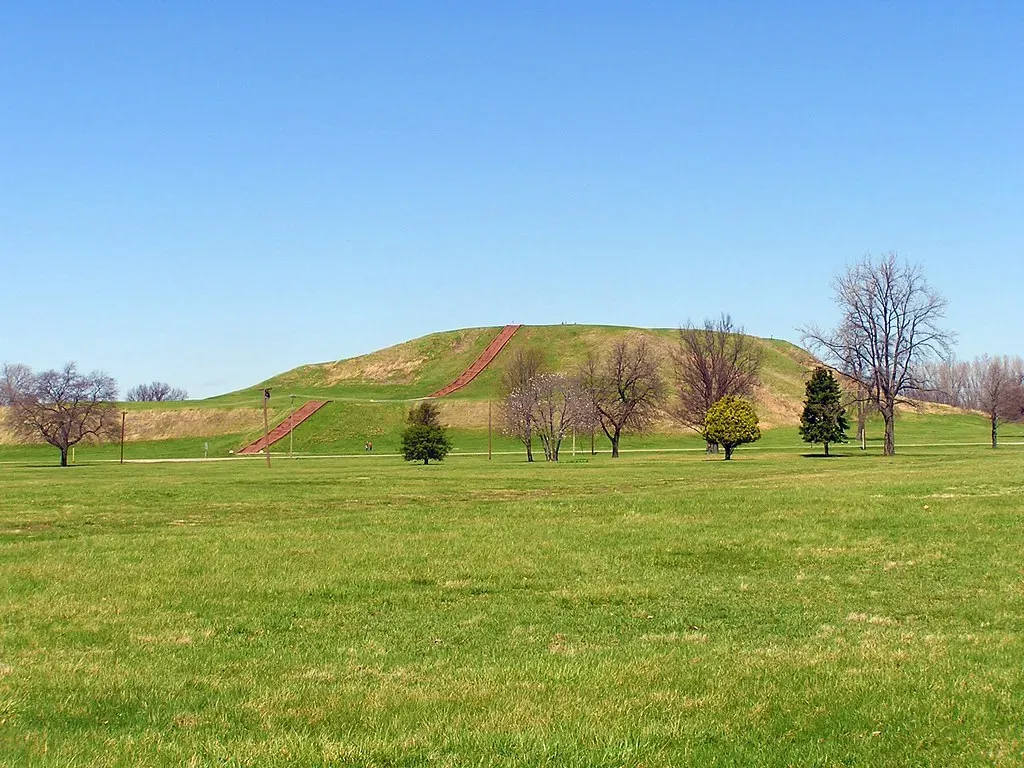
Most people drive through Illinois without ever realizing they are passing near what was once one of the most impressive cities in the ancient world. The most famous pyramid in the United States is located at the archaeological site Cahokia. Home to Monk’s Mound, Cahokia was an extensive settlement during its heyday a thousand years before Europeans stumbled across the American continent. Cahokia’s overwhelming success in trade and manufacturing meant that the ancient city grew to an impressive population of 15,000. That rivals many European cities of the same era. No joke.
The tallest pyramid structure in North America, Monk’s Mound, was originally terraced, with a rectangular building situated at the top. Found in Cahokia, a significant pyramid city in modern-day Illinois, Monk’s Mound was constructed between 900 and 1200 CE. Cahokia is considered the largest and most complex archaeological site north of the great pre-Columbian cities in Mexico, and it contains numerous celestial alignments that suggest a deep knowledge of astronomy. Yet it was mysteriously abandoned, and we still aren’t entirely sure why.
5. The Great Serpent Mound, Ohio – A Giant Carved Into the Earth
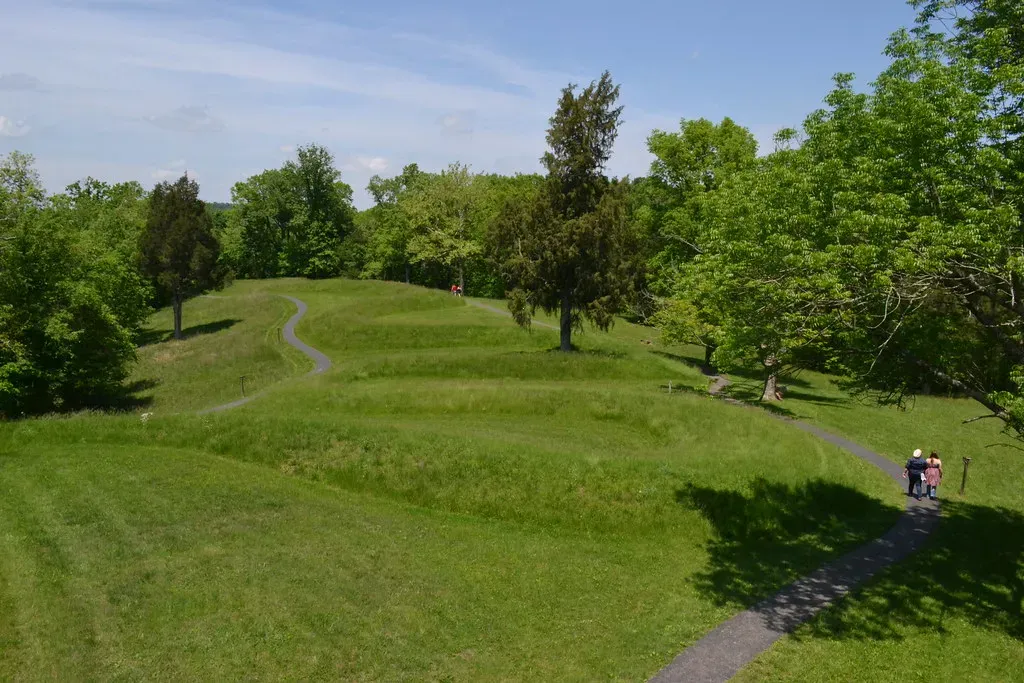
You want something that truly throws you off balance? Try this: there is a massive serpent effigy carved into the landscape of Ohio that stretches for roughly a quarter of a mile. It’s so large you can’t fully grasp its shape from the ground. You need to be above it. Archaeologists believe that this quarter-mile-long mound was created by Indians of the Fort Ancient culture for ritual use between 13 and 30 centuries ago. The sheer scale of the undertaking, done without aerial surveying tools, is something I honestly find mind-boggling.
There are the massive earthworks built by the Hopewell Indians in Ohio and throughout the Eastern United States some 2,000 years ago. This includes the giant Newark Earthworks in Newark, Ohio, which contains alignments with the complicated 18.6-year lunar cycle and demonstrates a deep understanding of complex astronomy and mathematics. The Serpent Mound and its surrounding earthworks belong to a tradition of landscape-scale construction that reflects something far more sophisticated than simple tribal culture. North America’s prehistoric landscape, especially that of Ohio, was once rich in a variety of earthwork, gigantic mounds shaped like birds, giant snakes, spirals, and geometrically designed walls.
6. Sacsayhuaman’s Older Sibling: Ollantaytambo, Peru – Unfinished Work of Giants
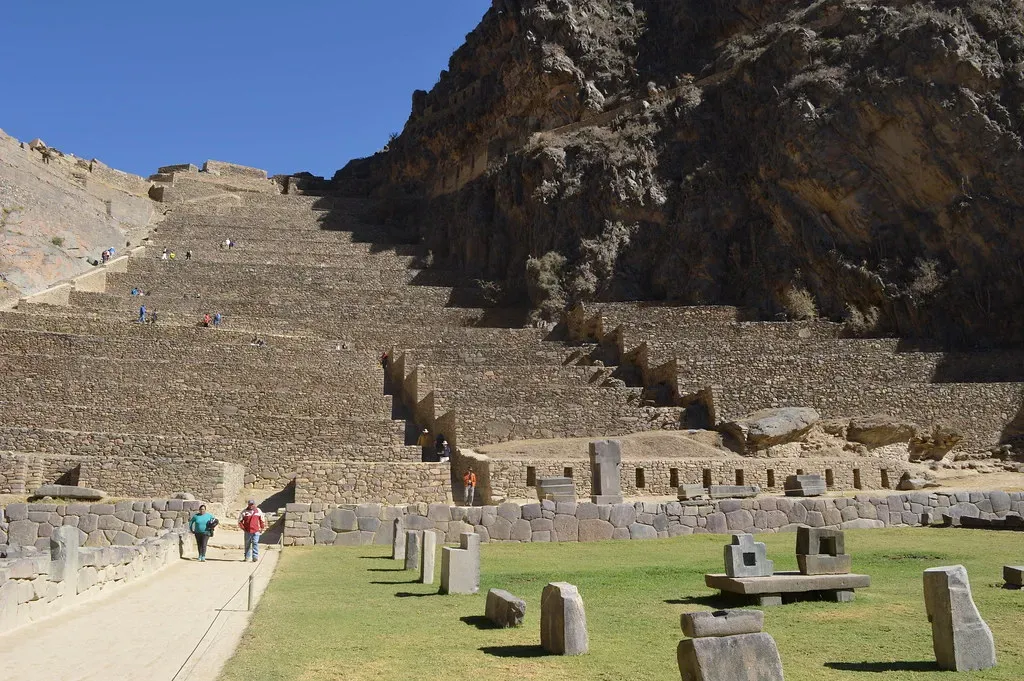
If Sacsayhuaman leaves you speechless, Ollantaytambo will finish the job. Located in the Sacred Valley of the Incas, this site features something that sets it apart from nearly every other ancient complex: it was never completed. Think of it like a half-built skyscraper frozen in time. The wall of the Six Monoliths stands directly in front of the terraces at Temple Hill at Ollantaytambo Ruins. For unknown reasons, this construction was never completed. It is notable because of the distance the Inca had to move the huge stones. They used their special techniques to move the stones from a quarry high on the mountainside on the opposite side of the Rio Urubamba, across the river and up to the place where it now sits, a distance of 6 km.
What makes Ollantaytambo so fascinating, and so unsettling, is the implication that something forced the builders to stop mid-task. The massive pink granite blocks, some weighing dozens of tons, were moved across a river valley and hauled up a steep incline using nothing archaeologists can fully account for. Think, for example, of Machu Picchu, Sacsayhuamán, and similar sites where the interlocking is perfect, and not even a hair fits between the stones. The precision is consistent, the stopping point is abrupt. It’s like the construction crew simply walked off one day and never came back.
7. Chichen Itza’s El Castillo, Mexico – A Calendar Carved in Stone
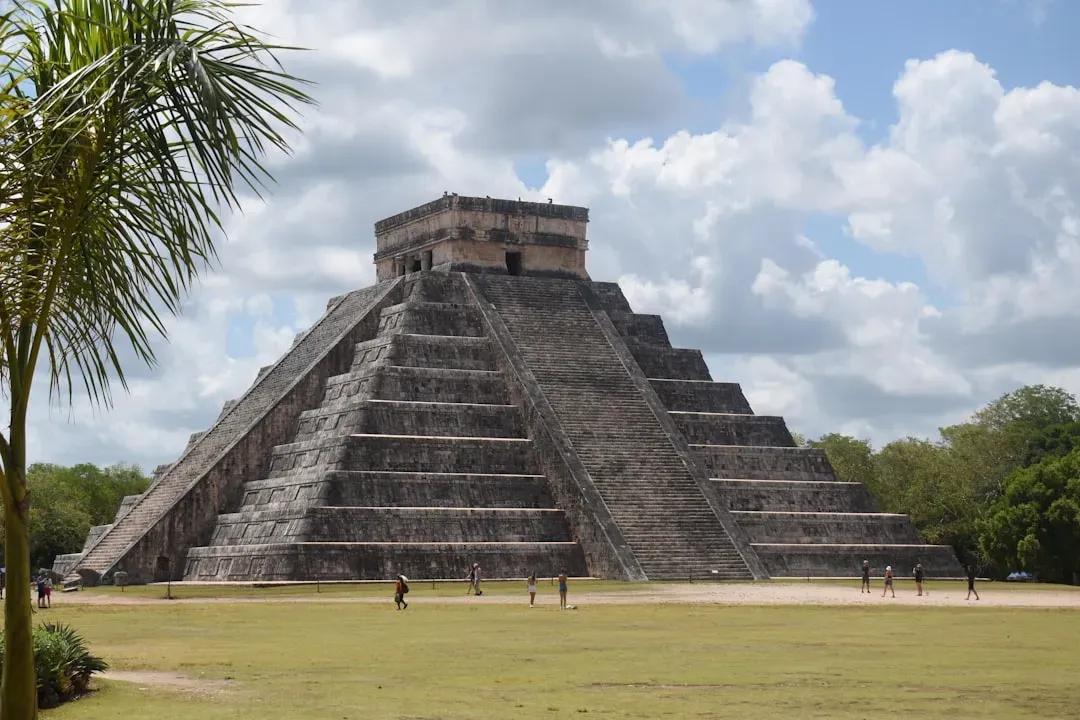
Here is where things get quietly extraordinary in a way that sneaks up on you. The Temple of the Feathered Serpent, also called El Castillo, is a Mesoamerican pyramid that looms at the center of Chichén Itzá, an archaeological site in the Mexican state of Yucatan. The temple was built somewhere between the 8th and 12th centuries by the pre-Columbian Maya civilization and is dedicated to the Feathered Serpent deity Kukulcán. That much, you might already know. What you might not have fully appreciated is just how mathematically perfect this structure actually is.
It is a step pyramid roughly 100 feet high with stone stairways on all four sides that rise at a 45-degree angle to a small structure on top. There are approximately 91 steps on each side, which when added to the number of stairs of the temple platform on top makes a total of 365 steps, equal to the number of days of the Mayan year. As the sun sets on the spring equinox, it casts a shadow on the pyramid and makes it appear as if a serpent is slithering down the northern steps of the structure. This was not an accident. It was intentional, precise, and it still works today, thousands of years later.
Conclusion: Stones That Still Have Stories to Tell
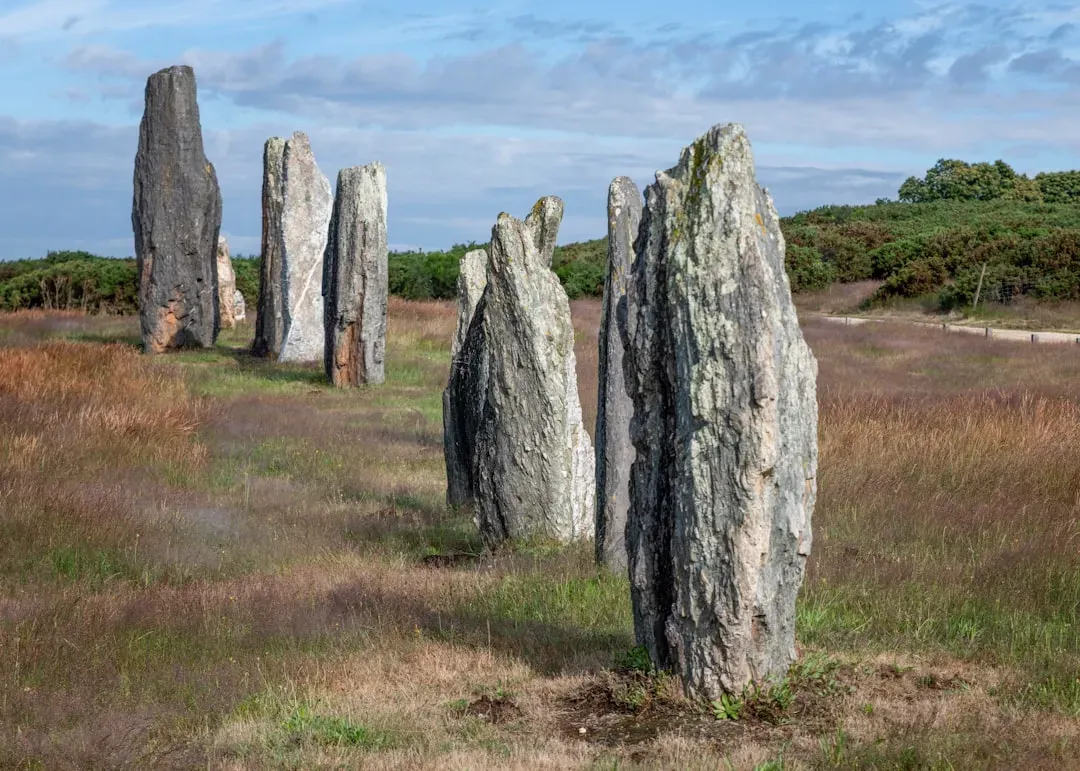
What ties all seven of these sites together is something more profound than stone and mortar. Megalithic constructions demonstrate how the materialization of cultural symbols reflects high intellectual and technical development that needs to be studied to advance knowledge about peoples’ origins in this part of the world. These aren’t the relics of simple people muddling through the fog of prehistory. They are the signatures of civilizations that understood astronomy, mathematics, ritual, and architecture at a level that continues to humble modern experts.
Many megalithic sites were constructed using specific alignments between the stones and the stars or between the stones and the Earth’s magnetic field. This suggests that they may have been used for religious or astronomical purposes, although experts still debate their exact purpose. The honest truth is that we are still early in the process of understanding what the ancient Americas truly contained. Historians and archaeologists still have much work to do to fully develop studies of megalithism on the American continent. The local terrain is still subject to further inquiry that will serve to build knowledge of ancient communities living in the American territories before the European invasion.
Every time a new excavation season opens, something unexpected tends to emerge. A new statue, a buried chamber, a passage that leads somewhere no one anticipated. These seven sites are not relics of a dead world. They are living questions, still waiting for answers. Which one surprised you the most? Drop your thoughts in the comments below.