Earth has been home to life for hundreds of millions of years. Most of that story, however, happened long before any human being was around to witness it. We tend to think about the prehistoric world in terms of movie dinosaurs and maybe a woolly mammoth or two, but the reality is so much stranger and more breathtaking than that.
More than 99% of all species that have ever lived on Earth are now extinct. Let that sink in for a moment. The creatures alive today are just a tiny fraction of everything life has ever produced. So what were the others? Some were gentle giants. Others were nightmare-fuel wrapped in scales, armor, or fangs the size of your forearm. All of them were real. Let’s dive in.
1. Dunkleosteus – The Armored Fish With Blades for a Mouth
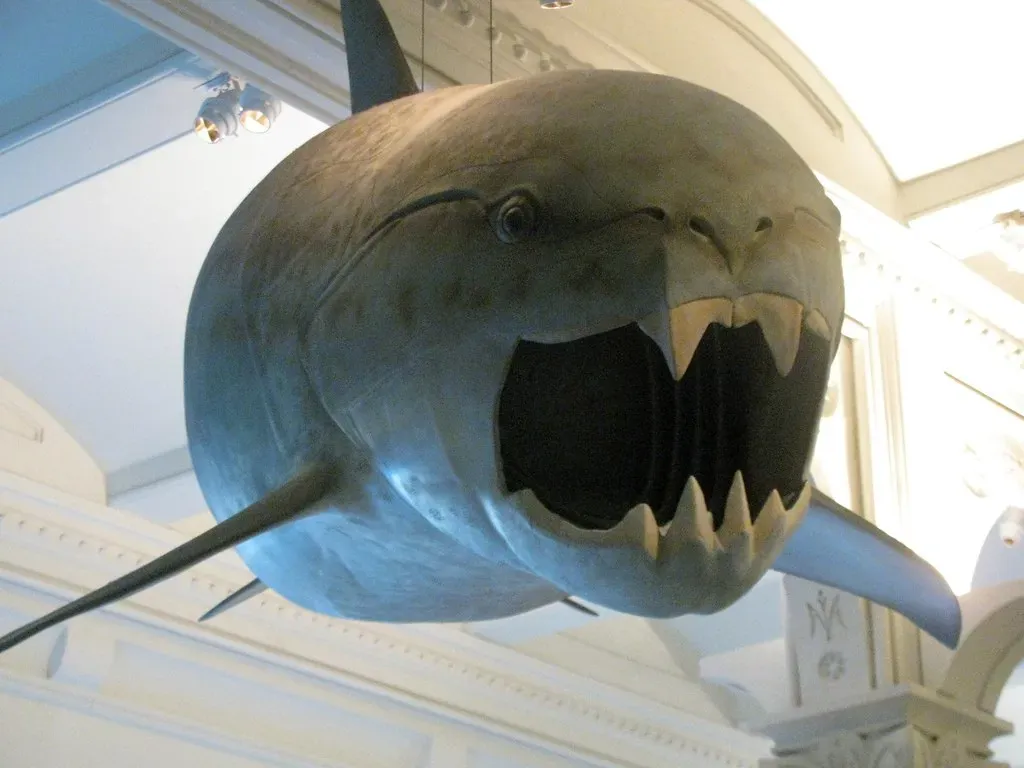
Picture a great white shark, then replace its teeth with two pairs of bone blades shaped like a guillotine, coat the front of its body in thick armor, and give it a bite that rivals a Tyrannosaurus rex. That’s Dunkleosteus. It’s not just the size of Dunkleosteus that earned it the title of “prehistory’s most fearsome fish” – its jaws were particularly menacing. Dunkleosteus lacked proper teeth; instead it had two pairs of long, bony blades that protruded from its upper and lower jaws, creating a cutting apparatus that crudely resembled a guillotine.
Dunkleosteus is widely considered to be the world’s first pelagic super predator, occupying a niche that’s now ruled by great white sharks and orcas. Honestly, the idea of this thing patrolling the ancient oceans for nearly 25 million years is both awe-inspiring and terrifying. Adults dined on a variety of prey, from hard-shelled ammonites and small armored fish to other Dunkleosteus. A specimen of Dunkleosteus actually shows damage consistent with bites from another Dunkleosteus – proof enough that this monstrous fish wasn’t above hunting others of its own kind.
2. Smilodon – The Saber-Toothed Cat That Was Nothing Like a Tiger
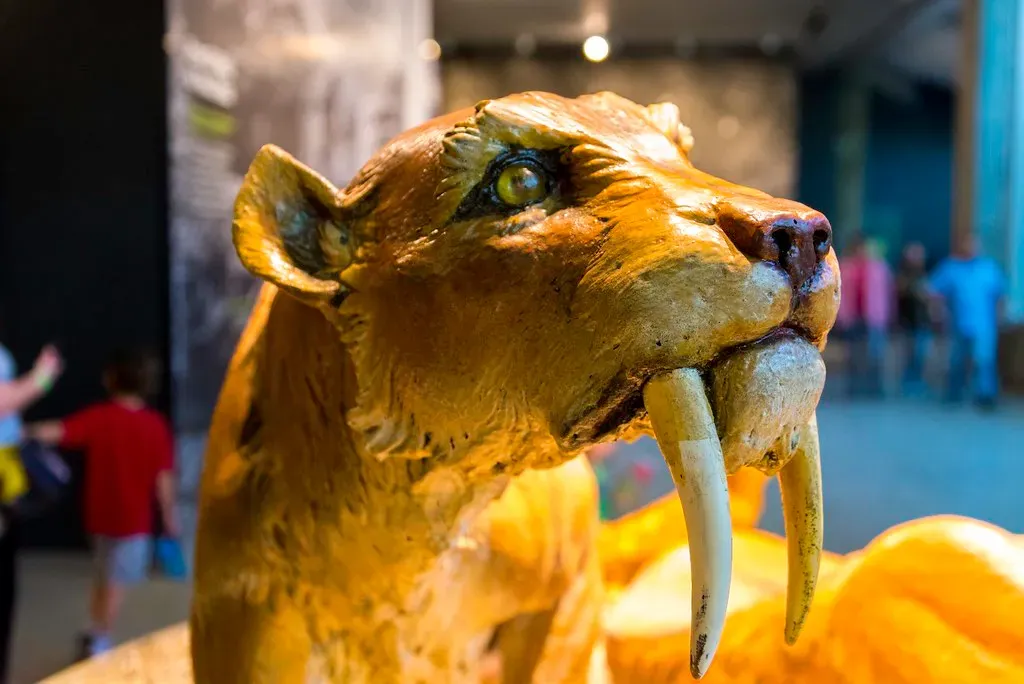
Here’s the thing: you’ve probably called it a saber-toothed tiger your whole life, and you’d be wrong – in the most fascinating way possible. Although commonly known as the saber-toothed tiger, Smilodon was not closely related to the tiger or other modern cats, belonging to the extinct subfamily Machairodontinae, with an estimated date of divergence from the ancestor of living cats around 20 million years ago. So it was basically its own entirely separate evolutionary experiment in how to be a big, dangerous cat.
Its immense upper canine teeth, up to 20 cm (8 inches) long, were probably used for stabbing and slashing attacks, possibly on large herbivores such as the mastodon. Several physical adaptations of Smilodon suggest such a hunting technique: its skull was modified to accommodate the attachment of strong neck muscles for bringing the head down; the lower canines were reduced; and the molars formed shearing blades with no trace of grinding surfaces. Oddly enough, though, these monstrous teeth were surprisingly brittle and easily broken, and were often sheared off entirely during close combat, never to grow back again. A deadly weapon with a serious design flaw – nature truly has a dark sense of humor.
3. Arthropleura – The Giant Millipede That Could Fill a Hallway
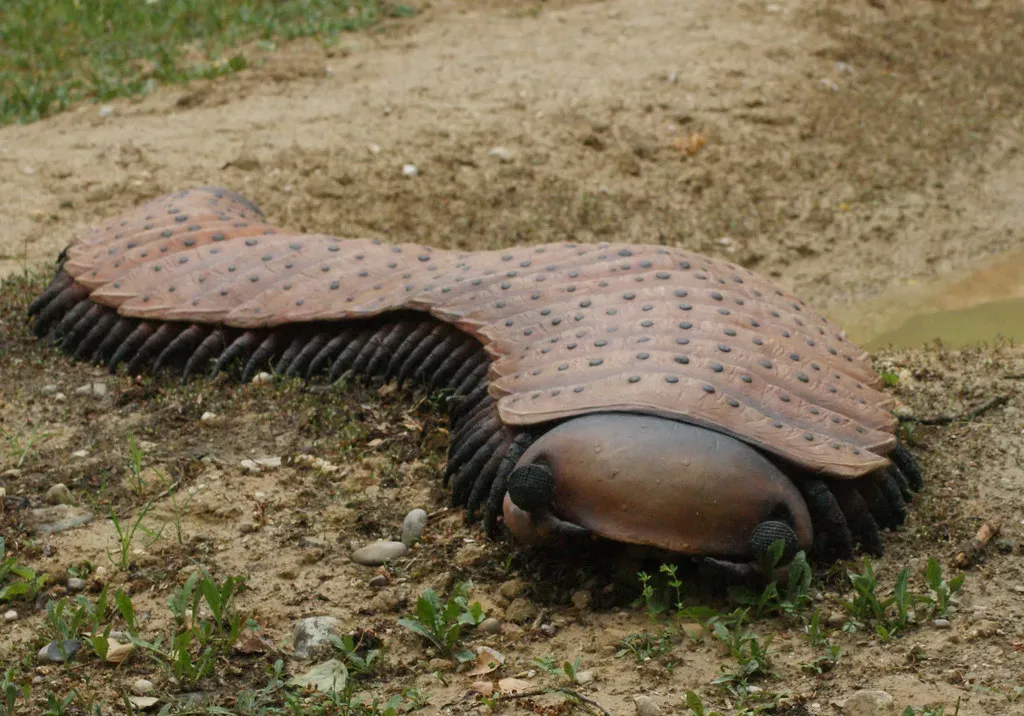
You may want to sit down for this one. Before birds, before mammals, before even the dinosaurs got rolling, the land was ruled in part by an enormous, multi-legged arthropod. At 2.5 meters in length, Arthropleura is widely considered the largest invertebrate to ever walk the Earth. This giant ancestor of today’s millipedes is not an insect but a myriapod. Arthropleura lived across Europe and North America for more than 50 million years between the Early Carboniferous and the Early Permian.
I know it sounds crazy, but the reason this creature grew so absurdly large actually makes perfect scientific sense. This giant creepy-crawly lived during the Carboniferous period, a time when sprawling rainforests acted as the Earth’s “lungs,” drawing in carbon dioxide and breathing out masses of oxygen. It’s thought there was 5 to 10 percent more oxygen in the air during this time, which is one reason why Arthropleura grew so large. Another was a lack of competition. Despite its intimidating appearance, Arthropleura was likely a herbivore, feasting on the abundant vegetation of its time. So yes, a millipede the length of a small car, but at least it wasn’t hunting you.
4. Quetzalcoatlus – The Flying Creature With the Wingspan of a Small Plane
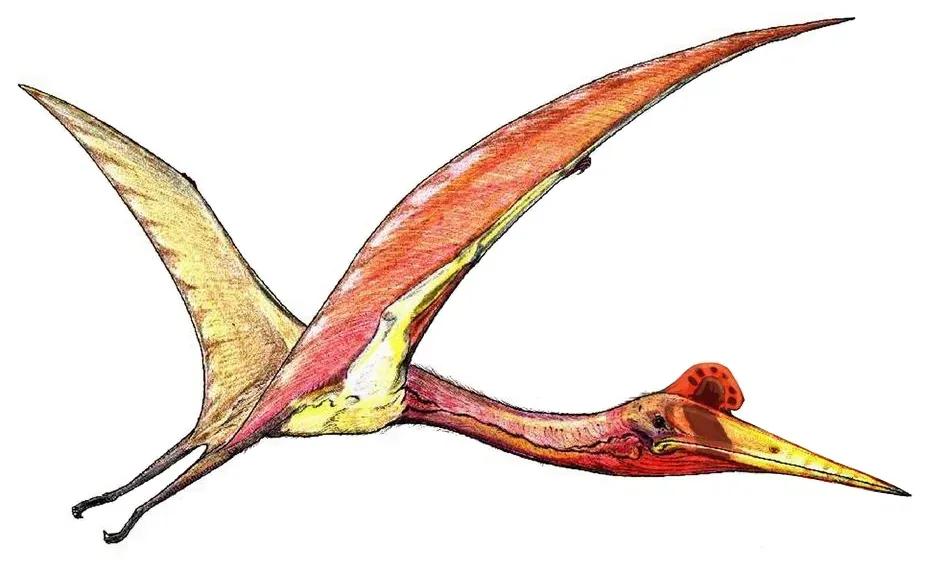
If you thought the skies were peaceful during the age of dinosaurs, think again. Quetzalcoatlus was one of the largest flying creatures ever, soaring through the skies with a wingspan of up to 40 feet. This pterosaur, resembling a small plane, was a marvel of prehistoric aviation. Its long, pointed beak and lightweight body made it an efficient flyer, likely scavenging for food or hunting small prey. Standing on the ground, it would have been roughly the height of a modern giraffe.
The fossilized remains of prehistoric pterosaurs reveal that these formidable flying reptiles lived alongside the dinosaurs. Quetzalcoatlus, named after the feathered serpent deity of Aztec mythology, is one of the most extreme examples of what evolution can do when it decides to make something fly. The sheer size and elegance of Quetzalcoatlus highlights the diverse adaptations in the animal kingdom, proving that even the skies were teeming with incredible life forms. Look up at a small aircraft the next time one passes overhead, and try to picture something biological doing the same thing. Remarkable.
5. Vasuki Indicus – The Largest Snake to Ever Exist
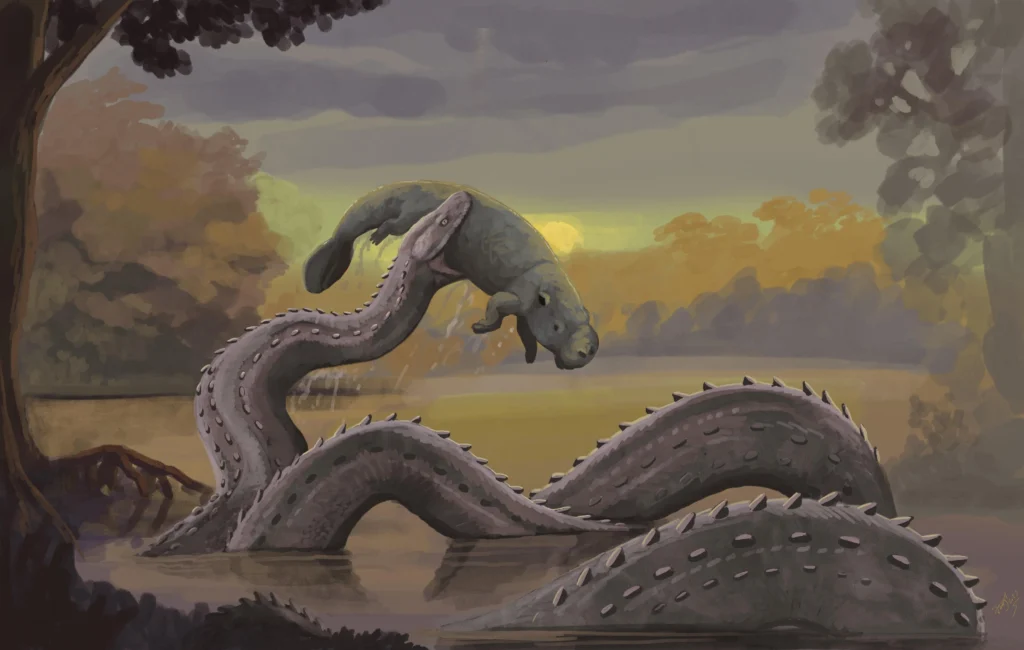
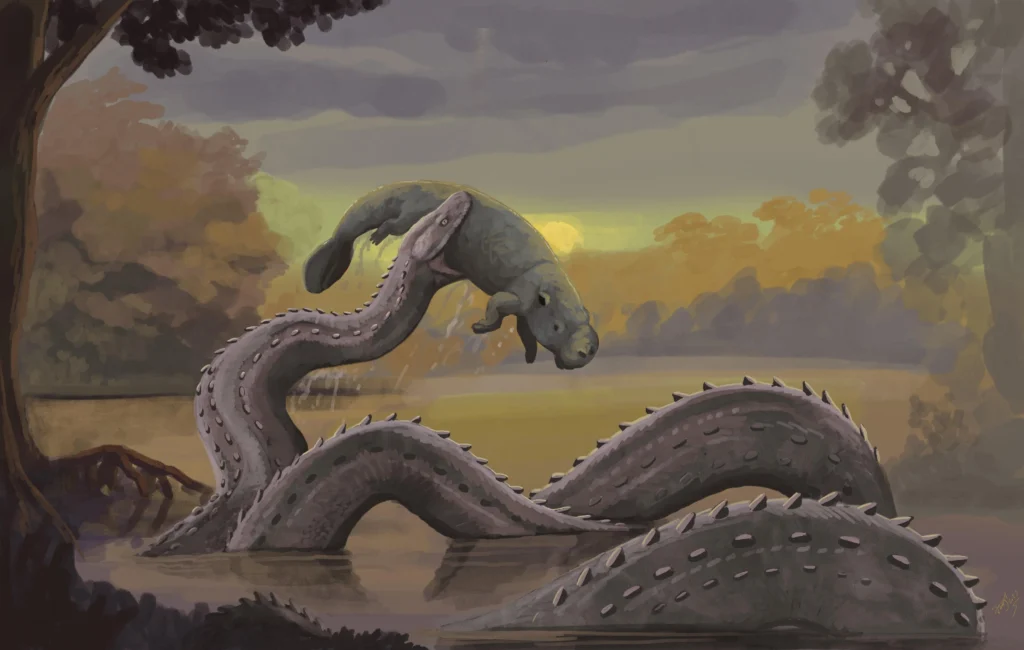
Snakes are already unsettling to plenty of people. So imagine one that stretched longer than a city bus. Scientists in India discovered the remains of an ancient snake species in a mine in Gujarat State, India. Later studies suggest that the new species may have reached lengths of up to 15 meters – that’s longer than a bus. The snake dates to the Middle Eocene period, approximately 47 million years ago, and would have been an ambush predator that constricted its prey to death.
The new species of giant snake has been named Vasuki Indicus – Vasuki referring to the mythical snake worn round the neck of Shiva, the Hindu deity; and Indicus indicating India, its country of discovery. It’s hard to say for sure exactly how it hunted, but at that size, very little in its environment would have been off the menu. Think of it as the prehistoric equivalent of a living pipeline that could crush the life out of almost anything it wrapped itself around. The stuff of real nightmares, honestly.
6. Anomalocaris – The Ocean’s First True Apex Predator
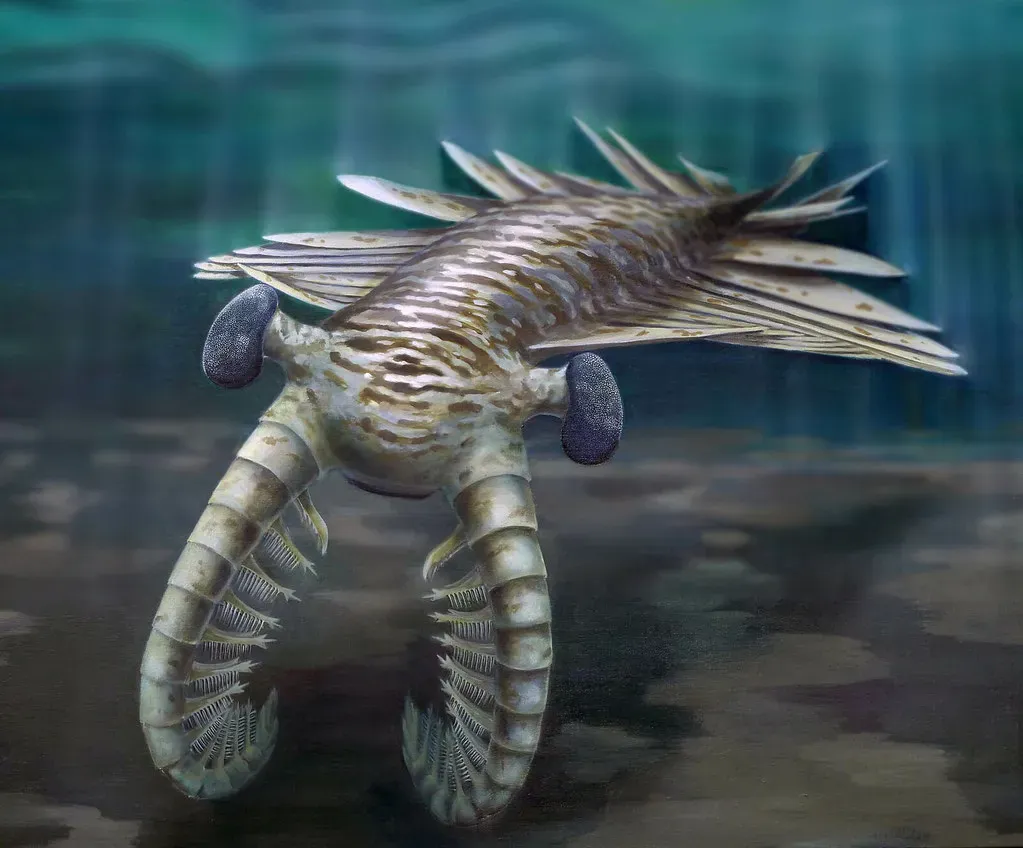
Long before sharks, before fish with jaws, before pretty much anything we’d recognize today, a bizarre soft-bodied hunter ruled the ancient seas. More than half a billion years ago, the world’s oceans were stalked by a soft-bodied predator that looked unlike anything alive today. This bizarre-looking animal was Anomalocaris, or “unusual shrimp,” and is widely regarded as the world’s first apex predator – the killer whale of its day. Anomalocaris was the largest hunter of the Cambrian period, measuring up to a meter in length from its grasping frontal appendages to the tips of its tail fans.
A meter might not sound that impressive until you realize everything else alive at that time was microscopic by comparison. It’s now believed Anomalocaris was a hunter that relied on speed, agility, and superior sight rather than strength. It probably targeted other fast, soft-bodied animals that lived in open water. There is something deeply thought-provoking about the fact that the first creature to sit at the very top of any food chain on Earth looked, frankly, like something drawn by a child who had never seen a real animal. Life in its earliest chapters was wonderfully, wildly strange.
7. Megalania – The Monster Lizard That Hunted Australia’s Megafauna
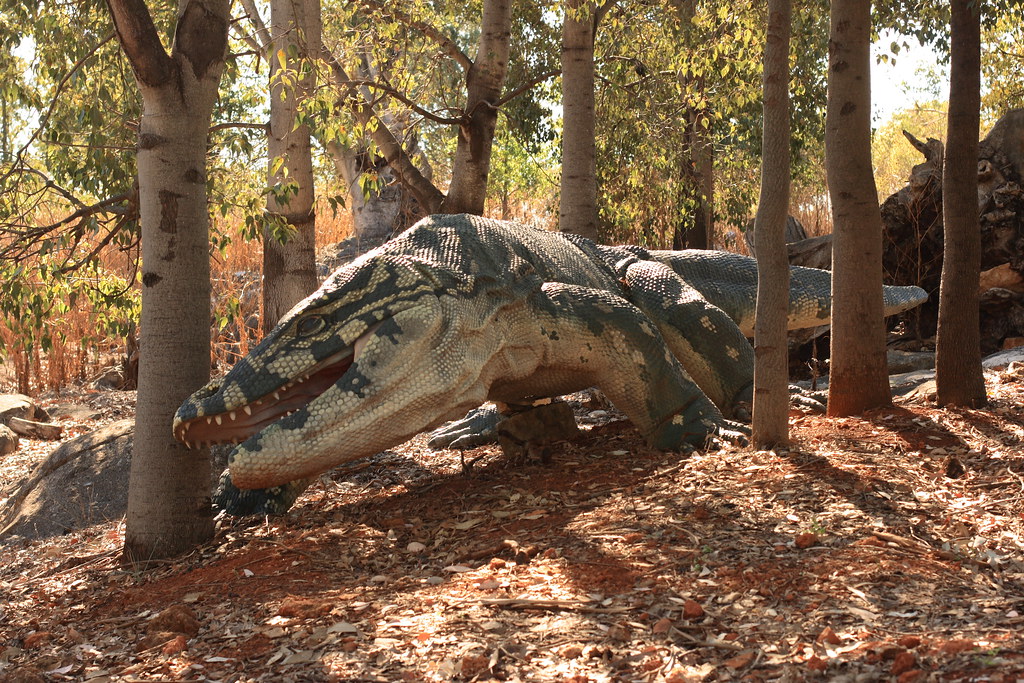
Australia is already famous for its dangerous wildlife. So perhaps it is no great shock that the continent once hosted a lizard so enormous it could only be described as the stuff of legend. At 6 meters in length and weighing in at nearly 600 kg, these giant lizards were perhaps the closest our ancestors got to meeting real-life dinosaurs. Megalania looked very similar to their close cousins Komodo dragons, with stocky, splayed limbs, large heads, and jaws full of serrated, blade-like teeth.
They probably also hunted like Komodo dragons, striking with lethal, venomous bites before moving in for the kill once their prey’s bloodstream was sufficiently full of toxin. What makes Megalania truly astonishing is that it walked the same land as early humans. A lot of these so-called “monsters” survived alongside humans for many thousands of years, but nearly all of them eventually succumbed to extinction – many by our ancestors’ hands. So our early relatives didn’t just share the land with Megalania. They almost certainly competed with it, fled from it, and in some cases probably ended up as its meal. There is something deeply humbling about that.
Conclusion
The prehistoric world was not just “Earth with bigger versions of things we know.” It was an entirely different planet, populated by creatures that defy imagination. From armored fish with guillotine jaws to flying reptiles the size of aircraft, from giant millipedes filling ancient forests to planet-ruling lizards wandering across what is now suburban Australia, life on Earth has taken forms that no science fiction writer could have dreamed up.
Long before evolution downsized them, these giant prehistoric ancestors roamed the Earth, giving rise to the animals we know today. From giant apes that may have crossed paths with our early ancestors, to sloths the size of small trucks, these prehistoric heavyweights reveal just how much evolution can reshape life over time. The fossil record keeps surprising us, too. New species are being described every year, and each one adds another jaw-dropping chapter to a story that is billions of years in the making.
The real question is this: if these creatures once walked, swam, and flew across the very same planet you live on today, what else might be buried out there, still waiting to be found? What do you think would be the most terrifying prehistoric creature to encounter? Tell us in the comments below.